Summary
- CENTCOM denies that US Navy has officially restarted guiding ships through Hormuz Strait amid fresh tanker explosion and fuel leak incident.
- IRGC says its military shot down an MQ-9 drone and forced an F-35 jet out of Iranian airspace.
- Tehran formally accuses Washington of “ceasefire violation” while warning a final deal is not yet imminent, while Pentagon cites “self-defense” strikes in Hormuz overnight.
- Ayatollah Hajj message: US will “no longer have a safe haven for mischief & the establishment of military bases in the region.”
- Teran is demanding “12 billion released now and 12 billion after MOU 30 days runs out to open Hormuz.“
* * *
CENTCOM Denies WSJ Report
“Project Freedom has not resumed, and U.S. forces are not currently escorting commercial vessels through the Strait of Hormuz,” US Central Command says in a post on X. This comes after WSJ cited US officials to say that that the mission had restarted, but that reporting appeared premature.
Meanwhile on the negotiations front, an insightful line:
Abdulla Banndar Al-Etaibi, a professor at Qatar University, says any negotiation between Iran and the US requires concessions from both parties to secure a deal.
“This is the hard part,” he told Al Jazeera, noting that both Tehran and Washington have realised that they can’t reach their goals through war. “That’s why they’re [moving] towards more diplomacy.”
“At the moment, it’s about the language, and it’s about how both parties can come out and sell a narrative that they want,” Al-Etaibi added.
‘Project Freedom’ Officially Back On
While it’s questionable to what degree US naval patrols of regional waters ever really stopped, US military officials say the navy has restarted escorts to ensure international vessels can safely cross through the contested Strait of Hormuz. The Pentagon is already touting some successes, according to a Tuesday update in the WSJ:
The officials told The Wall Street Journal that a Greek supertanker laden with two million barrels of crude was guided by the U.S. Navy, as it crossed the waterway off the Omani coast.
The ship was stuck in the Middle East Gulf since early March and is now heading to India to deliver its cargo.
The protection is a renewed push of “Project Freedom,” an earlier U.S. initiative to guide ships through the vital shipping corridor that was halted roughly 36 hours into the operation.
The officials said the Navy plans to help about a dozen vessels including supertankers and container ships to cross through the waterway over the coming days.
However, some serious security incidents involving shipping (possibly involving sea mines?) in the narrow waterway are still unfolding, also with reports of a fuel leakage incident into Gulf coastal waters:
UKMTO said it received a report of an incident 60 nautical miles east of Muscat, Oman, where the master of a tanker reported an external explosion on the port side aft near the waterline.
The crew and vessel are safe, though some bunker fuel was reported discharged into the sea. pic.twitter.com/8CA0JhrYu6
— ILRedAlert (@ILRedAlert) May 26, 2026
Despite all of these developments, and rising tensions and even last night’s US-Israel brief airstrike raid on Bandar Abbas port, the Trump administration is still touting that a final draft deal is just ‘days’ away. “I think there is strong alignment and agreement on what a preliminary draft should look like,” Rubio has said in fresh comments. “It’s either going to be a good deal or there isn’t going to be one.” Tehran has vowing retaliation for the overnight US attack incident.
Israeli leaders are meanwhile vowing they’ll prevent a ‘bad deal’ from being finalized…
Israeli National Security Minister Itamar Ben-Gvir says the Israeli government will not let Trump sign a “bad deal” with Iran. pic.twitter.com/Ou0lJcnUJd
— Clash Report (@clashreport) May 26, 2026
F-35 Engagement, MQ-9 Shootdown
While diplomats in Washington and Tehran exchange heavily caveated peace drafts and attempt a breakthrough, the actual conflict theater of the Persian Gulf is telling an entirely different story. The fragile reality of the current ceasefire is on full display, given that after late Monday’s US-Israeli action against Iranian vessels at Bandar Abbas port, the IRGC says it opened fire on a US F-35 fighter jet and multiple unmanned aerial vehicles after they allegedly breached Iranian airspace. As part of the engagement, Iran says that it shot down a US MQ-9 drone (not for the first time of the war). The IRGC claims its air defense units successfully “shot down an MQ-9” Reaper drone during the encounter, while the remaining American “aircraft were forced to flee.”
This followed immediately on the heels of the United States saying carried out “self-defense” strikes in southern Iran overnight against various targets, including boats attempting to lay mines as well as even missile launch sites. “US forces conducted self-defense strikes in southern Iran today to protect our troops from threats posed by Iranian forces,” US Central Command (CENTCOM) spokesperson Capt. Tim Hawkins said.
Ceasefire Violation
Tehran has warned that the the ceasefire with the US is in jeopardy, with the Foreign Ministry on Tuesday having condemned the latest US “attacks on vessels as a ceasefire violation”.
Iran’s Foreign Ministry condemns “multiple instances of maritime piracy against Iranian commercial vessels” by the US in the Hormozgan region over the past 48 hours, according to statement. “Hormozgan is the Iranian province that incorporates Iranian ports and waters on the Strait of Hormuz,” it said according to Bloomberg, citing state media, in reference to the province which has Bandar Abbas as its capital. Iran “will not leave any acts of wickedness unanswered and will not hesitate in the slightest to defend the sovereignty and territory of Iran,” it said.
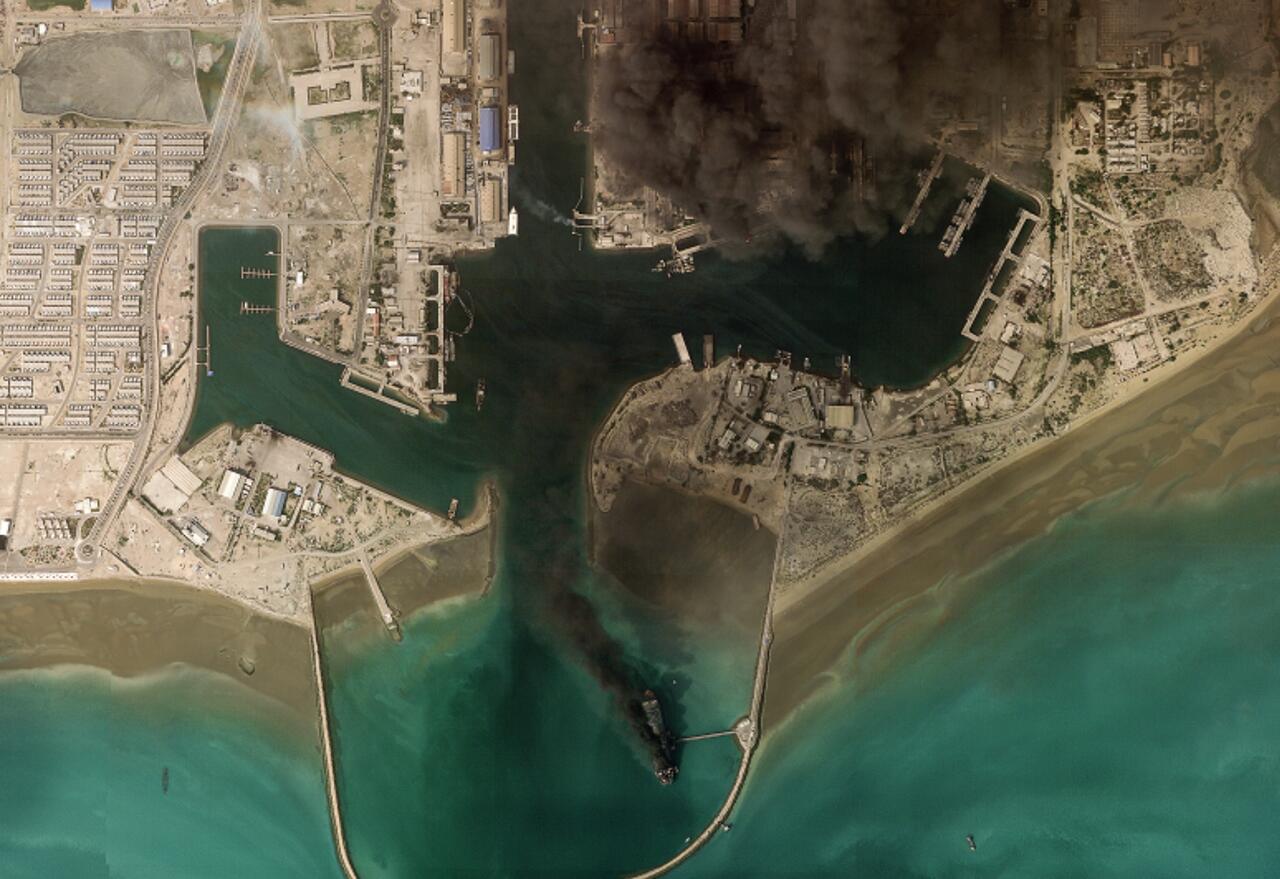
Some analysis of what may be behind this latest direct fire flare-up:
“Given where the strikes actually targeted – this is right next to where Iran would want to exert control over the Strait of Hormuz,” Puri told Al Jazeera. “One interpretation of these strikes … is that it is actually the US military demonstrating that Iran will not be able to mass forces exactly at the Strait of Hormuz itself if they want to institutionalize a toll collection and inspection regime and other things.”
“Both sides are signaling intent and capability and commitment during these negotiations, and they’re using actions as well as words. Sometimes they’re using actions in place of words,” he added.
Ayatollah’s New Threat Against US Bases
Following the engagement, an IRGC military spokesperson issued a blunt warning to Washington against future ceasefire violations, declaring that any new aggression against sovereign territory would be met with a “far more severe” response that would structurally extend “beyond the region.”
Supreme Leader Mojtaba Khamenei, who has been in hiding, released a fiery written address via his Telegram channel to mark the Islamic Hajj pilgrimage. In the message he put American bases scattered throughout neighboring Gulf nations on notice, declaring that the US will “no longer have a safe haven for mischief and the establishment of military bases in the region.”
Khamenei warned regional Arab capitals that playing host to the Pentagon carries with it certain risks. “The nations and lands of the region will no longer be a shield for American bases,” Khamenei wrote in the message, even while extending an apparent olive branch of sorts immediate neighbors: “I sincerely and purely invite all Islamic countries and governments to friendship and cooperation.”
Meanwhile some latest from Rubio…
JUST IN: Marco Rubio on Iran & The Strait of Hormuz:
“They’re going to be open one way or the other. So they need to be open, what’s happening there is unlawful, it’s illegal, it’s unsustainable for the world, it’s unacceptable. I don’t know of any country in the world that… pic.twitter.com/HgmbRhd27S
— Sulaiman Ahmed (@ShaykhSulaiman) May 26, 2026
Marking the Hajj, the annual Islamic pilgrimage to Mecca, his message included as follows:
Iranian leader Mojtaba Khamenei issued a message on May 26 calling for greater unity across the Muslim world against the United States and Israel, saying that the chants “Death to America” and “Death to Israel” will become the rallying slogans of Muslims and “the oppressed of the world.”
Deal Status & $12 Billion Confidence-Building Measure
According to reported leaks detailing the active Memorandum of Understanding (MoU) layout, Tehran’s compliance hinges on a strict, phased cash release. A source familiar with the text confirmed that Teran is demanding “12BN released now and 12BN after MOU 30 days runs out to open Hormuz.” If Washington refuses to front the initial tranche, the mining operations and blockade in the Strait will remain active. The initial funds release has been described by Iranian officials as a confidence-building measure to move things along toward a final agreement.
The Islamic Republic is further seeking to remind the world that a deal is being pushed forward, but it is not imminent:
An Iranian official says that while “there is no toll” on the Strait of Hormuz, the regime is working to regulate the waterway and that ships wishing to cross will likely be required to make some form of payment.
At a press briefing in Tehran attended by the ABC, the regime issued its first direct response to statements from the United States over the weekend, suggesting a deal to end the war was close and would include opening the Strait of Hormuz.
Iran did say a framework to end the war with the US had been reached, but warned an agreement was not imminent, and its nuclear program was not part of the negotiations.
I don’t get how everyone is completely blind to this. US CENTCOM literally admitted it themselves.
“Targets included missile launch sites and Iranian boats attempting to emplace mines.”
Do you lay sea mines when you’re planning to wide-open the strait? Watch what they do, not… https://t.co/PotjAg9bjZ
— JH (@CRUDEOIL231) May 26, 2026
Lebanon Unravels
In Lebanon, the National News Agency reported at least 12 civilians were killed during a devastating overnight Israeli strike on the town of Mashghara. Concurrently, Israel’s military has issued a sweeping, forced displacement directive for Nabatieh – a city of 80,000 residents – ordering them to clear out north of the Zahrani River.
On Monday Netanyahu made clear that he had ordered a dramatic expanse of the war against Hezbollah in Lebanon. Evacuation orders are once again being issued for southern suburbs of Beirut, portending a return to all-out expanded war in the country, also as Hezbollah drones are being sent on northern Israel.
Status of Talks Through the Weekend
via Newsquawk…
- Over the weekend, US President Trump posted that an agreement has largely been negotiated, subject to finalisation between the US, Iran and various Middle Eastern countries, while the final aspects and details of the deal were being discussed, and will be announced shortly.
- He followed up by stating that negotiations are proceeding in an orderly and constructive manner, while he informed representatives not to rush into a deal and that time is on their side.
- Reuters reported that the proposed framework is broken into three stages: 1) formally ending the war, 2) reopening the Strait of Hormuz and 3) opening an extendable 30-day window for broader negotiations on nuclear issues and sanctions relief.
- Axios further reported, citing a US official, that an agreement would involve a 60-day ceasefire extension during which the Strait of Hormuz would be opened, Iran would be able to freely sell oil, and negotiations would be held on curbing Iran’s nuclear programme.
- However, a US senior official told Axios that the White House doesn’t expect an agreement to end the war with Iran on Sunday and believes it could take several days for the deal’s approval by Iran’s leadership.
- Elsewhere, Iran’s Foreign Minister Araghchi travelled to Doha for talks with Qatar’s PM.
Tyler Durden
Tue, 05/26/2026 – 12:50