Authored by Steve Watson via Modernity News,
In a brazen move that reeks of authoritarian control, the UK government is pushing plans to seize influence over YouTube’s recommendation system. Their goal is to prioritise content from the BBC, and other state backed propaganda machines, while burying independent journalists and creators who dare challenge the official narrative.
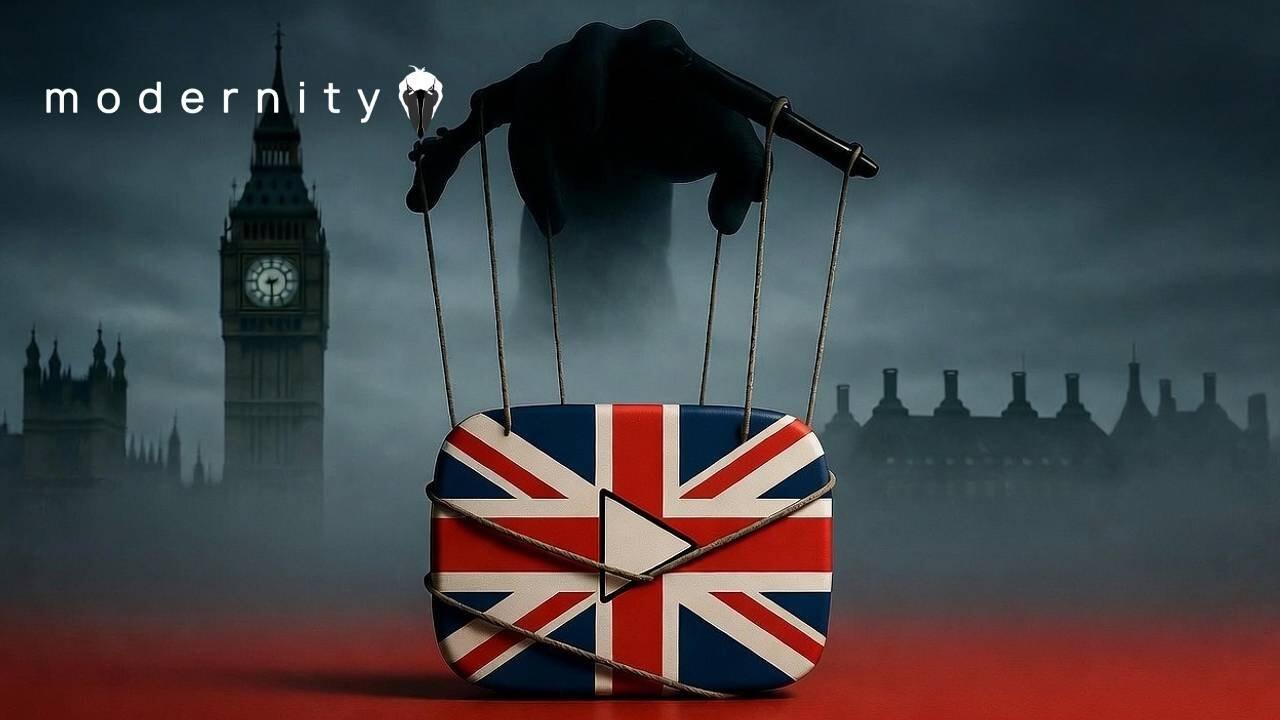
This isn’t subtle nudging – it’s direct engineered suppression, which they’re dressing up as “protecting democracy” from so-called disinformation. As public trust in legacy media plummets, the establishment’s response is to rig the game rather than earn back credibility.
YouTube itself has warned creators about the proposals. The platform alerted users that new rules could force it to give privileged positioning to approved outlets, limiting growth for everyone else and reshaping what millions see daily. Independent voices who built audiences by speaking truth to power now face algorithmic exile.
Look at this appalling state censorship.
Labour now want to seize control of YouTube’s algorithm.
They want YouTube to artificially boost the BBC and Channel 4’s content, and suffocate independent journalists and producers.
The BBC has been biased to pro-mass migration,… pic.twitter.com/QbwrRNjkSo
— Nigel Farage MP (@Nigel_Farage) July 5, 2026
GB News’ Alex Armstrong labelled the move “an act of pure tyranny, designed to control you, your family and your friends on an industrial scale.”
‘An act of pure tyranny, designed to control you, your family and your friends on an industrial scale. They want you to be sheep.’@AlexArmstrong shares his outrage at government plans to push ‘propaganda’ and state controlled media to the top of your social media feed. pic.twitter.com/kZ2cQ6ykmS
— GB News (@GBNEWS) July 4, 2026
The Free Speech Union described the move as “beyond dystopian.”
This is beyond dystopian. https://t.co/fnaA4FOm5A
— The Free Speech Union (@SpeechUnion) July 5, 2026
People fled to platforms like YouTube and X precisely because of the BBC’s documented biases on mass migration, Net Zero, and more – biases even internal BBC reports have acknowledged. Now, the government wants to drag that failing model into your feed by law.
Technology and free speech lawyer Preston Byrne slammed it as the British government seeking to “influence and control the marketplace of ideas.”
‘It’s the British government seeking to influence and control the marketplace of ideas.’
Technology and free speech lawyer Preston Byrne reacts to government plans to push ‘propaganda’ and state controlled media to the top of your social media feed. pic.twitter.com/CSWuyVWaqw
— GB News (@GBNEWS) July 4, 2026
Lord Toby Young highlighted the absurdity in The Spectator: calling the targeted media “trustworthy” is a misnomer when people have already abandoned it. Forcing platforms to promote it won’t restore trust – it will confirm the desperation.
In my latest @Spectator column, I ridicule the Government’s Media Green Paper and its proposal that social media platforms should be forced to boost ‘trusted’ media sources, like the BBC.
“Isn’t it a bit of a misnomer to describe the media content the government wants people to…
— Toby Young (@toadmeister) July 4, 2026
The Free Speech Union also linked the development to Culture Secretary Lisa Nandy’s exit from X, where she cited threats to democracy all while her department advances state-favoured content rules.
Lisa Nandy has quit X. Yes, the Secretary of State for Culture, Media and Sport has decided that, rather than challenge so-called misinformation and disinformation, she would rather vacate the stage.
She has dubbed the platform a threat to democracy and free speech.
Since when… pic.twitter.com/n5MrboDwup
— The Free Speech Union (@SpeechUnion) July 4, 2026
It’s the same playbook we’ve seen over and over: label dissent as dangerous, then legislate your preferred sources into prominence.
The Mercian News pointed out the BBC’s own admission that only around 30% of the public trusts national news organisations, with over 50% trusting social media more. Forcing exposure won’t fix that – it exposes the contempt for audience choice.
The BBC is so trusted that the government has to use the law to force you to pay for it and now has to use the law to force you to watch it. https://t.co/BAmXtFGZce
— The Mercian (@TheMercianNews) July 5, 2026
Even some on the left, like the Labour Digital Rights Network, have criticised the hypocrisy of engineering a sanitised internet while claiming to fight Big Tech.
? The government’s new media consultation is a blatant attempt to seize control of social media algorithms and enforce a “state-approved” news feed.
Under the guise of promoting “trustworthy news”, @DCMS is exploring legislative options to force platforms like YouTube to give… pic.twitter.com/J8HOlOgyon
— Labour Digital Rights Network (@LabDRN) July 5, 2026
? The government’s new media consultation is a blatant attempt to seize control of social media algorithms and enforce a “state-approved” news feed.
Under the guise of promoting “trustworthy news”, @DCMS is exploring legislative options to force platforms like YouTube to give… pic.twitter.com/J8HOlOgyon
— Labour Digital Rights Network (@LabDRN) July 5, 2026
The post continues…
The hypocrisy is staggering. Just days after @lisanandy proudly announced she was abandoning @X because it “favours abuse and misinformation”, her department is now trying to artificially engineer a sanitised internet elsewhere. We cannot afford to let the state become the sole arbiter of truth online. Yes, we are highly critical of Big Tech’s toxic algorithms that monopolise our attention and harvest our data to generate profit. But the solution to surveillance capitalism is robust regulation, algorithmic transparency, and data protection – not a state-dictated media feed.
Resistance is already brewing. YouTube’s warnings have sparked calls for pushback. Creators and users are urged to respond to the government’s consultation, which closes August 31. Ben Graham suggested a practical defence: block the BBC, ITV, and Channel 4 channels to starve the forced promotion of engagement.
If you think the algorithm is being reshaped, the simplest response is to take control of your own feed.
Block the BBC, ITV and Channel 4 if you don’t want them in your recommendations.
They can’t push content you don’t engage with. https://t.co/zpOYPWJGAL
— Ben Graham (@BenGrahamUK) July 4, 2026
Of course, the government could, via it’s regulator Ofcom, simply mandate that these sources cannot be blocked and must be injected into people’s feeds. They could also employ a more subtle manipulation of the algorithm to ensure it happens, regardless of any blocking.
Preston Byrne argued Google should draw a hard line – threatening to close its UK data centre and operations rather than comply with foreign censorship demands. American tech shouldn’t bend to UK overreach.
Google has exactly one data center in the UK.
All it has to do is threaten to close it and pull out its personnel. That is the answer to foreign censorship, it is the only answer, and the longer Big Tech ignores the option the more cancerous foreign regulation will become. https://t.co/YANnrNtkoc
— Preston Byrne (@prestonjbyrne) July 4, 2026
The government frames this as voluntary cooperation with legislation as backup, especially during unrest. Critics see it as the thin end of the wedge toward a Ministry of Truth, where “approved” sources drown out scrutiny of open borders, policy failures, and elite consensus.
This isn’t about quality journalism – it’s about control. When legacy outlets lose the audience on merit, the state steps in to mandate relevance. Independent creators built YouTube’s vibrancy; now they’re collateral in a war on wrongthink.
Britons deserve better than algorithmically enforced propaganda. The pushback must be fierce: block, respond to consultations, support platforms that resist, and back politicians who reject this surveillance-state creep. Freedom of information is too vital to surrender to failing institutions desperate to cling to power.
This UK initiative does not stand alone. Similar moves are advancing in lockstep across the continent as governments seek greater leverage over information flows.
Germany has pursued measures to force social media platforms to boost state-aligned content and sideline dissenting material under the banner of “public value.”
The EU’s Democracy Shield framework has drawn sharp criticism as a vehicle for mass censorship that effectively ends open discourse under the guise of protecting democracy.
In France, President Macron has pushed aggressive censorship proposals widely described as a Ministry of Truth power grab.
The pattern is unmistakable: governments leveraging regulatory power to privilege official or state-funded sources while algorithmically demoting alternatives.
The BBC prioritization scheme fits into a rapid succession of UK measures that collectively tighten state influence over digital space and public narrative.
The under-16s social media ban has been exposed as a monumental pretext for total digital surveillance infrastructure.
Telegram founder Pavel Durov warned that the policy represents the digital iceberg that could sink the free internet.
Separate reporting revealed the UK government maintains a dedicated “thought police” unit aimed at controlling the mass migration narrative.
Further proposals would empower authorities to block “false information” during crisis events, creating an official Ministry of Truth mechanism.
London Mayor Sadiq Khan has separately called for a government social media disinformation unit, adding another layer of official narrative enforcement.
Advocates insist elevating BBC content will help users encounter more “reliable” information. The claim collapses under even cursory examination of the broadcaster’s recent track record.
The BBC has repeatedly been accused of sinking to new lows on accuracy and impartiality.
Its former news director stated that trans bias and progressive orthodoxy drove her departure.
Additional controversies include a high-profile fake news editing scandal that prompted a $10 billion lawsuit from President Trump.
Further examples involve portrayals of Islamic child slavery in Afghanistan as somehow necessary, biased handling of Islamist issues in Britain, and presenter conduct that drew sharp rebukes from figures like John Cleese.
Mandating algorithmic favoritism for any single outlet, especially one with the BBC’s baggage, will not restore trust. Alternative platforms continue to grow, and Community Notes-style transparency tools already expose manipulation faster than official gatekeepers can suppress it.
Governments that distrust citizens to navigate information without state curation reveal more about their own insecurities than about any genuine disinformation crisis.
The free exchange of ideas, even uncomfortable ones, remains the only proven defense against real propaganda.
These latest European and British maneuvers represent the opposite impulse: centralized narrative control dressed up as public protection.
Citizens on both sides of the Atlantic have seen this playbook before and are increasingly unwilling to play along.
Your support is crucial in helping us defeat mass censorship. Please consider donating via Locals or check out our unique merch. Follow us on X @ModernityNews.
Tyler Durden
Sun, 07/05/2026 – 10:30