Markets rarely hand you a clean morality play. On Monday night, a federal judge entered one, clocking in no less than 78 pages, in the public docket. And for anyone who has played one of America’s chart-topping “skill gaming” apps – a group that certainly includes many readers of this site – this may be for you.
A federal trial has now established that at Papaya Gaming, the private Tel Aviv-based publisher of Solitaire Cash and Bingo Cash, the “humans” across the table were actually quite often programmed bots.
The winner in all of this is Firy, Inc. (of the eponymous FIRY ticker), the operator that played the SPAC game to a $3.5 billion valuation in 2020, roundtripping 96% to a $130 million market cap with an estimated 20% of its float sold short.
Needless to say, at a market cap of a paltry $130 million, the market had written the whole thing off, pricing FIRY below the $185 million of cash on its latest, March 31st balance sheet, never mind the platform or anything else left on either side of the ledger.
But all that changes now. FIRY led the lawsuit against Papaya and is the beneficiary of a $719 million award handed down overnight, well over 5 times its market cap. This is the judge’s ruling after a $420 million jury award and Papaya’s failed attempts to get the case tossed out.
What Papaya did, in the court’s own words (from Monday’s Opinion)
- “In January 2021, for example, Papaya used bots in about 90% of its cash tournaments” (Op. at 8.)
- From 2021 to 2024, “bots accounted for over 13 million of the participants on Papaya’s platform, compared to about 11 million human players.” (Op. at 7.)
- “Papaya only paid customers roughly $2 billion of the $6.7 billion that it advertised had been awarded in prizes.” (Op. at 8.)
- “When a bot ‘won’ one of these tournaments, Papaya kept all entry fees.” (Op. at 28.)
Liquidity bots, tailored bots, and losing before you played Papaya ran two kinds of fakes.
- “Liquidity bots were used to create immediately accessible tournaments of various sizes, including up to 20 or more ‘players’.” “[A] 20-player tournament might have one human player and nineteen bots.” (Op. at 7.) Their job was to make a game exist instantly, at any hour of the night.
- The second kind decided outcomes: “bots were used to give a player a designated win or loss. For instance, a player who had a losing streak could be given a ‘win’ to motivate them to keep playing in more tournaments.” (Id.) These “tailored bots” operated “in over 630 million Papaya tournaments, or in roughly one-quarter of the 2.6 billion tournaments that Papaya hosted during the years 2021 to 2024,” and “[m]ore than 6.1 million of those human beings played in at least one tournament where tailored bots were designed to give them a loss.” (Id.)
Think about that: millions of Americans paid to lose games that were over before they started.
The Fifth Amendment and the apology
Perhaps predictably, Papaya’s executives pled the Fifth Amendment during the case and the court did not let them un-
ring that bell at the last minute.
- “Papaya’s executives invoked their Fifth Amendment right against self-incrimination at their depositions. About a year later, on the eve of trial, those same executives sought to withdraw their invocation of the Fifth Amendment privilege.” (Op. at 13.)
Later on, Papaya’s own trial lawyers conceded to the jury: “Papaya has taken responsibility for its actions. It stopped
giving those customer complaint responses. It stopped using bots.” (Op. at 11 n.2.) Please clap.
The $719 Million Blow
On April 23, a unanimous jury found Papaya liable for false advertising and awarded $420 million in damages – what the winning law firm King & Spalding calls the largest false-advertising award in U.S. history.
Yesterday’s opinion granted a $719 million disgorgement of Papaya’s profits – higher than the $420 million jury verdict – and did not mince words: “Papaya’s fraudulent conduct was extraordinary.” (Op. at 37.) Papaya “entered the U.S. market through a massive deception” (Op. at 71) — a “willful, bad faith violation of the law.” (Op. at 76.)
FIRY ends up the big loser and the big winner
FIRY launched the first real-money skill-gaming platform back in 2012 (Op. at 4) and rode the SPAC wave public at a $3.5 billion valuation in December 2020. The court traced what happened next: “Skillz’s revenue had fallen by 60% in just two years, tumbling from $384 million in 2021 to $152 million, while Papaya’s revenue skyrocketed from $163 million to $461 million over the same period.” (Op. at 10.) In June the company rebranded itself FIRY… because five years of a tortured stock price will do that to you.
Now What?
The cheater owes $719 million and the honest player collects. Good over evil, with interest.
The 20% of the float that was short into Monday’s opinion bet on the wrong hand. On the April jury verdict alone, FIRY closed up 238% amid multiple volatility halts. And that was before the judge denied a new trial and raised the number above what the jury awarded ($420 million to $719 million).
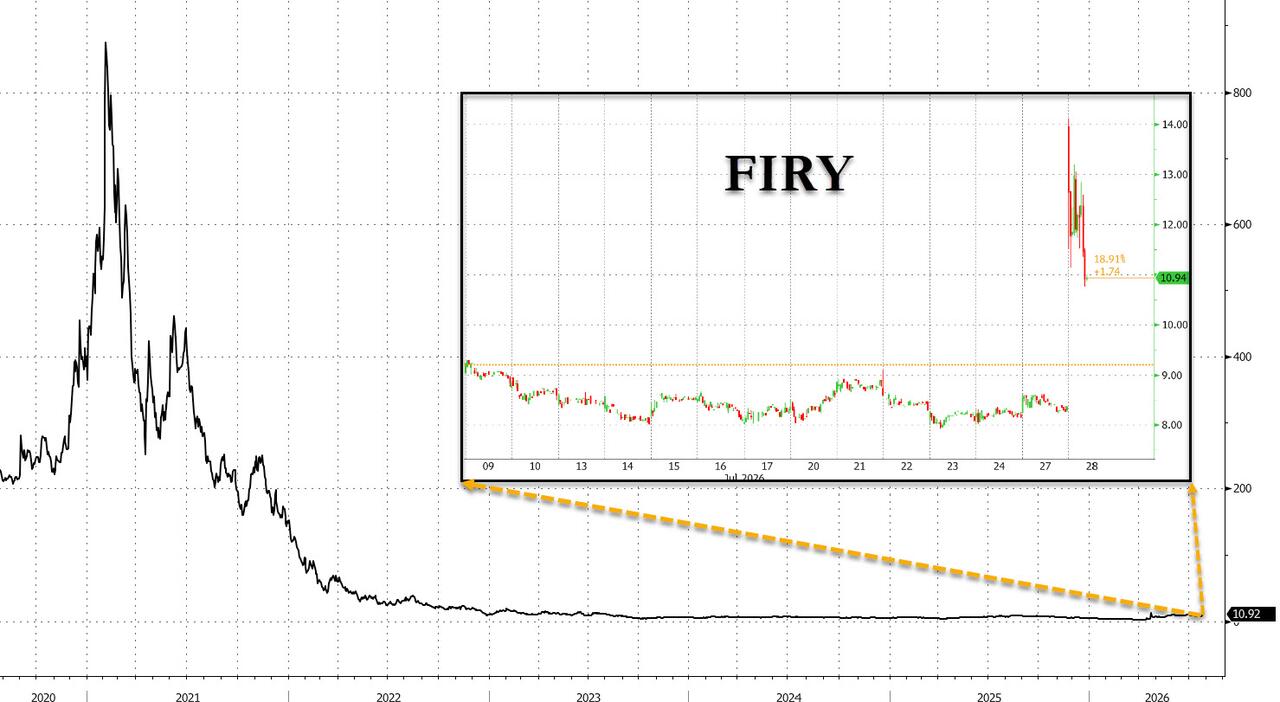
To appeal, Papaya must produce an appeal bond on the order of $800 million in real money — no bots accepted. Will the private credit bubble extend to writing that paper for a private Israeli company whose only product a federal jury and a federal judge have both found was fraudulently marketed? Is there an AI angle here? Asking for a friend in Tel Aviv.
Next Up: Voodoo
Monday was not the first time this has happened. In 2024, FIRY took AviaGames – publisher of Pocket7Games – to a California jury and won $42.9 million for patent infringement, two years before its latest win against Papaya (“Skillz Wins $42.9M IP Trial Against Rival Accused Of Bot Fraud”).
Now in 2026, FIRY takes a win against Papaya.
Then there is the one more case not yet discussed: FIRY’s July 2024 lawsuit against Voodoo, the French owner of Blitz Win Cash, over what it alleges is the same bot playbook. While Voodoo fights these claims and nothing has been decided, one would imagine the Papaya verdict is being analyzed today in Paris.
Tyler Durden
Tue, 07/28/2026 – 12:40