Panama Canal transit auction prices have surged to record highs this summer as an intensifying El Niño and disruptions in the Strait of Hormuz upend global shipping routes.
A Bloomberg report Friday morning said a supertanker paid a record $4.6 million at auction to bypass the growing queue and secure an earlier transit slot next week. The spike in canal fees and vessel wait times threatens to further raise freight costs, reinforcing growing concerns about inflationary pressures across global supply chains.
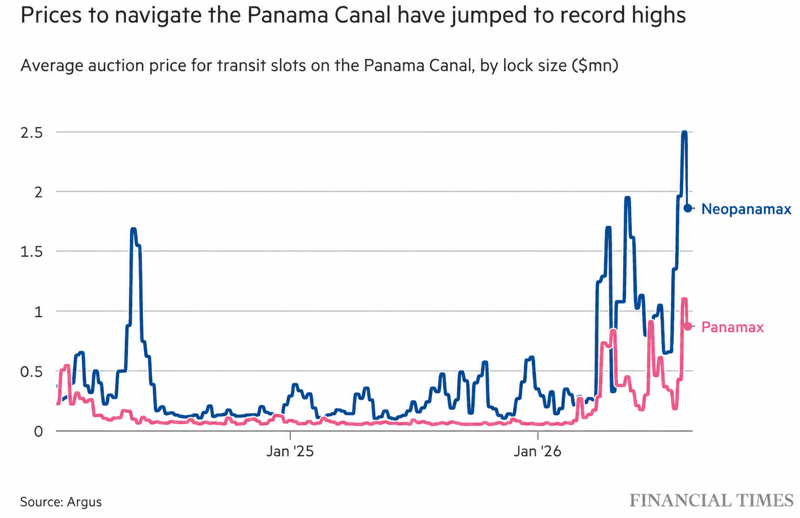
Daily auctions for August passage through the canal’s busiest locks have averaged about $1.1 million, more than 16 times the average during the same period last year, according to the Financial Times, citing Argus Media. Recent auctions for the larger locks averaged a record $2.5 million.
Bloomberg said that the liquefied petroleum gas supertanker G. Arete paid a staggering $4.6 million to skip the line, topping an earlier auction this week that exceeded $4 million.
At the same time, the Hormuz chokepoint disruption has pushed Asian buyers toward crude oil and petroleum products at major US export terminals in the Gulf of America, increasing demand for canal passage. Meanwhile, falling canal water levels linked to intensifying El Niño weather conditions, such as drought and limited rainfall, are constraining traffic, which are the main drivers behind rising transit costs.
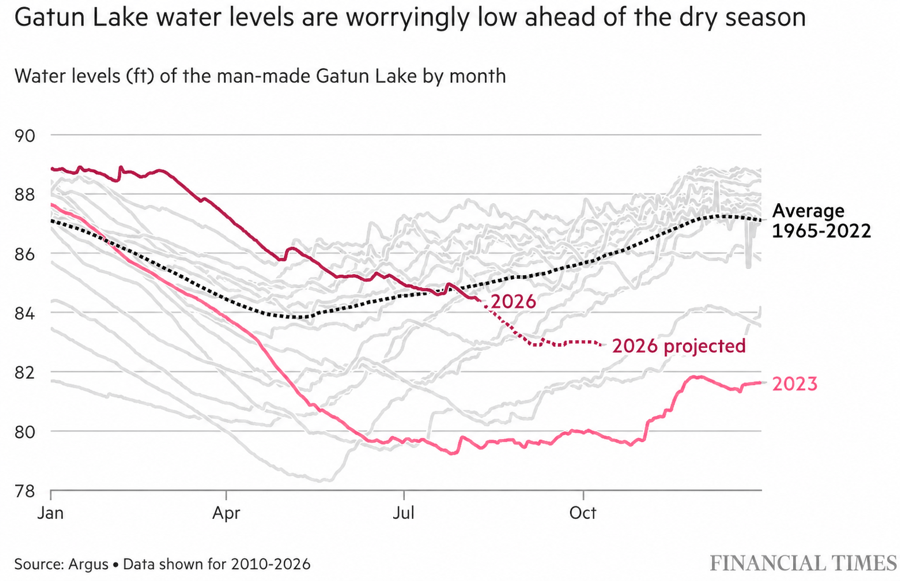
“The problem right now is the water levels are dropping steadily, and it’s not supposed to be doing that from May to December,” said Ross Griffith, head of Americas freight pricing at Argus, who the FT quoted. This year’s El Niño has already disrupted marine traffic on European rivers such as the Rhine and Danube, leading to cruise cancellations and freight rerouting.
More color from the FT:
The Panama Canal Authority told the FT that some vessels that recently transited have paid amounts exceeding $1mn at auction to meet their specific market needs and reflected “temporary market fluctuations”, not a tariff set by the Panama Canal.
“The announced draft adjustments will not reduce the number of daily vessel transits,” an authority spokesperson said. But depending on how conditions change, the authority could impose further restrictions, the spokesperson added.
Parash Jain, managing director and HSBC’s global head of transport and logistics research, told clients earlier this week that concerns are mounting that other key waterways around the world are also facing lower water levels, constraining shipping:
El Niño increases both drought and flood risks by shifting rainfall patterns, accelerating evaporation, and lowering river levels at key gateways such as the Panama Canal and Rhine River, while creating floods in Asia and South America, reducing harvests. Authorities respond with draught limits, caps on daily transits, and tighter slot availability, which forces vessels to load less, wait longer, or split cargoes, thus reducing effective capacity and supporting freight rates. Indeed, from 26 August, The Panama Canal Authority is lowering the maximum draft for the largest vessels transiting the canal, preparing for El Niño (6 August, Maritime Executive).
The strengthening El Niño episode poses risks well beyond shipping. As major institutional desks have warned, drought, flooding and disrupted harvests could tighten agricultural supplies and place renewed upward pressure on global food prices
Tyler Durden
Fri, 08/14/2026 – 13:20