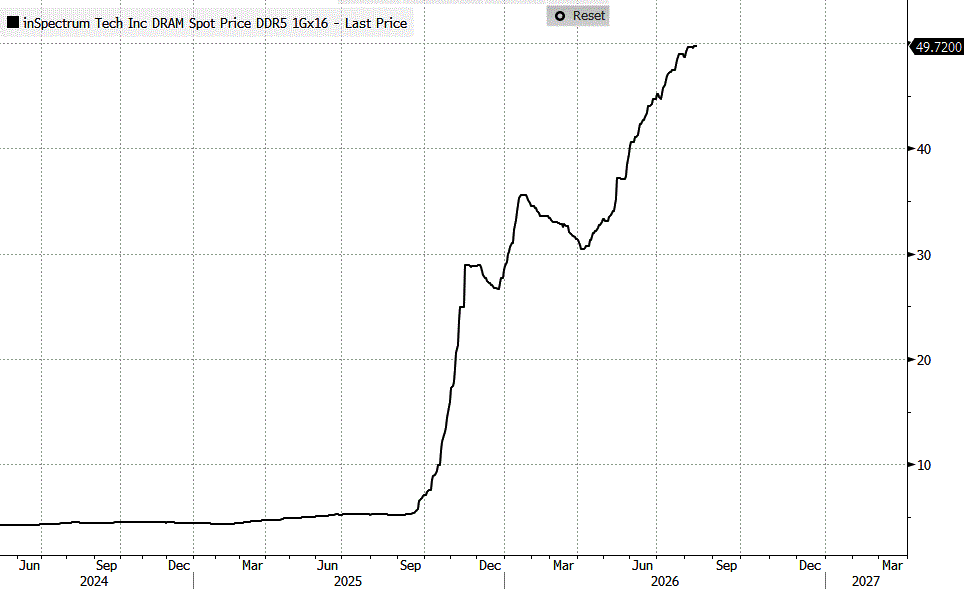
One week after The Wall Street Journal reported that Tim Cook’s Apple was testing memory chips from China’s CXMT, a company blacklisted by the Pentagon over alleged ties to the People’s Liberation Army, the outlet published a follow-up story with an interview with Commerce Secretary Howard Lutnick, who publicly urged Apple not to proceed. The standoff comes as the AI data-center buildout absorbs global memory supplies, driving prices sharply higher and forcing consumer-electronics manufacturers to explore alternative sources.
“The Trump administration is not in favor of that,” Lutnick said in an interview after touring a new Apple manufacturing plant in Houston, Texas. There have to be “other solutions to the memory issue, but it’s not great American companies using Chinese memory.”
Lutnick said he has told Apple “plainly” that US tech giants shouldn’t use Chinese memory. Apple has tested chips from CXMT and Yangtze Memory Technologies for potential use in devices sold in China, though Chief Operating Officer Sabih Khan declined to comment on the trials, saying her team must examine “all options.”
Apple can buy standardized Chinese memory chips without government approval, but customized components could require licenses.

As we’ve covered, the iPhone maker has been waging a lobbying campaign to secure the White House’s blessing to ease the financial pressure from soaring memory-chip prices. A recent FT report said Apple approached the Commerce Department earlier this summer about procuring Chinese memory chips.
Related:
But Lutnick’s comments to the WSJ make clear that the White House has, at least for now, withheld that blessing.
Meanwhile, Micron Technology and US senators from states benefiting from planned US memory investments are lobbying the administration to block US tech giants from procuring Chinese memory chips, warning that doing so would undermine domestic production and national security.
The WSJ previously reported that other device companies are also seeking supplies from CXMT:
Laptop makers HP and Acer have started using memory chips from CXMT in devices sold outside the U.S. to alleviate some of the memory supply strain, people familiar with the matter said.
Back to the Lutnick interview from Friday, the outlet reported:
Even so, Lutnick, who is spearheading the administration’s plan to increase domestic chipmaking, said the administration continued to press Apple to bring more production to the U.S.
“Relentlessly, more and more and more,” he said, describing the pressure. “They’ve built their supply chains on low-cost labor. And now they need to build a supply chain on advanced manufacturing. Can Apple do it? Of course they can.”
“You’re going to see step by step, and piece by piece, they’re going to bring significant portions of their business home,” Lutnick said.
Most of Apple’s supply chain is in Asia, and the company has been working with contract manufacturers to build new iPhone assembly plants in India.
Asked if Apple has any plans to bring iPhone production to the U.S., Khan pointed to efforts the company has already made, including commitments to spend tens of billions of dollars on made-in-USA chips for iPhones, as well as adding an assembly line for Apple’s popular Mac Mini desktop computer in Texas. He also said Apple was focused on helping chip manufacturers reshore their supply chain end to end.
To sum up, Apple does not appear to have the White House’s blessing to use Chinese memory chips, leaving the company with fewer options to offset soaring component costs and signaling continued upward pressure on product prices.
Tyler Durden
Sat, 08/15/2026 – 12:15