Already US officials have signaled they may just abandon hard-hit bases in the Middle East altogether, in the wake of Iran’s retaliation as a result of Operation Epic Fury, and a conflict that’s dragged on for nearly six months.
On Tuesday The Washington Post reviews the damage control underway, as the Pentagon ‘evaluates’ its future military footprint. All of this is framed as if Washington has a choice and full control over the matter, when it seems that all along the Trump administration was woefully underestimating what an Iranian response would look like.
“The Pentagon is evaluating its military footprint in the Middle East in an early sign of the Iran war’s potential to transform the U.S. presence in the region, according to eight people, including officials and others familiar with the matter,” Washington Post writes.
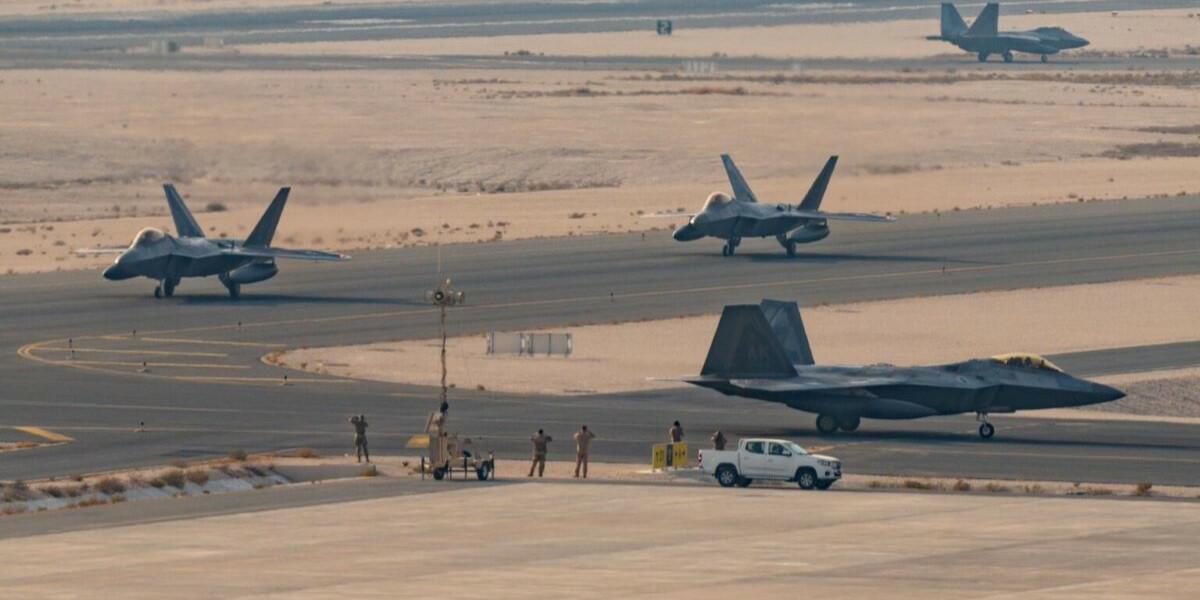
“One of the key areas the Defense Department is assessing is whether to pull back troops from the Persian Gulf, where America’s large overseas military bases have been battered by months of Iranian strikes, two people familiar with the ongoing analysis said,” it adds, further calling this a “once-in-a-generation” chance for the Pentagon to alter its presence in the region.
The whole thing is being reported as if the ‘smart people’ are in the room and in control, and also as if the US hegemon in the region didn’t already take a massive reputational hit following ‘forever wars’ and occupations in Iraq and Afghanistan. Over 20 years after the initial invasions, the Taliban remains in firm control of Kabul and Afghanistan, and Shiite pro-Iranian politicians run Baghdad.
And now a half-year into a war where the response should have been entirely anticipated (having been predicted by years and decades of Persian Gulf war-gaming and intelligence papers), this is where things stand:
“The war really did highlight the vulnerability … of U.S. forces in the region,” said Michael Ratney, a former diplomat who served as the U.S. ambassador to Saudi Arabia and the deputy chief of mission in Qatar.
Moving troops and equipment further west to Jordan, Israel or the Red Sea coast of Saudi Arabia could help alleviate some of the pressure, he argued, while noting the added distance wasn’t a “perfect solution to this problem.”
Iran has already demonstrated it can strike faraway targets in Jordan and Israel. Last month an Iranian attack on Jordan killed four U.S. service members.
Anyone with eyes to see knows that this is already happening. For months at this point, dozens of US refueling aircraft have clogged up Tel Aviv’s Ben Gurion airport, for just one example.
For smarter and more legitimate analysis, one can turn to Amerikanets, which one month ago was chronicling Tehran’s successful campaign of ‘debasification’:
The broad picture of the Iranian air war in this phase has been a steady wave of concentrated missile and drone strikes sweeping its way across the region. In contrast to the previous hot phase of the war, in which Iran targeted bases across the entire theater simultaneously, this wave started with the targets close to Iranian shores, and has progressed steadily to the Israeli border. After destroying much of the radar network protecting regional US Axis bases in the previous hot phase of the war, Iranian planners have prioritized targeting fuel storage, drone hangers, refueling tankers, and barracks.
The American response has been to pull assets back ever further from Iran, to bases in Israel and Jordan. We’ll call this process debasification. Iran’s debasification strategy takes advantage of the inherent asymmetry between the vastly different force structure and capabilities of Iranian rocket forces and US Axis air forces.
A concluding section predicted the dilemma laid out in WaPo concerning a grand Pentagon evaluation of its force posture in the Middle East:
By all available evidence, the Iranian debasification campaign appears to be working. The US force in the region is likely incapable of generating the same combat power in its air operations against Iran as it could when the war started, and things are trending ever further in a negative direction. Even worse, there’s no clear solution on the horizon. The most obvious lever for American planners to pull is to accept more casualties and losses of personnel and airframes, but this is an unprecedented step the modern incarnation of the US military has never faced.
“The Iranian debasification campaign appears to be working.
The US force in the region is likely incapable of generating the same combat power in its air operations against Iran as it could when the war started, and things are trending ever further in a negative direction.…
— Alex Shams (@alexshams_) July 21, 2026
What’s worse is that the Iranians know all of this full well – and probably earlier than the Western public – and they smell blood in the water. Hence, this week they’ve been strongly signaling a new ‘offensive’ military posture, and have vowed to hit harder in whatever next waves of conflict come.
So will the US rebuild bases battered by Iranian strikes? Well, Tehran is now saying that in essence it won’t let that happen. The WaPo article operates under the illusory assumption that US planners have some big array of options set before them, when increasingly American forces are in obvious retreat and no one can do anything about it. Also, what happened to Pete Hegseth’s rah rah Epic Fury press briefings on all the ‘winning’ and chest-thumping? It’s been a while.
Tyler Durden
Tue, 08/18/2026 – 15:25