Russia on Friday unveiled that it conducted a successful combat training launch of a mobile, solid-fuel intercontinental ballistic missile from the Plesetsk Cosmodrome in the northwestern Arkhangelsk region – host to a key missile defense and aeronautical testing base in the Arctic region.
“A training-combat launch of a mobile-based solid-fuel intercontinental ballistic missile was carried out at the Plesetsk State Testing Cosmodrome,” a defense ministry statement said, citing the work of the Strategic Missile Forces. “The training warheads arrived in the designated area at the Kura test range (Kamchatka Peninsula).”
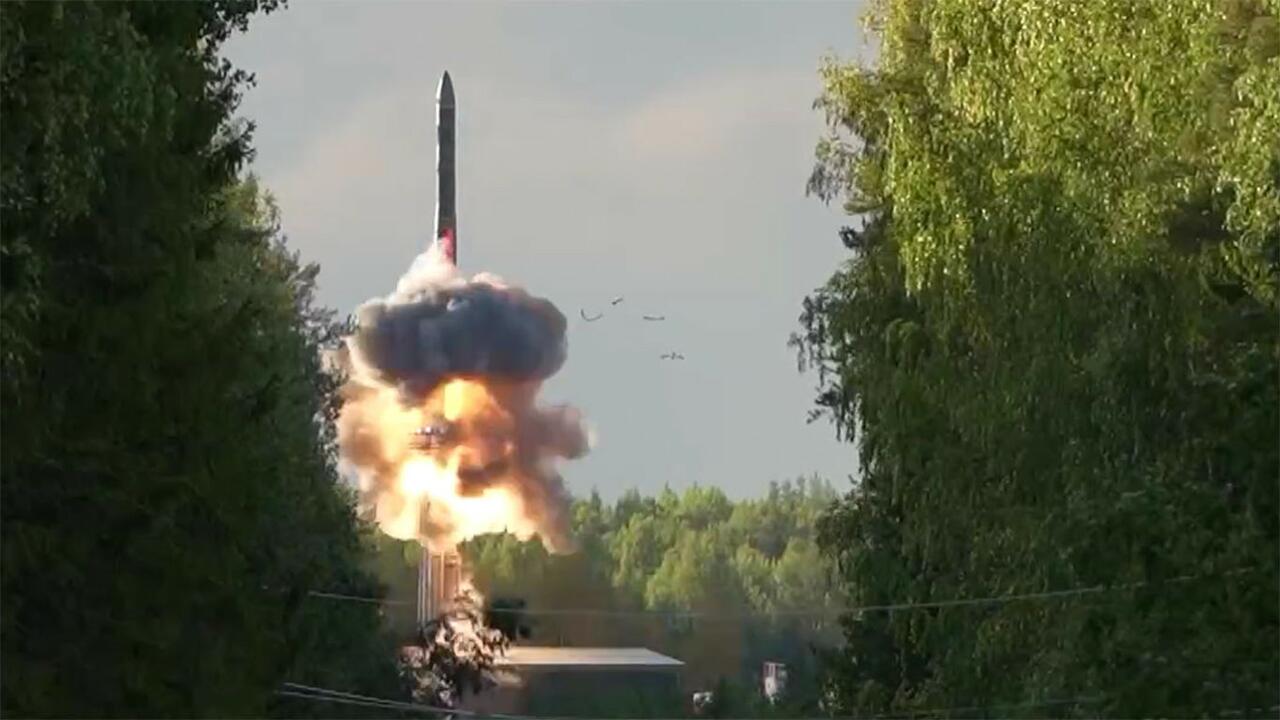
The Kura test range lies about 4,160 miles to the east of where the Arkhangelsk region launch occurred, making for an impressively distant flight across Russia.
The military confirmed that the “tactical, technical and flight characteristics of the missile system” were monitored and analyzed, and that the flight went off flawlessly.
“All assigned tasks were completed in full,” the ministry said, stating that the ICBM maintained a “flawless trajectory.” However, the ministry didn’t identified the specific missile type used.
Regional outlet Meduza notes that “In May 2026, Russia launched a Yars ICBM from the Plesetsk Cosmodrome toward the Kura test range on Kamchatka” – suggesting that this latest test could be of the same Yars missile type.
A mobile, solid-fuel intercontinental ballistic missile such as the one newly launched, is something which could eventually be used to directly target Ukraine, or else possibly Kiev’s NATO backers if a broader conflict were to break out.
Separately, it’s being reported this week that another ballistic missile was actually used in combat. “Russia has reportedly used a newly upgraded ballistic missile, provisionally known as the Iskander-1000, for the first time in combat, with Ukraine’s Main Directorate of Intelligence reporting that it struck a target in the capital Kiev on August 27,” Military Watch Magazine reports.
“The 9M723-2 ballistic missile used is reportedly an upgraded derivative of the 9M723-1 missile used by the older Iskander-M system, and can achieve a 1,000 kilometre range, where the Iskander-M system was previously limited to a 500 kilometre range,” the publication continues.
Flexing at the West? Russian military publishes footage of an impressively large rocket launched…
🚨 🇷🇺 Russia’s Defense Ministry said it successfully launched a mobile intercontinental ballistic missile from the Plesetsk Cosmodrome on Friday.
The missile flew more than 6,700 kilometers to a test site on the Kamchatka Peninsula.
The ministry said the launch checked the… pic.twitter.com/QnKcFWMIU1
— Russia News (@russianews_eng) August 28, 2026
“According to Ukrainian sources, the principal change involves the missile’s propulsion system, as the 9M723-2 reportedly incorporates a larger engine, requiring a corresponding enlargement of the launch tube used by the missile’s launcher,” the report also describes.
Tyler Durden
Sat, 08/29/2026 – 14:35