When did “election integrity” become such a contentious issue in the US? Perhaps it was election night in November 2020 when Joe Biden and the Democrats received an impressive “hockey stick” spike in votes after most Americans went to bed. Most of these votes came from absentee mail-in ballots, an event which inflated Joe Biden’s numbers to 81.2 million – The greatest number of votes any candidate has ever received in US history.
That’s right, the candidate who was rarely seen for half of the campaign cycle and who could barely fill a room during campaign speeches was apparently the most popular candidate of all time.
It’s understandable why a large percentage of the public viewed this incident with great suspicion. In 2024, with covid confusion gone and all eyes watching the polls carefully, Kamala Harris fell short of Biden by 6.3 million votes. Ironically, many Dems suggested that that the election was “rigged” in Trump’s favor because of the sizable discrepancy between Harris and Biden.
They didn’t consider the possibility that the 2020 election might have been rigged in Biden’s favor, giving him a vote count that probably won’t be matched again for many elections to come.
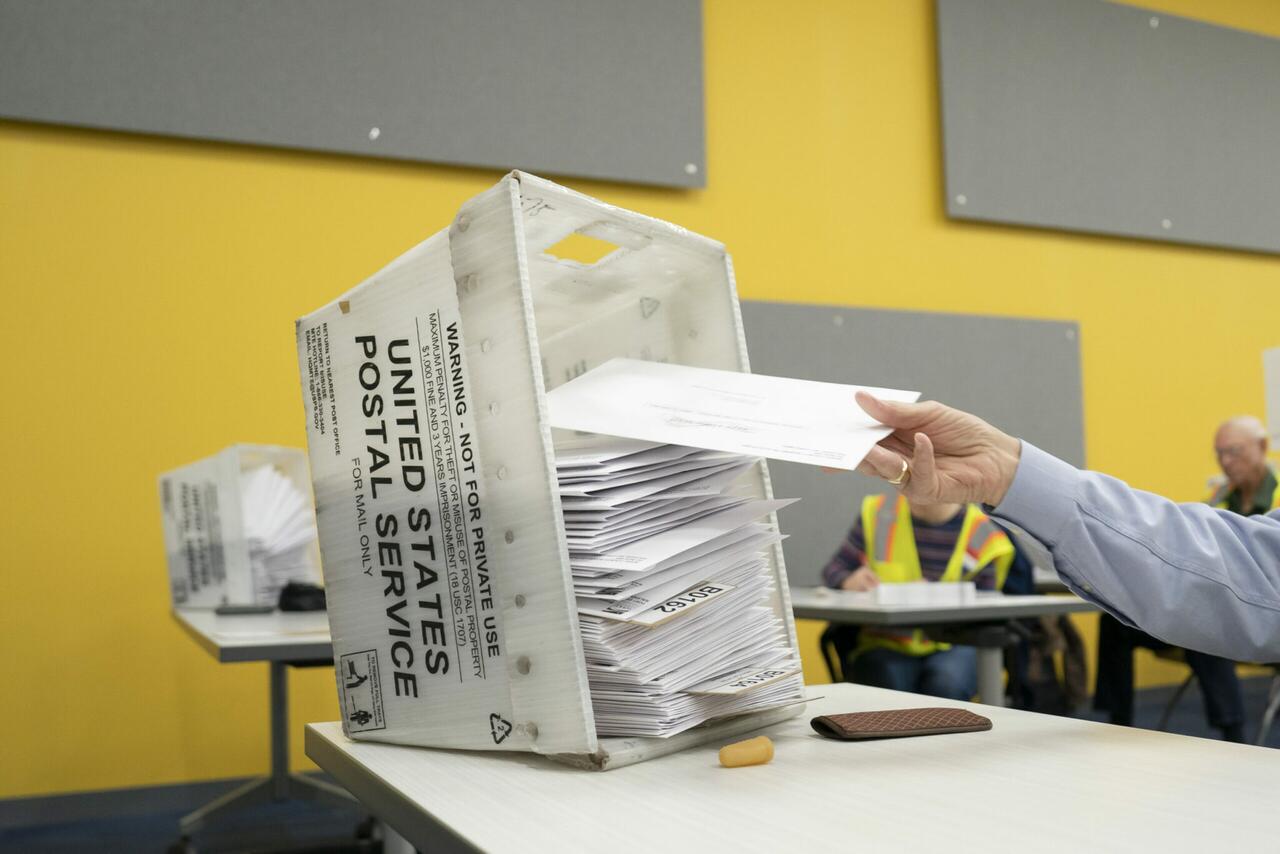
Or, maybe Joe Biden really was that charismatic, earning the most votes of all time. He’s a sharp and engaging guy. In any case, the Trump Administration has made election integrity the centerpiece of its political mission. Two important policies are at stake: Voter identification which nearly 80% of the public supports, and limitations on mail-in ballots including tracking and verification to prevent fraud.
Democrats are aggressively opposed to both, calling the measures “racist” and “fascist”.
Why? Probably because they want the option to cheat. There’s really no other explanation for standing against secure voting. Trump’s efforts to pass these rules into law through traditional congressional measures has been met with numerous obstacles, including a small handful of Republicans who are siding with the Democrats.
Trump is now trying alternative pathways. The March 2026 executive order that triggered the USPS rule is titled Ensuring Citizenship Verification and Integrity in Federal Elections. It says unique ballot-envelope identifiers such as barcodes “enable confirmation that only citizens receive and cast ballots, reducing the risk of fraud and protecting the integrity of Federal elections.”
The Postal Service also reserves the right to reject ballots without proper verification of legal voter recipients. Sounds like commons sense, and the Supreme Court has agreed, for now. The court issued a procedural stay that let the executive order move forward, but the legality remains in question.
Meanwhile, 24 states and the District of Columbia have moved to sue the Postal Service to prevent ballot tracking measures. The rule would require states to enroll mail-eligible voters in a USPS portal, use USPS-approved ballot envelopes with trackable barcodes, and allow USPS not to deliver ballots that do not meet those conditions.
The states argue that this exceeds USPS’s authority, interferes with states’ control of elections, and risks blocking lawful ballots shortly before the November 2026 midterms.
Democrats in multiple states have been rather open about their intentions to allow illegal immigrants to vote in elections. For example, the D.C. Council (Democratic) passed the Noncitizen Voting Act in 2022. It lets noncitizens vote in local D.C. elections. During House voting to repeal that law (2024 and again June 2025), 148 Democrats voted no – meaning they wanted D.C. to keep illegal immigrant voting in place.
Ballot measures help to prevent blue states from skirting federal voting laws when it comes to citizenship.
The blackpill argument in light of voter fraud is that the system is “already too far gone to save”, but there’s no such thing as an overnight fix. Such problems take years to develop and they take years to remedy, starting with basic baby steps and fundamentals.
Extensive tracking of mail-in ballots to make sure they’re secure and legitimate is a no-brainer. It should already be law. The fact that certain groups don’t want any verification in place for voting tells us everything we need to know about their intentions.
Tyler Durden
Mon, 08/31/2026 – 08:05