Emmanuel Sharef, who oversees Pacific Investment Management Co.’s flagship Balanced Income and Growth Fund, spoke with Bloomberg about how the next leg of the artificial-intelligence boom could be concentrated in Asian stocks and beyond.

Wealthy clients in Taiwan, Hong Kong, Singapore, and mainland China have been piling into the $19 billion fund, which has outperformed 97% of its peers during the past three years.
The fund is underweight most hyperscalers and members of the Magnificent Seven as soaring AI capital expenditures increase debt loads, pressure free cash flow, spark credit concerns, and make already eye-popping valuations much harder to justify.
“We’re underweight the majority of hyperscalers at the moment and we’re underweight the majority of the Mag seven just given their high valuations,” Sharef told the outlet earlier this week.
He continued, “You don’t necessarily need to own the most expensive stocks to capture a particular theme or a particular market trend.”
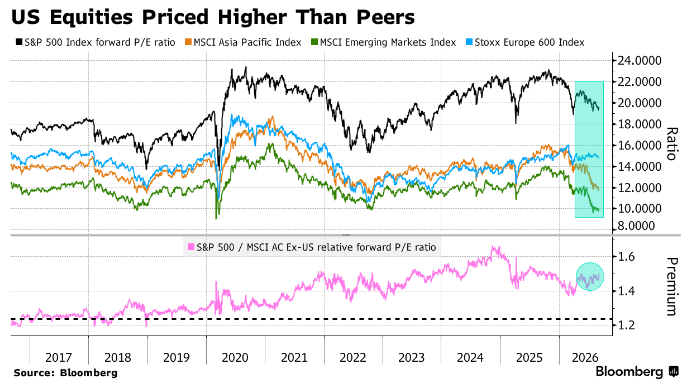
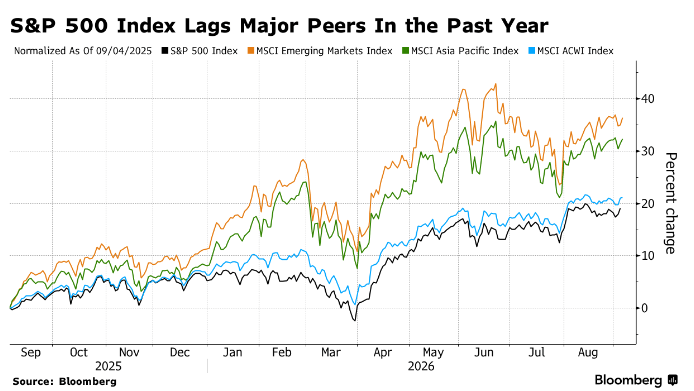
The 60/40 Balanced Income and Growth Fund has been moving further down the supply chain toward companies that build data center components and has become overweight in Asia, where it sees stronger earnings growth, cheaper valuations, and greater exposure to the companies that should be viewed as the building blocks of a data center.
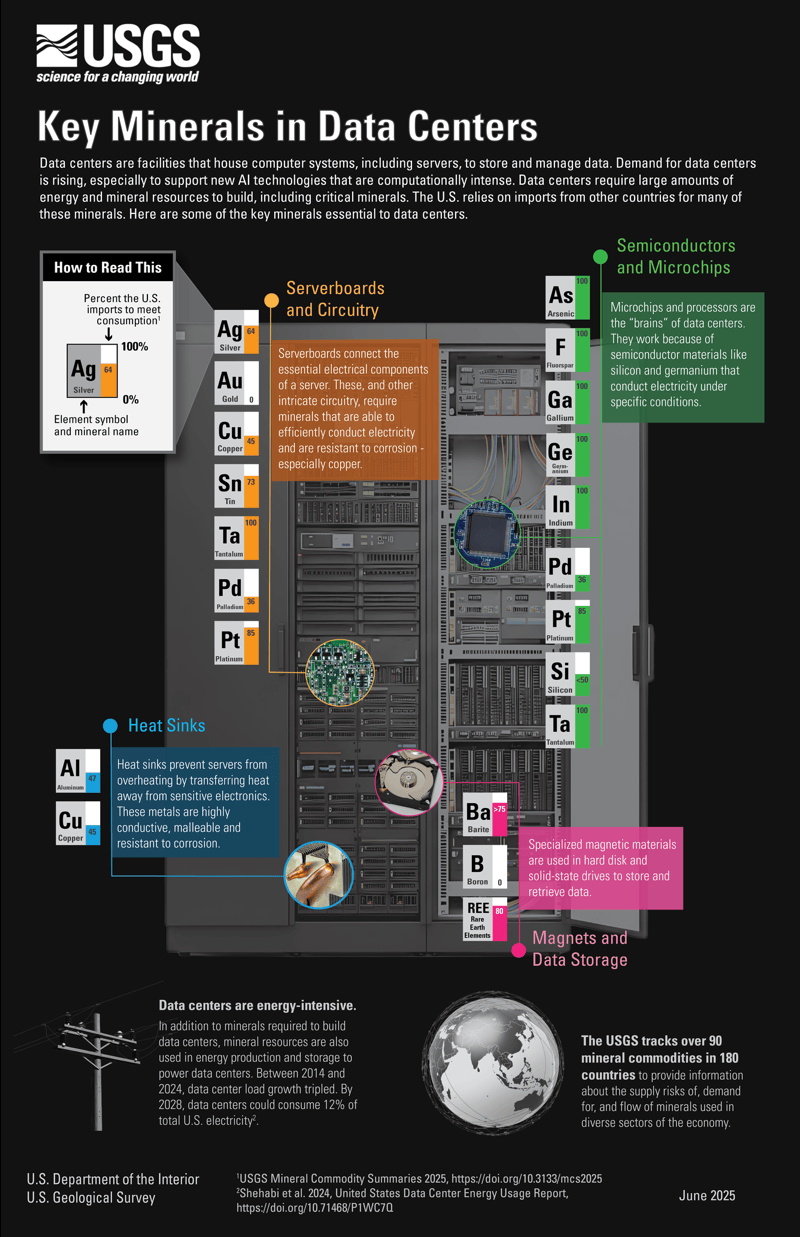
That infrastructure includes semiconductor components, cooling systems, cable interconnects, optical equipment, power supplies, construction machinery, and industrial metals.
“The AI capex build-out is enormous,” he said. “It would imply significant demand for semiconductor components for chips, cooling equipment, cable interconnects, optical equipment, power supplies, construction equipment, metals, all of the things that go into building a data center.”
The fund’s 60% stock allocation gained exposure to AI last year by plowing billions of dollars into firms such as Samsung Electronics, SK Hynix, and Taiwan Semiconductor Manufacturing.
Sharef also highlighted a theme we’ve been developing: the importance of exposure to mining and materials companies tied to data-center construction and global rare-earth supply chains.
“Chinese resource extraction and materials companies are quite significant, not just for the data center buildup, but also for rare earths,” he added.
Sharef’s call to gain exposure to rare earths and critical materials reinforces a theme we have been developing: the AI trade is ultimately constrained by access to the physical inputs required to build chips, data centers, and power infrastructure. Rare earths and other critical materials are becoming a crucial component of the next AI trade as Chinese suppliers restrict some shipments to the US and US companies accelerate efforts to secure alternative sources beyond Beijing’s reach.
The takeaway from Sharef’s conversation with Bloomberg is that the next AI winners will be on an ex-US basis, mostly in Asia.
Tyler Durden
Fri, 09/04/2026 – 21:20