Saskatchewan’s recent announcement envisages two large reactors supplying more than 2,000 MW in the northwest, potentially starting in 2042, plus at least 600 MW from small modular reactors near Estevan.
The ambition makes sense. The willingness to acquire more foreign dependencies… does not.
The list of potential vendors for large reactors is short:
- Westinghouse and its AP1000
- AtkinsRealis and Canadian CANDU technology
Will Canada import Westinghouse and their American reactor technology, or keep everything in-house with AtkinsRealis and the CANDU?
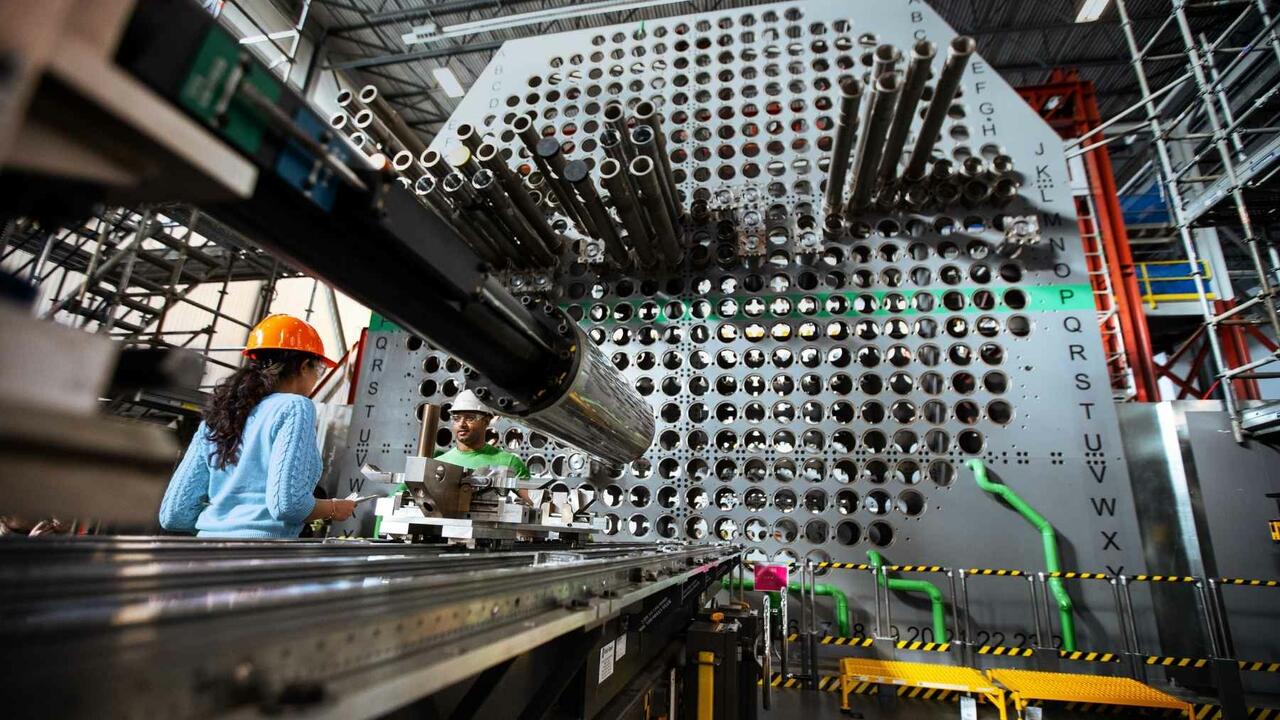
In today’s era of national energy security, it’s not exactly clear why Canadian leadership is taking more than 3 seconds to make the logical choice.
Saskatchewan is choosing between building their own homegrown reactor technology with an almost fully domesticated fuel and manufacturing supply chain, or instead, importing American nuclear technology and becoming reliant on US fuel and supply chain support for the next century.
Decisions, decisions…
While Westinghouse does wear a metaphorical red leaf on their collar (given their Canadian company ownership with Cameco and Brookfield), the AP1000 reactor technology is still American-based and is subject to export controls from the US.

On top of that, one of the biggest dependencies Canada will find themselves with is an additional need for uranium enrichment. They’ve already incurred a small amount of this pain with the BWRX-300 project at Darlington, but otherwise, the country runs on natural uranium due to the design of the CANDU reactor fleet.
One of the best features of the CANDU reactor is its heavy water moderator that allows it to use uranium enriched to as low as under 1% U-235, which is similar to the enrichment level of uranium that is pulled straight out of the ground. This allows the Canadian nuclear industry to largely skip the need for uranium enrichment, which is a painful bottleneck which will likely hold back the nuclear renaissance both in the U.S. and abroad.
The majority of the rest of the reactors in the world require the uranium that’s used inside their cores to be enriched to somewhere between 3% and 5% U-235.
Why voluntarily add a strategic bottleneck to a system that already avoids it?
And while it’s not exactly an apples-to-apples comparison, the recent history of major nuclear projects in the two countries is painful to look at side by side.
The AP1000 reactors at Vogtle 3 and 4 in Georgia came in tens of billions of dollars over budget and years late. The sister project, VC Summer, wasn’t even finished and was abandoned.
Compare that to the recent nuclear mega project of heavily refurbishing four CANDU reactors at the Darlington site. The project finished 4 months early and CAD$150m under budget. A similar refit at the Bruce site finished 7 months early and also under budget.
There may also be a political calculation here with the ongoing tariff fight. Canadian leaders could see an AP1000 order as a way to keep Trump happy and buy some breathing room. Westinghouse’s Canadian ownership would help sell the decision at home, while its American reactor technology would give Trump an export victory to advertise.
Tyler Durden
Mon, 10/05/2026 – 20:30