65.5 F
Chicago
Saturday, October 10, 2026
Home Blog Page 1076

Salesforce CEO Apologizes For Pro-Trump Comments Amid Democratic Party Machine’s Outrage

0
Salesforce CEO Apologizes For Pro-Trump Comments Amid Democratic Party Machine’s Outrage

Salesforce CEO Marc Benioff has spent years bankrolling left-wing Democrats – from Hillary Clinton and Joe Biden to progressive ballot measures across California. And look at California now. Things have deteriorated so badly that even Benioff, once the poster child of Bay Area liberalism, told The New York Times one week ago he would welcome President Trump’s National Guard deployment in San Francisco. 

Benioff’s comment sparked a firestorm inside the Democratic Party machine. Within days, the billionaire tech titan faced mounting outrage from his own political allies, such as Democratic donor Ron Conway, who resigned from the board of the Salesforce Foundation. 

Facing mounting outrage from his own political allies and fearing exile from the progressive bubble he helped fund, Benioff walked it all back (or perhaps his lawyers/PR team) and issued a carefully worded apology on X late Friday afternoon:

Having listened closely to my fellow San Franciscans and our local officials, and after the largest and safest Dreamforce in our history, I do not believe the National Guard is needed to address safety in San Francisco. My earlier comment came from an abundance of caution around the event, and I sincerely apologize for the concern it caused. It’s my firm belief that our city makes the most progress when we all work together in a spirit of partnership. I remain deeply grateful to Mayor Lurie, SFPD, and all our partners, and am fully committed to a safer, stronger San Francisco.

Surprisingly, Benioff has yet to delete this X post, showing the plunge in police officers in the crime-ridden metro area. He did not provide context that the drop began around the time the far-left city leaders pushed “defund the police” and continued other failed criminal and social justice reforms. 

Benioff, traditionally a left-wing donor and advocate for progressive causes, has recently been seen taking more centrist or right-leaning positions under Trump’s second term.

Venture capitalist David Sacks, who is now Trump’s AI and crypto czar, wrote on X, “Dear Marc @Benioff , if the Democrats don’t want you, we would be happy for you to join our team. Cancel culture is over, and we are the inclusive party.”

Peter Schweizer and Seamus Bruner of the Government Accountability Institute reminded readers yesterday (read report) that Benioff (or maybe his foundation) is part of the “billionaire-backed networks fueling the “No Billionaires’ protests.” 

Perhaps Benioff should take David Sacks’ “olive leaf,” as many of the nation’s builders already have, by abandoning the Democratic Party that’s morphed into a self-destructive machine embracing socialism, Marxism, and bowing to a globalist-aligned agenda to destroy the nation from within.

*  *  * OUTLIVE HIPPIE SCUM

  • Astaxanthin – high purity, extremely potent antioxidant (inflammation, eyes, skin, read more here)
  • Smart Protein Collagen Peptides – blend of 3 peptides: Joints / Skin / Muscle Recovery
  • Ultimate Detox – Psyllium, Slippery Elm, Inulin, Chlorella, Black Walnut, Ginger, and Papaya
  • Colostrum – Grass-fed, 1000mg IgG per serving + Lactoferrin and Proline-Rich Peptides (anti-inflammatory / immune)

Tyler Durden
Sat, 10/18/2025 – 13:25

No Kings Kicks Off Across Country As States Prepare For Violence

0
No Kings Kicks Off Across Country As States Prepare For Violence

The billionaire-funded ‘No Kings’ protests kicked off on Saturday, with what organizers claim are more than 2,600 protests across the country against “authoritarian power grabs” by the Trump administration [which are promptly halted by activist judges who overrule the ‘king’ every time].

No Kings marchers heading down 14th Street heading to the main rallying area at the National Mall. (via Andrew Leyden)

The events are supposed to be peaceful and lawful, but stick around – we’ll be watching throughout the day while these future rocket scientists get their wiggles out. A similar protest in June descended into political violence. 

Officials in several states boosted security ahead of today’s ‘peaceful’ protests – with Virginia Gov. Glenn Youngkin activating the National Guard to support police “to help keep Virginians safe,” and Texas Gov. Greg Abbott ordering state troopers and guard members to Austin – where he says an “antifa-linked” protest was about to go down. 

Austin PD chief Lisa Davis said that officers will protect protesters’ right to assemble, and that the department’s “Dialogue Police Team” will be on site to assist demonstrators, whatever the hell that means. 

Times Square was swamped with protesters.

Professional protest signs provided by the communist group Party for Socialism and Liberation. PSL is linked to billionaire Neville Roy Singham hiding in China. 

In DC, a bunch of people dressed up as Trump and Vance in prison clothes (or they’re French) at the No King’s rally.

In Philadelphia, officials are closing roads and instituting parking restrictions for a large march from City Hall to Independence Mall. 

In Chicago, No Kings organizers say the demonstration carries special meaning in light of DHS’s “Operation Midway Blitz” – the department’s ongoing immigration enforcement campaign. 

“ICE is occupying our city. They are attacking our neighbors with tear gas. They are indiscriminately snatching people from streets and businesses and homes,” said Kathy Tholin, a board member of Indivisible Chicago, which is organizing a downtown rally and over 30 others in the suburbs. 

In Maryland, Towson University’s chapter of the Young Democratic Socialists of America, which earlier this year organized an “ICE Out of TU” rally to demand the school declare itself a “sanctuary campus”, is at it again, this time activating, organizing, and mobilizing students as woke foot soldiers in the Democratic Party’s latest color-revolution-style operation against President Trump, under the billionaire-funded movement known as “No Kings.”

The billionaire-funded protest – one of many taking place across Maryland and other parts of the U.S. today – has, in past activation periods, mostly featured white, deranged baby boomers. What’s unique about the Towson protest is how these dark-money NGOs can rile up young people using the same tactics U.S. intelligence agencies employ overseas in regime-change operations.

But what’s more interesting, according to local media outlet Baltimore Banner, is that when Towson administrative staff asked members of the Young DSA for a list of speakers at today’s event, citing safety concerns amid rising political violence, the socialist group refused to have their speakers vetted. 

Baltimore Banner explained more:

Towson University students moved their “No Kings” rally off campus after a school official told them speakers’ names would be run through federal government databases and vetted for security reasons.

. . . 

Students moved the event, fearing that speakers would be targeted by the Trump administration, which has threatened to pursue and punish liberal activist groups if their names were shared with federal authorities.

A university official, the students said, told them there were concerns about potential political violence.

. . . 

Members of a Towson student group, the Young Democratic Socialists of America, say administrators have never discussed background checks for speakers at other political rallies they’ve organized, and a Maryland ACLU attorney said such a requirement has an “obvious chilling effect on speech.”

While Towson is a public institution, not a private one, it’s part of the University System of Maryland, which means it’s subject to First Amendment protections. It cannot impose arbitrary or discriminatory restrictions on speech or assembly, including political events, without a compelling public-safety justification.

The latest justification appears to be an intense climate of political violence emanating from left-wing activists in September, from the Charlie Kirk political assassination by a suspected furry-loving radical leftist to the transgender shooter who shot up a Minneapolis church, even leftist publication The Atlantic couldn’t ignore this alarming issue with a recent article titled “Left-Wing Terrorism Is on the Rise.”

The problem with the permanent protest industrial complex (report here), funded by leftist billionaires (as explained by investigative researchers Peter Schweizer and Seamus Bruner of the Government Accountability Institute), is that dangerous rheotric has been laid for the last ten years, such as calling Trump and his supporters “Facists” and “Nazis” that dehumanizes political opponets, allowing armed left-wing (who has declared war on facists) to mobilize and justify civil terrorism operations. 

Communists are very good at this…

Now it becomes clear how the Democratic Party machine operates to radicalize young foot soldiers to activate them in the same covert color revolutions that the State and CIA do overseas for regime change operations. Shouldn’t be a mystery here, the deep state still operates in the shadows of the non-profit world – and even foreign adversaries – something the Trump administration wants to “dismantle” and “destroy.” USAID was a start. Now go up the donor list of these NGOs. There’s a reason for this (read here).

We can’t imagine a movement more steeped in ‘idiocracy’ than citizens able to freely demonstrate in public against an ‘authoritarian’ king. Try that in North Korea.

Tyler Durden
Sat, 10/18/2025 – 12:15

How America’s Paper-Money System & The Federal Reserve Plunder American Taxpayers

0
How America’s Paper-Money System & The Federal Reserve Plunder American Taxpayers

Authored by Jacob G. Hornberger via The Future of Freedom Foundation,

Given that the Federal Reserve has obviously abandoned its 2 percent target for the rise in prices brought on by its own paper-money inflationary policy, it’s important that we keep in mind how our nation’s paper money-system and the Fed’s inflationary policy plunder and loot the American people.

There is the plunder and looting that takes place through the simple inflationary expansion of the money supply. By inflating the amount of money in circulation, the Fed reduces the value of money sitting in people’s savings accounts or that they receive in income. Their savings and income buy less than before simply because the federal government, through its inflationary policy, has debased the value of money.

This is what has been occurring ever since the U.S. government converted to a paper-money standard during the President Franklin Roosevelt administration during the 1930s. Prior to that time — in fact, for more than 125 years prior to that time — the official money of the American people had been gold coins and silver coins. That’s because the Constitution mandated gold coins and silver coins as the official money of our nation.

But gold coins and silver coins cannot be printed, like paper money can. So, FDR used the excuse of an economic “emergency” to declare a permanent end to our constitutional monetary system. Indeed, he did it without even the semblance of a constitutional amendment. And the U.S. Supreme Court upheld his extraordinary “emergency” power to effectively amend the Constitution through executive order and congressional law, even though the Constitution does not delegate“emergency” powers to either the president or the Congress.

Ever since then — year after year, decade after decade — the value of the paper dollar has gone down. That’s because the federal government found it more convenient to pay for its out-of-control welfare-warfare-regulatory programs through newly printed money than by simply raising income taxes on people.

After all, people get upset when public officials raise their income taxes. With rising prices that come with inflation, most people have no idea that it is federal officials who are causing the prices to rise through inflationary debasement of the value of people’s money. So, they get angry at people in the private sector who are raising their prices to reflect the lower value of the money rather than get angry at people in the government sector who are causing the rising prices through inflationary expansion of the money supply.

Even at an inflationary rate of 2 percent per year, the citizenry are still getting plundered and looted to the tune of at least 2 percent per year. When one compounds that amount year after year, the amount of plunder and looting increases substantially.

But there is another factor to consider — the benefit that an inflationary policy brings to state and local governments in the form of higher property taxes on people’s homes.

Over the years and decades, the Fed’s inflationary policies have caused the value of people’s homes to soar. While this phenomenon has caused people to feel like they are increasing the equity in the home, it actually doesn’t make any real difference at all. Why? Because all the home values in the surrounding area have increased too.

Thus, people quickly discover that selling their home in the hope of acquiring a better home doesn’t work out. In order to benefit from the increased inflationary-induced value of their home, they have to move to another part of the country — one where home values are relatively lower.

The people who love the inflationary increase in home values are state and local government officials. That’s because they rely on property taxes to fund their operations — and those property tax revenues are based partly on the assessed value of people’s homes.

Thus, as the value of people’s homes increase due to the Fed’s inflationary debasement policies, the real-estate taxes that state and local officials are assessing on people’s homes are constantly going up. That means that while people are receiving no real benefit from the increase in their home values, they are suffering a constantly worsening situation in terms of the real-estate taxes they are paying, which are going up year after year, decade after decade.

According to ChatGPT, with a 2 percent inflation rate, the nominal value of someone’s house, given compound interest, will increase by 22 percent over a ten-year period, meaning, as ChatGPT states, its “real purchasing power remains about the same.”

But notice something important: while the real purchasing power remains the same, the same can’t be said of the amount of property taxes that must be paid to state and local officials.

The property tax burden is constantly increasing because the taxes are being assessed on the nominal value of the home, not the real purchasing-power value of the home.

Thus, it’s important to keep in mind that America’s paper-money monetary system that FDR foisted upon our nation on a permanent basis, which is reinforced by the inflationary policies of the Federal Reserve, which was established in 1913, ends up looting and plundering people not only at the federal-government level but also at the state and local government level.

Tyler Durden
Sat, 10/18/2025 – 10:30

The Next Putin-Trump Meeting Might Lead To Something Tangible This Time Around

0
The Next Putin-Trump Meeting Might Lead To Something Tangible This Time Around

Authored by Andrew Korybko via Substack,

The geostrategic context of newfound pressure upon each, their increased bilateral tensions, and rising fears that false flag provocations in Europe could manipulate them into war with one another make it likely that their planned Budapest Summit will be more successful than the Anchorage one.

The next Putin-Trump meeting will soon take place in Budapest. Prior to their last one in Anchorage, the vision that they were working towards was a resource-centric strategic partnership that could then become a steppingstone towards a more comprehensive one in the future. For that to happen, either Putin had to freeze the frontlines or Trump had to coerce Zelensky into withdrawing from Donbass, but neither could agree to what was requested of them so their New Détente went nowhere.

Even worse, the Europeans then became serious obstacles to peace, even going as far as teaming up with the Brits and Zelensky to propose dangerous “security guarantees” that riled Russia.

Trump ramped up his rhetoric against Putin afterwards, arguably due to him being manipulated by Lindsey Graham and Zelensky, thus culminating in the latest talk about sending Tomahawks to Ukraine.

It was within this tense context that they talked again, right before Zelensky’s trip to DC, and agreed to meet in Budapest.

Each side is also coming under a lot of newfound pressure nowadays that conceivably influenced their latest call and plans to meet.

From Russia’s side, the new TRIPP corridor will inject Western influence along Russia’s southern flank via NATO member Turkiye (despite Russia’s thaw with Azerbaijan), Poland is reviving its long-lost Great Power status along Russia’s western flank, and Russia’s Foreign Intelligence Service (SVR) revealed last month that French and UK troops are already in Ukraine’s Odessa Region.

As for the newfound pressure that the US is nowadays coming under, this concerns the nascent Sino-Indo rapprochement after America’s bullying of India backfired, Russia finally clinching a long-negotiated deal with China to build the Power of Siberia 2 gas pipeline on presumably favorable terms for Beijing, and all of this resulting in the failure of Trump 2.0’s Eurasian balancing act.

At the same time, Russia and the US could be manipulated into war with one another by possible British and/or Ukrainian false flags.

SVR warned twice about their alleged false flag plots in the Baltic, which was followed by the suspicious drone incident in Poland that was weaponized by deep state elements in a failed bid to manipulate its new president into war with Russia. Shortly afterwards, Estonia claimed that Russia violated its maritime airspace, which led to NATO threatening to shoot down Russian jets, then there was a Russian drone scare in Scandinavia. SVR since warned that Ukraine is now plotting a false flag attack in Poland.

The geostrategic context that was just outlined suggests that a grand compromise might now be possible so as to alleviate some of the aforesaid pressure on each, reduce bilateral tensions, and thus prevent any false flags from manipulating them into war.

To that end, Russia might accept some limited Western “security guarantees” for Ukraine, the US might curtail its arms exports to Ukraine and NATO, and then they might clinch their hoped-for strategic resource deals upon freezing or outright ending the conflict.

Informal quid pro quos, such as Russia helping the US “manage” Iran so long as the US gets Zelensky to implement a degree of (at least symbolic) “denazification” and possibly withdraw from Donbass, could also be agreed to for facilitating this arrangement.

At the same time, Ukraine, the EU, and the UK might carry out provocations to sabotage the Budapest Summit. In any case, if Putin and Trump do end up meeting again sometime soon, then they’re expected to agree to something tangible this time around.

Tyler Durden
Fri, 10/17/2025 – 23:25

Get Woke, Go Broke: Hollywood Productions Plummet To All Time Lows

0
Get Woke, Go Broke: Hollywood Productions Plummet To All Time Lows

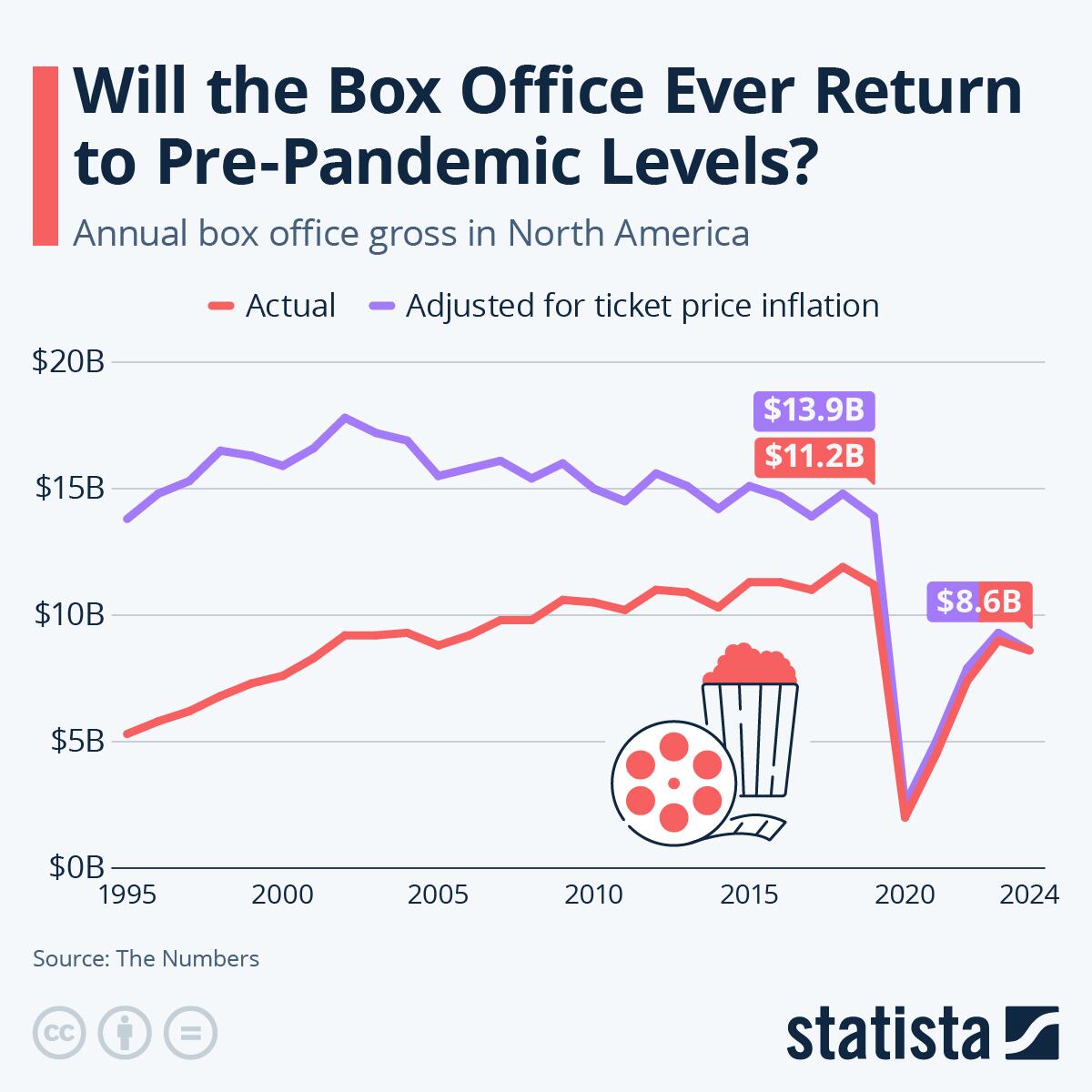
Film and TV production in the Los Angeles area has hit an all-time low, sinking to levels worse than the SAG union strike of 2023.  The city has introduces new tax incentives to generate enthusiasm but many in Tinseltown are questioning if the industry will ever recover.

FilmLA, the city and county’s film permitting office, said Tuesday that on-location production in the greater Los Angeles area declined 13.2% from July through September 2025 compared to the same period last year. Once again, this continues a multi-year trend in declining local production. 

LA motion picture employment dropped from 142,000 in 2022 to 100,000 by end-2024 – a 30% cut (42,000 jobs gone). Below-the-line crew were hit hardest; 63% earned less in 2024, and 41% are considering an exit.  High taxes in LA and California have forced some productions to leave the area, but total US film and TV productions are still in decline no matter where you go in the country.  There has been a 28% drop in theatrical releases since 2019 and a 25% drop in scripted TV projects.  

The vast majority of film and TV media are shot in the greater Los Angeles area due to proximity to studios, editing facilities, effects houses and actor pools.  A drop in Hollywood and LA production indicates are decline in the film industry as a whole.  The plunge in activity coincides with the overall drop in box office receipts since 2019. 

Profits never recovered after the pandemic shutdowns and this has been used for years by the progressive media as the excuse for Hollywood’s failures.  However, by 2023 US markets were wide open along with most foreign markets and the covid scapegoat no longer exists.  Adjusted for inflation, theatrical numbers were already in decline after 2015. 

Another factor that many analysts don’t take into account is Democrat mismanagement on cities and states, leading to higher costs, higher crime and an underlying malaise that suffocates business.  This has been taking place for many years; well before covid.

From 2015 to 2019 audience numbers had already dropped around 10%. Today, audience numbers are at least 30% below 2015 levels. What no one in the business wants to address is the woke takeover and its negative effects on media.  The industry’s woke shift has clearly been affecting receipts.

Production companies cite the rise of inflation and higher ticket costs as a ticket killer.  This makes more sense than the covid claims, but it does not explain why movies without woke messaging continue to greatly outperform movies that push woke messaging.  The solution to Hollywood’s dilemma seems clear:  Stop making woke garbage, hire decent writers, and the cash will roll in.    

Tyler Durden
Fri, 10/17/2025 – 23:00

Victor Hanson: How Biden & Obama Failed In The Middle East

0
Victor Hanson: How Biden & Obama Failed In The Middle East

Authored by Victor Davis Hanson,

The short answer to why both the Biden and Obama administrations failed to achieve peace in the Middle East is that they took actions opposite to Trump’s current efforts, which have led to a ceasefire.

First, consider Iran.

Iran was flush with cash, on a trajectory toward a nuclear weapon, and arming Israel’s “ring of fire” enemies: Hamas, Hezbollah, and the Houthis.

The radical Islamic world of the Middle East was convinced that Israel would be doomed eventually.

Yet both Democratic administrations let Iran profit from oil sales.

They talked of delaying, but not ending, Iran’s nuclear program. And they feared that Hezbollah, Hamas, and the Houthis were indomitable terrorist threats.

Thus, the disruptors of peace were appeased rather than deterred.

Two, both Obama and Biden pressured Israel in general and Netanyahu in particular to make constant concessions.

But neither offered any plan for how Israel was to survive when Iran sought its destruction, and Tehran’s terrorist triad aimed to bombard it with missiles, rockets, and drones.

Worse, once the larger Middle East saw Democratic presidents appeasing Iran and its terrorist appendages, they concluded it was unsafe to take risks by allying with a delusional United States.

Three, both Obama and Biden despised and personally insulted Benjamin Netanyahu, Egyptian President Abdel Fattah el-Sisi, and the Saudi royal family.

Biden called Saudi Arabia a “pariah state”—at least until he needed it to pump more oil to lower gas prices before the 2022 midterms.

Both presidents sought to isolate Sisi and remove him from power.

Obama had his team leak insults to Netanyahu, most infamously the “chicken sh—t” smear.

Middle Easterners have long memories.

Obama never would have thought up the Abraham Accords. Biden foolishly derailed and then pathetically tried to resurrect them.

Neither the Gulf monarchies, Egypt, nor any conservative government in Israel had any incentive to deal with Obama and Biden, whom they despised.

Yet the more Trump respected and engaged with the Gulf sheikhs, Sisi, and Netanyahu, the more their collective fortunes—and his influence over their nations—increased.

Four, the Obama and Biden administrations were reluctant to use force to curb terrorism in the Middle East.

Neither would ever have taken out Iranian general Qassem Soleimani and the ISIS founder Abu Bakr al-Baghdadi, destroyed ISIS, obliterated much of Russia’s Wagner group, or hit the Houthis hard.

The result was that neither the Israelis nor the Arabs trusted Obama and Biden. So they were careful not to take risks, fearing the U.S. would leave them hanging.

Five, on the global stage, both Democratic administrations had radiated a general sense of appeasement and indecision that empowered enemies and scared off friends.

The Middle East remembered the 2011 Libyan bombing misadventure and John Kerry’s pathetic 2013 courting of Russian help in the Middle East.

It recalled the 2014 Russian takeover of Crimea and Donbass, the 2016 appeasement of Iran to cut a nuclear deal, and the 2021 Chinese dressing down of Biden diplomats in Anchorage.

It was shocked by the 2021 humiliating skedaddle from Afghanistan, the 2022 Russian assault on Kyiv, and the 2023 Chinese balloon fiasco.

The Middle East concluded that America was in managed decline. It could not or would not defend its own interests, much less those of its expendable friends.

Six, Obama—and especially Biden—were constrained by their domestic bases in a way Trump was not.

The pro-Hamas, anti-Israel left deterred Democratic presidents from taking risks. In contrast, Trump withstood MAGA fury about bombing Iran or allowing Netanyahu to destroy most of Hamas.

Seven, the Democrats talked diplomatese. They looked down on mercantilism—and so never connected with either the Arabs or Israelis.

Trump equated a peace deal with prosperity. He promised that almost all interests would profit mutually.

For negotiations, he preferred businessmen—himself, Jared Kushner, and Steve Witkoff—to diplomats.

It turned out that the Arabs and Israelis did as well.

Eight, Obama and Biden were infamous for their empty threats. Few ever believed Obama’s 2012 “redlines” issued to Syria on WMD.

No one took seriously Biden’s 2022 threat of “don’t” when Russia was on the verge of invading Ukraine.

In contrast, Trump’s threats were all too real.

Nine, past American administrations were frustrated with a duplicitous Qatar. And so they appeased it.

Trump offered both carrots and sticks. After Israel bombed Qatar, the regime sought Trump’s support, shaken and ready to help.

Ten, the Obama and Biden teams—Hillary Clinton, John Kerry, Susan Rice, Leon Panetta, Jake Sullivan, Antony Blinken, and Lloyd Austin—were force multipliers of their presidents’ naïveté and incompetence.

By contrast, Sen. Marco Rubio, Gens. Erik Kurilla and Dan Caine, Steve Witkoff, and Jared Kushner shaped, shared, and empowered Trump’s agenda.

*  *  *

Views expressed in this article are opinions of the author and do not necessarily reflect the views of ZeroHedge.

Tyler Durden
Fri, 10/17/2025 – 22:35

Senate Candidate Returns AIPAC Money As Pro-Israel Group Becomes Political Poison

0
Senate Candidate Returns AIPAC Money As Pro-Israel Group Becomes Political Poison

In the latest indication that the war in Gaza is significantly threatening Israel’s dominance over American politics, a sitting US congressman and Senate hopeful has announced he’s returning donations received from the American Israel Public Affairs Committee (AIPAC), and refusing to accept any more.   

“In recent years, AIPAC has aligned itself too closely with Prime Minister Netanyahu’s government,” said Massachusetts Democratic Rep. Seth Moulton on Thursday, one day after announcing he was launching a primary challenge against incumbent Dem Senator Edward Markey.

“I’m a friend of Israel, but not of its current government, and AIPAC’s mission today is to back that government…I don’t support that direction. That’s why I’ve decided to return the donations I’ve received and will not be accepting their support.” 

Moulton will refund $35,000 that he’s received from AIPAC. 

There were signs: Moulton looked less than thrilled in this group photo with Prime Minister Benjamin Netanyahu taken in Israel last October

AIPAC quickly lashed out at its estranged beneficiary.

 “Moulton is abandoning his friends to grab a headline, capitulating to the extremes rather than standing on conviction,” the group wrote on X.

“His statement comes after years of him repeatedly asking for our endorsement and is a clear message to AIPAC members in Massachusetts, and millions of pro-Israel Democrats nationwide, that he rejects their support and will not stand with them.”

AIPAC has long been regarded as one of the most powerful lobbying groups in US politics. Historically, politicians from both parties have been eager to accept AIPAC money – and quick to accept AIPAC’s voting instructions.  Similarly, they’ve been fearful of incurring the group’s wrath, which could quickly turn into a potent primary challenge. In 2024, AIPAC and allied pro-Israel groups spent enormous sums in successful efforts to oust New York Dem. Rep. Jamaal Bowman and Missouri Dem. Rep. Cori Bush. AIPAC’s $15 million spent against Bowman helped make that race the most expensive House primary in US history.  

However, in a political earthquake emanating from Israel’s staggering destruction of Gaza with US-supplied weapons, AIPAC now finds its position in American politics wobbling like never before, as citizens across the political spectrum demonstrate growing unease with Israel’s influence over politicians and policy. Increasingly, both Republicans and Democrats find themselves under fire for accepting AIPAC money. In an August town hall, Massachusetts GOP Rep. Jake Auchincloss was repeatedly grilled for just that: 

This week, New Jersey Democratic Sen. Corey Booker was confronted about his acceptance of AIPAC money by the hostesses of the “I’ve Had It” podcast :

In the most comical display of discomfort over the AIPAC question, California Gov. Gavin Newsom positively malfunctioned this week when asked about AIPAC’s role in US politics, calling the topic “interesting” 8 times in 30 seconds, and disingenuously claiming “I haven’t thought much about AIPAC” — a preposterous claim for a likely 2028 presidential candidate.  

While opposition to AIPAC and US support of Israel is strongest on the left, it’s becoming a stance that can be found across America’s political spectrum. A September New York Times/ Siena College survey found that, for the first time, more Americans sympathize with the Palestinians instead of the Israelis. The most striking shift in sentiments is seen inside the Republican Party, where younger party members are resoundingly rejecting the party’s traditional embrace of the Israel. When asked whether they sympathize more with the Israelis or Palestinians, only 24% of Republicans under age 34 side with Israel, according to a University of Maryland poll taken this summer. 

Though Democrat Moulton is making headlines with his public divorce from AIPAC, some of the loudest AIPAC critics on Capitol Hill are Republicans — namely, Kentucky Rep. Thomas Massie and Georgia Rep. Marjorie Taylor Greene. Massie is staring down the barrel of a PAC created for the sole purpose of ousting him from the House — a PAC funded entirely by three Israel-backing billionaires. Earlier this month, Greene dared AIPAC to back a challenger in her own district, telling Matt Gaetz:

“I think Americans have very much become aware that Israel is a foreign government that has been meddling not only in campaigns and elections, but also meddling in government policy…If AIPAC wants to take a shot at me in Northwest Georgia, then you know what? Giddy-up, go ahead. I’m America First. I will not apologize for that, and AIPAC is Israel First, and I don’t think my district will tolerate it.” 

In contrast to Massie and Greene, Moulton is seemingly attempting to walk a political tightrope in which he repudiates the high-profile AIPAC while stopping short of thwarting the ongoing redistribution of American wealth to Israel: His campaign website doesn’t mention Israel or any foreign policy topic at all.

In Maine, Democrat Graham Platner, who’s challenging incumbent Susan Collins, has made his own opposition to AIPAC a central theme of his campaign, saying, “I refuse to take money from AIPAC or any group that supports the genocide in Gaza.” As we wade deeper into the 2026 political cycle, watch for AIPAC and Israel to increasingly become a wedge issue, particularly in Democratic Party primaries. 

Tyler Durden
Fri, 10/17/2025 – 22:10

Tests Find High Levels Of Lead In Protein Powders, Shakes: Consumer Reports

0
Tests Find High Levels Of Lead In Protein Powders, Shakes: Consumer Reports

Authored by Zachary Stieber via The Epoch Times (emphasis ours),

Popular protein powders and shakes contain high levels of lead, Consumer Reports (CR) said on Oct. 14.

Twenty-two of 23 products tested by CR had detectable amounts of lead, and more than two-thirds had unsafe levels of lead, according to the organization.

Protein powder, in an undated file photograph. Nick Starichenko/Shutterstock

“About 70 percent of products we tested contained over 120 percent of CR’s level of concern for lead, which is 0.5 micrograms per day,” CR said.

The U.S. Food and Drug Administration says there are no known safe levels of lead.

“The FDA can take action if it finds unsafe lead levels, but the lack of enforceable standards means it doesn’t happen nearly enough,” Brian Ronholm, CR’s director of food policy, said in a statement.

He said that the FDA should establish enforceable limits for foods and supplements.

“FDA does not comment on outside studies. The agency continues to follow gold-standard science to protect consumers,” a spokesperson for the Department of Health and Human Services, the parent agency of the FDA, told The Epoch Times via email.

An FDA spokesperson also told CR that it would review the findings from the testing “along with other data we have collected to better inform where to focus our testing efforts and enforcement activities.”

CR is a nonprofit that describes itself as working with consumers “for truth, transparency, and fairness in the marketplace.”

CR found Huel’s black edition, chocolate flavor, and Naked Nutrition’s Vegan Mass Gainer had the highest levels of lead per serving. Huel did not respond to a request for comment by publication time.

A Naked Nutrition spokesperson told The Epoch Times in an email that the tested product is a weight gainer, so it has a larger serving size than standard protein powders.

“This difference means that comparing ‘per serving’ data across products with drastically different serving sizes does not provide an accurate, apples-to-apples comparison. When viewed on a per-gram basis, our results are consistent with other plant-based protein products,” the spokesperson said, adding later that “Naked Nutrition remains fully committed to transparency, science-based quality standards, and providing our customers with safe, high-quality nutrition products that meet or exceed all U.S. safety regulations.”

Other powders and shakes with unsafe levels, according to CR, included Momentous’s 100 percent plant protein and KOS organic superfood plant protein.

A Momentous spokesperson told The Epoch Times in an email that the products CR tested have been discontinued. The spokesperson also said that its own testing found lower levels of lead than CR did.

A KOS spokesperson said that the amount of lead and metal in each serving of its protein powders is “significantly small.”

CR recommended seven powders and shakes with lower levels of lead, including Owyn’s Pro Elite High Protein Shake and BSN’s Syntha-6 Protein Powder.

A spokesperson for Owyn told The Epoch Times in an email that the company carefully sources all of its ingredients and that every ingredient “is compliant with all applicable state and federal safety standards.” BSN did not return an inquiry by publication time.

CR also said it detected cadmium and inorganic arsenic, two toxic heavy metals, at unsafe levels in three products.

CR first tested protein shakes in 2010. It detected lead, arsenic, cadmium, and mercury in some products.

In the new testing, the average level of lead was higher, and fewer products had undetectable amounts.

“It’s concerning that these results are even worse than the last time we tested,” Tunde Akinleye, the CR researcher who led the project, said in a statement.

*  *  * Looking for lead-free protein powder with peptides?

We’ve been to the pharmaceutical-grade lab. Wore the stupid hairnets.You could eat off the floor.

Tyler Durden
Fri, 10/17/2025 – 21:45

Federal Courts To Scale Back Operations As Shutdown Exhausts Funds

0
Federal Courts To Scale Back Operations As Shutdown Exhausts Funds

With the government shutdown about to enter its third week, the federal court system announced Friday that it will begin operating in a limited, unpaid capacity starting Monday – having exhausted the last of the court fees and other stopgap funds that had kept its doors open since Oct. 1.

Los Angeles Federal Courthouse (Bryan Chan,  LA Times)

In a statement, the judiciary said that beginning Oct. 20, it will “no longer have funding to sustain full, paid operations” across its 94 district and 13 circuit courts. The move marks one of the most significant contractions in the judicial branch in decades, as courts transition to the minimum operations required by law until Congress restores government funding.

Essential Functions Only

“Until the ongoing lapse in government funding is resolved, federal courts will maintain limited operations necessary to perform the Judiciary’s constitutional functions,” the statement read.

Under the Anti-Deficiency Act, federal employees are prohibited from working without appropriations except in narrowly defined circumstances, such as activities essential to human safety, the protection of property, or the performance of constitutional duties.

Judges, who serve under Article III of the Constitution, will continue to work. But most court employees – including clerks, probation officers, and administrative staff – will either be furloughed or required to work without pay if their duties qualify as “excepted activities.”

Each appellate, district, and bankruptcy court will decide independently how to manage its docket and staffing. Some proceedings will move forward, particularly those involving urgent matters such as detention hearings or imminent deadlines, while other civil and criminal cases are expected to be delayed indefinitely.

Jury Trials, PACER to Continue

Despite the funding lapse, the jury program will remain operational because it draws on funds not tied to congressional appropriations. Jurors have been instructed to continue reporting to courthouses unless otherwise notified.

The judiciary’s electronic filing and case management systems (CM/ECF and PACER) will also remain functional, allowing attorneys to file motions and review case information online. But administrative offices in Washington will be closed, and public telephone lines for the Administrative Office of the U.S. Courts will go unanswered.

Mounting Strain on a Burdened System

The slowdown will deepen the strain on a court system that was already struggling under heavy caseloads before the shutdown began. Legal analysts warn that even a short disruption in operations could ripple through the justice system, delaying trials, probation supervision, and appeals work for months.

The judiciary has been warning since Oct. 1 that it could keep business running only briefly using non-appropriated funds, a senior court administrator who was not authorized to speak publicly told Axios. 

The Senate on Thursday rejected a House plan to reopen the government for the tenth time since the shutdown began, and lawmakers do not plan to reconvene on the issue until next week—making it increasingly unlikely that courts will be fully funded before the shutdown enters its fourth week.

With thousands of judicial employees joining the ranks of the hundreds of thousands already furloughed or laid off across the federal government.

Somehow, we imagine activist judges will still find the time to issue TROs whenever Trump issues an executive order. 

Tyler Durden
Fri, 10/17/2025 – 20:55

Ray Dalio Explains Why Gold & Why Now…

0
Ray Dalio Explains Why Gold & Why Now…

Bridgewater Associates founder Ray Dalio stated on Friday that gold has started replacing some U.S. Treasury holdings as the riskless asset for investors, amid a continued surge in the yellow metal’s prices.

This comes after he said investors should allocate as much as 15% of their portfolios to gold even as the precious metal surged to new all-time highs this week.

“Gold is a very excellent diversifier in the portfolio,” Dalio said Tuesday at the Greenwich Economic Forum in Greenwich, Connecticut.

“If you look at it just from a strategic asset allocation perspective, you would probably have something like 15% of your portfolio in gold … because it is one asset that does very well when the typical parts of the portfolio go down.”

Dalio took to social media on Wednesday to invite questions about gold as an investment.

His X post saw over 750 replies, with 1200 responses at the time of writing.

In a follow-up post on X, Dalio summarized his answers to the many questions and his views on the barbarous relic…

You seem to look at gold and the gold price differently from most people. How do you think about gold?

You’re right. I think most people make the mistake of thinking of gold as a metal rather than as the most established form of money, and they think of fiat money as money rather than debt and they think that fiat money will be created to prevent debt defaults. That’s because most people have never lived with gold being the most fundamental money, and they haven’t studied the debt-gold-money cycles that have occurred in almost all countries over almost all time. However, anyone who has seen gold-money and debt-money evolve over time has a different view.  In other words, to me gold is money like cash—over time, it has had about the same real return (1.2%)—because it doesn’t produce anything. But like cash, it has buying power that can be used to create money that is borrowed and enable people to do things like build money-making businesses that are owned via stocks. If those stocks are solid and produce the cash needed to pay back the loans, then of course the stocks are better. When they can’t pay back the loans and fiat money is printed to prevent the default problems, then non-fiat money (gold) is most valued. So, to me, gold is money like cash, except unlike cash it can’t be printed and devalued. It’s a good diversifier to stocks and bonds when bubbles pop and/or when people and countries don’t accept each other’s credit, like in wars.

In other words, to me gold is the most sound fundamental investment rather than a metal. Gold is money like cash and short-term credit, but unlike cash and short-term credit which creates debt, it settles transactions—i.e., it pays for things without creating debt and it pays off debt.

Anyway, it has been obvious to me for some time that the relative supplies and demands of debt-money and gold-money were shifting against debt money’s value relative to gold money’s value. As for the right price for debt money to be relative to gold money, given the ratios of supplies and demands for each of them, and given the sizes of bubbles that could go pop, I know that I want to keep my piece of gold that’s part of my portfolio, and I think that those who are wrestling between having no gold at all or a small amount of gold are making a mistake.

Why gold? Why not silver, platinum or other commodities, or inflation-indexed bonds as you have suggested.

While other metals can be good inflation hedges, gold occupies a unique place in the portfolios of investors and central bankers because it is the most universally-accepted non-fiat currency-based medium of exchange and store-hold of wealth, and it is a good diversifier to other assets and currencies in these portfolios. Unlike fiat currency debt, it doesn’t have the same inherent credit and devaluation risks—in fact, it diversifies against them because when they are doing worst, gold does best —acting almost like an “insurance policy” within a diversified portfolio.

While silver and platinum share some similarities with gold—particularly in terms of industrial applications—they do not possess the same level of historical and cultural significance as a store of value. Silver, for instance, is more heavily influenced by industrial demand, which can lead to greater price volatility, though it has been used as the basis of currency systems before. Platinum, though valuable, is even more constrained by its limited supply and specific industrial uses. Consequently, neither metal enjoys the same universal acceptance or stability as gold when it comes to wealth preservation.

Regarding inflation-indexed bonds, while they are a good and under-appreciated inflation hedge asset in normal times (depending on the real interest rate they offer at the time) and I believe more investors should consider them in their portfolios, they are still fundamentally debt obligations. So if there is a big debt crisis, their performance is tied to the creditworthiness of the issuing government.  They are also subject to government rigging, like rigging the official inflation numbers or other terms governing them, which history has shown to be the common problem with inflation-indexed bonds when there was high inflation in countries led by leaders who wanted to get around high debt-service costs. Moreover, while effective in combating inflation, they do not provide the same degree of diversification or safety net as gold during systemic financial crises or periods of severe economic distress.

As for stocks, especially those in high-growth sectors like AI, they undeniably carry the potential for substantial returns, though they have proven to be bad performers in inflation-adjusted terms both because their inflation hedging characteristics are limited and because, during really bad times, the economy and the businesses do badly.

To summarize, gold is a uniquely good diversifier to these other assets and diversification matters, so it has a place in most portfolios.

Hi Ray, at least AI has enormous upside and debt instruments pay interest, while gold may only look pretty solid until any of the big holders like the banks want to sell.

I can see that you don’t like gold for the reasons you said, and I don’t want to advocate for it (or any other investment) because I don’t want to drift into becoming a tipster. That won’t do anyone any good. I just want to share what I know about the mechanics. As for investing, I’m more in favor of great diversification than in favor of any single market, though I tilt my portfolio significantly based on my indicators and what I think, which for quite some time has led (and still leads) me to a big tilt toward gold. If you’re interested in why, my book How Countries Go Broke: The Big Cycle explains my thinking much more comprehensively than I can do here.

As far as the alternative markets you mention, it seems to me that in the case of AI stocks, in the long run their upside depends on their pricing relative to their future cash flows, which are extremely uncertain, and, in the short run, it depends on bubble dynamics. I believe that we should be mindful of the lessons that analogous cases in history provide, in which the breakthrough technology companies became very popular as they are now. I’m not saying definitively that these companies are in bubbles—though they are showing lots of signs of being in bubbles based on my bubble indicator.  In any case, an awful lot about the markets and the economy hinges on the AI boom companies doing better than is discounted in their pricing, because, if they don’t, their stocks will go down. These stocks have accounted for 80pct of the gains in U.S. stocks, the top 10pct of income earners own 85pct the stocks and account for half of consumer spending, and these AI companies’ capital expenditures have accounted for 40pct of this year’s economic growth, so a downturn would be really bad for people’s wealth and the economy.  It seems obvious that some diversification of one’s holdings would be prudent.

As far as your observation that “debt instruments pay interest,” for these debt instruments to be good storeholds of wealth, they have to pay a decent real after-tax interest rate. There is a lot of pressure to lower the real interest rate, and there is an oversupply of debt that is being added to more quickly than the demand for it. So, we are seeing a diversification out of debt and into gold, while there isn’t enough gold to diversify into.

Putting aside tactical considerations, gold is a very effective diversifier to these other investments and if individual and institutional investors and central banks put an appropriate share their portfolios in gold for diversification purposes, the price would have to be much higher (I will soon send you my analysis of it) because the quantity is so limited. In any case for me, I want to have some piece of the portfolio in it, and figuring out what that piece should be is important. Without giving specific investment advice, I do recommend that people ask themselves the fundamental question of how much to allocate to gold. For most investors, I think this is likely 10-15pct.

Now that the price of gold has gone up, should I still own it at this price?

To me, the most simple and fundamental question that everyone should ask themselves and answer is what percentage of my portfolio should I have in gold if I don’t have a clue about the direction of gold and other markets? In other words, how much gold should I have for strategic asset allocation reasons, rather than because I want to make a tactical bet on it. Because of its historical negative correlations with other assets (mostly stocks and bonds), most importantly when the real returns of stocks and bonds are bad, the answer is that about 15pct is best because that would give the best portfolio return-to-risk ratio.

However, because gold’s expected return over time is low just like the return of cash is low (though it behaves spectacularly in the times of greatest need), over long periods of time that better return-to-risk portfolio comes at the expense of a lower return. Because I like the better return ratio and don’t want to lower the expected return, I hold my gold position as an overlay, or I lever up the whole portfolio a bit so as to have both the better return-risk ratio and the same expected return. That’s how I view, the right amount of gold to have for most people.

As for tactical bets, that’s another subject that I have shared my points of view about and won’t reiterate here, other than to say I wouldn’t encourage others to make them.

How has the expansion of gold ETFs (dominated by retail) affected the overall direction of the price of gold?

The price of anything equals the total amount of money buyers have to give sellers divided by the quantity of the item that sellers have for buyers. The motivations of buyers and sellers and the vehicles used to buy and sell are of course important influences. The rise of gold ETFs has created more vehicles to buy and sell for both retail and institutional investors, and this change has generally increased liquidity and transparency while making it marginally easier for a broader range of investors to participate. But at the same time, the market for gold ETFs is still much smaller than traditional physical gold investment or central bank holdings, so it has not been the main source of buying or the main reason for the price increase.

Has gold begun to replace US Treasury holdings as the riskless asset? If so, can gold support a massive shift in holdings?

A factual answer to your question is yes gold has begun to replace some US Treasury holdings as the riskless asset in many portfolios, most importantly in central banks and large institutional portfolios. The holders of these portfolios have decreased their U.S. Treasury holdings relative to their gold holdings. By the way, anyone with a long-term historical perspective would say that, compared to Treasuries or any other fiat currency denominated debt, gold is the more riskless asset.

Gold is the most well-established currency—in fact it is now the second largest held by central banks—and has proven to be much less risky than all government’s debt assets. Historically and now, debt assets are commitments by debtors to deliver money to the creditor. Sometimes that money was gold and sometimes it was fiat money that could be printed. Historically when there was too much debt to be paid back with the money that existed, central banks printed money to pay back the debt. This devalued it. When money was gold, they defaulted on their promises to pay back in gold and instead paid back with printed money, and when the money was fiat money, they just printed the money. History shows us that the biggest risk is that debt assets like U.S. Treasuries will either be defaulted on or devalued, more likely devalued. History has also shown that gold is a money and store-hold of wealth that has intrinsic value, so it doesn’t depend on anyone giving the holder of it anything other than the gold itself. It has been a timeless and universal money. History has also shown that, since 1750, about 80pct of all currencies have disappeared and the other 20pct have all been severely devalued.

Finally, Dalio reminded readers that gold stands apart as a hedge in times of monetary debasement and geopolitical uncertainty: “Gold is the only asset that somebody can hold and you don’t have to depend on somebody else to pay you money for,” he said.

Tyler Durden
Fri, 10/17/2025 – 20:30