43.6 F
Chicago
Sunday, October 18, 2026
Home Blog Page 1305

Democrats Go Into Meltdown Mode As Trump Launches Washington DC Takeover

0
Democrats Go Into Meltdown Mode As Trump Launches Washington DC Takeover

The 68-square-mile federal district of Washington DC is often excluded from lists of various US cities and their crime rates due to its unusual status.  DC itself has long suffered from high crime and is regularly among the top twenty most crime ridden cities in the US.  In 2023, the city’s homicide rate and overall violent crime rate spiked to highs not seen since 1997 at the height of a gang related murder spree.

Democrats argue that crime has been falling since 2024 and love to cite stats over the past year without taking into account the bigger picture.  Yes, DC murders have fallen by 26% in that time, but that’s after they nearly doubled from 2019 to 2023.  Murder, theft and mass looting continues to pose a threat to the DC area and lets not forget that close neighbor Baltimore is one of the worst cities for crime in the entire nation.  In 2024, Baltimore was named the deadliest city in America, surpassing Memphis and Detroit (both Democrat run cities).

For decades Washington has remained a Democrat run town.  Regardless of any Republican presence in the White House, DC stands as a progressive citadel controlled by deeply leftist bureaucrats.  Since the establishment of the Home Rule Act in 1973, the district has not had a single conservative mayor and the town has suffered greatly under Democratic management.

The capital is notorious for its low prosecution and conviction rates.  DC only prosecutes 33% of total arrests and many criminals easily avoid prison time.  Democrat politicians running most of America’s largest cities have created an environment in which perpetrators have little fear of punishment and convicts are often released back onto the streets to become repeat offenders.    

To be fair, many GOP presidents have dismissed the problems in DC as frequently as Democrat presidents.  Donald Trump is the first to take action since home rule was established.

Trump’s announcement that he will be instituting a federal surge within the capital and taking control of local law enforcement has triggered a furious meltdown among progressive leaders, activists and media pundits.  They claim that this is just the beginning of a larger martial law takeover of cities across the US.

Because of Washington’s 92% progressive population (and large minority population), the response from locals is unsurprisingly frantic.  Business owners seem optimistic about a potential improvement in enforcement but others are not so enthused.  

The question no Democrat is asking is, what level of crime is acceptable for the nation’s capital?  How many murders, assaults, rapes and looted stores should be tolerated?  They say crime is falling while overlooking the jump in 2023.  They say that Trump’s elimination of home rule in DC is not the answer.  So, what is the answer? 

Trump asserts that DC should be setting an example as one of the safest places in the country; a perfectly logical conclusion considering the US capital has been an embarrassment for many years.  It’s also important to take into consideration that Trump’s presidency, nestled in one of the most hostile areas of the US for conservatives, could be at risk. 

Trump’s actions may be designed to prevent any future French Revolution-like attacks on the White House.  Leftists have been using mob intimidation with impunity since 2020 and the local political leadership of DC is only going to encourage such behavior going forward. 

The Democrat response?  “Trump’s trying to take attention away from the Epstein files…”  In other words, anytime Trump does anything they don’t like they will play the only card they have to play, which is to divert discourse by mentioning Epstein.  Keep in mind, the Democrats had years to release any information they obtained on the Epstein case and they never did.  Now that Trump is in office, suddenly this is the only issue they’re interested in talking about.

The bottom line is that Washington DC is a problem area of the country and always has been.  It should be a shining example of national pride, but it’s a disaster instead.  Trump is not wrong that the capital needs to be cleaned up and his solution will probably achieve that result quickly. 

That said, are Democrats right to fear a wider martial law response in other US cities?  Is this simply a test run by Trump to pave the way for similar actions in LA or Chicago?  Is martial law something that conservative voters would largely support?  Or, is this narrative simply fear mongering by leftists who are trying to prevent Trump from successfully restructuring DC while making them look bad in the process?   

It’s unlikely that the majority of Americans, including conservative Americans, would support full scale or long term martial law (Democrats would likely support it, just not under Trump). 

It is, however, fair to point out that the mismanagement and activism of Democrat leaders in US cities has made the country so despondent and angry that the populace might just cheer for a short term federal takeover if it happened.  The political left doesn’t seem to understand the level of rage they have created, or the joy that the public would feel seeing incompetent Democrats thrown out of their offices and removed from local power. 

Tyler Durden
Tue, 08/12/2025 – 13:20

Trump’s “Deadly Serious” Russia Squeeze Shown In Big Tariffs On Ally India

0
Trump’s “Deadly Serious” Russia Squeeze Shown In Big Tariffs On Ally India

By Simon Watkins of OilPrice.com

  • Trump has doubled tariffs on Indian imports to 50% over New Delhi’s continued purchases of Russian oil.

  • The move risks nearly 1% of India’s GDP this year but underscores U.S. determination to coordinate with the EU on sanctions to weaken Russia’s economy and deter its geopolitical ambitions.

  • India, alongside China and Turkey, remains a top buyer of Russian oil, and Washington is preparing similar tariff threats.

“India is not only buying massive amounts of Russian Oil, they are then, for much of the Oil purchased, selling it on the Open Market for big profits,” U.S. President Donald Trump posted last week on Truth Social. “They don’t care how many people in Ukraine are being killed by the Russian War Machine. Because of this, I will be substantially raising the Tariff paid by India to the USA.”

These words directly implicate buyers of Russian oil as accomplices in the murder of tens of thousands of Ukrainian people in the war started by the Kremlin on 24 February 2022, as indeed they have been. Had these words been said in 2008 when Europe continued to buy Russian oil after it attacked Georgia, or in 201,4 when the continent continued to buy Russian oil after it annexed Ukraine’s Crimea region, then the 2022 full-scale invasion of Ukraine might never have happened. They were not said, it did happen, but this time around, the U.S. President is looking to the future in his actions today. His seriousness is further underlined by the fact that India – long seen as a key ally to Washington in the Asia-Pacific region – now faces big tariffs.

So what does this all mean, and what will happen next?

Slightly in advance of the 8 August deadline imposed by Trump on Russia to make a peace deal with Ukraine, the U.S. doubled its tariffs on India to 50% — a rate that will come into effect on 27 August. The U.S. is India’s top export market, constituting 18% of its exports and 2.2% of its gross domestic product (GDP). Many of the country’s major exporting firms had already stated that they could not deal with the 25% tariffs, as they are too high to absorb, and passing them on to customers makes their products uncompetitive. Initial analysts’ estimates are that 50% tariffs could reduce India’s GDP by nearly 1% this year. But the U.S. knows all this, which is one of the reasons why it has chosen to do it, according to a very senior European Union (E.U.) energy security source who spoke exclusively to OilPrice.com on the day of the new Indian tariffs announcement.

“India is known as a key ally of the U.S. globally, and especially in Asia Pacific, and the thinking is that if he [Trump] is willing to do that to India, then he would be willing to do that to anyone else, and this is absolutely the case – he [Trump] is deadly serious on squeezing Russia’s economy from here,” he said. “The message should not be lost on European countries who might be thinking of easing up on the sanctions being rolled out on Russia from now to December 2027 [when the intention is to end all imports of Russian oil and gas],” he added.

Indeed, a closely co-ordinated ramping up of sanctions against Moscow by the U.S. and E.U. is seen by both sides as key to preventing Russian President Vladimir Putin from realising his dream of reconstituting the full scope of the U.S.S.R.’s previous European empire, as analysed in full in my latest book on the new global oil market order. “Trump believes that the continuation of European purchases of Russian oil and gas after the annexation of Crimea, especially in 2014, was key to the Russian action in Ukraine in 2022, as underlined in his comments on the Nordstream gas pipelines [from Russia to the heart of Europe],” he highlighted.

In this context, India has a multi-layered strategic importance to the U.S. The most notable of these is the objective of positioning it as the regional counterweight to China’s economic, political, and military presence in the Asia-Pacific region, as analysed in full in my latest book on the new global oil market order. Washington’s efforts in this regard intensified following the 15 June 2020 clash between Chinese and Indian troops in the disputed territory of the Galwan Valley in the Himalayas, as the U.S. believed this marked a new push back strategy from India against China’s policy of seeking to increase its economic and military alliances through its multi-generational power-grab project, the ‘Belt and Road Initiative’ (BRI). The U.S. further believed that this push back might also be echoed in India’s economic desire to finally make substantive progress on its ‘Neighbourhood First’ policy as an alternative to China’s BRI programme. However, for this to work, India would need access to secure energy sources over the long term, as – like China – it has few oil and gas sources of its own. Indeed, given the potential economic growth projections for India, the International Energy Agency forecast that the Asian sub-continental power would constitute the biggest share of global energy demand growth at 25% in the coming two decades. In fact, the IEA predicted India would overtake the European Union as the world’s third-biggest energy consumer by 2030. It was at this point – in Trump’s first term as president – that the plan was hatched to link this plan to use India to challenge China as Asia’s major power in parallel with a corollary objective to use the UAE to promote further relationship normalisation deals (‘Abraham Accords’) between Israel and key Arab states in the Middle East. This remains a second key reason why India is so important to Washington.

Nevertheless, India – along with China and Turkey – is still one of the biggest buyers of Russia’s energy exports three years into Moscow’s war in Ukraine. According to industry figures, last month saw it receive 1.6 million barrels per day (bpd) of oil from Russia, while China imported around 1 million bpd and Turkey about 500,000 bpd. Over the entirety of 2024, China was the largest buyer of Russian oil, at about 2.2 million bpd, followed by India on 1.76 million bpd, and Turkey on 0.3 million bpd. The U.S. has already warned China that ongoing imports of Russian oil could lead to huge tariffs being imposed on the country, according to the E.U. source. “During the talks [end-July U.S.-China trade talks in Stockholm], [U.S. Treasury Secretary Scott] Bessent told his opposite number [Vice Premier He Lifeng] that legislation [‘Sanctioning Russia Act of 2025’] is being drawn up in Congress authorising the imposition of up to 500% tariffs on countries that buy sanctioned Russian oil,” he exclusively told OilPrice.com last week. In reality, the Act goes wider to encompass any country that “knowingly sells, supplies, transfers, or purchases oil, uranium, petroleum products, or petrochemical products that originated in the Russian Federation”. It currently has 84 listed co-sponsors in the U.S. Senate alone, according to the U.S. Congress website, and the Speaker of the House has also indicated his chamber’s support to pass the bill.

The U.S. has also suggested to China that it may treat Beijing’s assistance to Russia in much the same manner as it has started to treat the same for Iran. This was seen in the very recent U.S. State Department announcement on Iran-related sanctions that it would impose sanctions on 20 entities it believes are engaged in trading Iranian oil and petrochemical products, including China’s Zhoushan Jinrun Petroleum Transfer Co., an oil terminal in the greater Zhoushan port area. Under Secretary of the Treasury for Terrorism and Financial Intelligence Brian E. Nelson said of these China sanctions that:

“The Iranian regime continues to fuel conflict in the Middle East to fund its destabilizing activities, [and] Today, the United States is taking action to stem the flow of revenue that the regime uses to support terrorism abroad, as well as to oppress its own people.”

Zhoushan Jinrun was highlighted by the State Department for: “…knowingly engaging in a significant transaction for the purchase, acquisition, sale, transport, or marketing of petroleum or petroleum products from Iran”. The port is the fourth of China’s to be sanctioned by Washington in recent weeks, following similar actions against Huaying Huizhou Daya Bay Petrochemical Terminal Storage in March, Guangsha Zhoushan in April, and Dongying Port in May.

“More is to come,” the very senior U.S. legal source told OilPrice.com at the time of the sanctions announcement and could include a dramatically increased list of blacklisted Chinese officials, businesses, banks, financial houses, ports, ships, and supportive infrastructure to the facilitation of Russian oil imports.

Tyler Durden
Tue, 08/12/2025 – 13:00

Zelensky Reiterates It’s ‘Impossible’ To Recognize Any Decisions From Alaska Summit

0
Zelensky Reiterates It’s ‘Impossible’ To Recognize Any Decisions From Alaska Summit

For about the third day in a row Ukrainian President Volodymyr Zelensky has let it be known that his government will not recognize whatever comes as a result of the Trump-Putin summit set for Alaska this Friday.

“Ukraine will not recognize the decision taken at the Russia-US summit in Alaska without its participation,” Vladimir Zelensky said. This comes after he already said over the weekend any decisions would be ‘stillborn’ upon arrival.

“It is impossible to talk about Ukraine without Ukraine, and no one will recognize that,” he said in fresh Tuesday statements given at a forum. “That’s why this conversation may be important for their [Russia-US] bilateral track, but they cannot decide anything on Ukraine without us. I hope the US president understands that and takes into account,” he said.

AFP via Getty Images

A big focuse will indeed be bilateral US-Russia relations, and it appears that for now Russia is more interested that aspect – perhaps knowing full well that the fight will go on as Kiev is unlikely to make significant compromise.

TASS has cited Kremlin aide Yury Ushakov who confirmed that Washington and Moscow are already working on a second face-to-face summit between Trump and Putin, to take place on Russian soil:

According to him, the leaders will focus on discussing options for achieving a long-term peaceful settlement of the Ukrainian conflict. The Kremlin expects the next meeting between Putin and Trump to take place on Russian territory, Ushakov added.

Clearly, even if no firm decisions are reached in Alaska, Putin is in the driver’s seat – and he gains in reputation and on the level of optics just by having the Alaska meeting.

President Trump would not have put the meeting together unless it was evident, at least to national security officials behind the scenes, that Ukraine has no cards to play and is losing on the battlefield.

Trump has since acknolwedged this is a “feel-out meeting” but he’s also once again turned his criticism toward Zelensky:

“I was a little bothered by the fact that Zelensky was saying, ‘I have to get constitutional approval’” to relinquish territory, Mr. Trump told reporters.

“He’s got approval to go into war and kill everybody, but he needs approval to do a land swap?”

There are unconfirmed reports that Kiev could entertain a ‘freeze’ where Russian troops stay in the four eastern territories but without full political ceding and recognition of territory. At this point Putin has less incentive to agree to that, seeing in it a recipe to just restart future war.

Moscow has made it clear that it won’t settle for anything less than a permanent peace solution, which would at the very least involve Ukraine agreeing to never join NATO, and to give up the ‘annexed territories’ including Crimea, on a permanent basis which formally recognizes sovereignty.

Tyler Durden
Tue, 08/12/2025 – 12:40

$18 Billion Perplexity Offers To Buy $35 Billion Google Chrome Browser

0
$18 Billion Perplexity Offers To Buy $35 Billion Google Chrome Browser

In a stark reminder that AI chatbots are really just glorified search engines, and whoever controls the queries controls the narrative, moments ago the WSJ reported that AI startup Perplexity offered to purchase Google’s Chrome browser for $34.5 billion as it scrambles to remain relevant in an ever larger field of AI electricity-sucking chatbots and as it seeks to challenge Google’s web-search dominance.

Amusingly, Perplexity’s offer is significantly more than its own valuation, which is estimated at $18 billion. The company told The Wall Street Journal that several investors including large venture-capital funds had agreed to back the transaction in full. Estimates of Chrome’s enterprise value vary widely but recent ones have ranged from $20 billion to $50 billion.

As reported previously, US District Judge Amit Mehta is weighing whether to force Google to sell the browser as a means of weakening Google’s stranglehold on web search. Mehta last year ruled that Google illegally monopolized the search market and is expected to rule this month on how to restore competition.

According to the WSJ, the Perplexity offer could be an attempt to signal to the judge that there is an interested buyer, should he force a sale. In a letter to Sundar Pichai, chief executive of Google parent Alphabet,  Perplexity said its offer to buy Chrome is “designed to satisfy an antitrust remedy in highest public interest by placing Chrome with a capable, independent operator.”

Aravind Srinivas, co-founder and chief executive of Perplexity

The offer may well be moot: Google hasn’t indicated a willingness to sell Chrome, and in testimony this year, Pichai told the judge that forcing the company to sell it or share data with rivals would harm Google’s business, deter it from investing in new technology and potentially create security risks. Chrome has roughly 3.5 billion users worldwide and accounts for more than 60% of the global browser market.

Needless to say, AI engines getting an existing search engine rail is the holy grail for most of them. 

Founded in 2022, San Francisco-based Perplexity recently released its own web browser, called Comet, to some of its users. Judging by today’s offer, not many are using it. 

Perplexity told Pichai that, as part of the proposed acquisition, it would maintain and support Chromium, the open-source project that supports Chrome and other browsers. It also said that it would continue placing Google as the default search engine within Chrome, though users could change settings.

The Justice Department filed the antitrust case against Google in 2020. In addition to forcing a sale of Chrome, the judge is considering limiting Google’s ability to pay to be the default search engine on devices and browsers and requiring it to share data with rivals, among other things. In weighing potential remedies earlier this year, Mehta questioned how much new AI chatbots might be whittling away at the traditional search business, of which Google has 90% market share.

Google has proposed a narrower set of remedies that would modify its exclusive agreements with Apple, as well as Mozilla and Android, to allow for more competition. It has said it will appeal the judge’s ruling.

Analysts say the judge is unlikely to force the company to sell Chrome, though he gave little indication of which way he was leaning. During closing arguments earlier this year, he asked whether doing so would be “a little cleaner and a little bit more elegant” than other remedies aimed at improving search competition.

Tyler Durden
Tue, 08/12/2025 – 11:56

Make D.C. Presentable Again

0
Make D.C. Presentable Again

Submitted by QTR’s Fringe Finance

On August 11, 2025, President Donald Trump did something that no other president in modern memory has dared to do: he effectively took over Washington, D.C.’s policing operations.

In a sweeping declaration of a public safety emergency, he deployed about 800 National Guard troops, assigned 120 FBI agents to night patrols, and put the D.C. Metropolitan Police under the direct control of Attorney General Pam Bondi.

The mission? To clean up the capital—its rising crime rates and, yes, the sprawling homeless encampments that have been swallowing sidewalks and city parks.

National Park Service aims to clear out DC homeless encampments by late 2023

The reaction from some corners was immediate outrage—how dare the president flex federal muscle in the nation’s capital? But for those of us who have actually visited D.C. anytime recently, it’s hard not to think: finally.

For too long, the capital of the United States—the city that houses the White House, Congress, and the Supreme Court—has looked less like the shining beacon of democracy and more like a live-action hellscape from a horror movie. Tourists and school trips meandering through downtown D.C. to learn about the history of our great nation are confronted with makeshift shantytowns, hypodermic needles and smells worse than J.B. Pritzker’s bathroom the morning after a long night at Big Ed’s Bar-B-Que.

For Democrats — who seem just fine with this nightmare — it’s been like inviting guests over for dinner, letting someone pitch a dung-filled tent in the middle of your dining room—and then acting offended when guests ask: is this really where we’re going to eat?

Now, let’s be realistic. Federalizing the police isn’t going to magically fix the tangled mess of causes behind homelessness. No one’s pretending it will. But in politics—as in hosting dinner parties—appearances matter. And in Washington, D.C., the entire city is the stage. When world leaders, diplomats, and tourists step off the plane, they’re not just visiting a city; they’re seeing America’s face.


🔥 TAKE 65% OFF IF YOU SUBSCRIBE TODAY: Anyone who subscribes to a Fringe Finance annual plan IMMEDIATELY gets 65% off today. This discount lasts for as long as you wish to remain a subscriber: Get 65% off forever


And if that face is covered in human feces a block from the White House, guess what—they’re not going to be thinking “land of the free,” they’re going to be thinking “third-world cosplay”.

I’ve been to plenty of European capitals—Paris, Vienna, etc.—and they all had something in common: they were mostly immaculate. Even cities with homelessness managed to keep their central government and tourist districts pristine. Plazas were relatively clean, parks were manicured, and the trash was taken out before it could audition for a permanent role as Hunter Biden’s latest piece of conceptual art.

Meanwhile, our capital has apparently decided that the streets around our most important buildings should double as open-air living rooms. We wouldn’t tolerate this outside Buckingham Palace or the Élysée Palace—so why is it fine outside the White House? Is our new national motto “We tried nothing, and we’re all out of ideas”?

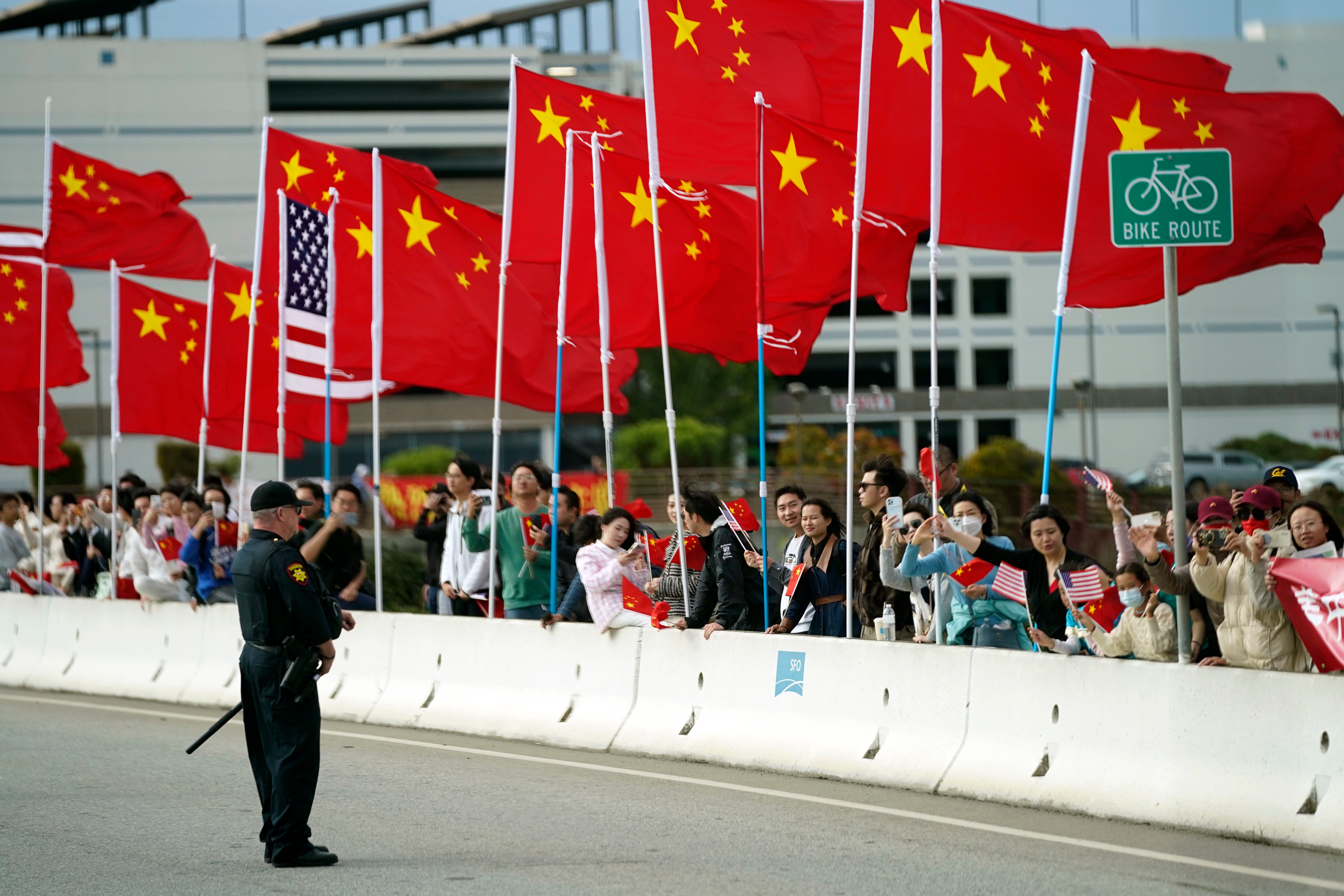
And this is where Trump’s move makes perfect sense. Sometimes, you can’t wait for the “perfect” long-term plan to magically appear out of a think-tank PowerPoint deck. Sometimes, you have to make the place look presentable right now. Remember — like we did for Chinese President Xi Jinping when he came to San Francisco?

Biden says his goal for Xi meeting is to get US-China communications back  to 'normal' | WJHL | Tri-Cities News & Weather

And frankly, it’s jaw-dropping that President Biden didn’t seem to have enough pride—or even basic situational awareness—to do anything visible to try and clean up D.C.

This is the same ostrich routine we’ve seen on the border: if you just bury your head in the sand and hum loudly enough, maybe people won’t notice the absolute chaos which begs people to assume gross incompetence, if not an outright goal of singlehandedly destroying the country and its image.

There’s nothing shallow about caring how your country looks. It’s not “cosmetic,” it’s called “national pride.” When visitors—whether foreign dignitaries or American schoolkids—arrive in Washington, what they see should tell them we are a capable, functioning nation that respects itself.

Right now, what they see too often screams “we’ve given up.” And nothing broadcasts “we’ve lost control” like a tent city and drug-addled homeless within selfie range of the White House.

So yes—bravo, Trump. You’ve reminded people that presentation is part of patriotism.

In Washington, appearances aren’t just about looking good for the cameras; they’re about signaling competence, pride, and respect. If that means a show of force to restore order, so be it.

Because sometimes the fastest way to fix a broken system is to start by sweeping the front porch—especially when the front porch happens to be the front porch of America.

QTR’s Disclaimer: Please read my full legal disclaimer on my About page here. This post represents my opinions only. In addition, please understand I am an idiot and often get things wrong and lose money. I may own or transact in any names mentioned in this piece at any time without warning. Contributor posts and aggregated posts have been hand selected by me, have not been fact checked and are the opinions of their authors. They are either submitted to QTR by their author, reprinted under a Creative Commons license with my best effort to uphold what the license asks, or with the permission of the author.

This is not a recommendation to buy or sell any stocks or securities, just my opinions. I often lose money on positions I trade/invest in. I may add any name mentioned in this article and sell any name mentioned in this piece at any time, without further warning. None of this is a solicitation to buy or sell securities. I may or may not own names I write about and are watching. Sometimes I’m bullish without owning things, sometimes I’m bearish and do own things. Just assume my positions could be exactly the opposite of what you think they are just in case. If I’m long I could quickly be short and vice versa. I won’t update my positions. All positions can change immediately as soon as I publish this, with or without notice and at any point I can be long, short or neutral on any position. You are on your own. Do not make decisions based on my blog. I exist on the fringe. If you see numbers and calculations of any sort, assume they are wrong and double check them. I failed Algebra in 8th grade and topped off my high school math accolades by getting a D- in remedial Calculus my senior year, before becoming an English major in college so I could bullshit my way through things easier.

The publisher does not guarantee the accuracy or completeness of the information provided in this page. These are not the opinions of any of my employers, partners, or associates. I did my best to be honest about my disclosures but can’t guarantee I am right; I write these posts after a couple beers sometimes. I edit after my posts are published because I’m impatient and lazy, so if you see a typo, check back in a half hour. Also, I just straight up get shit wrong a lot. I mention it twice because it’s that important.

Tyler Durden
Tue, 08/12/2025 – 11:20

Texas Warns Wastewater Injection Threatens Permian Oil Reserves

0
Texas Warns Wastewater Injection Threatens Permian Oil Reserves

By Charles Kennedy of OilPrice.com

The Texas General Land Office (GLO) has formally objected to a plan by Pilot Water Solutions LLC to drill three new saltwater disposal wells in the Permian Basin, warning the project could contaminate state-owned crude reserves in North America’s top oil field, according to the Dallas Morning News.

Founded in 1836, the GLO manages 13 million acres of state land and generates billions of dollars for Texas public schools through oil and gas leasing.

It argues the proposed disposal sites in Loving County near the New Mexico border pose “significant risk” to mineral interests under its control. 

Bloomberg reports that ConocoPhillips, one of the Permian’s largest producers, has joined the opposition, noting that in the area near the proposed wells it is producing less than 40% of expected oil volumes while generating nearly twice the forecast water output.

For every barrel of oil pumped in the Permian, as many as five barrels of wastewater are produced, presenting a growing operational and environmental challenge.

Reuters notes that disposal capacity is under mounting strain, with costs climbing and injection-related earthquakes drawing regulatory scrutiny.

The Railroad Commission of Texas will hold a hearing later this month to assess the Pilot Water Solutions proposal.

State officials are weighing contamination risks alongside concerns about induced seismicity linked to high-volume wastewater injection.

Environmental groups and local ranchers have long warned about the hazards of underground wastewater disposal, but record Permian output has made the problem more acute.

The GLO’s opposition is the first real indication we are seeing that water management is no longer just a peripheral environmental issue, but is now a direct threat to oil production economics in the nation’s most prolific basin.

Tyler Durden
Tue, 08/12/2025 – 11:00

Ether ETFs See Record $1 Billion Inflows As ETH Flashes Bull Signals

0
Ether ETFs See Record $1 Billion Inflows As ETH Flashes Bull Signals

Spot Ether exchange-traded funds (ETFs) recorded their biggest day of net inflows ever on Monday, with flows across all funds totalling $1.01 billion.

The development came as many key indicators had turned bullish and Ether gained 45% in the past 30 days, dramatically outperforming bitcoin.

Inflows into Ether ETFs far exceeded those of their Bitcoin counterparts, which saw a net inflow of $178 million on Monday, according to Farside Investors.

CoinTelegraph’s Tarang Khaitan reports that for the Ether funds, BlackRock’s iShares Ethereum Trust ETF (ETHA) attracted the lion’s share of flows, with a record $640 million going into the fund.

The Fidelity Ethereum Fund (FETH) was the runner-up and also recorded its largest single-day inflow, taking in $277 million.

Net inflows into spot Ether ETFs exceeded $1 billion on Monday.

NovaDius president Nate Geraci said on X that Ether ETFs were previously underestimated as institutional investors did not understand Ethereum.

“Feel like spot eth ETFs were severely underestimated simply [because] tradfi investors didn’t understand eth,” Geraci said.

He added that institutional investors are now resonating with ETH, as it is being touted as the “backbone of future financial markets.”

Bullish indicators for Ethereum

The record inflows come as key indicators have turned bullish for ETH, which has surged 45% in the past 30 days, according to CoinGecko.

Ether held on exchanges hit a nine-year low on Thursday, dropping to 15.28 million ETH, its lowest level since November 2016, according to data from Glassnode.

Investors taking their crypto assets out of exchanges is typically considered a bullish signal, meaning they could be moving them for long-term storage.

In a Monday X post, onchain data platform Token Terminal noted that Ethereum remained the dominant chain for tokenized assets, as the blockchain accounted for about 58% of all tokenized assets across all chains.

The company also said that assets staked on the Ethereum network surpassed the $150 billion milestone for the first time.

Ethereum topped $4400 for the first time since Dec 2021…

Ether ETFs, treasuries keep on stacking

Crypto influencer Anthony Sassano posted that Ether ETFs have bought over 50% of the ETH issued since the Merge in late 2022.

The blockchain has issued over 451,000 ETH since its switch to proof-of-stake, while net inflows into the ETFs on Monday bought up 238,000 ETH, Sassano said.

“In a *single day*, the ETH ETFs bought over 50% all the net issued ETH since The Merge,” he said.

Corporate holders of Ether witnessed their assets under management swell to $13 billion on Monday due to the price increase of ETH.

Ethereum observers urge caution

The recent price rally has seen an uptick in short-term traders booking profits, suggesting short-term traders may be expecting ETH to pull back

Ethereum co-founder Vitalik Buterin warned on Thursday that the recent trend of corporations buying ETH for their treasuries could turn into a dangerous “overleveraged game.”

Tyler Durden
Tue, 08/12/2025 – 10:45

“Tariffs Have Not Caused Inflation” – Trump Rages At “Bad Predictions”, Slams Goldman CEO

0
“Tariffs Have Not Caused Inflation” – Trump Rages At “Bad Predictions”, Slams Goldman CEO

Update (1020ET): President Trump rage-posted about the lack of inflation amid all the tariff-fearmongering…

“Trillions of Dollars are being taken in on Tariffs, which has been incredible for our Country, its Stock Market, its General Wealth, and just about everything else.

It has been proven, that even at this late stage, Tariffs have not caused Inflation, or any other problems for Country, other than massive amounts of CASH pouring into our Treasury’s coffers.

Also, it has been shown that, for the most part, Consumers aren’t even paying these Tariffs, it is mostly Companies and Governments, many of them Foreign, picking up the tabs. “

Then took direct aim at Goldman Sachs:

“But David Solomon and Goldman Sachs refuse to give credit where credit is due.

They made a bad prediction a long time ago on both the Market repercussion and the Tariffs themselves, and they were wrong, just like they are wrong about so much else.

I think that David should go out and get himself a new Economist or, maybe, he ought to just focus on being a DJ, and not bother running a major Financial Institution.”

Ouch!

Meanwhile, just between us girls, Goldman has been somewhat more in the ‘one-time, marginal’ incremental impact of tariffs (as opposed to the UMich terror tantrum), with one of their latest notes highlighting the ““Sharp Declines” In Import Prices As Foreigners Absorb Trump’s Tariffs,” even though Jan Hatzius did claim that US firms are eating up to two-thirds of the increased tariff costs most recently (even though that was not evident in the earnings data this season).

*  *  *

With a new boss looming at The BLS, one wonders what the ‘old boss’ has in hand for today’s CPI data (with consensus seeing both headline and core YoY price changes ticking higher) after June’s consumer prices came in cooler than expected, disappointing the Trump Tariff Tantrum crowd. Will this time be different… Will the dreaded tariff-flation show up this time?

Headline CPI rose 0.2% MoM in July (as expected) and +2.7% YoY (cooler than the 2.8% expected) and in line with the June print…

Source: Bloomberg

Headline CPI rose 0.2%, after rising 0.3% in June. CPI Core rose 0.3% in July, following a 0.2% increase in June.

  • Indexes that increased over the month include medical care, airline fares, recreation, household furnishings and operations, and used cars and trucks.

  • The indexes for lodging away from home and communication were among the few major indexes that decreased in July.

Core CPI rose 0.3% MoM (as expected) but YoY rose 3.1% (hotter than the 3.0% expected) – the highest since February…

Source: Bloomberg

Under the hood, Fuel Oil and Transportation costs rose the most but Gasoline and Food at Home costs fell MoM…

Core CPI MoM Details:

  • The shelter index increased 0.2 percent over the month.

    • The index for owners’ equivalent rent rose 0.3 percent in July as did the index for rent.

    • Conversely, the lodging away from home index fell 1.0 percent in July.

  • The medical care index increased 0.7 percent over the month, following a 0.5-percent increase in June.

    • The index for dental services increased 2.6 percent in July and the index for hospital and related services increased 0.4 percent.

    • The physicians’ services index rose 0.2 percent over the month, while the prescription drugs index fell 0.2 percent.

  • The index for airline fares increased 4.0 percent over the month, after declining 0.1 percent in June.

  • The recreation index increased 0.4 percent over the month, as did the household furnishings and operations index.

  • The index for used cars and trucks rose 0.5 percent in July and the index for personal care rose 0.4 percent.

  • The new vehicles index was unchanged over the month while the communication index fell 0.3 percent.

Annual changes:

  • The shelter index increased 3.7 percent over the last year. Other indexes with notable increases over the last year include medical care (+3.5 percent), household furnishings and operations (+3.4 percent), motor vehicle insurance (+5.3 percent), and recreation (+2.4 percent).

Goods inflation is accelerating (some will argue ‘tariffs’, some will argue fuel) while Services inflation has stabilized…

Source: Bloomberg

There is one problem in the data… SuperCore CPI (Services ex-Shelter) rose 0.55% MoM (hottest since January) and up 3.59% YoY (hottest since February)…

Source: Bloomberg

The jump in Transportation costs and Medical Care Services stood out for SuperCore (neither seem like they are affected in any way by tariffs)…

3m and 6m annualized CPI is also refusing to bow to the terror predicted by Trump tariff haters…

So, not exactly the screaming spike in prices that Democrats interviewed by UMich have hallucinated about?

Tiffany Wilding, Pimco economist, tells Bloomberg TV that tariff-related pressures are contained within certain areas of the report:

“It’s very concentrated within goods, it’s happening slowly, and outside of that, inflationary pressures look very manageable. So I think for a Federal Reserve, that is a very good sign.” 

Art Hogan, B. Riley Wealth chief market strategist, weighs in:

“Core goods are the real driver of the move up in the index, while being somewhat offset by energy and shelter cost. The report will likely not change the path forward for the Fed, as we expect to see rate cuts at the next three meetings.” 

Rate-cut expectations rose after the CPI print with September now trading at 95%…

But there is a silver lining…

So, Airfares, Dental Care, Auto Insurance, Medical Care, and Rent were among the biggest drivers of upside in CPI… NONE of which have ANYTHING to do with tariffs (even if you squint)

And tariff-related items such as New Cars, Apparel, and Toys barely budged.

And cue the “just wait until next month” arguments!!…

Tyler Durden
Tue, 08/12/2025 – 10:25

Yields Spike After Trump Hints At Powell Lawsuit, Attention Turns To Coming Hot PCE Print

0
Yields Spike After Trump Hints At Powell Lawsuit, Attention Turns To Coming Hot PCE Print

The yield curve is steepening, with 10-year yields spiking from the CPI aftermath (where focus has turned to the red hot Supercore inflation print) and hitting session highs after Trump took to Truth Social to slam Jerome Powell again, just two weeks after the two of them appeared to have patched things up.

After several days without any direct attack on Powell, Trump resumed the onslaught and said he’s considering allowing a lawsuit against the Fed chair related to the building work at the central bank’s buildings.

As Bloomberg notes, the jump in yields might serve as a reminder of what we have learnt over and over again in Latin America – when the executive tries to press for lower rates, borrowing costs tend to go up rather than down.

Trump aside, the rates market took a relief straight after the US CPI release as tariffs pass-through to goods prices looked light. However, the 32bp m/m core CPI in July was still the hottest since January while the Supercore CPI print was especially jarring.

Also, UBS notes that the July PCE number is likely to be a hot one as medical care services printed 79bp m/m. PCE places 20% weights on medical care while CPI only puts 6% weights. Ultimately, the Fed targets PCE not CPI.


Tyler Durden
Tue, 08/12/2025 – 10:10

Top U.S. Broadcaster Sinclair Sees Shares Soar After Initiating Strategic Review 

0
Top U.S. Broadcaster Sinclair Sees Shares Soar After Initiating Strategic Review 

Shares of Sinclair, one of the largest U.S. broadcast station owners, jumped the most in over a year in premarket trading after the company announced a “strategic review of its broadcast business” aimed at “optimizing value creation across its portfolio.” 

The broadcaster, based in Hunt Valley, Maryland –  just north of the Baltimore metro area – owns 178 stations across 81 U.S. markets. The company announced it will evaluate “all value-enhancing opportunities, including acquisitions, strategic partnerships, and business combinations, with potential partners in the broadcast and the broader media and technology ecosystem.” 

“Scale wins in today’s broadcast industry, and we intend to lead that consolidation,” CEO Chris Ripley wrote in a statement, adding, “Our Broadcast business’s industry-leading performance positions us as the partner of choice for value creation. Simultaneously, we expect separating Ventures will crystallize significant value that the market has overlooked within our current structure, giving us even more flexibility to drive our broadcast strategy forward.”

Sinclair is also considering spinning off its other ventures, which include the Tennis Channel and a digital advertising agency. The unit holds cash, private equity stakes in various businesses, and real estate valued at $726 million.

Shares jumped 24.5% in premarket trading, and if gains hold into the cash session, it would mark one of the largest daily increases since Nov. 2, 2023, when shares rose 34%. 

Year to date, the stock has stumbled, down 22% as of Monday’s close.

The review follows solid financial performance, including year-over-year ad revenue growth, though no transaction is guaranteed.

Meanwhile, consumer behavior via UBS data points to continued shifts from traditional cable and satellite TV to streaming. This trend has been well underway for 15 years. 

“Streaming surpasses traditional TV in May,” analyst John Hodulik told clients last month. 

CEO Ripley understands the fate of traditional TV ahead of the 2030s … 

Tyler Durden
Tue, 08/12/2025 – 09:40