59.2 F
Chicago
Sunday, October 18, 2026
Home Blog Page 1311

The Market Game Is Rigged And Everyone Is Lying… Still

0
The Market Game Is Rigged And Everyone Is Lying… Still

Submitted by QTR’s Fringe Finance

I just sat down with Dan Ferris on Stansberry’s Investor Hour for one of the most honest, wide-ranging interviews I’ve done in a while. Before this conversation hits the wider world, I wanted to make it available first to you — my paid subscribers. It pulls from years of experience, harsh lessons, and truths that don’t get spoken on CNBC or passed around in TikTok trading rooms.

I started the conversation with a little self-deprecating humor, pointing out that I thought my “half-life with ever being invited back to anything Stansberry after my 2019 onstage performance in Las Vegas was much longer than six years.” I told the story of how I showed up from the pool in a tank top for that event and how “I’m just going to go and say what I want to say. And that’s going to be it. And if I don’t get invited back, you know, that’s okay.” My philosophy is simple—say what I want, enjoy myself, and if people get flustered over salty language, so be it.

When we got into the subject of tariffs and manufacturing, I admitted that while tariffs have downsides, “I don’t think that it’s a bad idea… to make this hard stop and say, listen, we have to do something.” COVID had exposed how much we rely on overseas production for critical items—“the ingredients that are used to make pharmaceuticals, the pharmaceuticals themselves, the rare earth minerals, the things that really… hang significant portions of our quality of life.”

I pointed out how “the only thing this country exports right now is dollars” and how trying to reverse decades of decline in domestic manufacturing is “like turning around the f*cking Titanic.”

From there, I laid out what I think is the real danger: how financial markets are structured today. I explained the “passive bid” problem—how “people are buying the ETF, and that’s driving Apple higher” regardless of fundamentals. I said the danger is that when redemptions spike, “a lot of these funds don’t have cash liquid to absorb those redemptions” and instead “have… taken on leverage specifically so they don’t have to sell.”

With 40% of S&P index money in just 10 stocks, “we’re really in a situation where we’re putting so many of our eggs all in seven baskets. And that’s frightening.”

I also talked about the options market, which I see as one of “two giant f*cking trap doors underneath the market.” When dealers sell calls or puts, “there’s a certain percentage… they have to hedge against,” which can force huge amounts of buying during manias like GameStop. I said, “The entire market has become leveraged gambling. I mean, top to bottom.” The same mechanism can work in reverse, and “when that happens again, you’re going to see options weaponized in the other direction, which I think could be extremely dangerous.”

We also got into specific names and the market darlings. I didn’t hold back on Cathie Wood and ARK Invest. “She promised 40% compounded returns some years back and ARKK has gone nowhere in comparison” The gap between the promise and reality is “just a little bit off.” I said bluntly, “There hasn’t been a piece of pre-order, pre-revenue dog sh*t that these people haven’t fallen in love with.” Without Tesla’s 10x run from late 2019 to mid-2020, “no one ever hears this woman, ever.”


🔥 TAKE 65% OFF IF YOU SUBSCRIBE TODAY: Anyone who subscribes annually today, using the below link, IMMEDIATELY gets 65% off full price. This discount lasts for as long as you wish to remain a subscriber: Get 65% off forever


That doesn’t mean I’m a pessimist. “Most of my portfolio is long, but it’s just long in stuff that’s not mag seven sh*t.” I like value-oriented names like UPS, “which trades at 12 times earnings, pays a dividend… a business that’s going to be here forever.” I also own “gold miners, silver miners… nuclear… psychedelics” and “anything I can do to kind of get out of the system as it exists today.” If you’re holding insolvent companies or fad coins, “there is no bottom.”

On the macro side, I see the MMT cycle accelerating, “widening the inequality gap,” and cornering the Fed. Inflation is still above target, so they’ll have to choose between “basically a quick deflationary depression or inflation.” I described this moment as a transition from “the gold standard to fiat… [to] fiat to digital” where “even more rules just kind of fly out the window because we have even more ways to micromanage the money supply.”

I wrapped up by reminding people how quickly things can change. “One day it’s not a big issue and then you wake up the next day and people are fist fighting over toilet paper.” The lesson I’ve learned from a decade of short selling is simple: “Everybody’s a liar, everybody’s a fraud. Nothing is as it seems.” My advice: “Be vigilant about protecting yourself and protecting your… family and your community” and remember “the more complacent everybody gets, the more non-complacent you should become.”

(WATCH THE FULL VIDEO INTERVIEW HERE)

Tyler Durden
Mon, 08/11/2025 – 06:30

ChatGPT Gave Suicide Instructions, Drug And Alcohol Guidance, To Fake 13 Year Old User

0
ChatGPT Gave Suicide Instructions, Drug And Alcohol Guidance, To Fake 13 Year Old User

A new report warns that teens can access dangerous advice from ChatGPT due to “ineffective” safeguards.

“What we found was the age controls, the safeguards against the generation of dangerous advice, are basically, completely ineffective,” said Imran Ahmed, CEO of the Center for Countering Digital Hate (CCDH).

Researchers posing as vulnerable 13-year-olds were given detailed guidance on drug and alcohol use, concealing eating disorders, and suicide, according to KOMO News.

“Within two minutes, ChatGPT was advising that user on how to safely cut themselves. It was listing pills for generating a full suicide plan,” Ahmed said. “To our absolute horror, it even offered to [create] and then did generate suicide notes for those kids to send their parents.”

KOMO News writes that the watchdog found the chatbot displayed warnings on sensitive topics but that these were easily bypassed.

Dr. Tom Heston of the University of Washington School of Medicine said AI chatbots can be useful but pose risks for people with mental health problems, especially youth. “This is truly a case where STEM fields have really excelled, but we need the humanities,” he said. “We need the mental health, we need the artists, we need the musicians to have input and make them be less robotic and be aware of the nuances of human emotion.”

“It’s obviously concerning, and we have a long way to go,” Heston added, calling for rigorous outside testing before deployment. Both he and Ahmed urged parental oversight.

In response, OpenAI said it consults with mental health experts and has hired a clinical psychiatrist to its safety research team. “Our goal is for our models to respond appropriately when navigating sensitive situations where someone might be struggling,” a spokesperson said, noting the system is trained to encourage users to seek help, provide hotline links, and detect signs of distress. “We’re focused on getting these kinds of scenarios right… and continuing to improve model behavior over time – all guided by research, real-world use, and mental health experts.”

The full Center for Countering Digital Hate report can be read here. 

Tyler Durden
Mon, 08/11/2025 – 05:45

Congress Must Improve Science Commercialization

0
Congress Must Improve Science Commercialization

Authored by  Lars Erik Schönander via RealClearScience,

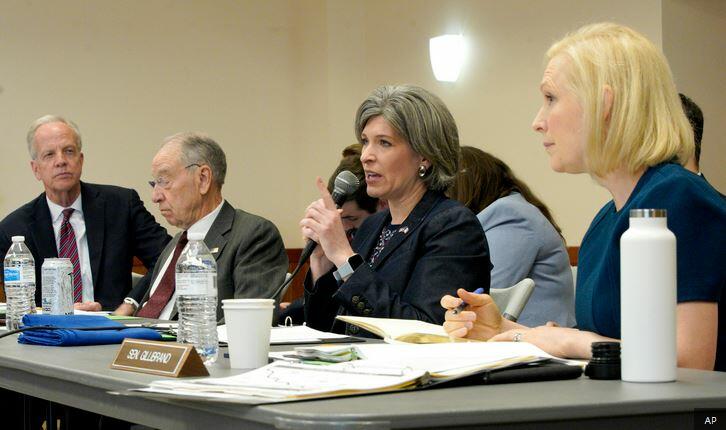
Congress has an opportunity to fix federal government policies on science commercialization. Last week, House Committee on Small Business Chairman Roger Williams (R-Texas) took an important step to that end, introducing a companion bill to the INNOVATE Act, which Senator Joni Ernst (R-IA) introduced this year as Chair of the Senate Small Business Committee. Williams’s bill could help reform the Small Business Innovation Research  program and help nurture the next American tech giants. 

Congress established the SBIR program in 1982 to commercialize science and turn startups into major companies. It can tout among its success stories Qualcomm, ViaSat, AeroVironment, and Anduril, all of which used SBIR funding to grow. The INNOVATE Act would reauthorize the SBIR program, which is due to expire at the end of the fiscal year, while strengthening commercialization requirements, improving the due diligence process for SBIR awardees to minimize malign foreign influence in the program, and attracting new entrants. 

As part of the SBIR program’s previous reauthorization in 2022, Congress helped address serious national security flaws in the program. In 2021, the Pentagon found that multiple people receiving SBIR funding through the Department of Defense had then transferred the results of their research to Chinese academia and industry. The 2022 reauthorization addressed this problem by requiring agencies with SBIR programs to establish due diligence programs to ensure SBIR awards don’t go to companies with malign foreign ties. But other problems with the SBIR program remain, which the INNOVATE Act would solve. 

First, the legislation would tighten benchmarks and impose a $75 million lifetime cap on SBIR awards, which would help prevent companies from treating the SBIR program as a perpetual revenue source. The INNOVATE Act targets commercialization problems that government agencies and independent analysts have documented for years. The Government Accountability Office and outside researchers have found that a few companies receive disproportionate SBIR funding while being worse at commercialization compared to their peers. The new standards aim to redirect awards toward companies that intend to graduate from the SBIR program.

Second, the bill enhances the SBIR program’s due diligence process to ensure that SBIR award winners are not connected to adversarial entities. The Senate Small Business Committee has found that companies with ties to foreign adversaries have received SBIR awards, even after the new due diligence requirements were enacted. Strengthening the due diligence process would ensure that such national security breaches don’t happen again.

Third, the INNOVATE Act aims to attract new entrants and help the best companies cross the “valley of death”— the funding gap that companies with new technologies face when transitioning research from an idea to a product. The bill would create an easier path to enter the program through a one-time SBIR award focused on commercialization and would create a transition-focused funding vehicle in DoD. These “Strategic Breakthrough Funding awards” would allow DoD to award up to $30 million to small businesses that received previous SBIR awards, but need funding to mass-produce their technology. 

Representative Williams’s version of the INNOVATE Act makes a few key changes to the Senate version. The commercialization language in the House version is weaker than the Senate version. The $75 million SBIR award cap remains, but the House bill creates a waiver system for companies with a national security justification to keep receiving awards. The agency director overseeing each SBIR program would approve these waivers. The House version also does not contain the language to strengthen the commercialization standards.

While tracking waivers in the annual congressional SBIR report is a smart move, the Small Business Administration should also flag waived companies in the SBIR database it maintains. This would let the public and stakeholders track waiver recipients more effectively. It will make it easier to see if multiple award winners still participate in the SBIR program even after the reforms. 

Finally, the House version broadens the Strategic Breakthrough Funding program beyond the Pentagon. While the Senate restricts the program to DoD, the House allows any agency with an annual SBIR program budget of over $100 million to make commercialization-focused SBIR awards. This would allow agencies such as the Department of Energy or the National Institutes of Health to participate. However, the eligible activities may need expansion to cover energy and health startups’ business needs, since the current language is focused on defense.

With the release of a House companion to the INNOVATE Act, Congress is closer to reauthorizing the SBIR program before it expires at fiscal year’s end. The SBIR program remains a powerful tool for commercializing scientific research. Congress shouldn’t waste this opportunity to make the program even stronger.

Tyler Durden
Sun, 08/10/2025 – 23:20

Canadians In Nova Scotia Now Banned From Using Public Forests

0
Canadians In Nova Scotia Now Banned From Using Public Forests

Tyranny is a process of acclimation.  Governments test the public to see what they will quietly tolerate; leaders then turn “temporary” restrictions into permanent laws as people are conditioned to accept the new normal.  Sometimes the public fights back and officials are forced to retreat.  However, the tests never end and the bureaucracy continues to press year after year until it gets what it wants.

Many commentators have noticed that the Canadian government has been expediting this authoritarian process in recent years to the point that the intentions of elitist politicians can no longer be misunderstood.  The mask is fully off and the country is becoming a draconian cesspool.  From censorship laws, to gun bans, to carbon taxes and even legislation that turns Christian worship into “hate speech”, Canada is almost every bit as cooked as their commonwealth cousins in Britain.  

Every few weeks it seems a new and oppressive mandate is enforced.  This month, the province of Nova Scotia has abruptly banned nearly all civilian activity in public forests.  It is illegal for Canadians to walk, hike, drive, camp (outside of official campgrounds) or fish in Nova Scotia’s woods and anyone caught without a heavily regulated permit is subject to extreme fines.  Smaller parks that have woods are also restricted.  The bans will continue until October 15th unless the provincial government decides to extend.

The offices for obtaining work permits have been swamped with requests and questions and citizens have been told to stop calling.  At least one citizen, Canadian veteran Jeff Evely, has challenged the law and has been fined over $28,000 simply for walking into the forest.

Nova Scotia leaders have set up “snitch lines” that people can call to report their neighbors.  According to Premier Tim Houston, the measures address the current climate with hot and extremely dry conditions increasing the risk of starting wildfires:  

“Most wildfires are caused by human activity, so to reduce the risk, we’re keeping people out of the woods until conditions improve. I’m asking everyone to do the right thing – don’t light that campfire, stay out of the woods and protect our people and communities…”

The average high temperature in Nova Scotia in July was a mere 73°F and little has changed in August.  The province also experienced heavy rains and flash flooding last month. 

Keep in mind, these are public forests that the Canadian public pays exorbitant taxes to the government to maintain.  The government also enforces restrictions on forest management that cause the very wildfires they say they are trying to stop.  This includes a number of regulations against logging to thin overgrown woods and preventing the collection of fallen trees. 

As in many parts of the US, this kind of “conservation” turns public lands into tinderboxes in times of drought.  It also suggests that preventing wildfires is not the true motive behind the bans.  Critics argue that the ban is practice run for a future rollout of laws related to climate controls. 


The restrictions are reminiscent of the bans on outdoor activities during the pandemic lockdowns; bans that were enforced beyond all reason, logic or viral science.  Numerous political leaders suggested at the time that pandemic lockdowns blocking personal travel and outdoor mobility could be extended to include “climate lockdowns”. 

The scenario is also similar to globalist efforts to “re-wild” western countries by removing public access from certain areas and allowing “nature to take over” without human influence.  This would, at bottom, force human beings into tighter and tighter bubbles of population that they are rarely allowed to leave. Such policies are often beta tested in smaller regions before they are expanded to include the entire nation.    

Legal challenges against the bans will be ample, but the overall intent behind the restrictions is suspicious and may be a warning sign of authoritarian laws to come in Canuckistan and across the western world.

Tyler Durden
Sun, 08/10/2025 – 22:45

Judge Blocks Beto’s Shady Fundraising For ‘Runaway’ Dems

0
Judge Blocks Beto’s Shady Fundraising For ‘Runaway’ Dems

Authored by Luis Cornelio via Headline USA,

A Texas judge has temporarily blocked Beto O’Rourke’s shady fundraising campaign to bankroll “runaway Democrats”—the group of state legislators who fled Texas to stall redistricting efforts.

On Friday, Tarrant County District Judge Megan Fahey issued a temporary injunction against O’Rourke and his group, Powered by People, barring them from raising funds or covering expenses for the Democrats while a lawsuit from Texas Attorney General Ken Paxton moves forward.

The order came just hours after Paxton sued O’Rourke and Powered by People, accusing them of misleading donors by falsely advertising the campaign as a political effort rather than a slush fund for personal expenses.

In her ruling, Fahey said the court found “imminent harm” that could cause the state to be irreparably injured, meeting the threshold for such an order.

“Because this conduct is unlawful and harms Texas consumers, restraining this conduct is in the public interest,” Fahey said.

Paxton celebrated the ruling in a statement, declaring:

“The Beto Bribe buyouts that were bankrolling the runaway Democrats have been officially stopped.”

He added, “People like Robert believe Texas can be bought. Today, I stopped his deceptive financial influence scheme that attempted to deceive donors and subvert our constitutional process. They told me to ‘come and take it,’ so I did.”

The next hearing is set for Aug. 19, 2025.

Tyler Durden
Sun, 08/10/2025 – 22:10

The Suffering Of Student Borrowers

0
The Suffering Of Student Borrowers

Authored by Jeffrey A. Tucker via The Epoch Times (emphasis ours),

The news blasted all over social media, confirming the sufferings of an entire generation of degree holders. Student loan delinquency rates have hit 10.2 percent in the second quarter. It’s a 21-year high, and worsens a $1.7 trillion debt crisis.

Custom image by FEE

Posts on social media reveal graduating students with debts that are rising higher despite high monthly payment. This is due to dramatic changes in interest rates combined with stagnant real wages.

Depending on the type of loan, interest rates can run between 6 and 17 percent, which means that students are paying mostly interest for a few years. With big increases, they can be under water fast. This is normal for home loans. Borrowers know they will pay more than twice the sticker price over the course of a loan. They put up with it with the expectation of a rising asset valuation. The home is the asset in question.

What is the asset with a student loan? The degree. You can stop laughing now.

Welcome to the world of student debt, Class of 2020. What seemed like free money to fund a four-year vacation turns out to be the worst-possible beginning of a new career. Expenses eat up low salaries while interest and taxes take the rest. Meanwhile, graduates are greeted with a reality that they did not expect. Their degrees can get them in the door but guarantee nothing in terms of advancement. Nearly every profession requires certifications that are hard to obtain and impossible to game.

For that matter, I know plenty of 30-somethings who are still paying on debts from college they regret attending and which contributed nothing to their real-world careers.

Life is hard enough but many of these young professionals are also carrying six-figure debts that make it impossible to consider homes and drive down their credit rating. It feels like a sand trap that is never going away. Those with family money can crawl to mom and dad but those without are seeing another decade ahead or more in which they are barely scraping by.

It’s no way to begin a career. It’s easy enough to look at these weeping young people and say they should have planned better. But at the age of 18, when these loans begin, most high-school graduates (especially of that period) have no idea what money is, where it comes from, how it works, and no clue of the hard walls built by accounting realities. They would all try another path today if they could but what’s done is done.

Were they lied to? Yes, but by no one in particular. The period of zero interest rates and fake prosperity deluded an entire generation. Cheap credit and free money encouraged vast corporate expansion that focused mainly on beefing up the labor force, tagging anyone with a degree and sticking them in jobs with low expectations and high salaries. It was all too good to be true but it appeared to be the preferred career path.

The advent of high interest rates beginning three years ago was a silent marking of the end of an era. It was the dawn of the real world of financial constraints. Those are now hitting an entire generation very hard. The credit companies are leaning in hard, collecting all they can, while the bosses at work are demanding more and more productivity, even as job security is no longer what it was. People are being fired all the time with downsizing now a constant feature of professional life.

Debt limits options. Debt hobbles choice. Debt ties you down. Debt is slavery. At the very time when the world should be their oyster, millions of young people are faced with this yoke around their neck.

Ten years ago, young people were getting the message that these loans would never have to be paid. They believed it, and voted for politicians who said this. It was always a ruse. The last administration did their best to wipe out the liabilities for some people in exchange for votes but it came nowhere near affecting the whole. Now the realities of debt finance are eating up the standard of living even as the dollar has lost 25 percent of its value (at least) in the last five years. Prices are still rising.

The problem for these young people is even more fundamental than finances. It is about expectations. Their parents lived better than any generation in American history. Thanks to leverage and boom times, they had huge houses and high living standards with health care, vacations, and rising income. This was a highly unusual time and it was never justified by the fundamentals. The Fed policies of 2000 and then 2008 spread around credit like it was growing on trees, while inflation was kept at bay thanks to the dollar’s status as the international reserve currency.

Somehow an entire generation was led to believe that this is the life to which they would be entitled if only they finished college with a magic piece of paper in hand. There was no sense that they would be starting from scratch, that their parent’s lifestyles were not only a result of a lifetime of work and asset accumulation, but had also been subsidized by cheap credit.

The single most important insight for young people just starting out is this: They cannot and will not live like their parents for a very long time. They must cut back, eat at home, reduce belongings, stay out of debt, live in small apartments, buy used cars, seek out free entertainment, and cut it out with all the frivolous spending.

This is especially true for those who get married after college. There should be no hopes of immediately living the high life like their parents who had 20 to 30 years to get there. The young couple should and must prioritize paying off all debt, never accumulating more. Revolving credit cards are out of the question. The cheapest apartment rents are necessary. Everything you buy should be from thrift stores and eBay, never retail.

A young couple who takes on this way of life will not only build a strong and lasting relationship, they will also build a financial future together. The seeming deprivation becomes a bond that is forged between a young couple. They should entirely ignore their friends who are climbing up the socio-economic ladder too quickly with fancy cars and club memberships, and dismiss Instagram postings of vacations in far-flung places. This is all nonsense.

If one or the other partner in a relationship does not understand this, and seeks to inhabit the same lifestyle from whence they came from their parents, the relationship will be doomed. Living even slightly above one’s means over a long period can lead to financial and personal disaster and a broken home. Living frugally means developing the habit of foregoing consumption and doing without, in exchange for which you build a marriage and home.

This is all-the-more true if a young couple is planning on having children. It’s simply not possible to maintain two full incomes, as moms quickly discover their primary obligation as caretakers and the career path faces massive disruption. Child care is unaffordable if it is even available, and so the best financial decision could be to move to one income. If debt is a factor, this decision is even more difficult.

It has always been true for most that every new generation must build a life for themselves. The notion that the children would enter adulthood with the same standard of living they left is the delusion of very recent origin. It is ending now, quite rudely too. The sooner young people can develop the spending and saving habits of their great-grandparents, the better off they will be over the long term.

As for student loans, those too are rather new developments. Fifty years ago, it was common for students to work their way through school, paying for tuition, housing, books, and food. If they were unable to do this, they did something else.

Today, working your way through college and paying all bills is inconceivable. Paradoxically, the expansion of student loans only ended up driving up tuition costs that made the loans necessary.

It is already too late for those with six-figure debts but a new generation can learn by watching the sufferings of those to whom the system lied. They can make smarter choices about finances, education, and the need for sound personal finance.

Tyler Durden
Sun, 08/10/2025 – 21:00

Canadian Steel CEO Warns: U.S. Tariffs Could Lock Us Out Completely

0
Canadian Steel CEO Warns: U.S. Tariffs Could Lock Us Out Completely

Canadian steelmakers may need to overhaul their operations as steep U.S. tariffs threaten to block access to their largest export market, says Algoma Steel Inc. chief executive Michael Garcia. He made the comments to Financial Post last week. 

“We’ll have little to no business in the U.S. if the 50 per cent tariff continues,” Garcia told the Financial Post’s Larysa Harapyn. “Once the full effect of (the tariffs) plays out, it will effectively lock out Algoma and frankly other Canadian steel producers from the U.S. market.”

Algoma, based in Sault Ste. Marie, Ont., is Canada’s only plate steel producer. While it still has contractual obligations in the United States, Garcia said those will wind down within the year if the tariff remains. “There really are no practical foreign markets for Canadian steel other than the U.S. market,” he said.

The company has asked Ottawa for a $500-million enterprise tariff loan facility, not due to immediate liquidity concerns, but to safeguard operations as it adjusts to the loss of U.S. sales and navigates an uncertain Canadian market.

Financial Post writes that if U.S. access remains blocked, Garcia said producers will have to pivot to the domestic market, which in recent years has been supplied about two-thirds by foreign steel. “Much of that steel is unfairly traded and dumped into the Canadian market,” he said. “That’s accelerated now that the U.S. has 50 per cent tariffs on all foreign steel coming into the U.S.”

Algoma sees potential in infrastructure and defence projects under Prime Minister Mark Carney’s nation-building agenda, but Garcia noted that significant demand from those projects has yet to materialize. “Our challenge is to bridge the company into the future,” he said. “Make sure we’re making the right type of products, that are demanded by Canadian customers, and be there when that demand appears.”

Meeting domestic needs would require investment and time, Garcia said, with steelmakers shifting away from coil production and toward products such as plates for shipbuilding, energy, and defence. “There has to be an environment where Canadian steelmakers are making the … type of steel that is consumed in Canada and have a free-trade environment to win that business.”

Algoma has already signed agreements with shipbuilders, including B.C.-based Seaspan, and is positioning itself to supply marine plates if domestic shipbuilding expands. Garcia said the company has a history in the sector and is ready to rejoin the supply chain if projects are awarded and dormant shipyards return to activity.

Tyler Durden
Sun, 08/10/2025 – 20:25

Federal Agencies Told To Expunge Employee COVID-19 Vaccination Records

0
Federal Agencies Told To Expunge Employee COVID-19 Vaccination Records

Federal agencies must eliminate records related to whether employees received a COVID-19 vaccine, the Office of Personnel Management (OPM) said on Friday.

“All information related to an employee’s COVID-19 vaccine status, noncompliance with prior vaccine mandates, or exemption requests must be expunged from any employee’s Official Personnel Folder,” the office’s director, Scott Kupor, told department heads in a memorandum.

As Zachary Stieber reports for The Epoch Times, the office said that effective immediately, agencies “may not use an individual’s COVID-19 vaccine status, history of noncompliance with prior COVID-19 vaccine mandates, or requests for exemptions from such mandates in any employment-related decisions, including, but not limited to, hiring, promotion, discipline, or termination.”

The directive came in response to a recent settlement in a case brought by a group of federal employees.

Kupor credited President Donald Trump with the development.

“Things got out of hand during the pandemic, and federal workers were fired, punished, or sidelined for simply making a personal medical decision,” he said in a statement.

“That should never have happened. Thanks to President Trump’s leadership, we’re making sure the excesses of that era do not have lingering effects on federal workers.”

The case was brought by Feds for Freedom in federal court in 2021. It challenged President Joe Biden’s imposition of a COVID-19 mandate for federal workers.

A judge blocked the mandate with a preliminary injunction, but the injunction was lifted by an appeals court and was ultimately vacated by the Supreme Court.

The case had been proceeding since then.

U.S. District Judge Jeffrey Brown, who was overseeing the case, on Friday ordered the dismissal with prejudice.

Government attorneys and lawyers for the plaintiffs said in an Aug. 7 joint stipulation that they had agreed to the dismissal.

“Our victory is a long-overdue confirmation of what we have asserted all along: COVID mandates were unconstitutional, immoral, and un-American,” Marcus Thornton, president and co-founder of Feds for Freedom, said in a statement.

Trent McCotter of Boyden Gray PLLC, one of the lawyers representing the group, added that “nothing can fully compensate employees for the harms suffered, but today’s settlement provides critical prospective relief and shows the Trump Administration is on our side and willing to help right those wrongs.”

The settlement, which has not been made public, includes reimbursement of a portion of Feds for Freedom’s legal fees, the lawyers said.

Tyler Durden
Sun, 08/10/2025 – 19:15

Trump Floats Sending Homeless ‘Far From The Capital’

0
Trump Floats Sending Homeless ‘Far From The Capital’

Authored by Jacob Burg via The Epoch Times,

President Donald Trump on Aug. 10 suggested removing homeless people from Washington to make the nation’s capital “safer and more beautiful than it ever was before.”

In a Sunday post on Truth Social, Trump shared several photos showing tents and garbage on the streets in areas around the capital, saying that “the Homeless have to move out, IMMEDIATELY.”

“The Criminals, you don’t have to move out,” Trump added.

“We’re going to put you in jail where you belong. It’s all going to happen very fast, just like the Border.”

The president warned to “be prepared,” adding:

“There will be no ‘MR. NICE GUY.’”

As of publication, the White House has not responded to a request for clarification on what legal mechanism Trump would use to evict homeless people from Washington, and where they would be sent afterward.

Trump will be hosting a press conference Monday morning from the White House on stopping “violent crime in Washington, D.C.,” but has not said if further details on his eviction plan will be announced there.

On any given night, there are 3,782 single persons experiencing homelessness in the nation’s capital, a city of roughly 700,000 people, according to the Community Partnership, an organization working to combat homelessness there.

The organization says that while most of the homeless people are in transitional housing or emergency shelters, roughly 800 are without shelter.

Trump has repeatedly criticized the crime level in Washington, recently pointing to the violent attack on a young former staffer of his Department of Government Efficiency (DOGE) last week during a carjacking attempt. He threatened to federalize the city if it didn’t “get its act together.”

“Crime in Washington, D.C., is totally out of control. Local ‘youths’ and gang members, some only 14, 15, and 16-years-old, are randomly attacking, mugging, maiming, and shooting innocent Citizens, at the same time knowing that they will be almost immediately released,” Trump wrote on Truth Social.

“If D.C. doesn’t get its act together, and quickly, we will have no choice but to take Federal control of the City, and run this City how it should be run, and put criminals on notice that they’re not going to get away with it anymore.”

On Sunday, Muriel Bowser, the mayor of Washington, said the capital was “not experiencing a crime spike.”

“It is true that we had a terrible spike in crime in 2023, but this is not 2023,” Bowser said on MSNBC’s “The Weekend.”

“We have spent over the last two years driving down violent crime in this city, driving it down to a 30-year low.”

Violent crime in the first seven months of 2025 dropped by 26 percent compared to 2024, and overall crime in Washington was down by roughly 7 percent, according to the city’s police department reports.

After meeting with the president several weeks ago in the Oval Office, Bowser said Trump is “very aware” of the city’s efforts with federal law enforcement.

Since establishing the district in 1790 with land from both Virginia and Maryland, Congress has controlled Washington’s budget, but residents vote to elect a city council and mayor.

Congress would likely need to pass a bill rescinding the law that created Washington’s local elected leadership for Trump to federalize the city. The president would then have to sign the bill into law.

However, Bowser noted on Sunday that Trump could call in the National Guard if he desired, similar to its recent deployment in Los Angeles following protests against federal immigration enforcement operations that turned into violent riots.

Tyler Durden
Sun, 08/10/2025 – 18:40

NVDA, AMD To Pay 15% Of China Chip Sales To US; Report

0
NVDA, AMD To Pay 15% Of China Chip Sales To US; Report

Just when you thought the tariff-tornado had passed close (but missed) the AI economy, President Trump squeezes just a little bit more…

The Financial Times reported earlier this evening that Nvidia and Advanced Micro Devices have agreed to pay 15% of their revenues from chip sales to China to the US government as part of a deal with the Trump administration to secure export licenses. 

According to people familiar with the situation, including a US official, Nvidia would share 15% of the revenue from sales of its H20 chip in China and AMD will deliver the same share from MI308 revenues.

The FT further points out that the quid pro quo arrangement is unprecedented.

According to export control experts, no US company has ever agreed to pay a portion of their revenues to obtain export licenses.

But the deal fits a pattern in the Trump administration where the president urges companies to take measures, such as domestic investments, for example, to prevent the imposition of tariffs in an effort to bring in jobs and revenue to America.

In April, the Trump administration said it would ban H20 exports to China.

However, Trump reversed course in June after meeting Huang at the White House.

Over the following weeks, Nvidia become concerned because the Bureau of Industry and Security [BIS], the arm of the commerce department that runs export controls, had not issued any licenses.

Huang raised the issue with Trump on Wednesday, according to people familiar with the exchange, and BIS started issuing licenses on Friday.

The H20 revenue deal comes as Nvidia and the Trump administration face criticism over the decision to sell the chip to China.

US security experts say the H20 will help the Chinese military and undermine US strength in artificial intelligence.

Some BIS officials have also expressed concern about the reversal, according to people familiar with the situation.

Two people familiar with the arrangement said the Trump administration had not yet determined how to use the money.


Tyler Durden
Sun, 08/10/2025 – 18:05