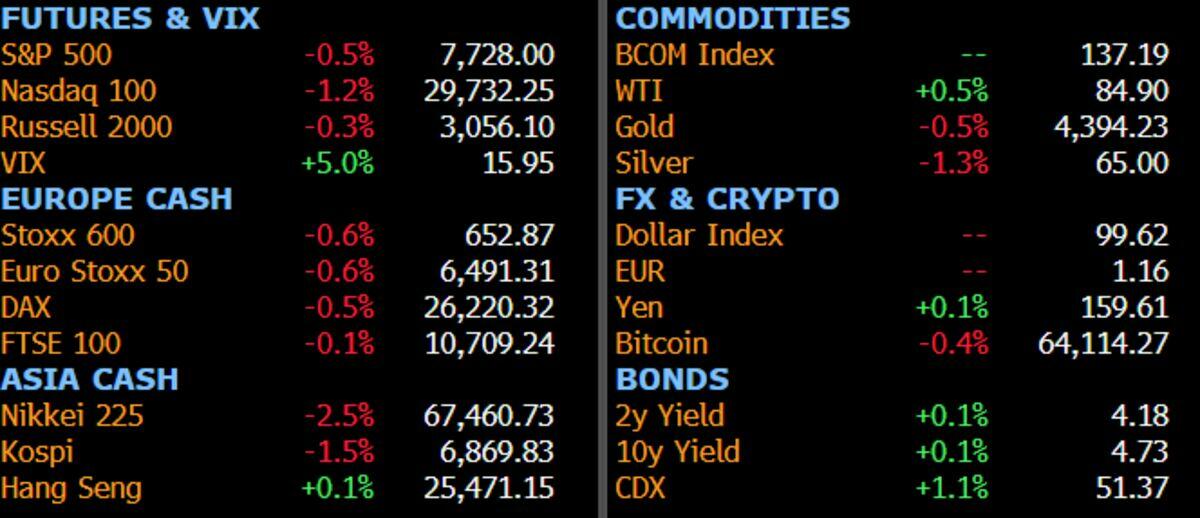
US futures are a “sea of red” (as Bloomberg describes it) in early trading as thin summer volumes persist, with the wrong kind of inflation coming to the fore and Monday’s tech selloff weighing on sentiment despite bullish AI news. The recent stock-bonds disconnect is finally being reappraised with US futures lower across the board. As of 8:00am ET, S&P 500 futures fell 0.4% with Nasdaq 100 contracts down 1.1% with Semis, Mag7, and Memory all under pressure, while Software is bid. Nvidia dropped 1.8% as the cost of protecting its debt against default closed in on a high reached last month. Defensives and Energy are leading as investors continue to de-gross / de-lever. Tech stocks drove declines across global markets equities as long-dated bond yields pushed further into multidecade highs and oil prices extended their climb, draining traders’ appetite for risky assets. Yields on 30-year Treasuries rose 2bps to 5.33%, the highest since 2007 as “yields seem to be reacting to a combination of energy prices, the deteriorating US fiscal situation, elevated credit issuance, and BOJ/JPY dynamics which are all driving term premia higher“, per JPM. US crude neared $85 a barrel with Brent trading above $91, while the Diesel crack spread rose above $100 for the first time ever, as tensions in the Middle East showed no sign of easing. The dollar was little changed while gold declined. Price pressure concerns are hardly new. But with long-term yields around the globe hitting multi-decade highs, the debate may be shifting toward whether the set-up reflects persistent “sticky” inflation or an AI-driven “growth” dynamic. For the former, the signals are clear to see: persistently elevated oil prices, soaring diesel costs, “Dr. Copper” dynamics and the effects of El Niño. Today’s macro data focus is weekly ADP, Import / Export prices, Housing Starts, Mfg measures, and Pending Home Sales. Tomorrow’s Fed Minutes are likely more impactful as he bond market focuses on next week’s Jackson Hole mtg / Warsh speech

In premarket trading, Mag 7 stocks are mostly lower: Meta Platforms (META) slips 1% as the company heads to court Tuesday for a high-stakes showdown with a coalition of state attorneys general over claims that the company deliberately designed Facebook and Instagram to encourage compulsive use among young users (Apple +0.6%, Microsoft +0.7%, Amazon -0.4%, Alphabet -0.5%, Tesla -1.3%, Nvidia -1.9%)
- Chipmakers and other AI-related firms slide, weighing on US stock futures, as risk-off sentiment sets in.
- Abercrombie & Fitch (ANF) is down 2% after Raymond James downgraded the clothing company to market perform following the stock’s recent rally.
- Amylyx Pharmaceuticals (AMLX) rises 26% after saying a late-stage trial of its experimental drug met its primary endpoint for patients who experience low blood sugar levels following bariatric surgery.
- Aon (AON) slips about 1% on light trading after saying CFO Edmund Reese is leaving after two years in the post.
- Baidu ADRs (BIDU) drop 6% after the Chinese search-engine operator reported its fifth quarter of free cash outflow in the past six, thanks to soaring capital expenditures. Its revenue was shy of analyst estimates, dragged by underperformance at its subsidiary iQiyi.
- Bath & Body Works (BBWI) climbs 3% after Citi raised the recommendation on the company to buy, with analyst Paul Lejuez noting a second quarter EPS beat and positive tone about recent product launches.
- Fabrinet (FN) slides 9% after the process engineering and manufacturing services firm’s Datacom sales disappointed investors.
- Home Depot (HD) climbs 2% after results beat estimates in the latest quarter, a sign that spending on improvement projects is holding up despite high borrowing and housing costs.
- Norwegian Cruise (NCLH) falls 2% as Mizuho downgrades the company to neutral, saying cash requirements may pressure the balance sheet.
August’s rebound in chipmakers faltered in premarket trading, with semiconductor stocks sliding 3.4% and Nvidia down almost 2% as its CDS push wider. Equity markets are struggling under the weight of rising borrowing costs as bond investors demand higher premiums to finance spendthrift governments and shield against persistently sticky inflation. Elevated oil prices have also reinforced expectations that central banks will need to tighten monetary policy.
“The Middle East is clearly re-escalating again and long-term interest rates are rising, and these are things that end up corroding the value of equities,” said Emma Moriarty at CG Asset Management. “And in a market where it’s summertime, liquidity is a little bit thinner, it’s a bit more prone to volatility.
In Europe, French 30-year yields hit their highest since 2008, while their UK peers were approaching 6%. Germany’s borrowing costs hit a 15-year high in a major sale of long-dated bonds. Yardeni Research warned investors are becoming more concerned about the surge in borrowing by AI hyperscalers and questioning whether the Fed will remain sufficiently vigilant on inflation if oil prices climb again.
“We aren’t pushing the panic button,” strategists led by Ed Yardeni noted. “However, we are closely monitoring whether the bond vigilantes might do so.
Events in the Middle East will remain a key point of focus as both the US and Iran show less willingness to compromise. President Donald Trump said he won’t try to revive a stalled truce with the Islamic Republic, dimming prospects for a swift reopening of the Strait of Hormuz.
For Mohit Kumar at Jefferies, there is “no easy way out” and “further pain in the near term” for energy costs. “We have stayed away from the long end of the curve and rates duration and instead focus on steepeners,” he wrote. “We see no reason to change our portfolio.”
Traders expect tech-stock volatility to continue as investors shift their focus back and forth between robust earnings and worries over whether debt-fueled infrastructure investment will deliver sufficient returns to justify the spending. “You are going to get winners and losers and you’re going to get a lot of wasted capex,” said Justin Onuekwusi, chief investment officer at St. James’s Place. “That, to me, is a huge future challenge.”
The Stoxx 600 equity index headed for a fifth straight day of losses, the longest such stretch this year. Here are the biggest movers Tuesday:
- H&M climbed as much as 4.6%, the most in almost 11 months, as Citi places the Swedish fashion retailer on a 90-day positive catalyst watch ahead of its third-quarter results
- Coloplast shares gained as much as 3.6% after the Danish medical-products maker reported better-than-expected revenue for the third quarter
- Hemnet Group shares surged as much as 13%, to the highest in more than three months, after JPMorgan double-upgraded the Swedish online property portal to overweight and said it’s “worth revisiting” following a period of underperformance
- Skan shares rose as much as 8.5% to the highest level in almost a year after the pharma equipment supplier reported first-half results
- Basilea shares jumped as much as 8.1%, the most in more than a year, after the Swiss biopharmaceutical company reported an increase in revenue for the first half-year and upgraded its outlook for the full year
- 1&1 shares soared as much as 6.5% as its parent United Internet plans to buy as many as 6 million shares in the telecom company
- Schott Pharma shares advanced as much as 7.6%, to the highest in almost a year, after Barclays said the German pharma packaging company is leaving its issues “in the rear-view mirror” and is set for growth acceleration
- Huber+Suhner shares dropped as much as 12%, the most since 2020, after the maker of antenna systems and fiber-optic cables reported weak results that missed expectations in the first half
- Royal Unibrew fell as much as 9.1%, the most since April, on weak second-quarter earnings because of a soft performance in Northern Europe
- Scor shares fell as much as 3.1%, the most in eight weeks, as UBS downgrades the reinsurer to sell from neutral
Asian stocks were set to snap a four-session winning streak as gains in oil prices fueled inflation concerns, while rising global bond yields also dimmed the appeal of equities. The MSCI Asia Pacific Index erased an early advance to trade 1% lower. Tech and industrials were the biggest drags on the benchmark while subgauges of healthcare and energy stocks advanced. Japan’s Nikkei led losses among key national indexes in the region, dropping 2.5%. South Korea’s Kospi also reversed early gains and finished lower as trading resumed after a holiday. Asia’s stock benchmark is up more than 2% so far in August following two straight months of losses. Traders will be studying minutes from the Fed’s July policy meeting, due for release later this week, for clues to the central bank’s rate path. Globally, investors are taking profit and reducing exposure, said Jung In Yun, chief executive officer at Fibonacci Asset Management Global in Singapore. “Seems like a short-term issue, not a major catalyst for another steep fall.” Elsewhere, Indonesia’s benchmark index rose to the highest in three months after President Prabowo Subianto’s 2027 budget speech on Friday eased some investor concerns over fiscal discipline.
In rates, treasuries drift lower into the early US session, with futures near lows of the day and the curve extending a steepening move. Longer-dated bond yields have continued to carve out fresh peaks alongside persistently higher energy prices. US yields cheaper by up to 2bp across the long end, with 2s10s and 5s30s steeper by 1bp and 1.4bp on the day, respectively. US 10-year yields trade around 4.74%, cheaper by 1bp, with bunds and gilts lagging by an additional 2bp and 1bp in the sector. Germany long-end lags, following a €4 billion ($4.6 billion) August 2056 syndicated bond sale at highest yield since 2011. US session focus includes a busy data slate, while another large day for corporate issuance is also expected. IG dollar issuance slate includes a few deals already. Twelve issuers priced $9.1 billion on Monday, pushing monthly volume above $145 billion for a new August record. Issuers paid about 5bps in new issue concessions on deals that were 2 times covered. Another busy session for corporate deals is expected for Tuesday. Treasury auctions this week include $16 billion 20-year bonds (Wednesday) and $8 billion 30-year TIPS (Thursday)
In commodities, Brent crude hit a fresh month-to-date high during European trade against the backdrop of dwindling expectations of an immediate resolution to the US-Iran conflict. Focus is moving beyond crude benchmarks with the widening in crack spreads garnering attention. The Nymex heating oil and ICE gasoil cracks both hit fresh records on Monday, with the former topping $100 a barrel. US gasoline also gained, with the Nymex prompt spread the strongest since 2022.
This adds further ammunition to the inflation angst surrounding geopolitical disruptions and in Europe serves to raise scrutiny over government balance sheets. France is a standout with short bets on French paper continuing to ratchet higher ahead of upcoming budget negotiations. The recent ascent of precious metals is faltering. Spot gold down 0.5%.
In FX markets, the Bloomberg Dollar Spot Index snapped a three-day losing streak to climb 0.1%; oil prices extended gains after prospects for a peace deal between the US and Iran dimmed. USD/JPY rose as much as 0.2% to 159.78, highest since July 31; one-week risk reversals trade at 193bps, puts over calls, compared to Monday’s high of 248bps. GBP/USD slipped as much as 0.2% to 1.3520; data showed UK employers shed more workers in July and job vacancies hit a fresh five-year low. EUR/USD was modestly lower at 1.1575; one-month options sentiment turned bullish for the first time since early March. Kiwi led G-10 losses; NZD/USD fell 0.5% to 0.5872
Looking at the US economic data calendar, we get ADP weekly employment change (8:15am), August New York Fed services business activity, July import/export price index, housing starts, building permits (8:30am), industrial production (9:15am) and pending home sales (10am). No Fed speakers scheduled for the session
Market Snapshot

Top Overnight News
- Iran will shift to a “fully offensive” military posture because efforts to negotiate a permanent end to the war with the U.S. have stalled, a senior Iranian official told Reuters on Monday, as Washington ruled out extending a temporary ceasefire agreement. RTRS
- Yemen’s Iranian-allied Houthi rebels are escalating attacks along the country’s Red Sea coast, shutting down operations at a strategic seaport and pushing closer to the Bab al-Mandeb Strait, an important global shipping chokepoint. WSJ
- Long-term borrowing costs across major economies hit multi-decade highs on Tuesday as inflation concerns, deficit fears and surging AI bond issuance put pressure on government debt around the world. FT
- US investment-grade bond sales have set a third straight monthly record, continuing the market’s fastest pace of issuance as spending on the artificial-intelligence buildout fuels corporate borrowing. August’s high-grade debt supply reached $145.2 billion, topping 2020’s total of $136 billion for the month. BBG
- Chinese AI companies are building systems that perform almost as well as leading models without the most powerful hardware, challenging their US rivals. One measure of China’s long AI push is its dominance in 2023 patent applications. BBG
- China’s economy showed across-the-board weakness in July and growth likely slipped further below the government’s annual target, sparking a call from Premier Li Qiang on officials to ramp up supportive measures. BBG
- Apple has acknowledged for the first time that regulatory changes forcing it to loosen control of its App Store are weighing on its more than $100bn services business, a rare concession that antitrust action is beginning to dent one of the company’s most profitable divisions. FT
- Unemployment in the U.K. was unchanged in the three months through June, while wage growth edged up slightly, likely not moving the dial for Bank of England policymakers who are expected to leave interest rates on hold next month. WSJ
- Canada faces a new round of 50% U.S. tariffs this week that businesses said could cause job losses in some already struggling industries, while complicating broader negotiations over the future of North America’s free trade agreement. RTRS
- Anthropic PBC is on track to generate annualized revenue of more than $65 billion based on its current performance, up more than sevenfold from its pace at the end of last year. BBG
A more detailed look at global markets courtesy of Newsquawk
APAC stocks mostly declined following the weak lead from Wall Street, where all major indices declined amid higher oil prices and yields due to ongoing geopolitical uncertainty following the expiry of the US-Iran MoU and with Trump rejecting a truce extension, while he also threatened to bomb US ally Oman. ASX 200 eked out slight gains amid a slew of earnings, as results from BHP and CSL helped keep the index afloat, although gains were capped by weakness in telecoms, financials and the consumer sectors.
Nikkei 225 retreated beneath the 68,000 level with underperformance in Japan amid upside in yields, higher oil prices, fears of a faster pace of BoJ rate hikes, and the recent weak GDP data. KOSPI initially rallied on return from the long weekend, but then faltered as the early tech resilience waned, and with some suggesting that US President Trump’s decision to reduce military drills with South Korea could partly be due to frustration regarding the pace of South Korea’s investment pledge. Hang Seng and Shanghai Comp were subdued following the recent disappointing economic data, in which Industrial Production and Retail Sales missed forecasts, although the downside in the mainland was somewhat cushioned after China’s MOFCOM and eight other ministries announced measures to boost consumption in lower-tier cities and counties.
Top Asian News
- China’s Ministry of Commerce and eight other ministries issued guidance aimed at boosting consumption in lower-tier cities and counties, with fiscal support a key focus. Measures include upgrading retail channels, encouraging new consumption formats, improving local service efficiency and expanding eldercare, childcare, education, healthcare and sports facilities, while eligible personal consumer loans and loans to service-sector operators may receive fiscal interest subsidies.
- PBoC plans to expand Yuan offshore market and is backing the creation of a new model for real estate developments, adding they will intensify review of macroeconomic and financial efforts.
European bourses are softer across the board, with the recent bond selloff causing risk aversion. Persisting inflationary pressures, increased government spending and shifting investor demographics are hitting bonds globally. Political uncertainty, especially in the US ahead of the midterms, is also putting pressure on bonds. Its impact on equities is that higher yields would weigh on profits as it would require larger payouts. Higher yields would also mean higher discount stock valuations. Sectors highlight the negative bias. Retail and Energy are the only sectors posting decent gains while Tech, Industrial Goods & Services and Basic Resources are the sector laggards.
Top European News
- UK Unemployment Rate (Jun) 4.9% vs. Exp. 4.8% (Prev. 4.9%).
- UK Employment Change (Jun) 83k (Prev. 147k).
- UK Average Earnings excl. Bonus (Jun 3MYr) 3.5% vs. Exp. 3.4% (Prev. 3.4%).
- UK Average Earnings incl. Bonus (Jun 3MYr) 4.1% vs. Exp. 4.1% (Prev. 4.4%).
- UK Claimant Count Change (Jul) -11.0k vs. Exp. 11.2k (Prev. -6.4k).
- UK HMRC Payrolls Change (Jul) -13k (Prev. -13k).
- German ZEW Economic Sentiment Index (Aug) 34.2 vs. Exp. 30 (Prev. 26.3).
- German ZEW Current Conditions (Aug) -61.1 vs. Exp. -68.8 (Prev. -77.6).
- European ZEW Economic Sentiment Index (Aug) 31.4 vs. Exp. 25.4 (Prev. 23.4).
FX
- DXY is modestly firmer today with headline catalysts light; the latest reporting optimistic from Pakistan but not reflected by Iran and the US. All-in-all, the market is viewing the latest updates as both sides in stalemate, and with Hormuz traffic low oil it looks like Crude could stay elevated and continue to weigh on the risk tone. Absent tier-1 data and headlines should keep focus on yield moves with US supply tomorrow potentially the most expensive for the Treasury in 25 years. DXY is within a narrow 99.52-99.69 range.
- UK Jobs: The strong wage figures were caveated by a 6.1% rise in public sector pay helped by NHS pay awards, while the unemployment rate unexpectedly remained at the prior 4.9% level (exp. 4.8%) and the 3M employment change printed below the prior; sparking a modest dovish reaction with Cable falling 15 pips; action which has persisted two hours later. Now, Wednesday’s CPI is in focus, and with GBP having had a strong run vs. the USD, it could see a decent move should figures rise at a slower than expected pace.
- Action elsewhere is quiet. NZD dipped below 0.59 to a 0.5870 trough amid the risk tone, USD/JPY looks towards 160.00 as oil prices hit its terms of trade, action which also fails to help energy exporters NOK and CAD, the latter which is flat against the USD, while NOK is weaker against the Buck (USD/NOK +0.2%), but firmer vs. SEK after it strengthened on Monday.
Fixed Income
- Global fixed benchmarks continue to move lower, in a continuation of the action seen last week. Yields continue to trudge higher; the steepening seen in the last few sessions appears to have taken a breather this morning, with yields across the curve moving higher to a similar magnitude.
- Yields continue to hold at multi-decade highs; the US 30yr (5.32%) sits at levels not seen since 11 June 2007, with the next peak going back to 2004 (5.53%). As for the yield spread, the US2s30s continues to widen, now at 113bps (vs 98bps at the start of the month). To remind, front-end rates were pressured after recent soft US data which led to a dovish Fed repricing, whilst long-end rates have been impacted by fiscal/geopolitical/political uncertainty.
- USTs (-3 ticks) are off by a handful of ticks and trade within a 108-10 to 108-15+ range. Domestic newsflow has been light this morning, and will likely remain so for the remainder of the day given the lack of Tier 1 data and the summer lull. Bunds (-35 ticks) and Gilts (-30 ticks) also follow the bearish tone, but UK paper has its own data to digest this morning.
- Overall, the UK’s jobs data doesn’t show a significant change in the labour market, a point that was expected heading into the release. Initial focus on the hotter-than-expected wage metrics, including the upward revision to the measure with bonuses. Additionally, the claimant count unexpectedly declined and the prior was revised down. However, this is offset by the unemployment rate unexpectedly remaining at the prior 4.9% level (exp. 4.8%) and the 3M employment change printing below the prior.
- The UK sells GBP 4bln 4.875% 2036 Gilt: b/c 3.65x (prev. 3.13x), average yield 5.155% (prev. 5.040%), tail 0.1bps (prev. 0.1bps).
- Japan sells JPY 1.9tln 5-year JGBs; b/c 4.15x (prev. 3.43x), average yield 2.020% (prev. 2.163%), tail in price 0.02 (prev. 0.03).
Commodities
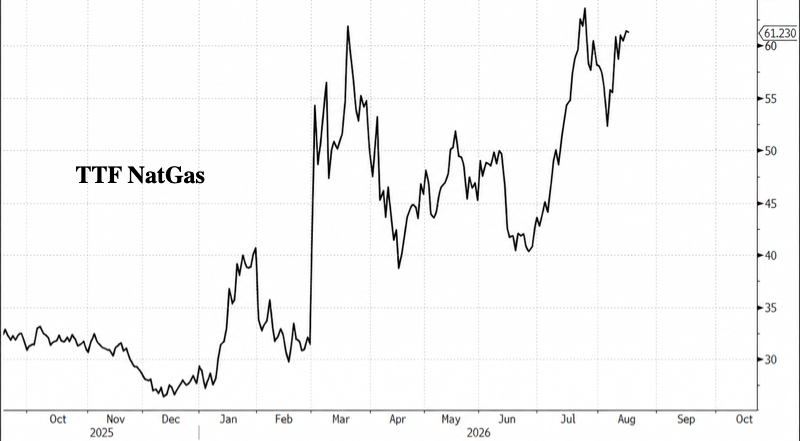
- WTI and Brent Oct futures hold a positive bias as constructive geopolitical headlines are trumped by escalatory rhetoric (see below). WTI trades towards the upper end of USD 84.64-85.68/bbl after topping yesterday’s USD 85.04/bbl high (vs low 81.50/bbl). Brent eyes USD 92/bbl in a current USD 90.64-91.85/bbl range after notching a USD 88.01-91.21/bbl range yesterday. Dutch TTF resides around recent ranges with gains of some 1.5% intraday, testing EUR 63/MWh to the upside in recent trade.
- Metals are subdued as elevated energy prices keep the USD underpinned and thus weigh on the complex. Spot gold pulled back to around USD 4,400/oz and earlier hit lows close to its 100 DMA (USD 4,385/oz) in a USD 4,386-4,436/oz intraday range at the time of writing. Spot silver remains within yesterday’s USD 64.75-66.56/oz range. Base metals are lower across the board. 3M LME copper tested support around the 14k/t mark this morning to trade in a current USD 13,996.18- 14,174.00/t range at the time of writing.
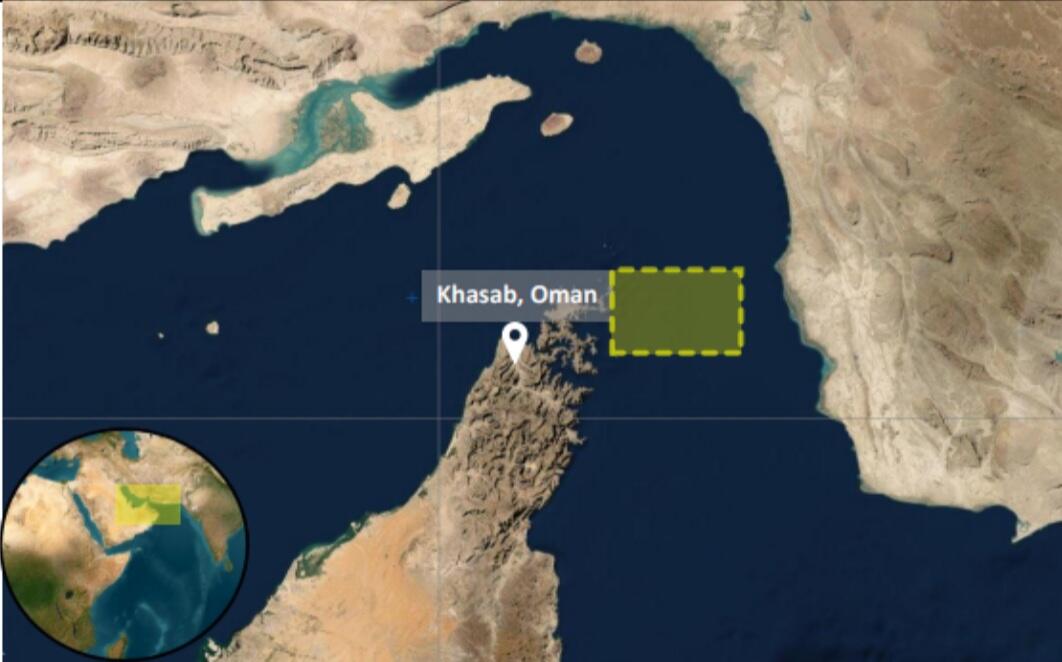
- In terms of the main geopolitical updates, US President Trump reiterated that the US remains in control of the Strait of Hormuz and said Iran wants to reach a deal, although he does not believe Tehran will agree to the terms, he considers necessary and stressed that he is not seeking an extension of the Iran MoU. Trump also criticized US-ally Oman, saying he does not think the country “behaves very well” and that the US could handle it very easily. Meanwhile, Pakistani journalist Anas Malick reported that an understanding to extend the US-Iran ceasefire under the Islamabad MoU has been reached and agreed in principle. Separately, UKMTO reported an incident in the Strait of Hormuz in which a vessel conducting an outbound transit was struck by an unknown projectile. This morning, Houthi rebels said they used multiple drones to attack an Aramco refinery in Saudi Arabia’s Jazan region, although it is unclear if this is referring to a fresh attack or last week’s attack.
- Libya is seeking investment of up to USD 40bln to develop oil resources, according to FT.
- India is reportedly considering cutting its 100% tax on imported sugar to help curb domestic prices, according to Bloomberg.
Trade/Tariffs
- US President Trump and Canadian PM Carney spoke late on Monday after several days of trade negotiations between the countries, according to a Bloomberg reporter citing sources.
Central Banks
- ECB’s Lane said inflation will hover around 3% for the rest of the year but it depends on whether there is a resolution to the crisis. Lane added that food inflation is relatively low.
Geopolitics: Iran
- Iranian Parliamentary Speaker Ghalibaf said the Strait of Hormuz will not open until the blockade and oil embargo are lifted. He added that “Iran is ready to inflict a heavier defeat on the enemy than before, in proportion to his actions and encroachments.”
- UKMTO said it received a report of an incident in the Strait of Hormuz, where a vessel was struck by an unknown projectile while conducting an outbound transit of the Strait of Hormuz, causing damage to the engine room and crew casualty
- Yemen’s Houthis attacked Saudi Aramco’s Jazan refinery with drones, according to Saba news citing sources.
- Airstrikes targeted the Abu al-Duhur military airport in eastern Idlib countryside, Syria, with a Jerusalem Post stating that Israeli fighter jets were responsible for the attack on the Abu al-Duhur Airbase in northwest Syria. There were also reports of Israeli warplanes targeted the areas of Mansouri and Deir Saryan in southern Lebanon, while Lebanese media reported intermittent Israeli shelling on the high ground of Jabal al-Rafie on the outskirts of Nabatieh al-Fawqa in southern Lebanon.
- An explosion was reported at the Shaddadi gas pipeline in the outskirts of Hasakah, Syria.
- UAE’s Foreign Minister discussed the latest regional developments in a phone call with the Kuwaiti Foreign Minister.
- COSCO Shipping (1919 HK) and CMES have reportedly stopped sending oil tankers through the Strait of Hormuz and Bab al-Mandeb, sources suggest.
- Saudi Aramco resumed oil loadings from inside the Strait of Hormuz last week, Reuters reported.
Geopolitics: Ukraine
- Moscow mayor said Russia shot down 180 drones in the Moscow region overnight.
- Western diplomatic source said an increasing number of European politicians are advocating for a resumption of dialogue with Russia, TASS reported.
Geopolitics: Other
- Russian Foreign Minister Lavrov said Russia and North Korea are fighting to establish a new, righteous world order, according to KCNA.
US Event Calendar
- 8:30 am: Jul Import Price Index MoM, est. 0.1%, prior 0.3%
- 8:30 am: Jul Housing Starts, est. 1345k, prior 1427k
- 8:30 am: Jul P Building Permits, est. 1375k, prior 1374k
- 9:15 am: Industrial Production MoM, est. 0.3%, prior 0.1%
- 9:15 am: Jul Capacity Utilization, est. 76.3%, prior 76.1%
- 10:00 am: Jul Pending Home Sales MoM, est. 0%, prior -5.4%
DB’s Jim Reid concludes the overnight wrap
Markets have seen growing weakness over the last 24 hours, with bonds and equities slipping thanks to negative geopolitical headlines from the Middle East. There wasn’t a single catalyst for the declines, but with few signs of the US and Iran coming to any sort of a deal, that meant investors priced in a more extended closure of the Strait of Hormuz. Indeed, Brent crude oil (+2.65%) closed above $90/bbl yesterday for the first time in two weeks, and this morning we’ve seen a further +0.72% rise to $91.52/bbl. So that’s led to pressure across the board, with the S&P 500 (-0.52%) slipping back, and futures are pointing to another -0.32% decline today. Moreover, inflation concerns helped send long-end bond yields up to fresh multi-year highs, with the 30yr Treasury yield (+4.7bps) closing at a post-2007 high of 5.31%, whilst Germany’s 30yr yield (+1.8bps) hit a post-2011 high of 3.74%. And that trend has shown no sign of letting up overnight either, with the 30yr Treasury yield up another +1.0bps to 5.32%.
In terms of the latest from the Middle East, yesterday’s headlines made clear that the US and Iran were still far apart from any sort of deal. For instance, President Trump told reporters he had no interest in extending the 60-day memorandum of understanding agreed in June, which technically expired yesterday, even if it effectively collapsed back in July. He also threatened to bomb Oman if they got in the way of the US, and in a Fox News interview earlier in the day, Trump said there was a back channel with officials from Iran’s Revolutionary Guard, but that he was in “no hurry”. Meanwhile, Iran denied Trump’s assertions of a back channel, saying “There are no talks taking place between IRGC officials and the Americans”. US Energy Secretary Chris Wright also didn’t sound in any rush either for a deal, saying that the US is playing the long game with Iran.
With both sides still far apart, investors grew pessimistic that the Strait of Hormuz would properly reopen any time soon. So that meant Brent crude oil prices (+2.65%) rose to $90.87/bbl by the close, their highest level since late July. And there were sizeable increases further out the oil futures curve, with the 12-month Brent future (+2.00%) jumping to a two-month high of $78.01/bbl. In other words, investors are pricing in a more protracted period of higher oil prices again.
As investor concern mounted about a longer closure for the Strait of Hormuz, that put pressure on fixed income, particularly longer-dated sovereign bonds. In fact, 30yr yields hit multi-year highs across several countries, which showed how the fiscal pressures on governments aren’t going away either. Indeed, in the US, the 30yr Treasury yield (+4.7bps) closed at a post-2007 high of 5.31%, whilst the US 30yr real yield (+5.7bps) hit a post-2008 high of 3.08%. Then in Europe, we also saw Germany’s 30yr yield (+1.8bps) hit a post-2011 high of 3.74%, and France’s 30yr yield (+2.2bps) hit a post-2008 high of 4.87%.
For shorter maturities, the jump in yields wasn’t quite as big, but they also moved consistently higher. The 10yr Treasury yield (+3.0bps) was up to 4.72%, and in Europe, 10yr bund yields (+1.8bps) hit a post-2011 high of 3.22%, whilst the 10yr OAT yield (+2.0bps) hit a post-2008 high of 4.06%. However, there were more limited moves in central bank expectations and for front-end yields, with market pricing for a September Fed rate hike only inching up from 32% to 35%.
For equities, the stagflationary impulse from higher oil prices meant it was a similar story of declines on both sides of the Atlantic. So by the close, the S&P 500 (-0.52%) posted its worst day of August so far, and it would have been worse had it not been for a rebound in chip stocks, as the Philly semiconductor index closed up +1.64% on the day. Otherwise though, the S&P 500 saw the most daily decliners (367) since early July as all major sector groups except energy fell on the day, and the equal-weighted index (-0.92%) also had its worst day in over a month. Over in Europe, markets closed before the weakening fully played out, but the STOXX 600 (-0.22%) still posted a 4th consecutive decline, alongside bigger losses for the DAX (-0.38%) and the CAC 40 (-0.66%).
That negative trend has been clear overnight in Asia, where most of the major indices have lost ground this morning, including the Nikkei (-1.64%), the KOSPI (-0.60%), the Hang Seng (-0.65%), CSI 300 (-0.79%) and the Shanghai Comp (-0.39%). Those moves also follow on from the latest batch of China’s economic data yesterday, which generally surprised on the downside. For instance, retail sales were only up +0.6% year-on-year in July (vs. +1.5% expected), whilst industrial production only grew by +4.5% year-on-year (vs. +5.0% expected). Otherwise, the pressure on long-end bond yields has also continued in Asia, with Japan’s 10yr yields (+1.5bps) at a post-1996 high of 2.92% this morning. Meanwhile in Australia, the 30yr yield (+5.6bps) is at 5.59% this morning, the highest since that maturity was first issued in 2016.
Finally, there wasn’t much data yesterday, although it did generally lean in a hawkish direction and kept up the pressure on bond yields. First, the Empire State manufacturing survey unexpectedly jumped to a 4-year high of 20.6 in August (vs. 10.0 expected). Separately in Canada, the headline CPI increased by more than expected to +3.0% in July (vs. +2.9% expected). Moreover, the core measures were also above consensus, with the median core measure up to +2.0% (vs. +1.9% expected), and the trim core measure at +1.9% (vs. +1.8% expected). So investors dialled up the chance of a rate hike by the Bank of Canada’s December meeting, with the probability rising to 68% on the day, up from 58% on Friday.
Looking at the day ahead, data releases include US industrial production, capacity utilisation, housing starts, building permits, and pending home sales for July. Meanwhile in Europe, there’s the German ZEW survey for August, and the latest UK labour market data. From central banks, we’ll hear from the ECB’s Lane. Finally, today’s earnings releases include Home Depot.