60.9 F
Chicago
Monday, September 21, 2026
Home Blog Page 1581

Congress Is Looking At Medicaid – What To Know

Congress Is Looking At Medicaid – What To Know

Authored by Lawrence Wilson via The Epoch Times (emphasis ours),

Medicaid, the state and federal program that provides health coverage for millions of low-income Americans, has taken center stage in Congress’s bid to pass President Donald Trump’s sweeping agenda.

In simplest terms, Republicans want to reduce the cost of the $816 billion program as part of a long-term plan to cut federal spending and implement Trump’s tax cuts and his border and energy measures.

Democrats adamantly oppose cuts to the program.

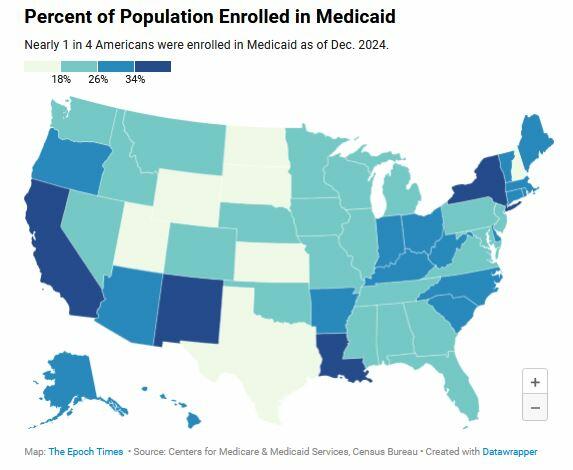
Though nearly one in four Americans is covered by Medicaid, many people seem to know little about the program or how it works.

Here are the basics of this complex system, which was created in 1965 and has been altered several times since.

What Is Medicaid?

Medicaid is a program that provides health coverage for lower-income Americans, underwritten by state and federal tax dollars. About 85 million people were enrolled in the program as of December 2024.

Medicaid is operated by the states but overseen by the federal government. No state is required to participate in Medicaid, though all states have chosen to do so.

The Centers for Medicare and Medicaid Services oversees the program on the federal level, but each state has its own Medicaid office. Some states refer to Medicaid by a different name. In California, it’s known as Medi-Cal. In Oklahoma, Medicaid is called SoonerCare.

Medicaid is not the same as the Children’s Health Insurance Program, usually called CHIP. However, the two are similar and are usually considered together.

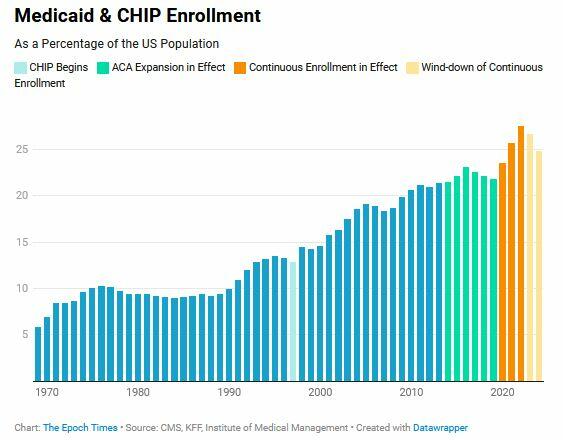
CHIP was started in 1997 to cover medical costs for uninsured children and pregnant women whose income is too high to qualify for Medicaid but who still have trouble affording health insurance.

Who Can Get Medicaid?

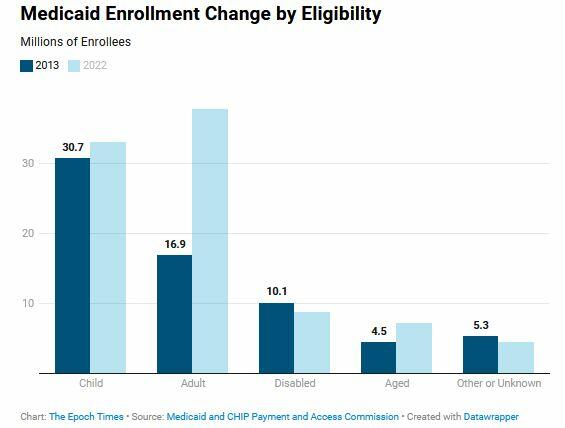
Original Medicaid covers low-income people in certain categories including children, pregnant women, parents of dependent children, the elderly, and people with disabilities.

The Affordable Care Act (ACA) expanded Medicaid eligibility in 2014 to include most people who are under age 65 and who earn at or below 133 percent of the federal poverty line. That’s about $22,000 for an individual or about $42,000 for a family of four including two children.

Forty states and the District of Columbia have chosen to provide this expanded coverage.

The income threshold for CHIP eligibility varies by state and ranges from 170 percent to 400 percent of the federal poverty line.

Medicaid enrollment grew to a high of 94.6 million in April 2023 when states were required to maintain the “continuous enrollment” of nearly all Medicaid beneficiaries during COVID-19 regardless of their eligibility status. Under the Families First Coronavirus Response Act of 2020, Medicaid coverage could not be discontinued unless the enrollee requested it, moved out of state, or died.

That provision expired in March 2023, but due to the large backlog of eligibility recertifications to be processed, states have had some flexibility in winding down their continuous enrollment. The deadline for all states to comply with Medicaid and CHIP eligibility requirements is Dec. 31, 2026.

What Does Medicaid Cover?

Medicaid coverage varies from state to state and depends on the eligibility category of the person enrolled.

Traditional Medicaid programs are required to cover some basic services including hospital stays, doctor visits, and nursing home care. Beyond that, states can choose to cover a variety of services including personal care, prescription drugs, and physical therapy.

Read the rest here…

Tyler Durden
Fri, 04/18/2025 – 16:40

US, Ukraine To Sign Minerals Deal Next Week As Rubio Issues Final Ultimatum

US, Ukraine To Sign Minerals Deal Next Week As Rubio Issues Final Ultimatum

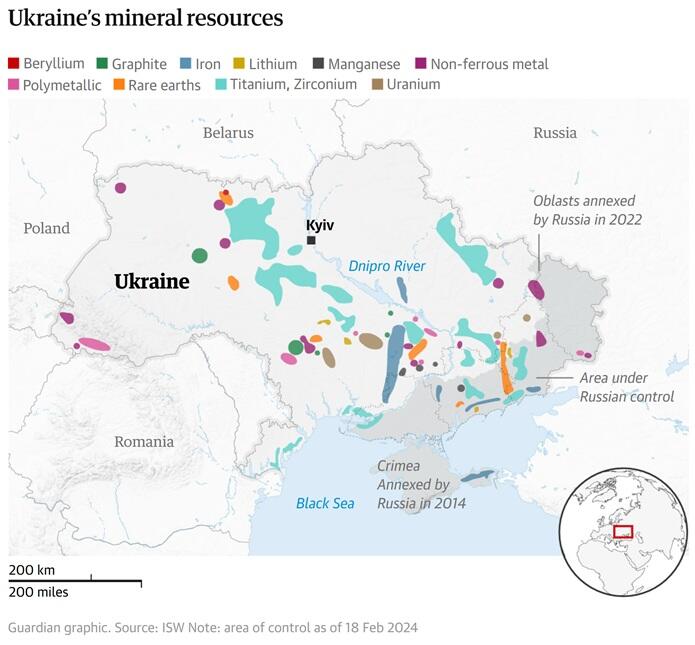
On Thursday Ukraine confirmed that the US and Ukraine had signed a “memorandum of intent” to move forward with the controversial minerals deal backed by Trump, which would give the United States a piece of the war-ravaged country’s natural resources, including access to rare earth minerals. Some recent reports have questioned whether Ukraine even has rare earths, however.

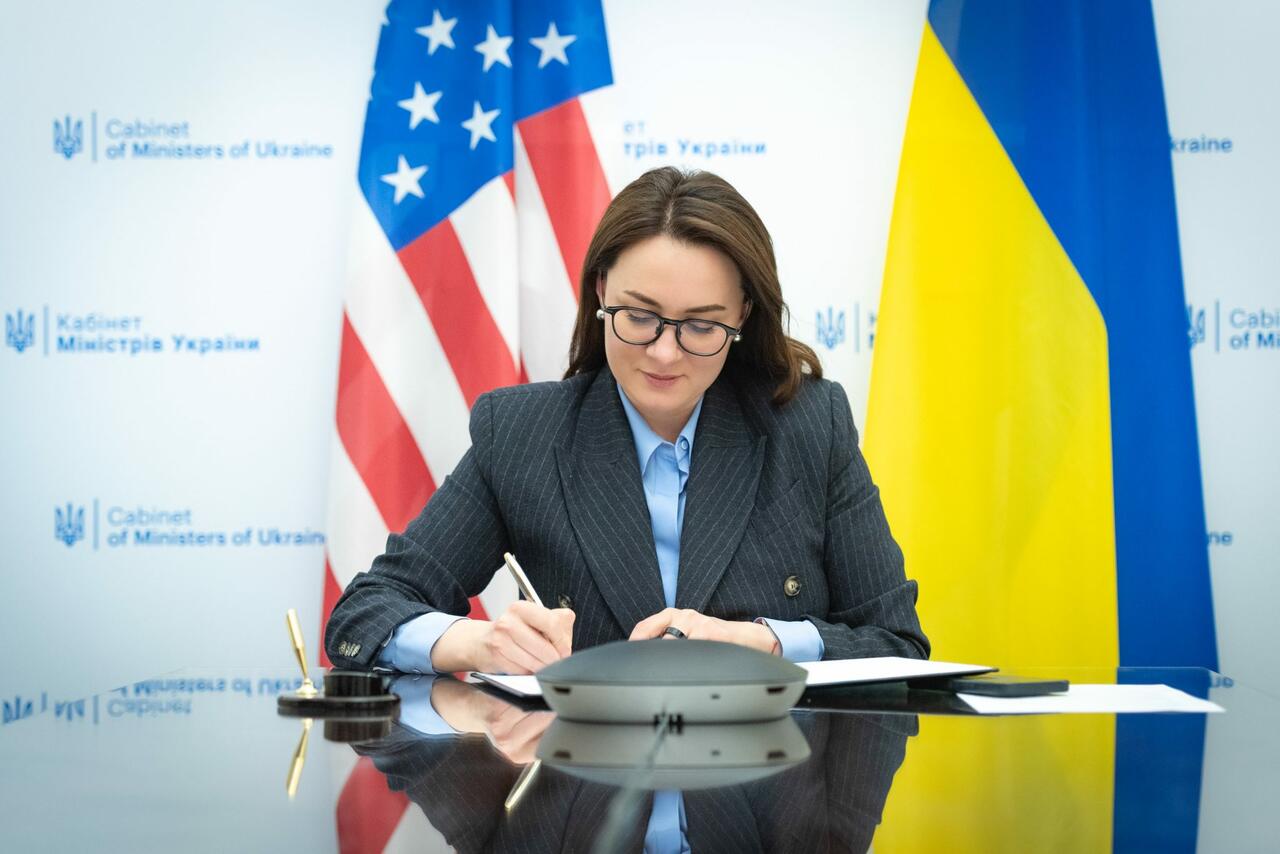
“We are happy to announce the signing, with our American partners, of a Memorandum of Intent, which paves the way for an Economic Partnership Agreement and the establishment of the Investment Fund for the Reconstruction of Ukraine,” Yulia Svyrydenko, Ukraine’s first deputy prime minister and economy minister, announced on X.

Svyrydenko signing the memorandum. Image via Svyrydenko’s X account.

Precise details of where negotiations are at this point remain unclear, though prior drafts of the deal have been leaked by the Ukrainian side, which triggered an internal investigation to hunt down leakers, ordered by Zelensky.

“We hope that the Fund will become an effective tool for attracting investments in the reconstruction of our country, modernization of infrastructure, support for business, and the creation of new economic opportunities,” Svyrydenko said.

A comprehensive deal could be signed as soon as next week, the White House has indicated, after many weeks of back-and-forth, and following diplomatic threats and counterthreats.

President Trump said during a White House press conference on Thursday:

Well, we have a minerals deal, which I guess is going to be signed on Thursday — next Thursday [24 April]? Soon. And I assume they’re [Ukraine] going to live up to the deal, so we’ll see. But we have a deal on that.”

Bessent added that “we’re still working on the details. We’re shooting for around April 26th.”

The last time Zelensky was set to sign a minerals deal it didn’t end up going so well. That’s when he had visited the White House on Feb. 28 and had the war of words with President Trump and Vice President JD Vance.

The US had then briefly paused all US weapons deliveries and intelligence-sharing, but days after resumed, albeit the intel-sharing has reportedly been limited.

Pro-Ukraine critics of Trump’s policy have lamented this as a big resource grab, and of taking advantage of Ukraine while it’s down, amid a grinding war.

Via The Guardian

Secretary of State Marco Rubio on Friday warned allies, “The United States has been helping Ukraine over the last three years, and we want it to end, but it’s not our war.” The US is ramping up pressure on both sides to quickly come to the table, saying that Trump’s patience on lack of peace is wearing thin.

Tyler Durden
Fri, 04/18/2025 – 16:05

Russia Removes Taliban From Terror List

Russia Removes Taliban From Terror List

Via Middle East Eye

Russia’s Supreme Court on Thursday lifted its two-decade-old ban on the Taliban, the Tass news agency said, reopening opportunities for business and investment between the two countries, and aligning with the Kremlin’s bid to stabilize Afghanistan.

The move is undoubtedly a diplomatic win for the Taliban, which has been largely ostracized on the world stage after it wrested back power in a swift and chaotic takeover when the US withdrew its troops from the country in 2021. 

Russian amb. Dmitry Zhirnov (L) meets with Amir Khan Muttaqi, Afghanistan’s Foreign Minister, in Kabul on Thursday. Afghanistan Ministry of Foreign Affairs/AFP.

While Taliban delegations have attended conferences in Russia since then, the de-listing means contact with the group is no longer a punishable offence for Russians. 

“Russia aims to build mutually beneficial ties with Afghanistan in all areas, including the fight against drugs and terrorism,” the Russian foreign ministry said in a statement.

Moscow has kept its embassy in Kabul operational since the Taliban takeover nearly four years ago. 

The two countries have a shared interest in fighting the Islamic State group offshoot, the Islamic State of Khorasan Province, which has carried out deadly attacks in both Afghanistan and Russia. They also have a bloody history between them. 

In 1979, the Soviet Union invaded Afghanistan to back the communist government at risk of being toppled by rebels known as the “mujahideen”. The CIA famously backed the mujahideen in the decade-long war that drew fighters from all over the world to Afghanistan, including a notable Saudi citizen: Osama Bin Laden

Up to three million Afghans were estimated to have been killed by the time the Soviets withdrew in 1989. The Taliban, which emerged from the militias that helped defeat the Soviets, then came to power in 1996. It was toppled in 2001 after the US invasion, and rose to power again twenty years later.

The Taliban has been eager to gain recognition in the international community, but the Western Hemisphere in particular has been reluctant to engage with the group, given its human rights violations and laws banning women and girls from pursuing an education.  

In recent months, Kyrgyzstan, Kazakhstan, and Uzbekistan de-listed the Taliban, with the goal of regional integration. 

Saudi Arabia, the UAE, Qatar, China, Pakistan, and India are among the nations that have kept their diplomatic channels open since the Taliban takeover. 

Tyler Durden
Fri, 04/18/2025 – 15:30

US House Committee Urges BofA & JPM To Abandon Chinese Firm’s IPO Deal

US House Committee Urges BofA & JPM To Abandon Chinese Firm’s IPO Deal

Chairman John Moolenaar of the House Select Committee on China urged JPMorgan Chase CEO Jamie Dimon and Bank of America CEO Brian Moynihan to withdraw from the Chinese battery giant Contemporary Amperex Technology’s (CATL) initial public offering (IPO) in Hong Kong, citing “serious national security threats and due diligence failures.”

“If JPMorgan and Bank of America proceed with this IPO, they risk complicity in underwriting genocide, undermining American industry, and endangering U.S. service members,” Moolenaar stated in a press release, referring to the letter he sent the heads of JPM and BofA. 

He continued: “The letters outline serious national security threats and due diligence failures. The company’s reported aggressive pursuit of the CATL deal, despite its low fee structure and their defense ties, adds to concerns over risk and regulatory oversight,” adding, “As Chairman, I am closely monitoring how major financial institutions engage with companies linked to the Chinese Communist Party. The House Select Committee on China is actively examining these relationships, and we urge JPMorgan and Bank of America to prioritize national security and human rights in their decision-making.”

Moolenaar emphasized that CATL was designated as a “Chinese military company” under Section 1260H of the National Defense Authorization Act earlier this year. 

JPM and BofA’s potential participation in the HK IPO “directly aids the Chinese Communist Party’s military buildup and ongoing human rights abuses,” the chairman of the House Select Committee on China warned. 

Moolenaar noted that CATL has ties “to the Xinjiang Production and Construction Corps (XPCC)—a sanctioned paramilitary entity involved in the genocide of Uyghur Muslims—and its role in modernizing China’s submarine fleet with advanced lithium-ion batteries.”

According to public trade data compiled by counterparty and supply chain risk intelligence firm Sayari, CATL is 1 to 3 hops away from entities with “high” to “elevated” forced labor concerns

Public data shows that Tesla is a major buyer of lithium-ion batteries from the Chinese entity. 

Well ahead of the incoming US crackdown on CATL, we asked back in August 2024: “Is Tesla At Risk From Marco Rubio’s Push to ‘Blacklist’ Chinese Battery Firm CATL?”

Followed by this note at the beginning of the year.

Just a warning to investors: some in the Trump administration are very serious about the “nuclear option” on delisting Chinese stocks. 

Tyler Durden
Fri, 04/18/2025 – 14:55

The Remarkable Rags-to-Riches Story Of Stacey Abrams

The Remarkable Rags-to-Riches Story Of Stacey Abrams

Authored by Paul Sperry via RealClearInvestigations,

By her own admission, Stacey Abrams has made a number of “personal financial missteps” in her career. Despite a history marked by bill collectors, tax liens, and ethics investigations, the Georgia politician and Democratic Party activist has managed to amass a small fortune – while working most of her career in the not-for-profit sector. 

Financial records show that when she first entered statewide politics in 2018, she reported a net worth of less than $109,000. By 2022, the last year she had to publicly file a financial report, it had grown to more than $3.2 million. Abrams is probably even better off than that, thanks to her latest venture: Rewiring America, which uses federal funds to provide low-income people with free electric appliances. 

The green-energy startup hired Abrams as senior counsel in 2023 after she helped secure federal funding for the nonprofit by putting together an umbrella group that applied for and won grants totaling $1.9 billion from the Biden Environmental Protection Agency, according to a podcast interview she gave last year. Those funds were frozen last month by the Trump administration while it investigates the grant application and award process along with Congress. 

It’s just the latest in a string of investigations involving Abrams, who has presidential ambitions, and nonprofits she’s launched. Last month, Georgia lawmakers announced a special probe into her New Georgia Project and its fundraising arm, which failed to report millions of dollars in contributions and spending tied to Abrams’ first gubernatorial bid. She’s also been accused by ethics watchdogs of personally misusing political donations raised for her campaigns. 

I’ve always been concerned about her leveraging public service to enrich herself,” William Perry, who formerly led the Georgia chapter of liberal Common Cause, told RealClearInvestigations. Perry, who developed a thick file on Abrams while investigating money in Georgia politics for 15 years, said he knows of no other candidate for statewide office with more documented cases of ethics violations than Abrams. 

Although Abrams’ career has been pockmarked by financial problems and ethics investigations, she has never been charged with a crime. Instead, her career illustrates the often cozy and remunerative relationship between political insiders and government entities that discharge public dollars. In previous articles, RCI has reported on the connection between those close to the Democratic Party and Biden administration green energy grants.  

Money woes have followed Abrams – an academic star who was raised in a middle-class home by parents who became ministers – since graduating from Yale Law School in 1999, even though she started out making $95,000 a year, not including a large signing bonus, with a top corporate law firm in Atlanta. 

After running up several credit cards and failing to pay her taxes, Abrams, who has never married and has no children, racked up almost $230,000 in debt, financial records reveal. She has spent much of her adult life fending off bill collectors while repairing her bad credit. Despite working as a tax attorney before launching her decades-long career in government, she has seen the IRS file at least two liens on her property to recover back taxes and penalties.  

The ‘Allure of Available Cash’

Abrams did not respond to requests for comment, but she has acknowledged a history of debt and tax problems. In her 2018 memoir, “Lead from the Outside,” she lamented: “I’d love to say that I learned my lesson after law school, and that I maintained my personal finances in pristine order. But, alas, I discovered a second way to stumble … The allure of available cash, money I should have remitted to the Internal Revenue Service, proved irresistible. … [W]hen the time came to pay my taxes, I fell behind.” 

She wrote that it would take her “a long time” to get out of debt and start building wealth. “Over the years, my income has gone up and down,” Abrams wrote, “but I still have precious little in the way of wealth beyond my slowly appreciating house and bare-bones retirement account.” 

But in the seven years since then, Abrams has seen a miraculous turnaround in her finances – going from someone with “precious little” to a multimillionaire. And it all happened after she ran unsuccessfully for governor of Georgia, first in 2018 and then again in 2022, during which she raised a combined $81 million. It’s unusual. Most politicians build wealth after reaching high office, but Abrams did so after losses vaulted her to celebrity status, achieved in part by blaming racially discriminatory voter suppression for her loss.

Tax filings and personal financial disclosures reveal some of her newfound wealth has come from nonprofit organizations she’s started, including more than $750,000 through the Southern Economic Advancement Project and at least $427,500 from two New Georgia Project-tied nonprofits, where she worked part-time. 

But that doesn’t account for all of it. Income from several book deals – several works of nonfiction and eight “romantic suspense novels” – also contributed to her wealth. The total value of those contracts is not public, but according to her 2022 disclosure, she owed her publishers advances totaling $800,000 against future royalties. Abrams has been accused of tapping public resources to drum up sales for her books. In 2018, Perry’s government watchdog group filed a complaint alleging she used her campaign staff and travel budget to promote her memoir “Minority Leader,” whose publisher gave her a $150,000 advance, according to a personal financial disclosure she filed in her bid for Georgia governor. 

It is illegal for the candidate to utilize campaign contributions and resources to promote and sell the candidate’s book,” wrote Perry, who now heads Georgia Ethics Watchdogs, in a complaint filed with the state’s campaign finance commission. “And this is precisely what Abrams has done.” 

The watchdog, who says he originally supported Abrams as a Democrat, added that at least one Abrams campaign staffer “reported travel expenses that matched her book tour.” The state ethics commission declined sanctions. 

Perry said Abrams has had “more ethical challenges than any other statewide candidate” for office, including conflicts of interest from lucrative state contracts she helped land for a consulting firm she co-founded while she was working on related policies with Georgia’s governor as a state lawmaker. “Stacey Abrams was once a public official I liked a lot,” he said, “but she’s become unethical.” 

The 51-year-old Abrams began her career in government working for the city of Atlanta as an attorney before serving 11 years in the Georgia State Assembly. 

At the same time she worked for the state, she started a consulting firm, Sage Works LLC, “providing advice to governmental and nonprofit clients on operations,” according to her disclosures. Records show she was paid $62,000 in taxpayer money as a consultant on an Atlanta urban redevelopment project in 2006 and 2007, which raised ethical red flags.

Many ‘Mistakes’ in Finances

“When I left the city of Atlanta to run for office, I had to figure out a way to afford my house and I started a consulting firm,” she explained in an interview at the time. “They [city officials] hired me and I negotiated a pretty good price for myself and built a reputation as someone who understood the intersection of public and private enterprise when it comes to particularly public-private development.” 

While in the assembly, Abrams also supplemented her state salary with more than $150,000 in per diem payments. Such payments are routine. But in 2011, she claimed more out-of-session expenses than any other Georgia House member, Perry pointed out. That same year, she claimed per-diem pay plus mileage for working in Georgia on the same day that a lobbyist reported buying her a cab ride out of state in Miami. When confronted with the discrepancy, Abrams said she made a mistake and reimbursed the state. 

Abrams made so many “mistakes” on her annual state financial disclosures she had to file no fewer than 18 amendments after watchdogs and local media caught major errors and omissions. “Abrams’ reports have to be repeatedly amended,” Perry said. “She apparently forgets about hundreds of thousands of dollars she’s earned from companies she owns or serves as a partner, or board of directors she has served on.” 

She also made “mistakes” in her campaign reports. Perry questioned more than $84,000 she reimbursed herself from her legislative campaign accounts between 2006 and 2017 without providing details or any itemization of what the money was spent on. “This means she could have pocketed the money, which of course would be illegal,” he said. 

After he filed an ethics complaint, Abrams promised to disclose where the money went but never did. 

When Abrams first ran for governor in 2018, she loaned her campaign $50,000 even though records showed she owed the IRS $54,052. She claimed financial hardship for deferring tax payments while working to support her parents, for whom she had bought a new Honda and later a new house in Stone Mountain for $370,000. 

“You can’t pay your taxes, but you have the money to run for governor?” Perry said. “She of course paid herself back [for the campaign loan], and did so while on a payment plan for back taxes with the IRS.” 

In April 2018, Abrams used campaign resources to promote her book, “Minority Leader: How to Lead from the Outside and Make Real Change,” which was released one month before the gubernatorial primary election. She enlisted several paid campaign officials to post a link to the book-purchasing website on Twitter. Her communications director even encouraged her followers to “pre-order your copy today.” Her staff also promoted her book tour in tweets. Abrams herself pushed sales on her official campaign page on Facebook. 

Using campaign contributions to promote the sale of a book for the personal profit of a candidate does not qualify as “ordinary or necessary expenses” allowed by state law. 

After Georgia Ethics Watchdogs filed a 13-page complaint with the state ethics commission, Abrams said her campaign did nothing wrong. However, all campaign web pages supporting the sale of the book were suddenly removed, and all the book promotions posted on social media by her campaign staff were deleted. 

Raising more ethics alarms, Abrams appears to have used charitable donations to her nonprofits to fund her political campaigns. A year before she launched her 2018 bid for governor, Abrams founded a fundraising arm for her voter registration nonprofit, New Georgia Project. The state ethics board found that the project and its “action fund” failed to disclose $4.2 million in contributions and $3.2 million in spending during the 2018 election cycle on behalf of Abrams’ failed bid for governor. Earlier this year, the organizations agreed to pay a $300,000 fine for the violations, prompting dozens of layoffs. 

The nonprofits’ “primary purpose was political activity,” and therefore “violated numerous state laws relating to their political activity,” the Washington-based Foundation for Accountability and Civic Trust said in a recent letter to the IRS calling for their tax-exempt status to be revoked. 

Registered as 501(c)(3) and 501(c)(4) nonprofits with the IRS, the groups are prohibited from engaging in campaign activity. A special committee of the Georgia Senate is investigating whether “dark money” was funneled through Abrams’ nonprofits to her campaign. Meanwhile, the House Ways and Means Committee has asked the IRS to revoke the tax-exempt status of the groups. Abrams no longer lists the New Georgia Project on her personal website. 

Abrams is also the founder of a host of other liberal nonprofits, including: Fair Fight Action, Fair Count, the Southern Economic Advancement Project , and American Pride Rises APR Network, a national organization dedicated to defending and expanding DEI. Collectively, the nonprofits have raised more than $100 million in charitable donations. As 501(c)(3) nonprofits, they are not required to reveal their donors. But in her books, Abrams has thanked wealthy liberal philanthropists Steve Phillips and Susan Sandler, as well as “the Soros family.” U.S. agencies also fund her organizations through federal grants. 

Abrams resigned from Fair Fight Action’s board before she announced her second run for governor in 2022, but the nonprofit nonetheless acted on her behalf during the election. Campaign disclosures reveal an in-kind donation – valued at $542,000 worth of Fair Fight employees’ time – plus a $1.5 million direct donation from Fair Fight to Abrams’ leadership PAC. 

Abrams also appoints members of her family and close friends to lucrative positions at her nonprofits, as well as through campaign consulting jobs. Her sister Jeanine Abrams, for one, has earned $182,000 a year in total compensation as president of her Fair Count nonprofit, which Stacey Abrams founded to make sure communities of color aren’t undercounted in the census, according to its latest IRS filing. And Abrams’ “dearest friend” and longtime partner Lauren Groh-Wargo has netted $330,000 a year as the CEO of Fair Fight Action, even though the nonprofit is $2.5 million in debt and has had to lay off about 75% of its staff. 

As an entrepreneur, Abrams has built wealth by founding or co-founding a number of private businesses that have also relied on government contracts. 

She co-founded the financial services firm NOWaccount Corp in 2010 to take advantage of an Obama-era federal jobs program. “I read the [Small Business] Jobs Act,” Abrams said, and took it back to her partner and said, “Here’s what we can do.” Abrams, in turn, worked with the Obama administration to help her utilize a state lending program the act initiated for minority businesses. 

Through 2017, NOWaccount took in several million dollars from government programs run by Fulton County and the state of Georgia, funds that were backed by the federal government. Abrams landed the contracts while working for the state and the governor on related business. 

Though she said she “walled myself off” from government decisions tied to the contracts, minutes from a 2014 Fulton County meeting involving her business tell a different story. They state that she not only personally attended the meeting, but “Representative Stacey Abrams appeared in connection with the request for a letter of inducement for the issuance of $20,000,000 in taxable bonds” to backstop NOWaccount’s transactions and accelerate payments to her clients. Taxpayer guarantees gave her NOWaccount a substantial boost. 

Abrams was paid at least $660,000 in salary from NOWaccount, even as her company ran into trouble with the Georgia Department of Community Affairs. The agency complained her outfit recommended loan applications for approval of clients with inflated credit scores and who otherwise would not have been eligible to receive lines of credit from the state program. All told, taxpayers had to cover more than $1.3 million in defaults connected to her company. 

Another watchdog group, Government Accountability Institute, suspects Abrams actually pocketed millions from the deal, even as taxpayers bailed out her clients, according to a 2022 study.

Nonetheless, Abrams used the episode as a case study in successful entrepreneurship to help sell her 2022 book, “Level Up: Rise Above the Hidden Forces Holding Your Business Back.” 

Government contracts also provided the revenue stream for another firm started by Abrams – Insomnia Consulting, which specializes in writing up reports for the development of government transportation, energy, and water projects. One of her biggest clients was an Eskimo tribe project in Alaska. 

Abrams’ latest government-tied venture is perhaps her most controversial – and could be her most lucrative. 

Since March 2023, she’s been working as senior counsel for Rewiring America, a Washington-based green-energy group that’s backed by a $2 billion EPA grant as part of former President Biden’s climate agenda to “decarbonize” the country. 

The goal is to replace all gas appliances in households by encouraging homeowners to take advantage of green tax credits, rebates, and other inducements made available through Biden’s Inflation Reduction Act of 2022, which included $27 billion for a Biden initiative called the Greenhouse Gas Reduction Fund. 

As part of her contract with Rewiring America, Abrams has traveled to communities of color like DeSoto, Ga., to help give away “free” heat pumps, heat pump water heaters, and induction stoves to residents. 

She also helped “build” an online “calculator” people have used to find out what incentives and rebates they qualify for to electrify their homes. She says she’s educating minorities “on the losing end of environmental justice” that they have access to thousands of dollars waiting for them in an “electric bank account.” 

As she did with the Obama jobs bill, Abrams studied the Biden legislation and saw opportunity. Although Abrams and legacy media outlets, including the Washington Post and Politifact, have downplayed her role, she was a key player in putting together the coalition, Power Forward Communities, that applied for the $2 billion grant made available through Biden’s act. Rewiring America is part of that coalition. 

“[T]he other thing that we did, that Stacey and I have been working on over the last year and change, is that we put together a coalition to apply for something called the Greenhouse Gas Reduction Fund, and we were selected for two billion dollars to really create a way forward for low- and moderate-income households in communities so that every kitchen table is able to participate,” Rewiring America CEO Ari Matusiak said last July while sitting next to Abrams for a Bloomberg Green Festival podcast interview in Seattle. 

The Rewiring America website lists Matusiak, who formerly worked for Obama in the White House, as the “founder and co-chair of Power Forward Communities, a national coalition awarded $2 billion from the Greenhouse Gas Reduction Fund to decarbonize and reinvest in American households.” 

During the podcast, Abrams said that “even though the Inflation Reduction Act passed in [2022], it has taken time to deploy that much money. Those dollars are coming online.” 

After running for statewide office and helping Biden win Georgia in 2020, Abrams almost overnight has become a multimillionaire with a 4,100-square-foot home near Emory University valued at more than $1.4 million and more than $727,000 in stocks and bonds. 

To hear Abrams, it all came from “leveraging” the private sector in the years after she left the Georgia statehouse. But the record shows she never really disconnected from the public sector and has been mixing her private business with the public interest her entire career. 

Paul Sperry is an investigative reporter for RealClearInvestigations. He is also a longtime media fellow at Stanford’s Hoover Institution. Sperry was previously the Washington bureau chief for Investor’s Business Daily, and his work has appeared in the New York Post, Wall Street Journal, New York Times, and Houston Chronicle, among other major publications.


Tyler Durden
Fri, 04/18/2025 – 14:20

Tulsi Gabbard Exposes Alarming Biden-Era ‘Domestic Terrorism’ Strategy

Tulsi Gabbard Exposes Alarming Biden-Era ‘Domestic Terrorism’ Strategy

Authored by Joseph Lord via The Epoch Times,

Director of National Intelligence Tulsi Gabbard on April 16 fulfilled her past promise to declassify information related to President Joe Biden’s domestic counterterrorism strategy.

Dubbed the “Strategic Implementation Plan” (SIP), the 15-page-long document details the Biden administration’s findings and action plan to counter an alleged increase in homegrown domestic terrorism.

Gabbard released the documents in response to prompting from conservative groups like America First Legal, which expressed concerns about the Biden administration allegedly “censoring disfavored speech on the Internet by labeling such speech ‘misinformation,’ ‘disinformation,’ ‘hate speech,’ ‘domestic terrorism.’”

Coming in the wake of the Jan. 6 Capitol breach, after which the Biden administration claimed that domestic terrorism was the greatest terror threat the United States faced, the SIP represents the government-wide counterterrorism strategy.

Here’s what the declassified documents show.

Four-Pillared Plan

The plan in the declassified documents is based on four pillars:

  1. “Understand and Share Domestic Terrorism-Related Information,”

  2. “Prevent Domestic Terrorism Recruitment and Mobilization to Violence,” 

  3. “Disrupt and Deter Domestic Terrorism Activity,” and 

  4. “Confront Long-Term Contributors to Domestic Terrorism.”

The broad goals laid out by the plan included identifying and intervening with “potentially dangerous individuals,” “strengthen[ing] norms of non-violent political expression and rejection of racism and bigotry,” and increasing Americans’ “faith in democracy and the government.”

The plan called for dedicated research and analysis of domestic terrorism, including any potential links to international organizations or governments. 

To the same end, it called for increased information sharing within federal law enforcement related to domestic terrorism.

Additionally, this pillar proposed that the government “explore” ways to identify domestic terrorism through financial activity, including through greater involvement with financial institutions and scrutiny of citizens’ financial records.

It also called for the government to “Enhance [its] understanding of how foreign state and non-state information operations, particularly disinformation, relate to the domestic terrorism threat.”

That’s essentially federal government parlance for analyzing the impact of foreign actors online. 

The Biden administration and Democrats repeatedly claimed that Russian “trolls” were responsible for spreading disinformation and misinformation online.

Relatedly, the SIP reveals a plan to “implement evidence-based digital literacy programming to combat online disinformation and DT recruitment and narratives.”

The plan also calls for the FBI and Department of Homeland Security, among others, to “share with relevant technology and other private-industry companies, as appropriate and as expeditiously as possible and on a consistent basis, relevant information on [domestic terrorism]-related and associated transnational terrorist online content.”

It called for guardrails on information-sharing with technology companies, factoring in “legal, privacy, civil rights, and civil liberties review.”

Many conservatives have long been critical of alleged collusion between federal agencies and tech platforms, with many saying that the Biden administration sought to censor and deplatform conservative viewpoints in violation of the First Amendment.

Social Proposals

The final pillar of the plan, calling to “confront long-term contributors to domestic terrorism,” is laden with potentially controversial social proposals.

This section identifies “ghost guns”—unregistered weapons without a serial number, often created via 3D printer—as one such contributor, and calls to “[r]ein in the proliferation” of such weapons, “encourage state adoption of extreme risk protection orders, and drive other executive and legislative action including banning assault weapons and high-capacity magazines.”

It also called for “advancing inclusion” as part of the response to the COVID-19 pandemic to “mitigate xenophobia and bias.”

This would be in order to “address hate crime reporting barriers faced by disadvantaged communities by promoting law enforcement training and resources to prevent and address bias-motivated crimes,” according to the SIP.

Additionally, the plan encouraged “teaching and learning of civics education that provides students with the skill to fully participate in civic life,” and promoting “literacy education for both children and adult learners and existing proven interventions to foster resiliency to disinformation.”

*  *  *

[ZH: We decided to give the final word to Matt Margolis over at PJMedia (worth a read): who summarized this shitshow perfectly:

The founding fathers would be rolling in their graves…

Let’s cut through the bureaucratic noise and call this what it really is: a systematic blueprint for targeting and silencing conservative Americans. 

While Biden was preaching “unity” from his teleprompter, his administration was quietly crafting plans to turn Big Tech into their personal censorship machine.

Remember this  the next time you hear Democrats pontificating about “defending democracy.” 

They’ve shown us exactly what they mean by “democracy,” and it looks nothing like the Constitutional Republic our founders envisioned.

Well said, Matt.

Tyler Durden
Fri, 04/18/2025 – 13:10

Epstein: Mossad or CIA?

Epstein: Mossad or CIA?

“If you look at Epstein’s list, he’s not going after Congressmen… They already own Congress with AIPAC” ~Ryan Dawson

Last night, we hosted the ultimate panel for those wanting to learn more about government-pedo-blackmail operations… aka the craziest thing on Earth that media will not cover. It featured the legendary reporter and author Nick Bryant, relentless researcher Ryan Dawson, and was hosted by Ian Carroll one of the most effective communicators of this information at scale.

Below were the highlights for those who missed it though we strongly recommend listening to the full 2-hour discussion:

History of sex blackmail: Alexander Hamilton

“Sexual political blackmail has been around forever,” says Bryant, dating back to the days of the Founding Fathers. He tells the story of Alexander Hamilton’s affair with a married woman whose husband attempted to extort Hamilton. A muckraking journalist published the story while trying to curry favor with and secure a political appointment from Hamilton’s nemesis Thomas Jefferson. When Jefferson refused, the journalist outed him for having sex with his slaves.

“It goes all the way back…”

From there Dawson dives into modern era sex blackmail beginning with American mobster Micky Cohen, who Dawson says was the likely the first to use video tape.

Mossad or CIA? 

Many know the quote from former Labor Secretary Alex Acosta that Epstein “belonged to intelligence” but under which nation? Dawson laid out the case that Epstein was first and foremost an Israeli asset while Bryant tried to argue it was more likely a joint operation with the U.S.

Central to Dawson’s case is former Mossad agent Ari Ben-Menashe said Epstein worked for the agency: “Someone in Israeli intelligence said he worked for Israeli intelligence.”

Additionally, the father of Epstein’s girlfriend Ghislaine Maxwell, Robert, was a member of the pre-Israel zionist militia “Haganah”, helped secure arms shipments to the country during its founding, and upon passing off the coast of Spain, his body was was shipped to Israel to receive a highly sacred burial in the Mount of Olives in Jerusalem attended by heads and former heads of Israeli intelligence.

“If you look at Epstein’s list, he’s not going after Congressmen… there’s a couple… but mainly he was aiming at science and technology,” Dawson added. “They already own Congress with AIPAC. You don’t need to re-bribe people you completely control.”

Bryant pointed to Epstein’s Saudi Arabian passport while Carroll mentioned his ties to Saudi Arabian arms trafficker Adnan Kashoggi… though caveated that Kashoggi worked very closely with Israel as well.

Please visit EpsteinJustice.com to join Bryant’s movement to pressure Congress into investigating Jeffrey Epstein.

*******

Rewatch the entire discussion on your preferred platform below or listen on Spotify:

YOUTUBE:

RUMBLE:

X: 

Tyler Durden
Fri, 04/18/2025 – 12:35

Do You Have Financial Dysphoria?

Do You Have Financial Dysphoria?

Authored by Jeffrey Tucker via The Epoch Times,

Five years ago, we all had a more settled sense of how we were doing financially. Whether rich or poor or somewhere in between, the signals were relatively clear and so too our sense of place in the sociocultural pecking order. Whether we were advancing or standing in place, or falling behind, we could tell.

The cruel inflation of the last four years, alongside dramatic life disruption, has disturbed all of that in ways we are only now grasping. It’s long been said that inflation is an invisible tax. That is correct in the sense that we recognize something is happening but we are not sure entirely what.

It was all the more strange because for the previous 40 years, we had a settled feeling of what things cost, what was a good or bad deal, and whether something was expensive or not. We looked at our bank accounts and knew intuitively whether we were doing well or nearing a troubled point.

A quick example: my favorite butter (water buffalo) used to be $4 but is now $7, which I thought was outrageous until I looked online and found similar products running $30 to $50, priced as a luxury item. Immediately, my annoyance turned to gratitude and I stocked up. This is true with so many things today. Our antenna for discerning value is mostly broken.

When the inflation began, we were told it was transitory, which we gladly heard as temporary. Many people supposed that we would soon return to 2019 prices that we knew so well. This was the adjustment period. It did not help that for the better part of four years, most financial news reported that inflation was “cooling” and otherwise improving month-to-month.

In the end, however, terrible things have happened to the standard of living. Everything is far more expensive, which means that the practical power of our earnings to purchase the life we want is vastly diminished. We try to put a number on it. It could be 25 percent. It could be much higher. We can all think of particular items we once bought that have increased 100 and 200 percent.

You are likely thinking from the point of view of personal finance. Some people call it financial dysphoria, because we alternate between thinking we will be fine and waking up in the middle of the night with dark fears of bankruptcy. You just don’t know for sure what’s coming.

What you are feeling as an individual or household is precisely what businesses of all sizes face today. They look at their balance sheets and have to squint to believe what they are seeing. All costs are up, and not only for labor and materials. Insurance, rent, fees, health care, and utilities are also dramatically higher. Even if revenue seems fine, it is not entirely clear that it is.

Finally, after four years of confusion, people are starting to see the reality. Dysphoria is gradually becoming a new frugality, or really, a kind of panic reorganization of spending priorities. Cut back, eat at home, do it yourself, and get used to living less expensively. None of us are sure it will be enough to make ends meet, but it is finally occurring to people that times have changed dramatically.

The Wall Street Journal hit it out of the park with a piece on how young women are now giving up their manicures and pedicures plus exorbitant expenses on hair colorings. Having only anecdotal evidence, the journalist did a dive into Google searches for how to do all these things at home, and looked for evidence of tutorial traffic on video sites. They certainly found it.

This thesis fits very much with what I’m seeing too.

The point about cooking at home is an important one. Eating out is dangerous for personal finances, especially these days. For a very long time, many people got used to hanging out at local watering holes and ordering whatever they wanted. The way we pay these days permits the illusion that all is well to continue longer than it should.

We order, we eat, we drink, we are pampered and have a delightful time. Then the bill comes and we throw down a piece of plastic. We are a bit alarmed at the cost but swallow hard and go ahead and pay. After all, the damage is already done. You cannot uneat and undrink, so we pay. The habit goes on and on until you look back and see the percentage of your disposable income going toward this one activity.

It has taken years but Americans have finally recognized that this practice has to either end or be cut back. This is why so many restaurants are in trouble today. As if by a miracle, they survived the business closures and restrictions from 2020-2023. Barely emerging from that fiasco, they reopened ready to go. The customers came back.

Then the inflation started hitting not only the customers but the businesses too. We’ve lived through crazy times, alternating between thinking we are rich, we are poor, we are rich, we are somewhere in between, and no one knows for sure.

Accounting is a cruel taskmaster. 

It is a hard and impenetrable wall that blocks the highest dreams and the most inspired determination to overcome all obstacles. In the end, revenue must exceed expenses of all sorts else the business dies.

Accounting is the final check on the dreams of despots. It is the reality that no one can deny. Even if you deny it, it makes institutions obey it anyway. Accounting is why socialism never worked. By collectivizing capital ownership, it robbed society’s most productive resources of realistic price signals to determine profits and losses. 

The result was vast waste and economic irrationality. The result of socialist systems has always been collapse.

We ignore accounting at our peril. And yet this has always been the dream of governments, which is why they created central banks. These enable regimes and financial systems to print money without having to face the taskmaster of accounting. The cost of taking this path appears in other ways, including inflation, industrial distortions, and unsettled foreign accounts.

For anyone who has studied economics, the events of today are not a surprise. They are no less tragic, however. Aside from the very wealthy, most people in the United States today are facing extremely hard economic times as compared with just five years ago. That big bite out of purchasing power has been more devastating than we expected.

The saving grace of the current economic environment is that inflation has settled back and dramatically so. The latest data shows something remarkable: actual price declines in some industries and an overall real-time annualized rate of 1.4 percent—still too high but a very welcome relief.

Sadly, this comes at the same time as the realization that we are probably already in recession. Trump’s tariff wars are catching the blame but the truth is that the recessionary conditions long predate his moves on tariffs. Brownstone Institute commissioned an empirical study last year that documented a recession since 2022. No one has ever disputed the conclusions, and yet the financial press just went right on acting as if all is well.

All is not well, and that has become very obvious now. Taxes have gone up in light of inflation and I write even as millions of individuals and businesses are struggling to get theirs finished before the deadline. A pressing problem for many right now is wondering precisely what we are getting for what we are paying.

We’ve been through three months of hearing about unfathomable amounts of waste, fraud, and abuse in the federal budget. Aside from that there are the large problems of unsustainable debt, mandatory spending from entitlements, and a health care system that no one really likes. The whole system is crying out for reform.

And yet as we await that reform, we are still expected to cough up even as financial realities are making everyone newly aware of just how much worse off we are today than in the past. Despite all the gizmos and digital services we can consume, we have less disposable income in real terms than five years ago.

This is the reason for the financial dysphoria of our times. Despite all the ebullience about the political changes in Washington and much talk about a Golden Age, there is not too much time to make a dramatic difference in a way that matches hopes. Accounting is and always will be the hidden master of us all, one that cannot be wished away with political rhetoric or activist organizing.

Views expressed in this article are opinions of the author and do not necessarily reflect the views of The Epoch Times or ZeroHedge.

Tyler Durden
Fri, 04/18/2025 – 12:00

US Plans Port Fees For Chinese Ships To Revitalize American Maritime Industrial Base

US Plans Port Fees For Chinese Ships To Revitalize American Maritime Industrial Base

The Trump administration announced plans on Thursday to impose new port fees on Chinese commercial vessels—part of a broader effort to revive America’s dwindling shipbuilding industry, which officials now view as a national security risk amid the urgent need to bolster hemispheric defense across the Americas in an increasingly fractured, bipolar world.

Ships and shipping are vital to American economic security and the free flow of commerce,” U.S. Trade Representative Jamieson Greer wrote in a statement, adding, “The Trump administration’s actions will begin to reverse Chinese dominance, address threats to the U.S. supply chain, and send a demand signal for U.S.-built ships.”

The Federal Register notice titled “Notice of Action and Proposed Action in Section 301 Investigation of China’s Targeting the Maritime, Logistics, and Shipbuilding Sectors for Dominance, Request for Comments,” published Thursday by the U.S. Trade Representative (USTR), states that new fees will be imposed on all Chinese-built and Chinese-owned ships docking at ports across America. These fees will be based on net tonnage or the volume of goods carried per voyage and will only be charged once per voyage and not per port arrival.

The fee will be set at $0 for the first 180 days, will then be set at $50/NT, and will increase incrementally over the next three years,” the USTR notice read. 

Service Fee on Chinese Vessel Operators and Vessel Owners of China (courtesy of CNBC):

  • Effective as of April 17, 2025, a fee in the amount of $0 per net ton for the arriving vessel.

  • Effective as of October 14, 2025, a fee in the amount of $50 per net ton for the arriving vessel.

  • Effective as of April 17, 2026, a fee in the amount of $80 per net ton for the arriving vessel.

  • Effective as of April 17, 2027, a fee in the amount of $110 per net ton for the arriving vessel.

  • Effective as of April 17, 2028, a fee in the amount of $140 per net ton for the arriving vessel.

The USTR notice explained that “any such fee would be charged per rotation or string of U.S. port calls, and no more than five times a year on an individual vessel.” 

Service fees for vessel operators of Chinese-built vessels are lower.

  • Effective as of April 17, 2025, a fee in the amount of $0 for each container discharged.

  • Effective as of October 14, 2025, a fee in the amount of $18 per net ton ($120 per container)

  • Effective as of April 17, 2026, a fee in the amount of $23 per net ton ($153 per container)

  • Effective as of April 17, 2027, a fee in the amount of $28 per net ton ($195 per container)

  • Effective as of April 17, 2028, a fee in the amount of $33 per net ton ($250 per container).

The second phase will begin in three years and target Chinese LNG vessels. USTR explained the purpose of this action:

“To incentivize U.S.-built liquified natural gas (LNG) vessels, limited restrictions on transporting LNG via foreign vessels. These restrictions will increase incrementally over 22 years.”

New taxes on Chinese commercial ships add to the complexity of a broadening trade war between the two economic superpowers. Trump recently slapped all Chinese goods entering the U.S. with a 145% effective tariff rate, while Beijing has slapped all U.S. goods entering China with a 125% levy.

The USTR notice continued, “A few comments agreed with the proposals, noting that the proposed fees would address trade imbalances, enhance national security, support investment in the American maritime industrial base, and promote higher environmental and labor standards. One commenter suggested that the proposed fees be captured in a U.S. shipbuilding and mariner compensation trust fund to be expended each year for reviving the U.S. merchant marine.”

Time to make America’s shipbuilding industry Great Again

Tyler Durden
Fri, 04/18/2025 – 11:25

Videos Confirm Hundreds Of American Troops Exiting Syria

Videos Confirm Hundreds Of American Troops Exiting Syria

The New York Times confirmed Thursday that the Pentagon has begun withdrawing hundreds of troops from Syria but will leave over 1,000 in the country for the time being, following prior reports from earlier in the week

This means the occupation will be significantly reduced, but will still be fundamentally in place, in the vicinity of Syria’s only oil and gas production sites which historically met the population’s domestic needs. “The United States has started drawing down hundreds of troops from northeastern Syria, a reflection of the shifting security environment in the country since the fall of President Bashar al-Assad in December, but also a move that carries risks,” says the NY Times.

US officials told the Times that three of eight American bases will bring shut down, and that troop levels will be brought down to 1,400 from around 2,000. The Pentagon had for years misled the public on the true numbers of troops there.

The next phase is planned for 60 days out – that’s when US military commanders and Trump admin officials will newly assess the situation and possibly order another draw down.

The bases which are being shuttered have been identified as the Mission Support Site Green Village, the MSS Euphrates and a third much smaller facility, according to the Times report. Congress has never voted on sending troops to Syria, or the enduring occupation.

New video footage has confirmed the fresh draw down from northern Syria…

Syria analyst Charles Lister: “This video from today shows a huge U.S. military disengagement from Deir ez Zour is underway — with bases at Conoco, Green Village/Omar being withdrawn to the northeast.”

President Trump during his first administration wanted to see US forces pulled out of Syria, and the situation has drastically changed since then, with the ouster of Assad on December 8 and the Kurdish-Damascus deal for integration. Washington was a prime driver in covert operations pushing for regime change, which began all the way back in 2011 and 2012.

We reported earlier that the US-backed Kurdish-led SDF in eastern and northern Syria recently began handing over control of some areas in the northern Aleppo province to government forces led al-Qaeda offshoot Hayat Tahrir al-Sham, under an integration agreement with Damascus.

Tyler Durden
Fri, 04/18/2025 – 10:50