60.4 F
Chicago
Sunday, November 1, 2026
Home Blog Page 1583

Supreme Court Won’t Hear Student’s Challenge To School Ban On ‘Two Genders’ Shirt

Supreme Court Won’t Hear Student’s Challenge To School Ban On ‘Two Genders’ Shirt

Authored by Matthew Vadum via The Epoch Times (emphasis ours),

The U.S. Supreme Court on May 27 declined to accept a student’s challenge to a Massachusetts school’s decision to ban his “there are only two genders” T-shirt.

The court’s decision in L.M. v. Town of Middleborough took the form of an unsigned order. The court did not explain its ruling.

The Contemplation of Justice statue at the U.S. Supreme Court building in Washington on May 19, 2025. Madalina Vasiliu/The Epoch Times

Justices Clarence Thomas and Samuel Alito dissented, writing that lower courts in the case had distorted the First Amendment to the Constitution.

In the case, a seventh-grade student identified as L.M. donned a T-shirt at Nichols Middle School, a public school in Middleborough, that read, “There are only two genders.” The school principal and a school counselor removed him from class and directed him to take the shirt off.

After the student declined, school officials said that if he didn’t remove the shirt, he could not return to class. He left school and did not attend his classes for the rest of the day, according to a summary by the student’s lawyers at the Alliance for Defending Freedom, a public interest law firm.

L.M. wore the shirt after the public school promoted the idea that “sex and gender are limitless, based on personal identity, and have no biological foundation,” according to his petition filed with the Supreme Court on Oct. 9, 2024.

The school asked students to support this view, but L.M. disagreed and wore his shirt, according to the petition. After the school censored him, L.M. wore another T-shirt that read, “There are [censored] genders,” which was also banned.

The school’s decision was upheld by a federal district court in June 2023, based on the “rights-of-others” school disruption prong of the 1969 Supreme Court ruling in Tinker v. Des Moines Independent Community School District.

The U.S. Court of Appeals for the First Circuit affirmed, even after acknowledging that the shirts in question probably failed the rights-of-others prong, “applying a novel test for ideological speech alleged to demean characteristics of personal identity,” the petition said.

In his dissent, Thomas wrote that Tinker held that public school officials are not allowed to restrict a student’s freedom of speech “unless his behavior ‘materially disrupts classwork or involves substantial disorder or invasion of the rights of others.’”

The holding in Tinker is “without basis in the Constitution” and should be “dispense[d] with … altogether,” he wrote. “But, unless and until this Court revisits it, Tinker is binding precedent that lower courts must faithfully apply,” Thomas added.

In Alito’s dissent, the justice wrote that the First Circuit erred in holding that “the general prohibition against viewpoint-based censorship does not apply to public schools.” In the process, that appeals court “employed a vague, permissive, and jargon-laden rule that departed from the standard” the Supreme Court used in Tinker, he said.

Alito wrote he would grant the petition so that the Supreme Court could “reaffirm the bedrock principle that a school may not engage in viewpoint discrimination when it regulates student speech.”

By limiting the reach of the high court’s viewpoint-discrimination cases, the First Circuit’s ruling “robs a great many students of that core First Amendment protection,” the justice wrote.

School officials had argued in a Jan. 21 brief that the T-shirt ban safeguarded the mental health of students at the school.

School administrators provided evidence of “the severe mental health struggles of transgender and gender-nonconforming students (including suicidal ideation),” of young students at the Nichols Middle School, the brief said.

The school’s policy aimed to protect “gender-nonconforming students who had been bullied in other districts and had harmed themselves or were hospitalized due to contemplated, or attempted, suicide,” the brief said.

Tyler Durden
Tue, 05/27/2025 – 21:45

These Are The US States That Suffer The Most Car Crashes

These Are The US States That Suffer The Most Car Crashes

Car culture and America are two terms that have become inseparable.

The U.S. is a country shaped by sprawling highways, suburban spread, and a deep-rooted love for personal freedom behind the wheel.

But with the fascination—and reliance—on cars, comes the inevitable downside: crashes. And some states do a lot worse than others when it comes to accidents behind the wheel.

In this chart, Visual Capitalist’s Marcus Lu visualizes data from Insurify, which ranked U.S. states by their rate of car accidents.

This rate is based on the number of accidents per total drivers in the state. Figures are rounded to one decimal place.

Ranked: States with the Most Car Crashes

Massachusetts has the worst drivers in the U.S., with a 6.1% car crash rate in 2024, the highest of all 50 states.

Rank State Accident Rate (2024)
1 Massachusetts 6.1%
2 New Hampshire 5.8%
3 Rhode Island 5.6%
4 Maine 5.4%
5 Nebraska 5.1%
6 Utah 5.0%
7 North Carolina 4.9%
8 Virginia 4.8%
9 South Carolina 4.8%
10 Idaho 4.8%
11 Maryland 4.8%
12 Oregon 4.7%
13 Vermont 4.7%
14 Georgia 4.6%
15 Ohio 4.6%
16 Iowa 4.6%
17 Indiana 4.5%
18 Pennsylvania 4.5%
19 Alaska 4.5%
20 New York 4.5%
21 Kansas 4.4%
22 Colorado 4.4%
23 South Dakota 4.4%
24 California 4.3%
25 Missouri 4.3%
26 Alabama 4.3%
27 Delaware 4.3%
28 Washington 4.3%
29 Connecticut 4.2%
30 Tennessee 4.2%
31 North Dakota 4.1%
32 Nevada 4.0%
33 West Virginia 3.9%
34 Louisiana 3.9%
35 Arizona 3.9%
36 Wisconsin 3.8%
37 Texas 3.8%
38 Montana 3.8%
39 Wyoming 3.8%
40 Arkansas 3.7%
41 Oklahoma 3.6%
42 Kentucky 3.5%
43 Washington, D.C. 3.5%
44 New Jersey 3.4%
45 Florida 3.4%
46 Minnesota 3.4%
47 Hawaii 3.3%
48 New Mexico 3.0%
49 Illinois 3.0%
50 Mississippi 2.9%
51 Michigan 1.7%

Despite having fewer collisions than in the previous year, Massachusetts still ranked #1 for car accidents.

There have been efforts made to improve safety. A “hands-free” driving law was signed in 2020 to reduce distracted driving.

Another law signed in 2023 states that drivers can only pass vulnerable road users (workers, cyclists, pedestrians) at a safe distance and reasonable speed.

There are also restrictions on vehicles passing each other: only at the posted speed limit and passing when crossing a yellow line only when it’s safe to do so.

Interestingly, the next three states with the most crashes are also in the Northeast: New Hampshire (5.8%), Rhode Island (5.6%), and Maine (5.4%).

Meanwhile, Michigan had the lowest car crash rate at 1.7%. The state has invested heavily in road improvements and additional safety features on highways: widening shoulders, installing rumble strips, and adding flashing beacons.

However, Insurify notes that the accident rates have fallen between 2023–24 for all states except New York and Vermont.

While we’re on the topic of cars, which ones cause the least grief? Check out: Ranked: The Most Reliable Car Brands in 2025 for a quick overview.

Tyler Durden
Tue, 05/27/2025 – 21:20

Trump Must Avoid These 3 ‘Civilization Killers’ When Tackling The National Debt

Trump Must Avoid These 3 ‘Civilization Killers’ When Tackling The National Debt

Authored by Victor Davis Hanson via The Daily Signal,

Hello, this is Victor Davis Hanson for The Daily Signal. I’d like to talk about debt, debt, debt.

All during the last few days, we’ve heard some startling news. Moody’s, the bond evaluator, for the first time in its history, since 1917, has lowered the credit rating of the United States government from Aaa to Aa1.

It didn’t do that during the 2008 meltdown. It didn’t do that during the Great Depression. It didn’t do that during 9/11. It didn’t do that during the Biden years when we borrowed $7 trillion. But it did it now.

At the same time, Jerome Powell, the head of the Fed, will not lower interest rates even though there’s been a good jobs report, a good inflation report, a good corporate profits report. Gross domestic product is gonna be evaluated, apparently, upward and there’s been low energy cost. That mortgage is still 4.25% Fed rate to 4.5%. And that means mortgages are still 6.5%, 7%. And that housing market is slowing as a result.

And this has got President Donald Trump very angry, that they’re doing this, given the prior administration borrowed $7 trillion and helped run up from $29 trillion in national debt to $37 trillion, and left Trump with a $3 billion-a-day interest payment. So, he’s jawboning all this and trying to get down. So, what is Trump trying to do? And is it working?

Well, he’s the first president since Bill Clinton and Newt Gingrich, the speaker of the House at that time, who’s talking about reducing a $2 trillion budget deficit, a $1.2 trillion trade deficit, and addressing a $37 trillion national debt. But is he actually doing it?

On the plus side of the ledger, you’ve got the Department of Government Efficiency. And DOGE in the first 100 days has identified about $160 billion in cuts. That’s encouraging if two things are following: if they can keep up that rate of identifying cuts and get up to the $500 billion or even $700 billion and maybe make 25% or 30% reduction in the $2 trillion deficit. And if the Trump administration exercises fiscal discipline.

The problem is twofold: that while he’s addressing verbally, rhetorically the debt and the deficit, you look at the big, beautiful bill under consideration and it’s going to have to pass or the Trump administration will be completely humiliated.

They need to get it through reconciliation but there are sizable increases in the defense budget from everything that’s justifiable, from salaries, from an Iron Dome-like missile defense—you name it. More drones—good. But it’s more money. And there’s more subsidies to farmers. And there’s not a lot of cuts—at least when balanced with the increases.

So, the budget deficit, for all the talk of DOGE and for all the talk of fiscal sobriety, might not actually go down. And if it doesn’t go down, the Fed may not lower rates. And if it doesn’t lower rates, then you still are stuck with a trillion dollars a year in interest payments. That’s killing us.

So, you’ve got to get that down. And the way Trump has to do it is just two ways: Either cut the budget or raise taxes—which will strangle the economy—or continue the tax cuts. And hope two things: that the tax cuts—the extension—will prime the economy, along with cheap interest rates.

And the question that we all have now: Is cutting taxes on tips, is cutting taxes on Social Security, is cutting taxes on first responder, etc.—all of which Trump has mentioned—is that really stimulus as opposed to, say, accelerated depreciation investment for businesses?

I don’t know the answer. But I do know, as a historian, that if you do not cut the deficit and the national debt and you have bond raters like Moody’s or the Fed that will not lower interest rates, you’re going to be in a crisis.

And in the antiquity—from Greece and Rome, through the Middle Ages, to the Renaissance—there were three ways of dealing with unsustainable debt and are not good. They’re all civilizational killers.

No. 1: As the Weimar Republic did in Germany, you pay back what you owe in cheap dollars. They inflated the marks. And bankrupt really helped cause the depression. You can do that, pay back the $37 trillion in inflated dollars. It’s not a good option.

No. 2: You can confiscate private wealth. People do that all the time throughout history. That destroys the legitimacy of the government. And it makes private investors hide their money.

When I say confiscate wealth, you can already see articles in financial left-wing journals that say, well, maybe the trillionaire, billionaire, whatever term they use, oligarchical class will get credit, some Social Security or get some kind of credit for us taking some of their 401(k) money. Something like that. That never works. It never worked in Athens. It never worked in Rome. It never worked in Renaissance Italy.

The third is the most drastic and it’s a killer too and we’ve seen countries in South America try it. And that’s to renounce the debt. Just say: You know what? All you bondholders, you guys have U.S. savings bonds—40% of them abroad, you know, here in America—you have so much money anyway. We’re just not gonna pay you back—the government. We’re gonna renounce it and start from zero.

Who would ever buy a bond again if we were to do that?

So, bottom line is incumbent upon the Trump administration to make real cuts and show progress that you’re reducing the annual budget deficit and more importantly, you have mechanisms to grow the economy.

Final note. We have a lot of confidence—this administration—that tariffs will give revenue and maybe also help reduce the budget deficit. I’m not sure that’s happening. Only 1% or 2%, maybe 3% of the $5 trillion in federal revenue today is made up by tariff income. Even with these huge new tariffs, if they’re actually reified, you might get a trillion dollars. You might get a trillion dollars over 10 years. That’s $100 billion out of $5 trillion in revenue. So, I’m not sure we can count on tariff income at all.

What we should count on is cut, cut, cut. Seek a balanced budget and grow the economy with tax cuts that encourage investment and economic expansion.

We publish a variety of perspectives. Nothing written here is to be construed as representing the views of The Daily Signal.

Tyler Durden
Tue, 05/27/2025 – 20:55

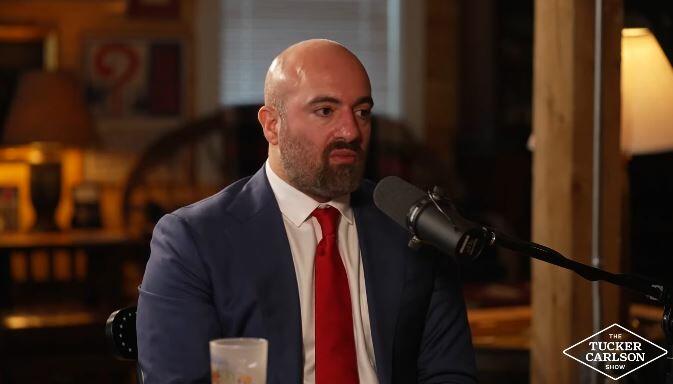
Benz & Tucker: Inside America’s Hidden Power Network: NGOs, The CIA, And The Rise Of The Blob

Benz & Tucker: Inside America’s Hidden Power Network: NGOs, The CIA, And The Rise Of The Blob

Former State Department official and director of Foundation for Freedom Online Mike Benz sat down once again with Tucker Carlson, where he laid out a labyrinthine narrative about U.S. power and influence that should come as no surprise to those who have been paying attention. Benz described the role non-governmental organizations (NGOs), intelligence agencies, and private philanthropic empires have engaged in to quietly shape global and domestic affairs.

“NGOs are the stem cell of the government’s central nervous system,” Benz said, adding “They are this highly flexible tool…you can’t disentangle or really separate the government from the non-governmental organizations.”

According to Benz, the US often wields power through unofficial channels – increasingly through a network of publicly funded and privately directed institutions Benz dubbed “the Blob,” a term originally coined by Ben Rhodes, a former deputy national security advisor to President Obama.

A History Rooted in Covert Strategy

According to Benz, the roots of this NGO influence structure go back to the early 20th century, with the 1913 introduction of the income tax and the subsequent 1917 law making contributions to charities tax-deductible. This opened a floodgate of elite philanthropy which, during World War II and the Cold War, merged with U.S. intelligence objectives.

“In 1948,” said Benz, “the CIA achieved its first covert operation: rigging the Italian election by working through trade unions, charity fronts, and other non-profits.” He cited a now-declassified memo by diplomat George Kennan, who described the need for a “Bureau of Political Warfare” and endorsed a system where covert influence would appear to originate from civil society.

Benz divided the “Blob” into three strata: official government actors (State Department, Pentagon, CIA, USAID), a network of NGOs funded and coordinated by these agencies, and the “donor-drafter class” – high-net-worth individuals like George Soros and Bill Gates, whose foundations shape U.S. foreign policy priorities.

“They don’t just donate into it. Like in a bike race, you always want to be not in first, you want to be right behind the guy in first… The Pentagon cuts the wind for companies,” he explained.

Soros, Mongolia, and Market Influence

A centerpiece of the discussion was George Soros, the financier and founder of the Open Society Foundation. According to Benz, the foundation frequently collaborates with the State Department and U.S. embassies abroad. In Mongolia, he said, Soros-affiliated organizations stymied a mining deal they deemed insufficiently favorable to the private sector. Soon after, the Soros Management Fund purchased a large stake in the mine’s corporate parent.

“In 2009, the George Soros Management Fund purchased an absolutely huge stake in that very company,” Benz stated, referring to Ivanhoe Mines (later Rio Tinto).

The U.S. Institute of Peace and the Shadow State

One of Benz’s more startling claims centered on the U.S. Institute of Peace (USIP), a federally funded think tank chartered by Congress in 1984. Benz alleged that the organization had resisted oversight by Trump-appointed officials, deleted financial records, and was indirectly linked to funding Taliban networks.

“They deleted a terabyte worth of financial data,” Benz said. “Doge says it recovered [it] and showed payments to those very Taliban networks.”

“Now the peace people are stockpiling weapons,” Carlson replied.

International Peace has a funny history with US intelligence work. In the JFK files, for example, in the recent declassifications, it showed a group that the CIA infiltrated and directed called the Catholic Association of International Peace. And there are all these files that show that, yes, we have our assets in here, and they’re doing this for this. The Carnegie Endowment for International Peace, not the Catholic Association for International Peace, but a second international peace group, the Carnegie Endowment for International peace was run from 2014 to 2021 by Bill Burns, the guy who would leave the Carnegie endowment for international peace to run the Central Intelligence Agency. 

…

Now the Trump administration tried to assert control over the US institute of peace as it is statutorily entitled to do. And the response from the US Institute of Peace was to barricade the doors. To delete, Doge said a terabyte worth of financial data, which Doge says it recovered and showed payments to those very Taliban networks that they were saying keep the drugs flowing. Evidently, according to the Doge team, they found weapons caches inside, like a full military, you know. They found weapons. -Mike Benz

The CIA’s Role in Education

Benz described CIA influence in global education initiatives during the Cold War and suggested that those same frameworks have been repurposed to counter right-wing populism.

“All of this was repurposed against right-wing populism when Trump won in 2016,” he said.

He claimed that international teaching organizations such as Education International have roots in CIA-affiliated groups and are still active in political campaigns, such as opposition to Germany’s right-wing Alternative für Deutschland (AfD) party.

Benz stressed the alignment of foreign policy objectives with corporate profit motives. For example, AT&T winning telecom contracts in Syria after the U.S. supported regime change.

The US National Police would not even allow the Trump-appointed board members or its president to even go in the building. That’s why the federal police had to, the FBI had to come in and in, but what happened was is that same lawyer also happens to represent the Wireless Trade Association in the US and AT&T in that whole network. So while they are working for regime change in Syria, while the US Institute of Peace is taking US taxpayer money, $55 million a year, to build up this network of paramilitary groups and all these economic assistance programs and midwifing the political negotiations. -Mike Benz

“AT&T just secured 25 million customers effectively…with the barrel of a gun,” said Benz.

Carlson added, “You know that we’re monitoring it,” referring to AT&T’s newly acquired user base.

Ukraine, BRICS, and the Limits of U.S. Power

Carlson and Benz then discussed the changing global order, noting the rise of BRICS and the decline of U.S. unipolar dominance.

“Trump is between a blob and a hard place,” said Benz, pointing to legislative resistance to defunding programs like USAID.

Carlson asked whether those in power “realize their 1980s assumptions have been overtaken by events.”

“I think they do,” Benz replied. “This is part of the global alliance structure. I don’t think the Biden administration moved unilaterally. They work in tandem with the EU on all things.”

Watch the entire interview below:

Tyler Durden
Tue, 05/27/2025 – 20:30

US Has 500 Troops In Taiwan In Major Challenge To China

US Has 500 Troops In Taiwan In Major Challenge To China

Authored by Dave DeCamp via AntiWar.com,

A retired US Navy admiral recently revealed that the US has 500 troops in Taiwan, a major challenge to Beijing’s red lines related to the island.

Ret. Adm. Mark Montgomery made the disclosure at a House hearing earlier this month, where he was arguing that the US should send more military personnel to Taiwan.

AFP/Getty: a Taiwanese military outpost on Shihyu Islet, seen past anti-landing spikes along Lieyu Island in the Kinmen Islands.

“We absolutely have to grow the joint training team in Taiwan. That’s a US team there that’s about 500 people now, it needs to be 1,000,” said Montgomery, who now works for the Foundation for the Defense of Democracies (FDD), an extremely hawkish think tank.

“If we’re going to give them billions of dollars in assistance, sell them tens of billions of dollars worth of US gear, it makes sense that we’d be over there training and working,” he added.

So far, the Pentagon has not confirmed the number, but due to the sensitivity of the matter, the US military typically offers few details about its operations in Taiwan.

After Washington severed diplomatic relations with Taipei in 1979, the US would still deploy a handful of military trainers to Taiwan.

The small US presence was always an open secret but wasn’t officially confirmed until 2021, when then-President Tsai Ing-wen became the first Taiwanese leader to acknowledge US troops were on the island since 1979.

At the time of Tsai’s acknowledgment, only a few dozen US troops were believed to be on the island for training purposes. In 2023, media reports said the US was increasing its military presence to about 200 soldiers.

Last year, Taiwan confirmed that some of the US military trainers were deployed to Kinmen, a group of islands that are controlled by Taiwan but located just off the coast of mainland China.

Via Reuters/VOA

The US has significantly increased military support for Taiwan in recent years despite constant warnings from China that the island is the “first red line” in US-China relations that must not be crossed.

Tyler Durden
Tue, 05/27/2025 – 20:05

Work Ethic Declining Because “Snowflakes” Don’t Face Consequences, Mike Rowe Says

Work Ethic Declining Because “Snowflakes” Don’t Face Consequences, Mike Rowe Says

TV host and mikeroweWORKS Foundation CEO Mike Rowe says the current labor shortage and shifting work ethic are rooted in deeper cultural changes.

“We’re the clouds from which the snowflakes fell,” he said, suggesting older generations helped create today’s workforce mindset, according to Fox News.

Rowe believes there’s a fundamental misunderstanding of the job market, with a tight labor market enabling more workplace accommodations because people aren’t “lining up” for essential jobs.

“We’ve got a huge labor shortage and the push to get to the AI thing over the finish line. That means data centers. We’ve got to train people to build these data centers,” he said.

Fox News wrote that through his foundation, Rowe promotes skilled trades as valuable, noting that 2,200 participants are now earning six-figure incomes as welders, plumbers, and more.

Still, he said his Work Ethic Scholarship Program often sees applicants fail to complete basic requirements: “They’re started, but they don’t finish them for the exact reasons we’re talking about. So, yeah, it’s a problem.”

Lamenting the broader cultural shift, Rowe added, “The world is either going to change to accommodate the current generation, or the current generation is going to change to accommodate the world they’re living in.”

Despite the challenges, he remains hopeful: “There’s enthusiasm for the work. It’s just not in the places you’re looking.”

Tyler Durden
Tue, 05/27/2025 – 19:40

Watch: Elon Musk’s Starship Rocket Blasts Off

Watch: Elon Musk’s Starship Rocket Blasts Off

Update (1937ET): 

Launch! 


*   *   * 

Update (1930ET): 

T-minus hold at 40 seconds. 


*   *   * 

Update (1916ET): 

The launch window at Starbase, Texas, for Starship’s 9th Test Flight is open… 

Watch Live

Today’s mission:


*   *   * 

Update (1325ET): 

Well… 


*   *   * 

Elon Musk will host a livestream on X about “Making Life Multiplanetary” at 1:00 p.m. ET, just hours ahead of Starship’s highly anticipated ninth test flight. The test flight will focus on efforts to advance the rocket’s reusability and reliability, key milestones as Musk’s rocket company pushes toward future missions to Mars and the Moon.

The stakes are high for SpaceX, as the last two test flights ended in midair explosions. But that’s the nature of experimental flight testing—each failure provides critical data, allowing engineers to identify design flaws, refine systems, and improve performance ahead of future launches. 

The launch window at Starbase, Texas, for Starship’s 9th Test Flight, is expected to open up around 7:00 p.m. ET. A live webcast will begin 30 minutes prior on X and the X TV app. 

Here’s a summary of the test fight:

Purpose: This test follows updates made after the 8th flight mishap. It’s focused on advancing Starship’s reusability and reliability.

Milestone: First reflight of a flight-proven Super Heavy booster, reused from the 7th flight.

Key Booster Tests:

  • Experiments for flight profile data and off-nominal scenarios.

  • Controlled “booster flip” using thrust vectoring instead of random direction.

  • High-angle reentry to test drag control and reduce landing propellant needs.

  • Engine redundancy test: Only two engines will complete final landing, expecting a hard splashdown in the Gulf

Starship Upper Stage Goals:

  • Deploy eight next-gen-sized Starlink simulators (expected to burn up).

  • Relight a Raptor engine in space.

  • Reentry tests with new heat shield materials (some with active cooling). Stress-test upper-stage flap structures and thermal protection at max reentry pressure.

Watch Launch: 

SpaceX’s big day comes as Musk steps back from his hands-on role with DOGE, the Department of Government Efficiency. He’s now refocusing on advancing SpaceX’s Mars and Moon ambitions while repairing Tesla’s brand, which has taken hits from left-leaning media outlets and far-left NGOs critical of Musk’s DOGE involvement. 

Tyler Durden
Tue, 05/27/2025 – 19:38

DEI Is A Con: Five Hallmarks Of A Hustle

DEI Is A Con: Five Hallmarks Of A Hustle

Authored by Paul Mueller via TheDailyEconomy.org,

The retreat of DEI may be one of the biggest political and cultural reversals in recent history. Corporate America is running from its DEI trainings and programs in droves. Wall Street has soured on it. Many states, and now the federal government, have declared war on it. And many ordinary Americans are tired of it.

Yet the rot of DEI goes deeper than most people know, and it still has a veneer of respectability in academia. Of course, university administrators are running for the hills when it comes to publicly talking about DEI in the face of mounting legal and political challenges. But they haven’t changed their minds on the issue. They are busily at work rebranding DEI offices and positions as quickly as they can.

DEI Exposed: How the Biggest Con of the Century Almost Toppled Higher Education does just what the title promises: it exposes DEI for the con game it is. Dr. Stanley Ridgley has written a scathing criticism of DEI in higher education. This book is not for the faint of heart and will persuade no DEI enthusiasts or sympathizers. Ridgley’s contempt for DEI offices, publications, platitudes, and practitioners is palpable.

The initial chapters explain how professional scammers exploit the psychology that makes “marks” susceptible to being conned out of huge sums of money. He quotes Road Hustler on the formula for cons and scams:

  1. finding a suitable victim

  2. gaining the victim’s trust

  3. persuading the victim to commit to a scheme that will benefit him or her

  4. getting money from the victim

  5. finally, placating the victim in order to quell any uneasy feelings about the situation

He argues that paid DEI advocates use this exact formula. These grifters have found easy “marks” in the bleeding hearts of insecure university administrators and faculty who were more than happy to use other people’s money (mostly students’ and taxpayers’) to assuage their consciences and to polish their virtue-signaling bona fides.

Ridgley brings plenty of examples to bear. The most prominent DEI advocates sign million-dollar book deals and charge tens of thousands of dollars per speaking engagement. The run-of-the-mill DEI university official — nearly always with a six-figure salary — can sometimes have close to a half million-dollar compensation scheme going. Undoubtedly, significant amounts of money have been transferred from universities to DEI grifters.

Ridgley points out the egregious case of the University of Michigan. 

From the launch of its DEI programs in 2016, UM has spent a mind-numbing two hundred and fifty million dollars on its diversity programs, according to an expose by the New York Times Magazine. Although UM may be the most prominent example of DEI grift, there are plenty of other shocking examples. “UVA pays more than $1 million in salary and benefits to its top two DEI sinecures….By comparison, Virginia’s governor Glenn Youngkin is paid $175,000.” (emphasis original). At Ohio State, over thirty DEI positions were paid between $100,000 and $300,000. To add insult to injury, Ridgley goes into what these universities get from their highly paid DEI bureaucrats: zilch and a headache to go with it.

Despite abusing the phrase “do the work” and claiming to be “exhausted” from their crusade to root out racism, sexism, ableism, and any other -ism du jour, DEI officials are quite cagey about what they do or how their work should be assessed. In fact, many are critical of work itself. Ridgley quotes a volume about Chief Diversity Officers in Higher Education about how they see work. 

Here are a few gems:

We choose not to subscribe to the societal and academic pressure that says your value is in your production. Rather we remind each other that we are valuable just as we are, and we can redefine productivity in a holistic way that acknowledges contribution beyond publication and material output.

“We’ve done so by acknowledging our ‘whole” self and redefining productivity.”

Hence, our renewed sense of urgency in changing what contribution to the work and productivity looks like for practitioners. We are continuously constructing and fostering spaces that empower others to embrace their authentic selves. However, it is rare to encounter individuals intentionally creating similar spaces for us as professionals. Organizations such as the Nap Ministry, is an example of how many Black professionals are creating spaces for respite and self-care amidst being overworked and overextended. The Nap Ministry creates ‘sacred spaces where the liberatory, restorative, and disruptive power of rest can take hold.’ 

I had my doubts about the whole “Nap Ministry” and its leader, the “Nap Bishop.” Surely this must be made-up hyperbole. But these are, in fact, real. Author and consultant Tricia Hersey does, in fact, have a website that markets her Nap Ministry and she does, in fact, refer to herself as the Nap Bishop. 

Nor does this appear to be only a fringe isolated internet crank. Apparently, she finds plenty of interest in her work. She writes about taking a two month “Sabbatical” in 2024 to rest from her apparently busy schedule:

(in 2023 I had 30 bookings, flew close to 100,000 airline miles, boarded 26 round trip flights. I lectured in Amsterdam and participated in a theater festival in Melbourne, Australia, was in residency as a scholar-artist at NYU for the Fall 2023 semester) (Italics original)

Sounds a bit like my and a few of my colleagues’ travel schedules — but with a lot more money and, apparently, sabbaticals, as well as quite a bit of napping. Her mantra “rest is resistance” and the successful grift of Tricia Hersey highlights yet another danger of the prevalence of DEI ideology and its practitioners: deep anti-intellectualism. 

The reactionary nature of DEI and critical race theory against western civilization includes rejecting logic and reason. Instead of these, DEI advocates highlight psychological, emotional, and mystical experiences. They even created their own “academic” genres of “Testimonios” and “autoethnography.” These genres elevate one’s personal experiences, impressions, and musings to the level of “scholarship,” of truth even. Yet besides being deeply subjective (and thereby highly susceptible to confirmation bias), these methods also facilitate pure fabrication.

Part of DEI’s self-defense mechanism when they are called out for race-baiting and hate crime hoaxes, is that such things could have been true. Therefore, their reaction as if these things were true and did in fact happen, are justified. Such an approach, besides being deeply anti-intellectual, turns out to also be quite costly.

Duke University ended up paying out $20 million dollars apiece to three of its lacrosse players who were accused of raping a dancer. At the time of the allegations, Duke didn’t even attempt an investigation but immediately condemned the students and sided with the accuser based upon racial and social characteristics. Besides being exonerated by DNA evidence, the accuser admitted just last year that she had made up the accusation.

In another prominent case, an employee at a local bakery ran after a minority student from Oberlin College who shoplifted something from the bakery. Two of the shoplifter’s friends helped the shoplifter “pummel the clerk protecting his business” and were all arrested. Oberlin, however, instead of apologizing to the Bakery, immediately took the side of the minority students and accused the Bakery and its employees of rank racism and hate. These accusations led to years of protests, boycotts, threats, and other unpleasantness. Oberlin College eventually had to pay $36.6 million to that local bakery.

DEI programs consist primarily of grifters who do little. They encourage a “virtuous victimhood” mentality in students, they attempt to re-educate those who are not part of the program, and they fail to address real abuse – especially antisemitism. The failure of the DEI establishment to protect Jewish students from threats and abuse over the past year and a half led directly to the removal of three ivy league presidents. But that was just the tip of the iceberg. 

Universities have begun a winnowing process that will likely continue for the next few years. Let’s hope the wheat of academic inquiry and excellence make it through while the chaff of DEI grifters and sinecures blow away with the winds of social and political common sense. Ridley applies an apt quote from GK Chesterton to explain what is wrong with the DEI mindset and to counsel a better way forward:

Are there no other stories in the world except yours; and are all men busy with your business? … How much happier you would be if you only knew that these people cared nothing about you! How much larger your life would be if yourself could become smaller in it; if you could see them walking as they are in their sunny selfishness and their virile indifference! You would begin to be interested in them, because they were not interested in you. You would break out of this tiny and tawdry theatre in which your own little plot is always being played, and you would find yourself under a freer sky, in a street full of splendid strangers.

Tyler Durden
Tue, 05/27/2025 – 19:15

Goldman Unexpectedly Finds Signs Of Life In Working-Poor Consumer

Goldman Unexpectedly Finds Signs Of Life In Working-Poor Consumer

Amid doom-and-gloom inflation forecasts from Democrat-leaning UMich respondents and port shortage panic fueled by left-leaning corporate media, Goldman analysts have uncovered something very unexpected: early signs of life among lower-income consumers.

Goldman analysts Kate McShane, Mark Jordan, and others published a note to clients on Tuesday, analyzing lower-income consumers through the lens of online trends—such as app downloads, web traffic, and store traffic—for select discretionary retailers, including AAP, BJ, TGT, and WSM.

What McShane and her team found was that “the health of the lower-income consumer (defined as households that earn <$30K annually) is indeed mixed but skew more positive than expected, with possible tailwind coming from lower gasoline prices, improved employment trends, and credit metrics.” 

While consumer confidence remains mixed and discretionary spending cautious, President Trump’s pro-fossil fuel agenda—centered around policies like “drill, baby, drill”—has contributed to a drop in gas prices (Memorial Day Weekend gas prices were the lowest in years).

In key regions such as the Heartland and Deep South, where much of Trump’s political base resides, the average price of regular gasoline at the pump has fallen below $3 a gallon, offering much-needed relief.

Gasoline is a non-discretionary expense for most consumers. When prices fall, this boosts spending in other categories, such as retail, dining, or travel, benefiting sectors like discount retailers, restaurants, and entertainment. In other words, the savings from the pump is often referred to as a “gas dividend,” and this might explain Goldman’s findings about some possible revival for the working poor.

Tyler Durden
Tue, 05/27/2025 – 18:50

Rogan & Rodgers Unleash Big Pharma’s Worst Nightmare…

Rogan & Rodgers Unleash Big Pharma’s Worst Nightmare…

Via VigilantFox.com,

When Joe Rogan sat down with Aaron Rodgers, the conversation quickly turned to one of the most polarizing topics in modern medicine: vaccines.

But instead of retreading old ground, they zeroed in on one of the most overlooked—and deeply disturbing—double standards of the pandemic.

Rogan opened the door with a brutally simple observation.

“You’re not even supposed to eat sushi while you’re breastfeeding,” he said.

“Because you could get some sort of a parasite. And yet, you’re going to take pregnant women and dose them up with this experimental vaccine.”

He didn’t stop there.

“There was no studies on whether or not women were getting damaged by this.”

Rodgers chimed in to confirm what many already suspected:

“No studies got released.”

That silence, wasn’t due to a lack of data—but a refusal to release it. And now, as Rogan pointed out, the consequences are finally starting to come into view.

“Now there’s some study that it’s destroying their eggs.”

Rodgers added, “That, the cancers, turbo cancers, people dropping, kids dropping.”

Rogan let it sit for a beat before saying what many are thinking:

“Yeah, it’s all very dark, dude.”

They quickly shifted to the broader vaccine schedule for children—and what they see as a runaway system with no brakes and no accountability.

Today, American kids receive 72 doses of 17 vaccines between birth and age 18.

Just to enroll in kindergarten, they’re hit with 29 doses of 9 different vaccines. Daycare kids face multiple rounds of 13.

And few parents even realize this.

Rogan questioned the logic behind that kind of medical regimen, especially when it comes to the very first days of life.

“Why would you give a baby a Hep B shot on DAY ONE for a sexually transmitted disease? Totally unnecessary and crazy.”

He also took aim at the fear-driven messaging around diseases like tetanus.

“Tetanus is not dangerous. If you have an open wound with tetanus, you just wash it out and you won’t get tetanus. The number of cases? ZERO.”

Rodgers, echoing a frustration felt by many parents, said the entire system has moved far from informed consent—and deep into financial conflicts of interest.

Doctors aren’t just recommending vaccines, he argued—they’re being paid to.

Behind it all, they pointed to a turning point in 1986, when the federal government passed the National Childhood Vaccine Injury Act.

That legislation gave vaccine manufacturers blanket immunity from lawsuits, effectively removing the last guardrail.

Since then, chronic illness among children has skyrocketed.

Coincidence? They don’t think so.

But it was what came next that was truly disturbing.

This was a bombshell and there is no denying it anymore.

Rogan brought up a recent study he had just sent to his producer, Jamie.

The analysis drew from adjusted VAERS data, MIT research, and findings from the Florida Department of Health—and the numbers were staggering.

“I just sent Jamie this study. VAERS adjusted data, and other derived from the MIT, Florida Department of Health study findings that yield a conservative range of 470,000 to 600,000 American deaths from the Covid-19 mRNA shots.”

Rodgers, almost in disbelief, responded, “That’s it?”

Rogan nodded. “Well, just that alone. That’s a lot of people, man.”

And then he dropped a jaw-dropping comparison:

“More than World War I, World War II and Vietnam combined.”

He clarified that the estimate referred to Pfizer alone—not even counting Moderna.

“Pfizer alone likely killed over 470,000 Americans.”

“They found a 36% increase in all cause mortality among Pfizer recipients versus Moderna.”

Rodgers, deadpan and sarcastic, delivered the line that said it all:

“Yeah, but they saved MILLIONS!”

They wrapped the conversation taking aim at the narrative itself—the one that turned vaccine skeptics into public enemies.

Not because they were wrong.

Because they were inconvenient.

Rogan called it out.

“You start talking to them about the possibilities that these things caused all these problems, and their eyes glaze over.”

“They’re like, Oh! Where are you hearing this?”

His response flipped the script:

“Where are you hearing that it’s not the case?”

“And why are you so confident to say that this is what happened?”

Then he questioned the sacred cow of COVID rhetoric:

“‘The Covid vaccine saved millions of lives.’ How do you know that?”

But when it comes to the damage?

“How many do you think got fucked up by it? I know a lot of people that got fucked up by it—and most people do too. They just don’t want to admit it.”

Rodgers hit back at the fear machine:

“Why were they trying so hard to scare the shit out of everybody? Tell me that.”

“Why did they have fucking death tolls on the news stations?”

Then he followed the money.

“There’s a ton of money.”

“Doctors get huge bonuses for fully vaccinated kids. That’s the truth.”

And finally, he hit the core issue:

“Instead of attacking the person that says that, isn’t it something you should look into?”

“Is that a conflict of interest? Should be.”

Tyler Durden
Tue, 05/27/2025 – 18:25