With a global market valued at nearly $50 billion in 2023, tea is said to be the second most consumed beverage in the world.
As the United Nations notes, the tea industry provides “a major source of income and export earnings for some of the poorest countries and, thanks to its high labor requirements, generates numerous jobs, particularly in remote and economically disadvantaged areas.”
It found that while tea was a popular choice for many respondents, coffee proved to be consumed by a higher share of adults in almost every country surveyed, save for Turkey, Morocco and India.
In the United States a comparatively lower share of people said they drank tea (46 percent) or coffee (53 percent) regularly, while soft drinks were more popular (56 percent).
For the past three months, I’ve been living in Denmark, and I genuinely loved it. The streets are clean, the bike lanes immaculate, and the sense of public trust is unlike anything I’ve experienced in the United States. It’s no wonder people romanticize this place—”free” healthcare, university stipends, and a government that many believe works well.
But the longer I stayed, the more I started noticing cracks. They weren’t always visible at first—more like patterns in conversation, stories from international friends, or the quiet discomfort that settled in certain moments. Coming from the United States, where diversity and individualism are more overtly woven into everyday life, I couldn’t help but notice how the very system that offers so much comfort in Denmark comes with a cost.
The Ghetto Laws: Welfare-Driven Discrimination in Practice
In 2018, Denmark introduced the “Ghettoplanen” (Ghetto Laws), later rebranded as the Parallel Society Laws. These policies target neighborhoods where more than half the residents are of “non-Western” background—a term that includes people from countries outside the EU and North America, even if they were born in Denmark or are second- or third-generation citizens. Children whose grandparents immigrated from places like Turkey, Lebanon, or Somalia are still counted as “non-Western” under the law.
If a neighborhood meets enough criteria—low income, high unemployment, and a “non-Western” majority—it faces state intervention. This can include:
Mandatory preschool from age one for all children of “non-Western” descent to instill Danish values,
Harsher criminal penalties for offenses committed within these zones,
Demolition of public housing and forced relocation of residents to “de-concentrate” immigrant populations, and
Restrictions on who can move in, effectively capping the number of “non-Western” residents.
The government claims these measures promote integration, but they operate more like demographic engineering. The message is clear: too much cultural difference in one place is unacceptable.
To someone from the United States, this feels disturbingly familiar. The targeted housing policies, the coded language about “undesirable neighborhoods,” the use of state power to reshape communities—it all echoes redlining. The difference is that in Denmark, it isn’t a buried legacy. It’s law, in force today, designed to preserve cultural homogeneity. And while the justification is social cohesion, the result is a system that penalizes people for their ancestry.
When Difference Becomes a Liability
Welfare states like Denmark’s aren’t built on taxes alone—they rest on a shared cultural foundation. The social contract assumes a common understanding of how to live: shared values, similar behaviors, and a broadly uniform way of life. While that foundation can foster trust and cohesion, it also creates pressure to conform.
Visible difference—whether in language, religion, dress, or worldview—can unsettle that cohesion. And instead of adapting to diversity, Denmark often manages it through policies and social norms that nudge immigrants and their children toward assimilation. In practice, it’s not just an invitation to integrate—it’s a demand. The result is a system where those who don’t—or can’t—fully assimilate face quiet exclusion. A nail artist from Nepal told me she’s struggled to make Danish friends despite living here for years. Friends of mine who are South Asian or Middle Eastern are routinely denied entry to clubs under vague excuses like “it’s full,” while white Danes enter with ease.
These aren’t isolated experiences. According to the EU Agency for Fundamental Rights, migrants in Denmark report higher levels of discrimination than the EU average. And despite topping global rankings in welfare provision and institutional trust, Denmark scores near the bottom when it comes to multicultural integration.
Much of this exclusion is hard to see. It’s not enforced through loud rhetoric or explicit laws, but through daily interactions, housing policy, and unspoken expectations. The discrimination is systemic, subtle, and often unacknowledged—and that silence makes it harder to confront. At the heart of this pressure to conform is Janteloven, a deeply rooted cultural code that discourages standing out or asserting individuality. While it promotes humility on the surface, it also reinforces social and cultural sameness. For many Danes, it creates cohesion; for outsiders, it can feel like an invisible wall. Combined with state policies that reward uniformity, Janteloven helps preserve a society that appears egalitarian but quietly resists pluralism.
By contrast, American society—despite its flaws—embraces individualism. Cultural differences aren’t always seamless, but they’re often viewed as part of the national fabric rather than a threat to it. Integration happens through voluntary participation in schools, workplaces, and communities—not through a central authority that defines how to belong. This more open model is far messier. But it leaves space for people to forge identity and belonging on their own terms—not through conformity, but through freedom.
Denmark’s Quiet Warning
I came to Denmark expecting to see the appeal of a so-called “well-run” welfare state. And in many ways, I did. The country is efficient, safe, and comfortable for those who largely fit the mold.
But I also saw how that same system—designed to provide security—can become rigid and exclusionary when difference is treated as disruption.
The lesson is that when sameness becomes the price of inclusion, something essential is lost.
True equality isn’t created through top-down social engineering. It grows from the freedom to live differently—freely exchange ideas, build communities, and be accepted without having to blend in.
* * *
Views expressed in this article are opinions of the author and do not necessarily reflect the views of ZeroHedge.
Trump Allows Massive New York Offshore Wind Project To Restart After NatGas Compromise
The Trump administration has lifted a month-old stop-work order on Empire Wind, a $5 billion wind farm project off the coast of New York, in a compromise with the state that will also see cancelled plans for a gas pipeline revived, officials said on Tuesday.
Norway’s Equinor said construction work on the project, which is expected to provide power for half a million homes from 2027 onwards, can now resume. Shares in Equinor, which is mostly reliant on oil and gas, rose on the news.
Denmark’s Orsted, the world’s largest offshore wind farm developer, which is constructing two plants off the coast of the United States, saw its shares jump by 15%.
U.S. Interior Secretary Doug Burgum, who had issued the stop order on Empire Wind on April 16, said he was encouraged that New York Governor Kathy Hochul will now allow new gas pipeline capacity to move forward. The deal could revive plans to build the proposed Constitution natural gas pipeline from Pennsylvania to New York, which was cancelled in 2020 after years of regulatory and legal battles over environmental and other concerns.
“Americans who live in New York and New England would see significant economic benefits and lower utility costs from increased access to reliable, affordable, clean American natural gas,” Burgum wrote in a post on X on Monday. Hochul in a statement said New York would work with the U.S. administration and private entities on projects that meet the legal requirements under New York law.
“The road ahead for the Constitution Pipeline remains bumpy, but the broad strokes of a logical deal could be a win-win for end users,” analysts at energy consulting firm EBW Analytics said in a note.
Officials at U.S. energy firm Williams Cos, one of Constitution Pipeline’s joint venture partners, were not immediately available for comment. With U.S. President Donald Trump back in office and voicing his support for the Constitution project, executives at Williams have said the company was looking at dusting off plans for the pipeline under the right circumstances.
Norwegian Finance Minister Jens Stoltenberg, a former NATO chief who had discussed Equinor’s case with U.S. policymakers, said the deal to unblock the wind farm was ultimately a matter to be settled between U.S. authorities.
“This is an agreement about natural gas and wind made in the United States,” Stoltenberg told reporters in Oslo.
More broadly, he said the reversal was good news for investors in the U.S. as the stop-work order threatened to create uncertainty after permits had been granted by U.S. authorities.
Equinor had warned it stood to lose billions of dollars due to the order which sent shockwaves through the offshore wind industry, raising concerns that fully permitted developments representing billions in investment are not safe.
“This was an extraordinary situation where a fully concepted and approved project was stopped. I take it as a very positive sign that explaining the facts of this has changed the position,” Equinor CEO Anders Opedal told Reuters.
Officials from the U.S. Interior Department, who in issuing the stop-work order said the former Biden administration had rushed the project’s approval without sufficient environmental analysis, were not immediately available for comment.
Opedal said Equinor would give an update on the financial consequences of the delay when reporting second-quarter results on July 23.
Equinor, which had warned it was spending $50 million weekly to keep the project afloat during the suspension, said it would now work with suppliers and regulatory bodies to minimise the impact of the delay.
Equinor purchased the Empire Wind lease during Trump’s first administration in 2017, and the 810-megawatt project was approved under former President Joe Biden in 2023.
The project, which will use wind turbines from Vestas is 30% complete, according to the company. Trump has vowed to expand domestic energy production but wind is excluded from that effort. He issued an executive order on his first day in office, pausing new leasing and permitting of wind projects, which he says are ugly, expensive and harmful to wildlife.
An industry group praised the lifting of the stop-work order.
“The administration is clearing the way for major investments to move forward – activating American shipyards, creating high-quality jobs, and accelerating the build out of infrastructure needed to deliver reliable, domestic energy,” National Ocean Industries Association President Erik Milito said in a statement.
The U.S. has four operating offshore wind farms and four under construction including Empire Wind, Orsted’s Sunrise Wind off New York and Revolution Wind off Rhode Island and Dominion Energy’s Coastal Virginia Offshore Wind.
“I’m Always In Pain”: Dilbert Creator Scott Adams Announces He Has ‘Same Cancer As Biden’ And Has Months To Live
Scott Adams, the prolific cartoonist behind the ‘Dilbert’ comic who was canceled from newspapers nationwide for expressing conservative opinions, says he has the same type of aggressive cancer as former President Joe Biden and has just months to live.
“I have the same cancer that Joe Biden has. I also have prostate cancer that has also spread to my bones,” said the 67-year-old Adams during his May 19 “Coffee with Scott Adams” show on Rumble.
“My life expectancy is maybe this summer. I expect to be checking out from this domain sometime this summer.”
Adams said that the cancer “is already intolerable.”
“I can tell you that I don’t have good days. So if you are wondering, ‘Hey Scott, do you have any good days’? Nope. Nope. Every day is a nightmare and evening is even worse.”
“I do have the ability to kind of get up for this part of the day, but I am in pain, and I’m always in pain. And the pain moves around to different parts of my body,” he said during the show. “I’ve been using a walker to walk for months now.”
Scott Adams gives solid words of wisdom after revealing his cancer diagnosis.
“I realize that for some of you, this is hitting you hard because you’re hearing it for the first time.”
“I have to say that everybody has to die, as far as I know. And it’s kind of civilized that you… pic.twitter.com/g5eRulqKH8
As the Epoch Times notes further, Adams said he wouldn’t go into the details about treatments he’d undergone. However, he did mention that he attempted to use medications such as ivermectin and fenbendazole to no effect.
Adams had words of support for Biden and his family.
“I’d like to extend my respect and compassion and sympathy for the ex-president and his family, because they’re going to be going through an especially tough time,” he said.
On Sunday, a Biden spokesperson confirmed that an aggressive form of prostate cancer had spread to the former president’s bones, meaning that it has metastasized. The American Cancer Society says that when a cancer metastasizes, the survival rate drops significantly.
“While this represents a more aggressive form of the disease, the cancer appears to be hormone-sensitive, which allows for effective management,” Biden’s office told media outlets. “The President and his family are reviewing treatment options with his physicians.”
In a post on X on Monday morning, Biden included a photo of himself and his wife Jill Biden, and wrote: “Cancer touches us all. Like so many of you, Jill and I have learned that we are strongest in the broken places. Thank you for lifting us up with love and support.”
Prostate cancers are graded for aggressiveness using what’s known as a Gleason score. The scores range from 6 to 10, with 8, 9, and 10 prostate cancers behaving more aggressively. Biden’s office said his score was 9, suggesting his cancer is among the most aggressive.
A number of political leaders on both sides of the political aisle sent words of support to Biden after the announcement.
Trump, a longtime political opponent, wrote on social media that he was saddened by the news and “we wish Joe a fast and successful recovery.”
Biden’s vice president, Kamala Harris, said on social media that she was keeping him in her family’s “hearts and prayers during this time.”
Adams launched “Dilbert” in 1989. Known for its satirical office humor, the comic at one point appeared in thousands of newspapers across multiple languages.
In 2023, the strip was dropped by many publications after Adams made controversial comments on race.
Watch: Inside The Secret Illegal Antifa Headquarters
From Portland to Washington, D.C., and across Europe, the far-left extremist movement known as Antifa has unleashed years of orchestrated chaos driven by a radical, anti-capitalist agenda aimed at destabilizing the West. Now, for the first time, explosive undercover footage reveals life inside an illegal Antifa headquarters.
YouTuber The Urban Legend has released 30 minutes of explosive footage captured inside a secret and illegal Antifa headquarters in Manchester, United Kingdom.
The video reveals what appears to be a fully operational base—complete with stockpiles of food, racks of clothing, a sleeping area, and what looks like a makeshift revolutionary workshop for rioters. The footage offers a rare and disturbing glimpse into the behind-the-scenes of the revolutionary movement that has fueled unrest across the West.
We grabbed a series of screenshots from the video, including text on the wall that said: “Give Trans Girls Guns.”
Additional graffiti included slogans like “Protect Trans Kids” and “Punch Nazis”—language that, while politically charged, raises serious concerns due to its potential to incite violence.
What appears to be a revolutionary workshop.
Another banner read, “All Prisoners Are Political.”
Our takeaway: Antifa’s HQ in Manchester appears more like a bunch of children who failed to grow up playing fort in a condemned warehouse. Not a drop of testosterone was detected in the entire 30 minutes of footage.
Watch:
The question now is whether Antifa maintains operational bases within the U.S…
Director of National Intelligence Tulsi Gabbard told Megyn Kelly that one reason Dr. Anthony Fauci sought a preemptive pardon before Joe Biden left the White House is because he lied under oath about helping fund the Covid-19 pandemic.
Gabbard recounted the numerous times that Fauci denied providing funding for gain-of-function research at the Wuhan Institute of Virology (WIV) while being questioned under oath by Sen. Rand Paul (R-KY).
“So is it any wonder that he sought a preemptive pardon for anything during a certain period of time by President Biden before he left office,” Gabbard asked.
Director of National Intelligence Tulsi Gabbard CONFIRMS Anthony Fauci sought a preemptive pardon because he lied under oath about funding the Covid Pandemic
“Anthony Fauci helped fund the pandemic, things that he denied over and over and over to Senator Rand Paul’s questioning”… pic.twitter.com/hX5w82rLFs
In the five years since the pandemic first began, the official story that the SARS-CoV-2 virus originated in a Wuhan wet market has been gradually walked back by members of the media, the intelligence community and the government.
The most likely origin of the virus, according to Kelly, is from a lab leak at the WIV where research was being performed on bat coronaviruses.
Earlier this month, the State Council Information Office of the People’s Republic of China released a white paper claiming that the U.S. was trying to “shift the blame” for the virus to China, even as Chinese officials accused the U.S. of potentially being the origin point of the virus.
Gabbard said she has not yet read the white paper but maintains that the postmortem on the Covid-19 pandemic is far from over.
Gabbard explained, “I created… the Directors Initiative Group that is focused on investigating a number of the president’s top priorities and the things that the American people really deserve and want to know the truth about. The origins of COVID-19 is one of them… [and] a lot of the work that has been done is on covid.gov.”
Gabbard has also teamed up with Director of the National Institutes of Health (NIH) Jay Bhattacharya to find the specific link between gain-of-function research being done by the Wuhan Lab and its partnership with U.S. nonprofit Ecohealth Alliance.
If that link can be established, it would directly link Fauci, through Ecohealth Alliance, to funding the research that gave us Covid-19.
This could open up new possibilities of criminal prosecution of Fauci at the state level as well as the possibility of Biden’s autopen-signed pardon being revoked.
Update (2135ET): Speaker Mike Johnson (R-LA) and moderate Republicans have tentatively agreed on a state and local tax (SALT) cap increase to $40,000 for individuals making $500,000 or less in income (no word on married couples) – with a 1% increase per year over 10 years, one source told The Hill Tuesday night.
That marks an increase from the $30,000 cap with a $400,000 income cap currently in the bill — a provision that SALT Caucus members vehemently rejected. The House Rules Committee is scheduled to convene at 1 a.m. Wednesday, during which the panel will consider changes to the bill.
While several members of the SALT Caucus are supportive of the plan, according to sources, Johnson will need to sell the proposal to hardline conservatives — including many in the House Freedom Caucus — who have been resistant to a significant hike to the deduction cap.
Members of the SALT Caucus met with Johnson into the evening – but upon leaving said that they did not yet have a ‘firm’ deal – though ‘significant progress’ had been made.
“We weren’t even in the same universe a couple of days ago. We’re on the same ballfield now,” said Rep. Nick LaLota (R-NY).
THE SALT DEAL is coming together.
$40,000 deduction with a $500,000 cap. both the income and deduction limits escalate every year for a decade.
JOHNSON needs to sell this. but he will make the case that this is a better deal than what the SALTers were seeking. and, with rules…
While Republicans hash out the details on the path to passing President Trump’s 1,116-page ‘Big, Beautiful Bill’ – a key sticking point has emerged in regards to the state and local tax (SALT) deduction, which allows taxpayers who itemize to deduct state and local taxes (such as income and property taxes) from their federal taxable income. This primarily benefits rich taxpayers in high-tax states such as California, New York and New Jersey.
Tax writers on the House Ways and Means Committee have offered to raise the cap from its current $10,000 to $30,000 for joint filers making up to $400,000 per year – while Speaker Mike Johnson’s most recent offer was a $40,000 cap for indivuduals / $80,000 for couples for four years at a $751,600 income limit.
The ‘SALT Caucus,’ meanwhile, are holding out for at least a $62,000 cap for individual filers, and $120,000 for couples before they’ll vote ‘yes’ on the bill.
“I’m still a no on the Jason Smith number,” said SALT Caucus member Rep. Nick LaLota (R-NY), referring to the $30,000 cap floated by House Ways and Means Chair Jason Smith (R-MO). “I hope that the president’s presence here today motivates everybody, especially my leadership, to give the SALT Caucus a number to which we could actually say yes.”
The SALT cap is worth thousands of dollars in savings to millions of typically higher-income taxpayers who itemize vs. take the standard deduction. The cost to the rest of America for this would be around $1 trillion over the next decade, according to the Joint Committee on Taxation.
Before 2017, the average SALT deduction was approximately $13,000, before it was capped at $10,000. In 2022, nearly 10% of all taxpayers used a SALT deduction.
Trump Drops F-Bomb
During a Tuesday meeting with House Republicans, President Donald Trump pressured Republicans to fall in line behind the bill and get it done – asking moderate Republicans from blue states to give up their SALT battle, while warning members not to “fuck with Medicaid,” which some lawmakers have eyed for cuts.
“It’s not a question of holdouts. We have a tremendously unified party,” Trump told reporters before the meeting. “There are some people who want a couple of things that maybe I don’t like or that they’re not going to get.”
A White House official said Trump made clear in the meeting that he’s losing patience with all holdout factions of the conference, including the SALT Caucus and the House Freedom Caucus, and he insisted every Republican should vote “yes.”
His main requests to the conference were not to let SALT impede the bill, arguing Republicans can fight for SALT later on; not to touch Medicaid except for eliminating waste, fraud and abuse such as booting off those who entered the country illegally and instituting commonsense work requirements; and to stick together and get the bill done, a White House official told The Hill.
The president told lawmakers in the closed-door meeting to “let SALT go,” arguing concerns over the provision can’t get in the way of passing the bill. He signaled he was supportive of raising the SALT deduction from $10,000 to $30,000 for anyone making $400,000 or less — the proposal currently in the bill that members of the SALT Caucus have vocally rejected. -The Hill
Trump’s appearance at the nearly two-hour meeting didn’t move the needle much, however.
“The president I don’t think convinced enough people that the bill is adequate the way it is,” said Rep. Andy Harris (R-MD), chair of the House Freedom Caucus, whose members are among the loudest critics of the massive spending package. “I can’t support it the way it is right now,” Harris added.
Meanwhile, Rep. Mike Lawler (R-NY), a prominent SALT Caucus member, said “While I respect the president, I’m not budging on it.”
Short Seller Challenges Jimmy Fallon To $1M Air Taxi Bet Before 2028 LA Olympics
Archer Aviation is set to serve as the official air taxi provider for the 2028 Olympic and Paralympic Games in Los Angeles—a high-profile partnership that has boosted the startup’s public visibility. However, skepticism mounts over whether Archer can deliver a fully operational flying taxi aircraft ahead of the Games.
Short seller Culper Research has released a scathing report on Archer Aviation, alleging that the startup has “systematically misled, deceived, or outright lied” investors about nearly every significant milestone tied to developing and testing its eVTOL aircraft, Midnight.
“Archer’s misrepresentations have grown increasingly brazen as it attempts to conceal a far more deep-seated, and – in the Company’s very own words – “potentially catastrophic” problem: Midnight’s sham transition flight and underlying instability. In our view, Archer’s continued promotion of near-term commercialization is not only premature, but reckless,” Culper wrote in the report.
Culper claimed Midnight was “nowhere close to flying,” and pointed out that Archer CEO Adam Goldstein has been more focused on running promotions, such as appearing on Jimmy Fallon’s Tonight Show last Thursday.
“Our sources suggest, however, Archer paid millions for the airtime, in addition to Fallon’s recent appearance at an Archer promotional event in NYC,” the short seller wrote, adding, “We reached out to Fallon’s agent who told us that we, too, could have Jimmy show up at our party (to say nothing of his appearance in a promotional video) for about $600,000, plus transportation.”
On Tuesday morning, Culper wrote on X, “We are short Archer Aviation – and we’re extending a $1 million wager to Jimmy Fallon, who has earned millions to promote Archer. Jimmy – if you truly believe in Archer, prove it.”
NEW: We are short Archer Aviation $ACHR – and we’re extending a $1 million wager to @jimmyfallon, who has earned millions to promote $ACHR. Jimmy – if you truly believe in Archer, prove it. Our offer, and our full report now available at https://t.co/4MDshx5BeTpic.twitter.com/9u3BA2eFf7
Archer shares are down a little more than 1% in late afternoon trading on Tuesday. According to data from S3 Partners, about 17% of the company’s floating stock is short.
Here is short activity in Archer shares via Bloomberg.
Cathie Wood’s Ark Investment Management is among the startup’s top shareholders.
It appears that Midnight is capable of flight—at least to some extent.
✅ Midnight has achieved transition flight!
Next steps…
💨 Continuing to expand Midnight’s speed and endurance flight envelope
🗺️ Execute commercial flight plans to demonstrate the aircraft’s operational readiness
In 2025, most people are inseparable from their laptops and smartphones. With that familiarity has come a wariness of the dangers of clicking on unsolicited emails, SMS, or WhatsApp messages.
But there is a growing menace called zero-click attacks, which have previously targeted only VIPs or the very wealthy because of their cost and sophistication.
A zero-click attack is a cyberattack that hacks a device without the user clicking anything. It can happen just by receiving a message, call, or file. The attacker uses hidden flaws in apps or systems to take control of the device, with no action needed from the user and the user remains unaware of the attack.
“Although public awareness has increased recently, these attacks have steadily evolved over many years, becoming more frequent as smartphones and connected devices proliferated,” Nathan House, CEO of StationX, a UK-based cybersecurity training platform, told The Epoch Times.
“The key vulnerability is in the software, rather than the type of device, meaning any connected device with exploitable weaknesses could potentially be targeted,” he said.
Aras Nazarovas, an information security researcher at Cybernews, told The Epoch Times why zero-click attacks usually target VIPs, rather than ordinary individuals.
“Since finding such zero-click exploits is difficult and expensive, most of the time such exploits are used to gain access to information from key figures, such as politicians or journalists in authoritarian regimes,” he said.
“They are often used in targeted campaigns. Using such exploits to steal money is rare.”
In June 2024, the BBC reported that social media platform TikTok had admitted that a “very limited” number of accounts, including those of media outlet CNN, had been compromised.
While ByteDance, the owner of TikTok, did not confirm the nature of the hack, cybersecurity companies such as Kaspersky and Assured Intelligence suggested it stemmed from a zero-click exploit.
“The part that requires high levels of sophistication is finding bugs that allow such attacks and writing exploits for these bugs,” Nazarovas said.
“It has been a billion-dollar market for years, selling zero-click exploits and exploit chains. Some gray/dark market exploit brokers often offer $500,000 to $1 million for such exploit chains for popular devices and apps.”
Nazarovas added that while ordinary users have been hit in the past by zero-click ‘drive-by’ attacks. These are attacks that emerge after the unintentional installation of malicious software onto a device, often without the user even realizing it. They have become more infrequent with the growing gray market for such exploits.
House said zero-click exploits often seek out vulnerabilities in software and apps that are expensive to discover, which means the perpetrators are usually “nation-state actors or highly-funded groups.”
Expanded Spyware Markets
Although there have been recent innovations in AI that have made certain cyber crimes, such as voice-cloning or vishing, more prevalent, Nazarovas says there is no evidence yet that it has increased the risk from zero-click attacks.
House said people could use AI to “write zero-click exploit chains for people who would have otherwise lacked the time, experience, or knowledge to be able to discover and write such exploits.”
But, he said, the increase in zero-click attacks in recent years, “stems mainly from expanded spyware markets and greater availability of sophisticated exploits, rather than directly from AI-driven techniques.”
He said zero-click attacks have existed for more than a decade, the most infamous of which was the Pegasus spyware affair.
In July 2021, The Guardian and 16 other media outlets published a series of articles, alleging that foreign governments used the Israeli-based NSO Group’s Pegasus software to surveil at least 180 journalists and numerous other targets around the world.
Alleged targets of Pegasus surveillance included French President Emmanuel Macron, Indian opposition leader Rahul Gandhi, and Washington Post writer Jamal Khashoggi, who was slain in Istanbul on Oct. 2, 2018.
In a statement at the time, NSO Group said, “As NSO has previously stated, our technology was not associated in any way with the heinous murder of Jamal Khashoggi.”
On May 6, a California jury awarded WhatsApp’s parent company, Meta, $444,719 in compensatory damages and $167.3 million in punitive damages, in a privacy case against NSO Group.
The WhatsApp complaint was focused on the Pegasus spyware, which, according to the lawsuit, was developed “to be remotely installed and enable the remote access and control of information—including calls, messages, and location—on mobile devices using the Android, iOS, and BlackBerry operating systems.”
“While ordinary users can occasionally become collateral targets, attackers generally reserve these costly exploits for individuals whose information is especially valuable or sensitive,” Nazarovas said.
According to Nazarovas, corporations offer hackers ‘bug bounties’ to incentivize them to find these exploits and report them to the company, rather than selling them to a broker who then sells them on to parties who use them illegally.
I’ve spent years warning about the economic dangers of policies that attempt to tax wealth before it’s realized, and now, like a slow-motion train wreck, we’re about to witness exactly why those warnings matter.
Australia’s new move to tax unrealized capital gains is one of the most reckless policy decisions I’ve ever seen — and keep in mind, I had front row seats to an “Inflation Reduction Act” that added more than $1 trillion in spending.
Taxing unrealized gains is equal parts outright f*cking mathematically insane and cut-and-dry authoritarian. And while I’m appalled by the policy itself, there’s a perverse part of me that’s almost glad it’s happening in Australia first—because the disastrous results will be on full display for the world to see.
Starting in July 2025, the Albanese government is set to debut its latest economic masterstroke: taxing imaginary money. That’s right—if you’ve got more than $3 million sitting in your superannuation, not only will you get slapped with a 30% tax, but it doesn’t even matter if you actually made any money.
Didn’t sell anything? Didn’t cash out? Never saw a cent? Tough luck—Big Brother took a peek at your account, saw some numbers went up, and decided you owe them a slice of your hypothetical success.
This isn’t just bending the rules of how taxation and private property works—it’s snapping them clean in half and using the pieces to beat your rights to death. For as long as economies have existed, the deal was simple: you sell an asset, you make a profit, and then you pay tax. You know, after you’ve actually made money. Because taxing cash that doesn’t exist yet is the kind of thing you expect from crackheads playing Monopoly, not national policy.
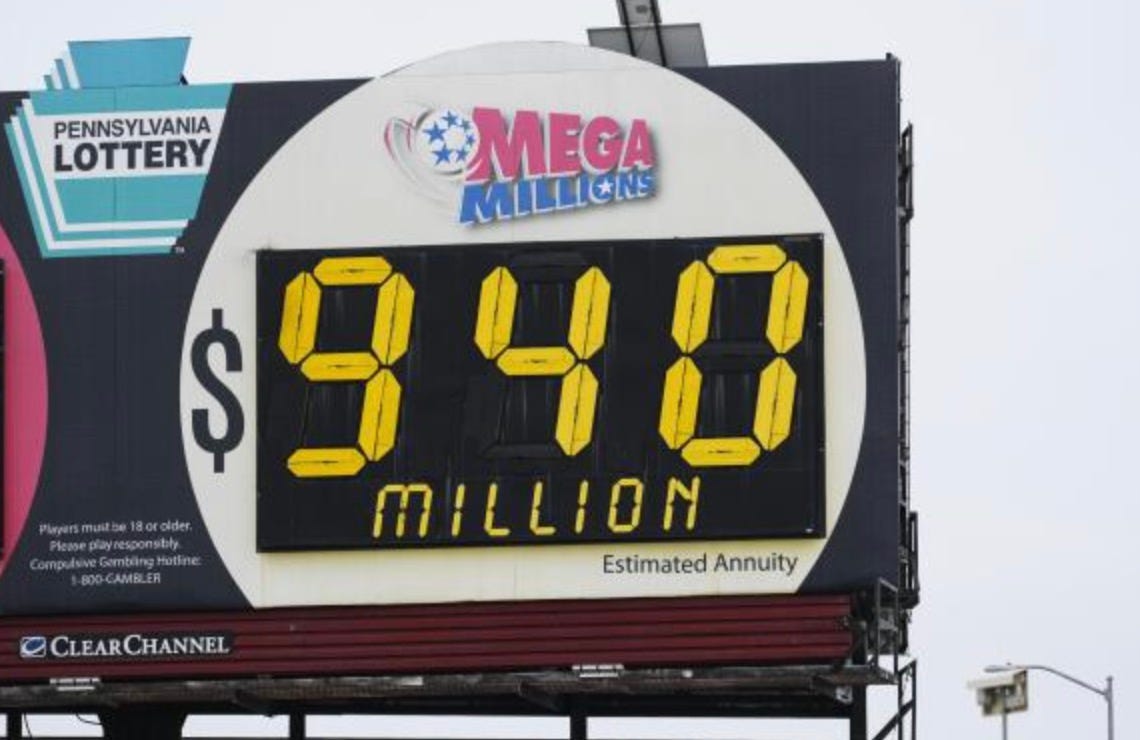
But here we are. Australia is now sprinting headfirst toward a future where you get billed for wealth that isn’t liquid, isn’t realized, and, if the market tanks tomorrow, might never even exist. It’s like being forced to pay income tax on the raise your boss almost gave you but didn’t, or footing the bill for the lottery jackpot on the billboard on the side of I-95 that you didn’t win.
The fallout is not rocket science. People will be forced to liquidate assets—probably the wrong ones, at the worst possible time—just to scrape together enough real money to cover taxes on their fake money. Don’t have the cash lying around to pay that bill? Sounds like a you problem. Better start liquidating. And this isn’t just stocks we’re talking about. Real estate? Private businesses? Long-term investments you hold precisely because they’re supposed to be safe and stable? All fair game in a fire sale.
But wait, it gets even better. That $3 million threshold? It’s not even indexed to inflation. So as the value of money inevitably erodes, more and more regular people will find themselves dragged into this mess. It’s like the $1,200 handpay rule in Atlantic City and Las Vegas: it was created in the 1800s when $1,200 was enough to buy a private island, but as the purchasing power of the dollar has eroded, the rule has been kept in place, with the recalibration serving as way to monitor more and more transactions.
🔥 50% OFF FOR LIFE: Using this coupon entitles you to 50% off an annual subscription to Fringe Finance for life: Get 50% off forever
With these unrealized gains, today it’s “only the rich,” but tomorrow it’s anyone who happened to save diligently or saw their house value rise because some genius decided to inflate the housing market even more.
So, if you’re sitting there thinking, “Well, that won’t affect me,” just wait. You might not be rich enough for the government’s shakedown yet, but thanks to inflation and asset bubbles, they’ll be at your door before you can say “unrealized gains.”
Back in 2024, I wrote about why taxing unrealized gains in the U.S. would be a catastrophic policy error. I warned that it would lead to forced sales, create liquidity crises, and punish anyone who dares to invest in volatile or long-term assets. Investors will avoid riskier assets that fluctuate in value because even a temporary increase could trigger a tax liability before they’ve seen any real return. This creates a chilling effect on investment in startups, innovation, and anything with a long payoff horizon.
It would also cause monstrous capital flight out of the U.S., as I’m guessing we’ll soon see in Australia.
Then there’s the bureaucratic nightmare of it all. Valuing assets for tax purposes every single year is an administrative quagmire. How do you accurately value a private business annually? How do you value collectibles, real estate, or other non-liquid assets in a way that’s fair and consistent? The government doesn’t have that kind of precision, and neither do most investors. What you end up with is a system riddled with errors, disputes, and compliance headaches for both taxpayers and the government.
Yet despite all these glaring problems, Australia is going through with it. And while I genuinely feel for the Australians who are about to suffer the consequences of this insanity, there’s also a silver lining. The rest of the world is watching. This is about to become the textbook case study in how not to run an economy. If you want to see what happens when a government taxes phantom wealth and forces people to pay cash they don’t have, just keep your eyes on Australia over the next few years.
My prediction? You’ll see a mass exodus of capital. People will restructure their investments, move funds offshore, and pull money out of productive sectors of the economy. You’ll see market volatility as investors dump assets to avoid future tax liabilities. You’ll watch the property market distort as people chase after tax shelters. And ultimately, you’ll see economic growth grind down under the weight of a policy that punishes investment and rewards government overreach.
In a strange way, I’m thankful this is happening—not because I support it, but because it will stand as a stark, irrefutable warning to every other country foolish enough to consider the same policy. The Australian government is about to run a live experiment in economic self-sabotage, and the results will be undeniable. In my opinion, after this plays out, no serious policymaker with a shred of economic literacy will be able to look at the forthcoming outcomes and still argue that taxing unrealized gains is anything but a disastrously stupid idea.
QTR’s Disclaimer:Please read my full legal disclaimer on my About page here. This post represents my opinions only.In addition, please understand I am an idiot and often get things wrong and lose money. I may own or transact in any names mentioned in this piece at any time without warning. Contributor posts and aggregated posts have been hand selected by me, have not been fact checked and are the opinions of their authors. They are either submitted to QTR by their author, reprinted under a Creative Commons license with my best effort to uphold what the license asks, or with the permission of the author.
This is not a recommendation to buy or sell any stocks or securities, just my opinions. I often lose money on positions I trade/invest in. I may add any name mentioned in this article and sell any name mentioned in this piece at any time, without further warning. None of this is a solicitation to buy or sell securities. I may or may not own names I write about and are watching. Sometimes I’m bullish without owning things, sometimes I’m bearish and do own things. Just assume my positions could be exactly the opposite of what you think they are just in case. If I’m long I could quickly be short and vice versa. I won’t update my positions. All positions can change immediately as soon as I publish this, with or without notice and at any point I can be long, short or neutral on any position. You are on your own. Do not make decisions based on my blog. I exist on the fringe. The publisher does not guarantee the accuracy or completeness of the information provided in this page. These are not the opinions of any of my employers, partners, or associates. I did my best to be honest about my disclosures but can’t guarantee I am right; I write these posts after a couple beers sometimes. I edit after my posts are published because I’m impatient and lazy, so if you see a typo, check back in a half hour. Also, I just straight up get shit wrong a lot. I mention it twice because it’s that important.