Cremation Ovens, Teeth and Torture: Grisly ‘Extermination Camp’ Found In Mexico
On a quest to find loved ones who’ve gone missing in Mexico’s years-long plague of gang-driven disappearances, a group of volunteers has discovered a ghastly, bone-strewn “extermination camp” in a rural village near Guadalajara, complete with cremation ovens. Their shock was compounded by the knowledge that police first learned about the site months ago but did little to investigate it. Some witnesses say the site was used to hold men who were abducted with the intent to force them into joining a criminal cartel — and to teach torture techniques.
The first of an unknown quantity of human remains have yet to be identified, but the site near the village of La Estanzuela holds at least 700 personal items, including some that appear have belonged to women and children — such as a blue summer dress, a small pink backpack and high-heel shoes, the New York Timesreports. Those and other shoes may offer one of the best indications of the potential number of people killed and/or processed at the site: There are hundreds of them.
“The number of victims that presumably could have been buried there is enormous, and it resurfaced the nightmarish reminder that Mexico is plagued with mass graves,” Mexican security analyst Eduardo Guerrero told the Times, saying what’s been already uncovered is reminiscent of Nazi concentration camps.
The volunteers’ discovery of all the disturbing evidence at the small, abandoned ranch outside Mexico’s second-largest city came after tips about the site’s existence were left on a Facebook page run by a group of citizens who are searching for missing people, the Washington Post reports. Upon traveling to the site in western Mexico, they nudged the unlocked gate open, and soon found themselves gazing into a kind of hell.
Their discoveries included three underground ovens — presumably used for cremations. Using the crudest of methodologies — poking metal rods into the dirt and then withdrawing them and smelling them — they found human remains that included several hundred bone scorched bone shards. The tips left on their Facebook page had been confirmed: They’d discovered an “extermination camp,” to use Mexican parlance.
Eerily, the site also held several figurines of Santa Muerte. Also called “Our Lady of Holy Death” or “the Bony Lady,” Santa Muerte is typically depicted as a female skeletal figure in a cape who holds a scythe in one hand and an Earth-globe in the other. Memorably depicted in Breaking Bad, the figure is viewed as something of a protector of criminal gangs, who frequently build altars to glorify her. These altars are often adorned with offerings such as cash, alcohol, and religious items. Far worse, gang members are said to sometimes offer human sacrifices. “They stole children from other towns and sacrificed them in front of her when they wanted to land a big hit,” a former gang member told AFP earlier this year.
The “Jalisco Search Warriors’ fruitful citizen-led investigation has caused a scandal in Mexico, with citizens outraged to learn that police first visited the site last September. Despite arresting 10 people, freeing two hostages and finding a body shrouded in plastic at the time, the police failed to uncover the enormity of the site’s significance.
It’s still unclear who operated the site and for how long. Authorities suspect the notoriously violent and increasingly dominant Jalisco New Generation Cartel (CJNG) is responsible. The group is a force in illicit fentanyl, methamphetamine, extortion, logging and gasoline markets.
People have approached the Jalisco Search Warriors to give their own personal insights into what went on the sinister site. The volunteer group’s leader, Indira Navarro, says the gang would use phony employment advertisements to lure men to a Guadalajara bus station. Gang members would meet them there and whisk them off to the extermination camp.
They said they arrived in the Guadalajara area expecting to meet their employers and were instead taken to the ranch and forced to undergo military-style training. Some people who failed or didn’t follow orders were killed, and their bodies cut up in pieces, according to the accounts. Others died of dehydration or beatings. The recruits were forced to dig the holes, then build makeshift ovens out of bricks and stones, they said. — Washington Post
Others say the curriculum at the camp included torture techniques, with failing students purportedly meeting a fate straight out of a Hollywood movie:
Ms. Navarro recounted how one young man had told her that the young recruits were at times forced to burn their victims as part of their training. If they objected to the orders of their trainers, the recruits were sometimes fed to wild animals, like lions, she said.
Forcible disappearances have a history in Mexico that’s even longer than many people appreciate: Data started being collected in 1962, and more than 120,000 people have vanished over that span. With countless gang members waltzing across the southern border during the Biden era — and Trump’s promised mass deportations still just another unkept campaign promise — how long until cartel extermination camps start blossoming in America?
A review of corporate documents reveals that Brookfield—the influential $900 billion Canadian investment fund from which Liberal Prime Minister-to-be Mark Carney stepped away from in order to replace Justin Trudeau as Canada’s leader—maintains over $3 billion in politically sensitive investments with Chinese state-linked real estate and energy companies, along with a substantial offshore banking presence. One of its major real estate ventures, a $750 million entry into high-end Shanghai commercial property in 2013, involved a Hong Kong tycoon affiliated with the Chinese People’s Political Consultative Conference (CPPCC)—which the CIA labels a central “united front” entity of Beijing.
The investment occurred while China’s real estate bubble was peaking. Last year, as China’s market crashed, and vacancies soared in Shanghai, Brookfield under Carney secured hundreds of millions of dollars in loans from the Bank of China to refinance its Shanghai commercial land holdings. According to The Bureau’s research, this emergency loan came a decade after Carney, serving as Governor of the Bank of England, aided Beijing by facilitating the Bank of China’s expansion of its global financial footprint. In his 2013 speech, UK at the Heart of Renewed Globalisation, Carney announced that “The Bank of England [has] signed an agreement with the People’s Bank of China … Helping the internationalisation of the Renminbi is a global good.”
While Brookfield had already amassed well over three billion dollars in estimated investments and managed assets in China before Carney took the helm in 2020, research indicates that he played a role in expanding the firm’s footprint there. This included refinancing its 2019 acquisition of Shanghai commercial real estate—initially valued at approximately CAD $2 billion at the peak of China’s real estate bubble—though its actual worth was likely significantly lower when Brookfield secured nearly $300 million at four percent interest from the Bank of China last year.
Given that his history of deep investment in China—if not his holdings, reportedly now placed in a blind trust—could potentially color Carney’s plans for Canada, these developments are especially notable as a trade war between the United States and Beijing escalates.
Carney and his cabinet members will be sworn in at 11 a.m. this morning at Rideau Hall, the Governor General’s official residence. The timing of Carney’s appointment as prime minister adds urgency to ongoing questions about potential conflicts of interest, with matters further complicated by reports that his first international meeting will be with European leaders next week—who are themselves grappling with sweeping tariffs imposed by the Trump Administration.
Brookfield’s substantial investments in China—directly or indirectly involving state-linked entities—include hundreds of millions in renewable energy assets acquired through TerraForm Global in 2017, a $750 million real estate stake in China Xintiandi since 2013, a 2019 Shanghai land purchase valued at approximately $2 billion, a $100 million joint venture with GLP for solar projects launched in 2018, and reported plans to raise hundreds of millions more in both real estate and China green sector investments.
In 2013, the year Xi Jinping became president, Brookfield made its first major foray into China’s real estate sector, investing up to $750 million for a 22% stake in China Xintiandi, a subsidiary of Hong Kong-listed developer Shui On Land. “The cornerstone investment in China Xintiandi gives Brookfield access to high-quality assets in Shanghai while creating opportunities for future growth through asset acquisitions and strategic partnerships,” Bill Powell, Brookfield’s Australasian chief executive, said in a press release. “China is a key market in Brookfield’s long-term growth strategy, and partnering with Shui On Land to invest in China Xintiandi is an ideal entry point for us.”
Although Shui On Land is not state-owned, it operates within China’s tightly regulated urban redevelopment sector. One of Brookfield’s primary real estate partners in the region is Vincent Lo, Shui On Land’s principal, who previously served as a member of the Chinese People’s Political Consultative Conference (CPPCC)—an advisory body that ostensibly includes diverse political parties and organizations but ultimately operates under Chinese Communist Party leadership.
Its members, especially high-profile business leaders, often support policy objectives aligned with the central government’s agenda. Lo’s decades of membership in the CPPCC highlights his proximity to Beijing and adds important context to any business dealings he undertakes—such as those with Brookfield.
For example, in a 2024 interview with China Daily, Lo made his position on Chinese Communist rule in Hong Kong clear: “I think a lot of people don’t really understand what ‘one country, two systems’ is, until after a lot of disruptive demonstrations in Hong Kong that really made us realize we are under one country,” he told the Communist Party–controlled news outlet.
Further illuminating sensitive questions that geopolitical analysts might consider regarding Brookfield’s partnership with such investors, the China Daily interviewer asked:
“Vincent, since you mentioned that our motherland has improved and matured, understanding what the world is all about—does that diminish Hong Kong’s role in any way?”
“No, [Hong Kong is] more so [important] because right now, for example, the US and its close allies are all trying to contain China’s growth,” Lo answered. “And so Hong Kong as a special administrative region, we have a special sort of angle to handle this situation. Because I don’t believe multinational corporations can ignore the China market.”
According to China Daily, Vincent Lo served as a director of Hang Seng Bank in 2010 alongside Cheng Yu-tung, a prominent Hong Kong tycoon and member of the Chinese People’s Political Consultative Conference. Documents show Cheng was involved in Macau casino holdings through a consortium of Hong Kong investors, including Stanley Ho—an association that drew scrutiny from U.S. and Canadian law enforcement and intelligence. Authorities were particularly concerned about Cheng’s dealings with individuals suspected by New Jersey gaming regulators of engaging in illicit activities within Macau’s private VIP gaming rooms. [Cheng Yu-tung also had reported dealings with Donald Trump, before Trump ran for office in the United States.]
During his tenure as Governor of the Bank of England from 2013 to 2020, Carney deepened financial ties between the UK and China, most notably with his ‘money swap deal’ with China’s central bank, letting each country borrow the other’s cash—up to £21 billion. Carney said it could lead to a yuan-trading hub in London. This pact made it easier for businesses to use China’s money worldwide, boosting Beijing’s goal to rival the U.S. dollar.
In March 2024, as Brookfield’s chair, Mark Carney was among a select group of Western executives who met with President Xi Jinping in Beijing—an event The Telegram described as part of a “charm offensive” amid Beijing’s efforts to stabilize its economy.
Then, 11 years after strengthening ties between London and Beijing through the Bank of China agreement, Carney returned to Beijing in October 2024—just a month after joining Liberal Prime Minister Justin Trudeau’s economic task force. During this visit, he held meetings with senior Chinese officials, including a private session with Beijing Mayor Yin Yong.
The following month, as reported by Bloomberg on November 5, 2024, Brookfield secured a $276 million loan from the Bank of China—underscoring Carney and the firm’s deep financial connections to the People’s Republic.
According to Bloomberg’s anonymous sources, the Canadian asset manager faced a looming offshore senior loan of approximately $700 million due by year-end. The loan was originally used to finance Brookfield’s 2019 acquisition of a Shanghai office tower complex from Greenland Hong Kong Holdings Ltd.—a CAD 2-billion transaction that ranked among the largest commercial property purchases by a foreign firm in China. Bloomberg reported that the Bank of China loan carried an annual interest rate of around 4%.
“Talks are unfolding against the backdrop of a severe real estate slump in China, where rising supply and a slowing economy have pushed office vacancy in some prime Shanghai districts to 21.5 percent, the highest level in two decades,” Bloomberg noted.
That a state-owned bank provided this financing amid China’s plunging real estate market suggests the Bank of China extended a critical financial lifeline to Brookfield during a period of acute economic stress. While not classified as an investment, the loan underscores Brookfield’s politically sensitive ties to Beijing’s main bank—helping to sustain its multibillion-dollar real estate footprint in China under Carney’s leadership.
In 2017, Brookfield invested $750 million to acquire TerraForm Global, a renewable power company originally spun out of SunEdison, an American solar power company that filed for bankruptcy in 2016. TerraForm’s portfolio included 952 megawatts of solar and wind assets in emerging markets. “This transaction expands our presence in Brazil and provides a platform for further growth in India and China’s attractive, high-growth renewables markets,” the company said.
Notably, TerraForm’s indirect ties to JIC Capital—a Chinese state-owned entity that invested in SunEdison—suggest that these power purchase agreements may have involved government-backed contracts. This acquisition positioned Brookfield as a direct investor in China’s expanding clean energy market, a sector that the Chinese government has actively encouraged for foreign partnerships. It also aligns with Carney’s urgent vision—promoted through multilateral entities such as the World Economic Forum—to mobilize cross-border investment in pursuit of climate change mitigation.
Brookfield has also transacted directly with a Chinese state-owned enterprise. In 2017, Brookfield Infrastructure Partners sold its 28% stake in Transelec—Chile’s largest electric transmission company—to China Southern Power Grid for approximately $1.3 billion. The Transelec sale is one of the largest Chinese acquisitions in Chile’s energy sector and exemplifies Brookfield’s lucrative conduit role in high-level infrastructure transactions with Chinese state-owned entities.
Brookfield’s presence in China extends beyond asset sales. In 2018, the company formed a 50:50 joint venture with Global Logistic Properties (GLP), a leading Asia-based logistics firm, to install 300 megawatts of distributed solar projects across China, with a pipeline that could eventually expand to 1 gigawatt. Although GLP is not a Chinese state entity, it is partially owned by Vanke Group, whose largest shareholder is Shenzhen Metro—a well-known state-owned enterprise.
In his capacity at Brookfield, Carney’s interactions with Chinese leadership became even more direct. On October 20, 2024, he traveled to Beijing to attend the Financial Street Forum, an annual conference organized by the Chinese government to advance financial policy coordination with foreign investors. During this visit, Carney held a private meeting with Beijing’s Mayor Yin Yong at the city’s Financial Regulatory Bureau headquarters.
In language reminiscent of Chinese Communist Party framing, according to a Chinese government website statement, Beijing’s mayor “encouraged Brookfield Asset Management and BlackRock to seize opportunities, tap into their strengths, and increase their investment and business presence in Beijing. He invited both companies to further deepen mutually beneficial cooperation, and share the dividends of Beijing’s high-quality development and high-standard opening-up.” Meanwhile, “Carney highlighted Brookfield Asset Management’s keen interest in seizing development opportunities in China, further expanding its business in Beijing, and deepening cooperation with relevant partners in areas such as green finance, fund management, and infrastructure investment,” the Chinese statement said.
Beyond his corporate dealings, Carney has also interacted with Chinese financial institutions at global economic forums, appearing alongside figures such as Jin Liqun, President of the Asian Infrastructure Investment Bank (AIIB). The AIIB is a China-led institution that promotes large-scale infrastructure investments backed by Chinese capital. These ties suggest that Carney has built close relationships with key figures in China’s financial and political circles—connections that could shape his economic policies as he assumes leadership of Canada’s government today.
Carney resigned from Brookfield in January 2025 to focus on his leadership bid for Canada’s Liberal Party and secured a stunning victory this week in what CBC described as “largely a referendum on who is best to take on the U.S. president.”
“Carney, who does not hold a seat in the House of Commons and has never been elected, secured more than 85 percent of the points … [and] dominated in all 343 ridings,” CBC reported, noting that while he was widely seen as the front-runner, “even members of his camp were surprised by the resounding results Sunday evening.”
Carney’s team has stated that he placed all his assets in a blind trust to prevent conflicts of interest. However, questions remain about whether this step fully distances him from Brookfield. His opponent, Pierre Poilievre, has called for greater transparency regarding Brookfield’s financial dealings, while Poilievre’s party argues that Canadian media has not sufficiently scrutinized Carney’s background.
Meanwhile, Centre for International Corporate Tax Accountability and Research (CICTAR) has reported that Brookfield’s offshore structuring enabled it to avoid an estimated $6.5 billion in taxes in 2021 alone. “While this may be legal, it has large negative impacts on public funding for essential services,” the report stated. Two years ago, with Carney at the helm, Brookfield faced criticism for using offshore tax havens and various loopholes on its properties in London and its Manhattan West holdings in New York. According to CICTAR, in the case of Brookfield’s Canary Wharf properties, the management firm’s £2.6 billion co-ownership deal in 2015—alongside the Qatar Investment Authority—was structured through a labyrinth of holding companies and subsidiaries, including entities in known tax havens like Jersey and Bermuda
The Paradise Papers (a 2017 leak of offshore records) further revealed numerous Brookfield-linked entities registered through the Appleby law firm. For example, Brookfield Infrastructure Partners Limited and Brookfield Property Partners Limited were incorporated in Bermuda, according to the Paradise Papers data. Records show Brookfield had many Bermuda-based vehicles dating back to the mid-2000s—such as Brookfield Asset Management Holdings Ltd. (Bermuda, incorporated 2006)—and various Brookfield Infrastructure and Property subsidiaries formed between 2007 and 2013. Brookfield Asset Management was also listed as an officer of a Cayman Islands company (Brookfield Brazil Ltd., incorporated in 1995) in the Offshore Leaks database.
As Carney takes office today, scrutiny of his financial dealings and Brookfield’s deep ties to China and offshore banking is likely to intensify. With Canada’s economic future becoming ever more entangled in global trade conflicts, Carney’s business background offers both a wealth of expertise and a complex network of financial entanglements—factors that could potentially produce lasting consequences for Canadian citizens, whether they are fully aware or not.
Earlier this week, The Global Times, widely regarded as a vocal outlet for the Chinese Communist Party, signaled Beijing’s approval of Carney’s victory—at least for now.
“When asked about Mark Carney’s leadership win in Canada’s ruling Liberal Party and his expected rise to prime minister, Chinese Foreign Ministry spokesperson Mao Ning said Monday that China has taken note of the reports and extends its congratulations to Mr. Carney,” the outlet reported.
Mao added, “We hope Canada maintains an objective and rational understanding of China and adopts a pragmatic approach, working with China to improve and develop bilateral relations.”
* * *
Separately, ITM Trading’s Daniela Cambone recently spoke with Sam Cooper about the real reason President Trump wants Canada.
Despite conspiracy networks across leftist corporate media and unhinged Democratic lawmakers ranting about the so-called evils of Elon Musk’s Department of Government Efficiency, corporate America begs to differ.
Sonnenfeld’s negativity is further squelched by a new report from Bloomberg shows that 79 Russell 3000 companies mentioned “DOGE” 200 times on the latest round of earnings calls. They pointed out that DOGE’s contract slashing could hurt profits in the near term. However, a modernized public sector will be a massive boon for their tools and services.
In an interview, Piper Sandler & Co. Chief Global Economist Nancy Lazar said that short-term pain in a transition period will lead to a “huge positive” for the private sector.
Lazar said DOGE will likely free up resources such as labor and grant companies greater influence over capital allocation, which tends to be more productive. He added that deregulation could boost medium-sized companies by reducing regulatory costs.
Bloomberg data shows that industrial and technology companies mentioned DOGE the most on earnings calls.
Infrastructure software providers like Okta told investors: “The agencies we’ve been successful in, it’s because we’ve been able to consolidate and replace and really help modernize those applications.”
Peer ServiceNow’s CEO told investors it saves the federal government “millions and millions” in costs and hours by improving efficiency and automating “mind-numbing.”
Northrop Grumman CEO Kathy Warden noted that companies have been cutting costs in general: “It is a response to competition and staying cost competitive, and the government doesn’t have that. So it is sensical that that might be where DOGE starts.”
Booz Allen Hamilton CEO Horacio Rozanski views a “much shorter period of adjustment followed by a real clear set of opportunities” in the era of DOGE. Do note Booz Allen Hamilton receives about 98% of its revenue from the government.
According to Scotiabank senior analyst Patrick Colville, cybersecurity providers could significantly benefit from DOGE, adding that the federal government will seek to improve cyber defenses.
“Over the last six weeks, almost all of the cybersecurity companies we spoke to called out DOGE as much more of an opportunity than a threat,” Colville said, adding companies in generative artificial intelligence and cloud services could also benefit.
Kratos Defense & Security CEO Eric DeMarco called DOGE a “huge win,” adding, “We’ve already received some contracts in the past month directly related to what’s going on here and the reallocation of resources.”
A sudden Arctic blast will bring freezing temperatures to major European countries.
Europe’s natural gas storage is at only 36% capacity—significantly lower than last year.
European gas futures are rising due to anticipated higher demand
The warm temperatures in Europe from earlier this week will abruptly shift to freezing conditions in the weekend and next week, testing Europe’s renewable power generation and low natural gas stocks.
While this week most of Europe has seen so far temperatures as high as 20 C (68F), an Arctic blast will send temperatures and wind speeds plummeting, in a late-winter test for Europe’s energy systems.
The UK, Germany, France, and even Spain are expected to experience freezing temperatures as early as this Friday.
“Through the rest of the week it’s going to get even colder,” Honor Criswick, a meteorologist at the UK’s Met Office, told Bloomberg.
Low solar and wind power generation in the wintry conditions will further challenge the systems, all the more so that Europe’s natural gas storage levels are now at around 36% full—much lower than at this time last year.
Dutch TTF Natural Gas Futures, the benchmark for Europe’s gas trading, were trading higher amid expectations of rising demand in the cold temperatures and an expected lull in renewable power generation.
So far this winter heating season, cold winter temperatures and spells of low wind power generation have driven strong gas storage withdrawals, which, combined with the expiration of Russian pipeline gas flows through Ukraine, drove up prices.
The IEA warned last month of a tighter LNG market in 2025 as low EU gas inventory levels at the end of this winter “will require much bigger inflows of gas than in the previous two years, increasing Europe’s call on global LNG markets and tightening market fundamentals.”
The good news for Europe is that so far this year, it has been beating on price in Asia, where sufficient inventories and tepid demand have prevented price spikes in spot LNG prices for delivery into northeast Asia.
The bad news for Europe is that due to the need to replenish inventories from much lower levels than in previous years, the summer 2025 forward TTF prices have been trading at a premium to the winter 2026 prices, which typically discourages stocking up on a commodity.
In an era of rising geopolitical tensions, many nations are ramping up defence spending to bolster security. However, for countries already burdened with high debt, this creates a fiscal dilemma: how to fund military expansion without worsening financial instability.
Nowhere is this debate more pressing than in Europe, where Germany—historically the continent’s fiscal anchor, undertook a historic change to its fiscal policy.
The burden of debt and defence
An increase in defence spending presents a strict trade-off for heavily indebted countries. Governments must either:
Raise taxes – politically unpopular and potentially damaging to growth.
Cut other spending – risking social discontent as welfare programs, infrastructure, or education suffer.
Borrow more – worsening fiscal deficits and increasing interest costs.
Many western nations, including France, Belgium and the UK, already have debt-to-GDP ratios exceeding 90%, a level often associated with slower economic growth and rising debt-servicing costs. Higher interest rates make borrowing more expensive, meaning every additional dollar or euro spent on defence further strains government finances.
Germany, with its historically cautious fiscal approach, has long provided Europe with a sense of stability. But if Berlin abandons its “Schuldenbremse” (debt brake), the consequences could ripple across the entire region.
Germany’s debt brake: The last fiscal anchor in Europe is creaking!
If Germany does abandon its debt brake, two major risks emerge:
Loss of fiscal discipline across Europe
Germany has historically been the economic stabiliser of the eurozone, often pushing for fiscal restraint in countries like Italy, Spain, and France. If Germany embraces deficit spending, other nations may follow suit, leading to a more relaxed approach to debt across Europe.
This could weaken confidence in European government bonds, raising borrowing costs for highly indebted nations.
Increased risk of inflation and market instability
More deficit spending will likely fuel inflationary pressures
Investors will demand higher yields on European sovereign bonds, putting additional strain on public finances.
A fractured European fiscal policy could weaken the euro, making imports more expensive and eroding purchasing power.
What happens next?
Tighter monetary policy: If increased government spending fuels inflation, central banks may be forced to keep interest rates higher for longer, slowing economic growth.
Greater EU fiscal integration: If Germany relaxes its debt rules, there may be renewed calls for collective EU borrowing (like the COVID recovery fund) to share the burden. Will the Europhiles finally get their wish, or will we see a slow Balkanisation of Europe as high outstanding debt forces countries’ hands?
Market reactions: Investors could reassess European sovereign risk, leading to rising bond yields, particularly for countries with weaker fiscal positions. This could introduce a new level of uncertainty and volatility into the European market.
Ultimately, while stronger defence capabilities are necessary in an uncertain world, the financial cost could be as destabilising as what is raging on Europe’s doorstep.
If Germany, Europe’s traditional fiscal anchor, shifts toward looser debt policies, the eurozone could face a new era of fiscal uncertainty—one that challenges the economic stability of the entire continent.
For now, the fiscal boost will be seen as a positive, higher growth, higher inflation and a stronger euro.
Also, don’t forget that it’s not just Germany increasing spending. Spain, Italy, Belgium, and Portugal need to increase defence spending considerably from here, which should fuel growth and inflation further.
Source: NATO, Defence Expenditure of NATO Countries (2014-2024)
The UK is in a similarly challenging position. The UK government must carefully navigate its foreign policy to maintain strong economic and security ties with both Europe and the US, balancing conflicting interests. It seeks close trade and regulatory alignment with the EU to protect economic and financial stability while avoiding commitments that could constrain its post-Brexit sovereignty.
At the same time, it prioritises a deep security and economic partnership with the US, aligning on defence and geopolitical strategy, even when American policies diverge from European interests. This balancing act requires diplomatic agility to avoid being caught between two major allies with differing trade, defence, and global governance priorities.
With the tectonic plates shifting, time will tell how this all unfolds.
This map, via Visual Capitalist’s Pallavi Rao, shows the projected change in population levels for every European country between now and the year 2100.
ℹ️ The medium variant scenario means the UN thinks this is the most likely outcome, taking into account birth and death rates, and migration patterns.
Ranked: Europe’s Population Change by Country
For the last few decades Europe’s birth rates have fallen below replacement rate (which keeps population levels the same), and this will only accelerate going into the future.
As a result, most European countries will see their population fall between now and the year 2100.
Country
ISO Code
2025–2100
Population Change
% Change
🇬🇧 UK
GBR
+4.8M
+7%
🇫🇷 France
FRA
+1.8M
+3%
🇸🇪 Sweden
SWE
+710.3K
+7%
🇨🇭 Switzerland
CHE
+158.7K
+2%
🇱🇺 Luxembourg
LUX
+67.5K
+10%
🇲🇨 Monaco
MCO
+9.1K
+24%
🇱🇮 Liechtenstein
LIE
+3.5K
+9%
🇸🇲 San Marino
SMR
-2.4K
-7%
🇮🇪 Ireland
IRL
-21.9K
0%
🇦🇩 Andorra
AND
-35.7K
-43%
🇮🇸 Iceland
ISL
-35.7K
-9%
🇩🇰 Denmark
DNK
-139.3K
-2%
🇲🇹 Malta
MLT
-185.5K
-34%
🇳🇴 Norway
NOR
-209.5K
-4%
🇲🇪 Montenegro
MNE
-306.7K
-48%
🇸🇮 Slovenia
SVN
-485.0K
-23%
🇪🇪 Estonia
EST
-518.7K
-39%
🇽🇰 Kosovo
XKX
-579.4K
-35%
🇧🇪 Belgium
BEL
-697.8K
-6%
🇳🇱 Netherlands
NLD
-839.3K
-5%
🇱🇻 Latvia
LVA
-928.2K
-50%
🇲🇰 North Macedonia
MKD
-950.8K
-52%
🇫🇮 Finland
FIN
-1.0M
-18%
🇲🇩 Moldova
MDA
-1.5M
-50%
🇦🇱 Albania
ALB
-1.6M
-57%
🇱🇹 Lithuania
LTU
-1.6M
-57%
🇵🇹 Portugal
PRT
-1.7M
-16%
🇭🇷 Croatia
HRV
-1.7M
-44%
🇦🇹 Austria
AUT
-1.7M
-19%
🇧🇦 Bosnia & Herzegovina
BIH
-1.8M
-56%
🇸🇰 Slovakia
SVK
-2.1M
-37%
🇭🇺 Hungary
HUN
-2.2M
-23%
🇨🇿 Czechia
CZE
-2.4M
-22%
🇷🇸 Serbia
SRB
-3.0M
-45%
🇧🇬 Bulgaria
BGR
-3.2M
-47%
🇬🇷 Greece
GRC
-3.7M
-37%
🇧🇾 Belarus
BLR
-4.6M
-52%
🇷🇴 Romania
ROU
-8.1M
-43%
🇩🇪 Germany
DEU
-13.1M
-16%
🇪🇸 Spain
ESP
-14.8M
-31%
🇷🇺 Russia
RUS
-17.6M
-12%
🇵🇱 Poland
POL
-18.8M
-49%
🇮🇹 Italy
ITA
-23.8M
-40%
🇺🇦 Ukraine
UKR
-23.8M
-61%
🇪🇺 Europe
EUR
-152.2M
-20%
Naturally the most populous countries on the continent will see large swings, like Germany (-13.8 million), Poland (-18.8 million), and Italy (-23.8 million).
Regionally, Eastern Europe has seen declines since the 1990s, and that trend will only accelerate as this century progresses. Russia and Ukraine will together lose 40 million people by 2100.
Nevertheless, migration (both within the continent and from outside the region) can boost population levels.
For the UK (+4.8 million) and France (+1.8 million), this will lead to population growth rather than declines.
However, this is a small group. The UN projects that only seven European countries will have a larger population in 2100 than in 2025.
Important to remember that these are all estimates and can vary depending on the source. Eurostat (the official data source for the EU) has more countries in the green than the UN, though their estimates were made in 2022.
What Does This Mean For Europe?
A population decline is not something most economies are built for. Fewer people equals shrinking consumer demand, critical to the economy.
For the last few decades migration into the region (from Asia and the Middle East) has kept the population growing.
However, the booster effect from international migration is set to drop off a lot closer than most expect. Eurostat projects that 2026 will be Europe’s peak population point, after which levels will begin to trend down.
Italy will hold a referendum on June 8-9 to decide whether to halve the waiting period for foreigners applying for Italian nationality, the government announced on Thursday.
If approved, the reform would reduce the required residency period to five years, potentially granting citizenship to around 2.5 million foreign nationals.
The referendum was triggered after opposition parties and pro-migrant organizations, including Oxfam Italia, collected more than 500,000 signatures last September, meeting the legal threshold for a public vote.
Despite strong opposition from the ruling Brothers of Italy (FdI) party, led by Prime Minister Giorgia Meloni, the government was obligated to set a date for the vote after a ruling from the Constitutional Court in January approved its admissibility.
Currently, foreigners must reside in Italy for at least 10 years before applying for citizenship through naturalization. Children born in Italy to foreign parents are also unable to obtain citizenship until they turn 18.
Proponents of the reform argue that the existing system is restrictive and out of step with other European countries such as Germany, the U.K., Spain, and Portugal, where the naturalization process typically takes five years.
In France, naturalization is permitted after two to five years, depending on individual circumstances.
The proposal has sparked a heated debate within the Italian government. Prime Minister Meloni, who came to power in 2022 on an anti-migration platform, has consistently opposed changes to the nationality law, calling the 10-year requirement “an appropriate length of time for nationality.”
Deputy Prime Minister Matteo Salvini, leader of the co-governing League Party, shares this stance.
However, the issue has created tensions within the governing coalition. Antonio Tajani, leader of the center-right Forza Italia party and also a deputy prime minister, suggested an alternative proposal last year to grant Italian nationality to children who have completed a continuous 10-year education in the national school system, rather than waiting until they turn 18. However, this idea was never formalized into legislation.
Reviewing the proposal earlier this year, Italy’s top court noted that the change would only affect the required residency period for foreign nationals to apply. Other conditions for naturalization, including a minimum B1 level in Italian, continuous and legal residency in the country, and the absence of a criminal record, will still apply.
For the proposal to pass, voter turnout must exceed 50 percent +1 of the Italian electorate and be supported by a simple majority.
Proponents of the change had called for the vote to be held on the same day as administrative elections on May 25-26 to ensure greater turnout. However, the government had the power to choose to hold the vote on another day.
“We had requested that there be a combination with the first round of the administrative elections and the referendum on May 25-26. Obviously, the road is now,” noted Riccardo Magi, spokesperson for the Citizenship Referendum Committee.
He added the work starts now to rally students and those more likely to support the bill to register to vote. “We have just over 80 days to break the wall of silence. Students must know that they must register and must communicate 35 days before the date of the vote their desire to vote not in the place where they are resident but in the place where they are domiciled.”
UN Judge Who Studied Human Rights At Columbia Guilty Of Enslaving Woman In UK
In a spectacular display of leftist hypocrisy, a Ugandan United Nations judge who studied human rights at Columbia University and received a prestigious human rights award has been convicted of enslaving a woman in the United Kingdom.
Forty-nine-year-old Lydia Mugambe, who is also a Ugandan High Court judge, was found guilty of tricking a Ugandan woman of coming to the UK, where Mugambe proceeded to impede her from finding a steady job, instead compelling her to serve her as a maid and care for Mugambe’s children — all without compensation. The charges were filed under the UK’s Modern Slavery Act.
“Lydia Mugambe has exploited and abused [the victim], taking advantage of her lack of understanding of her rights to properly paid employment and deceiving her as to the purpose of her coming to the UK,” prosecuting attorney Caroline Haughey KC told jurors during the trial.
Mugambe was in the UK as she worked toward a PhD law degree from the University of Oxford, where her presence no doubt padded the prestigious school’s diversity measures. However, rather than realizing her promise to become a notable alumna, she’s instead a notorious product of the program, as she’s been convicted of conspiring to facilitate the commission of a breach of UK immigration law, facilitating travel with a view to exploitation, forcing someone to work, and conspiracy to intimidate a witness.
Police body-cam video captured Mugambe’s indignant reaction when she was told by police that she was being arrested “on suspicion of keeping someone in slavery and servitude.” Mugambe told the officer, “I am a judge in my country. I even have immunity. I am not a criminal.”
Lydia Mugambe, a UN & Ugandan judge, has today been convicted of bringing a woman into the country illegally & then forcing her to work as a slave.
Mugambe tried to evade justice by claiming she had diplomatic immunity, which has now been removed 🚫
Mugambe’s claim of diplomatic immunity proved hollow. “Any immunity Mugambe may have enjoyed as a UN judge has been waivered by the Office of the United Nations Secretary General,” Thames Valley Police commander for Oxfordshire, Ch Supt Ben Clark told BBC.
“A young woman brought in for the convenience of Ms Mugambe’s life but mistreated – mistreated by Ms Mugambe, a woman of power and intelligence who had no qualms in lying not only to [the victim] but to the police when they sought to ensure her safety and wellbeing,” said Haughey. Gasps were heard in the courtroom as the guilty verdict was announced. The courtroom was cleared when Mugambe, in the words of the BBC account, “appeared unwell.” She will be sentenced on May 2.
The more one learns about Mugambe, the more dizzying her hypocrisy grows. In 2019, she received the “Vera Chirwa human rights award,” which is “bestowed on a person who has displayed dedicated human rights activism…contributed to a specific human rights cause,” and evidenced a commitment to “improving the lives of people in Africa.” As the Uganda-based Monitor reported at the time…
She was recognised by the highly rated University of Pretoria in South Africa for her contribution towards advancing the socio-economic rights of the vulnerable and ensuring gender-based justice in Africa through her courageous and impactful judicial career.
Now, a UK court has concluded that, rather than defending a vulnerable woman, Mugambe preyed on her instead. Nonetheless, don’t expect Columbia and Oxford to stop assigning scarce slots in their programs to culture-enriching people like Mugambe.
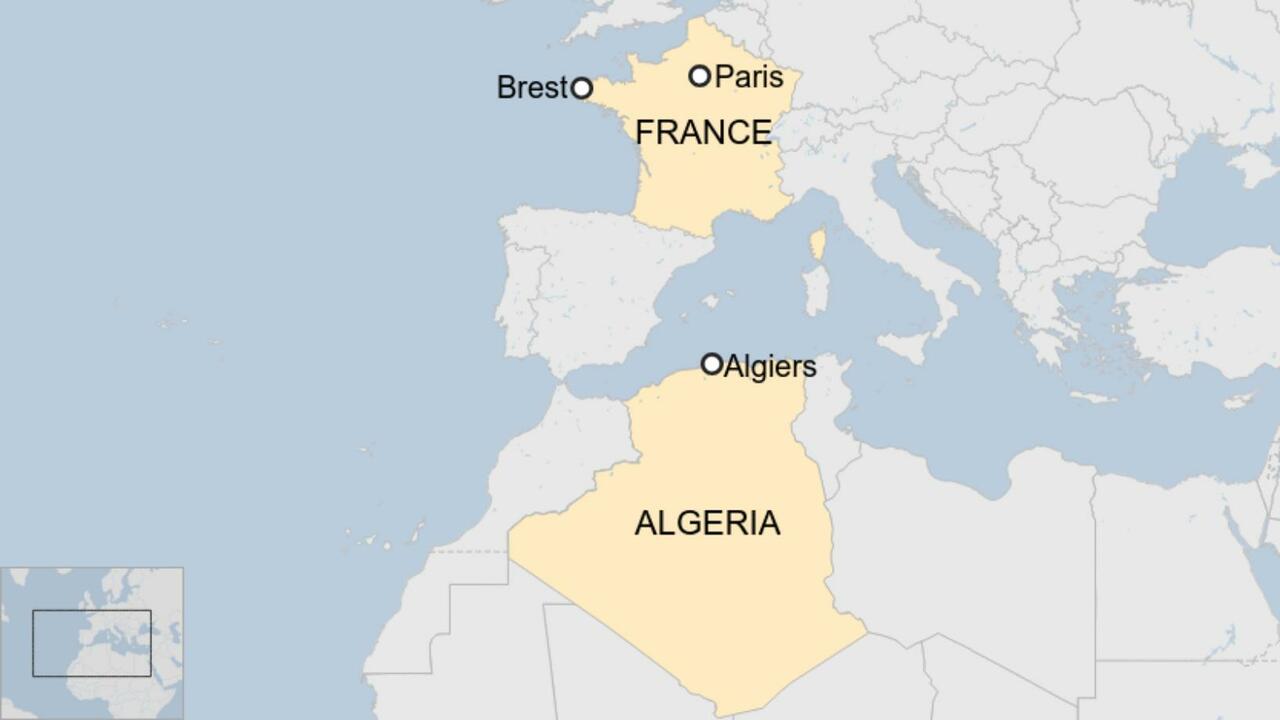
Tensions are rising between Paris and Algiers. The current diplomatic crisis, described by analysts as the most serious since Algeria’s independence in 1962, raises the risk of a rupture in bilateral relations between France and its former North African colony.
The current quarrel was triggered in July 2024 by French President Emmanuel Macron’s support for Morocco’s claims of sovereignty over Western Sahara. The resource-rich territory, considered by the UN as “non-autonomous”, is controlled for the most part by Morocco but claimed by the Polisario Front, a Sahrawi independence movement supported by Algeria. The move infuriated Algiers, which announced the “withdrawal with immediate effect” of its ambassador to France.
Relations have deteriorated ever since, first with the incarceration of French-Algerian writer Boualem Sansal in Algiers in mid-November, who was accused of having undermined the integrity of Algerian territory in statements made to a far-right media outlet in France.
This was followed by the January arrests of Algerian influencers in France accused of calling for violence, and compounded by Algiers blocking the deportation of its nationals from France.
In early March, the situation worsened after a knife attack, which injured three police officers and cost the life of a passerby in Mulhouse in eastern France, by an Algerian whom the French authorities had tried to deport back to his country 14 times in vain.
Following the attack, French Prime Minister François Bayrou set an ultimatum. He gave Algiers “one month to six weeks” to accept the readmission of its nationals staying illegally in France who had been handed deportation orders. Otherwise, the head of government threatened, Algeria would expose itself to “a graduated response”.
This could range from the calling into question of visa-free travel for Algerian diplomats to the termination of the 1968 bilateral agreement which grants, according to Paris, “considerable advantages” to Algerians in terms of entry and residence in France.
‘Back to the time of the colonies’
France also accuses Algeria of blacklisting French companies bidding for public contracts, replacing French with English in primary education, reintroducing a stanza that calls out France by name in its national anthem and blocking cooperation in matters of security.
At the helm of the recent escalation is French Interior Minister Bruno Retailleau, who advocates for a very firm approach to the fight against immigration. Since taking office in September, he has made numerous hostile statements against Algeria as well as calls to toughen the “balance of power” on issues that divide the two countries.
“Should France bow its head?” Retailleau said after the Mulhouse attack. “No pain in history gives a license to offend France,” he added, in reference to the 132-year-old colonial era, the memory of which is still a great source of tension.
For historian Benjamin Stora, a leading specialist in French colonization and the Algerian war of independence, the current crisis reflects a persistence of the memory problem linked to this difficult past. “In France at the moment there is an obsession with Algeria, with a kind of daily repetition of grievances,” he told Middle East Eye.
According to him, this “terrible obsession”, fueled both by political leaders and media outlets close to the far right, “summons a kind of colonial unconscious”.
The notion implies that the people who experienced colonization – whether colonizers or colonized – have internalized the power relations typical of the colonial period. As if Algeria were still a French colony and should submit to the dictates of Paris. Stora’s opinion is widely shared in Algeria.
Former Algerian diplomat and minister of culture and communication, Abdelaziz Rahabi, declared that some have “the feeling that we are back to the time of the colonies”.
In February, Algerian President Abdelmadjid Tebboune denounced the “deleterious climate” between the two countries and urged his French counterpart to “make his voice heard” to end the conflict.
Macron was slow to react, pulling his ministers back into line two weeks ago and hammering home his desire to “engage in a demanding and respectful dialogue” with Algiers. But no tangible improvement has been seen since. Before Paris’ shift on Western Sahara, the two heads of state got along rather well.
The French president made a spectacular rapprochement with Algiers during an official visit in the summer of 2022, which was marked by an all-out restart of the bilateral relationship and the launch of a joint commission of historians to work on the difficult memorial issue.
The first French head of state to be born after Algeria’s independence, Macron had earlier made an impression in February 2017 when, as a presidential candidate, he described colonisation as a “crime against humanity”.
Electoral instrumentalization
In Algeria, the crisis is seen essentially as the result of the rightward shift of the French political class, which has favoured antagonistic positions towards the North African country. The Algerian authorities accuse extremist currents in France of mistreating bilateral relations to satisfy electoral issues.
In a press release published following the February 25 announcement by Paris of measures restricting access to France for some Algerian dignitaries, Algiers denounced the role of the right and far right in French-Algerian relations.
“Algeria has clearly become the subject of intra-French political quarrels where all self-serving low blows are allowed in the context of a competition in which the far right is the instigator, the point of contact and the ordering institution,” the foreign ministry communique stated.
Many observers in both countries also explain this latest crisis as linked to French domestic politics. “It is here, at the heart of purely electoral issues, that the balance of power around the Algerian issue is being exercised,” Zoheir Rouis, vice president of the Algerian centre-left party Jil Jadid, told MEE.
“This issue is the hostage of an internal electioneering campaign in view of the next presidential election which will take place in three years,” he said.
According to Rouis, the French interior minister seeks to woo the far right’s electoral stronghold by exploiting its hostility to the former North African colony.
The far-right National Rally (RN), which is currently the leading political party in terms of seats in the French parliament, accuses Retailleau of not doing enough to confront Algeria and limiting himself to ineffective statements. Retailleau replied that the RN saw him as a competitor who could deprive the party of its electoral base. “A collapse of the French political class has brought to the forefront a host of people without imagination or plans, who defend extremist ideas in an attempt to exist,” Rouis told MEE.
‘Incalculable consequences’
According to Farida Souiah, professor of social sciences at a business school in the city of Lyon, this instrumentalisation of the current crisis is at the root of its seriousness. “There have been tensions since the 1970s, particularly after Algeria’s nationalisation of hydrocarbons, but what is special today is the duration and accumulation of episodes of crisis since July 2024,” she told MEE.
While the Algerian leadership is accused of using the crisis to distract from internal problems and strengthen national cohesion, “in France, migration issues are seen as useful for winning the vote of the right and the far right,” Souiah said. To this end, many untruths are told on the subject, she added.
“We talk a lot about the non-implementation of OQTFs [obligation to leave French territory, or deportation orders] but we don’t say that Algerians represent one of the first nationalities to be effectively removed from France.”
According to a French interior ministry report, Algerians were at the top of the list of people deported from France in 2024, with 2,999 deportations carried out, an increase of more than 17 percent compared to 2023. Moreover, according to Souiah, the 1968 agreements are brandished by the right and the far right as a concession to Algeria while various amendments introduced since their signing have greatly weakened them.
In a column in Le Monde newspaper in January, Hocine Zeghbib, honorary lecturer in public law, explained that this treaty, established after Algeria’s independence to facilitate the movement of people between the two countries, has not had much impact on Algerian immigration to France, especially after the end of labour immigration in the 1970s and the implementation of a visa policy a decade later.
For Souiah, beyond the migration issue, it is the persistence of the memorial dispute over colonisation that explains why French-Algerian relations are so complicated. “In Algeria, the relationship with France is placed in a national narrative that has a very strong rhetoric on the issue of [French] interference,” she said.
And the North African country is not in the habit of yielding to “coups de force” or ultimatums imposed by the former colonial power, she added. With each side sticking to their guns, the breakdown of relations is a very likely possibility, according to observers.
The press release from the Ministry of Foreign Affairs in Algiers warned of “incalculable consequences on the Algerian-French relationship in all its dimensions”. France has arguably the most to lose, for several reasons.
First of all is energy. Along with Italy, Spain and Germany, the country is one of the largest buyers of Algerian gas.
The repercussions could also be economic, as around 450 French companies are established in Algeria, which is the second largest African market for French exports. The costs could be lower for Algeria, which has worked in recent years to diversify its economic partners.
On the security front, Algeria is an important partner for France in sharing intelligence and combating instability in the Sahel region in Africa, where the rise of armed groups linked to the Islamic State group is worrying experts.
The deterioration in bilateral relations has also already seriously affected the work of memorial reconciliation between the two countries. Stora, who issued around 30 recommendations to make progress on this issue in 2021 in a report commissioned by Macron, is concerned about the repercussions of the current spat in this field.
“After five meetings, the historians’ commission has frozen its work,” he told MEE. The rupture could also have a heavy human cost, particularly due to a possible renegotiation or termination of the 1968 migration deal, the historian stressed. “Hundreds of thousands of people who have ties on both sides of the Mediterranean risk being impacted by the crisis,” Stora said.
On Friday, a group of dual nationals, including public figures, wrote an op-ed in Le Monde warning that in French public debate a discourse is developing that “normalises the idea that some French people must constantly prove their belonging, while others are the natural guardians of it.
“The controversies surrounding immigration, secularism and national identity constantly remind us that our presence is disturbing, that our names, our faces, our traditions are perceived as cracks in the country’s unity.”
Five years ago, politicians and bureaucrats went berserk and pointlessly ravaged Americans’ freedom. The Covid-19 pandemic provided the pretext to destroy hundreds of thousands of businesses, padlock churches, close down schools, and effectively place hundreds of millions of Americans under house arrest. Despite all the forced sacrifices, most Americans contracted covid and more than a million were listed as dying from the virus.
“Pandemic Security Theater Is Self-Destructive, And Won’t Make Us Safer” was the headline of my first salvo against the pandemic hysteria, published on March 24, 2020 in the Daily Caller. I scoffed at President Trump’s proclamations about being a “wartime president at war with an invisible enemy.” Wartime presidents too easily pretend they’re on a mission from God to scourge all resistance. I warned: “The pandemic threatens to open authoritarian Pandora’s Boxes. Permitting governments to seize almost unlimited power based on shaky extrapolations of infection rates will doom our republic.”
From the start of the pandemic, the Mises Institute was in the forefront of condemning policies that eradicated prosperity in the name of public health. In a May 19, 2020 Mises piece headlined, “Hacksawing the Economy,” I noted, “The political response to COVID-19 is eerily similar to Civil War surgeons’ rationales for hacking off arms and legs…. As long as politicians claim that things would be worse if they had not amputated much of the economy, they can pirouette as saviors.”
Living in the Washington area, I had a front row seat for many of Covid-19’s biggest absurdities. After federal officials whipped up panic, “I Believe in Science” lawn signs popped up like mushrooms, soon accompanied by “Thank You, Dr. Fauci” placards. Those signs looked to me like frightful decorations of a Halloween that never ended.
Thoreau provided my lodestar for the pandemic: “A man sits as many risks as he runs.” I knew that isolation would make me too ornery for my own good. I had survived the flu plenty of times in prior decades and I didn’t reckon covid would deliver my coffin nails. I was a co-leader of a Meetup hiking group which continued hiking almost every weekend throughout the pandemic.
But politicians made such jaunts more difficult. In February 2021, President Biden decreed that face masks must be worn in national parks. Probably 95 percent of the National Park Service’s 800+ million acres is uncrowded 95 percent of the time. The only “evidence” to justify the mandate was that many Biden supporters were frightened or enraged whenever they saw anyone not wearing a mask. The new mandate quickly became an entitlement program for junior Stasi members.
I told attendees on my hikes that masks were optional but kvetching about other hikers wearing or not wearing masks was prohibited. Biden’s edict helped turn the C & O Canal Towpath—one of my favorite hiking venues—into a hotbed of self-righteousness. That Towpath was ten feet wide in most places, but it was the principle of the matter. I had numerous people furiously screaming at me because I wasn’t wearing a facemask as I strolled outside. If mask hecklers were especially persistent, I would shrug and ask them: “How is your therapy going?”
Washingtonians pride themselves on being smarter and better educated than most other Americans (okay, maybe excepting San Francisco and Boston). They instinctively knew that total servility was the only hope for surviving the pandemic, and maximizing hatred was the key to compliance. After Biden ordered 100 million adults to get injected with the covid vaccine, Biden derided the unvaxxed as aspiring mass murderers who only wanted “the freedom to kill you” with covid. (The Supreme Court struck down most of that illegal vax mandate.)
Thanks to Biden’s fear mongering, almost half of Democratic voters favored locking the unvaxxed into government detention facilities, according to an early 2022 Rasmussen poll. The same survey showed that almost half of Democrats favored empowering government to “fine or imprison individuals who publicly question the efficacy” of Covid-19 vaccines on social media. The Biden administration unleashed a massive censorship campaign on social media and beyond that effectively muzzled millions of Americans who doubted the feds.
At that point, most American adults were vaxxed, but the injections were catastrophically failing against the latest covid variant. There were a million new covid cases per day—mainly among the vaxxed—and most covid fatalities were occurring among the fully vaxxed.
But “best and brightest” Washingtonians retained their absolute faith in a command-and-control response to the pandemic. District of Columbia Mayor, Muriel Bowser, decreed that anyone who was not vaccinated and carrying proof of the jab was banned from entering any restaurant, bar, gym, or meeting space in her domain. Affluent Washingtonians happily rushed to get free software apps so the government could track them and their health status. That new app had a spiffy logo that quickly became the ultimate status symbol.
I stopped hosting hikes within DC city limits: I would be damned if I would condone Bowser’s biomedical caste system. But I did venture into DC in early 2022 to pay respects to an editor who was fleeing southward. Exiting at the Dupont Circle metro station, I briefly stepped out of a torrential downpour into an upscale coffee shop. Every table hosted a hefty warning sign: “Masks on & Vaccine Cards out!” Patrons were hectored: “All cafes and restaurants… are REQUIRED by the Mayor’s Office to check vaccine cards of dine-in customers. Thank you for helping us comply with local regulations to remain open!” Why didn’t that establishment just advertise the slogan: “Come Sip with the Gestapo!” I skedaddled before anybody asked to see a vax passport.
I was mystified why people would pay $6.50 for a coffee to be treated worse than parolees. Dupont Circle was home to many of DC’s best educated residents. The more graduate degrees they amassed, the more submissive they became. Flourishing your vax card proved your moral and intellectual superiority over anyone who balked at bending over again.
But it was a different story in Anacostia, the poorest part of the city, where one of the unsung heroes of the pandemic emerged. Blacks had a much lower vaccination rate and the mayor’s edict effectively made many of them second-class citizens. Bowser, Fauci, and a PBS film crew pounded on front doors in Anacostia and hectored residents to get injected. A guy in his 30s came to the front door of his row house, saw Fauci and the TV cameras, and condemned the entire covid carnival: “Y’all campaign is about fear. You all attack people with fear. That’s what this pandemic is.” He scorned the speedy vax approval: “Nine months is definitely not enough for nobody to be taking no vaccination that you all came up with.” Actually, the Biden White House had browbeat the Food and Drug Administration to unjustifiably grant final approval to the Pfizer vax. With the video cameras rolling, he angrily told Fauci and Bowser: “The people in America are not settled with the information that’s been given to us right now.” Watch the PBS Fauci “Vaccine Outreach” Anacostia brawl here.
Fauci and the PBS film crew probably thought that exchange exemplified the type of fools who refused to submit and be saved. Fauci justified covid mandates because average citizens “don’t have the ability” to determine what is best for them. But despite getting any and all boosters, Fauci was personally ravaged by covid at least three times. Fauci’s frauds began to be exposed, including his role in covertly bankrolling the reckless gain-of-function research that escaped from the Wuhan Institute of Virology and killed seven million people worldwide. Instead of receiving a Nobel prize, Fauci was grateful that—on President Biden’s final day in office—he received a full presidential pardon for any and all of his crimes committed for the prior decade.
But what sort of savior scientist needs a presidential pardon, anyway?
A virus with a 99+ percent survival rate spawned a 100 percent presumption in favor of despotism. The government has no liability for the injections it mandates or the freedoms it destroys. The Covid-19 pandemic should teach Americans to never defer to “experts” who promise that granting them boundless power will keep everyone else safe. In the long run, people have more to fear from politicians than from viruses.