44.5 F
Chicago
Sunday, November 8, 2026
Home Blog Page 1752

Largest US Egg Producer Cal-Maine Under DOJ Price Investigation

Largest US Egg Producer Cal-Maine Under DOJ Price Investigation

Authored by Wesley Brown via The Epoch Times (emphasis ours),

Cal-Maine Foods Inc., the nation’s largest egg producer, on Tuesday acknowledged that it is being investigated by the Department of Justice’s Antitrust Division over the national increase in egg prices.

A woman shops for eggs at a store in New York on Feb. 17, 2025. Samira Bouaou/The Epoch Times

The brief admission in its newest financial report made headlines and the company’s shares fell by about 4 percent in after-hours trading.

“In March 2025, the Company received a civil investigative demand in connection with a widely publicized investigation by the Antitrust Division of the Department of Justice into the causes behind nationwide increases in egg prices,” Cal-Maine said in its financial report for its third quarter on Tuesday. “The Company is cooperating with the investigation.”

Egg prices have hit record highs in recent months, largely due to a bird flu epidemic that has forced farmers to slaughter more than 166 million birds, mostly egg-laying chickens.

One dozen Grade A eggs cost an average of $5.90 in U.S. cities in February, up 10.4 percent from a year ago. That eclipsed January’s record-high price of $4.95.

The Ridgeland, Mississippi-based Cal-Maine accounts for roughly 20 percent of the nation’s egg supply.

New Earnings Report

Cal-Maine released its financial result for its third quarter, which ended March 1, on Tuesday showing it hatched robust earnings: $508 million, or $10.38 per share, a 245 percent jump from earnings of $146.4 million, or $3.01 per share, a year ago. It reported sales of $1.4 billion in the quarter, up 99 percent from $703.1 million year over year.

Cal-Maine also announced that it signed an agreement before the end of the third quarter to acquire Echo Lake Foods for about $258 million.

Commenting on the results, Cal-Maine President and CEO Sherman Miller said dynamic market conditions, which led to record-high egg prices and bird flu-related shortages, persisted throughout the quarter.

Miller said that, despite the challenging supply environment, the company was able to benefit from its existing size plus recent acquisitions to increase capacity. “Above all, we stayed focused on meeting the needs of our valued customers, while honoring our longstanding pricing frameworks,” he said in a statement.

Record-high egg prices have become such an economic issue that President Donald Trump requested U.S. Department of Agriculture (USDA) Secretary Brooke Rollins to lay out a comprehensive plan in late February to bring down the prices. The increase was driven by avian flu, which forced farmers to cull more than 166 million birds in the month, mostly egg-laying chickens.

“Alongside our own efforts to address the current supply situation, we greatly appreciate the current administration’s recently announced plan to address the volatility in our vital industry,” Miller said.

“It is clear the (Trump) administration recognizes the importance of eggs as a low-cost, high-value, unprocessed protein for feeding our nation’s families.”

Company officials said the strong third-quarter performance was primarily driven by an 80.7 percent increase in net average selling price per dozen eggs and a 10.2 percent increase in volume.

For the quarter, Cal-Maine’s net average selling price per dozen was $4.06 compared with $2.247 a year ago. The company sold a record 331.4 million dozen shell eggs, representing a 10.2 percent increase, including the contribution from acquisitions, compared with 300.8 million dozen for the third quarter of fiscal 2024. Sales of conventional eggs totaled 213.2 million dozen, compared with 192.2 million dozen for the prior-year period, an increase of 11.0 percent.

Concerning the Echo Lake acquisition, Miller said the deal represents “an exciting growth opportunity and important inflection point for Cal-Maine Foods,” allowing the Mississippi egg producer to diversify its product portfolio and customer mix.

“Echo Lake Foods is a leading innovator with a long history of providing quality ready-to-eat egg products and breakfast foods to a blue-chip customer base,” Miller said.

“The combined product lines and capabilities of the two companies are highly complementary and, importantly, we share similar values of pursuing operating excellence and meeting the needs of our customers.”

Founded in 1941, Burlington, Wisconsin-based Echo Lake produces ready-to-eat egg products and breakfast foods, including waffles, pancakes, scrambled eggs, frozen cooked omelets, egg patties, toast, and diced hardboiled eggs. In 2024, Echo Lake had annual revenues of about $240 million, with a five-year annual growth of approximately 10 percent.

Looking ahead to the rest of 2025, Cal-Maine officials say the industry is prone to volatility due to external factors such as bird flu, rising production costs, and changes in consumer demand.

Nationwide, egg costs rose to record highs in late February, when retail prices spiked to $5.90 in most U.S. cities. In the monthly Consumer Price Index report on March 12, the U.S. Bureau of Labor Statistics said that the index for food increased 0.2 percent in February, driven primarily by an outsized 10.4 percent increase in the index for eggs.

During the price run-up, retailers such as Walmart, Kroger, and Costco limited the number of eggs customers could purchase. Since then, prices have steadily declined, falling below an average of $3 a dozen last week, USDA market data show.

As the key barometer for inflation, the CPI measures changes in the price level of a weighted average market basket of consumer goods and services that most U.S. households purchase. Through February, the annual inflation rate in the United States eased to 2.8 percent from 3 percent in January, below market expectations of 2.9 percent.

During the trading session on April 8 on the Nasdaq Stock Exchange, Cal-Maine shares fell in tandem with the broader sell-off on Wall Street. At the closing bell, the stock was down $3.12, or 3.34 percent, at $90.33, with more than 1.9 million shares traded, twice the normal volume.

Tyler Durden
Thu, 04/10/2025 – 06:30

Harvard To Borrow $750 Million Amid Federal Funding Uncertainty

Harvard To Borrow $750 Million Amid Federal Funding Uncertainty

Authored by Bill Pan via The Epoch Times (emphasis ours),

Harvard University is looking to borrow $750 million through taxable bonds as the Ivy League school’s federal funding is under review.

The Harvard University campus in Cambridge, Mass., on March 23, 2020. Maddie Meyer/Getty Images

“As part of ongoing contingency planning for a range of financial circumstances, Harvard is evaluating the resources needed to advance its academic and research priorities,” a university spokesperson said on April 8 in an emailed statement responding to questions about the bond sale.

This latest offering follows a $450 million bond issuance in March. With the new sale, the university’s total borrowing for fiscal year 2025 will rise to $1.2 billion.

Proceeds from the debt will be used to support Harvard’s capital projects and for general institutional purposes, according to S&P Global, which on April 7 assigned the bonds a top-tier AAA rating with a stable outlook.

The outlook, S&P noted, reflects expectations that Harvard will sustain strong demand and maintain balance-sheet strength relative to operating costs and debt over the next two years. The credit rating agency also cautioned that financial performance “could be strained” because of changes in federal funding while the university continues to cut expenses.

Despite its $53 billion endowment—the largest among colleges in the United States—Harvard relies heavily on federal funding, particularly for its extensive research operations. That dependence has come under new pressure after three federal agencies last week announced a sweeping review of $9 billion in multiyear research funding awarded to Harvard and its affiliated hospitals in the Boston area.

“If this funding is stopped, it will halt life-saving research and imperil important scientific research and innovation,” Harvard President Alan Garber said in a campus-wide message.

Following the announcement, the departments of Education and Health and Human Services, along with the General Services Administration, sent a letter to Harvard, accusing the university of failing to protect students and faculty from anti-Semitic harassment and alleged violations of anti-discrimination laws. They also included a list of steps that they regard as “necessary for Harvard University’s continued financial relationship with the United States government.”

Among those steps are the elimination of diversity, equity, and inclusion programs, a ban on masks during protests, and reforms to admissions and hiring systems that prioritize merit-based criteria over race- or gender-based preferences. The letter also urges the university to fully cooperate with federal agencies, including the Department of Homeland Security, and to pursue structural reforms and leadership changes to ensure long-term compliance.

No formal deadline has been set, but the government has requested Harvard’s “immediate cooperation” in adopting the proposed changes.

On top of the mounting threats to its federal funding, Harvard is once again confronting the prospect of a steeper federal endowment tax. In 2023, then-Sen. JD Vance (R-Ohio) introduced a bill proposing a 35 percent levy on university endowments exceeding $10 billion. With Republicans now in control of both Congress and the White House, that proposal—or one similar to it—could become a reality.

Harvard is not alone in turning to Wall Street. Stanford University and the University of Pennsylvania also issued large debt offerings earlier this year, and Princeton University recently signaled that it may do the same.

Tyler Durden
Thu, 04/10/2025 – 05:45

Harvard To Borrow $750 Million Amid Federal Funding Uncertainty

Harvard To Borrow $750 Million Amid Federal Funding Uncertainty

Authored by Bill Pan via The Epoch Times (emphasis ours),

Harvard University is looking to borrow $750 million through taxable bonds as the Ivy League school’s federal funding is under review.

The Harvard University campus in Cambridge, Mass., on March 23, 2020. Maddie Meyer/Getty Images

“As part of ongoing contingency planning for a range of financial circumstances, Harvard is evaluating the resources needed to advance its academic and research priorities,” a university spokesperson said on April 8 in an emailed statement responding to questions about the bond sale.

This latest offering follows a $450 million bond issuance in March. With the new sale, the university’s total borrowing for fiscal year 2025 will rise to $1.2 billion.

Proceeds from the debt will be used to support Harvard’s capital projects and for general institutional purposes, according to S&P Global, which on April 7 assigned the bonds a top-tier AAA rating with a stable outlook.

The outlook, S&P noted, reflects expectations that Harvard will sustain strong demand and maintain balance-sheet strength relative to operating costs and debt over the next two years. The credit rating agency also cautioned that financial performance “could be strained” because of changes in federal funding while the university continues to cut expenses.

Despite its $53 billion endowment—the largest among colleges in the United States—Harvard relies heavily on federal funding, particularly for its extensive research operations. That dependence has come under new pressure after three federal agencies last week announced a sweeping review of $9 billion in multiyear research funding awarded to Harvard and its affiliated hospitals in the Boston area.

“If this funding is stopped, it will halt life-saving research and imperil important scientific research and innovation,” Harvard President Alan Garber said in a campus-wide message.

Following the announcement, the departments of Education and Health and Human Services, along with the General Services Administration, sent a letter to Harvard, accusing the university of failing to protect students and faculty from anti-Semitic harassment and alleged violations of anti-discrimination laws. They also included a list of steps that they regard as “necessary for Harvard University’s continued financial relationship with the United States government.”

Among those steps are the elimination of diversity, equity, and inclusion programs, a ban on masks during protests, and reforms to admissions and hiring systems that prioritize merit-based criteria over race- or gender-based preferences. The letter also urges the university to fully cooperate with federal agencies, including the Department of Homeland Security, and to pursue structural reforms and leadership changes to ensure long-term compliance.

No formal deadline has been set, but the government has requested Harvard’s “immediate cooperation” in adopting the proposed changes.

On top of the mounting threats to its federal funding, Harvard is once again confronting the prospect of a steeper federal endowment tax. In 2023, then-Sen. JD Vance (R-Ohio) introduced a bill proposing a 35 percent levy on university endowments exceeding $10 billion. With Republicans now in control of both Congress and the White House, that proposal—or one similar to it—could become a reality.

Harvard is not alone in turning to Wall Street. Stanford University and the University of Pennsylvania also issued large debt offerings earlier this year, and Princeton University recently signaled that it may do the same.

Tyler Durden
Thu, 04/10/2025 – 05:45

Leaked China CDC Document Confirms New H5N1 Strain More Contagious In Humans

Leaked China CDC Document Confirms New H5N1 Strain More Contagious In Humans

Authored by Alex Wu via The Epoch Times (emphasis ours),

An official internal notice by China’s National Center for Disease Control and Prevention (China CDC) issued in March and obtained by The Epoch Times is warning of increased human contagion risk with a new mutant strain of H5N1 highly pathogenic avian influenza.

People wearing masks wait at an outpatient area of the respiratory department of a hospital in Beijing on Jan. 8, 2025. Jade Gao/AFP via Getty Images

The internal document, titled “National Center for Disease Control and Prevention reports on the dynamics of H5N1 variants and analysis of response measures taken by primary and secondary schools in Beijing and Shanghai,” stated that “as of 6:36 a.m. on March 13, 2025, the H5N1 variant (tentatively named A/H5N1-2025E) has a new mutation in the hemagglutinin (HA) protein gene.”

“Animal experiments have shown that its ability to bind to mammalian cells has increased, and the risk of human-to-human transmission has increased from low to medium,” the leaked document read.

The China CDC notice also revealed that as of March 12, a total of 127 samples nationwide tested positive for the mutant strain, “of which 68 percent were samples from live poultry market environments, and 25 percent were asymptomatic carriers among poultry workers.”

The notice identified that “sporadic cases were concentrated in the densely populated breeding areas of the Yangtze River Delta and the Pearl River Delta.”

Meanwhile, epidemic prevention departments in Beijing and other places have set up avian influenza testing points or launched all-around avian influenza monitoring.

The notice identified “first-level prevention and control targets” as those with direct contact with live poultry, people with weakened immunity, and patients with chronic respiratory diseases.

Mainland China has been experiencing an ongoing wave of respiratory infections since the end of last year. The Chinese regime’s health authorities have officially attributed the infections to multiple viruses spreading in the country at the same time, but these reports rarely mentioned human infections of avian influenza. However, whistleblowers have revealed on social media and to The Epoch Times that human infections and human-to-human transmission have been a main cause of the wave of infections.

It wasn’t until early March that the Chinese regime admitted that “sporadic” cases of human avian influenza infections had been occurring in China at a “relatively low level.” It didn’t specify the virus strains or the areas where they occurred.

The internal notice shows that China’s problem of avian influenza has become very serious, although ruling Chinese Communist Party (CCP) officials are still concealing it, Sean Lin, assistant professor in the Biomedical Science Department at Feitian College in New York and former U.S. army microbiologist, told The Epoch Times on April 5.

“A mutant strain has appeared, but the officials did not say exactly what the mutation is,” he said. “The name of the so-called A/H5N1-2025E virus strain does not correspond to the specific mutated amino acid position. The total amino acid length of the H5N1 HA hemagglutinin protein is around 524 amino acids, so what does this 2025E correspond to?” he asked about the mutation.

“This internal notice from the China CDC is still covering up the truth,” he said, especially if they are recommending increased attention for this variant over an increased transmissibility.

Dr. Mei-Shang Ho, a research fellow at Academia Sinica in Taiwan, noted that before a virus is able to jump from human-to-human, it goes through a stage called “limited human-to-human transmission.”

“Limited means that it is not very effective yet,” she told The Epoch Times on April 6. “It may be transmitted among very close contacts because family members have the same genes.

“This H5N1 needs to be directly monitored now, and China needs to announce the updates to the public,” she warned. “Once it spreads among humans, the consequences will be disastrous.”

The historic mortality rate of H5N1 in humans reported by the World Health Organization is around 50 percent. However, experts consider this an overestimate of true mortality as mild or asymptomatic cases often go undiagnosed and unreported.

The U.S. CDC has noted that only one of the 70 cases of human infection of H5N1 bird flu detected in the United States since 2024 has died—nowhere near the 50 percent rate reported globally. To date, there have been no reported cases of human-to-human transmission in the United States.

“The advantage of the United States is that it has been tracking it all the time, and when it tracks one case, it tells the public the case. This is the difference [between the United States and communist China],” Ho said. She added that existing antiviral drugs and anti-influenza virus drugs are still being used as effective treatments.

China’s Yangtze River Delta and Pearl River Delta, where the cases included in the internal notice have been concentrated, are China’s commercial, industrial, and agricultural production centers.

As to its impact on Taiwan across the strait off China’s southeast coast, Ho said, “We don’t eat much of their agricultural products, but we do have a lot of smuggled fish from Kinmen. So people who want to eat those things are taking a risk themselves. What we import are mostly Chinese medicinal herbs, and maybe some vegetables, which are plants and relatively safe.”

Outbreak Measures at Schools

In the leaked document, the China CDC also outlined bird flu response measures for primary and secondary schools in Beijing and Shanghai, in preparation for the event of an H5N1 outbreak among humans.

It said that all primary and secondary schools in five administrative districts of Beijing, including Chaoyang and Haidian, would switch to online teaching, while other districts could adopt a mixed policy.

In Shanghai’s Pudong New Area and Minhang District, the Municipal Education Bureau will simultaneously open the online classroom resource library, covering all K–12 courses, the notice said. It mentioned that “the three major cellphone carriers promise to provide free traffic for educational apps during the outbreak.”

Masked children, accompanied by adults, wait to be seen by medical staff at the pediatric department of a hospital in Hangzhou, eastern China’s Zhejiang province, on Jan. 6, 2025. AFP via Getty Images

Lin said that the notice from the China CDC confirmed his previous assessment. “Some schools in China suddenly gave students spring break, which was not a normal school holiday,” he said.

Lin believes these actions were an undisclosed epidemic control measure. “The disease control department hopes to control the epidemic and evacuate students from the school,” he said.

But by not being transparent with parents and students about the catalyst for the break, the CCP is risking potential H5N1 infections in the uninformed and unprotected community.

In addition, he noted, the China CDC notice did not include students as a high-risk group. “So, how did the outbreak of avian influenza in the school environment occur? This has not been explained to the public. Then, should control measures be taken in other places where people gather in society?” he asked.

Other Prevention Measures

Health authorities across China have also been taking measures to increase monitoring of human bird flu infections.

Media in China reported on March 21 that the regional CDC in Beijing’s Miyun District launched an avian influenza serological surveillance survey on March 10 and set up 10 monitoring points in various areas, including Xitiangezhuang, Shilibao, Taishitun, Xinchengzi, Shicheng, Xiwengzhuang, Dongshaoqu, Dachengzi, Mujiayu, and Gubeikou.

It told the public that the purpose of the testing was “to grasp the status of avian influenza virus infection in the human population, effectively prevent the spread of the epidemic, and ensure regional public health safety.”

However, virus researchers in mainland China have confirmed to The Epoch Times that there have been known cases of human H5N1 infections in Miyun, Beijing, and that the public remains uninformed.

Workers vaccinate chicks with the H9 bird flu vaccine at a farm in Changfeng county, Anhui province, China, on April 14, 2013. Stringer/Reuters

Mainland Chinese media also reported on a launch ceremony for the construction of a comprehensive avian influenza monitoring base in Laizhou, Yantai city of Shandong Province, on March 14. The monitoring base will service high-risk areas, such as the Laizhou farms and live poultry trading markets.

The Chinese regime’s official projects bidding website posted on April 3 a project in the megacity of Tianjin near Beijing named “Tianjin Institute of Medical Science and Technology Information 2025 Influenza, Human Avian Influenza, and SARS Prevention and Control Project (Health Emergency Publicity Direction)—Competitive Consultation Announcement.” The details of the project are only available to approved VIP members who can bid for government contracts on the website.

“China is now taking such unusual early warning and prevention measures for human infections of avian influenza, while at the same time not telling the public the real reason. This is a serious warning to the international community,” Lin said of the Chinese regime’s recent moves.

Lin called for the U.S. government “to immediately put pressure on the Chinese regime and demand it clearly disclose the situation of avian influenza infecting humans and pigs, and the threat it poses.”

A whistleblower in China and Lin are also warning that China’s significant swine flu epidemic is not African swine fever, as claimed by the Chinese authorities. The whistleblower, who has talked to Chinese farmers who can test for African swine fever but not H5N1, and Lin suspect that the epidemic is actually H5N1 spread to pigs, which is a danger as pigs are considered a good “mixing vessel“ for breeding viruses with human pandemic potential.

“In addition, the United States needs to begin arranging customs screening for people with respiratory symptoms entering from mainland China.”

He believes the U.S. CDC can no longer just follow its usual process in responding to this crisis, given the lack of transparency from China. “The U.S. government should seriously collect intelligence, re-analyze, and make corresponding adjustments and decisions,” he recommended.

Luo Ya contributed to this report.

Tyler Durden
Thu, 04/10/2025 – 05:00

Leaked China CDC Document Confirms New H5N1 Strain More Contagious In Humans

Leaked China CDC Document Confirms New H5N1 Strain More Contagious In Humans

Authored by Alex Wu via The Epoch Times (emphasis ours),

An official internal notice by China’s National Center for Disease Control and Prevention (China CDC) issued in March and obtained by The Epoch Times is warning of increased human contagion risk with a new mutant strain of H5N1 highly pathogenic avian influenza.

People wearing masks wait at an outpatient area of the respiratory department of a hospital in Beijing on Jan. 8, 2025. Jade Gao/AFP via Getty Images

The internal document, titled “National Center for Disease Control and Prevention reports on the dynamics of H5N1 variants and analysis of response measures taken by primary and secondary schools in Beijing and Shanghai,” stated that “as of 6:36 a.m. on March 13, 2025, the H5N1 variant (tentatively named A/H5N1-2025E) has a new mutation in the hemagglutinin (HA) protein gene.”

“Animal experiments have shown that its ability to bind to mammalian cells has increased, and the risk of human-to-human transmission has increased from low to medium,” the leaked document read.

The China CDC notice also revealed that as of March 12, a total of 127 samples nationwide tested positive for the mutant strain, “of which 68 percent were samples from live poultry market environments, and 25 percent were asymptomatic carriers among poultry workers.”

The notice identified that “sporadic cases were concentrated in the densely populated breeding areas of the Yangtze River Delta and the Pearl River Delta.”

Meanwhile, epidemic prevention departments in Beijing and other places have set up avian influenza testing points or launched all-around avian influenza monitoring.

The notice identified “first-level prevention and control targets” as those with direct contact with live poultry, people with weakened immunity, and patients with chronic respiratory diseases.

Mainland China has been experiencing an ongoing wave of respiratory infections since the end of last year. The Chinese regime’s health authorities have officially attributed the infections to multiple viruses spreading in the country at the same time, but these reports rarely mentioned human infections of avian influenza. However, whistleblowers have revealed on social media and to The Epoch Times that human infections and human-to-human transmission have been a main cause of the wave of infections.

It wasn’t until early March that the Chinese regime admitted that “sporadic” cases of human avian influenza infections had been occurring in China at a “relatively low level.” It didn’t specify the virus strains or the areas where they occurred.

The internal notice shows that China’s problem of avian influenza has become very serious, although ruling Chinese Communist Party (CCP) officials are still concealing it, Sean Lin, assistant professor in the Biomedical Science Department at Feitian College in New York and former U.S. army microbiologist, told The Epoch Times on April 5.

“A mutant strain has appeared, but the officials did not say exactly what the mutation is,” he said. “The name of the so-called A/H5N1-2025E virus strain does not correspond to the specific mutated amino acid position. The total amino acid length of the H5N1 HA hemagglutinin protein is around 524 amino acids, so what does this 2025E correspond to?” he asked about the mutation.

“This internal notice from the China CDC is still covering up the truth,” he said, especially if they are recommending increased attention for this variant over an increased transmissibility.

Dr. Mei-Shang Ho, a research fellow at Academia Sinica in Taiwan, noted that before a virus is able to jump from human-to-human, it goes through a stage called “limited human-to-human transmission.”

“Limited means that it is not very effective yet,” she told The Epoch Times on April 6. “It may be transmitted among very close contacts because family members have the same genes.

“This H5N1 needs to be directly monitored now, and China needs to announce the updates to the public,” she warned. “Once it spreads among humans, the consequences will be disastrous.”

The historic mortality rate of H5N1 in humans reported by the World Health Organization is around 50 percent. However, experts consider this an overestimate of true mortality as mild or asymptomatic cases often go undiagnosed and unreported.

The U.S. CDC has noted that only one of the 70 cases of human infection of H5N1 bird flu detected in the United States since 2024 has died—nowhere near the 50 percent rate reported globally. To date, there have been no reported cases of human-to-human transmission in the United States.

“The advantage of the United States is that it has been tracking it all the time, and when it tracks one case, it tells the public the case. This is the difference [between the United States and communist China],” Ho said. She added that existing antiviral drugs and anti-influenza virus drugs are still being used as effective treatments.

China’s Yangtze River Delta and Pearl River Delta, where the cases included in the internal notice have been concentrated, are China’s commercial, industrial, and agricultural production centers.

As to its impact on Taiwan across the strait off China’s southeast coast, Ho said, “We don’t eat much of their agricultural products, but we do have a lot of smuggled fish from Kinmen. So people who want to eat those things are taking a risk themselves. What we import are mostly Chinese medicinal herbs, and maybe some vegetables, which are plants and relatively safe.”

Outbreak Measures at Schools

In the leaked document, the China CDC also outlined bird flu response measures for primary and secondary schools in Beijing and Shanghai, in preparation for the event of an H5N1 outbreak among humans.

It said that all primary and secondary schools in five administrative districts of Beijing, including Chaoyang and Haidian, would switch to online teaching, while other districts could adopt a mixed policy.

In Shanghai’s Pudong New Area and Minhang District, the Municipal Education Bureau will simultaneously open the online classroom resource library, covering all K–12 courses, the notice said. It mentioned that “the three major cellphone carriers promise to provide free traffic for educational apps during the outbreak.”

Masked children, accompanied by adults, wait to be seen by medical staff at the pediatric department of a hospital in Hangzhou, eastern China’s Zhejiang province, on Jan. 6, 2025. AFP via Getty Images

Lin said that the notice from the China CDC confirmed his previous assessment. “Some schools in China suddenly gave students spring break, which was not a normal school holiday,” he said.

Lin believes these actions were an undisclosed epidemic control measure. “The disease control department hopes to control the epidemic and evacuate students from the school,” he said.

But by not being transparent with parents and students about the catalyst for the break, the CCP is risking potential H5N1 infections in the uninformed and unprotected community.

In addition, he noted, the China CDC notice did not include students as a high-risk group. “So, how did the outbreak of avian influenza in the school environment occur? This has not been explained to the public. Then, should control measures be taken in other places where people gather in society?” he asked.

Other Prevention Measures

Health authorities across China have also been taking measures to increase monitoring of human bird flu infections.

Media in China reported on March 21 that the regional CDC in Beijing’s Miyun District launched an avian influenza serological surveillance survey on March 10 and set up 10 monitoring points in various areas, including Xitiangezhuang, Shilibao, Taishitun, Xinchengzi, Shicheng, Xiwengzhuang, Dongshaoqu, Dachengzi, Mujiayu, and Gubeikou.

It told the public that the purpose of the testing was “to grasp the status of avian influenza virus infection in the human population, effectively prevent the spread of the epidemic, and ensure regional public health safety.”

However, virus researchers in mainland China have confirmed to The Epoch Times that there have been known cases of human H5N1 infections in Miyun, Beijing, and that the public remains uninformed.

Workers vaccinate chicks with the H9 bird flu vaccine at a farm in Changfeng county, Anhui province, China, on April 14, 2013. Stringer/Reuters

Mainland Chinese media also reported on a launch ceremony for the construction of a comprehensive avian influenza monitoring base in Laizhou, Yantai city of Shandong Province, on March 14. The monitoring base will service high-risk areas, such as the Laizhou farms and live poultry trading markets.

The Chinese regime’s official projects bidding website posted on April 3 a project in the megacity of Tianjin near Beijing named “Tianjin Institute of Medical Science and Technology Information 2025 Influenza, Human Avian Influenza, and SARS Prevention and Control Project (Health Emergency Publicity Direction)—Competitive Consultation Announcement.” The details of the project are only available to approved VIP members who can bid for government contracts on the website.

“China is now taking such unusual early warning and prevention measures for human infections of avian influenza, while at the same time not telling the public the real reason. This is a serious warning to the international community,” Lin said of the Chinese regime’s recent moves.

Lin called for the U.S. government “to immediately put pressure on the Chinese regime and demand it clearly disclose the situation of avian influenza infecting humans and pigs, and the threat it poses.”

A whistleblower in China and Lin are also warning that China’s significant swine flu epidemic is not African swine fever, as claimed by the Chinese authorities. The whistleblower, who has talked to Chinese farmers who can test for African swine fever but not H5N1, and Lin suspect that the epidemic is actually H5N1 spread to pigs, which is a danger as pigs are considered a good “mixing vessel“ for breeding viruses with human pandemic potential.

“In addition, the United States needs to begin arranging customs screening for people with respiratory symptoms entering from mainland China.”

He believes the U.S. CDC can no longer just follow its usual process in responding to this crisis, given the lack of transparency from China. “The U.S. government should seriously collect intelligence, re-analyze, and make corresponding adjustments and decisions,” he recommended.

Luo Ya contributed to this report.

Tyler Durden
Thu, 04/10/2025 – 05:00

Delta Cuts Outlook, Refuses To Pay Tariff On Airbus Jets

Delta Cuts Outlook, Refuses To Pay Tariff On Airbus Jets

Airbus aircraft shipments from Europe to the U.S. now face tariffs of approximately 20%. This poses a significant challenge for Delta Air Lines, which scrapped its full-year financial guidance amid rising uncertainty in global trade.

Delta Chief Executive Officer Ed Bastian told investors during an earnings call earlier that he has been “very clear” with European manufacturer Airbus: The airline would defer any deliveries subject to the additional tax. The carrier is working with France-based Airbus to mitigate the impact of the tariffs. 

“We will not be paying tariffs on any aircraft deliveries,” Bastian said Wednesday on the earnings call, adding, “These times are pretty uncertain, and if you start to put a 20% incremental cost on top of an aircraft, it gets very difficult to make that math work.”

Bernstein analysts told clients they expect U.S. airlines to push for delivery delays. They estimate the effective tariff rate on European aircraft shipped to the U.S. to be around 20%.

Bastian’s comments come after Delta withdrew its full-year financial guidance but anticipates a profit this year. The airline declined to reaffirm an earlier forecast at the start of the year when it forecasted annual adjusted earnings would exceed $7.35 a share. 

“With the level of uncertainty we’re seeing and the amount of changes happening on a daily basis in global trade, it’s very difficult to predict what policies may look like over the course of the year,” CEO Bastian told analysts. 

According to company filings, Delta has 490 Airbus planes in its fleet and orders for nearly 200 more. The airline only plans to take ten aircraft in 2025 as part of a pullback. 

TD Cowen analyst Tom Fitzgerald said, “The airline sector is in the eye of the storm, but we believe Delta to be a better port in the storm than many peers due to its revenue diversity and balance sheet strength,” adding the carrier’s decision not to reaffirm its full-year forecast is “prudent.” 

Several airlines recently warned that global turmoil has already pressured domestic demand. Bastian told analysts that he would closely monitor whether travel was pulling back. 

Data from Goldman analysts showed a sharp drop in international travel to the U.S. following the escalation of the trade war. 

CEO Bastian pointed out that this current environment is very different from the pandemic when governments shut down the global economy. 

“Having lived through that experience, I would not call this bleak by any means. It’s more uncertainty,” he said, adding, “As a result of that, growth has stalled.”

Tyler Durden
Thu, 04/10/2025 – 04:15

Delta Cuts Outlook, Refuses To Pay Tariff On Airbus Jets

Delta Cuts Outlook, Refuses To Pay Tariff On Airbus Jets

Airbus aircraft shipments from Europe to the U.S. now face tariffs of approximately 20%. This poses a significant challenge for Delta Air Lines, which scrapped its full-year financial guidance amid rising uncertainty in global trade.

Delta Chief Executive Officer Ed Bastian told investors during an earnings call earlier that he has been “very clear” with European manufacturer Airbus: The airline would defer any deliveries subject to the additional tax. The carrier is working with France-based Airbus to mitigate the impact of the tariffs. 

“We will not be paying tariffs on any aircraft deliveries,” Bastian said Wednesday on the earnings call, adding, “These times are pretty uncertain, and if you start to put a 20% incremental cost on top of an aircraft, it gets very difficult to make that math work.”

Bernstein analysts told clients they expect U.S. airlines to push for delivery delays. They estimate the effective tariff rate on European aircraft shipped to the U.S. to be around 20%.

Bastian’s comments come after Delta withdrew its full-year financial guidance but anticipates a profit this year. The airline declined to reaffirm an earlier forecast at the start of the year when it forecasted annual adjusted earnings would exceed $7.35 a share. 

“With the level of uncertainty we’re seeing and the amount of changes happening on a daily basis in global trade, it’s very difficult to predict what policies may look like over the course of the year,” CEO Bastian told analysts. 

According to company filings, Delta has 490 Airbus planes in its fleet and orders for nearly 200 more. The airline only plans to take ten aircraft in 2025 as part of a pullback. 

TD Cowen analyst Tom Fitzgerald said, “The airline sector is in the eye of the storm, but we believe Delta to be a better port in the storm than many peers due to its revenue diversity and balance sheet strength,” adding the carrier’s decision not to reaffirm its full-year forecast is “prudent.” 

Several airlines recently warned that global turmoil has already pressured domestic demand. Bastian told analysts that he would closely monitor whether travel was pulling back. 

Data from Goldman analysts showed a sharp drop in international travel to the U.S. following the escalation of the trade war. 

CEO Bastian pointed out that this current environment is very different from the pandemic when governments shut down the global economy. 

“Having lived through that experience, I would not call this bleak by any means. It’s more uncertainty,” he said, adding, “As a result of that, growth has stalled.”

Tyler Durden
Thu, 04/10/2025 – 04:15

ECB Exec Renews Push For Digital Euro To Counter US Stablecoin Growth

ECB Exec Renews Push For Digital Euro To Counter US Stablecoin Growth

Authored by Helen Partz via CoinTelegraph.com,

The European Central Bank is intensifying its warnings over stablecoin adoption, with one of its top officials calling for a digital euro to curb the influence of US dollar-pegged stablecoins across the continent.

ECB executive board member Piero Cipollone has penned another article highlighting concerns over the growing popularity of US dollar stablecoins, arguing that launching a central bank digital currency (CBDC) could help preserve the eurozone’s monetary sovereignty.

A potential digital euro “would limit the potential for foreign currency stablecoins to become a common medium of exchange within the euro area,” Cipollone wrote in a statement published April 8 on the ECB’s official website.

The remarks follow a string of similar public statements from Cipollone, who has been a vocal advocate for a digital euro as a strategic response to the dominance of dollar-backed stablecoins in Europe.

A “public-private partnership to retain sovereignty”

In the latest piece, Cipollone reiterated that excessive reliance on foreign providers — including stablecoins as well as international card schemes — compromises the monetary sovereignty of Europe.

“It also underscores the urgent need for a digital euro. Failing to act would not only expose us to significant risks but also deprive us of a great opportunity,” the central banker said.

ECB’s executive board member Piero Cipollone. Source: Bloomberg

Cipollone also cited concerns about the United States’ increasingly crypto-friendly stance under the current administration, including efforts to promote dollar-based stablecoins globally.

“They could potentially result not just in further losses of fees and data, but also in euro deposits being moved to the US and in a further strengthening of the role of the dollar in cross-border payments,” he said, adding:

“Faced with these challenges, we need a public-private partnership to retain our sovereignty. The digital euro — as a sovereign European means of payment based on EU legislation —  would be the cornerstone of this partnership.”

ECB wants to promote cash but can’t do it online

Cipollone also highlighted the “vital role of cash” in ensuring financial inclusion and resilience, stating that cash remains a “cornerstone of the European financial system” and is its only sovereign means of payment.

However, a growing preference for digital payments has limited the use of cash amid the rapid growth of online shopping, which now accounts for one-third of European retail transactions, he said.

“Cash cannot be used online, and it is often not possible to pay using a European payment service, meaning we need to rely on non-European payment systems,” Cipollone added.

“The time to act is now,” he said. “Making progress on both the digital euro regulation and the regulation on the legal tender status of cash has become urgent if we are to increase our resilience to possible disruptions and reverse our ever-increasing dependence on foreign companies.”

Despite the ECB’s ongoing efforts, the proposed digital euro has faced criticism and skepticism among European consumers, especially around data privacy concerns.

An ECB working paper on the digital euro published in March showed that European consumers are not interested in adopting a digital euro, with many seeing little value in the potential CBDC.

Tyler Durden
Thu, 04/10/2025 – 03:30

China Rejects ‘Groundless’ Charge Of Military Involvement In Ukraine

China Rejects ‘Groundless’ Charge Of Military Involvement In Ukraine

A day after President Zelensky announced Ukraine’s military has captured two Chinese nationals fighting for Russia in Donetsk, China says that is investigating and looking to verify the information.

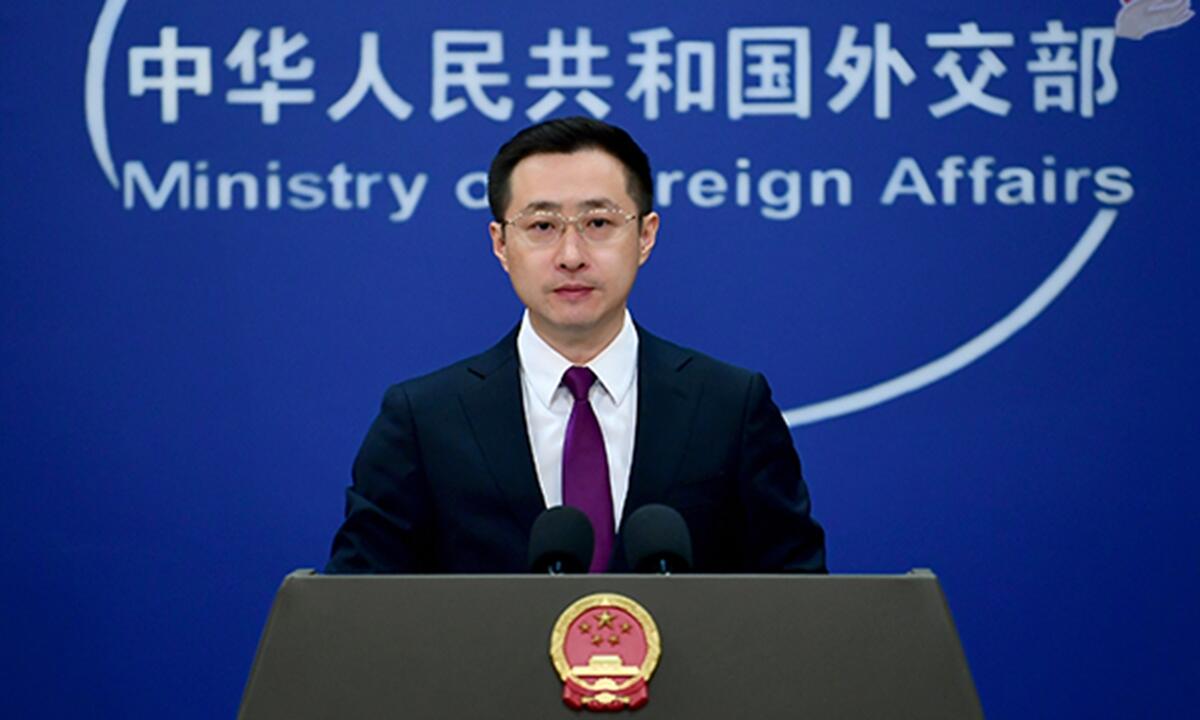
“China is verifying the information with the Ukrainian side,” Chinese Foreign Ministry spokesperson Lin Jian told reporters at a press briefing in Beijing. “Let me stress that the Chinese government always asks Chinese nationals to stay away from areas of armed conflict, avoid any form of involvement in armed conflict, and in particular avoid participation in any party’s military operations,” he added.

Chinese Foreign Ministry Spokesperson Lin Jian

The United States reacted by saying it demonstrates further that China is a “major enabler” of Russia’s war in Ukraine, according to a new State Dept. statement.

Beijing is not happy with some new assertions of Zelensky wherein he claimed that hundreds of Chinese citizens are fighting on behalf of Russia:

On Wednesday, Zelenskyy said he was willing to exchange the two prisoners of war for Ukrainian soldiers held captive in Russia. Without providing evidence, Zelenskyy said officials in Beijing were aware of Russia’s campaign to recruit Chinese mercenaries. He stopped short of saying the Chinese government authorized the mercenaries’ involvement in Ukraine.

Zelenskyy said Ukraine has the last names and passport data for 155 Chinese citizens fighting for the Russian army and that “we believe that there are many more of them.” He shared with journalists documents listing names, passport numbers and personal details of the alleged Chinese recruits, including when they arrived in Russia for military training and departed for service; the AP has not independently verified the documents.

China has played a “constructive role in politically resolving the Ukraine crisis,” the Chinese foreign ministry statement continued. It rejects accusations that it is facilitating or encouraging the movement of Chinese citizens into Russian military ranks as “groundless”.

Zelensky had charged in an initial Tuesday statement, “Russia’s involvement of China in this war in Europe, directly or indirectly, is a clear signal that Putin is going to do anything except end the war. He is looking for ways to continue fighting.”

China has long supplied Russia’s military-industrial sector with ‘dual purpose’ goods which are crucial in the production of military equipment. For this reason Zelensky has in the recent past suggested there’s an ‘axis’ conspiring against Ukraine, turning the conflict into a global war. He’s also named Iran and North Korea.

The past six months has seen many headlines focused on the presence of North Korean soldiers within the Russian military’s ranks, and some have been killed or captured, but the question of Chinese participation remains an open one.

There has been some evidence over the past year suggesting there are indeed at least small numbers Chinese nationals fighting on behalf of Russia. But now it seems Zelensky is touting ‘proof’ in the form of Chinese POWs. Beijing is unlikely to confirm or deny.

Tyler Durden
Thu, 04/10/2025 – 02:45

Germany’s Coalition Government Wants To “Strengthen” Democracy By Abolishing It

Germany’s Coalition Government Wants To “Strengthen” Democracy By Abolishing It

Authored by Rainer Rupp

The two political parties with the most dramatic losses at the recent elections, the Christian Democratic Union (CDU), often called the “black” party due to its traditional color, and the Social Democratic Party (SPD), known as the “red” party, are in advanced negotiations to form a coalition coalition-government —nicknamed “BlackRed” or even “BlackRot” by critics. In the U.S. you are used to a two-party system with Democrats and Republicans, but Germany’s system often involves coalitions because no single party typically wins a majority.

Right now, the CDU (think center-right, like moderate Republicans) and SPD (center-left, somewhat like Democrats) are hashing out a deal to govern together after recent elections. Their stated goal? To “strengthen representative democracy.” But some of their leaked proposals have raised eyebrows—and alarm bells—because they seem to involve curbing free speech and even banning certain politicians from running for office. Here’s what’s going on.

Scrapping Transparency: Goodbye to the Germany’s Freedom of Information Act

One of the most shocking ideas in the leaked coalition papers is the plan to ditch Germany’s Freedom of Information Act (IFG), similar to the Freedom of Information Act (FOIA) in the US, which lets citizens request government records—like emails or reports—to hold officials accountable. Germany’s IFG, passed in 2006, does the same, giving people access to federal agency data. It’s been a tool for exposing scandals, like a botched highway toll project, health agency cover-ups during COVID, or shady financial deals tied to tax evasion. German media, like the public broadcaster ZDF, had called this law a game-changer for transparency.

Via AFP

But the BlackRed coalition wants to “abolish it in its current form,” according to the leaked documents. In an Orwellian slant the CDU claims this is part of modernizing Germany’s parliament, the Bundestag, and making it better at overseeing the government. Critics aren’t buying it. News outlets like T-Online call it a “direct attack on citizens,” not a reform. The CDU’s Member of Parliament, Philipp Amthor, a politician once embarrassed by IFG disclosures, is spinning it as an update, and the SPD’s reaction has been lukewarm at best.

The proposal’s still in blue ink—meaning it’s up for debate—but even suggesting it’s negotiable has sparked outrage. Germany’s journalists’ union and the opposition Free Democratic Party (FDP, a pro-business group) are slamming it, arguing it’s a power grab dressed up as “reducing bureaucracy.” The FDP quipped, “The motto seems to be: ‘The citizen doesn’t need to know everything!’” Over 100,000 requests have been filed under this law—scrapping it would blind the public to government actions.

Criminalizing “Lies”: A Slippery Slope for Free Speech It gets worse

The coalition also wants to crack down on what they call the “deliberate spread of false factual claims.” Their argument? Free speech doesn’t cover lies, so they want “state-independent media oversight” to step in, based on “clear legal guidelines,” to fight “information manipulation, hate, and incitement.” Sounds noble, right? But here’s the catch: who decides what’s a lie, what is hate and what is incitement? These terms are rubber, you can stretch the arbitrarily to suit your purpose. In the U.S., free speech is sacred under the First Amendment, even if someone’s spouting nonsense like “the Earth is flat.” Germany’s constitution protects free expression too, but with limits—like laws against Holocaust denial or defamation. Courts there already say provably false statements aren’t protected if they’re just facts, not opinions. But if those “facts” mix with opinions—like in a political rant—they still get a shield for the time beeing.

The BlackRed plan, though, goes further. They want to make spreading “false claims” a crime, separate from existing laws like slander. German columnist Nikolaus Blome, writing in “Der Spiegel”, says this “well-meaning” idea terrifies him—it’s too vague.” Die Welt”, another major paper, agrees: lying is covered by free speech unless it crosses into clear legal violations, and fuzzy terms like “hate and incitement” aren’t legal definitions—they’re buzzwords for activist groups. Imagine a U.S. government agency deciding which political tweets are “false” and punishing the posters. Who’d run that? A “Ministry of Truth”? Critics see a huge risk of abuse here, especially in heated political debates where “truth” is often subjective.

Banning Politicians: “Incitement” as a Career Ender

Then there’s the kicker: the coalition’s talking about stripping people of their right to run for office if they’re convicted multiple times of “incitement” (Volksverhetzung in German). This law already covers things like hate speech or promoting violence against groups. The CDU and SPD want to toughen it up and add a penalty: if you’re found guilty more than once, you’re barred from elected office, at least temporarily. They frame it as “strengthening democracy’s resilience” against terrorism, antisemitism, and hate. They also want to explore punishing public officials or soldiers who share extremist stuff (speaking out against the government) in private chats.

In the U.S., barring someone from running for office is rare and usually tied to serious crimes like treason—think of the 14th Amendment after the Civil War. Germany’s proposal feels more like a political weapon against the opposition. The SPD’s been pushing this “eligibility ban” for a while, and now it’s in the coalition talks. “Die Welt” reports it’s aimed at extremists, but the vagueness of “incitement” could snag anyone with controversial views. Picture a U.S. politician banned from Congress for “hate speech” after a few convictions—supporters would cry foul, and opponents would cheer. In Germany, critics see this as democracy eating itself: silencing dissent under the guise of protecting it.

What’s the Big Picture?

The CDU and SPD say all this—dumping the IFG, policing “lies,” banning candidates—is about making democracy stronger and safer. They’re pitching it as a response to misinformation, extremism, and public distrust, which have been hot topics since COVID and the rise of patriotic conservative groups like the Alternative für Deutschland (AfD). But to many Germans, it looks like a power grab, what it is!

For U.S. readers, think of it this way: imagine a Republican-Democrat coalition promising to “fix” Congress by killing FOIA, jailing people for “fake news,” and barring candidates for “hate speech.” You’d have protests in the streets. That’s the vibe in Germany right now—except their system’s more used to compromise, so the backlash is still brewing. Whether these plans survive the final coalition deal is unclear, but they’ve already lit a fuse. Germany’s about to test how much mess it can handle—or suppress.

Tyler Durden
Thu, 04/10/2025 – 02:00