59.4 F
Chicago
Friday, October 9, 2026
Home Blog Page 2019

Realtor Association Reveals Top 10 Hottest US Housing Markets For 2025

0
Realtor Association Reveals Top 10 Hottest US Housing Markets For 2025

Authored by Naveen Athrappully via The Epoch Times (emphasis ours),

The National Association of Realtors (NAR) listed housing markets in the United States expected to perform well next year, noting that financing conditions in these regions are “favorable” for buyers.

A for sale sign displayed in front of a home in Miami, Fla., on Feb. 22, 2023. Joe Raedle/Getty Images

Among the top 10 housing markets for 2025, the southern United States led with four markets, and the Midwest with three, according to a Dec. 12 statement from the group.

“Important factors common among the top performing markets in 2025 include available inventory at affordable price points, a better chance of unlocking low mortgage rates, higher income growth for young adults, and net migration into specific metro areas,” said Lawrence Yun, chief economist at NAR.

Hottest markets for 2025, according to the company:

  • Boston-Cambridge-Newton, Massachusetts-New Hampshire
  • Charlotte-Concord-Gastonia, North Carolina-South Carolina
  • Grand Rapids-Kentwood, Michigan
  • Greenville-Anderson, South Carolina
  • Hartford-East-Hartford-Middletown, Connecticut
  • Indianapolis-Carmel-Anderson, Indiana
  • Kansas City, Missouri-Kansas
  • Knoxville, Tennessee
  • Phoenix-Mesa-Chandler, Arizona
  • San Antonio-New Braunfels, Texas

“All areas offer a favorable financing environment—either with lower proportions of locked-in homeowners or lower mortgage rates. In addition, most of these markets outperform the national average in at least six of NAR’s 10 criteria,” the association said.

“Locked-in” refers to homeowners with low mortgage rate loans and are disincentivized from selling properties amid the current higher rates.

NAR expects mortgage rates to be around 6 percent next year, becoming the “new normal” that triggers more buyers to enter the market. Home prices are predicted to grow by a slower 2 percent rate. Inventory levels are expected to increase.

“Home buyers will have more success next year,” Yun said. “The worst of the affordability challenges are over as more inventory, stable mortgage rates, and continued job and income growth pave the way for more Americans to achieve homeownership.”

Top 10 Markets

The cities of Boston, Cambridge, and Newton, located in Massachusetts and New Hampshire are expected to see “significant benefits from stabilizing mortgage rates,” according to NAR. The region has fewer locked-in homeowners. As such, when mortgage rates stabilize at 6 percent, more owners may be willing to sell, thereby easing the supply situation.

The cities of Charlotte, Concord, and Gastonia in North Carolina and South Carolina have seen “impressive 10 percent job growth over the last five years and strong migration gains,” the NAR said.

“More than 11 percent of the households are set to reach the age of 35 to 40 within the next five years, ensuring sustained demand for housing.”

Housing demand in Grand Rapids and Kentwood, Michigan, are expected to be strong given that more than one-third of millennial renters are financially able to buy homes. Plus, 12 percent of households are calculated to enter “prime homebuying age” over the coming five years.

The cities of Greenville and Anderson in South Carolina are seeing a “strong” net migration rate. The affordability situation is also favorable to buyers, with the average mortgage rate last year “well below the national average,” the association noted.

The financial situation in Connecticut’s Hartford, East Hartford, and Middletown areas is “favorable.” The region had an average mortgage rate of 6.5 percent in 2023, which NAR noted was “one of the lowest among the top markets.”

More than 40 percent of housing stock in the cities of Indianapolis, Carmel, and Anderson in Indiana costs less than $236,000, making the location attractive for young families and individuals seeking to buy their first home. The area also has fewer “locked-in” owners compared to the national average.

Kansas City, which straddles Missouri and Kansas, benefits from two key factors—lower proportion of “locked-in” homeowners and lower average mortgage rate. One in three millennial renters are able to afford homes in this area, NAR said.

Strong migration trends favor Knoxville, Tennessee, with almost 50 percent of new movers seeking to buy a house. Moreover, fewer borrowers in the region have properties with mortgage rates below 6 percent, diminishing the lock-in effect.

The Phoenix, Mesa, Chandler metro area in Arizona is a key destination for people moving out of California, given the region’s “comparatively lower cost of living and housing affordability,” NAR said.

Last year, borrowers in San Antonio and New Braunfels, Texas secured mortgages at rates of 6.4 percent, well below the national average. “This suggests that buyers in the area benefit from a combination of local market dynamics that lead lenders to assess lower risk in this area,” NAR said. The area also has seen strong job growth.

Mortgage Rate Challenge

The average weekly rate on a 30-year fixed-rate mortgage has remained above 6 percent for more than two years, according to data from Freddie Mac. For this year, rates peaked at 7.22 percent in May and had come down to 6.08 percent by late September, only for it to rise once again.

Presently, rates are hovering at 6.6 percent, after declining for the third consecutive week. “The combination of mortgage rate declines, firm consumer income growth, and a bullish stock market have increased homebuyer demand in recent weeks,” said Sam Khater, chief economist at Freddie Mac.

“While the outlook for the housing market is improving, the improvement is limited given that homebuyers continue to face stiff affordability headwinds.”

In a recent commentary, Lisa Sturtevant, chief economist at research company Bright MLS, said it would have “seemed preposterous” to expect homebuyers to be enthusiastic about interest rates being at mid-6 percent. However, “expectations are being reset.”

“For a long time after mortgage rates bottomed out in 2021, consumers’ expectations had been anchored to the notion of a mortgage rate somewhere in the 3s.”

But since interest rates have largely moved around the 7 percent level this year and the chances of rates coming down to 3 percent any time soon is “zero,” prospective homebuyers are now much more open to rates at the mid-6 percent level, she said.

However, “affordability is still a major constraint for moderate-income buyers,” Sturtevant noted. “With home prices expected to rise and rates projected to remain in the 6s through 2025, many of those buyers will still be priced out.”

On the plus side, consumer sentiment regarding housing is improving, according to a Dec. 9 statement from Fannie Mae. In November, a “new record-high share” of respondents said they expect mortgage rates to dip over the next 12 months.

Mark Palim, Fannie Mae senior vice president, said that a growing share of consumers expect to be financially better off next year. In addition, more consumers as well as some of Fannie Mae’s experts predict the growth in home prices to slow down.

This “may help ease some of the affordability burden and incentivize some households, especially those who have been waiting in the wings, to finally act on their home purchase decision,” he said.

The 10 criteria looked at various critical factors which affect property prices in a market. This included home price appreciation, the share of households that hit homebuying age over the next five years, growth in jobs, and the proportion of millennials who rent homes and are in a financial position to purchase a home.

Tyler Durden
Mon, 12/16/2024 – 05:00

Trump May Use Bitcoin As US Reserve Asset On ‘Day One’

0
Trump May Use Bitcoin As US Reserve Asset On ‘Day One’

Authored by Yashu Gola via CoinTelegraph.com,

Donald Trump will likely issue an executive order on his first day in office to designate Bitcoin BTC$102,801 as a United States reserve asset, according to Jack Mallers, CEO and founder of Strike.

A 200K Bitcoin buy order is coming in January 2025?

In a podcast interview with YouTuber Tim Pool, Mallers explained that the president-elect could rely on provisions within a so-called “Dollar Stabilization Act,” which grants him considerable authority to protect the US dollar.

“There’s potential to use a day-one executive order to purchase Bitcoin,” Mallers stated, adding:

“It wouldn’t be the size and scale of 1 million coins but it would be a significant position.”

The Bitcoin Act of 2024, introduced by pro-crypto Senator Cynthia Lummis in July, proposes that the Treasury and Federal Reserve purchase 200,000 BTC annually over five years, accumulating 1 million BTC.

The reserve will be held for at least 20 years, thereby taking 5% of Bitcoin’s total supply (of 21 million tokens) from circulation.

These speculations have resulted in some lofty new BTC price targets for 2025 and beyond.

Bitcoin price may hit $800,000 by 2025’s end

According to Perianne Boring, founder of The Digital Chamber, Bitcoin’s capped supply could lead to significant price appreciation, especially if Trump successfully implements many of his proposed crypto policies.

“If Donald Trump is successful in putting forth a lot of the proposals that he’s proposed to the [crypto] community, the sky is the limit because Bitcoin has a fixed supply,” Boring stated in an interview with Fox Business.

She pointed to the stock-to-flow model, which forecasts Bitcoin’s price to exceed $800,000 by the end of 2025. Such a surge would push Bitcoin’s market capitalization to around $15 trillion, up from its current valuation of over $2 trillion.

PlanB, the creator of the stock-to-flow model, meanwhile predicts Bitcoin to average around the $500,000 valuation across 2025. However, he believes that the price may go as high as $1 million.

Source: PlanB

BlackRock suggests 1-2% portfolio allocation to Bitcoin

The stock-to-flow model’s Bitcoin price prediction hinges on the assumption that demand for BTC will continue to grow.

The US Treasury theoretically accumulating 200,000 BTC every year reinforces the idea of stronger demand in coming years, since it’ll likely force other counties to consider a strategic Bitcoin reserve of their own.

BlackRock, which manages over $10 trillion worth of assets, has already recommending investors to allocate 1-2% of their portfolio to Bitcoin.

“We see a case for investors with suitable governance and risk tolerance to include Bitcoin in a multi-asset portfolio,” the firm’s four senior executives, including Samara Cohen, chief investment officer of ETFs and Paul Henderson, senior portfolio strategist of BlackRock Investment Institute, said in a report published Dec. 12.

To put this into perspective, the total global reserve assets are valued at approximately $900 trillion. A 2% allocation to Bitcoin from this pool would, in theory, drive the cryptocurrency’s price to around $900,000 per unit.

Tyler Durden
Mon, 12/16/2024 – 04:15

China Looks To Build The Largest Human-Made Object In Space

0
China Looks To Build The Largest Human-Made Object In Space

By Alex Kimani of Oilprice.com

Two months ago, we reported that Baiju Bhatt, one of the co-founders of the investing app Robinhood, debuted space solar power company Aetherflux. The startup plans to build a constellation of Low-Earth Orbit (LEO) satellites that will use infrared lasers to transmit power to small ground stations on Earth.

The startup notes that space solar power can revolutionize energy distribution, especially where delivering power is expensive, challenging, or dangerous. Powering hard-to-reach places like remote military bases, islands, or areas hit by disasters unlocks new capabilities and advantages for our country. 

Although rarely discussed, harnessing solar power from space is hardly a new concept. In 1941, writer Isaac Asimov introduced the world to space solar power. Back in the 1970s, NASA explored space solar power, with its approach requiring massive, billion-dollar structures in space, using radio waves for power transmission. Unfortunately, NASA quickly abandoned the idea. However, the attractions of beaming solar power from space are obvious: Unlike on Earth, sunlight in space is more powerful, available day and night, and unaffected by weather.

And now China is looking to upend the U.S. in yet another futuristic energy technology: China is charging ahead with plans to build a prototype Space Based Solar Power (SBSP) device by 2030 that would become the largest human-made object in space. 

“China will be producing this in less than 20 years, and we’ll be buying from them,” Peter Garretson, a leading SBSP expert and fellow at the American Foreign Policy Council, warned congressional staff during a recent briefing.

The stakes are high: energy represents roughly 10% of global GDP, meaning the first country to successfully build out SBSP infrastructure will potentially control a multi-trillion-dollar marketspace. The global SBSP infrastructure and manufacturing industry is expected to exceed $1 trillion by 2040. An ambitious U.S.-led space-based solar power project would translate to thousands of high-paying engineering and support services jobs right here on Earth.

As David Steitz, former Deputy Associate Administrator for Technology at NASA, has warned, America risks losing the space solar power race to China as it has done with conventional solar power unless it acts immediately. Steitz says what the U.S. is lacking is national coordination and commitment, noting that, unlike China’s focused national program, U.S. efforts are fragmented among NASA, the Department of Energy and the Department of Defense–each of which expects someone else to take the lead.  

China Wins Fusion Race

But it’s not just the SBSP race that the U.S. is likely to lose to China. According to Jean-Paul Allain, who leads the U.S. Energy Department’s Office of Fusion Energy Sciences, Beijing has been pumping in ~$1.5 billion annually into nuclear fusion research, nearly double Washington’s fusion tab at $800 million a year. China has been making rapid progress over the past decade, and now owns more fusion patents than any country according to industry data published by Nikkei. 

“To me, what’s more important than the number, it’s actually how fast they’re doing this,” Allain told CNN.    

Interestingly, a small, relatively unknown Chinese fusion startup has been able to achieve what even France-based International Thermonuclear Experimental Reactor (ITER), funded and run by seven countries since 2006, has been unable to pull off. Shanghai-based Energy Singularity has effectively completed the engineering feasibility verification of high-temperature superconducting for its Honghuang 70 (HH70) tokamak device, giving China a first-mover advantage in the critical field of high-temperature superconducting magnetic confinement fusion. Energy Singularity has also become the world’s first commercial company to build and operate an all-superconducting tokamak.

“The design work of the device began in March 2022, and the overall installation was completed by the end of February this year, setting the fastest record for the research and construction of superconducting tokamak devices worldwide,” Yang Zhao, Energy Singularity’s Chief Executive Officer, has revealed.

So, how did this little-known Chinese company manage to pull off in two years what ITER has failed to achieve in nearly two decades? 

According to Yang, using high-temperature superconducting materials can reduce the volume of a device to about 2 percent of that of traditional low-temperature superconducting devices, allowing the construction period of the device to be shortened from ~ 30 years to just 3-4 years.

According to Yang, the company owns independent intellectual property rights of HH70, with a domestication rate of over 96 percent, adding that all of the device’s magnet systems are constructed using high-temperature superconducting materials. Despite its commendable success, Energy Singularity is not resting on its laurels, with Yang revealing the company plans to complete the next generation high magnetic field high-temperature superconducting tokamak device dubbed HH170 with a deuterium-tritium equivalent energy gain (Q) greater than 10 by 2027. In nuclear fusion parlance, the Q value reflects the energy efficiency of the fusion reactor, that is, the ratio of the energy generated by the device to the energy input required to sustain the fusion reaction. Q values greater than 1 means the reactor generates more energy than what it consumes, which is essentially what fusion research has been trying to achieve in a commercial reactor for decades. Currently, the greatest Q factor that scientists have achieved is just 1.53.

Meanwhile, Deven, Massachusetts-based Commonwealth Fusion Systems is collaborating with MIT to build their small fusion reactor. Dubbed Sparc, the reactor is ~1/65th the volume of ITER’s reactor. The experimental reactor is expected to generate about 100 MW of heat energy in pulses of about 10 seconds – bursts big enough to power a small city. However, its first commercial reactor is at least a decade away.

Tyler Durden
Mon, 12/16/2024 – 03:30

Taiwan Leaders Shocked By Size Of Chinese Military Drills, US Remains Mute

0
Taiwan Leaders Shocked By Size Of Chinese Military Drills, US Remains Mute

Last week we documented the launch of huge Chinese military drills encircling the self-governing island of Taiwan, which Taipei promptly blasted as an “unreasonable provocation”. China’s PLA military deployed warships and fighter jets to send yet another “stern warning” against “separatist acts of Taiwan independence forces”.

Since then the size of the new PLA drills have shocked Taiwan leaders. The PLA Eastern Theater Command deployed joint operations of the army, navy, air force and rocket force.

Illustrative: AFP/Getty Images

These assets have been largely concentrated in the Taiwan Strait, as well as surrounding Taiwan and the broader South China Sea. An “astonishing” number of Chinese vessels have been deployed at a scale that “could block external forces,” Taiwan’s Lt. Gen. Hsieh Jih-Sheng, said at a Taiwan Defense Ministry briefing days ago.

Financial Times has observed in a fresh report that Taiwan officials are struggling with how to respond in the face of exercises unprecedented in size:

A week ago, Taiwan was bracing for a Chinese military exercise to “punish” its president, Lai Ching-te, for a trip abroad that included two short visits to the US. It would have been another show of force from Beijing in retaliation for Taiwanese leaders asserting their country’s independence.

But what happened next took Taipei by surprise. Its military and national security officials observed what they called the largest Chinese naval deployment in nearly 30 years. At the same time, Beijing announced partial restrictions on air traffic in seven zones hugging its coastline from Shanghai to Hong Kong for two days. There was not a word from the People’s Liberation Army, in contrast to the propaganda campaigns which tend to accompany its drills targeting Taipei.

Taiwan’s military has warned that these drills constitute a threat which is more serious than in the past. “No matter if they have announced drills, the level of the threat to us is severe,” Taiwan’s defense ministry has said.

But the FT has noted a muted response from the US:

Washington, however, said that while Chinese military activity in the East and South China Seas was “elevated” following a broader increase over the last several years, it was “consistent” with levels seen during other large exercises. US officials emphasised that they did not see the activity as a response to Lai’s brief visits to Hawaii and Guam.

China’s Defense Ministry has long been forewarning that PLA military actions will be “pushed further with each provocation of Taiwan independence until the issue is entirely resolved.” So there is likely more ahead in the coming months.

All of this does indeed appear as retaliation and a pressure campaign by Beijing for Taiwan President Lai Ching-te’s alleged “separatist” activities. China has condemned Lai’s unofficial visits to Hawaii and Guam during a South Pacific tour which went on the week prior to last.

It was his first such visit to the United States since he entered office, and Beijing has vowed “strong countermeasures” in the wake of the trip. Taiwan’s Mainland Affairs Council repeatedly slammed the “blatant provocations” from Beijing which harm regional peace and stability, while China has pointed to Taiwan and Washington provocations. 

Tyler Durden
Mon, 12/16/2024 – 02:45

Permitting Reform: A Strategic Imperative For U.S. National Security And Global Competitiveness

0
Permitting Reform: A Strategic Imperative For U.S. National Security And Global Competitiveness

Authored by Michelle Howard and Paul Segal via RealClearEnergy,

Permitting reform has swiftly risen to the forefront in Washington as a pressing national security priority. The United States is grappling with the dual challenges of escalating energy demand and mounting global competition, particularly from China. Despite the critical role of our nation’s energy infrastructure, the U.S. is ensnared in a permitting process that can prolong vital projects by several years—or even decades. SAFE’s Center for Grid Security underscores that overhauling the procedures for approving and constructing energy infrastructure is not just a matter of efficiency—it is a matter of national urgency in the face of escalating global power competition.

Most Department of Defense (DoD) installations rely on the civilian power grid, but the growing strain on our power system is increasingly impacting installations and essential military operations, intensifying the consequences for our national defense. Military installations depend on the grid for command centers, communication networks, and intelligence gathering to maintain operational readiness. The Energy Permitting Reform Act of 2024 (EPRA), currently under consideration in the Senate, would significantly expedite critical upgrades, ultimately ensuring that installations are equipped to handle potential disruptions.

The transition to a GOP-controlled Congress in January will likely challenge the passage of EPRA as Republicans may well decide to wait, with a blank slate in the new Congress. However, given the urgency of the situation, policymakers should move now to begin the essential work of building the grid our military and economy deserve. As SAFE CEO Robbie Diamond has articulated, “America must be prepared for a surge in power demand as the incoming administration accelerates our reindustrialization. Delaying these needed reforms, even by a few months, will hold us back—let’s pass EPRA now to lay the foundation for growth and implement further reforms as needed.” This pragmatic strategy balances the urgency of reform with a phased approach, ensuring progress while laying the groundwork for broader changes.

The vulnerabilities within the power grid extend beyond national security and have significant implications for economic competitiveness. High-tech and defense-critical industries, such as artificial intelligence (AI) and semiconductor manufacturing, rely on abundant and affordable energy from a secure and resilient grid. Without reform, there is a real risk of losing these vital industries to competitors with more dependable infrastructure. EPRA aims to streamline permitting processes for projects that enhance grid resilience, positioning the U.S. as a leader in technological advancement and promoting the on-shoring of defense-critical supply chains.

Furthermore, the current system incurs hidden costs for the DoD, which is compelled to allocate resources to backup power solutions, such as diesel generators or microgrids, in case of grid failures—resources that could otherwise be directed toward frontline defense efforts. While microgrids have the potential to provide cost savings to the DoD compared to the continued use of diesel generators, they still represent a cost burden on the defense budget.

Severe weather events further underscore the vulnerabilities inherent in the power grid. Protracted outages can disrupt mission-critical operations at military installations and adversely affect the economy, leading to billions of dollars in lost productivity. The National Guard has increasingly been engaged in addressing these grid-related emergencies, stretching its resources and impeding its focus on critical missions such as disaster response and homeland defense. EPRA would prioritize projects designed to establish a more resilient and interconnected grid, thereby mitigating risks and bolstering security for both military and civilian infrastructure.

In comparison to our near-peer competitors, China’s energy policy is characterized by a strong emphasis on national interests and swift action. China views robust energy infrastructure as a critical necessity that demands immediate attention and implementation.  So should we!

For the incoming administration, prioritizing permitting reform for both transmission and domestic critical mineral development is essential for safeguarding America’s future. Energy infrastructure reform transcends reducing bureaucratic delays; it is an essential component in reinforcing national security, enhancing economic resilience, and maintaining global leadership. In an era characterized by Great Power Competition, ensuring a secure and resilient grid is fundamental to preserving the U.S.’ status as a global leader.

Admiral Michelle Howard, 38th Vice Chief of Naval Operations; Commander, US Naval Forces Europe, US Naval Forces Africa, and Allied Joint Force Command Naples (Ret.), and Paul Segal, CEO of LS Power, are the co-chairs of the SAFE Center for Grid Security

Tyler Durden
Mon, 12/16/2024 – 02:00

The Democratic Party Changed While We Stayed In Place

0
The Democratic Party Changed While We Stayed In Place

Authored by Josh Stylman via The Brownstone Institute,

Let me start by saying I loathe politics. I’ve always been drawn to liberal ideas—individual freedom, protecting the vulnerable, questioning authority, and the fundamental belief that consenting adults should be free to live their lives however they choose as long as they’re not harming others. These aren’t political positions to me; they’re basic human principles. But the game of politics itself repulses me. What I’m about to share isn’t about politics; it’s about our shared reality and how we’ve lost touch with it.

The Mindvirus

What’s truly mind-numbing to me is how people don’t see what’s happening right in front of them. The media has devolved into nothing more than a propaganda mouthpiece for the establishment, programming people to react rather than think. I’ve experienced this firsthand: When I drew historical comparisons between vaccine mandates and 1933 Germany’s early authoritarian policies, I was instantly labeled an extremist and cancelled by my NYC community. Yet now, these same people casually call everyone at Trump’s MSG rally Nazis. The irony would be funny if it weren’t so tragic.

My Liberal Foundation

I still believe deeply in core liberal principles:

  • Genuine free speech, not the controlled corporate version we see today
  • Standing against establishment overreach
  • Opposing unchecked corporate power
  • Fighting against unnecessary wars
  • Complete bodily autonomy – your body, your choice, in ALL contexts
  • Defending individual rights consistently, not selectively

These aren’t just political positions—they’re principles about human dignity and freedom.

The Democratic Party’s Transformation

The Democratic Party’s drift from these values didn’t happen overnight. Many of us, exhausted by Bush’s brutal wars, lies about weapons of mass destruction, and the Patriot Act’s assault on civil liberties, invested our hopes in Obama’s promise of change. But instead of the transformation we sought, we got what felt like Bush’s third and fourth terms.

Under Obama, we watched as corporate influence grew stronger, not weaker. The Snowden revelations exposed massive surveillance programs. The housing crisis devastated ordinary Americans while Wall Street got bailouts. Rather than challenging institutional power, the Democratic establishment became increasingly entangled with it.

The betrayal of liberal values became even clearer with Bernie Sanders. Like Trump, Bernie tapped into something real—a deep frustration with a system that had left ordinary Americans behind. Both men, from vastly different perspectives, recognized that working people were suffering while elites prospered. But the Democratic establishment couldn’t allow an actual progressive challenger. They used every trick in the book—from media manipulation to primary shenanigans—to block him from the nomination. Most disappointing was watching Bernie himself bend the knee to the same establishment he had railed against, leaving millions of supporters feeling betrayed and politically homeless.

When Hillary Clinton emerged as the nominee, we were told rejecting her meant rejecting women’s leadership. But we weren’t rejecting female leadership—we were rejecting warmongering and corporate cronyism. What we needed was a leader embodying the feminine divine: qualities of compassion, understanding, nurturing wisdom, and the ability to truly listen. Instead, we got another hawk in the corporate establishment’s pocket. And when that failed, they doubled down on cynical identity politics with Harris.

Today, the situation relating to Robert F. Kennedy, Jr. perfectly exemplifies how far the party has fallen. Here was a lifelong Democrat, a member of the party’s most popular family, who wanted to challenge these corrupting influences—and they wouldn’t even let him on the debate stage. I firmly believe that had they given him the opportunity, he could have united the country and beaten Trump.

But that reveals the truth: this was never about beating Trump. It was about ensuring they maintained control by installing another establishment stooge who wouldn’t challenge their power structure. His departure from the party isn’t just about one candidate; it’s the culmination of a long betrayal of liberal principles.

The Politics of Distraction vs. Real Issues

Take abortion rights. This is an incredibly nuanced issue with deeply held convictions on all sides. I’ve spoken with several constitutional lawyers who’ve explained that overturning Roe was legally sound—not a political decision but a constitutional one about federal versus state authority. That makes it even more telling that Democrats, when they had a supermajority, chose not to codify these protections into federal law. Instead, they’ve kept this issue unresolved, using it as a reliable tool to drive voter turnout every four years.

While abortion access matters deeply to many Americans, we’re facing multiple crises that threaten the very foundation of our republic: inflation is crushing working families while Wall Street posts record profits; government surveillance of citizens has reached dystopian levels; and our regulatory agencies—the FDA and CDC—have been completely captured by corporate interests, approving one toxic product after another while our children are being poisoned by processed foods, environmental toxins, and experimental drugs.

The climate crisis (or what some see as deliberate geoengineering) threatens our very survival. Our border is in complete chaos—while we send billions to foreign conflicts most Americans barely understand. All this while our own infrastructure crumbles and our nation grows more divided than ever.

The hypocrisy around women’s rights is particularly telling. The same party that claims to champion women’s bodily autonomy pushed for mandatory experimental medical interventions, despite documented evidence of mRNA vaccines affecting women’s reproductive cycles and fertility. These effects were known from early trials, yet raising concerns got you labeled as “anti-science.” Meanwhile, they’ve insisted that biological males have access to women’s spaces—including locker rooms, bathrooms, and sports competitions—prioritizing fashionable ideologies over women’s safety and fair competition.

The Democrats permanently lost any moral authority on bodily autonomy the moment they advocated for mandatory medical procedures—yet they continue to lecture us about it without a hint of self-awareness. Liberal principles aren’t a Chinese menu where you get to pick and choose which freedoms matter.

Take Kamala Harris—she literally campaigned on “My body, my choice” while simultaneously mandating experimental Covid shots for her own campaign staff. You can’t claim to champion bodily autonomy in one breath and deny it in the next based on political convenience. Either you believe in individual liberty and bodily autonomy, or you don’t. There’s no à la carte option when it comes to fundamental human rights.

The Corporate-State Fusion

What we’re seeing today aligns disturbingly well with Mussolini’s definition of fascism: the merger of state and corporate power. Look at Klaus Schwab’s World Economic Forum promoting “stakeholder capitalism,” where corporations and governments form partnerships to control various aspects of society. The WEF’s corporate membership reads like a who’s who of Democratic Party megadonors: BlackRock, which donated millions to Biden’s campaign while pushing ESG policies that benefit their bottom line; Pfizer, which poured over $10 million into Democratic coffers while securing massive government contracts; Google and Meta, which not only donate heavily but actively suppress information challenging Democratic narratives.

This isn’t a coincidence; it’s coordination. These same companies shape policy that enriches them: BlackRock advises on financial policy while managing government assets, Pfizer helps write drug approval guidelines while selling mandatory vaccines, and Big Tech collaborates with federal agencies to control information flow. We saw this play out in real time: from day one of the Biden administration, they created backdoor channels into social media companies to censor Americans’ speech about Covid, the 2020 election, and other sensitive topics.

This isn’t a theory—it’s documented fact. Every major policy decision seems to benefit these corporate partners: vaccine mandates, digital currency initiatives, censorship programs, climate policies—all funneling money and power to the same corporations that fund the Democratic machine. When corporations and government work together to control information and behavior, that’s precisely the corporate-state fusion that classical liberals once fought against. The Democratic Party has become the party of corporate fascism while claiming to fight against it.

The Democratic Facade

The current administration embodies everything wrong with our system. Look at Kamala Harris—she dropped out of the 2020 presidential race before any primary, polling below 1%. Biden then selected her solely because he limited his pool to black women—not because of her qualifications, but because of identity politics. Her record as Senator was abysmal—she sponsored zero significant legislation and missed 84% of votes during her brief tenure. Then as Vice President, her role as border czar has been an unprecedented disaster—one the administration now tries to pretend never happened.

And here’s the ultimate irony: this is the party screaming loudest about “threats to democracy,” yet they literally installed Harris as their candidate when nobody voted for her—she dropped out before a single primary vote was cast due to dismal polling. They wouldn’t even let their own members participate in primary debates. They’re lecturing us about democracy while actively suppressing democratic processes within their own party. When they say “democracy is on the ballot,” what they really mean is their controlled version of democracy where they pick the candidates and we’re supposed to fall in line.

Nobody voted for her, and honestly, nobody really likes her—they just hate Trump more. They could prop up a steaming pile of manure as a candidate, and people would vote for it just to vote against Trump. But here’s the real question: If Trump is truly the democracy-ending threat they claim, why didn’t democracy end during his first term? And if Harris is the solution to our problems, why hasn’t she fixed anything while in office?

The Trump Enigma

My view on Trump has evolved, though not in the way many might expect. I didn’t vote for him in 2016 or 2020. Growing up in this region, I knew him only as a second-generation real estate developer—Woody Guthrie had written those critical lyrics about his father, “Old Man Trump.” At the time, I thought Donald was just another entitled heir who happened to opportunistically tap into something real. 

But there’s so much more to this story. His connections to secret societies and the occult run surprisingly deep. His Trump Tower penthouse is essentially a Masonic temple, designed as a replica of Versailles with deliberate esoteric symbolism throughout. His mentor was a 33° Scottish Rite, and Roy Cohn’—master of blackmail and dark arts—shaped his early career. Most intriguingly, his uncle John Trump was the MIT scientist tasked with reviewing Nikola Tesla’s papers after his death—papers that allegedly contained world-changing technologies, from free energy to more exotic possibilities. I don’t know what it all means, but there’s clearly more to this story than the “orange man bad” narrative we’re fed.

At this point, I see only three possibilities:

  1. He’s playing his part in a grand political wrestling match (WWF style)
  2. He’s a dueling bad guy (genuinely a thorn in the establishment’s side)
  3. He’s actually the hero of this story (which would be the most hilarious plot twist imaginable from the vantage point of someone like me)

The Path Forward

Candidly, I don’t know and at this point, any of these seem plausible. What I do know is what the blue team represents—their actions have made that crystal clear. But Trump remains a bit of a mystery to me. I have a hard time believing any politician could be our savior—real change has always come from the bottom up, not the top down. But something interesting happened that gave me a glimmer of hope: RFK, Jr. jumping on board.

The RFK, Jr. situation is fascinating. Here’s a Kennedy—essentially Democratic royalty—teaming up with Trump after being shut out by his own party. This isn’t just any political alliance. RFK, Jr.’s deep understanding of the administrative state, from public health institutions to regulatory agencies, combined with his proven track record of exposing corporate capture and fighting pharmaceutical corruption, makes this particularly intriguing. Maybe, just maybe, this alliance could protect our children from harmful policies and unnecessary wars?

I struggle with what comes next because I understand the gravity of our situation. Our republic is incredibly fragile—more fragile than most people realize. The Founders knew this, warning us about the difficulty of maintaining a democratic republic. But I refuse to give up on dialogue, even when it feels hopeless. If people don’t see what’s happening by now—the censorship, the mandates, the war-mongering, what appears to be intentional schismogenesis (I wrote about this idea here)—will they ever?

The powers that profit from our division; they’ve mastered the art of keeping us fighting each other so we don’t look up to see who’s really pulling the strings. These aren’t just political issues—they’re existential challenges that require reasonable people to discuss complex solutions. Your neighbor who voted differently isn’t your enemy—they likely want many of the same things you do: safety, prosperity, freedom, and a better future for their children. They might just have different ideas about how to get there.

I know this is heavy stuff. You might disagree with everything I’ve said, and that’s okay. What’s not okay is letting these disagreements destroy our relationships and communities. The choice isn’t just about who we vote for—it’s about how we treat each other, how we discuss our differences, and whether we can find common ground in our shared humanity.

The way forward isn’t through hatred or fear. It’s through understanding, open dialogue, and most importantly, love. We might be living through the death throes of the American experiment, or we might be witnessing its rebirth. Either way, we’re in this together, and our strength lies in our ability to work through these challenges as a community, as neighbors, and as friends. Let’s choose wisdom over reaction, understanding over judgment, and love over fear. Our future depends on it.

Republished from the author’s Substack

Tyler Durden
Sun, 12/15/2024 – 23:20

Federal Officials Will Deploy High-Tech System To New York After Drones Shut Down Airport, Governor Says

0
Federal Officials Will Deploy High-Tech System To New York After Drones Shut Down Airport, Governor Says

By Jack Phillips of The Epoch Times

New York Gov. Kathy Hochul announced that the federal government will send a “a state-of-the-art drone detection system” to her state after a number of drone sightings across New York and New Jersey in recent days.

While she did not elaborate on the system that will be deployed, it “will support state and federal law enforcement in their investigations,” she said in a statement on the morning of Dec. 15.

“I am grateful for the support, but we need more. Congress must pass a law that will give us the power to deal directly with the drones,” the governor wrote on social media platform X around the same time. She urged Congress to pass the Counter-UAS Authority Security, Safety, and Reauthorization Act that will give states “the authority and resources required to respond to circumstances like we face today.”

It’s not clear whether the federal government sent a similar system to New Jersey, where most of the drone sightings have occurred, or in other states. Over the weekend, swarms of drones were spotted in other states along the East Coast, including Maryland.

On Dec. 14, Hochul said that a drone sighting shut down Stewart International Airport, a small airport located in Orange County within the Hudson Valley.

“Last night, the runways at Stewart Airfield were shut down for approximately one hour due to drone activity in the airspace,” the governor said in a statement. “This has gone too far.”

Hochul then called on the federal government to provide assistance in dealing with the unmanned vehicles, adding that federal rules make it difficult for the state to deal with drones.

“Extending these powers to New York State and our peers is essential,” the governor also said. “Until those powers are granted to state and local officials, the Biden administration must step in by directing additional federal law enforcement to New York and the surrounding region to ensure the safety of our critical infrastructure and our people.”

Federal officials in the past week have stressed that there is no evidence the drones pose a security or public safety threat to the United States, while also asserting the drones are not being operated by a foreign adversary such as Iran or China.

On the morning of Dec. 15, Homeland Security Secretary Alejandro Mayorkas suggested in an ABC News interview that the drones also were not flying around sensitive military sites.

Despite the assurances from federal officials, multiple elected officials have called on the government to shoot the drones down.

“Can this really be happening without our government’s knowledge,” President-elect Donald Trump wrote on social media over the weekend. “I don’t think so! Let the public know, and now. Otherwise, shoot them down.”

Continue reading at The Epoch Times

Tyler Durden
Sun, 12/15/2024 – 22:10

Suspicious OpenAI Whistleblower Death Ruled Suicide

0
Suspicious OpenAI Whistleblower Death Ruled Suicide

The November death of former OpenAI researcher-turned-whistleblower, 26-year-old Suchir Balaji was ruled a suicide, the San Jose Mercury News reports.

According to the medical examiner, there was no foul play in Balaji’s Nov. 26 death in his San Francisco apartment.

Balaji had publicly accused OpenAI of violating US copyright law with ChatGPT. According to the NY Times;

He came to the conclusion that OpenAI’s use of copyrighted data violated the law and that technologies like ChatGPT were damaging the internet.

In August, he left OpenAI because he no longer wanted to contribute to technologies that he believed would bring society more harm than benefit.

“If you believe what I believe, you have to just leave the company,” he said during a recent series of interviews with The New York Times.

The Times named Balaji a person with “unique and relevant documents” that the outlet would use in their ongoing litigation with OpenAI – which claims that the company, and its partner Microsoft, are using the world of reporters and editors without permission.

In an October post to X, Balaji wrote: “I was at OpenAI for nearly 4 years and worked on ChatGPT for the last 1.5 of them. I initially didn’t know much about copyright, fair use, etc. but became curious after seeing all the lawsuits filed against GenAI companies. When I tried to understand the issue better, I eventually came to the conclusion that fair use seems like a pretty implausible defense for a lot of generative AI products, for the basic reason that they can create substitutes that compete with the data they’re trained on. I’ve written up the more detailed reasons for why I believe this in my post. Obviously, I’m not a lawyer, but I still feel like it’s important for even non-lawyers to understand the law — both the letter of it, and also why it’s actually there in the first place.”

He then made a lengthy post on his personal blog outlining why he thinks OpenAI violates Fair Use. Four weeks later he was dead.

Balaji, who grew up in Cupertino, California, studied computer science at UC Berkeley – telling the Times that he wanted to use AI to help society.

“I thought we could invent some kind of scientist that could help solve them,” he told the outlet.

But in 2022, after two years with OpenAI, Balaji grew concerned over the data he was assigned to gather for the company’s GPT-4 program, which was trained on virtually the entire internet. He told the Times that this violated US “fair use” laws.

“Microsoft and OpenAI simply take the work product of reporters, journalists, editorial writers, editors and others who contribute to the work of local newspapers — all without any regard for the efforts, much less the legal rights, of those who create and publish the news on which local communities rely,” the Times said in its lawsuit.

OpenAI has refuted the claims, saying all of its work is covered under fair use.

“We see immense potential for AI tools like ChatGPT to deepen publishers’ relationships with readers and enhance the news experience,” the company said.

Tyler Durden
Sun, 12/15/2024 – 21:35

Israel To Deploy Remote Automated Weapons In West Bank For First Time

0
Israel To Deploy Remote Automated Weapons In West Bank For First Time

Via Middle East Eye

The Israeli military is preparing to deploy remotely controlled automated weapons across occupied West Bank checkpoints to target Palestinians, according to a report by the Israeli Army Radio on Sunday.

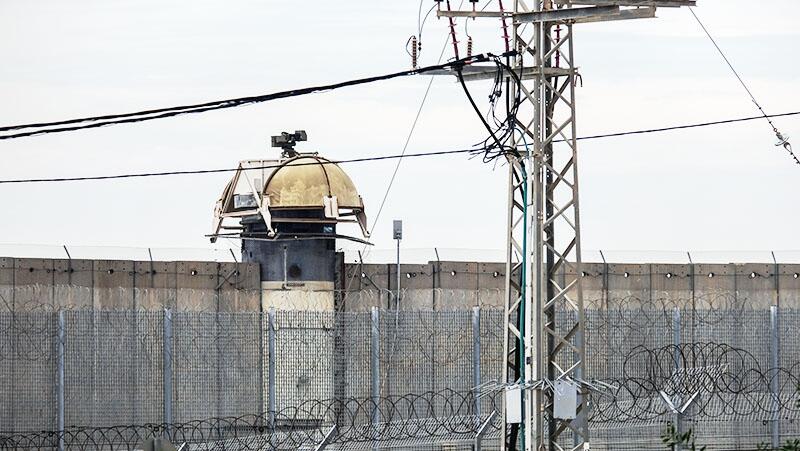
The system, named “Roeh-Yoreh” (“See-Fires”), is an advanced weaponry structure developed by Rafael Advanced Defense Systems. It includes a tower with sophisticated surveillance equipment and a remote-controlled lethal fire mechanism. 

AFP: Israeli soldier looks out from a watch tower at the Qalandia checkpoint between the occupied West Bank and Jerusalem.

Since its introduction into the Israeli military arsenal in 2008, the system has been exclusively used in Gaza, where it was deployed along the security fence to target Palestinians approaching the barrier. 

According to Army Radio, the move to use the system in the West Bank comes despite its limited effectiveness in repelling the Hamas-led October 7 attacks out of Gaza. 

In the early hours of the assault, Hamas used drones to hit the tower-mounted weapons, disabling them with ease and allowing fighters to cross the boundary into Israel. 

The Israeli military plans to deploy dozens of Roeh-Yoreh systems in strategic locations across the West Bank, including settlement entrances and key control points, according to the report.

The goal, it added, was to prevent armed attacks and infiltrations into illegal Israeli settlements. The manufacturing of these systems for the West Bank has already begun. 

Initially, they will be installed at high-risk locations by the Israeli military, with plans to expand deployment to additional sites.

According to the report, the 636 Reconnaissance Unit of the West Bank Division will operate the systems, amid rising Israeli concerns about growing security threats in the territory. 

Around 700,000 Israeli settlers live in roughly 300 illegal settlements in the West Bank and occupied East Jerusalem, which have been constructed since they were captured by Israel in the 1967 war. Under international law, settlement construction in an occupied territory is illegal.

Remote weapons system at Gaza fence. Some of these reportedly failed during the Oct.7 terror attack by Hamas.

Since Israel launched its war on Gaza in October last year, violence by the army and settlers against Palestinians in the West Bank has skyrocketed. 

At least 800 Palestinians from the West Bank have been killed by Israeli fire since the war began, with around 6,500 more wounded, according to Palestinian health officials. 

Tyler Durden
Sun, 12/15/2024 – 17:30

Police In China Test Indestructible Ball Shaped Robot That Can “Identify And Chase Suspects”

0
Police In China Test Indestructible Ball Shaped Robot That Can “Identify And Chase Suspects”

Move over, BB-8: police in China are now testing a ball-shaped robot that “can identify and chase suspects” for the first time. 

The spherical police robot in Wenzhou, China, features cameras, flashing lights, and a self-stabilizing design, according to the South China Morning Post. Equipped with tools like tear gas, it supports law enforcement and “cannot be smashed”.

Authorities say it is also “resilient in hostile environments.”

Developed by Zhejiang University’s College of Control Science and Engineering, the 125kg spherical robot addresses challenges faced by wheeled and legged robots. According to Associate Professor Wang You, it can reach a top speed of 35km/h in just 2.5 seconds, Wenzhou Daily reported.

Wang You said: “This robot can cope with dangers such as falling or being beaten, and can perform tactical actions such as enemy identification, tracking and capture after modular modification.”

“Because it can complete tasks in hostile environments, it can make up for the deficiencies of [Wenzhou police] drones and robot dogs,” Wang added. 

The SCMP writes that the spherical robot remains functional even under attack, navigating crowds and harsh environments with ease. Equipped with speakers, net guns, and tear-gas sprayers, it enhances patrol efficiency and crisis response.

The robot is part of China’s push for hi-tech innovation in policing. In March, the Ministries of Public Security and Industry issued a call for robot applications in areas like patrols, border defense, and evidence collection.

Examples of robot use will be showcased later for promotion in future initiatives. This week, Chengdu police deployed robots in commercial areas to prevent mob violence. In a simulated fight, a robot flashed lights, announced, “Win the fight, go to jail; lose the fight, go to the hospital,” and alerted nearby officers via text.

What could go wrong?

Tyler Durden
Sun, 12/15/2024 – 16:55