67.4 F
Chicago
Saturday, October 10, 2026
Home Blog Page 2038

House To Vote On $3 Billion In Funding To Remove Chinese Telecom Equipment From US Networks

0
House To Vote On $3 Billion In Funding To Remove Chinese Telecom Equipment From US Networks

Authored by Catherine Yang via The Epoch Times (emphasis ours),

The House of Representatives is set to vote this week on an annual defense bill, which includes $3 billion to remove Chinese telecom equipment from American wireless networks.

A logo sits illuminated outside the Huawei booth at the SK telecom booth on day one of the GSMA Mobile World Congress in Barcelona, Spain, on Feb. 28, 2022. David Ramos/Getty Images

The 1,800-page update to the National Defense Authorization Act was published on the evening of Dec. 7, increasing funding for networks’ reimbursement under the Secure and Trusted Communications Networks Act from $1.9 billion to $4.98 billion, matching an estimate provided by the Federal Communications Commission (FCC).

Originally passed in 2019, the act prohibits equipment and services that pose a national security risk from entering U.S. networks—chiefly targeting technology by Chinese companies Huawei and ZTE. It included the reimbursement fund to “rip and replace” technology made by the prohibited companies.

On Nov. 26, FCC Chair Jessica Rosenworcel urged Congress to provide the additional funding, writing that 126 carriers in the United States face a $3.08 billion shortfall to replace the insecure technology.

As of Nov. 20, the agency has received more than 35,000 reimbursement claims and 30 final certifications of applications stating all replacement work had been completed, Rosenworcel wrote.

The networks face a June 21, 2025, deadline to complete this work, but will be granted extensions based on delayed reimbursements. The agency has already granted 118 such extensions.

Rosenworcel wrote that 72 percent of status updates indicated that lack of funding is an obstacle to the “removal, replacement, and disposal” of the banned technology, and 50 percent of networks reported they cannot complete this work without additional funding.

The FCC chair said the funding shortfall impacts rural communities more significantly, and some have expressed concern they may have to shut down portions of their network and withdraw from the process without removing the banned technology.

“Any shut down of network facilities could remove the only provider available,” Rosenworcel wrote, adding that this would pose a continued national security concern.

Competitive Carriers Association CEO Tim Donovan on Dec. 7 praised the announcement, saying, “Funding is desperately needed to fulfill the mandate to remove and replace covered equipment and services while maintaining connectivity for tens of millions of Americans.”

American telecom networks made headlines recently as intelligence officials confirmed the ongoing presence of Chinese state-backed hackers on American networks.

Anne Neuberger, deputy national security adviser for cyber and emerging technologies, recently revealed that Chinese state-sponsored hackers have compromised at least eight American telecommunications companies.

The telecoms that were breached have responded, but none “have fully removed the Chinese actors from these networks,” Neuberger said. “So there is a risk of ongoing compromises to communications, [and] until U.S. companies address the cybersecurity gaps, the Chinese are likely to maintain their access.”

Days later, she said at a press conference in Bahrain that officials believe the hackers were after senior politicians’ communications.

“The purpose of the operation was more focused,” Neuberger said. “We believe … the actual number of calls that they took, recorded and took, was really more focused on very senior political individuals.”

A Chinese hacker group, “Salt Typhoon,” is being investigated by the FBI and the Cybersecurity and Infrastructure Security Agency. The agencies said in November that the hackers have conducted a “broad and significant cyber espionage campaign” aimed at stealing data from individuals working in government and politics.

Epoch Times reporter Frank Fang and Reuters contributed to this report.

Tyler Durden
Tue, 12/10/2024 – 22:45

Walgreens Shares Spike Off 28-Year Lows On Private-Equity Interest; Report

0
Walgreens Shares Spike Off 28-Year Lows On Private-Equity Interest; Report

Having plunged from over $105 billion market cap in 2015 to less than $8 billion currently (amid mounting pressures on both its pharmacy and retail businesses), it appears Walgreens Boots Alliance (WBA) has got cheap enough to spark private equity interest.

The Wall Street Journal reports that WBA is in talks to sell itself to a private-equity firm in a deal that would take the pharmacy chain off the public market after its shares have been on a downward slide for nearly a decade.

WBA and Sycamore Partners have been discussing a deal that could be completed early next year, assuming talks don’t fall apart, according to people familiar with the matter.

WBA shares are soaring on the news (after an initial halt for volatility). WBA is up 25%, just shy of October’s highs…

And judging by the massive short-interest, it could go dramatically higher…

Any deal would be a big bite for Sycamore, a New York-based firm that specializes in retail and consumer investments and more recently is better known for smaller deals. The firm would likely sell off pieces of the business or work with partners, one of the people said.

WSJ reports that Walgreens has long been seen as a potential private-equity target, though for many years its size seemed to put it out of reach.

Private-equity firm KKR made a roughly $70 billion offer for the company in 2019, Bloomberg and the Financial Times reported at the time. Walgreens’s market value was then over $50 billion, which would have made it one of the largest take-private transactions ever had it come to fruition. 

Private-equity appetite for buying retailers has waned since high-profile flops including Toys “R” Us made financing such transactions much more difficult. In the past few years, only a handful of sizable retailers have been sold to private-equity firms, though many have attracted takeover interest. 

One of Sycamore’s last major deals was when it bought office-retailer Staples for almost $7 billion in 2017. It was among the suitors for Kohl’s in 2022. In September, Sycamore announced a small deal for the restaurant chain Playa Bowls. 

Sycamore’s current investments include several clothing brands including Ann Taylor Loft and Aéropostale as well as the department-store chain Belk. 

Tyler Durden
Tue, 12/10/2024 – 12:44

Microsoft Shareholders Vote ‘No’ On Bitcoin Reserve

0
Microsoft Shareholders Vote ‘No’ On Bitcoin Reserve

Authored by Tristan Greene via CoinTelegraph.com,

Microsoft shareholders voted against a resolution to add Bitcoin BTC$97,604 to the company’s balance sheets during the firm’s annual meeting on Dec. 10. 

The National Center for Public Policy Research (NCPPR), a pro-free-market think-tank based in Washington, D.C., had proposed the resolution, framing it as a corporate duty to provide value to shareholders through profit diversification. 

Shareholders meeting

The NCPPR submitted a pre-recorded video outlining their proposal, which was played during the shareholder’s meeting. The video, which opened with the line “Microsoft can’t afford to miss the next technology wave, and Bitcoin is that wave,” was replete with charts and figures demonstrating the potential value of holding BTC. 

In making its case, the group promised that adopting Bitcoin would create trillions in value and “strip away risk” from shareholders. The video echoed sentiments previously made in the text of its resolution: 

“The institutional and corporate adoption of Bitcoin is becoming more commonplace. Microsoft’s second largest shareholder, BlackRock, offers its clients a Bitcoin ETF.”

The proposal did point out that Bitcoin was “more volatile” than corporate bonds, and thus advised against holding “too much of it,” but also advised against risking shareholder value by “ignoring Bitcoin altogether.”

As such, the NCPPR recommended using between 1% and 5% of the firm’s profits to purchase Bitcoin. The proposal formally requested that Microsoft “conduct an assessment to determine if diversifying the Company’s balance sheet by including Bitcoin is in the best long-term interests of shareholders.”

In a 14A filing with the US Securities and Exchange Commission (SEC), Microsoft’s board formally recommended against the proposal. In its remarks, the board called the proposal “unnecessary” and said the company “already carefully considers this topic.”

“As the proposal itself notes, volatility is a factor to consider in evaluating cryptocurrency investments for corporate treasury applications that require stable and predictable investments to ensure liquidity and operational funding.”

Too reliant on FOMO?

Much of the proposal’s text appears to rely on the “fear of missing out” or “FOMO” mentality. The proposal cited both MicroStrategy and BlackRock’s Bitcoin adoption as motivational factors. The NCPPR has given Amazon similar guidance. 

However, Microsoft’s board was unswayed ahead of the vote.

“Microsoft has strong and appropriate processes in place to manage and diversify its corporate treasury for the long-term benefit of shareholders,” wrote the board in the aforementioned SEC filing, “and this requested public assessment is unwarranted.”

In the filing, the board recognized that MicroStrategy’s operations were similar to its own but declined to extend the comparison beyond the two firms’ differing approaches to the burgeoning cryptocurrency market. 

According to preliminary results, the shareholders voted against the resolution and kept with the board’s guidance against adopting Bitcoin.

Tyler Durden
Tue, 12/10/2024 – 12:25

Trump’s Tariffs Could Spark Supply Chain Disruptions, Experts Say

0
Trump’s Tariffs Could Spark Supply Chain Disruptions, Experts Say

By Noi Mahoney of FreightWaves

President-elect Donald Trump’s plan to hit imports from China, Canada and Mexico with tariffs could deal a blow to companies across North America and trigger negative consequences for the global supply chain, according to experts.

Trump said that on his first day back in office on Jan. 20, he will impose 25% tariffs on goods from Mexico and Canada. The tariffs are aimed at pressuring those countries to stop drugs and illegal migrants from crossing into the U.S., Trump posted on Truth Social on Nov. 25. He has also said he’ll impose an additional 10% tariff on Chinese imports to fight drugs coming from that country.

Sri Laxmana, vice president of Americas at freight broker and 3PL giant C.H. Robinson, said the company began hearing from concerned customers as soon as Trump made the announcement.

“We’ve been pulled into countless customer meetings to run risk scenarios for if Canada and Mexico tariffs were implemented,” Laxmana told FreightWaves in an email. “Many of our customers — especially in the automotive space — treat North America as one integrated supply chain with some of their freight actually crossing both the Mexico and Canada borders.” 

Many of Trump’s foreign policy measures are part of his broader “America first” approach, which began during his first term in office.

In 2018, the Trump administration imposed tariffs on $250 billion in Chinese goods coming into the U.S., covering items such as microwaves and other home appliances, electronic components, and pumping and valve systems.

China retaliated with higher tariffs on $60 billion in U.S. goods coming into that country, with U.S. soybeans taking one of the biggest hits.

During his 2024 presidential campaign, Trump said fentanyl from China is being smuggled into the U.S. and the additional 10% tariffs are aimed at spurring Chinese officials to stop the flow of drugs. 

The 10% duty on Chinese goods is less than the 60% tariffs on China-made imports that Trump promised during his presidential campaign.

Andy Sherman, the general manager for Fictiv’s U.S. operations, said the company has been hearing from customers concerned about the tariffs and its effect on the global supply chain.

Fictiv is a manufacturing technology company based in San Francisco. It has operations in the U.S., Mexico, China and India. Fictiv has manufactured more than 30 million commercial and prototype parts for both early stage companies and large enterprises.

“I think in 2023, 11% of the U.S. gross domestic product was imported. That’s about $3.1 trillion worth of imports in 2023,” Sherman told FreightWaves in an interview. “If we’re talking about tariffs around 10% to 20% on all countries, and somewhere in the order of magnitude of 60% tariffs on what’s going to be coming inbound from China … that’s a significant chunk of the U.S. GDP that all of a sudden is going to be subject to tariffs. I think for many of our customers, they are able to see the importance of having a highly agile supply chain and starting to be able to evaluate what makes sense to move to a China-plus-one strategy, or to be able to onshore. But tariffs across the board like this do not necessarily equate to, ‘Let’s move everything into the U.S.’ That’s not the way this works.”

Sherman said products that could be most affected by tariffs include clothing, toys and other consumer goods.

“When you’re talking about things like apparel, when you’re talking about things like toys, when you’re talking about many lower-cost or cost-sensitive goods that are very frequently manufactured out of China and where suppliers or some subset of manufacturers have not yet diversified that supply chain out of China, we know that those are the products that are going to be most heavily impacted,” Sherman said. “At the end of the day, if there’s a 60% tariff, that’s going to be passed along to the consumer, more than likely, in its entirety.” 

Sebastien Breteau, founder and CEO of QIMA, said Trump’s tariffs and immigration policies will raise prices for consumer goods.

Trump promised during his campaign that his immigration policy includes carrying out the largest mass deportation program in U.S. history. 

“A mass deportation of undocumented immigrants could severely impact sectors like agriculture, construction, and manufacturing that rely heavily on immigrant labor,” Breteau told FreightWaves in an email. “Reduced labor availability would lead to higher wages, raising production costs and, ultimately, the price of goods. This would exacerbate inflationary pressures already heightened by tariffs.”

Hong Kong-based QIMA is a quality and compliance solutions provider, working with 30,000 brands, retailers, manufacturers and food growers globally. The company employs over 5,000 people worldwide, operating in more than 100 countries.

Breteau said Trump’s tariffs could pressure companies to shift their supply chains, which could add more costs to their bottom line.  

“Increased tariffs will compel businesses to reassess their supply chains, a process that is both complex and costly,” Breteau said. “In the short term, this is likely to result in delays, increased logistics costs, and higher prices for consumers. While diversification efforts have been ramping up, no single country can absorb the scale of manufacturing currently managed by China.”

North American brands and retailers have been shifting their supply chains to China’s neighbors in Asia, Breteau said. 

“The greater Asia region’s share has grown from 35% in 2018 to 47%, with India and Vietnam emerging as clear winners, collectively increasing their share of U.S. sourcing from 14% to 22% during this period,” Breteau said.

Another part of the supply chain that could be affected by Trump’s proposed tariffs is the e-commerce logistics industry, said Sylvia Ng, CEO of ReturnBear.

Toronto-based ReturnBear is a cross-border reverse logistics platform with a mission to make e-commerce returns simpler for shippers and customers, while reducing fraud and landfill waste.

“Recent events have made it harder for merchants to be managing profitability, which makes the returns process to actually even play a bigger role in their operations than before,” Ng told FreightWaves in an interview. “The potential Trump tariffs is one of the things that merchants have to think about. But even before that, you have the dock workers strikes that have been kind of rolling through the U.S. and Canada. In Canada, we have a postal workers strike that’s been going on for a whole week now and it’s affecting a lot of merchants that are based in the U.S.”

Workers for the Canada Post, the country’s national mail carrier, have been on strike since Nov. 15, citing failed contract negotiations between the postal service and the Canadian Union of Postal Workers.

Key negotiation points between the postal service and the union include wages, safety and automation in the workplace.

“Obviously, if you are selling from the U.S., you might not know that these things are happening in a different market,” Ng said. “Then you add on the potential tariffs and I just feel like there’s a lot going on in the macro economic space right now that the merchants are having to deal with alongside the holidays.”

The global reverse logistics market was valued at $769 billion worth of goods in 2023, according to Fortune Business Insights.

ReturnBear was founded in 2021. The platform gives shippers access to more than 1,000 package-free, label-free return drop-off locations across Canada. The company also has hubs in the U.S. in Portland and Buffalo, and recently launched operations in the United Kingdom.  

Ng said Trump’s proposed tariffs could hit small and medium-sized (SMBs) e-commerce retailers the hardest, companies that have already been impacted by lower sales due to inflation.

“Unfortunately, the tariffs’ impact is going to be higher on SMBs,” Ng said. “SMBs don’t have the bandwidth or the extra resourcing to be handling all this change. The National Retail Federation has also predicted that American consumers are going to lose $78 billion annually in spending power due to these new tariffs, things like apparel, toys, furniture, footwear, travel. My concern is actually making sure that we help the SMB and mid market merchants to roll with these punches as much as we can and help them alleviate the need for them to pass on more cost to the consumers.”

Tyler Durden
Tue, 12/10/2024 – 12:05

Boeing Reportedly Restarts 737 Max Production Amid Turbulent Year

0
Boeing Reportedly Restarts 737 Max Production Amid Turbulent Year

Boeing has reportedly resumed production of its 737 Max aircraft at its Renton factory in Seattle, Washington, a little more than a month after a seven-week strike by 33,000 unionized factory workers concluded with a new contract. This marks a critical step in the company’s recovery efforts during a particularly turbulent year.

Reuters was the first to report on Boeing’s restart of production of its best-selling commercial jet. According to three sources familiar with the situation, production at the Renton factory resumed last Friday.

Production resumed on Friday, said one of the sources, who all spoke on condition of anonymity because they were not authorized to speak with media. Boeing declined to comment. -RTRS

Analysts at Jefferies forecast that Boeing will likely average around 29 737 Max jets per month in 2025, falling far short of the company’s pre-restriction goal of 56. Earlier this year, the FAA capped 737 Max production at 38 per month due to safety vulnerabilities within Boeing’s production line at Renton. 

Two Max crashes, Covid travel downturn, supply chain snarls, financial challenges, and multiple Max jet incidents — including a door panel blowout on an Alaska Airlines 737 Max 9 — have been mounting headwinds for the struggling planemaker. On top of this all, a seven-week strike sent the company to the brink of a devastating stall. 

The good news is that Boeing is under new leadership, with newly appointed CEO Kelly Ortberg dismantling disastrous DEI initiatives and shifting the focus to safety as the era of wokeism comes to an abrupt end.

As of mid-November, Goldman’s Noah Poponak and Anthony Valentini still had a “Buy” rating on the planemaker with a 12-month price target of $200.

“Our 12-month price target of $200 is derived from targeting a 4.5% free cash flow yield on 2026E free cash, discounted back one year at 12%. Key risks: (1) the pace of air traffic growth, (2) supply chain ability to ramp-up production, and (3) contract operating performance within the defense segment,” the analysts said. 

Shares of Boeing were up 1% to $158 handle in premarket trading. However, on the year, shares were down 40%. Shares have been locked in a multi-year lateral between $100 and $250 following the Max jet crashes 

FAA Administrator Mike Whitaker recently told Reuters that he wouldn’t be surprised if it took the company a couple of months to ramp production at Renton to the FAA’s production limit.

Tyler Durden
Tue, 12/10/2024 – 11:45

Court Temporarily Blocks Obamacare Coverage To Dreamers In 19 States

0
Court Temporarily Blocks Obamacare Coverage To Dreamers In 19 States

Authored by Aldgra Fredly via The Epoch Times,

A federal court on Dec. 9 temporarily blocked in 19 states the expansion of Obamacare coverage to immigrants who were illegally brought to the United States as children, also known as “Dreamers.”

The ruling stemmed from a lawsuit filed in August by the states seeking to prevent the federal government from implementing the rule to expand the Affordable Care Act (ACA), also known as Obamacare, to recipients of Deferred Action for Children Arrivals (DACA).

U.S. District Judge for the District of North Dakota Daniel M. Traynor granted the states a preliminary injunction and stay against enforcing the rule, stating that the Centers for Medicare and Medicaid Services (CMS) had “acted contrary to law” by providing federal health care benefits to DACA recipients, who are, by definition, not lawfully present in the United States.

The Department of Health and Human Services said on May 3 that the CMS had modified the definition of “lawfully present”—which is used to determine eligibility for coverage—to enable DACA recipients to legally enroll on the marketplace exchange.

However, Traynor stated that it is Congress that should determine who qualifies for lawful presence status in the United States, rather than agencies such as the CMS.

“The authority granted to CMS by the ACA is to ascertain whether an individual meets the requirements for lawful status,” the judge stated in an 18-page ruling on Dec. 9.

“It by no means allows the agency to circumvent congressional authority and redefine the term ‘lawfully present’,” he added.

Traynor determined that the states demonstrated irreparable harm, as they would be forced to either comply with the rule or risk losing federal support “to operate the costly exchanges” required under the ACA.

Kansas Attorney General Kris Kobach, who led the coalition of states in filing the lawsuit against the federal government, called the court’s decision a “big win for the rule of law.”

“Congress never intended that illegal aliens should receive Obamacare benefits. Indeed, two laws prohibit them from receiving such benefits. The Biden administration tried to break those laws,” Kobach stated on social media platform X.

The states joining Kansas in the lawsuit are Ohio, Idaho, Nebraska, South Carolina, Alabama, Virginia, Tennessee, Indiana, Missouri, Montana, North Dakota, South Dakota, Iowa, New Hampshire, Kentucky, Texas, Florida, and Arkansas.

The Epoch Times has contacted the CMS for comment.

The CMS estimated that the rule “could lead to 100,000 previously uninsured DACA recipients enrolling in health care through Marketplaces or a BHP [Basic Health Program].”

But the states argued that expanding ACA coverage to DACA recipients will impose “additional administrative and resource burdens,” as it would allow them access to state-run ACA exchanges.

The DACA initiative was launched by then-President Barack Obama to protect from deportation those who were brought to the United States illegally by their parents as children. The program allowed them to work legally in the country.

However, the “Dreamers” were ineligible for government-subsidized health insurance programs because they did not meet the definition of having a “lawful presence” in the United States.

Tyler Durden
Tue, 12/10/2024 – 09:40

Trump Victory Sends Small Business Optimism Soaring Most In 44 Years

0
Trump Victory Sends Small Business Optimism Soaring Most In 44 Years

It appears American small business owners love ‘hitler’ and hate ‘democracy’…

 US small-business optimism surged in November to a more than three-year high in anticipation of more favorable economic policies after Donald Trump sealed his return to the White House.

The National Federation of Independent Business optimism index jumped 8 points to 101.7 – the highest reading since June 2021.

We’ve seen this pattern before…

Source: Bloomberg

That is the biggest monthly jump since July 1980 (when the US economy returned to growth from the recession that started in January).

“The election results signal a major shift in economic policy, leading to a surge in optimism among small-business owners,” Bill Dunkelberg, NFIB chief economist, said in a statement.

“Owners are particularly hopeful for tax and regulation policies that favor strong economic growth as well as relief from inflationary pressures.”

The group’s uncertainty gauge dropped 12 points after reaching a record high prior to the presidential election.

Source: Bloomberg

Nine of the 10 components that make up the overall index increased in November, led by a 41-point improvement in the outlook for US business conditions.

Source: Bloomberg

That was the biggest rise in monthly data back to 1980 and left the metric at a more than four-year high.

Businesses continued to cite inflation and labor quality among their top problems.

The net share of small-business owners expecting higher sales climbed to the highest level since the start of the pandemic.

Since the beginning of 2022, firms on net consistently expected weaker sales.

A net 14% of respondents believe it is a good time to expand operations amid expectations of major shifts in tax and regulatory policies under a second Trump presidency.

Tyler Durden
Tue, 12/10/2024 – 09:20

180 Dead: Haitian Warlord Orders Massacre Of Elderly For Using ‘Sorcery’ To Sicken Son

0
180 Dead: Haitian Warlord Orders Massacre Of Elderly For Using ‘Sorcery’ To Sicken Son

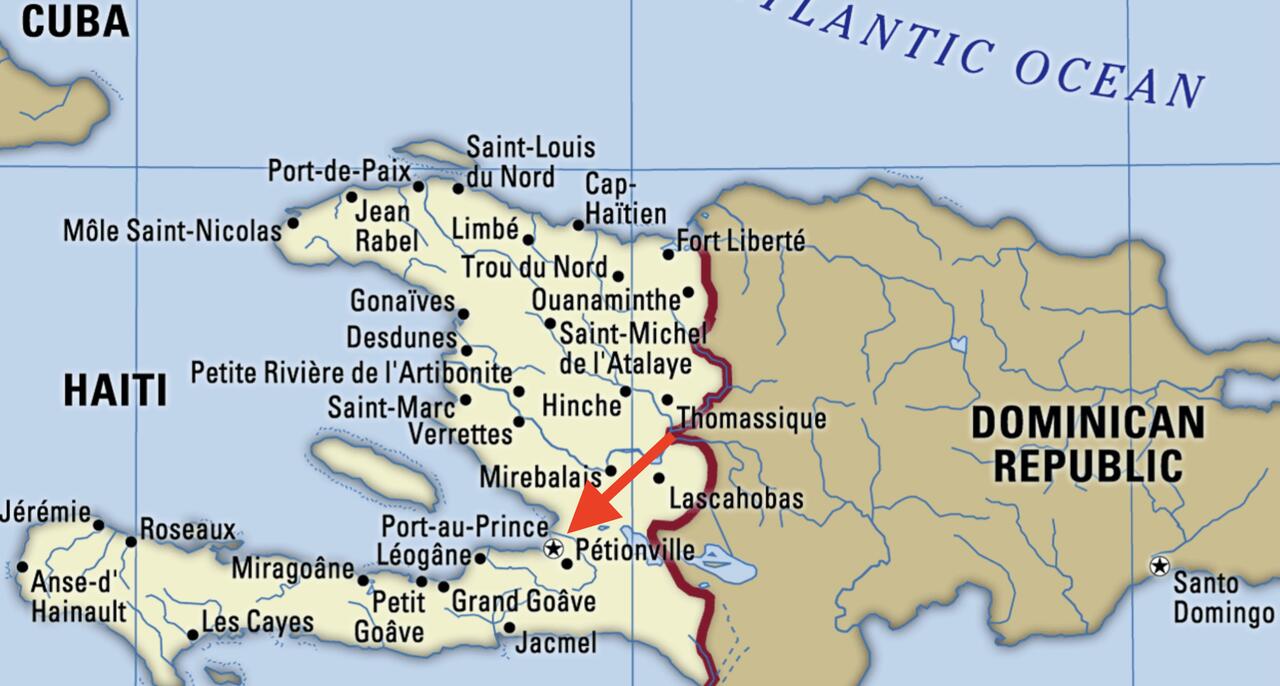
Yet another gruesome gang horror has played out in Haiti, as at least 184 people — most of them elderly — were variously slashed, hacked or shot to death on the orders of a warlord who’d been advised that aging slum residents had used sorcery to give his son a severe illness. Interim Prime Minister Alix Didier Fils-Aimé called it “a barbaric act of unbearable cruelty.”

The brutality was reportedly ordered by Monel “Mikano” Felix, who leads the Wharf Jeremie gang. The carnage took place on Friday and Saturday in the densely-populated seaside slum of Cité Soleil, a neighborhood in the capital city of Port-au-Prince which The Guardian has called Haiti’s “most notorious slum…Much of the slum is an open sewer…infant children bathe in water contaminated with sewage. The stench is unbearable.” 

According to a human rights group, Felix’s son had contracted a serious illness, and he sought the counsel of a Voodoo priest, or “bòkò,” who advised the murderous warlord that elderly people in the gang’s area of operations were harming his son through the use of witchcraft. “He decided to cruelly punish all the elderly people and Vodou practitioners who, in his imagination, might be capable of sending an evil spell to his son,” said Haiti’s Committee for Peace and Development in a statement reported by the Haitian Times. 

Members of the gang surrounded the neighborhood, then proceeded to search the shacks for people over 60 years old, who were then hacked with machetes, slashed with knives and shot with guns. The victims included some younger people who tried to defend the gang’s elderly targets. Bodies were dragged into the streets where they were mutilated and torched, filling the neighborhood with a foul stench of death. Felix’s ailing son died as the massacre was being carried out.  

A body is partially visible under burning tires in a Port-au-Prince street (Ralph Tedy Erol via Postimees)

In a statement issued via Facebook, Haiti’s feeble government said “A red line has been crossed, and the state will mobilize all its forces to track down and eliminate these criminals. Justice will strike with exemplary rigor.” 

Given Haiti’s police forces have been plagued by mass desertions amid the country’s deep descent into chaos, that promise rings hollow to say the least. “These latest killings bring the death toll in Haiti this year to a staggering number of 5,000,” said UN High Commissioner for Human Rights Volker Turk on Monday.  

Haitian gang members flaunt their weapons, including pistols shoved into sagging pants (Haitian Times)

As domestic law enforcement grows ever-more-desperate, foreign governments have failed to follow through on their commitments to send help:  

In June, a Kenya-led multinational police force was deployed to help Haitian authorities regain territory from gangs but has since made few advances amid chronic shortages of funding and personnel. A little more than 400 of the 2,500 foreign officers pledged to the mission have been deployed. — Wall Street Journal

Haiti’s descent into a Hellscape accelerated in 2021, when President Jovenel Moise was assassinated. Since then, gangs have ruled almost the entire capital city, perpetrating extortion, kidnapping, rape and murder on mass scale. Mass murder is frequently used to punish neighborhoods accused of undermining a gang — as was the case with an October massacre that killed at least 70 people, including women and children, in Pont-Sondé, 60 miles north of Port-au-Prince. More than 700,000 Haitians have fled their homes, and half live in hunger as gangs control ports and thwart food and fuel distribution.  

Last weekend’s attack is not the first time Felix’s gang has lashed out at supposed practitioners of witchcraft: In 2021, his thugs were accused of killing a dozen elderly women under that same suspicion, according to the National Human Rights Defense Network.   

Tyler Durden
Tue, 12/10/2024 – 08:40

Futures Rise As Yields Hit 1 Week High, China Stimulus Hopes Fizzle

0
Futures Rise As Yields Hit 1 Week High, China Stimulus Hopes Fizzle

Futures inch higher, reversing earlier losses even as bond yields gain 3bps to rise to a one week high, and the USD is once again rising. As of 8:00am ET, S&P 500 and Nasdaq 100 inched up 0.1% and 0.2% respectively with Mag7 names mostly higher premarket, even as other large cap tech names are hit post-earnings after software giant Oracle slid as much as 8.8% after quarterly results underwhelmed. Nvidia looked set to extend losses following news that China is probing the AI chipmaker over alleged anti-monopoly violations. US-listed Chinese shares also slipped, ceding gains notched the previous day after Beijing pledged to loosen monetary policy. The commodity complex is weaker as energy items fail to hold yesterday’s gains. Today shapes up to be a quiet macro day ahead of CPI.

In premarket trading, Oracle dropped 7% after the software company reported second-quarter results that are seen as underwhelming in the wake of robust stock performance. Homebuilder Toll Brothers declines 3% after the luxury builder’s profit-margin projection fell short of estimates. Here are some other notable premarket movers:

  • Alibaba slips 2% along with other US-listed Chinese stocks as traders book profits after a rally spurred by policymakers’ pledges to boost growth.
  • C3.ai a data-analysis software company, gains 3% after reporting quarterly revenue that topped estimates and raising its full-year sales forecast.
  • Designer Brands slides 19% after the parent company of footwear and accessories chain DSW cut its adjusted earnings per share guidance for the full year.
  • Ferguson drops 7% after the plumbing and HVAC supplies company posted a quarterly profit that missed estimates.
  • Fluence Energy falls 8% after the provider of energy storage systems said it intends to offer $300m aggregate principal of convertible senior notes due 2030 in a private offering.
  • MongoDB declines 6% after the database software company announced the departure of its CFO and COO, Michael Gordon.
  • UniQure soars 88% after the company reached an agreement with the FDA on key elements of an accelerated approval pathway for AMT-130.

Investors have been monitoring the upsurge in geopolitical risk in the Middle East, after rebel forces toppled Bashar-al-Assad’s regime in Syria. Oil prices eased, however, as concerns over a looming supply glut overshadowed the political risks and China’s stimulus plan. Looking ahead, Wednesday’s CPI print will be the final major price reading before the Fed’s policy meeting next week. Any indication that progress has stalled on the inflation front could well undercut the chances of a third straight reduction in rates. Bloomberg’s Dollar Spot Index and Treasury yields edged higher suggesting inflation is once again ascendant.

“Markets seem to have run out of steam going into the end of the year and participants are waiting for some kind of fresh catalyst,” said Lee Hardman, a strategist at MUFG Bank Ltd.

Turning to the upcoming inflation data, Hardman noted that even a relatively robust monthly payrolls reading had not derailed bets on further policy easing. Money markets currently see about an 80% chance of a quarter-point easing next week. “It would have to be a really bad CPI report tomorrow to make the market pare back expectations for a cut this month,” he said. “You have to assume if it comes in in line with expectations, it’s not going to really alter the view.”

Elsewhere in this week’s main events, we get a flood of central bank decision, with the European Central Bank expected to cut rates for the fourth time this year, amid a deteriorating economic outlook and political turmoil in France and Germany. The Swiss National Bank is also forecast to trim rates on Thursday.

A key focus will be China’s Central Economic Work Conference — due to start Wednesday — where authorities could hint at more fiscal support to follow up their pledge for “moderately loose” monetary policy in 2025. Chinese stocks rose as much as 3.3% on Tuesday, only to hand back most of those gains by the close.

“The proof will be in the pudding but these statements do seem to show the authorities are poised to take more aggressive action and are encouraging,” said Rupert Thompson, chief economist at IBOSS, Kingswood Group.

Uncertainty on whether China will follow up on its stimulus pledges weighed on Europe’s Stoxx 600 index, which is set to snap an eight-day winning streak. Chinese shares pared gains into the close with the Stoxx 600 now down 0.2%, led by declines in miners and consumer products while automobile and health care stocks are the biggest outperformers. Here are the biggest movers Tuesday:

  • Shares of 4iG surge 7.4% to highest level since mid-Sept. 2023, after Portfolio.hu reported that Chairman Gellert Jaszai presented the satellite plans of the Hungarian IT, telecommunications company to Elon Musk at a meeting in US
  • Spar Nord Bank shares surge as much as 49%, marking their biggest gain on record, after Nykredit Realkredit tabled a takeover offer at a big premium to Monday’s closing share price
  • FirstGroup shares rise as much as 4.5%, hitting a three-month high, after the transport company entered the London bus market by acquiring operator RATP Dev Transit London for an enterprise value of £90 million
  • Pantheon Resources shares surge as much as 26% to a six-month high after the oil and gas exploration company announced its Megrez-1 well as a discovery, according to a statement
  • Ashtead shares drop as much as 11%, the most since November 2023, after the equipment rental giant lowered its guidance for the year due to softer conditions in the US
  • Delivery Hero shares fall as much as 11% in Frankfurt after the initial public offering of its Middle Eastern unit Talabat saw shares turn negative during its first day of trading in Dubai
  • Husqvarna falls as much as 7%, the most since Sept. 11, after the Swedish garden and outdoor equipment maker gave a bleak 4Q outlook, a move DNB says will lead to 2024 EPS estimate cuts of 18-25%
  • Allianz falls as much as 2.1% after the German insurance company set new targets across a three-year period that failed to inspire investors in a stock that’s already outperformed the market this year
  • Allfunds Group shares drop as much as 9.5% after Oddo BHF double-downgraded to underperform from outperform and set a new Street-low price target, saying the European fund distribution platform’s business model faces increasing pressure
  • Moonpig shares slide as much as 12%, the biggest intraday decline since April 25, after the online gifting company reported first-half revenue that missed consensus estimates

Earlier in the session, HK/China opened stronger but faded as the market saw little follow through buying post the Politburo meeting.  Furthermore , investors do not expect the CEWC to surprise to the upside. The one standout within China was the retail buying which focused on the CSI500 and CSI1000 ETFs. In Korea, the market found a near-term bottom amidst the political turmoil.   From a sector perspective, AI names were generally weaker as NVIDIA’s anti-trust probe overnight weighed on sector regionally as well as the Oracle earnings miss.

  • Australia: S&P/ASX 200 -0.36%. RBA kept its policy rate unchanged at 4.35% for the 9th consecutive meeting. However, the central bank gained “some confidence” that inflation was moving back toward its target. Meanwhile, a sharp decline in Australian business confidence for Nov. Banks led the decline with ANZ Group AU -1.8%, Westpac WBC AU -1.9%, NA Bank NAB AU -2.8%. Tech also declined as a selloff in major US tech names. Zip Co -5.2%, Megaport MP1 AU -5.4%, and Wistech Global WTC AU -4.4%.
  • Taiwan: TAIEX -0.65%. Market saw some slight profit taking today, although that makes it the worst performing day in 2 weeks. TSMC 2330 TT -1% reported Nov sales after market close, down ~13% MoM but 4Q24 still in line with cons. Mid/Small caps underperformed with AI names mostly under pressure, as the NVIDIA’s anti-trust probe in China news and ORACLE’s weaker guidance.
  • Korea: KOSPI +2.43%. Index gapped higher on strength as the market rebounded from the late selling caused by political uncertainties onshore. Despite the strength, market dynamics remained like the trends witnessed most recently as retail investors remained as the main net sellers in the index while locals provided flow support; foreigners that were dip-buyers yesterday also sold into the strength today.
  • Japan: Nikkei 225 +0.53%. Japanese stocks defied the selloff on Wall Street overnight, where major US technology names faced pressure. Market expectations remain divided on the timing of the next Bank of Japan interest rate hike, with forecasts ranging between December and January. Among notable performers, index heavyweights such as Toyota Motor 7203 JP +1.3%, Sony Group 6758 JP +4.1%, and Tokyo Electron 8035 JP +3.5% saw strong gains.
  • China: SHSZ300 +0.73%. Markets were volatile as early morning rally faded over the day. Rally was significantly weaker than during September’s policy stimulus blitz because investors remain wary of the lack of policy specifics, while retail investors continue to be active. Lightly owned sectors like tourism and high beta plays like brokers outperformed, as did liquor as some investors put on policy bets.
  • Hong Kong: Morning rally faded in the PM with HSI closing down -0.5%. Move lower likely driven by investors staying on the sidelines because they are 1/ they are apprehensive about buying into headlines without concrete policies following false starts over the past few months and 2/ they are not expecting a major beta upbeat from the CEWC and might buy on weakness later in the week. Most sectors dipped with property and tech amongst top losers, HSTECH -1.4%. Likewise, brokers continued to lag as investors took profit. Wuxi complex names saw some weakness following policy driven rally over the past 2 days – Wuxi XDC 2268 HK -0.8%, Wuxi Biologics 2269 HK -3.9%, Wuxi AppTec 2359 HK -3.6%.
  • India: Nifty edged slightly higher in early trading today, helped by gains in software firms before seeing a small dip to fall below the 24600 level. The index is currently down 0.2%. Amongst the sectors, IT, Realty and Metals are leading in green while Energy, Autos & Pharma are lagging in red. Broader markets are relatively outperforming Nifty with Mid/Small caps up in the range of 0.1-0.2%.

In FX, the Bloomberg Dollar Spot Index rises 0.1%. The Aussie dollar is among the weakest of the G-10 currencies, falling 0.6% against the greenback after the RBA said it’s “gaining some confidence” that inflation is moving sustainably toward target. AUD/USD was down 0.8% to 0.6389 (spot closed up 0.8% on Monday after China’s top leaders signaled bolder economic support in 2025) after traders lifted expectations the RBA may cut interest rates at its February meeting to a 64% chance, up from about 50% prior to the policy decision, according to meeting-linked swaps data compiled by Bloomberg

“The RBA is still mostly cautious but ‘gaining confidence’ in the inflation outlook,” said Sean Callow, senior FX analyst at Intouch Capital Markets in Singapore. “AUD/USD has now unwound yesterday’s China stimulus-inspired bounce but if China does deliver next year, it should outweigh any careful RBA easing”

In rates,treasuries are under pressure in early US trading, led by bear-steepening in gilts where UK 30-year yield reached highest levels since Nov. 22. Treasury supply is also a factor, with first of this week’s three coupon auctions ahead at 1pm New York time. US yields are 1bp-4bp higher on the day with 2s10s, 5s30s spreads steeper by about ~1bp; 10-year is around 4.24% with UK counterpart lagging by 2bp and Germany’s outperforming by 2bp. The week’s auction cycle begins with $58b 3-year new issue and includes $39b 10-year and $22b 30-year reopenings Wednesday and Thursday.

In commodities, oil prices decline, with WTI falling 0.6% to around $68 a barrel. Spot gold climbs $9 to ~$2,670/oz. Bitcoin rises toward $98,000.

It’s a quiet US economic data calendar which only includes the NFIB small business confidence print (101.7, exp.95.3), and 3Q final nonfarm productivity at 8:30am. Fed officials are in self-imposed quiet period ahead of their Dec. 18 Fed policy announcement.

Market Snapshot

  • S&P 500 futures little changed at 6,060.00
  • STOXX Europe 600 down 0.3% to 519.78
  • MXAP down 0.2% to 187.17
  • MXAPJ down 0.4% to 589.37
  • Nikkei up 0.5% to 39,367.58
  • Topix up 0.3% to 2,741.41
  • Hang Seng Index down 0.5% to 20,311.28
  • Shanghai Composite up 0.6% to 3,422.66
  • Sensex little changed at 81,457.79
  • Australia S&P/ASX 200 down 0.4% to 8,392.97
  • Kospi up 2.4% to 2,417.84
  • ASIAN ECONOMIC DATA (all times E
  • German 10Y yield up 0.8 bps at 2.13%
  • Euro down 0.2% to $1.0529
  • Brent Futures down 0.3% to $71.92/bbl
  • Gold spot up 0.2% to $2,664.76
  • US Dollar Index up 0.20% to 106.36

Top Overnight News

  • Pete Hegseth’s odds of becoming Secretary of Defense rose after Sen. Ernst, a critical member of the Senate Armed Services Committee, inched closer to supporting him. Politico
  • Boeing restarted production of its best-selling 737 MAX jetliner last week, about a month after the end of a 7 week strike by 33,000 factory workers. Reuters
  • Washington debates whether to lift the terror designation from HTS, the rebel group that just overthrew Assad in Syria. Politico
  • Senate Republicans are pushing ahead on their two-part reconciliation agenda with an initial bill focused on the border, energy, and defense (which could be paid for by overturning Biden’s student loan program) followed by a second one later in 2025 addressing taxes. Axios
  • China’s trade numbers for Nov fall a bit short of expectations that trade tensions would offer a boost as businesses front-load shipments to get ahead of tariffs. Exports +6.7% Y/Y (vs. the Street +8.7%) and imports -3.9% (vs. the Street +0.9%). WSJ
  • Xi Jinping has pledged that China will meet its ambitious GDP growth target of 5% this year and remain the engine of global economic expansion as Beijing steps up efforts to boost flagging investor confidence. FT
  • The RBA is “gaining some confidence” that inflation is moving sustainably toward target, prompting traders to boost bets on interest-rate cuts starting as early as February. It left its cash rate at 4.35% today, as expected. BBG
  • Israel stepped up its attacks on military sites in Syria, striking hundreds of targets and sending troops deeper into the country. Egypt and Saudi Arabia accused Israel of seeking to sabotage Syria’s security and stability. BBG
  • Christiane Berner, the head of Germany’s most important trade union, called on the government to expand fiscal stimulus to provide more support to the economy. FT

A more detailed look at global markets courtesy of Newsquawk

APAC stocks were mostly firmer following a negative Wall Street lead, but with APAC players reacting to China easing its overall monetary policy stance. ASX 200 was the regional laggard and failed to benefit from a net dovish RBA, with the index dragged by a poor performance in Tech. Nikkei 225 eked mild gains amid the recent JPY weakness, but with gains capped as the currency claws back some losses in APAC trade. Hang Seng and Shanghai Comp were the regional outperformers after Politburo said China’s fiscal policy is to be more proactive next year, and monetary policy is to be moderately loose (prev. prudent), marking the first shift in the stance of monetary policy since 2011. Although bourses were off the best levels ahead of the Chinese Central Economic Work Conference.

Top Asian News

  • China is confident in reaching its FY economic targets, CCTV reports; adds that it is willing to continue dialogue with the US, and will manage differences.
  • Chinese official development faces challenges next year, according to Xinhua; monetary policy shift means low interest rates
  • South Korea’s ruling party is discussing President Yoon’s potential resignation in February or March, with snap elections to follow two months later
  • Australian Treasurer Chalmers said he is to consult with the Shadow Treasurer on the makeup of new RBA boards.
  • Chinese President Xi said China has full confidence in achieving this year’s economic growth target, via Xinhua.
  • China’s Politburo conducts a study session, according to Xinhua.
  • South Korea Finance Ministry said recent market volatility is a bit excessive, and will respond with market stabilizing measures, according to Reuters.
  • South Korean opposition leader Lee said they will pass the budget today, via Yonhap.
  • Japanese Economy Minister Akazawa, when asked about revised Q3 GDP data, said while Japan has not emerged from deflation, a virtuous cycle of wage hikes and passing-through of prices has started, according to Reuters.
  • Huawei suppliers to face further US limits under defence bill; firms with Huawei ties risk exclusion from Pentagon contracts, according to Bloomberg. House measures could put more pressure on Huawei’s supply chain.

European bourses began the session entirely in the red and have continued to traverse the bottom end of today’s range throughout the morning. The pressure is seemingly a paring back of the prior day’s upside and as traders react to the poor performance in Wall St. in the prior session. European sectors hold a strong negative bias, in-fitting with the pressure seen across the complex. There are only a handful of sectors in positive territory, and with the breadth to upside marginal; Healthcare incrementally tops the pile, followed closely by Autos and Travel & Leisure. And in a turn of fortunes from the prior day, Basic Resources and Consumer Products both give back some of the strength seen on Monday. US equity futures have traded on either side of the unchanged mark, but have been edging higher in recent trade. White House says the Commerce Department has made a > USD 6.1bln investment in Micron (MU).

Top European News

  • Kantar says UK grocery sales +2.5% Y/Y in the 4 weeks to December 1st; food inflation 2.6%.
  • Germany’s engineering group VDMA expects a 2% real terms decline in 2025 (unchanged from prior forecast); 2025 expected to decline 8% in real terms (unchanged from prior forecast).
  • IATA Outlook: Global airlines industry to reach a record 5.2bln passengers in 2025; industry set to make USD 26.6bln in profit in 2025 (prev. USD 31.5bln in 2024)

RBA

  • RBA maintained its cash rate at 4.35% as expected, and noted that some upside risks to inflation appear to have eased. RBA noted recent data on inflation and economic conditions are still consistent with these forecasts, and the Board is gaining some confidence that inflation is moving sustainably towards target. RBA also said wage pressures have eased more than expected in the November SMP, and while underlying inflation is still high, other recent data on economic activity have been mixed, but on balance softer than expected in November. Click here for the release.
  • RBA Governor Bullock, at the post-meeting presser, said RBA needs to think carefully on policy, recent data have been mixed with some softening; need to see more progress on underlying inflation; the Board did not discuss rate cut or rate hike. She added that she does not know if the RBA will cut rates in February, will have to watch data – wages and demand are slowing.

FX

  • DXY is up for a third consecutive session and has been growing in strength throughout trade. From a macro perspective, markets are currently in waiting mode ahead of tomorrow’s CPI report which is expected to see a +0.3% M/M outturn for core CPI. DXY has gained a firmer footing on a 106 handle with a current session high at 106.41.
  • EUR is a touch softer vs. the USD with not a great deal in the way of fresh macro drivers for the Eurozone. EUR/USD has slipped below yesterday’s 1.0532 low with focus on a potential test of 1.05.
  • JPY is extending on yesterday’s losses vs. the USD with USD/JPY advancing further on a 151 handle. Fresh JPY drivers remain light in the run-up to the BoJ’s December meeting with odds of a 25bps hike now at 28% vs. 42% seen at the start of last week. The next upside targets come via the 28th November high at 151.95 and then the 200DMA at 151.98.
  • GBP is trivially firmer vs. the USD as UK macro drivers remain light. For now, Cable is tucked within a 1.2736-65 range.
  • AUD is the laggard across the majors post-RBA. The central bank maintained its Cash Rate at 4.35% as widely expected, but struck a dovish tone as it expressed confidence that inflation is moving sustainably towards the target. NZD/USD is lower but holding above Monday’s 0.5804 trough.
  • PBoC set USD/CNY mid-point at 7.1876 vs exp. 7.2806 (prev. 7.1870)

Fixed Income

  • USTs are incrementally extending on Monday’s losses following a bout of selling pressure in early European trade. Data focus will ultimately be on Wednesday’s inflation report, but ahead of that the US 3yr auction later today. The Mar’25 UST contract is below yesterday’s 111.04 low with the next target coming via Friday’s trough at 110.28+.
  • A particularly choppy morning for German paper with the Mar’25 Bund contract continuing to oscillate around the 136 mark. French paper is marginally outpacing its German counterpart with the DE/FR spread narrowing to 74bps vs. yesterday’s opening levels of 76bps but wider than Friday’s 72.4bps trough.
  • Gilts are a touch lower with UK paper having moved broadly sideways in recent sessions and as UK-specific updates remain light. Mar’25 Gilt is back below the 96.00 mark with a session low @ 95.42, whilst the corresponding 10yr yield briefly rose above 4.3% for the first time since November 28th.
  • UK sells GBP 1.5bln 0.75% 2033 I/L Gilt: b/c 3.39x (prev. 3.17x) and real yield 0.745% (prev. 0.486%).

Commodities

  • Choppy trade in the crude complex thus far in what has been a catalyst thin session; Brent’Jan 2025 currently sits towards the bottom end of a USD 71.71-72.24/bbl, after generally holding an upward bias throughout the morning.
  • Precious metals are ever so slightly on a firmer footing, despite a relatively firmer Dollar and amid a catalyst-thin session thus far. Spot gold has gone as high as USD 2,673.79/oz, just ahead of its 50 DMA at USD 2,668.08/oz.
  • Base metals hold a strong negative bias, giving back some of the prior day’s gains, which was sparked by a positive China Politburo readout. The pressure seen within the complex is also in-fitting with broader losses in the equities complex in Europe thus far.
  • BofA sees TTF Gas prices averaging EUR 40/mwh in 2025; risk of a spike to EUR 75/mwh.

Geopolitics

  • “Israeli forces are 20 km from Damascus, according to the Pro-Hezbollah Al Mayaden, as they seized more villages in southern Syria”, according to journalist Elster.
  • Israel military spokesperson denies claims army has advanced to within 25km of Damascus; says troops have remained in the buffer zone.
  • Israel’s Navy has carried out a large-scale operation to destroy the Syrian army fleet, according to sources cited by Al Arabiya.
  • Israel has received intelligence indicating that Hamas is ready to compromise on some of its conditions, according to five Israeli officials cited by NYT.
  • “Loud explosions heard in Damascus”, according to AFP journalists; details light.

US Event Calendar

  • 06:00: Nov. SMALL BUSINESS OPTIMISM, est. 95.3, prior 93.7
  • 08:30: 3Q Unit Labor Costs, est. 1.3%, prior 1.9%
  • 08:30: 3Q Nonfarm Productivity, est. 2.2%, prior 2.2%

DB’s Jim Reid concludes the overnight wrap

In the first half of my career these two weeks into the holidays would have been back to back client Xmas lunches that often extended into the evening. Without wishing to offend the numerous clients I have Xmas lunched with over the years I’m glad those days are behind us. It was exhausting. Talking of fatigue, there was a bit of it in markets yesterday as the positive impact from China’s stimulus announcement, after we published yesterday morning, was eventually outweighed by the political uncertainty across several regions. China continues to rally this morning but remember that in the last week alone we’ve seen the French government voted down, the declaration of martial law in South Korea, the cancellation of Romania’s election, and the collapse of the Assad regime in Syria.

In terms of the China news we heard from the Politburo around an hour after we went to press yesterday. They said they would take a “moderately loose” position for monetary policy in 2025, and said there would be “more proactive” fiscal policy as well. On the former this follows 14 years of a “prudent” strategy.

Our economists and strategists believe this was an unusually strong indication as to the direction of travel, and there was a clear market response in the aftermath, with the Hang Seng moving from negative territory to end the day +2.76% higher. This morning the Hang Seng is a further +0.84% higher while the Shanghai Composite (+1.24%) is strong even if it’s halved its opening surge.

The positive impact from this story was evident in US and European markets yesterday too. For instance, the CAC 40 (+0.72%) was the top performer among the major European indices, as it has a concentration in luxury goods firms that will benefit from more Chinese demand. Another outperformer was the STOXX 600 Automobiles & Parts Index (+1.11%), as the sector also has a large trade exposure to China. Meanwhile in the US, the NASDAQ Golden Dragon China index surged +8.54%, and that’s an index that includes companies which are publicly traded in the US, but who do a majority of their business in China.

But even as equities with China exposure did very well, that wasn’t always the case more broadly. Indeed, the S&P 500 (-0.61%) fell back from its record high on Friday, posting its largest decline in over three weeks. Sectorally, the downside for the index was led by financials (-1.41%) and communication services (-1.31%). And matters weren’t helped by Nvidia (-2.55%), which lost ground after China’s State Administration of Market Regulation had opened an antitrust probe. Despite Nvidia’s retreat, the Magnificent 7 (-0.27%) were a relative outperformer as Apple (+1.61%) reached another record high. Over in Europe, equities continued to advance, with the STOXX 600 (+0.14%) posting an 8th consecutive gain.

In terms of the various political developments around the world, there’s still no sign of a new French Prime Minister yet following Wednesday’s vote of no confidence. But investors don’t seem too alarmed about the situation, as the Franco-German 10yr yield spread tightened by another -1.8bps yesterday to 75.3bps. So there’s been a decent fall relative to its peak of 88.3bps the previous Monday, which was the highest since 2012. Moreover, spreads tightened across Europe, with both the Italian and Spanish 10yr spread over bunds reaching their tightest level in 3 years, at 107.7bps and 64.0bps respectively. That came amidst a fresh rise in the 10yr bund yield (+1.4bps), which moved up to 2.12%.

Over in the Middle East, the situation in Syria remains very unstable, and commodity prices moved up in light of the uncertainty. For example, Brent crude (+1.43%) was up to $72.14/bbl, and gold prices rose +1.18% to $2,665/oz. Meanwhile in Syria itself, television reported that Mohammed Al Bashir will form a transitional government, and Israel said they carried out strikes on chemical weapon sites in Syria. But there were concerns about what the situation might mean for the wider Middle East, as well as the potential for refugee flows into other countries.

In the meantime, US Treasury yields also moved higher ahead of tomorrow’s CPI report for November. That release is going to be crucial one, as it’s probably the last big piece of the jigsaw ahead of the Fed’s policy decision next week, where a rate cut is now priced in as an 86% probability. And in the meantime, yields moved up across the curve, with the 2yr yield (+2.1bps) rising to 4.13%, whilst the 10yr yield saw its largest daily rise in four weeks (+4.8bps to 4.20%). The move got further support thanks to the New York Fed’s Survey of Consumer Expectations for November. In fact, the share of people saying they expected their household financial situation to be better off in a year reached its highest since February 2020, just before the pandemic hit, while 1-year ahead inflation expectations ticked up after falling to a 4-year low the previous month. This morning in Asia, 10yr USTs are -1.2bps lower trading at 4.19% as I type.

Coming back to Asia, the KOSPI (+2.28%) is rebounding sharply after recent losses with the Nikkei (+0.32%) also higher. Elsewhere, the S&P/ASX 200 (-0.41%) is edging lower even after the Reserve Bank of Australia (RBA) sounded more dovish on the outlook for interest rates in its latest board meeting (more on this below). US equity futures are flat.

Moving onto the RBA’s decision, the central bank held interest rate steady at a 12-year high of 4.35% while flagging some confidence that inflation was moving towards its target, as economic growth cooled. In what was clearly a more dovish commentary, the RBA board also dropped earlier guidance that it couldn’t rule any policy change “in or out.” Our local economists now believe we’ll see a cut in February. Against that background, the Aussie (-0.81%) is losing ground trading at 0.6388 against the dollar as we go to print. Meanwhile, yields on the 3yr Australian Government bond are -4.9bps lower standing at 4.62%.

Early morning data showed that China’s exports increased +6.7% y/y in November, but slower than market expectations of +8.7%. It followed a robust rebound of +12.7% the previous month. Meanwhile, import data surprised with a decline of -3.9%, marking the sharpest fall since September 2023 as against a -2.3% loss in the previous month. Markets had expected imports to grow +0.9%. So perhaps some justification behind the Chinese authorities’ change of policy momentum yesterday.

To the day ahead now, and data releases from the US include the NFIB’s small business optimism index for November. In Italy, we’ll also get industrial production for October.


Tyler Durden
Tue, 12/10/2024 – 08:21

Trump Tells Putin To Agree To Immediate Cease-Fire In Ukraine After Syria’s Assad Ousted

0
Trump Tells Putin To Agree To Immediate Cease-Fire In Ukraine After Syria’s Assad Ousted

Authored by Jack Phillips via The Epoch Times (emphasis ours),

President-elect Donald Trump sent a message to Russian President Vladimir Putin following the collapse of the Assad regime in Syria after Islamist opposition fighters captured Damascus. He called for an immediate cease-fire in Ukraine.

Russia’s President Vladimir Putin and U.S. President Donald Trump (R) talk during a bilateral meeting at the G20 leaders summit in Osaka, Japan, on June 28, 2019. Kevin Lamarque/Reuters

“Assad is gone. He has fled his country,” Trump wrote on Truth Social on the morning of Dec. 8. “His protector, Russia, Russia, Russia, led by Vladimir Putin, was not interested in protecting him any longer. There was no reason for Russia to be there in the first place.”

The incoming president also said that Moscow had “lost all interest in Syria because of Ukraine, where close to 600,000 Russian soldiers lay wounded or dead, in a war that should never have started, and could go on forever.”

Trump then said that Ukrainian President Volodymyr Zelenskyy “would like to make a deal” to end the nearly three-year-long war, noting the loss of hundreds of thousands of Ukrainian soldiers and civilians.

“There should be an immediate cease-fire and negotiations should begin,” Trump said. “Too many lives are being so needlessly wasted, too many families destroyed, and if it keeps going, it can turn into something much bigger, and far worse. I know Vladimir well. This is his time to act.”

Moscow, a backer of Syrian leader Bashar al-Assad, whom it intervened to help in 2015 in its biggest Middle East foray since the Soviet collapse at the end of 1991, is scrambling to protect its position, with its geopolitical clout in the wider region and two strategically important military bases in Syria on the line.

Russia has yet to respond to Trump’s remark, although its foreign ministry confirmed that Assad left Syria amid the conflict.

“As a result of negotiations between B. Assad and a number of participants in the armed conflict on the territory of the Syrian Arab Republic, he decided to resign from the presidency and left the country, giving instructions for a peaceful transfer of power,” the Russian Foreign Ministry said in a statement on Dec. 8. “Russia did not participate in these negotiations.”

Russia operates the Hmeimim air base, in Syria’s Latakia Province, which it has used to launch airstrikes against rebels in the past, and has a naval facility at Tartous on the coast. The Tartous facility is Russia’s only Mediterranean repair and replenishment hub, and Moscow has used Syria as a staging post to fly its military contractors in and out of Africa.

The ministry’s statement said Russia’s two military facilities in Syria had been put on a state of high alert but played down an immediate risk to them.

“There is currently no serious threat to their security,” the ministry said.

Over the weekend, in a separate Truth Social comment, Trump said the United States should not intervene in the Syrian conflict. A top adviser in the Biden administration made a similar remark, stressing that the United States would not send troops to the restive Middle Eastern country.

“The United States is not going to … militarily dive into the middle of a Syrian civil war,” President Joe Biden’s national security adviser, Jake Sullivan, told reporters in California.

Sullivan stressed that the U.S. military would act out of necessity to keep the ISIS terrorist group from gaining a foothold in Syria should it happen.

The insurgents who took over Damascus are led by Hayat Tahrir al-Sham, which the United States has designated as a terrorist group and says has links to the al-Qaeda terror organization, although the group reportedly has since broken ties with al-Qaeda.

One of Hayat Tahrir al-Sham’s main leaders is Abu Mohammed al-Golani, or Muhammad al-Jawlani, who is considered a terrorist by the State Department and has been blamed for a number of terrorist attacks that have left civilians dead in Syria.

The Associated Press to this report.

Tyler Durden
Tue, 12/10/2024 – 08:05