Memory-Chip Crunch Hits Smartphone Demand Across China
Prices for electronic devices reliant on advanced memory chips, from smartphones to gaming consoles, have risen as the AI data-center buildout tightens supply and drives component costs higher. The resulting memory-chip crunch is now weighing on consumer demand, with Goldman’s latest note showing that the pressure is increasingly visible in China’s handheld-device market.
Goldman analyst Allen Chang, who focuses on everything from smartphones to semiconductors, AI, EVs, and robotaxis, cited new data on Friday showing that China’s smartphone shipments fell 17% from a year earlier and 36% from May, to 17 million units in June.
Second-quarter shipments totaled 69 million units, little changed from the previous quarter and a year earlier but above Goldman’s 59 million estimate. Chang expects full-year 2026 shipments to decline 10%.
June 5G shipments fell 12% year over year to 16 million units, representing 85% of the market.
“We expect 2026 shipments to decline at 10% YoY, given rising memory cost weighing on demand,” Chang wrote in the report.
Chang noted that the average number of cameras per handset declined to 2.9 this year, down from a 2022 peak of 3.8, while the share of cameras with resolutions of at least 20 megapixels increased to 66% of the total, up from 57% in 2025.
Model pricing for various foldable smartphone brands
The Wall Street Journal and CBS are reporting that major US strikes – perhaps harder than anything of the last two weeks – are set to imminently commence. The attacks could be initiated at any point this weekend, after Trump gave the ‘order’ – it’s being reported:
President Trump has ordered a fresh attack on Iranaimed at getting Tehran to surrender that could begin as soon as this weekend and would last a few days, U.S. officials said.
Earlier on Friday, he told reporters that he planned to resume heavy military strikes to force the regime to come to the negotiating table. He predicted that if the U.S. hit Iran hard enough, the hard-line regime would eventually “peter out.”
Trump made clear earlier at Camp David that the Iranians can’t be trusted, are ‘dishonorable’ – and so he’s not pursuing talks.
The late afternoon Friday CBS report is more alarming, given that “The United States and Israel are planning what would be one of the harshest bombing campaigns to date against energy infrastructure targets in Iran, multiple sources told CBS News, with strikes possible throughout the weekend.”
It adds, “There was some discussion about trying to conclude by the time financial markets open Monday because of concern about how the bombings will affect the U.S. and global economy, but an end point wasn’t locked in.”
Earlier this week there were reports of Trump exploding at his own advisors amid ongoing debates about how the crisis should be handled, and finding an exit strategy.
“Well, they always want to talk, but they break their words so often,” Trump said Friday at Camp David, putting his frustration on display later adding: “All they do is make me angry.”
A key line from WSJ point to where things are likely headed: “Some U.S. officials believe Iran will continue to drag out negotiations, banking that Trump will abandon his war efforts in the long term in the face of mounting domestic political opposition.”
Keep Hitting Them: Trump
Trump is holding a Cabinet meeting on Friday at Camp David. He claimed that the fight against Iran is “going well” and stated that American forces are “hitting them very hard” – adding that “eventually” Iran will have no choice but to “come home” – meaning full surrender.
“It’s going well. Everything we can do is keep winning,” Trump also told Fox News. “But we are hitting them hard, shaking them up, and we’re just continuing to win.” He suggested there will still be strikes ongoing in coming weeks, and that he’s losing faith in the idea of talks with “dishonest” Iran “because they lie”.
Additionally, Trump’s Treasury Secretary Scott Bessent is claiming that Iran is unable to pay its troops – though without offering specific evidence to back this, and that the US continues searching for Iranian assets to seize “all around the world”. This is after Thursday Washington rolled out yet more sanctions.
Trump: “We’ll be hitting them. We’ll be hitting them very hard. At some point they’re gonna say, ‘We just can’t take it anymore.'” pic.twitter.com/DT1Fcf57EN
In the meantime, the American public continues souring on the Iran war, which has predictably turned into yet another quagmire in the Middle East. Per a new Associated Press poll:
Most Americans say the war in Iran has not been worth fighting, and President Donald Trump’s approval rating on Iran has fallen slightly since last month, according to a new AP-NORC poll.
The results are a stark repudiation of the Republican president’s approach to the conflict, which has dragged on far longer than he originally predicted.
About two-thirds of U.S. adults say the war with Iran, which began Feb. 28, has not been worthwhile, according to the new poll from The Associated Press-NORC Center for Public Affairs Research. That includes the vast majority of Democrats and independents, as well as about 37% of Republicans.
Iran Boasts it Hit Kuwait Base
“We note with concern that the security situation remains precarious,” said Pakistani Foreign Ministry spokesperson Tahir Andrabi on his country’s mediation efforts to find peace between the US and Iran. Talks “are ongoing to normalize the situation, particularly the situation in the Strait of Hormuz,” he told reporters as a week full of renewed fighting as come to a close. But there essentially are no current talks, and US officials have indicated they are not even seeking them.
Early Thursday had seen the last major exchanges of tit-for-tat attacks, followed by a window of relative quiet into Friday – but the Iranian military has said it newly targeted strategic US military facilities at Kuwait’s Ahmad Al-Jaber airbase in a drone attack. This was cast as ‘retaliation’ for US attacks of the day prior which focused on Qeshm island. Several Iranian troops had been killed in the prior assault, and separately a family was slain when their home was reportedly hit.
Semiofficial Tasnim news agency said the armed forces had targeted hangars, satellite communication systems and equipment warehouses using drones – based on the military statement.
No New US Strikes Overnight
“Iranian state media reported the strike on Ahmed Al Jaber Air Base early Friday, but Kuwaiti officials and the Pentagon have yet to comment,” Newsnation summarizes, adding of the current standstill in fighting, “Notably, Iranian media did not report any American strikes hitting targets inside Iran overnight, a change from Wednesday, when the U.S. carried out what officials called a heavy wave of strikes against Iranian positions.”
The day prior saw the Iranians heavily target an American outpost in Jordan. Iran believes the US is amassing equipment there in preparation for further rounds of attacks. As for the Friday targeting of Kuwait: “Iran cited a U.S. strike that killed a mother, father and their 2-year-old child in a home on Qeshm Island as part of its justification for the reported Kuwait attack.”
‘Horizontal Escalation’
On the question of where the crisis goes from here, a Tehran-based researcher at the Center for Strategic Studies, Ali Akbar Dareini, gave Al Jazeera some interesting insight into Tehran’s likely thinking:
He said Iran is likely trying to preempt any future attacks by the US in its current targeting in the region. Iran does not want to “allow the US to decide when to start the war, when to pause temporarily and when to restart the war”, he added. “Iran is now targeting the staging grounds of future operations.”
Dareini explained that while Washington has been pursuing “vertical escalation” by ramping up military attacks against Iran, Tehran has sought “horizontal escalation” by expanding the conflict’s “geographical scope”.
“Iran wants a complete, permanent end to war, or it’s going to be a wide-scale regional war,” he said.
As for the latest on potential US-Israeli plans to escalate against the Islamic Republic…
The U.S. and Israel are reportedly considering a land blockade of Iran to increase economic pressure after months of military action failed to force Tehran back to negotiations.
The proposal would involve persuading neighboring countries—such as Iraq, Pakistan, Türkiye,… pic.twitter.com/uBHO7qx9po
In the Strait of Hormuz, Iran’s Revolutionary Guards (IRGC) has claimed its forces struck a pair of tankers attempting to pass though the narrow waterway under the “air escort” of the US military.
The IRGC asserted that the “non-compliant oil tankers… were struck and brought to a halt, while four other oil tankers quickly changed course and returned to their previous positions.” Meanwhile, two headlines that don’t line up:
US President Trump says the Iran war is going well; US is hitting Iran hard and “we just keep winning” (Fox)
The Persian Gulf Waterway Management Authority announces that traffic through the Strait of Hormuz is not possible due to the continued aggressive actions of the US
Oil Climbs with No Offramp on Horizon
Still, despite of a lack of intense tit-for-tat so far on Friday, oil is rebounding significantly as there are no signs of offramp and the two sides aren’t talking – but instead preparing for more rounds in the fight…
But this Friday’s somewhat ‘quiet’ state of things could likely dramatically shift at any moment, as has been the pattern this summer. The aforementioned Tehran-based analyst Dareini describes a serious change and overhaul in Iranian leaders’ strategic thinking, which has gone from defensive to proactive, with an understanding of the need to inflict pain on the US side in a preemptive way.
“Iranians are tired from suffering from limited US attacks,” Dareini said, charging that the US uses its declared pauses as a “deception tactic” merely in preparation for future attacks and operations.
“There has been a profound change in Iran’s strategic thinking,” he added. “The era of restraint is over. Iran has decided that, if needed, it has to take preemptive military action against the US.”
Abdul Malik al-Houthi, the leader of Yemen’s Ansar Allah, commonly known as the Houthis, said Thursday that there were indications Saudi Arabia was planning a major escalation in Yemen, as the war between the two sides has been reignited following the July 13 Saudi strikes on the Sanaa International Airport.
“We will work to establish the equation of siege with siege, especially since indicators reveal that the Saudis are heading toward comprehensive escalation, and we will seek God’s help against him and confront his comprehensive escalation with comprehensive escalation,” al-Houthi said, according to Yemen’s SABA news agency.
The Guardianalso reported on Thursday, citing Yemeni sources, that Saudi Arabia was preparing for a major escalation against Ansar Allah by sea and possibly by launching a ground offensive in central Yemen.
Saudi Arabia is looking to launch a new Red Sea coalition to keep the Bab el-Mandeb Strait open, and the Saudi Defense Ministry announced that 14 countries backed the effort. The full coalition hasn’t been released, but according to Saudi officials, it includes—
Kuwait
Qatar
Bahrain
Pakistan
Turkey
Egypt
Jordan
Ansar Allah imposed a blockade on Saudi ports following the Saudi strikes on the Sanaa airport, which were meant to prevent the landing of a plane that took off from Iran and was carrying members of a Yemeni delegation that attended the funeral of Ayatollah Ali Khamenei.
Yemeni forces have also targeted oil infrastructure inside Saudi Arabia, and the Saudi military has launched additional strikes on Yemen of late.
Escalations against Ansar Allah are unlikely to achieve success since the group faced a brutal US-backed Saudi-UAE war from 2015 to 2022 and multiple US and Israeli bombing campaigns since then that failed to achieve their goals. President Trump has suggested that the US could restart bombing Yemen.
— ابراهيم ناجي Ibrahim Naji (@Ibrahym22Nagi) July 31, 2026
Al-Houthi said in his comments on Thursday that the Yemeni people “are among the most suffering and targeted peoples by the Saudi regime within the framework of the American scheme, and in service of the Israeli enemy.”
Trump’s Jones Act Waiver Helped Avert Fuel Shortages Across These Key US Regions
The Department of Homeland Security has issued the broadest Jones Act waiver since at least the 1950s, just weeks after the US-Iran conflict erupted. The measure has allowed foreign-flagged vessels to transport fuel, crude oil, fertilizer, and other essential goods between US ports, bypassing domestic shipping restrictions to mitigate supply chain disruptions across various U.S. regions.
The Jones Act, a century-old law requiring goods transported between U.S. ports to be carried aboard U.S.-Built, US-owned, and US-crewed vessels, was immediately waived in the early days of the U.S.-Iran conflict by the Trump administration.
As of Friday, the waiver has entered its 135th day, suggesting that the administration is continuing to protect domestic supply chains and curb energy prices by temporarily easing maritime protectionist restrictions.
A recent Reuters report stated that the Trump administration was considering another extension of the waiver.
The tracker indicates that the waiver sharply expanded domestic fuel movements, allowing foreign-flagged vessels to supply regions where limited U.S. shipping capacity, high transportation costs, and vessel shortages had constrained trade.
After 135 days, waiver shipments to the West Coast totaled 13.9 million barrels, equivalent to 108% of the region’s projected full-year baseline. Puerto Rico received 5.02 million barrels, equal to 134% of its normal annual pace, while New England’s 1.25 million barrels represented an increase of 215%. Gulf Coast shipments were 426% above the projected baseline, albeit from a much smaller historical base.
The data suggest the waiver is unlocking trade routes that were previously uneconomical or unavailable under Jones Act restrictions.
The largest effects are being seen in isolated or import-dependent markets, particularly the West Coast, Puerto Rico and New England, while the impact on the well-supplied Lower Atlantic remains marginal. Cargoes have included gasoline, diesel, jet fuel, renewable diesel, propane and ammonia.
Without the waiver, import-dependent markets such as those in California would likely have faced severe fuel shortages, with gasoline prices potentially surging well above $10 per gallon. The quick action by the Trump administration and the Energy Department appears to have mitigated supply disruptions in those regions where fuel shipments expanded the most.
Recall that suspending the Jones Act was one of six policy options identified by JPMorgan’s head of commodity research, Natasha Kaneva, for how the Trump administration could contain energy costs at the pump. The latest shipment data suggest that this option has played a material role in stabilizing vulnerable regional markets.
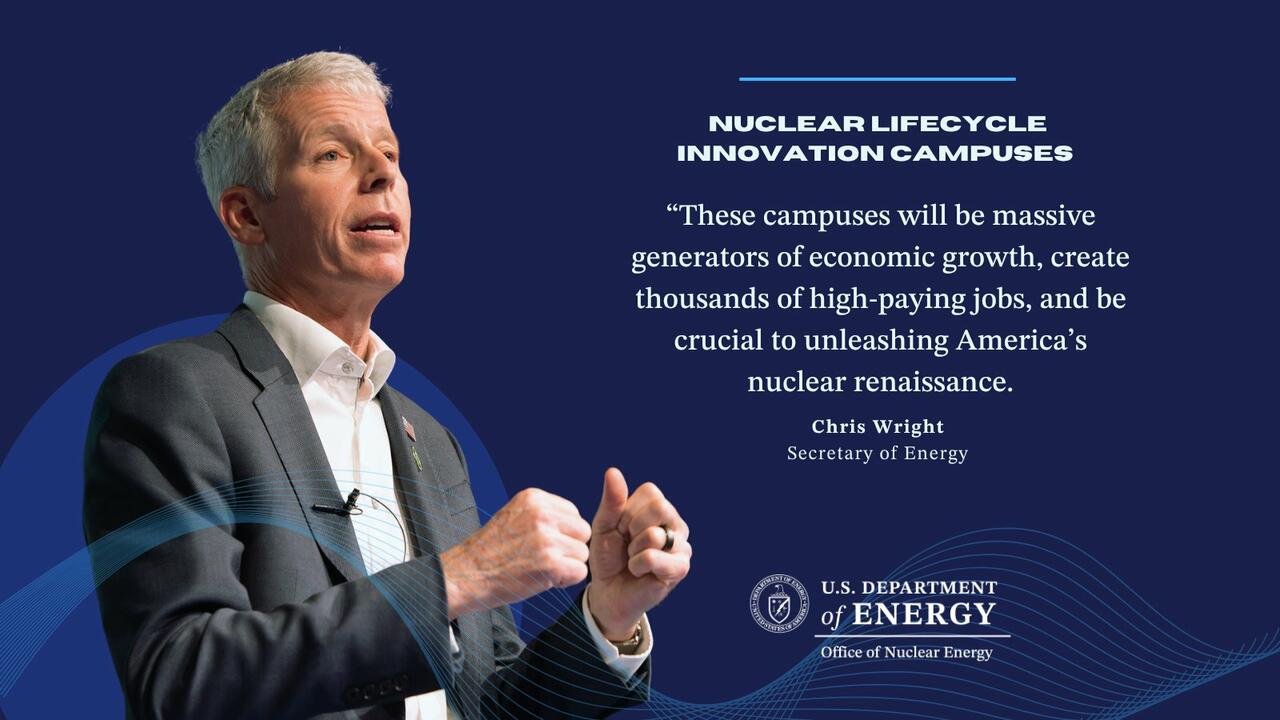
Five States Make The Cut For $50 Billion Nuclear Campuses
The Department of Energy has selected Utah, Tennessee, Oklahoma, Louisiana, and Idaho as the first five potential hosts for Nuclear Lifecycle Innovation Campuses (NLICs), advancing an effort that forced states to decide whether they support the entire nuclear industry or merely the convenient parts.
Energy Secretary Chris Wright signed Memorandums of Understanding with the five states after the DOE reviewed 28 applications from 26 states. The agreements allow the federal government and the states to continue exploring potential campuses.
The potential prize is substantial, with NLICs potentially attracting up to $50 billion in capital investment, generating almost $10 billion in state and local tax revenue and creating 25,000 jobs each.
These would not simply be reactor parks. The campuses are intended to accommodate multiple parts of the nuclear fuel cycle, including uranium enrichment, fuel fabrication, reprocessing or recycling of used nuclear fuel, and the final disposition of material that cannot be reused.
Depending on the state and location, a campus could also include advanced reactors, power generation, manufacturing facilities, and co-located data centers.
The DOE is offering states the opportunity to build entire nuclear industrial ecosystems, rather than collecting federal reactor grants while expecting somebody else to deal with the fuel afterward.
That distinction may explain why some supposedly pro-nuclear states are conspicuously absent from the first shortlist.
Texas has spent years presenting itself as the future capital of advanced nuclear power. In 2025, the state established the Texas Advanced Nuclear Energy Office and appropriated$350 million for reactor development, construction reimbursement, and supply-chain projects. State officials called it the largest state investment of its kind in the country.
Yet when Orano USA and Waste Control Specialists proposed a consolidated interim storage facility for used nuclear fuel in Andrews County, the state’s enthusiasm for nuclear technology suddenly became rather selective.
Gov. Greg Abbott urged the Nuclear Regulatory Commission to reject it, calling the location unsuitable and warning that the facility could threaten the Permian Basin. Texas legislators subsequently passed a law opposing high-level waste storage, and the state fought the NRC license all the way to the Supreme Court.
Apparently, nuclear reactors are an economic-development opportunity, while the fuel that actually ran through them is somebody else’s problem.
New Mexico produced an even clearer example.
The state has supported nuclear technology when it generates investment and high-paying jobs. It committed $3 million in economic-development funding and another $1.8 million in workforce assistance for Kairos Power’s expansion in Albuquerque, where the company is developing molten-salt coolant and fuel-manufacturing technology for advanced reactors.
But New Mexico’s reception was considerably less cheerful when Holtec International proposed its HI-STORE consolidated interim storage facility in Lea County.
The NRC licensed the multibillion-dollar project in 2023, but New Mexico’s governor and legislature fought it through legislation, permit threats, and litigation. Even after a favorable Supreme Court decision revived the federal licensing pathway, Holtec abandoned the project, describing the path forward in New Mexico as “untenable” and saying it would look toward states that were more amenable.
That history likely did not make New Mexico an especially convincing candidate for a federal program explicitly centered on the entire nuclear lifecycle.
As we have previously detailed, used nuclear fuel has been stored safely in pools and dry casks for decades. The United States has accumulated roughly 95,000 metric tons of it, much of which remains stranded at operating and decommissioned reactor sites because anti-nuclear activists have spent decades treating every proposed storage location like the opening scene of a disaster movie.
The NLIC program offers a different bargain. States willing to accept the responsibilities of the complete fuel cycle stand to enjoy tens of billions of dollars in investments and thousands of high-paying jobs for their constituents.
Texas and New Mexico may enjoy calling themselves pro-nuclear when reactors, research grants, and factory announcements are on the table. But supporting nuclear energy also requires dealing responsibly with what comes out of the reactor.
Federal Communications Commission Chair Brendan Carr is pushing back against Disney-owned ABC’s claims that his agency is engaged in “attempted censorship,” insisting the review of the network’s broadcast licenses stems from evidence of discriminatory hiring practices, not politics.
ABC leveled the censorship accusation in a 119-page regulatory filing posted Thursday, arguing the FCC’s scrutiny of its eight television licenses sends a chilling message to media companies nationwide. “The retaliation against ABC is a signal to every media company in the country: accommodate the Administration’s view of what news coverage should look like or pay the price,” the network’s lawyers wrote.
Carr has flatly denied that characterization. “I don’t view the FCC as the speech police,” he told Politico this week for an episode of the podcast “The Conversation.” The chairman has said the license review grew out of an ongoing investigation into ABC’s diversity, equity and inclusion policies, not a reaction to the network’s news coverage.
In the interview, Carr detailed the substance of that concern.
“The Disney case is about evidence coming to light, we haven’t made a final decision yet, that they had been discriminating inside the company based on race and gender, in terms of hiring, promoting, compensation, workplace opportunities,” he said.
“If that all ends up being true, based on all the evidence that Disney gets to put in, that’s a very concerning development, and it does raise fundamental questions about fitness to have a license.”
An FCC spokesperson echoed that stance, saying broadcasters must serve the public interest rather than “the narrow or partisan interests of a political party” and are barred from discriminatory practices, hoaxes and news distortion. “The FCC is going to hold broadcasters accountable to the full extent of the law, regardless of any disinformation campaign that some of them may choose to run,” the spokesperson said.
ABC’s filing leaned heavily on outside voices, citing more than 153,000 public comments and warnings from figures including Supreme Court Justice Neil Gorsuch and Sen. Ted Cruz, R-Texas, about regulatory overreach. Some conservatives and free-market advocates have separately raised concerns about handing an appointed federal agency sweeping authority over news content, regardless of which party controls the White House.
Not all conservatives are sympathetic to ABC’s position.
The Center for American Rights, which petitioned the FCC to deny the licenses, called Thursday for the case to proceed to an administrative hearing.
“Disney’s lawyers can wish upon a star, but they cannot make this record disappear,” said Daniel Suhr, the group’s president.
The dispute traces back to April, when Carr called up all eight Disney-owned stations for an early license review, and intensified this month after President Donald Trump publicly urged the FCC to strip both ABC and NBC of their licenses over their handling of a presidential address. ABC has hired prominent litigators, including former Solicitor General Paul Clement, to fight the review.
Can the world’s newest technology give a boost to one of transportation’s oldest? A plan by leading Asia companies wants to find out.
Nvidia and Kawasaki Heavy Industries announced a joint effort to build a “next‑generation digital shipyard” at Kawasaki’s Sakaide Works in Japan.
The core of the deal is co‑development of AI‑powered robots for shipbuilding tasks such as welding, painting, inspection, and material handling.
Kawasaki (OTC: KWHIY) will contribute decades of shipbuilding data, production know‑how, and its own robotics capabilities.
Nvidia (NASDAQ: NVDA) will contribute its AI and simulation stack, including products for applications in digital twins, robotics, vision/AI, and edge AI, which applies AI models and algorithms directly to devices such as sensors, cameras, robots, vehicles, or industrial controllers.
One report notes Nvidia making a $5 million investment connected to this 1990s‑era Kawasaki shipbuilding business as part of the arrangement, though the main value is technology integration rather than large equity stakes in shipyards.
The outcome could be a precursor to wider adoption in shipbuilding: A plan by the United States to revitalize its shipyards has been dogged by persistent questions of workforce availability.
Nvidia is already invested in an array of autonomous truck technology.
The AI applications include digital twins of hulls, production lines, and workflows will simulate and optimize before cutting steel, and AI‑guided robots that can adapt to complex, low‑volume, highly customized shipbuilding tasks. Skills transfer and training via simulation is expected to help address labor shortages and the loss of experienced workers.
Analysts say a scalable AI model could improve lead times and cost curves for newbuilds, particularly in Japan and other yards that license production. Quality and rework rates could be improved, which influence delivery reliability and charterer risk.
US Treasury Informed Banks It May Intervene In Japan’s Yen, As Market Laughs At BOJ’s Own Attempts To Prop Up Currency
While the BOJ understandably refuses to admit it spent a record $140BN (across all markets, $90BN on EBS) to briefly manipulate the Japanese yen higher…
… ahead of yet another disappointing (non-rate hike) decision (according to some calculations, Japan’s central bank is about 100 bps of rate hikes behind to stop the ongoing collapse of the yen), others are less shy.
According to Reuters, similar to the last failed intervention by Japan and citing “a source familiar with the matter”, the US Treasury informed a number of banks that it may intervene in the Japanese yen market on Friday and that they should “stand ready for future action.”
The notice to banks, channeled through the Federal Reserve Bank of New York, comes a day after Japanese authorities stepped in to prop up the yen, setting the currency up for its biggest weekly rise since February, pulling it off of four-decade lows against the dollar (although the yen has since erased much of its gains).
News of the potential intervention by the U.S. Treasury helped push the yen higher against the dollar on Friday. It last traded at 159.22 to the dollar after trading as low 163.65 on Thursday. As shown below, the past 48 hours have seen no less than 5 distinct intervention attempts by the BOJ and/or the US Treasury to push the yen higher.
The method of potential Treasury intervention was not immediately clear. The Federal Reserve has maintained a dollar liquidity swap line with the Bank of Japan and four other major central banks since 2013.
Japan’s top currency diplomat Atsushi Mimura in Tokyo Friday declined to comment on intervention but hinted at U.S. involvement in the effort to stem the yen’s decline, including so-called “rate checks” — requests to dealers for indicative dollar/yen quotes that are considered a precursor to interventions.
Mimura added that the U.S. support “goes beyond psychological support.”
The Reuters report of Treasury’s notice to banks of potential intervention “fits in with the view in the market that the New York Fed has been carrying rate checks, so it’s adding to the nervousness of market participants that there could be further intervention,” said Lee Hardman, currency strategist at MUFG in London. “It definitely helps support the idea that there is intervention risk on the table.”
US Treasury Secretary Bessent said in a post on X that the Treasury maintains “a strong relationship and close coordination” with Japanese authorities, but did not confirm the intervention preparations.
He said he looked forward to meeting with Bank of Japan Governor Kazuo Ueda at the U.S.-hosted G20 finance ministers and central bank governors meeting in Asheville, North Carolina, at the end of August.
“Japan’s economy continues to perform well under Prime Minister Takaichi, Governor Ueda and the Bank of Japan Board, which has demonstrated a strong commitment to monetary and financial stability,”
On Thursday, Bessent told Fox Business Network that the yen “seems very undervalued to me” and that Japanese Prime Minister Sanae Takaichi was enacting “strong policies” that would help Japan’s economic fundamentals. Bessent added that “we think excess volatility in the yen isn’t healthy” and that the yen has “substantially overshot what would be called an equilibrium price.”
The last time that the US Treasury intervened directly to prop up Japan’s yen was in 2011 as part of a coordinated action by G7 countries to stabilize the currency following the devastating earthquake and tsunami rocked Japan.
The Treasury last fall intervened to prop up Argentina’s peso market ahead of parliamentary elections and provided President Javier Milei’s government with a $20 billion currency swap line to help stabilize the currency and Argentina’s dollar bonds. The aid to Argentina relied partly on the Exchange Stabilization Fund, which had total assets of about $217 billion as of June 30.
Italy Suspends Schengen Travel Agreement With Spain After Horrifying Ceuta Invasion
Summary:
Italy Suspends Schengen Agreement With Spain Over Ceuta Invasion
Europe’s Right-Wing Blasts Spanish Socialists For Border Failure
Riots erupted in Ceuta as Illegals Clashed with Security Forces
Mass Migration Invasion Of Military-Aged Males From Morocco Invades Spanish Enclave
“Looks Like World War Z!”: Spain’s Ceuta Invaded By Thousands Of Military-Aged Male Illegals
Italy Suspends Schengen Agreement With Spain Over Ceuta Invasion
After Italy’s government and top French conservative politicians demanded the suspension of Schengen arrangements with Spain following the invasion of 50,000 military-aged illegal aliens in the Spanish enclave of Ceuta, Euronews reporter Gabriele Barbati reported that Italy’s Interior Ministry had suspended Schengen free-movement rules with Spain and ordered the closure of air and maritime borders between the two countries, citing national security concerns.
GB News reports:
🚨 BREAKING: Italy has suspended the Schengen agreement with Spain after 60,000 migrants broke into Spanish territory. The Italian Ministry of the Interior has ordered the closure of the sea and air borders with Spain.
The measure was announced by Prime Minister Giorgia Meloni and Deputy Prime Ministers Antonio Tajani and Matteo Salvini, and was formally approved earlier today after an Interior Ministry review of migration and border-security risks.
Meloni writes on X:
The Government has decided to temporarily suspend the free movement regime provided for by Schengen in maritime and air connections with Spain, reintroducing border controls. This is an extraordinary measure, adopted to safeguard national security and prevent possible repercussions for our Nation. The measure will be kept in force only for the time necessary, with particular attention to limiting any impact on summer tourist flows. In parallel, Italy is ready to support every European initiative to assist Spanish institutions as needed to restore full control of the Union’s external borders and to address the ongoing situation with determination. Defending borders means defending the safety of citizens, combating irregular immigration, and striking at the criminal networks that traffic human beings.
Il Governo ha deciso di sospendere temporaneamente il regime di libera circolazione previsto da Schengen nei collegamenti marittimi e aerei con la Spagna, reintroducendo i controlli di frontiera.
Si tratta di una misura straordinaria, adottata per tutelare la sicurezza nazionale… pic.twitter.com/bpszoG8soX
The temporary suspension of #Schengen with Spain is a necessary choice to safeguard the security of our citizens and defend the European borders. A measure provided for by the treaties and made unavoidable today. The migrant crisis in #Ceuta reminds us that the management of the Union’s borders is a shared responsibility among our countries, one toward the other. We must work together to prevent uncontrolled migrant flows from entering EU territory, with all the consequent risks and the threat of terrorism, which must be countered without hesitation.
La sospensione temporanea di #Schengen con la Spagna è una scelta necessaria per tutelare la sicurezza dei nostri cittadini e difendere le frontiere europee. Una misura prevista dai trattati e resa oggi ineludibile. La crisi dei migranti a #Ceuta ci ricorda che la gestione dei…
The Schengen Agreement allows people to travel between participating European countries without routine passport or immigration checks at internal borders.
Suspending Schengen arrangements could weaken the European Union by disrupting trade and travel. Restoring borders and ramping up border security would be a major setback for socialists and the far left in Europe, who have been hellbent on a decade or more of mass migration.
If temporary border controls become more permanent or spread across the bloc, they could undermine one of the EU’s defining achievements: the free movement of people and goods.
“The world begins to isolate Spain,” X user Agustín Antonetti wrote earlier.
🇪🇸🇮🇹 | HISTORICO — Es oficial.
Italia acaba de suspender el acuerdo Schengen con España. Los españoles ya no podrán ingresar libremente al territorio italiano, necesitaran visados o controles (a definir) como el resto de los países no europeos.
Spain’s socialist-led government has pursued mass migration policies while advancing a mass-amnesty program that could legalize as many as one million illegals.
Against that backdrop, the Trump administration has increasingly aligned itself with nationalist, anti-socialist, and pro-American political movements across the West and, more recently, across the Americas.
.@SecRubio: “For the first time in 15–20 years, the overwhelming majority of the countries in the Western Hemisphere are now led by pro-American leaders and governments since @POTUS was elected president.” pic.twitter.com/qr0sFuRXKn
The Ceuta crisis serves as yet another case study for those warning about mass migration policies that threaten national sovereignty, internal security, and political stability.
New figures from Spain’s Department of National Security indicate that 49,000 people illegally entered the Spanish enclave of Ceuta within 24 hours, according to Reuters.
The invasion of tens of thousands, in what only appears to be large numbers of military-aged men traveling without food, shelter, baggage, or money, is difficult to explain as spontaneous migration alone.
ESTO ES MUY GRAVE. Me llegan estas imágenes de cómo las autoridades marroquíes vacían camiones llenos de jóvenes cerca de la frontera con Ceuta.
Quien no quiera ver que se trata de una operación perfectamente preparada por el régimen, es que es ciego. pic.twitter.com/YpxFAaF7Wb
The immediate effect is to overwhelm Ceuta’s border security, law enforcement, housing, and humanitarian capacity. If state-enabled, the operation would fit what can only be described as hybrid or asymmetric warfare: weaponizing migration and civilian populations to impose political pressure while preserving plausible deniability.
Earlier this year, Spain’s socialist Prime Minister Pedro Sánchez dismissed criticism from Elon Musk and others over his open border globalist policies. His government subsequently granted amnesty to illegal aliens, with Sánchez declaring: “Spain is a welcoming country, and this is the path we choose.”
In January, Spain’s Pedro Sánchez dismissed Elon Musk’s criticism of his immigration policies.
The invasion of military-aged Moroccan men that is overwhelming local security and humanitarian services will intensify criticism of Sánchez’s unhinged left-wing immigration policies and raise concerns about national security. This will strengthen support among common-sense right-wing politicians across Europe who have been pushing for closed borders.
🇪🇸🇲🇦 Riots erupted in Ceuta as migrants clashed with security forces thoughout the night.
There were reports of damage to private property, vehicles being set on fire, businesses being looted, and homes being illegally occupied.
“In the face of the massive and coordinated influx of migrants into Spain — encouraged by the Spanish government — France must immediately strengthen its border controls,” Marine Le Pen of France’s right-wing National Rally wrote on X.
Italy’s right-wing Prime Minister Giorgia Meloni said her country was prepared “to intervene with extraordinary measures to defend the borders and the safety of citizens, including the suspension of the Schengen Area with Spain.”
“The images coming from Ceuta show how the Madrid Government’s decision to grant Spanish, and therefore European, citizenship to over 500,000 irregular immigrants is profoundly wrong and encourages human trafficking,” Italy’s Foreign Minister Antonio Tajani wrote.
The emerging news cycle across the West could very well frame the crisis as a predictable result of the socialists’ “suicidal empathy” and nation-killing open border policies. The footage alone could sway undecided voters regarding the consequences of open borders. In the US, Trump and the GOP will almost certainly use the footage against the Democratic Socialists of America and the broader far-left movement, portraying their immigration agenda as an effort to dismantle national borders and linking it directly to the policies pursued under the Biden-Harris regime.
“Looks Like World War Z!”: Spain’s Ceuta Invaded By Thousands Of Military-Aged Male Illegals
Shocking footage circulating on X shows thousands of migrants breaching Spain’s border into its North African enclave of Ceuta from Morocco on Thursday, overwhelming local police and exposing a serious national security failure.
The invasion comes shortly after Prime Minister Pedro Sánchez’s Socialist-led government signed up 1 million illegal aliens to legalize their status under a new program to bring them into the workforce. However, the program applied only to migrants already living in Spain before Jan. 1, meaning Thursday’s arrivals are ineligible.
Sánchez has defended his government’s mass amnesty for illegals by claiming Spain’s GDP would crater by 20% by 2050 without continued immigration.
Sánchez said Spain would lose 19% of its GDP by 2050 – and 22% by 2075 – if migration were sharply reduced, presenting immigration as essential to the country’s long-term economic growth.
Thousands of fighting age men who invaded Spain today have begun breaking into people’s homes, where women and children live.
— DataRepublican (small r) (@DataRepublican) July 30, 2026
Footage:
Holy. Shit.
Spain’s far-left PM Pedro Sanchez gave amnesty to 1,000,000+ illegal immigrants, and now hordes of unvetted men are storming across the border from Africa.
It’s the same playbook across the West.
These people will destroy our civilization. pic.twitter.com/NcERXfTbPv
In the US, Democratic Socialists of America politicians have unveiled a plan to collapse the nation’s borders, similar to what was done under the Biden-Harris regime era, increase sanctuary protections, and grant mass amnesty to all illegals. These policies are nation-killing, as the Federal Reserve Bank of Dallas said that housing prices and rents soared when the Biden regime allowed millions of illegals to flood the nation.
The most observable threat is that this is a “war on the West” waged by globalists and pushed by the left wing to destroy borders across the Western world. These illegals become voting blocs that displace native-born workers, essentially stealing political power – and the establishment Democratic Party is now learning that the hard way.
All in all, the left wing says they’re upholding democracy, yet no sane person voted for this invasion by the tens of millions across the West, which was forced down the throats of citizens.
Trump is holding a Cabinet meeting on Friday at Camp David. He claimed that the fight against Iran is “going well” and stated that American forces are “hitting them very hard” – adding that “eventually” Iran will have no choice but to “come home” – meaning full surrender.
“It’s going well. Everything we can do is keep winning,” Trump also told Fox News. “But we are hitting them hard, shaking them up, and we’re just continuing to win.” He suggested there will still be strikes ongoing in coming weeks, and that he’s losing faith in the idea of talks with “dishonest” Iran “because they lie”.
Additionally, Trump’s Treasury Secretary Scott Bessent is claiming that Iran is unable to pay its troops – though without offering specific evidence to back this, and that the US continues searching for Iranian assets to seize “all around the world”. This is after Thursday Washington rolled out yet more sanctions.
Trump: “We’ll be hitting them. We’ll be hitting them very hard. At some point they’re gonna say, ‘We just can’t take it anymore.'” pic.twitter.com/DT1Fcf57EN
In the meantime, the American public continues souring on the Iran war, which has predictably turned into yet another quagmire in the Middle East. Per a new Associated Press poll:
Most Americans say the war in Iran has not been worth fighting, and President Donald Trump’s approval rating on Iran has fallen slightly since last month, according to a new AP-NORC poll.
The results are a stark repudiation of the Republican president’s approach to the conflict, which has dragged on far longer than he originally predicted.
About two-thirds of U.S. adults say the war with Iran, which began Feb. 28, has not been worthwhile, according to the new poll from The Associated Press-NORC Center for Public Affairs Research. That includes the vast majority of Democrats and independents, as well as about 37% of Republicans.
Iran Boasts it Hit Kuwait Base
“We note with concern that the security situation remains precarious,” said Pakistani Foreign Ministry spokesperson Tahir Andrabi on his country’s mediation efforts to find peace between the US and Iran. Talks “are ongoing to normalize the situation, particularly the situation in the Strait of Hormuz,” he told reporters as a week full of renewed fighting as come to a close. But there essentially are no current talks, and US officials have indicated they are not even seeking them.
Early Thursday had seen the last major exchanges of tit-for-tat attacks, followed by a window of relative quiet into Friday – but the Iranian military has said it newly targeted strategic US military facilities at Kuwait’s Ahmad Al-Jaber airbase in a drone attack. This was cast as ‘retaliation’ for US attacks of the day prior which focused on Qeshm island. Several Iranian troops had been killed in the prior assault, and separately a family was slain when their home was reportedly hit.
Semiofficial Tasnim news agency said the armed forces had targeted hangars, satellite communication systems and equipment warehouses using drones – based on the military statement.
No New US Strikes Overnight
“Iranian state media reported the strike on Ahmed Al Jaber Air Base early Friday, but Kuwaiti officials and the Pentagon have yet to comment,” Newsnation summarizes, adding of the current standstill in fighting, “Notably, Iranian media did not report any American strikes hitting targets inside Iran overnight, a change from Wednesday, when the U.S. carried out what officials called a heavy wave of strikes against Iranian positions.”
The day prior saw the Iranians heavily target an American outpost in Jordan. Iran believes the US is amassing equipment there in preparation for further rounds of attacks. As for the Friday targeting of Kuwait: “Iran cited a U.S. strike that killed a mother, father and their 2-year-old child in a home on Qeshm Island as part of its justification for the reported Kuwait attack.”
‘Horizontal Escalation’
On the question of where the crisis goes from here, a Tehran-based researcher at the Center for Strategic Studies, Ali Akbar Dareini, gave Al Jazeera some interesting insight into Tehran’s likely thinking:
He said Iran is likely trying to preempt any future attacks by the US in its current targeting in the region. Iran does not want to “allow the US to decide when to start the war, when to pause temporarily and when to restart the war”, he added. “Iran is now targeting the staging grounds of future operations.”
Dareini explained that while Washington has been pursuing “vertical escalation” by ramping up military attacks against Iran, Tehran has sought “horizontal escalation” by expanding the conflict’s “geographical scope”.
“Iran wants a complete, permanent end to war, or it’s going to be a wide-scale regional war,” he said.
As for the latest on potential US-Israeli plans to escalate against the Islamic Republic…
The U.S. and Israel are reportedly considering a land blockade of Iran to increase economic pressure after months of military action failed to force Tehran back to negotiations.
The proposal would involve persuading neighboring countries—such as Iraq, Pakistan, Türkiye,… pic.twitter.com/uBHO7qx9po
In the Strait of Hormuz, Iran’s Revolutionary Guards (IRGC) has claimed its forces struck a pair of tankers attempting to pass though the narrow waterway under the “air escort” of the US military.
The IRGC asserted that the “non-compliant oil tankers… were struck and brought to a halt, while four other oil tankers quickly changed course and returned to their previous positions.” Meanwhile, two headlines that don’t line up:
US President Trump says the Iran war is going well; US is hitting Iran hard and “we just keep winning” (Fox)
The Persian Gulf Waterway Management Authority announces that traffic through the Strait of Hormuz is not possible due to the continued aggressive actions of the US
Oil Climbs with No Offramp on Horizon
Still, despite of a lack of intense tit-for-tat so far on Friday, oil is rebounding significantly as there are no signs of offramp and the two sides aren’t talking – but instead preparing for more rounds in the fight…
But this Friday’s somewhat ‘quiet’ state of things could likely dramatically shift at any moment, as has been the pattern this summer. The aforementioned Tehran-based analyst Dareini describes a serious change and overhaul in Iranian leaders’ strategic thinking, which has gone from defensive to proactive, with an understanding of the need to inflict pain on the US side in a preemptive way.
“Iranians are tired from suffering from limited US attacks,” Dareini said, charging that the US uses its declared pauses as a “deception tactic” merely in preparation for future attacks and operations.
“There has been a profound change in Iran’s strategic thinking,” he added. “The era of restraint is over. Iran has decided that, if needed, it has to take preemptive military action against the US.”