74 F
Chicago
Sunday, October 11, 2026
Home Blog Page 2089

Ukraine’s Former Top Military Commander Claims ‘World War 3 Has Officially Begun’

0
Ukraine’s Former Top Military Commander Claims ‘World War 3 Has Officially Begun’

Former military Commander-in-Chief and Ukraine’s current ambassador to the UK, Valery Zaluzhny, has warned that World War Three is already underway in a recent interview published by Politico.

“I believe that in 2024 we can absolutely believe that the Third World War has begun,” he said. He referenced the greater internationalization of the war with the presence of North Korean troops, and Iranian technology on the battlefield, as well as Chinese support to Moscow.

“It is obvious that Ukraine already has too many enemies. Ukraine will survive with technology, but it is not clear whether it can win this battle alone,” he explained, also on the heels of Western allies approving Kiev’s long-range strikes against Russian territory with US, UK, and French missiles.

Zaluzhny claimed in the interview that Chinese weapons are being injected into the conflict alongside Iranian and North Korean arms. “Because in 2024, Ukraine is no longer facing Russia. Soldiers from North Korea are standing in front of Ukraine. Let’s be honest. Already in Ukraine, the Iranian ‘Shahedis’ are killing civilians absolutely openly, without any shame.”

“It is still possible to stop it here, on the territory of Ukraine. But for some reason our partners do not want to understand this. It is obvious that Ukraine already has too many enemies. Ukraine will survive with technology, but it is not clear whether it can win this battle alone,” he said.

But it’s certainly not merely the Russian side which has had outside assistance. The West’s support to Ukraine has been much more direct, including billions of dollars in weaponry. F-16 fighter jets, anti-air systems, and medium and long-range missiles have been given to Ukraine, along with training for all of these systems.

Western advisers have without doubt also long been on the ground assisting Ukrainian intelligence and military officers. Moscow has cited all of this as what’s driving escalation.

Meanwhile, Rob Magowan, the deputy chief of the British defense staff, told the House of Commons defense committee last week, “If the British Army was asked to fight tonight, it would fight tonight.”

He added, “I don’t think anybody in this room should be under any illusion that if the Russians invaded Eastern Europe tonight, then we would meet them in that fight.”

At the same time Washington has also been escalating, seeking to send as much in the way of arms and money to Kiev as the Biden administration can before Trump takes office on Jan.20. Critics have blasted this as reckless and an obvious recipe for runaway escalation.

* * *

The Economist in a recent piece is essentially calling it, saying things are looking nearly impossible for Ukraine’s chances on the battlefield…

Tyler Durden
Mon, 11/25/2024 – 07:45

Another Nationalist Upset: Right-Wing NATO Critic Wins First Round Of Romanian Election

0
Another Nationalist Upset: Right-Wing NATO Critic Wins First Round Of Romanian Election

In the continuation of well-established trend observed across Western democracies, yet another populist, nationalist, right-wing candidate has posted an election result that far exceeded what polls indicated he was capable of. The latest upset took place in Romania on Sunday, and it has positioned a NATO critic and Ukraine war skeptic to potentially take over the country’s presidency.  

With 99% of ballots tallied, populist Calin Georgescu led all 13 candidates with 23% of votes, edging the Save Romania Union Party’s Elena Lasconi and Prime Minister and Social Democratic Party member Marcel Ciolacu — who had 19.17% and 19.16%, respectively. Another right-winger — the Alliance for the Unity of Romanians’ George Simion — placed fourth with 13.87%. That sets the NATO- and EU-member country up for a second-round vote on Dec. 8 against either Lasconi or Ciolacu; Simion has already thrown his support behind Georgescu.  

Calin Georgescu  Reuters via BBC 

“The 35-years-long economic uncertainty imposed on the Romanian people became uncertainty for the political parties today,” said Georgescu, who took the poll-outperformance phenomenon to a whole new level: An October poll showed him with only 0.4% support, and a November survey had him racking up just 5.4%. 

The outcome will be highly unwelcome to the Western establishment: Georgescu pledged to restore Romanian sovereignty and put an end to what he characterizes as subservience to NATO and the EU. He has taken a hard line against the presence of NATO’s missile defense system that’s based in Deveselu, southern Romania, calling it a “shame of diplomacy” that is more confrontational than peace-promoting. 

He has also pushed for Romania to pursue a non-interventionist policy in the Ukraine war, and said US arms-makers were manipulating the conflict. Since Russia’s invasion, Romania has facilitated Ukrainian grain exports and furnished military assistance including the donation of a Patriot missile battery.  

As in the US election, a large portion of the Romanian electorate may have been fed up with resources dedicated to foreign refugees and foreign wars rather than the country’s own citizens. According to the X account GeoInsider, “In one widely shared clip, Georgescu highlight[ed]…striking disparities: Romania pays a monthly allowance of 3,700 lei to the children of Ukrainian refugees, compared to just 248 lei for Romanian children.” 

“For the unjust, for the humiliated, for those who feel they do not matter and actually matter the most … the vote is a prayer for the nation,” the 62-year-old Georgescu said via Facebook after casting his vote. Georgescu has a doctorate in soil science and previously held various roles in the country’s environmental ministry, and represented Romania as a member of the UN’s Environmental Program. In addition to his broad theme of restoring Romanian sovereignty, he also ran on countering price inflation, addressing Romania’s worst-in-EU poverty rate, supporting farmers and decreasing the country’s reliance on imports. 

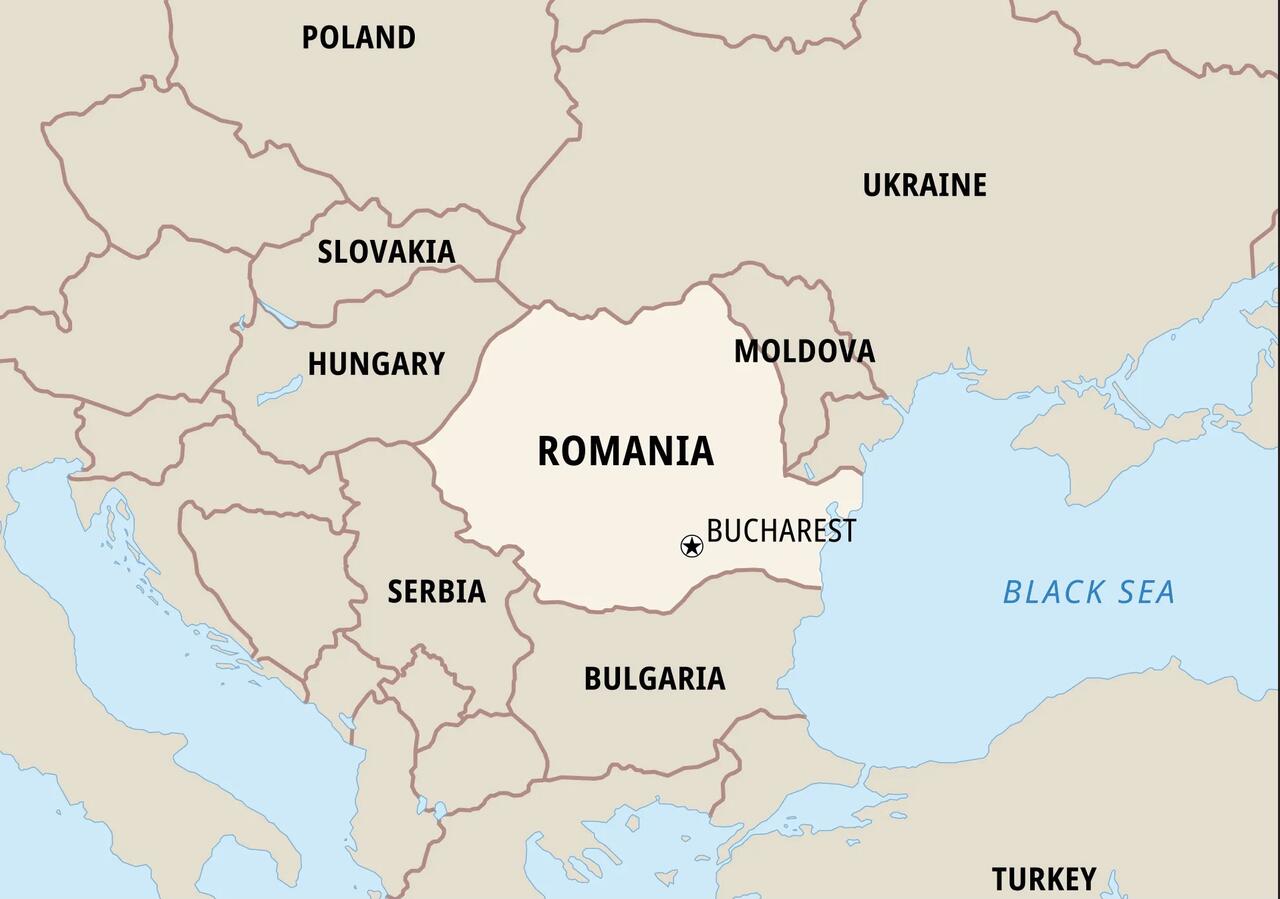
Romania shares a 400-mile border with Ukraine and hosts a NATO missile defense system in the country’s south (via Britannica)

Georgescu’s result was all the more surprising given he didn’t run as a member of any political party, and used social media platform TikTok as the principal mechanism of his campaign. Racking up 1.6 million likes, his account showed him going to church, running, practicing judo, and being interviewed by podcasters. TikTok’s centrality to his highly unorthodox campaign prompted some howling by people who didn’t like the outcome: 

…and, as is the case whenever a right-wing nationalist wins these days, people are blaming RUSSIA, RUSSIA, RUSSIA! 

Tyler Durden
Mon, 11/25/2024 – 06:55

Trump’s New DOGE Begins To Identify Federal Agencies For Overhaul

0
Trump’s New DOGE Begins To Identify Federal Agencies For Overhaul

Authored by Rachel Acenas via The Epoch Times (emphasis ours),

The to-be-established Department of Government Efficiency (DOGE) has already begun to eye possible cuts to the federal budget.

(Left) Vivek Ramaswamy speaks at a Trump rally at Madison Square Garden in New York City on Oct. 27, 2024. (Right) Tesla CEO Elon Musk leaves the Phillip Burton Federal Building in San Francisco on Jan. 24, 2023. Anna Moneymaker, Justin Sullivan/Getty Images

In a series of posts on X this week, the official DOGE account published examples of what it called a waste of taxpayer money.

“Federal government agencies are using, on average, just 12% of the space in their DC headquarters,” a Thursday post reads. “The Department of Agriculture, with space for more than 7,400 people, averaged 456 workers each day (6% occupancy). Why are American taxpayer dollars being spent to maintain empty buildings?”

Citing a report published in July 2024 by the Congressional Budget Office, the DOGE said the agency identified authorizations of appropriations that expired before the beginning of fiscal year 2024.

“In FY2024, U.S. Congress provided $516 billion to programs whose authorizations previously expired under federal law. Nearly $320 billion of that $516 billion expired more a decade ago,” a Wednesday post on X states.

On Tuesday, the DOGE criticized the Pentagon for not being able to fully account for $824 billion and failing its seventh annual audit in a row.

The department on Monday posted a video of Sen. Rand Paul (R-Ky.) outlining examples of wasteful spending of taxpayer money. According to Paul, one example is the all0cation of $100,000 to study if tequila or gin makes sunfish more aggressive, according to Paul.

According to the latest figures from the Treasury Department, most of the revenue that the U.S. government collects comes from contributions from individual taxpayers, small businesses, and corporations through taxes. The combined contribution of individual and corporate income taxes totals $181 billion. This represents 55 percent of total revenue in fiscal year 2025.

The data shows that the federal government largely depends on taxpayer money to run its agencies and programs.

However, according to a survey by GOBankingRates, more than half of Americans don’t believe their tax dollars are being spent effectively, compared to nearly 18 percent who do think their tax dollars are being spent the right way. Nearly 27 percent said they don’t know how their tax dollars are being spent, the poll shows.

President-elect Donald Trump has tapped billionaire entrepreneur Elon Musk and former Republican presidential candidate Vivek Ramaswamy to head the DOGE.

According to Trump, Musk and Ramaswamy will be responsible for large-scale structural reform, focusing on dismantling government bureaucracy, slashing excess regulations, and restructuring federal agencies. The pair will lead a team to identify and weed out what they called massive waste and fraud in the annual $6.5 trillion of government spending, according to Trump.

Rep. Marjorie Taylor-Greene (R-Ga.) was chosen to lead the proposed DOGE House subcommittee and recently outlined a proposal to fire government employees.

Greene said employees in the private sector are normally fired if they fail to do their jobs whereas “bad employees” in the government are somehow protected. She said that her subcommittee would work to dismiss government career bureaucrats and provide transparency to Americans through public hearings.

“There are 438 federal government agencies and sub agencies,” Greene stated on X. “The federal government is the largest employer in the United States. The federal government is in debt at nearly $36 trillion dollars. And all of this is funded by American taxpayers. It’s truly shocking the American people haven’t torn down this government yet.”

From NTD News

Tyler Durden
Mon, 11/25/2024 – 06:30

Top Stanford ‘Misinformation Expert’ Accused Of Using AI To Fabricate Evidence: Court Filing

0
Top Stanford ‘Misinformation Expert’ Accused Of Using AI To Fabricate Evidence: Court Filing

A Stanford ‘misinformation specialist’ who founded the university’s Social Media Lab has been accused in a court filing of fabricating sources in an affidavit supporting new legislation in Minnesota which bans so-called ‘election misinformation.’

For a $600 an hour expert witness fee, Stanford professor Jeff Hancock, whose biography claims he’s “well-known for his research on how people use deception with technology,” apparently used deception with technology by citing numerous academic works that do not appear to exist, the Minnesota Reformer reports.

At the behest of Minnesota Attorney General Keith Ellison, Hancock recently submitted an affidavit supporting new legislation that bans the use of so-called “deep fake” technology to influence an election. The law is being challenged in federal court by a conservative YouTuber and Republican state Rep. Mary Franson of Alexandria for violating First Amendment free speech protections.

Hancock’s expert declaration in support of the deep fake law cites numerous academic works. But several of those sources do not appear to exist, and the lawyers challenging the law say they appear to have been made up by artificial intelligence software like ChatGPT.

As an example, the declaration cites a study called “The Influence of Deepfake Videos on Political Attitudes and Behavior,” which claims it was published in the Journal of Information Technology & Politics in 2023 – however there’s no study by that name in said journal, and academic databases have no record of the study existing.

The specific journal pages referenced are from two completely different articles.

“The citation bears the hallmarks of being an artificial intelligence (AI) ‘hallucination,’ suggesting that at least the citation was generated by a large language model like ChatGPT,” wrote the plaintiffs’ attorneys. “Plaintiffs do not know how this hallucination wound up in Hancock’s declaration, but it calls the entire document into question.”

Libertarian law professor Eugene Volokh found another fake entry – a study titled “Deepfakes and the Illusion of Authenticity: Cognitive Processes Behind Misinformation Acceptance,” which doesn’t appear to exist.

According to the Reformer, if the citations were fabricated by AI, Hancock’s entire 12-page declaration may have been entirely cooked up.

According to Frank Bednarz, an attorney for the plaintiffs, those in support of the deep fake law in question have argued that “unlike other speech online, AI-generated content supposedly cannot be countered by fact-checks and education,“ however “by calling out the AI-generated fabrication to the court, we demonstrate that the best remedy for false speech remains true speech — not censorship.”

Tyler Durden
Mon, 11/25/2024 – 05:45

The Poster Child Of Europe’s Electric Car Future Just Filed For Bankruptcy After Burning Through Billions

0
The Poster Child Of Europe’s Electric Car Future Just Filed For Bankruptcy After Burning Through Billions

It was supposed to be the poster child of Europe’s electric car future. Instead, it filed for bankruptcy this week, a poetic end to a company which has become synonymous with Europe’s “green” debacle. 

For Swedish startup Northvolt AB, the route to collapse started in June when BMW AG canceled a multi-billion order. Back then, few saw the significance of the move, which effectively started a countdown that would culminate in a Chapter 11 filing less than six months later.

As Bloomberg details, Northvolt scrambled to keep the financing flowing, but as Germany’s car industry fell deeper into a historic crisis, precipitated by a flood of cheap Chinese EV imports in the past three years…

… it became clear orders would dry up.

Setting off the infamous death spiral, the company responded to the lost revenue by retrenching expansion plans and slashing jobs. By the time the last attempt at an emergency plan failed, investors who had poured in $10 billion discovered only $30 million cash was left.

Northvolt’s filing for bankruptcy protection in the US, announced Thursday, marks one of the highest-profile setbacks for European industry against cheaper and nimbler Chinese and South Korean competition. The following day, co-founder and CEO Peter Carlsson, who only a year ago had been trumpeting Northvolt as a possible IPO candidate, resigned and warned the European Union risks falling behind on green projects.

The company needs as much as $1.2 billion to finance its new business plan, Carlsson said, telling reporters that “we’ll regret it in 20 years if we’re not driving transition” to clean technologies. Translation: I already spent all the money, but if European taxpayers don’t pony up to maintain my spending habits, they will regret it.

In addition to BMW and Volkswagen, Northvolt’s top investors included Goldman Sachs’s asset management arm, Denmark’s biggest pension fund ATP, Baillie Gifford funds and a number of Swedish entities.

On Saturday, the Financial Times reported that funds run by Goldman Sachs Asset Management are set to write down almost $900 million at the end of the year.  The total loss is a sharp contrast to the bank’s bullish prediction just seven months ago which told investors that its investment in Northvolt was worth 4.29 times what it had paid for it, and that this would increase to six times by next year. Spoiler Alert: it would decrease by 100%.

One fund representative who spoke to Bloomberg said they were shocked at the speed with which Northvolt blew through its billions. As recently as July, the investor was confident of getting a return, but that changed in early August after getting a call from one of Northvolt’s owners, who warned that the battery maker could run out of cash by September.

The scale of the delays, and how bad things were with building budgets and construction projects remained hidden, the investor said, recounting how excel models and slide decks were used to conceal how empty the coffers had become.

The Swedish company now faces a task of restructuring, with a more focused operation set to emerge from the Chapter 11 process. Unless of course there is no value left to salvage and the bankruptcy process becomes a liquidation.

“From the get-go, they had to announce very large-scale plans in order to be attractive for financiers,” said Robert Heiler, senior manager at Porsche Consulting, part of the sportscar unit of Volkswagen, Northvolt’s top investor. “But it’s really difficult to scale up” various operations “all at the same time,” he said.

Just how badly Northvolt and its financiers misjudged the situation a year ago has now become evident. As the FT then reported, last fall, the company invited investment banks to pitch for roles in an initial public offering that could have valued the battery maker at a $20 billion. Then, a little over six months later, Bloomberg reported that the IPO was pushed back from 2024. Soon after that, VW’s truck unit Scania complained after Northvolt had trouble ramping up production volumes, and then BMW pulled its €2 billion ($2.1 billion) contract to equip electric vehicles such as the i4 sedan and iX sports utility vehicle.

After repeated delays, the battery maker was unlikely to be able to produce the volumes BMW needed before 2026 — a year after predecessor models were set to be gradually phased out and almost three years after the original target date, a person familiar with the matter said, declining to be named discussing private information.

Adding insult to injury, around that time a failure to close on an equity funding round meant that a $5 billion green loan that was announced in January remained frozen.

But even then, there was still a chance for Northvolt to continue with plans for new battery plants in Germany, Sweden and Canada. In late June, Volkswagen, which owns 23% of Northvolt, was prepared to step in. But then the German auto giant faced a major crisis of its own. By late summer, with EV sales stagnant in Europe and its lucrative Chinese business flagging, VW called for unprecedented factory closures in Germany. Against the backdrop of potentially tens of thousands of layoffs at VW, Northvolt funding was off the table, and in August, VW withdrew from the equity plan.

The German automaker, which had valued its Northvolt holding at the equivalent of more than $730 million as of the end of 2023, then balked at committing to more battery purchases, Bloomberg reports citing people familiar with the matter.

Still, work on a bridge funding deal continued, with an agreement coming close to fruition as recently as October. The $300 million in emergency aid would have involved lenders, creditors and customers, but talks fell short. “In this latest funding round, VW basically told us that they are not able to continue to capitalize us,” Carlsson said on Friday.

Northvolt’s debts include a $330 million convertible loan from Volkswagen that’s due in December 2025, according to the bankruptcy court filing.

In its desperate attempts to reassure financiers, Northvolt canceled a planned expansion of its main plant in Skelleftea in northern Sweden and, in October, replaced the factory’s manager. But Carlsson acknowledges that he acted too slowly. “I should have probably pulled the brake earlier on some of the expansion paths,” he said, realizing after the fact that if your company is burning through billions and is losing key clients then, yes, you may want to slow down the spending.

While Northvolt’s big-swing approach will be second-guessed for years to come it won’t disappear in the immediate future. In its filing, the company said finding a strategic or financial partner is an overarching goal as it seeks to restructure the balance sheet and continue operations.

However, in a post-Trump world where the only remaining greater “green” fools are European socialist regimes, governments from Stockholm to Berlin have rebuffed suggestions they’d spend taxpayer funds on a rescue. German Economy Minister Robert Habeck, who had in June suggested Northvolt should build a second factory in his home country, on Saturday told DPA that he’s “cautiously optimistic” about the company’s future. Of course, nobody is cautiously optimistic about Habeck’s political fate: a few weeks ago German’s government collapsed spectacularly, and one of the reasons was populist pushback against continued idiotic “green” spending.

Still, the relationship with Volkswagen continues even if greatly truncated. Scania also remains a key Northvolt customer… and will provide $100 million in debtor-in-possession financing at a hefty interest rate of 16%. Northvolt will also have access to about $145 million in cash collateral. Battery plants under construction in Germany and Canada were left out of the bankruptcy, though the company said these projects will be postponed.

For once, Northvolt is making preparations in case it fails to raise funds for the future. Documents filed with the US court show that it plans to “assess potential opportunities for a sale of some or all assets and has engaged Hilco Global to assist with an orderly liquidation process if necessary.”

Spoiler alert: Hilco will be very busy soon as yet another core pillar of Europe’s “green” dream liquidates in bankruptcy.


Tyler Durden
Mon, 11/25/2024 – 04:15

US Blacklists 29 Chinese Companies Over Forced Labor

0
US Blacklists 29 Chinese Companies Over Forced Labor

Authored by Catherine Yang via The Epoch Times (emphasis ours),

The Department of Homeland Security (DHS) on Nov. 22 blacklisted 29 Chinese companies over the use of forced labor, bringing the total to 107. The companies produced a wide range of goods, from foods to pharmaceuticals to gold and technology.

A facility believed to be a reeducation camp where mostly Muslim ethnic minorities are detained, in Artux, north of Kashgar in China’s western Xinjiang region, on June 2, 2019. Greg Baker/AFP/Getty Images

“Forced labor is a violation of basic human rights,” Secretary of Homeland Security Alejandro N. Mayorkas said in a statement. “The United States is making progress towards the eradication of forced labor while supporting economic fairness, safeguarding human rights, and holding perpetrators accountable.”

Since the Uyghur Forced Labor Prevention Act (UFLPA) went into effect in 2022, the United States has sought to eliminate forced labor from its supply chains.

The law is named after the Uyghur Muslims of Xinjiang, a group that international investigations have found to be subjected to forced labor by the Chinese Communist Party (CCP). The group has also been targeted for persecution by the regime.

“Today’s enforcement actions make it clear—the United States will not tolerate forced labor in the goods entering our markets,” Robert Silvers, undersecretary of Homeland Security for Strategy, Policy, and Plans and chair of the Federal Labor Enforcement Task Force. said in a statement.

“The Uyghur Forced Labor Prevention Act is a powerful tool in the fight against forced labor, and we are using it to its full potential. We urge companies to take responsibility, know their supply chains, and act ethically.”

The Xinjiang region is rich in resources, including metallic minerals and arable land. The majority of the companies blacklisted in the latest batch, 23, were in the agricultural sector and produced products, including tomato paste, walnuts, and raisins, sold wholesale.

Other companies dealt with metals. The state-owned Xinjiang Nonferrous Metals Industry Group Co. and its subsidiaries mine, smelt, and process gold, chromium, iron, and other metals. Xinjiang Zhonghe Co. focuses on electronic materials and aluminum alloy products.

These two metal companies are part of the supply chains of Chinese battery companies Gotion and CATL, which lawmakers targeted over the use of forced labor earlier this year. House Select Committee on the CCP Chair John Moolenaar (R-Mich.), House Homeland Security Committee Chair Mark Green (R-Tenn.), and Rep. Carlos Gimenez (R-Fla.) expressed support for the latest DHS action on Nov. 22 but said the United States needed to do more to remove the Chinese regime from the U.S. battery supply chain.

The United States has blacklisted companies in various sectors for the use of forced labor over the past two years.

In October, the DHS blocked a Chinese steel company for the first time. In August, it blacklisted five other foods and metals companies. In June, it blacklisted companies involved in shoe and coal production.

Lawmakers have also raised concerns over cotton goods imported from China, as some 90 percent of China’s cotton production is in Xinjiang, and investigators believe there is a high likelihood of making use of forced labor.

However, many such goods come into the United States via fast fashion sold directly to the consumer. These individual imports are valued under $800 and, therefore, are not subject to stringent customs inspections under the “de minimis” provision.

Earlier this year, lawmakers in both chambers proposed legislation to close what they described as a de minimis loophole exploited by Chinese companies. Still, there was little consensus over methods and implementation.

However, lawmakers in both chambers have recently introduced bills to revoke China’s trade status, which would also revoke its ability to use the de minimis provision.

Other nations have also condemned the CCP’s forced labor practices. On Nov. 21, the European Union adopted a resolution that may see the 27-member bloc implement a ban on products that have benefited from forced labor. Earlier this year, the EU implemented a due diligence law making companies responsible for investigating their supply chains to ensure compliance with forced labor and environmental laws.

Tyler Durden
Mon, 11/25/2024 – 03:30

Russia Reportedly Recruited Hundreds Of Yemeni Mercenaries To Fight In Ukraine

0
Russia Reportedly Recruited Hundreds Of Yemeni Mercenaries To Fight In Ukraine

A Saturday report in Financial Times has claimed that Russia has recruited hundreds of mercenaries from Yemen to fighting against Ukraine. It comes amid recent Washington allegations that Moscow is increasingly looking abroad to bolster depleting troop ranks.

Some of the Yemeni recruits were cited in the FT report as saying they were initially promised jobs with “high salaries” and eventual Russian citizenship, but after a Houthi-linked company got them to Russia they were “forcibly inducted into the Russian army and sent to the front lines in Ukraine.”

Via Associated Press

The FT characterized it as a “shadowy trafficking operation” which is an extension of illicit arms dealing between Russia and Yemen, something which has been alleged by Western sources for months now.

On Moscow’s developing closer relations with the Iran-backed Houthis, who are currently waging a war against Israel and international shipping in the Red Sea, US Special Envoy for Yemen Tim Lenderking told FT that Russia is “actively pursuing contacts.”

He alleged that Russian personnel have been in the capital of Sana’a facilitating this dialogue. “The kinds of weapons being discussed are very alarming and would enable the Houthis to better target ships in the Red Sea and potentially beyond,” Lenderking said to FT.

The FT says it has proof, having published a purported contracted between the Russian armed forces and a Yemeni recruit:

Contracts signed by the Yemenis, seen by the FT, listed a company founded by Abdulwali Abdo Hassan al-Jabri, a prominent Houthi politician. Registered in Salalah, Oman, the Al Jabri company’s registration documents identify it as a tour operator and retail supplier of medical equipment and pharmaceuticals.

The recruitment of Yemeni soldiers appears to have begun as early as July. One enlistment contract seen by the FT was dated July 3, and was countersigned by the head of a selection center for contract soldiers in the city of Nizhnii Novgorod.

The report further says this highlights Russia’s serious manpower needs, also at a time that the presence of some 10,000 North Korean troops has been prominent in headlines.

Russia has apparently recruited people from India, Nepal, and some other countries. FT suggests that luring mercenaries from these places, and countries like Yemen, is somewhat easy as they are impoverished and so men will jump at the contracts.

Tyler Durden
Mon, 11/25/2024 – 02:45

Europe Sleepwalks Into Irrelevance As The US Ascends

0
Europe Sleepwalks Into Irrelevance As The US Ascends

Authored by Christiaan W.J.M. Alting von Geusau via The Brownstone Institute,

The Dutch newspaper De Volkskrant, one of the country’s leading publications, devoted its front page story on Saturday, November 9th claiming in large print and framed by an even larger menacing photo of Donald Trump that “This is the New World Order: It will be Lonely for European Democracies.” The piece went on to state that Trump’s election is a boon for autocrats worldwide while pointing out that the president-elect is apparently aiming for ‘a weak and divided Europe.’ 

This is quite a mouthful of far-reaching claims for a major newspaper that pretends to offer objective journalism. In fact, since November 5th, thanks to the dignified statesmanship of President Joe Biden after his party resoundingly lost the democratic and peaceful election, we have witnessed a return to the important American tradition – ignored by Trump in November 2020 – of the outgoing president inviting the president-elect to chat in the Oval Office. A tradition put in place to publicly underscore the need for an orderly and democratic transfer of power into motion. Whether autocrats the world over are going to be happy about the Trump election remains to be seen. 

Iran, in any case, is nervous enough to find it necessary to backchannel olive branches to the incoming team in Washington. The claim that the new president is hoping for a weak and divided Europe lacks evidence and illustrates something much more important that many seem to forget: Europe, and not the United States, is responsible for making Europe united and strong.

The article in De Volkskrant demonstrates how an out-of-touch political and media establishment, unable to grasp the disquiet that has been brewing on both sides of the Atlantic, is causing Europe to sleepwalk its way into further decline. Its authors also fail to correctly interpret and respond to the epochal changes that began taking place on the world stage already long before this US election cycle. Trump entering the White House is only supercharging this change. The new ‘leader of the free world’ and his team will be acting under the motto ‘Escalate to de-escalate,’ something that will cause plenty of disruption inside and outside of the United States. 

Hundreds of executive orders have already been written and will be signed the moment the new president returns to the Oval Office after his inauguration on January 20th, 2025. In contrast to 2017, Trump seems to be well-prepared and focused on rapidly executing a comprehensive plan. Just how quickly things are changing since November 5th can be witnessed all around. For example, we suddenly find the German Chancellor speaking at length to the Russian president for the first time in two years, followed by an obvious debriefing of Trump by Scholz. This, as President Zelensky of Ukraine, who while protesting the Berlin-to-Moscow call, felt the need to subsequently announce a desire to end the war in 2025 ‘by diplomatic means.’ Not long ago this would have been unimaginable, even forbidden, talk in European capitals.

Europe’s failure to be ready for another Trump presidency is to a large extent caused by the moralizing and blindly ideological stance that most of its media and political leaders have taken toward anyone, including very large parts of their own electorates, who does not adhere to the political orthodoxy of the day. Many refuse to entertain the idea that they might have gotten it wrong on important issues and that the insights, opinions, and concerns of those outside of their own bubble are deserving of attention, respect, and dialogue. We do this at our own peril, considering Europe’s already dangerously weak state marked by the risks of economic turmoil and a slide into a full-scale Third World War. 

Moreover, the opinions that we Europeans hold on what has just transpired electorally in the United States are wholly irrelevant, as President Macron of France rightly pointed out in a speech he gave at a recent meeting of political leaders in Budapest. Neither the current nor the future US administration is going to spend much time fretting about what any major European newspaper or political leader has to say about the election of Donald Trump or his cabinet appointments, however controversial some of them may be. Rather Europe and its leaders should be prioritizing with great urgency efforts to get their own house in order while building a constructive working relationship with the new leadership team that is taking shape in Washington.

This of course assumes that Europe does not want to continue its ongoing economic, military, and political decline in the context of a geopolitical realignment of the type not seen since the end of the Cold War. The United States under a second Trump administration will not hesitate to do whatever it deems necessary to retain its position as the world’s sole remaining superpower, while China, aided by a group of mostly rogue states, will do everything in its power to challenge Washington and weaken and divide the Western alliance. Without a clear new common strategy on three major fronts – energy independence, economic resilience, and military strength – the EU risks getting stuck in the middle; that is, being used as a playground whenever it is convenient for either or both of these two competing sides to do so. EU soft power is no longer a leading factor in the current situation.

If Europe wants to have a peaceful and prosperous future, it will need to live up to its enormous potential and untapped power by overcoming the manifold self-imposed obstacles in, among other realms, the energy, economic, and military sectors, while building robust communication pathways with the new American administration. If Europe treads wisely and discards its tendency to claim the moral high ground on the basis of false priorities demanded by loud ideologues, there is a real chance that at least the EU, if not the whole of the European continent, may even benefit from the new wind that will be blowing out of Washington.

Under Trump America will continue to see Europe as an important partner, providing the Europeans are willing to end their lethargy and take full responsibility for their decisions. No amount of economic enticements and easy money from the East can make any sober person believe that a communist and authoritarian China, with its fundamentally different culture and lack of freedom, can be the reliable political and economic partner that the EU needs for a stable future. Despite the US’s manifold problems and deficiencies, a partnership with the US is the only real option for a Europe that loves its freedom and democracy.

Energy Independence

The new sick man of Europe, Germany, once its undisputed economic engine, is a perfect example of ideologically inspired self-destruction, accomplished by cutting off the free flow of energy that is needed to maintain an industry-based economy. First came the permanent rejection of nuclear energy, then the economically unsustainable and rapid ‘green energy transition’ (‘Energiewende’), pushed to the extreme by the now defunct Traffic Light Coalition that curiously collapsed the day after the US elections. This was followed by the Ukraine war and the destruction of the Nord Stream pipeline.

Germany, dependent for far too long on Russian gas, was not able to quickly tap into alternative energy resources to protect its industrial base from the fallout. The recent announcement of layoffs at Volkswagen, unheard of in its highly successful history, is a perfect illustration of the short-sightedness of Europe’s intertwined energy and climate policies. As a result, Germany, and thus the EU, are in for major trouble. 

In the meantime, according to The Economist, the United States has since 2019 become the world’s largest producer of crude oil and natural gas while maintaining a parallel and large-scale creation of ‘green’ energy production, achieving in this way, a high degree of national energy independence. This is especially important in the current volatile geo-political climate characterized by a Middle East in flames and the African continent marked by destabilizing wars in major countries such as Sudan, Congo, Kenya, and Nigeria. Most of Europe, meanwhile, having had to wean itself from dependence on Russian gas, is now fully highly dependent on energy from the United States (50% of the EU’s LNG), and undemocratic countries such as Qatar and Algeria, to meet its energy needs. 

On 16 November, Austria, one of Gazprom’s remaining European customers, was reminded of how dependency on Russian gas continues to be a risk: its deliveries were suddenly cut off. Unless Europe rapidly develops its own green and fossil energy sources that are also economically sustainable (!), something that is unlikely to happen anytime soon, it will very much need the United States and its expensive energy deliveries for the foreseeable future. Thus, good relations are key. One wonders why droves of EU and member state delegations are not already showing up in Washington and Mar-a-Lago to meet with the Trump transition team for ongoing energy supply negotiations. 

Economic Resilience

Due to many interrelated factors, including overregulation, high payroll taxes, and a lack of innovation, Europe is falling far behind the United States in economic terms.  According to The Economist’s October 14th, 2024 edition, “America has outperformed its peers among the mature economies. In 1990 America accounted for about two-fifths of the overall GDP of the G7 group of advanced countries; today it is up to about half (..). On a per-person basis, American economic output is now about 40% higher than in Western Europe and Canada.” And: “America’s real growth has been 10%, three times the average for the rest of the G7 countries.”

The United States is still the world’s biggest economy by far, with China only making 65% of the US’s GDP, where this was still 75% in 2021. Productivity in America substantially outpaces that of other countries and regions, including Europe: economic output generated by an average American worker is $171,000 – compared to $120,000 – in Europe. The US has seen a 70% increase in labor productivity since 1990, whereas the Europeans have lagged with 29%. America is also by far the largest spender on R&D, with around 3,5% of GDP. These are hefty figures and should give Europeans pause for introspection and concerted action. Trump’s proposed 10-20% universal import tariffs (including on European goods) combined with looming trade wars and tensions with China are certain to affect Europe and will force the EU and other European nations to choose sides. Building a good working relationship with the new US administration should therefore be a priority, starting with negotiating an EU exemption on import tariffs.

Military Strength

Three recent developments should have every European political leader lying awake at night. They are: the presence of North Korean troops fighting for Russia on European soil, the Ukrainian president’s open talk of producing nuclear weapons, and aides to president-elect Trump presenting a possible peace plan (from which the transition team later distanced itself) to end the Ukraine-Russia war that would freeze the conflict and require European troops to man a demilitarized buffer zone in Eastern Ukraine without American participation. Whether or not this plan has any chance of success is beside the point. With this message, today’s America has just informed Europe that without massive increases in its military capabilities and a greater willingness to engage and share the burden with the Americans, Washington will not be ready to do more than it already does on the continent to defend it against Russia. 

Instead of the immediate moral indignation that usually follows such statements from Trump or his aides, European leaders would do well to consider how they can take substantially more responsibility and pride in defending their own countries, cultures, and peoples.

As if to prove this point, Ukraine is, despite its truly heroic efforts, now increasingly losing momentum and territory in the war. The EU, initially strong and united in its military support of Ukraine, has always lacked a comprehensive and long-term political and military strategy to deal with Russia’s aggression. And despite its continued large-scale delivery of weapons to the country, Ukraine’s full territorial integrity has never seemed to be a real priority for the Americans (e.g. the US also did not intervene when the Crimea was taken over by Russia’s “green men” in 2014). 

Under the new US president, as the BBC recently reported, this will probably be even less the case. Furthermore, Western governments are not going to send troops into Ukraine. An opponent the size of Russia that is willing to accept any number of casualties among its own soldiers while fighting a war of attrition without end and in constant violation of the Geneva Conventions is almost impossible to defeat through conventional warfare. 

The perspective for Europe, therefore, is bleak. Although this still seems to be taboo in Brussels, the much-proclaimed mantra that the EU will stand by Ukraine until Russia is defeated now sounds hollow and even reckless. There is no actionable plan, neither seems there to have ever been one. Ukrainians are paying the price while the rest of Europe looks on.

The belated drive by most European governments to strengthen their armed forces in the face of Russian aggression and the invasion of Ukraine in 2022 has been too little too late when it comes to enabling Europe to defend itself without robust American help any time soon. 

Even if an end to the Ukraine war could be achieved, nobody should have the illusion that Putin will be done with his military pursuits and hybrid warfare. History is littered with examples of dictators of his caliber who will never stop in their lifetimes, not even with a peace deal in place. Just think of the Munich conference of 1938. 

Furthermore, the current larger geopolitical reality puts Europe in a very weak spot. For example, should China decide to invade Taiwan, the US would have to expend substantial military resources in Asia. This would be even more the case should  Pyongyang use the situation to cause conflict or war on the Korean peninsula. This would mean that US troop presence in Europe would likely be negatively affected, leaving Europe to have to fend even more for itself. 

The perspectives for military escalation in the Middle East are no better. The Germans, as Europe’s leading nation, have been sloppy when it comes to keeping their military in order, while the Poles, knowing the harsh historical reality of invading armies coming from East and West, have been consistently investing in their defense capabilities for at least the past decade. Poland is thus showing the rest of Europe what is possible with the right priorities and political will. As a result, Poland now seems to be the preferred military partner of the United States in Europe, as evidenced by the recent installation of a NATO missile defence base in that country. European nations and the EU must work for good relations and cooperation with the new US administration, lest they turn into passive bystanders in the fight for Europe’s political and military future.  

Abandon the Moral High Ground

Not only mainstream media such as De Volkskrant, but even more so Europe’s government leaders, regardless of their political affiliation, need to realize that they are geopolitically in for a wild ride now that Donald Trump has been re-elected president of the United States with also comfortable majorities in both houses of Congress. All indicators are that he will be true to his word and that he will take swift action on the issues that concern a majority of American voters. This, whether Europe and its leaders like this or not. Domestically Trump will tackle illegal immigration in unorthodox ways and will, in economic policy, levy import tariffs and will probably engage in trade wars. 

The geopolitical realignment that started long ago with the rise of China is now being fast-tracked with very serious consequences for Europe in terms of energy, economy, and military. The time for taking decisive action is long past due. European leaders would be well-advised to get their own house in order instead of lecturing Americans on democracy and the rule of law. Moreover, the EU and European nations should be working on establishing a solid relationship with the new leadership in the White House and on Capitol Hill so as to be able to influence the outcome of what will surely be the greatest geopolitical upheaval of our time, one that will result in the establishment of a new world order. Europe’s ability to be a major player in this transformation will depend on its willingness to once again take full responsibility for its own fate. 

Tyler Durden
Mon, 11/25/2024 – 02:00

US Officials Discussed Giving Nuclear Weapons To Ukraine

0
US Officials Discussed Giving Nuclear Weapons To Ukraine

Authored by Kyle Anzalone via AntiWar.com,

According to the New York Times, US and European officials have discussed a range of options they believe will deter Russia from taking more Ukrainian territory, including providing Kiev with nuclear weapons. The outlet reports that Western officials believe the Kremlin will not significantly escalate the war before Donald Trump is sworn in as President in January.

Following the election of Trump earlier this month, the US and its NATO allies began taking steps to rush weapons to Ukraine and give Kiev the ability to strike targets inside Russian territory with long-range weapons.

American officials who were briefed on the intelligence community’s assessments told the Times that weapons will not alter the challenging situation that Kiev is currently facing. “US spy agencies have assessed that speeding up the provisions of weapons, ammunition and matériel for Ukraine will do little to change the course of the war in the short term,” the Times reports.

Image: Wiki Commons

Desperate to bolster Ukraine’s standing in the war before the transition of power on January 20, the Biden administration is looking at a range of serious escalations. “US and European officials are discussing deterrence as a possible security guarantee for Ukraine, such as stockpiling a conventional arsenal sufficient to strike a punishing blow if Russia violates a cease-fire.”

The article continues, “Several officials even suggested that Mr. Biden could return nuclear weapons to Ukraine that were taken from it after the fall of the Soviet Union.”

According to some officials who spoke with the Times, the administration believes that Russian President Vladimir Putin won’t significantly escalate the war until Trump returns to the Oval Office.

“But the escalation risk of allowing Ukraine to strike Russia with US-supplied weaponry has diminished with the election of Mr. Trump,” the report says, adding, “Biden administration officials believe, calculating that Putin of Russia knows he has to wait only two months for the new administration.”

That assessment is based on the belief that Trump and his incoming Director of National Intelligence, Tulsi Gabbard, will take a more favorable stance on Russia. However, Trump proved to be a Russia-hawk during his first administration by ramping up sanctions on Moscow, providing lethal arms to Ukraine, and expelling a large number of Russian diplomats from the US.

In September, Putin said he preferred Vice President Kamala Harris to win the White House. “Trump has imposed as many sanctions on Russia as any president has ever imposed before, and if Harris is doing well, perhaps she will refrain from such actions,” he explained.

US officials actually discussed a nuclear option, via the NY Times report:

Much of the American political class has cast Trump and Gabbard as agents of Russia. However, extensive investigations into Trump’s ties to the Kremlin have come up empty. Additionally, the Times reported last week that there was no evidence Gabbard was in any way an asset of Putin.

Tyler Durden
Sun, 11/24/2024 – 23:20

The Choice

0
The Choice

Authored by MN Gordon via EconomicPrism.com,

“And cast ye the unprofitable servant into outer darkness: there shall be weeping and gnashing of teeth.” 

– Matthew 25:30

Daycare for Adults

Sometimes things must get worse before they get better. Reducing deficit spending and eliminating government waste, for example, will initially have a negative impact on GDP and employment. Though, this is exactly what is needed to restore America’s economic health.

U.S. government spending has run riot for over 50 years. Over the last two decades, it has gone completely berserk. In fact, since 2004, the national debt has jumped from $8 trillion to $36 trillion.

All this debt-based government spending has created massive distortions in the economy. The price of consumer goods, a glut of unproductive government jobs, the appearance of economic growth, and more. The effects of government spending range far and wide.

Without question, government spending is responsible for the inflation of consumer prices. However, it is also responsible for the inflation of key government statistics. Specifically, GDP and employment.

In 2023, nearly 25 percent of all job additions were government jobs. And over the last 12 months, government jobs increased by an average of 43,000 per month. In addition, according to the latest GDP figure, government spending accounted for 30 percent of the annualized growth.

Should Elon Musk and Vivek Ramaswamy make good on their intentions to hit the delete button on numerous federal agencies and eliminate $2 trillion in government spending, two notable things will happen. GDP will topple over and the unemployment rate will skyrocket.

Nonetheless, if you care about America’s long term financial and economic health, this is the best thing that can happen. Jobs that are nothing more than daycare for adults shouldn’t exist.

Egg Hunts

Statistics like GDP and employment can be misleading if you don’t consider what goes into them. Are they the aggregate of real economic activity or are they composed of something phony?

In short, when GDP and employment statistics are inflated by reckless fiscal policies, they stop being measurements of economic health and become barometers of self-destruction.

How did we get here?

The fall from grace can be traced to several sources. The passage of the federal income tax and the creation of the Federal reserve, both in 1913, are certainly part of the genesis.

However, the rationale for using deficit spending to boost GDP and employment was triggered by the 1936 publication of John Maynard Keynes’ The General Theory of Employment, Interest and Money.

Not only is the book rigorously indecipherable. It also has the ill-effect of making those who read it dumber. Unfortunately, Keynes’ drivel became the standard for reckless economic thinking, which still drives economic policy to this day.

Many politicians and establishment economists remain enamored with Keynes’ gibberish. They love that it provides an academic rationale for governments to do what they love to do most – borrow money and spend it on ridiculous programs. Central planners also love that it gives them an economic basis for carrying out their absurd designs.

For example, Keynes advocated filling bottles with money and burying them in coal mines for people to dig up as a way to end unemployment. According to Keynes, this would provide jobs and money for the unemployed. Somehow, these public works egg hunts would create an economic boom and make everyone rich.

Alien Invasions

Over the years this reasoning has inspired countless government stunts to save the economy from itself. The American Recovery and Reinvestment Act of 2009 and the American Rescue Plan of 2021 are two mega Keynesian inspired spending bills passed this century. The U.S. will never be able to overcome the consequences of these asinine programs.

In practice, the execution of Keynesian inspired spending programs never live up to their promises of economic vitality. Debt ends up outpacing GDP growth by leaps and bounds.

In 1980, federal debt was about $1 trillion while GDP was $2.8 trillion. Today, federal debt is over $36 trillion while GDP is around $29 trillion. Thus, over the last 44 years GDP has increased by a factor of 10 while federal debt has increased by a factor of 36.

With this track record of economic growth significantly lagging the growth of government debt, any justification for using deficit spending as a means to grow the economy out of debt is absolute nonsense. Still, Nobel Prize winning economists are fully committed to chasing Keynesian economics to insanity.

Just over a decade ago, Keynes devotee, Paul Krugman, took the logic of Keynesian economics and ran with it to the outer limits of deep space. In the process, he lost his mind.

Following his righteous departure from planet earth, Krugman went on cable television and explained that the proper way to propel an economic growth chart up and to the right is to borrow massive amounts of money and spend it preparing for an alien invasion.

The Choice

Absurd fiscal policies over many decades have created an economy, and hundreds of thousands of employees, that are largely dependent on government spending. This is the economy that President-elect Trump is inheriting when he comes into office.

He is up against an unworkable task. He must address a mega debt crisis that’s partly of his own making. The last time Trump was President the national debt increased by $8 trillion.

At this point, the only way to fix the economy and America’s finances is to first burn them to the ground. The distortions accumulated over many decades are too great. They cannot be undone without first making things worse.

Many years ago, Ludwig von Mises, in Human Action, presented the unpleasant choice team Trump must make.

“There is no means of avoiding the final collapse of a boom brought about by credit expansion. The alternative is only whether the crisis should come sooner as the result of a voluntary abandonment of further credit expansion, or later as a final and total catastrophe of the currency system involved.”

What Musk and Ramaswamy are advocating as part of their Department of Government Efficiency (DOGE) is the alternative of the crisis coming “sooner as the result of a voluntary abandonment of further credit expansion.” The crisis, to be clear, is a deep recession or depression.

It is the right choice, given the poor state of Washington’s finances. But is it already too late to avoid a total catastrophe of the dollar?

There is no way to know for sure. What is known is this:

The mass culling of federal workers. The abrupt eradication of deficit spending. The collapse of GDP and the rise in unemployment. These things are needed to return the USA to a place of good health.

Yet the interim period, which may last for a generation or two, will be of much weeping and gnashing of teeth.

Tyler Durden
Sun, 11/24/2024 – 22:10