70.4 F
Chicago
Monday, October 12, 2026
Home Blog Page 2103

Waste Of The Day: Nuclear Commission Flies First Class

0
Waste Of The Day: Nuclear Commission Flies First Class

Authored by Jeremy Portnoy via RealClearInvestigations,

Topline: A recent inspector general audit of the Nuclear Regulatory Commission’s travel expenses found a slew of waste and potential fraud, including nearly $50,000 in unallowed first-class flights between 2020 and 2023.

Key facts: Federal law requires most government employees to fly economy class, with exceptions made for medical or security concerns. To fly first class, employees must submit a written explanation and obtain approval from their supervisor.

Workers at the commission only had proper approval for four of the 19 first-class flights that auditors reviewed. In one instance, an employee paid $12,535 for first class when a $1,134 business-class ticket was available

Some of the first-class trips were approved by employees who had no authority to do so, according to the audit. Others had no justification.

The commission also failed to remove access to travel charge cards for 37 employees that no longer work for the government. Auditors did not find any former employees who used their charge cards, but said there was a “risk” it could have happened.

Federal law requires that charge cards have credit limits of $10,000 to minimize spending and financial risk. Auditors found three commission cards with limits of up to $20,000, with no written explanation for the increase.

The Nuclear Regulatory Commission’s agency-wide credit limit for travel also may be “too high,” increasing the risk for fraud, auditors said. The commission spent an average of $358,190 on travel each month last year, but is technically allowed to spend $5 million in a single month. 

The audit found three transactions on charge cards totaling $9,593 that appeared to be for items unrelated to government business, though further review is needed to confirm the “potential misuse.”

In total, employees put 161,816 charges worth $27 million on their travel charge cards from 2020 to 2023. Almost half of the transactions came last year.

Federal law requires employees to take a refresher course on charge card spending at least every three years. The NRC made the training voluntary and did not track attendance, auditors found.

Search all federal, state and local government salaries and vendor spending with the AI search bot, Benjamin, at OpenTheBooks.com. 

Summary: It’s a bit worrying that the agency tasked with ensuring the safety of nuclear reactors can’t handle the simple process of booking a flight.

The #WasteOfTheDay is brought to you by the forensic auditors at OpenTheBooks.com

Tyler Durden
Wed, 11/20/2024 – 17:00

Court Dismisses California’s Lawsuit Against City’s Voter ID Law

0
Court Dismisses California’s Lawsuit Against City’s Voter ID Law

Authored by Jill McLaughlin via The Epoch Times (emphasis ours),

California Supreme Court ruled on Nov. 15 to toss out the state’s lawsuit against Huntington Beach’s voter ID law, but they expect the state attorney general to continue fighting it.

People wait to vote at the Joslyn Park center in Santa Monica, Calif. on Nov. 5, 2024. Apu Gomes/Getty Images

“Honestly, it’s a great victory for Huntington Beach, and as I’ve said, I think it’s a black eye to the state,” City Attorney Michael Gates told The Epoch Times on Nov. 18.

The state could refile the lawsuit within 20 days, but Gates confirmed on Monday that the city is “moving forward with the voter ID program.”

The state’s Supreme Court dismissed a lawsuit brought in April by Attorney General Rob Bonta and California Secretary of State Shirley Weber. The lawsuit alleged that the Huntington Beach law passed by voters in March requiring voter ID starting in 2026 violated state election law.

Bonta and Weber also said it conflicted with a state law introduced by former state Sen. Dave Min of Irvine that banned local governments from requiring voter identification in elections.

Min, who is expected to win a seat in the U.S. House to replace former Rep. Katie Porter, introduced the law in February after the state threatened legal action against the city. Gov. Gavin Newsom signed it into law Sept. 29.

Huntington Beach’s request for the court’s dismissal was granted after justices considered the case on Thursday.

“The Court finds that this matter is not ripe for adjudication, as … the City’s Charter is permissive and discretionary in character, and thus currently presents no conflict with state elections law,” the state Supreme Court justices wrote in the order.

The Orange County city, located on the coast about 40 miles south of Los Angeles, is home to about 192,000 residents.

Huntington Beach’s voter ID requirement was an amendment to the city’s charter that voters approved on March 5. The amendment defines voters as citizens of the United States, residents of Huntington Beach, and at least 18 years old.

It also states that if a conflict between the city’s charter and California’s election code arises, the city’s charter “shall prevail.”

The city’s charter serves as a city’s constitution, outlining the local government’s powers and responsibilities.

(L-R) Huntington Beach Mayor Tony Strickland, City Attorney Michael Gates, and Councilman Casey McKeon gather with residents to challenge state housing laws in Huntington Beach, Calif., on Feb. 14, 2023. John Fredricks/The Epoch Times

Bonta and Weber issued a joint letter to the Huntington Beach City Council in September 2023, urging it to reconsider the voter ID amendment and threatened to fight it before the measure was placed on the ballot.

“If the City moves forward and places it on the ballot, we stand ready to take appropriate action to ensure that voters’ rights are protected and state laws are enforced,” they wrote in the letter.

Although Bonta included the new state law in its arguments to the Supreme Court, the court didn’t see a conflict, according to the city attorney.

The California Constitution states charter cities have local jurisdiction over local elections, Gates said.

“We’re invoking our constitutional right.”

Huntington Beach became a charter city in 1937, according to the city. It decided to adopt a charter to ensure the state did not interfere with the city’s affairs or intrude on its oil revenue.

Bonta claimed in a statement issued Sunday about the decision that existing law prohibited cities from implementing voter ID. He claimed the court would eventually side with the state.

California Attorney General Rob Bonta speaks in Los Angeles on April 15, 2024. John Fredricks/The Epoch Times

Bonta asserts in the state lawsuit that under existing state law and Min’s Senate Bill 1174, all local governments—including charter cities like Huntington Beach—are prohibited from implementing voter ID requirements and local laws that conflict with state laws governing a “statewide concern,” he said in the statement.

“Let me be clear: that has not changed. We disagree with the court’s decision that it is too early to bring our lawsuit and remain confident in the strength of our case.”

The decision allows the state to file an amended lawsuit within 20 days. Bonta’s office did not return a request for comment on Monday about whether he planned to refile it.

The city doesn’t plan to back down, according to a statement by Huntington Beach Mayor Gracey Van Der Mark posted on Facebook Friday.

“This is a great day for our City—we have not only successfully defended our City’s Voter ID law but also the rights of our residents from attacks by Governor Newsom and the State. We will not back down and will continue to fight for the City,” Van Der Mark stated.

Tyler Durden
Wed, 11/20/2024 – 15:20

The Layaway Presidency: How Alvin Bragg Would Create A New Constitutional Creature

0
The Layaway Presidency: How Alvin Bragg Would Create A New Constitutional Creature

Authored by Jonathan Turley,

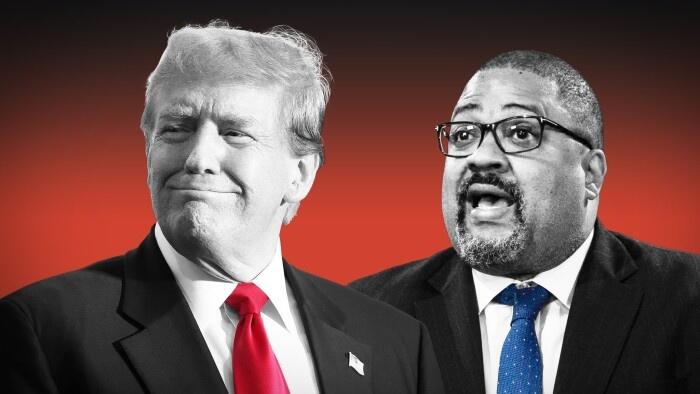
Manhattan District Attorney Alvin Bragg pushed Tuesday to create a new constitutional creature: the layaway president.

It was once common for stores to hold expensive items that you really wanted but could not make the payment.

So they were tagged and kept on the shelf until you were ready to redeem your item.

For Bragg, that leaves Donald Trump tagged until 2029.

In a filing before Manhattan Justice Juan Merchan, Bragg suggested that the court should stay the pending criminal case and defer any sentencing “until after the end of defendant’s upcoming presidential term.”

That would allow a city prosecutor to put a leash on a sitting president for four years.

Trump would govern by the grace of this local judge and district attorney.

In the meantime, pundits and politicians could portray the president as free on a type of work release program.

The suggestion is appalling to most of the people in the country, including the majority of voters who voted for Trump.

Vice President Kamala Harris and Democrats ran on this and other cases in the election.

The result was arguably the largest jury decision in history.

That being said, I do not believe that the mere election of a president negates jury verdicts on 34 criminal counts.

But ample reasons exist to overturn those verdicts or to dismiss this case.

For example, after the verdict, the Supreme Court rendered its immunity decision barring the use of certain evidence against a president.

Some of the evidence used in the Manhattan case likely fell within one of the protected categories.

The prosecutors not only elicited testimony from Trump aides in the White House but then doubled down on the significance of that evidence in their closing arguments.

Merchan could declare that the court cannot rule out the impact of such testimony on the final verdict.

Even if Merchan, as expected, does not dismiss the case on the basis for the immunity decision, the trial was rife with reversible error.

This was a raw exercise of lawfare and Merchan did little to ensure fairness toward the defendant.

Yet none of those errors can be likely addressed until Merchan reaches final decisions on the motion to dismiss as well as the sentencing question.

While that will mean that Trump could, upon possible sentencing, formally become a convicted felon, the matter can then be finally pried out of the hands of Merchan and taken to higher courts for review.

The worst possible option is the one suggested by Bragg, who would adopt the popular persona of Trump’s turnkey.

The President would be seen by many as governing on a type of conditional status from one of the most politically compromised prosecutors in the country.

For Bragg and other Trump opponents, that may be far more satisfying than a sentencing now given the unlikelihood of any jail component.

After the years and millions spent on the case, it would be the ultimate buzz kill to have Trump sentenced to some fine or other non-carceral penalty.

Many Democrats want to have Trump govern with an asterisk of a “President pending sentencing.”

Instead, Trump would govern with the clock ticking toward a sentencing date.

It is a dangerous precedent. Such pending sentences can have a coercive impact on a president in dealing with given officials, including a state governor who might be willing to pardon a president.

Consider the effort of the governor of New York in restoring the lucrative state and local tax, or SALT, deductions.

There is no reason to believe that Trump would succumb to such leverage (and he has already indicated that he would consider the change).

However, any decision on policies like SALT would be the subject of speculation of whether a reduction in taxation was made in the hope of a reduction in incarceration.

Critics would suggest that New York is yanking on the leash to achieve policy advantages.

This is the same judge and prosecutor who gagged the leading candidate for the presidency in discussing aspects of the case in the months leading up to the election.

Now, they would allow him to govern pending their own suspended decisions on his future.

The Trump case was always a thrill kill for Bragg.

Under Bragg’s proposal, his supporters would prolong that thrill for four more years.

The cost, however, would be devastating for the country.

This country needs a president, not a president on layaway from the Manhattan District Attorney.

*  *  *

Jonathan Turley is the Shapiro professor of public interest law at George Washington University and the author of “The Indispensable Right: Free Speech in an Age of Rage.”

Tyler Durden
Wed, 11/20/2024 – 14:45

Biden Asks Congress To Approve $100 Billion Supplemental For Disaster Relief

0
Biden Asks Congress To Approve $100 Billion Supplemental For Disaster Relief

Authored by Emel Akan via The Epoch Times (emphasis ours),

WASHINGTON—The Biden administration is urging Congress to allocate $100 billion in disaster relief to assist communities across the Southeast affected by the recent hurricanes Helene and Milton.

President Joe Biden addresses the nation after presidential election results, congratulating President-elect Donald Trump at the Rose Garden of the White House in Washington on Nov. 7, 2024. Madalina Vasiliu/The Epoch Times

“With the Congress now back in session, I write to request urgently needed emergency funding to provide for an expeditious and meaningful Federal response to Hurricanes Helene and Milton and other natural disasters,” President Joe Biden said in a letter to Congress addressed to House Speaker Mike Johnson (R-La.) on Nov. 18.

The administration on Nov. 18 submitted a funding request that included $40 billion for the Federal Emergency Management Agency (FEMA), $24 billion for the Department of Agriculture, and $12 billion for the Department of Housing and Urban Development.

“The last time Congress passed a comprehensive disaster package was in December of 2022 as part of the Consolidated Appropriations Act of 2023,” Shalanda Young, director of the Office of Management and Budget, told reporters during a call.

“Since then, numerous deadly storms and disasters have struck communities across the country. Those, of course, include hurricanes Milton and Helene.”

Biden is seeking funding for a total of 16 agencies, with additional allocations such as $8 billion for the Department of Transportation, $4 billion for the Environmental Protection Agency, $3 billion for the Department of Health and Human Services, and $2 billion for the Small Business Administration (SBA).

The request came after Johnson signaled that the House might delay appropriations bills until early 2025, when Republicans are set to control both Congress and the White House.

“We’re running out of clock; December 20 is the deadline,” Johnson told Shannon Bream on “Fox News Sunday” on Nov. 17. “We’re still hopeful we might be able to get that done, but if not, we will have a temporary measure. I think it would go into the first part of next year and allow us the necessary time to get this done.”

Young said the administration has already allocated funds for a range of other disasters, including the fires in Maui, tornadoes across the Midwest, the collapse of the Francis Scott Key Bridge in Baltimore, and severe storms in Alaska, Connecticut, Louisiana, New Mexico, Virginia, Pennsylvania, Illinois, and other states.

“That is why we need comprehensive disaster relief in order to ensure that our communities can fully recover and rebuild,” she said.

The funding request also includes critical support for the SBA’s disaster loan program for small businesses, which has completely exhausted its funding, according to Young.

“Homeowners also use this funding as a critical source of rebuilding,” she said.

During the call, FEMA Administrator Deanne Criswell also emphasized the importance of the urgent funding, noting that “2024 has been a year of records.”

“For example, in 2023, we had 114 disaster declarations, and as of today, in 2024, we’ve had 172,” she said.

During a visit to Western North Carolina last month, Johnson pledged that Congress would take bipartisan action to support recovery efforts once cost assessments are completed.

When asked about a lawsuit against FEMA in Florida brought because emergency workers allegedly skipped houses with Trump signs in front, a senior administration official stated during a call on Nov. 18: “We’re not able at this time to comment on an open and active investigation. I can tell you that FEMA’s mission is to help people before, during, and after disasters.

“And our core values are fairness, respect, integrity, and compassion. And that is the ethos of the organization.”

Tyler Durden
Wed, 11/20/2024 – 14:05

Mike Johnson Bans Transgenders From House Bathrooms After 1st Trans Lawmaker Elected

0
Mike Johnson Bans Transgenders From House Bathrooms After 1st Trans Lawmaker Elected

House Speaker Mike Johnson (R-LA) is banning transgender individuals from bathrooms on the House side of the Capitol Complex regardless of their gender identity.

Trans Rep-elect Sarah McBride (D-DE)

The move comes after the election of Rep-elect Sarah McBride (D-DE), who will become the first transgender member of Congress.

“All single-sex facilities in the Capitol and House Office Buildings (like restrooms, changing rooms, and locker rooms) are reserved only for individuals of that biological sex,” Johnson said of women with johnsons, adding “Like all policies, it’s enforceable. We have single-sex facilities for a reason. Women deserve women’s only spaces.”

“We’re not anti-anyone. We’re pro-woman. I think it’s an important policy for us to continue. It’s always been, I guess, an unwritten policy, but now it’s in writing,” Johnson continued.

The move comes after Rep. Nancy Mace (R-SC) introduced a resolution to ban transgender women from women’s bathrooms in the House.

Rep Nancy Mace (R-SC) and Speaker Mike Johnson (R-LA)

As Axios notes, Mace pushed Johnson to include her measure, which charges the House sergeant-at-arms with enforcing the ban.

Meanwhile, Rep. Marjorie Taylor Greene (R-GA) told colleagues at a Tuesday closed-door GOP conference meeting that she might get into a “physical altercation” if she’s forced to share the bathroom with a trans woman.

In a Monday statement, McBride, a woman with a penis, said “This is a blatant attempt from far right-wing extremists to distract from the fact that they have no real solutions to what Americans are facing.”

lol what?

Tyler Durden
Wed, 11/20/2024 – 13:45

Terrible 20Y Auction Has 2nd Biggest Tail, Lowest Directs On Record; Spikes Yields

0
Terrible 20Y Auction Has 2nd Biggest Tail, Lowest Directs On Record; Spikes Yields

If anyone was hoping that today’s 20Y auction would be even remotely successful, they can not put those to bed: the just concluded sale of $16BN in 20Y paper was a disaster.

Pricing at a high yield of 4.680%, the auction tailed the When Issued 4.650% by 3.0bps. Not only was this the third tail in a row, it was the 2nd biggest tail on record.

The bid to cover was even worse: sliding from 2.59 to 2.34, the btc was the lowest going back all the way to August 2022.

The internals were perhaps the only silver lining to the auction: indirects took down  69.5%, up from 67.9%, below the six auction average of 71.6%. But while Indirect demand was ok, the Direct award plunged to just 7.9% from 17.6%, the lowest on record. This mean that Dealers had to step in big time and so they did, taking down 22.6%, up from 14.5% and the highest since May 2021.

In light of just how ugly the auction was, it is probably not a surprise that yields spiked after the result, with the 10Y rising 2bps from 4.39 to 4.41, and hammered risk assets.

Commenting on the auction, UBS said that it looks like the prior well-demanded 10y and 30y auctions were just fast money profit-taking on shorts, and that “real money hasn’t started to buy bonds.” Well, the real money better step in soon or it will get ugly fast.

Tyler Durden
Wed, 11/20/2024 – 13:26

Stocks Slump As Ukraine Fires UK Storm Shadow Missiles Into Russia

0
Stocks Slump As Ukraine Fires UK Storm Shadow Missiles Into Russia

Ukraine’s armed forces fired British cruise missiles at military targets inside Russia for the first time, a Western official familiar with the matter said.

As Bloomberg reports, the strikes using Storm Shadow missiles were approved in response to Russia deploying North Korean troops in its war against Ukraine, a move by Moscow that the UK government considered to be an escalation of the conflict, according to the person who spoke on condition of anonymity because of the sensitivity of the matter.

The Telegraph reports that residents in the village of Marino, Kursk, found fragments from a Storm Shadow missile on Wednesday.

As a reminder, Storm Shadow missiles have been used by Ukraine inside its own territory for some time but Kiev now appears to have been given permission to strike targets inside Russia.

The missiles carry a bunker-busting warhead, and flies low and fast to evade air defenses.

British Storm Shadow missiles have a range of 150 miles.

The reaction across markets is less notable than yesterday’s with stocks seeing the biggest impact (lower)…

Treasury yields are down a little, gold up a little and bitcoin extending gains.

Reuters is reporting that Ukrainian President Volodymyr Zelenskiy has said his country will not rest until every last Russian soldier is ejected from its territory – based on the borders it gained after the 1991 fall of the Soviet Union.

This will not end well…

Tyler Durden
Wed, 11/20/2024 – 09:34

Target Shares Crash On Profit Miss, Downgraded Outlook, & Market Share Loss As Walmart Reigns Supreme

0
Target Shares Crash On Profit Miss, Downgraded Outlook, & Market Share Loss As Walmart Reigns Supreme

The current consumer environment is very dire for households making less than $100k a year, with the surge in the trade-down phenomenon—driven by both wealthy and low-income consumers grappling with record credit card debt and sliding personal savings—solidifying Walmart’s dominance as ‘America’s low-cost budget retailer,’ quickly eroding market share from competitors like Target and Dollar General into the end of the year.

Target reported a disappointing margin performance for the fiscal third quarter on Wednseday and slashed the annual EPS forecast over market share losses. 

It reported higher digital fulfillment and supply chain costs, resulting from elevated inventory levels and increased digital sales volumes.

“We saw several strengths across the business, including a 2.4% increase in traffic, nearly 11% growth in the digital channel, and continued growth in beauty and frequency categories,” Chief Executive Brian Cornell wrote in a statement, adding, “We encountered some unique challenges and cost pressures that impacted our bottom-line performance.” 

Here’s a snapshot of third-quarter results (courtesy of Bloomberg): 

Comparable sales +0.3% vs. -4.9% y/y, estimate +1.48%

  • Comp digital sales +10.8%, estimate +4.69%

Sales $25.23 billion, +0.9% y/y, estimate $25.74 billion

Gross margin 27.2%, estimate 28.7%

Ebit $1.20 billion, -11% y/y

Ebitda $1.95 billion, -5.5% y/y, estimate $2.16 billion

Customer transactions +2.4%

Average transaction amount -2%, estimate -1.08%

Digital sales as share of total sales 18.5%

Total stores 1,978, estimate 1,972

Operating margin 4.6%, estimate 5.63%

Store comparable sales -1.9%, estimate +1.49%

Stores originated sales 81.5%, estimate 82.7%

Adjusted EPS $1.85 vs. $2.10 y/y, estimate $2.30

Operating income $1.17 billion, -11% y/y, estimate $1.46 billion

Target expects fourth-quarter adjusted EPS of $1.85 to $2.45, versus the current Bloomberg Consensus of $2.65

  • Sees adjusted EPS $1.85 to $2.45, estimate $2.65

Several months after Target executives raised financial targets, these rosy outlooks have reversed into the holiday shopping season amid weak consumer trends: 

  • Sees adjusted EPS $8.30 to $8.90, saw $9 to $9.70, estimate $9.57 (Bloomberg Consensus)

“It’s disappointing that a deceleration and discretionary demand combined with some cost pressures have caused us to take our guidance back down after raising it last quarter,” Michael Fiddelke, Target’s chief operating officer and former chief financial officer, told investors on the earnings call, adding, “We believe it’s prudent to take this conservative approach.”

The quarter’s dismal earnings and revised outlook spooked investors, prompting some to question whether Walmart’s ‘rollback deals’ are eroding Target’s market share in the consumer space.

Target shares crashed 18% in premarket trading in New York. 

Commenting on Target’s earnings report, Goldman’s Eric Mihelc and Scott Feiler told clients this morning:

TGT (-18%) the clear focus this morning which is weighing on other general merch names too (DG, FIVE, DLTR -3%)…though it’s not all bad for consumer; witness WMT comps +5% yest, DAL saying premium consumer is ‘thriving’ and TJX +0.5% on earnings this morning. Some helpful takeaways from Scott here: link. Elsewhere, GIR updates MF and HF positioning post 13F filings. Most active high touch yesterday: UAA, CELH, SKX, KHC, WMT, AS, WRBY, FND, GIS, SBUX, MLCO, KO, CCL, GAP, KMB.

The analysts continued:

TGT -20%…Expectations were muted, which is why short interest was near 4 year highs. However, the low bar was on the comp sales, which were not much worse vs expectations. Bar was not low for a big EPS issue, which they ended up having one. Gross margins 100 bps light for 3Q and 4Q margins are also implied to be well below. The stock is down 20% in the premarket on an 8% FY EPS cut, so it does feel extreme. Having said that, almost nobody I spoke to had this big of an earnings miss/cut as their base expectation. Details: 3Q EPS of $1.85 vs Consensus $2.30 on comp sales +0.3% vs Consensus +1.5% (we think bogey was +0.5%). The issue of course is EPS/margins miss, with gross margins 130 bps light (SG&A was in-line, so gross margin drove all the downside). 4Q EPS well below at $2.15 (mid) vs Consensus $2.65 on comps of flat vs Consensus +1.3%.

Peer read? TGT did have +2.4% traffic growth vs +3% last quarter, so traffic is ok. As a result, Scott does not think all of Retail needs to get aggressively sold. However, when a name like TGT is down 20% and has 60% discretionary exposure, the natural reaction will be for other discretionary general merchandise names to see some underperformance. Would expect an elevated focus on DLTR, DG, FIVE, TJX (reports this morning also), ROST, BURL, etc…

On a separate note, Goldman’s Feiler explained to clients that the current consumer environment is a “winner-take-all” situation. So far, Walmart appears to be the king of deals (see: latest WMT earnings beat), and cash-strapped consumers are responding to deals by flooding the big box retailer’s stores nationwide.

Here are Feiler’s six points on the current consumer environment:

  • Takeaway # 1: We are in a Consumer environment that is steady enough that winners can continue to outperform (see WMT yesterday with +5.3% Walmart US comp sales and stock was +3% to new all-time highs, despite the elevated multiple to history).

  • Takeaway #2:  However, we are not in a Consumer environment that is good enough that it is a rising tide lifts all boats. There will be winners (WMT) and there will be share donors (see TGT this morning).

  • Takeaway #3: Dispersion is the name of the game and the current consumer environment supports a winners/losers environment.  I would expect that to continue into the rest of EPS season and 1H25.  We are seeing it in COST/WMT vs TGT. We are likely to see it in grocers and big box discounters vs dollar stores. We have seen it in footwear with ONON/DECK vs NKE, in MCD vs peers and in many other end markets as well.

  • What Happened This Morning?: TGT is down 20% in the premarket. Expectations were muted, which is why short interest was near 4 year highs. However, the low bar was on the comp sales line, which was not much worse vs expectations (+0.3% vs Consensus +1.5% and the bogey for +0.5%). The bar was not for a big EPS issue, which ended up being the big surprise here($1.85 vs Consensus $2.30). Gross margins are 100 bps light for 3Q and 4Q margins are also implied to be well below.

  • What to Do Here? The stock is down 20% in the premarket on an 8% FY EPS cut, so we are seeing some further multiple compression, despite 4-year high short interest. Having said that, almost nobody I spoke to had this big of an earnings miss/cut as their base expectation.  I would expect to see some short covers, but do not think long buyers will be quick to step in and take a more constructive view.

  • Peer read? TGT did have +2.4% traffic growth vs +3% last quarter, so traffic is ok. As a result, I do not think all of Retail needs to get aggressively sold. However, when a name like TGT is down 20% and has 60% discretionary exposure, the natural reaction will be for other discretionary general merchandise names to see some underperformance. Would expect an elevated focus on DLTR, DG, FIVE, TJX (reports this morning also), ROST, BURL, etc.

Other Wall Street analysts offered their take on TGT ER (courtesy of Bloomberg):

Citi (neutral from buy, PT $130 from $188), Paul Lejuez

  • “Very poor” 3Q results and an “uninspiring” 4Q outlook show Target is probably losing market share to Walmart, Lejuez writes

  • With Walmart’s share gains coming “largely from higher income consumers,” Target is at risk of losing additional share

  • “We believe TGT is likely to need to be more promotional to drive traffic/sales, which we believe makes F25 much more uncertain, especially because in 3Q TGT did not show an ability to adjust SG&A to offset the sales/gross margin weakness,” he says

Oppenheimer (outperform), Rupesh Parikh

  • Parikh said in his Target earnings preview note that he expected comparable sales and earnings for 3Q to show a “material” shortfall compared with Street estimates, but the actual bottom line miss is even “deeper” than he anticipated

  • Awaits the conference call to “better understand margin dynamics for the balance of the year and into FY25”

  • The stock pullback this morning is “much greater” than the possible downside in the mid-$130s/low $140s he envisaged with the preview note

Stifel (hold), Mark Astrachan

  • “We view results as disappointing, with comp. [sales] worsening sequentially y/y and on a 2-year basis,” Astrachan writes

  • This suggests that Target is underperforming compared with larger peers, and is losing market share in key categories, which probably is also hurting gross margin

  • Expects shares to decline by more than the anticipated ~10% reduction in the annual consensus EPS

Bernstein (market perform), Zhihan Ma

  • “Disappointing quarter calls Target’s ability to generate profitable growth into question,” Ma writes, adding that she wonders if the company can “exceed both sales and profitability expectations at the same time over the long term”

  • Target needs to invest in pricing and drive e-commerce growth to support top-line growth, but both of these actions are “margin dilutive”

  • She believes Target is less likely to turn profitable in e- commerce than Walmart due to its “smaller scale and limited investment in automated e-commerce fulfillment capabilities”

RBC (outperform), Steven Shemesh

  • “The conclusion investors seem to be drawing is that there aren’t a ton of margin levers left to pull if top line remains on the weaker side throughout 2025,” Shemesh writes

  • “Back of the envelope math suggests that ~flat to +1% comp in 2025 and ~flat op margin would yield EPS around $9.50, which at ~15x gets us to somewhere around $140-145, roughly ~10% upside from where shares are trading pre-market ($128)”

  • Premarket share reaction (down around 18%) probably fades throughout the day, but with visibility into a sales recovery limited, he wouldn’t advise shorter-term investors to chase the stock here

  • For longer-term investors, $10.50-$11.00 in EPS seems achievable in 2026

Vital Knowledge, Adam Crisafulli

  • “This weak TGT print underscores how a big part of Walmart’s strength is market share gains while the consumer overall continues to witness headwinds,” Crisafulli writes

  • Results likely don’t bode well for the likes of Kohl’s and the dollar stores

Considering the current challenging consumer environment…

…let’s remember that in July, we cited Goldman as saying…

And in October. 

A more recent note by Goldman analysts found the “trade-down phenomenon” has occurred across “high-end and low-end consumers.” 

The last time “trading down” mentions spiked on earnings calls, it was GFC.

Bidenomics has transformed American households into a nation of Walmart customers …

Tyler Durden
Wed, 11/20/2024 – 09:25

Bracing For Retaliation, US Shuts Embassy In Kiev Over Air Attack Risk

0
Bracing For Retaliation, US Shuts Embassy In Kiev Over Air Attack Risk

Washington appears fully aware it has poked the Russian bear, after President Biden greenlighted Ukraine striking Russian territory with long-range missiles.

US officials have warned Wednesday that “potential significant air attack” on Kiev is likely coming, and have announced the closure of the US Embassy in the capital “out of an abundance of caution”. This follows immediately on the heels of Ukrainian forces having struck an arms depot inside Russia with U.S.-supplied weapons, specifically the Army Tactical Missile System (ATACMS), on Tuesday.

“Embassy employees are being instructed to shelter in place,” a new alert on the embassy website said. “The U.S. Embassy recommends U.S. citizens be prepared to immediately shelter in the event an air alert is announced.”

Embassy diplomats and all staff are being asked to observe the following precautions:

  • Monitor local media for updates
  • Identify shelter locations in advance of any air alert
  • Immediately take shelter if an air alert is announced
  • Follow the directions of Ukrainian officials and first responders in the event of an emergency

The embassy closure is also happening the day after Putin signed a decree which updates and expands Russia’s nuclear doctrine, which effectively lowers the threshold for nuclear weapons use. “As we said earlier this month, we were not surprised by Russia’s announcement that it would update its nuclear doctrine; Russia had been signaling its intent to update its doctrine for several weeks,” the White House National Security Council responded in a statement.

Other Western embassies have also shuttered their operations amid air raid warnings in Kiev and other regions, including Italy, Spain, and Greece.

Al Jazeera notes that “Germany’s embassy in Kyiv remains open in a limited capacity and can still be contacted by German nationals who are in the country, a German Foreign Ministry official has said.”

“We are in constant contact with our colleagues on the ground so that we can take appropriate measures if the situation changes,” the official said.

Ukraine’s military has since said that warnings of a large-scale missile attack from Moscow forces are likely a “psychological operation” carried out by Russia, precisely in order to instill fear and cause further embassy closures. According to the military statement:

It said Russia is conducting a “psychological attack against Ukraine”, warning of fake messages circulating on social media on alleged increased missile threats that it said were part of a “psychological operation”.

With merely two months to go until Trump is sworn into office, many Republicans have blasted the Biden administration and his national security officials for risking World War 3, and at least assuring major escalation, by at the last minute greenlighting long-range strikes on Russia–even knowing full well the Trump administration plans to pursue peace negotiations. 

Tyler Durden
Wed, 11/20/2024 – 09:05

Trump Tariffs Are Inflationary Claim The Experts, But…

0
Trump Tariffs Are Inflationary Claim The Experts, But…

Authored by Michael Lebowitz via RealInvestmentAdvice.com,

  • Mark Cuban Says Trump’s Tariff Proposals Will Ramp Up Prices- Business Insider

  • Fed’s Kashkari Says Trump Tariffs Could Reheat Inflation If They Provoke Global Trade War- CNBC

  • Blanket Tariffs Would Be Incredibly Inflationary, Says Strategist- CNBC

  • Treasury Secretary Janet Yellen Warns “Sweeping Untargeted Tariffs” Would Reaccelerate Inflation- CBS News

  • Trump Tariffs Expected To Spike Inflation, Interest Rates- Business Insider

The headlines regarding Trump’s proposed tariffs and their inflationary consequences are undoubtedly worrying, but will they prove correct?

Instead of taking the “experts” word, let’s consider how tariffs may affect the prices of all goods and services, not just the items subject to tariffs. Furthermore, it’s worth discussing how tariffs could impact the economy, as economic activity greatly influences inflation. Lastly, we lean on historical precedence, capitalism, and the dollar to further evaluate how tariffs might impact inflation and economic growth.

Higher Prices And The Substitution Affect

Price changes of a good or service are primarily a function of supply and/or demand variations. However, price indexes, the basis for which economists measure inflation, are constructed on the prices of a basket of goods and services. The goods and services within the basket are weighted by the consumption of said items.

Considering the difference between the price of one good and the inflation index for an economy, let’s think about how consumers react to higher prices.

If the price of an imported good increases due to a tariff and the company selling the good commensurately increases the price, consumers respond in three ways.

  • Some consumers will decide not to pay the higher price and purchase a substitute good.

  • Others decide not to pay the higher price or buy competing goods and save their money.

  • Another group of consumers will pay the higher price, leaving them with less money to buy other goods.

Consumers buying a substitute good at a lower price will shift the composition of the inflation basket of goods, minimizing the impact of the tariff. 

Saving, thus not spending, will reduce economic activity, which is deflationary, as we will discuss when we consider how sellers might react to tariffs.  

Some consumers will pay higher prices. While this is inflationary for the tariffed item, the consumers have less money for other items, which is deflationary for those goods.

While the prices of the tariffed item and substitute items may change with demand preferences, the net effect after re-weighting the inflation basket and accounting for any broad economic impact will be minimal.

The demand for goods and the prices within the inflation pie will shift with a tariff. However, the aggregate supply and demand should be largely unaffected unless new money is injected into the economic system.

Business Owners Reaction

The prior section focused on consumers’ reactions to business owners passing on 100% of the tariff through higher prices. Typically, that does not happen unless demand is inelastic, meaning consumers have no choice but to buy a good or service.

Despite the price of the tariffed good increasing, the sellers’ profit margin does not change. However, as noted, the seller will likely lose some sales to substitute goods or savings. Accordingly, in many cases, sellers decide to eat some of the tariff costs to avoid losing sales. Doing so reduces their profit margin.

Sellers, faced with reduced profit margins and lost sales, will try to reduce expenses to offset the loss from the tariff. This means they might lay off employees, reduce capital expenditures, or choose other cost-saving methods.

The bottom line is that reduced profit margins, diminished spending, and layoffs will reduce economic activity. The economy will suffer, and demand for more than just the tariffed goods will decline. The result would be lower inflation and growth.

Retaliatory Tariffs

It’s equally important to consider that countries may not readily accept tariffs on their exports to the US. Many countries will retaliate with tariffs on US imports into their country. Such tariffs would make US-made exports more expensive and, thus, less desirable to foreign consumers.

As a result, US exports would decline, thus reducing economic growth and resulting in potential job losses and less inflation. 

With an appreciation for how tariffs can impact the economy and prices, let’s review the history books.

Smoot Hawley Tariff Act

In 1930, Herbert Hoover signed the Smoot-Hawley Tariff Act into law. The timing could not have been worse as the world was entering the Great Depression. Smoot-Hawley was intended to protect American jobs and farmers. The reaction from our trade partners was retaliatory tariffs on exported US goods.

US imports and exports were reduced by more than 50% within four years of the Act’s passage. Many Great Depression scholars blame the tariffs for playing a substantial role in amplifying the scope and duration of the Great Depression. The US paid a steep price for trying to protect its workforce through short-sighted political expedience.

While it’s hard to isolate the effect of the tariffs on the economy, GDP fell by an estimated 15% from 1930 to 1932. As a result, the unemployment rate rose to over 25%. From 1930 to 1932, the CPI index fell by 24%. The following table and graph, courtesy of Inflationdata.com, show the stunning deflation experienced in the early 1930s.

Trump 1.0 Tariffs

In 2018, Trump levied tariffs primarily aimed at China for a select group of goods. It is estimated the tariffs covered a little over $300 billion in imports. That accounted for about 12% of all imported goods. The tables below, courtesy of the Peterson Institute, show the share of the tariffs by country.

The following paragraph comes from The Impact of the 2018 Tariffs on Prices and Welfare, courtesy of the Journal of Economic Perspectives:

The figure shows a big surge in imports in the wave 1 products, washing machines and solar panels, prior to the imposition of tariffs, which was likely caused by importers moving forward import orders in order to obtain products before the imposition of the tariffs. For the remaining goods, it appears that on average their import levels were rising a little faster than for unaffected goods in the months prior to the imposition of the tariffs. In all cases, import values declined sharply after the imposition of the tariffs, typically falling 25 to 30 percent after the imposition of the tariffs. This drop is particularly striking given that imports for unaffected sectors and countries rose by about 10 percent over the same period, where this rise could in part reflect some import substitution from affected to unaffected countries and products in response to tariff changes.

As we wrote earlier, higher prices reduced the amount of imports of the tariffed goods and increased consumption of those goods not impacted by the tariffs. To this end, we just read the following headline: New York retailers stock up, switch suppliers as Trump tariffs loom

Furthermore, the article states:

Therefore, the full incidence of the tariffs has fallen on domestic consumers and importers so far, and our estimates imply a reduction in aggregate US real income of $1.4 billion per month by the end of 2018. We see similar patterns for foreign countries that have retaliated with their own tariffs against the United States, which suggests that the trade war has also reduced the real income of these other countries.

The graph below shows that US import prices fell from 2018 until the price surge due to the pandemic in late 2020.

Trump’s tariffs were designed to boost American industry. However, despite good intentions, the broader impact was reduced economic activity, with specific sectors facing deflationary pressures.

What About The Currency?

The reaction of the US dollar versus the currency of tariffed nations is also worth considering. For this, we lean on Hudson Bay Capital.

While in principle tariffs can be noninflationary, how likely is it? In the macroeconomic data from the 2018-2019 experience, the tariffs operated pretty much as described above. The effective tariff rate on Chinese imports increased by 17.9 percentage points from the start of the trade war in 2018 to the maximum tariff rate in 2019 (see Brown, 2023). As the financial markets digested the news, the Chinese renminbi depreciated against the dollar over this period by 13.7%, so that the after-tariff USD import price rose by 4.1%. In other words, the currency move offset more than three-fourths of the tariff, explaining the negligible upward pressure on inflation. Measured from currency peak to trough (who knows exactly when the market begins to price in the news?), the move in the currency was 15%, suggesting even more offset.

Measured CPI inflation moved from slightly above 2% before the start of the trade war to roughly 2% by the armistice. Measured PCE inflation went from slightly below the Fed’s target to further below the Fed’s target. Of course, there were crosscurrents like the Fed’s tightening cycle at the time, but any inflation from this trade war was small enough that it was overwhelmed by these cross-currents. This explains the Trump camp’s view that the first U.S.-China trade war was noninflationary.

Only 11% of Chinese goods are subject to tariffs. The prices of the other 89% of non-tariffed goods fell for Americans due to the depreciation of the Chinese yuan versus the dollar. The net currency effect of prices of all goods imported from China was negative. If we could, we would edit the last line in the comments above and say the US- China trade war was deflationary.


Let Capitalism Work

The US is one of the world’s most productive and wealthiest countries. Consider that our poorest state, Mississippi, has a higher GDP per capita than France. Our prosperity is the result of many factors, most of which are beyond the scope of this article. However, one key factor is that we generally have less government economic interference than most other countries.

While adding tariffs to level the playing field may win votes and sound like a good idea, they are government interference. This is not to say that discussions with our trade partners shouldn’t occur or actions shouldn’t be taken, but it is to say that tariffs tend to bode poorly for the economy and result in lower prices.

Taxes, regulations, and other domestic or international governmental actions are not a recipe for more robust growth.  

Summary

Economic theory and experience tell us tariffs are not inflationary. It’s correct to claim that a tariff on a good will raise its price. However, the claim fails to consider how consumers and sellers of the goods will react to higher prices.

Once all the economic, price, behavioral, and currency impacts net out, another round of tariffs will likely prove deflationary and harmful to economic growth.


Tyler Durden
Wed, 11/20/2024 – 08:45