71.2 F
Chicago
Wednesday, October 14, 2026
Home Blog Page 2158

The Great Blunder In Public Finance

0
The Great Blunder In Public Finance

Authored by ‘Economart’ via The New Economics substack,

Why so many go so wrong on public debt.

I have been involved in the study of economics for about 30 years. What spurred my interest was the discovery of a major blunder in the field of Public Finance that has caused centuries of misery, poverty and tyranny. The strange thing is that we all know of this blunder in various ways, but inexplicably refuse to incorporate the information into reasoning on this most important subject. It is beyond me why the learned and lettered people of Finance and economics allow this fundamental and dubious premise, passively accepted for millennia, to persist.

A long time ago, it was thought that a government should raise funds solely by Taxation for some very good reasons. Taxation consisted of a simple transfer of funds from citizens to government for services rendered. Public borrowing consisted of an interest bearing loan with specific terms for repayment. When the note came due, not only the original amount borrowed, but accruing interest, the price of borrowing, had to be remitted to the lender. Why incur the extra cost inherent in borrowing when government could avoid it via an initial tax transfer!

In summary, moderate pain now rather than greater pain later was preferable.

This conclusion, reasoned through with ease, unfortunately fails to account the profound and broad effects and costs of Taxation. In fact, such costs are rarely and inexplicably considered, they being held a negligible charge when compared with the accruing cost of interest in public borrowing. And when heeded and investigated by the rare few, they are quickly dismissed. Thus, through millennia of Taxation, an erroneous notion has developed with repeated reinforcement that government funds itself; That taking from citizens is essentially the same as the generation of revenues by a business, firm or individual through the satisfaction of the needs of consumers or employers in the market place.

The questionable nature of this premise may be neatly demonstrated in one simple query about deficits.

Suppose the the US Federal Government extracts from the citizens of its jurisdiction $4 trillion in taxes. It then spends $5 trillion. When asked what the deficit is, most invariably respond with $1 trillion. When asked a follow up: “How much did the Government contribute to its expenditures?” Hesitation emerges and the fun begins.

Depending on how one answers, his views, whether recent or long held on Public Finance, on deficits, on taxation and borrowing, could turn a sharp 180 degrees.

In favor of a 180 degree turn, I argue it is self-evident that government contributes nothing to its expenditures; That the taxed funds are derived from the finances and assets of taxpayers; that government must always turn to them for the means to underwrite its public expenditures.

Whether project costs, handouts, public debt repayment, or interest owed, the government invariably thrusts its bills on to resident citizens resident for settlement. If it were government money, it would be unnecessary for citizens to elect and send their political representatives to government legislative bodies to control and manage the collection and expenditure of such funds.

So how could one construe the taxed funds as government funds when it has no money or, rather, resources? One cannot. Therefore, the government’s deficit must always be the whole of its expenditures, and not just the comparatively lesser amount spent in excess of tax revenues.

Some might respond that it is wrong to change the definition of Deficit, that it represents a worthy distinction between taxed and borrowed funds, between funds bearing an interest charge that must eventually be repaid, and those that don’t. Thus, the definition shouldn’t be revised. But dismissing the controversy doesn’t really get at the heart of the matter.

A number of economists, even the very eminent, are led into bemusing difficulty by this faulty premise. I have spent considerable time reading the varied entries on informative web sites of free market economists and organizations such as Café Hayek, AIER, Mises and the Future of Freedom Foundation. In commenting on the recent Debt Ceiling circus, many start off arguing against public debt, then end up arguing against excessive public spending. If public debt issuance is the problem, then it would seem that all is resolved were government to restrict its spending merely to funds taxed. If the problem be excessive or, rather, wasteful government expenditure, then the obvious remedy would be its curtailment.

But is it right to argue, as it indeed appears, that government may spend as much as it pleases, even wasting large sums, as long as funds arrive by taxation; that all is well in the financial universe as long as no public debt is issued? Is it right to simultaneously equate public expenditures funded through the issuance of public debt with waste? It is highly doubtful that all debt financed public expenditures are wasteful, just as it is highly doubtful that all tax funded public expenditures are worthy.

I do not mean to single out the free marketeers, as such reasoning clearly is not restricted to them. They count among the many who fail to recognize the blunder that repeatedly ensnares them all.

Regardless of the controversy, let us imagine there is some deficiency in the conventional analysis of deficits. Since there are immense costs in both Taxation and Borrowing, an earnest effort at investigating the issue may lead to worthy insight and a resolution of the dilemma.

I have already discussed the fact that government does not fund government, that the deficit is the whole of public expenditures and not just a portion. Truly, it is not a concern for government as to how it collects the required funds or from whom, whether funds arrive by taxation or borrowing, whether from locals or foreigners. All that matters is that the government’s bank account is repeatedly replenished.

But it certainly matters to those supplying the funds, and the burden of public expenditures or debts must fall on the assets, property and income of taxpayers or resident citizens. The clear question becomes whether government should levy taxes upon or borrow from this agglomeration of assets. The analysis, a simple adding up of the costs of taxation and its benefits may yield astounding results. If the benefits of Taxation exceed its costs, then the state should retain Taxation. However, if the costs of Taxation exceed its benefit of interest savings on public debt, the state should borrow.

Without proper assessment or investigation of the true costs of either Taxation or Borrowing, consensus has always led economists, financial thinkers, and government leadership to choose Taxation over Borrowing. With proper assessment of the benignity or malignancy of interest on public debt in place of general declarations of gross injury we are enlightened, and one should then be able to solve with unknown facility the dilemma of whether government has a borrowing or spending problem.

Tyler Durden
Tue, 11/05/2024 – 06:30

“Double That Of Past Election Cycles”: Marriott Says Election Weighing On Hotel Demand 

0
“Double That Of Past Election Cycles”: Marriott Says Election Weighing On Hotel Demand 

Shares of Marriott International slumped 2% on Monday after the Bethesda, Maryland-based hotel company slashed its adjusted earnings per share guidance for the full year. The gloomy outlook missed the average analyst estimate tracked by Bloomberg. 

During a Monday morning earnings call, Marriott CFO Leeny Oberg told investors that consumers had pulled back on travel this month, citing headwinds around mounting US election uncertainty.  

“Fourth quarter REVPAR [revenue per available room] growth in the US and Canada is currently expected to be generally in line with the third quarter with strong leisure and BP trends in October, offsetting weakness in November due to tomorrow’s election. The election impact on US and Canada REVPAR is forecasted to be around negative 300 basis points in November, and negative 100 basis points for the quarter, double that of past election cycles, as we have meaningfully lower transient and group room nights on the books for both this week and next,” Oberg said. 

Marriott CEO Anthony Capuano told investors that fourth-quarter revenues were trending “roughly flat” due to the negative impact of the US election. 

Here’s a snapshot of Marriott’s third-quarter earnings (courtesy of Bloomberg):

  • Adjusted EPS $2.26 vs. $2.11 y/y, estimate $2.31

  • EPS $2.07 vs. $2.51 y/y

  • Revenue $6.26 billion, +5.5% y/y, estimate $6.27 billion

  • North America REVPAR change in constant currency +2.1%

  • Worldwide REVPAR change in constant currency +3%

  • Adjusted Ebitda $1.23 billion, +7.6% y/y, estimate $1.24 billion

  • Adjusted operating income $1.02 billion, +6% y/y, estimate $1.04 billion

  • Adjusted operating margin 62% vs. 62% y/y, estimate 64.2%

  • Total location count 9,068, +4.5% y/y, estimate 8,851

  • Total rooms at end of period 1.67 million, +5.9% y/y, estimate 1.67 million

Fourth quarter forecast:

  • Sees adjusted EPS $2.31 to $2.39, estimate $2.43

  • Sees adjusted Ebitda $1.24 billion to $1.27 billion, estimate $1.28 billion

  • Sees Gross fee revenues $1.29 billion to $1.31 billion

Full-year forecast:

  • Sees adjusted EPS $9.19 to $9.27, saw $9.23 to $9.40, estimate $9.36 (Bloomberg Consensus)

  • Sees adjusted Ebitda $4.93 billion to $4.96 billion, saw $4.95 billion to $5.02 billion, estimate $4.99 billion

  • Sees Gross fee revenues $5.13 billion to $5.15 billion, saw $5.13 billion to $5.18 billion

Besides Marriott, earnings call mentions of “election” have surged this earnings season, surpassing the number of mentions in the prior election cycle and rivaling the +3,000 mentions in the fourth quarter of 2016. 

Blame it on the election uncertainty – classic.  

Tyler Durden
Tue, 11/05/2024 – 05:45

Gold Is On The Ballot

0
Gold Is On The Ballot

Authored by James Rickards via DailyReckoning.com,

A reader recently asked me which presidential candidate would be more bullish for gold.

That one’s easy. Kamala Harris.

A President Harris administration would preserve and strengthen the status quo. To start with, we’d see a continued bonanza of bad regulation, spending and taxes. Add in poor capital allocation and misaligned incentives, and we have a recipe for stagflation and reckless monetary policy.

But an often-ignored catalyst for gold is U.S. foreign policy.

Under President Biden and VP Harris, world stability has deteriorated. Nations are lining up in two distinct blocs, not dissimilar to the buildup before World War II. Military tension hasn’t been this high in many decades.

Biden and Harris have also greatly accelerated the weaponization of the dollar. Sanctions and financial warfare have become the de facto levers applied to protect U.S. national interests (real and perceived).

The ongoing shift away from dollar assets is directly tied to the Biden administration’s seizure of Russian assets following Putin’s invasion of Ukraine in 2022.

Every leader around the world is left pondering how safe their own assets are from the long arm of Uncle Sam. If Russian central bank funds can be frozen, and even stolen, theirs can be too.

Russia is taking full advantage of the situation. They’re leading the BRICS’ efforts to de-dollarize international trade, and progress is being made. We’ve backed the country into a corner and given them no other choice. And sanctions have not hurt the Russian economy as badly as the West had hoped.

This weaponization of the dollar is directly fueling the bull market in gold.

Central banks are increasingly moving their reserves away from U.S. government securities and into gold. This short-sighted foreign policy is imminently hazardous to the dollar’s status as a reserve currency.

Meanwhile, Donald Trump has stated that he will minimize the use of sanctions and end the weaponization of the dollar.

In a recent discussion at the Economic Club in New York, Mr. Trump noted that during his presidency, he only used sanctions in a limited fashion because abusing them “kills your dollar and everything it represents”.

Former President Trump went on to say that the dollar losing its place as world reserve currency “would be the equivalent of losing a war,” and could “make us a third-world country”. He understands what is at risk today.

President Biden and VP Harris have shown zero awareness of this problem. They’re playing a dangerous game and appear to be unaware of the consequences of their actions. The nation is stumbling towards disaster.

President Trump is the only candidate who can at least slow the dollar’s erosion and minimize the financial impact on Americans.

The trend of de-dollarization isn’t going away, but decisions made by the US president over the next 4 years will largely determine the fate of the dollar. We’ve reached a critical financial crossroads.

Outlook for Gold is Bullish Regardless

Even if a Harris administration would be better for gold in the short-term, gold will continue to do well no matter who wins the election.

Debts and deficits around the world have simply grown too large. A hard landing is inevitable, but effective management of the crisis will be key to preserving Americans’ quality of life.

A wise president would slow the trend of de-dollarization with common sense policies. They would stop using the dollar as a crude tool to achieve foreign policy objectives. They would cool global military tensions and ease back from our dangerous trajectory. Right now, the Biden/Harris team continues to climb the escalatory ladder with no end in sight. Nuclear war, anyone?

This would at least reduce the urgency of the global flight out of the dollar.

Under President Harris, however, the situation could easily spin out of control. Yes, gold would likely soar.

A bull market driven by conflict, out-of-control inflation, and rapid de-dollarization.

Trust me, that’s not the type of bull market we want to see.

The negatives in such a scenario far outweigh the benefit of gold ascending more quickly. A forecast of stagflation with a high chance of a dollar crash would be nothing to look forward to.

So, to answer the reader’s original question, Kamala Harris would almost certainly be more bullish for gold. But it would be bearish for the United States in every other way imaginable. A poor trade-off.

Remember, the purpose of gold is not to make us rich. It is to preserve our wealth during times of chaos. And gold will continue to play that role no matter who wins the election.

Tyler Durden
Tue, 11/05/2024 – 05:00

“Lots Of Screws”: Netizens Take Aim At Russian Stealth Jet Featured At Chinese Airshow 

0
“Lots Of Screws”: Netizens Take Aim At Russian Stealth Jet Featured At Chinese Airshow 

For years, ZH readers have been well aware of the emerging risks of a war cycle and the advanced technology destined for the modern battlefield—stealth fighter jets, hypersonic weapons, and kamikaze drones. All of which have already been deployed to battlefields in Eastern Europe and the Middle East. 

Global superpowers have been locked in a fifth-generation fighter jet race for the last two decades. The US leads with the F-22 and F-35; meanwhile, China has the Chengdu J-20 and Russia the Su-57. 

The focus is on Russia’s Su-57 Felon fighter jet. New footage of the aircraft was uploaded on X on Monday from the Airshow China 2024 in Zhuhai, located in the southern Guangdong province, on the border with Macau. 

Netizens worldwide—not just in China—are questioning the build quality of the Su-57 after analyzing footage… 

Defense Blog reports:

Russia’s Su-57 Felon fighter jet, showcased for the first time at Airshow China 2024 in Zhuhai, has become the subject of widespread mockery on Chinese social media.

Close-up photos and videos of the aircraft, revealing questionable assembly quality, have sparked criticism and ridicule among Chinese internet users.

The first Su-57 arrived in Zhuhai on Monday, with a second stealth fighter jet transported aboard an An-124 cargo aircraft. The initial Su-57 is scheduled to perform flight demonstrations, while the second will be on static display, allowing attendees to closely inspect Russia’s flagship fifth-generation fighter.

According to the Defense Express magazine, criticism from Chinese observers centers on visible construction flaws, including numerous bolts securing fuselage panels and poorly aligned sections. While the use of visible bolts was previously known, the poor panel fitment and the inconsistency in assembly have drawn sharp remarks. The rear section, shown in detail for the first time, features bolts with varying head types—Phillips, flathead, and hexagonal—raising questions about the manufacturing process.

However…

The nation that fields the best fifth-gen fighters, hypersonic missiles, and kamikaze drones will undoubtedly prevail as the ‘fog of war’ casts across Earth. 

Tyler Durden
Tue, 11/05/2024 – 04:15

Mitochondrial Imbalance Linked To 90 Percent Of Chronic Diseases

0
Mitochondrial Imbalance Linked To 90 Percent Of Chronic Diseases

Authored by Ben Lam and JoJo Novaes via The Epoch Times (emphasis ours),

Many chronic diseases can be traced to mitochondrial dysfunction, according to Chen Junxu, a natural medicine expert at Bastyr University. After reviewing over 500 research papers and drawing from his extensive clinical practice, Chen developed a comprehensive theory about the relationship between mitochondrial health and chronic disease, which he shared in a recent interview on NTDTV’s “Health 1+1“ program.

Kateryna Kon/Shutterstock

Understanding Mitochondria’s Vital Role

Mitochondria are often called the power generators of human cells. They convert nutrients such as glucose and fatty acids that we obtain from food into adenosine triphosphate (ATP), the primary energy source in our cells during metabolism.

At the same time, mitochondria are the core of human immunity, too. Healthy mitochondria effectively regulate immune responses, while mitochondrial dysfunction can damage immune cells, resulting in many chronic diseases and impaired cellular differentiation.

Chen argues that seemingly diverse conditions—including diabetes, hypertension, heart disease, cancer, allergies, autoimmune diseases such as rheumatoid arthritis, and even various mental illnesses—can be understood through a “unified theory” of mitochondrial imbalance. This means that almost every disease can be traced to mitochondrial imbalance. In other words, in mitochondrial imbalance, there is invariably something wrong with the body’s basic metabolism. This perspective suggests that approximately 90 percent of chronic diseases stem from problems with mitochondrial metabolism.

Chen quoted Dr. Chris Palmer, assistant professor of psychiatry at Harvard University and founder and director of the Metabolic and Mental Health Program at McLean Hospital, as saying that mental illnesses are metabolic syndromes. That means mental illnesses and metabolic diseases such as diabetes, hypertension, heart disease, and cancer are all caused by problems with cell metabolism, which has its functional core residing in the mitochondria.

His theory about mitochondria is fully illustrated in his recent publication, “Renewal of Mitochondria to Cure Chronic Diseases.” He said this book is written from a relatively “avant-garde” perspective of medical investigation, exploring why people get sick and whether the human body possesses an infallible health mechanism. He predicts that the study of mitochondria will become a handy tool in empirical medicine in the next three decades.

The ‘Cocktail Therapy’ That Repairs Mitochondria

Chen has developed a comprehensive “cocktail therapy” approach to restore and enhance mitochondrial function. This protocol includes five key components.

1. Optimizing Energy Sources

Start with a low-carb ketogenic diet, with no more than 30 grams (1 ounce) of carbohydrates per day. Switching the fuel supply to mitochondria from glucose to ketones can lower blood sugar and keep it stable. This can also allow the mitochondria function to return to normal gradually, allowing the pancreas, liver, and immune system to return to a healthy state. This is a remedy for the mitochondria that were damaged due to previous long-term high sugar (carbohydrate) diet, staying up late, and other factors.

If the mitochondria of the pancreas and liver are damaged due to these factors, insulin resistance or reduced glucose tolerance will occur and may even lead to diabetes, Chen said. Once we switch from glucose to ketones, we break free from the limitations of glucose metabolism. Mitochondria, now unburdened, can efficiently use ketones for energy. This revitalizes organs like the pancreas and liver, restoring their proper functions.

2. Nutrient Supplementation

The next step is to use certain nutrients to repair and renew the mitochondria. This includes supplementing the mitochondria with the primary important antioxidant, glutathione.

Since this nutrient cannot be taken directly because it will be destroyed by gastric acid, we can take some of its precursors, including N-acetyl cysteine (NAC) and glycine, as supplements. They will synthesize an appropriate amount of glutathione, which will neutralize the free radicals produced by the mitochondria and help them repair themselves, slowly leaving the mitochondria to become healthy again.

3. Grounding and Environmental Factors

Another approach involves restoring mitochondrial membrane potential through grounding, either by direct earth contact or exposure to the Schumann Resonances. This natural electromagnetic frequency from Earth can help normalize cell membrane potential, preserving up to 20 percent of mitochondrial production capacity.

Mitochondria typically expend 20 percent of their energy each night restoring normal cell membrane potential. External grounding and pulsed electromagnetic field therapy (PEMF), a noninvasive treatment that uses electromagnetic fields to promote healing and improve various health conditions, can reduce this energy burden on the mitochondria.

This approach, Chen suggests, could not only reverse disease but also help achieve optimal health and vitality.

4. Quality Sleep


Chen emphasized that “mitochondrial cocktail therapy” also needs to go with exercise and good rest.

Equally important is to avoid damage to mitochondria from environmental pollution, food additives, pesticides, and other toxins.


He specifically mentioned that we must maintain a quality sleep routine and ensure an adequate amount of deep sleep every night. Although this may sound like common sense, most people don’t do it.

5. ‘Zone 2’ Exercise

Chen strongly recommends “Zone 2” exercise, which focuses on low-heart rate training. This type of exercise uses aerobic respiration but does not produce lactic acid, so it won’t make you feel tired.

Examples of Zone 2 exercises include ultra-slow jogging, brisk walking, or leisurely biking. You should be able to talk during these activities, but you’ll notice that you’re breathing a bit harder. This level of exercise helps improve mitochondrial efficiency, gradually repairing organs.

In contrast, more intense endurance training can increase the number of mitochondria, boosting their overall production capacity.

According to Chen, any form of exercise benefits mitochondrial health, whether it improves efficiency, increases the number of mitochondria, or both. However, Zone 2 exercise is more manageable for most people. It’s less likely to cause injuries and can be done indoors or outdoors, making it a more accessible option.

Why Do People Get Sick?

Chen emphasized that illness often results from violations of natural health principles, whether through environmental factors or personal choices. He suggests that disease can serve as a warning signal, prompting necessary lifestyle adjustments.

Key preventive measures include:

  • Avoiding environmental toxins
  • Limiting exposure to food additives and pesticides
  • Making conscious dietary choices
  • Maintaining consistent sleep patterns
  • Getting regular exercise appropriate to individual fitness levels

Chen said that sometimes illness can be a blessing in disguise that reminds people of the need to rest, adjust their lifestyle, retreat from their earlier mistakes, and return their bodies to a healthy state.

Tyler Durden
Tue, 11/05/2024 – 03:30

NATO Kicks Off Largest Artillery Drills In Finland, On Russia’s Northern Doorstep

0
NATO Kicks Off Largest Artillery Drills In Finland, On Russia’s Northern Doorstep

The US Army Europe and Africa on Monday launched what are being described as NATO’s largest artillery drills, dubbed Lightning Strike 24, and held in Finland’s northernmost region of Lapland.

The exercise involves over 5,000 military personnel from the US and 28 Allied and partner nations, and will feature over 130 weapons systems, aimed at showing off the alliance’s field artillery capability. But ironically this comes at a moment many Western nations have complained that their artillery shell stockpiles are dwindling to due supplying them to Ukraine over the past 2+ years of war.

Illustrative file image: NATO

The drills are expected to last until November 28, and encompass other locations beyond Finland, including Germany, Poland, Romania, and Estonia.

But it is the Finland portion of the drill likely to be most closely watched from Moscow, given the large Lapland area lies very near the Russian Murmansk region border, and north of the Arctic Circle.

“This is a good example of how our field artillery combined with Allied capabilities forms powerful defense in northern Finland and NATO,” the exercise commander, Colonel Janne Mäkitalo, has stated.

He also hailed that the drills will demonstrate how allied support can come to Finland “very quickly” if needed in the event of a conflict or threat.

Most of the NATO troops will be concentrated in the Finnish portion of the drills, some 3,600 military personnel out of the total 5,000.

The US Army is the most sizeable component, according to an official press release:

Major participating units and organizations include U.S Army Europe and Africa, U.S. Army 56th Artillery Command, U.S. Army V Corps, U.S. Army 21st Theater Sustainment Command, U.S. Army 41st Field Artillery Brigade, U.S. Army 10th Mountain Division, U.S. Army 1st Cavalry Division, U.S. Army 4th Security Assistance Forces Brigade, U.S. Army 82nd Airborne Division, the Finnish Army, NATO Multinational Division Northeast, and NATO Allied Rapid Reaction Corps.

Finland and Sweden are NATO’s newest members, with Finland formally gaining entry April 4, 2023. Importantly, Finland shares a 1,340-kilometre (830 mi) border with Russia, and Moscow has warned that this could result of the greater militarization of the Baltic regions.

However, President Putin has reacted relatively calmy to the development, brushing off Finland and Sweden entering NATO as but a “meaningless” move which will in the end only harm their own national interests.

Tyler Durden
Tue, 11/05/2024 – 02:45

Escobar: The Roadblocks Ahead For The Sovereign Harmonious Multi-Nodal World

0
Escobar: The Roadblocks Ahead For The Sovereign Harmonious Multi-Nodal World

Authored by Pepe Escobar,

The Kazan lab has laid out several geoeconomic road maps, and is seriously taking the inevitable roadblocks into account…

We will need weeks, months, years to fully grasp the enormity of what took place in Kazan during the annual BRICS summit under the Russian presidency.

For the moment let’s cherish arguably the most appropriate definition of BRICS as a laboratory of the future: this lab, against nearly insurmountable odds, is actively engaged in creating a Sovereign Harmonious Multi-Nodal World.

Of course the challenges are immense. In his post-BRICS assessment, when addressing the sustainability of supply chains, Deputy Foreign Minister Sergey Ryabkov – the top Russian sherpa throughout the year, performing impeccably – stressed the “unacceptability of illegitimate unilateral sanctions applied by the Western group against many members of BRICS, linking sanctions with the climate agenda and human rights.”

This is only one of several topics of contention that the BRICS insist must be addressed as part of a – possible? – deep reform of the current system of international relations.

The extremely detailed – and quite polite – Kazan Declaration, outlining all that needs to be reformed, may not have been forceful enough to assuage the mounting anger and perennial fears expressed non-stop by the Global Majority.

Criticism that the Kazan Declaration in many aspects just replicates silver-wrapped blah blah blah peddled by the G7 and the G20 (whose summit, next month in Rio, is actually being hijacked by the G7) does proceed.

For a number of reasons, including internal disagreements, the BRICS – defined by President Putin as not an “anti-Western” but a “non-Western” group – are proceeding with extreme caution not to directly antagonize that dangerous cornered animal, the “rules-based international order” Hydra.

The Kazan Declaration is not a revolutionary document; rather it is a letter of intentions for the whole Global South.

It does not go against “global governance” and the “central role of the UN” – as much as the UN has been reduced to an empty shell, coerced by its dodgy deals with the World Economic Forum (WEF), WHO and NATO.

It does not go against the leading role of the IMF in global finance.

It does not go against the UN Agenda 2030 – redacted by the WEF and the Davos gang – for sustainable development supported by hazy “shareholders”, an euphemism for Big Pharma, Big Tech and Big Banking.

It does not go against the WHO and its “central coordinating role” in solidifying the “international pandemic prevention, preparedness and response system” – as in the next pre-planned/predicted pandemic is just around the corner.

And it does not go against the dreaded UN Pact for the Future, which is essentially the softly softly implementation of the Davos-penned Great Reset.

Lab moving to testing models non-stop

What must be scrutinized from now on is the “devil in the details” process of establishing facts on the ground – as in President Putin in Kazan suggesting a new BRICS funding/financing platform bypassing the IMF and the World Bank. That’s what establishing a post-Bretton Woods system means in practice.

It’s still a long way away. Kazan is just the departure station for the journey. When the BRICS+ high-speed train gets there – the current 9, plus still indecisive Saudi Arabia, plus the 13 new partners – it will be imperative to form a BRICS secretariat, and develop a joint, integrated Economic Development, Trade, and Defense policy.

And then, arguably in the next decade, the BRICS may finally agree on a New Reserve Currency – which may be called the virtual BRICS currency -, quite similar to the IMF’s SDR (Special Drawing Rights) mechanism, but totally independent from the IMF and the U.S. dollar: a currency based on the weighted average of all BRICS nations’ currencies.

Yaroslav Lissovolik has been a crack analyst of the BRICS evolution since the past decade. In a working lunch in Moscow nearly six years ago, he offered me a concise presentation of his idea of creating a BRICS currency called 5R – then based on the ruble, renminbi, real, rupee and rand.

Lissovolik has noted how BRICS in Kazan have expressed support to the WTO “as the core of a rules-based multilateral trading system” (translation: not rocking the boat for the moment).

BRICS also expressed support for the IMF “that is at the center of the Global Financial Safety Net of the world economy” – while asking for “expanding the share and the representation of the Global South” (that will fall on deaf Hegemon ears). BRICS also supports the G20 (let’s see what transpires in practice at the summit in Rio next month).

When it comes to the NDB – the Shanghai-based BRICS bank – now that’s where the action should be. Lissovolik noted how BRICS is making the right moves: asking for greater use by the NDB of national currencies (for the moment it’s a pitiful less than 30%); and inciting it to attract more members and finance more projects across the Global South.

When it comes to the BRICS’ Contingency Reserve Arrangement (CRA), Lissovolik correctly notes there’s still too much to do. The CRA, as the joint statement by the BRICS Finance Ministers and Central Bank Governors issued a week before Kazan has outlined, offers financial support “during the times of balance of payments crises and safeguards their economic stability”. What the BRICS need to do, fast, is to incorporate all the currencies of the 9 members to the basket.

Finally there’s the Holy Grail: cross-border settlements. As I examined here – and that was plain to see in Kazan – BRICS are still in the stage of discussing and testing models. They are all on the table now – and quite a few will be tested within the next few months.

Lissovolik pointed to three “tracks” that should pick up speed as fast as possible: trade liberalization (ongoing); BRICS single currency (still a long way away); and “cooperation among the Central Banks of BRICS economies in the sphere of CBDC inter-operability” (the Russian Ministry of Finance is ahead of everyone on it; breakthroughs expected soon).

Welcome to the BRICS North-South New Silk Road

The big BRICS breakthroughs are on geoeconomics – all revolving around connectivity corridors.

First and foremost, the International North-South Transportation Corridor (INSTC): multi-modal (ship, rail, road); 7,200 km long; crisscrossing Eurasia, de facto connecting the Baltic – and the Arctic – via the Caspian with the Persian Gulf and the Indian Ocean.

Strategically, the INTSC not only connects three top BRICS – Russia, Iran, and India – but further on down the road, also Armenia, Azerbaijan, Kazakhstan, Kyrgyzstan, Tajikistan, Turkiye, Ukraine (post-war), Belarus, Oman and Syria, with Bulgaria as an observer member. The INSTC will have three major axes: Western (Russia-Azerbaijan-Iran); Trans-Caspian (via the Russian ports of Astrakhan and Makhachkala); and Eastern (Russia-Kazakhstan-Turkmenistan-Iran by rail).

Call it the BRICS North-South New Silk Road. It’s no wonder that Putin in Kazan singled out the INTSC – alongside the Arctic Silk Road (that’s the Chinese denomination) – as the top two developing connecting corridors of the future. The INSTC will allow transit time cargo of only 15 to 24 days, compared with 45 to 60 days via the Suez Canal.

Then there’s the East-West Transport Corridor – encompassing Russia, China, Mongolia, North Korea and Kazakhstan, based mostly on the 10,000 km long Trans-Siberian Railway, soon to be upgraded. And of course the Mongolian Steppe Road, planned ten years ago and bound to include a 997 km long Russia-China expressway.

On top of all these three corridors, Russia wants to shape a variant: a Central Eurasia Transport Corridor from Russia to Mongolia and Xinjiang in China, in fact upgrading the Trans-Mongolia Railway, a branch of the Trans-Siberian that starts in Russia near Ulan-Ude, in the lands of the Buryats.

The Northern Sea Route – the Russian terminology for the Arctic Silk Road – is totally freaking out the NATOstan sphere and its Nordic Council, which are predictably way behind Moscow in developing Arctic infrastructure and only obsessed with militarization.

Putin has not ceased to stress the Russian federal push for the construction/upgrading of Arctic airports, ports and air defense as well as the astonishing ramping up of the size – and scope – of the Russian nuclear and diesel icebreaker fleet, plus the launch of space-based Arctic monitoring systems.

Last but not least, Russia’s BRICS partners have been heavily encouraged to be on board of economic and scientific cooperation projects across the Arctic.

So in a nutshell, the Kazan lab has laid out several geoeconomic road maps, and is seriously taking the inevitable roadblocks into account. What matters is that the high-speed train has already left the Kazan station; now it’s just a matter of picking up inexorable, irreversible speed.

Tyler Durden
Tue, 11/05/2024 – 02:00

Netanyahu Aide Arrested Over Intel Leak Which Damaged Ceasefire Talks

0
Netanyahu Aide Arrested Over Intel Leak Which Damaged Ceasefire Talks

Via The Cradle

Israeli police have arrested a top aide to Prime Minister Benjamin Netanyahu, and four others for allegedly leaking classified information to foreign media, court documents released on Sunday revealed. The intelligence allegedly claimed Hamas was planning to smuggle Israeli captives from Gaza to Egypt.

Opposition leaders say the intelligence was leaked to take pressure off Netanyahu to reach a ceasefire deal with Hamas that would bring home the roughly 100 Israeli captives still held by the Palestinian resistance movement. It is estimated that roughly 70 remain alive.

Source: Flash90

Netanyahu has repeatedly sabotaged ceasefire talks with Hamas since the start of the war on October 7 last year, despite heavy pressure from the families of the captives to reach a deal.

Court documents released on Sunday identified Eliezer Feldstein, an aide to Netanyahu, as one of several people being detained and interrogated over the leak of “classified and sensitive intelligence information.” The names of the other four detained persons have not been cleared for publication by Israel’s military censors.

The intelligence was leaked to two foreign media outlets, the Jewish Chronicle in the UK and Bild in Germany, both of which published stories about the leaked intelligence. The Jewish Chronicle later retracted its story.

The court documents said that information taken from the Israeli military’s systems and “illegally issued” may have damaged Israel’s ability to free the captives held by Hamas in Gaza.

Opposition leader Yair Lapid on Sunday accused the prime minister’s office of leaking “faked secret documents to torpedo the possibility of a hostage deal – to shape a public opinion influence operation against the hostages’ families.”

By claiming that Hamas leader Yahya Sinwar was planning to flee to Egypt with the captives, the leaked documents appeared to promote Netanyahu’s claim in the minds of the Israeli public that any ceasefire deal must allow Israel to keep its forces on the Philadelphia Corridor, which runs along the Gaza-Egypt border. 

Otherwise, the captives could end up in Egypt’s Sinai or “pop up in Iran or Yemen,” Netanyahu claimed.

Netanyahu added the demand that Israel be allowed to continue occupying the Philadelphia Corridor in the 11th hour of negotiations for a ceasefire this summer. The demand torpedoed the talks, as Hamas has long insisted on a full Israeli withdrawal from Gaza as part of any ceasefire deal.

Members of the Likud, Religious Zionism, and Jewish Power parties, which comprise Netanyahu’s governing coalition, have stated it is their priority to continue the war. They hope to ethnically cleanse Gaza and annex it, ideally to build Jewish settlements atop destroyed Palestinian cities. 

Israeli soldiers have stated the army is currently carrying out the so-called “Generals’ Plan” to forcibly expel the remaining 300,000 residents in northern Gaza and move them to the south of the strip. The plan calls for starving or killing any militants or Palestinian civilians who refuse or are unable to leave. 

Tyler Durden
Mon, 11/04/2024 – 23:00

Election 2024: The Day Before

0
Election 2024: The Day Before

Authored by Techno Fog via The Reactionary,

We’re just a day away from the 2024 Presidential election and if you’re feeling a little on edge, let us offer a little consolation: the Democrats are wracked with worry.

We have documented the polling trends for the last couple of months. The movement from September 10, 2024 to the present day, November 1, has Republicans feeling confident. Victory isn’t guaranteed, but it’s safe to say that leadership is cautiously optimistic.

Back in September, based on the aggregate polls, Vice President Kamala Harris enjoyed slim leads in the majority of swing states – Wisconsin, Michigan, North Carolina, and Pennsylvania – and was essentially tied with Trump in Nevada, Georgia, and Arizona.

September 2024 Aggregates:

But things have changed. Momentum shifted. In a race with a number of close states, the last ~60 days have been very good for Donald Trump. Per the New York Times aggregates, Trump has secured slim leads in Nevada, North Carolina, and Georgia. He has gained 3 points in Arizona. Kamala’s lead in Wisconsin has shrunk and she is now fighting to not lose Michigan.

November 2024 Aggregates:

Nate Silver was kind enough to post this chart showing shifts for the last week and month. While there are some changes from last week benefiting Democrats, they have been insufficient to cut into Republican gains this past month. If polling can be believed.

Contrary to much of the polling relied upon by The New York Times, AtlasIntel, which had some of the most accurate polls of the 2020 election, has Trump ahead in every swing state. (Their November 1-2 poll is available here.)

Theoretically, Trump could have a clean sweep of all the swing states. But don’t get too confident just yet – the race for independents is tight. According to the latest Atlas polls, Trump is winning independents in Arizona (45.4 to 44.9); Nevada (51 to 41.6); and North Carolina (49.4 to 44.7). He’s lagging behind Kamala in the independent vote in Georgia (38.2 to 50); Michigan (45.7 to 47.9); Pennsylvania (41.9 to 45.6); and Wisconsin (45.6 to 47.9). Georgia seems like the outlier – but even with that large margin, Atlas has Kamala behind Trump in Georgia by 2.5%.

For what it’s worth, here’s Karoline Leavitt (Trump’s Press Secretary) discussing their internal polling: “Our internal polls have President Trump leading in every single key battleground state.”

You expect a campaign to say that – but that doesn’t mean she’s wrong. In fact, early voting results indicate motivated Republicans and suggest potential problems with Democrat turnout. There’s an enthusiasm gap.

Early Results – Nevada

In Nevada, as of yesterday, Republicans have a lead of approximately 43,000 votes – equaling 4 percent – over Democrats (not counting independents, which may skew Trump). Jon Ralston – who abhors Trump – at The Nevada Independent observed that Republicans “have a substantial turnout advantage of a whopping 8 percent statewide (57-49) and approaching 10 percent (57-47) in Clark County [Las Vegas]”.

Nevada is trending in the right direction for Trump and other Republicans – it seems Nevada Republicans and rural counties are highly motivated this year – but it’s too early to celebrate, as Clark County continues to cut into the Republican lead and the Nevada Democrat machine is strong. Ralston believes Harris edges Trump by 0.3 percent based on a “feeling”, but concedes the election is “really a coin flip” and that “It’s going to be very, very close.” The winner may not be clear on election night. We’ll see.

Early Results – Pennsylvania

In 2020, Pennsylvania Democrats had a firewall of nearly 1.1 million early votes.

The latest numbers show a dramatic decrease. The Democrat early voting lead is approximately 400,000. That’s 700,000 less than the 2020 lead, the result of 700,000 fewer Democrat mail-in voters. (Republicans stayed fairly even.) Again, indications of a Democrat enthusiasm problem.

Spelling more trouble for Democrats in Pennsylvania is the fact that “there are now more registered Republican voters in Pennsylvania than ever before.” Democrats still hold the registration lead with 286,291 more registered Democrats than Republicans, but this is a dramatic decrease from 2020, where the Democrat margin was 685,818.

Early Results – Arizona

Republicans currently lead the Arizona mail-in ballots by 182,681 votes.

By comparison, in 2020, Democrats had a slight lead of nearly 10,000 votes. As of November 1, 2024, there have been approximately 200,000 fewer Democrats voting by mail.

More Numbers and More Democrat Issues

The Trump campaign has gone into more detail on lagging Democrat turnout – something Democrats have voiced concern about – particularly in the swing states. Here are the numbers:

Arizona:

  • Urban turnout is down -385,285 votes compared to this point in 2020.

  • Female turnout is down -170,011 votes compared to this point in 2020.

  • Rural turnout is UP +14,124 votes compared to this point in 2020.

Georgia:

  • Urban turnout is down -153,846 votes compared to this point in 2020.

  • Female turnout is down -46,732 votes compared to this point in 2020.

  • Rural turnout is UP +171,837 votes compared to this point in 2020.

Michigan:

  • Urban turnout is down -321,523 votes compared to this point in 2020.

  • Female turnout is down -204,856 votes compared to this point in 2020.

  • Rural turnout is UP +55,951 votes compared to this point in 2020.

North Carolina:

  • Urban turnout is down -175,470 votes compared to this point in 2020.

  • Female turnout is down -154,459 votes compared to this point in 2020.

  • Rural turnout is UP +26,911 votes compared to this point in 2020.

Nevada:

  • Urban turnout is down -191,199 votes compared to this point in 2020.

  • Female turnout is down -126,112 votes compared to this point in 2020.

Pennsylvania:

  • Urban turnout is down -381,519 votes compared to this point in 2020.

  • Female turnout is down -450,802 votes compared to this point in 2020.

Wisconsin:

  • Urban turnout is down -100,733 votes compared to this point in 2020.

  • Female turnout is down -238,452 votes compared to this point in 2020.

Will we see an urban/female turnaround, and has the GOP vote been frontloaded? It’s possible, but it may not be likely. We’ll find out soon enough.

But if it’s any indication, the Democrats are admitting that “the early vote numbers are a little scary.” And that’s probably an understatement.

Zero Hedge
Mon, 11/04/2024 – 22:35

Rogan Endorses Trump After Wild Musk Interview

0
Rogan Endorses Trump After Wild Musk Interview

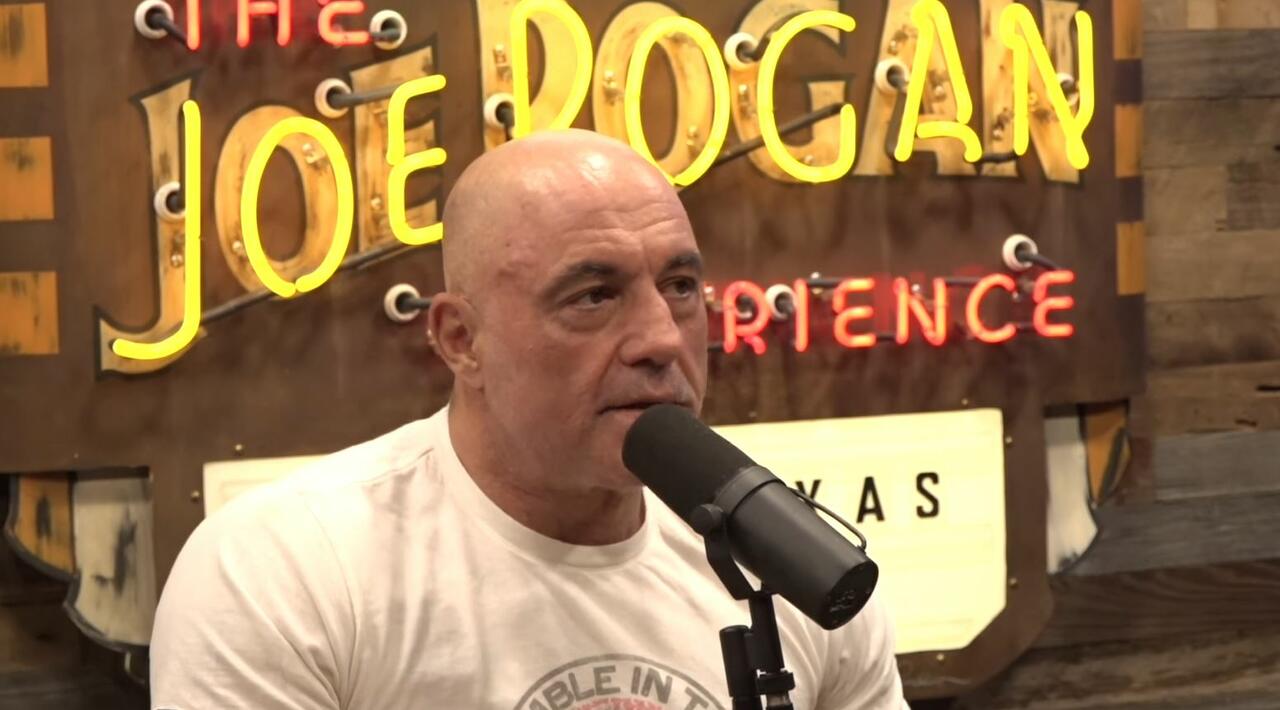
Following an awesome 2.5 hour podcast with Elon Musk, Joe Rogan announced his endorsement of Donald Trump.

In a post on X dropping the podcast, Rogan said of Musk “He makes what I think is the most compelling case for Trump you’ll hear, and I agree with him every step of the way. For the record, yes, that’s an endorsement of Trump.”

Trump thanked Rogan:

Nuggets from the interview:

Musk and Rogan discussed how an influx of illegal migrants to swing states followed by some sort of amnesty program would turn the country into a one-party state.

They slammed Democrats for constantly spreading hoaxes:

They discussed the killing of Peanut the squirrel:

Musk was at the White House correspondents dinner where the elites shit-talked Trump over Obama-birther comments and he got so pissed he ran for president.

John McAfee was discussed:

Musk and Rogan talked video games – noting a study in which surgeons who also game are more effective at their jobs.

So there you have it – at the 11th hour, Rogan goes for Trump after yet another interesting interview with Elon Musk.

Tyler Durden
Mon, 11/04/2024 – 22:05