Laura Loomer Sues Bill Maher For $150 Million For Saying She Banged Trump
Conservative journalist Laura Loomer is suing comedian Bill Maher for $150 million after he said on national TV that she slept with former President Donald Trump.
According to a court filing in Sumter County, Florida, Loomer named Maher and HBO as defendants, and says that Maher made the “false, malicious, and defamatory” statements about her during a Sept. 13 broadcast of “Real Time With Bill Maher.”
🚨ANNOUNCEMENT🚨
Today, I filed a defamation lawsuit against @billmaher Bill Maher and HBO @HBO for falsely accusing me of having an affair with President Donald Trump on a September 13th episode of Maher’s show @RealTimers.
In the clip, Maher told his viewers “I think maybe Laura Loomer’s in an arranged relationship to affect the election because she’s very close to Trump. She’s 31, looks like his type. We did an editorial here a few years ago … it was basically, who’s Trump f***ing? Because I said, you know, it’s not nobody. He’s been a dog for too long, and it’s not Melania. I think we may have our answer this week. I think it might be Laura Loomer,” TMZ reports.
Watch the offending clip below:
Bill Maher: Laura Loomer is for MAGAs who believe Marjorie Taylor Greene is too intellectual.
One thing about the right’s human capital problem is that people can’t ever imagine it getting worse.
In her suit, Loomer denies banging Trump and says that Maher has no evidence or basis for his claim. She’s accused the host of fabricating the story for attention.
According to the report, Trump weighed in after the joke – calling Maher a “befuddled mess” whose show is “boring.”
The run-up to the 2024 election has seen a number of consequential court cases and rulings related to how voters cast their ballots and how governments process the election results.
Some of the cases remain ongoing, and if 2024 is anything like 2020, the nation could see a flurry of lawsuits after Election Day with candidates also challenging the outcomes.
It is, however, unclear how far any legal case will go, with experts doubting that a Supreme Court case will result from the ongoing slate of legal challenges.
“Judges throughout the country … are loath to be perceived as disenfranchising individuals,” Landmark Legal Vice President of Legal Affairs Mike O’Neill told The Epoch Times.
“If they have an exit ramp to either dismiss a case or a procedural exit ramp to dismiss a case, they’re going to take [it]—even despite the fact that there might be evidence of either some sort of failure to follow proper procedures or failure to follow necessary registration procedures.”
Here are some legal issues to watch heading into November.
Mail-In or Absentee Ballots
Perhaps the most contentious election issue in 2020 was the widespread use of mail-in ballots, brought on by the government response to the COVID-19 pandemic.
A survey from the U.S. Election Assistance Commission, a federal body established by Congress, showed that the number of mail-in ballots increased by 20 percent between 2016 and 2020.
“Because we’re no longer in the COVID situation, we’re not going to see the same level of court-driven outcomes in our elections,” Public Interest Legal Foundation President J. Christian Adams told The Epoch Times. “I think that’s the big difference between now and 2020.”
A recent lawsuit in Pennsylvania, one of the more hotly contested states in 2020, dealt with how to process mail-in ballots that lack proper dates and other information. A practice known as ballot curing allows voters to correct deficiencies in their ballots after submitting them.
“Ballots come in, they take quite a bit more processing, making sure that it’s the person who voted to send him in all those things, and so it’s just a slower process,” Honest Elections Project Vice President Chad Ennis told The Epoch Times.
Earlier this month, the state supreme court declined to hear Republicans’ challenge to the state notifying voters of deficiencies in their ballots.
In Nevada and Mississippi, similar challenges surround ballots received after Election Day.
The issue reached the U.S. Court of Appeals for the Fifth Circuit, which heard arguments in September over the Republican National Committee’s (RNC’s) claim that Mississippi should not count those ballots—even if properly postmarked.
Texas passed an omnibus election security package in 2021 with provisions that were halted by a district court judge this month.
More specifically, Judge Xavier Rodriguez blocked Texas from preventing compensation for assisting voters with their mail-in ballots.
He also enjoined a restriction on compensation for vote harvesting services, which the law defined as “in-person interaction with one or more voters, in the physical presence of an official ballot or a ballot voted by mail, intended to deliver votes for a specific candidate or measure.”
Both provisions violated the Voting Rights Act, according to Rodriguez.
In Michigan, North Carolina, and Pennsylvania, Republicans have also filed lawsuits challenging ballots submitted from individuals who are overseas.
A law known as the Uniformed and Overseas Citizens Absentee Voting Act requires states to allow ballots from Americans who live overseas, but Republicans have argued that state officials in North Carolina and Pennsylvania are illegally exempting overseas Americans from verification requirements.
They similarly argued that Michigan officials have registered people who don’t reside in the state.
Certification
Fulton County Superior Court Judge Robert McBurney heard arguments on Oct. 1 over Democrats’ challenge to Georgia state election board policies surrounding certification.
One of the rules requires officials to make a “reasonable inquiry” before certifying the results while another allows officials to review documentation “created during the conduct of elections.”
McBurney seemed inclined to uphold the rules but with clarification of the reasonable inquiry rule, which he said was “vague.”
On Oct. 15, he issued a ruling stating that election superintendents couldn’t refuse to certify election results or abstain from doing so, even under Georgia’s new rule.
He added that delays in election officials receiving information related to the election was “not a basis for refusing to certify the election results or abstaining from doing so.”
Another ruling by McBurney, on Oct. 15, held that the Georgia election board had acted too closely to an election when it tried to impose a rule requiring ballots be counted by hand.
The following day, Superior Court Judge Thomas Cox issued a ruling invalidating that rule and six others from the state election board—including the one requiring election officials to conduct a “reasonable inquiry.” The RNC quickly appealed the decision.
The Department of Justice has sued both Alabama and Virginia over their attempts to clean up their state’s voter rolls prior to the election.
On Oct. 16, a federal judge in Alabama halted the state’s program with a preliminary injunction.
Both lawsuits cite something known as the “Quiet Period Provision” of the National Voter Registration Act, which says: “A state shall complete, not later than 90 days prior to the date of a primary or general election for Federal office, any program the purpose of which is to systematically remove the names of ineligible voters from the official lists of eligible voters.”
Multiple disputes over election rolls have emerged in Arizona, where election officials found that nearly 100,000 voters were able to vote despite not providing proof of citizenship.
The U.S. Supreme Court intervened in August by halting the effects of a lower court decision that blocked Arizona’s law requiring officials to reject state voter registration forms that lacked proof of citizenship.
More recently, a federal judge ruled against an Arizona group’s legal effort to force county officials to investigate ahead of the upcoming general election whether more than 40,000 registered voters are U.S. citizens.
The RNC has raised other allegations about noncitizen voting in Maine as well as Nevada, where the RNC and the Trump campaign sued the secretary of state.
Hearings in the Fifth Circuit and Georgia have also raised questions about the Purcell principle, which comes from the U.S. Supreme Court’s 2006 decision in Purcell v. Gonzalez.
It generally cautions against election policy changes just before voters head to the polls.
The court’s opinion didn’t set out a specific timetable for allowable changes to election procedures. Instead, it reversed an appeals court decision striking down Arizona’s voter ID law.
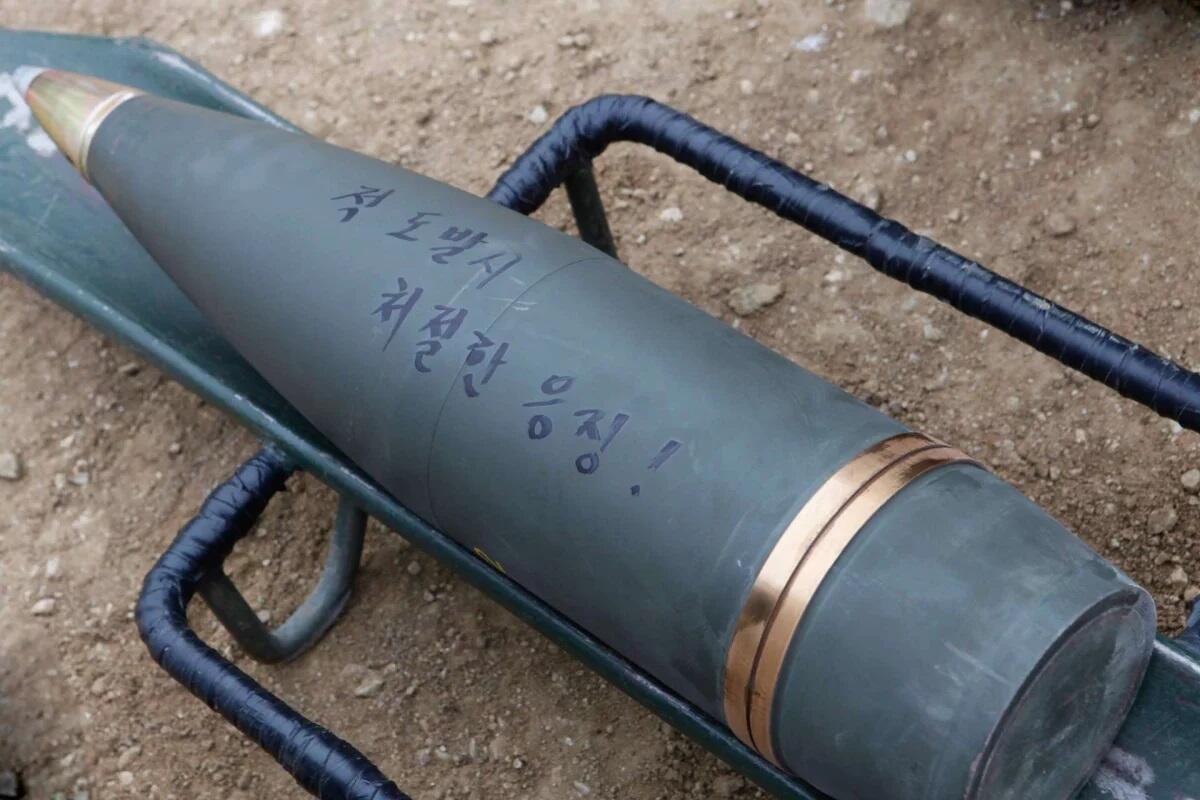
South Korea Mulls Sending Artillery Shells To Ukraine, Angry On Reports Of DPRK Troops There
South Korea has largely stayed on the sidelines for more than two years of the Ukraine-Russia war, but is increasingly getting vocal with new allegations that North Korea is sending troops to fight in Ukraine on Russia’s behalf.
Seoul’s “answer” to the north might be to weaponize the other side, by providing 155mm artillery shells to Ukraine. So far this has only allegedly been done indirectly, by routing the shells to the United States. Seoul has called the presence of DPRK troops in Ukraine a “serious security threat” to the international community, and demanded that Pyongyang withdraw them immediately. South Korean media is also reporting that Seoul could send intelligence advisers to assist the Ukrainian military.
First Vice Foreign Minister Kim Hong-kyun has reportedly summoned Russian Ambassador to South Korea Georgy Zinoviev to express Seoul’s concerns over the alleged DPRK troop movements.
He warned his Russian counterpart that any military collaboration between Moscow and Pyongyang could destabilize the Korean Peninsula and would mark a violation of UN Security Council resolutions.
“South Korea will respond with every possible means, alongside the international community, to any acts that threaten our core security interests,” Kim stated. The Russian side has downplayed the warnings, and conveyed that its view of who it is that contributes to destabilizing the Korean peninsula is different.
A defense source has pointed out that if Seoul decided to supply Ukraine with artillery shells, significant legal and bureaucratic hurdles would remain in the way:
South Korea’s Defense Procurement Act and Foreign Trade Act currently prohibit the transfer of arms and ammunition to Ukraine, either directly or through third parties. Both laws would need to be amended for the delivery of 155mm shells to be possible.
This development marks another chapter in South Korea’s internal debate on whether to support Ukraine militarily, which was first discussed in July 2023 and again in April 2022. However, despite this consideration, the likelihood of an immediate shift remains unclear as Ukraine continues to await the delivery of K600 mine-clearing tanks, which South Korea had previously pledged.
As for the claims that initially set off the diplomatic conflict and tensions, Ukrainian President Volodymyr Zelensky has been pushing hard new accusations that at least 10,000 North Korean troops are being sent to Ukraine where they will fight on behalf of the Russians.
South Korea’s spy agency has also backed Zelensky’s claim, chiming in last Friday to say that at least 1,500 North Korean special forces have already been sent. The spy agency says it has satellite images tracking these movements.
But over the weekend the Pentagon refused to back the reports, with Secretary of Defense Lloyd Austin explaining that he can’t confirm this narrative.
“I’ve seen those reports in the media. I can’t confirm those reports at this point in time. This is something that we will certainly continue to investigate,” Austin said Sunday.
South Korea’s Poongsan, owned by Vanguard and BlackRock, has already supplied hundreds of thousands 155mm shells to the war by “lending” them to the US, thus helping it arm Ukraine. The difference now is occupied South Korean taxpayers would foot the bill. War is a bloody racket. https://t.co/NywmQJULhx
Zelensky has further been advancing the idea that the ‘enemies’ of the West have formed an axis to fight in Ukraine and ultimately push back NATO. He’s identified them as Russia, Iran, and North Korea. And yet it seems if there were ‘proof’ of North Korean troops pouring into the battle zone – including alleged satellite imagery – then NATO and the Pentagon would vouch for it. But for now there are still official dismissals of the claim.
So far, the Western alliance is also resisting Ukraine’s demands to greenlight long-range missile strikes deep into Russian territory. Putin has warned that this would cross all ‘red lines’ and unleash major escalation.
“It’s mostly paranoid crypto anarchists that say that.”
With these eight words, issued on the “Markets with Madison” podcast, Microstrategy CEO Michael Saylor evoked outrage from just about everyone in Bitcoin.
Put simply, Saylor said a bad thing. He broke the taboo.
He said you’re better off trusting your Bitcoin in state custody than holding your own private keys, then went further, calling out all of the businesses engaged in custody projects by calling them effectively bullshit salesmen.
It was, shall we say, a “big oof,” a “footgun,” the scene in the cartoon where the hero gets hit with an anvil.
Here’s Adam Simecka’s clip from the full video:
Saylor thinks you are a paranoid crypto anarchist if you hold your own keys and don’t trust the government. 😏 pic.twitter.com/6owj7LzrdM
Yet, paradoxically, I’ll admit, it’s probably the most interesting thing Saylor has ever said?
For years, Saylor and the Cyber Hornets have been “Grut and the Minions,” Saylor using his pulpit to spout whatever bullish nonsense was in vogue, without adding anything of his own.
Other people said things, and then Saylor said them again. He was the “people’s champion,” a “man of plebs,” a role that even his mundane AI generated tweets seemed to underscore in tagging the artists, invariably some random pseudonym.
So, anger aside, I have to say, at this time, I’m undecided. Sure, as someone who lived through the Fork Wars, I find Svetski’s position romantic (It’s nice to think we’re in the midst of some larger struggle), but it’s perhaps too early to cry wolf.
Instead, I find myself (for once) actually trying to understand what Saylor is saying.
As far as I can tell, there’s really three ideas at play here:
1. This is a new thesis for how to boost Bitcoin adoption using public markets
Saylor is framing the self-custody question as not an issue to solve with innovation, but an issue to ameliorate. His view: It doesn’t matter how people own Bitcoin, only that they do. His preferred vehicle for this is the stock market, and he seems to want to co-opt it as a massive vehicle for buying Bitcoin and selling the exposure.
2. This thesis actually might solve the problem of how to fight the crypto market
This is also one of the more compelling things about Bitcoin “Season 2,” the idea you could “co-opt the crypto apparatus” as a means of getting retail involved. Here, Saylor seems to want to marshal his army of Bitcoin stocks for the purpose, his view retail will begin purchasing Microstrategy and Metaplanet, in lieu of memecoins, chasing as they always do, beta on Bitcoin.
3. It’s a novel thesis on convincing government to adopt Bitcoin
A world where Bitcoin is the reserve asset for regulated entities seems like one in which draconian laws become less viable. After all, in this world, Bitcoin would have a direct link to the U.S. economy (at least the version most politicians care about). You have to admit: “You can’t ban Bitcoin, it will hurt the stock market,” has a nice ring.
Of course, maybe the commentators are right. Saylor’s incentives seem to be departing from the network. Maybe he is placing his company and its quest to amass Bitcoin above all else, and it’s worth questioning his motives at this moment.
Some argue self-custody, if nothing else, is the core of Bitcoin, the fact that you can trust no one but yourself to hold and safeguard your wealth.
Then again, in Saylor’s view, inflation is the true boogeyman, the debasement of purchasing power, the far bigger issue.
Is it possible this is a giant government psy-op, that Saylor flew too close to the sun, and there are an army of regulators who are twisting his arm to say this?
Sure, Microstrategy does work with intelligence agencies, but even then, intelligence agencies and their pension funds need somewhere to invest. A hyperbitcoinized world is surely one where these funds will also buy Bitcoin.
But I have to say, as someone who has never found Saylor very interesting… for now, I’m at least paying attention.
Abercrombie & Fitch Ex-CEO Arrested In Florida On Sex Trafficking Charges
The ex-CEO of Abercrombie & Fitch was arrested in South Florida on Tuesday morning and faces sex trafficking-related charges brought by federal prosecutors in New York, NBC News reported. This comes one year after former A&F CEO Mike Jeffries was accused of running a giant sex-trafficking ring that exploited young men who wanted to become models for the brand.
NBC said Jeffries’ associates, Matthew Smith of West Palm Beach, Florida, and James Jacobson of Wisconsin, were also charged in connection with the sex trafficking case. This news comes hours before federal prosecutors in Brooklyn plan to hold a press conference to announce the arrests of a “former CEO of a major company” and two others in a “sex trafficking and interstate prostitution case.”
In October 2023, A&F and the former CEO were sued. Court documents at the time depicted a horror story wherein Jeffries, the once-celebrated architect of the brand’s provocative image, was accused of masterminding the despicable sex trafficking operation.
A BBC investigation in the fall of 2023 also revealedsystematic abuse involving Jeffries’ partner Matthew Smith, and associate James Jacobson, under the pretense of offering modeling gigs.
The BBC’s two-year investigation involved 12 witnesses. It showed a systematic operation spanning from the 1990s through 2015, where Jeffries, aided by Smith and James Jacobson, allegedly lured young men into an abusive quagmire. The promise of lucrative modeling contracts with A&F baited the trap, often leading to coercive sexual encounters at various luxury locations worldwide, from New York to Marrakesh.
Attorney Brittany Henderson of Edwards Henderson, the law firm representing the plaintiff in the case, stated to CNBC:
“Today’s arrests are monumental for the aspiring male models who were victimized by these individuals.”
“Their fight for justice does not end here. We look forward to holding Abercrombie and Fitch liable for facilitating this terrible conduct and ensuring that this cannot happen again.”
There’s no word if Jeffries or associates had any connections with Sean “Diddy” Combs, who was arrested in New York last month and charged with sex trafficking, racketeering, and transportation to engage in prostitution.
Separately, in recent years, Jeffrey Epstein’s trafficking scheme of minors to politically connected and financially powerful people was unveiled for the world to see; but again, there is no apparent link between Jeffries and Epstein either… for now.
“The Risks Are Building To The Downside”: IMF Cuts Global Growth Forecast After Warning Global Debt To Hit $100 Trillion
The International Monetary Fund lowered its global growth forecast for next year and warned of accelerating risks from surging debt, to global wars to trade protectionism, even as it credited central banks for taming inflation without sending nations into recession.
In terms of next year’s outlook, the IMF forecast for the euro area was downgraded to 1.2%, 0.3% lower than in July, due to persistent weakness in manufacturing in Germany and Italy. On the other end, the US forecast for 2024 and 2025 was upgraded to 2.8% and 2.2%, up by 0.2% and 0.3% respectively, due to stronger consumption, but really because of the endless Biden-admin stimulus in the form of a wartime-level budget deficit which is now at 6% of GDP, and which has led to an exponential surge in US debt issuance.
The projection for Mexico was cut for this year by the most among major economies, as well as for next year, based on the impact of monetary policy tightening. China’s growth outlook for this year was cut to 4.8% from 5% previously on weakness in the real estate sector and low consumer confidence, with the 2025 forecast maintained at 4.5%.
The IMF now forecasts that global inflation will slow to 4.3% next year from 5.8% in 2024, both estimates reduced by 0.1% from July. At the same time the IMF slashed its global import and export forecasts for advanced economies for 2024 and 2025, by 0.3% and 0.2% respectively, while boosting expectations for emerging markets.
The fund has been cautioning for years that the world economy is likely to expand at its current mediocre level in the medium term — too little to give nations the resources they need to reduce poverty and confront climate change.
“The risks are building up to the downside, and there is a growing uncertainty in the global economy,” Chief Economist Pierre-Olivier Gourinchas said in a briefing. “There is geopolitical risk, with the potential for escalation of regional conflicts,” that could affect commodity markets, he said. “There is a rise of protectionism, protectionist policies, disruptions in trade that could also affect global activity.”
Bloomberg also notes that while the IMF forecast doesn’t explicitly mention the US election, the November 5 main event looms over annual meetings that will see finance ministers and central bankers from almost 200 nations gather at the IMF and World Bank headquarters in Washington, just three blocks from the White House. Bloomberg recently found that Donald Trump’s vow to impose 60% tariffs on imports from China and 10% duties on those from the rest of the world would likely spur inflation and pressure the Federal Reserve to raise interest rates. The analysis also completely ignored that Trump may simply be using the threat of tariffs as a negotiating tactic meant to spark more beneficial terms of trade.
The global growth forecast comes one week after the IMF flagged its mounting concern about global public debt, which is expects to reach $100 trillion, or 93% of world gross domestic product, by the end of this year. The surge is driven by the US and China, of course.
The fund is urging governments to make tough decisions to stabilize borrowing. With little political appetite to cut spending amid pressures to fund cleaner energy, support aging populations and bolster security, the “risks to the debt outlook are heavily tilted to the upside,” the IMF said.
The IMF applauded central banks for slowing inflation without tipping economies into recession, which Gourinchas called “a major accomplishment” based on expectations for the necessary steps expected a couple of years ago to achieve disinflation.
Still, the world faces risks from monetary policy hitting growth more than intended, worsening sovereign debt pressures in emerging and developing economies, and renewed spikes in food and energy prices due to climate shocks, war and geopolitical tensions, the IMF said.
Chinese drone giant DJI sued the U.S. Department of Defense (DOD) on Oct. 18 for including the company in the department’s list of Chinese military companies.
DJI, which makes up more than half of the U.S. commercial drone market, said it’s “neither owned nor controlled by the Chinese military.”
The company also said it’s not a contributor to China’s military-civil fusion strategy or its military modernization.
The China-based company argued that the DOD’s designation is “arbitrary and capricious” and asked a district court in Washington to order its deletion from the list.
In 2021, Congress passed legislation requiring the Pentagon to compile a list of Chinese military companies operating in the United States.
DJI was added to the list in October 2022. According to the DJI complaint, the Pentagon renewed the designation in January this year despite the company’s 16-month effort seeking removal from the list.
The drone maker said the designation has “caused significant and ongoing harm,” reflected in canceled contracts and “pervasive stigmatization” of the company and its employees.
The DOD did not respond to The Epoch Times’ request for comment by publication time.
DJI’s affordable and powerful products are popular in the United States among hobbyists and in sectors including agriculture and search and rescue.
The company has also been flagged by some U.S. government agencies—including Homeland Security, the Pentagon, the FBI, and the Treasury— as a national security risk and an alleged contributor to the Chinese communist regime’s human rights abuses in Xinjiang.
DJI has denied all allegations, saying users can control how their data are handled and that the company doesn’t control how its off-the-shelf commercial products are used by customers.
DJI’s legal challenge against the DOD’s listing follows some similar cases, including those brought by Chinese lidar maker Hesai in May and Chinese chipmaking tool manufacturer Advanced Micro-Fabrication Equipment (AMEC) in August.
Hesai, whose customers include robotaxi companies such as General Motors’ Cruise and Amazon’s Zoox, occupies more than a third of the global lidar market and almost three-quarters of the robotic cars market.
AMEC has played a key role in Beijing’s push for supply chain independence in China’s semiconductor industry. Its clients include major chip foundries, such as Semiconductor Manufacturing International Corp.
Last week, the DOD told a district court in Washington that the department delisted Hesai as a Chinese military company but relisted the firm “on a new record based on the latest information available.”
In 2021, Chinese phone maker Xiaomi and big data company Luokung Technology Corp successfully challenged their inclusion on the DOD’s Communist Chinese Military Companies (CCMC) list.
The CCMC list has since been superseded by a wider-ranging Chinese Military-Industrial Complex Companies list, and the Treasury has replaced the DOD as the primary authority to manage the list.
According to the U.S. Department of State, the Chinese communist regime’s military-civil fusion strategy eliminates “barriers between China’s civilian research, and commercial sectors and its military and defense industrial sectors.”
Besides tapping into China’s pool of talent, the department said the CCP is also acquiring foreign technologies via a range of legal and illicit means, including investment, research collaboration, espionage, and theft.
I wouldn’t be much of a political pundit if I weren’t willing to share my prediction for what will happen in 15 days when one of the most important presidential elections in history is decided.
So here goes: Donald Trump will win, and he will win convincingly. But that doesn’t mean the progressive left won’t have a meltdown. Just as in 2016, when Trump was first elected president, the media will be dismayed, the Democrats will be shocked, and there will be protests in the streets, possibly violent. Congressional Democrats such as Jamie Raskin will try to prevent Trump from being sworn in by declaring him an insurrectionist.
Seven so-called battleground states are supposed to decide the election: Pennsylvania, Michigan, Wisconsin, North Carolina, Georgia, Nevada, and Arizona. But even more important will be the experience of the American people, who in large measure have come to regret the election that put Joe Biden in the White House four years ago.
That is the underlying story that the media will never acknowledge. Polling within the last year shows that less than one-third of Republicans believe Biden is the legitimate president, and 36% of all Americans have doubts about the 2020 election. That is only a feeling, not a fact, but feelings decide presidential elections, and the almost gleeful anti-American thrust of Biden’s presidency has given more than 60% of potential voters a feeling that we are on the wrong track as a nation.
Five days before the 2020 election, I published a spoof that proved modestly prophetic as a warning about the pitfalls of a Democratic victory. Called “The Short Happy Presidency of Joe Biden,” it predicted that Kamala Harris would invoke the 25th Amendment immediately after Biden’s inauguration in order to seize power in a bureaucratic coup.
It didn’t quite happened that way, of course, but 3½ disastrous years later, Kamala along with Chuck Schumer and Nancy Pelosi seemingly used the specter of the 25th Amendment to force Biden to end his reelection bid. Life imitating art.
In my pastiche, President Trump had appeared close to sealing his victory in the 2020 election, thanks to late mail-in votes in Pennsylvania. But “in an emergency session, the Pennsylvania Supreme Court convenes and reverses its earlier ruling that late votes could be counted for up to three days. The new ruling asserts that late voting amounts to election interference ‘on account of Trump winning,’ thus handing the state and the Electoral College victory to Biden.”
Exaggerated, yes, but prescient in regard to how courts across the country would eventually rule in Biden’s favor on almost every issue, refusing to look at the evidence of fraud or unconstitutional irregularities.
Perhaps the most prophetic aspect of my column four years ago was how I depicted the reaction of Trump to losing a disputed election. Just two days after the inauguration of first Biden and then Harris:
Former President Donald Trump announces that he is running for re-election in 2024 after taking a four-year rest to catch up on his golf and make a few billion dollars. Trump says his new role model will be Grover Cleveland, the only president to serve non-consecutive terms. “If it’s good enough for Grover, it’s good enough for me!” Trump also tries out a new campaign slogan, as he takes a swing at Biden voters with a red, white and blue cap inscribed with “TUSA,” short for “Told U So America!”
When you think about it, that really is the underlying message that Trump has been sharing for the past four years. And Americans got the message – because it matched their lived experience. They saw with their own eyes that the wide-open Biden border was being called secure by Biden, Harris, and Homeland Security Secretary Alejandro Mayorkas. They saw that Biden’s Supreme Court nominee couldn’t say for sure what makes a woman a woman, and then they watched as boys began to dominate girls’ sports. They watched prices on the rise and safety in decline. Worst of all, they stood helpless as the world seemed to be rushing headlong toward World War III, first in Ukraine, then the Middle East, all the while as China has been threatening to cripple the world economy by attacking Taiwan.
So, yes, Trump will be elected as the 47th president of the United States, and the liberal talking heads will melt down just as they did in 2016. But what matters most is what happens after the election, and whether the experience of Americans will reflect renewed prosperity, a safer world, and respect for tradition and common sense. Many will try to prevent that, but making America great again should be a unifying goal. “Ask not what your country can do for you – ask what you can do for your country.”
And if I am wrong and Kamala Harris becomes the 47th president, I pray that divine providence takes hold of her and guides her to protect, defend, and strengthen these United States and their Constitution. Seems like a long shot, but without Trump, prayer is all we got.
Frank Miele, the retired editor of the Daily Inter Lake in Kalispell, Mont., is a columnist for RealClearPolitics. His book “The Media Matrix: What If Everything You Know Is Fake” is available from his Amazon author page. Visit him at HeartlandDiaryUSA.com or follow him on Facebook @HeartlandDiaryUSA and on X/Gettr @HeartlandDiary.
The smart money is selling, of course, for the clanging indicators are the dinner bell announcing the banquet of consequences has been served, and Nemesis doesn’t want the meal to get cold.
Correspondent Wilson R. Logan kindly shared his list of 17 indicators of globally synchronized recession. In my view, each is an alarm bell clanging loudly. As Wilson put it, “recessions have vey clear indicators. We’ve all known it was coming and we’ve all had a long time to think about it.”
For context, recall that the global economy is a tightly bound, highly integrated system, which means disruptions in one subsystem quickly ripple though the entire system. Disruptions tend to amplify one another, creating a cascading effect much like an avalanche: everything looks perfectly stable until the entire mountainside gives way.
This isn’t presented as a complete list of indicators; there are a multitude of others. But this is certainly a comprehensive start.
Here are Logan’s 17 indicators of global recession:
1) Tighter credit conditions. Banks see the recession coming and start to build a cash cushion, hoard liquidity, de-risk portfolios (the lessons of Bear Sterns).
2) Increasing REPO fails.
3) Volatility in the Japanese Bills market.
4) Near Term Forward Spread inversion.
5) Swap Spread Compression.
6) Term SOFR & EURIBOR calendar spread inversion.
7) 2-10 yield curve inversion.
8) Hours worked, total compensation falling.
9) Falling oil prices.
10) Factory gate prices falling.
11) ISM survey negative sentiment.
12) UofM consumer sentiment survey negative.
13) Increasing credit card debt.
14) Contango in the WTI Futures curve.
15) Falling value of loans to non-financial corporations (NFCs) (see 1).
Thank you, Wilson, for sharing your comprehensive list of global recession indicators. For additional context, let’s turn to two charts.
The first is my inverted pyramid of debt and disposable earnings. This relationship between the cost of servicing debt and how much money is left after paying essential expenses (food, utilities, shelter, etc. or the costs of production) is scale-invariant, meaning it works the same for individuals, households, small businesses, global corporations and nation-states.
If the earnings left after paying essential expenses declines while the debt and cost of servicing the debt rise, the entity goes bust and collapses in a heap. For households, as inflation stripmines the purchasing power of their earnings, they increasingly turn to debt to fill the gap between the cash that’s available to spend and what they desire to spend.
When interest rates are falling or near-zero, adding debt appears sustainable. But should interest rates rise, the debt quickly become untenable.
So-called Zombie Corporations have one neat trick to stay alive despite their decaying financials: they roll over their higher-interest debt into a larger, lower-interest debt. Since the sum needed to service the debt remains the same, they can go on their merry way until the next refinancing replenishes their cash-burn.
This is all very jolly until banks refuse to loan them more money, and interest rates rise. Again, this is scale-invariant: as long as the consumer can tap another credit card, the corporation can roll over its debt at lower rates, nations can sell more Treasury bonds, then all is well.
But once credit tightens and rates rise, the dynamic reverses, and bankruptcy is the only “solution” left. Insolvency and writing off all debt is a solution for the borrower/debtor, of course, but a catastrophe for the lender / investor, who receives pennies on the dollar, the rest being a complete and total loss of assets / wealth.
Next, let’s turn to the “impossible,” i.e. bubbles popping with extreme prejudice. How do we know a bubble is a bubble? If the deflation of the bubble is declared “impossible.” For example, today’s global Everything Bubble. Yes, yes, the Everything Bubble cannot possibly pop with extreme prejudice, it will expand forever because (insert Fed Put, AI, Martian Central Bank quatloos, etc.).
History has a peculiar, disconcerting disregard for “likes,” opinions and projections of infinite growth, and so it’s clear that all bubbles pop. Bubbles pop with an eerie symmetry, falling at roughly the same time scale and rate as their ascent. Thus we can project the collapse of the Everything Bubble with some certitude.
Or we can dismiss the 17 indicators clanging loudly and base our confidence on eternal expansion of everything on the Fed Put, AI, or Martian Central Bank quatloos. Pretty much anything will do; all that matters is that a permanently high plateau of overvaluation and financial fantasy is presented as inevitable.
The smart money is selling, of course, for the clanging indicators are the dinner bell announcing the banquet of consequences has been served, and Nemesis doesn’t want the meal to get cold.
Scott Edward Markowitz, a Fullerton City Council candidate in Orange County, California, has been charged with felony perjury after allegedly falsifying his nomination paperwork.
According to the Orange County District Attorney’s Office, the candidate had said he personally gathered all of the signatures needed in order to qualify him for the Fullerton City Council election, which takes place on Nov. 5.
Although ballots have been printed with Markowitz as a candidate for Fullerton’s Ward 4, which sits in the city’s southwest, the allegedly falsified nomination paperwork disqualifies Markowitz from serving on the Fullerton City Council if he is elected. In the event Markowitz wins the election, the city would shoulder the cost of a special election to elect one of the other three candidates in the race for the seat.
Markowitz, like all city council candidates, had to turn in a signed attestation under penalty of perjury that whoever signed was also the one who collected signatures to qualify as a candidate for elected office. Markowitz signed the attestation, but allegedly did not collect the signatures.
Orange County investigators arrested Markowitz on Monday night. The candidate was booked into the Santa Ana city jail with one felony count of perjury by declaration and one felony count of record of forged or false instrument. If convicted on both counts, Markowitz faces a maximum of three years and eight months in state prison.
Markowitz signed on Aug. 9, 2024, that he collected 30 nomination signatures on his candidate nomination paperwork. However, the person who signed the paperwork must have also witnessed the signatures, and numerous people who signed said that Markowitz did not handle the paperwork, although he attested to doing so. The signatures therefore are considered invalid.
“American democracy relies on the absolute integrity of the electoral process,” said Orange County District Attorney Todd Spitzer. “Voters must have total confidence that every election is being carried out in a fair and unbiased manner. Interference in the electoral process in any manner and at any stage jeopardizes the will of the people being carried out while eroding the trust of voters that their vote counts.”
Spitzer said he did not take the decision to file charges lightly, “but given the risk to the electoral process as well as the potential of the City of Fullerton needing to pay for a special election should Markowitz be elected, there was no choice but to file criminal charges prior to the election and alert voters of his ineligibility to run for City Council.”
Linda Whitaker, Jamie Valencia, and Vivian Jaramillo remain the three candidates in the Ward 4 election. They would face off if Markowitz were to be elected despite his arrest.
Markowitz and the District Attorney’s Office did not immediately respond to The Epoch Times’ requests for comment.