61.4 F
Chicago
Friday, October 2, 2026
Home Blog Page 2318

Starlink Agrees To Comply With Brazil’s Orders To Block X

0
Starlink Agrees To Comply With Brazil’s Orders To Block X

Elon Musk’s internet service, Starlink, has announced that it will comply with a Brazil Supreme Court order to shut down X while vowing to pursue “all legal avenues” to allow the recently banned Musk-owned social media platform to operate in Brazil.

The move, announced by Starlink in a statement on Sept. 3, marks an apparent reversal after the country’s telecommunications regulator previously said that the satellite-based internet provider stated that it wouldn’t agree to block the social media platform.

Starlink said it would abide by an order from Brazilian Supreme Court Justice Alexandre de Moraes requiring internet service providers and app stores to block X from their platforms.

“Regardless of the illegal treatment of Starlink in freezing our assets, we are complying with the order to block access to X in Brazil,” Starlink’s statement said.

“We continue to pursue all legal avenues, as are others who agree that @alexandre’s recent orders violate the Brazilian constitution.”

As Tom Ozimek reports at The Epoch Times, De Moraes froze Starlink’s accounts last week in order to pressure the company to cover fines imposed on X in Brazil, reasoning that both are part of the same Musk-controlled group.

In response to the asset freeze, Starlink said on Aug. 29 that it believes de Moraes’s decision violated due process and was unconstitutional.

“It was issued in secret and without affording Starlink any of the due process of law guaranteed by the Constitution of Brazil,” Starlink said in the statement. “We intend to address the matter legally.”

Starlink’s announcement that it will comply with the order to shut down X comes a day after a spokesperson from Brazil’s telecommunications regulator told The Epoch Times that the company had “informally” expressed to a top agency executive its intention to buck the X ban.

The spokesperson said that unless Starlink complies, it will face sanctions, including possibly having its operating license in Brazil revoked.

Arthur Coimbra, an Anatel board member, told The Associated Press that if Starlink refuses to abide by the order to block X, authorities could also eventually seize equipment from Starlink’s 23 ground stations in Brazil, where Starlink serves over a quarter million customers.

Starlink’s announcement that it intends to comply with the X ban marks the latest chapter in a long-running dispute between Brazilian officials and Musk, who has refused to comply with court orders to block accounts accused by investigators of spreading hate and misinformation. Both Musk and X’s global government affairs team have denounced these orders as unlawful attempts at censorship.

De Moraes’s order, which requires internet service providers and app stores to block access to X, also announced a daily penalty of $8,900 for users in Brazil who use a virtual private network to evade the ban. In his decision, de Moraes said X will remain blocked until it complies with his orders.

“Elon Musk showed his total disrespect for Brazilian sovereignty and, in particular, for the judiciary, setting himself up as a true supranational entity and immune to the laws of each country,” de Moraes wrote.

Musk, for his part, has been highly critical of de Moraes and his decision to block X in Brazil and related actions.

In his latest commentary on the matter, Musk shared a post in which billionaire hedge fund manager Bill Ackman compares de Moraes’s actions to strong-arm tactics in communist-ruled China and warns that this puts Brazil on track to becoming an “uninvestable” market.

“Absolutely,” Musk wrote in his post, agreeing with Ackman’s assessment of the X ban, which the hedge fund manager said was “illegal.”

Tyler Durden
Wed, 09/04/2024 – 09:10

EU Officials Denounce Zelensky’s ‘Politically Motivated’ Firing Of Ukraine’s Energy Chief

0
EU Officials Denounce Zelensky’s ‘Politically Motivated’ Firing Of Ukraine’s Energy Chief

The board of Ukraine’s national power grid operator, Ukrenergo, has removed the company’s CEO Volodymyr Kudrytskyi in the wake of the current national state of emergency which has seen whole regions face frequent power outages and rolling blackouts. This was also prompted at the personal request of President Zelensky.

Ukrainian media has indicated that the move to ouster Kudrytskyi began in the wake of the massive Aug.26 drone and missile attack from Russia, the largest of the war, which primarily targeted Ukraine’s energy infrastructure.

The resultant mass electricity supply disruptions across the country raised questions over preparedness, specifically concerning incomplete protective structures around Ukrenergo power facilities. This lack of preparedness reportedly ensured the worst possible outcome in terms of the blackouts afflicting Ukrainians. But Kudrytskyi and his defenders say this is a witch-hunt long in the plotting.

Now former Ukrenergo CEO Volodymyr Kudrytskyi

“The energy crisis was subsequently addressed at a meeting of the Supreme Commander-in-Chief’s Staff, where President Volodymyr Zelensky instructed Kudrytskyi to submit his resignation,” Ukraine regional media reports.

“Kudrytskyi is accused of improperly implementing previous decisions of the headquarters of the supreme commander-in-chief and poor protection of Ukrenergo facilities,” a source further said.

He’s also as of last month facing a criminal probe by the High Anti-Corruption Court. However, critics say this is politically motivated and has nothing to do with his performance as head of Ukrenergo. Bloomberg reports the following developments Tuesday:

Two members of the supervisory board of Ukrainian power grid operator Ukrenergo resigned in protest against a decision to dismiss Chief Executive Officer Volodymyr Kudrytskyi this week, which they called “politically motivated” and groundless.

Daniel Dobbeni and Peder Andreasen said in a statement on Tuesday that they had experienced political pressure since their appointment to the supervisory board, which has six members, in 2021. They said the decision to dismiss the CEO without proof of mismanagement was made in violation of corporate governance principles and may impact Ukraine’s future cooperation with European continental power grid association Entso-E.

Separately a letter composed of Western organizations operating in Ukraine, including European Union representatives, warned Ukrenergo that “Such an event could jeopardize our collective ability to support Ukrenergo and other priority measures of Ukraine’s vital energy security.”

Among others, the letter was signed by EU’s ambassador to Ukraine, Katarina Mathernova. The ousted Kudrytsky and his supporters have countered against the board that adequate protective measures were indeed put in place.

Kudrytsky confirmed Tuesday in a Facebook post, “On 2 September, the Supervisory Board of Ukrenergo decided to terminate my mandate as the Chairman of the Management Board.” This whole saga has once again raised questions of the legitimacy of pledged anti-corruption measures at state-owned enterprises.

Meanwhile, FT main regional correspondent comments with the following…

Tyler Durden
Wed, 09/04/2024 – 06:55

Poland Says It Has ‘Duty’ To Shoot Down Russian Missiles, NATO Leadership Warns Against

0
Poland Says It Has ‘Duty’ To Shoot Down Russian Missiles, NATO Leadership Warns Against

Poland’s foreign minister has sparked fresh controversy and intense discussion within the NATO military alliance by saying that member states have a ‘duty’ to shoot down incoming Russian missiles when they are in Ukraine’s skies threatening the population below.

“Membership in Nato does not trump each country’s responsibility for the protection of its own airspace – it’s our own constitutional duty,” Foreign Minister Radosław Sikorski told the Financial Times. The comments appeared to shirk off the possibility that such action risks major escalation with Russia.

“I’m personally of the view that, when hostile missiles are on course of entering our airspace, it would be legitimate self-defense [to strike them] because once they do cross into our airspace, the risk of debris injuring someone is significant,” the Polish top diplomat said.

Prior Russian strikes on the Ukrainian capital, via Reuters.

This isn’t the first time the issue has arisen, but Russia’s recent ballistic missile and drone attacks across all oblasts of Ukraine, including in the West near Lviv, have significantly stepped up, leading to more border incidents and close-calls directly impacting neighboring Poland. A large barrage just hit Monday as well. FT details:

Poland signed a bilateral security agreement with Ukraine earlier this summer in which the two countries undertook to examine “the feasibility of possible intercepting in Ukraine’s airspace missiles and UAVs fired in the direction of territory of Poland, following necessary procedures agreed by the states and organizations involved”.

…Sikorski insisted on his country’s right to intercept after a suspected Russian drone crossed into Poland on August 26. Polish authorities have since been searching for the UAV, which may have landed back on Ukrainian territory after probably straying off course during a Russian mass missile attack on Ukraine.

He further explained that when a Russian missile threatens to fall in Poland, it is safer to the Polish population to shoot it down while it is at a higher altitude in Ukraine’s skies. Sikorski has said of this plan, “Ukrainians have told us: you’re welcome.”

Some Western officials have warned that this would move the red lines too rapidly, and get NATO too directly involved, likely triggering direct war with Russia. But a defense analyst in Kiev, Mykola Nazarov, pushed back against this, telling FT, “We’ve seen that some red lines can be moved.”

The ongoing Kursk operation is currently being used of Ukrainian officials to signal to the West that it doesn’t have to worry about Putin following through on his stated red lines. President Zelensky is also ramping up the pressure campaign to take all restrictions off regarding use of long-range missiles on Russian territory.

NATO Secretary General Jens Stoltenberg, who is soon expected to retire from the top post, has rejected the Polish proposal and asserted that it presents too much risk of NATO “becoming part of the conflict.” Of course, at this point this seems to be exactly what Zelensky wants (to drag the West deeper into the war on Ukraine’s behalf).

Via MSNBC/Google Maps

And NATO’s outgoing deputy secretary general Mircea Geoană also explained to the FT, “We have to do whatever we can to help Ukraine and do whatever we can to avoid escalation. And this is where the line of Nato is consistent from the very beginning of the war.”

“Of course we respect every ally’s sovereign right to deliver national security. But within Nato, we always consult before going into something that could have consequences on all of us — and our Polish allies have always been impeccable in consulting inside the alliance,” Geoană concluded.

But this debate will only intensify, especially given that on Tuesday President Zelensky said Russia mounted one of the single deadliest strikes of the entire war. A missile slammed into a military educational facility in Poltava, central Ukraine, killing at least 41 people and injuring over 180 others.

Tyler Durden
Wed, 09/04/2024 – 05:45

Finland Unveils World’s First Deep-Earth Repository To Bury Nuclear Waste

0
Finland Unveils World’s First Deep-Earth Repository To Bury Nuclear Waste

By Alex Kimani of OilPrice.com

Summary

  • Currently, there are thousands of metric tons of used solid fuel from nuclear power plants worldwide and millions of liters of radioactive liquid waste from weapons production sitting in temporary storage containers.

  • Finland has built the world’s first deep-earth repository where it will bury nuclear waste for 100,000 years starting 2026.

  • About a dozen European countries, including Finland and Switzerland, are planning deep geological repositories for their nuclear waste.

For decades, nuclear energy has been treated as the black sheep of the energy universe thanks to major drawbacks including high costs, high-profile nuclear accidents and hazardous by-products of nuclear energy production. Currently, there are thousands of metric tons of used solid fuel from nuclear power plants worldwide and millions of liters of radioactive liquid waste from weapons production sitting in temporary storage containers, some of which have begun leaking their toxic contents. Nuclear waste is notorious for the fact that it can remain dangerously radioactive for many thousands of years. Thankfully, the world has just come closer to finding a permanent solution to its nuclear menace: Finland has built the world’s first deep-earth repository where it will bury nuclear waste for 100,000 years starting 2026.

Dubbed ‘‘Onkalo’’, the repository is entombed in a bedrock more than 400 meters below the forests of southwest Finland. The facility sits atop a warren of tunnels sited next to three nuclear reactors on the island of Olkiluoto, approximately 240 kilometers from the capital of Helsinki. The Onkalo project is based on the so-called “KBS-3” method developed by the Swedish Nuclear Fuel and Waste Management Company. KBS-3 is based on a multi-barrier principle whereby if one of the engineered barriers were to fail, the isolation of the radioactive waste is not compromised.

“Basically, the Onkalo project is that we are building an encapsulation plant and disposal facility for spent fuel. And it’s not temporary, it’s for good,” Pasi Tuohimaa, head of communications for Posiva, told CNBC via videoconference. Posiva is tasked with the responsibility of handling the final disposal of spent nuclear fuel rods at Onkalo.

The first-of-its-kind geological disposal facility has been hailed as a game-changer that’s likely to increase the appeal of nuclear energy, “Having a solution for the final disposal of spent fuel was like the missing part of the sustainable lifecycle for nuclear energy,” Tuohimaa said. According to  Finnish Climate Minister Kai Mykkänen, Onkala provides the world with a model for sustainable nuclear waste management.

Deep Geological Repositories 

But Finland is not alone. About a dozen European countries, including Finland and Switzerland, are planning deep geological repositories for their nuclear waste. Here in the U.S., government officials have proposed storing the country’s nuclear waste in a repository beneath Yucca Mountain in Nevada about 300 m below ground level and 300 m above the water table. However, this idea has gone in and out of favor with changes in the presidency. For now, nuclear waste simply accumulates mainly where it’s generated–at the power plants and processing facilities, with some having been sitting in interim storage since the 1940s. In Hanford alone, more than 200 million liters of radioactive liquid waste–a mix of liquid, sediment, and sludge–has been sitting in tanks waiting to be processed. Obviously,  storing this kind of high-level liquid waste indefinitely is not sustainable.

Finland’s Onkalo is likely to bring nuclear energy a step closer to mainstream acceptance. According to the World Nuclear Association, nuclear energy currently provides about 9% of the world’s electricity. However, last year at the COP28 summit, 22 countries including the U.S., Canada, the UK, and France pledged to triple nuclear power capacity by 2050 (from 2020 levels). 

Onkalo is also likely to increase the appeal of small modular nuclear reactors (SMRs). SMRs are advanced nuclear reactors with power capacities that range from 50-300 MW(e) per unit, compared to 700+ MW(e) per unit for traditional nuclear power reactors. SMRs can be sited in locations not suitable for larger nuclear power plants, such as retired coal plants; offer significant savings in cost and construction time, and can also be deployed incrementally to match increasing power demand.

However, studies like these can potentially throw a spanner in the works and increase public resistance to SMRs.

“Our results show that most small modular reactor designs will actually increase the volume of nuclear waste in need of management and disposal, by factors of 2 to 30 for the reactors in our case study. These findings stand in sharp contrast to the cost and waste reduction benefits that advocates have claimed for advanced nuclear technologies,” said study lead author Lindsay Krall, a former MacArthur Postdoctoral Fellow at Stanford University’s Center for International Security and Cooperation (CISAC). The study found that one of their key attractions–small size–is also their major Achilles heel because SMRs experience more neutron leakage than conventional reactors, which in turn affects the amount and composition of their waste streams. The study also discovered that spent nuclear fuel from SMRs will be discharged in greater volumes per unit of energy produced and can be far more complex compared to waste from conventional reactors.

Thankfully, the advent of deep geological repositories could improve the bull case for SMRs. 

Tyler Durden
Wed, 09/04/2024 – 05:00

Germany Resumes Deportations To Afghanistan

0
Germany Resumes Deportations To Afghanistan

Germany deported 28 Afghan nationals charged with criminal acts to Kabul, Afghanistan on Friday morning, marking the first time it has happened since the Taliban came into power in 2021.

Infographic: Germany Resumes Deportations to Afghanistan | Statista

You will find more infographics at Statista

As Statista’s Anna Fleck reports, according to the news magazine Der Spiegel, negotiations for the deportation had been underway for the past two months, with Qatar acting as a mediator.

Human rights group Amnesty International has condemned the deportation, stating that “nobody is safe in Afghanistan”, where extrajudicial executions, enforced disappearances and torture are known to take place.

Tyler Durden
Wed, 09/04/2024 – 04:15

Escalation: Turkey Announces Arrest Of Mossad Agent In Istanbul

0
Escalation: Turkey Announces Arrest Of Mossad Agent In Istanbul

Via The Cradle

Turkish security officials announced on Tuesday the arrest of Liridon Rexhepi, a Kosovan national identified by the Turkish National Intelligence Organization (MIT) as the head of Mossad’s financial network in Turkey.

Citing security sources, Turkish media revealed Rexhepi “was transferring money to Mossad’s field agents in Turkiye who filmed Mossad targets with drones, led psychological operations against Palestinian politicians, and gathered intelligence about the Syrian field.”

AFP via Getty Images

MIT reportedly discovered Rexhepi after “detecting irregularities in his financial accounts,” which showed “countless” transfers to Mossad field agents in the country via Western Union.

During interrogation, the financier also reportedly admitted that funds from Kosovo were transferred to sources in Syria using cryptocurrencies.

Rexhepi was placed under MIT surveillance upon entering Turkey on August 25 before being detained in Istanbul last Friday in a joint operation with the Istanbul police. He was formally arrested on Tuesday.

Since the start of the year, Turkish authorities have detained and charged dozens of suspected Mossad agents, most of whom were Turkish nationals. Seven suspects were detained in January, six people were charged in March, and two others were arrested in April.

Following the January arrests, Anadolu Agency (AA) cited a prosecution document as saying the Israeli intelligence operation targeted “Palestinian nationals and their families … within the scope of the ongoing Israeli–Palestinian conflict.” In July, a Turkish prosecutor announced plans to seek up to 20 years in prison for 57 suspects charged with spying for the Mossad.

Turkish media has been showing the alleged Mossad agent’s face all day Tuesday…

The indictment said the Israeli agency created a remote, online operation team through mobile applications to provide remote sources, transfer money via live couriers, and carry out tactical operations against its targets in the field.

Tyler Durden
Wed, 09/04/2024 – 03:30

Russia Attacks Military Academy In Ukraine, Leaving 51 Dead, Over 270 Injured

0
Russia Attacks Military Academy In Ukraine, Leaving 51 Dead, Over 270 Injured

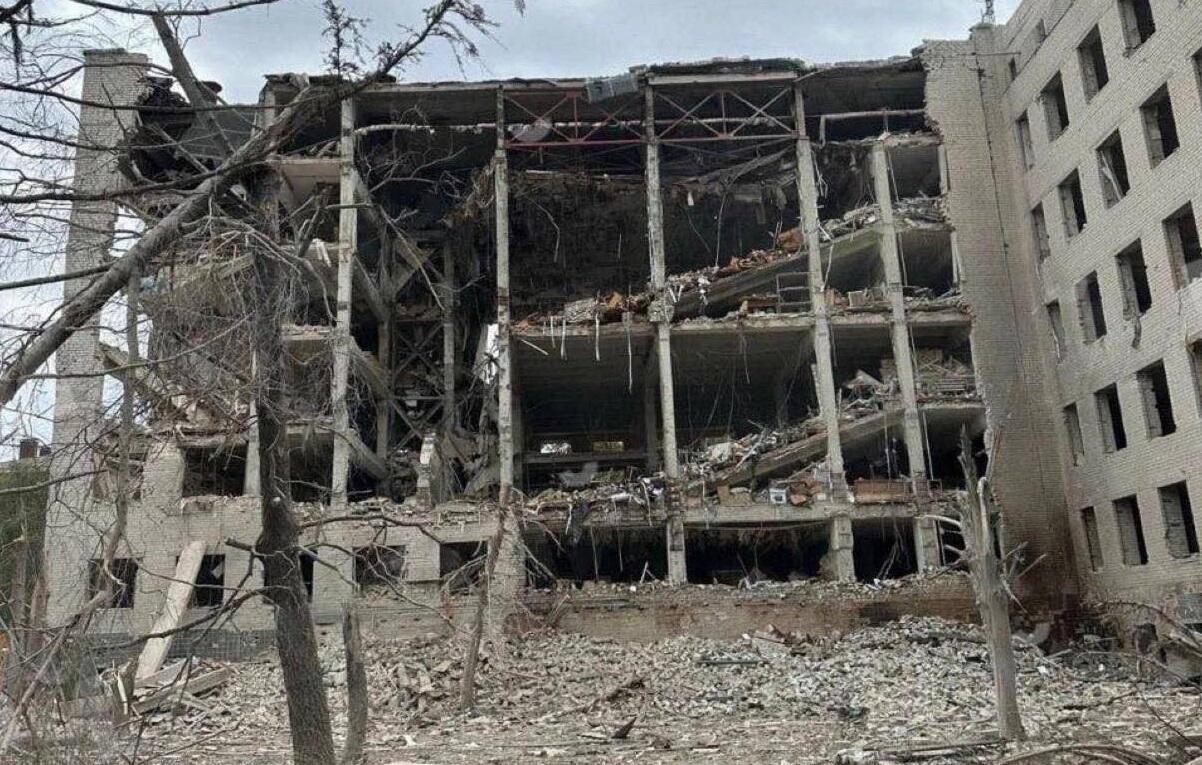
Tuesday witnessed one of the single deadliest attacks of the two-and-a-half-year Russia-Ukraine war. A Russian ballistic missile slammed into a military academy in the central Ukrainian city of Poltava, leaving more than 50 people dead and injuring scores of others.

Ukraine officials said a neighboring hospital was also struck by a second missile. Authorities by the evening (local) said at least 51 people were killed amid an ongoing search and rescue operation which involves picking carefully through rubble. The number of wounded from the attacks stands at 271.

Aftermath of Poltova strike, via Red Cross Ukraine

The NY Times describes, citing emergency officials, that the “missiles struck with an unforgiving quickness: The Ukrainian Defense Ministry reported that the gap between the sounding of warning sirens and the strike was so short that many people were killed on their way to shelter.”

The apparent target included cadets of the Poltava Institute of Military Communications in what marks a first in terms of targeting such a large gathering of soon to be commissioned officers.

“Dozens of people found themselves under the rubble,” Gen. Oleksandr Syrsky, commander of Ukraine’s armed forces, wrote in a statement. He added: “The aggressor country must answer for every person killed, for every life mutilated” – and further identified that two Iskander missiles were behind the strike.

The massive extent of destruction at the military institute in Poltava:

Ukraine’s defense ministry said that at the time of the strike classes and teaching was underway at the military academy. Ukrainian MP Oleksiy Goncharenko described that the cadets merely allowed a 2-minute warning by air defense sirens.

“You just imagine you’re on the sixth floor of some building and you need to run away downstairs. Is it realistic that you can do this in two minutes?” he said. “Just imagine this life and like this several times per day. We can’t continue like this. It’s just not fair.”

Meanwhile President Zelensky is pressing the West even harder to greenlight strikes on Russia far away from the border. “We talk about this every day with our partners. We persuade. We present arguments,” he said in weekend evening address.

“We need the capabilities to truly and fully protect Ukraine and Ukrainians.” Zelensky continued, “We need both the permissions for long-range capabilities and your long-range shells and missiles.”

Tyler Durden
Wed, 09/04/2024 – 02:45

“I Will Kill You And Your Families” – Somali Migrant Stabs German Man In The Neck, 30 Police Officers Make Arrest

0
“I Will Kill You And Your Families” – Somali Migrant Stabs German Man In The Neck, 30 Police Officers Make Arrest

By Remix News

In yet another knife attack involving a foreigner, a Somali man stabbed a 46-year-old man in the neck outside a supermarket in the small town of Waltershausen. Thirty police officers arrived on scene and took him into custody.

At 5:30 p.m., the incident started with the 27-year-old Somali man purposefully coughing on customers at random inside the “Netto” discount supermarket. He then began threatening them and randomly entering into arguments with various customers.

When a 46-year-old man asked the Somali man to stop, the Somali man allegedly threatened to kill him. The victim then told the Somali to calm down, at which point the Somali stabbed him in the neck, according to the Welt newspaper.

The victim was able to evade the attacker, thus preventing further stab wounds, and other witnesses nearby intervened to stop the Somali. The victim was able to escape with only minor injuries, despite suffering a stab wound to the neck.

The incident triggered a major police operation, with 30 police officers arriving on scene to arrest the Somali man, who was intoxicated. He is now being charged with attempted manslaughter, violent disorder, and threats. He is known for previous crimes as well and has convictions on his record.

“The accused reportedly said to the victim and other people, ‘I will kill you and your families.’ He is then said to have stabbed the victim in the neck with a knife and knowingly accepted his death,” said a public prosecutor.

He faces 15 years in prison.

The small town, which is 50 kilometers west of Erfurt in the eastern state of Thuringia, is one of the strongholds of the Alternative for Germany (AfD) party in the country. Over the weekend, the AfD won the elections in the state, scoring the first victory for a right wing party in Germany since World War 2.

The stabbing attack follows a wave of knife crimes involving migrants, including the Solingen knife attacks which killed three Germans at the Festival of Diversity a week ago. Foreigners now account for a record share of violent crimes in the country, as per government statistics from 2023.

Tyler Durden
Wed, 09/04/2024 – 02:00

Globalism Is Economic Slavery

0
Globalism Is Economic Slavery

Authored by J.B.Shurk via AmericanThinker.com,

Imagine life in the near future. ..

A man resides alone in a tiny apartment.  He would prefer to be married, but the State considers that antiquated institution “patriarchal” and “white supremacist.”  He would prefer to have children, but he can’t afford them.  Besides, his yearly carbon allowance is insufficient to cover another resource-wasting human being.  

He has never owned anything.  He rents his bedroom, his furnishings, and his meager entertainments.  Each month, a digital account associated with his digital ID receives a number of central bank digital currency units.  How much he receives depends upon the number of hours he works at his government job, how much the government values his work, how much the government taxes him for the privilege of using public infrastructure, and how much of his income the government decides should be redistributed to other citizens in need.  After taxes, rents, utilities, and other assorted municipal, state, federal, and international fees are deducted from his earnings, he has little — if any — discretionary income.  

If he chooses to save that income to invest in his future, the government informs him that his central bank digital currency units disappear within ninety days.  If he tries to purchase something that the government has banned, he forfeits what he currently has.  If he does something that the government deems contrary to his well-being, his social credit score decreases, and a fraction of his discretionary income disappears.  Every few weeks, a digital doctor (running on artificial intelligence) appears on the video screen in his apartment with a detailed list of all the “unhealthy” things he has done since their last interaction.  He is informed that a portion of his temporary savings will be redistributed to citizens with healthier habits.  His A.I. health monitor tells him that he must immediately report to the closest pharmaceutical distribution center so that he can be injected with the latest “vaccines.”  Failure to do so will result in the deactivation of all electronic entertainment devices and a permanent mark on his social credit record.

He is unhappy, and because the State’s A.I. supervisor has detected his unhappiness, the display monitor in his apartment encourages him to find personal meaning by “joining the fight against global warming.”  For a while, he does just that.  He attends community meetings in his apartment building where government officials talk about the importance of “saving the planet” by “owning nothing.”  He chats with anonymous strangers (bots?) on the State’s social media platform, and they all agree that the sacrifices they’re making to save the world are definitely worth it.  He wakes up one morning to discover that his social credit score has risen and that he has been rewarded with a few extra central bank digital currency units.  Still, our future man remains unhappy.

Then one day sirens blare, and his apartment monitor flashes with breaking news: the country is at war.  He listens intently but can’t figure out which foreign nations are attacking.  The trusted news anchors tell him that peace, prosperity, and freedom are all at risk.  He steps outside his tiny apartment to find other solitary renters fired up and talking excitedly about the battles to come.  He walks back inside to find his A.I. supervisor informing him that he has been personally selected to protect the homeland from its enemies.  For the first time in many years, our future man feels alive.  

He soon finds himself in boot camp, where he enjoys regular exercise, discipline, and camaraderie.  Six months later, he and his new friends are shipped overseas.  Strangely, in all this time, nobody has explained whom they will actually be fighting.  All he knows is that they’re at war with “the authoritarians” who wish to “take our democracy.”  There is anticipation in his camp and endless talk of adventure.  Then, when everyone least expects it, a thunderous swarm of drones attacks from overhead.  Nobody has time to react.  Explosions seem to come from out of nowhere.  He sees the bodies of his friends torn to pieces.  Then everything goes dark.

He awakes in a hospital severely injured, is called a hero, and is later sent home.  When he arrives, he notices breadlines outside the government’s genetically engineered food distribution centers.  He hears a beggar on the street joke that they should call them “insect-lines,” since that’s all there is to eat.  He learns that someone else has moved into his old apartment, but he is offered a new one because of his military service.  It is smaller and has even fewer furnishings than the one he lost.  He realizes that most of his former neighbors never returned from war and that many of the newcomers now living in their apartments look and sound like those people he was told to fight overseas.  Nothing makes sense.  His injuries torment him.  He feels even more lost and lonely than before he went to war.  His A.I. supervisor informs him that he has been added to a list of people considered “potential domestic terrorists.”  Remaining on this list will make it hard for him to work and live.

Then, one day, his digital doctor asks if he would like some assistance in ending his life peacefully.  “You can save others,” he is told, “by permanently reducing your carbon footprint.”  In agony, he wonders, “How did we get here?”

The shortest answer to our future friend is this: governments abandoned sound money.  They replaced gold coins with paper currencies.  They made it illegal for ordinary citizens to conduct business freely and demanded that government-issued bills be used in economic transactions.  Then they gave private central banks the authority to print these paper bills whenever they determined that doing so would be good for the economy.  

Whose economy do wealthy central bankers protect — Wall Street’s or that of the working class?  Although putatively charged with financial duties to maximize employment and minimize inflation, central banks function as market manipulators and money printers for overspending governments.  By increasing the supply of paper currency, the price of consumer goods rises.  However, the numerical price of stock market shares also goes up.  These capital assets do not gain any real value, but their rising prices give the illusion of economic growth.  Many bad companies that would never survive in a free market become lucrative investment opportunities in fake markets.  Easy money sustains companies that produce no market value.  Who loses most in this artificial arrangement?  The poorest people who have no stocks and only limited cash savings.  They have watched the hundred-dollar bill hidden under their mattresses lose most of its value over the last fifty years.

Neither fiat currencies nor central banks have any functional place in free societies.  Governments that manipulate the value of money rig markets and steal from the working poor.  The wealthiest end up owning everything, while everyone else tries to balance life precariously on a tightrope of consumer debts, mortgages, long-term loans, and the growing prospect of insolvency.  This world that financial and political elites have built is unsustainable.  It is also a kind of economic slavery.

Because it is unsustainable, those who have benefited most from its creation will do anything they must to survive its collapse.  A crashing dollar does not matter if those who control the financial system today control the central bank digital currencies of tomorrow.  Gross inequality and rampant poverty do not matter if governments can convince unhappy citizens that climate change, disease, and war require them to own less and sacrifice more.  Growing public anger does not matter if those with armies can censor speech, throttle food supplies, foment wars, and imprison dissidents.  

Ponder this: how much of the story above seems foreign, and how much of it seems painfully familiar?  Your answer tells us just how much time we have left.

Tyler Durden
Tue, 09/03/2024 – 23:25

Putin In Mongolia: West Dismisses All Inconvenient Facts As ‘Kremlin Propaganda’

0
Putin In Mongolia: West Dismisses All Inconvenient Facts As ‘Kremlin Propaganda’

Just days ago, the Russian government moved to ban over 90 journalists and media entities from the country. This came in the wake of the Kremlin opening investigations against American and Italian TV crews, including CNN, for being embedded with the Ukrainian army as it moved into Kursk Oblast.

Last week’s published list of blacklisted Americans included Wall Street Journal Editor in Chief Emma Tucker along with eleven current and former WSJ staff members. NY Times journalists were impacted too, with Kyiv Bureau Chief Andrew Kramer showing up on the list, also along with four reporters from The Washington Post.

Russian President Vladimir Putin was asked about matters of press freedoms, and the state of Western media, on his first day in Mongolia where he’s attending official events surrounding the anniversary commemoration of the 1939 Soviet-Mongolian victory over Japan in the Battle of Khalkhin Gol. In the backdrop is the The Hague’s International Criminal Court (ICC) requesting its member state Mongolia to arrest the Russian leader, but it is refusing. Moscow says this was all worked out ahead of time and won’t be a problem.

Putin was interviewed by the Mongolian newspaper Onoodor just before he touched down in the country, and Putin’s main message was that the West hides every inconvenient fact while brushing it aside as “propaganda”.

TASS/Zuma Press

He described that the Kremlin’s latest moves against major American news outlets are but a justified response to the West previously punishing Russian outlets first.

“Almost all Western countries where our journalists try to work are creating obstacles for them, banning Russian television channels and directly censoring our media and online resources,” Putin said, according to translation featured in RT. This obviously “runs counter to the democratic principles of freedom of speech and the free flow of information,” he emphasized.

“The West, which claims to be a model of freedom, has opted to hide from inconvenient facts and the truth by launching a blatant bullying campaign against Russian journalists and indiscriminately labeling them as ‘Kremlin propagandists,’” he continued.

Back in March 2022, after pressure from the US government which included Washington slapping the channel with a foreign agent label, a slew of major platforms including DirecTV and Roku dropped the channel, resulting in RT America laying off all of its mostly American staff and closing up its four main offices in the US. The European Union also moved against RT as well as Sputnik, and RT was further booted from YouTube.

But the reality was that with the forced retreat of these Russian state media English-language channels, people in the West – whether an academic, a journalist, politician, or individual citizen – could no longer be presented with the Russian perspective. It also became harder to more immediately access Russian statements on any given world event. This was all of course by design. It was yet more of a government enforced narrowing of ‘alternative views’.

But Putin claimed that his government keeps a proper balance between press freedoms and issues of national security:

“Our authorities cooperate constructively with television channels, news agencies, newspapers, online media, and other media outlets, regardless of their editorial policy,” he said. “The only thing they are required to do is comply with Russian laws. This should be understood by foreign journalists accredited in Russia.”

Through those means, Moscow has managed to strike a balance between the freedom of the press and national security, the Russian leader argued.

Putin’s reference here is to the CNN crew (and others) who ‘illegally’ crossed Russian borders in order to film the Ukrainian army’s incursion in to Kursk in late August.

The Kremlin at the time said it summoned the US ambassador in “connection to the provocative actions of American reporters who illegally entered the Kursk region to produce propaganda for covering up the crimes of the Kyiv regime.”

Red carpet treatment and full military and ceremonial honors despite the ICC’s demand that Mongolia arrest Putin…

Image source: TASS

So Putin seems to be saying that the United States would never tolerate if Russian journalists illegally snuck onto American soil, and neither will Russia tolerate the opposite scenario – which is something that actually played out recently.

Tyler Durden
Tue, 09/03/2024 – 23:00