63.6 F
Chicago
Tuesday, September 29, 2026
Home Blog Page 2392

Modern (Chicken$hit) Monetary Theory

Modern (Chicken$hit) Monetary Theory

Submitted by QTR’s Fringe Finance

Wharton Professor Emeritus Jeremy Siegel, who has a longstanding presence as an economic commentator and author laying chalk on the modern monetary system and reliably “predicting” the heavy favorite that the market would always continue to go up, humiliated himself this week on national television.

However, in the process, he offered important perspectives on how truly dopesick our stock market and its participants have become.

On Monday, which as of Thursday night has turned out to be the only day with serious volatility to the downside this week, Siegel was on CNBC before the market opened clamoring for 150 basis points in rate cuts.

You can watch the video of him, where it sounds like he’s about to cry, making his case for “emergency cuts” here:

There was no counterbalance to the rest of Monday’s idiocy on financial news, however Fast Money’s Guy Adami did a great job cancelling out Siegel’s white noise after the trading day by making a couple very simple points about Jeremy Siegel’s protest – namely: “There’s no emergency. The stock market can go down, too.”

And by Thursday night, once the piss stain on his Dockers from watching Sunday night’s Japanese index futures had time to dry, Siegel had already gone on the record with CNBC to back off of his position from Monday.

He told CNBC: “I no longer certainly think it’s necessary. But I want [Powell] to move down to 4% as fast as possible. Would it be bad? No. But would it be necessary? No, not at this time.”
In other words, Siegel changed his mind in less than 3 trading days and tipped his hand that he was reacting, almost tick-by-tick, to moves in the stock market — something that any economist knows should not be driving decisions on monetary policy and is not part of the Fed’s dual mandate of price stability (pause for laughter) and maximum employment.

Siegel’s appearance, and his imploring of the Fed to cut rates, was a perfect cross-section of how addicted to total euphoria market participants have become. This “emergency” not only displayed our massive dopamine deficit with regards to market performance, but also took a page directly out of the impotent political and central banking playbook in the sense it was completely reactionary and incredibly hastily put together.

Make no mistake about it: Siegel was likely booked in that slot, that morning, on CNBC because everybody knew Sunday night that the market was going to be in for a rough ride. And while Japan crashed 12% the night prior, the NASDAQ was still only indicated to be down about 5% in the morning and never once tripped a circuit breaker in trading all day Monday. And so, it would have been an uncomfortable day and the market would have gone down, but that’s the nature of markets and prices: they go up…and down.


🔥 50% OFF FOR LIFE: Using the coupon entitles you to 50% off an annual subscription to Fringe Finance for as long as you wish to remain a subscriber: Get 50% off forever


Even if you think the market is headed lower in the short to medium term, as I do, I can’t help but sit back and laugh this week as the market has stabilized, volatility has fallen, and panic—both in the U.S. and Japan—has subsided for the time being.

Guy Adami said it brilliantly on Monday when he proclaimed that rate cuts weren’t some magic salve for the market. For a man who holds court at Wharton and is probably just a couple of feet away from classrooms where they’re holding game theory classes, I’m stunned that Siegel didn’t appear to even consider the idea that an emergency rate cut could inject even more panic into the market and, as Guy Adami noted, would make the Yen carry trade causing this shit show to begin with, worse.

At least for the week, it was a lesson that markets sometimes have to shake out and will stabilize on their own.
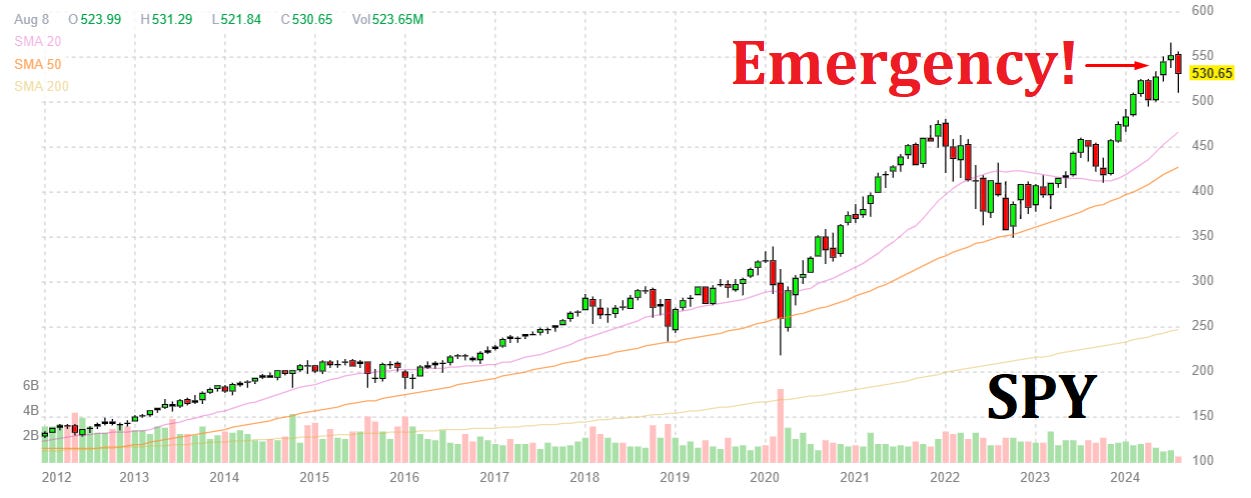
When you watch Siegel’s appearance on CNBC, the panic dripping off him is palpable. He looks like me, mid-filling, in a dentist chair: squirming, uncomfortable, likely perspiring heavily. And as anybody who has traded before knows, when you panic, you overtrade. And when you overtrade, you make things worse and you lose money. The Fed is already forecasting its rate cut for September and has taken great care to do so, which is why an emergency cut on Monday would have been “overtrading” and likely just would have made things worse.

I give credit to Jerome Powell for remaining quiet on Monday and keeping a steady hand — though if markets had gotten ugly Tuesday, who knows what would have happened.


Regardless, it always stuns me to see PhD economists and often times financial news anchors who are supposed to be the voices of reason and understand the nuances of the bowels of the economy better than anybody, slip into visible panic.

If you want to claim that Austrian economists and people who don’t believe in modern monetary theory are “wrong” all the time because the market is going up, that is a fair criticism that we have to take. But at least when the proverbial shit starts to hit the fan a little bit, we are geared up and prepared, as well as informed, instead of defecating ourselves and then trying to fulfill the impossible task of wresting control of a multi-trillion dollar market system from the hands of free market participants — all in the name of capitalism.

On Monday, in a mid-day note, I wrote that I was starting to take off some of my volatility long that I had mentioned weeks prior. I also mentioned that “I think the Fed is doing the right thing not riding the rescue right away this morning, but also think markets need to come in further. I don’t think this is going to be a one day issue.” I still believe this, and I continue to think more volatility will be ahead. I don’t think this week’s rebound will hold, and I believe market sentiment and psychology has shifted legitimately from the “soft landing” narrative to more of a “cover your ass” narrative.

This week, the United States had two extremely ugly bond auctions: a 10-year auction on Wednesday and a 30-year auction on Thursday, both of which tailed by more than three basis points.

If you don’t know what that means, you can check this article out for a primer on how Treasury auctions work for people with short attention spans. 

Rates up, rates down, rates the same—it all doesn’t matter. The gears of the economy have run out of oil and will soon be grinding to a serious halt, in my opinion. I expect home prices to continue to fall and asset prices to be not too far behind, all as a result of 5.5% rates on the largest debt bubble in history. I still believe that the Fed will be put in a position where they do act in an emergency manner, even though this week wasn’t it.

I still think the market is going to see more volatility ahead and force the hand of central bankers to hastily lower rates and quantitative easing, despite the fact that they will be far too late to make a difference and a deflationary avalanche will already be rolling down the economic hill. Is this the absolute most asinine way to do things? Yes, it is. But at least when it happens, us Austrians will have expected it, as opposed to taking to national television to prove to the world that not only are we incapable of thinking outside of the box we were educated in, but we are constantly, every day, in need of a “fix” of low volatility and picture-perfect markets, the same way a gambler at the horse track needs his last ten cent superfecta ticket to come in.

I think it’s a fair trade: we’ll let them be “right” by calling us a broken clock that is right twice a day, and in exchange, we will be prepared for when the markets are “working” and “not working” with our dignity intact — which is more than I can say for some “experts” that took to television on Monday morning.

Now read:

QTR’s Disclaimer: Please read my full legal disclaimer on my About page here. This post represents my opinions only. In addition, please understand I am an idiot and often get things wrong and lose money. I may own or transact in any names mentioned in this piece at any time without warning. Contributor posts and aggregated posts have been hand selected by me, have not been fact checked and are the opinions of their authors. They are either submitted to QTR by their author, reprinted under a Creative Commons license with my best effort to uphold what the license asks, or with the permission of the author. This is not a recommendation to buy or sell any stocks or securities, just my opinions. I often lose money on positions I trade/invest in. I may add any name mentioned in this article and sell any name mentioned in this piece at any time, without further warning. None of this is a solicitation to buy or sell securities. I may or may not own names I write about and are watching. Sometimes I’m bullish without owning things, sometimes I’m bearish and do own things. Just assume my positions could be exactly the opposite of what you think they are just in case. All positions can change immediately as soon as I publish this, with or without notice and at any point I can be long, short or neutral on any position. You are on your own. Do not make decisions based on my blog. I exist on the fringe. The publisher does not guarantee the accuracy or completeness of the information provided in this page. These are not the opinions of any of my employers, partners, or associates. I did my best to be honest about my disclosures but can’t guarantee I am right; I write these posts after a couple beers sometimes. I edit after my posts are published because I’m impatient and lazy, so if you see a typo, check back in a half hour. Also, I just straight up get shit wrong a lot. I mention it twice because it’s that important.

Tyler Durden
Fri, 08/09/2024 – 11:20

Universal Basic Income – Tried, Tested, And Failed As Expected

Universal Basic Income – Tried, Tested, And Failed As Expected

Authored by Lance Roberts via RealInvestmentAdvice.com,

A Universal Basic Income (UBI) sounds great in theory. According to a previous study by the Roosevelt Institute, it could permanently increase the U.S. economy by trillions of dollars. While such socialistic policies sound great in theory, history, and data, they aren’t the economic saviors they are touted to be.

What Is A Universal Basic Income (UBI)

To understand why the theory of universal basic income (UBI) is heavily flawed, we need to understand what UBI is.

“Basic income, also called universal basic income (UBI), is a public governmental program for a periodic payment delivered to all citizens of a given population without a means test or work requirement. Basic income can be implemented nationally, regionally, or locally, and is an unconditional income sufficient to meet a person’s basic needs (i.e., at or above the poverty line).“

The idea of guaranteed income is not a new thing. According to Wikipedia:

“The concept of a state-run basic income dates back to the early 16th century when Sir Thomas More’s “Utopia” depicted a society where every person receives a guaranteed income. 

In the late 18th century, English radical Thomas Spence, and American revolutionary Thomas Paine, declared their support for a welfare system that guaranteed an assured basic income. Nineteenth-century debate on basic income was limited, but during the early part of the 20th century, a basic income called a “state bonus” was widely discussed. 

In 1946, the United Kingdom implemented unconditional family allowances for every family’s second and subsequent children. In the 1960s and 1970s, the United States and Canada conducted several experiments with negative income taxation, a related welfare system. From the 1980s and onward, the debate in Europe took off more broadly, and since then, it has expanded to many countries around the world. “ 

While the concept of a UBI sounds good in theory, do they work in reality?

Will UBI Won’t Increase Economic Growth

“More money in people’s pockets will lead to stronger economic growth.” – J.M. Keynes

The underlying sentiment behind a universal basic income is that if the government provides a base income, it will lead to more robust economic growth. In 2020 and again in 2021, the U.S. Government implemented a limited form of UBI by sending $1400 checks to households. The result was unsurprising. While those checks did lead to strong economic growth, they also created a surge in inflation, essentially wiping out the stimulus’s benefit.

As shown, the stimulus surge led to an increase in economic activity. However, the impact on the quality of life (due to the rise of inflation) was minimal, if not negative. Those stimulus payments were not true UBIs, as each payment only occurred once. A true UBI is a monthly income provided.

While the Roosevelt Institute suggested that UBI was an economic savior, the other point they missed was that the UBI would only provide benefits for a single year.

Let’s run a hypothetical example using GDP from 2007 to the present. We will assume that In 2008, in response to the “Financial Crisis,” Congress passed a bill providing $1000/month ($12,000 annually) to 190 million families in the U.S. 

The chart below shows the economy’s annual GDP growth trend, assuming the entire UBI program contributes to economic growth. For those supporting programs like UBI, it certainly appears as if GDP is permanently elevated to a higher level. 

However, such is a bit deceiving. When we examine the annual rate of change in economic growth, which is how we measure GDP for economic purposes, a different picture emerges. In 2008, when the initial $12,000 arrived at households, GDP spiked, printing a 17% growth rate versus the actual 1.81% rate. Such would be expected as consumers spend the additional income. (The spike in GDP In 2021 was due to the stimulus payments during the Pandemic.)

However, beginning in 2009, the benefit disappears. That is because following the injection of UBI into the system, the economy normalizes to a new level after the first year. Also, notice that GDP grows slightly slower as the dollar changes to GDP at higher levels print a lower growth rate. Furthermore, the increase in demand from providing a UBI will be offset by the rise in inflation, just as we saw in 2021.

A good example was the Biden Administration’s increase in childcare benefits. While households received more benefits to pay for childcare, the cost of childcare rose faster than the benefit, making childcare even more unaffordable.

Economic basics are nearly always forgotten in a rush to help those in need. If incomes are increased by $1000/month, prices of goods and services will adjust to the increased demand. The economy will quickly absorb the increased incomes, erasing the proposed UBI benefit.

UBI’s Dark Side

Of course, the money to provide the $12,000 UBI benefit had to come from somewhere.

According to the Center On Budget & Policy Priorities, in 2023, roughly 90% of every tax dollar went to non-productive spending. 

“In fiscal year 2023, the federal government spent $6.1 trillion, amounting to 22.7 percent of the nation’s gross domestic product (GDP). About nine-tenths of the total went toward federal programs; the remainder went toward interest payments on the federal debt. Of that $6.1 trillion, only $4.4 trillion was financed by federal revenues. The remaining amount was financed by borrowing.”

Think about that for a minute. In 2023, 90% of all expenditures went to social welfare, non-productive spending, and interest on the debt. Those payments required $6.1 trillion, roughly 138% more than the tax dollars collected.

Given the decline in economic activity this year, those numbers will likely become markedly worse. Given this data, it would also mean that 100% of the UBI payments would have come solely from debt.

The table below shows the increase in total Federal Debt adjusting for the annual UBI payment. 

The chart below takes our hypothetical example and compares the impact of the additional debt on the Federal deficit from the implementation of UBI.

While the “theoretical models” assume that UBI will create enough economic growth and prosperity to “offset” the increase in debt, 40-years of history suggest otherwise.

However, this is all theory about the impact of UBI on economic prosperity. A recent 3-year study provides the actual results.

The Results

“Five researchers published a paper that tracked 1,000 people in Illinois and Texas over three years who were given $1,000 monthly gifts from a nonprofit that funded the study. The average household income for the study’s participants was about $29,000 in 2019, so the monthly payments amounted to about a 40 percent increase in their income.”

Surely, those who received $1000/month for three years were much better off in the end? As noted by Reason:

“Relative to a control group of 2,000 people who received just $50 per month, the participants in the UBI group were less productive and no more likely to pursue better jobs or start businesses, the researchers found. They also reported “no significant effects on investments in human capital” due to the monthly payments.

Participants receiving the $1,000 monthly payments saw their income fall by about $1,500 per year (excluding the UBI payments), due to a two percentage point decrease in labor market participation and the fact that participants worked about 1.3 hours less per week than the members of the control group.”

If those people are working less, the question to ask is how they spend that extra time.

“Participants in the study generally did not use the extra time to seek new or better jobs—even though younger participants were slightly more likely to pursue additional education. There was no clear indication that the participants in the study were more likely to take the risk of starting a new business, although Vivalt points out that there was a significant uptick in “precursors” to entrepreneurialism. Instead, the largest increases were in categories that the researchers termed social and solo leisure activities.”

The results of the 3-year experiment are unsurprising, as basic economics and human nature would already surmise.

Conclusion

In its essential framework, a universal basic income sounds excellent. It would ensure that everyone has fundamental needs covered. Then, they can go out and produce and not worry about covering critical bills. Unfortunately, the additional income is quickly absorbed into the economy as prices rise (inflation) to compensate for the extra spending. After the first year, the UBI would have to be increased or no longer have any benefit. 

Therein lies the trap with all socialistic programs.

While UBI, along with free healthcare, education, childcare, etc., sounds great, they are NOT productive investments with a higher return than the carrying cost of the debt. History suggests these welfare supports have a negative multiplier effect on the economy.

Most telling is the inability of the current economists, who maintain our monetary and fiscal policies, to realize the problem of trying to “cure a debt problem with more debt.”

The Keynesian view that “more money in people’s pockets” will drive up consumer spending and boost GDP has been wrong. 

It hasn’t happened in 40 years.

We fear these socialistic programs, which promise “free everything” with no consequences, instead deliver inflation, generate further income inequality, and ultimately increase social instability and populism. Such has resulted in every other country running such programs with unbridled debts and deficits.

It is also showing up in the United States as well.

While UBI sounds excellent at the conversational level, so does “communism” and “socialism.” In practice, the outcomes have been vastly different than the theory.

As Dr. Woody Brock aptly argues:

“It is truly ‘American Gridlock’ as the real crisis lies between the choices of ‘austerity’ and continued government ‘largesse.’ One choice leads to long-term economic prosperity for all; the other doesn’t.”

Take your pick.

Tyler Durden
Fri, 08/09/2024 – 10:40

China Inflation Unexpectedly Hits Five Month High Driven By Soaring Pork Prices

China Inflation Unexpectedly Hits Five Month High Driven By Soaring Pork Prices

China’s consumer prices rose faster than expected in July, driven mostly by a surge in food/pork prices, even as core inflation continued to sink, raising concerns over persistent deflation in the world’s second-largest economy.

The country’s CPI rose 0.5% YoY In July year on year, the National Bureau of Statistics said on Friday, beating the median forecast of a 0.3%. The rise was the biggest since February, when prices grew 0.7%, and outpaced the 0.2% rise in June. Food price inflation rose across the board in July due to a decrease in supply from adverse weather. Meanwhile, both non-food price inflation and core inflation edged down in July, indicating continued weakness of domestic demand.

Meanwhile, deflation persisted in producer prices, a gauge reflecting goods as they leave factory gates as well as costs of materials and commodities, which were down 0.8% in July, the same as the previous month, if fractionally stronger than the -0.9% estimate. PPI inflation in upstream sectors rose modestly while that in downstream sectors fell slightly. In month-over-month terms, PPI inflation edged down to +1.8% in July vs. +1.9% in June. PPI inflation in producer goods ticked up to -0.7% yoy in July from -0.8% yoy in June, and PPI inflation in consumer goods edged down to -1.0% yoy in July (vs. -0.8% yoy in June).

Looking ahead, Goldman said it expects PPI deflation to lessen gradually, and CPI inflation to remain relatively low in the coming months.

Some more details from the report, courtesy of Goldman:

  • In year-over-year terms, food prices were flat in July compared with a year ago (vs. -2.1% yoy in June). The prices of major food items rose in July due to adverse weather, especially for fresh vegetables/fruits. Among major food items, pork prices a major component of China’s consumer goods basket, leapt 20% YoY in July, the most since late 2022, and up from 18.1% in June. Prices have been highly volatile since outbreaks of African swine fever from 2018 to 2021 led to mass culling of herds. Inflation in fresh vegetable prices rose to +3.3% yoy in July from -7.3% yoy in June, and inflation in fresh fruit prices rose to -4.2% yoy in July (vs. -8.7% in June).

  • Non-food CPI inflation edged down to +0.7% yoy in July from +0.8% yoy in June. The moderation is broad-based across various categories. After excluding food and energy prices, core CPI inflation softened to +0.4% yoy in July (vs. +0.6% in June), indicating still weak domestic demand. Although NBS mentioned that tourism-related prices, such as flight ticket fares and hotels, rose sequentially, the year-over-year growth moderated from June to July. Fuel costs increased by +5.1% yoy in July (vs. +5.6% yoy in June). Services inflation edged down to +0.6% yoy in July (vs. +0.7% in June; Exhibit 2).

Surging food prices aside (the result of recent flooding across China), consumer price growth has remained very weak in China over the past year, with frequent negative reading casting doubts over the strength of domestic demand in the midst of a three-year property slow-motion crash. Intense competition across Chinese industries, especially the automotive sector, have added to downward pressure on prices. Beijing has intensified its focus this year on manufacturing after a post-pandemic consumer rebound failed to materialise last year.

Lynn Song, chief China economist for ING, said flat food prices, which had been mired in deflation for the past year, were a “big part of the increase” in overall CPI. But he pointed to drags on prices in other areas, including transport facilities due to cheaper vehicle prices, communications due to falling smartphone prices, and declining rents.

“We expect price weakness to remain in the first two categories, while we are in wait-and-see mode on the rent category as policy support for the real estate market continues to roll out,” Song said.

Meanwhile, inflation in items that actually serve as assets to China’s shrinking middle class, refuses to take hold: new home prices in May fell by the most in almost a decade, adding to concerns over the property sector. Authorities in the same month introduced very modest measures to encourage state-owned enterprises to buy unused housing, in a bid to support the market, yet the token amount of the support was largely ignored by the market.

Chinese authorities also unveiled unexpected cuts to lending rates last month after widespread calls for more economic stimulus. These have yet to achieve anything.

Tyler Durden
Fri, 08/09/2024 – 10:20

Rogan: State Of Free Speech In The UK Is Worse Than Russia

Rogan: State Of Free Speech In The UK Is Worse Than Russia

Authored by Paul Joseph Watson via Modernity.news,

Responding to the recent authoritarian crackdown, Joe Rogan pointed out that more people get arrested in the UK for “thought crimes” on social media than they do in Russia.

“Terrible government overreach – you’re seeing it now in England where people are getting arrested for tweets,” said the podcast host.

“People talk about Soviet Russia, like how bad Russia is in terms of cracking down on thought police and cracking down on bad tweets and things like that,” he added.

Rogan then compared how Russia polices free speech on social media compared to the UK.

In Russia, only around 400 people are arrested each year for ‘hateful’ tweets, while that number is around 3,300 in the UK.

“The fact that they’re comfortable with finding people who’ve said something they disagree with and putting them in a fucking cage in England in 2024 is really wild,” said Rogan.

He then drew attention to a recent statement by Stephen Parkinson, the Director of Public Prosecutions, who told Sky News that merely retweeting information about the UK riots could lead to criminal charges.

Rogan pointed out that the term “hateful” is completely subjective “and in our lifetime we’ve seen that get moved,” before explaining how ‘deadnaming’ a transgender person by referring to them by their original name is now treated as “hateful”.

As we highlighted yesterday, a woman in Cheshire was arrested for tweeting “inaccurate information” about the killer of three girls in Southport.

Meanwhile, one of the latest arrests in the UK in the aftermath of the riots is of a man who wrote “filthy bastards” on Facebook alongside an emoji of an ethnic minority person and a gun.

He will now spend the next 12 weeks in prison.

*  *  *

Your support is crucial in helping us defeat mass censorship. Please consider donating via Locals or check out our unique merch. Follow us on X @ModernityNews.

Tyler Durden
Fri, 08/09/2024 – 10:00

White House Speaks Of ‘Finalizing’ Gaza Deal While Diplomats Admit It’s ‘Hail Mary’ Time

White House Speaks Of ‘Finalizing’ Gaza Deal While Diplomats Admit It’s ‘Hail Mary’ Time

With the Middle East on the brink of a possible major war between Iran and Israel, also involving Lebanese Hezbollah, the White House and its regional partners are desperately trying to salvage ceasefire talks.

The United States, Qatar, and Egypt are calling on Israel and Hamas to step back to the negotiating table. They say it is urgent “to resume urgent discussion” on August 15 in Doha or Cairo “to close all remaining gaps and commence implementation of the deal without further delay.” Gaps?

While the statement speaks of “remaining gaps” – a fresh Axios report cites a diplomatic source strongly suggests the situation is a far cry from mere closing gaps…

A source familiar with the negotiations said the planned summit is a “Hail Mary” attempt by the Biden administration to get a deal and prevent a regional war.

The White House also needs to present to the American public that it has helped secure a ceasefire, which would be a boost to Democratic nominee Kamala Harris and her supposed foreign policy credentials going into the November election.

Via Reuters

The statement from the US, Qatar, and Egypt continued: “It is the time to conclude a ceasefire agreement and release hostages and prisoners,” they said.

“We have worked for months to reach framework agreement and it is now on the table, with only details of implementation missing.”

But this is the same language that negotiators have presented to the public for several months at this point. They are always and ever “near the goal line,” we are told. Yet Israeli and Hamas officials themselves constantly suggest the opposite. There also doesn’t seem to be much US pressure on Israel, or serious efforts to reign in its adventurism in places like Iran.

Additionally, Washington policy itself is schizophrenic: President Biden has criticized Israel at times, lamenting the mass civilian casualties in the Gaza Strip, while at the same time he continues to arm Israel’s military to the teeth.

Consider too the rosy picture of negotiations painted by Secretary of State Antony Blinken last month at the Aspen Security Forum: “I believe we’re inside the 10-yard line and driving toward the goal line in getting an agreement that would produce a cease-fire, get the hostages home and put us on a better track to trying to build lasting peace and stability,” Blinken said July 19.

Perhaps it’s past time for Blinken and US officials to retire the football metaphors when it comes to Hamas negotiations? 

Tyler Durden
Fri, 08/09/2024 – 09:35

RFK Jr. Cancels Iowa State Fair Appearance Citing Increased Security Concerns

RFK Jr. Cancels Iowa State Fair Appearance Citing Increased Security Concerns

Authored by Jeff Louderbeck via The Epoch Times,

Almost a month after a gunman shot and injured former President Donald Trump at an outside rally in Pennsylvania, independent presidential candidate Robert F. Kennedy Jr. canceled a planned appearance at the Iowa State Fair, citing “increased security concerns.”

Kennedy announced his candidacy in April 2023 and was denied Secret Service protection five times by the Department of Homeland Security before it was swiftly authorized after the July 13 assassination attempt on Trump.

Kennedy’s uncle, President John F. Kennedy, was shot and killed during a campaign stop in Dallas in 1963, and his father, New York Sen. Robert F. Kennedy, was assassinated by a gunman after a campaign speech in Los Angeles while running for president in 1968.

In separate incidents last year, two armed men were arrested while attempting to confront Kennedy.

Kennedy was one of 10 candidates slated to speak at the Political Soapbox on Thursday, an event that has become an Iowa political tradition. He appeared at the forum last year.

A Kennedy campaign spokesperson said, “We were unable to secure a venue stage indoors that satisfies our security requirements for Mr. Kennedy’s safety.”

Kennedy has not held his own campaign rallies since receiving Secret Service protection. He did speak at the Bitcoin 2024 in Nashville last month. Trump also delivered an address at the conference.

Kennedy’s campaign told The Epoch Times that more events will be scheduled in the upcoming weeks. He has frequently appeared on podcasts and has held press briefings via Zoom as he continues his quest to get on the ballot in all 50 states and the District of Columbia.

Kennedy previously alleged that it was a “political” decision to deny his repeated requests for Secret Service protection.

“I worry about the safety of my family and the safety of bystanders if there happens to be a more serious incident,” he told The Epoch Times after a campaign stop in Des Moines, Iowa, in April.

Federal law indicates that it’s the president and the Secretary of Homeland Security who have the “broad discretion” to authorize Secret Service protection of presidential candidates.

Major presidential and vice presidential candidates, however, typically receive DHS security protection within 120 days of the first Tuesday of November in an election year.

A man is taken into police custody outside an event where Democratic presidential candidate Robert F. Kennedy Jr. was scheduled to speak at Wilshire Ebell Theatre in Los Angeles on Sept. 15, 2023. (Provided to The Epoch Times)

Kennedy’s campaign has encountered security issues. In September 2023, security personnel arrested an armed man impersonating a U.S. Marshal outside a campaign event in Los Angeles.

One month later, another armed man was arrested after twice attempting to break into Kennedy’s Los Angeles home. When he was released after the first incident under a restraining order, he returned to the candidate’s home and again tried to break in before authorities arrested him a second time.

Tyler Durden
Fri, 08/09/2024 – 09:15

Chicago Fed Head Says The Quiet Part Out Loud In Fox News Interview

Chicago Fed Head Says The Quiet Part Out Loud In Fox News Interview

The Fed’s constant narrative shield of its ‘apolitical-ness’ took a battering this morning when Chicago Fed President Austan Goolsbee said the quiet part out loud during an interview on Fox News.

With the market implying a 50-50 chance of The Fed cutting 25bps or 50bps in September…

…the affable Fed head was asked the ubiquitous question of whether monetary policymakers weigh their ‘mandate-only-driven’ decision to cut rates against the ‘political’ benefits of cutting rates in an election year.

The correct answer to this question is simple – “No!” – The Fed does not consider the election cycle and is data-driven (or some such gaslighting).

Goolsbee’s answer, however, left some room for the ‘grey’ when he admitted that it makes him “a little” uncomfortable that the Fed may start cutting interest rates close to the US presidential election in November.

He did recover quickly, by adding that elections come regularly

“So whatever the Fed does, somebody’s going to say they didn’t like that. All we can do in the Fed is commit to the thing that would be driving our decisions – the dual mandate”

Of course, Goolsbee wouldn’t be the first Fed-related member to crack the door of politicization open…

In his post-Fed existence, Bill Dudley is of course best known for writing that infamous August 2019 Bloomberg op-ed, in which he called for the Fed to hike rates into the last months of Trump first administration to scuttle his odds of re-election…

Source: Bloomberg

Watch the full exchange with Goolsbee here:

Tyler Durden
Fri, 08/09/2024 – 08:55

California Power Bills Are Soaring

California Power Bills Are Soaring

Authored by Tsvetana Paraskova via OilPrice.com,

  • California residents face the second-highest average electricity bills in the U.S., driven by investments in wildfire mitigation, grid upgrades, and renewable energy integration.

  • The surge in electricity costs has left nearly 1 in 5 California households behind on their energy bills.

  • California is transitioning to a new net billing tariff for residential solar and a flat monthly fee structure for electricity in an effort to make electrification more affordable.

Consumers in California have seen their electricity bills surge in recent years and double over the past decade as utilities are investing more in wildfire prevention and transmission lines to accommodate growing renewable energy output.

As these utilities invest billions of U.S. dollars to make the grid more resilient, they pass the higher spending on to consumers. 

So California now has the second-highest average electricity bill in the United States, second only to Hawaii. 

“Untenable” Surge 

California is looking to rapidly shift away from fossil fuels and make its grid more resilient, but these efforts show the other side of the greening of the grid – power generation costs may be plunging, but transmission and distribution costs are rising, leading to higher spending from utilities. 

These increased expenditures are passed on to consumers by the investor-owned utilities Pacific Gas & Electric, Southern California Edison, and San Diego Gas & Electric. As a result, electricity bills in California have risen so much in recent years that in some places, the power bill exceeds the cost of rent, The Wall Street Journal reports in a featured article. 

The surge in bills has been “untenable,” according to the consumer advocate’s office at California’s utilities regulator. 

In its latest 2024 Q2 Electric Rates Report last month, the Public Advocates Office tracked residential electric rate changes across Pacific Gas and Electric (PG&E), San Diego Gas & Electric (SDG&E), and Southern California Edison (SCE) service territories through July 1, 2024. 

The report found that over the last few years, California’s electric bills are generally rising due to higher electricity use from things such as air conditioning, and higher overall electricity prices. 

Since January 2014, residential average rates for the PG&E service area have jumped by 110%, those of SCE have surged by 90%, and SDG&E rates have soared by 82%.

The primary statewide drivers of soaring rates have been investments in wildfire mitigation, transmission and distribution investments, and rooftop solar incentives or the so-called net energy metering, the Public Advocates Office said.  

Overall, residential electricity rates have increased substantially since 2014, surpassing inflation, it noted.  

It couldn’t be surprising then that nearly 1 in 5 households are behind on their energy bills, according to the office. A total of 18.4% of the customers of the three investor-owned utilities are in arrears in their energy bills. 

Changes in Charging for Electricity 

This year, California has changed the way utilities charge for electricity and is transitioning from net energy metering to net billing tariff for residential solar projects. These regulatory changes have hit residential solar installations and are set to change the way power bills are formed starting next year.

The move to the net billing tariff in California dragged down the total U.S. residential solar market, which saw in the second quarter of 2024 its lowest quarter since Q1 2022 at 1.3 GWdc, reflecting a 25% decline year-over-year and 18% quarter-over-quarter. 

“While slowdowns are occurring nationwide, these declines were heavily influenced by California, where quarterly installations have shrunk for the last two quarters as NEM 2.0 projects are built out and the state transitions to the net billing tariff,” the Solar Energy Industries Association (SEIA) said in its latest quarterly report.

In another significant change, California’s utilities will charge from next year or 2026 a flat monthly fee of up to $24.15 on all customers while reducing the charges imposed per kilowatt of electricity used.

The California Public Utilities Commission (CPUC) says that the new billing structure “lowers overall electricity bills on average for lower-income households and those living in regions most impacted by extreme weather events, while accelerating California’s clean energy transition by making electrification more affordable for all.”

The usage rate for electricity will be reduced by 5 to 7 cents per kilowatt-hour for all residential customers, which makes it more affordable for everyone to electrify homes and vehicles, regardless of income or location, because the price of charging an electric vehicle or running a heat pump is lower. 

However, critics of the new billing structure have said it will hurt customers who live in small homes and have relatively small electricity use as the lower per-kWh rate would not offset the new flat fee.  

It remains to be seen how the new billing structure will affect California customers and whether it will lead to the expected mass electrification of homes. 

A total of 78% of Americans are concerned about their rising energy bills, an exclusive CNET Money survey has shown. Around 80% of U.S. adults in all regions, including the Northwest, Midwest, South, and West, said that their finances have been impacted by growing home energy costs, according to the survey.

California leads in U.S. solar and battery installations, but the cost of bringing that power generation to consumers has soared with the need to expand, upgrade, and protect the power grid. 

Tyler Durden
Fri, 08/09/2024 – 08:35

Putin Signs Law Legalizing Cryptocurrency Mining In Russia

Putin Signs Law Legalizing Cryptocurrency Mining In Russia

Authored by Nik Hoffman via BitcoinMagazine.com,

Russian President Vladimir Putin has officially signed a law that legalizes cryptocurrency mining in Russia.

According to a report by Russian news agency TASS, the law introduces several key concepts, including digital currency mining, mining pools, and mining infrastructure operators.

Mining activities are now recognized by Russia as part of turnover rather than the issuance of digital currency.

The new legislation specifies that only Russian legal entities and individual entrepreneurs registered with the government will be allowed to engage in cryptocurrency mining.

However, individual miners can participate without registration, provided their energy consumption remains within government-set limits.

Additionally, the law permits the trading of foreign digital financial assets on Russian blockchain platforms.

However, the Bank of Russia retains the authority to ban the placement of certain assets if they are deemed a threat to the country’s financial stability.

According to TASS, during a recent government meeting, President Putin emphasized Russia needs “to seize the moment” in establishing a legal framework for digital currencies.

He highlighted the potential of digital currencies to contribute to Russia’s economic development, stressing the need for proper regulation and infrastructure.

The law is set to take effect ten days after its official publication, except for specific provisions that may have different implementation dates.

Tyler Durden
Fri, 08/09/2024 – 06:30

President Of Smartmatic Indicted On $1 Million Bribery, Money Laundering Charges

President Of Smartmatic Indicted On $1 Million Bribery, Money Laundering Charges

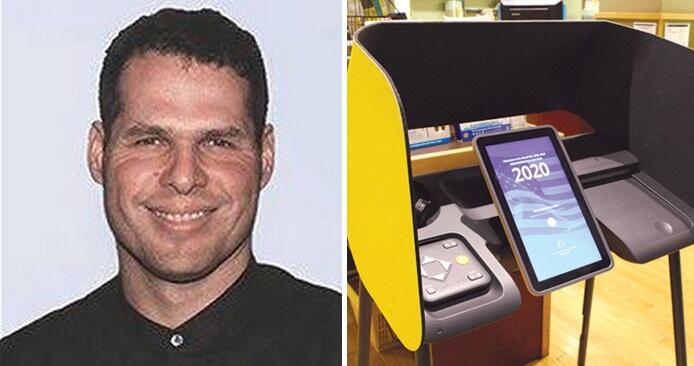
The founder and president of Smartmatic – the company whose voting machines and software are ‘trusted’ around the world to provide secure elections – was indicted by a federal grand jury on Thursday along with two other company officials on charges involving a bribery and money-laundering scheme used to secure elections contracts in the Philippines.

Roger Piñate, 49, of Boca Ratón Florida, along with Jorge Miguel Vasquez, 62, of Davie, were among those charged over the alleged payment of $1 million in bribes to the former chairman of the Philippines Commission on Elections, Juan Andres Donato Bautista.

“These bribes were allegedly paid to obtain and retain business related to providing voting machines and election services for the 2016 Philippine elections and to secure payments on the contracts, including the release of value added tax payments,” according to a press release from the US Department of Justice.

According to the indictment, the alleged co-conspirators financed the bribes by over-invoicing the cost per voting machine used in the elections. To hide their crime, prosecutors say they used coded language to refer to a slush fund used to make the illicit payments – causing the creation of fraudulent contracts and fake loan agreements to make the transfers appear legitimate.

The defendants then allegedly laundered the funds related to the bribery scheme via a constellation of international bank accounts in Asia, Europe and the United States – including in the Southern District of Florida.

Bautista, Piñate, Vasquez, and Elie Moreno, 44, a dual citizen of Venezuela and Israel, are each charged with one count of conspiracy to commit money laundering and three counts of international laundering of monetary instruments.

If convicted, Bautista, Pinate, Vasquez and Moreno each face a maximum penalty of 20 years for each count of international laundering of monetary instruments and conspiracy to commit money laundering. -Miami Herald

Smartmatic was founded in 2000 by Piñate, Antonio Mugica and Alfredo José Anzola – making international headlines after Venezuelan president Hugo Chávez chose the company to replace the country’s voting machines in 2004. In 2006, they acquired Sequoia Voting Systems – though later divested its stake.

According to Smartmatic’s website, Piñate “played a critical role in planning and executing the world’s largest election using optical scanners (in the Philippines) and in Smartmatic winning the largest election contract in US history (in Los Angeles).“

The company responded to the indictment Thursday night, saying in a statement “Smartmatic has learned that two of our employees have been indicted for alleged violations of the FCPA in the Philippines almost 10 years ago. Regardless of the veracity of the allegations and while our accused employees remain innocent until proven guilty, we have placed both employees on leaves of absence, effective immediately.

“No voter fraud has been alleged and Smartmatic is not indicted. Voters worldwide must be assured that the elections they participate in are conducted with the utmost integrity and transparency. These are the values that Smartmatic lives by.”

Needless to say, we have a lot of questions…

Tyler Durden
Fri, 08/09/2024 – 05:45