61.3 F
Chicago
Sunday, September 27, 2026
Home Blog Page 2469

China’s GDP Growth Unexpectedly Tumbles As New Home Prices Plunge Most In 9 Years

China’s GDP Growth Unexpectedly Tumbles As New Home Prices Plunge Most In 9 Years

China’s economic growth collapsed to just 4.7% YoY in the second quarter, missing all but one economist’s forecast, as the world’s second largest economy is slowly but surely grinding to a halt (absent a bazooka stimulus).

GDP, which rose 5.3% in the first quarter, had been expected to rise 5.1% based on economists polled by Bloomberg; instead growth slumped to just 4.7%, the lowest growth since March 2023.

In sequential terms, GDP fell to 0.7% QoQ in Q2 from 1.5% in Q1. Industrial production growth remained solid at +5.3% yoy in June, despite a moderation from +5.6% yoy in May, thanks to strong export growth.

China has grappled with weak consumer demand and a prolonged property slowdown, prompting greater intervention from policymakers in recent months, but in the absence of a bazooka stimulus – both fiscal and monetary – it is unlikely that anything will change and growth will continue to cool quarter after quarter, until there is a brutal recession and/or civil unrest.

Elsewhere, industrial production rose 5.3% in June, slightly above expectations of 5.0% but below the 5.6% increase in Q1, while retail sales rose just 2.0% missing expectations of 3.4% by a wide margin and in line with sluggish tourism revenue growth during the Dragon Boat Festival and the soft 618 Online Shopping Festival. Fixed Investment rose 3.9%, right on top of reduced expectations, and reflecting the tug-of-war between policy support, adverse weather conditions and still-depressed property investment.

Separately, new home prices in China fell 4.9% year on year last month, the fastest pace of decline in nine years, according to Bloomberg calculations, while new construction starts and property investment were down 23.7% and 10.1%, respectively, in the first half of the year.

According to Goldman, taking Q2 GDP and June activity data together, “domestic demand remained sluggish despite strong exports, and more policy easing is necessary through the remainder of this year, especially on the fiscal and housing fronts.”

The data release came as the Chinese Communist party’s Central Committee on Monday launched its third plenum, a four-day meeting in which the country’s leadership is expected to set the direction of economic policy. The last such event was held in 2018.

Beijing has set a full-year economic growth target of about 5%, and unless Beijing launches a bazooka stimulus, it has precisely zero chance of hitting it.

Tyler Durden
Sun, 07/14/2024 – 23:30

Escobar: The Yemen-Russia Riddle

Escobar: The Yemen-Russia Riddle

Authored by Pepe Escobar via The Cradle,

Sanaa is eagerly engaging with Moscow in a bid to expand its astounding military gains into both the economic and diplomatic realms. While trade with Russia may be integral to blunting the effects of the siege of Yemen, Sanaa also views membership in the BRICS as a ‘golden opportunity’ to establish lasting Persian Gulf security.

Yemen’s stellar strategic maneuvering in defense of Palestine from its dramatically ascendant role in West Asia’s Axis of Resistance is acquiring the contours of an epic odyssey – eagerly scrutinized by the Global Majority.  

As if the unprecedented humiliation of the US Navy in the Bab al-Mandab and the Red Sea was not enough, Ansarallah targeted an Israeli ship with a Hatem-2 hypersonic missile, a remarkable advancement in indigenous technological development.

These prodigious strategic-military advances displayed by Ansarallah at the same time revived the always simmering, unfinished war and blockade launched against Yemen in 2015 by Saudi Arabia and the UAE with the usual US and UK backing.

Riyadh abhors the Yemeni resistance like the plague. Instead of Sanaa, Yemen’s recognized capital city, it supports an anti-Ansarallah’ government’ sitting in Aden, sort of recognized by the ‘rules-based international order.’ In truth, though, that government actually sits in a luxury Riyadh hotel.

Ansarallah has tried hard to negotiate a prisoner exchange involving captured Saudi pilots traded for jailed Hamas members in Saudi Arabia. Riyadh has not only refused but threatened that bank transfers to and from Yemen would be blocked, and Sanaa’s international airport and sea ports would be shut down.

Ansarallah’s response was stark: if Yemeni banking is blocked, the Saudi Arabian banking system would be destroyed. If Sanaa airport is targeted, the same would happen to Saudi airports.

So, the war that never ended is suddenly and ominously back on track. Ansarallah would have no problem targeting Saudi Arabia’s oil production as retaliation to a full blockade – considering its proven capability with brand-new missiles and naval drones. The consequences for global oil markets would be catastrophic.  

Two delegations come to Moscow…

Yemen represents the classic case of a fierce resistance actor in the context of the emerging multipolar, multi-nodal world. So that begs the question of where multipolar/multi-nodal champion Russia stands when it comes to Yemen’s fight.  

Which brings us to the fascinating case of two Yemeni delegations that recently visited Moscow.

One of them, led by a senior Ansarallah official, met in Moscow with the Russian President’s Special Envoy to the Middle East (West Asia) and Africa, Mikhail Bogdanov.

They discussed not only the ongoing Gaza genocide but also what Ansarallah describes as “the American–British aggression on Yemen,” a reference to ongoing western naval operations in the Red Sea that have – unsuccessfully – sought for months to thwart Yemeni ops against Israel-bound and Israel-associated shipping vessels. A retaliatory siege, if you will.

The Yemenis reassured the Russians that their maritime operations “do not pose a threat to international navigation or target anyone, but rather support the Palestinian people and respond to the American and British airstrikes on Yemen.” Ansarallah praised Russia’s understanding and expressed gratitude for: 

Russia’s position against the American–British aggression on Yemen and their support for the humanitarian and political process in our country. We also reviewed the outcomes of the de-escalation efforts between Yemen and the aggressor countries and highlighted the necessity of reaching a comprehensive solution that ensures Yemen’s unity and sovereignty.

All of the above concerns what could be described as the Yemeni political process delegation. In Oman, while waiting to collect their Russian visas, they crossed paths with another Yemeni group: let’s call it the geoeconomics delegation.

This delegation was led by Dr Fouad al-Ghaffari, special advisor to Yemeni Prime Minister Dr Abdulaziz Saleh bin Habtoor’s National Salvation Government in Sanaa.

Habtoor is a leading Yemeni intellectual and the author of the remarkable Undeterred: Yemen in the Face of Decisive Storm, which highlights key details of the war launched in 2015 “by a hostile coalition of 17 countries,” fully supported by the US and the EU, and complete with air, sea, and land blockades.

The prime minister explains the economic war, as the Yemeni Central Bank was transferred to Aden; the biological war, which led to a horrendous break out of cholera across the nation; and how the Arab League was bought and paid for all the way. He stresses how “this is the first war in History in which all the rich Arab countries stand together under the cloak of the most powerful imperialist country in an unsacred coalition against the poorest country in the Arabian Peninsula.”  

That war is far from over. Yemen is suffering badly. The specter of a large famine has not disappeared. So, the focus of Dr Ghaffari’s delegation clearly had to be humanitarian and centered on food security.  

He tells The Cradle what Yemen expects to receive from Russia’s Ministry of Agriculture: 

We have food to export and import from Russia. We should have a shipping line between Russia and Yemen at Hodeidah port. Last month, another Yemeni delegation was in China. There were good contacts, and they are now developing an agreement. Here, I came as an adviser to the Prime Minister, and parallel to the Russian presidency of BRICS, I came to highlight the importance of developing an agriculture connection – and food security connection – between us and Russia. We need Russian expertise on all this. We have special products in Yemen that we want to export – and now we are fighting a boycott by the US and the west. We want Russian products instead of products coming from Europe.

Ghaffari adds, “Some Russian products do come to Yemen – but they don’t come directly. They come from Gulf countries or African countries. But not as Russian products. In Yemen, there are no Russian products. Now, after 96 years of Russia–Yemen relations, Yemen is defining itself as a good player in our region. It’s a time for BRICS to unite – and to fight back against the US model.”

Yemen’s BRICS drive

Dr Ghaffari further explains what, in effect, breaks down as the possible geoeconomic integration of Yemen: 

We had good signs from official contacts, and the Prime Minister in Yemen welcomes that. The objective is to close a deal with Moscow. We have a vision. We want to explain this vision of how to bring the North and South of Yemen together into one railway. This brings us back to 15 years ago when Russian Railways had a project. We bring oil, gas, [and] agriculture investment to seaports. Maybe Yemen could do that by itself in 50 years, but with good help, we can do it in one or two years.

He says a long discussion was also held in Moscow on Yemen’s desire to apply for BRICS membership – and the pitfalls involved:

We have been working close to BRICS for 10 years in Yemen, because we believe in this vision, if we have a chance to become a member. I am the only adviser to the Prime Minister for BRICS advancement. We want to work with BRICS. We now have a golden opportunity.

The prime minister’s office in Sanaa has sent letters to the Russian Ministry of Foreign Affairs expressing its desire to join BRICS. If these contacts develop, Moscow could certainly invite Sanaa to participate as an observer in the BRICS summit in Kazan in October. 

But does the recent BRICS membership of Saudia Arabia and the UAE create an instant obstacle in Yemen’s pathway to joining the multipolar powerhouse?

Ghaffari doesn’t seem to think so, linking Yemen’s BRICS drive to establishing “security in the Gulf. The Emirates and Saudis are now in BRICS. BRICS could take all of us together.”

So Dr Ghaffari’s delegation visited Russia with several objectives: to study the opportunity of establishing a joint agricultural company, to discuss import and export opportunities and shipping methods, to discuss cooperation within the BRICS strategy for economic partnership in agriculture, to learn about the Russian experience in boycotting western products; to introduce the specificity of Yemeni products, especially coffee, honey, and cotton into the Russian market, and to discuss the construction of one of the Yemeni dams.

Add to this a key diplomatic objective: to discuss the possibility of a Yemeni representative attending the upcoming BRICS summit. “We stand with Russia. Russia should have a complete picture of what happens in Yemen. If Yemen is not at the summit, something would be missing in the region.”

Moscow, Beijing, and Tehran would certainly agree. But then hardcore geopolitical reality calls. The Russian Federation, forced to protect an extremely delicate geopolitical balance between Iran and Saudi Arabia inside BRICS, may still be far from solving the Yemen riddle.

Tyler Durden
Sun, 07/14/2024 – 23:20

Chinese Regulators Intensify Efforts To Tighten Control Over Financial Markets

Chinese Regulators Intensify Efforts To Tighten Control Over Financial Markets

By Charlie Zhu and Helen Sun, Bloomberg Markets Live reporters and strategists

Three things we learned last week:

1. Chinese regulators intensified efforts to tighten their control over financial markets. The People’s Bank of China effectively narrowed its interest rate corridor, placing a much higher floor on the costs banks pay to borrow overnight from each other.

For longer-term bond yields, local branches of the National Financial Regulatory Administration asked some rural lenders to shorten the average duration of their bond holdings, joining the PBOC’s recent efforts to prevent yields from falling further.

For stocks, the securities watchdog took some of its most extreme measures yet to restrict short selling and quantitative trading strategies, providing a boost to some of the key indexes.

While recent policies have their respective rationale, they could come at long-term or macro economic costs, according to Nomura Holdings Inc. Measures to control the yield curve might mitigate financial risks, but weak domestic demand need lower interest rates to stimulate borrowings, economists at Nomura wrote in a report last week.

China’s financial industry has already been reeling from slower growth and regulatory crackdowns. Ping An Bank Co. is relocating more than 100 staff based in Shanghai to its Shenzhen home base to cut costs, while PricewaterhouseCoopers LLP is cutting staff across its China operations amid an exodus of corporate clients.

2. Domestic demand remains week despite efforts to stimulate consumption. The consumer price growth hovered near zero for a fifth month, with the statistics bureau attributing it to promotions for the annual “618” shopping festival.

“The deteriorating labor market will limit the potential for any quick and sustained recovery in consumption and hence inflation,” economists led by Zhou Yingke at Barclays Plc wrote in a report.

Meanwhile, credit expansion also missed estimates. Exports in June jumped more than expected, highlighting the importance of external demand in underpinning China’s economy. Together with weak imports, the country registered a record trade surplus.

3. Baidu’s tests of unmanned auto driving have reminded people the future has arrived. China’s Internet search leader is investing in generative AI and autonomous driving to diversify its business. With Beijing supporting robotaxis in ride hailing and car rental fleets, Baidu’s shares in Hong Kong posted the biggest weekly gain in more than one-and-a-half years.

Tyler Durden
Sun, 07/14/2024 – 22:50

Former CDC Director Says FDA Underreported Adverse Vax Side Effects To Prevent Vaccine Hesitancy

Former CDC Director Says FDA Underreported Adverse Vax Side Effects To Prevent Vaccine Hesitancy

Authored by Debra Heine via American Greatness,

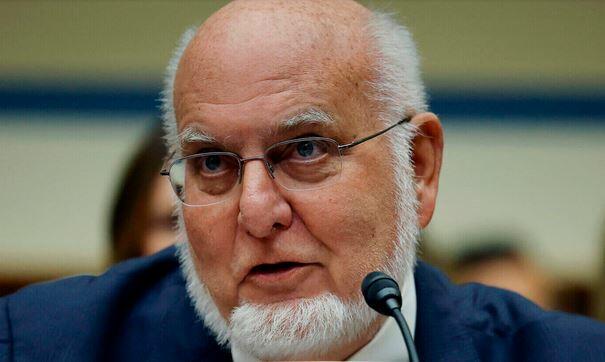
Dr. Robert Redfield, the former director of Centers for Disease Control and Prevention (CDC) said Thursday that the U.S. Food and Drug Administration (FDA) pushed a false “safe and effective” COVID vaccine narrative by underreporting adverse events. The mRNA shots “never should have been mandated,” Redfield told the Senate Committee on Homeland Security and Governmental Affairs Committee on Thursday.

The Democrat-controlled Senate oversight hearing entitled “Risky Research: Oversight of U.S. Taxpayer Funded High-Risk Virus Research,” included witnesses  Dr. Gerald Parker, Dr. Carrie Wolinetz, Dr. Kevin Esvelt, and Redfield.

Former President Trump’s CDC director accused the Biden government of suppressing data about vaccine injuries in an effort to prevent vaccine hesitancy.

“There was not appropriate transparency from the beginning about the potential side effects of these vaccines, and I do think there were inappropriate decisions by some to try to underreport any side effects because they argued that would make the public less likely to get vaccinated” Redfield testified.

Redfield said the biggest mistake of all was the Biden regime’s decision to mandate the mRNA products.

“They never should have been mandated,” he said. “It should have been open to personal choice. They don’t prevent infection, they do have side effects.”

A growing number of doctors and scientists now say that the cost to society and the cost to the individual taking the COVID injection far outweighed any of the proposed benefits.

Senator Ron Johnson (R-Wis.) pointed out that Biden regime officials like Dr.  Peter Marks, head of the FDA’s Center for Biologics Evaluation and Research, continue to deny that the injections are dangerous.

“They’re saying they [vaccine side effects] are rare and they’re mild,” Johnson said.

“The FDA should release all of the safety data they have,” Redfield replied. “I was very disappointed to hear that they’re planning to hold on to that [safety data] until 2026,” he continued. “That really creates a sense of a total lack of trust in our public health agencies toward vaccination. It’s counterproductive,” he added.

Johnson lamented that he has been unable to get Rep. Gary Peters (D-Wis.), the chairman of the the Senate Homeland Security Committee, to issue any subpoenas to the relevant health agencies to obtain the safety data.

“I would suggest you do that,” the Republican told Peters.

Johnson was poised to spearhead investigations into COVID vaccine malfeasance himself as Chair of the Permanent Subcommittee on Investigations starting in 2023, but Republicans did not gain the majority in the 2022 midterm elections.

The Wisconsin senator said there’s “a lot more” being covered up than the COVID origin story.

“There are many aspects of our miserably failed response to COVID that needs to be uncovered, not the least of which, the sabotage of early treatment,” Johnson said. “The public has a right to know.”

Tyler Durden
Sun, 07/14/2024 – 22:45

Project 2025 & The Continued Democrat Meltdown

Project 2025 & The Continued Democrat Meltdown

Authored by Richard Truesdell and Keith Lehmann via American Greatness,

Tying Donald Trump to Project 2025 is the latest desperation tactic from Democrats. But it’s likely to backfire. It might actually create a new generation of Conservatives in the process.

Last year, the Heritage Foundation published the Mandate for Leadership as assembled by a consortium of people and think tanks called Project 2025. It is a compilation of long-standing recommended Conservative policies for the next Republican administration. The Project 2025 group claims the document is “the Conservative movement’s unified effort to be ready for the next Conservative administration to govern at noon, January 20, 2025.”

It absolutely petrifies progressive Democrats.

Looking at a portion of the 900+ page compendium, we note that it contains policy suggestions that have been embedded within the Conservative platform for over sixty years. We also note that proclamations from right-leaning think tanks such as the Heritage Foundation are routinely attacked from the left as being “radical” in nature and “out of touch” with ordinary Americans. This is nothing new. The left and progressives, especially, see this as the latest bogeyman to motivate the base as the Biden candidacy spins out of control.

What is new here is the odd tactical decision of the Biden-Harris campaign to demonize the Heritage Foundation and tie the organization’s work to Donald Trump, who has nothing to do with Heritage and had no participation with Project 2025. It’s quite doubtful Trump even knew about Project 2025 until the Biden-Harris campaign decided it would characterize it as “Donald Trump’s Project 2025 Agenda” as “something every American should be scared of.”

When we first saw references to Project 2025 appear, we knew that it was not organic. When all the usual suspects—MSDNC, CNN, the New York Times, the Washington Post, Axios, Politico, NPR, Media Matters for America, and dozens of those image memes flooding your timeline on Facebook—we knew it was no accident. As we like to say, there are no coincidences in partisan politics.

Calling this “Donald Trump’s Project 2025 agenda” is yet another droplet in the endless ocean of lies from the Biden administration and its leftwing enablers. Here is another example of the obvious disinformation coming from the left (hit the link to see how remarkably unhinged these people are).

While some of the points are true (i.e., ending the Department of Education, using public funding for private religious schools, increasing Arctic oil drilling), over 90 percent of these claims are outright lies, many of which are not even mentioned in the document. Project 2025 responded to this with an enumerated list of 30 “myths vs. facts.”

This attack on Project 2025 and the attempt to connect their agenda to Trump seem to have a very strange appeal to ignorant Biden-Harris voters. Previously, hardly anyone, even among Republican and Conservative political junkies, had even heard of the Heritage Foundation, a relatively low-key, center-right institution that has never been considered a radical fringe organization. A vast majority of Americans are now hearing about Heritage for the first time.

What might actually emerge is a broader awareness of the Heritage Foundation and its Conservative work among citizens who would not have otherwise found out if the Biden-Harris campaign had not made such a huge stink. The curiosity of voters will drive them to check out Project 2025, in which they will find five primary policy pillars intended to restore the Constitution as the country’s primary governing guide. We have distilled the five massively detailed policy proposals as follows:

First, and arguably most important, “The president must enforce the Constitution and laws as written, rather than proclaiming new ‘law’ unilaterally. Legislatures make the laws in a republic, not executives.” (With the SCOTUS controlled by its current Conservative majority, this is downright scary to far-left progressives.)

Second, “We must rediscover and adhere to the Founder’s wise division of war powers, whereby Congress, the most representative and deliberative branch, decides whether to go to war; and the executive…decides how to carry it out once begun.” Our multi-generational experimentation in presidentially initiated wars demonstrates that “we depart from our Constitutional design at our peril.” Over the vast majority of our history, especially in the 20th century, it was a Congressional Declaration of War that had the United States enter World War Two, not a Presidential Declaration of War.

Third, the president and the State Department must “stop skirting the Constitution’s treaty-making requirements and stop enforcing ‘agreements’ which haven’t been ratified by the Senate as the Constitution requires, as if they were proper treaties.” Republicans as well as Democrats are guilty of this. Is it any wonder that no new wars were started during the four years of the first Trump administration?

Fourth, “The Senate has been extraordinarily lax in fulfilling its constitutional obligation to confirm presidential appointees.” This results in unconfirmed, “acting” officials carrying out executive-branch responsibilities for months or years without Senate approval. Not to hold Democrats totally to blame here, the Senate ceded its war-making powers to the Executive Branch, starting with George W. Bush and continuing through the Obama and Biden administrations. Our growing involvement in the Ukraine conflict serves no real United States policy agenda other than to keep deep state warmongers like Victoria Nuland happy under Republican as well as Democrat administrations.

Fifth, the Justice Department must “respect the constitutional guarantee of freedom of speech rather than try to police speech.” Oh my God, where do we start here? The encroachment on the First Amendment started under Bush with the Patriot Act in the aftermath of 9/11 and has accelerated since then, especially under Obama and Biden. Biden’s Department of Justice especially has used deep state violations of its police powers against ordinary citizens, like many of the J6 demonstrators as well as journalists who neglect to toe the administration’s line.

Each of these five points is a cap, not an expansion, of presidential power. The Biden-Harris campaign making such an effort to characterize Project 2025 as enabling a presidential power grab is a classic case of projection.

Tying Trump to Heritage is a losing proposition, indicative of a campaign in desperation to change the subject from their complete and total meltdown in the wake of Biden’s catastrophic performance in the first debate and his subsequent interview with former Bill Clinton operative, George Stephanopoulos. It will backfire as expected and could lead to a broadening of acceptance toward Conservative principles among the American population.

Keep up the good work, Democrats!

***

Richard Truesdell is a former consumer electronics retail executive and automotive travel photojournalist. In the last 25 years, he has visited more than 35 countries on six continents. A former high school history teacher with a BA in Political Science from Waynesburg University, he is a lifelong Conservative moderate who has turned his thoughts and keyboard to political commentary and popular culture. A cross-section of his writings can be found here.

Keith Lehmann is a retired consumer electronics industry executive who has written extensively on technology, transportation, and international travel. Living in Southern California for over fifty years, he has first-hand exposure to societal and cultural happenings of the left and submits decidedly realism-based, Conservative viewpoints, much of which can be found on his Substack.

Tyler Durden
Sun, 07/14/2024 – 22:10

Mapping High School Graduation Rates By State

Mapping High School Graduation Rates By State

A high school diploma not only represents the development of essential knowledge and skills but is also a critical step toward personal and professional growth.

This graphic, via Visual Capitalist’s Bruno Venditti, shows the percentage of public school students who graduate with a regular high school diploma in each U.S. state. Data is sourced from the U.S. Department of Education, National Center for Education Statistics, for the school year 2021–22.

West Virginia Has the Highest Graduation Rate

The U.S. average high school graduation rate was 87% in the school year 2021–22.

West Virginia has the highest graduation rate, with 91% of its students graduating. Meanwhile, the District of Columbia has the lowest graduation rate, with 76%.

State Percentage
West Virginia 91
Tennessee 90
Wisconsin 90
Kentucky 90
Massachusetts 90
Iowa 90
Missouri 90
Texas 90
Virginia 89
Kansas 89
Connecticut 89
Mississippi 89
New Hampshire 88
Delaware 88
Utah 88
Alabama 88
Arkansas 88
Indiana 88
Florida 87
Illinois 87
Pennsylvania 87
Nebraska 87
California 87
New York 87
North Carolina 86
Maryland 86
Ohio 86
Maine 86
Hawaii 86
Montana 86
New Jersey 85
North Dakota 85
Georgia 84
South Carolina 84
Minnesota 84
Washington 84
Rhode Island 83
Louisiana 83
Vermont 83
Colorado 82
Wyoming 82
Nevada 82
Oregon 81
Michigan 81
Idaho 80
Alaska 78
Arizona 77
District of Columbia 76
New Mexico Not available
Oklahoma Not available

Given that West Virginia typically struggles in rankings like this, this top placement might be surprising to some. This high graduation rate is part of a concerted effort by the state to increase its graduation rate.

In 2011, West Virginia’s graduation rate sat at 72% (which would put them dead last by today’s standards). How did the state see such a significant improvement? A data-driven early warning system was put in place to target individuals when they are at most risk of dropping out and using interventions to keep them on pace to graduate.

Alabama, also an early adopter of this system, saw a steep improvement in their graduation rate over the past decade and a half.

If you enjoy posts like these, check out Mapped: Personal Finance Requirements by State, which visualizes where high school students are required to take a personal finance course.

Tyler Durden
Sun, 07/14/2024 – 21:35

Property Tax & The Death Of The American Dream

Property Tax & The Death Of The American Dream

Via SchiffGold.com,

While the primary catalyst for the original English pilgrims to venture to America was religious freedom, a strong desire for independence followed closely behind. They desired to be independent of two things: poverty and government meddling. This spirit carried into the American Revolution and informed domestic policy for many years. The Homestead Act of (FIND YEAR) was enacted to allow citizens a type of independence those who first fled Britain could only dream of. Remote settlers earned their own homes by proving their merit to Mother Nature. It was fairly easy to live as one wished without violating rules and regulations. The law was a fairly small framework that attempted to allow lives free from violence and evil. The two curses they fled were now powerfully refuted. The poverty caused by government oppression of the past was replaced by success or failure based upon individual action. 

While poverty enabled and created by tyranny guided pilgrims to leave, it was no easy road in the new land. Settlers often dealt with great hunger and lack because they knew it was better than the guaranteed squalor they would have faced in Europe. Americans had to bet on their futures using their competence and capabilities. They received the fruits of their labor and often lived far better than they could have before. The American government was in place to protect their ability to live a private life in which they received the benefits of their labor.

The whole American vision was built upon delayed gratification. There was no guarantee that a homesteader’s crops would thrive in any given year. Individuals who were less competent were forced to settle for a life that, while far better than before they emigrated, was below the standard of other more competent settlers. Homesteaders who wanted to fill their stomachs in winter would find they had no seed to plant in the spring. Months and years of hardship were endured to secure ownership and the ability to rest.

The government’s primary role was to protect people against anyone who desired to intrude on their hard-earned peace, whether foreign nations or malicious citizens. People worked for security and the ability to give their children security. Land was a constant investment that directly reflected its developer’s work ethic and rewarded their competency. Unlike in Europe, land was very accessible to the common man. Rather than working for lords and barons, land distinguished Americans and allowed them to work for themselves.

At the beginning of the 19th century, property taxes were small, primarily by the acre, and did not rise often. As administrative bloat and government corruption grew, property taxes gradually grew and morphed into something powerful and harmful to the core of the American dream. Property taxes became not just on the acre, but also on the valuation of the property. In some states, this tax is higher than 2% yearly. A 500,000$ house, a great deal in many locations, would force the owner to pay over 10,000$ yearly just to live on the land that they own. In complete opposition to the vision of the past, inflation and increasingly high valuations mean that as time goes on, landowners will be forced to work more just to make ends meet.

If a family worked hard to make a life on a humble piece of land and became surrounded by a luxury housing development, the resulting higher valuation would drive them to live somewhere else. This incentive to move shifts Americans towards a consumer culture rather than a culture of creation. There is less reason to put effort into any piece of land or community if an indeterminate amount of “rent” must be paid every year. That “rent” used to be primarily the sweat of the brows of the owners of that land as they worked tirelessly to cultivate it.

That vision has been replaced and land seems more like a luxury for the ultra-wealthy than any meaningful part of the American identity. Even small bits of land are not often loved and held for long. Moving constantly has become a favorite pastime of many families as they cannot seem to escape high taxes and inflation. Families continually downsizing or moving to other states cannot be sustainable as a national strategy. We must either make urban living far more appealing or face many families forced to choose between unappealing apartments or paying through the nose for ever-smaller houses. Property taxes exacerbate the attack on the root of American identity.

Tyler Durden
Sun, 07/14/2024 – 21:00

The Number Of Global Millionaires Keeps Rising

The Number Of Global Millionaires Keeps Rising

In its latest annual report, Swiss bank UBS shows that while there has been a mixed picture in the development of global wealth inequality, the number of dollar millionaires worldwide keeps on rising and is projected to continue to do so in most countries. Out of the 56 nations in UBS’s sample, millionaire numbers are projected to increase until 2028 in 52 – sometimes substantially. Notable exceptions are the Netherlands and the United Kingdom. In the latter country, there will be a projected 17 percent – or around 500,000 – fewer millionaires in 2028 than in 2023.

As  Statista’s Anna Fleck shows in the following chart, the number of U.S. dollar millionaires has risen sharply since the beginning of the 21st century.

Infographic: Number of Millionaires Keeps Rising | Statista

You will find more infographics at Statista

In 2000, there were 14.7 million millionaires in the analyzed countries. In 2023, there were 58 million – a fourfold increase in twenty years (300 percent).

If we compare this figure with the fight against extreme poverty, the number of people below the global poverty line – which today stands at $2.15 a day – has declined at a much slower rate.

At the turn of the century, there were 1.7 billion people living in extreme poverty, compared with around 700 million today, a drop of around 60 percent.

The United States is home to by far the largest contingent of dollar millionaires: 22 million in 2023, representing 6.6 percent of the country’s population.

Next on this list is China with 6 million (0.4 percent of the population), while France completes the podium with 2.9 million (4.2 percent of the population). China saw millionaire numbers rise especially fast since 2000.

Tyler Durden
Sun, 07/14/2024 – 20:25

Is The USD Really Too Big To Fail?

Is The USD Really Too Big To Fail?

Authored by Matthew Piepenburg via VonGreyerz.gold,

Between politics (driven by self rather than public servants), markets (driven by debt rather than profits) and currencies (diluted by over-creation rather than chaperoned by a real asset), it is fair to say we live in not interesting but surreal times.

But amidst the surreal, the dollar, as many believe, is our rock, our immortal albeit often unloved constant.

The USD: Too Big to Fail?

Whatever one thinks of the dollar, we can’t deny its centrifugal force, exorbitant privilege and entirely unequaled market power (from the current SWIFT and Eurodollar systems to the derivative and petrodollar markets).

And even as broken, debased, inflated (and inflation-exporting) as the USD is, its place as a world reserve currency (with 80%+ of global FX transactions) is firm.

More importantly, the USD is a currency (base money) that only the Fed can print into existence and which the rest of the dollar-thirsty and dollar-indebted world (i.e. Eurodollar markets) can only lend into existence (like a second derivative credit currency) in a perpetual dollar-roulette of “debt and print” or “debt and lend.”

This effectively makes the USD the world’s base money (and denomination) for the vast majority of derivative global debt instruments, which means everything else (including Eurodollar lending) is essentially just credit-related.

 And because credit makes the $330T debt-world spin, the USD, by extension, makes the world spin.

In short, one might argue the USD is too big to fail, right?

The Immortal Greenback?

Given the baked-in global demand and credit role for this otherwise diluted super-dollar, the national and global system which it has ruled since 1944 will thus likely and only end (save for a miraculously peaceful Plaza Accord 2.0) in some form of what Brent Johnson rightfully described as “profound violence—economic and/or military.”

But according to the dollar bulls, even a collapsing system and, hence, tanking US bond market, would send UST yields to the moon and, hence, the USD (ironically) even higher. 

In short, no matter how some spin it—the dollar is king, and every central banker in DC knows this, right?

After all, such dollar realists have discovered the hard truth through the lens of realpolitik global finance: The dollar, love or hate it, is the base money of the global financial system and, as such, will be “the last to fall.”

Gold Backing? 

As for any return to a gold-backed dollar, those same realists would remind us of the infamous 1896 “Cross of Gold” case laid out by William Jennings Bryan, who warned that with a dollar tied to gold, credit would eventually tighten to such levels that the average citizen and small business would be left bleeding credit-dry in the streets.

Furthermore, there’s the equally realistic stance that no country would want to be tied to a gold chaperone (or “standard”) for long, as this would only impede their sovereign ability to mouse-click their own currencies into existence when needed (i.e., whenever backed into a self-created debt wall).

Money, and hence the USD, they ruefully conclude, will therefore be whatever the strongest country (bully) on the block says it is, and like it or not, the US and USD are still flexing the strongest biceps in the global neighborhood, right?

Assuming Nothing (or History) Ever Changes

But each of the foregoing (and reasonable) conclusions only hold true if one assumes that the US is and remains the strongest bully (and money) on the block.

The evidence of history, however, which is dynamic rather than static, may suggest otherwise.

For now, however, the dollar matters most to many.

China, Russia, or India, for example, may be important, but few of us can or would predict that the yuan, ruble, or rupee will replace the greenback.

I certainly don’t.

So again, the USD will remain the king of liquidity. 

And even for those who take de-dollarization seriously, will the BRICS+ nations really be able to agree to a gold-backed BRICS+ currency redeemable in, say, Moscow or Shanghai?

I have my doubts—for the simple reason that as much as the BRICS+ nations collectively distrust the now weaponized USD, they don’t trust each other enough to relinquish their option to print their own currencies at will.

But that doesn’t end the discussion on gold’s new and rising role in a changing dollar/world.

Going Around Rather than Replacing the Dollar

For me, debating a gold-backed new currency or “end of the dollar” drama thesis is missing the bullseye. 

The facts and evolving history of today and tomorrow suggest that the real story is not about replacing the dollar, but simply going around it in a new price direction paved in both black and real gold.

Toward that end, look at what the rest of the world and its central banks are doing, not what they (or our financial leadership) are saying:

  • Since 2008’s GFC, Putin has been hording gold;

  • Since 2014, global central banks have been net-sellers of USTs and net buyers of physical gold;

  • In 2023, 20% of global oil sales were outside of the USD;

  • Despite being pegged to the USD, Saudi Arabia, the UAE, and other GCC nations’ favorite import out of Switzerland this year is physical gold;

  • More than 44 nations are currently executing trade settlements outside of the USD;

  • Both Japan and China, historically the most reliable buyers of Uncle Sam’s IOUs, are now dumping billions and billions worth of them;

  • Russia is the world’s greatest commodity exporter, and China is the world’s greatest commodity importer—and they like each other far more than they do Biden or the next White House resident; more importantly, it is a matter of national survival for China to buy oil outside the USD;

  • Russia is now selling oil to China in yuan, which the Russians then use to buy Chinese goods (once made in America); thereafter, any delta in the trade is net settled in gold (not dollars) on the Shanghai Exchange. This, folks, is BRICS scalable (think India…);

  • Between swap lines, the CIPS alternative to the SWIFT system and rising negotiations between Gulf oil nations and other BRICS+ big-whigs, the current move away from dollar-denominated oil trades is real rather than imaginary;

  • Given the growing decline of physical gold and silver levels in the New York and London exchanges, they can no longer price fix gold as in the days of yore, nor can they justify a different 200 moving day gold price than one more fairly priced in China’s exchange;

  • The BRICS+ nations are no longer USD pawns but rising rooks. Their share of global GDP is surpassing that of the G-7;

  • In 2023, the Bank of International Settlements declared physical gold a tier-one asset alongside the 10Y UST;

  • Nations are openly (and naturally) preferring gold as a reserve asset over the other “tier-one” option–a dollar-based IOU of “risk-free-return,” which by any honest (current and future) measure of inflation offers a negative real yield, in other words: “return-free-risk;”

  • No matter how enamored the green crowd is of ESG, we are decades and decades (as well as trillions and trillions) away from carbon-neutral, and like it or not, energy matters and fossil fuels literally fuel the world;

  • China and India each have populations of over 1.4B. If oil demand increases even slightly in either of these BRICS countries, oil prices in rupees and yuan (and every other fiat currency) will explode—and two of the biggest players in the oil space don’t want to use dollars to pay for it. Instead, they’d prefer to net settle their oil and gas in gold, which buys more energy than dollars can;

  • Given that the annual production capacity for oil is 12-15X that of global gold, and with gold increasingly becoming the favored oil payment, gold’s price relative to oil can only go up;

  • This explains why gold is openly (not theoretically) becoming a more trusted reserve asset than the UST:

In short, Energy matters, and rather than the USD being the base layer of money (see above), energy very well could be. 

And THAT, folks, is how a system changes “violently and or militarily,” as most US direct and proxy wars have something to do with…oil.

And that oil, by the way, is increasingly being net-settled in gold—day by day, and minute by minute, for the simple reason that history is like a hockey puck: You play where it is headed (gold), not where it sits (the USD).

The Other Bullies Are Coming Together

Returning to the prior assumptions of the Immortal Dollar thesis above, if money is whatever the strongest bully/power says it is, what happens to the previous notion of “money” when a collection of rising and resource-rich bullies/powers (BRICS+) is growing stronger, and their preferred focus is oil and not the dollar?

What happens after a neutral reserve asset is weaponized against a major nuclear power and energy exporter (Russia) already in financial bed with the world’s largest energy importer (China)?

The answer is simple: That once “immortal” reserve currency is less trusted and hence less in demand.

Is it any coincidence, for example, that after DC weaponized the USD, the BRICS+ roster of nations increased to include the major oil exporters?

Is it a coincidence that Saudi Arabia’s crown prince, whatever you think of him, gave Biden a fist-pump and Xi a warm handshake?

And let’s be blunt: Does anyone truly believe oil is irrelevant? That American wars (direct or indirect) with Iraq, Libya and Syria were about protecting freedom and democracy? 

Or might these conflicts have had something a bit more to do with energy in general and oil in particular?

What the US elite doesn’t want you to know is that oil matters more than dollars, and that more countries today would rather pay for that oil in gold.

And do we think the Saudis haven’t noticed that gold-backed oil sales are significantly and historically more stable than dollar-backed oil?

Is it, therefore, a coincidence that since DC weaponized the USD, global central banks have been stacking gold at historical levels?

Is it a coincidence that more and more nations are net settling commodities and other trade deals in gold rather than dollars?

Is it a coincidence that nations and their central banks would rather save in gold (a finite asset of infinite duration) rather than US IOU’s (an infinite asset of finite duration), whose returns can’t beat inflation and whose purchasing power, even in dollar terms, has fallen greater than 98% when measured against a milligram of gold since 1971?

Is it a coincidence that within 2 years of de-coupling the USD from gold in 1971, DC desperately raised its interest rates and strengthened its dollar so that Saudi Arabia et al. would agree to force the world to buy oil in strong dollars, thereby creating forced demand for an otherwise over-supplied/printed USD?

But is it also just a coincidence that 50+ years (and a 98% weaker dollar later), Gulf nations like Saudi Arabia are now slowly turning away from that petrodollar after a generation of seeing it debased by over $100T in US public, private, and household debt—all of which has made an increasingly unloved UST increasingly unable to withstand further rate hikes and hence dollar-strength?

It’s Good to Be the King

But as per above, the smart bankers at the Fed and big banks still want us to believe the dollar is king, and that despite all its flaws, the great straw-sucking demand from a dollar-centric world is precisely what makes the greenback too big to fail.

But what if the world is energy rather than dollar-centric? And what if the BRICS rise is more than a chimera but a new puck direction?

Think about that. No one in DC or Wall Street wants you to.

Pride Comes Before the Fall

The certainty that tomorrow’s dollar will remain yesterday’s dollar is, in fact, a dangerous sign of hubris (and historical ignorance) before the fall.

After all, if we can see the decline of the USD’s purchasing power since 1971, can’t others?

And if we can see that UST returns are losing (technically defaulting) to current and future inflation, can’t others?

And if we can see that the fake liquidity (QE or other) required to pay Uncle Sam’s rising bar tab will continue to be highly inflationary (and dollar-debasing), is it not reasonable to assume that the rest of the world can see this too?

Going Around Rather than Against

In fact, and based on what is being done rather than said, the rest of the world appears to see precisely what we are seeing.

The BRICS nations are not seeking to destroy or replace the dollar. Instead, and like the Germans facing the Maginot line, they are already and openly going around it.

How?  

By using local currencies for local goods which are then net settled in a timeless asset: Gold.

And if we can see that holders of gold can purchase significantly more energy (i.e., oil or gas) with gold ounces and kilos than they can with American dollars and USTs, is not at least reasonable to assume that gold’s role as a trade settlement asset will have higher demand as the USD suffers declining demand?

And if demand for the USD as a net trade settlement asset continues to fall rather than rise, is it not equally plausible (if supply and demand forces still apply) to suggest that tomorrow’s dollar may be weaker rather than stronger?

Two Crowns: The Timeless vs. The Temporary

And even if we were to concede the milk-shake theory’s reasonable postulate that despite all its blemishes, the dollar will be “the last to fall,” the simple fact remains that regardless of whether it falls or fails “last,” it is already being repriced, even if it may never be fully replaced?

Finally, and perhaps most importantly (and obviously), even if the USD remains “king” relative to all other fiat currencies (and this matters if you live in countries—like Turkey or Argentina-where your currency is far weaker), we can still objectively see, again, that gold holds its value even better than that USD “king.”

In short, there’s a far better “king” than the USD—it was always there. 

The central bankers just don’t want you to see it. 

And this precious king has a crown of gold rather than paper.

Which king will you choose?

Tyler Durden
Sun, 07/14/2024 – 19:50

Biden Halts ‘Trump Is Hitler’ Ads After Assassination Attempt

Biden Halts ‘Trump Is Hitler’ Ads After Assassination Attempt

Authored by Luis Carnelio via HeadlineUSA.com,

The scandal-plagued Biden campaign has pulled all its ads against former President Donald Trump after he was nearly killed by a shooter on Saturday. 

Joe Biden is “pausing all outbound communications and working to pull down our television ads as quickly as possible,” a campaign official told The Wall Street Journal on Sunday morning. 

The ads would have likely labeled Trump as an existential threat ahead of the 2024 election. 

Biden’s anti-Trump claims have rightfully led critics to question whether this heavily partisan rhetoric has incited violence against Trump.

This rhetoric often conflates Trump with dictators, including Adolf Hitler, and suggests he would end “Democracy” if elected. 

Just on Friday, Biden appeared at a campaign rally in Michigan, where he labeled Trump a “threat to this nation.” 

Several conservatives quickly called out the past anti-Trump rhetoric that could have fueled violence against the former president. 

Cartoonist Scott Adams on Twitter wrote, “The Biden campaign is pausing its ad campaign that was obviously designed to get Trump assassinated.  The Fine People Hoax probably just killed one spectator, injured another, and almost ended Trump. This is all on Biden.”

Kyle Mann, the Babylon Bee’s editor-in-chief, added, “When you call your political opponent Hitler for 4 years, don’t act surprised when you inspire your followers to try to kill him.” 

Outkick founder Clay Travis echoed Mann’s remarks, writing, “I am f**king furious beyond words. F**k every left wing media member who has been calling him Hitler for the past eight years. This is on them. They made this happen.” Travis’s post has reached nearly 5 million views.

Director James Wood wrote, “We were two inches away from a civil war today. It is not a prospect I relish, but one that is to be feared if Democrats don’t stop with their absurd vile Hitler analogies and their assassination glee.” 

Comedian and host Dave Smith similar said, “How the f**k can you say he’s literally Hitler and Democracy is on the line but we wish him a speedy recovery and political violence is never acceptable?”

The Daily Wire posted a video compilation of several legacy media outlets comparing Trump to Hitler.

Other critics were equally vocal in their responses.


Tyler Durden
Sun, 07/14/2024 – 18:40