President Putin shared his view during a press conference in Hanoi that the US will replace Zelensky during the first half of next year after they use him to make unpopular decisions such as further lowering the draft age.
His prediction coincided with Russia’s foreign intelligence service publishing its latest such report about this scenario, which claimed that Zaluzhny is being seriously considered by the US as his replacement and is also deemed to be more suitable for negotiating peace with Moscow than others.
It was explained last month how “Russia Hopes To Influence Ukraine’s Possibly Impending US-Backed Regime Change Process” after that same service released a related report about this at the time. This strategy continues unfolding as evidenced by President Putin declaring two weeks ago that the Rada Speaker is now the legitimate leader of Ukraine if the Constitution is still being followed. Accordingly, he said that Russia could negotiate with him or someone else if Kiev is interested in peace, but not Zelensky.
As regards the conflict’s military-strategic dynamics, they continue trending in Russia’s favor and won’t be changed by minor adjustments to US policy such as letting Ukraine use its arms to hit any targets across the border that are allegedly planning to cross the frontier.
Returning back to President Putin’s prediction about Zelensky being replaced in the first half of next year, he’s either assuming that no such conventional intervention will occur or that the subsequent escalation would remain manageable instead of spiraling into the apocalypse.
Regarding the first possibility, there’s a chance that this won’t happen since it’s dependent on Russia achieving a military breakthrough across the front lines, which NATO could then exploit to justify directly involving itself in this conflict.
That might either not happen and thus rule out this scenario, or it’ll unfold and then set that sequence of events into motion, therefore leading to the second possibility of them managing this escalation.
In that case, Russia might either eschew striking NATO units so long as they don’t cross the Dnieper and pose a credible threat to its new regions, or they’ll engage in controllable tit-for-tat strikes before freezing the conflict. No matter what happens, however, Zelensky’s political future is set in stone.
The first possibility is actually much worse for him since he’ll be pressured like never before to lower the draft age as soon as possible in order to replace all the meat that’ll have to be ground to prevent a Russian breakthrough across the front lines.
It’s impossible to predict the timing with which he’d then be replaced since it depends on when that policy is implemented and whether (and how long) the secret police can control the public’s furious reaction to sending their young adult males to the slaughter.
If NATO conventionally intervenes in Ukraine but the escalation doesn’t spiral into World War III by miscalculation, which of course can’t be taken for granted, then the bloc might keep Zelensky in place only until they reach a deal with Russia for comprehensively managing Europe’s “new normal”. Once that’s achieved, whenever it may be, he’ll then be pushed aside in order to herald the coming of the so-called “new Ukraine” under these new circumstances and turn the page on this dark period.
Just like in the first possibility, he’d only remain in power long enough to make unpopular decisions, albeit under totally different circumstances in that case. Nevertheless, the writing is on the wall, and it’s that his political career is drawing to a close either way. Zelensky’s only use right now is to legitimize radical policies in either scenario. He’ll then be cast aside once he’s done what’s needed of him, though it’s unclear when that’ll be since everything depends on whether NATO conventionally intervenes.
Global spending on nuclear weapons rose by 13.4 percent in 2023.
As Statista’s Martin Armstrong reports, a newly released report from the International Campaign to Abolish Nuclear Weapons (ICAN) shows, the United States instigated the largest proportional annual increase with a rise of almost 18 percent, closely followed by the United Kingdom with 17.1 percent.
In terms of spending, the U.S. had the largest outlay last year by some margin: $51.5 billion, compared to the second highest total of $11.9 billion in China.
The total global spend equated to an estimated $91.4 billion, the equivalent of $173,884 every minute. 2023 wasn’t a freak year, either, but rather the continuation of a trend.
From 2019 to 2023, global spending rose by 34 percent.
As reported by ICAN, a cumulative $387 billion was spent to build and maintain nuclear weapons over this five year period.
The welfare of humanity is always the alibi of tyrants.
– Albert Camus
Of all tyrannies, a tyranny sincerely exercised for the good of its victims may be the most oppressive. It would be better to live under robber barons than under omnipotent moral busybodies. The robber baron’s cruelty may sometimes sleep, his cupidity may at some point be satiated; but those who torment us for our own good will torment us without end for they do so with the approval of their own conscience.
– C.S. Lewis
Unthinking respect for authority is the greatest enemy of truth.
– Albert Einstein
If there is one thing that became perfectly clear during my time in the dump truck, it is this: The world runs on diesel. So every time I see a semi hauling a wind turbine, the following considerations come to mind: How many blades have been transported for how many windmills in how many areas? How much petroleum, or coal, or nuclear power, was utilized in the construction of said blades? How many gallons of diesel fuel were used to excavate the ground to run power lines from the rural areas where the wind turbines are located?
For what genuine purpose are wind turbines planted? Who benefits? And how much maintenance will the turbines, subjected to the elements, require over time? What is the net payoff?
Certainly, wind power, or solar, or electric vehicles, for that matter, are not currently self-sustaining. Instead, these are now subsidized by false narratives, and tax-payer funds, all in the service of Anthropological Climate Change®, which is an epic lie.
Last fall, in a previous article under the paragraph heading “The electric school bus acid test…”, I described the electric school bus “sales pitch” being made to schools. Consequently, earlier this month, I spoke to the transportation supervisor of our local school system and asked if he planned to order any electric vehicles this summer. Fortunately, he said “no”. He added that the superintendent was like-minded because of some information the supervisor had previously shared. The supervisor said he had contacted the local utilities and was informed their power plant did not have the capacity to power a fleet of electric buses during peak usage. Of course, peak usage occurs during the school year in a cold climate.
To be sure, narratives are so powerful because people believe them. Folks then act on their beliefs and sh*t happens. This is why the global propaganda models remain ever-fluid and universal: Problems are magnified via deception. As a result, the reasoning of “authorities” seems quite noble to virtue-signaling ignoramuses eager to embrace the lies. Tyranny ensues.
The War on Terror. The War on Invisible Viruses. The Wars against Foreign Aggressors. The War against Racism. The War against Sexism. The War against the Patriarchy. The War on the Weather.
Evidently, therefore, a correction is now required on my part: The world runs on diesel and bullsh*t. Except diesel is being phased out by climitards who Stand With Ukraine®.
Relativism, undeniably, trends in modernity. And Orwell was right:
The essential act of war is destruction, not necessarily of human lives, but of the products of human labour. War is a way of shattering to pieces, or pouring into the stratosphere, or sinking in the depths of the sea, materials which might otherwise be used to make the masses too comfortable, and hence, in the long run, too intelligent.
— Orwell, George, ”1984”: part 2, chapter 9
So whether by Marxism or any other form of secular utopianism: The goals are always out with the “old” and in with the “new”. Order out of chaos. Dissolve and coagulate.
Also like Orwell’s “1984”: The world’s global societal power structure is stratified into concentric rings of power. The Inner Party functions to continuously preserve and enrich itself; as the Outer Party (i.e. those following orders) and the Proles are utilized and cannibalized when necessary. The circles of power have become increasingly interconnected in modernity; and technology allows the Inner Party to launch policies that are enforced by the Outer Party and unto the Proles.
This process is also called “history”.
The Outer Party depends upon the Inner Party for survival and it always remains a difficult challenge to convince the Proles of something they can’t, or won’t, see.
As a result, history unwinds in inevitable, cyclical waves. Yet, the Inner Party has survived for generations – even before the establishment of the Federal Reserve in 1913 and its unleashing of the modern Fractional Reserve Banking monster.
Slavery is rooted in economics; and so the Inner Party uses debt to implement and expand its various wars. The rich get richer as the poor suffer, starve, and die.
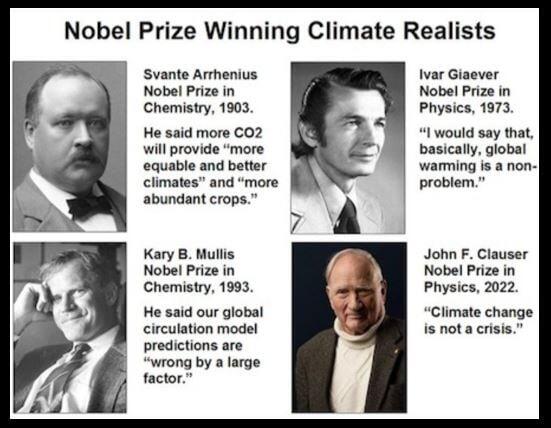
While driving the other day, I listened to an “expert” on AM radio discussing the vast increase of carbon in Earth’s atmosphere and the conclusion was this: “Climate Change is real!”
The radio voice seemed very confident in its conclusions and, by implication, it was ready to do everything necessary to stop what it perceived as a genuine threat. Always the same dialectics, again and again.
What’s wrong with carbon, again?
Is America having seizures? Or postmortem convulsions?
At this point in time, I am convinced it’s the latter.
While in communication with a retired retarded professor, she expressed exasperation at those who still plan to vote for Trump. After all, he was convicted by a jury of his peers and is now a convicted felon.
In response, and from memory, I typed out a meme I saw on the internet: “He lived over 70 years without a criminal record. But when he ran for president he was charged with over 90 crimes! How can you explain that?”
Silence. But… oops! Did you notice what I did there? Did you see how the Inner Party’s phony dialectics had me defending the proud promoter of Operation Warp Speed®?
Behind the proliferating KayfabeFUBAR, however, the Inner Party works tirelessly toward the establishment of their New World Order by 2030: A high-tech prison camp ruled by “stakeholders”.
When it was revealed that U.S. Senate ratification was required for the World Health Organization’s (WHO) Pandemic “Treaty”, it was, instead, transitioned into an “agreement”. Except that strategy went down in flames, too, at the WHO’s 77th World Health Assembly. In response, Team Biden, China, and other unelected WHO totalitarians stealthily passed new International Health Regulations (IHR) behind closed doors. This was done on June 1, 2024 in Geneva, Switzerland. The Ethiopian Communist, and WHO Director, Tedros Ghebreyesus, violated the IHR’s Article 55.2 eligibility requirements and with less than the required quorum of member states voting. This power grab was completely illegal and unlawfully elevated the WHO “from a global advisory-only body to an international enforcer of its mandates.”
So we all better get the word out, before it’s too late. Especially now that it’s another election year so flu season is almost here.
Politics is the religion of Marxists as well as all those who seek to establish any sort of earthly “utopia”. But, to the Luciferians, Freemasons, and the friends of Jeffrey Epstein, politics is merely the means to their ends; and, in their view, communism has proven to be an efficient means to eventually control and depopulate political enemies and uncooperative Proles.
World War III is a War on the Petrodollar and it serves as just another means to facilitate the collapse of the West. Accordingly, the high-speed daily saturation of arbitrary polemics has made it near impossible to discern, distill, and dispute what is occurring around the globe – which is, also, surely, part of the plan
The Inner Party was always long on communism; this is why U.S. manufacturing was gutted on behalf of China, and why the American economy has been Cloward & Pivened as corporate, political, and religious institutions have undergone Wokeification. The Inner Party’s desired NWO is an economic, political, and faith-based multi-polar dystopia; but, as I’ve stated before, any ideology, whatsoever, could be used as the “faith” to control the material and online realms: Fascism, Communism, Islam, Freemasonry, Luciferianism, Outer Space Aliens, or a witch’s brew of any, or all, of these to be administered as technocratic totalitarianism.
If Trump wins the 2024 U.S. Presidential Election he will surely embrace a new global order blended into separate (multi-national) economic regions.
Or maybe Trump will be imprisoned or killed before the election, thus, igniting the ever-simmering rage of American Patriots.
The Inner Party has been successful, once again, in its efforts to distract and divide. This is so it can rule over fractious factions of enemies. It’s a king’s strategy that has been applied continuously throughout history.
Even so, the memes march forward. They gather like torches in the dark.
These Are The Countries With The Highest Smoking Rates
It was not until 1950 when the link between smoking and lung cancer was proven, though physicians as far back as the late 19th century had identified it as a potential cause.
Since then, many countries have discouraged tobacco products in an attempt to reduce smoking rates, and consequent health effects.
In Nauru, nearly half of the population aged 15+ uses a tobacco product, the highest in the world. The island also has a high obesity rate, and nearly one-third of the population suffers from diabetes, due to poor nutritional variety in the food supply.
Here’s a list of smoking rates by country, ranked from highest to lowest.
Note: Figures rounded. “Tobacco use” includes smoke and smokeless products.
Meanwhile, countries in the Balkan also see a high incidence of tobacco use, bucking the general European trend. Entrenched cultural norms, lax laws, and inexpensive cigarettes are some of the most commonly identified causes.
On the other hand, tobacco use is a lot lower in the Americas and sub-Saharan Africa.
In the U.S., fewer than one in four adults smoke. Canada is even lower at 12% of the population. But some African countries (Nigeria and Ghana) are all the way down in the single-digits, at 3%.
While many Americans know that an Electoral College tie sends presidential and vice presidential elections into the House of Representatives and Senate, few realize there’s a constitutional crisis lurking in the incomplete rules for resolving such draws.
In 2024, scrutiny of these hidden dangers is more than a mere academic exercise, as there are plausible scenarios by which Joe Biden and Donald Trump could end up with 269 electoral votes apiece. One, for example, centers on Trump winning Nevada, Pennsylvania, Michigan and Wisconsin, and Biden winning Georgia, North Carolina and Arizona.
In the event neither candidate reaches the requisite 270 electoral votes, Americans would witness the first “contingent election” in 100 years. In accordance with the 12th Amendment, the president would be chosen by the House of Representatives, and the vice-president by the Senate. In both chambers, votes would be cast by the newly-elected Congress that first convenes in January.
That top-level description — which is about all you typically get from most media references to the possibility —is deceptively simplistic. In practice, a contingent election would be far messier than most Americans realize, with the potential for a deadlock that leaves the Oval Office unattended.
“Unsettled legal and procedural questions permeate nearly every aspect of the process,” wrote Beau Tremitiere and Aisha Woodward at Lawfare, “and in today’s political environment, high-stakes legal disputes and constitutional hardball would be inevitable.”
Before we look at the lurking risks to an orderly transfer of power, let’s quickly review some contingent-election basics. In the House, presidential votes are cast not by individual representatives, but by state delegations, with each state having a single vote. The House chooses from the top three Electoral College vote-getters; of course, in most years, only the two major-party candidates receive any. Winning requires the votes of 26 states.
As of today, Republicans control 26 House delegations compared to the Democrats’ 22, while the North Carolina and Minnesota delegations are evenly split among the two parties. However, since the votes would be cast by the victors of the November election, the delegation-control math could be different when the 119th Congress is gaveled into existence at noon on Jan. 3.
If the House vote for president results in a tie, the state delegations keep on voting until there’s a winner. If that hasn’t happened by Inauguration Day — January 20, 2025 — the new vice president becomes acting president until a candidate gets 26 votes in the House.
Things work a little differently in the Senate. Unlike the House’s state-delegation approach, individual senators cast their own vote for vice president. Rather than the top three electoral-vote finishers, senators pick among the top two. Counting independents who caucus with the Democrats, the Democrats currently control the Senate by a slim 51-49 margin, but face an uphill climb to retain a majority in January.
Here’s where we encounter a major gap in the contingent-election rules: While the 12th Amendment spells out what to do if the House is deadlocked on Inauguration Day, it fails to address the same possibility in the Senate.
The vice president is also president of the Senate. During ordinary business, vice presidents are summoned to cast tie-breaking votes. Some suggest that, since Kamala Harris would be vice president during the contingent election, she would simply cast a tiebreaking vote — for herself.
However, the 12th Amendment stipulates that “a majority of the whole number [of Senators] shall be necessary to make a choice [of vice president].” Some scholars argue that this rules out a tiebreaking vote being cast by the vice president, who is, strictly speaking, not a “senator.”
The most concerning scenario would arise if both the House and Senate are deadlocked on Jan. 20. If that happens, some say the new president should be selected using the Presidential Succession Act of 1947. That’s the law that provides a line of succession that proceeds from vice president to speaker of the house, president pro tempore of the Senate, and then through the cabinet secretaries in order of their departments’ founding date, with State coming first.
Not everyone agrees on that solution. “The Succession Act does not clearly apply to a failure by the House to elect a President or the Senate a Vice President by the time the new terms of those officers begin,” wrote William Josephson in the Journal of Constitutional Law.
According to its language, the Succession Act applies to the absence of a president “by reason of death, resignation, removal from office, inability, or failure to qualify.” That last term seemingly refers to constitutional qualifications for office — such as being 35 years old and a natural citizen — and not the failure of any candidate to receive the requisite number of electoral votes or contingent-election votes.
On top of that, it’s been argued that the Succession Act’s inclusion of the House speaker and Senate president pro tempore in the succession sequence violates the Constitution. “The best reading of the Constitution’s text, history, and structure excludes federal legislators from the line of presidential succession,” wrote Akhil Reed Amar and Vikram David Amar in the Stanford Law Review.
Even if the Succession Act were to be applied, Americans may be surprised by who ends up serving as interim president. The House speaker would almost certainly refuse the opportunity to ascend. Given politicians’ huge appetites for power, that’s counterintuitive — but not when you consider that, under the Succession Act, the speaker becomes president only “upon his resignation as speaker and as representative in Congress.”
Knowing the House could sort out the contingent-election impasse in short order, most speakers would recoil at the idea of tossing away not only the speakership but even their seat. If the Senate president pro tempore likewise refused, that could lead to a President Antony Blinken as an interim solution. Again, that’s only based on the highly dubious assumption that the Succession Act covers a tied-election scenario.
Partisan Procedural Warfare
As if gaps in the basic rules of a contingent election weren’t enough, the process would also be subject to delays and breakdowns arising from parliamentary gamesmanship.
As many more Americans now know — thanks to what happened last time around — Jan. 6 is the legally-prescribed date on which Congress counts electoral votes submitted by the states. If there’s a tie, the 12th Amendment says the House must “choose immediately, by ballot, the President.”
Like so many other words in Washington, “immediately” can’t be taken at face value. Since Congress has never gotten around to passing a law spelling out how contingent elections are to be administered, the House would first need to adopt a set of rules for the process. The majority party as of January 2025 would be incentivized to force rules that favor its candidate.
To give one example of how the rules could be tailored to one party’s benefit, note that the 12th Amendment doesn’t stipulate how the House’s individual state delegations conduct their votes, or whether the state’s decision must spring from a plurality, simple majority or supermajority of the delegation.
Different procedural machinations could unfold as the Senate carries out its vice presidential election. Under Senate rules, ending debate and moving to a vote requires the consent of 60 senators — but it’s unlikely either party will have that many seats in January, which means the VP vote could be delayed by a filibuster. To break it, the majority party could be compelled to “go nuclear” — changing Senate rules so only a simple majority is needed to cut off debate.
Given the enormous stakes, the majority party could be tempted to use far more extreme tactics. In the House, that could mean expelling or refusing to seat members of state delegations that would otherwise be evenly split among Democrats and Republicans, or those delegations where the chamber’s minority party has a mere one-vote advantage.
As all these controversies and procedural duels play out, the clock will be ticking — and there are just 14 days between Jan. 6 and the Jan. 20 inauguration. Over that short period, any number of high-stakes legal challenges could play out in various courts.
While the prospect of rushed litigation is disconcerting, it may also be wishful thinking. Due to separation-of-powers concerns, the federal judiciary has historically avoided involving itself in what it considers internal congressional disputes. If controversy erupts over how the contingent election is being administered in the House or Senate, there may be no external referee for an aggrieved party to turn to.
In short, if both contests are still unsettled on Inauguration Day, America could conceivably be without a president or vice president and without any final authority on how to name a temporary one.
Potential “Faithless Elector” Mayhem
What seems like a 269-269 tie on Nov. 6 could be resolved in an altogether different and even more controversial way: One or more presidential electors could go rogue when the Electoral College votes on Dec. 17, voting for someone other than the winner of their state’s popular vote.
In 2016, there were a whopping ten such “faithless electors.” Texan Bill Greene, for example, voted for libertarian Ron Paul, who’d made a spirited bid for the GOP nomination. While a 2020 Supreme Court ruling upheld the power of states to impose penalties on faithless electors, many states have no laws barring deviant votes, some states have laws with no penalties, and many states have no provision for canceling deviant votes.
In a less likely but more explosive scenario, rather than breaking a seeming 269-269 tie, faithless electors could instead cause a tie and a contingent election. Keeping in mind that the House chooses from the top three electoral-vote recipients, faithless electors could throw someone other than Biden and Trump into the mix — such as independent candidate Robert F. Kennedy, Jr, or someone else who could end up becoming president as a House compromise candidate.
Americans can debate the likelihood of a 2024 electoral college tie and ensuing contingent-election deadlock. However, until gaps in the Electoral College tiebreaker rules are filled by new federal law and perhaps a constitutional amendment, we’ll keep playing a quadrennial game of chance that could someday result in an unprecedented crisis from which there is no clear exit.
Stark Realities undermines official narratives, demolishes conventional wisdom and exposes fundamental myths across the political spectrum. Read more and subscribe at starkrealities.substack.com
Views expressed in this article are opinions of the author and do not necessarily reflect the views of ZeroHedge.
Social Media: Where It’s Hardest To Tell Truth From Fake News
According to a survey conducted in 47 markets for the Reuters Institute Digital News Report 2024, concern over what is real or not on the internet in general is on the rise.
Such concerns were notably prevalent in some of the countries holding elections this year, including South Africa (81 percent), the United States (72 percent) and the United Kingdom (70 percent).
Expanding on the concerns themselves, the writers write:
“Previous research shows that these audience concerns about misinformation are often driven less by news that is completely ‘made up’ and more about seeing opinions and agendas that they may disagree with – as well as journalism they regard as superficial and unsubstantiated.”
Specifically, Statista’s Anna Fleck notes that TikTok and X are the hardest social media platforms for identifying whether news content is trustworthy…
As the chart above shows, roughly one in four respondents surveyed in early 2024 said that it was at least somewhat difficult to make the distinction between truth and fake news on the two platforms.
Facebook and Instagram weren’t far behind though, with 21 percent and 20 percent saying the same, respectively.
The St. Petersburg forum offered a wealth of crucial sessions discussing connectivity corridors. One of the key ones was on the Northern Sea Route (NSR) – or, in Chinese terminology, the Arctic Silk Road: the number one future alternative to the Suez canal.
With an array of main corporate actors in the room – for instance, from Rosneft, Novatek, Norilsk Nickel – as well as governors and ministers, the stage was set for a comprehensive debate.
Top Putin adviser Igor Levitin set the tone: to facilitate seamless container transport, the federal government needs to invest in seaports and icebreakers; a comparison was made – in terms of technological challenge – to the building of the Trans-Siberian railway; and Levitin also stressed the endless expansion possibilities for city hubs such as Murmansk, Archangelsk and Vladivostok.
Add to it that the NSR will connect with another fast-growing trans-Eurasia connectivity corridor: the INSTC (International North South Transportation Corridor), whose main actors are BRICS members Russia, Iran and India.
Alexey Chekunkov, minister for development of the Far East and the Arctic, plugged a trial run of the NSR, which costs the same as railway shipping without the bottlenecks. He praised the NSR as a “service” and coined the ultimate motto: “We need icebreakers!” Russia of course will be the leading player in the whole project, benefitting 2.5 million people who live in the North.
Sultan Sulayem, CEO of Dubai-based cargo logistics and maritime services powerhouse DP World, confirmed that “the current supply chains are not reliable anymore”, as well as being inefficient; the NSR is “faster, more reliable and cheaper”. From Tokyo to London, the route runs for 24k km; via the NSR, it’s only 13k km.
Sulayem is adamant: the NSR is a game-changer and “needs to be implemented now”.
Vladimir Panov, the special representative for the Arctic from Rosatom, confirmed that the Arctic is “a treasure chest”, and the NSR “will unlock it”. Rosatom will have all the necessary infrastructure in place “in five years or so”. He credited the fast pace of developments to the high-level Putin-Xi strategic dialogue – complete with the creation of a Russia-China working group.
Andrey Chibis, the governor of Murmansk, noted that this deep, key port for the NSR – the main container hub in the Arctic – “does not freeze”. He acknowledged the enormity of the logistical challenges – but at the same time that will attract a lot of skilled workers, considering the high quality of life in Murmansk.
A maze of interconnected corridors
The building of the NSR indeed can be interpreted as a 21st century, accelerated version of the building of the Trans-Siberian railway in the late 19th/early 20th century. Under the overarching framework of Eurasia integration, the interconnections with other corridors will be endless – from the INSTC to BRI projects part of the Chinese New Silk Roads, the Eurasia Economic Union (EAEU) and ASEAN.
In a session focused on the Greater Eurasia Partnership (GEP) Russian Deputy Minister of Foreign Affairs Alexander Pankin praised this concept of Eurasia “without dividing lines, uniting ancient civilizations, transportation corridors and a unified common space of 5 billion people”.
Inevitable connections were drawn – from GEP to the EAEU and the SCO, with the proliferation of multimodal transport and alternative payment systems. Khan Sohail, the deputy secretary-general of the SCO, remarked how virtually “everyday there are new announcements by China” – a long way “since the SCO was established 21 years ago”, then based exclusively on security. Big developments are expected at the SCO summit next month in Astana.
Sergey Glazyev, the minister of macroeconomics at the Eurasia Economic Commission, part of the EAEU, praised the EAEU-SCO progressive integration and fast-developing transactions in baskets of national currencies, something “that was unchallengeable 10 years ago”.
He admitted that even if GEP has not been formalized yet, facts on the ground are proving that Eurasia can be self-sufficient. GEP may be on the initial stage, but it’s fast advancing the process to “harmonize free trade”.
Another key session in St. Petersburg was exactly on the EAEU-ASEAN connection. The ASEAN 10 already configure the 4th largest trading bloc in the world, moving $3.8 trillion and 7.8% of global trade annually. The EAEU already has a free trade agreement (FTA) with Vietnam and is clinching another with Indonesia.
And then there’s Northeast Asia. Which brings us to the ground-breaking visit by President Putin to the DPRK.
A new concept of Eurasia security
This was quite the epic business trip. Russia and the DPRK signed no less than a new Comprehensive Strategic Partnership Agreement.
On trade, that will allow a renewed flux to Russia of DPRK weapons – artillery shells to ballistics -, magnetic ore, heavy industry and machine tool industry, as well as the back-and-forth of an army of mega-skilled IT specialists.
Kim Jong-un described the agreement as “peaceful” and “defensive”. And much more: it will become “the driving force accelerating the creation of a new multipolar world.”
When it comes to Northeast Asia, the agreement is nothing less than a total paradigm shift.
To start with, these are two independent, sovereign foreign policy actors. They will not blackmailed. They totally oppose sanctions as a hegemonic tool. In consequence, they have just determined there will be no more UN Security Council sanctions on the DPRK enacted by the U.S..
The key clause establishing mutual assistance in case of foreign aggression against either Russia or the DPRK means, in practice, the establishment of a military-political alliance – even as Moscow, cautiously, prefers to phrase that it “does not exclude the possibility of military-technical cooperation”.
The agreement completely shocked Exceptionalistan because it is a swift counterpunch not only against NATO’s global designs but against the Hegemon itself, which for decades has enforced a comprehensive military-political alliance with both Japan and South Korea.
Translation: from now on there is no more military-political Hegemony in Northeast Asia – and in Asia-Pacific as a whole. Beijing will be delighted. Talk about a strategic game-changer. Accomplished without a single bullet being fired.
The repercussions will be immense, because a broader concept of “security” will now apply equally to Europe and Asia.
So welcome, in practice, to Putin the statesman advancing a new integrated, comprehensive concept of Eurasian security (italics mine). No wonder the mentally-impaired collective West is stunned.
Gilbert Doctorow correctly observed how “Putin considers what NATO is about to do at its Western borders as the very act of aggression that will trigger Russia’s Strategic Partnership with North Korea and present the United States with a live threat to its military bases” in Korea, in Japan and in the wider Asia-Pacific.
And it doesn’t matter at all if the Russian response will be symmetric or asymmetric. The crucial fact is that the U.S. “containment” of the Russia-China strategic partnership is already unravelling in real time.
In auspicious terms, Eurasia-style, what matters now is to focus on connectivity corridors. This is a story that started in previous editions of the St. Petersburg forum: how to connect the DPRK to the Russian Far East, and beyond to Siberia and wider Eurasia. The DPRK’s founding concept of Juche (“self-reliance”, “autonomy”) is about to enter a whole new era – in parallel to the NSR consolidation in the Arctic.
Everyone indeed needs icebreakers – in more ways than one.
“Here In Ten Days”: Dust Plume From Africa Headed To US Gulf Coast
Around this time each year, strong trade winds over northwest Africa stir up Saharan dust, carrying it thousands of miles across the Atlantic Ocean, through the Caribbean Sea, and eventually over the US Gulf Coast. This year’s first wave of Saharan dust is expected by the end of the month.
“Dust from Africa here the next 10 days. Will help keep things quiet it looks like this next week, especially in the Caribbean,” Mike’s Weather Page wrote in a post on X, along with a forecast model showing the dust will reach Florida and the rest of the Gulf Coast by next weekend.
Dust from Africa here the next 10 days. Will help keep things quiet it looks like this next week, especially in the Caribbean. Should make it to the US even and make some nice sunsets. https://t.co/Hk3pbO7x8Hpic.twitter.com/Dx7jaoIgXy
— Mike’s Weather Page (@tropicalupdate) June 22, 2024
The National Hurricane Center explained in a post on X that the dust would keep tropical activity low through next week.
June 22: Plentiful SAL across the Atlantic. The Saharan Air Layer (SAL) is a significant influence on Atlantic tropical weather from late spring through the early autumn. The hot, dry air can suppress hurricane development, and trade winds can carry the dust great distances. pic.twitter.com/6VuBnz1NSW
Current NHC data shows light tropical activity, with one active system in the southern Gulf of Mexico.
Before the Saharan dust arrives in South Florida, a heat dome has scorched parts of the eastern US for the past week, and this intense heat is expected to continue into next week.
The Pander Express continues… 🚂🌈 Normal gays and lesbians are so tired of this.
— Gays Against Groomers (@againstgrmrs) June 20, 2024
Pride, the month-long holiday, has nothing to do with gay or lesbian. LGBTQIA+whatever has nothing to do with gay or lesbian. It is all Queer and Queer is a political stance. https://t.co/xNGyiCIE2Z
You’re looking at this and thinking about LEGO. I’m looking at this and thinking of their Corporate Equality Index and ESG scores. https://t.co/5o7W9rCQNI
— James Lindsay, anti-Communist (@ConceptualJames) June 20, 2024
Well done LEGO on alienating your last remaining customers.
Meanwhile in London, the mayor is ‘celebrating’ Pride by erecting giant billboards glorifying the removal of healthy breasts.
What is the agenda here? Think about it. Spending public money on giant billboards to promote women having their breasts removed as a good thing. Thousands of children are looking up at this. What on Earth must be going through their minds? pic.twitter.com/eylcbtKxMh
Your support is crucial in helping us defeat mass censorship. Please consider donating via Locals or check out our unique merch. Follow us on X @ModernityNews.
US-Built Gaza Pier To Be Dismantled Early Amid Ongoing Failures
Following the latest weather and choppy seas setback, the US-built aid pier off Gaza has resumed operations as of the end of this week (Thursday), the Pentagon said, after it broke apart last month. It’s been an on-again off-again situation and the controversial and costly pier project has by and large proven ineffective.
But despite aid reportedly now rolling off the pier once again, Israeli media on Saturday has documented more embarrassing issues, including apparently broken off parts from the pier still washing up to shore far away from its location…
A small segment of the US-built humanitarian pier in #Gaza has washed ashore in central Tel-Aviv. https://t.co/aFSO2mhLbB
Following significant repairs it underwent at an Israeli port, the pier was transferred back in place amid a series of problems largely due to turbulent seas in the eastern Mediterranean..
The Associated Presshas written in a fresh report that “Aid groups have sharply criticized the plan to bring aid by sea into Gaza, saying it’s a distraction to take pressure off Israel to open more land border crossings that are far more productive.”
This week The New York Times essentially declared that the expensive Biden project is an utter failure and that it will be dismantled earlier than expected.
“The $230 million temporary pier that the U.S. military built on short notice to rush humanitarian aid to Gaza has largely failed in its mission, aid organizations say, and will probably end operations weeks earlier than originally expected,” the Times wrote.
“In the month since it was attached to the shoreline, the pier has been in service only about 10 days. The rest of the time, it was being repaired after rough seas broke it apart, detached to avoid further damage or paused because of security concerns,” the report continued.
Top US military officials have also acknowledged the failure of the project: “The pier was never meant to be more than a stopgap measure while the Biden administration pushed Israel to allow more food and other supplies into Gaza through land routes, a far more efficient way to deliver relief. But even the modest goals for the pier are likely to fall short, some American military officials say,” according to NYT.
This project was never fundamentally about hungry Palestinians, but more about White House PR and damage control amid an avalanche of international and domestic criticism over Biden’s contradictory Gaza policy.