The House Ethics Committee, in a rare statement on June 18, announced that it is investigating new claims of misconduct against Rep. Matt Gaetz (R-Fla.), including whether he sought to obstruct government probes of his conduct.
The statement was issued a day after the congressman blasted the Ethics Committee over what he called a political attack.
The committee defended its investigation, saying it was “confident in the integrity of its process,” which has involved interviewing dozens of witnesses, reviewing thousands of pages of documents, and issuing 25 subpoenas to date.
The secretive committee began examining a litany of allegations against Mr. Gaetz in April 2021 before deferring its work at the request of the Justice Department. When that request was dropped in May of last year, the committee resumed its work.
Previous claims against Mr. Gaetz included allegations of sexual misconduct and illicit drug use, sharing inappropriate images or videos on the House floor, misuse of state identification records, personal use of campaign funds, and accepting a bribe, improper gratuity, or impermissible gift.
“Based on its review to date, the Committee has determined that certain of the allegations merit continued review,” the panel said in a statement, noting that it would extend its probe of the claims surrounding sexual misconduct, drug use, and improper gifts.
The committee said it will take no further action on the other claims, though it said new allegations had surfaced that merit review. Those include the obstruction claims and accusations that Mr. Gaetz offered special privileges and favors to people with whom he had a personal relationship.
Mr. Gaetz has categorically denied all the allegations against him, which stemmed from a Justice Department investigation into whether he and fellow Florida Republican Joel Greenberg paid or offered gifts to underage girls and escorts for sex.
Mr. Gaetz was not charged in that investigation.
Prior to the committee’s statement, the congressman suggested the panel’s ongoing investigations were retribution for his role in ousting former Rep. Kevin McCarthy (R-Calif.) from the House speakership last October.
“Instead of working with me to ban Congressional stock trading, the Ethics Committee is now opening new frivolous investigations. They are doing this to avoid the obvious fact that every investigation into me ends the same way: my exoneration,” the congressman wrote on X.
“This is Soviet. Kevin McCarthy showed them the man, and they are now trying to find the crime. I work for Northwest Floridians who won’t be swayed by this nonsense and McCarthy and his goons know it.”
Mr. Gaetz spearheaded efforts to strip Mr. McCarthy of the gavel, which eventually succeeded with the help of seven other Republicans and 208 Democrats. Many Republican members remain angry over that move, which some say hurt the party politically. The Ethics panel’s investigations predate the current GOP House majority.
The Ethics Committee did not respond to a request for comment by press time. A spokesperson for Mr. Gaetz said that his social media post speaks for itself.
“Taking Our Extra Time”: Boeing Delays Starliner’s Return To Earth Amid Thruster Issues
Boeing’s Starliner spacecraft’s return from the International Space Station to Earth will be delayed until mid-next week as NASA and astronauts troubleshoot helium leaks and try to figure out why some of the thrusters failed during the latest test flight.
At a press briefing on Tuesday, Steve Stich, NASA’s commercial crew program manager, said Starliner would end its first crewed mission to the ISS no earlier than next Wednesday – or about three weeks after it first launched atop a United Launch Alliance Atlas V rocket from Cape Canaveral, Florida.
“We want to give our teams a little bit more time to look at the data, do some analysis, and make sure we’re really ready to come home,” Stich said.
He emphasized that during the ISS docking on June 6, five of Starliner’s 28 reaction control thrusters malfunctioned but noted four managed to recover and come back online.
“We’re taking our extra time given that this is a crewed vehicle, and we want to make sure that we haven’t left any stone unturned,” Stich said, adding, “We also want to look at the systems, and potential interaction between the systems, and make sure we haven’t missed something before we return. And we’re getting a lot of great data while we’re at the space station for not only this flight but for the next flight.”
Over the weekend, Boeing and NASA conducted a thruster hot-fire test. Stich expressed a high level of confidence in Starliner’s return, stating that everyone involved in the mission ‘feels very confident.’
Starliner is designed for six-month missions. The spacecraft can stay docked at the ISS for 45 days.
The latest in-flight problems follow years of challenges Boeing has faced with Starliner. These problems compound the ongoing issues with the company’s commercial jet program that CEO Dave Calhoun was grilled by lawmakers on Capitol Hill on Tuesday.
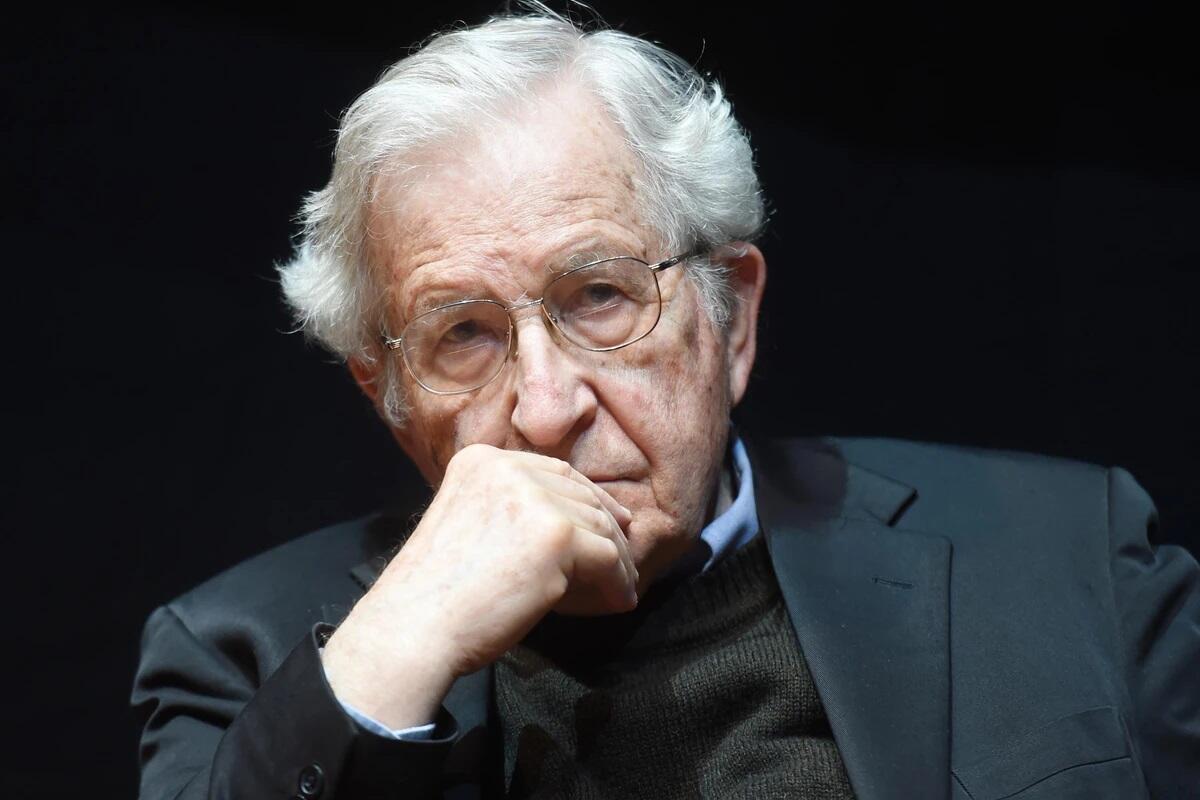
Some popular media outlets and international political figures came under fire Tuesday for falsely reporting the death of U.S. academic and social critic Noam Chomsky, who is fighting to recover in Brazil after suffering a massive stroke last year.
“Chomsky did not die. I just spoke to Valéria, his wife,”said Brazilian journalist Cauê Seigner Ameni. “He is well,” Valéria Chomsky confirmed to ABC‘s Chris Looft. Beneficência Portuguesa de São Paulo, a hospital in Brazil’s largest city, said in a statement that Chomsky was discharged on Tuesday to continue his treatment at home, according toThe Associated Press.
The New Statesman ran—and subsequently deleted—a Chomsky obituary Tuesday following rumors of the 95-year-old’s passing. Other outlets including Jacobin kept or tweaked Chomsky obits, with telltale signs like the word “obituary” in their URLs belying their inaccuracy.
Commentators from across the political spectrum also posted reaction—from mournful on the progressive left to gleeful among liberals and right-wingers—to false reports of Chomsky’s death.
“Shameful and sad that Valéria Chomsky had to deny news of Noam Chomsky’s death over the phone here in Brazil, because a bunch of places decided to publish pre-written obituaries and posts at the first online rumor,” Brazilian academic Sabrina Fernandes said on social media.
“Since no outlet that reported the death decided to post an errata, it only got worse,” she added, condemning “the online scoop and attention industry… waiting… like vultures.”
Responding to numerous reports of Chomsky’s death in the Latin American corporate media, Mexico City-based Rutgers School of Communications professor Andrew Kennis—whose book Digital Age Resistance contains a foreword co-authored by Chomsky—told Common Dreams that “it is both a fitting and cruel irony that the fundamentally flawed, trillion-dollar-valued, conglomerate-owned, mainstream news media system has once again erred in its ways.”
“No, Noam is not dead. Instead, he’s struggling to recover with the unflagging dedication of his partner, who transported him the first chance Noam’s health permitted her to do so to receive top-rate medical care in Brazil,” Kennis added.
There should be a serious reckoning to understand how this false, obviously hurtful, and completely unconfirmed rumor spread all over the world in an instant, including by smart, well-intentioned people.
Don’t believe – or spread – things without seeing credible confirmation. https://t.co/VeMdtNNy5E
Some observers worked the title of one of Chomsky’s more than 100 books—Manufacturing Consent, which he wrote with Edward Herman—into their commentary on the false reports.
“Chomsky is NOT dead. If Chomsky was dead, he would be turning in his grave to see how quickly rumors spread and how social media functions,” said Croatian philosopher and Chomsky collaborator Srećko Horvat. “He might as well still call it: ‘manufacturing obituaries’.”
Japan To Issue Bonds With Shorter Maturities As BOJ Begins Tapering QE
With the constant implosion in the yen threatening to spark both runaway inflation and a currency crisis in Japan, especially after the latest toothless decision by the Bank of Japan, it finally appears that the BOJ is set to either hike rates, or trim its massive bond buying program, or some combination of both.
And since the BOJ is absolutely terrified of losing control of the Japanese bond market, of which it has been a majority holder for years, it was not surprising to learn that Japan’s Ministry of Finance is already weighing a plan to shift more of its bond issuance to shorter maturities, a major change as the central bank moves to cut purchases of government debt, one which will ensure less turmoil in the all important long-end, where duration is far higher, and where supply should be lower if the BOJ ends up purchasing less.
According to Bloomberg, Finance Ministry officials have prepared a draft proposal that calls for increasing the proportion of issued bonds with shorter maturities, with an expert panel expected to endorse the plan on Friday.
The move comes as the Bank of Japan’s decision to cut its bond purchases encourages the government to seek new sources of funding. The BOJ held about ¥590 trillion ($3.7 trillion) in JGBs as of the end of March, representing more than half of the total outstanding. It’s necessary to reduce the amount of yield risk supplied to the market by shortening durations, according to the proposal, which also cites floating-rate bonds as an option.
Similar to the so-called Yellen Twist, which saw the US Treasury flood the market with Bills in mid/late 2023 to avoid a surge in long-dated yields at a time when the US is issuing record amounts of debt, shortening maturities on bond sales would represent a stark shift from the recent trend in which the Japanese ministry has tended to extend the maturities on bonds it sells as the nation’s policy interest rates have stayed around zero for decades and the BOJ used its yield curve control mechanism to cap long-term yields.
The BOJ has been terrified of implementing major changes to the country’s petrified bond market, where the BOJ has long been the first and last buyer of any resort: while the central bank ended YCC in March, when it raised interest rates for the first time in 17 years, it did so in the most dovish way imaginable, effectively guiding the market to expect barely any further tightening for the foreseeable future. The yen tumbled. Then, last Friday, the BOJ said it will release details of its plans to reduce bond buying at the July 31 conclusion of its next policy meeting; and since the market was expecting the central bank to actually do something this time instead of just more talk, the yen tumbled even more.
But it now appears that some definitive move is coming, and ahead of the July disclosure, the bank is meeting with market participants to hear their views.
The finance ministry’s working draft, prepared ahead of a ministry meeting with market participants and experts on June 21, notes that shortening maturities would increase refinancing and interest risks for the government, so it recommends expanding the pool of government bond holders as much as possible.
The ministry sent out a questionnaire to market participants, including potential bond buyers such as insurance companies, banks and foreign investors, at the last panel meeting in May. The ministry plans to release the results of that survey in addition to its proposal for future issuance on Friday, the person said.
According to Bloomberg, the banking sector could become a major new customer to replace the BOJ, a respondent noted in the MOF’s survey. But we strongly doubt it in light of the latest news that Japan’s “farmer” bank, the $700 billion Norinchukin is getting stopped out of its foreign bond holdings which it must sell to plug huge “unrealized” losses. And if Nochu has to sell foreign bonds, how can one possibly expect it to buy Japanese bonds just when yields are expected to keep rising for the foreseeable future as the BOJ embarks on its first tightening campaign in decades.
The bottom line is that while the BOJ’s plan suggests that the key to JGB management policy is “to create an environment in which the banking sector can hold JGBs with confidence”, the realty is that since in Japan monetary policy has been a total disaster for years, the one guaranteed outcome is that a bond crisis is imminent.
A newly drafted resolution in House of Representatives would declare former Speaker Nancy Pelosi’s hand-picked Jan. 6 Committee illegitimate and invalidate the contempt of Congress charges that the J6 committee filed against four top advisers—one of whom has spent the past three months in prison, with another expected to report to jail at the end of June.
According to journalist Julie Kelly, the House resolution is being sponsored by Rep. Eric Burlison, R-Mo., and backed by several GOP heavy-hitters, including Reps. Thomas Massie of Kentucky, Marjorie Taylor Greene of Georgia, Andy Biggs of Arizona, Jim Banks of Indiana and Anna Paulina Luna of Florida.
However, it also faces at least one powerful skeptic: Judiciary Committee Chair Jim Jordan, R-Ohio.
In an exclusive interview with Headline USA on June 7, Jordan said that even though he supported the principle of it, he didn’t see it being constructive from a practical standpoint, including helping ex-Trump adviser and well-known right-wing pundit Steve Bannon avoid his sentence.
“I think both of those contempt [charges] were ridiculous,” Jordan said, in reference to Bannon and Trump trade adviser Peter Navarro, during a June 7 fundraiser for congressional candidate Mark Harris in Monroe, N.C.
“I opposed them on the House floor when they happened—both Navarro and Bannon—I spoke against them, as well as when they did it to our friend and North Carolina former representative Mark Meadows, when they did to him, spoke against all that,” Jordan added. “But I don’t think that would change—you could have that vote, but I don’t think it’ll change anything relative to what the courts have said and what happens to Bannon. … Even if we pass it, I don’t think it would have an impact.”
The proposal first picked up steam earlier this month after Massie raised it to Speaker Mike Johnson, R-La. and found many prominent supporters in the Twittersphere.
“This course of action is not only justified but necessary to restore fairness and balance in our government,” wrote blogger and influencer Alexander Muse.
“Rescinding these subpoenas and repudiating the January 6th Committee would send a clear message that politically motivated persecutions have no place in our Republic,” he added. “It would also be a significant step towards protecting the integrity of executive privilege and ensuring that partisan politics do not undermine our democratic institutions.”
Massie, through his communications director, declined to comment, citing the libertarian lawmaker’s a busy schedule.
It’s possible, however, that Jordan, a longtime friend and ally of Meadows, sees the prospect of unintended consequences arising from efforts to right the past grievance legislatively, now that Washington, D.C., courts have already ruled on the matter.
It is highly likely, for example, that Democrats might use a similar tactic in the future to invalidate other committees whose work is legitimate.
Moreover, giving Bannon a get-out-of-jail-free card would have troubling implications for Meadows—who opted to cooperate with the J6 committee—and Navarro, whose four month sentence will soon be completed.
The resolution might also derail plans that Jordan and Johnson already have in mind for holding Attorney General Merrick Garland accountable—either legally or otherwise—after he gave himself a free pass last week for the exact same alleged crime: refusing a congressional subpoena on the basis of executive privilege.
Following Garland’s defiance, Johnson announced that he would be certifying the contempt report with U.S. Attorney for D.C. Matthew Graves and asking a federal court to enforce it.
The House disagrees with the assertions in the letter from the Department of Justice, and as Speaker, I will be certifying the contempt reports to the U.S. Attorney for the District of Columbia. We will also move to enforce the subpoena of Attorney General Garland in federal… https://t.co/YOzqzlKWtE
— Speaker Mike Johnson (@SpeakerJohnson) June 14, 2024
While Graves is unlikely to act, the move may help to extend its shelf life in the hopes that a future Trump administration could pursue it.
“It is sadly predictable that the Biden Administration’s Justice Department will not prosecute Garland for defying congressional subpoenas even though the department aggressively prosecuted Steve Bannon and Peter Navarro for the same thing,” Johnson said in a statement. “This is yet another example of the two-tiered system of justice brought to us by the Biden Administration.”
It is also the latest procedural effort, however, for a GOP majority that often has been derided for its ham-fisted toothlessness relative to Pelosi’s iron-fisted ruthlessness in undermining the prior Trump administration.
Despite having a laptop teeming with incontrovertible evidence that has now been acknowledged by the FBI as authentic in a court of law, Republicans have been unable to press their impeachment case in any impactful way—and, to some extent, the presence of a two-tiered justice system is a problem of their own making.
In a fiery speech ahead of last Wednesday’s contempt vote for Garland, Jordan offered a sharp rebuke of President Joe Biden’s top wingman and attack dog in the Justice Department.
“It’s simple—Attorney General Garland holds information vital to the committee’s legislative oversight and the House impeachment’s inquiry. … The department has a legal obligation to turn over the requested material,” Jordan said.
“Attorney General Garland’s willful refusal consitutes contempt of Congress,” he continued. ” … Our oversight and and impeachment responsibilities are too important to allow the attorney general to willfully disregard this.”
The contempt charge came following Garland’s refusal to turn over the audio recording of Biden’s interview with special counsel Robert Hur in the classified documents probe, which Hur cited as evidence that Biden was too senile to stand trial and that no reasonable jury would convict him due to his failing memory and lack of lucidity.
The public release of the tapes would likely show that Biden either perjured himself by putting on a bogus act for a probe that has already determined to let him off the hook—or, perhaps more damningly, that the heavily scripted and choreographed Biden presented to the public conceals a commander-in-chief who is genuinely non compos mentis, despite seeking another four-year term.
In addition to the House committees undertaking an impeachment inquiry, several mainstream media outlets have sued to obtain the recordings under the Freedom of Information Act.
Yet, the contempt vote against Garland resonated for Republicans on another level after Garland’s overtly political decision to follow through on prosecuting Bannon and Navarro.
The true objective of the Jan. 6 committee—to push a false, one-sided narrative onto the public that pinned all the blame on President Donald Trump and his supporters—has become ever more apparent as additional information begins to surface.
Indeed, it amassed several terrabytes worth of data from its Star Chamber proceedings, which it then refused to hand over to Republicans upon ceding power and even attempted illegally to delete.
Following bombshell footage last week that showed Pelosi admitting responsibility for the security failures at the U.S. Capitol, Rep. Barry Loudermilk, R-Ga., denounced the committee as “biased,” according to Just the News.
Rep. Loudermilk: History should not accept original Jan. 6 committee’s report as factual account https://t.co/XkJh7bJqFC
“[I]t was a political hack job, and the American people and the history books should not take this as any factual account of what happened that day,” he said in an appearance on Real America’s Voice.
Because they had no direct role in anything related to the Jan. 6 uprising at the Capitol, Bannon and Navarro, along with Meadows and Trump Deputy Chief of Staff Dan Scavino, suspected a fishing expedition was afoot to gather testimony that the committee could then use selectively for its own ulterior objectives.
But despite citing “executive privilege” as their reason for refusing the subpoenas—arguing that their private conversations with Trump were exempt from oversight—Garland’s DOJ pushed House Democrats’ contempt charges via corrupt, anti-Trump D.C. district judges such as Tanya Chutkan, who declared that Trump had no constitutional right to shield himself from bloodthirsty Democrats’ congressional tribunal.
Pending a Supreme Court decision on presidential immunity that is expected to drop Thursday morning, Chutkan is now overseeing another case against Trump—special counsel Jack Smith’s prosecution charging Trump with efforts to overturn the 2020 election.
That case was likely based heavily on the criminal referral supplied by the Jan. 6 committee, emblematic of the sort of mini-ecosystem through which congressional Democrats, corrupt DOJ prosecutors and D.C. federal judges have colluded in order to leapfrog from one political attack on Trump and his allies to the next by agreeing to validate each other.
“Everyone knows it’s wrong, everyone knows this lawfare has gotten out of control,” Jordan noted in his interview with Headline USA.
He pointed to efforts that the House was undertaking to derail those efforts, such as a measure to defund any special counsel not approved by the Senate. (Smith is the only one who has not been.)
Nonetheless, thoze efforts seemed to be mostly symbolic, an exercise in performative outrage.
Only time may tell if Burlinson’s resolution can succeed in breaking that cycle.
‘This Is Noah’ – The Short Story Of A Fentanyl-Addicted Child In Utopian Hellhole San Francisco
The radical leftists in San Francisco City Hall need a reality check about their destructive progressive drug policies that have effectively handed out implicit death sentences. A policy course correction is desperately needed as overdose deaths reached a record high last year.
If you have lived or visited San Francisco in recent years, parts of the metro area have been transformed into a utopian progressive hellhole of drugs, death, violent crime, feces, needles, and abandoned retail stores.
As of last year, overdose deaths in San Francisco topped a record high of 800. Open-air drug markets and homeless encampments are widespread in the downtown area. Failed progressive public health policies are responsible for why the city’s drug overdose rate is nearly double the nation’s. In terms of cities over 500k in population, San Francisco was number four in overdose deaths.
Tens of thousands of drug addicts roam the city streets of the metro area, where the drug of choice is fentanyl. This drug, which is 100 times more potent than morphine, is flooding the nation through President Biden’s open southern borders. And it’s being cooked by Mexican cartels that receive chemicals from China (read: House Subcommittee Finds “New Evidence” That China Fuels America’s Fentanyl Crisis).
With the overdose crisis only worsening, we want to share with readers a heartbreaking short documentary of a kid way too young to be addicted to fentanyl – getting high in downtown San Francisco. This kid should be entering college, or at least working a productive job, and aims one day to start a family and benefit the nation. But no, he’s addicted to drugs, wasting his life away in the utopian hellhole of a city.
Citizen journalists are stepping up to the plate since corporate leftist media cannot nor want to do actual reporting. Instead, they push propaganda from woke leftists in the White House or whatever their mega-corporate sponsors say.
X user jj smith documented his interactions with 19yo Noah. This video was filmed between Oct. 2022 and through at least the first half of 2023 and shows the young addict’s life on the streets of downtown San Francisco.
“The Progressive movement has enabled more drug use in San Francisco more than ever before, and the non-profits who are taking millions of dollars from, have done absolutely nothing to getting kids like Noah help. They feel it’s better to hand out tin foil and straws, rather than getting them the help they truly need,” Jaime Puerta, founder of Victims of Illicit Drug Use or VOID, wrote in a statement in response to the video.
This heartbreaking short video makes you want to hug your kids – if you got them – and also reflect on the political elites who have created this environment that has sparked a drug overdose death crisis that is killing two Vietnams of Americans per year.
What Recession: NYC Targets Crackdown On $250 To $1000 Dinner Reservation Resellers
It’s tough to make the case for a recession when Bloomberg just pointed out that more than 30,000 people have flocked to a service called Appointment Trader to help them make ritzy dinner reservations in New York City on a secondary reservation market.
The service helps make $250 to as much as $1,000 dinner reservations at some of New York’s best dining spots, though the practice of buying reservations has now come under threat by “New York’s proposed Restaurant Reservation Anti-Piracy Act”, the report says.
We bet you didn’t even know there was a proposed Restaurant Reservation Anti-Piracy Act.
And despite the cost, scoring a table at popular spots like Carbone, Cote, Coqodaq, or Don Angie won’t necessarily get easier, the report says, noting that reservation resellers are still seeing high demand.
Joel Montaniel, chief executive officer of reservation booking platform Sevenrooms, who works with companies like Danny Meyer’s Union Square Hospitality Group, told Bloomberg: “There are some restaurants that people can’t get into.”
“I’ve even talked to restaurateurs, we’ve hosted them on panels and asked them for tips to get in, and they say, ‘I don’t have them,’” he continued.
If New York Governor Kathy Hochul signs the recent bill into law, websites will need restaurant permission to offer bookings. Aimed at curbing bots used by scalpers, the law targets practices blamed for making reservations at popular restaurants harder to get, favoring wealthier diners.
Platforms like Resy, Sevenrooms, and OpenTable, which partner directly with restaurants, won’t be affected. However, services like Appointment Trader and Cita might no longer advertise the city’s top tables. Appointment Trader Founder Jonas Frey argues that his platform’s success is due to the existing scarcity of reservations, not the cause of it.
Frey said: “There were just too many diners for too few restaurants. I believe we’re serving a need. That’s why it worked.”
“We’re certainly not going to stop operating because we can’t operate in New York,” he added.
Sevenrooms data shows NYC restaurant cancellations rose to 19% last month from 17.5% last year, while the national rate fell to 11.6%. Appointment Trader’s Jonas Frey argues his service addresses reservation scarcity, not causes it, and plans to shift focus if the law impacts operations.
Amy Zhou of Gracious Hospitality supports the bill, citing significant revenue loss due to bot-driven cancellations at popular venues like Cote Korean Steakhouse.
After being sworn in as India’s prime minister for a third consecutive term, Narendra Modi received congratulatory messages from a diverse array of world leaders around the globe.
However, one leader who stood out was Taiwan’s newly elected president, Lai Ching-te. In response to his message, Mr. Modi not only thanked Mr. Lai but reciprocated with a message highlighting the strengthening ties between China’s two frontline adversaries.
Geopolitical analysts told The Epoch Times that the exchange of messages between the two leaders shows that India’s Act East policy—an initiative to promote economic, strategic, and cultural relations within the Asia-Pacific region—is shaping up and now encompasses Taiwan. The cordial exchange also highlights strategic concerns shared by the two countries, and their mutual dependence for economic growth.
“India’s Act East policy is taking shape, while its definition and scope of ‘Indo-Pacific’ is broadening. New Delhi used to be focused on East Africa and up to the Malacca Strait. However, over the last few years, it has engaged in port calls in [the] Philippines, PNG [Papua New Guinea] and actively pursued relations with Taiwan, thus expanding from Malacca Strait to the Taiwan Strait,” Akhil Ramesh, a geo-political analyst who leads the India program at the Honolulu-based Pacific Forum, said.
Taiwan is currently recognized as a sovereign nation by only 12 nations. While India hasn’t officially recognized Taiwan, diplomatic relations between the two countries have been on the rise, particularly since 2020’s bloody Galwan conflict caused Indo–China relations to plunge. Taiwan’s exports to India increased by 13 percent last year, and as of February 2024, Taiwanese businesses have made investments in India.
Ming-Shih Shen, director of national security research at Taipei’s Institute for National Defense and Security Research, told The Epoch Times in an email that the interaction between Mr. Lai and Mr. Modi on social media platform X is based on what they want from each other.
“Taiwan President Lai Ching-te needs the attention and support of the international community and hopes to cooperate with regional powers to deter China, because India can threaten China from the west, and Taiwan and India have a common geopolitical interest, so there is more space for cooperation,” Mr. Shen said.
The interaction between Mr. Modi and Mr. Lai occurred immediately after the election results were declared on June 4 and before Mr. Modi was formally sworn in on June 9.
“My sincere congratulations to Prime Minister @narendramodi on his election victory,” Mr. Lai said in a message on X on June 5. “We look forward to enhancing the fast-growing #Taiwan-#India partnership, expanding our collaboration on trade, technology & other sectors to contribute to peace & prosperity in the #IndoPacific.”
In response, Mr. Modi thanked Mr. Lai for his “warm message” and said he looks forward to “closer ties” as India and Taiwan “work towards mutually beneficial economic and technological partnership.”
The exchange between the two newly elected leaders garnered considerable attention online. Mr. Lai’s message has 2.5 million views to date, while Mr. Modi’s response has 2.7 million views. However, the exchange didn’t go over well in China.
At a regular news conference on June 6, Chinese Foreign Ministry spokeswoman Mao Ning not only protested the interaction between Mr. Modi and Mr. Lai, but denied the existence of a Taiwanese president.
“First of all, there is no such thing as ‘president’ of the Taiwan region,” Ms. Mao said in response to a question by a Bloomberg reporter. “As for your question, China opposes all forms of official interactions between the Taiwan authorities and countries having diplomatic relations with China. There is but one China in the world. Taiwan is an inalienable part of the territory of the People’s Republic of China.”
Ms. Mao told reporters that China had already lodged a protest with India about Mr. Modi’s response to Mr. Lai.
“The one-China principle is a universally recognized norm in international relations and a prevailing consensus in the international community,” she said. “India has made serious political commitments on this and is supposed to recognize, be alarmed about, and resist the Taiwan authorities’ political calculations. China has protested to India about this.”
Experts say that a shared Chinese threat has actually drawn Taiwan and India together. The two countries have shared interests, and Mr. Modi’s response to Mr. Lai gives a clear message that their relationship is governed by that. The Indian prime minister’s response also denotes India’s wish to graduate from a regional role to a larger role in the world.
“India is reaching higher and wants to play a larger role in global affairs. So far, it has limited itself to [being] a regional player dealing with a string of pearls and other challenges China poses,” said Mr. Ramesh. “By stretching itself far and wide, to Taiwan in the East and East Africa in the West, or the more recent IMEC [India-Middle East-Europe Economic Corridor], India wants to expand its global footprint.”
By expanding that footprint, India is aiming at “global leadership, power through increased trade and commercial activity,” he said.
Mr. Shen said that India doesn’t necessarily need Taiwan to compete with China. However, Taiwan’s chip and semiconductor technology has become a new cooperation sector between the two countries, one that can help India to promote high tech and enhance its economy.
“Especially after Taiwan has begun to invest in India, in the future, if it wants to improve India’s semiconductor technology or artificial intelligence development, Taiwan is an indispensable partner,” he said.
During his second tenure, Mr. Modi’s government began the country’s ambitious semiconductor mission with an outlay of $10 billion in 2021. It advanced toward the goal with the Indian cabinet’s approval early this year of three new plants, which are estimated to generate 20,000 advanced technology jobs and about 60,000 indirect jobs.
Perhaps the most strategically important of these is a semiconductor fabrication plant worth $11 billion by India’s Tata Group, in collaboration with Taiwan’s Powerchip Semiconductor Manufacturing Corp. The facility will be located in Dholera, Gujarat, in western India.
According to the Taipei Economic and Cultural Center, which represents Taiwan diplomatically in India, the investments in India until February of this year were primarily in electronics, information and communication technology, petrochemicals, steel, shipping, footwear manufacturing, automotive and motorcycle components, finance, and construction industries.
Mr. Shen predicted that Taiwan–India relations will continue to deepen and strengthen.
“In addition to open economic, trade and scientific and technological exchanges, maybe more in security and defense industry cooperation will begin as the relationship between the two countries gradually deepens. India needs [to] strengthen its defense and aviation industry capabilities, and Taiwan needs the defense industry cooperation market,” he said.
The Taiwanese analyst doesn’t believe that India will establish formal relations with Taiwan because it doesn’t want conflict with China. However, if it wants to strengthen its economy and develop enhanced comprehension of China’s military intelligence, it must look to Taiwan.
Mr. Shen said the main reason for China’s anger at the interaction between Mr. Modi and Mr. Lai is fear.
“China is afraid that the relationship between Taiwan and India will deepen, so that the Sino–Indian border sovereignty issue and the conflict in the Taiwan Strait will be merged, and China’s enemies may form alliances and cooperation.”
That situation will be a “nightmare” for communist party leader Xi Jinping, Mr. Shen said.
White House Fuming, Cancels Meeting With Israelis, After Netanyahu’s Public Scolding
On Monday Prime Minister Benjamin Netanyahu chastised the White House in a rare video message, calling President Biden’s withholding of some defense aid to Israel “inconceivable”.
However the White House has hit back, with press secretary Karine Jean-Pierre soon after the provocative statement issuing a rejection of the Israeli leader’s narrative. “We genuinely do not know what he’s talking about. We just don’t,“ she told reporters.
She noted in a Monday afternoon briefing that “there was one particular shipment of munitions that was paused, and you’ve heard us talk about that many times.” Jean-Pierre then emphasized, “There are no other pauses — none — no other pauses or holds in place.”
But here’s what the Israeli prime minister had charged in the video: “It’s inconceivable that in the past few months, the administration has been withholding weapons and ammunitions to Israel. Israel, America’s closest ally, fighting for its life, fighting against Iran and our other common enemies,” he had said.
Behind the scenes, this has reportedly left Biden admin officials fuming. The White House has as a result taken the rare step of canceling a high-level US-Israel meeting in protest. The scheduled meeting was to focus on Iran.
A senior US official told Axios on Tuesday, “This decision makes it clear that there are consequences for pulling such stunts.” The official further described, “The Americans are fuming. Bibi’s video made a lot of damage.”
The same report said that some of the Israeli officials were already en route to Washington when the meeting was canceled, however, other sources said the meeting was merely postponed and tried to downplay that it was a punitive action.
The US gives Israel over $3 billion in foreign aid every year, and has also pledged billions more in weapons, including advanced fighter jets, throughout the course of the Gaza war. “Biden’s team was angry and shocked by Netanyahu’s ingratitude,” another US official was quoted in Axios as saying.
Secretary of State Antony Blinken has meanwhile confirmed that Washington is “continuing to review one shipment… with regard to 2,000-pound bombs because of our concerns about their use in a densely populated area like Rafah.”
Netanyahu is fully aware that his words could also play heavily in the November US presidential election…
As his reward for supplying Israel with the most military support of any US president ever, Biden is now openly attacked by Netanyahu for not supplying the weapons expeditiously enough. Bibi, a longtime GOP booster, must yearn for the restoration of Trump pic.twitter.com/fBksn54UmP
The White House has for months maintained contradictory policies on Gaza – on the one hand decrying the soaring civilian death toll which are especially the result of large-scale airstrikes, and on the other supplying Israel’s military with the very bombs used to inflict such atrocities.
Progressives and Democrats are increasingly pulling their support from Biden over the issue, and this week’s fresh spat with Netanyahu could be Biden’s attempt to show his base he won’t be bossed around by a foreign ally. The White House has continually said the Israelis shouldn’t cross ‘red lines’ – but Biden has been hesitant to actually impose consequences when said lines are violated – for example in the Rafah ground offensive, which the US has stood against from the start.
A leftist MSNBC contributor has been raked over the coals for claiming Donald Trump is really the presidential candidate who needs to be helped off a stage, rather than than Joe Biden.
Brian Tyler Cohen, who ironically hosts a podcast called ‘No Lie’, posted the following image dating from last year on X: (‘No Lie’ Cohen has since deleted his lie)…
As you can see, the post was quickly flagged by Community Notes.
Video from the same event clearly shows Trump shaking the hand of his son Don Jr. which is what the photo captured.
This comes in the wake of days of videos being shared of Joe Biden doddering around like a dementia patient or freezing up, having to be rounded up and led away by both the Italian Prime Minister at the G7 summit and by Obama at a Hollywood fundraiser.
The White House had the gall to claim that the videos were edited or completely fake.
In reality, it’s the Biden campaign that is editing and spreading misleading videos of Trump:
Other leftists have tried to claim that Trump is the one who is cognitively impaired because he mixed up the name ‘Jackson’ with ‘Johnson’.
It’s hardly in the same league as Biden’s clear decline to the point where he can barely function.
There’s a distinct difference between mixing up the names ‘Jackson and Johnson’ during a 90 minute speech and having to be led around by the hand, not being able to speak or walk properly. https://t.co/3XwQcy3D07https://t.co/cm3H8jJTsu
Your support is crucial in helping us defeat mass censorship. Please consider donating via Locals or check out our unique merch. Follow us on X @ModernityNews.