Missiles Pound Bulk Carrier Twice In A Day In Chaotic Red Sea; Brent Crude Moves Higher
A bulk carrier in the southern Red Sea was struck by missiles for the second time this week, according to an X post by the UK Maritime Trade Operations. These highly contested waters near the Bab al-Mandab Strait are controlled by Iran-backed Houthis, who have been targeting commercial and Western warships since late 2023.
UKMTO reports that the vessel’s “Master” indicated missiles struck the ship for the second time approximately 33 nautical miles northwest of Al Mukha in Yemen.
“The Master of an MV reports a further missile attack. The vessel has sustained further damage. The crew are safe, and the vessel is proceeding to their next port of call,” UKMTO wrote on X.
On Tuesday, Bloomberg cited maritime security firm Ambrey as saying the bulk carrier “Laax” was the targeted ship. The 750-foot-long Greek-owned vessel has since taken on water, causing it to list to one side. It’s flying a Marshall Islands flag with about 80,000 tons of cargo.
According to the Equasis international maritime database, Laax is operated by Grehel Shipmanagement Co., based in Piraeus near Athens.
Data from Bloomberg shows Laax’s last known location was just north of the Bab al-Mandab Strait late Tuesday night. Strategically, the captain could’ve switched off the transponder to avoid further attacks while navigating the strait. The captain has broadcasted “Armguard Onboard” to deter Houthi pirates.
“Houthi rebels have carried out a series of similar attacks in the waterway, which is vital for global shipping, over several months in retaliation for Israel’s war in Gaza,” Bloomberg noted.
Why Houthi rebels are laser-focused on this bulk carrier, striking it with two rounds of missiles, has yet to be revealed. Perhaps it’s the ownership and or cargo linked to Israel or the US.
Continuing attacks in the Red Sea are not entirely unexpected, as the Houthis retaliate against IDF offensives in Gaza. The latest fighting in Rafah will likely trigger more attacks in the Red Sea and other critical maritime chokepoints across the Middle East.
In markets, Brent crude prices topped $84/bbl, adding to gains from Tuesday’s +1.4% move. West Texas Intermediate traded over $80 this morning.
“Geopolitical tensions continue to overshadow the market, but until we see supply losses, I think upside is limited,” Warren Patterson, head of commodities strategy for ING Groep NV in Singapore.
Home buyers will be able to buy a home without putting any money down under a new program launched by United Wholesale Mortgage, one of the largest U.S. mortgage lenders.
The Pontiac, Mich.-based company’s new program will be available to first-time home buyers and people earning at or below 80% of an area’s median income, the company said in a press release.
UWM (UWMC) will give eligible buyers a second-lien loan of up to $15,000, in the form of down-payment assistance, for 3% of the home’s purchase price. The loan will not accrue interest or require a monthly payment.
“Homeownership is something we’re very passionate about,” Melinda Wilner, chief operating officer at UWM, told MarketWatch.
The company had previously allowed buyers to put down as little as 1% on their homes, but it wanted to go further to help home buyers, she said. The lender is anticipating a higher volume of borrowers with its new zero-down program, Wilner added.
Poor underwriting practices were a key driver of the subprime-mortgage crisis in the U.S., the International Monetary Fund wrote in 2008. But unlike the low- and no-down-payment loans that proliferated during that time – when lenders made loans to people who eventually were unable to pay them and lost their homes – UWM’s program is different, Wilner said.
“The aspect of this program that makes me nervous is the silent second mortgage,” Anneliese Lederer, senior policy counsel at the nonprofit Center for Responsible Lending, told MarketWatch in an interview. “It’s great that there’s no interest on it, but it’s a balloon payment, and borrowers need to understand what a balloon payment is.”
A balloon payment refers to a bigger-than-usual one-time payment that is required by the lender at the end of the loan term, according to the Consumer Financial Protection Bureau.
On its website, UWM states in the fine print at the bottom of the page that the second loan “has no minimum monthly payment requirements, a term of 360 months and is fully due as a balloon payment upon the occurrence of either a refinance of the [first mortgage], [or] payoff of the [first mortgage] or the final payment.”
Not Like 2008?!
Housing prices are stretched
The economy is slowing
The lender has no cushion against falling home prices
There are indications of steeply falling homes in many markets.
OK, we don’t have massive liar loans like we did in 2008. But mortgage affordability is the lowest ever, and unemployment is starting to tick up.
Anything to Keep the Bubble Going
To top it off, these mortgages are explicitly for people who make 80% or less of an area’s median income.
How dumb is that? In general, such borrowers have no down payment, if any savings at all, and many are already likely on the edge.
It would make more sense giving these mortgages to those who make 120% or more of an area’s median income, provided they also have little debt, and just lack the down payment.
Vote Buying
President Joe Biden called on Congress to provide up to $25,000 in down-payment assistance to first-generation home buyers in his State of the Union Address.
These vote buying proposals to keep the economy humming long enough to win an election are always at the expense of those who fall for the scheme.
The loss of a job or any unexpected debt will throw these buyers right over the cliff.
The Commerce Department revised March durable goods orders from +2.6 percent to +0.8 percent. Now it reports a 0.7 percent gain vs an expectation of -0.5 percent.
Existing-home sales fell 1.9 percent in April and are also down 1.9 percent from a year ago. Sales have not gone anywhere for 17 months.
Key Highlights
Existing-home sales faded 1.9% in April to a seasonally adjusted annual rate of 4.14 million. Sales also dipped 1.9% from one year ago.
The median existing-home sales price rose 4.8% from March 2023 to $393,500 – the ninth consecutive month of year-over-year price gains and the highest price ever for the month of March.
The inventory of unsold existing homes climbed 9% from one month ago to 1.21 million at the end of April, or the equivalent of 3.5 months’ supply at the current monthly sales pace.
Big Negative Revisions to BLS Monthly Jobs in 2023
On April 24 the BLS released a little-read jobs report that shows reported jobs in 2023 may be wildly overstated.
Business Employment Dynamics (BED) data and and Monthly Job Data both from the BLS, chart by Mish
The BED report is based on records on 9.1 million private sector establishments. Current Employment Statistics (CES) is the monthly jobs report based on 670,000 establishments.
Obviously, the BED report is more timely, but it lags. CES provides an opportunity for economists (and the president) go gaga over numbers likely to be wildly wrong.
CES Overstatement
2023 Q2 CES Overstatement: 489,000 Jobs
2023 Q3 CES Overstatement: 832,000 Jobs
Q2+Q3 Overstatement: 1.321 Million Jobs
Thus, the BLS says that the BLS monthly job reports for 2023 Q2 and Q3 are overstated by a total of 1.321 million jobs.
Zero Percent Down Synopsis
An economic slowdown is underway (see five previous links).
Jobs are overstated by 1.3 million, discretionary spending is faltering, and UWM (UWMC) is offering zero percent down mortgages to buyers most likely to get in trouble if anything goes wrong.
Are the central bankers at the Federal Reserve just winging it?
It sure seems that way if you step back and take a long view of their decision-making.
Fed officials project this aura of authority. You might imagine them as hyper-intelligent experts in the field of economics and finance making carefully calculated monetary policy decisions based on a thorough understanding of all the dynamics in the economy. After all, they must have risen to these important positions at the Fed based on their economic acumen, right?
Or maybe they are just politicians making stuff up as they go along.
A more accurate word picture would probably be a bunch of people wearing expensive suits throwing darts at a dartboard.
Current Fed Thinking
We just got the minutes from the most recent FOMC meeting held on April 30 and May 1. As you may recall, the committee elected to hold rates steady at 5.25 to 5.5 percent. But the messaging that came out of that meeting was relatively hawkish after several previous CPI reports showed stubbornly sticky price inflation.
In its official statement, the Committee conceded that rates will remain at this level into the foreseeable future.
“The Committee does not expect it will be appropriate to reduce the target range until it has gained greater confidence that inflation is moving sustainably toward 2 percent.”
During the post-meeting press conference, Powell admitted that he and his fellow central bankers don’t have a clue when that might happen.
“I would say my personal forecast is that we will begin to see further progress on inflation this year. I don’t know that it will be enough, sufficient. I don’t know that it won’t. We’re going to have to let the data lead us on that.”
The May meeting minutes reveal that the FOMC members were even more hawkish behind closed doors.
They lamented the lack of progress on the price inflation front.
“Participants observed that while inflation had eased over the past year, in recent months there had been a lack of further progress toward the Committee’s 2 percent objective. The recent monthly data had showed significant increases in components of both goods and services price inflation.”
And with price inflation still running hot, “The market-implied path for the federal funds rate through 2024 increased markedly, and federal funds futures rates suggested that market participants were placing lower odds on significant policy easing in 2024 than they did just before the March FOMC meeting.“
In fact, according to the minutes, “Various participants mentioned a willingness to tighten policy further should risks to inflation materialize in a way that such an action became appropriate.”
In other words, as of May 1, the central bankers at the Fed weren’t thinking about rate cuts and they put further rate hikes back on the table.
What a Difference Six Weeks Makes
Now let’s take a trip back into the deep recesses of time known as March.
After the March FOMC meeting, the committee released its “dot plot” projecting the expected trajectory of interest rates over the next several years.
Based on the dot plot, the FOMC indicated that it still planned to cut interest rates three times this year. If it moved in typical 25-basis point increments, that would lower rates to between 4.5 and 4.75 percent by the end of the year.
The committee projected additional cuts in 2025, dropping rates to around 3 percent.
Now, stop and think about this. Six weeks ago, the FOMC was convinced that three rate cuts were the appropriate trajectory of monetary policy.
Six weeks later, we might need rate hikes.
Did I mention this flip-flop happened in just six weeks?
This doesn’t exactly inspire confidence that these people know what they’re doing, does it?
Now, you might say, “Well, Mike, monetary policy is a complex business. You can’t expect them to get it right every time.” And that might be a fair assessment. The problem is it doesn’t seem like they ever get it right.
Comparing the actual trajectory of rate cuts with the projections bear this out.
How bad is their track record?
Fund manager David Hay analyzed past dot plots and found the FOMC only got interest rate projections right 37 percent of the time. And as Hay pointed out, “They control interest rates!”
In other words, the people who set interest rates would make better guesses about where interest rates are heading by flipping a coin.
For instance, in March 2021, the FOMC projected the interest rate would still be zero in 2022. The actual 2022 rate was 1.75 percent. And in 2023, the vast majority of FOMC members thought the rate would still be at zero. The actual rate was over 5 percent.
If the FOMC members didn’t have coins handy, maybe they should try throwing darts at a chart.
My point is we don’t have a good reason to believe anything Powell & Company said or to think their musings tell us anything about the central bank’s next moves.
I can’t help but think of other Fed predictions that were wildly wrong.
Do you remember when inflation was “transitory?”
Or how about back in 2007 when they emphatically assured us that the subprime mortgage problems were “contained.”
A year later, then Fed Chair Ben Bernanke told Congress that quantitative easing was a “temporary emergency measure” and once the crisis passed, the central bank would quickly shed the bonds it was buying from its balance sheet. He insisted that the Fed was not engaged in debt monetization. Sixteen years later, most of those assets are still on the books.
I’m just going to throw this out there – given the track record, maybe the mainstream should stop with the knee-jerk reactions every time words fall out of Jerome Powell or some other Fed official’s mouths.
After the minutes came out, stocks tanked and gold sold off, because we’re hawkish again. Just a week ago, stocks set new records and gold rallied because the CPI report was good (even though it wasn’t) making everybody think the Fed people would jump back on the rate cut train.
The fact of the matter, it’s all just wild guesses and speculation.
Instead of obsessing over the Fed’s open-mouth operations (doing monetary policy by talking), people would do better to look at the underlying fundamentals of the economy. Consider the massive levels of debt, the stagnating growth, the amount of money creation the central bank engaged in, and the fact that the economy runs on easy money, and then place all of this into the context of a higher interest rate environment. You’ll almost certainly come closer to anticipating the future than you will by listening to Fed officials blah, blah, blah.
Business Exodus Continues: China’s Cofco Has Enough With Crime-Ridden Downtown Detroit
Out-of-control violent crime across downtown Detroit has forced Cofco International Ltd., the trading arm of China’s largest food company, to shift operations outside the metro area to safer suburbs.
Bloomberg spoke with those familiar with the plans to relocate Cofco outside the metro area. They said the move is primarily due to “persistent crime.”
The agricultural commodities trader is planning to move to Oak Brook from the Loop, Chicago’s central business district.
The Loop
Part of Oak Brook
Oak Brook has several other major corporate headquarters, including Ace Hardware, CenterPoint Properties, Sanford L.P., and TreeHouse Foods Inc.
Cofco confirmed the move but provided no details on where the new headquarters location would be.
Meanwhile, Chicago has been hit with many high-profile headquarters losses, including Caterpillar, Citadel, Boeing, and Tyson Foods. Guggenheim Partners has also joined the exodus.
It’s not just businesses leaving the crime-ridden metro area. The latest Census data for 2023 reveals residents fled the city for states with lower crime rates, such as Texas, Florida, and Arizona.
During a 2021 speech at the Economic Club of Chicago, Citadel CEO Ken Griffin, who has since moved his firm to Miami, said, “It’s becoming ever more difficult to have this as our global headquarters, a city which has so much violence … and I mean Chicago is like Afghanistan, on a good day, and that’s a problem.”
The major problem with Democratic strongholds like Chicago, Baltimore, Philadelphia, New York City, Washington, DC, Portland, LA, and San Francisco is the leadership of radical progressives who have failed spectacularly. Their disastrous social justice and criminal justice reform policies have only fueled crime and chaos. It seems “law and order” is not part of their woke vocabulary.
By Jan-Patrick Barnert, Bloomberg Markets Live reporter and strategist
After a surprisingly speedy return to all-time highs this month, upward momentum for European stock indexes is once again cooling.
While market internals are still positive, the Stoxx 600 went overbought again in mid-May. Europe’s benchmark hasn’t been close to oversold territory since late October, which is an unusual pattern compared to the past two years. It suggests that investor risk appetite isn’t going away.
But in terms of momentum, the situation isn’t that rosy. The monitor below is showing some weakness across many major benchmarks, which fits the market pattern of January and April, where momentum weakness was followed by a sideways to mild downturn phase for several weeks.
Inflation data from Germany is due on Wednesday and could further foster the case for interest rate cuts in Europe, which is key for stocks. The European Central Bank is widely expected to decide on its first easing in June, while the path thereafter remains unclear. In fact, investors have recently pared back bets on how much easing it’ll deliver this year, while the economic framework and corporate earnings still look healthy.
As the economy picks up again — especially in Germany — it’s becoming less likely that the 2% inflation target will be achieved or for price growth to fall below it, notes Merck Finck’ chief strategist Robert Greil. He adds however that “even a slight increase in inflation will hardly stop the ECB from making its first key interest rate cut at its June 6 meeting.”
Worth keeping in mind that trading volume, both in Europe and the US, was very weak as of late. This suggests that the latest wave of buying the dip wasn’t accompanied by outright confidence, and gains might stand on shaky ground should the rates narrative shift again.
Last Thursday’s share trading, where the S&P 500 Index was sold hard from top to bottom and volatility rebounded from a multi year low, can act as a warning about how positioning is behaving at the moment and how the chase for upside exposure isn’t as lively as it was earlier this year.
“What I think this sets up for in the medium- to long-term is a price-action that looks more like either a grinding move higher but also one too where we have actual conditions to crash-down,” says Nomura’s Charlie McElligott. He notes that investors’ long exposure has been rebuild to such a degree that it’s creating actual downside hedge demand.
Option skew as a measure of risk-sensitivity in the market is rising further, as is VVIX, as investors are positioned to benefit from a rise in volatility at such low levels. The only problem is that hedges haven’t paid out this year in absence of a real bearish catalyst.
Beyond inflation and economic data, politics may become a risk factor in Europe, both locally and for the wider market. With the UK heading to the polls as well as the European Parliament being elected, there is always a chance for negative surprises. Usually stocks don’t care much, yet near all-time highs, sensitivity might be a bit heightened. With US elections also entering their hot phase soon, it’s worth noting that VIX futures are already reacting with some sensitivity and rather early to this topic.
“It is becoming increasingly apparent that this year’s elections may be more significant than usual,” says Stephen Auth, Chief Investment Officer for equities at Federated Hermes. Firstly, polls are very close for both the US House and the Senate. Furthermore, the economic policy differences between the two presidential candidates are very large, especially on issues such as tax policy, regulation and trade, he says.
With every year that passes by, I try to talk less unadulterated sh*t about individuals in the financial industry. I understand that when you point one finger forward, three more point back at you and, to be honest, many of the people I’ve criticized over the years have all become extravagantly wealthy and successful, whereas I live in a 400-square-foot studio apartment with a dorm-room sized refrigerator.
In addition to not being constructive, calling out obvious idiocy by some individuals gets tiresome and repetitive. I’ve found that legions of other sharp-tongued, social media participants with far higher energy levels than I have now taken up the thankless task of ridiculing the industry’s low hanging cretins.
What’s the point of me sacrificing my own brain cells at this point to take one more jab at a guy like Ross Gerber? To quote the movie “Cabin Boy”:
“So this is what you guys do for fun? Humiliate an imbecile?”
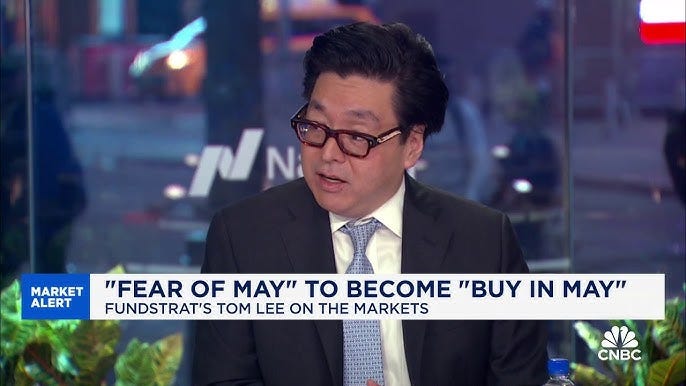
And take somebody like Tom Lee. I give Tom Lee an endless stream of sh*t for being a permanent bull, but when it comes down to brass tacks, he’s actually the embodiment of the phrase “bears sound smart, bulls make money.”
Nobody gives a damn how dumb he sounds every 6 months when he hikes his S&P target for any and/or no reason at all, and no one cares if the market is rising for rigged reasons or if the perpetual long trade in an overextended market with 5.5% interest rates on the most pornographic debt bubble in world history doesn’t make any sense—the only thing that matters is the scoreboard.
And right now, for better or worse and with the market back at all time highs, Tom Lee is running up the score on his critics, myself included. And for that, I actually give the man quite a bit of credit because in this industry, it’s difficult to argue with results.
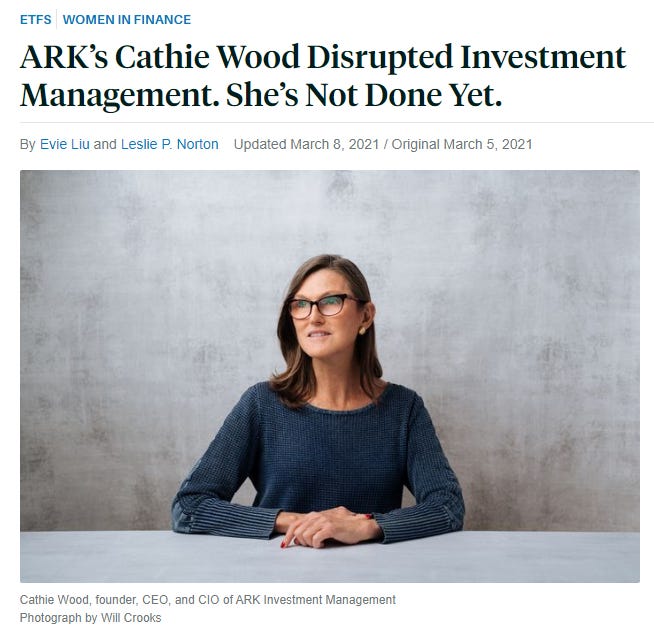
Which leads me to the topic of today’s article, Cathie Wood, and her flagship ARKK “Innovation” ETF.
Like Tom Lee, Wood is also an ardent worshiper at the church of “there’s no such thing as overvalued.” She is subjected to the same type of endless praise and adoration from the financial media and is sought after just as often in the world of tech investing for her opinions and insights.
I’ve been critical of Wood since the inception of this blog, pointing out all the way back in November 2021 that her “success”, in my opinion, really appeared to be a one-trick pony: anomalous trading in Tesla beginning in December 2019 that has masqueraded as Wood being some type of gifted investor with meaningful insights that the rest of the market couldn’t ascertain, who invested accordingly.
I wrote that in late 2019, call buying in Tesla simply looked odd to me.
I had watched tape and the options market for almost 10 years and had seen unusual options activity before. But these buys — so far out of the money and so far long-dated at the time — just seemed extra weird to me. I first mentioned how weird it was back in January 2020.
In April 2020, the call buying had hit a fever pitch. Then, Zerohedge tackled the issue in May 2020, in a piece called “Are Mysterious Call Option Purchases Forcing Tesla Stock Higher?”
The article examined one such buy, where over $2.5 million was deployed in a very short term, very out of the money options buy. The piece explained exactly how certain call buys in the name may have been creating a squeeze upward in the equity price.
🔥 40% OFF FOR LIFE: Using this coupon entitles you to 40% off an annual subscription to Fringe Finance for as long as you wish to remain a subscriber.
From there, it became somewhat of a talking point in the normal FinTwit zeitgeist, but no one (myself included) really tackled the work necessary to try and determine who the buyer could be and what motivation, other than of course simply being bullish, they may or may not have had for such purchases so far out on the bell curve.
By mid-2020, it started to become somewhat of a story. “Actually… someone is buying a LOT of 8/21 $2,100 call options. This has been going on a LOT (i.e., someone buying way out of the money short-dated call options, which forces the person writing these options to buy stock), which has pushed the stock up consistently,” GLJ Research founder Gordon Johnson told Benzinga in Summer 2020.
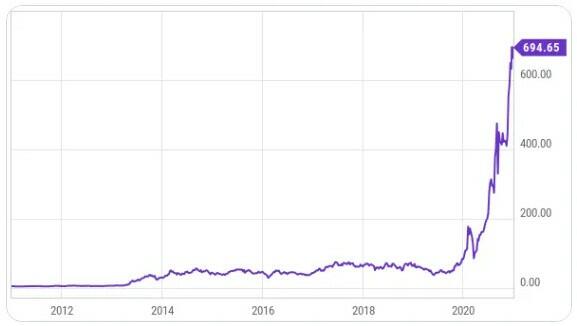
And of course, you didn’t need to be a statistician to understand that the action in Tesla’s stock was anything but normal-looking compared its history. This is how things looked by the end of the year in December 2020:
And despite Tesla having just a $60 billion market cap in 2019, headlines focused on Elon Musk adding $11 billion in wealth to his fortune in October 2021.
But it wasn’t only Elon Musk who was benefitting from Tesla’s mysterious rise higher, either. Wood literally became a “disruptor” overnight, taking in billions of dollars under management as a result of her concentrated bet on the electric vehicle company.
And so, without Tesla’s raging (and mysterious) success, there is no Cathie Wood success story. Or, in laymen’s terms, she simply got lucky.
Kind of like how the mystery squeeze in Tesla also allowed Elon Musk to try and cash in on a $55 billion+ compensation package — put in place only the year prior — that was eventually voided by a Delaware court for a breach of fiduciary duty. He got lucky too, I guess.
I wrote back in November 2021:
What should be worrisome to Wood’s investors is not only that her flagship fund has vastly underperformed the major market indexes year-to-date…but also that it has done so while her flagship ETF component, Tesla – weighted at a monstrous 10% of ARKK – has done nothing but go up. Specifically, ARKK is down 1% over the trailing twelve month period while Tesla has posted gains of over 112%.
In other words, Tesla has been saving ARKK from a complete and total meltdown.
Since then, Wood’s ARKK flagship fund has been dead money when compared to its NASDAQ benchmark. One by one, investors have watched other investments that Wood has made alongside Tesla get decimated.
For example, the “visionary” tech investor made a strategic decision to hold off and miss the surge in Nvidia — literally the hottest name in tech the last 2 years — while riding names like Invitae and Ginkgo Bioworks into bankruptcy and the toilet, respectively.
And last month Seeking Alpha published a list of ARKK’s 10 worst performing names. Keeping in mind ARKK only has ~35 names and the NASDAQ is up about 15% YTD, the losses in these names are stunning:
Teladoc Health (TDOC) -32.5% YTD
Tesla (TSLA) -33.4% YTD
Roku (ROKU) -34.5% YTD
Prime Medicine (PRME) -34.6% YTD
10x Genomics (TXG) -35.2% YTD
Ginkgo Bioworks (DNA) -35.8% YTD
Unity Software (U) -37.7% YTD
Verve Therapeutics (VERV) -38.1% YTD
Pacific Biosciences of California (PACB) -65.5% YTD
2U, Inc. (TWOU) -70.9% YTD
With no reputational string left to hold on to except Tesla’s mysterious outperformance between December 2019 and 2023, my prediction years ago was that when Tesla finally started to face reality, so would Cathie Wood’s ARKK Innovation Fund. And that’s exactly what has happened: Cathie Wood’s $14.3 Billion Implosion
As I wrote just days ago, it appears to me that Tesla is at the very beginning stages of a years-overdue comeuppance that should see the company’s relationship with the truth and reality take precedence over idiotic retail investors and mysterious long-dated out-of-the-money call buying: Tesla’s Truth Can Not Long Be Hidden
That reality check is taking place as you read this in the form of multiple government inquiries into the company, depleted retail investors, and a product line that appears to be humiliating everyone who once believed in it.
As the Tesla story continues to implode upon itself like a dying star, ARKK’s performance has been unavoidably horrific over any and all timelines one could use to compare it to its benchmark.
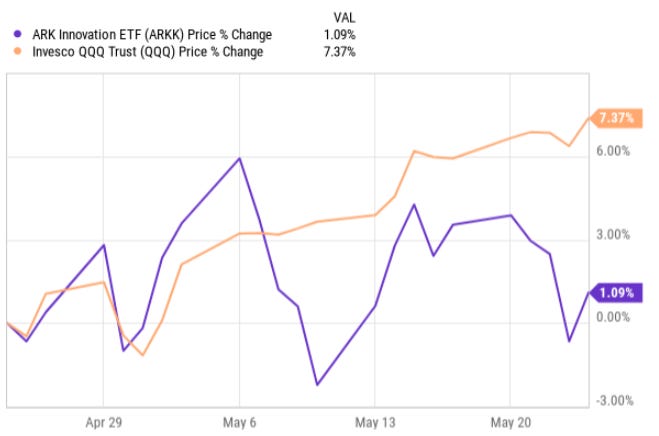
Over the last month, the NASDAQ is up 7.37% and ARKK is up only 1.09%, trailing its benchmark by 6.28%.
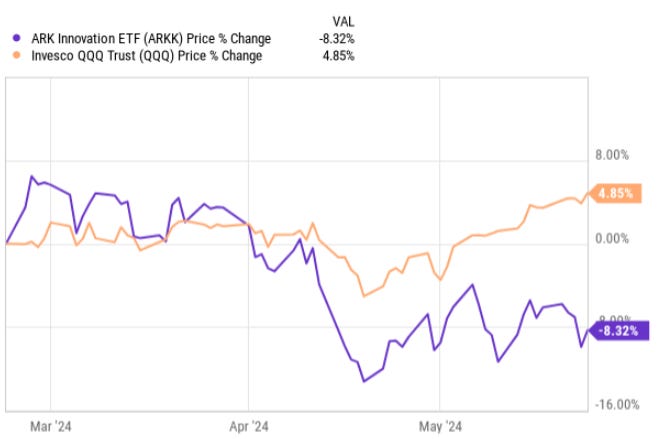
Over the last 3 months, the NASDAQ is up 4.85% and ARKK is down -8.32%, trailing its benchmark by 13.17%.
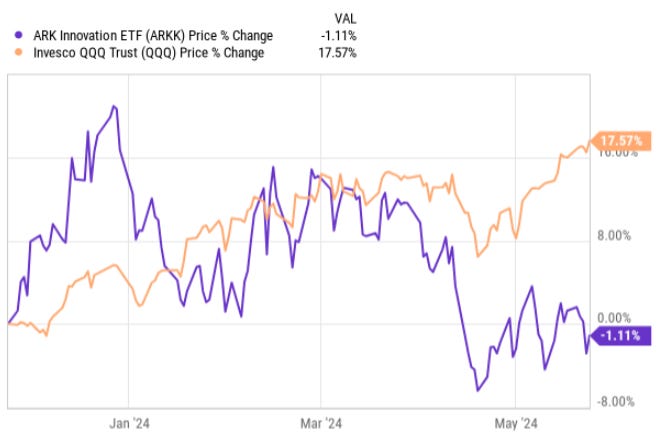
Over the last 6 months, the NASDAQ is up 17.57% and ARKK is down -1.11%, trailing its benchmark by 18.68%.
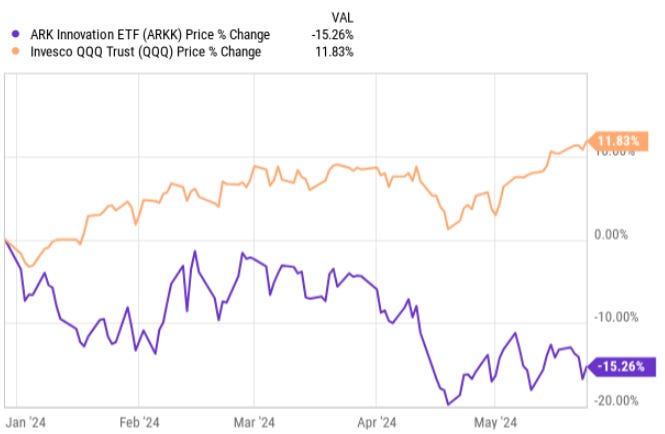
Year to date, the NASDAQ is up 11.83% and ARKK is down -15.26%, trailing its benchmark by 27.09%.
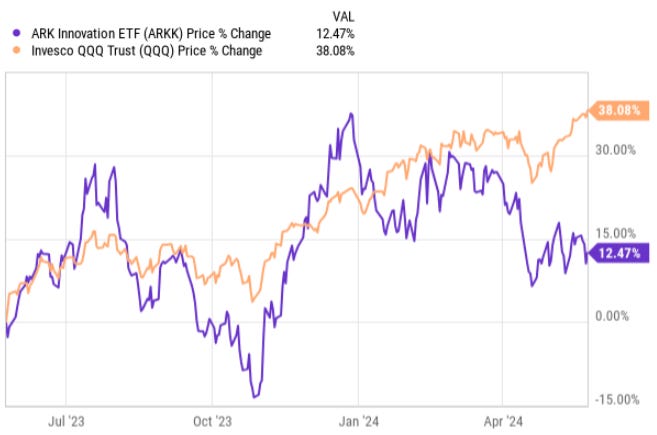
Over the last 12 months, the NASDAQ is up 38.08% and ARKK is up 12.47%, trailing its benchmark by 25.61%.
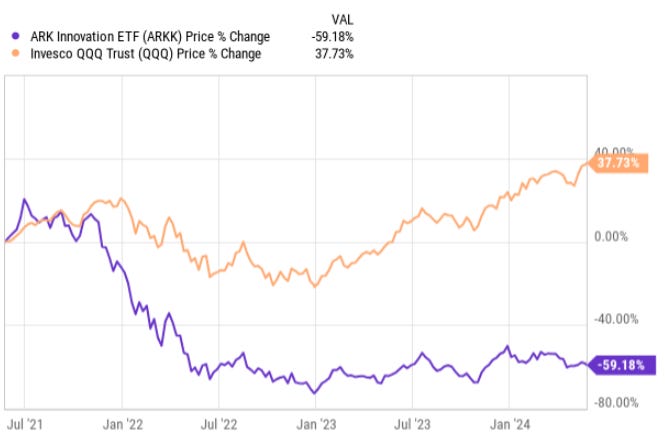
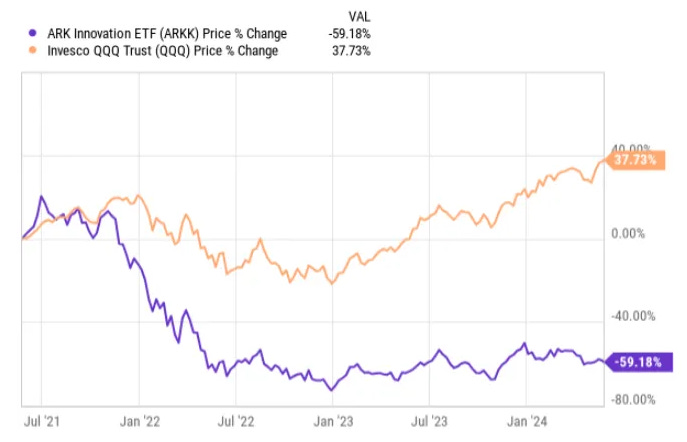
Over the last 3 years, the NASDAQ is up 37.73% and ARKK is down -59.18%, trailing its benchmark by 96.91%.
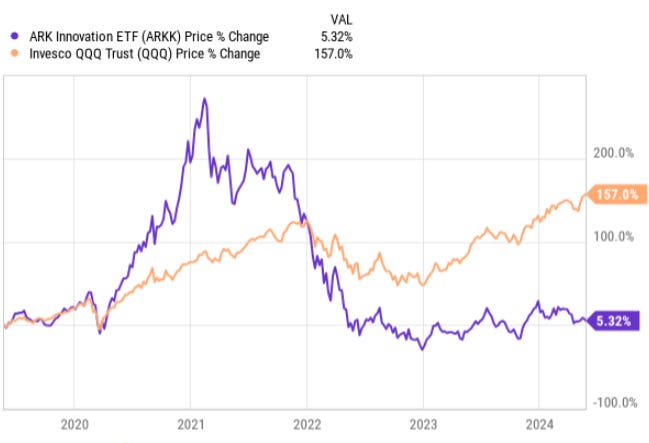
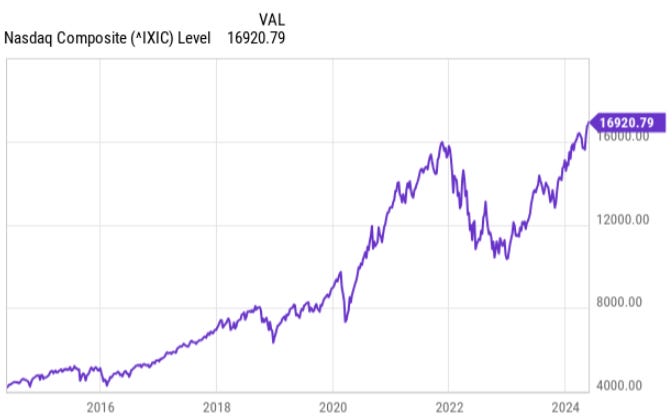
Over the last 5 years, the NASDAQ is up 157% and ARKK is up a rounding error, 5.32%, trailing its benchmark by more than 150%. See if you can spot the Tesla-driven “anomaly” in ARKK’s “success” in the chart.
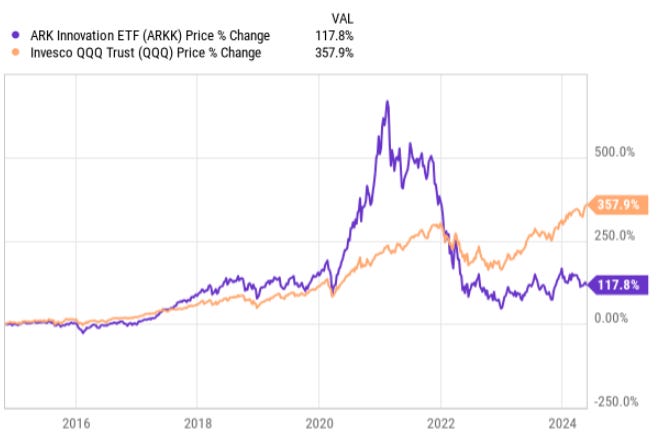
And finally, over the last 10 years, the NASDAQ is up 357.9% and ARKK is up 117.8%, trailing its benchmark by 240.1%.
To compound her dreadful numbers, Wood has offered up bizarre, hallucinogenic price targets, unbridled optimism about her own performance going forward that, in my opinion, has been very misleading, and bursts of macro-sounding non-sequiturs as excuses.
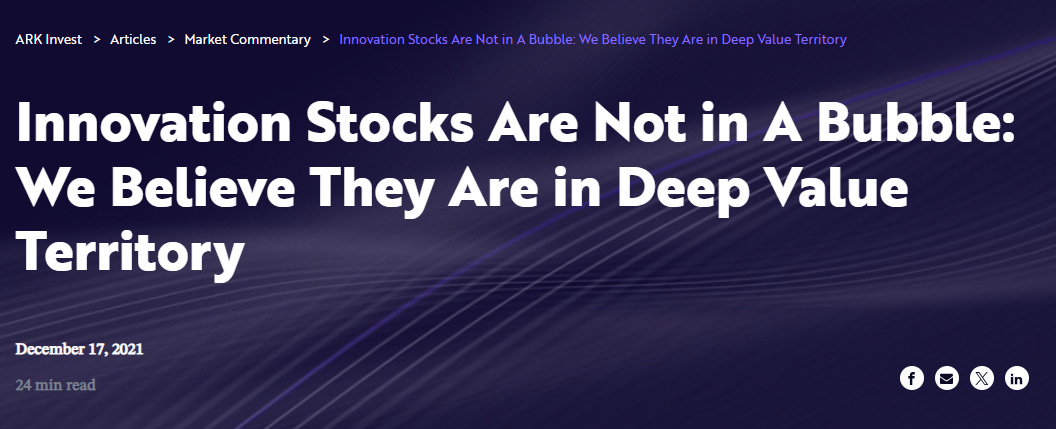
Back in December 2021, she said her ARK Innovation ETF “could deliver a 40% compound annual rate of return during the next five years” and said its stocks were in “deep value territory”.
Her blog post read: “With a five-year investment time horizon, our forecasts for these platforms suggest that our strategies today could deliver a 30-40% compound annual rate of return during the next five years. In other words, if our research is correct – and I believe that our research on innovation is the best in the financial world – then our strategies will triple to quintuple in value over the next five years.”
Wood later edited her December 2021 letter to make the language less aggressive, without making a pronounced note of the change, after being criticized about its content.
Now, read this again: over the last 3 years, the NASDAQ is up 37.73% and ARKK is down -59.18%.
Then, in January 2022, Wood changed ARKK’s website from displaying its YTD return to a 5 year (annualized) return, something I immediately called out as moving the goalposts to try and present a rosier picture of ARKK’s actual performance.
Bitcoin at $3.8 million (with a “base case” of $600,000 by 2030)
Tesla at $2,000 per share, representing about 11x from current prices
And of course, like the idea that she was ever bringing something different to the table as an investor to begin with, I think these dubious predictions and distasteful practices are mostly, if not all, nonsense.
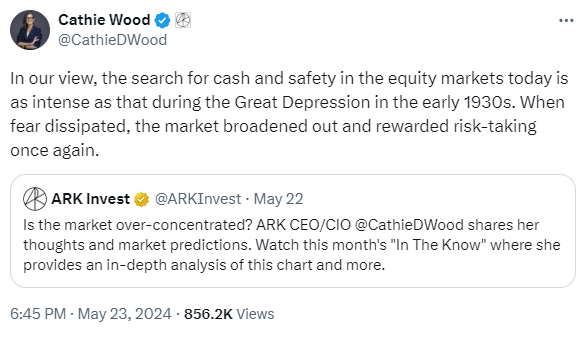
The cherry on top came this past week when Wood, seemingly having run out of euphoric price targets and limpd*ck excuses, took to Twitter to make what can only be described as a bold proclamation: today’s markets—yes, the ones currently sitting at all-time highs—have been experiencing “a search for cash and safety.”
In fact, she said the search for safety today has been “as intense as that during the Great Depression in the early 1930s.”
You don’t need to be a business school graduate from Wharton to understand that a flight to safety and cash in markets usually leads to stock prices going lower.
If a broader market flight to safety was taking place, that would mean people are selling stocks more than they are buying them. When people sell stocks more than they buy them, their prices go down. It’s simple supply and demand.
In fact, there are no other telltale signs more important in a flight to safety and cash than stock prices moving lower.
And, as luck would have it, the market isn’t exactly providing an airtight body of evidence for Wood’s claims. In fact, the market is doing the exact opposite. Her benchmark, the NASDAQ, is at an all-time high.
Ergo, for Wood to tacitly suggest that there is some broader market selloff causing her underperformance isn’t just ignorant, it should be insulting and humiliating.
As I’ve shown in the comparative charts above, the data suggest that it is only the stocks that Wood has put into the ARKK portfolio that are disproportionately underperforming the rest of the market.
In her tweet, she doesn’t make the case that it is people in her stocks who are running for the hills, she suggests it is an overall market phenomenon. But really, the evidence points to the polar opposite.
If you look at the charts of the NASDAQ and ARK diverging from one another, there’s only one logical conclusion to draw: the market has never been doing better and it is her active management and the stocks that she has specifically gone out of her way to pick and market herself on that have vastly underperformed.
And so, what a person of integrity would be doing in this situation is acknowledging what can only be called the blindingly obvious elephant in the room: that your stock picking is simply horrific compared to your benchmark.
Most managers would look at the data I’ve presented and determine that there really is no other choice but to take a mea culpa. It happens all the time in the hedge fund industry: managers go bust or vastly underperform the market, and they regretfully inform their investors that they have been unable to perform well and are returning their capital. In other words, they cut their losses.
And while this doesn’t bring their investors’ money back, it allows them to fall on their sword and continue onto their next venture with some of their integrity intact.
Wood is doing the exact opposite of this: she appears to me to be avoiding all responsibility for her atrocious underperformance, and insulting the intelligence of anybody who follows her on Twitter by making such a grossly ridiculous excuse.
I don’t know how anyone can read something like that ‘Great Depression’ claim and take it seriously.
But of course, all of this brilliance hasn’t stopped Wood from getting endless coverage in the media. Hell, for the price of a CNBC “Pro” subscription, you too can grasp onto 10 minutes of the brain farts of a woman who believes we are in the midst of 1930s bread lines (more genius thoughts here).
The kicker here could still be yet to come. As I wrote last week, I don’t think that the comeuppance is over for Tesla, but even more important is whether or not there will be a comeuppance for the overall broader market on its way.
The idea of the NASDAQ being in depression-era mode right now is beyond laughable, but it doesn’t mean that it won’t happen at some point in the near future.
As I’ve written about before, the Fed is faced with trying to decide whether or not they will allow inflation to run hot or crater the economy by keeping rates at 5.5%. If they choose the latter, there is a chance that the markets could see a depression-era-like selloff. But in that case, Wood’s portfolio of “special” stocks would likely only get hit harder in the overall market selloff.
There was never going to be a time when I was going to be willing to bet on Cathie Wood’s stock picking acumen, but it didn’t mean that I wouldn’t hold out hope for her to salvage her name and what little success, performance-wise, she could hold onto by leveling with investors and taking accountability. That second ship has clearly now sailed, and it has become evident to me that Wood has either lost herself in delusions of praise that she received years back or simply is a person with a character who can’t take accountability for their actions.
Either way, the ARK story is going to be a bizarre case study to watch over the coming quarters, not unlike Tesla itself — and it’ll remain a name that I will continue to want to stay far, far away from.
QTR’s Disclaimer:Please read my full legal disclaimer on my About page here. This post represents my opinions only.In addition, please understand I am an idiot and often get things wrong and lose money. I may own or transact in any names mentioned in this piece at any time without warning. Contributor posts and aggregated posts have been hand selected by me, have not been fact checked and are the opinions of their authors. They are either submitted to QTR by their author, reprinted under a Creative Commons license with my best effort to uphold what the license asks, or with the permission of the author. This is not a recommendation to buy or sell any stocks or securities, just my opinions. I often lose money on positions I trade/invest in. I may add any name mentioned in this article and sell any name mentioned in this piece at any time, without further warning. None of this is a solicitation to buy or sell securities. These positions can change immediately as soon as I publish this, with or without notice. You are on your own. Do not make decisions based on my blog. I exist on the fringe. The publisher does not guarantee the accuracy or completeness of the information provided in this page. These are not the opinions of any of my employers, partners, or associates. I did my best to be honest about my disclosures but can’t guarantee I am right; I write these posts after a couple beers sometimes. Also, I just straight up get shit wrong a lot. I mention it twice because it’s that important.
Digital ID is the newest marvel of modern ingenuity, poised to revolutionise life in Australia. But fear not for digital ID is not mandatory—yet. It’s just like the vaccine that wasn’t mandatory, until it was, sort of.
Will this digital firebrand rest in the hands of businesses?
One can only speculate what delightful incentives they’ll be offered to ensure compliance.
Perhaps a shiny new tax break, or a pat on the back from the local MP?
A Free Sausage With Your ID?
Picture the future with digital ID kiosks popping up outside hardware shops, nestled between the sausage sizzle and the garden gnomes.
“Get your digital ID here!” the signs will scream.
And what’s that? A free large fries with every digital ID? How utterly irresistible!
One might even wonder if this newfound digital identity could be the key to saving your dear old grandmother.
The bureaucrats will be rubbing their hands with glee at the thought of a new, streamlined system to manage.
No more messy paperwork or the need to remember pesky details like names and addresses. Everything will be neatly stored in a digital vault, accessible at the click of a button.
And just imagine the possibilities for surveillance! Why, they’ll be able to track your every move with the precision of a bloodhound on a scent trail.
And then there’s the ordinary citizen, who will no doubt revel in the convenience of it all.
No more fumbling for a driver’s license or digging through wallets for a Medicare card. Just a single, magical digital ID, capable of unlocking the doors to the kingdom.
Of course, one might worry about what happens when that digital ID fails to work but let’s not dwell on the negatives, shall we?
Top Five reasons
There are a number of reasons to support digital ID but here are our top five.
1. Imagine how many bank accounts you can open
You can open as many bank accounts as your heart desires with your shiny new digital ID. Of course, you’ll still be skint, but think of the sheer volume of accounts you can amass!
Imagine the joy of the bank fees and having them all taxed and potentially shut down should you dare to share a cheeky meme about our fearless leader.
2. Help out the hackers
Let’s help the government send all our industries off shore—not just cars, toothbrushes and chocolates, it’s time to help the hackers in China.
Hacking is a difficult job so the government has decided to help them out by keeping all our information in one place.
One Russian hacker described Australians as “the most stupidest humans alive” who have a lot of money for no reason (well not for long) and no sense at all. And no doubt he too may benefit from the new digital ID bill.
3. Sow division
Digital IDs will pick up right where The Voice left off, sowing division in their own special way.
The tech-savvy urbanites might breeze through, while the marginalised groups—the elderly, the poor, and rural residents—struggle.
What a perfect recipe for exacerbating inequalities! And, cynics might whisper, isn’t that just the sort of thing that gets the government’s gears turning?
4. We’re really after a vaccine passport
Let’s be honest, it’s not a digital identity we’re really after but a vaccine passport.
We’ve all delighted in flaunting our jab counts on social media.
Now, imagine the joy of collecting a rainbow of emojis alongside each vaccine in your digital wallet.
5. Let’s extend this digital revolution to animals and food
Why stop at humans? Why be speciest? Let’s extend this digital ID revolution to animals and even our food.
The chatter about vaccinating everything from fish to lettuce is gaining ground. So, why not microchip the lot?
Picture a wonderfully equal world where everything, down to your salad, is tracked and tagged. Did someone say social credits?
In the end, digital ID is the latest panacea for our modern woes, a silver bullet wrapped in a digital bow. And as we all march towards this brave new world, one can only hope it comes with a complimentary donut.
After all, a little sugar helps the medicine go down, doesn’t it?
A new study has found that intermittent fasting may protect against liver inflammation and even liver cancer.
The study, conducted at the German Cancer Research Center and the University of Tübingen and published in the journal Cell Metabolism, aimed to understand more about how intermittent fasting can affect the liver. The researchers found that intermittent fasting can halt the progression of non-alcoholic fatty liver disease (NAFLD), a precursor to chronic liver inflammation and liver cancer.
The researchers conducted their experiment by implementing a fasting regimen on mice with pre-existing liver inflammation. It was found that, after four months of intermittent fasting, the mice had improved liver function tests, less fat in their livers, decreased fibrosis, and were less likely to develop liver cancer in the future.
The mice followed a 5:2 fasting diet, meaning they fasted for two days, then were allowed to consume an unlimited number of calories for five days. The cycle was then repeated for four months until the study was concluded.
The researchers also discovered two proteins (known as PPAR-alpha and PCK1) within liver cells that seem to have contributed to the protective effects of intermittent fasting. The study supports March research that suggests fasting can have a powerful impact on one’s overall health.
“In recent years, caloric restriction and fasting studies have stumbled upon many positive health benefits. Some of the benefits include cancer prevention. It is well established that metabolic factors such as high levels of insulin and blood sugar, increase the risk of breast cancer.” Dr. Francisco Contreras told The Epoch Times in an email. Dr. Contreras is a board-certified oncologist who treats patients in California and Mexico.
“Intermittent fasting has proven to reduce the incidence of this malignancy and also to reduce the risk of recurrence after treatment. Patients that could do intermittent fasting during treatment experienced relief of chemotherapy-induced adverse effects and cytotoxicity with significant improvement of their quality of life.”
What Is Intermittent Fasting?
Intermittent fasting is a type of eating pattern that involves alternating periods of eating and abstaining from food. Most people participate in intermittent fasting for health reasons and research supports intermittent fasting as a way to manage weight and some forms of disease, at least in the short-term.
“During fasting days, your body runs off ketones derived from stored fats (triglycerides) in your body. But these ketones work as more than just fuel. They regulate the expression of many proteins and signaling molecules.” Dr. Caroline Walker told The Epoch Times in an email. Dr. Walker is a board-certified gastroenterologist based in Denton, Texas. “It is through these molecules that it is thought that intermittent fasting may have effects on cell growth and plasticity, tissue remodeling, decreased insulin exposure and decreased insulin resistance, improved lipid profile, improved blood pressure, and even improved asthma symptoms.”
According to Dr. Contreras, some of the other benefits of eating less, either by amount or by fasting, include:
Weight loss
Increased insulin sensitivity
Improved immunity
Body detoxification
Lower cholesterol
Improved heart health
All of these benefits have the potential to prevent chronic disease, including Type 2 diabetes, heart disease, neurodegenerative disorders, inflammatory bowel disease, and cancer.
Although there are many different intermittent fasting schedules to choose from, it is generally recommended not to fast for longer than 24 hours, as doing so often does more harm than good. Research regarding the long-term efficacy of intermittent fasting has also garnered mixed results, with a January 2023 study finding no evidence that intermittent fasting affects long-term weight loss results.
Furthermore, it is important to remember that intermittent fasting is not the best dietary choice for everyone and can even have dangerous consequences for people with certain health conditions.
“Patients should always speak with their primary care doctor prior to beginning intermittent fasting. It may not be right for those with type I diabetes, history of an eating disorder, pregnant or breastfeeding (or trying to get pregnant), or are taking warfarin,” advised Dr. Walker.
Who Is Most at Risk for Developing Liver Inflammation or Liver Cancer?
“There is no question that the dietary habits of our generation are a major factor of metabolic disturbances caused by obesity and the liver is the organ most affected. The incidence of non-alcoholic fatty liver disease is on the rise worldwide. A very dangerous condition that can progress into steatohepatitis and cirrhosis which can lead to hepatocellular carcinoma, one of the most aggressive malignancies and the fastest-rising cancer in the USA.”
According to Dr. Walker, certain people are more at risk for developing NAFLD, including those who have:
Metabolic syndrome
Abdominal obesity (defined as waist circumference greater than or equal to 40 inches in males and greater than or equal to 35 inches in females)
High levels of triglycerides
Low levels of high-density lipoprotein (HDL) cholesterol
High blood pressure
High fasting blood sugar
Hepatitis B or C
Heavy alcohol use
Aside from preexisting medical conditions, genes and diet can also influence a person’s likelihood to develop NAFLD. Scientists are also studying how the gut biome may impact NAFLD and have already discovered differences in the microbiomes of people with NAFLD compared to people without the condition.
Opportunities for Future Research
Although the study is promising, the researchers acknowledge that because the study was conducted on mice, there is no way to know definitively if the intermittent fasting regimen would produce the same results in humans. However, the results do show significant promise regarding the potential efficacy of intermittent fasting as a preventative tool for humans.
Beyond this, Dr. Walker feels there is a notable opportunity in the future to compare and contrast a study group following the 5:2 fasting regimen to another group following a different dietary pattern.
“I do believe that they could have added value to their work by having a control group of mice who had lost body weight by another form of dietary control. This would have added value, particularly to their hypothesis that it is specifically the fasting that is responsible for the changes in fibrosis,” says Dr. Walker.
A national poll, commissioned by Gatestone Foundation Trustee Lawrence Kadish of Old Westbury, Long Island, reveals that China has emerged as the nation considered the biggest national security threat to the United States. An overwhelming majority of Americans questioned believed that China will seek to dominate the remaining 21st Century at the expense of the United States.
Vladimir Putin’s Russia ranks second as America’s biggest threat to our national security, with a little more than half of Americans questioned concerned that Putin is capable of launching a nuclear strike on the United States. The result underscores the poll’s finding that a significant majority of Americans are concerned that we have entered a second chapter of the Cold War between the two countries that has considerable consequences for our nation’s future.
Nor do many Americans believe that Putin will stop with his invasion of Ukraine. Nearly three quarters of those surveyed believe Putin will target Western Europe next, and many are fearful he could unleash nuclear weapons to achieve victory.
Turning to the Middle East, more than half of Americans surveyed believe Iran would launch nuclear missiles against Israel if given the opportunity and that the United States should take unspecified measures to prevent it.
Responding to the question of whether North Korea could fire nuclear-tipped missiles against the United States, again, the majority of those Americans questioned said yes.
The survey also reveals a startling loss of patriotism among those questioned, and a significant amount of anger by Americans who acknowledged their fears regarding the range of adversaries who now feel free to confront our nation.
The survey was conducted by the national polling company McLaughlin & Associates, and the data had a margin of error of 3.1%. Its CEO, John McLaughlin, observed:
“To the best of our knowledge, these questions have not been posed before to a statistically valid sample size of Americans and they reveal a nation that recognizes the external threats but is anxious about our current ability or willingness to respond to them.
It is clearly a time of uncertainty, anxiety and not a little bit of anger.“
Although China still saw an increase of some $5 billion in outbound tourism spending between 2021 and 2022, it was not enough to match the surge in spending from the United States in that time period, which more than doubled from $75 billion to $162 billion.
This spate of increased travel includes the phenomenon of “revenge tourism”, a term coined on social media following the lifting of Covid restrictions as people started to go on trips that they previously were unable to take.
Even with the growth, however, both China and the United States were still some way off their pre-pandemic figures in 2022. China’s peak had hit $277.3 billion in 2018, while the U.S. reached a height of $184.8 billion in 2019.
As Statista’s Anna Fleck shows in the chart below, Germany, one of the most populous and richest nations in Europe, continued to rank in the top three big spenders, while the United Kingdom has climbed into fourth position.
India, meanwhile, has retained seventh position and also saw a huge increase in tourist spending from $17.8 billion to $31.8 billion. Data for the United Arab Emirates was not published for 2022.
According to the latest update of the UNWTO World Tourism Barometer, international tourism reached 97 percent of pre-pandemic levels in the first quarter of 2024.
This was partly thanks to the opening of Asian markets, including visa facilitation, with China having introduced visa-free travel for citizens from France, Germany, Italy, the Netherlands, Spain and Malaysia for a year staring November 2023.
North America saw the strongest performance of the subregions in Q1 of 2024, per the report, with a 23 percent increase of international arrivals in comparison to the same period from before the pandemic, followed by Central America with an increase of 15 percent, the Caribbean and Western Europe, each with 7 percent, respectively.