The Bureau of Alcohol, Tobacco, Firearms, and Explosives (ATF) has submitted the final version of a controversial rule to change the definition of what it means to be “Engaged in the Business” of dealing in firearms.
The U.S. Attorney General says the change, required by the Bipartisan Safer Communities Act enacted June 25, 2022, will save lives by requiring anyone who “devotes time, attention, and labor to dealing in firearms as a regular course of trade or business or predominately earns a profit through the repetitive purchase and sale of firearms” to obtain a Federal Firearms License.
“Under this regulation, it will not matter if guns are sold on the internet at a gun show or at a brick-and-mortar store: if you sell guns predominately to earn a profit, you must be licensed, and you must conduct background checks,” Attorney General Merrick Garland wrote in a statement on the ATF website.
Critics of the change say the rule will effectively end private transactions, possibly including the inheritance of firearms within families.
According to the ATF statement, President Joe Biden issued Executive Order 14092 on March 14, 2023, which directed Mr. Garland to clarify the definition of who is engaged in the business of dealing in firearms. The plan immediately drew criticism from gun rights activists.
“The ATF is using the [Bipartisan Safer Communities Act] BSCA to substantially revise all regulations governing who and what constitutes a ‘dealer’ and how such dealers may conduct business. This proposal advances a radical left-wing agenda that will undermine the Second Amendment and the Constitutional rights of all Americans,” Rep. Bob Good (R-Va.) wrote in a Dec. 7, 2023, letter to ATF Director Steen Dettelbach.
Mr. Garland signed the new rule on April 10, and it will become effective May 10, 2024.
According to the 466-page rule, the only requirement for determining whether a person is engaged in the business of selling guns is whether the person is trading to “predominately earn a profit” rather than to earn a “livelihood.”
Critics claim that under the new rule, the transfer of a single gun between private citizens would require the seller to have an FFL and to perform a check through the National Criminal Instant Background Check System (NICS). This would effectively end all private firearm sales and could even subject parents to federal prosecution for trying to pass family heirlooms along to their children.
“Once again, the Biden Administration is weaponizing every tool in their tool box to intimidate, harass, and criminalize gun owners with unlawful executive actions. This Backdoor Universal Registration Check rule is nothing more than a move to criminalize the sale of a single gun without a background check,” Aidan Johnston, Director of Federal Affairs for Gun Owners of America wrote in a statement to The Epoch Times.
But the new rule states that is not the case.
“Individuals may continue to engage in intrastate private sales without a license, provided that such individuals are not ‘engaged in the business’ and the transactions are otherwise compliant with law,” the rule reads.
In an ATF press release, Mr. Dettlebach stated that the rule is about closing an avenue by which criminals obtain guns.
“Today’s final rule is about ensuring compliance with an important area of the existing law where we all know, the data show, and we can clearly see that a whole group of folks are openly flouting the law,” Mr. Dettlebach is quoted as saying. “That leads to not just unfair, but in this case dangerous consequences.”
But Second Amendment advocates say the new rule is the next step in the Biden Administration’s plan to implement gun control measures through administrative action that it can’t get through the legislative process.
“The government hopes to ensure that they are fully involved in every firearm transfer, and eventually the records of all those transfers will end up in their records database. Just last month ATF executed an airport executive in Arkansas during a pre-dawn raid because he was ‘engaged in the business’ without one of ATF’s licenses. This could quickly become the new normal, so liberty-loving Americans are right to be concerned,” Mr. Johnston’s statement reads.
In Latest Humiliation For Biden Admin, Russian Oil Is Trading Above The G7 Price Cap Everywhere
Back in late 2022, when “Western democracies” bombastically unveiled theatrical sanctions against Putin, capping the price at which imports of Russian oil were permitted to no higher than $60, we said that this was one of the biggest farces in modern history, not only because it was an optical play that was made entirely for public consumption (as nobody in the west actually wanted to curtail Russian oil exports as the outcome would be a devastating surge of inflation as Biden now realizes), but also because there was no enforcement mechanism to cap the price at $60 and no more.
We were right, again, and today Bloomberg reports that “Russian oil is trading far in excess of a Group of Seven price cap that’s supposed to deprive Moscow of revenue for its war in Ukraine, suggesting significant non-compliance with the measure”, which anyone with half a working brain would have expected to happen, which of course excludes virtually all “democratic” bureaucrats who implemented this idiotic sanction (which only ended up making the Vitol oil traders billionaires).
According to data from Argus Media, whose price assessments are followed by some G-7 nations involved in the cap, Russian flagship Urals grade oil is now selling for $75 a barrel at the point it leaves ports in the Baltic Sea and Black Sea. A Treasury official told Bloomberg that US officials are tracking the price increase, which they attribute to broader geopolitical dynamics, as the alternative – admitting they are idiots, would be a bit too introspective.
As a reminder, the Russian embaro cap requires that any western company involved in transporting Russian oil receives a so-called attestation, a document vouching that the cargo cost $60-a barrel or less. If it doesn’t, they’re not allowed to provide their services. The fact that Argus’s prices are so far above that level creates what Bloomberg called a “dissonance”, but what we would call, a giant slap on the face of the Biden administration which nobody takes seriously any more.
While Urals has been above $60 almost all year, this month’s surge to well above $70 will stretch the credibility of those attestations for traders wanting to keep using western services. Not like anyone actually thought those attestations had any credibility to begin with since the governments enforcing them were so clearly interested in having everyone ignore them.
Bloomberg data showed that in March, 23% of the nation’s crude oil shipments had insurance against spills and collisions provided by members of the International Group of P&I Clubs. That means traders would have vouched that the cargoes cost well below where Argus assessed the Urals price to be, which was clearly not the case, and means that at least a quarter of Russian oil shippers are fabricating data. A smaller proportion moved on Greek tankers, all of which had cover from IG clubs, also requiring attestation.
Hilariously, the idiots in the Biden admin told Bloomberg that the cap is still having its intended effect, reducing the amount of money the Kremlin receives from oil sales by forcing the commodity to either be sold under the cap via western services, or through Russia’s shadow fleet. Which, of course, is absolutely not the case and Putin is currently rolling in the cash from selling oil to the same European nations that are supplying Ukraine with their most modern weapons which Putin then handily blows up and reverse engineers. The US plans to continue the enforcement of the cap by sanctioning vessels operating in the shadow fleet, but will not do so in response to any specific market moves, the official said, requesting anonymity to discuss internal deliberations, and for the reason that it would be extremely embarrassing if his name were to become public.
A European Commission spokesperson said the bloc is aware of the risk of the price cap being dodged, and is committed to steps that deprive Russia of revenue while simultaneously “supporting global energy market stability.” It’s also constantly reviewing existing measures to enforce the cap and prevent its violation or circumvention, the spokesperson said, adding that such measures require unanimity among member states. In other words, Europe knew from day one that the Russian oil embargo was not going to work, and now, a year and a half later, is blame the lack of “unity” for this farce.
The bloc’s most recent sanctions package was aimed at tighten the cap’s enforcement, the spokesperson said; clearly the package did not achieve the “desired outcome.”
Of course, it’s not just Russia that is rolling in dough: by the time Urals cargoes get to India, the grade is trading at $88 a barrel — just $3.80 below than the global benchmark for physical cargoes, Dated Brent, Argus data show. When the nation’s ESPO crude leaves the port of Kozmino in eastern Russia, it is at $84 a barrel. It hasn’t been close to the price cap for about a year.
Bloomberg concludes that since last October, “the US Treasury has shown it’s prepared to punish companies for breaches of the price cap that happened in the past” however, given its desire to avoid any actions that disrupt the flow of crude — and risk higher prices — the rally in headline Brent futures to around $90 a barrel may temper any push to do so at this time.
GODL! Precious Metal Soars Above $2,400 After Sudden Gap Higher
Crypto bulls – at least those who didn’t betray their “laser eyes” PFP and sell previously – have had their day in the sun for the past 3 months as bitcoin and most other digital fiat alternatives soared, making it clear why, despite the difficult, it can be so very profitable to HODL, especially with the US is approaching the Minsky Moment of issuing $1 trillion in debt every 100 days, and interest on US debt, now at $1.1 trillion, is set to surpass Social Security spending and become the single largest government outlay before the end of the year.
Now that rate cuts are off the table, interest on US debt – currently the second biggest government outlay at $1.1 trillion – will surpass social security and become the single biggest US expense before the end of 2024 at $1.6 trillion. pic.twitter.com/OQYjHhOks9
Stupid jokes aside, while bitcoin was rampaging higher, goldbugs stared in disgust, wondering why their non-fiat god had forsaken them… after all, when the collapse of the dollar, and fiat in general, finally arrives gold will be one of the very few currency alternatives still standing. Alas, ETF flows have not provided any respite, because while bitcoin ETFs soaked up most money in the past 3 months, aggregate gold flows continued to shrink.
And yet, starting in the beginning of March, gold finally broke out from the black hole gravitational attraction of the Bank of International Settlements trading desk, and has soared some $300 dollars in just 6 weeks, its fastest ascent in decades.
Fast forward to tonight when, with most other assets quiet, gold suddenly surged higher, and after closing at an all time high, the precious metals spiked by another $15 in a matter of seconds, a move which for the otherwise hyperlethargic assets, is the equivalent of turbo boost.
And while it’s now just a matter of hours if not minutes, before spot rises above $2,400, gold futures are already there: the active, June contract just hit a new all time high of $2,406.9 moments ago around the time Chinese buy orders started rolling in…
… and contrary to speculation that this is just a fat finger, or a another one-off buy orders, gold future volumes are solid, especially given volumes would have already been very high in the last few days. GCM4 volumes are now 23.5k lots vs. 5-day average of 17.85k lots.
While it wasn’t clear what sparked the buying frenzy, UBS’ trading desk notes that “gold futures gapped up $10 as they traded through Thursday’s high on what felt like stop losses being triggered; 0.5moz of futures volume were behind the move.“
What happens next is also unclear, although as we showed moments before the breakout, the current divergence between gold prices and 10Y real rates, suggests that something awful is about to happen…
… a dismal outlook proposed last week by none other than BofA CIO Michael Hartnett, who in his latest Flow Show report noted that investors are looking beyond the “here and now”, realizing that there is no way markets or the economy can sustain 5% nominal and 2% real rates, and are hedging two things: i) the risk that the Fed cuts as CPI accelerates, and ii) and more ominously, the “endgame of Fed Interest Cost Control (“ICC”), Yield Curve Control (YCC) and QE to backstop US government spending.”
In short, something big is about to break, and if the surge in gold leads to a spike in yields, start the countdown to one of two things: i) QE and/or ii) YCC, because if the bond market sniffs out the endgame that gold is currently smelling, it will be up to Powell to once again prevent a catastrophic financial collapse.
For those wondering how far gold can rise, we excerpt from the latest note from BofA commodities strategist Michael Widmer (available to professional subscribers), who writes that…
Gold and silver are among our most preferred commodities, with the yellow metal pushed up by central banks, China investors and, increasingly, Western buyers on a confluence of macro factors, including an end to hiking cycles. Accordingly, we see the yellow metal rally to US$3,000/oz by 2025. Silver benefits from that too, with prices also boosted by stronger industrial demand. This could take prices above US$30/oz within the next 12 months.
And some charts.
And here is UBS, predicting that the price of the precious metal could double from here (note also available to pro subs):
The recent move in gold reminds me of a famous quote: “There are decades where nothing happens, and there are weeks where decades happen.” Looking at history, gold price can stay in the doldrums for a long time but when it does breakout, the surge is usually fast and furious. In deciding whether to chase or fade the recent gold rally, it might be useful to draw some inspiration from past breakout episodes. Here I define a “breakout” to be when the gold prices move 10% above the previous historical peak.
Should history repeat itself, it is not too late to participate in the current gold rally. An investor with a two to three-year view could expect to see gold potentially double from here to more than $4,000. The take-profit signal is when real rates turn negative and when there is a full-blown recession. Today with real rate still high and a recession seemingly faraway, it is too early to call the end of the ongoing gold rally. Gold breakout can be seen as an ominous signal, and it is not difficult to imagine a range of geopolitical risk scenarios. As for markets, many things look mispriced today with a two to three-year lookout, ranging from incredibly low credit spreads, elevated equity valuation to subdued volatility. It’s fair to say that the gold market has fired its warning shot.
The use of ivermectin to treat COVID-19 is an ongoing debate. The central conflict is that while many doctors have reported success in using ivermectin, some studies published in major journals suggest it is in fact ineffective.
Even as the FDA recently has been removing misinformation it posted about ivermectin, the agency has maintained its original position regarding its effectiveness, namely that there isn’t evidence.
People who trust ivermectin claim the studies showing ineffectiveness are fraudulent, while people who are skeptical of its use for treating COVID-19 view it as an anti-science conspiracy theory.
As a professional with decades of research experience conducting dozens of clinical trials on antiviral drugs, I decided to dive deep into the studies purporting ivermectin’s ineffectiveness. What I found shocked me.
Legacy Media Report Ineffectiveness
Numerous preclinical studies have found that ivermectin has a broad range of effects on COVID-19, spanning from its initial impact on viral infection to the pathological changes the virus causes in our bodies.
Ivermectin inhibits the entire life cycle of SARS-CoV-2 in our cells from attachment, spreading, and replication (1, 2, 3).
Ivermectin exceeds the approved antiviral effects of other medications, including Paxlovid, molnupiravir and remdesivir, which only target the virus and lack anti-inflammatory and organ-protective effects. Monoclonal antibodies have to be constructed specific to each variant and are very expensive.
In the pharmaceutical industry, clinical trials are commonly used to evaluate the efficacy and safety of drugs once their mechanism is demonstrated. There are two types of clinical trials: observational and interventional.
Observational studies are often conducted by doctors in clinical, hospital, or community settings to analyze the effects of drugs. The data is collected as observed in clinical practice with minimal interference.
Many doctors have observed the positive effects of ivermectin on their patients. An observational study conducted in Brazil with over 88,000 patients showed that ivermectin reduced the rates of infection, mortality, and hospitalization by 49 percent, 92 percent, and 100 percent, respectively, compared to nonusers.
Pharmaceutical companies are required to conduct interventional studies that meet the approval standards set by the U.S. Food and Drug Administration (FDA). Randomized clinical trials (RCTs) are frequently utilized to fulfill these requirements. This type of study is considered the gold standard and involves randomly assigning one group of patients to receive a specific drug while the other group does not receive it, then comparing the outcomes.
Legally and medically, ivermectin can be prescribed off-label to treat COVID-19 since it has already been approved by the FDA for other diseases.
Although many doctors have observed the positive effects of ivermectin in treating their patients, the media has specifically highlighted data from a few selected RCTs that have concluded it is ineffective in treating COVID-19.
However, some critical aspects were overlooked in those RCTs.
Improper Dosing
A drug’s therapeutic effects can only be observed when it reaches the appropriate concentration in the body and remains there for a few days, allowing sufficient time to work.
Improper dosing was a major issue in the RCTs that found ivermectin ineffective.
Recommended Dosage
According to Merck’s package insert for ivermectin (brand name Stromectol), a single oral dose of 0.2 mg/kg was officially recommended for treating parasitic diseases. There is no official dose for COVID-19.
The recommended dosage of ivermectin for treating COVID-19 is based on the clinical experiences of physicians worldwide.
The Front Line COVID-19 Critical Care Alliance (FLCCC) guidelines recommend taking 0.4 mg/kg of ivermectin daily, immediately after exposure. Once a cumulative dose in excess of 200 mg is reached, the risk of acquiring COVID-19 has been shown to be nearly zero.
It is common for a drug with multiple indications to have different doses for different diseases.
Moreover, ivermectin should be given with food, as it has a 2.6-fold higher bioavailability when taken with food rather than on an empty stomach. The Merck package insert (revised May 2022) also supports this and states: “Administration of 30 mg ivermectin following a high-fat meal resulted in an approximate 2.5-fold increase in bioavailability relative to administration of 30 mg ivermectin in the fasted state.”
FLCCC guidelines also recommend taking ivermectin “with or just following a meal for greater absorption.”
Yet this important dosing information is not reflected in the commonly used drug prescribing resource known as the Prescribers’ Digital Reference or PDR which states: “Take the number of tablets your doctor has prescribed all at the same time with water on an empty stomach. Do not eat any food within two hours before or after taking the tablets.”
So if a person takes the dose while fasting, they are getting only 40 percent of the recommended dose. For patients with a higher body weight, the effects of underdosing could be even more significant.
RCT Studies Used Inappropriate Dosing
In the most recent PRINCIPLE trial published in March, ivermectin was used at 0.3 mg/kg for only three days. Moreover, it was designed to dose the ivermectin without food: “Participants were advised not to eat two hours before or after taking ivermectin.”
In another RCT ACTIV-6 published in JAMA in October 2022, ivermectin was dosed in a fasting status, as the protocol stated: “Ivermectin should be taken on an empty stomach with water (30 minutes before a meal or 2 hours after a meal).”
Ivermectin was reported as dosed at 0.4 mg/kg for three days—a much shorter time period than it should be. However, in the protocol Table 4 in Appendix 16.3.3, the precise dosing was as low as 0.269 mg/kg, and 0.4 mg/kg is actually only the upper dose limit—not the real dose.
According to the worldwide recognized study guideline ICH Good Clinical Practice, clinical trials must adhere to ethical principles. Failure to do so would be considered study misconduct or fraud and would violate the principle of integrity.
Another JAMA study published in March 2021 repeated the same mistake in mild COVID-19 patients by suggesting they take 0.3 mg/kg for five days on an empty stomach.
An RCT study known as TOGETHER, published in March 2022 in the New England Journal of Medicine, underdosed ivermectin with 0.4 mg/kg for only three days and did not mention dosing with food.
Nevertheless, even at this low dose, the ivermectin still reduced hospitalization rates, death, and the need for mechanical ventilation compared to a placebo.
Clinical Improvement Despite Underdosing
It is inappropriate to conclude that ivermectin was ineffective based on these RCT studies with major design flaws.
Despite the poor study design, ivermectin showed clinical benefits and saved lives.
In the PRINCIPLE study, self-reported recovery was shorter in the ivermectin group than usual care, with a median decrease of 2.06 days. The statistical analysis showed that it met the predefined superiority criteria.
Furthermore, the analysis showed that ivermectin effectively reduced COVID-19-related hospitalizations and deaths. Only 1.6 percent of 2,157 patients in the ivermectin group experienced hospitalizations or deaths, compared to 4.4 percent of 3,256 patients in the usual care group.
Even a low dose of ivermectin has demonstrated the potential to save lives. However, the authors concluded, “Ivermectin for COVID-19 is unlikely to provide clinically meaningful improvement in recovery, hospital admissions, or longer-term outcomes.”
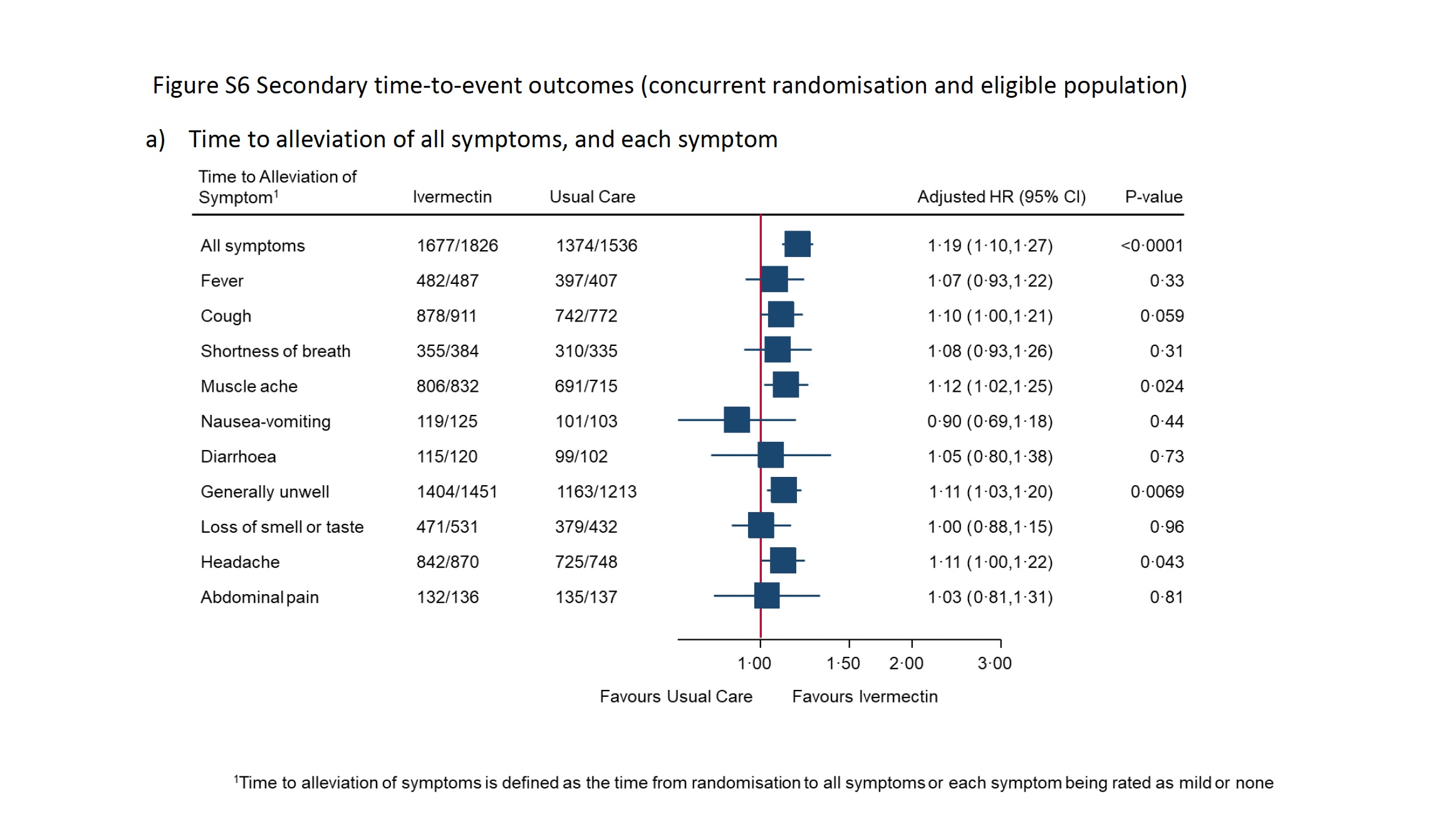
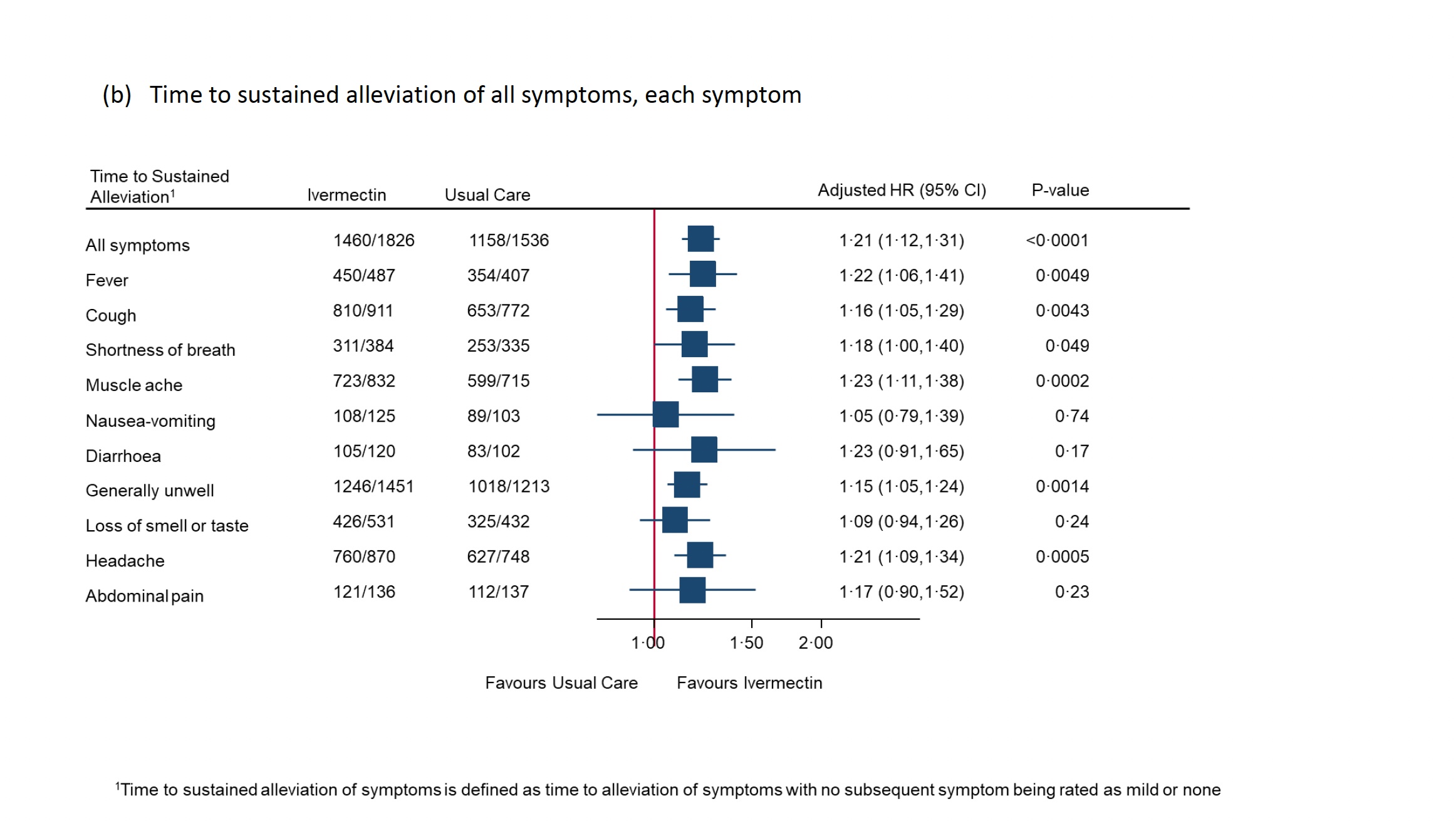
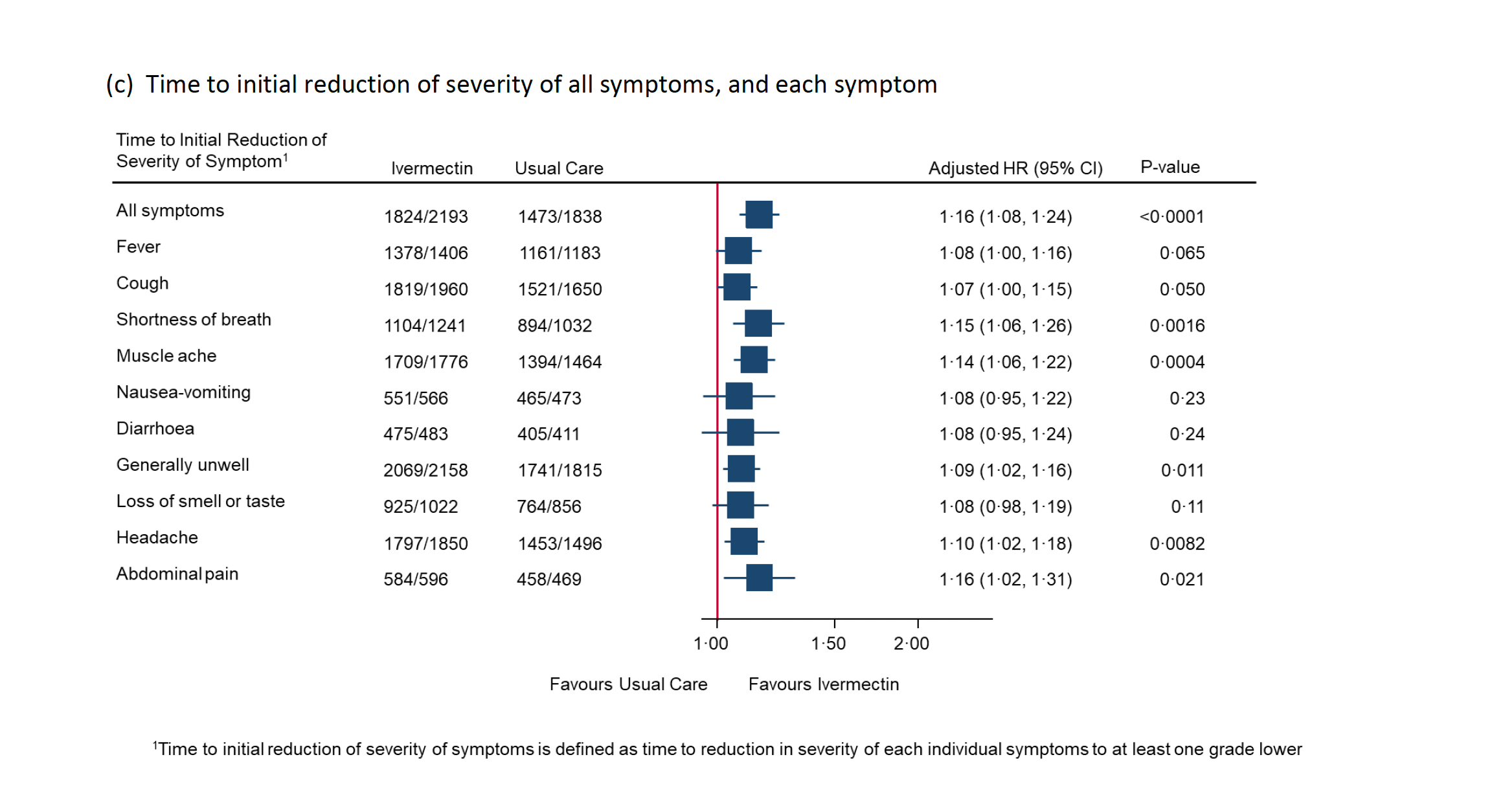
Meanwhile, the report’s appendix includes dozens of recorded clinical benefits in patients treated with ivermectin, such as the time it took to alleviate all symptoms, general unwellness, muscle aches, and headaches. The improvement of symptoms was also sustained, and the severity was reduced. Surprisingly, the source PDF was removed from the website during the writing of this article.
There are additional examples. Although the previously mentioned 2021 JAMA study underdosed patients, treatment with ivermectin reduced recovery time by two days. In the ACTIV-6 study, only one venous blood clot event was reported in 817 ivermectin-treated patients, compared to five events in 774 placebo-treated patients.
Statistical Failures
It is important to note that the definition of treatment effects in an RCT can differ from those discussed in real-life observational studies.
Sometimes, even if the results of a clinical trial demonstrate a clear effect, the conclusion may still be interpreted as ineffective due to the statistical definition of effectiveness.
Interpreting statistics can be challenging as they usually involve complicated mathematical models and numerical data that can be manipulated to support a specific agenda. Nevertheless, for the purpose of this discussion, let’s presume that all research is carried out conscientiously and without manipulative intent.
In a randomized, double-blind, placebo-controlled clinical trial with mild to moderate COVID-19 patients, none of the 55 patients in the ivermectin group died, whereas four of 57 in the placebo group died. This resulted in a comparison of zero percent versus 7 percent. Moreover, only 1.8 percent of ivermectin-treated patients needed invasive ventilation compared to 8.8 percent in the placebo group.
In other words, ivermectin reduced the risk of death by 100 percent and the need for ventilators by 80 percent.
However, the article did not provide the p-value (probability value) for the death rate comparison or the invasive ventilation of 0.102 (Table 2), which is higher than the 0.05 threshold considered to be a significant statistical difference.
P-values are commonly used to test and measure a “null hypothesis,” which states that no differences exist in the effects being studied between two groups. A finding is considered statistically significant and warrants publication when the p-value is 0.05 or less.
The p-values in this study were deemed insignificant because they were more than 0.05. Accordingly, the authors wrote that this difference was statistically insignificant and concluded that ivermectin “had shown only marginal benefit.”
How could a 100 percent reduction in death or an 80 percent reduction in ventilation be interpreted as “marginal” effects?
In the I-TECH study published in JAMA Internal Medicine in 2022, the patients treated with ivermectin had a lower mortality rate of 1.2 percent compared to 4 percent in the comparator group.
The same conclusion was made as the previous study because the p-value was 0.09 and higher than 0.05.
If the 7 million patients reported to have died from COVID-19 had been treated with ivermectin, an estimated 4.9 million lives could potentially have been saved based on the 70 percent reduced mortality rate from the I-TECH study; or 4.5 million lives could have been saved based on the 64 percent reduction of mortality in the PRINCIPLE study.
The life-saving potential of ivermectin has been hindered by the unnecessary statistical threshold. The problem of statistical significance is widespread and frequently causes confusion among scientists.
A 2016 Nature article raised concerns about the misuse of p-values. A 2019 comment in the same journal stated that “The misuse of statistical significance has done much harm to the scientific community and those who rely on scientific advice.”
The authors called for abandoning the use of statistical significance to draw conclusions regarding the effectiveness of drugs, such as stating that “drug Y does not work,” and cautioned that such conclusions may result in the dismissal of potentially life-saving drugs.
The authors also wrote: “Let’s be clear about what must stop; we should never conclude there is ‘no difference’ or ‘no association’ just because a P value is larger than a threshold such as 0.o5.”
Selection Bias
Many people, including physicians, may not be aware that interventional studies, particularly RCTs, are are prone to numerous biases, with selection bias being one of the most significant. Excluding potentially eligible individuals due to their anticipated group allocation can lead to selection bias.
It’s common knowledge that early treatment of COVID-19 is crucial for effective results. The earlier the treatment starts, the more effective it is. These approved antivirals for COVID-19 are used shortly after COVID-19 infection and usually within a few days after symptom onset.
For example, Paxlovid and molnupiravir registration trials treated patients within only three to five days of symptom onset.
However, in the PRINCIPLE trial, ivermectin was used for patients within 14 days of symptom onset, while ACTIV-6 treated patients an average of six days after infection.
Patients with severe kidney disease are normally excluded from phase 3 studies, as they are less likely to respond to antiviral treatment. This approach has been taken by remdesivir (protocol), molnupiravir (protocol), and Paxlovid (protocol). However, such standard exclusion criteria were not taken by the ACTIV-6 or PRINCIPLE study protocols.
Why was ivermectin treated so unfairly in these clinical trials?
It is well known that when an RCT is sponsored by Big Pharma, there is often a financial conflict of interest, as the research institutions are usually hired or funded by the pharmaceutical company. In a world where wealth often competes with ethics, how many can resist financial temptation and stay true to moral principles?
“Hidden agenda bias” occurs when a trial is conducted to demonstrate a desired outcome, rather than to answer a question. In other words, “Don’t do a trial if it won’t show you what you want to find.”
Proven Without a Profit Motive
Conducting an RCT to get a drug approved by the FDA requires money. Every drug must be managed by a professional team composed of doctors, database managers, and assistants. Professionals must secure funding, recruit a lead investigator, and find hospitals to conduct the study. An operational team must perform the study, analyze the data, and gain FDA approval.
Since ivermectin is a generic drug that lacks profitable marketing and a pharmaceutical sponsor, it’s challenging to organize and systematically manage its new application with health authorities, data, and customers.
Nevertheless, doctors worldwide have been using ivermectin to help patients and have collected valuable data.
The website c19ivm.org has compiled data on 102 clinical trials proving ivermectin’s consistent effectiveness in treating COVID-19. Studies with negative conclusions about ivermectin are also included, such as the the four RCTs with recognized design flaws.
Since the beginning of the analysis, ivermectin has consistently shown efficacy. This meta-analysis provides a thorough and transparent real-time analysis of all eligible ivermectin studies.
The trials were conducted by 1,139 doctors or scientists from 29 countries with 142,307 patients. Out of the total studies, 86 have been peer-reviewed with 128,787 patients, and 49 were randomized controlled trials with 16,847 patients.
In the studies with comparative groups, ivermectin was shown to reduce the risk of COVID-19 infection by 81 percent, mortality by 49 percent, ICU admission by 35 percent, ventilation usage by 29 percent, and hospitalization by 34 percent.
In comparison to the control groups, the use of ivermectin as a preventive measure before infection reduced the most severe clinical outcomes of COVID-19 by 85 percent. When used in the early stage of COVID-19, ivermectin decreased the severity of the disease by 62 percent, and when used in late stages, it reduced the clinical severity by 39 percent. Clinical severity is measured by death, ventilation, disease progression, or hospitalization.
It’s difficult to believe that the designers of these studies were unaware of the dosing of ivermectin. Despite all of the above analyses, the reasoning behind the ivermectin underdosing or unfavorable study design may be linked to factors beyond science.
A new drug or vaccine cannot achieve an Emergency Use Authorization (EUA) status if there is an existing viable therapeutic available. This fact alone may have impacted many decisions.
The NIH website lists only those RCTs that I found to have design flaws (or potential fraud) to justify its recommendation against the use of ivermectin in the treatment of COVID-19.
Peer-reviewed studies showing the efficacy of ivermectin in treating COVID-19 have been retracted without explanation, and doctors have been demonized,censored, and doxxed for speaking the truth.
Legacy media, including The New York Times and CNN, reported incomplete and improperly interpreted trials that failed to present an accurate representation of ivermectin’s effects.
It’s important to keep an open mind and consider the entire picture when examining the ivermectin issue, rather than dismissing it as conspiracy or misinformation. This can lead to more informed decisions that could ultimately save lives.
Views expressed in this article are the opinions of the author and do not necessarily reflect the views of The Epoch Times or ZeroHedge.
The Bureau of Alcohol, Tobacco, Firearms, and Explosives (ATF) wants more funding, personnel, and technology, along with Universal Background Checks, to combat gun trafficking.
The agency included the wish list in Volume III of a four-part report, “National Firearms Commerce and Trafficking Assessment: Firearms Trafficking Investigations.”
According to the report, the agency is hobbled by unwieldy databases, outdated processes, and a lack of full-time employees to track firearms from their first point of sale to the time they turn up at crime scenes.
Second Amendment advocates counter that the agency has restrictions on it that prevent it from building a registry of firearms. They say the ATF should be more focused on crime than politics.
“All the federal government needs to do is prosecute those who break these laws,” Randy Kozuch, executive director of the NRA Institute for Legislative Action (NRA-ILA) said in an email to The Epoch Times.
An ATF spokesperson did not respond to a request for comment.
The report draws data from 9,708 ATF firearm trafficking investigations conducted between 2017 and 2021, according to a statement on the ATF webpage.
It found nearly 230,000 trafficked guns in 7,779 cases between 2017 and 2021. On average, 16 firearms were found per investigation—almost 60 percent of the cases involved five or fewer guns, gun parts, or regulated accessories.
Dealing firearms without a license was the most common trafficking-related crime reported. This has become something of a hot-button issue for Second Amendment advocates.
Gun rights advocates who spoke with The Epoch Times dismissed the report as evidence that the ATF has been weaponized. They claim that President Joe Biden is pushing an anti-gun agenda by using the ATF to bludgeon legal gun owners and federally licensed dealers (FFLs).
Aidan Johnston, Director of Federal Affairs for Gun Owners of America (GOA), said the ATF’s data belies the agency’s true intention. He pointed to the five or fewer firearms uncovered in the majority of the agency’s investigations.
At the same time, less than one percent of the cases involved 251 or more guns. But those cases accounted for almost 59 percent of the firearms trafficked between 2017 and 2021. Mr. Johnson believes that many cases involve honest FFLs caught up in the ATF’s zero-tolerance policy.
“They’re actually investigating normal people who sold five guns or less, when they really should be targeting the people they only target one percent of the time,” Mr. Johnston told The Epoch Times.
“They should not be targeting the people who work in good faith with the ATF.”
Alan Gottlieb, founder and executive vice president of the Second Amendment Foundation, agrees with Mr. Johnston.
He says the data can’t be trusted because it’s based on sample data. This fact, combined with what he considers the politicization of the ATF under President Biden, makes the report suspect.
“It’s hard to trust anything they say,” Mr. Gottlieb told The Epoch Times.
The report states that the ATF’s current information-gathering system was designed for investigators, not data analysts. If the agency were adequately funded and had full-time analysts, it could provide more accurate and comprehensive reports.
“Building this functionality into ATF’s data systems is a public safety imperative; it is necessary to enable ATF to provide timely, accurate, and actionable information and analysis to [provide information] on trends and threats posed by firearm trafficking,” the report reads.
Mr. Johnston scoffed at the idea of increased funding for the ATF. He claims the agency can’t be trusted with the data it has.
By federal law, the ATF is required to destroy much of the data it gathers on legal firearm owners. This is to prevent it from building a registry of firearms.
According to the Congressional Research Service, this has not stopped the agency from amassing millions of records from FFLs over the years.
A February 2024 report by the Service stated that in November 2021, the ATF reported having 921 million records from FFLs that had gone out of business. Mr. Johnston believes the agency has only gathered more records since 2021.
“They’ve already built an illegal registry. I don’t support giving an extra dime to this agency,” Mr. Johnston said.
The report listed crimes the ATF is dedicated to fighting, including providing false information to an FFL, which often occurs when a legal buyer purchases a gun for a prohibited person. This is the so-called straw purchase.
Another crime mentioned in the report is being a felon in possession of a firearm, which is often the result of a straw purchase.
According to the report, trafficked firearms were reportedly connected to almost 19 percent of aggravated assaults, 11 percent of homicide cases, and more than 9 percent of attempted homicides.
Felons Found With Guns
About 60 percent of those found with trafficked firearms were convicted felons. Almost half, 48 percent, were between 25 and 34 years old.
“ATF recognizes the role firearms play in violent crimes and pursues an integrated regulatory and enforcement strategy. Investigative priorities focus on armed violent offenders and career criminals, narcotics traffickers, narco-terrorists, violent gangs, and domestic and international arms traffickers,” the online statement reads.
Mr. Kozuch said nothing is currently stopping the ATF from fighting crime.
“ATF’s own data undermines its conclusions that new laws are needed, but it’s unsurprising that the Biden Administration’s ATF would use any opportunity to push more gun control,” Mr. Kozuch’s statement reads.
Mr. Johnston agreed. He said the report makes clear what the ATF sees as its primary mission.
“They’re not here to crack down on crime; they’re here to crack down on the Second Amendment,” he said.
Ford Lightning Price Cut “Sends Shockwaves Through EV Market”
Shares of Rivian Automotive, Lucid Group, and Tesla Motors moved lower during the cash session in the US after Ford Motor announced price cuts for its electric F-150 Lightning pickup truck amid concerns about sliding demand across the EV industry. Meanwhile, an EV price war between the automakers rages on as unprofitable EV startups struggle to survive.
Let’s begin with a Bloomberg report that says Ford is reducing the price of its Lightning pickup truck by up to 7.5%. Earlier this year, the company paused production of the truck and is set to resume production later in the month
The largest price cut is on the Flash extended-range model, where customers could expect to save $5,500. The model now starts at around $67,995. Ford told Bloomberg that price cuts will help it “adapt to the market to achieve the optimal mix of sales growth and customer value.”
The downshift in EV demand has led Chief Executive Officer Jim Farley to reevaluate Ford’s EV strategy by reducing spending on battery-powered vehicles by $12 billion, delaying the launch of various models, and beginning to offer an expanded lineup on gas-electric hybrid propulsion vehicles across North America.
Thousands of auto dealers nationwide recently warned the ‘climate change warriors’ in the White House: the 2030 EV push is backfiring.
“Currently, there are many excellent battery electric vehicles available for consumers to purchase. These vehicles are ideal for many people, and we believe their appeal will grow over time. The reality, however, is that electric vehicle demand today is not keeping up with the large influx of BEVs arriving at our dealerships prompted by the current regulations. BEVs are stacking up on our lots,” the dealers said.
They warned: “Already, electric vehicles are stacking up on our lots which is our best indicator of customer demand in the marketplace.”
Many consumers do not embrace the government’s and corporate America’s forced EV adoption schemes. This is now entirely backfiring, as even Tesla’s first-quarter deliveries lagged behind expectations, which may indicate more price cuts are coming.
“Reports of Ford reducing prices for the F-150 Lightning EV are sending shockwaves through the EV market, particularly affecting Rivian and Lucid,” Bloomberg Intelligence analyst Steve Man said.
Man said, “Both startups are facing challenges that could be exacerbated by another round of EV price cuts, potentially eroding their profit margins and cash reserves at a time when they need to conserve cash.”
Shares of Rivian dropped the most, down 6.5% in early afternoon trade. Shares of Lucid were down around 2.5%, and Tesla was flat on the session.
Recall analyst Adam Jonas at Morgan Stanley recently suggested consolidation is coming to the industry:
What a turbulent time for the EV space… Someone tell Biden to tell Powell … moar rate cuts, please, to reflate the imploding green bubble.
Biden–Xi talks change nothing about the Chinese Communist Party’s (CCP’s) ambitions: seize Taiwan, destabilize global shipping, distribute fentanyl, and prepare for war by 2035.
On April 2, in their first conversation since November 2023, President Joe Biden and CCP leader Xi Jinping discussed several pressing issues. These included Beijing’s ongoing economic support for Russia, Chinese military aggression toward Taiwan, Chinese cyberattacks on the United States and its allies, and the CCP’s interference in the 2024 U.S. elections, as well as urging Xi to convince Iran to halt support for terrorists and stop the export of fentanyl precursor chemicals. Xi, for his part, wants President Biden to remove U.S. technology curbs and chip bans.
The irony of this dialogue lies in Xi’s absolute power within China. With a mere phone call or statement, he could instantly halt support for Russia; end CCP aggression toward Taiwan; demand Iran cease support for Hamas, Hezbollah, and the Houthis; stop fentanyl exports; or prevent CCP interference in elections. The fact that he doesn’t take such actions suggests that this is the way Xi wants it. These policies persist because he believes that they are best for the CCP.
None of the issues discussed were new. The United States has engaged with China on these issues numerous times in the past. The Taiwan debate, for example, goes back more than half a century. The Russia–Ukraine war is now in its third year, and the only reason the Russian economy has not collapsed is because of the CCP’s ongoing support. The Middle East has always been a hotspot, but since Oct. 7, 2023, the unraveling has accelerated, with both Hamas and Hezbollah exchanging blows with the Israel Defense Forces. At the same time, global shipping is in peril because of the Houthis. Seizing on the opportunity, while the world is busy putting out fires elsewhere, the Somali pirates are back at work, hijacking ships. Xi could easily stop this by threatening to cut off economic and technological support for Tehran. But he has not and will not, irrespective of polite conversations with President Biden.
Xi has been concerned about the U.S. chip ban and technology restrictions on China, which he says are “creating risks“ in U.S.–China relations. However, the restrictions are there for good reason, as a matter of national security. The Annual Threat Assessment of the U.S. Intelligence Community has again identified the CCP as the country’s No. 1 national security threat.
The 2024 Threat Assessment reads, “Beijing will focus on building a fully modernized national defense and military force by 2035 and for the PLA to become a world-class military by 2049.”
Xi did not tell President Biden that he had canceled this goal; to achieve it, he needs U.S. technology and chips. Therefore, Xi has asked Washington to remove its tech restrictions so the modernization of the People’s Liberation Army (PLA) can proceed on schedule and be ready to take on the United States in the coming years.
The chip and technology issue is just one more example of why these dialogues cannot and will not yield meaningful results. The Biden White House often refers to China as a competitor, not an enemy. Meanwhile, the Department of Defense (DOD) and the Intelligence Community regard China as a threat.
The DOD’s annual Military and Security Developments report involving the People’s Republic of China (PRC) reads, “The PRC’s strategy entails deliberate and determined efforts to amass, improve, and harness the internal and external elements of national power that will place the PRC in a ‘leading position’ in an enduring competition between systems.”
As such, the U.S. military prepares for a war with the PLA on an ongoing basis.
A country you go to war against is an enemy, not a competitor. But whether the term “competitor” or “enemy” is used, it is not in the United States’ interest to enable the modernization of the PLA. This is why former President Donald Trump began a program of tariffs and restrictions on China trade and investment and why President Biden has continued and intensified these restrictions. At the same time, it is not in the CCP’s interest to meet any of the demands made by President Biden.
One area Xi and President Biden did agree on was global artificial intelligence (AI) governance—a concept that carries frightening implications as it will grant unprecedented censorship powers to those who write and enforce these rules. The United Nations, an organization in which the CCP holds significant influence, favors central control of AI.
A U.N. statement reads, “Globally coordinated AI governance is the only way to harness AI for humanity while addressing its risks and uncertainties as AI-related services.”
Wang Yi, director of China’s Office of the Foreign Affairs Commission, issued a statement on AI asserting that “AI should always be placed under human control.” This naturally raises the question: Who will be the human controlling AI?
The only potential obstacle between Xi and the globalists in finalizing the details of AI governance is China’s desire to govern both the internet and global AI. The most likely outcome will resemble the World Health Organization and World Trade Organization, in which the CCP seeks to exert significant influence in drafting the rules and subsequently violates them as it sees fit.
As for all the other issues between Washington and Beijing, negotiation or resolution seems unattainable as the two countries are in direct conflict with each other.
Views expressed in this article are opinions of the author and do not necessarily reflect the views of The Epoch Times or ZeroHedge.
More Than $12,000 In Pork Stolen From Truck In Northeast Philadelphia While Driver Slept
Today in “signs that inflation continues to run out of control” news, more than $12,000 in pork was stolen from a Northeast Philadelphia truck this week, marking the 37th cargo theft in the area this year.
The thieves made off with 56 cases of pork, according to 6ABC Philadelphia.
As ABC noted, the location where the pork was stolen is a popular overnight stop for truckers en route to morning warehouse deliveries. However, it’s also become a hotspot for theft, with recent incidents on March 14 involving stolen bourbon and meat while drivers were asleep.
Captain Jack Ryan of the Philadelphia Police Dept. commented: “They are asleep in a lot of cases. The refrigerated trucks make a lot of noise.”
Trucker Mark Leighton said he has installed a “meat lock” to prevent such thefts. “In order to cut it off, you have to have a massive tool,” he told 6ABC. The suspects in this case escaped in a silver Lexus SUV.
Recall last year thieves also stole 2 million dimes worth $200,000 from a truck parked at a Philadelphia Walmart. The truck had $750,000 in dimes in it altogether. Many were found strewn about in a Walmart parking lot where the trailer was parked.
The dimes had been picked up at the Philadelphia Mint, but the driver of the truck went home to sleep before planning to drive the next day to Florida.
Capt. Jack Ryan of Northeast Detectives commented: “This is common practice – to pick up a load going to Florida and go home for the night, get to sleep, and get on the road in the morning.”
“They were trying to cross-load the dimes into other things. There are dimes all over the parking lot,” Ryan added, telling 6ABC.
Americans Now Worry About Out-Of-Control Power Bill Inflation
Tens of millions of Americans are having trouble paying their power bills as residential electricity inflation continues to run rampant. The latest data from the US Bureau of Labor Statistics (February’s print) shows that three out of every four major cities in the US had power prices rise for residential customers.
“Food has been a worry, but now electricity is the worry,” 75yo Alfredo De Avila told Bloomberg, adding, “Unless you want to go to candles and firewood, we have no other choice but to bite the bullet and pay.”
For the Oakland, California, resident, already battered by high taxes, food inflation, elevated fuel pump prices, and out-of-control violent crime, the latest price increase from the state’s largest electricity utlity, PG&E Corp, of a 13% jump in power bills in January, plus more expected rises this year, could put the retiree under more financial pressure.
BLS data (from February’s print) shows that power prices nationwide have jumped 27% since early 2021.
The National Energy Assistance Directors Association, representing state directors of the Low Income Home Energy Assistance Program, recently reported that the average US household heating bill was $836. This decreased from $978 the previous year and slightly down from $849 in 2020. Nonetheless, the Household Pulse Survey data in March indicated that 19.2% of families could not pay at least one energy bill in the past 12 months, an increase from 16.5% in the same period the year before. And power bill debt in the nation has just hit a record high.
Soaring power costs are happening during a major upgrade of the nation’s power grid. Bloomberg said utilities are “undergoing multibillion-dollar overhauls to replace aging fossil fuel plants with greener alternatives and to make existing systems more resilient to wildfires, hurricanes, and flooding.”
The CPI for electricity is zooming.
The first time we saw anything like this was in the wake of the 1973 oil embargo, with electricity prices running higher for the rest of the 1970s. Then we saw it when the “Commodities Super Cycle” busted the middle class into 2008. pic.twitter.com/VM9ARYDJqo
In a note last week titled “The Next AI Trade,”we outlined how power grids are racing to increase generation capacity to accommodate new demand, fueled by onshoring trends, electrification of transportation of buildings, extreme weather, and artificial intelligence data centers.
“A lot of people’s eyes just popped out in the past six months,” Rob Gramlich, president of Grid Strategies LLC in Washington, DC, said, adding, “It’s been 20 to 25 years of flat power demand, but now we’re in a new mode.”
Emily Fisher, executive vice president for clean energy at the Edison Electric Institute, a trade group for the utility industry, said these costs can no longer be avoided, noting, “We have to make these investments to have a reliable and affordable system.”
Add rampant electricity inflation to the long list of soaring costs, such as the recent surge in gasoline prices at the pump as they inch closer to the politically sensitive level of $4 a gallon, elevated food prices, and the worst housing affordability in a generation. No wonder the vast majority of Americans are fed up with the failure of Bidenomics, as the president’s polling numbers have been going down the drain.
The Epoch Times reported on March 28 that the Montana Supreme Court struck down four state “election integrity” laws.
The court’s decision appears to be part of a wider judicial effort to reverse conservative electoral trends in Montana.
Manipulating elections might not seem like a proper role for a court. And it’s not. But as I detailed in an Epoch Times column on Dec. 4, 2023, the Montana Supreme Court has a record of extreme overreach. I described how the justices have made themselves almost unreviewable by exercising an absolute veto over the state constitutional amendment process.
The Montana Supreme Court may be the most bizarre appeals bench in the United States. Along with extreme activism, it frequently exhibits leftward bias and legal incompetence. And, as explained below, perhaps a touch of corruption.
The Court’s Record
I have followed the Montana Supreme Court for many years. In 1990, I wrote my first scholarly article on its case law. I produced major studies in 2012 and 2018 and again in 2024. Although my initial impression (reflected in the 1990 study) was favorable, experience gradually changed my views.
Over time, I learned that the justices’ treatment of legal issues, and particularly constitutional issues, often was sub-par.
I also learned about the court’s leftward political bias. The easiest way to see this bias is to examine how the court treats contested ballot issues. In the years since 1982, it has upheld liberal ballot issues without exception, but almost without exception has struck down conservative ones.
Montana lawyers have told me the court works in tandem with groups that promote left-wing causes and contribute to the justices’ reelection campaigns.
More recently we have seen traces of actual corruption surface. In 2021, it came to light that for decades, the court’s administrator allegedly had been involved in illegal lobbying at taxpayer expense. An ensuing legislative subpoena produced a mass of emails supporting this conclusion. Then the justices shut down further discovery. In response to the administrator’s request, they quashed the legislative subpoena on a Sunday, without—as due process requires—giving the Legislature an opportunity to be heard.
Why Does This Go On?
As the subpoenaed emails show, the court’s improper behavior has persisted for decades. One reason it continues is that the court enjoys an unusually powerful position in the state political and legal system. It can retaliate against critics.
Additionally, the liberal political establishment that has dominated the state for many years usually has supported the justices.
The state’s media are also complicit. When self-serving judicial behavior occurred on the Colorado Supreme Court, the scandal was vetted in the Colorado press and a former chief justice was disciplined. In Montana, though, most of the media are uninterested in uncovering inappropriate judicial behavior—and some actively protect the court.
Political Change and the Court’s Response
At long last, however, Montanans are beginning to respond. Some have noticed that in recent years, the U.S. Supreme Court has reversed several high-profile Montana decisions. Moreover, the state is becoming more conservative, and therefore less tolerant of liberal political activism. Republicans now control all executive branch offices and strong majorities in the Legislature.
Perhaps the biggest factor triggering the public response, however, consists of the court’s extraordinary attacks on the conservative Legislature and on some of the Republican executive branch officials.
The state Legislature has found its agenda largely stymied, as the court and the trial judges who follow its lead have voided or suspended dozens of new laws. After the attorney general dared criticize the justices, the court’s disciplinary arm began proceedings against him. For a Montana lawyer, in other words, the potential penalty for critiquing the court is to lose your law license.
The justices have even attacked the Legislature’s internal procedures. This defies a 400-year-old Anglo-American constitutional tradition, which holds that a legislature’s internal rules are off-limits from interference by other branches of government.
How the Court’s Attack on Election Integrity Fits In
The Montana Supreme Court’s overruling of election integrity laws is part of a wider pattern. The pattern shows an apparent effort to alter state election rules to disadvantage the state’s conservative majority.
Last year, the court largely gutted its own constitutional amendment standards to uphold a “jungle primary” amendment designed to squeeze out conservative candidates. Last month, the justices similarly manipulated the rules to sustain a pro-abortion ballot measure fashioned to heighten liberal turnout in the 2024 elections. The court further aided the pro-abortion measure by personally writing its ballot language instead of (as is usual) assigning that task to the attorney general.
The Election Integrity Case
The election integrity case began when the Montana Democratic Party and other left-leaning groups challenged laws curbing questionable electoral practices.
Four laws were challenged. One moved the voter registration deadline from Election Day to the day before. People could still register up to the day before the election, but not on Election Day itself.
A second law prevented 17-year-olds from sending in ballots before they turn 18.
The third was a ban on paid ballot harvesting—the risky practice of paying people to collect other people’s ballots.
The fourth required voters relying on student identification cards to produce additional evidence of identity.
By any historical measure, all these laws were reasonable and moderate. Traditionally, voting deadlines have been at least 30 days before the election, not one day before. The Montana Constitution provides explicitly that the Legislature—not the courts—chooses whether to adopt Election Day registration. And the Legislature did not choose to do so until 2005.
Traditionally, also, people have not been allowed to cast ballots before the age of majority. Ballot harvesting—not just paid ballot harvesting—usually has been illegal because of the risk of corruption and the threat to ballot secrecy.
Requiring identification other than a university ID is necessary because a person should vote at the place of his permanent residence, and student IDs generally don’t disclose one’s permanent residence.
To strike down measures so eminently reasonable and constitutional required some judicial contortions, but the Montana Supreme Court was up to the job.
In mandating Election Day registration, it applied a one-way ratchet—essentially saying (amid some fudge) that a legislature can choose to adopt it but can’t choose to repeal it.
The court held that the measure preventing 17-year-olds from depositing ballots was unconstitutional because their votes were not counted until after their 18th birthday. Of course, this is absurd: The fundamental purpose of the minimum age is to prevent minors from making adult decisions. The time of decision is when the ballot is deposited, not when it is counted.
The part of the court’s opinion voiding the requirement for corroborating a student identification card ignored the fact that student IDs don’t depict the holder’s permanent residence.
The section of the opinion voiding the ban on paid ballot harvesting focused on the rights of a small minority on Indian reservations. But it disregarded the risks to ballot secrecy. It overlooked the fact that the law allowed ballot harvesting to continue if no money changed hands. And most importantly, it ignored the fact that most ballot harvesting has nothing to do with Indian reservations. It’s a largely urban phenomenon employed by political activists to win an edge over their rivals.
Throughout the court’s opinion, the justices demonstrated—as frequently in the past—a strong bias in favor of liberal constituencies at the expense of conservative ones.
Other Mistakes
The foregoing may be enough for the general reader. But here’s some red meat for constitutional wonks. In treating the state constitution, the court made two fundamental mistakes that competent jurists would not make.
First, it relied heavily on the transcript of the convention that drafted the state constitution. But that convention merely made a proposal; it did not convert that proposal into law. The people purportedly did that when they voted on June 6, 1972. (The results of the election were disputed.)
When Montanans voted, the convention transcript was still unpublished and unavailable. So the court should have focused on what the voters were told—which was somewhat different from what went on in the convention.
The bench also erred in applying the wrong constitutional tests. It claimed that under the state constitution, voting is a “fundamental right,” and it applied rules applied to other fundamental rights, such as free speech.
But voting is not like free speech. Unlike restrictions on speech, voting rules traditionally play a central role in promoting good governance. They do so by limiting the franchise to mature people who usually vote in person and know and have a stake in their communities.
By contrast, practices such as Election Day registration and ballot harvesting impede good governance. They outweigh votes from conscientious people with ballots from uninformed transients who have little or no stake in the community.
Another reason voting is not like free speech is that while restrictions on speech usually impair rights, voting rules promote rights. Ensuring that an election is fair does not merely protect the public interest. It also protects the voting rights of everyone.
Even if a rule against paid ballot harvesting burdens a few people, it protects the value of the vote for everyone else.
In the election integrity cases—as in many others—the Montana Supreme Court showed great concern for certain favored liberal constituencies. But it showed no interest in protecting the votes of the overwhelming majority of Montanans.