A Jan. 6 defendant seeking to be released from prison was granted in part by the United States District Court for the District of Columbia this week.
The order, signed by U.S. District Judge Trevor McFadden on March 26, will grant (pdf) the release of Kevin Seefried, a defendant convicted for his role in the Jan. 6, 2021, Capitol breach, pending the appeal of his conviction.
This decision comes despite stark warnings from the Justice Department regarding the implications of such a move.
Mr. Seefried received a three-year prison sentence for obstructing an official proceeding among other charges, facing a potential maximum sentence of 23 years.
After his conviction, he appealed and requested release pending appeal, a request that gained new relevance when the Supreme Court decided to review a related case, Fischer v. United States, which could impact many Jan. 6 defendants.
The high Court’s decision on this case may influence the outcome of Mr. Seefried’s conviction, suggesting it could be vacated depending on the justices’ ruling.
Judge Notes Deja Vu
The decision to release Mr. Seefried is grounded in the ongoing legal debate over the application of 18 U.S.C. § 1512(c), the obstruction of an official proceeding statute, beyond the context of “evidence impairment.”
“Seefried’s current motion is déjà vu all over again,” Judge McFadden wrote.
This legal question is currently under review by the Supreme Court in a related case, Fischer v. United States, which directly challenges the scope of § 1512(c) and its application to the Jan. 6 defendants.
Judge McFadden, in his memorandum order, outlined that the release is premised on two conditions mandated by 18 U.S.C. § 3143(b): a defendant is not likely to flee or pose a danger to the community if released, and that the appeal raises a substantial question likely to result in a significantly lesser sentence or reversal.
Judge McFadden found that Mr. Seefried met both conditions, noting a lack of evidence to suggest Mr. Seefried would flee or pose a danger, and that the Supreme Court’s review of Fischer represents a substantial question of law that could materially affect Mr. Seefried’s conviction.
Judge McFadden noted the argument of the Justice Department that, in their belief, he now knew the “day-to-day reality of confinement in prison” and was therefore “more likely” to flee than return to prison.
Judge McFadden also noted U.S. Attorney Matthew Graves’s argument of 2024 being an election year involving “what will likely be another fiercely contested presidential election” and if released, the Court “would be releasing defendant into the same political maelstrom that led him to commit his crimes in the first place.”
Judge McFadden said those arguments were “unavailing.”
“The riot on January 6th was the culmination of a unique—indeed, never-before-seen—confluence of events,” Judge McFadden wrote. “The Government provides the Court no evidence suggesting that any of the events that led to that riot are reasonably likely to recur. Nor does it point to any evidence that Seefried would participate in another riot if they did.”
Furthermore, the decision reflects on the procedural aspects and standards for release pending appeal, challenging the Justice Department’s arguments against Mr. Seefried’s release.
Judge McFadden wrote he should be released on the one-year anniversary that he first surrendered himself to serve time, which is “on or before” May 31.
‘Microsoft’ Remains (By Far) The Most Impersonated Brand In Email Scams
We all know the emails:
“Dear user, please click the following link to update your credentials. Otherwise your Office 365 account will be disabled.”
“Please sign the attached document” or
“Please review your payment information.”
And while many of those emails look legitimate at first glance, it’s always worth taking a closer look, because more often than not emails like the above are phishing attempts.
Millions of people fall for these kinds of phishing attempts, especially people who haven’t grown up using the internet.
As Statista’s Felix Richter reports, phishing is among the most common cyber attacks, targeting both individuals and companies. The consequences of successful phishing attacks can be severe, ranging from loss of confidential information or intellectual property to breach of customer data or ransomware infection. Any of those outcomes can result in financial and reputational damages, which is why any organization should train its employees on the constantly evolving threat landscape.
In recent years, phishing mails have become a lot more sophisticated and some of them are really hard to distinguish from legitimate mails.
In many cases, such attacks involve the attacker imitating a well-known company/brand – a practice commonly known as “brand phishing” – in order to exploit the trust and familiarity that users have with certain brands. According to Proofpoint’s 2024 State of the Phish report, Microsoft was the most abused brand in 2023, appearing in 68 million malicious messages, with Office 365 alone appearing in 20 million malicious mails. Other often exploited brands include Adobe, DHL and Google, albeit none of them comes close to the volume of fraudulent messages sent in the name of Microsoft.
Prosecutors representing the United States, whether by design or incompetence, refused — in the two-day hearing I attended in London in February — to provide guarantees that Julian Assange would be afforded First Amendment rightsand would be spared the death penalty if extradited to the U.S.
The inability to give these assurances all but guaranteed that the High Court — as it did on Tuesday — would allow Julian’s lawyers to appeal. Was this done to stall for time so that Julian would not be extradited until after the U.S. presidential election? Was it a delaying tactic to work out a plea deal? Julian’s lawyers and U.S. prosecutors are discussing this possibility. Was it careless legal work? Or was it to keep Julian locked in a high security prison until he collapses mentally and physically?
If Julian is extradited, he will stand trial for allegedly violating 17 counts of the 1917 Espionage Act, with a potential sentence of 170 years, along with another charge for “conspiracy to commit computer intrusion” carrying an additional five years.
The court will permit Julian to appeal minor technical points — his basic free speech rights must be honored, he cannot be discriminated against on the basis of his nationality and he cannot be under threat of the death penalty.
No new hearing will allow his lawyers to focus on the war crimes and corruption that WikiLeaks exposed. No new hearing will permit Julian to mount a public-interest defense. No new hearing will discuss the political persecution of a publisher who has not committed a crime.
The court, by asking the U.S. for assurances that Julian would be granted First Amendment rights in the U.S. courts and not be subject to the death penalty, offered the U.S. an easy out — give the guarantees and the appeal is rejected.
The hearing in February was Julian’s last chance to request an appeal of the extradition decision made in 2022 by the then British home secretary, Priti Patel, and many of the rulings of District Judge Vanessa Baraitser in 2021.
If Julian is denied an appeal, he can request an emergency stay of execution from the European Court of Human Rights (ECtHR) under Rule 39, which is given in “exceptional circumstances” and “only where there is an imminent risk of irreparable harm.” But it is possible the British court could order Julian’s immediate extradition prior to a Rule 39 instruction, or decide to ignore a request from the ECtHR to allow Julian to have his case heard there.
Julian has been engaged in a legal battle for 15 years. It began in 2010 when WikiLeaks published classified military files from the wars in Iraq and Afghanistan — including footage showing a U.S. helicopter gunning down civilians, including two Reuters journalists, in Baghdad.
Julian took refuge in the Embassy of Ecuador in London for seven years, fearing extradition to the U.S. He was arrested in April 2019 by the Metropolitan Police, who were permitted by the Embassy to enter and seize him. He has been held for nearly five years in HM Prison Belmarsh, a high-security prison in southeast London.
The case against Julian has made a mockery of the British justice system and international law. While in the embassy, the Spanish security firm UC Global provided video recordings of meetings between Julian and his lawyers to the CIA, eviscerating attorney-client privilege.
The Ecuadorian government — led by Lenin Moreno — violated international law by rescinding Julian’s asylum status and permitting police into their embassy to carry Julian into a waiting van. The courts have denied Julian’s status as a legitimate journalist and publisher. The U.S. and Britain have ignored Article 4 of their Extradition Treaty that prohibits extradition for political offenses. The key witness for the U.S., Sigurdur Thordarson — a convicted fraudster and pedophile — admitted to fabricating the accusations he made against Julian in exchange for immunity for past crimes..
Julian, an Australian citizen, is being charged under the U.S. Espionage Act although he did not engage in espionage and was not based in the U.S when he was sent the leaked documents. The British courts are considering extradition, despite the CIA’s plan to kidnap and assassinate Julian, plans that included a potential shoot-out on the streets of London, with involvement by London’s Metropolitan Police.
Julian has been held in isolation in a high-security prison without trial, although his only technical violation of the law is breaching bail conditions after he obtained asylum in the Embassy of Ecuador. This should only entail a fine.
Finally, Julian did not, unlike Daniel Ellsberg, leak the documents. He published documents leaked by U.S. Army whistleblower Chelsea Manning.
Three of the nine legal grounds were accepted by the judges as potential points for appeal. The other six were denied. The two-judge panel also rejected the request by Julian’s lawyers to present new evidence.
Julian’s legal team asked the court to introduce into the case the Yahoo! News report that revealed, after the release of the documents known as Vault 7, that the then-director of the CIA Mike Pompeo, considered assassinating Julian. Julian’s lawyers also hoped to introduce a statement from Joshua Dratel, a U.S. attorney, who said that Pompeo’s use of the terms “non-state hostile intelligence service” and “enemy combatant” were phrases designed to give legal cover for an assassination. The third piece of evidence Julian’s lawyers hoped to introduce was a statement from a Spanish witness in the criminal proceedings underway in Spain against UC Global.
The CIA is the engine behind Julian’s extradition. Vault 7 exposed hacking tools that permit the CIA to access our phones, computers and televisions, turning them — even when switched off — into monitoring and recording devices. The extradition request does not include charges based on the release of the Vault 7 files, but the U.S. indictment followed the release of the Vault 7 files.
Justice Sharp and Justice Johnson dismissed the report in Yahoo! News as “another recitation of opinion by journalists on matters that were considered by the judge.” They rejected the argument made by the defense that Julian’s extradition would be in violation of Section 81 of the U.K. Extradition Act of 2003, which prohibits extraditions in cases where individuals are prosecuted for their political opinions. The judges also dismissed the arguments made by Julian’s attorneys that extradition would violate his protections under the European Convention of Human Rights — the right to life, the prohibition of inhuman and degrading treatment, the right to a free trial and protections against punishment without law respectively.
The U.S. largely built its arguments from the affidavits of the U.S. prosecutor Gordon D. Kromberg. Kromberg, an Assistant U.S. Attorney in the Eastern District of Virginia has stated that Julian, as a foreign national, is “not entitled to protections under the First Amendment, at least as it concerns national defense information.”
Ben Watson, King’s Counsel, who represented the U.K. government during the two-day hearing in February, conceded that if Julian is found guilty under the Espionage Act, he could receive a death penalty sentence.
The U.S. and the U.K Secretary of State were urged by the judges to offer the British court assurances on these three points by April 16.
If the assurances are not provided, the appeal will proceed.
If the assurances are provided, lawyers for both sides have until April 30th to make new written submissions to the court. At that point, the court will convene again on May 20 to decide if the appeal can go forward.
The goals in this Dickensian nightmare remain unchanged. Erase Julian from the public consciousness. Demonize him. Criminalize those who expose government crimes. Use Julian’s slow motion crucifixion to warn journalists that no matter their nationality, no matter where they live, they can be kidnapped and extradited to the U.S. Drag out the judicial lynching for years until Julian, already in a precarious physical and mental condition, disintegrates.
This ruling, like all of the rulings in this case, is not about justice. It is about vengeance.
* * *
NOTE TO SCHEERPOST READERS FROM CHRIS HEDGES: There is now no way left for me to continue to write a weekly column for ScheerPost and produce my weekly television show without your help. The walls are closing in, with startling rapidity, on independent journalism, with the elites, including the Democratic Party elites, clamoring for more and more censorship. Bob Scheer, who runs ScheerPost on a shoestring budget, and I will not waver in our commitment to independent and honest journalism, and we will never put ScheerPost behind a paywall, charge a subscription for it, sell your data or accept advertising. Please, if you can, sign up at chrishedges.substack.com so I can continue to post my now weekly Monday column on ScheerPost and produce my weekly television show, The Chris Hedges Report.
No fundamental form of human behavior, for better or worse, disappears forever.
Cycles of wealth, fear, or frustration force changes, and they bear an uncanny similarity to Shakespeare’s “Seven Ages of Man.” We are, above all else, predictable.
The present decline, distortion, or much-heralded “end of democracy” is overstated. Still, it is difficult to disagree that the present cycle of democracy—beginning in the 18th century—has run its course. It is a human concept of behavior and, as with all things human, has its lifespan before it becomes feeble and sclerotic, corrupt and cynical, and ultimately a parody of what was intended in the flush of innocent youth.
Throughout the world, “democracies” now see themselves beset by the internal competition for office by career politicians whose goal, before all else, is to attain and retain power. The compromises of dignity, nobility of purpose, and service to the electorate are the hallmarks of the age. These compromises have led to the thing aspiring politicians once saw as the bane of human existence: autocracies or, worse, rampant and totalitarian tyrannies. But autocracies cloak themselves with the language of democracy.
Just as Africa, freed now from the coercion of major external powers, has resorted to removing governments by force, we see politicians in power using their office to suppress, deter, or remove their challengers for office.
The Communist Party of China (CCP) introduced the concept of “lawfare” to outmaneuver its domestic and international opponents: using legal mechanisms to constrain an adversary. This concept has been adopted vigorously by “democratically elected politicians” worldwide, so there are now few societies where “lawfare” is not used to eliminate legitimate opponents and constrain and channel society at large.
The spirit of democracy is nowhere to be seen.
Waste no time on mourning. Democracy has had its day and will return when the time is right.
But, equally, waste no time nurturing the self-delusion that moral or intellectual superiority lies in the pretense of democracy, the pretense that societies still embody what they once set out to represent. But we, most of us, insist on our certainty of the moral superiority of our own society because we have nowhere else to go. We cannot embrace our historical or geopolitical opponents’ rights to their own certainties.
But we do not know how best to reorganize our own society without the unthinkable collapse of that same democracy to force our actions.
The birth and death of states have been a preoccupation of scholars since humanity began to structure into durable communities. In 2006, I created—with the help of Greek Cypriot scholar Marios Evriviades—the words “cratocide” (the murder of nations) and “cratogenesis” (the birth of nations) for the book, “The Art of Victory.” Shortly afterward, we added the word “cratometamorphosis” to describe the total reorganization of societies.
Collapse is always the prerequisite to “cratometamorphosis.” Theoretically, this reorganization and revitalization of society should be feasible before total collapse creates a situation when no other option is available. But the very safeguards we have put in place over decades and centuries to protect our present structures also safeguard the corrupted wreckage they have become.
So if, as it appears, many societies—and by no means only those that thought of themselves as democratic—are waiting painfully for that total collapse so that they may be free to recreate themselves “closer to the heart’s desire,” then why is little thought given to that future society, that utopia?
During the years of difficulty that beset so many during the Industrial Revolutions, new concepts were conjured, speculatively, out of whole ideals. There were also years of uncertainty in societies in flux, during which new belief systems were devised.
These religions and ideologies all rippled down the ages and continue to inspire followers, often in the face of historical evidence that they failed here and there but were never revised to truly meet new requirements. Indeed, modern democracy itself—mirroring several iterations in the Hellenic states and earlier in the Indus Valley civilizations over the past 10,000 years—was just such a “revivalist creed,” and its new advocates failed to understand (or even question) why, in its earlier iterations, it had ultimately collapsed.
Is it possible that at our present impasse, there is some belief that technology—artificial intelligence, quantum computing, and so on—will define or create a new social framework? Have we, in so embracing “technology,” outsourced responsibility for devising ways in which humans can best work together? Certainly, technology has enabled the implementation of mass guidance of vast numbers of the human population, like the “murmuration of starlings,” the uncanny, but now understood, mass coordination of flocks of starlings in flight.
This “mass guidance” of humans is the mass psychosis tendency, a fundamental self-protection mechanism in human behavior designed to create herd protection.
That mass psychosis, of course, is what we saw during the COVID-19 crisis. However, it presupposes that human societies can be made to walk willingly and fatalistically toward the scenario outlined in the book, “1984,” by George Orwell. It may be man’s good fortune that economic dislocations—now being evidenced in the tremblors that shake the values of currencies and the viability of major economies—will gradually erode the pace of technological progress, enabling human society to regroup on more elemental or human lines.
To “start again” with new concepts for societal organization—governance—will inevitably involve considering concepts that, whether we realize it or not, have probably been played out before. However, it would be ideal to recognize that the framework begins with the sovereignty of each individual and the requirement for each individual to respect each other individually to achieve progress and human reproduction.
At least that optimistic framework can reemerge for a while until we see politics once more fatalistically reach the point where all respect is once again lost, and the desire for power outweighs the desire for societal wellbeing.
Canada serves as the largest export market for most of the Midwest, while Mexico holds the top spot as the export destination for much of the Southwest and Southeast. Additionally, Canada stands out as the primary importer of products from 21 states, with China and Germany trailing behind as notable destinations.
State
Destination
Top Product Exported
Value (USD)
Alabama
🇩🇪 Germany
Transportation equip.
$3,649M
Alaska
🇨🇦 Canada
Minerals
$576M
Arizona
🇲🇽 Mexico
Minerals
$1,760M
Arkansas
🇨🇦 Canada
Processed Foods
$246M
California
🇨🇦 Canada
Computer & Electronics
$5,093M
Colorado
🇰🇷 South Korea
Processed Foods
$545M
Connecticut
🇩🇪 Germany
Transportation equip.
$1,581M
Delaware
🇰🇷 South Korea
Appliances
$419M
Florida
🇬🇧 UK
Chemicals
$2,447M
Georgia
🇨🇦 Canada
Machinery
$1,629M
Hawaii
🇭🇰 Hong Kong
Transportation equip.
$68M
Idaho
🇹🇼 Taiwan
Computer & Electronics
$394M
Illinois
🇨🇦 Canada
Transportation equip.
$4,517M
Indiana
🇨🇦 Canada
Transportation equip.
$6,561M
Iowa
🇨🇦 Canada
Machinery
$1,598M
Kansas
🇲🇽 Mexico
Agricultural
$1,543M
Kentucky
🇨🇦 Canada
Transportation equip.
$3,630M
Louisiana
🇨🇳 China
Agricultural
$11,300M
Maine
🇨🇦 Canada
Oil & Gas
$504M
Maryland
🇫🇷 France
Transportation equip.
$949M
Massachusetts
🇨🇳 China
Machinery
$1,298M
Michigan
🇨🇳 China
Transportation equip.
$15,361M
Minnesota
🇨🇦 Canada
Petroleum & Coal
$2,787M
Mississippi
🇵🇦 Panama
Petroleum & Coal
$2,106M
Missouri
🇨🇦 Canada
Transportation equip.
$2,390M
Montana
🇨🇦 Canada
Minerals
$153M
Nebraska
🇲🇽 Mexico
Agricultural
$933M
Nevada
🇨🇭 Switzerland
Metal
$1,399M
New Hampshire
🇩🇪 Germany
Transportation equip.
$695M
New Jersey
🇨🇦 Canada
Chemicals
$2,734M
New Mexico
🇲🇽 Mexico
Computer & Electronics
$2,014M
New York
🇨🇭 Switzerland
Metal
$18,262M
North Carolina
🇨🇳 China
Chemicals
$4,312M
North Dakota
🇨🇦 Canada
Petroleum & Coal
$1,441M
Ohio
🇨🇦 Canada
Transportation equip.
$5,990M
Oklahoma
🇨🇦 Canada
Machinery
$418M
Oregon
🇨🇳 China
Computer & Electronics
$6,261M
Pennsylvania
🇨🇦 Canada
Chemicals
$2,280M
Rhode Island
🇮🇹 Italy
Waste & Scrap
$321M
South Carolina
🇩🇪 Germany
Transportation equip.
$3,774M
South Dakota
🇨🇦 Canada
Processed Foods
$297M
Tennessee
🇨🇦 Canada
Transportation equip.
$2,017M
Texas
🇲🇽 Mexico
Petroleum & Coal
$33,627M
Utah
🇬🇧 UK
Metal
$6,805M
Vermont
🇹🇼 Taiwan
Computer & Electronics
$447M
Virginia
🇮🇳 India
Minerals
$1,799M
Washington
🇨🇳 China
Agricultural
$10,553M
West Virginia
🇮🇳 India
Minerals
$657M
Wisconsin
🇨🇦 Canada
Machinery
$1,802M
Wyoming
🇮🇩 Indonesia
Chemicals
$200M
When it comes to the types of exports, transportation equipment emerges as the primary source for the majority of states, with minerals and ores, chemicals, and computer and electronics following closely behind.
For instance, North Carolina ships $4.3 billion worth of chemicals to China, marking one of the longest-distance trade flows among states. Meanwhile, Florida boasts one of the most diverse export portfolios, engaging in trade with Europe, South America, and the Caribbean.
Louisiana heavily relies on the export of agricultural products to China, which contributes significantly to its total GDP. Similarly, Michigan’s transportation equipment exports to Canada constitute a noteworthy portion of the state’s GDP.
In Oregon, exports of semiconductors and other computer parts to China, driven by companies like Intel and Micron, play a crucial role in the state’s economy. Meanwhile, Utah predominantly exports primary metal manufacturing goods to the United Kingdom.
The biggest exporter in the country, Texas, sees a significant portion of its GDP attributed to exports to Mexico, further underlining the state’s economic ties with its southern neighbor.
Monday’s dramatic bond reduction for former President Donald Trump did nothing to dissipate the dark cloud that his civil-fraud case has cast over New York business deals.
Although investors won’t publicly admit it, the case is having a chilling effect, said Charles Trzcinka, professor of finance at Indiana University-Bloomington.
“If you talk to people in this market, they are very, very upset … and these are people who are neutral or even opposed to Trump,” Mr. Trzcinka told The Epoch Times. “They’re just angry about it.”
In his role at the university, Mr. Trzcinka said he places students in the corporate lending market in New York, making him aware of trends in that sphere.
An appeals court’s decision to slash the bond by about 60 percent, reducing it to $175 million, still left a massive penalty intact while President Trump continues a legal challenge of Justice Arthur Engoron’s ruling.
Judge Engoron ruled that President Trump and his associates fraudulently overvalued their assets. But Mr. Trzcinka said anyone who thinks President Trump’s activities in that case were irregular or fraudulent may lack an understanding of typical New York business transactions.
A source familiar with the case explained to The Epoch Times that, normally, business-related cases are handled in the New York courts’ commercial division.
There, cases are decided by judges who have specific, “sophisticated” knowledge of commercial law and business practices.
But the case didn’t go that route because New York Attorney General Letitia James found a novel way to use New York’s anti-fraud law.
Researchers examined other alleged fraud cases in New York over a 70-year period and found the Trump case stands alone. The Trump Organization was the only company that confronted the possibility of being forced out of business despite no victim suffering major financial harm.
Because of Ms. James’ unusual application of the law, the case was channeled to a court that would rarely, if ever, handle business-related matters.
Thus, the source said, “This case proceeded in just a highly irregular fashion from the start.”
Legal scholar Jonathan Turley agreed the case is atypical and its repercussions far-reaching.
“This has really done great damage to the New York legal system … Businesses are looking at this with a degree of horror—that a judge could come up with a figure so large you have to sell parts of your business just to get an appeal,” Mr. Turley told Fox News.
However, people who dislike President Trump are cheering on Ms. James. She ran for election on a promise to prosecute the former president if she won the post of attorney general.
Before the court-ordered bond reduction, the original $464 million bond amount included a $363 million judgment that Judge Engoron levied against President Trump and his associates, plus 9 percent interest.
Speaking to reporters after the March 25 appellate court’s decision, President Trump called Judge Engoron’s original decision a “disservice” to New York.
“Businesses are fleeing,” he said.
The case promises to continue discouraging investors from doing business in the Empire State, Mr. Trzcinka and two other knowledgeable sources told The Epoch Times.
That’s not only because of the crippling dollar amounts involved, the sources said, but also because President Trump and his associates were behaving within the bounds of normal business practice and victimized no one.
“All the parties under this civil case were satisfied,” Mr. Trzcinka said. Yet Ms. James “brought a case without a victim” and secured a judgment approaching $500 million.
“I have never heard of a victimless civil case that even won $500,” he said.
Businesspeople are afraid to express concerns about the ramifications aloud. Doing so would paint targets on their backs—an underlying reason why President Trump was unable to persuade bonding companies or banks to cover the original $464 million bond, Mr. Trzcinka and the sources said.
“I don’t think a bonding company [or a bank] is willing to be associated with Donald Trump … because the attorney general could turn around and sue them, go after them,” Mr. Trzcinka said.
Judge Engoron ruled that President Trump and his associates committed fraud by overvaluing his properties.
Parties involved in real estate transactions tend to exaggerate values in one way or the other, and they “hit each other over the head” with dueling appraisals, Mr. Trzcinka said.
And, in a case such as this one, “everyone had the same information and just came to different conclusions” as to the valuations, he said. Then the parties negotiated figures and agreed to them.
Unaffordable for a Multi-Billionaire?
Even before interest was added, Judge Engoron slapped President Trump with “the largest penalty in history” for a case of its kind, said Mr. Trzcinka.
He had never heard of such a high penalty imposed for a “syndicated loan,” which involves civil contracts between a corporate borrower and corporate lenders.
About $355 million of the total order specifically applied to President Trump. In addition, the judge ordered $4 million to be recovered from each of his sons, Eric Trump and Donald Trump Jr., and $1 million from former Trump Organization finance chief Allen Weisselberg.
Even the ultra-wealthy would rarely, if ever, have rapid access to hundreds of thousands of dollars in liquid assets, Mr. Trzcinka and other financial experts say.
Marshaling that much cash to post the bond in just 30 days proved to be a daunting task for President Trump; the appellate court’s ruling granted him 10 more days to post a reduced $175 million bond.
That decision moved the amount from “the realm of the impossible” into a different category; “it’s expensive but it’s feasible,” a source said.
A number of bonding companies said that the most they could shoulder would be $100 million, President Trump’s lawyers said in court filings, adding that many people worked countless hours to find possible solutions to the former president’s predicament.
As Easter Looms, Church Attendance In The US Declines
Christianity is on the decline in the United States.
As Statista’s Anna Fleck reports, new data from Gallup shows that church attendance has dropped across all polled Christian groups. As the following chart shows, the biggest drop in attendance in the past 20 years has been amongst Catholics, which has fallen from 45 percent of U.S. adults self-identifying as Catholic saying that they go to religious services weekly or at least every week in 2000-2003, down to 33 percent saying the same in 2021-2023. This is a decrease of 12 percentage points. Catholics’ attendance is lower than their Protestant counterparts, which saw a drop of 4 percentage points in that time frame from 48 percent of worshippers to 44 percent.
According to Gallup’s data, this decline in church attendance among Christians speaks to a wider pattern across religion in the U.S. generally.
Where an average of 42 percent of U.S. adults attended religious services every week or nearly every week 20 years ago, now this figure is just 30 percent.
This is largely due to an increase in the share of U.S. adults who self-identify as having no religious affiliation.
A breakthrough discovery links stress hormones with a fourfold surge in the spread of cancer, shedding light on why patients under severe stress often have lower survival rates.
“There’s probably very few situations that are as stressful as being diagnosed with cancer and undergoing cancer treatment,” Mikala Egeblad, cancer researcher and senior author of the study, told The Epoch Times.
Understanding the stress–cancer link may open up new ways to protect patients from the adverse effects of stress as part of cancer care.
An Accidental Discovery Prompts More Research
The team of scientists from Cold Spring Harbor Laboratory (CSHL) found that glucocorticoids—a type of stress hormone—play a role in creating a metastasis-friendly environment.
The Egeblad lab, which relocated to Johns Hopkins University, studies how the communication between tumors and the immune system affects tumor growth and metastasis in mice. Researchers discovered the connection accidentally, noticing faster tumor growth in mice they had unintentionally stressed by a change in housing.
The phenomenon prompted further research on chronic stress exposure and how it can encourage the spread of cancer, according to first author Xue-Yan He, who was a postdoctoral fellow at CSHL and is now an assistant professor at the Washington University School of Medicine.
Ms. He investigated this connection with a mice study that mimicked chronic stress, leading to startling observations: an increase in tumor lesions and up to a fourfold surge in the spread of cancer.
‘Spiderweb’ Structures Encourage Cancer Cells
According to the study published in Cancer Cell, the size of mammary tumors approximately doubled, and the rate of metastasis to the lungs increased between two- and fourfold compared with control mice not exposed to stress.
The researchers found that chronic stress impacts neutrophils, a type of white blood cell, causing an increase in neutrophil activation in the tissues where the cancer cells go.
When looking at lung tissue, the researchers found that chronic stress had altered the body’s internal environment in a way that could promote cancer growth by increasing neutrophils and then reducing T-cells, immune cells that kill cancer cells.
“We also found more extracellular matrix; this is a protein [network] that can support cancer cell growth,” Ms. He told The Epoch Times. Extracellular matrix helps cells attach to nearby cells and plays a vital role in cell growth and movement.
Ms. Egeblad explained that the neutrophils in the tissues formed spiderweb-like structures called neutrophil extracellular traps (NETs). Essentially, these traps are sticky webs of DNA meant to trap pathogens. However, in the case of cancer, NETs do not serve their usual protective role.
Instead, according to Ms. Egeblad and Ms. He, it appears that the NETs, induced by stress, encourage the growth of breast cancer cells that reach the lungs. “Our work shows how chronic stress activates neutrophils, helping cancer cells grow,” added Ms. He.
To confirm that glucocorticoids drive NET formation, leading to increased metastasis, the researchers performed three tests, each interfering with this pathway. First, they removed neutrophils from the mice using antibodies. Next, they injected a NET-dissolving enzyme. Lastly, they used mice whose neutrophils couldn’t respond to glucocorticoids.
According to Ms. He, each test achieved similar results: Depleting the neutrophils stopped stress-induced metastasis.
Chronic Stress Primes the Body for Developing Cancer
“Together, our data show that glucocorticoids released during chronic stress cause NET formation and establish a metastasis-promoting microenvironment,” the study authors wrote.
Unexpectedly, the study also showed that chronic stress can cause NETs to form and change lung tissues in mice without cancer, essentially preparing the body for cancer.
While this study highlights why managing severe stress is critical to cancer treatment, it also points to potential therapeutics that could target the formation of NETs or block the receptors for glucocorticoids.
“The next major directions that I see is understanding how much of this applies to humans and what can we do to to inhibit the stress in first, our animal models, and then eventually in patients,” said Ms. Egeblad.
She also hopes that understanding the stress response in patients will pave the way for better treatment and increased survival rates.
Unraveling the Deadly Stress-Cancer Alliance
Stress is unavoidable for someone navigating a cancer diagnosis. Many patients cite treatment decisions—and the surrounding uncertainty, anxiety, and even regret—as a source of distress, according to a 2023 study published in Scientific Reports.
In a review paper from 2023 published in the Annual Review of Psychology, researchers shared decades of data showing how stress reduction techniques improve outcomes for cancer patients. Techniques for stress management included:
Breathwork: This involves deep, slow breathing while concentrating on filling the lungs and relaxing muscles.
Progressive muscle relaxation: This technique involves tightening and then relaxing muscles. Most people start at either the toes or the head and progressively relax all the muscles across the body.
Meditation: With this technique, you can learn to relax your mind and concentrate on an inner sense of calm.
Yoga:Yoga focuses the mind on breathing and posture to promote relaxation and reduce fatigue.
Many of the findings in the review paper involved cognitive behavioral therapy (CBT) with a counselor, which focuses on actively changing thoughts and behavior. Patients were also taught to distinguish between stressors that are within their control and those that are not.
For stressors that feel like they are out of someone’s control, such as the uncertainties that come with facing a cancer care plan, relaxation techniques with social support seem to help patients manage anxiety.
Engaging with support groups and connecting with peers facing similar struggles provides a support network. Sharing experiences creates a sense of belonging, diminishing the isolation that can accompany cancer.
93-year-old Warren Buffett heads the list. The chairman and CEO of Berkshire Hathaway has a net worth of $128.7 billion.
Buffett’s Berkshire Hathaway portfolio is 62% invested in only three stocks: Apple (42.9%), Bank of America (10.2%) and American Express (9.1%).
Based in Omaha, Nebraska, where he has spent much of his life and where Berkshire Hathaway is headquartered, Buffett is also the 6th richest person in the world.
In second place is Michael Bloomberg, with $96.3 billion. Besides founding the financial data and media company Bloomberg LP in 1981, Bloomberg served as mayor of New York City for 12 years, from 2002 to 2013. A prominent philanthropist, he is committed to donating his stake in Bloomberg LP to Bloomberg Philanthropies when he dies.
In third place, Ken Griffin possesses almost a third of Bloomberg’s net worth. He founded and runs Citadel, a Miami-based hedge fund firm that manages $60 billion in assets. Stephen Schwarzman, Chairman and CEO of Blackstone Group, comes in fourth with $36.8 billion.
The only non-American is Robert Budi Hartono, one of the wealthiest people in Indonesia. His wealth comes from Djarum, one of the world’s largest producers of clove cigarettes, and Bank Central Asia, one of the country’s largest banks.
The lone female on the list is Abigail Johnson. She is the president and CEO of Fidelity Investments. Johnson took over the CEO position from her father in 2014.
Parents could be charged with child abuse if they prevent their minor daughter from getting an abortion, according to an Illinois law proposed by Democrat state Rep. Anne Stava-Murray.
In South Carolina, a new bill would require taxpayers to pay all childhood expenses—up to age 18—for babies born to mothers who were unable to get an abortion.
And the New Hampshire Legislature is wrestling with a proposal to ban abortion at 15 days of gestation, effectively banning abortion in the state, where it is currently allowed up to 24 weeks.
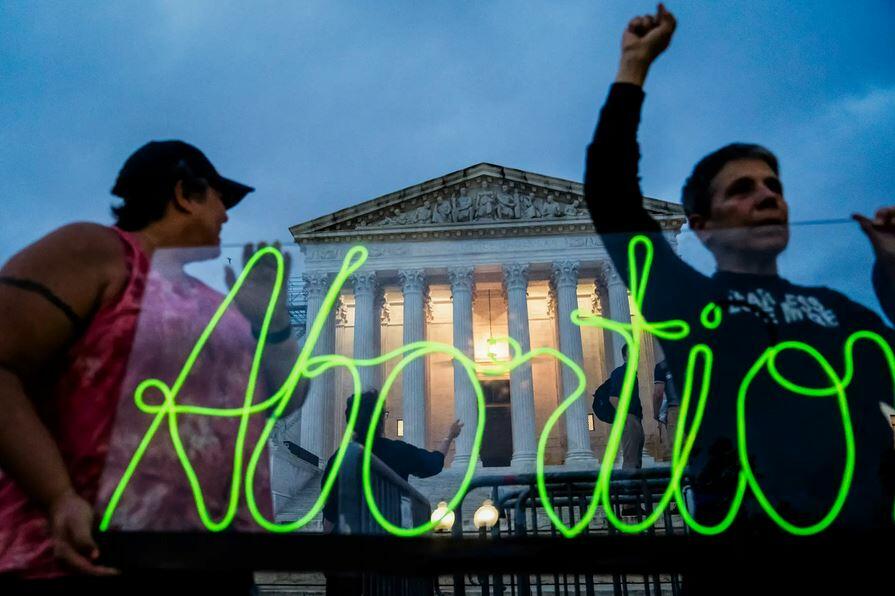
These recently introduced measures are just a few among a flood of proposals and changes triggered by the 2022 overturning of Roe v. Wade, which sent abortion regulation back to the states.
In November, voters in at least seven states will see abortion proposals on their ballots. Even in states where access to abortion isn’t on the ballot, voters may still cast votes for candidates who align with their beliefs on the issue.
Immediately after the Supreme Court’s decision to overturn Roe v. Wade, trigger laws in 13 states went into effect, completely banning or limiting abortions to very early pregnancy, with few exceptions. Last year, states without trigger laws, including Florida, North Carolina, and South Carolina, enacted similar pro-life laws.
Many states also enacted or proposed “safety net” legislation to help new and expectant mothers meet the demands of motherhood.
Ohio state Sen. Sandra O’Brien, a Republican, introduced SB 159, a tax credit for donations to pregnancy centers.
In Indiana, SB 98 identifies an unborn child as a dependent for tax purposes. The bill was sponsored by Republican state Sen. Andy Zay. Another Indiana safety-net bill would increase the Medicaid reimbursement rates for prenatal and postnatal care services.
Then there’s Kentucky’s bipartisan “Momnibus” legislation, an omnibus bill offering tax credits for adoption, and tax credits and grants for pregnancy help centers. It includes provisions for mental health service, parenting classes, and online and home visits for new mothers without transportation.
The pro-abortion movement is working hard to counter these actions and is striving for legislation and ballot measures that allow for abortion up to birth in many cases.
“You’re seeing a direct reaction from the other side that is panicking, based on the Dobbs decision,” Kelsey Pritchard, director of state public affairs at Susan B. Anthony Pro-Life America, told The Epoch Times.
“They are running as fast as they can to unlimited abortion funded by the taxpayer. And they’ve gotten so extreme on the issue.”
Seemingly every state has some movement in its legislature regarding abortion policy.
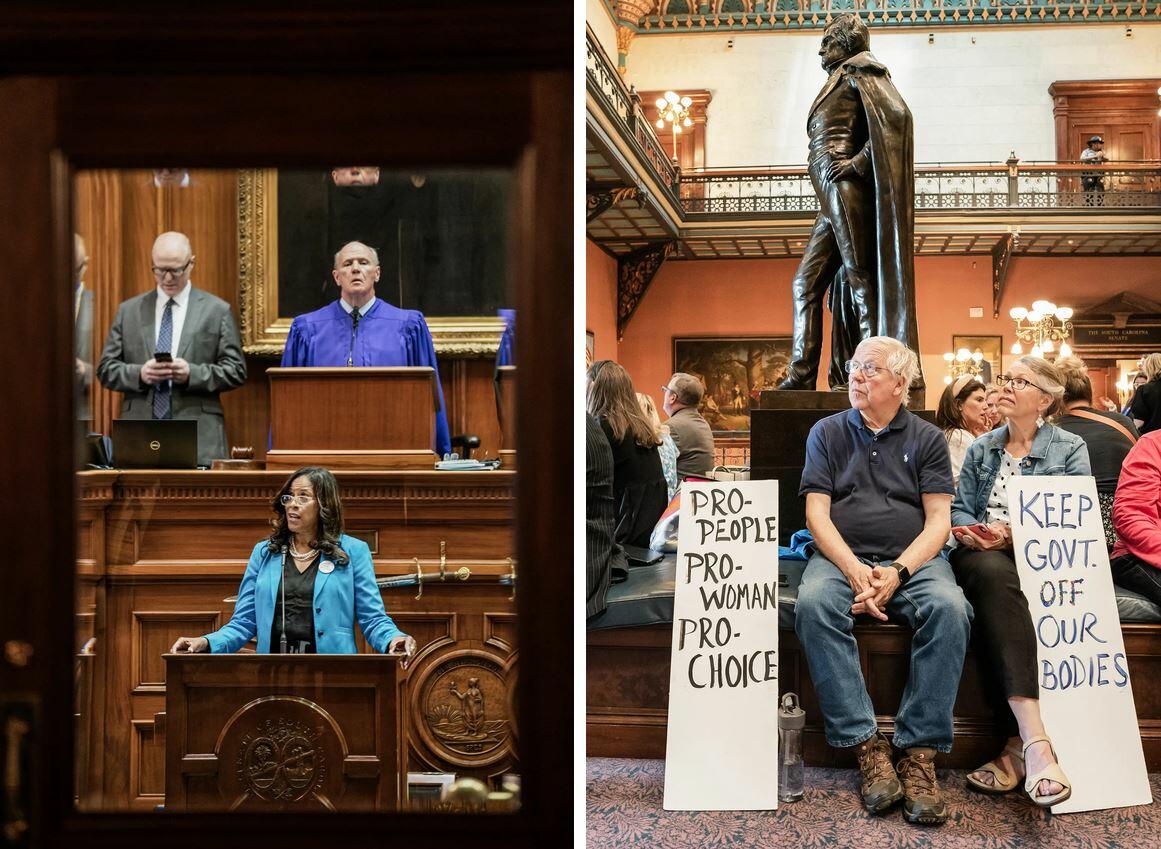
In South Carolina, where abortion is banned at six weeks of pregnancy, state Sen. Mia McLeod, who left the Democratic Party and became an independent, has proposed the “South Carolina Pro Birth Accountability Act” which will require taxpayers to pay women who would have aborted their baby “reasonable living, legal, medical, psychological, and psychiatric expenses.”
The bill compares a woman’s womb to rental property and reasons that in the surrogacy market, “a woman’s uterus is not unlike rental property, as a commissioning couple agrees to pay a gestational surrogate certain compensation for carrying a fetus to term and giving birth to a child.” It continues to say that since South Carolina may not constitutionally use a citizen’s rental property without just compensation, “it may not constitutionally require a woman to incubate a child without appropriate compensation.”
The bill stipulates that after a baby’s heartbeat is detected, the mother would be automatically enrolled in public assistance programs, including Temporary Assistance for Needy Families and the Supplemental Nutrition Assistance Program, and that those benefits could not be withdrawn until the child is 18.
The bill would pay a nurse to provide home visits from early pregnancy through the child’s second birthday; costs associated with health, dental, and vision insurance for the child until the age of 18; and a fully funded South Carolina 529 College Savings Plan for the benefit of the child. If the woman has a miscarriage, she may sue the state for compensation and damages.
In the case of an unmarried woman, the bill stipulates that if the biological father accrues more than $5,000 in child-support arrearage, he would be charged with a misdemeanor and, if convicted, could serve up to three years in prison.
“The court may suspend any portion of the prison sentence if the man consents to a voluntary vasectomy and to payment of restitution to the woman in the amount of the child-support arrearages owed,” the bill reads.
“I just want to make sure that those of us who call ourselves pro-life, that we are doing something to help the living, and my bill does that,” Ms. McLeod said in a February video posted on social media.
“It also gives my colleagues who refer to themselves as pro-life an opportunity to prove it by investing in South Carolina’s women and girls, and making sure that they have the resources and support that they need.”
Pro-life group South Carolina Citizens for Life opposes the legislation.
“Comparing a woman’s uterus to rental property and incentivizing men to have a vasectomy is really disturbing and vile language, and it’s intended to devalue members of our human family—born and waiting to be born,” Holly Gatling, the group’s executive director, told The Epoch Times.
“The intent of this bill is to obfuscate the fact that we have a vast network of pregnancy-care centers in South Carolina. … where women are given free health care … and diapers, formulas, job training, parenting classes, and assistance with getting back into a regular workforce and lifestyle by the time this baby is 2 years old,” she said. “So the bill is based on a false premise that we don’t do anything for mothers and babies after the child is born.”
In Pennsylvania, Democrat lawmakers say they want to “facilitate safe abortion access,” by reversing a 2011 state law requiring abortion businesses to meet all the same regulations as ambulatory surgical facilities, including submitting to unannounced inspections. It means abortion clinics, which sometimes fail health inspections, would no longer have to be inspected.
“Here in Pennsylvania, the pro-abortion extremism starts at the top with Gov. Josh Shapiro unilaterally eliminating the state contract for alternatives to abortion funding—a program that had bipartisan support and operated for 30 years under Republican and Democrat governors alike,” Michael Geer, president of Pennsylvania Family Institute, told The Epoch Times in an email.
Mr. Shapiro often expresses support for abortions in social media posts.
“Mifepristone will be available on the shelves in Pennsylvania,” he posted on March 1. “I’ll continue working to protect women’s access to abortion across this Commonwealth.”
Mifepristone is a progesterone-blocking drug that causes a woman’s body to abort her baby outside a doctor’s office.
“As long as I’m Governor, abortion will be safe, legal, and accessible here in Pennsylvania,” Mr. Shapiro posted on March 4.
The Shapiro administration made available online a form solely for complaints against pregnancy resource centers.
“It’s an agenda that prioritizes the profits of the abortion industry over the well-being of women and children in Pennsylvania,” Mr. Geer said.
Other Bills
In West Virginia, the state Senate has approved a measure requiring students in eighth and 10th grades to watch “Baby Olivia,” a video on fetal development. The video already is shown in North Dakota classrooms, and it could be legislatively required in Iowa, Kentucky, and Missouri. Pro-abortion activists oppose the short film, calling it medically inaccurate.
House Bill 2749 in Kansas would require abortionists to ask women why they are terminating their pregnancies and to rank their top reasons for seeking an abortion, including financial or health concerns, or that the pregnancy is a result of rape or incest.
In Oklahoma, where abortion is almost completely banned, House Bill 3013 would make trafficking abortion pills a felony, punishable by a $100,000 fine, 10 years in prison, or both.
A judge in Montana recently declared unconstitutional three laws passed by the state Legislature. The laws banned abortion after 20 weeks, required that pregnant women be given the opportunity to see an ultrasound of their baby before having an abortion, and required that abortion pills be administered in person rather than through telehealth. The laws were challenged by Planned Parenthood of Montana.