

64.1 F
Chicago
Saturday, September 19, 2026
Home Blog Page 2898

Government Schools Are Propaganda Machines

0
Government Schools Are Propaganda Machines

Authored by Karl Streitel via The Mises Institute,

In Artis Shepherd’s recent article, which I highly recommend, he aptly detailed the numerous benefits of homeschooling and data showing that homeschooled students—far from being socially stunted, academically insular young people—are actually generally high-achieving, socially adroit young adults ready to provide value in the world.

Thus, in this commentary, I want to address a common argument against homeschooling: namely, that homeschooling is a breeding ground for propaganda—mainly “far right” political and religious ideologies—from parents and religious institutions, which is dangerous for social cohesion and democracy.

The Propaganda Problem

To begin, there is a dearth of evidence to show widespread inculcation of homeschooled students with so-called radical political or religious ideologies. The media often provide anecdotes that are supposed to represent the larger reality, but, in fact, a National Center for Education Statistics survey from 2019 showed that “a desire to provide religious instruction” was only the fifth most popular reason for homeschooling (chosen by 58.9 percent of parents) whereas the most popular reason to homeschool was “a concern about school environment, such as safety, drugs, or negative peer pressure” (chosen by 80.3 percent of parents, who could choose more than one reason in this survey).

Does such a reason strike you as ideologically or religiously radical? I would be much more judgmental of parents who were not concerned about their children’s school environments.

However, I concede it is undeniably true that homeschooled students—like any students or human beings, for that matter—can be propagandized by any type of ideology: right, left, center, or otherwise. I know of no person or teaching materials that are truly unbiased because to be so would entail having no opinions and providing all available information on a subject without any explanations. So, every teacher, parent, textbook, online course, or forum post is, by nature, biased in some way. Of course, this fact also means that government school or private school students are also susceptible to and recipients of propaganda daily.

Moreover, such propaganda is inculcated far more effectively and efficiently via government schools that continue to churn out obedient and often intellectually incurious citizens who rarely question the morality or composition of the state that rules over them. This assertion should be self-evident through obedience to mask mandates, pledges of allegiance to flags, continued support for America’s overseas “defense” campaigns, and the strong contention among many citizens that democracy and voting are salubrious for all of us.

Regarding this efficiency and effectiveness, let us think numerically for a moment. The plurality (23.9 percent) of school districts in the United States in 2020–21 enrolled between 1,000 and 2,499 students, with an average per-school enrollment of 555 students. The total public school enrollment was roughly forty-nine million in 2023 versus 3.1 million homeschooled students. (About 5.5 million students attended private schools.) Thus, approximately 85 percent of school-age children attended public schools last year.

At the same time, the average number of children per family in the United States was 1.94. Therefore, the reach of a homeschool parent’s propaganda is severely limited compared to that of the government. A public school reaches, on average, 555 students while a parent reaches, on average, two. Further, we know that students in government schools are receiving information that is vetted and approved by that very government (via local school boards), so students in such schools are undeniably being propagandized to think in a certain uniform way. No such uniformity exists or should be expected among millions of diverse homeschoolers, whose “school” experiences will vary widely—thus impeding the spread of any single ideology, unlike in government schools.

The effectiveness of this unitary government-school propaganda, furthermore, is undeniable. One primary piece of evidence for the success of government schools in this regard is the fact that most parents still send their children to government schools and never think twice about the coercive way those schools are funded—while simultaneously teaching their children that stealing is wrong. Despite the rapid growth in homeschooling since the covid lockdowns, government schools still enroll the vast majority of students, as I detailed above, and parents still generally approve of their local schools.

Government Sets the Standard for Propaganda

Government schools also earn an A+ for keeping people ignorant or misinformed, especially about history, government, and economics. Indeed, only half of Americans surveyed in 2008 could name the three branches of government, and only 18 percent and 23 percent of eighth graders were proficient in US history and civics, respectively, according to the 2014 National Assessment of Educational Progress report.

How many of those students also believe Pearl Harbor was an unprompted sneak attack, that Iraq possessed weapons of mass destruction, that capitalism caused the Great Depression, or that Abraham Lincoln took the country to war because of slavery? Is such misinformation not also propaganda that tens of millions of students imbibe each year? Consider also the mindlessness of pledging allegiance to a flag each morning—a pledge written by a socialist who was concerned about “every alien immigrant of inferior race” eroding American values. Ironically, the “under God” section of the pledge was added to differentiate America from “godless Communism.”

When the state mentions God, no worries; it’s apparently only those religious people in flyover countries who are the problem.

Finally, the government school system was established specifically to propagandize students and to encourage obedience (to Protestant ways) and uniform thinking (i.e., not diversity and inclusion). Thus, although government-school leaders may trumpet the diversity of melanin or gender, true diversity—diversity of thought—is not to be abided. This type of diversity is one in which government schools actively do not participate because it is antithetical to their mission and organization and dangerous to their propagation. Homeschoolers, on the other hand, will learn different ideas, perspectives, and information and will display a panoply of thoughts simply because they are not part of a centralized, bureaucratic, one-size-fits-none system.

You and I may disagree with some of those ideas, but it is simply irrational to say that homeschoolers from disparate families in different areas of the country learning diverse ideas from varied curricula will somehow be uniformly propagandized at any rate even close to that of government-school students. Don’t believe me? If you went to a government school, just compare your experiences and what you learned in school to those of a friend or family member from out of state. How much learning diversity do you find on key issues? As the old saying goes, if everyone is thinking the same thing, then someone isn’t thinking.

We also should consider that, according to Gallup polls and others, religious conviction in the United States is shrinking, not growing. In fact, according to Gallup data, between 2000 and 2022, the percentage of Americans who said religion was “not very important” to them rose from 12 percent to 28 percent.

Unfortunately, Gallup does not ask Americans a similar question about government (i.e., if government is important in their lives), but they do ask if people think government has too much power. A majority does think so. However, a majority also thinks that government should have a greater role in seven of its functions (out of eleven provided). Such logically and morally inconsistent responses demonstrate what we might expect after twelve years of government propaganda: people will complain about government, but in the end, they support and often want it to do even more—especially if that “more” benefits their chosen groups.

Thus, we find ourselves in a time of decreasing religious faith but static or even increasing belief in the government’s role in society, despite complaints to the contrary. We also find ourselves in a time in which over 85 percent of children attend government schools to learn about the important roles of government in society and the morality and necessity of democracy. Whose propaganda should we really fear?

As an anecdote of the power of the current system’s propaganda, I offer an example from my time as a high school teacher. In response to an article we read in class, a sophomore wrote the following, which I paraphrase: “Nazis killed to kill; Americans kill to protect. Also, our government is completely different in political views and doesn’t lie to us like the Nazis did. Lastly, Hitler was a dictator, which we don’t have or support in America.”

Are such beliefs any less propagandistic than whatever a homeschooler might learn? Are such beliefs more or less easily transmitted to large groups of people in the government school system versus at home?

If we are being intellectually honest, we know the answers to those test questions.

Tyler Durden
Mon, 02/19/2024 – 21:30
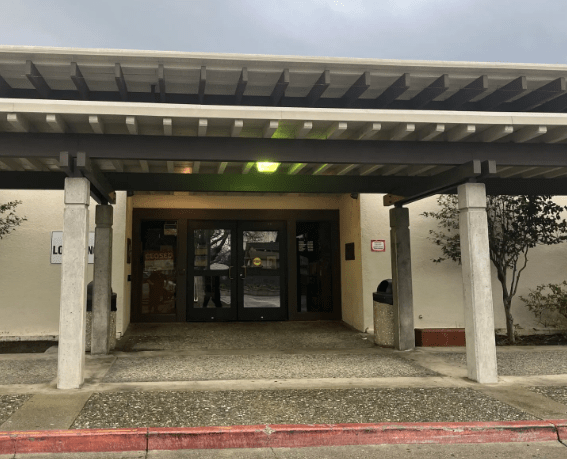
Drug-Use, Robberies, & Public Sex: Cali Public Library Forced To Close Due To Rampant Illegal Activity

0
Drug-Use, Robberies, & Public Sex: Cali Public Library Forced To Close Due To Rampant Illegal Activity

In case you’re wondering whether or not libraries still have use in the age of the internet, they do. And we have Gavin Newsom’s state to thank in helping the nation get reacquainted with their new purpose.

That use appears to now be a designated place for drug use, robberies and public sex. At least, that was the case at the Contra Costa County Library’s Antioch Branch in California, according to a new NY Post article.

The city of Antioch is about 45 miles northeast of Oakland and is home to about 115,000 people. 

That library has been forced to close its doors as a result of the illicit and illegal activity. 

In a statement, the library commented: “During the closure, the Library will be working to implement further security measures so we can reopen as soon as possible.”

One representative for the Contra Costa County Library System said: “We’ve also had drug activity and drug use both inside the library and on library property.”

“People having sexual intercourse inside the library or on property in full view of patrons and staff. We found bullet casings on library property,” she continued. 

One Antioch resident told the Post: “No one in the City of Antioch, including the police chief, was informed of safety concerns by Contra Costa County regarding the library.”

“We apologize for the short notice and the inconvenience but the safety of our patrons and staff is a top priority,” the branch said in a statement. 

It was ultimately the county’s decision to close the library, the report concluded. 

When it reopens, the library will have a 2nd security officer, repaired fencing and upgraded security cameras. 

Tyler Durden
Mon, 02/19/2024 – 21:00

Chicago Hit By Surging Violence From Criminals Out On Probation And Parole

0
Chicago Hit By Surging Violence From Criminals Out On Probation And Parole

By Ted Dabrowski and John Klingner of Wirepoints

One thing Chicagoans can’t help but notice when scrolling through news feeds: the number of violent crimes committed by defendants while they were out either on parole, probation or awaiting trial.

That’s not surprising given the long-term decarceration trend in Cook County that’s left the county’s jail population at the lowest level in 40 years. Cook County Chief Judge Tim Evans started a no bail/low cash bail policy in 2017, resulting in a growing number of pretrial defendants out on bond who are then charged with new crimes, as we reported here. The state’s new SAFE-T Act has taken that policy even further. In September 2023, Illinois became the first state in the country to eliminate cash bail altogether, while the law also reduced the types of crimes for which defendants could be detained before their trial.

The big question in 2024 is how will the SAFE-T Act impact crime, everything else equal. It’s still far too early to determine whether there are more violent defendants out on the streets awaiting trial and, unfortunately, the government is far behind on releasing the relevant data on that, according to a recent BGA report

Nevertheless, Chicagoans have a right to be concerned considering just how many stories there are of released defendants committing mayhem. Many make the news every day, but it’s hard to know just how prevalent they are among the sea of other crimes committed.

That’s why we’ve compiled a short sample list of defendants – those on parole, probation or awaiting trial – who’ve been accused of committing violent crimes since the start of the new year. Our source is CWB Chicago, which does a great job of tracking and publishing the city’s daily crimes.

  • January 2 – A 21-year-old man shot another man in the face while on bail for one gun case and on probation for another. According to CWB, he was the “30th person accused of shooting, killing, or trying to shoot or kill someone in Chicago in 2023 while awaiting trial for a felony.”

  • January 7 – A 31-year-old man and former CVS employee robbed a CVS while on probation for robbing and burglarizing a CVS.

  • January 14 – A 19-year-old gang member shot and critically injured another man in Little Village just three months after getting probation for head-butting a Chicago cop. Prosecutors also dropped a felony gun case on the day he pleaded guilty to the battery.

  • January 18 – A 19-year-old man killed his girlfriend while on probation for a gun charge.

  • January 27 – An 18-year-old man with gang ties gunned down an airport employee while on juvenile probation for gun possession.

  • February 4 – A 56-year-old man killed ex-girlfriend while on parole for strangling his previous partner.

  • February 6 – A 32-year-old man and previous 8-time felon burglarized a restaurant while on probation for burglarizing a nail salon.

  • February 6 – A 16-year-old male allegedly stabbed and killed a man while on parole for attempted murder. Earlier, he was found in possession of a stolen motor vehicle while on that same parole. That case was dropped.

  • February 7 – A 20 year-old man was charged with ‘brutal attack’ of a woman at Chicago Union Station after being released on similar charges under cashless bail law.

  • February 12 – A 33-year-old tow truck driver with two counts of attempted murder after he opened fire on two competitors over a job, while on felony pretrial release.

  • February 13 – A 19-year-old man was caught carrying three guns on CTA less than a month after being placed on “first-time weapon offender probation” for another felony gun case.

  • February 14 – An 18-year-old man killed an Uber driver while on juvenile probation for robbery. He also previously served time in the juvenile justice center for carjacking in 2021.

Commit a crime. Get released, either before or after your trial. Commit more crime “while on” release from previous crime. Repeat.

**************

Some are expressing hope in the latest crime numbers for 2024 (through early-February), which show major crimes down 18% and murders down 30%. But with just a little over a month behind us, it’s premature to make any conclusions given the city is coming off of post-covid record-high crime numbers. 

Major crimes in 2023 were up over by 16% over 2022 and by 55% over 2019, before covid and the George Floyd.

As mentioned above, we’re going to have to wait for new data to reach any conclusions.

But from the data we do know since the SAFE-T Act was passed – the Cook County jail population is down 15%, electronic monitoring is down 10%, and detention appeals have skyrocketed – proponents of softer crime policies are getting what they want.

And, it appears, Chicago’s criminal class is getting what they want, too.

Read more from Wirepoints:

Tyler Durden
Mon, 02/19/2024 – 20:30

“Confronting The Inevitable Chocolate Crisis” – Charting The Chaos In Cocoa Markets

0
“Confronting The Inevitable Chocolate Crisis” – Charting The Chaos In Cocoa Markets

Bloomberg Opinion columnist Javier Blas, who covers energy and commodities, opined in a piece on Monday about the “coming meltdown” in the global chocolate industry following decades of under-investment across West African nations. 

“Unlike most other agricultural commodities, cocoa hasn’t developed into a plantation business,” Blas said, adding poor farmers dominate cocoa farmers across West Africa, responsible for 75% of the world’s cocoa production. Meanwhile, he pointed out that investment only flowed into processing beans into chocolate – “not planting, growing and harvesting cocoa trees.” 

Because of this, he warned: “We are all now confronting the inevitable chocolate crisis.” 

The first chart Blas provided readers were cocoa futures in New York blasting into orbit. These prices now command $6,000 per ton, recently breaking the 1977 record.

Source: Bloomberg
Source: Bloomberg

“At the end of 2023, cocoa was one of only a four major commodities that still traded below their price peaks set in the 1970s, the previous commodity boom,” Blas said. 

The commodities analysts said some forecasts suggest the cost of cocoa in New York could reach as high as $10,000 per ton. 

What’s imminent is the West African cocoa shortage will be felt across supermarkets worldwide. 

Just weeks ago, Michele Buck, chief executive officer of The Hershey Co., warned

“We can’t talk about future pricing … given where cocoa prices are, we will be using every tool in our toolbox, including pricing, as a way to manage the business.” 

The four main producing countries, accounting for 75% of the world’s cocoa production, are Ivory Coast, Ghana, Cameroon and Nigeria.

Source: Bloomberg

West Africa is the king of cocoa. 

Source: Bloomberg

Blas presented a chart that illustrates the most significant cocoa bean deficit in modern history is currently underway. He said industry insiders are saying “the market is heading for a deficit of 300,000-to-500,000.” 

Source: Bloomberg

And global cocoa inventories are collapsing. 

Source: Bloomberg

“I’m unconvinced that climate change has anything to do with the current crisis,” Blas noted. 

Separate from Blas, Bloomberg recently spoke with Paul Davis, the head of cocoa at major softs merchant Sucres et Denrees SA, who warned global cocoa markets will be “in a very tight balance” balance for another 18 months to three years.

Davis continued: “There is no cavalry that’s coming to the rescue.”

Sigh…

Tyler Durden
Mon, 02/19/2024 – 20:00

Understanding The Trump Phenomenon: It’s Not What The Elites Think

0
Understanding The Trump Phenomenon: It’s Not What The Elites Think

Authored by Lipton Matthews via The Mises Institute,

Donald Trump has won the Iowa caucuses and the New Hampshire primary and is leading in the polls to become the Republican candidate for the presidency in the upcoming general election. His status as the most likely contender to challenge Joe Biden is upsetting establishment figures who think that Trump’s ascent threatens democracy. Trump is constantly pilloried by the mainstream media as a demagogue who emboldens the racist underbelly of American society. Emotions run rampant, but Trump’s villainy has been grossly exaggerated.

After winning the presidency in 2016, pundits thought that Trump would revert America to an era of racism. These predictions swayed many even though they failed to materialize. Donald Trump did not govern as a racist but rather pandered to racial minorities and women. Trump constantly pitched economic plans to galvanize the support of blacks and Hispanics. Like previous presidents he endorsed policies to promote women in science to the dismay of critics and was a relentless advocate for female empowerment.

During his tenure, Trump collaborated with nonwhite communities and often boasted that he had done more for them than previous presidents. Racism and sexism were not the hallmark of his presidency. Trump earnestly borrowed from the liberal playbook by passionately selling his message to minorities. Being an astute politician, Trump quickly endeared himself to women and minorities, instead of pandering to the chauvinism of white nationalists. In fact, Trump bolstered his popularity in minority communities but received diminishing support from whites.

Trump’s presidency was fixated on expanding his base of minority supporters to such a great extent that readers were frequently bombarded with stories explaining his outreach to minority communities. The gains made by blacks and Hispanics under the Trump presidency were covered extensively by the media. Unemployment rates for blacks, Asian Americans, Native Americans, Hispanics, and disabled individuals plummeted to record lows. Declining poverty rates for blacks and Hispanics were also consistent with the Trump presidency’s trends of progress.

However, the benefits of the Trump presidency also extended beyond minority groups to encompass the broader American population, with low-income and blue-collar groups registering considerable wage gains. Trump presided over a buoyant economy despite the criticisms of opponents. The unjustified charges of racism and incompetence leveled against Trump reflect the derangement of critics unwilling to appreciate his mass appeal.

Trump’s rhetoric is incendiary, but beyond his uncouth remarks, he is not vastly different from other presidents. Indeed, there are parallels between Trump and Biden. During his stint, Trump was bullish on China. His contempt for China led to the imposition of tariffs on Chinese imports; however, this proved to be a costly economic policy. Aimed at penalizing China, the policy had the reverse effect of raising prices for American businesses. President Biden has preserved elements of Trump’s antitrade policy and is equally bullish on China.

In 2022, citing national security reasons, Biden announced a ban on the export of semiconductors to China. Further, the administration has prohibited US firms from conducting investment in some of China’s high-tech industries. Similarly, both men advocate protectionism and Buy-America requirements. Although Trump has a more free-market approach to economics, this is not what makes Trump fundamentally different from Biden.

The primary difference is that Biden is a globalist and Trump is an antiglobalist. Donald Trump will not cede sovereignty to global institutions nor rabidly conform to the hysteria of the global environmental movement. Canceling the Keystone Pipeline to appease climate alarmists would not have been an option for Trump. This inane policy shuttered eleven thousand jobs without any serious analysis of the decision. With a Trump presidency, the ability of globalists to exert control over America’s affairs will decline, and that’s why Trump is so loathed by elites: he threatens globalism.

International organizations won’t find it easy to manipulate Trump into doing their bidding. For example, Trump revoked America’s participation in the Paris Agreement that intended to limit warming to 1.5 degrees despite lacking a coherent economic case for doing so. Furthermore, Trump will not enslave America to net-zero targets that run into the trillions. Critics will smear Trump to dissuade Americans from electing him, but even if he is unfit to be President again, his victories in Iowa and New Hampshire indicate that the demand for Trumpism could catapult him to a second presidential victory.

Tyler Durden
Mon, 02/19/2024 – 19:30

Wawa Targets “Most Aggressive Growth” In Company’s History With Huge Push South

0
Wawa Targets “Most Aggressive Growth” In Company’s History With Huge Push South

Convenience store Wawa is looking to spread its wings and officially fly south for the winter – and the rest of the seasons.

The popular Philadelphia-area based chain – whose owners are now reportedly worth upwards of $6 billion, according to Bloomberg – has plans to add locations in every state.

Spokesperson Lori Bruce – best known recently for trying to spin reasons as to why the chain was closing numerous Center City Philadelphia locations amidst incessant crime – commented: “We can’t wait to share our unique Wawa offer and experience with the new communities we’ve announced and look forward to serving them in the future very soon!”

The company plans on moving to the South and Midwest, with plans to open in Tennessee, Alabama, North Carolina, and Georgia.

It’ll also open 160 new stores in locations like Ohio, Kentucky and Indiana, the Philadelphia Inquirer wrote last week. 

Wawa calls itself a “privately held, family-owned company with 200+ years in American business.” Wawa stores are located in Pennsylvania, New Jersey, Delaware, Maryland, Virginia, Florida and Washington, D.C., its website says. 

Company CEO Chris Gheysens detailed the company’s plans to open about 100 new stores every year, with an eye on having 2,000 stores by the year 2030. He is calling it “the most aggressive growth” in the company’s history. 

The Bloomberg Billionaires Index is tracking the store’s owners for the first time. The Wood family, who owns 53% of the company, is worth about $6 billion, according to Bloomberg. Bloomberg also estimated the chain did about $18.5 billion in sales in 2023. 

Tyler Durden
Mon, 02/19/2024 – 19:00

America’s Fat Kids Now in Ozempic Marketers’ Crosshairs

0
America’s Fat Kids Now in Ozempic Marketers’ Crosshairs

Authored by Ben Bartee via Armageddon Prose substack,

Via Reuters:

A small but rapidly growing number of U.S. adolescents began treatment with Novo Nordisk’s weight-loss drug Wegovy last year, a powerful new tool to address record rates of pediatric obesity, according to data shared exclusively with Reuters.

In the first 10 months of 2023, 1,268 children ages 12 to 17 with an obesity diagnosis* started taking Wegovy, according to U.S. insurance claims data compiled by health technology company Komodo Health.”

This psychological condition via framing the obesity epidemic as a “disease” with an accompanying “diagnosis” is not to be overlooked, as it provides valuable insight into how the pharmaceutical industry successfully parlays every physical, psychological, and social ailment into a medical diagnosis through a process called “medicalization” that I have previously described in great detail, which then opens the door for expensive, patented pharmaceutical interventions where they don’t naturally belong.

Strategically placing obesity within the “disease” bucket precludes the individual (referred to as “the patient,” an object to be worked upon, like a car with a faulty transmission) from exercising any personal agency over their health. Instead, the patient’s issue becomes a medical one best left to the anointed “experts” to resolve — almost always with expensive drugs or surgeries.

The actual disease, whether real or invented, obesity or “gender dysphoria,” is rarely resolved, but, given the financial incentives to keep the pill mills churning out product, one has to wonder whether that was ever the point from the industry’s perspective to begin with.

Continuing:

In 2022, only 25 children were prescribed the drug, which did not receive U.S. approval for adolescent use until December of that year. A month later, the influential American Academy of Pediatrics recommended weight-loss drugs be offered to children with obesity starting at age 12.”

In a decent society, the American Academy of Pediatrics would be designated a criminal enterprise, if not a biomedical terrorist organization, and its ringleaders prosecuted with vigor.

Via Influence Watch:

“In 2018, AAP reported $121,878,940 in revenue and $62,163,314 in net assets. More than half of its revenue came from its memberships, journals, and publications. The AAP also reported receiving $20.5 million in government grants and over $12.9 million in outside contributions. That same year, AAP reported $118,478,392 in expenses, including nearly $800,000 spent on legislative lobbying.

AAP gains a significant portion of its revenue through sponsorships at its conferences and frequent member events, though it has received criticism for its seemingly hypocritical sponsorship arrangements. In 2010, AAP hosted a conference which featured SweetSurprise.com, a corn-syrup promotion compony, as a sponsor, despite the fact that the AAP itself advocated against high fructose corn syrup and claimed that soda consumption was associated with higher rates of obesity.”

Let’s discover together who  — in addition to the likes of Bill Gates and Google — funds the AAP.

It’s probably deeply ethical physician’s groups and nunneries and whatever, right? The Mother Teresas and similar such do-gooders of the world.

Surely.

Why, spank me silly and call me Suzy; it’s none other than Novo Nordisk, manufacturer of Ozempic, itself!

But let’s not be conspiracy theorists and allege a conflict of interest.

*  *  *

Ben Bartee, author of Broken English Teacher: Notes From Exile, is an independent Bangkok-based American journalist with opposable thumbs. Follow his stuff Substack. Also, keep tabs via Twitter.

Tyler Durden
Mon, 02/19/2024 – 18:30

Medvedev Warns Of Nukes On Berlin, London & Washington Before Russia Would Return To 1991 Borders

0
Medvedev Warns Of Nukes On Berlin, London & Washington Before Russia Would Return To 1991 Borders

Former Russian president and deputy head of the Russian Security Council Dmitry Medvedev has managed to once again shock and anger Western officials (and entire populations for that matter) with his jingoist rhetoric and nuclear threats.

Just a couple of weeks ago he warned that if Russia is attacked by NATO it would have “no choice” but to unleash nuclear “apocalypse” which would lead to “the end of everything”. Over this weekend he actually managed to top and surpass his own words in terms of nuclear ‘threat level’ and rhetoric. He has expanded on the prior remarks by saying the Kremlin stands ready to use its entire strategic arsenal on London, Washington, Berlin and Kiev.

His fresh warning focused on Russia’s military hold on the four annexed territories in Ukraine’s east. Moscow now sees this as Russian territory and says it will never give it up.

“Attempts to return Russia to the borders of 1991 will lead to only one thing. Towards a global war with Western countries using the entire strategic arsenal of our state,” Medvedev began in the Sunday statement posted to Telegram. He followed ominously with a ‘target list’…

‌”In Kiev, Berlin, London, Washington.”

He further described that nuclear missiles would strike “all other beautiful historical places that have long been included in the flight targets of our nuclear triad.”

“Will we have the courage to do this if the disappearance of a thousand-year-old country, our great Motherland, is at stake, and the sacrifices made by the people of Russia over the centuries will be in vain?” Medvedev then said: “The answer is obvious.”

This is not the first time he’s warned of “nuclear fire” if NATO or Ukraine forces seize Russian territory. Moscow has warned could deploy its nuclear arsenal if it faces at ‘existential threat’ to its survival. 

However, this appears to be the first time Russia has threatened nukes if its control of Donetsk, Kherson, Luhansk and Zaporizhzhia faces existential threat. Of course, this includes Crimea too.

The Zelensky government has not given up on its goal of liberating all of these territories, however. Also, Kiev has even demanded that Russia give up its claim to Crimea. But this latter aspect to Zelensky’s peace formula is widely seen as a non-starter for any future serious peace negotiations to end the war.

Certainly Ukraine will also have to give up territory if it ever hopes for peace, unless the tide of battle turns quickly, which is very unlikely at this point.

In January, there began to be confirmation of the US preparing deployment of B61-12 nuclear warheads to Britain, specifically at RAF Lakenheath, a base in Suffolk, England.

Moscow has previously accused Western and NATO intelligence services of assisting with the growing space of cross-border missile and drone attacks on Russian territory.. Recently it has accused France of maintaining mercenaries in the northern city of Kharkiv, in order to mount attacks on nearby Belgorod Oblast. There are rising fears that this ‘indirect’ fighting or proxy war could drift into a direct ‘live fire’ war between Russia and NATO countries, but so far this has been narrowly avoided.

Tyler Durden
Mon, 02/19/2024 – 18:00

A Market Only A Mother Or AI Could Love

0
A Market Only A Mother Or AI Could Love

By Peter Tchir of Academy Securities

Generally, I like to focus on what will happen, rather than what happened, because people reading this already know what happened. But I found last week so confusing/disturbing/annoying on so many levels, that I think it is worth revisiting what happened. We saw narratives come and go, turn on a dime, and shift almost “willy nilly.” Certainly, price action seemed to influence the narratives as much as the other way around. All of this came on the back of reaching “all-time highs,” which we wrote about last weekend in A Retrospective of All-Time Highs.

On the week, the S&P 500 was down 0.4% – its first losing week in quite some time, and not without more than its fair share of seemingly obligatory “all-time high” headlines. While the drop is only mildly interesting, how it played out and how volatile it was is what really caught my attention. We will focus on the Nasdaq 100, because that was even more “fun” to watch (if your idea of “fun” is absolute torture).

Let’s say we think a 20% return is a good annual number. Then 0.4% would be an “average” weekly return. We had moves of 0.4% or greater multiple times, on multiple days.

To me, that is the sort of market “only a mother could love” because it is painful to be right or wrong by significant amounts (plenty of moves greater than 1%) so quickly. I suppose AI could love this market if some AI trading program managed to catch these moves correctly! If you could have timed this market, there was “easily” 10% to 20% to be made in a single week of day-trading. I suspect no human came close to achieving that (in fact I suspect most humans were busy trying not to get themselves all twisted into a knot), but could some AI have captured this? I doubt it, but certainly something is playing in the back of my mind. Is something out there very good at maybe not just capturing these sorts of movements, but also triggering them? That is the AI that I’m talking about in today’s headline.

AI remains an important driver of the market in its own right. NVDA, almost a proxy for AI growth, has earnings out on the 21st and was up on the week. Apple saw a brief surge in its stock late on Thursday, as headlines hit the tape about how “Apple Readies AI Tool to Rival Microsoft’s GitHub Copilot.” AI adoption will continue to play a big role in the market, and I suspect that it will help investors of all stripes “buy” the dip.

The Inflation Story

CPI came in higher than expected. There are “seasonality” concerns, and ongoing concerns that housing inflation is once again being overstated as OER doesn’t seem to tie into other “real-time” data on rents. I’ve given up ranting about “owner’s equivalent rent” and how it is calculated (purposefully with a long lag) so I will just ignore the topic of conversation this time. Maybe everyone will agree that it overstates it, but after months of pulling together charts on actual rents versus OER during the “inflation panic,” I don’t have the energy to go through that drill again. It is probably overstated, but the Fed seems to think it is important.

PPI, which I normally don’t pay much attention to, has “supposedly” become more important than CPI. I don’t see it that way, but some do, and it also came in hot.

Bonds reacted “rationally” to both numbers – sold off and reduced the timing and number of rate cuts.

Stocks on Tuesday fell more than I would have thought, then bounced more than seems to make sense.

On Friday, after an initial sell-off post PPI (from a strong overnight performance), the markets seemed to shake off the PPI strength. I guess if Tuesday’s CPI surprise didn’t matter, then why should this? I would argue that two wrongs don’t make a right.

The inflation news that caught my eye was in the University of Michigan report. Expectations crept higher for the first time in a few months. The series is volatile, and I think mostly random noise (hence referring to it as CONsumer CONfidence over and over), but the Fed does watch for shifts in expectations, and this data will not give them confidence about how they are managing expectations.

I continue to think the COVID Bumps (detailed in An Eclectic Mix) are playing out and will place downward pressure on inflation (the services demand has peaked and data seems to support a slowdown in much of the sector, away from restaurants). Against that is the ESG, geopolitical, and on/near/friend shoring, all of which create a “safer” and more stable environment, but are inflationary as they are being built out.

Net, net, expect inflation to be stubborn here and possibly rise a touch – confirming that this recent data is not an anomaly, making the Fed’s job more difficult.

The Consumer

One outlier has been the strength of the U.S. consumer. That strength got called into question on Thursday as retail sales came in extremely weak. Not only were the numbers weaker across the board, but the headline number for last month was also revised down.

We’ve had our doubts about the consumer (credit card usage, the fact that so many things were on sale for the holidays, demand pulled forward, etc.), and those doubts seem to have been “rewarded” by this retail sales report. Please see Consumption Glass for more details.

While jobs will be the key and I remain cautious on that, especially the mix of full and part-time jobs, and the difference between creation/loss of high paying jobs versus lower paying jobs.

Markets seemed to take this data in stride on Thursday, likely assuming that the Fed would view this slowing as evidence that they were on the right track in terms of monetary policy. While I can understand that argument (it is legitimate), shouldn’t we be worried that there is something more going on here? While it “doesn’t affect us” (supposedly), both Japan and the U.K. are officially in recessions.

Markets were seeking something to offset the high CPI print and they gravitated to this “weak” data as being “good,” but I think that interpretation will be questioned in the coming days and weeks as more data comes in (which I think will confirm the slowdown).

Who Isn’t Long?

Virtually everything I read describes a market that has gone “all-in”, especially in the sectors that have been driving returns for the past year or more.

I like the RSI (relative strength indicator) as a simple technical tool. It is registering overbought on some of the stocks driving markets and is certainly not showing up as even close to indicating oversold on them.

I’m told equity put/call ratios are showing complacency and a long risk bias. I watch MOSO on Bloomberg (most active options). I like it on volatile days as it gives some clues (I believe) as to the sentiment out there. I found two things very interesting:

  • There was some longer-dated put buying on Tuesday, not just a big run-up in volumes of zero- days-to-expiration (0DTE) options. Given how severe the decline was on Tuesday, I expected to see a lot of 0DTE options as the most active. It seems to me that there was some real need to hedge real risk, which was interesting.
  • I mostly saw call buying. The volumes that I looked at were skewed to call buying, with several single stocks (as opposed to ETFs) garnering some call buying interest. Are investors being cautious and buying calls or are they so fully invested, that they have to resort to calls rather than outright positions?

I think these both tend to mean that there could be more downside, especially since we didn’t see a 0DTE “gamma” driven move to the downside, and I think, unfortunately, that the market is ripe for such a day.

The CNN Fear and Greed Index has moved into “extreme greed” which is a nice little contrarian signal. The AAII Sentiment Survey receded a little but is still showing a strong bullish bias, which again, is often a contrarian signal.

While there are plenty of reasons why the rally that took us to “all-time highs” can continue, I’m leaning heavily towards the view that too much was bet too quickly on the Fed “pivot” and positioning is too aggressively long risk – making a sharp/rapid decline, that eats away at “dip buyers” with help from 0DTE options, my current base case.

Bottom Line

Let’s start with rates and the Fed.

  • 10-year yield to 4.4% to 4.6%. Watch the “structural deficit” and “interest payments as a percentage of all spending” rise to the forefront of things pushing yields higher.
  • 2s versus 10s less inverted, but not heading to positive any time soon (-10 bps to 0).
  • On the Fed, I’m still at 25/50/25 for cuts in the May, June, and July meetings, but if anything, I fear that I am now in the “too many cuts” camp that I have been fighting for much of this year! Have I really “joined” the enemy? When I started at 4 cuts in total at 3 meetings, the market was pricing in way more than me, and now I’m pricing in the same as the market, but much sooner. I think I need to dial back on this call, but don’t have a scenario I like any better, at least not yet.

Credit. I don’t like credit here. I started that view early last week and am increasingly confident that we will see spreads widen in the coming weeks.

  • Looking for tighter spreads when we were “already at the tight end of the range” seemed contrarian at the start of the year and has worked out well. I’m not sure “long credit” is as crowded as equities, but it is no longer contrarian.
  • It is difficult to be bearish on stocks and expect credit to do well, so that plays into the analysis.
  • Finally, I do pay close attention to how “day old” new issues perform. I look at bonds issued a couple of weeks ago that no longer have as much trading related to the initial allocation and underwriter positioning to gauge how liquid the market is. I watch not just how the bonds are quoted, but also how executable those quotes are, and I believe that we’ve transitioned into a “warning” phase.
  • Overall, I still expect credit to do well and encourage investors to be overweight credit versus Treasuries, but I think there will be better entry points.

Equities. Maybe after mentioning “Cheech and Chong” last week, I just want to be able to write a report titled “Up in Smoke”, so I have to be aware of my own biases. Having said that, the market has skewed heavily towards being bullish. Within that, it is extremely bullish on a subset of names. Between positioning and price action, I think that the risk of the next 5% move being to the downside is much higher than the probability that we will go another 5% higher from here. Yes, fighting momentum can be dangerous (and momentum is still higher), but I am not the mother of this stock market, I do not love how it behaved last week, and think that it is a precursor to more downside.

I still like China and commodity related plays (for different reasons), but cannot yet get my hands around re-embracing the “laggards” (anything from equal weight indices, to the Russell 2000, to regional banks and commercial real estate). I want to, but just cannot get there.

We will all see how this version of “all-time highs” plays out, but for now I’m nervous on stocks and bonds! For different reasons, but that could be a troublesome issue for this market to face if stocks and bonds really start moving down together.

On that “cheery” note, enjoy the holiday!

P.S. If any of you happen to have an AI algo that caught most of those moves, can you please share or make it open source and save us all some misery? Thanks!

Tyler Durden
Mon, 02/19/2024 – 17:30

Cummins Fined $1.6 Billion Over Allegations It Outfitted Dodge Rams With Software To Cheat Emissions

0
Cummins Fined $1.6 Billion Over Allegations It Outfitted Dodge Rams With Software To Cheat Emissions

Engine manufacturer Cummins is facing $1.6 billion in fines after allegations that “it outfitted hundreds of thousands of trucks with software to defeat pollution controls,” according to The Cooldown

The DOJ took time off from prosecuting J6ers and President Trump to allege that Cummins’ actions were in violation of the Clean Air Act.

The agency says that “about 1 million Ram pickups” were rigged to cheat emissions tests so they could look “cleaner than they actually are,” the report says. 

The DOJ says that “630,000 model year 2013-2019 Ram engines and 330,000 model year 2019-2023 Ram engines” have been “secretly releasing” nitrogen oxide as a result. 

According to the Environmental Protection Agency, nitrogen oxide can cause irritation to the human respiratory system, leading to asthma attacks and other respiratory issues that may require hospitalization. Additionally, this pollutant contributes to the formation of ozone smog and intense tropical downpours.

Engine manufacturers such as Cummins shirk their responsibility to maintain breathable air by evading emissions tests.

Even Merrick Garland made a statement about the action: “Violations of our environmental laws have a tangible impact. They inflict real harm on people in communities across the country.”

Cummins paid a $1.6 billion fine to California to settle the claims.

The company pledges ongoing cooperation with investigators to address environmental concerns, while its partner Stellantis begins recalling non-compliant Ram models for software adjustments. This significant penalty should prompt the automotive industry to prioritize decisive climate action.

Amazonian tribesmen supposedly experiencing more “tropical downpours” as a result of Cummins rigging some software were sadly unavailable for comment. But we’re sure the PhD volumes at the Harvard library will soon be replete with “academic studies” about how Cummins is singlehandedly biggest cause of climate change on the planet.

Tyler Durden
Mon, 02/19/2024 – 17:00
