66.2 F
Chicago
Friday, September 18, 2026
Home Blog Page 2947

“Tax Relief Act” Exposed: Something Ominous Lurks Inside…

0
“Tax Relief Act” Exposed: Something Ominous Lurks Inside…

Authored by Peter Reagan via Birch Gold Group,

As it stands right now, it appears like Biden’s entire first term will have been plagued by varying degrees of unacceptable price inflation (some of which was historic).

No matter how the corporate media spins it, he just can’t seem to lead the country out of this persistent economic trend. The rate of price inflation is easing, but core inflation remains at a pace not seen since the early 1990s.

You can see both consumer price inflation (blue line) and core price inflation (red line) reflected on the official graph below:

Unfortunately, the Fed’s efforts to ease inflation and the easing rate of inflation are both about to get some resistance.

That’s because the Biden Administration is actively working against these efforts. While the Fed tries to rein in the money supply, the White House is digging in the spurs instead…

The Trojan Horse hidden in “The Tax Relief” act

A recent article published on The Daily Signal revealed that legislation claiming to provide tax relief for the middle class doesn’t quite do what it says it will:

checking inside this Trojan horse known as The Tax Relief for American Families and Workers Act instead reveals a mixed bag that includes welfare expansions, corporate windfalls, and inflationary deficits.

Here’s exactly what this “Tax Relief” entails for those of us trying to plan for our taxes:

The only individual tax cut in the bill is a slight cost-of-living adjustment to the child tax credit – likely from $2,000 to $2,100 – that would apply to taxpayers’ 2025 and 2026 tax filings before expiring.

The bulk – 91.5% to be exact – of what is being described as “middle-class tax relief” is, in fact, an expansion of welfare benefits.

Okay, look, just calling it “welfare” doesn’t automatically make it a bad idea. We don’t usually think of “welfare” as something the middle class needs, certainly.

But times are tough! People are struggling! Maybe everyone needs a little welfare these days?

Well, there’s a catch.

Another report provided by the Heritage Foundation revealed exactly what you might expect from this bill:

The JCT’s formal estimate shows a 10-year deficit impact of only $399 million. However, the 10-year aggregate estimate obscures the uneven distribution of the bill’s deficits. According to the JCT, the bill would generate increased federal deficits of $117.5 billion in FY 2024 and an additional $37.8 billion in FY 2025.

In other words, this welfare expansion will cost three times more than the White House is willing to admit in the first year alone!

Okay, so why am I getting so worked up about this?

Why does it matter if the child tax credit is bumped up 5% in a half-hearted attempt to match the soaring cost of living?

Here’s how the Heritage Foundation explains the problem:

These deficits can be expected to drive further inflation and increasing interest rates as the government generates new money… divorced from increases in real productive capacity and as it crowds out private borrowing.

A lot of Americans (and far too many of our political leaders) seem to believe that the government has a magical treasure chest of wealth hidden somewhere.

Furthermore, they believe they’re entitled to their “fair share” of government-hoarded wealth. When their expenses go up, they want the government to compensate them for the difference.

Price of gas too high? Get a “gas tax rebate” (this was a real thing!).

Can’t afford a house? Don’t worry, there’s a government-sponsored entity that’s ready and willing to loan as much as it costs. Whether or not payments are affordable.

All they want is their share of the secret wealth in the government’s treasure chest.

But there’s no magic treasure chest.

The government cannot make wealth! The government’s revenue comes from one of two things:

  • Taxation

  • Debt

In an economic sense, taxation just shuffles dollars around. You pay your taxes and the government passes your dollars on to someone else. You have fewer dollars, they have more dollars, but the overall number of dollars doesn’t change.

Issuing debt, though? That doesn’t make wealth – it just makes more dollars. Since the value of currency, like everything else, is based on supply and demand, making more dollars simply decreases the purchasing power of all dollars everywhere.

It means more dollars chasing the same amount of goods and services.

During the Covid panic, the federal government handed Americans tidy little piles of cash. Everyone was happy – at first. Then everyone got angry when prices rose – that free money didn’t go as far as it used to.

That’s how inflation works.

This is not a situation the government can spend its way out of! Goodness knows the Biden administration has tried…

Over the past three years, President Biden has added $6 trillion to the national debt. That is a truly shocking amount of money!

Let me put it in perspective…

  • Adjusted for inflation, $6 trillion is 20% more than the U.S. spent fighting World War II

  • It’s twice as much as the entire national debt of Germany (in just three years!)

  • By itself, $6 trillion would be the third biggest national debt in the world

So it’s no surprise that the annual cost of living has risen, on average, $11,400 for the typical American family.

Giving them more dollars doesn’t help!

The Biden administration hasn’t figured this out yet. They see there’s a fire, they hear people complaining about the smoke – and so they dump another bucket of gasoline on the blaze. No, the last 6 trillion buckets of gasoline didn’t put the fire out – but maybe this one will!

Hoping for relief? Well, it looks like the White House’s 2024 budget will rack up at least another $1.7 trillion in debt.

Don’t ask yourself how many dollars you’ve saved, or how many you earn. Ask yourself instead what you can do with those dollars. What are they worth?

More importantly, how much less with they be worth tomorrow?

Inflation-proof your savings

Dollars are essentially IOUs from the federal government. They have no intrinsic value – which means their purchasing power is subject to the whims of supply and demand (and nothing else).

Some assets have intrinsic value due to their utility or other benefits they provide.

Tangible assets are the only financial assets you can own and hold in your hand. They aren’t an IOU or a promise to pay. They can’t be printed, hacked or inflated into worthlessness.

Physical gold and silver have served throughout human history as safe haven assets, immune from the whims of governments or central bankers. The price of physical gold has been relatively stable in the face of the economic turmoil that Bidenomics has wrought upon everyday Americans during his first term. In fact, the price of gold grew almost 13% overall in 2023 (easily beating inflation).

Of course, getting your hands on some precious metals is just one of many different ways to bolster your resistance to inflation. Now might be a good time to take a look at your retirement plan, and reconsider how your assets are diversified.

Tyler Durden
Sat, 02/03/2024 – 19:50

Ukraine Drone Reaches Deep Into Russian Territory, Damaging One Of Its Largest Refineries

0
Ukraine Drone Reaches Deep Into Russian Territory, Damaging One Of Its Largest Refineries

There’s been yet another major attack against a Russian oil refinery. In this fresh Saturday incident, a drone launched by Ukraine’s SBU security service slammed into Lukoil refinery in Volgograd, which is among the country’s largest refineries.

Regional reports say two drones in total hit the primary refining unit, “without which the plant will lose a significant part of its production capacity.”

Fire at Lukoil-Volgogradneftepererabotka oil refinery in Volgograd, Russia, as a result of a drone attack on Feb. 3

Ukrainian sources declared that the “The SBU continues to systematically destroy the infrastructure used by Russia to wage war in Ukraine.” A large fire at the plant resulted. “By attacking oil refineries that support Russia’s military-industrial complex, we not only disrupt fuel logistics for enemy vehicles but also reduce funds flowing into the Russian budget,” the SBU said. 

The extensive fire has since been extinguished, but not before doing significant damage, apparently:

The fire has already been extinguished, but at its peak, it spread over 300 square meters. Despite this, the governor of Volgograd Oblast, Andrey Bocharov, claimed that the drone attack was repelled.

The Security Service of Ukraine has lately claimed responsibility for a string of drone attacks on Russian refineries over the past several weeks.

The range of Ukraine’s drone and missile arsenal appears to have significantly increased of late, leading the Kremlin to suspect these are Western-supplied weapons being used on Russian territory. It’s also likely that Kiev could have targeting help from the US, UK, or France. Moscow has also of late complained especially that French mercenaries are on the ground in northern Ukraine.

This new drone attack is believed to have been launched from Kharkiv, like other recent attacks. The distance from Kharkiv to the southern city of Volgograd is over 600km, which is a significant flight time for the suicide drone. Russian oil exports have remained strong throughout nearly two years of war, despite US-led sanctions, in large part due to countries like China and India.

These stepped up efforts by Kiev to target Russian energy is dangerous trend which looks to only continue, but which will invite greater Russian retaliation on Ukrainian cities, given also that Ukraine is receiving longer range missiles which were pledged last year:

Washington plans to ship its first batch of ground-launched long-range bombs to Kiev this week. The arms were designed for the Ukrainian military and will give Kiev another option for deep strikes. 

The new weapon was developed by Boeing and Saab. It combines a 250-pound guided bomb intended to be launched by an aircraft and straps it to a rocket motor. Washington believes it has a range of 90 miles

Boeing and Saab pitched combining the GBU-39 Small Diameter Bomb (SDB) with the M26 rocket motor in November 2022. President Joe Biden approved the transfer of the long-range bomb to Ukraine in February 2023. However, the delivery of the munitions was delayed because it needed to be developed and tested. 

Politico spoke with four officials who confirmed the first batch would arrive in Ukraine this week. The officials touted the weapons as giving Ukraine “a significant capability.” “It gives them a deeper strike capability they haven’t had, it complements their long-range fire arsenal,” the US official said. “It’s just an extra arrow in the quiver that’s gonna allow them to do more.”

This spate of attacks has also raise questions about the quality of Russian air defense systems around key infrastructure facilities, or if they are present at all for that matter.

Russian oil exports made up about 30% of the country’s budget revenues. As of 2023, Russia became China’s number one oil supplier, taking the top spot long held by Saudi Arabia.

Tyler Durden
Sat, 02/03/2024 – 19:15

Joe Rogan Has Shattered The Media Monolith

0
Joe Rogan Has Shattered The Media Monolith

Submitted by QTR’s Fringe Finance

It was just about two years ago that I wrote an article detailing how the mainstream media was losing the fight of its life against Joe Rogan. In 2022, I also wrote about how CNN had basically crumbled at the hands of alternative media.

On Friday, news broke that Rogan was renewing his contract with Spotify, and that it would likely be worth (another) $250 million.

The hilarious thing is that this renewal and the continued success of alternative media sources, like the very blog you are reading right now, come at a time when legacy media corporations are engaging in mass layoffs and losing both subscribers and viewership.

When I started my podcast in 2018 and this blog in 2021, something Joe Rogan once said echoed in my ears:

“You don’t have to be everything for everybody; you just have to be something for somebody.”

And that was exactly why I wanted to start a podcast. The people that I wanted to hear from in the world of finance, like Peter Schiff and Bill Fleckenstein, were given zero time in the mainstream media.

When they were invited on, they were heckled, ridiculed, and used as punching bags, despite often being the only people correctly predicting how the economy would go and representing the only counterbalance to an always bright, sunny, and cheery mainstream financial media.

I didn’t really care if anybody ever listened to my podcast; I just wanted to have an excuse to invite people on whose perspectives I wanted to hear but wasn’t getting from the mainstream media. In other words, I became part of a media free market that wanted to test to see if my needs were similar to those of other people who followed the news in the industry.

Lo and behold, about five years later, my podcast has over 6 million plays/downloads across platforms. It’s definitely not The Joe Rogan Experience, but it’s something for somebody. It’s the same with my blog. Those who are subscribers here know that I write to discuss issues that are on the fringe—issues specifically not covered by the mainstream media. They are not always worth covering, but some times they are — that’s the risk I run. Regardless, for the most part, you wouldn’t be getting it anywhere else so that makes it worth it for me to hash out. I don’t mind sorting through the muck on “the fringe.”


🔥 6 Months Free: For those of you that are not yet subscribers, this link will afford you a year’s paid subscription for the price of just 6 months. It’s a discount that never expires for as long as you wish to remain a subscriber: Get 50% off forever


The crumbling of the once-great media establishments like the LA Times, who announced massive layoffs last week, and CNN, who has fired most of the key staff that was on board a few short years ago, goes to show that the free market has determined there is a significant need for other types of media.

Back in the days of cable news, before streaming video and podcasts, there was really only one way to get your news. Today, the internet has revolutionized the industry and has become the vehicle for us in alternative media. No matter how “fringe” your view of the world is, there is now generally a media echo chamber of some sort you can go lock yourself in when you want to. From there, the free market and consumer dollars will determine who will be raging successes and who won’t.

Generally, when you sign your second $200 million deal in less than a decade, it’s a pretty good sign that the free market has deemed you a success — especially when your biggest former critics, people like Brian Stelter, are walking around unemployed while you do it.

And it isn’t some secret as to why the Joe Rogan Experience has been a success; rather, it’s quite simple: he has a range of guests, explores topics that are off-limits elsewhere, takes things in a calm, relaxing and jovial, humorous fashion, asks genuine, open-minded questions, and generally broaches serious topics with a healthy dose of lightheartedness and common sense.

In other words, Joe Rogan approaches things with good faith and honesty.

And this, pray tell, has been the main differentiating factor between a lot of the alternative media and giant media empires. The world is becoming aware of the fact that the giant media conglomerates all have a narrative—whether it is left, right, or otherwise—and they are all doing the bidding for their respective powers that be. And don’t get me wrong, there is a place for this, but it is among lobotomized automatons who are happy to have somebody else do their thinking for them, not the rest of us.

A free market in any industry does well to allocate resources to where they belong. The mainstream media monolith is seeing its foundation crack because its viewership, the “resources” of the industry, is drifting to other sources.

The beautiful thing about alternative media is that the overhead can be super low, and, in my case, I’ve been lucky enough to not really have to engage in any type of major marketing, save for a couple of emails that I send out each weekend. For the most part, it’s a one-man show. No producers, no multi-million dollar budget, no sponsors to bow to and no “guidelines” about what I can and can’t talk about.

My friend Phil Bak casually asked me on Friday what I thought the marketing budget was for big media corporations.

“Like fifty million a year or something,” I guessed.

“Exactly,” Phil replied to me. “Fifty million f*cking dollars. And they can’t find a single interesting thing to say.”

Unlike the dolts eating from the trough of their sponsors to determine their content, I’m lucky enough to get incredible content from friends of mine voluntarily because they, too, have been ignored by the mainstream. If they had opinions that were useless, there wouldn’t be a market for them. Instead, my subscriber list continues to grow.

This means people are thirsty for an honest, open discussion and debate about the merits — especially in the world of finance, where modern monetary theorists proclaim themselves God while in the background their “theory” is self-immolating in plain sight.

And so, less than a decade in to Rogan’s Spotify push, we have seen a major mutation of the media landscape, and my guess is that it is going to continue shifting as the days, weeks, and months go by. There will be more Rumbles, there will be more Barstool Sports, there will be more independent podcasts, there will be more grassroots news organizations, and, generally, there will be more honesty, candor, and fearlessness in the way news is reported. Some of the most important stories over the last two years, including ones about Covid and censorship, have been broken by independent investigative journalists like Michael Shellenberger and Matt Taibbi.

It is no mistake that these fearless individuals, bringing truth to light for those who seek it, have been welcomed onto the very same podcast platform that is earning Joe Rogan another $200 million contract. The poplace is thirsting for truth.

And Rogan is personifying what the free market is telling the mainstream media machine: we’re done with authoritarianism, we can handle the truth, don’t infantilize us, you don’t know what’s best for us, let us make up our own minds and, in not so many words, treat us as adults with sovereignty over our own liberty.

Congrats on the new contract, Joe, and thanks for the inspiration.

Thank you for reading QTR’s Fringe Finance. This post is public so feel free to share it: Share

Tyler Durden
Sat, 02/03/2024 – 18:40

House GOP Propose $17.6B For Israel, With No Offsetting Cuts To IRS

0
House GOP Propose $17.6B For Israel, With No Offsetting Cuts To IRS

Next week, the GOP-led House will vote on a new, $17.6 billion Israel aid package that won’t include IRS funding cuts contained in their original bill, Speaker Mike Johnson (R-LA) said on Saturday.

What’s more (oh boy!), the new House bill includes $3.3 billion to support US military operations in the Middle East as regional conflicts break out on multiple fronts, Axios reports.

Johnson’s announcement comes as Senate negotiators prepare to roll out a comprehensive package that would fund Israel, Ukraine, the Indo-Pacific (oh, and border security funds are in there somewhere!).

In a letter to House Republicans obtained by Axios, Johnson wrote that Senate leadership has “eliminated the ability for swift consideration” of an emergency spending package by refusing to include House leadership in the talks.

Given the Senate’s failure to move appropriate legislation in a timely fashion, and the perilous circumstances currently facing Israel, the House will … take up and pass a clean, standalone Israel supplemental package,” Johnson’s letter reads.

Johnson noted that the IRS offset was the “primary objection” Democrats had to the previous Israel bill, and that the Senate will “no longer have excuses … against swift passage of this critical support for our ally.”

More via Axios:

The backdrop: The House passed a $14.3 billion aid package to Israel in November, shortly after Johnson took office, but Democrats and even some Republicans were upset that its spending was paired with cuts to the IRS.

  • Just a dozen of the most staunchly pro-Israel House Democrats voted for the bill, many vocally criticizing the IRS piece, and it was blocked from consideration in the Senate.
  • The Senate has spent months trying to craft a comprehensive package that would pair Ukraine funding with border security provisions, but Republicans’ openness to such a deal has waned as the talks dragged on.

Tyler Durden
Sat, 02/03/2024 – 18:05

Is A Chinese Invasion Of Taiwan Imminent?

0
Is A Chinese Invasion Of Taiwan Imminent?

Authored by Tarik Solmaz via RealClear Wire,

The recent victory of the Democratic Progressive Party’s (DPP) Lai Ching-te in Taiwan’s presidential election has heightened tensions between China and Taiwan, renewing the debate on a Chinese military invasion of Taiwan. While most defense analysts do not perceive a war in the Taiwan Strait as imminent, some notable figures have often warned that China might be tempted to launch a military offensive against Taiwan anytime soon. A four-star U.S. Air Force general even suggested last year that Beijing might take military action against the island by 2025.

Undoubtedly, the Chinese Communist Party (CCP) has been relentless in its pursuit of control over Taiwan. Since the presidency of Beijing-skeptic Tsai Ing-Wen began in 2016, the Chinese state has employed a large-scale hybrid warfare campaign against Taipei to subvert Taiwan’s independence-leaning government. China’s hybrid warfare efforts have comprised isolating Taipei diplomatically, undermining public trust through propaganda and fake news, cyber-attacks, economic coercion, and military intimidation through air defense identification zone (ADIZ) incursions and large-scale military exercises.

Despite China’s prolonged hybrid warfare campaign, the pro-independence DPP’s candidate emerged victorious in the recent election. This victory prompts a reevaluation of China’s approach and raises questions about the potential for the escalation of hybrid warfare to a full-scale military operation. The fact that the Kremlin turned its protracted hybrid warfare campaign against Ukraine into a full-scale military operation on February 24, 2022, reveals that the hybrid model of warfare is not the sole element in the revisionist powers’ national security toolkit, and traditional warfare is here to stay. On paper, Chinese hybrid warfare activities against Taiwan may also escalate to conventional military operations at any time in the future. To assess the likelihood of a military invasion of Taiwan by China, it is crucial to understand the four key factors that led Beijing to adopt the hybrid warfare approach over the past eight years and whether those factors remain relevant.

The first one is Taipei’s preference for the status quo. Beijing has long warned Taiwan that any attempt to declare formal independence from the mainland means war. Even though Taiwanese policymakers repeatedly asserted that Taiwan is already a sovereign and independent country and, thus, there is no need to proclaim independence, it is evident that they have refrained from making a formal declaration to avoid provoking Beijing. Due to Taipei’s hesitant position, China’s perception of the threat stemming from the Taiwanese independence movement has not reached the alarm threshold. Since the perceived threat has been significant but not vital, Beijing has preferred to employ the hybrid model of warfare, which falls somewhere between diplomacy and conventional warfare. Taiwan’s new president-elect, Lai Ching-te, has frequently emphasized during the electoral campaign that he desires to maintain the status quo with the mainland and has offered dialogue with Beijing. Lai’s emphasis on maintaining the status quo suggests this factor will likely persist.

The second factor is the U.S. support for Taiwan. Although Washington cut off its diplomatic ties with Taipei in 1979, it continued to maintain a robust informal relationship with Taiwan and to sell weapons to its army in the decades that followed. Furthermore, during the previous decade, China’s rise to become the world’s second-largest economic and military power has been perceived as a significant threat to its global interests by the United States. As a result, it has sought to create alliances to restrict its role in Asia-Pacific. In that regard, Washington has seen Taiwan as an important strategic partner and often stated that it will protect Taiwan if China carries out an outright invasion campaign on the island. Therefore, direct military intervention in Taiwan could prompt Washington to impose serious sanctions on China. Moreover, it could spark an all-out war between China and the United States. As such, in recent years, China has prioritized hybrid warfare operations against the island to avoid Washington’s possible countermeasures. The United States has not altered its position regarding a possible Chinese invasion campaign over Taiwan. Indeed, recently, as tension from China intensified, Washington approved a $300 million sale of equipment to help Taiwan upgrade its tactical information systems.

The third factor involves China’s portrayal as a peaceful actor. Despite seemingly asserting a stance against the pursuit of regional or global hegemony and opposing the use of military force in international relations, China’s rapid economic growth raised concerns about potential dominance in the Asia-Pacific region. In response, Beijing introduced the ‘peaceful rise’ concept in the early 2000s to allay suspicions and assure the global community that its expanding political, economic, and military capabilities would not jeopardize international peace and security. This policy remains essential for China to sustain economic growth and enhance diplomatic influence globally. An overt military operation against Taiwan would significantly damage China’s international image, as has been case with the Russian Federation. Hence, the Chinese leadership has opted for a hybrid warfare model to achieve political objectives concerning Taiwan, avoiding direct military confrontation. Ensuring China’s economic development still depends on its commitment to a peaceful rise, and there is no urgency for Beijing to veer away from the trajectory of peaceful development.

The fourth and last key factor is that occupying the island might not be that straightforward in military terms. Beijing has consistently modernized and enhanced its military forces over decades, making the People Liberation Army (PLA) currently possess the world’s largest active-duty military personnel. Despite this, undertaking a potential invasion of Taiwan poses significant challenges for China’s military. China has not fought a conventional war since the 1979 Sino-Vietnamese War. The absence of recent experience in conventional warfare has left the Chinese military without an opportunity to test its doctrine and capabilities. Additionally, a prospective Chinese invasion of Taiwan would require a large-scale amphibious warfare operation. However, currently, the PLA lacks the military capability and capacity to conduct a full-blown amphibious operation against Taiwan.

In conclusion, China’s reasons for adopting a hybrid warfare approach against Taiwan remain valid. Therefore, hybrid warfare operations still fit better into China’s cost-benefit calculus. China’s invasion of Taiwan seems unlikely in the short term. Instead, China would prefer to step up its hybrid warfare activities. The military aspects of China’s hybrid warfare operations may be more visible in the near future. Beijing may use maritime militias called ‘little blue men’ on a broader scale to harass and intimidate Taiwan.

One day, Taiwan might experience a fate similar to Ukraine. However, the timing of such a scenario will depend on evolving circumstances, including Beijing’s perceptions of the threat posed by the Taiwanese independence movement, Washington’s stance on the Taiwan issue, and China’s military and economic posture. Changes in these factors may either heighten the probability of an all-out invasion campaign or contribute to the maintenance of peace.

Tarik Solmaz is a Ph.D. Candidate and research assistant at the University of Exeter.

Tyler Durden
Sat, 02/03/2024 – 17:30

“Maybe Trump Is The Answer”: Rapper 50 Cent Responds To NYC’s $53M ‘Cash For Migrants’ Program

0
“Maybe Trump Is The Answer”: Rapper 50 Cent Responds To NYC’s $53M ‘Cash For Migrants’ Program

While New York City Mayor Eric Adams (D) has been complaining about “extremely painful” budget cuts, and warned that the flood of migrants thanks to the Biden administration’s open-border policies “will destroy New York City,” somehow – somehow, Adams’ administration has found it in the budget to allocate $53 million towards handing out pre-paid credit cards to migrant families living in Big Apple hotels, the NY Post reports.

According to the Post;

It’ll start with a group of 500 migrant families in short-term hotel stays and will replace the current food service offered there, according to City Hall.

The cards can only be used at bodegas, grocery stores, supermarkets and convenience stores — and migrants must sign an affidavit swearing they will only spend the funds on food and baby supplies or they will be kicked out of the program.

The Immediate Response Card initiative appears akin to the state’s food stamp program, dubbed SNAP, which provides lower-income New Yorkers with a credit card to cover the cost of meals, and will provide funds based on the same scale.

If the program is a success, NYC will expand it to all migrant families staying (for free) in hotels – roughly 15,000, according to the report.

“Not only will this provide families with the ability to purchase fresh food for their culturally relevant diets and the baby supplies of their choosing, but the pilot program is expected to save New York City more than $600,000 per month, or more than $7.2 million annually,” said Adams spokesperson Kayla Mamelak, apparently employing some type of heretofore unknown math.

The program is similar to a bill proposed in California which would give unemployment benefits to illegal immigrants.

50 Cent is not havin’ it

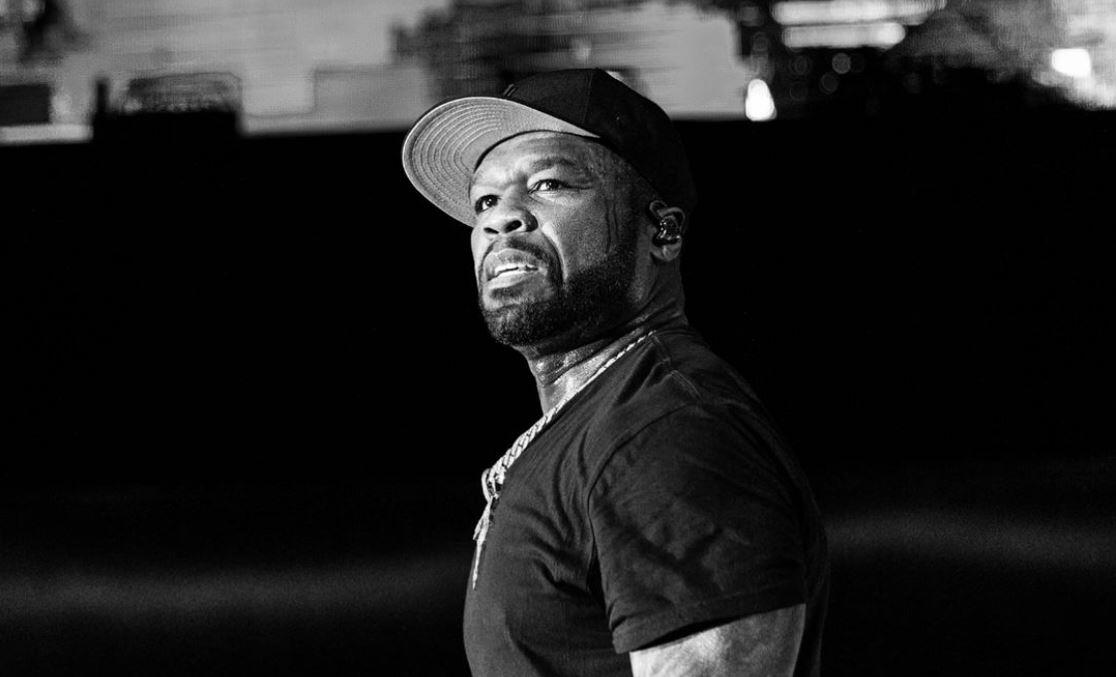
In response to New York City’s program to take care of illegal migrants before their own homeless population, rapper 50 cent took to Instagram to tell his 31 million followers he might vote for Trump

“WTF mayor Adams call my phone, I don’t understand how this works,” he posted, adding “I’m stuck maybe TRUMP is the answer.


A post shared by 50 Cent (@50cent)

 The comment comes days after rapper Snoop Dog said he has “nothing but love and respect” for the former President (who he once rapped about assassinating).

Dogg, whose real name is Calvin Cordozar Broadus Jr., said in an interview with British newspaper The Sunday Times that he’s still not sure who he’ll endorse in the election. But he made clear his view of the former president on a more personal level.

I have nothing but love and respect for Donald Trump,” Snoop Dogg said.

What’s going on here?

Tyler Durden
Sat, 02/03/2024 – 16:55

Globalists Will Use Carbon Controls To Stop You From Growing Your Own Food

0
Globalists Will Use Carbon Controls To Stop You From Growing Your Own Food

Authored by Brandon Smith via Alt-Market.us,

In early 2020 in the midst of the covid lockdowns, blue states run by leftist governors pursued mandates with extreme prejudice. In red states like Montana, after the first month or two most of us simply ignored the restrictions and went on with life as usual. It was clear that covid was not the threat federal authorities made it out to be. However, in states like Michigan the vice was squeezed tighter and tighter under the direction of shady leaders like Gretchen Whitmer.

Whitmer used covid as an opportunity to institute some bizarre limitations on the public, including a mandate barring larger stores from selling seeds and garden supplies to customers.

“If you’re not buying food or medicine or other essential items, you should not be going to the store,” Whitmer said when announcing her order.

The leftist governor was fine with purchases of lottery tickets and liquor, but not gardening tools and seeds.

She never gave a logical reason why she targeted garden supplies, but most people in the preparedness community understood very well what this was all about: This was a beta-test for wider restrictions on food independence. There was widespread rhetoric in the media throughout 2020 attacking anyone stockpiling necessities as “hoarders,” and now they were going after people planning ahead and trying to grow their own food. The establishment did NOT want people to store or produce a personal food supply.

Another prospect that was being openly discussed among globalists was the idea that lockdowns were “helpful” in ways beyond stopping the spread of covid (the lockdowns were actually useless in stopping the spread of covid). They suggested that the these measures could be effective in preventing global carbon emissions and saving the world from “climate change.” The idea of climate lockdowns began to spread.

The corporate media has since lied about the existence of the climate lockdown agenda, but articles and white papers extolling the virtues of shutting down the planet in the name of climate change are easy to find and read. The globalists and their academic defenders wanted PERMANENT lockdowns, or rolling lockdowns every couple of months, shutting down most human activity and travel outside of basic production.

I have argued in the past that what Whitmer was doing in Michigan was a part of this agenda – That her garden supply ban was part of a wider goal that had nothing to do with public health safety and everything to do with stopping people from prepping. The covid controls were only meant to be a precursor to carbon controls.

This past week we have seen more confirmation of this, as a study out of the University of Michigan claims that homegrown foods produce five times more carbon emissions than industrial farming methods.  In other words, private gardens could be considered a threat to the environment. The Telegraph and other corporate platforms have jumped on the story, and I believe this is cause for concern.

The study includes analysis of various gardens from individual family plots to urban and community plots and claims that “garden infrastructure” for individual plots (such as raised beds) contribute far greater carbon pollution than large scale farming. The study seems to ignore the fact that raised beds are more efficient and grow more food in a smaller space, but I doubt they really care to take these kinds of things into consideration.

The average person might be confused by this and assume the opposite is true – Wouldn’t growing foods at home be BETTER for the environment?

Not if your funding relies on portraying independent food supplies as bad for the planet.

The study is bankrolled by a host of international groups, including the European Union’s Horizon Program which lists “100 Climate-Neutral and Smart Cities by 2030” as one of its project goals.  These 100 cities are then supposed to act as flagship models for the eventual carbon agenda takeover of all cities by 2050.

Such groups have billions of dollars at their disposal and focus most of that monetary firepower on climate change research (propaganda). Do I think that the Michigan study is rigged in favor of a predetermined outcome? Probably. When these studies are funded by globalist interests, their outcomes always seem to favor globalist goals. The study itself does not necessarily argue that people should stop gardening, but it does push the narrative that carbon controls are necessary, even at an individual level.

The Michigan report might seem like a meaningless footnote.  However, as we witnessed last year with a study from the Consumer Product Safety Commission on natural gad appliances, these little and obscure studies are often used to justify large scale government interventions into people’s daily lives. The CPSC study inspired months of debates from Democrats in the US demanding that gas appliances including stoves be banned because they MIGHT cause health side effects, specifically in children (it turns out the study had no concrete basis for this claim).

Leftists and globalists do not care about protecting your health; they care about how these studies can be used to fear monger, thus increasing their power. In other words, if you can rig the science, then you can rig the laws.

We saw something similar to this in a UN study in 2006 which claimed that meat production contributed to nearly 20% of all carbon emissions and was worse for the environment than transportation. The study was exposed in 2010 as “flawed” (fraudulent), but for years the media and globalist organizations used its false conclusions as a springboard to demand limitations and bans on meat production in the name of saving the climate.

If you think the war on farming which is raging right now in Europe is only intended to affect industrial farms, think again. The establishment is going to try to use the man-made climate change lie to dictate ALL food production, right down to your unassuming backyard garden.  And they won’t limit their efforts to the EU; they will come after American farms with the same restrictions.

This is really what the globalist “net zero” programs and 15 minute cities are all about – They are based on the idea that all human activity needs to be monitored and managed. They say it’s for the good of the planet, but the systems they want to put in place from 2030 to 2050 sound like a new digital feudalism, a society where bureaucracies track and trace and micromanage every aspect of your life. The elites benefit greatly while never proving that carbon emissions are a danger to anyone.

Why the obsessive focus on food? Because if people have their own food, then they might be more willing to rebel against further mandates. It’s really that simple.

The end game is obvious – Control the food, and you control the world. Do it in the name of saving the planet and a lot of people will even thank you as you starve them.

*  *  *

If you would like to support the work that Alt-Market does while also receiving content on advanced tactics for defeating the globalist agenda, subscribe to our exclusive newsletter The Wild Bunch Dispatch.  Learn more about it HERE.

Tyler Durden
Sat, 02/03/2024 – 16:20

Freedom Convoy Arrives At US Southern Border While Biden Drops Bombs In Middle East

0
Freedom Convoy Arrives At US Southern Border While Biden Drops Bombs In Middle East

The Take Back Our Border convoy reached the Texas-Mexico border on Friday night to show support for the Texas government in its ongoing standoff with radicals in the Biden administration over disastrous open southern border policies that have triggered the worst migrant invasion this nation has ever seen.

Dozens of videos posted on social media platform X show the convoy of trucks arriving at Cornerstone Children’s Ranch in Quemado, Texas, late Friday night. The area is located about a quarter mile from the US-Mexico border. 

Earlier on Friday, Take Back Our Border leader Dr. Pete Chambers and Senate candidate Ben Luna, R-NM, joined “Fox & Friends First” and warned about the out-of-control migrant invasion that is plunging this country into a crisis. 

“The fentanyl is, I call it, a chemical warfare across the border. The drug trade is tremendous,” said Chambers, an Army veteran, adding the objective of the open southern border policies by Biden is “complete destabilization.” 

Legacy corporate media automatically bashed working-class Americans who wanted common-sense border security, calling anyone associated with the convoy “Far-right conspiracy theorist. Americans are figuring corporate media is not their friend. 

Former Alaska Gov. Sarah Palin, musician Ted Nugent, and elected Texas officials spoke at the convoy staging area yesterday. 

“The eyes of the world are on Texas right now. 

“Now, more than ever, it’s required of us to stand up and fight for what’s right, because it’s unconscionable, it’s treasonous, what our own federal government is doing to us in actually sanctioning an invasion, a foreign invasion, of our country,” Palin said.

The convoy plans two other rallies this weekend, with one event in Yuma, Arizona, and another in San Ysidro. 

“Fellow citizens and compatriots … I call on you in the name of liberty, of patriotism and everything dear to the American character to come to our aid with all dispatch,” Chambers wrote on the convoy’s website. 

“If this call is neglected, we are determined to sustain ourselves as long as possible and act like soldiers who never forget what is due to our own honor and that of our country,” he continued.

The convoy aims to “send a message” to the federal government about the migrant invasion facilitated by the Biden administration and shadowy taxpayer-funded NGOs.  

Populist uprisings are emerging across the Western world (read: here) as radical leftist elected and non-elected officials have pushed widely unpopular policies that have angered the vast majority of the working poor. 

Meanwhile, the Biden administration is more interested in starting another major conflict in the Middle East this weekend by dropping bombs on Iraq and Syria. 

Tyler Durden
Sat, 02/03/2024 – 15:45

A Bitcoin Standard Unleashed

0
A Bitcoin Standard Unleashed

Authored by Michele Uberti via BitcoinMagazine.com,

INTRODUCTION

The transition from Fiat Standards to the Bitcoin Standard, though highly desirable, is not inevitable or necessarily imminent. The timing and occurrence of these changes hinge on the adoption choices made by individuals, organizations, and public entities. These decisions are influenced not only by rational considerations but also by emotional and irrational factors (greed and fear above all). The collective will, formed by the intentions of a critical mass with sufficient capital and agency, plays a crucial role in displacing central banks and the entrenched power structures in favor of a new system centered around Bitcoin. Despite Bitcoin’s evident technical, economic, and ethical superiority over other form of money, this struggle will undoubtedly be a formidable one, with the outcome far from assured.

Nonetheless, it is crucial to reflect on the consequences that this potential revolution, if realized (as we all hope), could have on every facet of social existence. These implications span from the nature of states and international relations to the functioning of economic systems, prevailing value systems, and even the energy market and technological innovation. In this article, without the pretense of being exhaustive, we aim to briefly explore some of these aspects and suggest plausible trajectories.

BITCOIN AND FRACTIONAL RESERVE BANKING

As Hal Finney correctly forecasted, a hypothetical Bitcoin Standard would be incompatible with central banks but not necessarily with a fractional reserve banking system. Algorithmic limits on the number of transactions per block will certainly prevent Layer 1 from serving as a retail payment system. Over time, fewer transactions will occur on it, and these will be of a very high value (in practice, only whales or large public and private institutions, given the high costs, will be able to afford them).

Some form of free banking 2.0 on Layer 2 would then be quite inevitable in the medium to long term for a Bitcoin-based monetary system. In the absence of a central bank as the lender of last resort and with much easier reserve verifiability than with gold, this Layer 2/layer 3 FRB (Fractional Reserve Banking) will be much more fragile than the current fractional reserve system supported by legal tender, central bank, and practical indistinguishability between the monetary base and the money supply. This will only reinforce the importance of Layer 1 as the solid foundation of the monetary system, similar to the role gold played in past millennia.

MACROECONOMIC IMPLICATIONS

Ceteris Paribus, in the medium term, the adoption of a hypothetical Bitcoin Standard should significantly dampen economic cycle fluctuations, preventing excessive indebtedness, mal-investment, and credit bubbles in the private sector, leading to systemic debt crises. Monetary repression would also result in much slower but steady real growth rates in economies in the medium to long term. With the absence of the engine of monetary and credit expansion, i.e., the inflationary policies of central banks, the nominal growth of output within a Bitcoin Standard will be modest, but real growth will remain significant. In other words, any increase in multi-factor productivity will result in a decline in consumer prices measured in satoshis rather than an increase in nominal output. In this context, even in the short term, economic growth will depend on demographic, ecological, and economic factors rather than monetary or credit factors.

In this regard, with the Bitcoin Standard, there will be a gradual shift of wealth from the financial sector, which has become voracious today, to the real and productive economy. This is a consequence of the significant downsizing of bond and money markets (reduction in the level of indebtedness of economies) and therefore the entire industry profiting from them.

Among the businesses that will experience the most downsizing are centralized payment and clearing systems, traditional credit institutions, fiduciary agents such as notaries (replaced by smart contracts on Layer 2 and 3 of Bitcoin), and those involved in financial, real estate, and insurance intermediation.

On the contrary, anything leveraging the potential of Bitcoin’s layers (for smart contracts) and DeFi will experience a real boom.

(GEO)POLITICAL IMPLICATIONS

Regarding the immutability of the monetary base, it would force states into strict fiscal discipline as the option to monetize deficits or debt as a form of public spending financing would disappear. This will profoundly influence the ability of nation-states to provide welfare or wage wars. In the absence of a monetary printing press and, thus, the insidious tax called inflation, fiscal pressure and the allocation of public spending will become the subject of serious negotiations and political disputes, as they will directly affect the pockets of citizens/subjects/taxpayers.

On one hand, this could encourage more direct forms of democracy (facilitated by the spread of blockchains and DAOs) to give citizens a greater say in tax and spending decisions. On the other hand, a world based on the Bitcoin Standard could lead to a much more fragmented and apolar geopolitical landscape, given the intrinsic unsustainability of maintaining such large and inefficient state apparatuses, resembling more the classic medieval feudalism. Instead of the sword/blood/robe aristocracy, Bitcoin whales would become the dominant social class, where non-coiners would be a kind of new serfdom. The former, individuals, families, and institutions with huge Bitcoin holdings (created in the early stages of adopting this technology, i.e., in the first two decades of its existence), would be able to provide welfare, work, and protection to citizens/subjects in exchange for loyalty, services, and obedience to their “feudal” rule. The latter, the vast majority of the population whose ancestors arrived too late to adopt and convert their fiat capital into Bitcoin (for various ideological or practical reasons, including economic constraints), would find themselves at the bottom of the pyramid and would be forced to earn their living through the sweat of their brow or (more likely, given technological advances) through the generosity, more or less interested, of philanthropic whales. This dynamic would also apply internationally: there would be pioneering regions or nations that, having adopted Bitcoin as legal tender first, would enjoy a significant relative wealth advantage that would be hard to match by latecomers.

These would not necessarily be the currently dominant nations; in fact, some may not even exist at present. The ultimate result would be a much more fragmented international system than the current one, consisting of a mix of democratic, socialist, or oligarchic city-states, crypto-aristocratic fiefdoms centered around individual families, and large anarchic and chaotic regions. All these entities would be in competition/cooperation with each other, forming a completely new and constantly evolving geopolitical-ideological landscape. In a world where old identity affiliations (national, ideological, and religious) would overlap and mix with new identities based on the interpretation of the Bitcoin revolution. Given the technological assumptions and ideological foundations of Bitcoin culture, a “coinist” religion could emerge, tied to certain ritualistic and faith-based aspects that are already glimpsed among its staunch supporters (immaculate conception, decentralization, worship of Satoshi, algorithmic infallibility). In any case, the Bitcoin Standard would impose on the societies adopting it some economic norms closely influencing public morality. Among them are the sense of limit, the ethic of saving, prudence in investments, long-termism, honesty in commercial transactions, individual responsibility, fiscal discipline, and, of course, the independence and incorruptibility of money from state powers.

NODES, MINING, AND GEOPOLITICS

Nodes are the heart of the Bitcoin network and would, therefore, receive significant attention from political powers. Controlling full nodes (and thus potential miners) within a specific territory by public authorities would be extremely important for claiming sovereignty internally and influencing the international scene. Naturally, given other variables, nations capable of producing energy at lower costs or on a larger scale would have an advantage in allocating and thus controlling significant shares of the global bitcoin hashrate. An eternal struggle for control of the global hashrate will be the new center of geo-economic disputes. That being said, it is by no means guaranteed that most territorial political entities will be able to effectively exert this control, and it’s uncertain how they will go about doing so.

While legitimate physical coercion might seem like the obvious choice, given the specific nature of states, it may not necessarily be the most successful approach in a geopolitically more fragmented and competitive landscape than the current one. Thanks to the high mobility of Bitcoin and the fiscal constraints imposed on traditional states by this monetary system, miners and whales alike could quite easily opt to move elsewhere if their property rights and entrepreneurial freedom end up in danger, finding sanctuary in more libertarian jurisdictions. On the flip side, a different scenario may unfold for those novel ‘neo-aristocratic’ state entities built around one or more Whales; in this case, the monopoly over mining and the necessary energy resources might be more pronounced, given the immense economic power held by their governing bodies.

ENERGY MARKET IMPLICATIONS

Bitcoin is not a commodity currency but an energy one. The power it encapsulates is the energy consumed to create and transfer it. As the lifeblood of the new monetary paradigm, therefore, energy will be even more at the core of the economic system than today. This will radically inform progress in the energy sector, generating a race for technological innovations on both the extraction and energy-saving sides. A whole range of energy sources previously neglected as uneconomical could now become convenient and accessible thanks to their use for mining. Think of the sun in African and Asian deserts, deposits of methane and natural gas in remote locations, or geothermal energy from volcanoes and geysers, or even some systems based on wave motion and temperature differentials in the depths of the oceans.

With an ever-increasing demand for energy, there will be a growing incentive to generate more energy and do so more efficiently in a virtuous circle that could lead to a major energetical revolution, potentially bringing humankind closer to a level 2 civilization on the Kardashev scale, certainly contributing to electrifying the planet even in the remotest places. Another likely consequence of a Bitcoin Standard will be the reversal of roles between energy producers and consumers. The largest energy consumers (mining farms) will over time become the main energy producers in a vertical integration of assets and energy infrastructure that, starting from the bottom, will assimilate the entire energy industry. Whether this will lead to greater or lesser concentration versus decentralization of energy producers remains to be seen, but it will certainly depend on the commercial dynamics of the mining industry.

Tyler Durden
Sat, 02/03/2024 – 15:10

RNC Reports Worst Fundraising Year In A Decade

0
RNC Reports Worst Fundraising Year In A Decade

Authored by Austin Alonzo via The Epoch Times (emphasis ours),

The Republican National Committee (RNC) in 2023 raised its lowest amount of money since 2013, according to new filings with the Federal Election Commission.

Ronna McDaniel, Chairwoman of the Republican Party, speaks during the 2023 Republican National Committee Winter Meeting in Dana Point, California, on January 27, 2023. – Divided as never before, the Republican party must choose a new Republican National Committee Chair on Friday, at the meeting where Florida Governor Ron DeSantis is advancing his pawns to compete with Donald Trump’s bid for the White House in 2024. (Photo by Patrick T. Fallon / AFP) (Photo by PATRICK T. FALLON/AFP via Getty Images)

On Jan. 31, the RNC, along with other Republican Party and Democratic Party national committees and congressional committees, filed their annual fundraising tallies with the regulator.

The RNC, according to its year-end filing, brought in about $87.2 million in total federal receipts. That’s a sharp drop from the about $241.1 million it raised in 2019, the last year preceding a general election. Moreover, it’s significantly lower than the $176 million it raised in 2022.

The GOP’s primary committee reported it had about $8 million on hand at the end of 2023. That’s the lowest amount it had on hand at the end of the year since 2014, when it had about $5 million in the bank. Additionally, at the end of last year the RNC was saddled with about $1.8 million in debt.

By comparison, the Democratic National Committee (DNC) reported it raised $119.9 million in total federal receipts in 2023. It also held $21 million on hand and was debt-free.

On Feb. 1, DNC Chair Jaime Harrison posted on X that the Republicans need to “pray” for better fundraising.

A person familiar with the RNC’s finances who spoke with The Epoch Times said without including transfers from elsewhere, the RNC beat every other Democrat or Republican committee in 2023 fundraising. Only the Democratic Congressional Campaign Committee outraised the RNC in 2023, they said.

The RNC and DNC are the primary committees of their respective parties. The organizations are charged with developing and promoting the parties’ platforms and supporting candidates for local, state, and national offices.

In the presidential primary race in 2023, the main fundraising arms of former President Donald Trump brought in more than those of President Joe Biden, according to newly released regulatory filings.

An RNC official who spoke with The Epoch Times said the RNC raised about $12 million in January. Moreover, it is on track for a strong February thanks to gifts from major donors and grassroots supporters. The committee is confident it will have the resources to win in November, the official said.

DNC Chairman Jaime Harrison speaks at a watch party in Columbia, S.C., on Nov. 3, 2020. (Richard Shiro/AP Photo)

Congressional committees

In 2023, FEC filings show the Democratic Senatorial Campaign Committee (DSCC) and Democratic Congressional Campaign Committee (DCCC) outraised their counterparts, the National Republican Senatorial Committee (NRSC) and the Republican National Committee (RNC), by about $26 million.

Combined, the DSCC and DCCC raised about $195.6 million in total federal receipts in 2023. The NRSC and NRCC brought in about $169.3 million. However, the two GOP congressional committees held the advantage in cash on hand. They had about $17.8 million more in the bank at the end of last year.

The committees exist primarily to raise money and donate to the campaigns of candidates running for seats in the House or Senate.

In a statement, DCCC Chair Suzan DelBene hailed its nearly $30 million fundraising victory over the NRCC in 2023.

“The public is growing tired of Republican dysfunction and their unwillingness to govern responsibly,” Ms. DelBene said in a release. ”The DCCC will have the resources it needs to take back the majority to defend reproductive rights, stop extremism in its tracks, and help grow the middle class.”

In the 118th Congress, Republicans are the majority party in the House. In the Senate, Republicans hold 49 of the 100 seats, and Democrats hold 48. Still, Democrats are considered the majority party because the three independent lawmakers, Sen. Angus King (I-Maine), Sen. Bernie Sanders (I-Vt.), and Sen. Kyrsten Sinema (I-Ariz.), caucus with the liberal party.

All 435 House seats will be up for election in November 2024. A third of the Senate seats will also be up for election.

ActBlue Dominates WinRed

The online fundraising battle continues to be a rout for the Democratic Party.

In 2023, ActBlue, a nonprofit organization founded in 2004 that raises money electronically for Democratic candidates and liberal causes, raked in about $754.4 million in total receipts, according to its annual disclosure report.

WinRed, a GOP answer to ActBlue that debuted in 2019, brought in about $431.2 million in 2023, according to its year-end FEC filing.

ActBlue enjoys a serious advantage in cash on hand. WinRed reported it had about $200,000 in the bank at the end of the year. ActBlue has more than $54.7 million.

Both ActBlue and WinRed are hybrid political action committees.

A hybrid PAC, according to the FEC, can solicit and accept unlimited contributions from individuals, corporations, labor unions, and other political committees. It must maintain two bank accounts—one for independent spending on advertisements or voter drives and another for making direct contributions to federal candidates.

Tyler Durden
Sat, 02/03/2024 – 14:00