Queen Maxima of the Netherlands took to the Davos stage to declare that digital IDs are necessary for nearly every aspect of social engagement.
The Dutch queen told the World Economic Forum (WEF) that they can no longer trust the people, and digital IDs will provide governments with a clear way to track our behavior.
Vaccine passports are necessary to tell “who actually got a vaccination or not,” highlighting how those at the top do not trust the public.
They want complete unilateral control.
In fact, she believes that children should not be allowed to enroll in school unless they have a digital ID that includes their vaccination passport.
“It [digital ID] is also good for school enrollment; it is also good for health – who actually got a vaccination or not; it’s very good actually to get your subsidies from the government,” she said to a room of nodding heads.
Want to open a bank account? You must present a digital ID.
Queen Maxima of the Netherlands at WEF in Davos: [Digital ID] is very necessary for financial services, but not only – it is also good for school enrollment; it is also good for health — who actually got a vaccination or not” #DigitalID#WEF24https://t.co/DJiO8nISihpic.twitter.com/RgYA2ahXS0
On the heels of Davos (World Economic Forum) week, the MSM hysterical propaganda push from the globalists regarding “Disease X” is in full swing.
Just take a gander at a few of the Corporate Mockingbird Media headlines…
Almost every major news outlet in the world has run black propaganda pieces about Disease X. Why do I write black propaganda – because the “experts” aren’t actually named, the peer-reviewed papers supporting the thesis of “a deadly pathogen causing 20 times more deaths than COVID-19” or “killing 20 times more people than COVID-19” or “killing 50 million people” are non-existent. Yet these narratives are all headline news in mainstream media.
This is just another exercise in globalized messaging to support the WHO (World Economic Forum) and WEF-pushed narrative that governments must pour billions into the largest transnational corporations in the world to “cure” a non-existent disease.
What isn’t black propaganda but rather grey propaganda is that this fearporn is being pushed by the WEF and the WHO. WHO officials are most of the featured speakers and panelists on “Disease X” at the Davos meeting this week. From the WEF website:
World leaders are set to discuss preparation for the next pandemic at the World Economic Forum in Davos…
Officials from across the globe will be heading to the annual meeting in Switzerland, with the risk posed by what’s known as Disease X one of the key items on the agenda.
The meeting will address new warnings from the World Health Organisation (WHO) that the unidentified disease could kill 20 times more people than the coronavirus pandemic.
The big push from the WHO and the WEF is that “Disease X” will be zoonotic. That money to surveil every speck of land in the world is the path forward to stopping “Disease X.” What a coincidence that the brand new CIA/intelligence agency designated to run the National Counterproliferation and Biosecurity Center to surveil pathogens intends to do just that. And that this happens to be intended to run in parallel with the CIA mission to surveil the world for other (nefarious?) purposes.
According to the WHO, Disease X is all about One Health solutions. The World Health organization describes One Health as the following:
Government officials, researchers and workers across sectors at the local, national, regional and global levels should implement joint responses to health threats. This includes developing shared databases and surveillance across different sectors, and identifying new solutions that address the root causes and links between risks and impacts.
Basically One Health gives public health officials total control and surveillance across AI, the internet, agriculture, climate change, public health, medical systems, ecological sites, urban, and rural areas. It can encompass just about anything. It also values animal and plant life as equal to human life. The WHO goes on:
investigating the impact of human activity on the environment and wildlife habitats, and how this drives disease threats. Critical areas include food production and distribution, urbanization and infrastructure development, international travel and trade, activities that lead to biodiversity loss and climate change, and those that put increased pressure on the natural resource base – all of which can lead to the emergence of zoonotic diseases.
We have seen this playbook before…
The International Journal of Arts of Social Science published the paper titled: “The World Economic Forum, “The Lancet,” and COVID-19 Knowledge Gatekeeping.” That paper is seminal in understanding just how corrupting the WEF as well as the WHO have become to scientific journals, scientists, universities, and media (fact-checkers).
Relevant online pieces of literature were sampled through a snowballing technique using the Google search engine platform to elucidate on the funding and ownership of the Lancet, and the 27 authors of the said article and their affiliations with higher learning institutions vis-à-vis their connections with the World Economic Forum to highlight their implications to gatekeeping and COVID-19 knowledge production in journal publications, particularly that of the Lancet.
Results revealed that the WEF has penetrated all knowledge institutions that benefit from the natural COVID-19 virus origins hypothesis and the silencing of contrarian hypotheses, including the lab-leak narrative. A model of the WEF knowledge production complex against the lab-leak hypothesis was presented to visually represent the influence of the WEF on scientific journal gatekeeping in the context of the Lancet.
This is the paper being discussed:
The latter was the scientific paper that stopped the “spread” of “misinformation” that Cvoid-19 could have originated from a lab. This paper was crucial in shutting down “lab-leak” investigations at the WHO and in the US. In fact, the WHO Report published on February 2021 on the origins of the virus concluded that the lab-leak hypothesis was “Extremely unlikely.” They later scuttled a second investigation, because WHO officials claimed China was uncooperative – while never even admitting that the US may have had a significant role in both funding and directing the Wuhan laboratory research program.
Back to that original 2020 Lancet paper, the 27 WEF affiliated authors included both Peter Daszak and Jeremy Farrar (Chief Scientist at the World Health Organization since 2023. He was previously the director of The Wellcome Trust from 2013 to 2023).
From the 2020 Lancet paper:
The rapid, open, and transparent sharing of data on this outbreak is now being threatened by rumours and misinformation around its origins. We stand together to strongly condemn conspiracy theories suggesting that COVID-19 does not have a natural origin.
What Brian Bantugan, the author of “The World Economic Forum, ‘The Lancet’, and COVID-19 Knowledge Gatekeeping” discovered is shocking. The publishers, the authors, the affiliated universities, the NGOs, and the funding sources – are almost all directly linked to the WEF. They all continued to suppress information about the lab leak through out the pandemic. He writes:
Through content analysis, by way of a matrix of analysis, the study established the connections that exist between The Lancet and the WEF. The study argued through the Gatekeeping and Political Economy of Knowledge Production that the connections found between The Lancet and the WEF suggest likely collusion that led to the marginalization of the lab leak origin narrative as early as February 2020 and a network of disinformation within established but invisible networks of knowledge production.
Furthermore, scientific journals used what is called “gatekeeping” to withhold information.
According to author Brian Bantugan:
The term “gatekeeping” was coined by Kurt Lewin to refer to a process of blocking “unwanted or useless things by using a gate” (communicationtheory.org, n.d., para. 2). The theory asserts that “(t)he Gatekeeper decides what information should move to group or individual and what information should not” (para. 3). According to Shoemaker and Vos (2009), gatekeeping is the “… process (that) determines not only which information is selected, but also what the content and nature of messages… will be” (para. 1). Initially, it was used to describe the process of news production in mass media involving “selecting, writing, editing, positioning, scheduling, repeating, and otherwise massaging information to become news” (Vos & Reese, 2009, in Omlette à la Chantal, 2021).
First off, the Lancet is owned by Elsevier which is owned by the WEF partner RELX Group. This fact, by the way, is not transparent on the Lancet website.
But it gets worse.
Some examples of this effort were Elsevier Novel Coronavirus Information Center, Center, the Wiley COVID-19 Resources and News portal, the Springer Nature COVID-19 resources centre, and the Frontiers Coronoravirus Knowledge Hub (Matias-Guiu, 2020). Elsevier is owned by WEF partner RELX Group. John Wiley & Sons published Schwab‟s Stakeholder Capitalism (WEF, 2022). Springer Nature is owned by WEF partner Holtzbrinck Publishing Group. Frontiers was founded by WEF-affiliated Henry Markram (WEF, 2022).
So, all of these publishers have direct ties to the WEF… and yet they have been the gatekeepers of what got published during Covid-19. Including publishing the original animal origins paper.
back-tracked on publishing any early treatment for Covid-19 studies. I was editor of the special edition for early treatment. When this happened, I and the other four senior editors all resigned.>
But the paper goes on to document that almost all of the 27 Lancet authors and their universities have strong affiliations to the WEF. The details of those relations are laid in a series of tables, which can be found here. But the paper goes on:
The fact that the authors of the controversial article in The Lancet are all quite involved with high- profile organizations like the UN-FAO, WHO, and the USAID reveals much about why they decided to support the actions that led to the immediate “conspiratorialization” of other hypotheses on the virus origins, and mass immunizations they heavily promoted not long after the lockdowns were in place all over the world.
Assuming that the UN-FAO, WHO, and the USAID operate within a seamless system, embodied by the One Health approach they championed years before the pandemic happened, it would not be difficult to think that the editorial processes linked to and supported by their system will work towards their and the WEF’s benefit and advantage.
The data show that the WEF is part of the micro and macro environments that shape editorial gatekeeping. There is a playing field biased towards their system and only ideas that promote their system will have a chance to be heard. That the lab-leak hypothesis is silenced is what the article of the 27 authors may have likely aimed to ensure. Figure 1 below shows the network supporting the natural origins hypothesis of COVID-19.
Figure 1 below, based on the data above <tables found in the article>, shows the complex relationships on which the WEF has firmly established itself. Through the influence of the WHO and UN-FAO, WEF is not only shaping WEF- affiliated higher education institutions but also those that look up them as models.
However, recent developments have shown that it is not only the Lancet that was rendered questionable by its decision to privilege the work of the 27 authors affiliated with WEF-linked universities, resulting in the marginalization of competing but equally valid theories on the origin of the Covid-19 virus, but also NatureMedicine (Campbell, 2022) which is also under an organization affiliated with the WEF.
Clearly, gatekeeping in scientific journals is seen here as equally vulnerable to the influence of the political and economic elite, like the rest of mainstream and social media. Given that leaked and redacted documents linking Fauci to some of the authors in the controversial Lancet article have emerged (showing that some of the authors were communicating directly with him before the article was published) (Peak Prosperity, 2022), and the web of relationships in Figure 1, it is not surprising that the controversial article was released in no time. “Scientific” gatekeeping and “truth” -making seems to be favoring the interest of the WEF, above all
Put together with the data in Tables 2 and 3, one can infer that the WEF has penetrated all the institutions that shape the minds of people, through their policies and programs.
The top executive editors of the Lancet, its owners, and funding agencies aside, the WEF has undeniably positioned itself to influence future leaders, policymakers, and knowledge gatekeepers like the Lancet, especially those in prestigious schools that can only be accessed by the privileged and the wealthy. It is not difficult to think that the interest of the WEF would be top-of-mind among the students and graduates of such universities compared to the multitude who have no interest in the workings of the WEF at all.
Right now, Disease X and One Health are being propagandized in the mainstream media as being the solution to save the world from a massive die-off` – this propaganda is being driven by the WEF in collaboration with the WHO. The EcoHealth Alliance is also at the forefront of the One Health initiative and has collected millions of dollars for their research projects into One Health. The Davos meeting is being used to prop up support for the WHO Pandemic treaty that removes national sovereignty over public health by promoting.
The WEF and the WHO envision solutions to the imaginary “Disease X” that involve more loss of freedoms. They want control over food systems, more money, more censorship, more surveillance, control over the climate change agenda – all in the name of public health. But even worse, they want all this codified in a document that turns over national sovereignty to the WHO.
The WEF and the WHO know that One Health and the pandemic agreement are their best pathways to more world control.
Without ever consulting sovereign nations, the WHO has placed the global “rights in nature” movement on par or above humans. This is why the One Health model must be rejected.
Listen below to The World Economic Forum’s 2024 Discussion “Preparing For Disease X” as Dr. Tedros Ghebreyesus, the WHO Director General, speaks about the Pandemic Agreement:
To have better preparedness and to address disease X we have Pandemic Agreement. The Pandemic Agreement can bring all the experience and all the challenges we have faced all in one…This is a common global interest and very narrow national interest should not come in the way. Of course, national interest is natural but it is NARROW national interest that can be difficult and affecting the negotiations as we speak…
Dr. Tedros, Davos 2024
This is the face of the enemy.
This particular embodiment of enemy comes in the form of the WEF and the WHO.
They now control the buttons for the mainstream media, the fact-checkers, academic institutions, the publishers of the scientific journals, and heads of state.
The list of who they own or have bought off is almost endless.
The fight in front of us is vast. Now is not the time to give up.
As of 2020, there was a 61.1% likelihood that two people chosen at random will be from different ethnicities in America.
This number comes from the Census Bureau’s Diversity Index, which ranges from 0% to 100% per jurisdiction. A value closer to 0% means that a population is more homogenous, while 100% means that a population has more racial diversity.
Below, we rank states based on their Diversity Index score in 2020. Each score represents the probability that two people chosen at random will be of different racial or ethnic backgrounds:
In Hawaii, the most diverse U.S. state, 44% of marriages are interracial. Overall, the Hawaiian population is 36.5% Asian, 21.5% white, 10.2% Native Hawaiian or Pacific, and 9.5% Latino or Hispanic.
Meanwhile, California ranks as the second most-diverse state in the country. As the largest ethnic population in the state, Hispanics and Latinos make up 39.4% of residents, followed by 34.7% white, and 15.1% Asian.
In terms of counties, the Aleutians East Borough in Alaska is the most diverse in the country. The least diverse state is Maine, and it also ranks as the oldest state in the country by median age.
Diversity in America, meanwhile, has increased roughly 6% according to the Diversity Index since 2010.
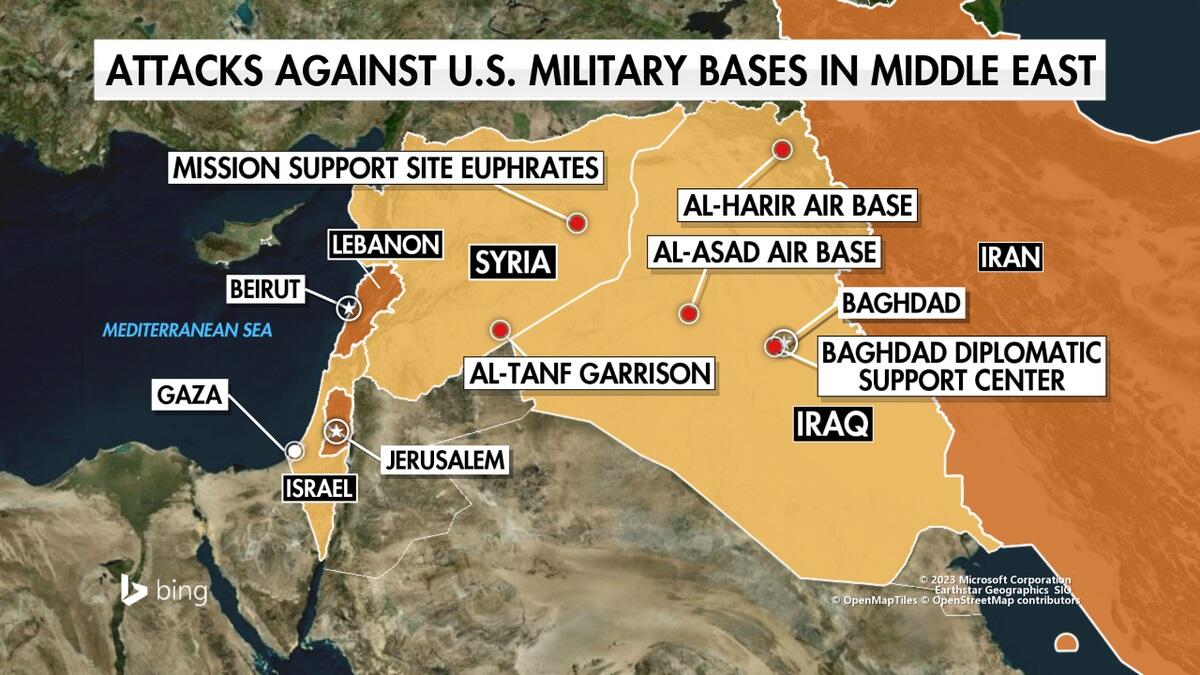
When Iraqi Prime Minister Mohammed al-Sudani arrived in New York City in September for the UN General Assembly, a delicate truce was in balance between the two foreign powers that loom over Baghdad. Iraqi paramilitaries, backed by Iran, had frozen their attacks on US troops in the country. Iraq’s new leader arrived in New York City amid the lull. He was feted on a circuit of swanky receptions with western businessmen and diplomats on the sidelines of the General Assembly, as he pitched Iraq’s oil-rich but corruption-riddled economy as an investment destination.
Four months later, the Iraqi leader is condemning Iran and the US for launching deadly strikes in his country and his investment pitch to the global elite at Davos Switzerland is overshadowed by his call for the US military and its coalition partners to leave Iraq. Since the Hamas-led attacks on October 7 and the war in Gaza, Iranian-backed militias have launchedat least 70 attacks on US forces in Iraq.
In early January, the US hit back with its most powerful response yet, launching a drone strike in Baghdad that killed Mushtaq Taleb al-Saidi, also known as Abu Taqwa, a senior commander in the Popular Mobilization Units, an umbrella organisation of Iraqi state-funded and Iran-aligned, Shia militias.
Baghdad hit out at the strike as “a violation of Iraq’s sovereignty”. But no sooner was Iraq chastiszing the US for the strike, when Iran launched a barrage of ballistic missiles into the Iraqi city of Erbil, killing four people, including a prominent Kurdish real estate developer and his one-year-old daughter.
Baghdad slammed Tehran’s allegation that the house struck in Erbil was an Israeli Mossad “spy center”. At Davos, Sudani called the strike “a clear act of aggression”. Iraq has recalled its ambassador to Tehran and says it will file a complaint at the UN Security Council.
The dual rebukes of Iran and the US underscore the tightrope Baghdad is walking as the war in Gaza seeps out beyond the besieged Mediterranean enclave’s borders. Across the region, Tehran and Washington are flexing their muscles, vying to outflank each other in a deadly proxy war. The shadowy conflict has taken on different flavours that reflect local and geopolitical realities.
In Lebanon, the US is trying to de-escalate fighting between Israel and Hezbollah, with both sides wary of being dragged into a wider conflict. Meanwhile, Iran-backed Houthi fighters in Yemen have made themselves targets of US air strikes as a response to their attacks on commercial shipping.
But the conflict is perhaps at its most intense, and complex, in Iraq. “The Iraqi government is weak, divided and fundamentally can’t control conflict on its borders from foreign powers,” Renad Mansour, director of the Iraq Initiative at the Chatham House think-tank, told Middle East Eye.
“It emerged as the playground of choice, where the US and Iran can fight it out. The risk of escalation here is lower for both. And they can show force and compete for influence.”
Syria, through Iraq
For Iran and its Iraqi allies who dominate Baghdad’s government, the war in Gaza has presented an opportunity to drive home their goal of expelling the US from Iraq. A former senior US official and an Iraqi official told MEE that there has been increased coordination between Iranian-backed paramilitaries in Iraq and Lebanese Hezbollah with that aim. According to media reports, a top Hezbollah official, Mohammad Hussein al-Kawtharani, arrived in Baghdad earlier this month to oversee the operations.
Iran-backed “Islamic Resistance in Iraq” published a video “targeting Ain Al Assad AB with a UAV”.
Looks quite similar to the one that was used for attacking Erbil before. pic.twitter.com/w3WY4TiJZt
“Instead of attacking Israel, what we are seeing in Iraq are more attacks on US forces,” Andrew Tabler, a former Middle East director at the White House’s National Security Council, told MEE. The pressure building in Baghdad to expel US troops has been underlined by Sudani’s public calls for an exit since the assassination of Abu Taqwa. If he follows through, experts say it would present a strategic victory for Iran.
Roughly 2,500 US troops are in Iraq to advise and train local forces as part of a coalition to defeat the Islamic State militant group. They are mainly based in Baghdad and northern Iraq’s autonomous Kurdish region. The latter is especially important for providing logistical support to 900 US troops in northeastern Syria.
The US’s legal justification for being in Syria is also based on its agreement with Baghdad. “Erbil is crucial for supporting Syria,” Tabler said, referring to the capital of Iraq’s autonomous Kurdistan region. “The US needs to have the ability to move troops and supplies on the overland route between the Iraqi frontier and Syria.”
Speaking in Davos on Thursday, Sudani said that “ISIS is no longer a threat to the Iraqi people,” and that “the end of the international coalition mission is a necessity for the security and stability of Iraq”.
The Biden administration and Baghdad were already negotiating the future of the US-led coalition in Iraq before the war in Gaza erupted, a former senior US official told MEE, but the war changed Washington’s approach to the talks. “It doesn’t look good to be discussing a drawdown when the Iranians are attacking US soldiers with missiles and drones. So there is a sense from the administration that we need to pause these talks.”
While the US continues to conduct small-scale raids against IS cells in the region, Washington views its military footprint in northeast Syria as a key counterweight to Iran and Russia, which back the Bashar al-Assad government in Syria. “The US mission in northeast Syria depends on Iraq,” Joel Rayburn, a former US special envoy for Syria, told MEE.
‘Same foxhole’
The US military presence in Iraq has ebbed and flowed since the invasion 20 years ago. In 2011, the US pulled all of its forces from Iraq, only for them to return in 2014 at the invitation of Baghdad to fight IS. But in that period, Shia paramilitaries backed by Iran emerged as the most powerful armed groups in Iraq. Trained and funded by Iran, the Popular Mobilisation Units also fought IS.
Some groups, like Kata’ib Hezbollah, have been at the forefront of attacks on the US in Iraq. The group’s founder, Abu Mahdi al-Mohandes, was killed in the same US strike that assassinated the Iranian commander, Qassem Soleimani.
Today, the PMUs boast more than 150,000 fighters. They maintain vast patronage networks and many are incorporated into Iraq’s official state security apparatus, with the Iraqi government paying their salaries. They have been accused of kidnappings, assassinations and suppressing peaceful protests.
The inability of successive Iraqi governments to rein in the sweeping powers of the PMUs has sown discord between Baghdad and Washington. Not only have US forces come under attack from the paramilitary groups, but Washington funds Iraq’s security system. In 2022, Iraq received $250m in military aid from the US.
Despite sporadic outbursts of fighting between the paramilitaries and Iraq’s security services, “the cost of going against the militias for the Iraqi government is far higher than the cost of keeping them,” Abbas Kadhim, head of the Iraq Initiative at the Atlantic Council, told MEE. “For Washington, it’s an urgency because they are under attack, but it’s not a crisis for the Iraqi state. The militias are fighting in the same foxhole as the Iraqi government.”
Pay raise for Iranian militias
Sudani is supported by the Coordination Framework, a coalition of Tehran-backed Shia political parties that are tied to many of Iraq’s paramilitaries. While Sudani negotiated a six-month truce that saw attacks on US forces in Iraq stop, the PMUs have gained more influence under his rule, experts say.
“Iran-backed militias have a more visible presence on Baghdad’s streets during Sudani’s tenure,” setting up new checkpoints, Michael Knights, a fellow at the Washington Institute for Near East Policy, wrote, adding that they have also deepened their business activities.
This year, Sudani’s government passed a three-year budget that allocated $700m more dollars to the PMUs, which will allow them to add almost 100,000 new fighters to their ranks, according to analysts. But current and former US and Iraqi officials say Baghdad wants to maintain good relations with Washington.
Sudani has framed his call for quick exit of US-led coalition troops as necessary to preserve “constructive bilateral relations” with the US, which he told Reuters could include training and advising Iraqi security forces. His comments are a reflection of the unique ties Baghdad maintains to both Washington and Tehran.
The dollar trap
Iran and Iraq share a thousand-mile border. The two Shia-majority countries have an estimated ten million border crossings annually, with many Iranian pilgrims visiting shrines in Karbala and Najaf. Iraq is the second most important destination for Iranian exports and is dependent on Iran for about 35 to 40 percent of its power needs.
Iran has never shied away from flexing its economic weight over its neighbor. But Iraq’s finances are also intricately tied to the US.
The second largest producer in the Organization of Petroleum Exporting Countries, Iraq depends on its oil revenue to fund its government – including to pay the salaries of Iranian-backed paramilitaries. The proceeds from Iraq’s oil sales are deposited in the US Federal Reserve Bank of New York.
A recent US crackdown on money laundering in Iraq has helped fuel a currency crisis in Iraq, showcasing the immense sway Washington has over Iraq’s finances because of its dependence on the dollar. The US has also backed Sudani’s appeal for international investments in Iraq.
When Baghdad threatened to expel US-led coalition forces from Iraq after the 2020 assassination of Soleimani, the Trump administration threatened to cut Iraq’s access to its dollar reserves and stop issuing sanctions waivers for Iraq to buy Iranian energy, former US officials familiar with the talks told MEE.
The same officials say that cudgel is an option the Biden administration retains if demands for a US exit grow, but some question whether the administration would use it, after trying to reset relations with Baghdad after the tumultuous Trump years. “The US can’t be expelled from Iraq if it doesn’t want to be,” Rayburn, the former US special envoy for Syria, told MEE.
“If the US doesn’t have a military presence in Iraq, then the US need not do other things on behalf of the Iraqi government. Like facilitating dollar supply from the Federal Reserve, protecting against lawsuits, and issuing sanctions waivers,” he said.
While Iranian-backed militias want to expel the US from Iraq, experts say even the most hardline groups like Kata’ib Hezbollah benefit from Iraq’s economic links to the West. “Even the most anti-American leaders in Iraq realize they need some kind of relationship with the US,” Mansour told MEE. “Iraq is a lifeline for Iran. Its access to US dollars and financial markets is key.”
Kadhim, at the Atlantic Council, believes the focus among policymakers in Washington to merely protect US troop presence in Iraq is shortsighted. “Of course, Iran’s ideal goal is to get the US out of Iraq completely, but their practical goal is to make the US presence a liability,” which he says, the Iranians have already achieved.
“Basically, you have a small number of US troops in Iraq sequestered to their barracks. They can’t even go to town,” he said. “In the long run, someone is going to ask why are we here.”
Attorneys for a journalist threatened with prosecution for being at the U.S. Capitol on Jan. 6, 2021, are challenging federal prosecutors to try his case outside the District of Columbia, suggesting prosecutors are seeking retribution for his recent reporting on possible Capitol Police perjury and the Jan. 6 pipe bombs.
Six attorneys who said they volunteered to represent Stephen Baker of Raleigh, N.C., released a statement on Jan. 22 expressing belief that the DOJ is seeking even more serious Jan. 6 charges as retaliation.
Mr. Baker, a former independent journalist, now writes for Blaze Media.
“We now have information that Steve’s reporting has so agitated officials in multiple federal agencies that an effort is now underway to find a basis to charge Steve with more serious crimes and to use those more serious crimes as a pretext for early morning raids to execute search and arrest warrants on him and his family,” the statement read.
“If this is true, and search and arrest warrants are used to drag Steve out of his house in the early morning hours someday soon, that will be evidence of retaliation against a journalist exercising his First Amendment rights to report information that is embarrassing to government officials.”
The statement is signed by five well-known Jan. 6 defense attorneys: James Lee Bright, Brad Geyer, Phillip Linder, William Shipley, and Edward Tarpley Jr. It was also signed by Mr. Baker’s Raleigh-based attorney, Matthew Ceradini.
Mr. Geyer and Mr. Shipley were federal prosecutors for more than two decades.
“After not having indicted me for three years, it is clear that any move to do so now will be in retaliation for my reporting,” Mr. Baker wrote in a news release.
“I will not be intimidated. I will continue to report the findings of my investigation into the evidence being made available to me to review,” he said.
Questions Over Jurisdiction
The attorneys challenged the DOJ to try any case against Mr. Baker in the eastern district of North Carolina where Mr. Baker lives, or the northern district of Texas, where his employer, Blaze Media, is located.
“Are citizens of those two districts not suitable jurors in Steve’s case?” the statement asked.
“Is the federal judiciary in those two districts not able to provide a fair and impartial trial?
“On what basis does the United States Department of Justice believe the ‘United States’ can only get a fair trial in the District of Columbia and not one of those ‘United’ States?”
The Epoch Times asked the U.S. Attorney’s Office for the District of Columbia for comment, but did not receive a response before press time.
Mr. Baker’s most recent coverage identified the person who found one of the two pipe bombs on Jan. 6 as an undercover U.S. Capitol Police officer and not a “passerby.”
Since October 2023, he wrote a series of stories that said events described under oath by two Capitol Police officers in the first Oath Keepers trial in 2022 could not have happened, based on Mr. Baker’s examination of security video.
Mr. Geyer suggested that reporting should result in the Oath Keepers’ convictions being thrown out.
Mr. Baker was one of dozens of journalists at the U.S. Capitol on Jan. 6.
His video footage appeared in an HBO film and was licensed by the BBC, The New York Times, and The Epoch Times.
Mr. Baker was first contacted by the FBI in July 2021 about his presence at the Capitol. He voluntarily sat down with FBI special agents in November 2021. He said he was told the DOJ was considering charging him with interstate racketeering because he received money from licensing his Jan. 6 video.
In March 2023, he said he was warned by a high-profile journalist that his reporting was chafing some high-level DOJ officials.
In August, he was served a subpoena for his Jan. 6 video.
In December, the FBI told his attorney that his arrest was imminent, although that plan was subsequently delayed.
As China Stocks Crash, Beijing Proposes Multi-Trillion Market Rescue Package
Earlier today, we lamented the latest implosion in Chinese markets, which we discussed in “China Stocks Crash Through ‘Snowball Derivatives’ Trigger Levels Overnight“, in which we pointed out the unprecedented failure of the centrally-planned market to halt its collapse be it through short selling bans, or even the latest impotent intervention by the “National Team”, China’s Plunge Protection Team, which today failed to spark even a modest rebound in the relentless selling which had triggered key liquidation levels.
We then summarized just how badly Beijing had boxed itself, noting that “after short selling ban did nothing, China PPT stepped in… and couldn’t do jack. Beijing trapped.” We concluded that “either they watch liquidation cascade as snowball derivatives are knocked in sparking rout and leading to social unrest, or they stop talking and finally do something.”
This is bad: after short selling ban did nothing, China PPT stepped in… and couldn’t do jack. Beijing trapped: either they watch liquidation cascade as snowball derivatives are knocked in sparking rout and leading to social unrest, or they stop talking and finally do something pic.twitter.com/rMpV5UQVwr
Well, just a few hours later we were proven correct again, because shortly after China reopened on Tuesday, Bloomberg reported that according to “people familiar with the matter, asking not to be identified” – i.e., government sources eager to do a market test, China is considering a package of measures to stabilize the plummeting stock market, after earlier attempts to restore investor confidence fell short and prompted Premier Li Qiang to call for “forceful” steps.
Specifically, Beijing is reportedly seeking to “mobilize” about 2 trillion yuan ($278 billion), mainly from the offshore accounts of Chinese state-owned enterprises, as part of a stabilization fund to buy shares onshore through the Hong Kong exchange link; it has also earmarked at least 300 billion yuan of local funds to invest in onshore shares through China Securities Finance Corp. or Central Huijin Investment Ltd.
In other words, what was already a nationalized stock market is about to get even more nationalized, and instead of ad hoc interventions by the Plunge Protection Team, such market purchases by official state authorities will now become institutionalized.
Or maybe not: after all, China isn’t actually doing anythjing. Yes, it is mulling stuff, just like it has been mulling a 1 trillion yuan fiscal stimulus and a 1 trillion yuan “special “bond stimulus. but nothing has actually happened yet, because Beijing is absolutely terrified of the market reaction if and when the country with the 300% debt/GDP stats layering on more trillions in debt. Alas, at this point that’s just a matter of time, because either Beijing keeps mulling stuff and does nothing as it watches it cities burn amid the recent surge in strikes and protests…
… or it goes back to what it has been doing for the past 25 years, and floods the economy with new debt to boost contain the property crash, stabilize the economy and normalize the soaring youth unemployment. And since it really has no choice, it will be the latter… the only question is how much pain will Beijing suffer first before it capitulates.
Anyway, going back to the official Bloomberg report, it notes that “officials are also weighing other options and may announce some of them as soon as this week if approved by the top leadership”, but again, “the plans are still subject to change.” And they will, because either stocks soar and don’t drop, thereby obviating the need for an actual rescue package, or they resume their plunge and China will be forced to do even more when it actually does something in the very near future.
In any case, the report of panicked deliberations underscores that just as we predicted earlier today, there is an “elevated level sense of urgency” among Chinese authorities to stem a selloff that sent the benchmark CSI 300 Index to a five-year low this week. Calming the nation’s retail investors – many of whom have also been bruised by the protracted property downturn – is also seen as key to maintaining social stability. And if there is anything Beijing fears more than anything in this world, it is 1 billion angry lower and middle-class Chinese heading toward Beijing, armed with torches and pitchforks.
Which brings us to the next question: as even Bloomberg admits, it is unclear is these measure will be enough to end the rout is far from certain. We can help Bloomberg: it won’t be anywhere near enough, and indeed, after a modest bounce in the Shanghai Composite which pushed it in the red on the Bloomberg report, the index has once again slumped in the red, just as we said it would.
We weren’t the only ones to unleash a gusher of cynicism in response to the news: others agreed as well that this is a disaster..
Daisy Li, fund manager at EFG Asset Management HK.
“The biggest question I have is how the SOEs will come up with 2 trillion yuan from their offshore accounts and why they will choose to invest onshore through the Hong Kong exchange link. We are in need of a white knight to boost some confidence, given how bad things have been.”
Aninda Mitra, a macro and investment strategist at BNY Mellon
“The stock market package is a welcome measure, and shows some responsiveness from the authorities. But at under 2% of its GDP, we fear this is still inadequate. This amount falls short of even the reduction in the market cap, from early December to now, of Chinese enterprises listed in the Hong Kong stock exchange. These measures also need to be twinned with longer-term reforms to boost confidence in broader corporate sector.”
Michelle Lam, economist at SocGen’s HK Branch.
“Larger stimulus aimed at turning around the economy is needed for a sustained rally. What I think is critical for us to see a turnaround in market confidence is a step-up in PBoC’s PSL to support project completion and urban village redevelopment and a decisive increase in fiscal deficit which partly support household income.”
Rajeev De Mello, macro portfolio manager at GAMA
“The boost to China’s markets from any rescue package will only lead to a short-term rebound as more fundamental changes are needed. Frequently, packages which target the stock market do have an effect but it can be very short-lived if not accompanied by more fundamental changes.Without more forceful economic and regulatory policy actions, it will not lead to the beginning of a bull market in China.”
Alvin Tan, head of Asia FX strategy at RBC in Singapore
“I am doubtful that the rebound in Chinese equities on the back of this rescue package news is sustainable so long as the fundamental growth trajectory doesn’t change”
And now that the market has called Beijing’s bluff in less than an hour, the panic will be truly palpable and instead of just focusing on the market, China will now be bombarded on all sides by a relentless collapse: the property crisis, depressed consumer sentiment, tumbling foreign investment and diminished confidence among local businesses after years of volatile policymaking are exerting strong downward pressure on both the economy and financial markets.
Which means China now has two options: pretend that the failed policies it has been doing (or pretending to do) so far has been successful, which it likely will until there is just too much blood on the streets, or it will finally capitulate and unleash the biggest fiscal stimulus ever seen in China: we are talking multiple trillions here, and in dollars not yuan, consequences be damned, because we are nearing the point of peak panic where Beijing will do anything at all to buy social order and stability for just a few more months. And once all those tens of trillions in Chinese deposits start fleeing, that’s when the real meltup in non-fiat assets – read gold, silver, crypto, fine art, wines, etc – will truly start.
Harvard Teaching Hospital To Retract Papers As Falsified Data Scandal Unfolds
Weeks after Harvard President Claudine Gay resigned amid a plagiarism scandal, the university’s teaching hospital is set to retract or correct dozens of papers authored by four of their top researchers, following claims of data falsification.
Six papers have already been selected for retraction, and 31 others are in the process of being corrected by the Dana-Farber Cancer Institute in Boston, according to the Harvard Crimson, citing the hospital’s research integrity officer, Dr. Barrett Rollins.
The corrections come amid claims of data manipulationagainst DFCI President and CEO Laurie H. Glimcher ’72, Executive Vice President and COO William C. Hahn ’87, Senior Vice President for Experimental Medicine Irene M. Ghobrial, and Harvard Medical School professor Kenneth C. Anderson. The allegations of misconduct were first compiled and publicized in a Jan. 2 blog post by data sleuth Sholto David.
In the statement, Rollins wrote that David contacted DFCI with allegations of data manipulation in 57 manuscripts. According to Rollins, 38 were articles in which DFCI researchers “have primary responsibility for the potential data errors.”
Four of the researchers at the Dana-Faber center have faculty appointments with the Harvard Medical School.
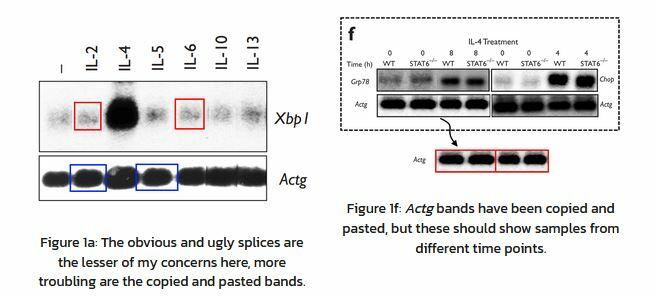
The data manipulation claims came to light after investigator Sholto David published a blog post several weeks ago alleging irregularities among 57 papers. He had previously alleged “data forgery” – which included discrepancies in images consisting of duplications of blots, bands and plots, according to the report.
David, who holds a doctoral degree in biology from Newcastle University, alleged that three papers authored by Glimcher, 12 by Hahn, 10 by Ghobrial, and 16 by Anderson contained “data forgery,” including five co-authored by both Anderson and Ghobrial. As is typical for scientific research, all of the papers referenced by David have several co-authors, though his post focused on the four DFCI researchers.
The papers, published between 1999 and 2017, most commonly have duplications of blots, bands, and plots within images, David alleged. In a Saturday interview, David said he used a combination of artificial intelligence image analysis software ImageTwin and manual detection to look for errors in the papers. -Harvard Crimson.
In short, AI is going to absolutely wreck a lot of ivory tower copycats…
As the work-from-home trend took off during the COVID-19 pandemic, the term “quiet quitting” entered the contemporary lexicon.
According to the Harvard Business Review:
“Quiet quitters continue to fulfill their primary responsibilities, but they’re less willing to engage in activities known as citizenship behaviors: no more staying late, showing up early, or attending non-mandatory meetings.”
Simply put, having perceived their jobs to not have value and meaning, they do no more than absolutely necessary.
There is debate among scholars as to the extent of the quiet quitting phenomenon, but there is increasing evidence that white Americans are increasingly quiet quitting America’s leading institutions. And the possible implications of that for American society are profound.
This phenomenon is a consequence of the trends I write about in my forthcoming book, The Unprotected Class, about the rise of anti-white racism in American culture and how both formal and informal anti-white discrimination have become a factor in almost every area of American public life.
Little surprise then, that more and more young whites, especially young white men, are looking at the overall environment and saying, “Thanks, but no thanks,” to our leading institutions. Last week, the armed forces announced that the number of white recruits had fallen precipitously over the last five years.
According to a report at Military.com, most of the Army’s much-discussed incoming recruiting shortfall is due largely to this dramatic decline. While a bit more than 44,000 white Americans signed up to join the army in 2018, that number cratered to just over 25,000 by 2023—a stunning drop in a short period of time when black and Hispanic recruiting was largely flat. As a result, white recruits went from 56.4% of soldiers in 2018 to 44% in 2023.
Even military leaders attribute this decline in significant part to the souring of conservative whites, who have traditionally formed the backbone of the military, but are now looking at the woke anti-white military under Joe Biden and opting out.
“There’s a level of prestige in parts of conservative America with service that has degraded,” a senior army official told Military.com. Or, as conservative talk show host and U.S. marine combat veteran Jesse Kelly put it on X, “My sons will not serve. I don’t have a single veteran friend who’s encouraging his sons to serve. Most are actively discouraging them from doing so.”
A collapse in any demographic’s willingness to serve in the military would be a concern, but a collapse in (disproportionately conservative) whites in the military is more likely to precipitate a readiness crisis. White soldiers are far more likely than non-whites to be the “tip of the spear,” taking on the most dangerous and important combat tasks. In Iraq and Afghanistan, approximately 80% of special forces were white. Despite heavy diversity recruitment efforts in recent years, 84% of Navy SEALs are white. These special forces teams are filled with objective qualifications, performance, and candidate interest. It may be politically incorrect to say, but as a matter of math, in the current environment, a military that is less white is also a military that’s almost certainly less capable.
Even before the current recruiting collapse, we were already seeing the results of diversity uber alles in military performance. A recent article in Palladium Magazine described this growing competence crisis, and how it affects not just the military but all American institutions. On the military side, in a short period of just three months in 2017, there were three warship collisions resulting in 17 deaths. In 2020, there was a fire that resulted in the destruction of the USS Bonhomme Richard, a $750 million navy ship, resulting in 63 injuries. According to Palladium, a subsequent off-the-record interview with dozens of Navy officers (both current and retired) laid the blame for the incidents at the Navy prioritizing diversity training over warfighting capability. Yet, the armed forces are busy eliminating or de-emphasizing meritocratic tests for service in an attempt to “improve” diversity.
It’s not just the military.
Whites, as a percentage of medical school students, are well below their population numbers.
White college enrollment for 18-24 year-olds has dropped from 43% in 2010 to 38% in 2021, the sharpest drop for any major ethnic group (it is now essentially equal with African-Americans, though African-American students are, on average, far less college-ready than whites) Enrollment is down particularly sharply among white men, the group that has historically led America’s institutions, having collapsed from just 41% to 33%—an attendance rate far below Asian-Americans and just a couple of points above African-Americans and Hispanics.
Given that SAT Scores are on, average, much higher for whites than either blacks or Hispanics, it is clear that whites make up a hugely disproportionate number of the students qualified for college but not attending.
Discriminated against by race-based preferences in both academia and the workplace, young white men in particular are increasingly dropping out. There has been an almost a continuous drop in white male labor force participation over decades now, a drop sharper than seen in any other ethnic group.
In the mid-twentieth century, American employers began focusing more intensely on objective measures to assess human capital, as standardized tests for everything from college entrance to the military reigned supreme. This differentiation allowed talented people from modest social and financial backgrounds to ascend the professional ladder. But, however well intended, the Civil Rights Act and its later interpretations, particularly disparate impact and affirmative action, have ended that brief meritocratic moment. Desperate to balance leadership demographics for political reasons and increasingly unable to game any objective system to reduce white influence further, colleges and even law schools and medical schools are dispensing with standardized tests entirely in the name of “equity.”
For decades now, the government has dispensed valuable contracts to preferred constituencies on the basis of their not being white—at the federal level, such contracts for which whites are ineligible run to tens of billions of dollars annually. As Palladium notes, racial and other quotas have even come to the supposedly sacrosanct halls of corporate finance. As of 2021, Goldman Sachs, perhaps the world’s most prestigious investment bank, will not underwrite the initial public stock offerings of companies that do not have at least two non-straight white men on their board. Interestingly, their gender board diversity rules do not apply to their clients in Asia.
There were certainly many problems, discrimination among them, in the old white-dominant regime that ran America from its founding through the mid-to-late twentieth century, but whatever its flaws, this was the America that people from all over the world—from every different color and creed—have scrambled to join.
Can America’s institutions run as well in the 21st century if white Americans are quiet quitting them in despair?
It looks like we’re about to find out.
* * *
Jeremy Carl (@realJeremyCarl) is a senior fellow at the Claremont Institute, His book, The Unprotected Class, on the rise of anti-white racism, is available for pre-order and will be published this spring.
Mother Of Daughter Raped And Murdered By Illegal MS-13 Gang Member Sues Biden DHS For $100 Million
The mother of a 20-year-old autistic woman who was raped and murdered by an illegal immigrant MS-13 gang member in 2022 is suing the federal government for playing “Russian roulette with our lives.”
Kayla Hamilton was raped and strangled to death by the 17-year-old El Salvadorian, who she was living with in a trailer which the suspect, according to Aberdeen, Maryland police. Authorities arrested him in January 2023 based on DNA evidence from the crime scene. He was charged with first-degree murder, as well as rape and robbery, and is currently being held without bail ahead of his June 28 trial.
“For me this not a political issue this a safety issue for everyone living in the United States,” said her mother, Tammy Nobles, during testimony last Thursday in front of the House Homeland Security Committee.
“This could have been anyone’s daughter. I don’t want any other parent to live the nightmare that I am living. I am her voice now and I am going to fight with everything I have to get her story told and bring awareness of the issue at the border,” Nobles continued.
Nobles is seeking $100 million from US government, and has accused the Department of Homeland Security and the Department of Health and Human Services of failing her daughter by allowing the unidentified migrant into the country without confirming his identity, neglecting to confirm a verified sponsor, and allowing him to be placed at a holding facility – from which he ran away and ultimately ended up as Hamilton’s roommate.
“Nobody at the border did their job and checked his background,” Nobles said two days later during an interview with NewsNation.
“We’re bringing this lawsuit because we’re tired of being held hostage in our own country. We’re tired of DHS playing Russian roulette with our lives,” said family attorney, Brian Claypool.
Tammy Nobels is suing the Biden DHS and HHS for $100 million.
Her autistic daughter Kayla was rapęd and kiIIed in MD by an MS-13 member in July 2022.
The illegal gang member was let into the country by the Biden DHS and sent to Maryland by the Biden HHS.
Over 300,000 migrants crossed the southern border in December, according to CBP. In 2023, US authorities encountered almost 140,000 unaccompanied minors at the US-Mexico border – of which nearly 10,000 are still in the custody of the DHHS’ Office of Refugee Resettlement.
With credit card delinquency rates at their highest levels in more than a decade, getting approved for a new line of credit is getting harder, Fed analysts warned.
According to a new report from the Philadelphia Fed, 3.19% of credit card balances were at least 30 days past due by the end of the third quarter of 2023.
That’s up from 2.76% in the second quarter and the highest level since 2012.
Just as concerning, the percentage of balances that were at least 60 days and 90 days past due shot up to the highest levels since the beginning of Covid.
“All stages of delinquency rates now exceed pre-pandemic levels for the first time,” Fed economist Gene Huang and senior analyst Anna Veksler wrote in the report.
Since 2020, “the share of accounts making the full payment has moderated, driven by strong consumer spending and dwindling government support,” the researchers said.
“Greater consumer fragility,” as the Fed described it, makes banks think twice before granting new lines of credit. According to the researchers, banks’ rejection rate today is the highest in the past year.
Natural rebound or something to worry about?
While experts generally agree that rising delinquency rates are a source of concern, they’re split on how bad the problem is—and what it says about consumer finances.
On the one hand, Smead Capital Management CEO Cole Smead said, “We’re coming off really low delinquencies” in 2022, “so you’re going to see a natural uptick.”
CFRA bank analyst Alexander Yokum adds that rising delinquencies aren’t a big deal “with unemployment under 4%,” suggesting that Americans will continue making payments so long as they’re employed.
But according to Odeon Capital analyst Dick Bove, banks are getting red flags from retailers, who’ve warned for months that customers are having trouble paying their debt.
Credit card losses are “the big issue that certain banks have to worry about,” he told Yahoo Finance. Currently, credit card issuer Capital One and digital bank Ally Financial face some of the biggest risks.
“I think we’re going to see a wave of loan losses for both these companies,” Bove said.
The good news is that banks seem to be prepared for a delinquency spike and have set aside cash to cover bad loans, according to Stephen Biggar, an analyst at Argus Research, a New York-based market research firm.
Banks are “thinking that the higher interest rate environment, what the Fed was doing to take the heat off of such high inflation, was going to result in a downturn and an uptick in unemployment,” he said. So they’ve increased the amount of dry powder they have.
The real reason delinquencies are rising
Credit card delinquencies don’t happen in a vacuum, but rather depend on the overall debt households carry, according to Wells Fargo economist Seery Grein.
“Households who have other debt, so student or auto loans, for instance, are actually seeing delinquencies rise fastest in terms of their credit card purchases,” she said, adding that delinquencies tend to jump when interest rates increase.
Creditnews has recently reported on a sharp rise in auto delinquencies, especially among subprime borrowers.
In September, the percentage of subprime borrowers who were at least 60 days behind on their car payments increased to 6.11%—the highest since at least 1994.
Student debt is another mounting issue after the government resumed mandatory payments in October. So far, millions of borrowers have refused to pay.