72.7 F
Chicago
Wednesday, September 16, 2026
Home Blog Page 3028

Two Weeks To Fix Three Problems – Will Republicans Cave Again?

0
Two Weeks To Fix Three Problems – Will Republicans Cave Again?

Authored by Mike Shedlock via MishTalk.com,

Budget problems haven’t changed for a year: the debt ceiling, Ukraine, and the Border. Israel is logically a distinct issue but is lumped with Ukraine. A partial government shutdown looms on January 19.

Shutdown Deadlines

  • January 19: A partial shutdown turns off funding for the departments of Agriculture, Transportation, and Housing and Urban Development.

  • February 3: Complete Shutdown.

  • April 30: This date is in play if there is another clean continuing resolution that punts the decisions further. This is the lead chart, discussed below, in which spending caps will be enforced by sequestration, across-the-board reductions applied to budgetary resources as set by the Fiscal Responsibility Act of 2023.

Statutory Limits on Discretionary Funding

Please consider the CBO letter to the House Chair of the Budget Committee Re: Implementing the Statutory Limits on Discretionary Funding for Fiscal Year 2024

Dear Chairman Arrington and Ranking Member Boyle: At your request, the Congressional Budget Office is providing information concerning implementation of the caps on most discretionary funding for fiscal year 2024 as established by the Fiscal Responsibility Act of 2023 (FRA; Public Law 118-5). The FRA sets separate caps (in law they are called limits) on defense funding (in law, revised security, which is budget function 050) and on nondefense funding (revised nonsecurity, which covers all other budget functions).

Section 101 specifies caps for 2024 of $886 billion for defense and $704 billion for nondefense funding.

Section 102 Caps. CBO estimates that the annualized base budget authority provided by the current continuing resolution exceeds the section 102 defense cap by $10 billion and the nondefense cap by $41 billion. Thus, on April 30, 2024, OMB would be required to cancel 1 percent of sequestrable defense budgetary resources and 5 percent of sequestrable nondefense budgetary resources

Secure the Border Act H.R.2

The House Republican hardline Freedom Caucus wants the Secure the Border Act H.R.2 which passed the House but died in the Senate.

H.R.2 would provide funding for a 900 mile wall, while waving environmental and historical site reviews. It would mean taking property from private landowners, at a price specified by the government, shutting off water access to the Rio Grande for many.

H.R.2 would fast track deportations of minors unaccompanied by parents.

The Hill points out “the bill denies people the ability to claim asylum unless the Customs and Border Protection (CBP) officer who processes them believes their ultimate case would more likely than not be accepted, adds a $50 fee to make an asylum claim and bars migrants from making an asylum claim anywhere but at an official port of entry.”

One of the reasons there is surge of border crossings is the backup at the ports of entry.

The bill provides no path for citizenship for millions of productive immigrants who have been living and working here for years, and it does not mention legal immigration at all. I wonder how we are going to get crops harvested if we simply deport everyone.

Dead on Arrival

H.R.2 is flawed for many reasons. Regardless, like it or not, the bill is dead on arrival, as is.

It will not pass the Senate.

What’s the Real Deadline?

January 19 is less than two weeks away. The real deadline is allegedly February 3.

Since Treasury Secretary Janet Yellen is not incessantly yapping over this, I suspect the real deadline is further away.

Republicans can always punt with another “temporary” and “clean” continuing resolution. And that would not surprise me in the least. It would buy everyone time to avoid budget cuts that would kick in on April 30.

But eventually, it will come down to my long-stated beliefs, expressed below.

Expect More of This for More of That

The Republican hard-line House Freedom Caucus won’t accomplish anything because there is not enough of them and they are not even united on what they want.

Some want funding for Israel but that is conveniently lumped with funding for Ukraine which they generally don’t want.

H.R.2 is a nonstarter. As a result, there will be some Republican holdouts who will not vote for whatever Speaker Mike Johnson concocts with Senate Majority Leader Chuck Schumer.

If any bill passes in the House, it will be with Democrat support. The Freedom Caucus will howl.

The only question is how big this final boondoggle is. There will be more money for defense, more money for Ukraine, and more money for Israel in return for a pittance of money for the wall.

Fiscal Responsibility Act Hoot of the Day

The FRA would cut the defense budget by 1 percent and the nondefense discretionary by 5 percent.

But even that pittance will be too much for Republicans to swallow. They won’t allow any cuts in the defense budget.

Thus, the FRA was cleverly worded to ensure the final outcome would be “more of this in return for more of that”.

The only questions are on timing how fast the Republicans cave in and how many Democrats it takes to pass the final boondoggle.

Continuing Resolution Poll

Debt Ceiling Resolution Poll

Secure the Border Poll

Debt Jumps Past $34 Trillion, $1 Trillion Interest

Data from US Treasury, chart by Mish

Meanwhile please note Debt Jumps Past $34 Trillion, $1 Trillion Interest

The fallback position is not less of anything. Rather, it’s another clean continuing resolution.

A bipartisan majority wants more of this and more of that. So that is what you should expect.

Debt to GDP Alarm Bells Ring, Neither Party Will Solve This

In case you missed it, please see Debt to GDP Alarm Bells Ring, Neither Party Will Solve This

Neither party will fix the deficits. Neither party will do anything about mounting debt. No one will do anything about anything because the political system is totally broken.” Mish

That’s the message of gold. Bitcoin advocates would say Bitcoin as well.

Tyler Durden
Sun, 01/07/2024 – 10:30

For Third Straight Year, Texas Is Top Destination For U-Haul Renters

0
For Third Straight Year, Texas Is Top Destination For U-Haul Renters

Texas marked its third year (and sixth time in 8 years) as the top destination for one-way U-Haul truck users in 2023, according to the annual U-Haul Growth Index.

Mom unloads UHaul by herself as situationally unaware kids stand exactly where she needs to be (Photo: Uhaul.com).

The list is calculated by taking the net gain or loss of one-way U-Haul rentals entering each state in a calendar year. Last year, the calculation was based on more than 2.5 million one-way rentals of trucks, trailers, and U-Box moving containers.

Texas is the No. 1 growth state for the sixth time in eight years (2016-18 and 2021-23) and has ranked no lower than second on the U-Haul Growth Index throughout that stretch. DIY movers arriving in Texas accounted for 50.4% of all one-way U-Haul traffic in and out of Texas (49.6% departures) to keep it the leading growth state.

Florida remains equally appealing to new residents, netting almost as many one-way U-Haul customers as Texas in 2023. The Sunshine State has been a top-four growth state for nine years in a row. Florida topped the U-Haul Growth Index in 2019. -UHaul

“While one-way transactions in 2023 remained below the record-breaking levels we witnessed immediately following the pandemic, we continued to see many of the same geographical trends from U-Haul customers moving between states,” said John Taylor, U-Haul International president.

Here are the top-10 growth states:

Via uhaul.com

“Migration to states in the Southeast and Southwest is still very pronounced,” Taylor added. “Demand for one-way equipment out of certain markets in the Northeast, Midwest, and West Coast mirrors what we have seen during recent moving cycles. Wherever DIY customers go, and whatever mobility and self-storage needs they have in 2024, U-Haul will be there with solutions.”

“Our job … is to KEEP Texas, Texas!” wrote Gov. Greg Abbott in a post on X. “People are flocking to Texas because of our low taxes, reasonable regulations, & world-class workforce. The Lone Star State is a beacon of freedom & opportunity where ALL Texans can thrive,” he said in a subsequent post.

As the Epoch Times notes; A U.S. Census release last month showed Texas adding more new residents than any other state in 2023, or 473,453 people. In terms of population growth rate, Texas was third with 1.6 percent, behind South Carolina and Florida.

A Wells Fargo analysis published last month said Texas “continues to stand out as one of the star state economies in the United States.” The state had a 7.7 percent GDP growth in the third quarter, higher than the nation’s 4.9 percent GDP growth.

“The Lone Star State has now outpaced the national average in terms of real GDP growth for five consecutive quarters, a streak which is emblematic of Texas’ rapid recovery from the pandemic recession in 2020. The state’s real GDP is now 12% above the level registered in Q4-2019, outpacing all but six other states,” the analysis said.

Wells Fargo predicted that the Texas economy will slow this year but remain strong in the long run.

Growth looks set to slow in the near term as the macroeconomic backdrop deteriorates and the U.S. economy likely enters a mild recession in 2024. Over the longer run, however, evidence continues to mount that the Lone Star State is quickly becoming a superstar economy,” the analysis said.

Tyler Durden
Sun, 01/07/2024 – 09:55

ZeroHedge Live Debate: Was January 6 A Manufactured Crisis?

0
ZeroHedge Live Debate: Was January 6 A Manufactured Crisis?

ZeroHedge presents the second debate in our inaugural series aimed at bringing long-form dialogues back into the ideologically-siloed and echo-chambered media landscape.

Enjoy this in-depth discussion on the various aspects of that fateful day in 2021, allowing people with all perspectives a chance to present evidence and make their argument.

Our panelists include such media luminaries as Alex Jones, Darren Beattie, Glenn Greenwald on one side, and Ed and Brian Krassenstein, as well as Destiny on the other, with Ian Crossland moderating.

We hope to get closer to the truth of what happened on that day and get to the bottom of what creates such harsh social divides on this issue.

Tyler Durden
Sun, 01/07/2024 – 09:50

Visualizing 50 Years Of Video Game Revenues, By Platform

0
Visualizing 50 Years Of Video Game Revenues, By Platform

Video killed the radio star.

And the video game industry’s explosive growth over the last five decades has killed any skepticism of its strength and staying power in the larger media and entertainment space.

Visual Capitalist’s Pallavi Rao and Niccolo Conte visualize the video game industry’s inflation-adjusted revenues every year, from its humble beginnings in 1970 to the media juggernaut it is now, worth more than $180 billion of revenue in 2022.

All data presented in the chart and in this article was provided by UK-based market intelligence firm Pelham Smithers.

Year Total Game Industry Revenue (USD, Billions) % Increase (YoY)
1970 $0 N/A
1971 $1 N/A
1972 $2 100%
1973 $3 50%
1974 $6 100%
1975 $15 150%
1976 $25 67%
1977 $22 -12%
1978 $15 -32%
1979 $22 47%
1980 $35 59%
1981 $38 9%
1982 $42 11%
1983 $37 -12%
1984 $26 -30%
1985 $14 -46%
1986 $15 7%
1987 $17 13%
1988 $22 29%
1989 $27 23%
1990 $30 11%
1991 $33 10%
1992 $37 12%
1993 $42 14%
1994 $38 -10%
1995 $34 -11%
1996 $34 0%
1997 $34 0%
1998 $36 6%
1999 $39 8%
2000 $43 10%
2001 $44 1%
2002 $48 10%
2003 $52 8%
2004 $57 9%
2005 $57 1%
2006 $62 9%
2007 $68 10%
2008 $74 8%
2009 $77 4%
2010 $78 2%
2011 $79 1%
2012 $83 5%
2013 $85 3%
2014 $91 7%
2015 $97 6%
2016 $108 11%
2017 $128 19%
2018 $152 19%
2019 $147 -3%
2020 $177 20%
2021 $190 7%
2022 $183 -4%

Note: Numbers are rounded to the nearest billion.

From an industry that was nearly wiped out by a market crash, to the highest-earning media sector today, video games have had a tumultuous journey.

As medium has evolved, so too have the consumer preferences for different gaming platforms. Which formats led the overall industry’s revenue growth through the years?

Arcades, Home Consoles, Handheld Gaming

The history of mass-market consumer-oriented video games starts with Atari.

The company that released Computer Space (1971) and Pong (1972) on coin-operated arcade machines took the market by storm, spawning a series of competitors, earning an estimated $35-40 per day, and selling nearly 8,000 units in two years.

For an industry that barely existed until a couple years prior, those numbers spurred the inception of video games as a legitimate (and profitable) form of entertainment.

Year Arcade Revenues
(USD, Billions)
Console Revenues
(USD, Billions)
Handheld Revenues
(USD, Billions)
1970 $0 N/A N/A
1971 $1 N/A N/A
1972 $2 N/A N/A
1973 $3 N/A N/A
1974 $5 $1 N/A
1975 $10 $5 N/A
1976 $15 $10 N/A
1977 $15 $7 N/A
1978 $10 $5 N/A
1979 $15 $7 N/A
1980 $25 $10 N/A
1981 $26 $12 N/A
1982 $27 $14 N/A
1983 $20 $14 N/A
1984 $15 $5 N/A
1985 $9 $1 N/A
1986 $10 $2 N/A
1987 $11 $4 N/A
1988 $12 $8 N/A
1989 $13 $10 $1
1990 $15 $8 $2
1991 $14 $9 $4
1992 $13 $11 $6
1993 $14 $12 $8
1994 $15 $7 $7
1995 $14 $5 $5
1996 $11 $7 $6
1997 $9 $9 $7
1998 $7 $11 $7
1999 $6 $14 $8
2000 $5 $17 $8
2001 $5 $16 $9
2002 $5 $18 $9
2003 $5 $20 $10
2004 $5 $22 $10
2005 $4 $22 $11
2006 $4 $20 $14
2007 $4 $21 $16
2008 $4 $24 $15
2009 $4 $25 $13
2010 $3 $25 $11
2011 $3 $24 $9
2012 $3 $23 $7
2013 $3 $22 $5
2014 $3 $23 $4
2015 $3 $23 $3
2016 $4 $23 $3
2017 $4 $26 $3
2018 $3 $33 $2
2019 $3 $28 $1
2020 $2 $32 $0
2021 $2 $33 $0
2022 $2 $30 $0
Share of Total
Industry Revenue
in 2022
1.1% 16.6% 0.0%

Note: Numbers are rounded to the nearest billion.

Within just seven years, thanks to the proliferation of arcade games, the video game industry generated more revenue than the American box office and music industry put together.

Then, in the 1980s, a once little-known playing card company in Japan released one of the best-selling video game franchises ever, Super Mario Bros on their home console the Nintendo Entertainment System (NES).

A few years later, at the cusp of the ’90s, Nintendo released the iconic Game Boy on which enthusiasts could play Tetris—a popular arcade game—from the comfort of their bed, cementing video games’ place in consumers’ homes.

PC Gaming, Mobile Gaming, and Virtual Reality

By the ’90s, another technological boom was taking place: the rise of personal computing.

Naturally, companies developed video games (like DoomPrince of PersiaDangerous Dave) for this new platform, taking advantage of increased computing power, bigger screens, and more flexibility in programming.

While home consoles still accounted for the majority share of the industry’s revenues, handheld devices and PC gaming split the difference as arcade revenues began to drop rapidly.

Year PC Revenues
(USD, Billions)
Mobile Revenues
(USD, Billions)
VR/AR Revenues
(USD, Billions)
1982 $1 N/A N/A
1983 $3 N/A N/A
1984 $6 N/A N/A
1985 $4 N/A N/A
1986 $3 N/A N/A
1987 $2 N/A N/A
1988 $2 N/A N/A
1989 $3 N/A N/A
1990 $5 N/A N/A
1991 $6 N/A N/A
1992 $7 N/A N/A
1993 $8 N/A N/A
1994 $9 N/A N/A
1995 $10 N/A N/A
1996 $9 $1 N/A
1997 $9 $1 N/A
1998 $9 $2 N/A
1999 $9 $3 N/A
2000 $9 $4 N/A
2001 $10 $4 N/A
2002 $11 $5 N/A
2003 $12 $6 N/A
2004 $13 $7 N/A
2005 $13 $8 N/A
2006 $14 $10 N/A
2007 $15 $12 N/A
2008 $16 $15 N/A
2009 $17 $18 N/A
2010 $18 $21 N/A
2011 $18 $25 N/A
2012 $21 $29 N/A
2013 $23 $32 N/A
2014 $26 $35 N/A
2015 $28 $40 N/A
2016 $30 $48 $1
2017 $34 $60 $2
2018 $39 $74 $2
2019 $35 $77 $3
2020 $41 $98 $5
2021 $44 $105 $6
2022 $45 $101 $5
Share of Total
Industry Revenue
in 2022
24.5% 55.3% 2.5%

Note: Numbers are rounded to the nearest billion.

However, handheld gaming revenues peaked in 2007, the year the iPhone launched, and have steadily declined since then as smartphone adoption has grown.

With smartphones came the mobile gaming juggernaut, which has made up more than half of the gaming industry’s revenues since 2019.

In the last few years however, the development of augmented and virtual reality’s more immersive, and sensory-heavy experiences have created yet another platform for video games, and yet another avenue for growth.

Tyler Durden
Sun, 01/07/2024 – 08:45

The Diabolical Dozen: The Twelve “Most-Significant COVID Events”

0
The Diabolical Dozen: The Twelve “Most-Significant COVID Events”

Authored by Bill Rice via The Brownstone Institute,

When a new ‘medical’ product causes millions of deaths and life-altering adverse events, this should qualify as a “significant event.”

I occasionally enjoy publishing “List” articles.

To me, these essays can provide larger context on important topics and can assist writers in their quest to connect dots that identify the key events that explain how we got to our “Twilight Zone” New Normal.

Today’s list is “The Dozen Most Important/Significant Events of Covid.” 

This compilation is of course one person’s opinion and the list and rankings are subject to later revisions as new facts or news emerge.

1. All Important ‘Truth-Seeking’ Organizations Became Completely Captured

COMMENT: This development largely occurred before “official” Covid, but I rank this development first because nothing that later occurred would have occurred if this hadn’t taken place. That is, if just a few important organizations weren’t completely captured, the world might not have been (forever?) changed.

Little did we know in 1983 how much influence this man would later have on the world.

In hindsight, the emergence of Anthony Fauci as the leader of the most important US government “science” agency was very significant. Fauci’s influence spiked tremendously after the AIDS scare of the early and mid-1980s. That is, one needs to employ a longer-term historic view to fully appreciate what’s happening today… and why and how these things happened.

(Of course, I could go back much further – like to the Rockefeller Foundation, but to save space, I’ll do that later). 

2. Experimental mRNA ‘Vaccines’ Were Created and Then Administered…

The shots were often mandatory or at least coerced with those who refused to get their shots often experiencing myriad negative consequences. The rollout of Covid shots and then “boosters” has to be at or near the top of my list because these injections (received by billions of people) likely produced millions of life-altering adverse events and deaths.

3. Chinese Officials Notify the World Health Organization That a ‘Novel’ Virus That Causes Pneumonia-Like Symptoms has Been Identified in Wuhan, China…

Chinese officials contacted officials at the WHO on December 31, 2019. 

Comment: If officials hadn’t made this observation and phone call, it’s very possible nobody would have ever heard of a new coronavirus and the disease dubbed “Covid-19” would never have been identified. No phone call to the WHO likely = “no draconian Covid responses.”

4. The Covid PCR Test is Created, Patented, and – After Approximately Mid-March 2020 – Widely Administered…

Comment: Absent the creation and regulatory approval of the PCR diagnostic test, a Covid pandemic probably wouldn’t have even happened. For example, before the PCR test was created and then widely utilized, no Covid pandemic existed.

5. Large Numbers of ‘Covid Deaths’ are Identified First in Northern Italy and Then in Cities like New York, New Orleans, and Detroit…

Comment: Everyone who allegedly died from Covid reportedly had “tested positive” via the PCR test. Absent this test, these deaths wouldn’t have been labeled as “Covid deaths.” 

In retrospect, it was important that millions of new “cases” be identified, but, just as importantly, that some large percentage of these cases were later cited as the cause of large numbers of deaths. Thus, we had not just a “novel virus,” but a “deadly” virus as well.

It’s also worth noting that Covid “cases” can and are labeled as “asymptomatic.” That is, all cases of “Covid” are not “medical cases” that require medical treatment. One word – “cases” – ended up producing unprecedented fear/panic in the population. This fear was used to justify…

6. Almost in Unison, in Nations Around the World, Presidents and Prime Ministers Ordered Lockdowns…

to prevent spread of this “deadly” new virus and/or to “slow the curve” and/or to prevent hospitals from being over-run with “Covid” patients.

Comment: These national leaders were acting on the advice of “public health experts” (like Anthony Fauci and the UK’s Jeremy Farrar). Governors, mayors, and bureaucrats at various “public health agencies” actually enforced and implemented the lockdowns. It was a team effort of mass groupthink.

7. No Significant Organization or Leaders Challenged the Necessity of Global Lockdowns…

COMMENT:  “Significant Events” include not only policies and mandates that did ensue, but events that did not occur. 

No pushback regarding the “Covid response” is the best example of potentially important actions that did not occur. 

Another example is that no investigations were ever pursued that might establish that many people had already become sick with symptoms that were almost identical to Covid-19. Because of this, the public never learned that this alleged “deadly” virus might not have been “deadly” at all.

(This, I’m pretty sure, explains why my “early spread” articles have been ignored by everyone who matters.)

8. The Censorship Industrial Complex Exerts its Control; ‘Spreading Disinformation’ Becomes a Life-Changing Offense…

Comment: The legacy “mainstream” media and almost all of the social media platforms outlawed,  deplatformed, or restricted the reach of views that challenged the “authorized narrative” put forth by the official experts. 

This effort was clearly coordinated and included many government officials. Because of this program, most people in the world were never aware that the claims of officials might be dubious, spurious, or false. 

Because of these censorship and intimidation programs, fear remained widespread, which made most citizens go along with draconian responses like lockdowns, masks, and, later, coerced or mandatory “vaccines.”

Also, “disinformation, misinformation, and mal-information” programs were expanded to make many non-Covid topics taboo or disallowed. For example, questioning election results, the narrative that “Russia hacked an election,” or protesting the carnage that resulted from the George Floyd “protests” (riots) were now risky or even banned “free speech” exercises. 

In short, Covid speech rules were expanded to intimidate or punish people who hold views that do not match those of the Establishment classes.

Arguably, the brazen attack on free speech and the jaw-dropping growth of the “Censorship Industrial Complex” is the most significant event in world history as this precludes or neuters skepticism, the practice of the real Scientific Method (and even the Socratic Method), and allows those with absolute power to acquire even more power and control.

9. The Death of ‘Transparency…’

Comment: Increasingly, official or important data is now kept from the public. Requests for information are ignored or, when some documents are belatedly produced (after expensive and time-consuming Freedom of Information Requests are filed), the documents are heavily redacted.  

Documents and data that should not be “top secret” and have nothing to do with “national security” are increasingly labeled as “top secret” and off-limits to the public.

Take-away: As it turned out, the “public” does not have a “right to know…” even about issues that directly and indirectly affect the lives of every member of the public. “Informed consent” is no longer possible.

10. One Covid-Mitigation Measure – Mail-In Ballots – Made Election Fraud Far More Likely or Easy to Achieve…

….which would threaten legitimate or trust-worthy democratic elections.

11. The Department of Justice, FBI, and Most Members of Congress Made an Example of the January 6 ‘Insurrectionists’…

On the surface this event had nothing to do with Covid. However, the arrest and detention of so many innocent protesters sent the message that any dissenters who try to speak on any non-authorized topic will be harshly punished by the State. 

The treatment of Wikileaks founder Julian Assange is another example where this important “message” was sent by the State. The message: “We are in charge. Do not challenge our control or this is what will happen to you.”

12. Vaccine Passports and ’15-Minute Cities’ are Created…

Comment: Under the guise of protecting the vaccinated from the non-vaccinated, digital surveillance becomes commonplace. (Largely unstated was the fact that if a “vaccine” really worked, the vaccinated wouldn’t have to worry about contracting this disease from the non-vaccinated). 

Among the world’s liberty defenders, the great fear is that vaccine passports will be expanded to monitor myriad “dangerous” or “harmful” activities, including efforts to reduce one’s “carbon footprint” to fight an ever greater health threat than Covid…Climate Change. 

This is already happening in many cities, which are dubbed “15-minute cities.” The idea is that people should be allowed to travel only about 15 miles from their homes, which will reduce their carbon footprint, which will, supposedly, help save the planet.

Of course, the main idea is that people can be controlled and monitored by digital surveillance, which was widely implemented for the first time during the hysteria of Covid.

If even more digital surveillance and “social credit” initiatives are implemented (including digital currency, which might effectively ban cash transactions), this item would also move much higher up my list of “most significant events of our Covid times.” 

As Dr. Meryl Nass and others are trying to warn the world, secret deliberations currently taking place to give the World Health Organization total control over “health emergencies” would make such “solutions” far more likely to occur in the future.

Not all Developments Were Negative…

I should note I can identify a few positive developments in the last four or so years. For example…

Substack became a popular writers’ platform and much of the narrative-challenging commentary and research emanated from these Substack authors, writers, and thinkers most of us would have never heard of if Substack had not been created. 

Millions of world inhabitant learned we are not alone…that plenty of other people think like we do, which has no doubt neutered the effort to “isolate” dissenters (although, arguably, we have been “herded” into a few corrals of contrarian free speech.)

At this writing, it remains to be seen if Substack’s potential growth and influence will be allowed to continue.

Brownstone Institute emerged as a force for sanity and leadership against authoritarianism.

Elon Musk bought Twitter, now X, which, largely, allows free speech. However, it’s clear that a coordinated effort (for example, from orchestrated advertising bans) has been organized to neuter or shutdown X as it’s currently operating.

More than 90 percent of the world opted – via their own free will – to pass on future Covid boosters. It’s even possible that fewer people are now getting their annual flu “vaccines.”

Robert F. Kennedy, Jr. managed to write and publish perhaps the most important non-fiction book of our times, The Real Anthony Fauci. Despite never being reviewed by a mainstream newspaper or magazine, the book still became the No. 1 non-fiction best-seller in the world for many months. 

The book does an excellent job chronicling Covid lies, but its real significance is probably that it made far more people question the entire government-run healthcare/science establishment.

From autism to statins to anti-depressants, millions of people who never questioned the “pill-for-every-ill” narrative are now doing so. Kennedy is also running for president although every Establishment organization is  (of course) conspiring to defeat his campaign.

A yuppie-looking journalist named Tucker Carlson became the most popular journalist on the planet … but was fired by Fox News after his narrative-questioning went a bridge too far. Still, the fact that a prominent journalist like Carlson became immensely popular with so many citizens is probably worth noting.

Republished from the author’s Substack

Tyler Durden
Sun, 01/07/2024 – 08:10

On Shaky Ground: These Are The Countries Hit Most By Earthquakes

0
On Shaky Ground: These Are The Countries Hit Most By Earthquakes

A 7.5-magnitude earthquake with an epicenter located on the country’s Western coast rocked Japan earlier this week.

Dozens of people have died while the search for survivors continues. No major flooding was reported despite a tsunami warning, but the threat of more aftershocks remains.

Damage to the country’s infrastructure was substantial and cut-off roads hindered aid and rescue efforts.

But, as Statista’s Katharina Buchholz notes, according to the National Oceanic and Atmospheric Administration, Japan has seen the fourth-highest number of major earthquakes out of any country on Earth since 1990 at 98.

Infographic: The Countries Hit by the Most Earthquakes | Statista

You will find more infographics at Statista

Taking into account country size as well, Japan has recorded the most earthquakes in the world in relative terms.

In February of last year, almost 60,000 people lost their lives in severe earthquakes in Turkey and Syria.

The first country is also among the most earthquake-prone on Earth, with 62 quakes recorded by NOAA since 1990. Six of them – including two on Feb. 6, 2023 – had a magnitude of 7 or more. Another country from the region, Iran, is also among the countries with the most earthquake activity in the last three decades.

Two large Asian countries were affected by the most quakes in the given time frame: China (186) and Indonesia (166). 

More heavily affected places in Asia are India and the Philippines. With 23 tremors, Italy is one of the most endangered regions in Europe.

Tyler Durden
Sun, 01/07/2024 – 07:35

Artificial Intelligence Is Allowing Them To Construct A Global Surveillance Prison From Which No Escape Is Possible

0
Artificial Intelligence Is Allowing Them To Construct A Global Surveillance Prison From Which No Escape Is Possible

Authored by Michael Snyder via The End of The American Dream blog,

Every inch of our planet is being watched, and incredibly sophisticated “artificial intelligence solutions” make it possible for those that are watching our planet to find whatever they want in just minutes. 

You can try to run, and you can try to hide, but if they really want to find you it won’t be very difficult.  All around us, a global surveillance prison is being constructed.  Even if you completely stay off the Internet and you totally avoid all forms of modern technology, cameras and satellites will still be endlessly watching you.  And once your face has been identified, artificial intelligence can be used to locate you wherever you pop up on the entire planet.

Corey Jaskolski is the CEO of an artificial intelligence company known as Synthetaic, and the system that his company has developed is extremely impressive.

According to NPR, it “really can find anything you want anywhere in the world”…

BRUMFIEL: AI has been getting attention for its potential to bring huge changes to lots of different fields in the near future, but the AI revolution in surveillance is happening now. For decades, cameras have been watching over cities, businesses and even homes. But that footage has mainly been stored locally, and reviewing it took a pair of human eyes. Not anymore. AI systems can now hunt for a van in a city, scan license plates and even faces in real time. The system being developed by Synthetaic has many possible uses. An environmental group, for example, is trying to use it to track large livestock operations globally to monitor greenhouse gas emissions. Synthetaic’s system really can find anything you want anywhere in the world.

JASKOLSKI: We’ve run searches, as an example, across the entire eastern seaboard of Russia for ships, and we can find every ship in a few minutes. It’s pretty remarkable.

BRUMFIEL: Being able to scan the vast coastline of a nation like Russia is why this kind of technology has caught the eye of big government intelligence agencies. Watching everything that needs to be watched has always been a labor-intensive business. Even in George Orwell’s famous novel “1984,” the all-seeing thought police struggled to keep up.

In the wrong hands, such technology could potentially be used to enforce tyranny on a scale never seen before in all of human history.

I wanted to learn more about Synthetaic, and so I went to their official website, and I discovered that they recently announced “a five-year strategic partnership agreement with Microsoft”

Synthetaic, a leading provider of advanced artificial intelligence (AI) solutions, and has announced a five-year strategic partnership agreement with Microsoft aimed at revolutionizing AI data and cloud solutions. As part of this agreement, Microsoft is providing Synthetaic access to nearly 1 million hours (about 114 years) of cloud compute resources. This strategic collaboration will unlock a new era of possibilities in computer vision and data analysis, with a wide range of benefits across defense and intelligence, commercial, and non-government agency applications.

This partnership will help significantly accelerate innovation with Synthetaic’s key product, the Rapid Automatic Image Categorization (RAIC) tool. RAIC, built on Microsoft Azure, enables unparalleled search capabilities through automated data labelling, allowing for the exploration of massive global datasets, without the need for pretraining or structuring. RAIC was instrumental in the tracing of suspected Chinese balloon flights through 18 trillion pixels of Earth observation imagery without a pretrained model using a rough sketch and unlabeled data.

Most people don’t even know that this sort of surveillance technology exists.

And now AI has made it possible for the watchers to seamlessly connect everything that we do online to everything that we do offline…

However, with the advance of the internet and the increased reliance on it to perform many of our daily activities, governments and other commercial companies can monitor everything we do online and connect it – using different ways – to our real identity, creating a complete profile for every internet user. For example, our online purchases, search queries we submit to search engines, social connections, geographical locations we visit, and anything we do online can be recorded and traced back to our real identity.

AI surveillance will allow interested parties to exploit the power of AI to collect and analyze the tremendous volume of data available online and connect it to each person.

However, it is worth noting that surveillance is not limited to people’s online activities; we mean what people do on the internet. For instance, surveillance cameras powered by AI technology can recognize individuals’ faces quickly and track them across the city.

Like I said, there is nowhere to run and there is nowhere to hide.

Of course most of us willingly hand them vast troves of personal information about ourselves anyway.

And the big tech companies are always searching for new ways to extract even more

Facebook recently rolled out a new “Link History” setting that creates a special repository of all the links you click on in the Facebook mobile app. You can opt out if you’re proactive, but the company is pushing Link History on users, and the data is used for targeted ads. As lawmakers introduce tech regulations and Apple and Google beef up privacy restrictions, Meta is doubling down and searching for new ways to preserve its data harvesting empire.

The company pitches Link History as a useful tool for consumers “with your browsing activity saved in one place,” rather than another way to keep tabs on your behavior. With the new setting you’ll “never lose a link again,” Facebook says in a pop-up encouraging users to consent to the new tracking method. The company goes on to mention that “When you allow link history, we may use your information to improve your ads across Meta technologies.” The app keeps the toggle switched on in the pop-up, steering users towards accepting Link History unless they take the time to look carefully.

Needless to say, this isn’t just happening on the Internet.

These days, most new vehicles are systematically collecting information about you…

If you own an EV or a “digital car,” you better watch what you say because you might be under total surveillance, and that goes for your passengers as well. What? Your data will be sold, too? Yep. Multiple times to multiple companies. However, there is an easy opt-out fix: “Never buy them, drive them, sit in them, or exist on the street when they drive by.”

When you go to purchase a new vehicle, be very careful to read the fine print.

For example, just check out what anyone that buys a new Subaru is agreeing to

Here’s something you might not realize. The moment you sit in the passenger seat of a Subaru that uses connected services, you’ve consented to allow them to use — and maybe even sell — your personal information. According to their privacy policy, that means things like your name, location, “Audio recordings of Vehicle Occupants”, and inferences they can draw about things like your “characteristics, predispositions, behavior, or attitudes.” Call us bonkers, but we don’t think that simply sitting in the passenger seat of someone’s Subaru should mean you consent to having any of your personal information use for, well, pretty much anything at all. Let alone potentially sold to data brokers or shared with third party marketers so they can target you with ads about who knows what based on the the inferences they draw about you because you sat in the back seat of a Subaru in the mountains of Colorado. We’re gonna really call out Subaru for this, because they lay it out so clearly in their privacy policy, but please know, Subaru isn’t the only car company doing this sort of icky thing.

Wow.

We have reached a stage where virtually everything that we do is monitored and put in a database somewhere.

And with each passing day, the surveillance prison that is being constructed all around us become even more intrusive.

So where is all of this ultimately going?

We might want to think about that, because we are moving into one of the most chaotic periods in all of human history.

There is so much potential for AI surveillance tools to be abused, and tyranny is on the rise all over the globe.

*  *  *

Michael’s new book entitled “Chaos” is now available in paperback and for the Kindle on Amazon.com, and you can check out his new Substack newsletter right here.

Tyler Durden
Sun, 01/07/2024 – 07:00

Obama’s Weird New Movie And America’s Extreme Vulnerability To Cyber-Attack

0
Obama’s Weird New Movie And America’s Extreme Vulnerability To Cyber-Attack

Authored by Brandon Smith via Alt-Market.us

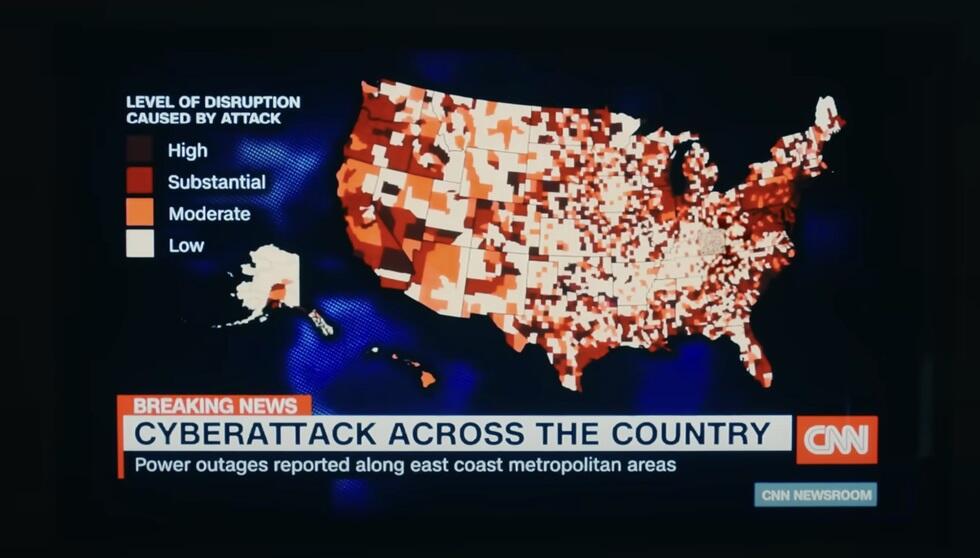
There has been a lot of buzz lately about a recently released film by Netflix titled ‘Leave The World Behind’ based on a novel by the same name.  The plot revolves around a catastrophic collapse in the US triggered by a cyber attack (and mass drone attack) that shuts down the internet and disrupts the global economy, leading to questions of who might have been behind the sabotage?

The most interesting aspect of the film is not so much the story (which is lackluster at best), but the fact that Barack Obama was so deeply involved in the making of the film as executive producer and as adviser on the script. This has led many people to suggest the movie is actually predictive programming – Propaganda designed to acclimate the masses to the idea of an event that is planned to happen in the near future.

Similar concerns were raised back in 2021 when the World Economic Forum oversaw a “war game” called Cyberpolygon, an event meant to simulate a massive cyber attack on the vulnerable functions of the world-wide web. The reason Cyberpolygon raised so many eyebrows was perfectly understandable; the WEF had also hosted another simulation at the end of 2019 called Event 201. The game, which included the CEOs of some of the most powerful health and media corporations in the world along with numerous government officials, “coincidentally” focused on the outbreak of a global coronavirus pandemic, and it was held only a couple of months before the real thing happened.

In other words, it was as if the globalists at the WEF knew that covid was about to strike.

While Hollywood interpretations of cyber attacks are usually exaggerated in terms of the true effects, there is a very real and considerable threat associated with such a disaster. So-called “experts” in the tech field often dismiss the wider dangers to the internet itself because they have been indoctrinated into believing that the design of the web has too many redundancies. In other words, they act as if it is invincible.

This is not really the case. Though data loss can be prevented through cloud storage, the internet as a mechanism can still be shut down or taken down deliberately for long periods of time.

In the past I have written about a very interesting event that was barely covered by the corporate media called the “Fastly Outage.”  In June of 2021 there was an internet outage that led to large swaths of the web going completely dark, including a number of mainstream news sites, Amazon, eBay, Twitch, Reddit. A host of government websites also went down. All this happened when content delivery network (CDN) company Fastly experienced a “bug.” Although Amazon had its website back online within 20 minutes, the brief outage cost the company over $5.5 million in sales.

A content delivery network is a geographically distributed network of proxy servers and their data centers. They make up the what is known as the “backbone” of the internet.

Fastly identified and fixed the problem within two hours and continues to claim the outage had nothing to do with a cyber attack. However, a huge vulnerability for the internet (a center of structural support Carl von Clausewitz would’ve called a “schwerpunkt”) was revealed to the public. A sizable portion of the web is dependent on only a handful of CDN companies, including Fastly.

It is also through collusion with these companies that governments are able to implement an “internet kill switch” in the face of possible civil unrest. A cyber attack would simply remove the government as the arbiter (or act as a false flag scapegoat so the government can avoid blame).  But what would really happen if we lost the internet for a week, or a month or a year? In the US the result would be calamity because our economy has become far too dependent on digitization.

Around 10% of US GDP is directly tied to online commerce. This doesn’t seem like much, but a loss of that GDP would send the US into immediate and steep recession. Around 17 million jobs in the US are generated by commercial internet enterprises, and around 38% of these workers are employed by small businesses. According to surveys 70% of American workers say they cannot do their jobs effectively without internet access.

Keep in mind, if the trend of “work from home” during the covid lockdowns had stuck, an even bigger piece of the economy would be dependent on the health of the web.

The five industries considered most vulnerable to cyber attack are public administration, healthcare and pharmaceuticals, finance and insurance, education and retail. That is to say, these are the industries that are attacked most often. Attacks on vital utilities are usually the favorite set pieces for disasters portrayed in fiction and film, but these are actually far less worrisome. The real danger is the potential for an attack on the internet as a system. All it would take is for a couple CDNs or more to be hit simultaneously to cause vast online blackouts.

Most important of all are the ways in which international banking and finance utilize online networks to maintain the flow money. Without the web, trade velocity dies immediately and building it back from implosion could take years.

But who would benefit from such an attack? Certainly, foreign powers might see the crippling of America’s digital infrastructure as a way to severely damage the country without having to fight directly and militarily. However, there are also a number of benefits to the globalists.

For example, one of the biggest obstacles for the elites during their attempt to institute medical tyranny and the ‘Great Reset’ during covid was the proliferation of factual data that debunked the pandemic narrative. American conservatives represented a serious barrier to their success with tens of millions of gun owning patriots refusing to comply. The harder they pushed, the greater the chance of an armed insurgency.

Even though the establishment had every single Big Tech conglomerate on their side when it came to mass censorship of contrary information, they still failed to stop the spread of the truth – Covid was nowhere near the threat they hyped it up to be and the public was quickly made aware of this by the alternative media. The elites did not have as much control over the web as they thought they did.

In the event of a large scale cyberattack, the internet could be shut down completely, leaving only corporate media sources to filter information and control the narrative. The alternative media would be silenced and the public would be left in confusion, desperately searching for answers. Interestingly, this is a core theme of Obama’s ‘Leave The World Behind’ – The idea of a population utterly cut off from reliable information and scrambling to figure out who is attacking them.

The internet has become an integral pillar of western economies to the point that a majority of people would not know how to live without it should it disappear. This is the disturbing reality we face in the midst of a growing series of geopolitical conflicts and more oppressive governments. It would seem it’s only a matter of time before there’s a major disruption.

The solution is pretty straightforward – Localization of trade and production is the way to prevent full spectrum collapse, and alternative communication networks such as ham radio networks can prevent information silence. There is no reason why Americans should have to become subservient to the whims of globalism, the interdependent supply chain or digitization; they can and should create their own backup plan. Getting people to realize this and implement basic local measures is where we run into difficulties. Sadly, a lot of first-world citizens assume that the system will always be there for them when they need it, and they don’t actively seek out solutions until disaster is at their doorstep.

Tyler Durden
Sat, 01/06/2024 – 23:20

Dry January? These Are The Most Popular Cocktails For 2024

0
Dry January? These Are The Most Popular Cocktails For 2024

Dry January might be be required to recover from the excesses of the holidays, but a whole new year beckons with more successes, milestones, and achievements, perhaps requiring more or less libations, depending on the country one is from.

But what are people craving from their alcohol mixes?

Visual Capitalist’s Marcus Lu charts out the most popular cocktail drinks in 2024, according to the annual consumer survey from the Bacardi Cocktail Trends Report.

Ranked: Most Popular Cocktails for 2024

The ever-versatile, but long-enduring Gin & Tonic comes in at first place (28%) for the most popular cocktail drink chosen by Bacardi’s survey respondents.

Allegedly, the Gin & Tonic traces back to 19th century India, when English soldiers began mixing their daily rations of quinine tonic with gin. Quinine was a common malaria drug up until the early 1900s.

The modern G&T is coupled with a fistful of ice and makes for a refreshing summer beverage. Its popularity is unparalleled across the Commonwealth, but also finds patrons in Europe, the U.S., Japan, and the Netherlands.

Note: The survey was designed as multiple choice, thus percentages do not sum to 100.

Another classic summer favorite, the Mojito comes in a close second (27%) by those surveyed. The white rum based cocktail originated in Cuba, though there is much debate on who (or which group) invented it first. Variations include using tequila instead of rum, adding muddled fruit, and switching out lime for lemon juice.

The Margarita and Bloody Mary tie for fourth place and the unpretentious but clearly popular Whiskey and Coke rounds out the top five.

Another 19% also love Piña Coladas (and possibly also dancing in the rain), a delicious blended mix of white-rum, cream of coconut, and pineapple juice. This island favorite is the official drink of Puerto Rico, from where it originates.

Ranked seven to 10, are two more rum-based drinks (the Daiquiri, and the Rum and Coke) and two lemonade mixes with gin and vodka respectively.

Tyler Durden
Sat, 01/06/2024 – 22:45

Global Security In 2024: 5 Contextual Trends, 10 Possibilities

0
Global Security In 2024: 5 Contextual Trends, 10 Possibilities

Authored by Gregory Copley via The Epoch Times,

It is more than probable that 2024 will create a confluence of major strategic trends, which could increase the likelihood of formal, kinetic conflict and continued global economic decline…

Each year of the past three decades has seemed like a pivotal year in the evolution of the post-Cold War global strategic architecture, and, indeed, that has been the case. But 2024 promises to provide a number of highly significant watersheds in the progress of that new global framework.

We should review the major concerns in priority order, in terms of the known probable events and their consequences, bearing in mind that some “uncertain” factors will move into the “certain” column during the year. The interactions from events will, to an extent, develop in accordance with their coincidence with other events. Note that all pivotal events interact with each other; nothing is evolving in isolation.

What is significant, though, is that there are globally pervasive socio-economic trends that provide an additional contextual layering or background.

These are the result of the accretion of event trends underway for decades.

These should be taken as part of the framework for 2024’s geopolitical pivot points. These include the following:

  1. By the early 21st century or even the late 20th century, the exhaustion of the urban-industrial republican reforms began around the late 17th century and created several hundred years of growth, wealth, and the modern form of democracy. The maturity and exhaustion of these societies are now starting to give way to increasingly autocratic governance and lowered national productivity.

  2. The pattern of global population decline, already well underway everywhere except India and Africa (and foreseeable there in the coming decades), is causing a major drop in wealth and population health, and requires the consideration of new economic models geared to declining market sizes and declining technological innovation levels.

  3. A peaking and subsequent decline in the appeal and efficiency of major urban agglomerations is impacting political power centralization.

  4. The overwhelming and deepening decline in prestige—and therefore coercive capability—of literally all major powers in the world has ushered in an era of distrust, a lowered efficacy of military alliances, and a willingness by governments to “go their own way,” increasing the prospect for “unintended consequences,” including unanticipated conflict.

  5. The continued decline, with no reverse at present foreseeable, in the pace of scientific and technological breakthroughs or disruptive events, and a decrease in the volume and efficacy of research and development funding and marketplace trust in “scientific saviors.”

Against this background, one must consider more immediate consequences that could possibly come to fruition in 2024, such as the following (and their timeline and priority could change as incidents trigger responses):

Communist China

The deep, ongoing economic collapse of communist China is leading to strategic consequences at the domestic, regional, and global levels. This could include reactive, high-risk military action by China against other states, particularly Taiwan and Vietnam, in 2024, if Chinese leader Xi Jinping were to retain power. That could result in major escalation and broadening of such conflicts, resulting in the further reduction of the Chinese regime and the removal of the Chinese Communist Party (CCP).

Taiwanese military personnel drive a CM-25 armored vehicle across the street during the Han Kuang military exercise, which simulates China’s People’s Liberation Army (PLA) invading the island in New Taipei City, Taiwan, on July 27, 2022. (Annabelle Chih/Getty Images)

Alternately, Xi’s removal from power in 2024 could result in a stabilized but greatly chastened and impoverished mainland Chinese society in which the CCP could retain carefully balanced control. It is also possible that an unchecked military action initiated by Xi could then trigger his removal by the Party. The prospect, at the beginning of 2024, was that the growing rift between Xi and the People’s Liberation Army (PLA), as well as the growing Party and public confrontation of Xi, may preempt action by Xi.

US Presidential Election

The U.S. presidential election of November 2024 will clearly impact U.S. domestic harmony and international actions, as well as the trend path of the power of the U.S. dollar globally. With the probability of a decline in prestige and power projection capability of both the United States and China, the question arises as to which power will attempt to fill the power vacuum during the transitional phase-out or reduction of the Pax Americana phase of the “rules-based world order.”

Will the United States accelerate or slow the pace of economic vulnerability due to its debt service crisis? And what could trigger a global debt crisis?

Balance of Power in Middle East, North Africa

The overflow of the Ethiopian civil war, the Sudanese civil war, and Egypt’s socio-economic crisis into global politics impacting the Red Sea/Suez sea lane is intimately linked with the restructuring of the Middle Eastern and North African (particularly the Horn of Africa) balance of power. This will be accompanied by a stabilization in the Levant through a conclusive outcome to the Gaza war (albeit not with an end to sporadic conflict between Israel and its immediate neighbors).

Meanwhile, a change of power in Ethiopia could substantially alter the Red Sea/Suez Canal trade route in positive terms. It could lead to a regional accord with Egypt to dramatically transform the region.

Israel–Hamas War

The consequences of the Israel–Hamas war as a wider phenomenon, particularly impacting the actions of Turkey and Iran, and subsequently their relationship with Russia, has the potential impact on the Russian-controlled International North-South Transport Corridor (INSTC) and the rise of India as a stand-alone strategic pretender.

The Iranian involvement in the Hamas conflict may have brought the Iranian clerical leadership under possibly terminal pressure despite the INSTC alliance, which had promised the clerics security under a Russian blanket.

Russia–Ukraine War

A negotiated end to the Ukraine–Russia war, possibly by spring 2024, but certainly by the end of 2024, may lead to the possible scaling back of U.S. dollar-based sanction weapons to recover ground lost to the BRICS-plus (Brazil, Russia, India, China, South Africa, plus new members) bloc and others that felt threatened by U.S. unilateralism in sovereignty intervention through the dollar. That may well depend on the outcome of the U.S. presidential election.

Venezuela–Guyana Dispute

The impact of the Venezuelan escalation of its conflict with Guyana has the potential to cause the United States to refocus on the Americas, coupled with a potential slowing of the anti-dollar trend among BRICS-plus bloc member states.

A man walks by a mural campaigning for a referendum asking Venezuelans to consider annexing the Guyana-administered region of Essequibo in Caracas, Venezuela, on Nov. 28, 2023. (Federico Parra/AFP via Getty Images)

The question is whether this is occurring too late for the United States to take advantage of the possible opportunity, largely because of the mass dollar debt owed by the U.S. government, and because of the U.S. political addiction to the weaponized use of sanctions depending on the use of dollars as a tool to punish adversaries, disregarding the long-term build-up of concerns among U.S. allies and trading partners that the weapon could be used against them.

Africa

There is a move toward comprehensive rejection of foreign great power dominance in Africa. That is occurring because of the decline in great power resources and budgets and, in particular, because of the declining prestige and influence of those external powers.

At the same time, African frustration with imported geopolitical models, including artificial borders, is being matched by the growth, or return, of African philosophical and cultural approaches to governance. All of this, coupled with European and North American governance issues, will interact with the global population movement crisis.

Green Energy

There is a slowing down—because of declining prosperity—of trends to end fossil fuel dependence and artificially stimulate pseudo-green technologies while markets move back into a moderating position on energy sources.

Key Western governmental initiatives to create an artificial market for green and pseudo-green energy technologies for political purposes are now, in 2024, facing increasing societal resistance due to the declining economies and increasing difficulty in sustaining wealth levels, despite governmental initiatives to control the market.

Technological Developments

The continued decline in the pace of scientific and technological advancement rates, already mentioned in the contextual trends as being in evidence since the early years of the 21st century, will still see key areas advance incrementally, but with fewer breakthrough technologies occurring, and at a higher cost per incident.

This is likely to see societies—and armed forces—opting for a mix of practical, older technologies and practices despite governments often attempting to legislate the obsolescence of valid existing technologies.

In the military sense, the attempts to evolve older weapons systems (such as the U.S. F-15 fighter, the B-52 bomber, the M1 Abrams tank family, 1960s-based hypersonic capabilities, and anti-satellite weapons) are symptomatic of the process.

Societal Polarization

The further polarization of many “modern” societies under modern forms of democracy is likely to be evident, particularly in the United States, Canada, Western Europe, Australia, and possibly India. Significantly, none of these societies has legal mechanisms available to overturn such societal polarization and the increasing paralysis and exhaustion of the state apparatus.

This means that unprecedented catalysts—possibly outside their respective constitutions—must occur for each of these types of societies to change in order to cope with the necessity to create new models and shed old obligations, or else state paralysis and polarization are likely to continue.

All of these trends are part of the natural cycle of societies. Still, we see them now in the light of modern communications technologies, and we are seeing them harmonizing on a global level. Initial responses have been to attempt to stem the pace of collapse rather than to look at strategies for the emerging era beyond the short-term uncertainties.

Tyler Durden
Sat, 01/06/2024 – 22:10