72.7 F
Chicago
Wednesday, September 16, 2026
Home Blog Page 3030

Has The Global Food Inflation Crisis Been Averted?

0
Has The Global Food Inflation Crisis Been Averted?

The latest United Nations’ Food and Agriculture Organization data shows global food prices have just recorded the biggest annual decline since 2015. This is terrific news for emerging market countries whose governments have been battling high food inflation with mounting risks of social instability.  

The FAO Food Price Index, which tracks monthly changes in the international prices of globally traded food commodities, averaged around 118.51 at the end of 2023, down 10% from the previous year. 

Although the index tracks the costs of raw commodities rather than consumer retail prices, the declines offer hints of easing supermarket prices in 2024. The jump in the index derives from many issues, such as Russia’s invasion of Ukraine, global supply chain snarls, soaring inflation, and El Nino-related weather disruptions, which ignited a global cost-of-living crisis. 

Bloomberg noted, “Corn and wheat futures prices saw their biggest annual declines in a decade last year, as supply concerns faded. Futures prices for hogs and palm oil also posted big declines.” 

Even though the global food index has dropped a quarter since peaking in March 2022, the index remains just below levels responsible for anti-government protests, uprisings, and armed rebellions in the 2010 Arab Spring. 

As we noted in November, “Arab Spring 2.0? Gro Intelligence’s Head Warns Global Food Crisis’ Much Worse Than 2008′,” the world is not out of the woods yet. And this, “Rice Nears 15-Year High As Global Food Crisis ‘Much Worse Than 2008’.” 

Tyler Durden
Sat, 01/06/2024 – 08:45

Israeli Cabinet Meeting Erupts In Anger Over Plan For Army To Probe Oct.7 Mistakes

0
Israeli Cabinet Meeting Erupts In Anger Over Plan For Army To Probe Oct.7 Mistakes

Via Middle East Eye

An Israeli diplomatic-security cabinet meeting which took place on Thursday evening came to an abrupt end when a row broke out, according to Israeli media. The cabinet meeting was held to discuss the future of the Gaza Strip after Israel’s war on the besieged enclave ends. However, lawmakers clashed with the chief of staff and the defense establishment over an investigation into the mistakes and conduct of Israeli soldiers around the 7 October Hamas attack on Israel

Lawmakers said that the probe, which was set to look into failure to prepare for the attack, was promised to start immediately after the war on Gaza ended. Reports in Israeli media stated that the meeting lasted for three and a half hours, before “exploding”.

Via NBC

Chief of Staff Herzi Halevi, National Security Minister Itamar Ben Gvir, Finance Minister Bezalel Smotrich, and Transport Minister Miri Regev were among those involved in the intense discussions.

Regev said the decision over the probe had been made without lawmakers’ knowledge, arguing that the army should be fully focused on combat at the moment.

Row over Gaza future

The discussion on what should happen following the war on Gaza has revealed deep ideological divides within the coalition, with Ben Gvir and Smotrich reiterating their belief in the meeting that Palestinians in Gaza should be permanently displaced and replaced with Israeli settlers

Another point of contention during the meeting was the announcement that the investigation is set to include former defense minister, Shaul Mofaz. The decision stirred discontent with far-right politicians, due to his involvement in Israel’s unilateral withdrawal from Gaza in 2005 and being a key figure in security coordination with the Palestinian Authority. 

A minister told Hebrew outlet Kan News that the discussions were “despicable” and that the army was attacked, causing “some senior members of the defense establishment to leave in the middle.”

There was also conflict over whether a full team had been appointed to carry the investigation out, to which there was no clear answer given. Ben Gvir reportedly defended his right to question the chief of staff, saying “not all criticism is blasphemy, we are the ministers and this is our job.”

Israeli Prime Minister Benjamin Netanyahu eventually cut off all discussion, ending the meeting and saying that it would continue another time.

‘Stormy discussions’

On Friday, Smotrich responded to the Israeli media reports of the meeting, saying that the meeting did not “explode” and instead the meeting was set to end at midnight.

“Indeed, in the last five minutes there was a stormy discussion on the issue of the investigative team, but the loud voices were between the ministers and not in front of the chief of staff,” he posted on X. 

He added that the discussions were based around three main topics: the right to engage in investigation while the war is ongoing; if investigations should be dealt with internally with the military, or if there should be involvement from a political level; and the involvement of Mofaz.

“My position is that operative investigations designed to draw lessons relevant to the continuation of the war must be done during the war, all the rest after the war. As far as I understand, this is also the position of the chief of staff,” he added, saying that his belief is that it is a matter for the army.

Israeli politician Yair Lapid also took to X to decry the leaks from the meeting as a “disgrace and further proof that this cabinet is dangerous.” He added: “The State of Israel must replace the government and its leader. These people are not worthy of the sacrifice and heroism of IDF men and women, and will not be able to lead a strategic decision. They have to go now.”

War broke out in Israel and Gaza on 7 October, when Hamas and armed Palestinian groups launched an attack on Israel that killed around 1,140 people, according to the government death toll. Meanwhile, Israel has killed more than 22,000 Palestinians in its aerial bombing campaign and ground assault, mostly women and children, according to the Palestinian health ministry.

Tyler Durden
Sat, 01/06/2024 – 08:10

Germany Is Europe’s Solar-Energy Front-Runner

0
Germany Is Europe’s Solar-Energy Front-Runner

According to assessments by the International Renewable Energy Agency in 2022, Germany had an installed photovoltaic capacity of around 67 gigawatts, making it the European country with the greatest solar energy potential.

As Statista’s Anna Fleck details below, the capacity of the Federal Republic in that year was more than twice as high as Italy’s, which ranked second with 25 gigawatts.

But, as the graphic illustrates, the expansion of solar potential in Germany over the past decade has been comparatively sluggish within Europe.

Infographic: Germany Is Europe's Solar Energy Front-Runner | Statista

You will find more infographics at Statista

The photovoltaic capacity of the Federal Republic showed an annual average growth rate of around six percent between 2013 and 2022. In terms of the eight European countries with the highest solar capacities, this places Germany in seventh position ahead of Italy. The growth champion in this group is Poland, which has been able to increase its capacities by 137 percent per year since 2013.

Between 2020 and 2022 alone, the country nearly tripled its solar potential. The Netherlands ranks second in this category with an average annual growth of 40 percent, and the United Kingdom is in third place with approximately 17 percent.

Globally, the capacity of installed and grid-connected photovoltaic systems in 2022 reached about one terawatt or 1,000 gigawatts. This accounts for approximately one-third of the capacity of all renewable energies or about 12 percent of the total capacity for electricity generation. China made the largest contribution to the expansion of solar capacity in that year. The East Asian country accounted for about one-third of the installed capacity of renewable energies and approximately 57 percent of global solar energy capacity. Additionally, according to the Statistical Federal Office, around nine out of ten solar panels imported to Germany in 2022 came from the People’s Republic of China.

Outside of Europe, the United States, Japan, and India are among the countries with the highest photovoltaic capacities.

Tyler Durden
Sat, 01/06/2024 – 07:35

Sachs: US Foreign Policy Is A Scam Built On Corruption

0
Sachs: US Foreign Policy Is A Scam Built On Corruption

Authored by Jeffrey Sachs via CommonDreams.org,

On the surface, US foreign policy seems to be utterly irrational. The US gets into one disastrous war after another — Afghanistan, Iraq, Syria, Libya, Ukraine, and Gaza. In recent days, the US stands globally isolated in its support of Israel’s genocidal actions against the Palestinians, voting against a UN General Assembly resolution for a Gaza ceasefire backed by 153 countries with 89% of the world population, and opposed by just the US and 9 small countries with less than 1% of the world population.

In the past 20 years, every major US foreign policy objective has failed. The Taliban returned to power after 20 years of US occupation of Afghanistan. Post-Saddam Iraq became dependent on Iran. Syria’s President Bashar al-Assad stayed in power despite a CIA effort to overthrow him. Libya fell into a protracted civil war after a US-led NATO mission overthrew Muammar Gaddafi. Ukraine was bludgeoned on the battlefield by Russia in 2023 after the US secretly scuttled a peace agreement between Russia and Ukraine in 2022.

To understand the foreign-policy scam, think of today’s federal government as a multi-division racket controlled by the highest bidders.

Despite these remarkable and costly debacles, one following the other, the same cast of characters has remained at the helm of US foreign policy for decades, including Joe Biden, Victoria Nuland, Jake Sullivan, Chuck Schumer, Mitch McConnell, and Hillary Clinton.

What gives?

The puzzle is solved by recognizing that American foreign policy is not at all about the interests of the American people. It is about the interests of the Washington insiders, as they chase campaign contributions and lucrative jobs for themselves, staff, and family members. In short, US foreign policy has been hacked by big money.

As a result, the American people are losing big. The failed wars since 2000 have cost them around $5 trillion in direct outlays, or around $40,000 per household. Another $2 trillion or so will be spent in the coming decades on veterans’ care. Beyond the costs directly incurred by Americans, we should also recognize the horrendously high costs suffered abroad, in millions of lives lost and trillions of dollars of destruction to property and nature in the war zones.

The costs continue to mount. US Military-linked outlays in 2024 will come to around $1.5 trillion, or roughly $12,000 per household, if we add the direct Pentagon spending, the budgets of the CIA and other intelligence agencies, the budget of the Veteran’s Administration, the Department of Energy nuclear weapons program, the State Department’s military-linked “foreign aid” (such as to Israel), and other security-related budget lines. Hundreds of billions of dollars are money down the drain, squandered in useless wars, overseas military bases, and a wholly unnecessary arms build-up that brings the world closer to WWIII.

Yet to describe these gargantuan costs is also to explain the twisted “rationality” of US foreign policy. The $1.5 trillion in military outlays is the scam that keeps on giving—to the military-industrial complex and the Washington insiders—even as it impoverishes and endangers America and the world.

To understand the foreign-policy scam, think of today’s federal government as a multi-division racket controlled by the highest bidders. The Wall Street division is run out of the Treasury. The Health Industry division is run out of the Department of Health and Human Services. The Big Oil and Coal division is run out of the Departments of Energy and Interior. And the Foreign Policy division is run out of the White House, Pentagon and CIA.

Each division uses public power for private gain through insider dealing, greased by corporate campaign contributions and lobbying outlays. Interestingly, the Health Industry division rivals the Foreign Policy division as a remarkable financial scam. America’s health outlays totaled an astounding $4.5 trillion in 2022, or roughly $36,000 per household, by far the highest health costs in the world, while America ranked roughly 40th in the world among nations in life expectancy. A failed health policy translates into very big bucks for the health industry, just as a failed foreign policy translates into mega-revenues of the military-industrial complex.

The more wars, of course, the more business.

The Foreign Policy division is run by a small, secretive and tight-knit coterie, including the top brass of the White House, the CIA, the State Department, the Pentagon, the Armed Services Committees of the House and Senate, and the major military firms including Boeing, Lockheed Martin, General Dynamics, Northrop Grumman, and Raytheon. There are perhaps a thousand key individuals involved in setting policy. The public interest plays little role.

The key foreign policy makers run the operations of 800 US overseas military bases, hundreds of billions of dollars of military contracts, and the war operations where the equipment is deployed. The more wars, of course, the more business. The privatization of foreign policy has been greatly amplified by the privatization of the war business itself, as more and more “core” military functions are handed out to the arms manufacturers and to contractors such as Haliburton, Booz Allen Hamilton, and CACI.

In addition to the hundreds of billions of dollars of military contracts, there are important business spillovers from the military and CIA operations. With military bases in 80 countries around the world, and CIA operations in many more, the US plays a large, though mostly covert role, in determining who rules in those countries, and thereby on policies that shape lucrative deals involving minerals, hydrocarbons, pipelines, and farm and forest land. The US has aimed to overthrow at least 80 governments since 1947, typically led by the CIA through the instigation of coups, assassinations, insurrections, civil unrest, election tampering, economic sanctions, and overt wars. (For a superb study of US regime-change operations from 1947 to 1989, see Lindsey O’Rourke’s Covert Regime Change, 2018).

In addition to business interests, there are of course ideologues who truly believe in America’s right to rule the world. The ever-warmongering Kagan family is the most famous case, though their financial interests are also deeply intertwined with the war industry. The point about ideology is this. The ideologists have been wrong on nearly every occasion and long ago would have lost their bully pulpits in Washington but for their usefulness as warmongers. Wittingly or not, they serve as paid performers for the military-industrial complex.

There is one persistent inconvenience for this ongoing business scam.

In theory, foreign policy is carried out in the interest of the American people, though the opposite is the truth. (A similar contradiction of course applies to overpriced healthcare, government bailouts of Wall Street, oil-industry perks, and other scams). The American people rarely support the machinations of US foreign policy when they occasionally hear the truth. America’s wars are not waged by popular demand but by decisions from on high.

Special measures are needed to keep the people away from decision making.

The first such measure is unrelenting propaganda. George Orwell nailed it in 1984 when “the Party” suddenly switched the foreign enemy from Eurasia to Eastasia without a word of explanation. The US essentially does the same. Who is the US gravest enemy? Take your pick, according to the season. Saddam Hussein, the Taliban, Hugo Chavez, Bashar al-Assad, ISIS, al-Qaeda, Gaddafi, Vladimir Putin, Hamas, have all played the role of “Hitler” in US propaganda. White House spokesman John Kirby delivers the propaganda with a smirk on his face, signaling that he too knows that what he is saying is ludicrous, albeit mildly entertaining.

The propaganda is amplified by the Washington think tanks that live off of donations by military contractors and occasionally foreign governments that are part of the US scam operations. Think of the Atlantic Council, CSIS, and of course the ever-popular Institute for the Study of War, brought to you by the major military contractors.

The second is to hide the costs of the foreign policy operations. In the 1960s, the US Government made the mistake of forcing the American people to bear the costs of the military-industrial complex by drafting young people to fight in Vietnam and by raising taxes to pay for the war. The public erupted in opposition.

From the 1970s onward the government has been far more clever. The government ended the draft, and made military service a job for hire rather than a public service, backed by Pentagon outlays to recruit soldiers from lower economic strata. It also abandoned the quaint idea that government outlays should be funded by taxes, and instead shifted the military budget to deficit spending which protects it from popular opposition that would be triggered if it were tax-funded.

It has also suckered client states such as Ukraine to fight America’s wars on the ground, so that no American body bags would spoil the US propaganda machine. Needless to say, US masters of war such as Sullivan, Blinken, Nuland, Schumer, and McConnell remain thousands of miles away from the frontlines. The dying is reserved for Ukrainians. Sen. Richard Blumenthal (D-Conn.) defended American military aid to Ukraine as money well spent because it is “without a single American service woman or man injured or lost,” somehow not dawning on the good Senator to spare the lives of Ukrainians, who have died by the hundreds of thousands in a US-provoked war over NATO enlargement.

This system is underpinned by the complete subordination of the U.S. Congress to the war business, to avoid any questioning of the over-the-top Pentagon budgets and the wars instigated by the Executive Branch. The subordination of Congress works as follows. First, the Congressional oversight of war and peace is largely assigned to the House and Senate Armed Services Committees, which largely frame the overall Congressional policy (and the Pentagon budget). Second, the military industry (Boeing, Raytheon, and the rest) funds the campaigns of the Armed Services Committee members of both parties. The military industries also spend vast sums on lobbying in order to provide lucrative salaries to retiring members of Congress, their staffs, and families, either directly in military businesses or in Washington lobbying firms.

The hacking of Congressional foreign policy is not only by the US military-industrial complex. The Israel lobby long ago mastered the art of buying the Congress. America’s complicity in Israel’s apartheid state and war crimes in Gaza makes no sense for US national security and diplomacy, not to speak of human decency. They are the fruits of Israel lobby investments that reached $30 million in campaign contributions in 2022, and that will vastly top that in 2024.

When Congress reassembles in January, Biden, Kirby, Sullivan, Blinken, Nuland, Schumer, McConnell, Blumenthal and their ilk will tell us that we absolutely must fund the losing, cruel, and deceitful war in Ukraine and the ongoing massacre and ethnic cleansing in Gaza, lest we and Europe and the free world, and perhaps the solar system itself, succumb to the Russian bear, the Iranian mullahs, and the Chinese Communist Party. The purveyors of foreign policy disasters are not being irrational in this fear-mongering. They are being deceitful and extraordinarily greedy, pursuing narrow interests over those of the American people.

It is the urgent task of the American people to overhaul a foreign policy that is so broken, corrupted, and deceitful that it is burying the government in debt while pushing the world closer to nuclear Armageddon. This overhaul should start in 2024 by rejecting any more funding for the disastrous Ukraine War and Israel’s war crimes in Gaza. Peacemaking, and diplomacy, not military spending, is the path to a US foreign policy in the public interest.


Tyler Durden
Fri, 01/05/2024 – 23:40

These Are The Institutions Americans Trust Most (And Least)

0
These Are The Institutions Americans Trust Most (And Least)

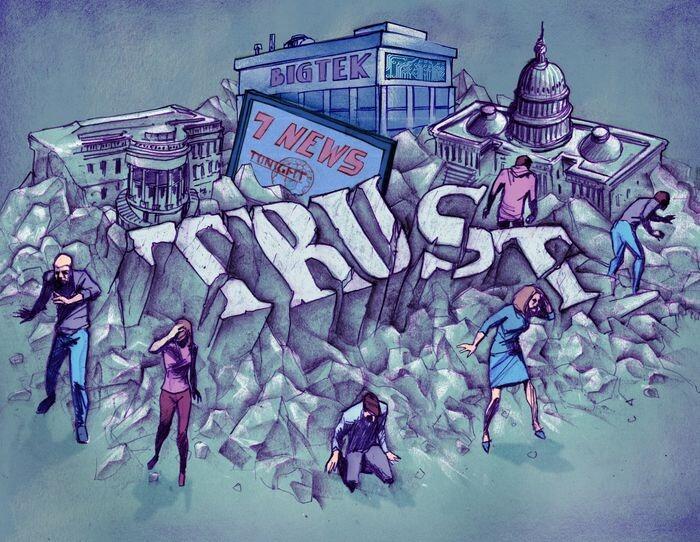
In just a couple of days it will be three years since the January 6 United States Capitol attack.

Ahead of our ‘Jan 6’ debate on Saturday, it feels apt to take a step back to try and capture an overview of the state of trust in institutions in the United States.

As Statista’s Anna Fleck detail below, based on data collected by Gallup in June 2023, of the institutions selected, only the military and small businesses saw a great deal or a fair amount of trust in them from a majority of U.S. respondents.

This is at odds with Congress, which saw only 8 percent of people say they had trust in the political institution.

Infographic: The Institutions Americans Trust Most And Least | Statista

You will find more infographics at Statista

Gallup has been asking this question on trust since 1973.

Over the past 50 years, there have been significant fluctuations in responses.

For instance, the police saw an all-time low level of trust in 2023, with just 43 percent of respondents saying they had a great deal/quite a lot of trust in them.

But three other institutions hit their lowest levels of trust last year too, including public schools with 26 percent (on par with 2014), large tech companies with 26 percent (on par with 2022) and big business with 14 percent (on par with 2022).

In 2022, public confidence declined in 11 out of the 16 institutions tracked by Gallup, with trust in the Supreme Court falling by 11 percentage points to 25 percent, and in the presidency by 15 percentage points to 23 percent. These hardly improved in 2023, rising to just 27 percent and 26 percent, respectively.

Tyler Durden
Fri, 01/05/2024 – 23:20

“It’s One Of The Great Mysteries,” Why COVID Spares Children

0
“It’s One Of The Great Mysteries,” Why COVID Spares Children

Authored by Marina Zhang via The Epoch Times (emphasis ours),

Bali Pulendran, a professor of microbiology, immunology, and pathology at Stanford University, has researched a mystery unique to COVID-19 for two years.

For almost every infectious disease, the most vulnerable populations are at the extremes of age—the very young and the very old,” he once said. “But with COVID-19, the young are spared.”

The picture surrounding this enigma is still incomplete, but answers are forthcoming.

(Illustration by The Epoch Times, Shutterstock)

Children Are Different

Children are not mini-adults. Depending on their age, they can have similar or very different responses to infectious diseases.

In the case of COVID-19, children generally experience a milder form of the disease.

It’s an interesting question that no one has fully answered,” said Dr. Cody Meissner, a professor of pediatrics at Dartmouth College’s Geisel School of Medicine, in an interview with The Epoch Times. “Several theories have been put forward to try and explain this.”

The primary reason is that children have a faster innate immune system, often referred to as the first line of defense, compared to adults. This enables them to mount a robust defense against respiratory infections more quickly.

Another explanation is that children are more susceptible to respiratory infections, and some of these prior infections may provide them with a degree of immune protection against COVID-19.

Anatomically speaking, children not fully grown are at a disadvantage when exposed to respiratory diseases. They have smaller airway diameters, meaning more severe symptoms when the airways get inflamed or have mucus build up.

They also have a smaller lung capacity, making them more prone to hypoxia with respiratory infection, professor of immunology Kenneth Rosenthal, PhD, told The Epoch Times.

However, compared to adults, children have been found to have higher levels of innate immune cells in the nose, which can help eliminate viruses early on.

Children’s advantages and disadvantages when fighting respiratory diseases. (Illustration by The Epoch Times, Shutterstock)

“SARS-CoV-2 targets ACE-2 and TMPRSS, and these are expressed more in older adults,” Dr. Lael Yonker, pediatric pulmonologist and the co-director of Massachusetts General Hospital’s pulmonary genetics clinic, told The Epoch Times. Children, in comparison, have fewer of both receptors, which may reduce the number of viral invasions.

Strong Innate Immunity

While children tend to have a fast and robust innate immune response, studies have found that most adults who experience severe COVID-19 tend to have an impaired innate immune response.

The innate immune response is the immune system we inherit when born.

“[The immune response is] always there and ready to respond to microbes and triggers on the fly,” Mr. Rosenthal explained. In contrast, the adaptive immune system, which is more developed in adults, can generate more memorized, targeted immunity. However, it is slower to respond and can take days to activate.

This is not to say that children do not have an adaptive immune response. But since this type of immunity is built up by experiences with viruses and other pathogens, children tend to have accumulated less immunological memory than adults.

In the case of COVID-19, children generally have milder disease. (Jon Cherry/Getty Images)

Vaccination is primarily used to bolster adaptive immunity while children are young.

The most common innate protection impairment researchers saw in adults with severe COVID-19 was a deficit in types 1 and 3 interferons. Studies have shown that children mount the strongest types 1 and 3 interferon responses to COVID-19, and this response diminishes as people age.

A large proportion of adult men prone to more serious COVID have antibodies to interferon,” Mr. Rosenthal said. Consequently, they cannot mount the initial innate response, though scientists do not know why some adults form these antibodies.

The infection progresses unhindered while the immune system attempts to restrain the extensive infection, which could “lead to problematic outcomes,” he added.

This can cause full-blown inflammatory responses.

Natural killer cells, innate immune cells responsible for killing cancer and infected cells, are also more active in children, particularly pre-pubescent children. The cell “dissipates in teen years,” Mr. Rosenthal said.

Less Prone to Inflammatory Storm

A significant risk factor for severe COVID-19 is the inflammatory cytokine storm caused by excessive levels of cytokines in the body.

During an infection, immune cells release cytokines to help activate and coordinate other immune cells. There is always some presence of them in the body.

When the immune system fails to control the infection, and viruses replicate, immune cells dispatch more cytokines as a warning. These cytokines then activate more immune cells, causing intense inflammation, which can lead to tissue damage, organ failure, and eventually death.

Comparison of cells exposed to normal inflammation versus a cytokine storm. (The Epoch Times)

Adults are more prone to cytokine storms because they tend to have more cytokines in the blood, meant to protect their bodies against daily assaults. These include smoke, toxic particles, toxic foods, and certain bacteria that live in our gut, on our skin, or elsewhere, Mr. Rosenthal said. The necessary protective responses produce inflammatory cytokines “on an everyday, routine basis.”

Children, however, have lower baseline cytokine levels due to fewer exposures to environmental and pathogenic assaults. Plus, they generally have healthier constitutions with fewer chronic diseases and unhealthy habits.

Even in the rare case of children developing severe COVID-19, which often presents as multisystem inflammatory syndrome in children (MIS-C), most children quickly recover without any persistent symptoms.

“[Children] were easier to treat than adults. I did not lose a single [pediatric] case, whereas adults, we were losing quite a bit of them,” critical care pulmonologist Dr. Joseph Varon, professor of clinical medicine at the University of Houston, told The Epoch Times.

The Enigma of Mild COVID in Infants

While mild COVID-19 in children and adolescents can be explained away by their fast innate immune systems and generally healthier constitutions, this explanation fails concerning infants and toddlers.

It’s one of the great mysteries of human immunology,” Mr. Pulendran told The Epoch Times.

Infants are typically born with immature innate and adaptive immune systems with weaker constitutions, making them more susceptible to infections. Premature infants are even more vulnerable.

Children under the age of 2 have a much higher chance of dying from respiratory diseases like respiratory syncytial virus (RSV) and influenza than older children and adults under age 50.

In general, infants “do not have any prior immune history and, therefore, no antibodies or T-cell memory to rapidly respond to the challenge,” Mr. Rosenthal said. They also have very few innate immune cells at birth. By the second month of life, they should accumulate enough innate immune cells to overcome this vulnerability.

Full maturation of the immune system occurs in the first seven to eight years of life.

Dehydration is also a deadly factor in infected children and infants due to their higher metabolic rates and reduced water reserves compared to adults.

Yet to researchers’ amazement, infants were largely left unscathed during the COVID pandemic.

Read more here…

Tyler Durden
Fri, 01/05/2024 – 23:00

Big Gov’t Raids Small Amish Farmer Who Refuses To Participate In The Industrial Meat/Milk Complex

0
Big Gov’t Raids Small Amish Farmer Who Refuses To Participate In The Industrial Meat/Milk Complex

Local media, The Lancaster Patriot, reports that the Pennsylvania Department of Agriculture served an all-natural Amish farm in southeastern Pennsylvania with a search warrant on Thursday afternoon. 

The farmer, Amos Miller, has been in the crosshairs with the US Department of Agriculture because of his repeated failures to comply with federal farming regulations. 

The USDA has tried to bring Miller’s farm into compliance with federal regulations, but Amos has yet to cooperate with the Feds and faces fines and jail time. 

A Pennsylvania State Police spokesperson said:

 “The PA Department of Agriculture is conducting a search warrant on this property. Troopers from PSP Lancaster are just assisting with scene security. You will have to reach out to the DOA for information on their investigation.”

According to LancasterOnline, Miller and the Feds have been locked “in a standoff over his compliance with federal food safety rules and failure to pay assessed fines.” 

With his sovereign citizen defense, Miller has tried to thwart the Fed’s overreach to get him to comply with food safety rules. He sells all sorts of food to more than 4,000 buyers, such as organic eggs, raw milk, grass-fed beef and cheese, and fresh produce. He doesn’t use electricity, chemical fertilizers, vaccines, or petroleum products in farming. 

Commenting on the raid, Rep. Thomas Massie (R-Ky.) said, “Looks like Amos Miller’s farm is being raided. With all of the problems in society today, this is what the government wants to focus on?” 

Massie continued, “A man growing food for informed customers, without participating in the industrial meat/milk complex? It’s shameful that it’s come to this. “

Tyler Durden
Fri, 01/05/2024 – 22:40

Green Energy Waste Overlooked In Climate Agenda

0
Green Energy Waste Overlooked In Climate Agenda

Authored by Autumn Spredemann via The Epoch Times (emphasis ours),

The amount of waste piling up from solar panels and wind turbine blades can be measured in tons. And the industry is just getting started.

(Illustration by The Epoch Times, Shutterstock)

Almost all spent solar panels in the United States end up in landfills, and many first- and second-generation panels are already tapping out, well ahead of their anticipated 30-year lifespan.

Added to that will be an estimated 9.8 million metric tons of dead panels to deal with between 2030 and 2060, according to a study published in Science Direct.

Tossing a solar panel into a U.S. landfill currently costs about $1, maybe $2. To recycle that same panel, the cost balloons to $20 to $30, according to an estimate reported by PV Magazine.

Wind turbine parts present a similar challenge, with thousands of blades having already found their way into dumps and fields in Texas, Wyoming, South Dakota, and Iowa.

It’s no small feat to dump a blade. The length of a single wind turbine blade can be more than 200 feet or longer than the wingspan of a Boeing 747, according to the Department of Energy. Offshore wind rigs are even larger.

Currently, about 7,000 blades are scrapped per year in the United States, according to David Morgan, chief strategy officer for Carbon Rivers, a Tennessee-based recycling center for advanced materials.

Of all the glass fiber waste that Carbon Rivers receives, wind turbine blades are the most challenging, Mr. Morgan said.

“They’re a very hardy, robust material. They’re large and cumbersome to deal with,” he told The Epoch Times.

“Large wind turbine blades, travel trailers, boat hulls, and other waste streams can be converted into clean, high-quality glass fiber that can be economically reincorporated into your next car, boat, or turbine blade,” the Carbon Rivers website states.

As wind turbine graveyards have turned into viral video content, the wind industry has become more “conversational” about end-of-life solutions, Mr. Morgan said, but it’s not set up for a “composite circular economy.”

In an aerial view, discarded wind turbine blades are seen in a field next to the Sweetwater Cemetery in Sweetwater, Texas, on Oct. 4, 2023. (Brandon Bell/Getty Images)

When it comes to truly “green” solutions, a “circular economy” is vital, Mr. Morgan said. It’s basically a business model that prioritizes the reuse, repair, or regeneration of materials to continue production in as sustainable a way as possible.

He said renewable waste isn’t just an infrastructure problem, there are also legislation gaps.

“Right now, you can largely landfill wind blades. It varies state by state.”

Some companies backing wind energy—particularly those tied to fossil fuel giants such as Shell Global and General Electric—have left critics dubious about whether true sustainability is part of the existing plan.

The U.S. Environmental Protection Agency (EPA), under former President Donald Trump, identified the looming problems with increasing renewable energy waste.

“Without a strategy for their end-of-life management, so-called green technologies like solar panels, electric vehicle batteries, and windmills will ultimately place the same unintended burdens on our planet and economy as traditional commodities,” former EPA administrator Andrew Wheeler said.

Expanding Industry

As the so-called renewable energy industry expands—largely because of massive subsidies from the Biden administration—so does the waste on the back end.

Solar generation capacity is forecast to increase by more than 38 percent in 2024, according to a Dec. 12 report by the Energy Information Administration (EIA), a U.S. government agency. Wind energy capacity is forecast to increase by 4.4 percent.

Solar panel debris is seen scattered in a solar farm in the aftermath of Hurricane Maria in Humacao, Puerto Rico, on Oct. 2, 2017. (Ricardo Arduengo/AFP via Getty Images)

Despite this notable surge in deployment of renewable energy systems, America’s electric generation in 2022 was primarily (about 60 percent) from fossil fuels—coal, natural gas, petroleum, and other gases, according to the EIA.

Renewable energy sources accounted for about 21 percent and 18 percent was from nuclear energy. An additional fraction was from small-scale solar systems.

Solar panels have a life span of up to 30 years. Understandably, some environmental organizations are raising the alarm.

“If solar and nuclear produce the same amount of electricity over the next 25 years that nuclear produced in 2016, and the wastes are stacked on football fields, the nuclear waste would reach the height of the Leaning Tower of Pisa,” California-based Environmental Progress states.

“The solar waste would reach the height of two Mt. Everests.”

The number of retired wind turbine blades is expected to reach 9,000 per year over the next five years, according to a 2022 analysis published by Chemical and Engineering News.

Mr. Morgan said he’s keeping pace with the inbound waste for now and the company is scaling up operations, including construction of a large-scale facility in Texas. Carbon Rivers has also broadened its scope into anything “composite-based,” including glass fiber and even aerospace parts.

E-Waste

Another area of waste—electronic waste, commonly known as e-waste—is growing at an exponential rate. It’s the fastest-growing solid waste stream in the world and includes renewable items such as solar panels and electric vehicle (EV) batteries.

Only a small portion is being recycled.

One analysis from 2019 released this year showed that of the 53.6 million tons of e-waste produced globally, barely 17 percent was recycled.

“People think plastic is the waste boogeyman … but e-waste is still growing,” Paul Williams, vice president of communications for recycling company ERI, told The Epoch Times.

Focused on breaking down and recycling all kinds of e-waste, Mr. Williams said ERI maintains a “military grade” level of data destruction when it comes to electronics.

Privacy protection is a huge concern with e-waste.

A man walks by an auto scrap yard on the waterfront in the Sunset Park neighborhood of Brooklyn in New York City on Oct. 4, 2016. (Spencer Platt/Getty Images)

“It becomes not just an environmental issue, not just a human rights issue, it’s also a cyber security issue. A lot of technology today contains private data,” he said.

In the early days of e-waste disposal, negligent companies handled e-waste in a way that left the door wide open to data theft.

“What we found were these unscrupulous types were just shipping this stuff to developing nations … and it was a huge privacy challenge because of the data,” Mr. Williams said.

Data security preparations must also be made for EVs, and not just their potentially volatile batteries, but also for the onboard computers in EVs when they reach the end of their life.

“Cars are particularly scary because the type of data that is captured is very personal. It knows your routes, the weight, and sizes of the people sitting in the seats of the car,” he said. “It’s kind of scary to think about.”

While ERI isn’t seeing a lot of solar panels or EV-related battery waste just yet, Mr. Williams said they’re ready for it.

“They will ultimately come to our door. We don’t turn any e-waste away.”

He said great strides have been made in the past two decades regarding the public’s disposal of e-waste.

In the early 2000s, when ERI was first getting started, Mr. Williams says everyone had “old TVs in their garage or attic. People didn’t know what to do with them.”

The same goes for the younger generations with retired cellphones. But he says attitudes have changed over the past 10 to 15 years, and much of that has to do with the data security challenges involved with e-waste.

A sign displays recyclable items at an ‘e-waste’ drop-off location inside a Staples store in Mount Prospect, Ill., on Sept. 29, 2005. (Tim Boyle/Getty Images)

Mr. Williams isn’t daunted by the coming influx of solar panels and EV components.

“Even with lithium-ion batteries and solar panels, they aren’t the last mile. We know there will be something new at some point.”

He said transparency has been an issue with companies claiming to recycle e-waste in years past, with some advertising eco-friendly solutions while secretly dumping their e-waste in landfills.

“The most important thing, really, is transparency. When ERI started, we were literally mounting cameras on our ceilings. Nothing goes to landfill when we work on it,” Mr. Williams said.

Domino Effect

Recycling dead solar panels, EV batteries, and wind turbine parts are major components of the waste problem, but supportive infrastructure is also impacted as alternative energy production ramps up.

Chief among this infrastructure are electrical transformers, which industry insiders say there’s a skyrocketing demand for both new and reconditioned units.

Read more here…

Tyler Durden
Fri, 01/05/2024 – 22:20

SpaceX Sues Federal Agency Over ‘Unconstitutional’ Structure

0
SpaceX Sues Federal Agency Over ‘Unconstitutional’ Structure

Elon Musk’s SpaceX has filed a lawsuit against a federal agency alleging that it’s out of control in violation of the constitution.

The National Labor Relations Board (NLRB) has a panel of judges which hear cases brought against companies over workers’ rights. One such complaint lodged in December against SpaceX is being sent there for adjudication – however SpaceX argues that they’re essentially a rogue agency.

The U.S. Constitution requires the president to have “sufficient control” over the judges, and an appeals court concluded in 2022 that administrative law judges (ALJs) in the Securities and Exchange Commission (SEC) are unconstitutionally shielded from presidential oversight.

The same reasoning applies to the ALJs of the NLRB, including the ALJ assigned to preside over the pending NLRB proceedings against SpaceX,” SpaceX said in the Jan. 4 suit.

The company is asking the U.S. District Court for the Southern District of Texas to rule that the current makeup of the NLRB is unconstitutional. –The Epoch Times

“To prevent SpaceX from undergoing protracted administrative proceedings before an unconstitutionally structured agency—after which SpaceX is unlikely to have a chance to secure meaningful retrospective relief—the court should stay or enjoin the current agency proceedings, declare that the NLRB’s structure violates the separation of powers under Article II of the Constitution, and permanently enjoin the NLRB and its general counsel from pursuing unfair labor practice charges against SpaceX before agency officials that are unconstitutionally insulated from presidential oversight, ” reads the filing, which also claims that the NLRB’s five-member board is structured improperly, and is the “very definition of tyranny.” 

US District Judge Rolando Olvera, an Obama appointee, was assigned to the case after the NLRB accused SpaceX of violating federal law by firing workers who spoke out against the company’s practices.

In a 2022 open letter to management, workers complained about Musk’s posts on Twitter, calling them “a frequent source of distraction and embarrassment for us,” and complained that it should be made clear that “his messaging does not reflect our work, our mission, or our values.”

According to NLRB officials, SpaceX, in a “wave of wrongful retaliatory terminations,” fired workers who signed the open letter, and others involved in activity protected by the National Labor Relations Act.

More via the Epoch Times;

Deborah Lawrence, one of the workers whom SpaceX fired, told news outlets in a statement through her lawyers that the company has a “toxic culture.”

“We wrote the open letter to leadership not out of malice, but because we cared about the mission and the people around us,” she said.

As of now, a hearing in the matter is scheduled to take place on March 5 in Los Angeles, California, before an administrative law judge.

A SpaceX Falcon 9 rocket, with the Dragon capsule and a crew of four private astronauts, lifts off from pad 39A at the Kennedy Space Center in Cape Canaveral, Fla., on May 21, 2023. (John Raoux/AP Photo)

Campaign Against Musk

The NLRB is one of several government agencies that have brought actions against Mr. Musk after he became a critic of President Joe Biden and the federal government.

The U.S. Department of Justice (DOJ) in August 2023 sued SpaceX, saying the company illegally only hired U.S. citizens and permanent residents. A countersuit in the same federal court in which the new suit was brought said the company was complying with federal law that governs companies involved with sensitive technology.

Judge Olvera ruled in favor of SpaceX and paused the case, finding that the way the DOJ’s administrative law judges act does not adhere to the Constitution.

The proceedings before the judges “are unconstitutional because the attorney general is not allowed to review” their decisions, he said.

The Constitution says presidents must appoint federal “principal officers,” although Congress can authorize the head of departments to appoint “inferior officers.” Those inferior officers, though, must be “directed and supervised” by a principal officer. The judges are not inferior officers because they’re not supervised, according to the ruling.

If the proceedings were not paused, SpaceX “will likely suffer irreparable injury,” Judge Olvera added.

He also addressed how the judges cannot be directly removed by a president. Judges can only be removed by board members, who themselves can be removed by a president. That structure may be unconstitutional but the removal restrictions are severable by the courts, he said.

The appeals court in the SEC case, which is set to be heard by the U.S. Supreme Court, found that because presidents cannot directly remove the administrative law judges, they are unconstitutionally insulated from the chief executive.

A judge who dissented disagreed, creating a split decision that the nation’s top court will resolve.

Tyler Durden
Fri, 01/05/2024 – 21:20

Judge Confirms Opinion: Oregon’s Measure 114 Gun Law Violates State Constitution

0
Judge Confirms Opinion: Oregon’s Measure 114 Gun Law Violates State Constitution

Authored by Scottie Barnes via The Epoch Times,

A state court’s preliminary ruling against Oregon’s Measure 114 gun control policy will stand after a hearing in which Harney County Circuit Court Judge Robert Raschio considered additional arguments against his original case findings.

Judge Raschio rejected every objection that defense attorneys for the Oregon Department of Justice raised to his opinion about the case. That opinion found the measure violates the state’s constitutionally protected right to bear arms.

Measure 114 was initially set to take effect on Dec. 8, 2022. It has been on hold since Judge Raschio issued a preliminary injunction allowing parties to argue its legality in federal and state courts.

The measure has already been argued in a federal court, where U.S. District Court Judge Karen Immergut ruled in July 2023 that the law does not violate the U.S. Constitution.

The plaintiffs in the federal case have filed an appeal in the Ninth Circuit Court of Appeals. This could move the decision to the U.S. Supreme Court.

Parties in the state case argued before Judge Raschio for six days in September 2023. He issued an opinion on Nov. 21. The defense immediately requested that the judge hear additional arguments. He granted that request and set a hearing for Jan. 2, issuing his decision the same day.

With that decision, the court made the earlier injunction permanent.

“This marks another victory for Oregon firearm owners against the most extreme gun ban in the United States,” Tony Aiello, Jr. attorney for plaintiffs told The Epoch Times.

“The state defendants did nothing more than waste the court’s and parties’ time and resources with their motion. It is unfortunate that they do so with bottomless resources supplied by Oregon taxpayers.”

The decision is likely to be appealed to the Oregon Court of Appeals and Supreme Court.

Narrowly approved by voters in November 2022, Measure 114 requires Oregonians to undergo an FBI background check and take a police-sponsored firearms class, which does not yet exist, to obtain a permit to purchase a firearm.

Police would be required to create and operate an application process and maintain databases of applicant information.

The measure also bans magazines that are “capable of holding or being modified to hold” more than 10 rounds.

Proponents contend that the “Reduction in Gun Violence Act” will save lives.

Gun rights advocates have called it one of the most extreme gun laws in the country, claiming that it will strip law-abiding citizens of their constitutional right to bear arms in the state.

They argue that legal gun sales would end in Oregon should Ballot Measure 114 survive court challenges.

Hearing Objections

In this week’s hearing, defense attorneys for the state argued that virtually every conclusion the judge reached following the September trial was wrong.

State defendants objected to the court’s finding that the Federal Bureau of Investigation (FBI) would be unable to conduct background checks as required by the measure.

The FBI had previously informed the state that it would not conduct the background checks required by the new law, explaining in a legal guidance that doing so would be a crime because the measure “does not meet the requirements of Pub. L. 92-544.”

But shortly after Judge Raschio issued his Nov. 21 opinion, the FBI changed its position, stating that it would grant Oregon a “grace period.”

This allowed the defendants to claim that this objection no longer applied.

Judge Raschio disagreed based on the factual record.

The state objected to the court’s finding that the parties had “agreed” that Measure 114 “delays the purchase of firearms for a minimum of 30 days.”

It also objected to the court’s findings that mass shootings are sensationalized by the media, that the measure’s backers failed to present evidence of enhanced public safety, that a “magazine is a necessary component of a firearm,” and that “almost all emigrants to the Oregon Territory had firearms.”

The judge rejected each of these arguments.

Opponents of the measure took issue with the state’s defense of the law.

“The state is spending millions to end firearm ownership in Oregon and prosecute Oregonians who exercise their rights under the U.S. and Oregon Constitutions,” Keven Starrett of Oregon Firearms Foundation, one of the plaintiffs in the federal case, told The Epoch Times.

“The next step in Oregon’s endless war against its most law-abiding citizens will no doubt be an appeal of the judge’s injunction to a higher court, paid for by taxpayers,” he said.

Mr. Aiello agreed.

“Normally, I would anticipate that the parties will agree to language to be included in the General Judgment this week, the General Judgment would be signed, and then Defendants will file an appeal,” he said.

“However, this case has been unpredictable.”

For Measure 114 to survive, the state defendants must win in both the federal and state courts. Plaintiffs only have to prevail in one of these cases for the measure to be struck down.

Tyler Durden
Fri, 01/05/2024 – 21:00