58.9 F
Chicago
Monday, September 14, 2026
Home Blog Page 3060

Fire Breaks Out On Russian Nuclear-Powered Icebreaker

0
Fire Breaks Out On Russian Nuclear-Powered Icebreaker

A fire broke out on Sunday evening on a Soviet-era nuclear-powered cargo icebreaker ship docked at a port in northwestern Russia. 

Reuters said the Soviet-made Sevmorput vessel was docked in the northern Russian city of Murmansk when a 30 square meters (323 square feet) fire erupted in one of the cabins.

Another report says the fire was extinguished an hour later, and there was no threat to the ship’s nuclear reactor. 

“There was no threat to crucial support systems or to the reactor plant,” Atomflot wrote in a statement, adding, “The fire was quickly liquidated” and “There were no injuries.” 

Atomflot is a unit of state nuclear corporation Rosatom that operates Russia’s nuclear icebreaker fleet to ensure military and commercial vessels can sail through the Arctic Ocean. 

Warming temperatures and thawing sea ice have made maritime routes through the Arctic region accessible to commercial vessels at certain times of the year. One of these routes, the Northern Sea Route, shortens shipping time from Russia to Asian economies. 

Infographic: The Polar Silk Road | Statista

Russia is the only country that operates nuclear-powered icebreakers, while the US has a depleted icebreaker fleet. This comes as interest among world powers has soared in the Arctic region. 

Last month, Sen. Dan Sullivan (R-Alaska) told a House Committee on Homeland Security that the US has “two icebreakers, and one is broken.” 

“That’s what we have. We are building more, we are looking to purchase of the shelve some, but we need to make sure that we are trying to close a very very significant icebreaker gap. Even China’s icebreaker capacity is on pace to surpass ours in 2025…and they are not even an Arctic nation,” Sullivan told the committee. 

Meanwhile, days ago, the US extended its claims on the resource-rich ocean floor in the Arctic. 

Opening new Arctic shipping lanes requires a powerful icebreaker fleet, a capability currently not in reach by the US until possibly at the end of the decade. 

Tyler Durden
Mon, 12/25/2023 – 08:45

Islamists Planned Huge Attacks In Europe On Christian Sites Over Christmas Period

0
Islamists Planned Huge Attacks In Europe On Christian Sites Over Christmas Period

Authored by Paul Joseph Watson via Modernity,news,

Authorities at key locations are on high alert after it was revealed that Islamists planned attacks throughout Europe targeting Christian sites.

Security services in Germany, Spain, Austria have beefed up their presence outside churches and other major landmarks after learning terrorists had schemed to bring chaos to major cities over the Christmas period.

Concern was particularly high around Cologne Cathedral in Germany, site of the infamous New Year’s Eve 2015 mass molestation of women by huge gangs of migrants from North Africa.

“Sniffer dogs trained to detect explosives were deployed at Cologne Cathedral after a specific threat was received regarding the Gothic landmark as authorities sought to ensure that no devices had already been planted at the location,” reports Remix News.

“Due to a warning of danger for Cologne Cathedral, the Cologne police will take special protective measures from this evening,” a spokesperson for the city’s police told German tabloid Bild.

Counter-terror operations are also underway in Vienna and Madrid, with St. Stephen’s Cathedral in Vienna being mentioned as a specific target as well as Christmas markets.

“Since terrorist actors across Europe are calling for attacks on Christian events — especially around Dec. 24 — the security authorities have increased the corresponding protective measures in public spaces in Vienna and the federal states,” Austrian federal police said in a press release.

Authorities in Austria made several arrests last night of ISIS-linked terrorists who were planning mass casualty attacks, according to reports.

Happy Christmas everybody, and never forget that diversity is our greatest strength.

*  *  *

Your support is crucial in helping us defeat mass censorship. Please consider donating via Locals or check out our unique merch.

Tyler Durden
Mon, 12/25/2023 – 08:10

“Mass Migration Blueprints” Reveal NGOs “Carefully Planned” US Migrant Invasion, Report Says

0
“Mass Migration Blueprints” Reveal NGOs “Carefully Planned” US Migrant Invasion, Report Says

A network of NGOs, or non-governmental organizations, seems to be playing a powerful role in coordinating the large-scale invasion of illegals at the US southern border.

The new website Muckraker revealed a treasure trove of “mass migration blueprints,” handed out by NGOs across South and Central America to illegals with details about their route to the US. 

“The collapse of the US southern border is the result of a carefully planned and deliberately executed industrial mass migration program,” Muckraker said. 

MAP #1 – Distributed by Doctors Without Borders (Médicos Sin Fronteras in Spanish).

The front shows the routes from Panama to Mexico.  

The back shows the routes across Mexico to the United States.

MAP #2 – Distributed by The United Nations International Organization of Migration (IOM).

Distributed by The United Nations International Organization of Migration (IOM). It shows various commissions and consulates across the country of Mexico.

MAP #3 – Distributed by the NGO Amigos Del Tren (Friends Of The Train in English).

The front shows the train routes across the country of Mexico. 

The back lists numerous hostels that can be found along the train routes and also shows the distances between Mexican cities.

MAP #4 – Distributed by the Red Cross.

The front shows the freight train routes across Mexico (similar to the Amigos Del Tren map) and lists 80 different stops from Panama to the United States. 

The back gives advice on navigating the mass migration trail. One piece of advice given is how to safely ride a freight train. It is advised to avoid riding a freight train if “. . . you are under the influence of alcohol, drugs or medication that can make you drowsy.”

What’s becoming increasingly evident is that a network of NGOs funded partly by the US taxpayer but by other countries and corporations are covertly facilitating the invasion of illegals at the US southern border, as well as distributing them across the US into progressive metro areas. 

According to an August report by progressive left-leaning media watchdog organization Fairness & Accuracy In Reporting, President Biden’s Department of Homeland Security allocated $363 million to NGOs to assist illegal aliens once in the US.  

Texas Governor Greg Abbott released a press release one year ago detailing how “NGOs may be engaged in unlawfully orchestrating other border crossings through activities on both sides of the border, including in sectors other than El Paso.” 

Once across the border, NGOs are also helping migrants with transportation across the US, such as providing seats on commercial airlines. 

“A lot of NGOs are helping Biden open the border to unlimited illegal crossing. But none of this could happen without the president’s approval,” Byron York, the chief political correspondent at the Washington Examiner, said. 

One X user asked: “Where does defunding the NGOs getting billions of taxpayer dollars to traffic the illegal immigrants here fall on the GOP’s to-do list?” 

Tyler Durden
Mon, 12/25/2023 – 07:35

The Christmas Truce Of 1914

0
The Christmas Truce Of 1914

Authored by Gary Kohls via LewRockwell.com,

The folly of irrational war-mongering and other unlearned lessons from World War I…

“…the ones who call the shots won’t be among the dead and lame
And on each end of the rifle we’re the same” — John McCutcheon

In World War I, as happens to be true in most American wars, the Christian church leadership joined in the patriotic fervor with very un-Christ-like, nationalistic and racial/religious domination stances. Astonishingly, religious leaders on every side of the conflict truly believed that God was on their particular side. And so the pulpits all over Europe, including British, Scottish, French, Belgian, German, Austrian, Hungarian, Russian and Italian reverberated with flag-waving fervor, with clear messages to their doomed warrior-sons that it was their God-given Christian duty to march off to kill the equally brain-washed young Christian soldier enemies, who were also certain that God was on their side.

“Enemy” soldiers in World War 1 fraternizing at Christmas

Five months into the miserable death and destruction of the perpetually dead-locked trench war (featuring the now-infamous mass slaughter via artillery, machine gun and poison gas weaponry), the first Christmas of the war on the Western Front came around.

Christmas was the holiest of Christian holidays on all sides of the war, but in this time of homesickness and having to live in the cold, rain and snow, the first Christmas of the war had special meaning. December 24, 1914 reminded the soldiers of the good food, warm homes and beloved family relationships that they had left behind – and which they now suspected that they might never experience again. The physically exhausted, spiritually-deadened, combat-traumatized soldiers on both sides of No Man’s Land desperately sought some respite from the water-logged, rat-infested and now increasingly frozen trenches.

The frontline soldiers on both sides were at the end of their emotional ropes because of the unrelenting artillery barrages against which they were defenseless. If they weren’t killed or maimed by the bombings, what would eventually destroy many of the survivors was the “shell-shock” (now known as combat-induced posttraumatic stress disorder – PTSD), with the horrifying nightmares, sleep deprivation, suicidality, depression, hyper-alertness and other mental and neurological distresses. Other common “killers” were the bad food, lice, trench foot, frostbite and gangrenous toes and fingers.

Suicidal “over the top” assaults against enemy machine gun nests were stupidly and repeatedly ordered by senior officers like Sir Douglas Haig, who didn’t have to participate in the bloody assaults. Sir Winston Churchill, in his British naval command role at the time, had obviously learned nothing from Haig’s disastrous tactic when, a year later, he also ordered repeated assaults against Turkish machine gun fire at the infamous massacre of Australian and New Zealand troops at Gallipoli, a blunder for which the disgraced Churchill resigned his commission in the British Admiralty.

The day-to-day horrors of trench warfare were punctuated by the screams of agony coming from the wounded soldiers who had to be left hanging on the barbed wire or lying in the bomb craters in No Man’s Land – their deaths often lingering on for days. The effect on the troops in the trenches who had to helplessly ignore the pleas for help was traumatizing. For any number of reasons, the morale of the troops on both sides of No Man’s Land had hit rock bottom during the months approaching Christmas.

Christmas in the Trenches

So, on December 24, 1914, the exhausted troops settled down to open Christmas gifts from home, expecting to have some respite from the war for a day or so. A magnanimous (and deluded) Kaiser Wilhelm had even ordered 100,000 Christmas trees with millions of ornamental candles to be sent up to the German front, expecting that such an act would boost troop morale.  Using the supply lines for such militarily unnecessary items seemed to be an acceptable investment for the over-confidant emperor, but his generals disagreed. Nobody, however, suspected that the Christmas tree idea would backfire and instead be a catalyst for a famous event in the history of peace-making that was nearly censored out from recorded history.

That spontaneous event, the Christmas Truce of 1914, was expressed in a variety of ways at a multitude of locations all along the 600 miles of trenches that stretched across France, but it was an event that would never again be duplicated in the history of warfare.

The tradition that has emerged from this true story was that, in the silence of Christmas Eve night, the Germans started singing Christmas carols, with the British, French, Scots and Canadians doing the same, the two sides joining together bilingually when the Germans sang “Stille Nacht”. Before long, the divine spirit of peace and “goodwill towards men” prevailed over the demonic spirit of war.

While participating in the group sing along, the men sensed their common humanity, and the natural aversion to killing emerged, overcoming the brain-washing they had all been subjected to since basic training. And for a precious day or two, these men rose to a level of humanity that would not allow them to continue killing other humans even if ordered to do so.

Individual unarmed soldiers, disobeying orders from their superiors, cautiously stood up and walked out of their trenches into No Man’s Land. Nobody began shooting and slowly both trenches emptied out and a unique Christmas eve celebration began that had never happened before and – if the world’s military establishment has anything to say about it – will never happen again.

Soldiers that were deadly enemies just moments before shared chocolates, cigarettes, beer, wine, Schnapps, pictures from home and soccer games. Names and addresses were exchanged, and every soldier who genuinely experienced the dramatic event was forever changed.

Of course, on their way each soldier had to step around shell holes and over the frozen corpses of their dead friends, which were given respectful burials the following day; former enemies helping one another with the solemn job.

Fostering Peace on Earth in Times of War is Considered Treason

Fraternizing with the enemy (and refusing to obey orders in time of war) has historically been regarded by military commanders and politicians as an act of treason which has always been severely punished, sometimes by summary execution. In the case of the Christmas Truce of 1914, trying to avoid drawing public attention to this potentially contagious incident, most commanding officers threatened various punishments but only a few executions took place. One punishment that many of the newly antiwar German soldiers faced was their transfer to the Eastern Front where they would then be expected to kill and die in the equally suicidal battles against Orthodox Christian soldiers from Russia.

The prize-winning movie (almost winning the Academy Award for Best Foreign Film) that beautifully characterizes the spirit of the Christmas Truce is “Joyeux Noel” (French for “Merry Christmas”). “Joyeux Noel” tells the moving tale that has been adapted from the many surviving stories and letters home from soldiers who had been there.

This unique story of war resistance needs to be retold over and over again if our modern-era of false flag-generated wars of empire and corporate domination are to be effectively de-railed. These never-ending wars – always followed by armed occupations that inevitably generate armed resistance and revolt later – are fought by naïve but thoroughly indoctrinated, macho adolescents – many of whom are from devout Christian families. These not quite emotionally mature adolescents are at high risk of becoming spiritually damaged by active engagement in the “killing fields”. Indeed, combat soldiers are often doomed to a life overwhelmed by the realities of combat-induced PTSD (or sociopathic personality disorder), with suicidality, homicidality, loss of religious faith, traumatic brain injuries, and even neurological and autoimmune disorders because of the Pentagon’s aggressive over-vaccination agendas (often with experimental, poorly tested, fast-tracked vaccines, usually injected without informed consent as a part of some secret biodefense weapons research project.

Of course, militarists of every era in history do whatever they can to prevent soldiers from experiencing the humanity of their enemies. Shouldn’t that be the job of the chaplains, who are supposed to be nurturers of the souls of those soldiers who are in their care? Evidence suggests that military chaplains avoid counseling soldiers about Jesus’ Golden Rule, his clear command to love their enemies or the ethics of the Sermon on the Mount. I’m sure that there would be consequences for a chaplain if one was discovered doing that. Military chaplains are part of the apparatus of war that pays very little attention to any of the Ten Commandments, especially the ones that say: “thou shalt not kill” or “thou shalt not covet thy neighbor’s oil”. In their defense, military chaplains, in their seminary training and, likely even in their Sunday School upbringing, may have never heard about the profoundly important gospel truths about non-domination, non-retaliation and the unconditional love of friend and enemy.

Theological Blind Spots of War

A couple of these theological blind spots are illustrated at the end of “Joyeux Noel” in a powerful scene depicting a confrontation between the Christ-like, antiwar Scottish chaplain and his pro-war bishop just as the humble chaplain was administering “last rites” to a dying soldier. The bishop had come to chastise the chaplain and relieve him of his duties because of his “treasonous and shameful” behavior on the battlefield (ie, being merciful to and fraternizing with the enemy).

The authoritarian bishop refused to listen when the chaplain proclaimed that he had just performed “the most important mass of my life” and that he wished to stay with his men, most of whom were losing their Christian faith. The bishop angrily denied the chaplain’s request and sent him home.

The bishop then delivered a rousing pro-war sermon to some fresh troops that had been brought in to replace the ones who were now refusing to kill anymore. The words of the sermon were chosen by the film-writers directly from a homily that had been delivered by an Anglican bishop in England later in the war. The subtle response of the chaplain to his sacking was very well portrayed by the filmmakers.

“Joyeux Noel” is an important film that deserves to be annual holiday fare. It has ethical lessons far more powerful than the scores of commonly recommended Christmas films such as “It’s A Wonderful Life” or “A Christmas Carol”.

Some of the lessons of the story of the Christmas Truce are illustrated in John McCutcheon’s important song, “Christmas in the Trenches”. Here are the lyric. Pay close attention to the last line:

Christmas in the Trenches

By John McCutcheon

Oh my name is Francis Tolliver, I come from Liverpool
Two years ago the war was waiting for me after school
From Belgium and to Flanders, Germany to here
I fought for King and country I love dear

Twas Christmas in the trenches and the frost so bitter hung
The frozen fields of France where still no Christmas songs were sung
Our families back in England were toasting us that day
Theie brave and glorious lads so far away

I was lying with my mess-mates on the cold and rocky ground
When across the lines of battle came a most peculiar sound
Says I now listen up me boys, each soldier strained to hear
As one young German voice sang out so clear

He’s singing bloody well you know, my partner says to me
Soon one by one each German voice joined in in harmony
The cannons rested silent and the gas clouds rolled no more
As Christmas brought us respite from the war

As soon as they were finished and a reverent pause was spent
God Rest Ye Merry Gentlemen struck up some lads from Kent
The next thing sang was Stille Nacht, tis ‘Silent Night’ says I
And in two tongues one song filled up that sky

There’s someone coming towards us now the front line sentry said
All sights were fixed on one lone figure trudging from their side
His truce flag like a Christmas Star shone on the plane so bright
As he bravely trudged unarmed into the night

Then one by one on either side, walked in to No Man’s Land
With neither gun nor bayonet, we met there hand to hand
We shared some secret brandy and we wished each other well
And in a flare lit football game we gave them hell

We traded chocolates, cigarettes and photographs from home
These sons and fathers far away from families of their own
Young Sanders played the squeeze box and they had a violin
This curious and unlikely band of men

Soon daylight stole upon us and France was France once more
With sad farewells we each began to settle back to war
But the question haunted every heart that lived that wondrous night
Whose family have I fixed within my sights

Twas Christmas in the trenches and the frost so bitter hung
The frozen fields of France were warmed, the songs of peace were sung
For the walls they’d kept between us to exact the work of war
Had been crumbled and were gone forever more

Oh my name is Francis Tolliver, from Liverpool I dwell
Each Christmas comes since World War I have learned its lesson well
For the ones who call the shots won’t be among the dead and lame
And on each end of the rifle we’re the same

Check out the video of McCutcheon singing his song and, for a good pictorial history of the reality of WWI’s  trench warfare.

The full version of “Joyeux Noel” is still available online. I strongly suggest family viewing for the holidays.

Tyler Durden
Mon, 12/25/2023 – 07:00

Born In A Police State: The Deep State’s Persecution Of Its Most Vulnerable Citizens

0
Born In A Police State: The Deep State’s Persecution Of Its Most Vulnerable Citizens

Authored by John & Nisha Whitehead via The Rutherford Institute,

“When the song of the angels is stilled, when the star in the sky is gone, when the kings and princes are home, when the shepherds are back with their flocks, the work of Christmas begins: to find the lost, to heal the broken, to feed the hungry, to release the prisoner, to rebuild the nations, to bring peace among the people, to make music in the heart.

– Howard Thurman, theologian and civil rights activist

The Christmas story of a baby born in a manger is a familiar one.

The Roman Empire, a police state in its own right, had ordered that a census be conducted. Joseph and his pregnant wife Mary traveled to the little town of Bethlehem so that they could be counted. There being no room for the couple at any of the inns, they stayed in a stable (a barn), where Mary gave birth to a baby boy, Jesus. Warned that the government planned to kill the baby, Jesus’ family fled with him to Egypt until it was safe to return to their native land.

Yet what if Jesus had been born 2,000 years later?

What if, instead of being born into the Roman police state, Jesus had been born at this moment in time?

What kind of reception would Jesus and his family be given? Would we recognize the Christ child’s humanity, let alone his divinity? Would we treat him any differently than he was treated by the Roman Empire? If his family were forced to flee violence in their native country and sought refuge and asylum within our borders, what sanctuary would we offer them?

A singular number of churches across the country have asked those very questions in recent years, and their conclusions were depicted with unnerving accuracy by nativity scenes in which Jesus and his family are separated, segregated and caged in individual chain-link pens, topped by barbed wire fencing.

Those nativity scenes were a pointed attempt to remind the modern world that the narrative about the birth of Jesus is one that speaks on multiple fronts to a world that has allowed the life, teachings and crucifixion of Jesus to be drowned out by partisan politics, secularism, materialism and war, all driven by a manipulative shadow government called the Deep State.

The modern-day church has largely shied away from applying Jesus’ teachings to modern problems such as war, poverty, immigration, etc., but thankfully there have been individuals throughout history who ask themselves and the world: what would Jesus do?

What would Jesus—the baby born in Bethlehem who grew into an itinerant preacher and revolutionary activist, who not only died challenging the police state of his day (namely, the Roman Empire) but spent his adult life speaking truth to power, challenging the status quo of his day, and pushing back against the abuses of the Roman Empire—do about the injustices of our  modern age?

Dietrich Bonhoeffer asked himself what Jesus would have done about the horrors perpetrated by Hitler and his assassins. The answer: Bonhoeffer was executed by Hitler for attempting to undermine the tyranny at the heart of Nazi Germany.

Aleksandr Solzhenitsyn asked himself what Jesus would have done about the soul-destroying gulags and labor camps of the Soviet Union. The answer: Solzhenitsyn found his voice and used it to speak out about government oppression and brutality.

Martin Luther King Jr. asked himself what Jesus would have done about America’s warmongering. The answer: declaring “my conscience leaves me no other choice,” King risked widespread condemnation as well as his life when he publicly opposed the Vietnam War on moral and economic grounds.

Even now, despite the popularity of the phrase “What Would Jesus Do?” (WWJD) in Christian circles, there remains a disconnect in the modern church between the teachings of Christ and the suffering of what Jesus in Matthew 25 refers to as the “least of these.”

Yet this is not a theological gray area: Jesus was unequivocal about his views on many things, not the least of which was charity, compassion, war, tyranny and love.

After all, Jesus—the revered preacher, teacher, radical and prophet—was born into a police state not unlike the growing menace of the American police state. When he grew up, he had powerful, profound things to say, things that would change how we view people, alter government policies and change the world. “Blessed are the merciful,” “Blessed are the peacemakers,” and “Love your enemies” are just a few examples of his most profound and revolutionary teachings.

When confronted by those in authority, Jesus did not shy away from speaking truth to power. Indeed, his teachings undermined the political and religious establishment of his day. It cost him his life. He was eventually crucified as a warning to others not to challenge the powers-that-be.

Can you imagine what Jesus’ life would have been like if, instead of being born into the Roman police state, he had been born and raised in the American police state?

Consider the following if you will.

Had Jesus been born in the era of the America police state, rather than traveling to Bethlehem for a census, Jesus’ parents would have been mailed a 28-page American Community Survey, a mandatory government questionnaire documenting their habits, household inhabitants, work schedule, how many toilets are in your home, etc. The penalty for not responding to this invasive survey can go as high as $5,000.

Instead of being born in a manger, Jesus might have been born at home. Rather than wise men and shepherds bringing gifts, however, the baby’s parents might have been forced to ward off visits from state social workers intent on prosecuting them for the home birth. One couple in Washington had all three of their children removed after social services objected to the two youngest being birthed in an unassisted home delivery.

Had Jesus been born in a hospital, his blood and DNA would have been taken without his parents’ knowledge or consent and entered into a government biobank. While most states require newborn screening, a growing number are holding onto that genetic material long-term for research, analysis and purposes yet to be disclosed.

Then again, had Jesus’ parents been undocumented immigrants, they and the newborn baby might have been shuffled to a profit-driven, private prison for illegals where they first would have been separated from each other, the children detained in make-shift cages, and the parents eventually turned into cheap, forced laborers for corporations such as Starbucks, Microsoft, Walmart, and Victoria’s Secret. There’s quite a lot of money to be made from imprisoning immigrants, especially when taxpayers are footing the bill.

From the time he was old enough to attend school, Jesus would have been drilled in lessons of compliance and obedience to government authorities, while learning little about his own rights. Had he been daring enough to speak out against injustice while still in school, he might have found himself tasered or beaten by a school resource officer, or at the very least suspended under a school zero tolerance policy that punishes minor infractions as harshly as more serious offenses.

Had Jesus disappeared for a few hours let alone days as a 12-year-old, his parents would have been handcuffed, arrested and jailed for parental negligence. Parents across the country have been arrested for far less “offenses” such as allowing their children to walk to the park unaccompanied and play in their front yard alone.

Rather than disappearing from the history books from his early teenaged years to adulthood, Jesus’ movements and personal data—including his biometrics—would have been documented, tracked, monitored and filed by governmental agencies and corporations such as Google and Microsoft. Incredibly, 95 percent of school districts share their student records with outside companies that are contracted to manage data, which they then use to market products to us.

From the moment Jesus made contact with an “extremist” such as John the Baptist, he would have been flagged for surveillance because of his association with a prominent activist, peaceful or otherwise. Since 9/11, the FBI has actively carried out surveillance and intelligence-gathering operations on a broad range of activist groups, from animal rights groups to poverty relief, anti-war groups and other such “extremist” organizations.

Jesus’ anti-government views would certainly have resulted in him being labeled a domestic extremist. Law enforcement agencies are being trained to recognize signs of anti-government extremism during interactions with potential extremists who share a “belief in the approaching collapse of government and the economy.”

While traveling from community to community, Jesus might have been reported to government officials as “suspicious” under the Department of Homeland Security’s “See Something, Say Something” programs. Many states, including New York, are providing individuals with phone apps that allow them to take photos of suspicious activity and report them to their state Intelligence Center, where they are reviewed and forwarded to law-enforcement agencies.

Rather than being permitted to live as an itinerant preacher, Jesus might have found himself threatened with arrest for daring to live off the grid or sleeping outside. In fact, the number of cities that have resorted to criminalizing homelessness by enacting bans on camping, sleeping in vehicles, loitering and begging in public has doubled.

Viewed by the government as a dissident and a potential threat to its power, Jesus might have had government spies planted among his followers to monitor his activities, report on his movements, and entrap him into breaking the law. Such Judases today—called informants—often receive hefty paychecks from the government for their treachery.

Had Jesus used the internet to spread his radical message of peace and love, he might have found his blog posts infiltrated by government spies attempting to undermine his integrity, discredit him or plant incriminating information online about him. At the very least, he would have had his website hacked and his email monitored.

Had Jesus attempted to feed large crowds of people, he would have been threatened with arrest for violating various ordinances prohibiting the distribution of food without a permit. Florida officials arrested a 90-year-old man for feeding the homeless on a public beach.

Had Jesus spoken publicly about his 40 days in the desert and his conversations with the devil, he might have been labeled mentally ill and detained in a psych ward against his will for a mandatory involuntary psychiatric hold with no access to family or friends. One Virginia man was arrested, strip searched, handcuffed to a table, diagnosed as having “mental health issues,” and locked up for five days in a mental health facility against his will apparently because of his slurred speech and unsteady gait.

Without a doubt, had Jesus attempted to overturn tables in a Jewish temple and rage against the materialism of religious institutions, he would have been charged with a hate crime. More than 45 states and the federal government have hate crime laws on the books.

Had anyone reported Jesus to the police as being potentially dangerous, he might have found himself confronted—and killed—by police officers for whom any perceived act of non-compliance (a twitch, a question, a frown) can result in them shooting first and asking questions later.

Rather than having armed guards capture Jesus in a public place, government officials would have ordered that a SWAT team carry out a raid on Jesus and his followers, complete with flash-bang grenades and military equipment. There are upwards of 80,000 such SWAT team raids carried out every year, many on unsuspecting Americans who have no defense against such government invaders, even when such raids are done in error.

Instead of being detained by Roman guards, Jesus might have been made to “disappear” into a secret government detention center where he would have been interrogated, tortured and subjected to all manner of abuses. Chicago police have “disappeared” more than 7,000 people into a secret, off-the-books interrogation warehouse at Homan Square.

Charged with treason and labeled a domestic terrorist, Jesus might have been sentenced to a life-term in a private prison where he would have been forced to provide slave labor for corporations or put to death by way of the electric chair or a lethal mixture of drugs.

Indeed, as I make clear in my book Battlefield America: The War on the American People and in its fictional counterpart The Erik Blair Diaries, given the nature of government then and now, it is painfully evident that whether Jesus had been born in our modern age or his own, he still would have died at the hands of a police state.

Thus, as we draw near to Christmas with its celebration of miracles and promise of salvation, we would do well to remember that what happened in that manger on that starry night in Bethlehem is only the beginning of the story. That baby born in a police state grew up to be a man who did not turn away from the evils of his age but rather spoke out against it.

We must do no less.

Tyler Durden
Mon, 12/25/2023 – 00:00

Israel Routinely Dropping US-Supplied 2,000-lb Bombs In Dense Civilian Areas

0
Israel Routinely Dropping US-Supplied 2,000-lb Bombs In Dense Civilian Areas

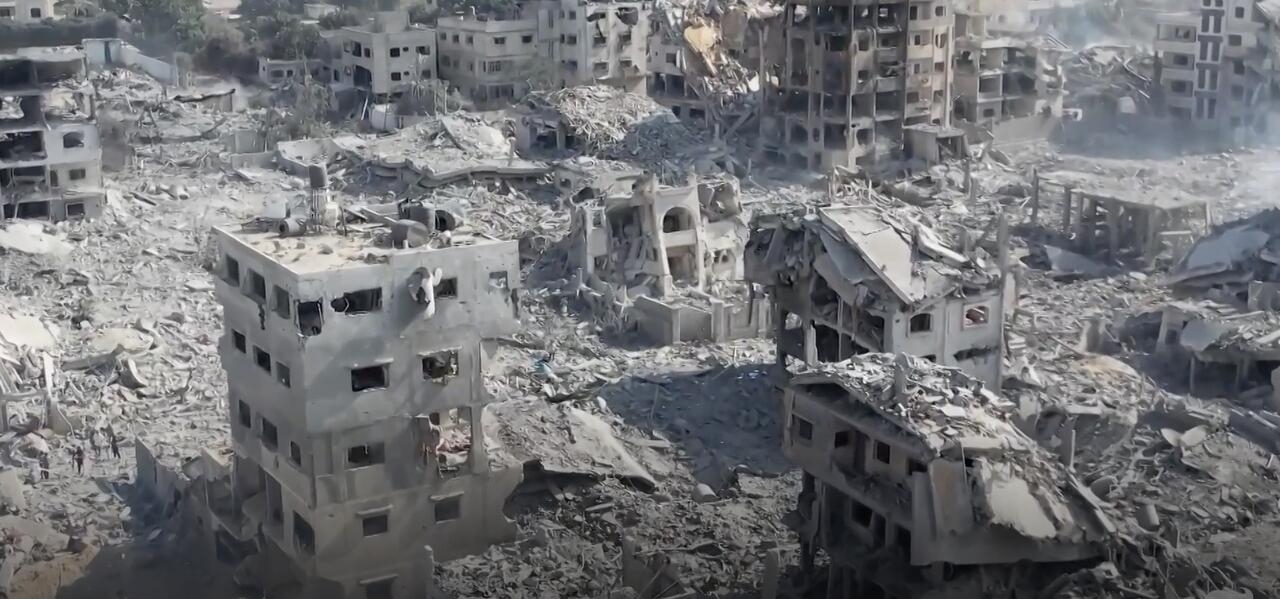
As civilian casualties in the Israel-Hamas war continue to mount — surpassing 20,000 from a population of just 2 million — alarm is growing over Israel’s all-too-eager use of a particularly devastating weapon: the 2,000-pound MK-84 bomb.  

Gaza is one of the most densely populated areas on Earth. For most other militaries, that would be cause for restraint, particularly where the MK-84 is concerned, given its 3,280-foot hazardous blast radius. However, as the IDF presses its campaign against the militant group Hamas and its elaborate tunnel system, it’s exhibiting an unusually high tolerance for civilian harm.

Scenes like this have sparked accusations of an Israeli intent to not only destroy Hamas, but to render Gaza uninhabitable (screen shot from New York Times video) 

Proportionally, the rate of damage to civilian buildings in Gaza is already triple what Nazi Germany suffered from Allied bombs in World War II. On Friday alone, Israel reportedly killed more than 90 Palestinians, including women in children, when it leveled two houses in two different areas of Gaza. 

One particularly vivid display of the MK-84’s sheer power — and Israel’s lack of restraint — came with the IDF’s Oct. 31 strike on Jabalya, in northern Gaza, which obliterated a large residential area. “[That strike is] something we would never see the US doing,” Larry Lewis, research director at the Center for Naval Analyses, tells CNN. “It certainly appears that (Israel’s) tolerance for civilian harm compared to expected operational benefits is significantly different than what we would accept.”

An anguished Palestinian man sits atop broken concrete in Jabayla as others comb the rubble for survivors (Ali Jadallah/Anadolu/Getty Images via CNN)

For perspective, consider that the US military used only one MK-84 bomb during its entire fight with ISIS. However, it’s poured an astounding 5,400 of them into Israel’s arsenal since the Oct. 7 Hamas invasion of southern Israel.

Defying IDF assurances that it seeks to minimize civilian casualties, a New York Times analysis of satellite imagery suggests that Israel has even dropped more than 200 MK-84 bombs in the area of South Gaza where it told Palestinians to flee for safety

The IDF has brushed aside inquiries about its use of the extraordinarily destructive bombs. “Questions of this kind will be looked into at a later stage,” a spokesman told the Times, adding that the IDF “takes feasible precautions to mitigate civilian harm.”

“The devastation that we’ve seen for communities in Gaza is unfortunately co-signed by the United States,” John Chappell of the DC-based Center for Civilians in Conflict tells CNN. “Too much of it is carried out by bombs that were made in the United States.”

Expect that damning fact to be long-remembered by the survivors of Israel’s Gaza campaign — and millions of others who sympathize with them. Whether one supports the US government’s arming of Israel or not, nobody should be so naive as to think it doesn’t endanger American lives — particularly when you consider the type of people who now control Israel’s arsenal

Tyler Durden
Sun, 12/24/2023 – 23:15

5 Things You Can Do This Christmas To Make The Marxists Miserable

0
5 Things You Can Do This Christmas To Make The Marxists Miserable

Authored by Kevin Downey Jr. via PJMedia.com,

Why is Christmas the most wonderful time of the year? Is it all the mistletoeing and hearts that are glowing? Yeah, that all rocks, but my values — and kicks — revolving around Christmas joy have taken a holly jolly turn, and I’d like to get you on board.

If you think eggnog and caroling are fun, wait until you get your bald-headed niecephew so mad zhe poops zher Che Guevara manties.

FACT-O-RAMA! The commies hate when we mock them, so mock I shall until we lock the doors of Ark 2.0 and listen to them get flushed away like the human feculence they are or, should we lose, until they learn how to load, aim, and fire a gun as I face a firing squad for the hundreds of articles I’ve written making fun of the joyless frown clowns.

But first a quick reminder from our favorite KGB defector, Yuri Bezmenov, who presciently told us back in the 1980s that there is ONE thing Marxism can’t overcome — Christianity. That is why they hate and fear us. This is why the miserable skanks show up to children’s Christmas choirs and bullhorn their support for terrorists who rape women and burn children alive. They utterly hate you.

And don’t forget how the U.S. Capitol Police made kids stop singing the National Anthem lest the song “offend” someone. The rot is deep, my friends. Enjoy Christmas before it is outlawed.

Remember, Christmas is the season to give, so let’s give it to the Marxists good and hard.

#5  Mele Kalikimaka Is the Thing to Say

This one is simple and yet devastating: say “Merry Christmas.” This is kryptonite to the simpering, pink-haired, troglodyte narcissists who believe that, in a world full of adults, their feelings mean something — like this jackpudding who laughingly tries to associate the phrase “Merry Christmas” with anti-Semitism, Islamophobia, and, of course, hatred of the LGBTWTF crowd, all of whom, by the way, loathe Christians.

PINKO-RAMA! The journalistic ambergris I quoted above managed to fit the words “diversity” and “inclusivity” into zhim’s victim manifesto. It only missed “equity.”  Commie Rating: Three out of Five Stars, Hammers, and Sickles.

“KDJ, what if I say ‘Merry Christmas’ and a com-symp whines, ‘I don’t celebrate Christmas’?”

You have several responses from which to choose:

“Then don’t have a Merry Christmas!”

“Try some diversity for a change.”

“I was being inclusive. I didn’t know you’re a hater.”

“Say ‘Happy Ramadan’ to Hamas when they are done slaughtering gay people, you homophobic pile of pig vomit.”

Pro tip: Laughing as you say these things will denote mockery, and that is their Achilles heel. Also, belittling them with their own weapons is easy, effective, and fun to do.

I’m aware that they judge us when we say “Merry Christmas.” I don’t care. Neither I nor my language will be controlled by some entitled, basement-dwelling dime museum or the Communist Chinese Party (CCP) that pulls its strings.

# 4 Unvaccinated Christmas Parties

When sending invitations via email or USPS, be sure to mention something like:

Warning: my family is unvaccinated, but in the spirit of Yuletide inclusivity, those who have blindly chosen to bend their knees and raise their sleeves for an experimental clot shot because Rachel Maddow told you to do so will be welcome as well.

For those of you suffering from myocarditis, the defibrillator will be ‘first come, first served.'”

# 3 Meat is Murder Tasty

You undoubtedly have an annoying, Gaza-loving cousin who hates meat. In a sign of goodwill, prepare a few veggie burgers. Here is what to do when  “Dylan” raves over the taste and asks, “What’s your secret?” Tell it you added Worcestershire sauce, a dab of chocolate, honey, and sugar. When the meatophobe runs for the Ipecac, pretend you didn’t know that none of these ingredients are vegan.

Calm the herbivore down by saying the vegetables were grown in your own garden with liberal (heh) amounts of climate-changing cow manure.

I also suggest the following libation:

“The Colonizer”

  • 3 parts Plymouth gin (it will remind people of a certain rock in Massachusetts)

  • .5 parts culturally appropriated tequila

  • 2 dashes of bitters (because liberals are bitter)

# 2 Festive Lighting

There is nothing the Mao-maos hate more than Christians projecting their values and their fun at the same time. I prefer to combine the secular and the religious for the one-two punch of Christmas lighting extravaganza. 

The more Christmas lights you have, the more those testosterone dodgers will weep!

# 1 Make Christmas Great Again: Re-elect Donald J. Trump

The most vulgar and ostentatious display of liberal blubbering happened the day Donald Trump defeated harridan Hillary for the White House. The diaper-wearing femminiellos lost their minds, and we laughed like we were watching “Caddyshack” for the first time.

Sure, the election is 11 months away, but let’s start their trauma early. Put some manic in their panic and get the ball rolling now. Post a “MAGA 2024” sign next to your inflatable Santa. Remember that the worst part about being punished as kids wasn’t the punishment itself, it was waiting for Dad to get home. Let’s make them cry until Election Day.

Let’s keep laughing at the miserable “woke” stooges. Check out the new Christmas video short from my friends at “Jokes and a Point.” They know how to clown-slap a commie like no one else.

Tyler Durden
Sun, 12/24/2023 – 22:30

Iran ‘Shortly’ Expected To Execute Swedish Citizen Accused Of Spying

0
Iran ‘Shortly’ Expected To Execute Swedish Citizen Accused Of Spying

Via Middle East Eye

Iran is “shortly” set to execute a dual Swedish-Iranian citizen accused of spying, according to the UN, after a Swedish court upheld the conviction of a former Iranian official.

Ahmadreza Djalali, a Swedish-Iranian disaster medicine researcher, was arrested in Iran on suspicion of espionage in 2016. He was accused in 2017 of having transmitted information to the Mossad – the Israeli intelligence services – on two people in charge of the Iranian nuclear program, which would have allowed their assassination between 2010 and 2012.

Ahmadreza Djalali and his wife and child, via BBC

“Disturbing news that Dr. Ahmadreza Djalali could be shortly executed on charges of ‘enmity against God’,” the UN human rights office wrote on X (formerly Twitter).

There have been concerns that the decision by a Swedish appeals court to confirm the conviction of former Iranian prison official Hamid Noury this week could threaten the safety of Swedish prisoners in Iran.

Noury stood accused of involvement in the mass execution of thousands of mainly left-wing prisoners in Iran in 1988, towards the end of the war with Iraq.

The 62-year-old was convicted last year of “grave breaches of international humanitarian law and murder” over his alleged role in a purge that saw at least 5,000 prisoners killed.

Amnesty International has warned that “mounting evidence indicates that Iranian authorities are threatening to carry out Ahmadreza Djalali’s execution in retaliation for their unmet demands to pervert the course of justice in Sweden”.

“The cruel toying with Ahmadreza Djalali’s life immediately after a Swedish court of appeals upheld [Noury’s] conviction and life sentence… heightens concerns that Iranian officials are holding Ahmadreza Djalali hostage to compel Sweden into a prisoner swap,” said Diana Eltahawy, Amnesty’s deputy director for the Middle East and North Africa, in a statement.

Iran has denied that there is any link between Noury’s conviction and the planned execution of any Swedish prisoners.

Tyler Durden
Sun, 12/24/2023 – 21:45

American Achilles In The War On Terror

0
American Achilles In The War On Terror

Authored by John J. Waters via RealClear Wire,

Professor Emily Wilson has achieved celebrity status … for translating Homer.

University students use her work, and it draws leisure readers as well. Beginning with her translation of the Odyssey in 2018 and continuing with the Iliad earlier this year, Wilson has presented as fresh and vivid material that is, admittedly, old and foreign.

For years, the English translations of poets Robert Fagles and Robert Fitzgerald were responsible for passing Homer’s stories into the dreams and imaginations of modern Americans. So successful were the two Roberts that many readers reserved no space on their bookshelves for another scholar’s reading. Wilson’s new translation is worthy, though, and less for her words or ‘blank verse’ than her feel: for the players and their motivations certainly, but more so for their experience of the phenomenon of battle. Her work plumbs how it feels to fight and kill, what warriors seek to achieve through combat, and what a family stands to lose when a husband dons the helmet and marches off to war. Heroism nearly, but not quite, redeems the carnage. 

Those who have seen war or studied it know how combat produces a cycle of loss and compensation, and fate deals out the portions of life in unfair and unexpected ways. This is one of the themes of the Iliad – how even the greatest warriors in Western civilization fail to reclaim what they lose. “Attempts to repair one loss lead only to more losses,” Wilson writes in her introduction. “Loss can never be recouped.”

The arc of history demonstrates the activity of warfare is always changing; weapons, technology, and troop formations are constantly in flux. But the condition of war, how people experience combat, remains largely unchanged. Rather than discuss the new text in isolation, I asked Professor Wilson to apply her knowledge of the Homeric poems and her own ideas to my observations of people participating in the drama of modern war. What follows is part one of our two-part conversation. 

One evening in 2009, Alphonso told a story over beers at Pusser’s in Annapolis. There had been a Taliban ambush on a Marine logistics convoy. Someone he knew was involved. “I hope they jump me,” he said. “I want my share.” What comes to mind, hearing this vignette?

This makes me think of Iliad Book 10. This ambush episode is very unusual in the poem, because most of the fighting in The Iliad takes place during the daylight hours, where warriors confront each other face-to-face. This is fighting at night. Odysseus and Diomedes volunteer to set an ambush of Trojan forces. The sequence shows the importance not just of cleverness and strategy, but also about the kinds of extra glory people can get in special missions. If something unexpected happens and you react just right in the moment, then you get a special kind of glory, as compared to what can be gained in the main campaign. I love Book 10 because it shakes up your ideas about the kinds of terrain where war takes place. The poem as a whole is interested in all different types of warfare, different types of landscape and how the norms of military encounters change in different arenas. Diomedes and Odysseus promise not to harm the Trojan spy, Dolon, then mercilessly kill him and hang up the bloody spoils, the weapons stripped from his body, to honor the goddess Athena, who loves spoils.

Speaking of Alphonso’s “share” … I’m thinking of what Aristotle said about the “banquet of life.” Would Homer have contemplated this idea when he composed the Iliad?

Absolutely. Many of the words that are often translated as fortune or fate literally suggest portion or share—these Greek words literally mean a “part,” as if a portion or share of life. It’s as if there is a whole side of beef that is a quantity of human life and each of us gets a particular portion of it, both how long we get to be alive and also our portion of honor and glory. I think the whole story of Achilles in the Iliad focuses on his disappointment about his tiny portion of life, as the son of a goddess who knows for sure that he will die if he stays to fight at Troy. He wants a portion of honor that compensates him for his small portion of life. The public humiliation he suffers from Agamemnon, when the Greek king takes from Achilles the concubine Briseis, means Achilles has been dishonored, so his already small portion of life is no longer balanced by a large share of glory.

In 2010, Major Aaron Cunningham intoned to his students at the Infantry Officer Course about their reputations. “Your reputation begins right now,” he said. The thought planted among young Marine lieutenants that one’s reputation (as an officer, a Marine) has incalculable value in the military, much more so than in business or private life. Can you trace that idea back to the Iliad?

Well, that is certainly a theme that runs all through the poem. The Greek term most closely analogous to “reputation” is kleos, which suggests what other people hear about you. For warriors, that goal of achieving undying kleos is definitional, and gives mortal heroes the chance to live on after death. You can be known for your physical characteristics, but also in the stories of who you are and how you have performed. Stories people tell can add up to kleos or they can lead you to shame. Great warriors in the Iliad, like Hector and Achilles, are deeply concerned with preserving their kleos, which entails being known as the greatest warrior among their people. Even when his family members and other Greek leaders are telling him to stop fighting and pull back, Hector has to keep going because he wants to secure the greatest kleos, both for his lifetime and after his death. 

You rely on your sergeants and corporals in combat. You rely on anybody who has “done it before.” Having “done it before” is more valuable than all the education, weaponry and preparation—it’s certainly more valuable than personal connections or credentials. Why?

Because if you don’t have experience on the ground, then there is no way you know how to judge events when they are changing fast. This question relates to the representation of different generations of warriors. Start with Nestor, the elder warrior. He has so many speeches about “back in my day” and so forth, which may seem like tedious digressions – but that character is crucial for reminding the listener that this is not the first war.  The battles Nestor has participated in, with the Lapiths and Centaurs, are just one mythical precursor, along with the earlier war of Heracles against Troy, and the Theban War, all of which are precursors to the Trojan War in the world of myth. The poem draws attention to the many cities around Troy that Achilles has already sacked, and to the experience of Diomedes who succeeded in sacking Thebes. These allusions remind us that the Greek army has been sacking and campaigning for a long time. When these named warriors convene in their council meetings, discussions center on what kinds of advice matter: from those who have fought the most; or, from those who have theoretical ideas without having tested them? I think The Iliad reminds us that experience matters, but also shows you that you do not win one war by fighting the last one. Nestor’s advice always hinges on “this is how it happened back then, but things are totally different nowadays.” Experience matters but there are still so many unknowns. The poem shows you that how fast things change on the battlefield. 

The film Zero Dark Thirty consecrated the killing of bin Laden. The uniforms worn by Navy SEALs who participated in that raid hang in the 9/11 museum at Ground Zero. There have been so many movies about special operators. It seems the poets of our age sing of spec ops derring-do, over and over again. Why? 

There’s just something so inspiring for people who have (and have never) served in combat to see people so clearly willing to risk their lives for the sake of a mission. I find it inspiring. I have so much admiration for people who put their whole being out there, to have complete skin in the game. That was the case in antiquity as well. Not every war is presented in simple valorizing or heroizing terms. The Iliad digs into the whole of the human spectrum about people but there is a deeper awareness of courage and how it really does matter.  Courage makes people more like the gods, who never die, or perhaps humans are sometimes imagined as even greater than gods. The warriors are always conscious that they could be killed, which makes their courage and sacrifice special.

For the foot soldiers who fought in Afghanistan and Iraq, though, there were endless patrols, missions and objectives. Tragedies and miracles forgotten or never known. For the foot soldiers, there are no tales of triumph, no heroes in single combat, no majestic treatments from Hollywood or in literature. Why is it disappointing for your exploits to be forgotten?

To have been involved in something that involves so much pain and wounding and not even have the glory of being remembered as a character in the story is terrible. Part of what drives Achilles’ rage is that he wants to be the main character … all the time. The poem primarily focuses on the warrior-leaders and officer class, to use an anachronistic term, but we also have a sense of the common troops who are driven into battle, the kinds of pressure that is put on people who are not the named ones. We know the leading male characters but each of those leading figures brings along nameless men who will not be remembered but are taking just as much risk and fighting the same battles. The poem gives you some tools to understand that single combat between named protagonists is not exactly what war is. We have episodes where we get the name of a character, then, a line or two later, he is dead.

Part of the story of how The Iliad represents the forgotten people is how it represents the women and old people who experience war as pure loss. Women and older people don’t have anything that they can win. The queen of Troy, Hecuba, does have an idea that there is something she could win if her son Hector can ward off the Greek armies, that she stands to win more if Hector succeeds. But for most people in the world of this poem, there’s very little to hope for, and even the most minimal hopes, like the hope of survival or freedom, are repeatedly not fulfilled.  It’s not that you’re a fool to have any kind of hope but most of the time when people have hope in this poem, it doesn’t work out.

John J. Waters is the author of the postwar novel River City One (Simon and Schuster), and a former deputy assistant secretary of homeland security.

Tyler Durden
Sun, 12/24/2023 – 21:00

Fast Food Places & Restaurants Open For Christmas Day 2023

0
Fast Food Places & Restaurants Open For Christmas Day 2023

While the vast majority of restaurants and businesses across the land will be closed on Christmas Day, with many also shuttered the day prior too (Sunday), there’s still well over a dozen fast food and coffee chains which have committed to opening their doors on Christmas Day. It’s become a growing trend over the last several years.

Large retail and grocery chains which require a lot of employee manpower at any given time, such as Walmart and Target, will be closed, however. The below is a list of establishments which have announced their plans to remain open based on location…

List is courtesy of NEXSTAR: Hours may vary by location; it’s best to check online or call ahead to confirm your location’s hours. 

* * *

Arby’s: Many locations will be open for Christmas, a representative for Arby’s tells Nexstar, but hours may vary. You can check your location’s hours online.

Burger King: Because Burger King restaurants are individually owned, they may be open for Christmas with varying hours, a representative tells Nexstar. You can find local restaurant hours here

Denny’s: The “always open” diner will, of course, be open on Christmas.

Domino’s: Because Domino’s locations are independently owned, they may or may not be open on Christmas, according to a company representative. Some may also close for Christmas Eve. You can view your location’s hours online.

Dunkin’: If you’re on the run and need some coffee, Dunkin’ locations will be open for Christmas, but hours may vary, according to a company spokesperson. Restaurant hours can be viewed online or through the chain’s mobile app.

Golden Corral: Some of Golden Corral’s locations will be open on Christmas, though they may operate under limited hours. There may also be limited hours on Christmas Eve. You can check your restaurant’s hours here.

IHOP: While IHOP locations are listed as being open online, you may want to check with your local restaurant before stopping in.

Jack in the Box: Hours may vary by location, a company spokesperson tells Nexstar. You can check your Jack in the Box’s hours online

McDonald’s: Like others on this list, McDonald’s locations may be open with varying hours for Christmas. You can find local hours online or in the McDonald’s app. 

Noodles: Select Noodles locations will be open; you can check store hours here.

Panera Bread: Hours may vary by store, according to Panera Bread. You can check your location’s hours online.

Red Lobster: All Red Lobster locations will be open for dine-in and To Go on Christmas Day, the company confirmed earlier this year. You can find your restaurant’s hours here.

Sonic: Because most Sonic restaurants are locally owned, their hours may vary on Christmas Day. You can find local hours here

Starbucks: Some Starbucks locations will be open for Christmas; you can check location hours here.

Waffle House: Known for being open all day, every day – and causing headlines when it closes – Waffle House locations will be open on Christmas. There’s even a song about it.

Wendy’s: Many Wendy’s locations will be open on Christmas, but hours may vary. You can check the hours of your nearest location online.

Tyler Durden
Sun, 12/24/2023 – 20:15