These Are The Countries With The Highest Inflation Rates
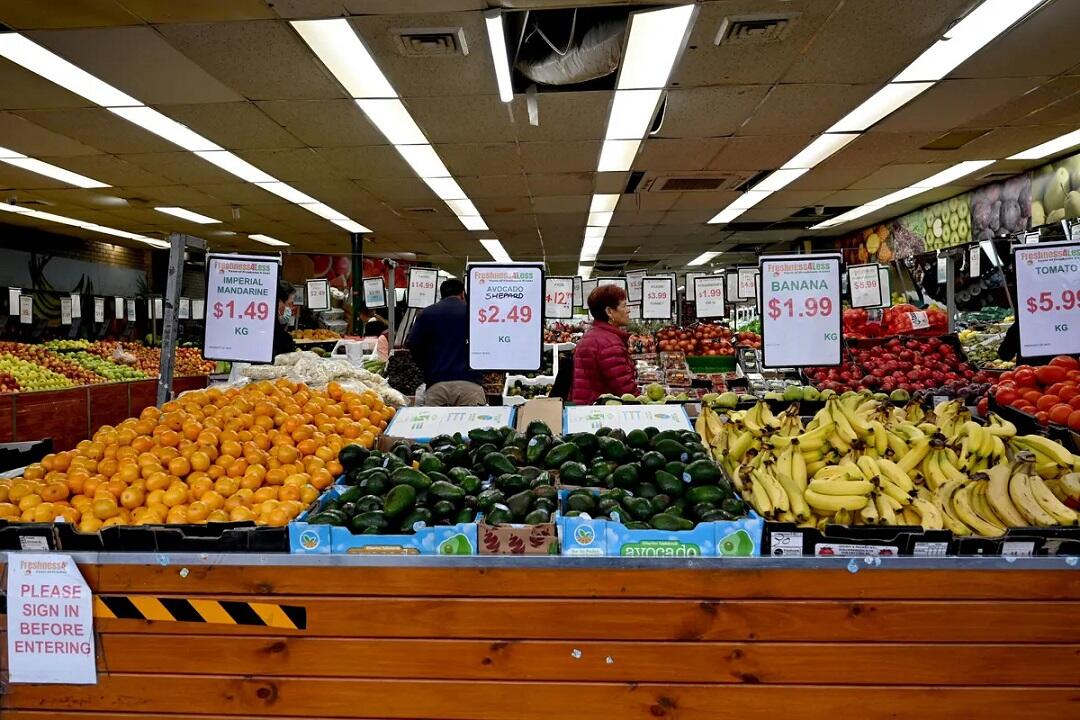
Venezuela is the country with the highest inflation in the world, with an increase in consumer prices estimated at 360 percent in 2023, according to the latest figures from the International Monetary Fund (IMF), published in October.
This is the tenth consecutive year that the inflation rate in Venezuela is one of the highest on the planet, although it is significantly lower than in 2018, when it reached an astronomical value of 65,000 percent.
Lawlessness in France fuelled by mass immigration has spread from the inner-city suburbs to the French countryside as the government continues to ignore the reality staring it in the face, Marine Le Pen has claimed.
In a recent interview with Valeurs Actuelles, the firebrand nationalist and former presidential candidate evidenced the spread of disorder among migrants by citing the tragic case of Thomas, a 16-year-old promising rugby player who was stabbed to death by a city gang who infiltrated a village’s winter ball at its local hall and stabbed several attendees in the early hours of Sunday morning.
“A kid died in circumstances that should never have existed,” Le Pen told the publication. “This tragedy corresponds to the feeling that many French people now feel: No one is safe anywhere.
“A new threshold has been crossed. We are witnessing an organized attack, emanating from a certain number of criminogenic suburbs in which there are armed “militias” carrying out raids,” she added.
The National Rally parliamentary party leader revealed she had spoken with many mayors of small towns who are now experiencing a dramatic rise in crime that was previously non-existent as violence and disorder spill out from urban to rural France.
“I know so many mayors of small towns who no longer organize village festivals. Some suffer from looting and external damage, which economically damages these modest communities. Others seriously fear physical attacks,” Le Pen said.
“All this suggests a form of method which is repeated: gratuitous attacks, cities which serve as rear bases and, in the end, the astonishment of the public authorities who have no response to provide except their indignation and their compassion.”
When pressed on the extent to which she believes the deterioration of French society is irreconcilable, Le Pen remained optimistic that France could be saved, but insisted that the country must be run by politicians who recognize the problem in order to do so.
“We are not there. What only affected the difficult neighborhoods of large cities in the 1980s spread to medium-sized towns, then to small towns. Now, this wave is reaching our villages. But I assure you: It is still too early for pessimism. Nothing has really been attempted by successive powers to stem the phenomenon,” she explained.
The conservative politician compared politicians to doctors who, if they refuse to see the symptoms and diagnose the problem, can never find the solution.
“Levels have been passed by delinquents and criminals thanks to the blindness, laxity, and lack of courage of those in power. If you don’t stop the criminals, they won’t stop,” she warned.
French citizens either growing up or living in the countryside used to feel protected from the reports coming from crime-ridden inner-city suburbs but “now realize that this is no longer true,” Le Pen claimed. “They sometimes feel like game.”
…
She called for regime change and a new approach from emotional reactions to the adoption of major laws that have a “profound impact.”
“Governing is not about stringing together media stunts or tinkering with circumstantial laws. If we aspire to govern like those who have governed us for decades, then let’s leave them in place!” she added.
Thanksgiving is a time for both festivities and reflection.
The United States has had the best of times and the worst of times, prosperity and depressions, the joys of peace and the privations and cruelties of war. But throughout these vicissitudes, there has been one bright constant: the decency of ordinary Americans unhesitating in risking that last full measure of devotion under the banner of liberty and justice for all.
That has been our inspiration and our deliverance from despair over our chronically flawed leaders earmarked by avarice, narcissism, megalomania, and duplicity.
The history of America is largely a history of the courage, industry, ambition, thriftiness, and selflessness of ordinary Americans.
The roots trace back to immigrants fleeing Europe at great risk in the quest for religious liberty and economic opportunity. They didn’t confront death for money. They sought to create a “city on a hill” as a beacon to all peoples seeking government by the consent of the governed.
Who started the American Revolution?
Ordinary farmers!
Remember the opening stanza of Ralph Waldo Emerson’s Concord Hymn:
“By the rude bridge that arched the flood, Their flags to April’s breeze unfurled, Here once the embattled farmers stood And fired the shot heard round the world.”
Ordinary soldiers suffered most at Valley Forge.
The American Declaration of Independence underscored the equal dignity of everyone from the highest to the lowest:
“We hold these truths to be self-evident, that all men are created equal, that they are endowed by their creator with certain unalienable rights, that among these are life, liberty, and the pursuit of happiness.”
The U.S. Constitution was established and ordained by “We the people of the United States.” Among other things, it expressly prohibits titles of nobility.
In other words, every man or woman is a king or queen, but no one wears a crown.
Alexis de Tocqueville in “Democracy in America” underscored that voluntary associations established by ordinary Americans were the nation’s most distinctive and vital sources of strength.
President Abraham Lincoln’s Gettysburg Address celebrated the sacrifices of ordinary soldiers who died that this nation might live, who risked that last full measure of devotion so that government of the people, by the people, for the people shall not perish from the earth.
Supreme Court Justice John Marshall Harlan preached, “[I]n view of the constitution, in the eye of the law, there is in this country no superior, dominant, ruling class of citizens. There is no caste here. Our constitution is color-blind, and neither knows nor tolerates classes among citizens. In respect of civil rights, all citizens are equal before the law. The humblest is the peer of the most powerful. The law regards man as man, and takes no account of his surroundings or of his color when his civil rights as guaranteed by the supreme law of the land are involved.”
The Statue of Liberty blazes forth with, “Give me your tired, your poor, your huddled masses yearning to breathe free, the wretched refuse of your teeming shore.”
Stand in awe at the Meuse-Argonne Cemetery and Memorial in France where lie the remains of more than 14,200 Americans who died in a war to end war.
Andrew Goodman, James Chaney, and Michael Schwerner gave their lives to secure civil rights for black people in Mississippi. Detroit housewife Viola Liuzzo was assassinated by the Klan in retaliation for advocating universal civil rights on the last night of the 1965 Selma Voting Rights March.
Not enough can be said about Jackie Robinson’s courage in confronting racism and shortstop Pee Wee Reese’s conspicuous friendship amid a howling assembly of bigots in the grandstands.
And who can forget 9/11 hero Todd Beamer on United Airlines flight 93 over Pennsylvania shouting “Let’s roll” on a suicide mission to prevent Al Qaeda terrorists from reaching their target?
The fundamental decency of the American people is demonstrated daily by the flood of immigrants seeking refuge and opportunity here. In contrast, China, Russia, Iran, North Korea, Burma, and sister tyrannies have few takers, a vote of no confidence.
America is an idea, not a race, religion, ethnicity, gender, or nationality. President Lincoln, in a message to Congress on July 4, 1861, taught that the leading object of government was “to elevate the condition of men—to lift artificial weights from all shoulders—to clear the paths of laudable pursuit for all—to afford all, an unfettered start, and a fair chance, in the race of life.”
But complacency we can’t afford. We must resist the temptation to strike Faustian bargains exchanging decency for self-aggrandizement or selfishness.
Never miss an opportunity for kindness, benevolence, or expressions of gratitude. It costs nothing. And you will make the world a better place.
In the rapidly evolving landscape of artificial intelligence, generative AI tools are demonstrating incredible potential. However, their potential for harm is also becoming more and more apparent.
Together with their partner VERSES, Visual Capitalist’s Katie Jones and Sabrina Fortin have visualized some concerns regarding generative AI tools using data from a variety of different sources. Many of them fall into one of the following categories: quality control & data accuracy, ethical considerations, or technical challenges—with, of course, a certain degree of overlap.
Let’s dive into it.
PROBLEM 1:
Bias In, Bias Out
Theme: Quality Control & Accuracy
One of the critical issues with generative AI lies in its tendency to reproduce biases present in the data it has been trained on. Rather than mitigating biases, these tools often magnify or perpetuate them, raising questions about the accuracy of their applications—which could lead to much bigger problems around ethics.
PROBLEM 2:
The Black Box Problem
Theme: Ethical & Legal Considerations
Another significant hurdle in embracing generative AI is the lack of transparency in its decision-making processes. With thought processes that are often uninterpretable, these AI systems face challenges in explaining their decisions, especially when errors occur on critical matters.
It’s worth noting that this is a broader problem with AI systems and not just generative tools.
PROBLEM 3:
High Cost to Train and Maintain
Theme: Complexity & Technical Challenges
Training generative AI models like large language model (LLM) ChatGPT is extremely expensive, with costs often reaching millions of dollars due to the computational power and infrastructure required. For instance, now Ex-CEO of OpenAI, Sam Altman confirmed that ChatGPT-4 cost a whopping $100 million to train.
PROBLEM 4:
Mindless Parroting
Theme: Quality Control & Accuracy
Despite their advanced capabilities, generative AIs are constrained by the data and patterns they were trained on. This limitation results in outputs that may not encompass the breadth of human knowledge or address diverse scenarios.
PROBLEM 5:
Alignment with Human Values
Theme: Ethical & Legal Considerations
Unlike humans, generative AIs lack the capacity to consider the consequences of their actions in alignment with human values.
While instances like the AI-generated “Balenciaga Pope” may appear to be harmless, it’s important to recognize that deepfakes could be employed for more harmful purposes, such as spreading false information in the face of a public health crises.
This highlights the need for more frameworks that ensure these systems operate within ethical boundaries.
PROBLEM 6:
Power Hungry
Theme: Complexity & Technical Challenges
The environmental impact of generative AI cannot be overlooked. With processing units consuming substantial power, models like ChatGPT cost as much as powering 33,000 U.S. households, with just one inquiry being 10 to 100 times more power hungry than one email.
PROBLEM 7:
Hallucinations
Theme: Quality Control & Accuracy
Generative AI models have been known to create fabricated statements or images when faced with data gaps, raising concerns about the reliability of their output and potential consequences.
For example, in a Google Bard promotional video, the chatbot incorrectly asserted that the James Webb Space Telescope captured the first images of a planet beyond Earth’s solar system.
PROBLEM 8:
Copyright & IP infringement
Theme: Ethical & Legal Considerations
The ethical use of data becomes paramount when considering that several generative AI tools appropriate copyrighted work without consent, credit, or compensation, infringing upon the rights of artists and creators.
OpenAI recently introduced a compensation program called Copyright Shield that covers legal costs for copyright infringement suits for certain customer tiers, rather than removing copyrighted material from ChatGPT’s training dataset.
PROBLEM 9:
Static Information
Theme: Complexity & Technical Challenges
Keeping generative AI models up to date requires substantial computational resources and time, presenting a formidable technical challenge. Some models, however, are designed for incremental updates, offering a potential solution to this complex issue.
Meet VERSES
In the pursuit of harnessing the power of AI, a careful balance must be struck to ensure ethical, transparent, and impactful advancements in this transformative field.
VERSES is committed to creating intelligent software that wields transparent decision-making.
Learn more about how VERSES is building a smarter world.
The Billionaire-owned Washington Post and New York Times continue to push for gun control by any means necessary.
On November 16, The Washington Post published “Terror on Repeat.” The report contains graphic images of the aftermath of highly publicized mass shootings in the United States.
The full effects of the AR-15’s catastrophic force in mass killings are rarely seen in public.
To assess the extent of the destruction, The Post examined thousands of photos and videos and identified parallels across 11 mass shootings between 2012 and 2023. The graphic pictures… pic.twitter.com/HXH5lFX6BR
In a note linked in the article, The Post’s executive editor wrote that they decided to publish the story to “enhance the public’s understanding of mass killers’ use of the readily available weapon, which was originally designed for war.”
But really, the Post’s use of the most graphic images they could get ahold of is the lowest form of attack. The Washington Post is dancing on the graves of victims whose lives were savagely cut short by the actions of murderers.
We should blame the actions of evil people on evil people. How would The Washington Post be judged if they did the same to Ford, GM, or Toyota every time a drunk driver killed someone? Their actions are the moral equivalent of not blaming the drunk driver for being a drunk driver and instead blaming the car.
Why isn’t The Washington Post going after Ford for the 2021 Waukesha Christmas parade attack or the 2017 New York City truck attack?
The Waukesha killer used a Ford Escape SUV to murder six people and injure another 62.
In New York City, the killer used a Ford Super-Duty pickup truck to kill eight people and injure 11.
Or how about going after Dodge when a murderer killed one person and injured 35 others in Charlottesville, VA, in 2017?
The AR-15 is in common use and is owned by millions of law-abiding Americans, just like millions of cars are in use. But you don’t see the mainstream media blaming manufacturers for traffic deaths.
Instead of articles about beefing up school security or allowing teachers who demonstrate proficiency with firearms to carry for protection, The Washington Post is targeting the rifles used in the shootings instead.
By showing graphic images of the aftermath of shootings, this article is bound only to inspire copycat shooters in the future through media contagion.
Meanwhile, the New York Times published an article attempting to tie the Lake City Ammo plant to mass shootings. For those unaware, the government owns the Lake City Ammunition plant and can sell its excess ammunition to the civilian market.
The New York Times claims that, somehow, this ammo is responsible for mass shootings.
In reality, it’s very likely that had Lake City not sold ammo, the shooters would have bought a different brand and still committed their evil acts. What anti-gun corporate media outlets like the New York Times realize, though, is that a massive amount of civilian ammunition is subsidized by Lake City, making prices cheaper for the civilian market.
Similarly, when Biden banned all Russian ammunition imports in 2021, this was another attack on gun owners’ ability to have affordable ammo.
Because gun control has been (and continues to be) such a massive failure, and the prospect of passing new laws is slim, gun control groups must resort to pushing their unpopular ideology through underhanded means.
Regardless of the avenue of attack, Gun Owners of America stands ready to defend your Second Amendment rights.
* * *
We’ll hold the line for you in Washington. We are No Compromise. Join the Fight Now.
These Are The World’s Largest Semiconductor Foundry Companies By Revenue
They’re in our phones, cars, planes, and even fridges.
Semiconductor chips have become critical for the modern way of life, and the biggest semiconductor foundry companies rake in billions of dollars from widespread demand.
ℹ️ We highlight data for companies that only operate foundries (fabrication plants) that manufacture chips for clients, also known as a “pure-play” foundries, as well as companies that design and manufacture their own chips, known as integrated device manufacturers. “Fabless” manufacturers that only design and don’t manufacture their own chips are not included.
Semiconductor Foundry Companies by Revenue
At the top of the list and dwarfing every other company by revenue share is TSMC which earned 60% (or nearly $17 billion) of the entire industry’s revenue in Q1 2023.
Founded in 1987, TSMC is a pure-play foundry that has become Taiwan’s largest company and manufactures products for a host of clients including Apple, NVIDIA, and AMD.
Note: Revenue based on the following conversion rates: USD 1 = WON 1,276; USD 1 = NTD 30.4.
Well behind TSMC in foundry revenues is integrated device manufacturer Samsung, the biggest company in South Korea, which made $3.4 billion (12.4% of the industry’s revenue) from its semiconductor manufacturing business.
GlobalFoundries from the U.S., UMC from Taiwan and SMIC from China round out the top five, with each taking home around 6% of industry’s revenue share in Q1 2023. The former spun out from AMD’s manufacturing arm when the company went fabless in 2009.
Industry concentration is apparent in semiconductors. For example, the top 10 semiconductor foundry companies account for 98% of the entire industry’s revenue. Furthermore, 90% of the market is dominated by companies in just three Asian countries: Taiwan, South Korea, and China.
The consumer watchdog listed Best Buy, Activision, Target, Nordstrom, and Home Depot as the firms to avoid while shopping. “These five companies went Woke, and now they’re vying for your business on Black Friday and Cyber Monday. Keep these companies’ woke antics in mind when you’re shopping for deals,” Consumers’ Research said. It advised people to “tell these companies to stop their woke ways.”
Best Buy
Electronics retailer Best Buy committed to fill one out of three new non-hourly corporate positions with black, indigenous, and people of color (BIPOC) employees by 2025. The company also intends to fill one out of three new, non-hourly field roles with women by this time and provide $44 million in college preparation and career opportunities to BIPOC students.
In August, O’Keefe Media Group revealed that one of Best Buy’s management training programs was discriminating against white applicants. A qualification criteria for joining the program was that the candidate should identify as black, Latino, Hispanic, Asian, or Pacific Islander.
The revelation was met with calls to boycott the company. “It’s time to Bud Light Best Buy,” Kingsley Wilson, of Washington, D.C. Young Republicans, said in an Aug. 9 X post. The public backlash prompted Best Buy to temporarily move its profile on X to “private,” per Consumers’ Research.
Activision
Video game publisher Activision faced a federal civil rights complaint from America First Legal (AFL) for its “illegal, racist, sexist, and discriminatory hiring practices,” according to an Aug. 15 post by the advocacy group.
In 2021, Activision mandated that the company raise the number of women and “non-binary” employees in the firm by 50 percent in five years, said the watchdog. To achieve this, Activision created scholarships only for women, non-binary, and “gender fluid” individuals.
The company’s network groups aimed at helping employees advance in their careers are only open to “Asian and Pacific Islanders, Black, ‘Latinx,’ LGBT+, ‘SWANA’ (Southwest Asian and North African), and women,” AFL stated. “Those who are white, straight, or men are not given the same opportunities as their peers to network and advance their careers at Activision.”
The company embedded “DE&I (Diversity, equity, and inclusion) leaders” within their business and also into their games, according to AFL. Activision developed a tool called “Diversity Space Tool” which measured video game characters based on their culture, sexual orientation, gender identity, body type, ability, age, and ethnicity.
“It’s unbelievable that in 2023—some sixty or so years after the civil rights movement—major corporations would obsess over the race and sex of the employees in their workforces,” Gene Hamilton, AFL vice president, said at the time.
Target
Target faced backlash after promoting LGBT Pride products in May—some of them targeting children. Consumers immediately called for a brand boycott, prompting the company to withdraw the LGBT-themed children’s products from all U.S. stores and websites or in some instances, to reposition the products in its retail outlets.
A video of a Target customer in a store’s kids’ section showed LGBT clothing and books for sale. A tag on a kids’ dress read—“Thoughtfully fit on multiple body types and gender expressions.’ Another clothing tag said—“pride toddler legging.” One piece of clothing had a tag saying “tuck-friendly construction.”
Two books being sold in the kids section were titled “Glad You Came Out!” and “I’m So Happy That You’re Queer!”
Some of the items in Target’s Pride collection were designed by UK-based designer Abprallen, who identifies as a transgender gay man and is a proclaimed Satanist.
“To make matters worse, when recently confronted on national TV about these products, Target CEO Brian Cornell tried to sweep the controversy under the rug by flat-out lying, stating ‘Well, I think you and I both know those weren’t true,’ Consumers’ Research stated.
Nordstrom
Luxury store chain Nordstrom is affiliated with the Human Rights Campaign (HRC), which runs the “Welcoming School Program.”
The program aims to “create LGBTQ+ and gender inclusive schools, prevent bias-based bullying, and support transgender and non-binary students.” HRC gives Nordstrom a 100/100 score for its promotion of LGBT policies at the workplace.
Over the past years, Nordstrom has donated almost $1 million to support LGBT activities. It has taken part in over 35 Pride festivals and parades across the nation.
Home Depot
Home Depot has also teamed up with HRC for the Welcoming Schools Program, which Consumers’ Research says is “specifically geared towards indoctrinating schools on how to promote LGBT ideology among vulnerable students under the guise of ‘inclusivity.’”
The Epoch Times reached out to the five companies for comment.
Corporate Discrimination
Many states are taking action against companies engaging in discriminatory employment policies.
In a July 13 letter to CEOs of Fortune 100 companies, attorneys general from 13 states pointed out that the U.S. Supreme Court’s ruling against race-based admissions in colleges “should place every employer and contractor on notice of the illegality of racial quotas and race-based preferences in employment and contracting practices.”
“If your company previously resorted to racial preferences or naked quotas to offset its bigotry, that discriminatory path is now definitively closed,” the letter said. “Your company must overcome its underlying bias and treat all employees, all applicants, and all contractors equally, without regard for race.”
In June, a jury in New Jersey directed Starbucks to pay over $25 million in compensation to a white former employee who accused the company of firing her because of her race.
Speaking to The Epoch Times, Dan Morenoff, executive director of the American Civil Rights Project, suggested that more such cases could soon come to court. “When the plaintiffs’ bar sees that these are real sources of recovery, I would be surprised if you didn’t see a lot more of these cases being brought.”
States like New Jersey, New York, and California have laws against discrimination, with most of these statutes having “provisions for uncapped punitive damages,” he said.
“When you’re talking about uncapped punitive damages and entities that are among the largest in the world, it’s difficult to even put into words the scale of that Pandora’s box of liability that corporate directors have chosen to open.”
In this graphic, Visual Capitalist’s Marcus Lu and Sabrina Lam visualize light-duty vehicle registrations in 2022, broken out by fuel type. It shows that out of the 281 million cars registered nationally, electric (EV) and plug-in hybrid (PHEV) vehicles represented only 1.2%.
Breaking Down the Data
An important distinction to make is that registrations are not the same as sales.
While sales represent the number of new cars sold within a timeframe, registrations reflect the number of cars that are registered with a state’s Department of Motor Vehicles (DMV).
As a result, registrations include both new cars and used cars that have changed ownership. This provides a more comprehensive measure of what cars are on the road.
The following table shows the data we used to create this graphic.
It’s worth noting that the gasoline category also includes diesel, E85 flex fuel, and traditional hybrid vehicles, while alternative fuels includes biodiesel, natural gas, propane, and hydrogen.
Vehicles that the Department of Energy categorized as “unknown fuel type” were excluded.
EV Market Share on the Rise
EV adoption in the U.S. has been relatively sluggish compared to the EU and China, though this is beginning to change as automakers roll out more electric SUVs and trucks.
According to Cox Automotive, U.S. EV sales (full battery electric) in Q2 2023 set a new record of 300,000 units, marking a 48% increase from Q2 2022.
For additional context, a total of 800,000 EVs were sold in the U.S. throughout the entire year of 2022, in addition to 190,000 PHEVs.
The federal government is belatedly recognising that some of its economic policies are contributing to the inflation that the Reserve Bank of Australia (RBA) is trying to stamp out by raising interest rates.
Since April 2022 when rates first started to increase, it’s as though we’ve been in a car with two drivers—one with its foot on the brake, the other with its foot on the accelerator.
Now, at last, the driver with his foot on the accelerator is showing signs of understanding that they’re going to damage the engine of growth if they keep pulling it in two directions.
So they’ve determined to cut spending on road and rail projects after a blowout in costs on the $120 billion (US$78 billion) portfolio of current and proposed projects of $38 billion—more than 25 percent.
Cutting road and rail projects is not where I would necessarily start. Good road and rail projects actually add to the productivity of the country.
Think of all the trucks that go between Brisbane and Sydney. The upgrades of the Pacific Highway have so far cut the time to travel between the two major east coast cities by 2.5 hours, or somewhere around 20 percent.
That’s a huge lift in productivity, and as logistics are a significant proportion of retail prices, a huge decrease in prices. It is therefore anti-inflationary, as well as helping truckies maintain their real earnings.
Not that all transport projects are that productive.
Former Victorian Premier Daniel Andrew’s Melbourne Suburban Rail Loop and Queensland Premier Annastacia Palaszczuk’s Cross River Rail are both products that provide negative benefits. They therefore increase costs and are pro-inflationary.
The federal government should step away from funding projects like these.
What else should it do?
Here’s a short list.
1. Reduce Immigration Immediately
Australia has apparently taken in 630,000 new immigrants this year—that’s eight regional Toowoombas.
In a population of 26 million, this puts too much pressure on infrastructure and is substantially responsible for the current housing crisis.
While immigration could help with various skills shortages, there is no evidence that is what the current surge in migration is actually doing.
And anyway, a skill shortage is a signal that either the education and training system needs to adapt, or the economy is exhausting its ability to fulfil all wishes with current resources.
2. Produce Budget Surpluses Going Forward, Not Just This Year
The government is less efficient at spending money than the private sector, partly because large bureaucracies, whether public or private, are inefficient, and partly because when it’s not your money, you tend to be less careful.
Producing surpluses, without increasing taxation, means a decrease in the size of government and an increase in productivity.
Surpluses would mean they would need to control rapidly increasing costs in health, aged care, and the National Disability Insurance Scheme (NDIS). That should be relatively simple.
The NDIS should have always been means-tested, and restricted in what it was available for.
Aged care is a centrally micro-managed mess where most of the problems could be fixed by the government stepping away, and also requiring better-off retirees to meet more of their own costs.
In health, we spend proportionately around 50 percent more than countries with similar health outcomes like Israel and Singapore. We’ve got a generally good health system, but it could be better and cheaper.
Taking these steps would also increase productivity, and therefore reduce upward price pressure.
3. Reform Taxation
Delivering the Stage 3 tax cuts should absolutely happen. This is part of downsizing the government and putting resources in the hands of those who will use them most efficiently.
There is also a list of more radical reforms that should be implemented to raise the productivity of business.
Australia’s productivity has been dropping partly because business has not been investing in productive capacity, and most investment in the economy actually comes from companies.
One easy way to boost investment is to allow businesses to accelerate the rate at which they write off assets.
Fast-growing companies are always chronically short of capital, and we exacerbate this by taxing them even when they are not cashflow positive.
Accelerated depreciation helps with this, and while it temporarily decreases government tax revenue, over the long run it should increase it as greater wealth is generated.
They could also look at abolishing company tax altogether and taxing profits entirely in the hands of shareholders.
They should also look at abolishing Capital Gains Tax (a tax that only came into being in 1985).
It is part of the reason there is a shortage of rental properties at the moment, which is increasing living costs for the 31 percent of Australians who rent. Once a homeowner doesn’t pay capital gains tax, they have a big advantage over investors when it comes to purchasing a house.
4. Withdraw the ‘Closing the Loopholes’ Bill
This is a brutally misnamed bill that will make casual and self-employed work marginal.
It strikes at the heart of ambitious Australians who want to do things for themselves and will make our workforce significantly less flexible, increasing costs all around.
In fact, this bill ought to be known as the “Enabling Greater Union Power and Screwing the Small Business Sector” Bill.
The “loopholes” that it claims to close are in fact, not bugs, but features in what has been a remarkably flexible and productive workforce.
The Environmental Protection and Biodiversity Conservation Act is strangling the growth of projects in Australia and urgently needs review.
It gives too much power to objectors, who in many cases are environmental groups (not conservation groups) set on sabotaging wealth creation rather than protecting the environment.
There is enough sovereign risk in Australia these days without amplifying it.
6. Stop Capping Prices
When prices go up the government’s first impulse appears to be to control the price.
They’ve certainly done this with gas which, in the long-term, actually sends prices up.
High prices are a signal to businesses of where to invest, and price caps are a signal of where not to invest.
7. Moderate the Energy Transition
The inflation in rail and road infrastructure projects is nothing compared to what is about to happen in the area of power generation.
It is already diverting labour and resources from everyday necessities like housing, but there is a looming shortage of the components that make up renewable energy and power networks.
In addition, proceeding without adequate storage is going to increase the need for gas-fired power generation, which is only going to get more expensive because of government policies making it difficult to start new gas projects.
Not all the fault for inflation lies with the federal government, a lot of it lies with the states who have borrowed profligately.
The Commonwealth either needs to reintroduce borrowing limits, as used to be the case under the Loans Council, or make it clear to lenders (and voters and governments) that they will not bail out state governments that can’t repay their borrowings.
9. Nominate a Minimum Range for Interest Rates
A large slabof our problem is that the RBA pushed interest rates too low—to a historically unparalleled rate.
It should be clear to the RBA, and to voters, that official interest rates should never fall below, say 3.5 percent.
The record-low rate of 0.1 percent was absurd for a number of reasons.
Risk-averse investors, such as pensioners, need to have an asset class that gives them a reasonable return, and which is liquid. That is cash or bonds.
While an asset could wear a return of 0.1 percent if there was a reasonable chance of capital gains, at that rate there is a more than reasonable chance of a capital loss.
In fact, the RBA is apparently sitting on around $45 billion of unrealised losses because it invested in its own paper at this absurdly low rate.
The rate is also important because the government bond rate tends to be priced off it, and the return on government bonds is used as a hurdle rate by investors to gauge the return they need from an investment to make it viable.
When the official cash rate is too low people, businesses and governments invest in too many marginal projects which add nothing to national productivity and income, and often freeze out riskier, but ultimately more profitable, ones.
I wish I could say it is likely the government will pick up even one of these ideas, but it isn’t.
Just a few days ago Treasurer Jim Chalmers boasted, “We’ve seen the highest quarterly wages growth in 26 years under an Australian Labor government. Real wages started falling under the Coalition due to a decade of deliberate wage stagnation and high inflation. We’re turning it around.”
Except they’re not turning it around at all.
He’s quoting nominal wages against real wages, and ignoring the fact that labour productivity has just suffered a record fall.
Those wage hikes aren’t good for the economy, they are inflation in action.
If you can’t see it when you stub your toe on it, in the end, you’re unlikely to be able to do anything about it.
Views expressed in this article are opinions of the author and do not necessarily reflect the views of The Epoch Times or ZeroHedge.
In “Significant Shift” To Bailing Out Its Sinking Property Sector, China Puts Largest Developer On Rescue “White List”
In a move which analysts say marks a “significant shift” in Beijing’s strategy to assist distressed builders and boost confidence in China’s sinking housing sector amid the deepening property crisis, overnight Beijing included property giants Country Garden Holdings (whose collapse would be orders of magnitude worse than that of Evergrande) and Sino-Ocean Group to China’s draft list of 50 developers eligible for a range of financing support which we profiled earlier this week.
As Bloomberg anchor Sofia Horta e Costa notes, “Country Garden was previously the leading developer by sales with numerous ongoing construction projects. If China aims to bolster confidence among homeowners and buyers, ensuring that projects will be completed and delivered seamlessly even in the event of a developer default, then this is the way to go.”
CIFI Holdings Group, another builder that has missed debt payments, was also included on the white list according to Bloomberg, which adds that regulators are set to finalize the roster and distribute it to banks and other financial institutions within days.
The inclusion of distressed builders such as Country Garden, which missed payments on a dollar bond for the first time last month, underscores regulators’ shifting stance toward some of the nation’s biggest private developers as the refusal of the relentless property crisis to ease. Chinese President Xi Jinping has also stepped up support for the broader economy, issuing more sovereign debt for infrastructure spending, raising the budget deficit ratio and even making an unprecedented visit to the central bank.
Then again, not a day goes by this year when we are not inundated with the latest Chinese “news” and “plans” of a moderate stimulus, one which never actually materializes, however, and which is just recycled into the next newscycle where readers completely forget that they are just reading recycled news over and over.
And this time was no different because a Bloomberg index of Chinese developer stocks rallied this week on expectations that the financing help may alleviate fears of further contagion in China’s property sector. Still, some investors were concerned the list would mainly comprise state-owned firms and leave out distressed builders most in need of the support. Gemdale, which hasn’t missed any debt payments, is also on the draft list along with China Vanke, Seazen and Longfor Group.
Even if Beijing has finally decided to step in and bail out its long-suffering housing sector, there is no guarantee that the aid isn’t a case of too little, too late. Country Garden, which is bigger than Evergrande was at its peak, has property developments in almost every province in China, and in October posted its biggest sales drop in at least six years. Growing concerns among potential buyers of its ability to complete projects threaten to exacerbate a cash crunch.
Speculation over Country Garden’s fate flared anew earlier this month after Reuters reported that China’s State Council instructed the government of Guangdong province to ask Ping An Insurance (Group) Co. to take a controlling stake. Ping An said it doesn’t hold any shares in Country Garden and has no plans to acquire it.
China’s property crisis has engulfed almost all of the largest developers, which have been struggling to repay debts and complete projects since the credit crunch emerged three years ago. Vanke, one of the country’s few remaining investment-grade builders, saw its dollar bonds plunge in recent weeks on the heels of Country Garden’s default. Vanke later received an unusually strong show of support from the local government.