72.8 F
Chicago
Wednesday, September 9, 2026
Home Blog Page 3179

CPI Unexpected Misses Across The Board Due To Plunge In Gas Prices, Core Inflation Lowest In Over 2 Years

0
CPI Unexpected Misses Across The Board Due To Plunge In Gas Prices, Core Inflation Lowest In Over 2 Years

Following two months of hotter than expected prints (driven by surging energy prices and healthcare methodology changes), the October CPI print was expected slow materially from the previous month (from 3.7% to 3.3% on headline) even if core was expected to remain unchanged at 4.1%. What we got, however, was a miss in CPI across the board with both headline and core prints coming in below expectations on both a sequential and annual basis.

Starting with the headline CPI, it came in at 3.2%, below the 3.3% expected, while MoM CPI also missed expectations, printing unchanged (0.0%), below the consensus of a 0.1% print, and sharply below last month’s 0.4% print.

A similar picture emerged on core CPI, where the October MoM print was 0.2%, below the 0.3% consensus estimate and down from the 0.3% increase in Sept, while YoY managed to drop from 4.1% to 4.0% missing expectations of an unchanged print, and the lowest annual increase since Sept 2021.

According to the BLS, the index for shelter continued to rise in October (more below) offsetting a decline in the gasoline index and resulting in the seasonally adjusted index being unchanged over the month. The energy index fell 2.5 percent over the month as a 5.0-percent decline in the gasoline index more than offset increases in other energy component indexes. The food index increased 0.3 percent in October, after rising 0.2 percent in September. The index for food at home increased 0.3 percent over the month while the index for food away from home rose 0.4 percent.

As noted above, the core CPI index rose 0.2% in October, after rising 0.3% in September, with the increase driven by rent, owners’ equivalent rent, motor vehicle insurance, medical care, recreation, and personal care. The indexes for lodging away from home, used cars and trucks, communication, and airline fares were among those that decreased over the month.

Looking at the contributions to annual CPI it’s clear that core goods inflation has all but disappeared (energy helped drag headline CPI lower in October), with the only sticky inflation left rooted deeply in services (mostly housing).

On a sequential basis, we also find that core goods inflation has been negative for the past 5 months, with energy helping drag down the headline print to unchnaged (energy detracted 0.176% from the bottom line number).

Developing

Tyler Durden
Tue, 11/14/2023 – 08:40

Even Hot Inflation Readings Can’t Buy the Dollar a Bid

0
Even Hot Inflation Readings Can’t Buy the Dollar a Bid

By Nour Al Ali, Bloomberg Markets Live reporter and strategist

Investors might expect the dollar to rally if US headline inflation comes in hot today. Problem is, that hasn’t worked well over the past year.
 
In the half hour after the past 11 US CPI data releases, the dollar fell almost without fail. And that included two instances where the reading came in hot. The only exception was last month, when headline beat and the dollar rose 0.1% in the time frame (the full Zerohedge preview is here).

Taking the average response over the period, the Bloomberg dollar index saw an immediate drop of approximately 0.2% post-release, coupled with an average decrease of ~0.3% half an hour after the release. In February, a higher-than-expected reading saw the greenback drop 0.3%.

An exception to this trend occurred in the previous month’s release, where the dollar rose within five minutes of the announcement, then rose about 0.6% over the following six hours. Over the past month, the US dollar’s upward momentum has waned, aligning with the Fed’s acknowledgment of the prevailing market consensus that the current hiking cycle is reaching its conclusion.

Tyler Durden
Tue, 11/14/2023 – 08:23

IEA Raises Oil Demand Outlook For 2023 And 2024

0
IEA Raises Oil Demand Outlook For 2023 And 2024

By Tsvetana Paraskova of OilPrice.com

Despite concerns about the economy, global oil demand continues to exceed expectations, according to the International Energy Agency (IEA) which raised its demand growth forecasts for both 2023 and 2024.

Global oil consumption continued to be strong in September, with a record-high Chinese demand of 17.1 million barrels per day (bpd), the IEA said in its Oil Market Report today.

Due to an all-time high Chinese monthly demand fueled by the petrochemical sector and resilient consumption in the United States, the agency revised up its 2023 oil demand growth forecast to 2.4 million bpd, up from 2.3 million bpd growth expected in the October report.

This year, China is expected to account for 1.8 million bpd of the 2.4 million bpd growth, which will lift total global demand to 102 million bpd.

The IEA also revised up its estimates for oil demand growth for next year—to 930,000 bpd, up from 900,000 bpd expected in last month’s report. Despite the fact that growth is expected to be almost two-thirds lower than this year’s increase, global oil demand is set to rise to a record annual high of 102.9 million bpd in 2024, the agency noted.  

While the recent move in oil prices reflected concerns about the global economy and oil demand, and “While this more bearish mood may be justified, world oil demand continues to exceed expectations,” the IEA said today.

But supply growth is also exceeding expectations, according to the agency, which noted that “Barring large unforeseen outages, world oil supply is firmly on an upward trajectory.”

Early next year, the market could tip into a surplus due to weaker seasonal demand growth.

But “For now, with demand still exceeding available supplies heading into the Northern Hemisphere winter, market balances will remain vulnerable to heightened economic and geopolitical risks – and further volatility ahead,” the IEA said.  

OPEC dismissed on Monday the most recent negative market sentiment as overblown and said that the oil market fundamentals remain strong, with Chinese crude imports set to increase to a new annual record in 2023.

Tyler Durden
Tue, 11/14/2023 – 08:17

This Rally Could Do With A Cool Inflation Print

0
This Rally Could Do With A Cool Inflation Print

By Jan-Patrick Barnert and Allegra Catelli, Bloomberg Markets Live reporters and strategists

This recent stock rally now needs another push to keep going, break some pivotal technical levels and get closer to overbought territory. A cool US inflation print Tuesday, garnished with some friendly words out of the US-China meeting later, would be just the right dish to serve to the bulls.

For the moment, US stocks look a touch hotter than Europe’s, with the Nasdaq 100 leading the charge, once again thanks to the relentless performance contribution from the “Magnificent 7.” The tech gauge has moved from close to oversold to near overbought in just two weeks, and is the first developed-market benchmark to flash the 60-day high-range indicator in our momentum tracker.

What looked like a fading trade as stocks arrived at or approached their downtrend levels last Thursday could now potentially morph into a breakout play. The week isn’t short of potential triggers, with today’s US inflation reading the first, followed by retail data, PPI and jobs later this week. European GDP and French CPI add to the macro mix. And then there are more signs of thawing US-China ties emerging ahead of the meeting between Joe Biden and Xi Jinping later this week.

“It’s hard to look much beyond Tuesday’s US CPI as the key highlight of the week but US retail sales will be a big driver of GDP forecasts,” notes Deutsche Bank’s Macro Strategist Jim Reid. “Something that will sneak up on markets will be the potential US government shutdown on Friday.”

Sector rotation in Europe suggests a pro-cyclical approach is prevailing, with real estate, industrials, autos and construction stocks all outperforming the wider Stoxx 600 benchmark. Factors look a touch more defensive as styles like value, dividends, size and quality lead on performance since the end of October. Meanwhile, general positioning still doesn’t suggest that buyers are running scarce, with data compiled by Deutsche Bank showing a neutral stance with more upside in store should investors actually start chasing.

And while a decline in US inflation is widely expected and market reaction today might be limited, it would still add to the Goldilocks narrative supporting risk assets, with the economy remaining resilient and disinflation allowing the Fed to cut in 2024, says Skylar Montgomery Koning, a senior global macro strategist at TS Lombard.

The much-cited seasonal pattern for a year-end rally is still intact, but here is another statistic supporting an even more bullish view on the final weeks of trading. In the past 22 years, when the S&P 500 was up 5% or more by mid-November, the remainder of that year was positive every single time. Go back 50 years, and that setup was positive 26 out of 30 times, with the decline in the four exceptions being 1% or less.

Peter Chatwell, head of global macro strategies trading at Mizuho International, notes that “event risk is low at this point in the year, and some key technical levels have been broken in e-mini futures; we probably need a large upside surprise in CPI to generate a selloff.”

More signs of prevailing bullishness in the market, even in some of the positions that were challenged recently, can be found in short-volatility trades. Selling options and being short volatility was among the best-performing trades of 2023, with the SVIX ETF gaining as much as 127% before taking its biggest hit in a year. Yet instead of fleeing a trade that is often considered “picking up pennies in front of a bulldozer,” investors increased assets in the fund by almost 70%. Some might even call this a sign of market exuberance, considering it’s a position that can go from 100 to zero in a matter of days.

To complete this roundup of bullish indicators, let’s turn to the sell-side strategists who are playing along with the positive sentiment. Investors are overly concerned about the weakening outlook for US corporate earnings, according to Goldman Sachs strategists; RBC flagged a bullish signal, and Morgan Stanley started the 2024 prediction game with upbeat comments on buying opportunities in US assets next year.

Tyler Durden
Tue, 11/14/2023 – 07:42

The Psychological Pain Of Inflation

0
The Psychological Pain Of Inflation

Authored by Jeffrey Tucker via The Epoch Times,

The Bureau of Labor Statistics (BLS) tomorrow morning will report its Consumer Price data from October. The Producer Price Index (PPI) appears the following day.

There will likely be no real surprise here: inflation will still be running hot around 3.7 percent, confirming what I and many have suspected. Inflation is overall accelerating over the declines earlier this year. That’s bad economic news because it further confirms lower living standards and continues to vex average people juggling multiple jobs, high interest payments on debt, and increased unaffordability of just about everything.

(Data: Federal Reserve Economic Data (FRED), St. Louis Fed; Chart: Jeffrey A. Tucker)

“Inflation has given us a few head fakes,” Fed chair Jerome Powell said at an International Monetary Conference over the weekend.

He further swore that he would continue to use the power of the Fed to beat back this monster. But notice that he took no responsibility for inflation at all, despite the factual record showing that he enabled some $5 trillion in debt purchases from a spending-mad Congress, and soared the money stock in ways we’ve never seen.

This is the first time that I can recall the Fed chair having anthropomorphized inflation, as if it has a will of its own, has a head on its body, while using clever tricks to get around the defense front line, which of course is the Fed.

The line about “head fakes” pertains not to inanimate inflation but to the very human and oddly devious Fed itself. To understand Powell’s remark here fully requires a refresher lesson from Freud in what it means to project one’s failings on something else. It’s really childish—the young child blaming the monsters under the bed for the mess in his room—but it works due to the economic ignorance of the public.

So let’s talk about real head fakes. They are done by people, not statistics. The people in charge are the ones who shut down economic life, dumped multiple rounds of trillions of individuals and businesses, created an absurdly fraudulent appearance of prosperity, and then allowed the bill to become due in the form of mass and extended depreciation of the currency. It was riches to rags in less than a year. By earlier this year, the entire value of the stimulus was inflated away.

(Data: Federal Reserve Economic Data (FRED), St. Louis Fed; Chart: Jeffrey A. Tucker)

We watched in real time, in disbelief, as this was happening. Did people really believe that manna was falling from heaven and that there would be no price to pay? Did people actually believe that the key to getting rich was to wake up late, laze around in PJs all day, start cocktail hour at 2pm, and stay up late catching movie after movie on streaming services, and continuing this absurd pattern for the better part of a year or more?

Surely no one believed that. But maybe I’m wrong. The financial world has been built on so much fakery for so long, it sometimes becomes unclear what is real and what is not. I recall having a conversation with someone at the wait staff of a high-end restaurant in those days. She had recently come back to work, and was thrilled with her riches, which she had considered spending on paying off her college loans but thought better of it when it seemed like all would be forgiven.

“It’s all fake anyway,” she said.

“What’s fake?” I asked.

“Money. Wealth. Finance. All of it. They make it all up anyway. None of it is real. It’s all fake. Everyone in Washington, D.C. knows it. The rest of us are just now catching on.”

I thanked her for the economic lesson but knew for sure that she would rue the day she said that. All these people are now being punished very heavily for this belief. Yes, there is a lot of fakery out there but reality bites back eventually. It’s simply impossible to expand the money stock by 40 percent and not have that bleed over to prices and distort economic structures in other ways.

Tomorrow’s report will certainly confirm the persistence if not the reacceleration of inflation long after it was supposed to be conquered by the mighty Fed that caused this disaster in the first place.

Alongside that, we have several other major storms happening beneath the surface. Despite the ridiculous propaganda coming from the Biden administration, the job market is a mess, with huge losses in full-time employment, even as those jobs are being replaced with part-time jobs. Hiring for the holiday season has become a breeze for many businesses, which is a contrast from the last several years.

And as predicted, the crisis in the commercial real estate market is intensifying. A Wall Street Journal analysis of so-called mezzanine loans—an off-the-books second mortgage for commercial loans with high risk and high reward for banks—shows a sudden record number of defaults. This is the proverbial cloud no bigger than a man’s hand, as renewals come up over the next 12 to 24 months. Our cities are replete with huge office structures that are terrible candidates for conversion to apartments. What’s going to happen to them?

There is a deeper worry to the persistence of inflation. No one likes spending more for less, of course. But the financial squeeze on household finance has a psychological cost too. No matter how much we work, how much we save, how much we reduce our consumption, we just cannot get ahead. This produces a cloud of despair over the human mind.

The American Psychological Association (APA) has taken a survey on the state of American mental health. The conclusions are simply incredible.

“The survey revealed that those ages 35 to 44 reported the most significant increase in chronic health conditions since the pandemic — 58 percent in 2023 compared with 48 percent in 2019. Adults ages 35 to 44 also experienced the highest increase in mental health diagnoses — 45 percent reported a mental illness in 2023 compared with 31 percent in 2019 — though adults ages 18 to 34 still reported the highest rate of mental illnesses at 50 percent in 2023. Adults ages 35 to 44 were more likely to report that money (77 percent vs. 65 percent) and the economy (74 percent vs. 51 percent) were the factors that cause them significant stress today compared with 2019.”

Notice that this most profoundly impacted population segment is that which is trying to raise families and build a future. They are finding that they simply cannot. The stress is leading to chronic mental illness, also called depression. Depression, one wag said, is simply anger without enthusiasm. The anger in this case is all about what the ruling class has done.

And contrary to what the APA claimed, this is not merely sadness about the loss of life from the pandemic. It’s sadness over the policy response to the pandemic, which wrecked lives everywhere in the world. The injury only intensified with the vaccine mandates that have harmed and killed so many. The reality is showing up in the data: lower lifespans, higher excess deaths, infertility, and generalized population despair that compares to PTSD following wartime. It was indeed like a war.

And that war continues. It’s a war on your standard of living, your household finance, your hopes and dreams, and your own mental health. Sadly the ruling class is winning this one.


Tyler Durden
Tue, 11/14/2023 – 07:20

Boeing Expands Missile Factory To Support America’s Endless Wars  

0
Boeing Expands Missile Factory To Support America’s Endless Wars  

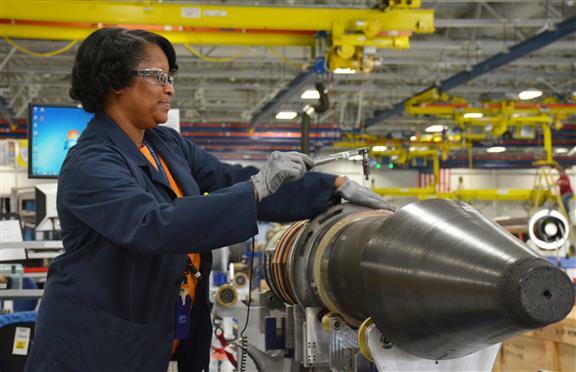
Three weeks following the announcement by the US military to deploy additional missile defense systems across the Middle East amidst soaring fears that the Israel-Hamas war could spill over into a regional war with Iran, Boeing Co. released a statement Monday that it has started to expand its missile factory in Huntsville, Alabama.

Let’s begin with Secretary of Defense Lloyd J. Austin’s comment on Oct. 22, where he said, “I have also activated the deployment of a Terminal High Altitude Area Defense (THAAD) battery as well as additional Patriot battalions to locations throughout the region to increase force protection for US forces.” 

The reason for additional THAAD and Patriot assets to be shipped to the Middle East is because US military bases are under attack. There have been at least 40 attacks on bases in Iraq and Syria since early October by Iran-aligned groups. As a result, at least 56 US personnel have been injured. 

The need for more missiles in Eastern Europe and the Middle East has been a boon for Boeing and the military-industrial complex. 

Boeing announced Monday that its Huntsville factory is currently being expanded by 35,000-square-foot to produce more Patriot Advanced Capability-3 (PAC-3) seekers, which will allow production to increase by 30% by 2027. 

“The PAC-3 seeker is a critical air and missile defense capability, and this site expansion will allow us to significantly ramp up production to support the US military, allies and international partners who rely on it,” said Debbie Barnett, vice president of Strategic Missile & Defense Systems and Boeing Huntsville site leader. 

Barnett continued, “Our proven seeker enables the life-saving precision accuracy of the Patriot system. I can’t overstate the importance of our team’s work in Huntsville and the mission we support.”

Boeing has plowed over $100 million in upgrades in Huntsville missile facilities over the years to support the Patriot program.  

In recent weeks, US ally Jordan asked Washington to deploy Patriot systems to defend its border amid spillover risks from Israel’s relentless bombing of Gaza.  

Over the last 20 months, the West has supplied Patriot missiles to Ukraine. Now, the focus is on the Middle East. Sorry, Zelensky… 

Tyler Durden
Tue, 11/14/2023 – 05:45

OPEC Oil Production Inches Up In October, Sees “Healthy” Demand In US And China

0
OPEC Oil Production Inches Up In October, Sees “Healthy” Demand In US And China

Authored by Charles Kennedy via OilPrice.com,

OPEC’s crude oil production rose in October by 80,000 barrels per day (bpd) compared to September, but the output at the countries bound by the OPEC+ pact continued to be well below the levels agreed, OPEC said on Monday.  

Total production from all 13 OPEC members averaged 27.90 million bpd in October 2023, up by 80,000 bpd month-on-month, as output rose in Angola, Iran, and Nigeria, according to the secondary sources the cartel uses to track production levels. Oil output in Libya, Saudi Arabia, and Kuwait fell last month compared to September, per estimates from OPEC’s secondary sources in the cartel’s Monthly Oil Market Report (MOMR).

The official OPEC data shows little change compared to a Bloomberg survey which found earlier this month that the cartel’s total crude oil production averaged 28.08 million bpd in October, around 50,000 bpd higher compared to September.

Despite the modest rise in OPEC’s oil production, the collective output at the members part of the OPEC+ pact – without the exempted Libya, Venezuela, and Iran – continues to be well below the level in the OPEC+ agreement.

“Crude production in October remained well-below the agreed level related to production adjustments under the Declaration of Cooperation (DoC). For example, Nigeria has seen some production increase, but remained well below its required production level,” OPEC said in Monday’s report.

“It is also important to add that the recent increase in OPEC crude exports reflects seasonal trends,” the cartel added, noting that Middle Eastern crude exports, including from Saudi Arabia, tend to drop in the summer amid higher demand for cooling in the Gulf countries, and then rise in September and October.

Apart from the OPEC+ cuts, the voluntary Saudi and Russian production and export cuts “will contribute significantly to achieve and sustain global oil market stability,” OPEC said.

Early this month, Saudi Arabia said it would continue with its extra voluntary production cut of 1 million bpd in December and will pump around 9 million bpd next month, as it has been doing since July. Russia has also confirmed it would keep oil exports 300,000 bpd lower by the end of the year.

Away from supply, the OPEC report also suggested demand in the U.S. and China is not lowering to the point of concern.

“Recent data confirms robust major global growth trends and healthy oil market fundamentals,” OPEC said in comments that followed the Saudi energy minister’s statement late last week that speculators were responsible for the recent plunge in oil prices to their lowest levels since July.

Tyler Durden
Tue, 11/14/2023 – 05:00

Out Of Office: Global Vacancies Hit Record High

0
Out Of Office: Global Vacancies Hit Record High

The shockwaves from WeWork’s bankruptcy last week continue to reverberate around the commercial real estate market, leaving office landlords around the world trembling with fear at the prospect of losing one of their largest tenants.

Especially in prime markets such as New York City, San Francisco, London and Paris, WeWork played an outsized role in the office rental market, occupying large swaths of premium office space.

According to Bloomberg, “Dormant locations in New York dominate a list of nearly 70 leases the coworking giant intends to terminate, court papers show. The roughly 40 contracts at issue include space near Union Square and in Fulton Center, a retail and transit facility in downtown Manhattan.”

As Statista’s Felix  Richter reports, WeWork’s demise come at the worst possible time for landlords, who are already struggling to find tenants, as many companies are reducing their office footprint to reduce costs and adapt to the post-pandemic world of hybrid work.

According to real estate specialist Jones Lang LaSalle (JLL), office vacancy rates are higher than ever, reaching 21 percent in the U.S. and Canada in Q3 2023 and 16 percent globally, i.e. in the 100+ markets analyzed by JLL Research. In both cases, that’s an increase of 60 percent compared to pre-pandemic vacancy rates, which stood at 13 and 10 percent in North America and globally in Q3 2019, respectively.

Infographic: Out of Office: Global Office Space Vacancies at Record High | Statista

You will find more infographics at Statista

At the end of June, WeWork operated 906,000 workstations in 777 locations across 39 countries, with total (current and long-term) lease obligations amounting to $14.2 billion.

While it’s unclear what will happen to these locations post-bankruptcy, landlords look certain to lose out on a large chunk of their agreed-upon leases and to end up with even more excess supply of prime office space.

As of June 2022, the company rented nearly 20 million square feet of office space across the US. And what’s happening in NYC is coming to a city near you.

Weeks ago, Scott Rechler, Chairman and CEO of RXR Realty, warned the CRE crisis was just getting starting

Tyler Durden
Tue, 11/14/2023 – 04:15

Green Dreams Turn Into Nightmares: After US Withdrawal, Orsted Pulls Out Of Norway Wind Bidding

0
Green Dreams Turn Into Nightmares: After US Withdrawal, Orsted Pulls Out Of Norway Wind Bidding

By Charles Kennedy of OilPrice.com

Danish offshore wind developer Orsted has officially withdrawn from a consortium set to bid on Norwegian offshore wind projects just days after pulling out of two U.S. offshore wind projects, Reuters reports, citing one of the consortium partners. 

The withdrawal comes just two days before Norway’s November 15 deadline to submit pre-qualification interests for the building of up to 1.5 gigawatts of offshore wind capacity. 

“Orsted has informed us that due to a prioritisation of investments in the portfolio, it will withdraw from pursuing participation in offshore wind developments in Norway, and therefore their participation in the partnership will discontinue,” Norway’s Bonheur ASA (BONHR.OL) said in a statement to Reuters.

Separately, Orsted told Reuters by email that it was no longer prioritizing offshore wind development in Norway. 

Earlier in November, Orsted walked away from U.S. offshore wind projects, citing soaring costs, supply chain issues and high interest rates. 

Prior to withdrawing from the U.S. projects, Orsted CEO Mads Nipper told Bloomberg that the Biden administration needed to guarantee more support for the projects at a time when soaring inflation was undermining the renewable energy sector. Orsted would have received at least 30% tax credits under the U.S. Inflation Reduction Act (IRA); however, the company had asked the Biden administration to guarantee subsidies without the domestic content requirement as well as requesting more time to source U.S.-made materials due to supply chain bottlenecks. 

In late August, Orsted warned that it could face up to $2.3 billion in impairments on the U.S. projects. 

Orsted’s stock plummeted 20% on November 1 when it officially withdrew from the U.S. projects.

Renewable energy stocks have significantly underperformed their fossil fuel peers and the broader market in the current year, with the selloff accelerating recently due to high interest rates and despite the IRA. 

Tyler Durden
Tue, 11/14/2023 – 03:30

Visualizing $233B In Ukraine Aid

0
Visualizing $233B In Ukraine Aid

Ukraine has received over $230 billion in aid since the Russian invasion in 2022.

EU institutions and the U.S. together account for almost 70% of the total aid.

Visual Capitalist’s Marcu Lu and Bruno Venditti created the graphic below, using data from the Ukraine Support Tracker, to visualize the top 10 donors to Ukraine between Jan 24, 2022, and July 31, 2023.

European Union is the Biggest Donor

Military aid to Ukraine includes weapons, equipment, and items explicitly donated to the Ukrainian army.

The graphic also illustrates humanitarian aid to assist civilians and financial aid like grants, loans, and guarantees made to the Ukrainian government. It does not include private donations, support for refugees outside of Ukraine, or assistance from international organizations.

As of July 2023, the European Union institutions have been the biggest donor, sending over $90 billion through various mechanisms such as loans or grants, and military assistance through its European Peace Facility fund.

Unlike the United States, which has the largest share of aid in military support, the EU has focused on financial aid.

EU aid includes $3.3 billion for lethal equipment and an additional $2.1 billion to supply Ukraine with one million rounds of ammunition.

The bloc is considering providing up to $53 billion in financial assistance to Ukraine (in loans and grants) for the 2023-2027 period, including using frozen Russian assets to support Ukraine’s reconstruction.

While not captured in this dataset, Denmark and the Netherlands announced in August 2023 that they would donate up to 61 F-16 fighter jets to Ukraine.

U.S. Support

After the European Union, the United States is the biggest donor, with over $70 billion.

The country has already disbursed 96% of the funds allocated to Ukraine since the start of the war, and this has sparked a political controversy.

While the Biden administration strongly defends a $106 billion Emergency National Security Supplemental Request to help Ukraine and Israel, Republican senators oppose the current budget, which contains an additional $60 billion in aid for Ukraine.

Tyler Durden
Tue, 11/14/2023 – 02:45