73.9 F
Chicago
Sunday, September 6, 2026
Home Blog Page 3238

Biden Lifts Sanctions On Venezuela Dictator Maduro In Exchange For Oil

0
Biden Lifts Sanctions On Venezuela Dictator Maduro In Exchange For Oil

A panicking Joe Biden has realized that his best friends, now that oil prices are soaring again and the SPR remains largely drained, are tinpot banana-republic “dictators” (in the White House’s own previous words) like Venezuela’s Nicolas Maduro, and on Wednesday the White House suspended sanctions on Venezuelan oil, gas and gold production. But since it would be too corrupt even for Biden to drop sanctions on Maduro in exchange for just a few barrels oil and nothing else, the White House pretended that the deal was in exchange for “promoting democracy”,  and In return the Nicolas Maduro government promised a deal with the opposition that could see elections held next year. Which likely means 100% mail-in ballots and Dominion machines to “count” them.

“The United States welcomes the signing of an electoral roadmap agreement between the Unitary Platform and Maduro representatives,” Treasury Undersecretary for Terrorism and Financial Intelligence Brian Nelson said in a news release.

“Consistent with U.S. sanctions policy, in response to these democratic developments, the U.S. Department of the Treasury has issued General Licenses authorizing transactions involving Venezuela’s oil and gas sector and gold sector, as well as removing the ban on secondary trading,” he added.

The statement cautioned that the Treasury reserves the right to revoke any or all of the newly issued licenses in case the “Maduro representatives” fail to stick to their word regarding a new electoral map for Venezuela. Of course, the Biden admin won’t revoke the deal as long as it gets some oil; then once Biden loses the 2024 elections all bets are off.

Reports about the deal emerged earlier this month, following a string of signals from Washington it was ready to ease the sanction regime in return for commitments from the Venezuelan government to hold new elections.

The U.S. made the biggest move in that direction last year, when it granted Chevron a license to return to Venezuela, and that was without asking for commitments from the Maduro regime because imports of Russian heavy crude had to be replaced urgently with Venezuelan heavy.

Now, the new license regime would allow financial transactions involving PDVSA, which could boost Venezuelan oil exports significantly.

Crude oil exports from Venezuela last month topped 800,000 barrels daily, which was the second-highest monthly export rate since the start of the year. Most of the exports went to China, Reuters reported in early October.

So how much oil is Biden’s deal unlocking? According to Bloomberg, Venezuela could be able to raise its crude oil production by 25% from current levels if the temporary U.S. easing of the oil sanctions becomes permanent.

Venezuela’s oil production currently stands at a paltry 800,000 barrels per day (bpd), according to various estimates. The eased sanctions would allow the South American country holding the world’s largest crude oil reserves to boost production by 200,000 bpd, analysts say, although the timing of achieving this increase remains uncertain.

Oil stocks will be in focus Thursday as crude fell after US suspended some sanctions on Venezuelan oil. Occidental Petroleum Corp., Exxon Mobil Corp., Chevron Corp. and Schlumberger N.V. are lower by about 1% in premarket trading.


Tyler Durden
Thu, 10/19/2023 – 07:39

When The US Government Is The Only Borrower It’s No Wonder Yields Rising

0
When The US Government Is The Only Borrower It’s No Wonder Yields Rising

By Simon White, Bloomberg Markets Live reporter and strategist

The US government is the only sector to have notably borrowed on a net basis over the last five years. The market sees that as inflationary, driving yields higher.

The pandemic saw an increase in the borrowing of all sectors. But it was the government that saw the biggest rise in GDP terms, and it is the government whose debt is still considerably higher than it was before the pandemic – the debt-to-GDP ratio is up 16 percentage points over the last five years.

In contrast, the household sector’s leverage is now lower than it was pre-pandemic, while the corporate sector’s is only marginally higher. The US government has become the borrower of first as well as last resort.

The market is picking up on this and is pricing accordingly. We can decompose nominal yields into a sum of expected short rate + real term premium + expected inflation + inflation term premium (see here for more).

Over the last three months, the main driver of rising yields in the US has been expected inflation, followed by the real risk premium. This marks a change from earlier in the year where the principal driver was the expected short rate, i.e. expectations of increases in the Federal Reserve’s policy rate.

Regressing the fiscal balance with the yield components shows that only inflation and the inflation risk premium have a negative sign, i.e. when the fiscal balance falls (greater deficit), expected inflation and the risks surrounding it increase.

Not only does increased government borrowing push up borrowing costs through greater inflation risks. When the sovereign is the only borrower, it crowds out the rest of the economy. With governments’ reputation for inefficiency, this depresses real growth.

The lost decades in Japan were primarily a result of the government stepping in to borrow as the private sector nursed its wounds from the late 1980s financial crash. But that perpetuated and entrenched the situation. With the Treasury now the sole borrower of any significance, the US risks going down a similar, yet more stagflationary path, hindering real growth, and keeping yields elevated.

Tyler Durden
Thu, 10/19/2023 – 07:20

Who Is (Still) Running For President In 2024?

0
Who Is (Still) Running For President In 2024?

Former governor of New Jersey, and confidante of Donald Trump, Chris Christie filed the official paperwork for his presidential run on June 6, just one day after Trump’s vice president Mike Pence, data from the Federal Election Commission shows. 

Even later-comers to the 2024 field are North Dakota governor Doug Burgum, well-known professor and activist Cornel West (running as an Independent) and, on the Democratic side, host of the talk show The Young Turks, Cenk Uygur, who was born in Turkey and would have to challenge the requirement that the president has to be a natural-born citizen.

The New York Times so far acknowledges 12 major Republican candidates for president as well as two independent candidates and three Democrats.

Infographic: Who Is Running For President in 2024? | Statista

You will find more infographics at Statista

Former Republican Congressman Will Hurd and Miami mayor Francis Suarez have dropped out of the race.

Former president Donald Trump was the first to announce his run back in November, followed in the first five months of 2023 by Nikki Haley, Asa Hutchinson, Tim Scott and Ron DeSantis as well as political outsiders Vivek Ramaswamy, Perry Johnson, Ryan Binkley and Larry Elder.

On the Democrats’ side, President Joe Biden filed his bid on April 25 – the same day as in 2019.

His was preceded by the bids of repeat presidential candidate and self-help author Marianne Williamson and Robert F. Kennedy Jr., a nephew of JFK, who made headlines for his anti-vaccine stance and changed to run as an Independent last week.

Tyler Durden
Thu, 10/19/2023 – 06:55

Von Greyerz: ‘What A Bloody Mess!’

0
Von Greyerz: ‘What A Bloody Mess!’

Authored by Egon von Greyerz via GoldSwitzerland.com,

A 1987 CRASH IN STOCKS WITH A GOLDEN DAWN FOR OIL AND GOLD

What a bloody mess! Well, economic collapses and wars always are.

But sadly it will become a lot messier!

We now have two dangerous wars, maybe we will have a global war. We have a coming collapse of stock markets and debt markets and a banking system which probably will not survive in its present form. 

But there is always another side of the coin.

There will be opportunities of a lifetime not just to preserve your wealth but also to amass an incredible fortune. More later. 

WHERE BLACK GOLD GOES YELLOW GOLD WILL FOLLOW

Oil and gold are best friends.

As the chart of the Gold – Oil ratio for 50 years shows, below, gold and oil move very much in tandem within a narrow range.

So if oil now goes up due to the Middle East crisis, gold will follow. 

AS IF CLIMATE CHANGE, VACCINES, LOCKDOWNS, WOKENESS, STOLEN ELECTIONS, CBDC, DEBT etc WASN’T ENOUGH

As if all the above wasn’t bad enough, adding a Middle East war to this makes the crisis properly global and the step toward a Global or World War is very short even dangerously short

We thought we had enough trouble with climate change, ESG (Environmental, Social, Governance), wokeness with 27 genders and canceling history, forced vaccines and lockdowns, high taxes, high inflation and debt that can never be repaid. 

Hard to understand what happened to the world since I was born 78 years ago. 

Add to that incompetent governments in the entire Western World and not a single statesman around. All of that is more than most people can cope with. 

The US government and Biden have no policy, no ideology. They have also lost their manufacturing base and their military power is declining rapidly. 

On top of that, the US is also spending money like a drunken sailor who will never sober up but only spend or drink more to drown his ever increasing debts and sorrows. 

And then we started to get used to the “local” war in Ukraine which the poor Ukrainians could never win against a superpower. 

We are now talking about the greatest uncertainties in my 78 year lifetime which started at the end of WWII 1945. 

No one can predict where the current two wars will lead, although our worst fears can sadly be realised sooner than anyone could believe. 

At this stage we cannot say if these crises will lead to a major destruction of the fabric of the world and the death of many, many people. 

But what we can say with much greater certainty is that economic and financial risk is now at a level which is likely to lead to the destruction of wealth on a level never before seen in history. 

I was born right in between the end of WWII in Europe and before it ended in the Far East. So I naturally don’t remember anything from that era. My father was an officer in the Swedish army at the time and Sweden unofficially assisted Norway which was occupied by the Germans.

But I can well remember my early life in Sweden which was a prosperous and stable country with a homogenous population. The 1950s were a period when church doors were open and the church silver could be left unprotected. Today, the copper roof, the gates and anything of value is long gone. Obviously the silver is either locked in or stolen. Police and teachers were greatly respected with ethical and moral values very high. Now people swear and spit at them.

But the stability of the early 1950s (except for the Korean War) soon led to wars in Vietnam, Middle East etc with the invasion of Hungary and Czechoslovakia and Yom Kippur in 1973 being the first Palestine conflict I can remember. Petrol prices in the UK where I lived at the time were 7.5 pence per litre. 

That was the first major oil crisis I experienced. Today petrol in the UK is £1.90 per litre and unlikely to stay that low for long. But a 26X increase in the last 50 years of petrol (US gasoline) is probably going to be seen as a bargain in a few years time. 

let’s start with your most important decision which you need to take toDAY 

Buy as much physical gold as you can afford and then buy much more.

We have warned investors for some time that the Everything Bubble will turn into the Everything Collapse

Well that time is now coming very soon. 

The current pattern of the Dow looks very similar to October 1987. If that is correct, a stock market crash could be imminent. 

Stocks will be down 70-90% or more, in real terms, before this crisis ends.

Most bonds will become worthless, even Sovereign bonds. 

Higher rates and defaults will see to that. 

So get out of all general stock and all bond investments if you want to have any money left at the end of the coming calamity. 

Interest rates will continue the long term, 20-30 year uptrend, obviously with corrections. No one will want to lend to a drunken sailor who can never get sober. Defaults and a banking crisis will lead to higher debts and higher rates. But the US with record borrowings can’t afford the rising interest costs. The dollar will be sacrificed. 

So in all a perfect but vicious debt and currency cycle leading to guaranteed perdition. 

The only question is how long it takes. 

GOLD WILL BE YOUR SAVIOUR

We have been advising investors to hold important amounts of physical gold for wealth preservation purposes since the beginning of 2002. Since that time gold is up 6-8 times in most major currencies and much more in weaker currencies. 

But as I keep telling colleagues and investors, gold’s real journey hasn’t started yet

What I often tell our clients is that they mustn’t wish for gold to go up substantially.

Because when gold goes to the levels which I now feel certain it will, the quality of our lives will be considerably worse than today. 

The factors that will fuel gold’s rapid rise to new substantially higher levels are obvious:

WARS

It is both fascinating and frightening to follow how regional disputes lead to superpowers quickly taking sides and lobbying or forcing its allies to follow suit. 

There are always two sides to a dispute. One of my very important principles is that before you judge someone, you must walk three moon laps in his moccasins. (An old American Indian saying).  But sadly most people including superpowers totally ignore such advice. The Russian argument is that the Minsk agreement was meant to avoid a deepening of the dispute and should have been followed. The US side is that Russia must be stopped at any price and Germany separated from a dangerous rapprochement with Russia. And Europe was given no choice but to follow the US. 

As Bush Jr said to congress in 2001: 

“Either you are with us, or you are with the terrorists!”

The sanctions are severely affecting Germany and most of Europe but the worst consequences are still to come this winter. The Middle East conflict is likely to make the consequences exponentially greater. 

Like with all wars, ordinary people on either side don’t want it.  And democracy doesn’t exist when a nation goes to war. Both Ukraine and the US went to war without the consent of either the people or their parliaments. 

THAT IS HOW WARS AND WORLD WARS START – Idiosyncratic leaders with sycophantic lieutenants take erratic decisions without understanding the consequences. 

WHO IS ACTUALLY RUNNING THE US?

And when the leader is past his sell by date it makes the whole process utterly dangerous. 

Everybody gets old and I am no spring chicken either. But if for whatever reason I don’t have the wits to resign when I should, I hope that my wife and my team will tell me so.

IT IS EXTREMELY DANGEROUS FOR A SUPERPOWER TO BE LEAD BY SOMEONE WHO IS NOT CAPABLE OF LEADING.

Even more dangerous when an unaccountable and unidentifiable group takes all the decisions. 

UKRAINE AND PALESTINE – REGIONS UNDER CONSTANT STATE OF CHANGE

As Heraclitus, the greek philosopher said 2,500 years ago:

“Change is the only constant in life.”

Modern Ukraine was occupied by a number of different people throughout history like the Scythians, Greeks, Romans, Goths, Huns and the Slavs as well as the Mongols. Later Poland and Lithuania and the Ottomans were involved. In 1709 the Swedish King Charles the XII lost against Peter the Great of Russia due to the Great Frost (the coldest winter in 500 years) which weakened the Swedish Army just like during the Napoleon and Hitler invasions. 

So Ukraine is hardly a stable country with deep roots and a homogenous people.

The same with Palestine, the Land of Israel, the birthplace of Judaism and Christianity which has been controlled by, among all, Ancient Egypt, the Persian Empire, Alexander the Great, the Roman Empire, Muslim Caliphates, the Crusaders, the Ottoman Empire and the British Empire after WWI. In 1948, Britain divided the region into Israel, the West Bank and Gaza. 

The history is too long and complex to delve into the details here but suffice it to say that the modern split of the region has created a constant period of dispute (constant change again), misery, wars and deaths. 

No one is prepared to wear the other side’s moccasins and the situation could now escalate to a world war between the Muslim world and the West. This is likely to result not just in a major war but also terrorism around the world. 

Just like in Ukraine, the US and the West are more likely to send money and weapons to the Middle East rather than to peace makers. 

It is unfathomable that the West chooses war over peace. This certainly does not bode well for a peaceful solution to the two conflicts.

OIL

Since most wars in modern times involve oil, the current ones are no exception. 

There are two major camps controlling the global oil supply.

Around 22 million barrels of oil go through the Strait of Hormuz between Dubai and Iran. 

It would be virtually impossible to prevent Iran from blocking this area off, stopping all shipments of oil and gas, if necessary with the help of Russia. 

That would turn off 22 million barrels of oil or 23% of global supply. Enough to make the oil price go to $500 – $1,000 and paralyse the world. 

DEBT AND CURRENCY COLLAPSE

I have since the 1990s been certain that the world economy would end in a debt and currency collapse. That is a very obvious projection since history always repeats itself, or rhymes, and every economic period in history ends this way. 

The difficulty is to time the cycle but as I often stress, exact timing is less important. The key is to prepare early and buy the fire insurance or protection well before the fire starts. 

So whether we call it a Fourth Turning like Neil Howe or a debt and currency collapse like von Mises, the end result is the same and devastating. 

When I discuss my economic scenario most people (but obviously not our clients) call me  pessimist or a prophet of doom and gloom. 

But I am an optimist and consider life to be a wonderful journey. The key is to help other people, family, friends, and clients. Real happiness is making other people happy. It clearly doesn’t always work with people who believe you are a prophet of doom and gloom. But it does work extremely well for people who need help. 

So enjoy life with family, friends, nature, music, books etc for as long as you can. Remember that the quality of your life is determined by how you deal with adversity. 

JIM SINCLAIR – MR GOLD

Our good friend Jim Sinclair died last week of a heart attack. Since the 1970s he has been one of the foremost gold experts in the world. He traded the whole run from $35 in the early 70s to $850 in 1980 where he got out making substantial returns.

Above all Jim was Mr Gold with a superb understanding of the world economy, markets, politics, wealth preservation and of course gold. 

Many people around the world followed his wisdom through his website JS Mineset.

I had the privilege of meeting Jim many times around the world. He was always gracious with his advice and support. He often told investors to “Go to Egon” and posted both my mobile number and private email on his site. At times we were totally inundated with potential clients. He had a tremendous following.

We will miss you greatly, Jim. I know that you wanted to experience the coming surge in gold that took longer than many of us expected. But you always knew that this move was inevitable. Still, your legacy will certainly be with the whole gold community and we will send you thankful thoughts regularly as gold continues to move up.

Tyler Durden
Thu, 10/19/2023 – 06:30

Adidas Boosts Guidance On Sales Of Remaining Yeezy Inventory

0
Adidas Boosts Guidance On Sales Of Remaining Yeezy Inventory

Adidas shares jumped Wednesday after the sportswear company boosted its full-year guidance and reported preliminary results of stronger-than-exected third-quarter earnings, primarily due to the sales of Yeezy sneaker inventory from its terminated partnership with Kanye West, also known as “Ye,” after he made antisemitic comments about one year ago.

Adidas expects operating losses only to be around 100 million euros for 2023, a massive improvement from forecasts earlier this year of a 450 million euro loss. 

Including the positive impact from the two Yeezy drops in Q2 and Q3, the potential write-off of the remaining Yeezy inventory of now around € 300 million (previously: € 400 million) and one-off costs related to the strategic review of up to € 200 million (unchanged), Adidas now expects to report an operating loss of around € 100 million in 2023 (previously: loss of € 450 million).

“While the company’s performance in the quarter was again positively impacted by the sale of parts of its remaining Yeezy inventory, the underlying Adidas business also developed better than expected,” the German sportswear giant said. 

It “expects currency-neutral revenues to decline at a low-single-digit rate in 2023 (previously: decline at a mid-single-digit rate).” 

The operating profit for the third quarter was reported at 409 million euros, a decline from the 564 million euros in the same quarter last year. 

Adidas shares in Germany rose as much as 5% on the news of the turnaround led by selling ‘canceled’ Yeezy shoes. Shares are up 88% since breaching the 100 euro level last October. 

Several Wall Street analysts had anticipated a favorable forecast from the company (list courtesy of Bloomberg): 

Deutsche Bank, Adam Cochrane (buy)

  • Says investor expectations have become more positive for Adidas due to the earnings momentum this year, and expects a better 3Q to maintain this with further upgrades
  • “If we assume that the majority of the €100m (non-Yeezy) upgrade to guidance was achieved in 3Q this points to a better 4Q as well”

Warburg, Joerg Philipp Frey (hold)

  • New guidance is closer to Frey’s own estimates of €400m underlying operating profit and €200m reported Ebit, which includes the €200m restructuring charge
  • “The guidance for the full year remains very conservative, in our view, particularly as we expect another Yeezy drop in 4Q and the full write-off of remaining Yeezy inventory is clearly very aggressive and we would thus only expect normal age-based inventory revaluations” 

Bernstein, Aneesha Sherman (outperform)

  • Outside of the Yeezy drop in August, the surprise was from a “greater than expected improvement in the underlying business”
  • This suggests continued momentum into 2024, which is driven by an improvement in brand heat and inventory

Citi, Thomas Chauvet (buy)

  • Estimates that excluding Yeezy, currency-neutral sales growth turned positive to +2% in 3Q and Ebit margin improved sequentially
  • “This is a first step in a transition year toward a more positive 2024 outlook,” he writes in a note to clients

RBC, Piral Dadhania (sector perform) 

  • Says that while he was anticipating a pre-announcement an annual outlook boost, “the details suggest 3Q is performing better than expected, both from an underlying perspective and also as it relates to Yeezy (which is positive for cash flow even if one-off in nature)”

The company’s revitalization efforts are linked to the remaining sale of Yeezy inventory, indicating if the core bussiness does not accelerate, then it’s a rocky path ahead for the company. 

Tyler Durden
Thu, 10/19/2023 – 05:45

European Union’s War On American Whiskey Heats Up

0
European Union’s War On American Whiskey Heats Up

Authored by Chris Swonger via RealClear Wire,

It’s been five years since American Whiskey was slapped with a 25% retaliatory tariff from the EU, making it collateral damage in an unrelated Trump-era trade dispute. This caused a sudden and dramatic decline in U.S. Whiskey exports to Europe, which had been powering the industry’s remarkable growth over the preceding years—not just in Tennessee and Kentucky, but in 28 states across the country.

Distillers breathed a sigh of relief two years ago when the Biden Administration negotiated a temporary suspension of the tariffs. But that suspension is now set to lapse if negotiators don’t reach another agreement by the end of October. Worse, if a deal is not reached, the tariffs won’t just come back at 25%—they’ll double to 50%.

This would be a devastating blow to craft whiskey exporters like Dr. Sonat Birnecker Hart, founder of Koval Distillery in Chicago. She invested years into nurturing relationships at international trade shows and hosting frequent meetings with foreign distributors to earn highly competitive space on European shelves. The original tariffs were a costly setback, but she carefully, painstakingly rebounded over the last two years thanks to the suspension.

Now, it’s 2018 all over again—only worse. A 50% tariff would entirely eliminate Dr. Hart’s profits on European sales, requiring her to make an impossible decision: either she raises prices and loses her competitive edge in Europe, or she eats the costs herself to maintain market share in hopes that eventually the tariffs will be removed. Either way, the decline in profit will force belt-tightening at home, including potentially scaling back investments and jobs.

Throughout the temporary suspension of the past two years, distillers like Dr. Hart have proven how much potential there is for growth in Europe. American whiskey exports to the EU were up 118% in the first half of 2023 compared to the same period in 2022.

These numbers would have been far higher if the uncertainty of the tariffs wasn’t holding so many other distillers back.

One of them is Tom Lix, founder and CEO of Cleveland Whiskey. Prior to the tariffs, exports to Europe accounted for 15% of Tom’s business. After the tariffs, that dropped almost to zero. When the Biden administration negotiated the suspension two years ago, Tom was thankful but also acutely aware that it was only a temporary reprieve. Until there is some certainty related to the tariffs, he does not plan to go back to the EU market.

Imagine if distillers like Tom had never been forced onto the sidelines in the EU, the top export market for U.S. spirits. Think how much their revenue would have grown by now.

These gains are still there for the taking, but that might not be true forever. These tariffs could eventually do irreparable damage to the success of Bourbon and other American Whiskeys  abroad. European consumers’ taste for our whiskeys can only be expected to withstand so many price shocks and supply setbacks before it begins to redirect toward Scotch, Japanese Whiskey, or spirits from other regions. And as Europe goes, so go other export markets.

If American distillers lose out in this critical market, we’ll feel it at home. The number of distilleries in the U.S. has gone from 35 two decades ago to 2600 today, making the spirits industry one of the shining economic success stories of recent times. But that growth would almost certainly wither without access to global markets. So, too, would the supply chain benefits.

America’s craft distillers purchase grain from local farmers, are major customers of bottling and manufacturing companies, and their tasting rooms have helped revitalize Main Streets by boosting tourism, jobs, and culture. This is a time to double down on growth industries, not saddle them with unnecessary tariffs.  

U.S. distillers are urging the Biden administration to secure the permanent removal of these tariffs. The clock is ticking. Trade representatives from the U.S. and EU are set to meet during a summit in Europe on October 20th to discuss the matter, but there is no guarantee a deal will be struck in time.

In order to truly flower to its fullest potential, American Whiskey needs certainty and stability. It needs these tariffs to be removed so the industry can do what it was always meant to do—spread cheer throughout the world.

Chris Swonger is President and CEO of the Distilled Spirits Council of the United States.

Tyler Durden
Thu, 10/19/2023 – 03:30

Visualizing The Scale Of Food Waste In Europe

0
Visualizing The Scale Of Food Waste In Europe

Each person in the EU generated an average of 130 kilograms of food waste per year in 2020, according to estimates by the European statistics office Eurostat.

This is based on data from the 27 member states.

As Statista’s Anna Fleck shows in the following chart, Cyprus had the highest amount of food waste per capita, at around 400 kg.

Infographic: The Scale of Food Waste in Europe | Statista

You will find more infographics at Statista

However, Belgium and Denmark also stand out for being at the top end of the scale, with 250 kg and 221 kg per person, respectively.

By contrast, Croatia and Slovenia had a far lower waste output per person, at 71 and 68 kilograms, respectively.

Tyler Durden
Thu, 10/19/2023 – 02:45

Democracy Thrives In Poland

0
Democracy Thrives In Poland

Authored by Grzegorz Adamczyk via Remix News,

Despite repeated claims from several opposition politicians suggesting the end of democracy in Poland, recent parliamentary elections have proven that democracy is alive and well in the country, with no apparent threats in sight…

While the Law and Justice (PiS) party secured the most votes, they will not form the next government. The number of seats they fell short by to establish a majority is simply too large, and no miraculous event can change this. Although the opposition, in total, garnered more seats than the ruling party, the Civic Coalition (KO) did not overcome Law and Justice, as Donald Tusk frequently predicted.

Poland’s conservative ruling Law and Justice party leader, Jaroslaw Kaczynski, gets in a car after voting during parliamentary elections in Warsaw, Poland, Sunday, Oct. 15, 2023. (AP Photo/Michal Dyjuk, File)

The opposition’s seat count was significantly boosted mainly due to the stellar performance of the Third Way, a result not foreseen by any poll, and a loss in support for the Left and the Confederation.

Donald Tusk celebrated the election results, saying, “We did it.”

While it’s true that Tusk had an outstanding personal result, garnering over 538,000 votes in Warsaw, most of the success of the coalition was attributed to Third Way’s performance. Despite Tusk’s claims that there’s “no third way” and the repeated attacks on Third Way and Szymon Hołownia by radical opposition supporters, the party, combined with the Left, secured a majority of seats.

However, let’s not be under any illusion. It will be challenging for the current opposition parties, who have the majority of seats, to come to a consensus. The differences between Tusk and Zandberg or even between Kosiniak-Kamysz and Hołownia are vast. Still, voters would never forgive them if they didn’t reach an agreement. Moreover, no one is keen on early elections, as politicians are exhausted from a campaign that’s both a significant human and financial effort.

The success of the Third Way also signals a strong message from many young Poles, tired of the Tusk-Kaczynski rivalry. Catchphrases like “enough of the quarrels” resonated with them. I’ve always maintained that voters deserve respect, even if I disagree with their views, and I’ll never resort to insults. I understand young people’s need to escape from constant disputes, even if it is inherent to democracy. The current opposition needs to realize that the 7,640,854 PiS voters are here to stay, despite Rafał Trzaskowski’s claim that there’s no place for such views in Poland.

I often say that the favor of voters is unpredictable. This election highlighted that fact with interesting intra-list battles. People from the bottom of the list outperformed those at the top, proving that voters were making more informed choices rather than blindly supporting the list’s first candidate.

Record voter turnout underscores the continued polarization among Poles and their vision for the country. However, as demonstrated by the elections, democracy in Poland is far from over. The only potential threats are changes to the EU treaties, plans for EU centralization, and catering to the will of the biggest states. Alongside with inevitable societal shifts due to the “voluntary solidarity” with the EU’s migrant relocation mechanism and Russia’s growing imperial ambitions, these issues seemed insignificant to most voters. However, in the coming years, we might realize their importance.

Tyler Durden
Thu, 10/19/2023 – 02:00

Some Call It Conspiracy Theory, Part 1

0
Some Call It Conspiracy Theory, Part 1

Authored by Iain Davis via IainDavis.com,

There are certain assumptions that are applied to anyone labelled a “conspiracy theorist”—and all of them are fallacies. Indeed, the term “conspiracy theory” is nothing more than a propaganda construct designed to silence debate and censor opinion on a range of subjects. Most particularly, it is used as a pejorative to marginalise and discredit whoever challenges the pronouncements and edicts of the State and of the Establishment—that is, the public and private entities that control the State and that profit from the State.

Those of us who have legitimate criticisms of government and its institutions and representatives, who are therefore labelled “conspiracy theorists,” face a dilemma. We can embrace the term and attempt to redefine it or we can reject it outright. Either way, it is evident that the people who weaponise the “conspiracy theory” label will continue to use it as long as it serves their propaganda purposes.

One of the most insidious aspects of the “conspiracy theory” fabrication is that the falsehoods associated with the term have been successfully seeded into the public’s consciousness. Often, propagandists need do no more than slap this label on the targeted opinion and the audience will immediately dismiss that viewpoint as a “lunatic conspiracy theory.” Sadly, this knee-jerk reaction is usually made absent any consideration or even familiarity with the evidence presented by that so-called “lunatic conspiracy theorist.”

This was the reason why “conspiracy theorist” label was created. The State and its propagandists do not want the public to even be aware of inconvenient evidence, let alone to examine it. The challenging evidence is buried under the “wild conspiracy theory” label, thereby signalling to the unsuspecting public that they should automatically reject all of the offered facts and evidence.

There are a number of components that collectively form the conspiracy theory canard.

Let’s break them down.

  • First, we have a group of people who supposedly can be identified as conspiracy theorists.

  • Second, we have the allegation that all conspiracy theorists share an underlying psychological weakness.

  • Third, conspiracy theory is said to threaten democracy by undermining “trust” in democratic institutions.

  • Fourth, conspiracy theorists are purportedly prone to extremism and potential radicalisation.

  • Fifth, conspiracy theory is accused of not being evidence-based.

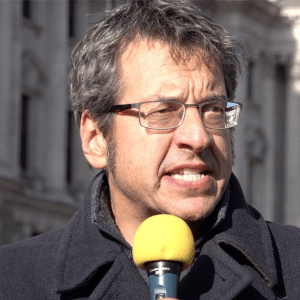
According to the legacy media, there’s a link between so-called “conspiracy theory” and the “far right” and “white supremacists.” Guardian columnist George Monbiot, for example, wrote that:

[. . .] conspiracism is fascism’s fuel. Almost all successful conspiracy theories originate with or land with the far right.

Apparently, this is a common belief held by people who imagine that “conspiracy theory” exists in the form they have been told it exists. It is also a bold claim from an alleged journalist. There is no evidence to support Monbiot’s assertion.

Numerous studies have tried to identify the common traits of conspiracy theorists. These studies tend to initially identify their subject cohort simply through opinion surveys. If, for example, someone doesn’t accept the official accounts of 9/11 or the JFK assassination, the researchers label them “conspiracy theorists.”

Probably the largest demographic study of these alleged “conspiracy theorists” was undertaken by political scientists Joseph Uscinski and Joseph Parent for their 2014 book American Conspiracy Theories. They found that “conspiracy theorists” could not be categorised demographically.

Ethnicity, gender, educational attainment, employment and economic status and even political beliefs were not indicative. The only firm trait they could isolate was that conspiracy theorists, so-called, tended to be slightly older than the population average—suggesting, perhaps, that scepticism of State narratives increases with life experiences.

Professor Chris French made this observation, as reported by the BBC in 2019:

When you actually look at the demographic data, belief in conspiracies cuts across social class, it cuts across gender and it cuts across age. Equally, whether you’re on the left or the right, you’re just as likely to see plots against you.

This is not to deny that a minority of conspiracy theories are promoted by people on the far right of the political spectrum. Nor that some on the far left don’t advocate other similar theories. A few “conspiracy theories” can be considered “racist” and/or “antisemitic.” But there is no evidence to support the allegation that “conspiracy theorists,” when compared to the general population, are any more or less likely to hold extreme political beliefs or promote extremist narratives.

George Monbiot is certainly not alone in his views, but his published opinion—namely, that conspiracy theories “originate with or land with the far right”—is complete nonsense. So let’s discard his claim right now as ignorant claptrap.

George Monbiot – claptrap

Monbiot’s allusion to “conspiracism” relates to the alleged psychological problems that supposedly lead people to become “conspiracy theorists.” The “conspiracism” theory is a product of the worst kind of junk science. It is primarily based upon the notoriously flaky discipline of experimental psychology.

One of the seminal papers informing the theory of “conspiracism” is Dead and Alive: Beliefs in Contradictory Conspiracy Theories (Wood, Douglas & Sutton, 2012). The researchers asked their “conspiracy theorist” subjects to rate the plausibility of various alleged conspiracy theories. They used a Likert-scale, where 1 is strongly disagree, 4 is neutral, and 7 is strongly agree. Some of the “theories” the subjects were asked to consider were contradictory.

For example, they asked the subjects to rate the plausibility of the notions that Princess Diana was murdered and that she faked her own death. Using this methodology, the researchers concluded:

While it has been known for some time that belief in one conspiracy theory appears to be associated with belief in others, only now do we know that this can even apply to conspiracy theories that are mutually contradictory.

But the researchers did not ask their subjects to exclude mutually contradictory theories—only to rate the plausibility of each individually. Thus, there was nothing in their reported findings to support the conclusion they unscientifically reached.

Subsequent research has highlighted how ludicrous their falsely named “scientific conclusion” was. Yet, despite being roundly disproved, the erroneous assertion that conspiracy theorists believe contradictory theories simultaneously is repeated ad nauseam by the legacy media, politicians and academics alike. It forms just one of the groundless truisms spouted by those who spread the “conspiracism” myth.

One of the most influential scholars—if not the most influential—in the field of conspiracy research is political scientist Joseph Uscinski. Like many other of his peers, he has tried to differentiate between evidence-based knowledge of real or “concrete” conspiracies, such as Iran-Contra or Watergate, and what scientific researchers allege to be the psychologically flawed and evidence-free views held by so-called “conspiracists.”

Uscinski cites the work of Professor Neil Levy as definitive. In Radically Socialized Knowledge and Conspiracy Theories, Levy stated:

The typical explanation of an event or process which attracts the label “conspiracy theory” is an explanation that conflicts with the account advanced by the relevant epistemic authorities. [. . .] A conspiracy theory that conflicts with the official story, where the official story is the explanation offered by the (relevant) epistemic authorities, is prima facie unwarranted. [. . .] It is because the relevant epistemic authorities — the distributed network of knowledge claim gatherers and testers that includes engineers and politics professors, security experts and journalists — have no doubts over the validity of the explanation that we accept it.

Simply put, the scientific definition of “conspiracy theory” is an opinion that conflicts with the official narrative as reported by the “epistemic authorities.” If you question what you are told by the State or by its “official” representatives or by the legacy media, you are a “conspiracy theorist” and, therefore, according to “the Science™,” mentally deranged.

All related “scientific research” on conspiracism and claimed conspiracy theory starts from the assumption that to question the State, the Establishment or the designated “epistemic authorities” is delusional. As hard as this fact may be for many to accept, the effective working definition of “conspiracy theory” in the scientific literature is “an opinion that questions power.”

Clearly, this definition is political, not scientific. The supposed underlying psychology of “conspiracism,” which allegedly induces people to engage in “conspiratorial thinking,” is an assumption stemming from the academic’s political bias in favour of the State and its institutions. It has absolutely no scientific validity.

In his 1949 essay Citizenship and Social Class, sociologist T. H. Marshall examined and defined democratic ideals. He described them as a functioning system of rights. These rights include the right to freedom of thought and expression, including speech, peaceful protest, freedom of religion and belief, equality of justice, equal opportunity under the law, and so on.

Most of us who live in what we call representative democracies are familiar with these concepts. “Rights” and “freedoms” are often touted by our political leaders, academia and the legacy media as the cornerstones of our polity and culture. The entire purpose of representative democracy, it is alleged, is to empower “we the people” to hold decision-makers to account. “Questioning power” is a foundational democratic ideal.

If we accept the working scientific definition of “conspiracy theory,” then its inherent questioning of power and overt challenge to authority embodies perhaps the most important democratic principle of all and forms the bedrock of representative democracy. It is not unreasonable to aver that representative democracy cannot possibly exist without “conspiracy theory”—again, as it is defined in the scientific literature. As we can see, the claim that “conspiracy theory” threatens democratic institutions is without merit.

Representative democracy is not founded on public trust in the State, in its agents or in its representatives. On the contrary, representative democracy is built upon the right of the people to question the State, its agents and its representatives.

Autocracies and dictatorships demand public “trust.” Democracies do not. In a representative democracy, “trust” must first be earned and, through their actions, State institutions must constantly maintain whatever trust the public originally chose to invest in them. Wherever and whenever that “trust” is no longer warranted, the people who live in a democracy are free to question, and ultimately dissolve, State institutions they don’t trust.

Trust is not a democratic principle. Questioning power is.

Consider that, according to State institutions like the United Nations (UN),

Conspiracy theories cause real harm to people, to their health, and also to their physical safety. They amplify and legitimize misconceptions [. . .] and reinforce stereotypes which can fuel violence and violent extremist ideologies.

This is a wholly misleading statement. It is disinformation.

The most violent act imaginable, and the most extreme ideology of all, is war and the all-out commitment to it. Full-scale war is possible only when a State declares it. International war is solely within the purview of one entity: the State. Wars are frequently justified by the State using lies and deception. Furthermore, the ideology of war is unwaveringly promoted by the legacy media on behalf of the State.

To be clear: the UN alleges that when ordinary men and women from across all sectors of society—representing all races, economic classes and political views—exercise their democratic right to question power, they are expressing opinions that “fuel violence and violent extremist ideologies.”

For such an extraordinary, apparently anti-democratic allegation to be considered even remotely plausible, it must be based upon irreproachable evidence. Yet, as we shall see, the UN’s claim is not based on any evidence at all.

In 2016, UN Special Rapporteur Ben Emmerson issued a report to the UN advising its member states on potential policies to counter extremism and terrorism. In his report, Emmerson noted the lack of a clear, agreed-upon definition of “extremism.” He reported that different UN member states defined “extremism” based upon their own political objectives and national interests. There was no single, cogent explanation of the “radicalisation” process. As he put it:

[M]any programmes directed at radicalisation [are] based on a simplistic understanding of the process as a fixed trajectory to violent extremism with identifiable markers along the way. [. . .] There is no authoritative statistical data on the pathways towards individual radicalisation.

A year later, in 2017, the US National Academy of Sciences (NAS) delivered its report, “Countering Domestic Extremism.” The NAS suggested that domestic “violence and violent extremist ideologies” were the result of a complex interplay between a wide gamut of sociopolitical and economic factors, individual characteristics and life experiences.

The following year, in July 2018, the NAS view was reinforced by a team of researchers from Deakin University in a peer-reviewed article, “The 3 P’s of Radicalisation.” The Deakin scholars collated and reviewed all the available literature they could find on the process of radicalisation that potentially leads to violent extremism. They identified three main drivers: push, pull, and personal factors.

Push factors are the structural factors that propel people towards resentment, such as State repression, relative deprivation, poverty, and injustice. Pull factors are factors that make extremism seem attractive, like ideology, group identity and belonging, group incentives, and so on. Personal factors are individual character traits that make a person more or less susceptible to push or pull. These include psychological disorders, personality traits, traumatic life experiences, and so on.

Presently, the UN maintains that its report, Journey To Extremism in Africa, is “the most extensive study yet on what drives people to violent extremism.” In keeping with all previous research, the Africa report concluded that radicalisation occurs through an intricate combination of influences and life experiences.

The myriad of contributory factors to the radicalisation process according to the UN’s “most extensive study.”

Specifically, the report noted:

We know the drivers and enablers of violent extremism are multiple, complex and context specific, while having religious, ideological, political, economic and historical dimensions. They defy easy analysis, and understanding of the phenomenon remains incomplete.

In its report called “Prevention of Violent Extremism“—published in June 2023—the UN noted that “deaths from terrorist activity have fallen considerably worldwide in recent years.” Yet, in its promotional literature for the same report, the UN claimed that the “rise of violent extremism profoundly threatens human security.”

How can the UN have it both ways? How can it be that a “rise of violent extremism” correlates with a considerable reduction in terrorist activity and associated deaths? This makes absolutely no sense whatsoever.

And remember that in the Africa report, which the UN currently calls its “most extensive study yet,” the UN acknowledged that the causes of radicalisation “are multiple, complex and context specific” and “defy easy analysis.”

This thoroughly refutes the manifest ease with which the UN proclaims, without cause, that so-called conspiracy theories “fuel violence and violent extremist ideologies.” This begs the question: what on Earth does the UN think “violent extremism” is, if not terrorism?

The bottom line is that, by its own admission, the UN has absolutely no evidence to support any of its “conspiracy theory” assertions. Rather, the UN is simply making up its entire “conspiracism” thesis from whole cloth.

In reality, so-called “conspiracy theorists” are overwhelmingly ordinary people with legitimate opinions that span a wide range of issues. Their opinions do not lead them to adopt extremist ideologies or to commit violent acts. There is no evidence at all to support this widely promulgated contention.

Nor are alleged “conspiracy theorists” a unique group of malcontents with psychological problems. The only defining characteristic these people possess is that they exercise their right to question power.

They do not seek to undermine democracy but, rather, exercise the rights and freedoms that democracy is supposedly based upon. It is this behaviour that the State deems unacceptable and that leads the State and its “epistemic authorities,” including the legacy media, to label them “conspiracy theorists.”

This observation in no way implies that the conspiracy theorists are always right. Conspiracy theories can be bigoted. They can be ridiculous. They may lack supporting evidence. They may cause offence. And they are sometimes just plain wrong. In other words they are just like any other opinion. But, equally, there is nothing inherently inaccurate or dangerous about every opinion labelled “conspiracy theory.”

There is only one way to ascertain if an alleged conspiracy theory is valid or not: examine the evidence. Unfortunately, the conspiracy theory label was created specifically to discourage people from looking at the evidence.

There are countless examples of the conspiracy theory or theorist label being used to hide evidence, obscure facts and deny legitimate concerns.

In Part 2, we will look at a few of these examples and explore the wider geopolitical context in which the conspiracy theory label is deployed.

*  *  *

If you value what Iain does then please consider supporting his work

Tyler Durden
Thu, 10/19/2023 – 00:00

Insurrection? Pro-Palestinian Protesters Occupy Capitol Building

0
Insurrection? Pro-Palestinian Protesters Occupy Capitol Building

The far-left pro-Palestinian protests continue in the US with activists now occupying the Capitol, accusing lawmakers of having Palestinian blood on their hands. 

As with most leftist efforts, the first goal is a narrative shift in which the people who triggered the conflict are painted as victims.  The Hamas soldiers who launched terrorist attacks killing thousands of civilians in Israel are dismissed down the memory hole, and now the focus is only on Palestinian tragedy. 

The most logical decision is for America to stay out of the conflict completely.  However, rabid involvement by leftists on the side of Hamas may actually push a majority of Americans to throw full support behind Israel simply because any cause backed by woke organizations is a cause worth obstructing.  The public will ask themselves:  “When have these people ever been right?” 

The DC event adds insult to injury, considering Democrats have been accusing conservatives of insurrection for the past few years after occupying the Capitol. 

But of course, it’s only insurrection when conservatives do it…

Tyler Durden
Wed, 10/18/2023 – 23:30