As of September 21, the AAA gas pices overview put the price of a gallon of regular at $3.87 in the U.S. on average – the highest ever for this time of year.
That price is still way below the new all-time high recorded on June 14, 2022 ($5.02), however.
State-specific costs for transportation and distribution can drive up prices, like in the case of Alaska and Hawaii. State taxes also vary greatly, for example explaining the high price of gasoline in California.
But states that usually offer cheap gas are also feeling the price crunch right now. According to AAA, the gallon now costs upwards of $3.50 in all but nine states.
Only in parts of the Southern United States and Texas, the gallon is still priced below that. Among those shelling out most for gas at the moment are residents of Washington, Nevada and California.
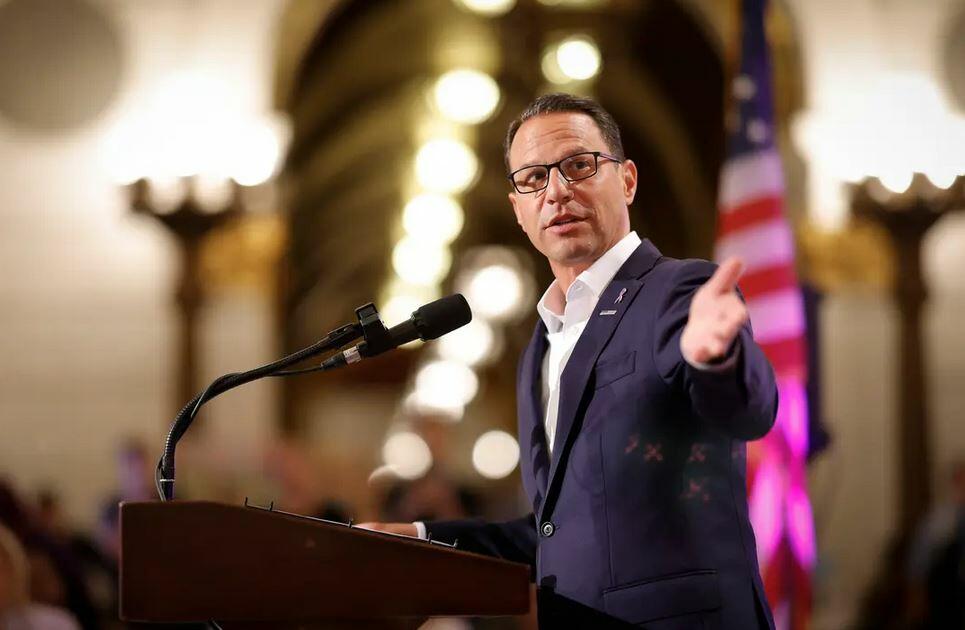
Gov. Josh Shapiro announced on Sept. 19 that Pennsylvania has implemented automatic voter registration (AVR) at Pennsylvania Department of Transportation (PennDOT) driver and photo license centers, starting on the day of the announcement.
With this move, Pennsylvania joins 23 states with AVR. They are Alaska, California, Colorado, Connecticut, Delaware, Georgia, Hawaii, Illinois, Maine, Maryland, Massachusetts, Michigan, Minnesota, New Jersey, New Mexico, New York, Nevada, Oregon, Rhode Island, Vermont, Virginia, Washington, and West Virginia, plus the District of Columbia.
Pennsylvania residents seeking new or renewed driver’s licenses and ID cards will be automatically taken through the voter registration application process, if they are eligible to vote, unless they opt out of doing so.
It is a change from voters opting into the voter registration process. Previously, employees at license centers asked people if they would like to register to vote.
The change also adds voter registration instructions in five more languages, for a total of 31 languages, a statement from Mr. Shapiro’s office said.
“Pennsylvania is the birthplace of our democracy, and as Governor, I’m committed to ensuring free and fair elections that allow every eligible voter to make their voice heard,” Mr. Shapiro said in a statement.
“Automatic voter registration is a commonsense step to ensure election security and save Pennsylvanians time and tax dollars. Residents of our Commonwealth already provide proof of identity, residency, age, and citizenship at the DMV—all the information required to register to vote—so it makes good sense to streamline that process with voter registration.”
Longtime Voter Registration Site
Since the 1993 passage of the National Voter Registration Act, which includes the motor voter law, Pennsylvanians have been able to apply to register to vote during these visits at PennDOT centers.
“Registering eligible Commonwealth residents to vote during their visits to driver and photo license centers is a commonsense action,” Secretary of the Commonwealth Al Schmidt said in the statement. “The voter is already in a state government facility with their identification documentation in hand, and they will have their picture taken and sign their name electronically. Having all of that happen at the same time means the verification process is extremely secure and makes the registration process more efficient.”
According to the statement from the governor’s office, “Multiple studies—including a 2019 Brennan Center for Justice study and a 2021 study by the Public Policy Institute of California—have also found that automatic voter registration in other states has produced marked increases in the number of eligible voters added to the voter rolls and has produced appreciable increases in voter turnout.”
As of December 2022, roughly 8.7 million Pennsylvanians were registered to vote. According to U.S. Census estimates, more than 10.3 million Commonwealth residents are eligible to register, the statement said.
To be eligible to register to vote, applicants must 1) be a U.S. citizen for at least 30 days before the next election; 2) be a resident of Pennsylvania and their election district for at least 30 days before the next election; and 3) be at least 18 years old on the date of the next election.
The National Conference of State Legislatures (NCSL) lists some pros and cons to AVR on its website.
One positive is that automatic registration can help with voter registration list maintenance because the process updates existing registrations with current addresses. Precise voter rolls facilitate election accuracy and reduce the use of provisional ballots, which are used when there is a discrepancy in a voter’s registration status.
“Some supporters also say automatic voter registration leads to higher voter turnout, although evidence supporting this claim is mixed,” the NCSL website says, then goes on to mention disadvantages of AVR.
“Opponents of automatic voter registration may say that the government should not tell citizens they must register to vote, particularly in states that provide the ‘opt-out’ choice by mail, after the fact. Furthermore, they question whether opt-out forms that are sent and received through the mail are sufficient to ensure an individual can decline to register.”
In the first of five newly scheduled visits to the Hawkeye State, Donald Trump arrived in northeast Iowa with a warning.
“In order to win in 2024, Republicans must learn how to properly talk about abortion,” he told an audience of some 2,000 potential voters, packed into a ballroom here.
“This issue cost us unnecessarily but dearly in the midterms. It cost us dearly, really, and unnecessarily.”
Amid his customary MAGA slogans and jokes at the expense of Ron DeSantis, the moment stood in stark relief as a rare attempt at clear-eyed, political sobriety on Trump’s part. It’s also the latest in a week-long saga in which Trump, the self-described “most pro-life president in history,” has sought to loudly position himself as the GOP’s resident moderate on abortion. It began with a bang on Sunday, when the former president denounced the idea of a six-week “fetal heartbeat” ban on abortion as a “terrible mistake,” and pledged to negotiate a compromise with Democrats on the issue.
Ever since the 2022 Dobbs decision that vacated Roe v. Wade, abortion has emerged as a highly salient issue that cuts in Democrats’ favor. This summer, it emerged as a flashpoint dividing the Republicans’ crowded presidential primary field – and nowhere is this more true than in Iowa. Participants in the state’s first-in-the-nation GOP caucus are more likely to identify as pro-life than anything else, and victory in the state is nigh impossible without the support of evangelical Christians, a majority of whom enthusiastically support Iowa’s six-week abortion ban.
Trump’s campaign knows all this, but his concern appears to be with electability in swing states during the general election – which is the kind of luxury available only to a candidate leading the primary field by 40 points in the polls.
On stage, Trump recalled the GOP’s recent losses in Michigan and Pennsylvania: “Good candidates” who ultimately “got clobbered” because they failed to read the room on abortion.
Trump may see something in the tea leaves for 2024, as well. At the GOP debate in Milwaukee last month, eight of Trump’s most prominent challengers all took the opportunity to identify as some shade of “pro-life.” But in the weeks since, the only challenger to have moved the needle against him has been Nikki Haley – the lone woman on stage, who drew a sharp contrast with the pack when she offered a nuanced take on the issue, and rebuked the idea that a Republican president could pass any kind of federal abortion ban.
“No Republican president can ban abortions any more than a Democrat president could ban all those state laws,” she said in Milwaukee.
“Don’t make women feel like they have to decide on this issue, when you know we don’t have 60 Senate votes.”
Notably, a September 7 poll by Fox found Haley to have a better hypothetical matchup against Joe Biden than any other GOP candidate, Trump included. But others in the race insist the path forward is to the right of Trump’s current post. At a Saturday town hall with Iowa evangelicals in Des Moines, his former sidekick called for a nationwide 15-week ban, in a direct response to Haley.
“It’s an idea whose time has come,” Pence said.
“Why would we leave unborn babies in California and Illinois and New York to the devices of liberal state legislatures and liberal governors? We need to stand for the unborn, all across America.”
And for Ron DeSantis, who signed a six-week ban identical to Iowa’s in Florida last March, it might be just what his struggling campaign needed. The campaign took to Iowa’s radio waves the morning after Trump’s “horrible mistake” clip went viral, ready to position himself as the more authentic pro-life candidate.
“I don’t know how you can even make the claim that you’re somehow pro-life if you’re criticizing states for enacting protections for babies that have heartbeats,” DeSantis said in an interview with Radio Iowa on Monday.
“I think if [Trump’s] going into this saying he’s going to make the Democrats happy with respect to right to life, I think all pro-lifers should know that he’s preparing to sell you out.”
On its surface, it would seem like an easy inroad for the Florida governor. But it may not be so simple. When RealClearPolitics spoke to Emerson College’s Spencer Kimball, he pointed to a counterintuitive finding in their post-debate Iowa poll. Trump was found to have roughly equivalent support among Republicans both against and in favor of a complete federal abortion ban (51% and 52%, respectively).
“There’s this idea that the abortion issue is really driving, or that it’ll curtail Trump somehow, but I don’t see that. He’s getting it from both directions,” Kimball said.
“The issues just don’t line up perfectly, where if you go with one thing, everyone will fall in line.”
Kimball also felt that Trump’s anxieties about another pro-choice “clobbering” may be justified, based on recent electoral losses for the GOP, like the Michigan governorship. Democrat Gretchen Whitmer managed to overperform last November, in part thanks to messaging that leaned heavily into anxiety around “reproductive rights.”
“You had, in my opinion, a clear example of somebody ‘staunch pro-life’ and somebody ‘staunch pro-choice’,” Kimball said of the race.
“We thought it would be somewhat competitive. It was not, and it really speaks to how motivating abortion can be as an issue.”
Is the pro-life right forever doomed to moderation, then? Not necessarily. In a statement to RCP, Marjorie Dannenfelser, president of the advocacy group SBA Pro-Life America, provided an alternate telling of 2022’s Red Wave That Wasn’t.
Republican governors who exceeded expectations that year – Georgia’s Brian Kemp, Texas’ Greg Abbott, and, yes, Florida’s Ron DeSantis – were all unabashedly pro-life in their campaigns.
“Life is a winning issue for those that speak clearly and confidently,” Dannenfelser explained.
“Republicans need to stand firm in serving mothers and protecting the most innocent among us. And when they do, they see great success. Governors who boldly spoke on pro-life won by double-digit margins in the midterms against pro-abortion candidates.”
Ashley McGuire, a senior fellow at the Catholic Association, amplified this point, saying that successful candidates in 2022 were not only pro-life, but were able to “clearly define their opponent’s unpopular no-limits extremism” as well.
“Pro-choice extremists are playing dangerous rhetorical games with voters and using deceptive language in their ballot initiative efforts, and so it’s more important than ever that pro-life politicians clarify their positions and clearly define those of their opponents,” McGuire said.
It’s here that both sides of the GOP’s schism of the week seem to agree. In Dubuque on Wednesday, Trump stressed to the audience that a lasting pro-life victory would come through regaining leverage and reframing the issue around the extremes of the left.
“Pro-Lifers aren’t the radicals. They’re the radicals!” Trump said Wednesday. Should horror stories of practices like “post-birth” abortion become more widely known, Trump argued, it would become clear that “nobody wants that, not even Democrats.”
And in the short term? Trump is hoping Iowans remember that he’s still the guy who overturned Roe v. Wade. Challengers looking to attack him on this issue must tip-toe around the fact that his Supreme Court appointments are the only reason this debate is possible in the first place.
“The same people attacking us now are those who have been failing you for decades,” Trump said in Dubuque, referring to the hardline pro-lifers within the party.
“Unlike them, I don’t just talk, I get the job done. I got this job done.”
Trump’s rivals, of course, are hoping he’ll never have the chance to be proven right in the general election. At least one group seems to believe Trump’s gambit will pay off, though: Democrats reportedly scrambled the metaphorical jets following Trump’s interview on Sunday, anxious that they won’t be able to draw an effective contrast with Trump on what was previously seen as a “sensitive issue.”
Republicans like DeSantis, though, may finally have the contrast they were looking for. Although Trump isn’t expected to attend next week’s GOP debate in Simi Valley, Calif., we can expect the contrast will be on full display when he and DeSantis attend California’s GOP convention, two days later.
Happy Little Money Tree? Bob Ross ‘Rookie Card’ Painting Goes On Sale For Nearly $10 Million
The very first painting from famed painter and television host Bob Ross’s The Joy of Painting program has gone on sale for nearly $10 million.
That’s the price a Minneapolis gallery is asking for “A Walk in the Woods,” the first of more than 400 paintings created by Ross during his show’s 11-year run.
“It is season one, episode one of what you would call the rookie card for Bob Ross,” said gallery owner Ryan Nelson of Modern Artifact.
On that first episode, Ross stressed that painting doesn’t need to be pretentious.
“We have avoided painting for so long because I think all of our lives we’ve been told that you have to go to school half your life, maybe even have to be blessed by Michelangelo at birth, to ever be able to paint a picture,” said Ross in 1983. “And here, we want to show you that that’s not true. That you can paint a picture.”
Ross, who served in the Air Force for 20 years before hosting his show, died in 1995 due to complications from lymphoma.
“What this piece represents is the people’s artist,” said Nelson. “This isn’t an institution that’s telling you that Bob Ross is great. It’s not some high-brow gallery telling you that Bob Ross is great. This is the masses, the population in the world that are saying that Bob Ross is great.”
The first season of “The Joy of Painting” was filmed in Falls Creek, Virginia, and the painting from Ross’ first show was sold months later to raise funds for the local PBS station. A volunteer at the station bought the painting for an undisclosed price and hung it in her home for 39 years until getting in touch with Nelson, who has bought and sold more than 100 of Ross’ works.
Nelson bought the painting last year and then gave it a “not for sale” price of $9.85 million, said publicist Megan Hoffman. -Fox5
Noam Chomsky stopped just one rung shy of perfection with his illuminating book, Manufacturing Consent, about how commercial media work as extensions of government and corporate power to manufacture the consent of the masses. Likewise, Matt Taibbi’s title, Hate, Inc. is a near-perfect indictment of cable and digital news profit models that manufacture and prioritize enmity to the exclusion of the truth and the common good.
Both works fall just one rung shy of perfection, however, not because they aren’t impressive examples of applied critical thought and insight, but because neither consent nor hate are the primary products of commercial media. Rather, they are toxic byproducts of a commercial mass media whose primary product is addiction…
“The effect of mass media is not to elicit belief but to maintain the apparatus of addiction.” — Christopher Lasch
In the early 21st century, we turned the corner from a society in which addiction was the exception to the rule to a society in which addiction became the rule. By 2004, still some years before social media, the smartphone, and streaming media secured their reputations as history’s most perfect narcotics, the average American — according to the Ball State University Middletown Media Studies report (the first large-scale observational study of American media consumption habits) — was already consuming more than eleven hours of media each and every day.
Concurrently, TV Everywhere, the commercial imperative behind the trillion-dollar campaigns for high-speed bandwidth and streaming HDTV, was ordained as the latest media industry mantra — part of an all-hands-on-deck digital blitzkrieg to normalize late-stage addiction.
Since then, hundreds of studies, articles, books, and documentaries have confirmed what anyone with a smartphone, social media account or a teenager already knows or suspects: we are a nation of media addicts — by design. We are, per Stanford addiction researcher Dr. Anna Lembke, a Dopamine Nation. The scientific, theological, and lay juries are in: smartphones, streaming HDTV, and social media are now — by far — the primary narcotics of choice in what I call the Great Age of Addiction.
“Every form of addiction is bad, no matter whether the narcotic be alcohol or morphine or idealism.” — Carl Jung
What Carl Jung failed to mention at the time was the practical reason why all addictions are bad: because all addictions — regardless of the narcotics — are manifestations of behavioral excess. As such, they all steal our time and money and freedom — none more ruthlessly or efficiently than our default meta-addiction to all things media and all things digital.
Needless to say, we didn’t just suddenly wake up one morning to discover that we had become a society of media addicts overnight. We became a society of media addicts the same way we became a society of institutions too big to fail. What happened to us (and what we allowed to happen), happened gradually over decades. Like too big to fail, it happened not as an unintended consequence of a failure to plan, or the unfortunate fallout from a lousy plan. Like too big to fail, state-sponsored default addiction is the plan.
“The model of ownership, in a society built round mass consumption, is addiction.”
— Christopher Lasch
In the Great Age of Addiction, the meta-message we hear most is always the same binge-worthy call to action: “Eat all you want,” our digital overlords tell us over and over again. “We’ll make more.” Everything else, like the manufacture of consent and hate, follows…
Of course, commercial mass media’s essential job in a culture of mass consumption is to promote and protect the narrow interests of the ruling elite, who now control virtually all of institutional America, including the corporate media, the technomedia cartel (with the current exception of Twitter), finance, the entertainment industry, academia and public education, all major surveillance and law enforcement agencies, all other major government agencies, and all major NGOs. Institutional dissenters are few and far between in the Great Age of Addiction.
The manufacture of default addiction in the 21st century is a compliance mechanism borrowed straight from the pages of Aldous Huxley’s Brave New World — the story of a dystopian society controlled by state-sponsored addiction to soma, sex, and endless entertainment…
“There will be, in the next generation or so, a pharmacological method of making people love their servitude, and producing dictatorship without tears, so to speak, producing a kind of painless concentration camp for entire societies, so that people will in fact have their liberties taken away from them, but will rather enjoy it.” — Aldous Huxley
Our own descent into the grips of state-sponsored default addiction was much accelerated in the early 21st century by the algorithmic tools of digital scale — behavioral targeting, Big Data, and AI — deployed en masse against foreign and domestic populations for the past generation by massive institutions in a classically fascist union of private and government interests.
“Fascism should more appropriately be called Corporatism because it is a merger of state and corporate power.” — Benito Mussolini
Predictably, addiction is now a cradle-to-grave relationship for the children of the 21st century, an endless parade of state-sanctioned psychotropics, sexualization, and numerous other substance and behavioral addictions — not least our meta-addiction to all things media and all things digital. Our lives as addicts begin these days in early childhood, usually well before we can read — by design. Understandable, therefore, that the most compelling and intimate relationships in our lives as mass consumers of mass commercial media and just about everything else are the relationships we cultivate with our own narcotics — the same relationships designed to breed compliance, complacency, and consent.
In recent years we have witnessed the addition of yet another dystopian vision to the American cultural stew. Unlike the Huxleyan model, this one is concerned far less with the bemused manufacture of addicted consent, already fait accompli in the Great Age of Addiction, and far more with the iron-fist mechanics of totalitarian enforcement.
After all, even societies like ours, societies whose citizens have been duly converted into passive addicts in order to manufacture compliance and consent on behalf of a ruling elite — must deal with outliers and the occasional rise of populist movements. What is the ruling elite to do with those who refuse or fail to comply?
What, American elites have asked us in recent years, are we to do with the tens of millions of Donald Trump voters, the populist MAGA movement, January 6th rioters, and angry parents who suddenly show up uninvited to school board meetings? What, ask blue-state governors, blue-city mayors, and the W.H.O. are we to do with anti-vax monsters who refuse to comply with covid lockdown, vaccine, and mask mandates? What, the Canadian oligarchs ask, are we to do with all these Nazi rogue truckers? What, ask the movers and shakers of civil society as they step off their private jets in Davos, are we to do with those who deny the science of climate change? What, ask the academicians and public school policy makers are we to do with those who deny gender-affirming care? What, ask the politicians, are we to do with those who deny election results? What, ask the global elite, are we to do with the anti-war Putin sympathizers who threaten the Liberal World Order, refuse to support the battle for democracy and freedom, and casually imperil so many Ukrainian lives?
What happens when the Huxleyan model of manufactured consent and compliance via state-sanctioned addiction fails to keep them all in check? To properly manage these and future populist miscreants, the ruling elite have borrowed from the 20th century’s other great literary dystopia: George Orwell’s 1984. In it, Orwell describes a society ruled and controlled not by state-sponsored default addiction, but by 24/7 surveillance, linguistic thought control, the wholesale manufacture of abject hatred, and jackboot-enforced fear — all state-sponsored and manufactured.
In Orwell’s classic dystopian vision, state-sanctioned violence is converted from something we fear into something we cheer. Each and every morning members of the Outer Party of Oceania are required by the elite Inner Party to participate in the daily Two Minutes Hate — 120 seconds of publicly expressed mob contempt and disgust for fabricated public enemy and terrorist, Emmanuel Goldstein…
In retrospect, the fictional execration of the Two Minutes Hate seems almost quaint when compared to the real thing today, an endless torrent of 1984-inspired venom and vitriol spewed on cable news and social media. More ominously, however, in the past few years the primary focus of our institutionally inspired animus has been turned inward, from foreign to domestic enemies of the state.
Nowadays, the new-and-improved Two Minutes Hate runs 24/7 nonstop, and the fabled Emmanuel Goldstein has been replaced by Donald Trump, his legions of deplorables, and the white-supremacist, transphobic, anti-vax MAGA insurrectionists of January 6th — the day that almost lived in infamy.
To keep today’s unwashed and under-educated working class in line, the ruling elite call upon the mostly white, mostly college educated, and mostly affluent institutional shock troops and street thugs of Wokeism, last deployed en masse in the summer of 2020 to burn down poor black neighborhoods in the name of anti-racism…
State-sponsored corporate shock troops promote arson and looting in poor black neighborhoods in the name of woke anti-racism.
Everything about Wokeism is derivative of 1984, beginning with the perversely dangerous assertion that speech is violence: the epitome of 21st-century DoubleSpeak…
War is Peace, Freedom is Slavery, Ignorance is Truth, Speech is Violence: the Orwellian mantras of Wokeism…
Further homage to Orwell is everywhere manifest in official Woke vernacular, informed and enhanced at any given moment by an ever-expanding style guide of pandering pronouns and euphemisms designed to confer quasi-scientific status and legitimacy on toxic social contagions like climate change, anti-racism, and critical gender theory — bastard stepchildren of a thoroughly corrupt and kleptocratic academia that sits like a tin crown atop an equally corrupt and kleptocratic public school system. In the end, it seems, social justice or climate justice or racial justice or trans justice or any other form of justice that requires a modifier is nothing more than good old-fashioned mob justice at digital scale.
With almost total control of institutional America — including academia and public education, the technomedia and corporate media giants, corporate finance, the Fortune 100, the DHS, the FBI, the DOJ, the CIA, all major NGOs, global think tanks, and the entire surveillance-state apparatus — the Woke machine’s eagerness to jettison civil liberties and resort to political violence whenever it wants is testimony to complete and unmitigated institutional power in the near-total absence of accountability.
Institutionally, America is now a one-party town with the power and will to lavish DEFCON 1 levels of hatred and fear upon half the population of the country with casual disregard. We should be so lucky to confine their hate to only two minutes a day.
Unfortunately, all one-party towns breed intolerance and corruption. As a study in illiberal intolerance that would humble both Big Brother and Mustapha Mond in equal measure, the Wokeists are the ruling elite’s Praetorian Guard in a global class war against poor and middle class people of all colors worldwide. Against you, your family, and your community.
So there you have it: the compliance mechanism of state-sponsored default addiction borrowed from Aldous Huxley’s Brave New World on the one hand paired with the enforcement mechanism of 24/7 surveillance, linguistic thought control, and institutional terror borrowed from George Orwell’s 1984 on the other. Both at digital scale. They come together now as Huxwell — a global 21st-century adaptation of 20th-century totalitarianism.
Huxwell — equal doses of both dystopian visions, equal measures of drug-induced compliance and Stasi-style enforcement — with a little Mary Shelley tossed in for good measure…
Huxwell, however, ain’t your father’s totalitarianism. Three primary factors distinguish 21st-century Huxwellian totalitarianism from its 20th-century counterparts:
Digital scale
Back in the 20th century, Western totalitarianism was confined to specific nations and cultures. Today, however, it engulfs entire continents like North America, Europe, and Australia. Driven by global institutions of immense digital scale and reach, the totalitarian hegemony of Huxwell follows in the imperial footsteps of Western consumer culture: powered over the past two generations by trillions of microchips and thousands of server farms. And unlike Nazi Germany, Huxwell cannot be crushed by external forces because the forces large enough to crush it are all in league with it.
Rise of the Bureaucrat
Today’s Western totalitarians, at least those emerging now in Western democracies, are less akin to the larger-than-life fascists of the 20th century —like Mussolini, Hitler, Stalin, and Mao — and more like your Uncle Joe and Aunt Jacinda. Today’s Western totalitarians are career politicians and unelected apparatchiks: dull, nondescript, and wholly unremarkable except in the power they wield and their unquestioning loyalty to the state. The Huxwellian totalitarians of today personify what Hanna Arendt described as the banality of evil.
The Great Age of Addiction
Back in the 20th century addiction was still the exception to the rule. In the 21st-century rise of Huxwell, addiction is the rule.
Huxwell: the confluence of state-sponsored default addiction and the institutional tyranny of runaway digital scale. Huxwell: the go-to Chief Compliance Officer and Enforcer-in-Chief — all rolled up into one totalitarian mega-state. Huxwell: a monster designed to crush populist political resistance while the ruling elite ransack the joint. Huxwell, the Great Reset come to life…
Sen. Murphy Slams Biden Plan To Commit ‘American Blood’ To Saudi Arabia
Among the few influential Congress members to push back against Saudi Arabia and Washington’s decades-long close partnership has been Democratic Senator Chris Murphy of Connecticut.
This week it was widely reported that as part of US efforts to achieve Saudi-Israel normalization, the White House could strike a new defense pact with Riyadh, which would require American military intervention if Saudi Arabia were to ever come under direct attack.
“Under such an agreement, the United States and Saudi Arabia would generally pledge to provide military support if the other country is attacked in the region or on Saudi territory,” the NY Times reported earlier this week.
The report said, based on a US official, that such an agreement would resemble current military pacts with Japan and South Korea.
Sen. Murphy on the heels of this reporting is warning that the US shouldn’t commit “American blood” to Saudi Arabia.
He posed in a Wednesday CNN interview when discussing US-Saudi relations, “Is this the kind of stable regime that we should commit American blood to defending?”
Appearing on CNN, Murphy said that he supported the idea of the Biden administration brokering a deal in the Middle East, saying it would be “good for the United States if there is peace between the Gulf and in particular between Saudi Arabia and Israel,” but questioned the price that Washington is willing to pay to accomplish that objective.
Murphy ticked off a list of human rights abuses that Saudi Arabia has been linked to, specifically the murder of journalist Jamal Khashoggi and the recent reported killing of hundreds of migrants crossing over the country’s border with Yemen. Under Crown Prince Mohammed bin Salman’s leadership, Saudi Arabia also launched the war on Yemen, which continues to be one of the greatest humanitarian disasters in the world today. In 2018, Murphy was one of the lead co-sponsors of a War Powers resolution that would have ended the United States’ involvement in that war.
And addressing the reports that the Biden administration is pursuing a defense pact with the kingdom, Murphy continued, “I would be very wary of committing the United States, through a treaty, to the defense of Saudi Arabia.”
Various polls continue to show the American public has soured on the historic US-Saudi partnership, which has been based largely on oil and weapons, especially after recent revelations of Riyadh’s involvement in the 9/11 terror attacks.
The cheap and highly addictive stimulant Captagon shows signs of following in the opioid fentanyl’s footsteps…
THE OPIOID CRISIS continues to rage across the U.S., but there are some positive, if modest, signs that it may be slowing. Overdose deaths due to opioids are flattening in many places and dropping in others, awareness of the dangers of opioid abuse continues to increase, and more than $50 billion in opioid settlement funds are finally making their way to state and local governments after years of delay. There is still much work to be done, but all public health emergencies eventually subside. Then what?
First, it’s important to realize that synthetic opioids like fentanyl will never fully disappear from the drug supply.
They are too potent, too addictive, and perhaps most importantly, too lucrative. Opioids, like Covid-19, are here to stay, consistently circulating in the community but at more manageable levels.
More alarming is what may take its place. Since 2010, overdoses involving both stimulants and fentanyl have increased 50-fold. Experts suggest this dramatic rise in polysubstance use represents a “fourth wave” in the opioid crisis, but what if it is really the start of a new wave of an emerging stimulant crisis?
Substance abuse tends to move in cycles. Periods with high rates of depressant drug use (like opioids) are almost always followed by ones with high rates of stimulant drug use (like methamphetamine and cocaine), and vice versa. The heroin crisis of the 1960s and 1970s was followed by the crack epidemic of the 1980s and 1990s, which gave way to the current opioid epidemic. As the think tank scholar Charles Fain Lehman quipped, “As with fashion, so with drugs — whatever the last generation did, the next generation tends to abhor.” The difference now is the primacy of synthetic drugs — that is, illicit substances created in a lab that are designed to mimic the effects of naturally occurring drugs.
Today, anyone with a few thousand dollars and internet access can find instructions to build their own little drug empire. Look no further than “Breaking Bad,” the hit television series in which a high school chemistry teacher starts cooking high-quality methamphetamine out of an RV to help provide for his family. “Breaking Bad” is of course a work of fiction, but in the age of synthetic drugs, the plotline is not that far-fetched.
Back in the real world, methamphetamine has already become a significant threat. From 2015 to 2019, overdose deaths attributed to methamphetamine nearly tripled, according to a study by the National Institute on Drug Abuse, a staggering increase driven primarily by its combination with fentanyl. And yet, even with methamphetamine’s use on the rise, it still trails America’s favorite illicit stimulant drug — cocaine — by a significant margin. In the latest National Survey on Drug Use and Health, more than twice as many adults aged 18 or older reported using cocaine over methamphetamine in their lifetime.
Cocaine holds a special place in American pop culture. Long considered a party drug, cocaine has often been associated with celebrities, lawyers, and so-called finance bros, and its sale and use has been romanticized in music, TV, and cinema. The sad reality is that for the year preceding April 2023, more than 27,000 Americans died while using cocaine, according to provisional statistics from the U.S. Centers for Disease Control and Prevention. It is indeed a hell of a drug.
But its days may be numbered.
The vast majority of cocaine is currently produced in three countries in the world — Colombia, Peru, and Bolivia — primarily due to a favorable climate and a cultural affinity for the coca plant from which cocaine is derived. But what if, instead of being produced in the jungles of South America, cocaine — or something like it — could be manufactured anywhere?
This is not a new idea. In the last decade alone, illicit drug chemists have synthesized more than 1,200 new psychoactive substances, or NPS, also known as designer drugs or research chemicals, in search of a better high. So far, none of these lab-made drugs have threatened to unseat cocaine, but with advances in artificial intelligence, synthetic biology, and biotechnology, it is only a matter of time until some enterprising chemist strikes white gold.
Officials in Europe recently sounded the alarm about counterfeit Captagon, an amphetamine-like drug that produces many of the same physiological effects as cocaine. Often referred to as “poor man’s cocaine,” Captagon is already wildly popular in the Middle East where it sells for as little as $3 per pill and fuels the Gulf states’ party scene.
Captagon is the trade name for fenethylline, a chemical compound related to natural neurotransmitters like dopamine and epinephrine. It was first developed in the 1960s to treat attention deficit hyperactivity disorder, narcolepsy, and depression, but was later banned worldwide due to its high potential for abuse. Although still referred to as Captagon, virtually all the pills seized today are counterfeit and comprised of a hodge-podge of dangerous substances, including fenethylline, amphetamine, methamphetamine, and even caffeine.
In this way, Captagon is a lot like the counterfeit oxycodone pills flooding the U.S. drug market: They are advertised as one drug but contain another. And because they come in pill form, they are more approachable to the average drug consumer, who tend to associate pills with legitimate prescription medications.
While most drug overdose deaths are currently attributed to synthetic opioids like fentanyl, cocaine and methamphetamine carry significant risks of their own. Stimulants place extreme strain on the body’s regulatory and cardiovascular system and increase the risk of heart attack, stroke, or death. And unlike opioids, there is no miracle overdose reversal drug like naloxone — which was recently made available over the counter in the U.S. — or medication-assisted treatments for stimulant use disorders.
Interestingly, late last year the U.S. Drug Enforcement Administration did not increase the annual production quotas for several amphetamine-based prescription medications, including Adderall and Ritalin, although drugmakers had raised concerns about ongoing shortages. The agency’s response was due partly to concerns that aggressive marketing of these drugs could spark the next crisis. Recent studies suggest the use of ADHD medication by young adults does not necessarily lead to the use of illicit drugs in the future, but if shortages persist, will users turn to the black market as they did with prescription opioids?
The illicit drug trade is surprisingly regional, and preferences come and go. Just because a substance is popular in one region of the world doesn’t mean it will inevitably become popular in another. But Captagon displays all the hallmarks of the next big thing for the American public. Like fentanyl, it has a natural user base, is cheap and easy to make, and is highly addictive. It also avoids bizarre side effects (such as a notorious case of face-eating and other unusual behaviors) sometimes encountered with NPS.
It is difficult to predict what form the next drug crisis may take, but I believe one thing is certain: There will be another crisis. Early indications and warnings will be essential to identify the next threat and protect health and safety. Public health and law enforcement organizations must improve data collection and monitoring of emerging drug threats through intelligence collection, wastewater analysis, and forensic testing. They must also enhance information sharing and collaboration across the prevention, supply reduction, and treatment continuum. And the U.S. and its partners must act now to avoid repeating the mistakes of the past — before it’s too late.
* * *
Jim Crotty is the former Deputy Chief of Staff at the U.S. Drug Enforcement Administration and a member of the Global Initiative against Transnational Organized Crime’s network of experts. He is currently a Supervisory Criminal Research Specialist with the DC Metropolitan Police Department and a Senior Fellow at the Center for Advanced Defense Studies.
‘Higher For Longer’ Reality-Check Wrecks Bonds, Banks, & Big-Tech
Despite being told – for months – that The Fed wanted to keep rates “higher for longer” and that a ‘pause’ is not the start of a rate-cut cycle, markets ignored it… until this week. As the following chart of Google Trends shows, it appears people are ‘believers’ once again…
The Fed’s blackout window lifts and the jawboning begins – and everyone said the same thing: “higher for longer”:
*FED’S COLLINS: FURTHER FED HIKES ‘CERTAINLY NOT OFF THE TABLE’, EXPECT RATES MAY HAVE TO STAY HIGHER FOR LONGER
*FED’s BOWMAN: MORE RATE HIKES LIKELY NEEDED TO GET INFLATION TO 2%, NEED TO REPEAT MONETARY POLICY ISN’T ON PRESET COURSE
*FED’S DALY: I DON’T GET TO A POINT WHERE I’M READY TO DECLARE VICTORY, UNLIKELY INFLATION WILL REACH 2% GOAL IN 2024
On the week, between the data, the SEP, and the FedSpeak, the market has repriced its expectations for The Fed’s rate trajectory significantly with rate-hike odds in 2023 lower and rate-cut odds in 2024 significantly lower…
Source: Bloomberg
And bear in mind that the supposed ‘strength’ in US macro data has been driven by ‘soft’ survey data as ‘hard’ real data has tanked…
Source: Bloomberg
Small Caps (heavily shorted) and Nasdaq (mega-cap tech, long duration) were the hardest hit on the week with the S&P close behind. The Dow was the prettiest horse in the glue factory, down around 2% on the week. Overall, US equities closed “on the lows” ugly going out…
The choppiness seen in the last hour or so was driven by the market’s big shift to a negative gamma market…
“Most Shorted” stocks are on pace to see their second straight month of declines (and 7th down week of the last 8). This was the biggest weekly decline in the short-basket since March…
Source: Bloomberg
As Goldman traders noted, “It feels like sell-the-rally mode (and the market is susceptible locally to a squeeze given the quick pick-up in shorts). Overall, the equity market seems to be suggesting that economic growth expectations are being downgraded, and soft-landing trades are at risk.”
As Vanda Research notes, inflows into the artificial intelligence (AI) sector continue to decline.
Companies such as MSFT, IONQ, AI, as well as NVDA and PLTR are all witnessing diminishing interest from retail investors.
As we extensively analyzed in earlier reports, the combination of waning retail demand and cautious risk sentiment among institutional investors may pose a substantial risk to the AI sector, potentially heralding a pronounced reversal in the weeks ahead.
It’s a long way down…
Source: Bloomberg
VIX jumped back above 17 on the week (which is a relatively big deal given its compression of late)…
UBS traders noted that high Touch flow skewed to the sell side from Monday through Thursday as Long Only took profits and Tax loss selling picked up. Long Only and Hedge Funds turn buyer Friday.
Market downdraft and VIX uptick trigger systematic fund selling.
Retail continues to sell single stocks against ETFs albeit at a reduced pace this week.
Derivative desk did not see investors chase the downside as positioning already defensive, and the focus remains on sector rotations.
Derivative flows have been large counter-trend to the bid to vols with a massive about of overwriting supply hitting the tape.
The synchronized slide across stocks, bonds and many commodities hammered risk parity players, as evidenced by the $926 million RPAR Risk Parity ETF suffering its worst day since December and sent the fund to its lowest in 10 months…
Source: Bloomberg
Treasury yields were all higher on the week, despite a pullback today, with the curve basically converging and yields up 9-11bps across the curve…
Source: Bloomberg
For context, the 2Y yield erased most of Wednesday’s post-Powell spike…
Source: Bloomberg
The dollar rallied on the week (up for the 8th week of the last 9)…
Source: Bloomberg
Bitcoin was noisy on the week but basically closed unch around $26,500…
Source: Bloomberg
Oil prices caused lots of excitement intraweek but ended unchanged with WTI hovering around $90.50…
Gold was flat on the week, breaking below its 200DMA…
…, but rallying back this afternoon to get back to that key technical level…
Finally, this morning’s PMIs confirmed the overall trend of slowing growth (contraction in manufacturing and low growth in services) along with re-accelerating inflation (prices paid bouncing). That stagflation regime change is evident on a global scale…
Source: Bloomberg
How long before all the ‘on hold’ central banks start tightening again? Or is the next move a widespread deflationary malaise that brings out the doves?
Joe Biden claimed Thursday that it is really Republicans that are to blame for undermining the security of the southern border, despite a massive surge in numbers of illegal immigrants coming across under his administration.
Addressing the Congressional Hispanic Caucus Biden also claimed President Trump “spent four years gutting the immigration system.”
Watch:
Biden (heavily mumbling): “Mega Republicans in Congress and my predecessor spent four years gutting the immigration system under my predecessor and continue to undermine our border security today” pic.twitter.com/yarGIpWXJX
He further claimed that he has “developed federal experts” to deal with the surge of illegal immigrants, whatever that means:
Biden says his administration has “developed federal experts and deployed them” to “states and cities that have seen a surge in immigrants” pic.twitter.com/4Wae1ybflK
The comments came after Biden’s press secretary refused to answer questions about the massive influx, including a surge of over 10,000 in one day this week, sarcastically dismissing the issue out of hand:
WOW: Karine Jean-Pierre REFUSES to answer questions on the record-breaking 10,000 illegal immigrants crossing the southern border in a single day pic.twitter.com/7jUdCS7mHF
BIDEN’S BORDER CRISIS: A record 10,000+ illegal immigrants were encountered at the southern border in just the past 24 hours.pic.twitter.com/EhCe8PAnrh
She said that using razor wire as a means of stoping illegals entering is a “political stunt.”
Karine Jean-Pierre says states using tools such as razor wire to stop the flow of illegal immigration across the southern border is “a political stunt” pic.twitter.com/iVCTLjCPsP
KARINE JEAN-PIERRE on the record numbers of illegal immigrants crossing the southern border:
“The president has worked very hard to implement a strategy, when it comes to the border, that is humane, safe, and has orderly enforcement.” pic.twitter.com/uRNzokbehs
The border is literally wide open, resulting in over 100,000 illegal immigrants crossing in less than one month:
The union representing Border Patrol agents says over 100,000 illegal immigrants have been released into the US in last 3 weeks alone. https://t.co/AA3IFsafwe
Amid New York City’s migrant crisis, Democrat Gov. Kathy Hochul says their “right to shelter” law wasn’t supposed to be “an unlimited, universal right or obligation on the city to have to house literally the entire world” pic.twitter.com/ivECu9gKt1
In the age of mass Silicon Valley censorship It is crucial that we stay in touch. We need you to sign up for our free newsletter here. Support my sponsor – Summit Vitamins – super charge your health and well being.
Also, we urgently need your financial support here.
VP Kamala Harris Becomes Biden’s ‘Gun Czar’ As War On Second Amendment Goes In Overdrive
The Biden administration announced Thursday that Vice President Kamala Harris will oversee the first-ever White House Office of Gun Violence Prevention to reduce gun violence.
VP Harris will be in charge of enforcing current laws and collaborating with local officials to push anti-gun measures at the state level.
“Because you marched, organized, and voted, we passed the most significant gun safety legislation in 30 years. But let’s be clear — we have more work to do. Today, I am proud to share that I will oversee the first-ever White House Office of Gun Violence Prevention,” the vice president posted on X on Friday morning.
What if they lie on their gun application but have the DOJ as their defense team? pic.twitter.com/87eaAMi5SU
So what credentials does VP Harris possess to take on the role of America’s first-ever ‘Gun Czar’? Arguably, none, suggesting she could primarily act as a figurehead. Meanwhile, the White House might stealthily lean on anti-gun organizations, like Giffords and Everytown, funded by billionaires who want to disarm law-abiding citizens, to push anti-gun policy via the White House Office of Gun Violence Prevention.
“Typical Democrat election-year patronage. The Biden admin rewards its billionaire donors with another office in the White House,” said Defense Distributed founder Cody Wilson.
Recall in 2021, we noted, “Biden may create a “Gun Czar” or “Office of Gun Violence Prevention.” However, we initially believed that anti-gunner David Chipman would be the top pick for this job. Still, to our surprise, the administration chose Harris, probably the least qualified.
But again, Harris’ qualifications don’t matter because the Biden administration has only created the White House Office of Gun Violence Prevention to appease billionaire-funded anti-gun groups before the election season. Quid pro quo?
On Wednesday, President Biden said in a statement that he wants to enact universal background checks and ban semi-automatic rifles and high-capacity magazines. Somehow, Democrats believe banning the most popular hunting rifle for deer (AR-15) will deter criminals from robbing law-abiding Americans. The inconvenient truth is pistols are responsible for the most murders in the US. But don’t tell the left-leaning corporate press that. Also, another inconvenient truth is that failed progressive policies have transformed major metro areas into crime-ridden hellholes. Don’t forget the border crisis of failed open borders has sparked migrant chaos across several major metro areas, including New York City.
Democrats’ war on the Second Amendment is masqueraded as a move to promote safety – but it’s far from that – it’s really a move to disarm law-abiding citizens funded by billionaires like Michael Bloomberg.