64.3 F
Chicago
Wednesday, June 17, 2026
Home Blog Page 332

Britain Reconsiders 78% North Sea Oil Tax As Investment Slows

Britain Reconsiders 78% North Sea Oil Tax As Investment Slows

Authored by Julianne Geiger via OilPrice.com,

The UK may be quietly inching toward an awkward admission: the windfall tax experiment on oil and gas has been a flop.

The Treasury is holding talks with North Sea oil and gas producers about potentially scrapping the Energy Profits Levy before its scheduled 2030 expiry, according to people familiar with the discussions. After multiple extensions and rate hikes, the levy has pushed the sector’s headline tax burden to 78% – a level producers argue borders on confiscatory, and a level critics argue borders on ridiculosity.

The EPL was introduced in 2022 after Russia’s invasion of Ukraine sent oil and gas prices soaring. Back then, it was framed as a temporary measure to capture extraordinary profits and ease pressure on households. But prices have since cooled, while the tax has lingered and grown.

Under current rules, the levy can end early if six-month average oil and gas prices fall below preset thresholds of $78.65 per barrel and 61 pence per therm for 2026–2027. Otherwise, it runs through March 2030.

There has been anticipated industry pushback. Offshore Energies UK has warned that the levy risks long-term damage to domestic production. Harbour Energy saw nearly all of its 2022 profits evaporate under the expanded tax regime, forcing it to cut jobs and shelve projects. BP and Shell have publicly reviewed UK investment plans. TotalEnergies trimmed spending.

Politically, it’s a minefield. Labour must juggle climate goals with energy security, jobs, and the rising pressure from Nigel Farage’s Reform UK, which has pledged to scrap the levy outright. Meanwhile, the Greens want it made permanent, and the Scottish National Party argues that it threatens tens of thousands of North Sea jobs.

Then comes the strategic backdrop. The UK’s grid operator and the state-owned system operator have both warned that shrinking domestic production could increase reliance on imports and leave the country more exposed to supply shocks.

For the UK Continental Shelf, some are left to wonder if the levy quietly accelerated decline in a basin already fighting gravity.

Tyler Durden
Tue, 03/03/2026 – 03:30

Macron Throws Out French Nuclear Policy Over Russia And China Threats

Macron Throws Out French Nuclear Policy Over Russia And China Threats

President Emmanuel Macron on Monday broke several decades of French nuclear taboos, promising to increase the country’s arsenal and positioning France for a lead role in European security.  Macron also called for the deployment of French nuclear capable aircraft to allied nations (which could potentially include Ukraine).  The new policies are some of the most significant changes in French nuclear doctrine since the end of the Cold War.

“Today, a new phase in French deterrence may therefore be taking shape. We are embarking on what I would call forward deterrence,” the French president said. That means increasingly including European countries in France’s deterrent – starting with participation in nuclear drills. 

“It will ultimately provide for the circumstantial deployments of elements of our strategic air forces to allied countries,” Macron added, referring to the squadrons of nuclear-capable Rafale fighter jets.

Macron cites threats from Russian and China as reasons for the decision. His announcement comes only a week after Russian Intelligence claimed they had uncovered a British and French plot to provide Ukraine with relevant European components and equipment that would then be misrepresented to the world as proof of a domestically developed nuclear program. This also allegedly included a plan to give Ukraine at least one actual warhead and/or materials for a dirty bomb.

It may be that there was some truth to this report and now France is simply abandoning clandestine strategies and implementing nuclear plans out in the open.  The Kremlin has warned that any presence of nuclear weapons in Ukraine would result in a direct military response to European suppliers.  They say this could include a nuclear response.

French political analysts note that Macron and his leftist political compatriots may be attempting to lock France into military action before the next presidential elections in 2027, so that new leadership will be unable to reverse course.  In other words, conservatives in France are gaining significant ground due to mass immigration issues and the leftist establishment is hoping to embed military forces in Ukraine before they lose power in government.  

Macron argued to qualify nuclear proliferation in his speech while standing at a podium in front of a nuclear submarine.  The statements came off as empty posturing, but the implications are still broad.

“Whoever wants to be free must be feared. Whoever wants to be feared must be strong…To be free, we have to be feared.”

France is, of course, not free.  The government has arrested and jailed numerous citizens in the past few years over online posts that violate the country’s leftist “hate speech” laws.  This mostly involves punishing people for speaking out against mass immigration.  This is why Macron’s strategy to bolster French military strength is unlikely to gain popular traction – Most young French people have no interest in dying for a government that wants to replace them with third world migrants.

Critics of the NATO handling of Ukraine have predicted that Europe has no intention of pursuing peace with Russia. Rather, they believe that European elites are seeking to trigger a wider war with Russia and drag the US into the middle of it.  The Trump Administration has been reticent rattle sabers over Ukraine and its peace proposals have been consistently thwarted by European leaders. 

Russian forces in the region continue to gain ground and Ukrainian troop strength is dwindling.  It would appear that the Europeans have decided to escalate rather than accept any agreement that would result in ceding territory to Vladimir Putin.    

Tyler Durden
Tue, 03/03/2026 – 02:45

Trump Says He’s ‘Disappointed’ by Starmer For Blocking Use Of Diego Garcia For Iran Strikes

Trump Says He’s ‘Disappointed’ by Starmer For Blocking Use Of Diego Garcia For Iran Strikes

Authored by Evgenia Filimianova via The Epoch Times (emphasis ours),

U.S. President Donald Trump said he was disappointed by British Prime Minister Keir Starmer’s refusal to use the joint UK–U.S. military base on Diego Garcia island to strike Iran.

A US Air Force weapons loader delivers a 2,000lbs bomb for loading into a B1 bomber at the Diego Garcia base, UK, on 22 Oct. 2001. USAF/DOD/AFP via Getty Images

In an interview with The Telegraph, published on March 2, Trump said that Starmer’s initial refusal to let Washington use the Chagos Islands base was unlike anything that had “happened between our countries before.”

Starmer confirmed late on March 1 that the UK had initially decided not to take part in U.S. strikes against Iran, but said the security situation had changed as Iranian actions began threatening British personnel and interests in the region.

“We have British jets in the air as part of coordinated defensive operations which have already successfully intercepted Iranian strikes,” Starmer said. “But the only way to stop the threat is to destroy the missiles at source – in their storage depots or the launchers which used to fire the missiles.”

Starmer said that he would now allow the United States “to use British bases for that specific and limited defensive purpose.”

Trump said it “took far too long” for Starmer to change his mind.

“It sounds like he was worried about the legality,” he said.

The base on Diego Garcia is regarded by the United States as one of its most strategically important military hubs. Located roughly 2,300 to 2,400 miles from the southern coast of Iran, it allows long-range bomber and naval operations across the Middle East, East Africa, and the Indo-Pacific.

In a Feb. 18 post on Truth Social, Trump warned that the facility could become critical if tensions with Iran escalated further. He wrote that if Tehran refused a diplomatic agreement, the United States might need to use Diego Garcia and the airfield at RAF Fairford in England to prevent a potential Iranian attack on the UK or its allies.

Diplomatic Tensions, Parliamentary Delay

Trump’s criticism also comes amid continuing debate over the UK’s decision to transfer sovereignty of the Chagos Islands, a British overseas territory, to Mauritius.

Under the terms of the agreement, signed in October 2025, the British–U.S. naval and bomber base on Diego Garcia would remain under UK control for at least 99 years, ensuring continued access for U.S. forces.

The UK government has said the agreement was necessary to safeguard the long-term operation of the base, following a series of international court rulings that weakened the UK’s legal position.

An image released by the U.S. Navy shows an aerial view of Diego Garcia. U.S. Navy via AP

According to Starmer’s remarks in January, the issue of the Chagos deal had been raised repeatedly with the White House, and he maintained that the Trump administration had already reviewed and supported the agreement at an agency level.

Trump has criticized the UK’s decision to cede sovereignty of the Chagos Islands to Mauritius, calling it an “act of total weakness” in January.

“All of a sudden [Mauritius] was claiming ownership. He [Starmer] should have fought it out and owned it or make him take it, if you want to know the truth. But no, we were very disappointed in Keir,” Trump told The Telegraph, describing the Chagos deal as a “very woke thing.”

Last week, UK officials confirmed that Downing Street was pausing to discuss the matter with the United States before bringing the bill to ratify the Chagos deal back to Parliament.

“We are sometimes going to disagree with our friends and allies in public, but we will seek to resolve those issues in private,” British Foreign Office minister Hamish Falconer told lawmakers on Feb. 25.

Referring to the UK’s decision to pause the process, Trump said it “is useful,” adding that “it took far too much time.”

“It would have been much better on the legal front if he just kept the ownership of the land and not given it to people that weren’t the rightful owners,” Trump said.

Security Risks

Roughly 300,000 Britons are believed to be in countries targeted by Iran, with 102,000 registered with the Foreign Office for alerts as officials weigh all options, including a potential mass evacuation.

Trump suggested Starmer should have always approved American use of the base, because Iran was responsible for killing “a lot of people from your country”.

[There are] people without arms and legs and faces that have been blown up. Iran is 95 per cent of those. Those horrible events were caused by Iran,” Trump said.

Starmer said in his March 1 statement that Iran is “striking British interests” and “putting British people at huge risk.”

“Our partners in the Gulf have asked us to do more to defend them, and it is my duty to protect British lives,” he added.

Hours after his statement, a Shahed-type unmanned aerial vehicle crashed into the UK’s Royal Air Force base at Akrotiri in Cyprus. The drone struck military facilities at the base at 12:03 a.m., causing minor damage but no casualties, Cypriot President Nikos Christodoulides said in a post on X.

A dog sits at the main gate of the UK’s RAF Akrotiri air base after it was hit by a drone strike near Limassol, Cyprus, on March 2, 2026. Petros Karadjias/AP

In an emailed statement to The Epoch Times on March 2, a spokesperson for the UK’s Ministry of Defence said that it regularly reviews the security of its overseas bases, including the Sovereign Base Areas in Cyprus.

The ministry also said additional capabilities had recently been deployed to the island as part of efforts to maintain regional security and stability in the Middle East.

Those capabilities are focused on defensive operations and include radar systems, counter-drone technology, F-35 fighter jets and ground-based air defence systems designed to detect and defeat airborne threats.

PA Media contributed to this report. 

Tyler Durden
Tue, 03/03/2026 – 02:00

Telegram Has Reportedly Become A Pressing National Security Threat For Russia

Telegram Has Reportedly Become A Pressing National Security Threat For Russia

Authored by Andrew Korybko via substack,

Authorities in Russia believe that Ukraine has quick access to Russian servicemen’s messages and exploits this for military purposes, which wouldn’t be possible without some degree of complicity on Telegram’s part, thus impugning its founder’s character after he denied working with foreign spooks.

The FSB claimed to have “reliable information that the Ukrainian armed forces and intelligence agencies are able to quickly obtain information posted on the Telegram messenger and use it for military purposes.” This coincides with the government allegedly throttling Telegram on the grounds that it’s not in compliance with local laws, which preceded reports that it’ll be banned on 1 April. The authorities denied that they have nay such plan but there’s no doubt that Telegram is now controversial in Russia.

Speculation about Ukraine’s access to the messages sent by Russian servicemen on that platform, which the FSB also touched upon in their two-sentence press release, is credible in light of founder Pavel Durov’s brief detention by the French authorities in 2024. Although he vehemently denied that he cut a deal with them for granting their authorities access to certain users’ messages and has since accused them of askingz him to ban conservative Romanian accounts, he might be lying and it could all be an act.

After all, criticizing the French authorities in the aftermath of his scandalous detainment could be meant to convince observers that he didn’t cut a deal with them even though he might have, or he could at least have been coerced by the American ones to that end or even voluntarily decided to help the Ukrainian ones. In any case, however it ended up happening, the FSB arguably does indeed believe that Ukraine has access to Russian servicemen’s messages and uses them for military purposes.

It would therefore be best for them to speedily replace Telegram with Russia’s Max messenger app instead, which was developed for strengthening Russia’s “digital sovereignty”. That concept refers to the trend of countries asserting their sovereignty in this sphere through regulations like banning certain sites like Russia banned Facebook, Twitter/X, and others for non-compliance with local legislation and creating their own alternatives that can’t be exploited by their adversaries. It’s a sensible policy in today’s world.

In fact, so sensible is it that some cynics speculate that the pressure that Telegram has recently come under in Russia is part of the state’s campaign to get citizens to use Max, but that still doesn’t discredit the FSB’s claim about Ukraine having quick access to Russian servicemen’s messages. Telegram is used by many of them to communicate with each other as well as by many Russian businesses to engage with their clients. It’s also a useful channel for sharing facts about Russian policy with the rest of the world.

Even in the scenario of Russia banning Telegram, it could still be used with a VPN just like Facebook, Twitter/X, and other banned sites are, which the FSB obviously knows and thus challenges the cynical speculation that it might be lying about the app as part of a ploy to get Russians to use Max instead. Accordingly, their claim about it being compromised by Ukraine is credible, and this in turn impugns Durov’s character since it wouldn’t be possible without some degree of complicity on his part.

Whatever Telegram’s fate in Russia may be, Russia and others are correct in doubting the integrity of that app and all foreign ones in general since there are credible reasons to believe that they’re exploited by adversarial intelligence agencies for hostile purposes. The solution is therefore creating national alternatives and getting citizens to use them instead for strengthening “digital sovereignty”. Some states might struggle with this, however, so their citizens would then have to choose the “lesser (foreign) evil”.

Tyler Durden
Mon, 03/02/2026 – 23:25

Box-Cutter Thug Gets 16.5 Years In Prison After Framing Immigrant With Fake Trump Death Threats

Box-Cutter Thug Gets 16.5 Years In Prison After Framing Immigrant With Fake Trump Death Threats

A Milwaukee man who slashed a bicyclist with a box cutter and then tried to frame his own victim with fake death threats against President Trump – hoping immigration authorities would deport him before trial – was sentenced Friday to 16½ years in prison.

Demetric DeShawn Scott, 52, was convicted in January of felony identity theft, witness intimidation, reckless endangerment and bail jumping after a Milwaukee County jury concluded he impersonated the man he attacked and sent threatening letters to state and federal officials.

On Friday, Judge Kristy Yang stacked the penalties: 18 months for identity theft, five years for intimidating a witness and 10 years for reckless endangerment. He received credit for 882 days already served on the bail-jumping charge.

The attack

The case began in September 2023, when Ramón Morales Reyes was riding his bike in Milwaukee.

Scott approached him, kicked him off the bicycle, cut him with a box cutter and rode away on the stolen bike, according to court records. Police arrested Scott within hours. He was out on bail in a separate burglary case at the time. That burglary case was dismissed Friday.

The deportation ploy

While jailed, Scott carried out a scheme prosecutors described as calculated and cynical.

He wrote multiple letters posing as Morales Reyes and sent them to state and federal officials threatening to kill Trump at a rally. The goal: trigger federal immigration enforcement and remove Morales Reyes from the country before he could testify.

We are tired of this president messing with us mexicans – we have done more for this country than you white people – you have been deporting my family and I think it is time Donald J. Trump get what he has coming to him. I will self deport myself back to mexico but Not before I use my 30 yard 6 to shoot your precious president

The plan briefly succeeded in dragging the victim into federal custody.

In May, immigration authorities detained Morales Reyes after he dropped his daughter off at school. Investigators later determined the threat letters were forged and tied them to Scott. The letters did not match Morales Reyes’ writing or language ability, and evidence presented at trial linked them to Scott.

A high-stakes backfire

What started as a street robbery escalated into a national story — blending a violent assault, threats against a former president and the machinery of federal immigration enforcement.

Morales Reyes has since sought a U visa, available to certain crime victims who assist law enforcement. His immigration case remains pending.

Scott, meanwhile, will spend more than a decade in state prison — his attempt to silence a witness by weaponizing the federal government ultimately sealing his own fate.

Tyler Durden
Mon, 03/02/2026 – 23:00

CIA: Khamenei Replacement Will Likely Be More Hardline

CIA: Khamenei Replacement Will Likely Be More Hardline

Authored by Dave DeCamp via AntiWar.com,

Before the US and Israel launched a war against Iran on Saturday morning and killed Ayatollah Ali Khamenei, the CIA assessed that if the Iranian leader were killed, his rule would likely be replaced by “hardline” figures from Iran’s Islamic Revolutionary Guard CorpsReuters has reported.

The report said that the assessment was produced over the past two weeks as the US was building up its forces in the region and preparing to launch the war. The New York Times reported that the CIA had been tracking Khamenei for months and knew that he would be at his compound in Tehran meeting senior Iranian officials on Saturday morning, where he was hit by a joint US-Israeli strike.

Image from Khamenei’s website

Since Khamenei’s death, the Iranian government has created a council, headed by Ayatollah Alireza Arafi, to govern the country until Iran’s “Assembly of Experts” chooses a new supreme leader.

Killing Khamenei does not appear to have impacted Iran’s military operations as Iranian missiles and drones continue to hit targets across the region, including in Israel and countries hosting US military bases.

During previous confrontations with the US, including the 12-Day War in June 2025 and when President Trump assassinated Gen. Qassem Soleimani, the head of the IRGC’s Quds Force, Iran’s response to the US attacks was minimal and more symbolic, as it provided notice ahead of time. But now, Iran has targeted multiple US bases, and there’s no sign Tehran is interested in de-escalation.

According to an unconfirmed report from Israel’s Ynet, after killing Khamenei, President Trump sought a ceasefire, but the idea was rejected by Iran.

Trita Parsi, executive vice president of the Quincy Institute, says that leadership in Tehran now believes that if it agrees to a ceasefire without inflicting enough costs on the US, the US and Israel will just attack again in the future.

“Iran understands that many in the American security establishment had been convinced that Iran’s past restraint reflected weakness and an inability or unwillingness to face the US in a direct war,” Parsi wrote on X.

Tehran is now doing everything it can to demonstrate the opposite – despite the massive cost it itself will pay. Ironically, the assassination of Khamenei facilitated this shift,” he added.

Tyler Durden
Mon, 03/02/2026 – 22:35

Bernie Sanders Goes Nuclear On Billionaires With Craziest Tax Proposal Yet

Bernie Sanders Goes Nuclear On Billionaires With Craziest Tax Proposal Yet

Sen. Bernie Sanders (I-VT.) is rolling out yet another exercise in class-warfare fantasy legislation on Monday, this time a proposal to extract a staggering $4.4 trillion from the nation’s roughly 1,000 billionaires through an annual 5 percent annual wealth tax, according to The Washington Post.

The bill will be introduced in the House by Rep. Ro Khanna (D-CA), a co-chair of Sanders’s 2020 campaign and a vocal supporter of California’s own billionaire-tax scheme. The funds would be funneled into a familiar laundry list of progressive wish items – including $3,000 cash payments to Americans earning under $150,000 annually, a $60,000 minimum salary for every public-school teacher, and an expansion of Medicare to include dental, vision, and hearing coverage, along with other big-government expansions, according to the Post.

In a democratic society, we can no longer tolerate a rigged economy where so few have so much while so many have so little,” Sanders said in a statement obtained by the Post. “This revenue would be used to substantially improve the lives of the American people and address some of the major crises facing working families.”

“The billionaire class no longer sees itself as part of American society. They see themselves as something separate and apart, like the oligarchs of the 18th century, the kings and the queens and the czars, they believe they have the divine right to rule and are no longer subject to democratic governance,” he added.

The bill echoes the Vermont socialist’s 2020 campaign pitch, when he floated a progressive wealth tax starting at 1 percent on fortunes above roughly $32 million for couples and climbing to 8 percent above $10 billion, projected then to raise about $4.35 trillion over a decade to bankroll Medicare for All, housing, childcare, and the rest of the socialist wishlist.

Sanders’ push for more taxes on billionaires comes as California is actively debating its own wealth-tax proposal targeting billionaires, including levies on unrealized gains, a plan that has already sent shockwaves through Silicon Valley. As we previously reported, Google founders Larry Page and Sergey Brin ditched California for the business-friendly state of Florida, while Meta founder and CEO Mark Zuckerberg did the same, shelling out $150 million for a Miami mansion.

Even Reid Hoffman, LinkedIn co-founder, major Democratic donor, and longtime Jeffrey Epstein associate, has broken ranks to call California’s billionaire tax a “horrendous idea” that would accelerate the flight of tech founders and executives from the state.

California Gov. Gavin Newsom (D), who is viewed as a top 2028 candidate in Democrat and Republican circles, says he hates the proposals too.

“This will be defeated – there’s no question in my mind,” Newsom said last month. “I’ll do what I have to do to protect the state.”

Tyler Durden
Mon, 03/02/2026 – 22:10

DHS Interdicts 6 Suspected Smuggling Vessels, Captures 82 Migrants Off San Diego Coast

DHS Interdicts 6 Suspected Smuggling Vessels, Captures 82 Migrants Off San Diego Coast

Authored by Naveen Athrappully via The Epoch Times (emphasis ours),

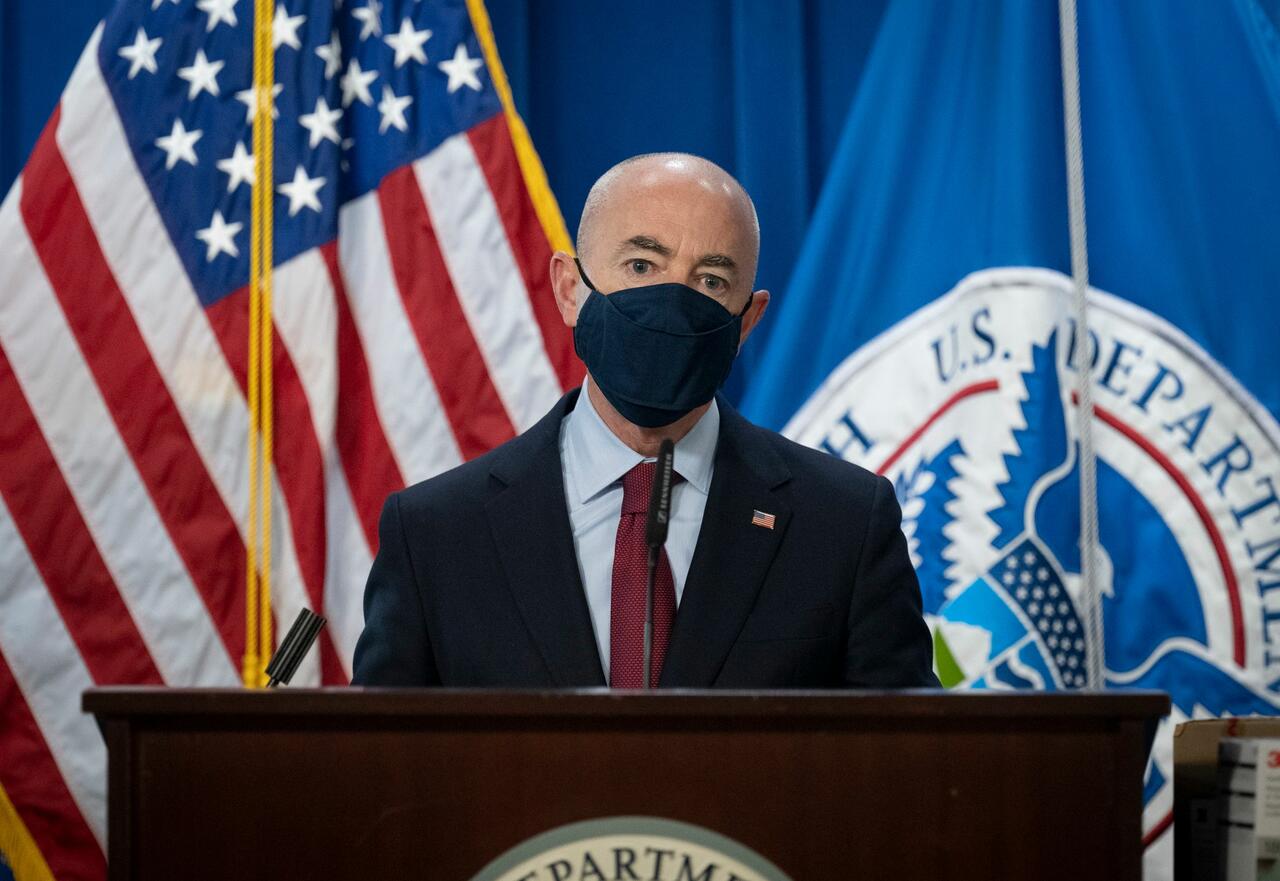
Six suspected human smuggling boats were taken into custody by authorities during the weekend, the Department of Homeland Security (DHS) said in a Feb. 27 post on X.

Homeland Security Secretary Kristi Noem participates in a tour at the U.S. Coast Guard Station Charleston, in Charleston, S.C., on Nov. 7, 2025. Alex Brandon, Pool/AP photo

“Since our southern border is more secure than ever before, cartels are being forced to try to smuggle through our nation’s maritime waters. This past weekend, DHS law enforcement interdicted six suspected maritime smuggling vessels and apprehended 82 migrants off the coast of California,” the department said.

“Our work to keep our nation safe never ends. We stand ready to protect our Homeland from smugglers on land, air, and sea.”

Multiple other illegal immigrants trying to cross maritime waters have been apprehended by authorities over the past weeks.

On March 1, the Coast Guard announced that it interdicted 14 suspected illegal immigrants in a vessel roughly 10 miles southwest of Point Loma, San Diego.

On Feb. 24, the Coast Guard said it intercepted 20 illegal immigrants near Sunset Cliffs in California. The same day, the Coast Guard announced that it worked with DHS partner agencies and the U.S. Navy to interdict five suspected maritime smuggling vessels, nabbing 62 illegal immigrants in the process.

President Donald Trump achieved the “most secure American border EVER” during the first year of his second term, according to a Feb. 24 statement by DHS.

There were 90,084 Border Patrol apprehensions along the southwest border in the first year, which is lower than a single-month average of 155,485 apprehensions under the previous administration, the department said.

Over the last 13 months, nearly 3 million illegal aliens have left the U.S. because of the Trump Administration’s crackdown on illegal immigration, including an estimated 2.2 million self-deportations and more than 713,000 deportations,” Homeland Security Secretary Kristi Noem said.

“Meanwhile, we have saved taxpayers more than $13.2 billion here at DHS. Countless lives have been saved, communities have been strengthened, and the American people have been put first again.”

Drug Smuggling, Strikes

In addition to its target of human smuggling, the Trump administration is also cracking down on drug smuggling into the United States.

The Coast Guard intercepted a suspected drug smuggling vessel, seizing roughly 17 pounds of marijuana and 174 pounds of cocaine, valued at around $1.3 million, according to a Feb. 27 announcement.

Two suspected smugglers were taken into custody to be further investigated by Homeland Security Investigations, the Coast Guard said.

The U.S. Southern Command said on Feb. 23 that it had struck a drug boat in the Caribbean Sea, killing at least three individuals alleged to be narco-terrorists. The U.S. military had launched such strikes targeting drug smuggling boats in the Caribbean Sea and the eastern Pacific Ocean since September 2025.

These efforts have faced criticism. In September, Sens. Adam Schiff (D-Calif.) and Tim Kaine (D-Va.) introduced a measure to stop such strikes, arguing that the actions were not authorized by Congress.

Congress alone holds the power to declare war,” Schiff said while announcing the resolution.

“And while we share with the executive branch the imperative of preventing and deterring drugs from reaching our shores, blowing up boats without any legal justification risks dragging the United States into another war and provoking unjustified hostilities against our own citizens.”

Trump has said that the United States was in an “armed conflict” with South American cartels and justified the attacks as necessary actions to counter the flow of drugs in the United States.

A White House report from last year said: “Although friendly foreign nations have made significant efforts to combat these organizations, suffering significant losses of life, these groups are now transnational and conduct ongoing attacks throughout the Western Hemisphere as organized cartels.

“Therefore, the President determined these cartels are non-state armed groups, designated them as terrorist organizations, and determined that their actions constitute an armed attack against the United States.”

Tyler Durden
Mon, 03/02/2026 – 21:45

Putin Decries ‘Cynical Murder’ Of His Friend Ayatollah Khamenei

Putin Decries ‘Cynical Murder’ Of His Friend Ayatollah Khamenei

Russian President Vladimir Putin in Sunday comments blasted the United States and Israel’s “cynical” assassination of Ayatollah Khamenei which happened the day prior in the opening salvo of the US-Israeli Operation Epic Fury. Other translations in European media have used the word “murder” – citing Putin.

He expressed condolences to the Islamic Republic: “Please accept my deepest condolences in connection with the assassination of the supreme leader of the Islamic Republic of Iran… committed in cynical violation of all norms of human morality and international law,” Putin said in a message to Iranian President Masoud Pezeshkian.

“In our country, Ayatollah Khamenei will be remembered as an outstanding statesman who made a tremendous personal contribution to the development of friendly Russian-Iranian relations,” he added.

Clearly the two ‘pariah’s’ (in the West’s labeling) always enjoyed warm, friendly relations. via AP

Putin had met with Khamenei directly on several occasions in the past. The Kremlin has further confirmed Monday that it remains in close communication with authorities in Tehran, after dozens of top leaders and officers have been killed in the massive bombing raids.

“We are in constant contact with the leadership of Iran and are discussing the situation surrounding that country,” spokesman Dmitry Peskov told reporters at a briefing.

The Russian spokesman said it was “deep disappointment” that Oman-brokered nuclear negotiations, the last of which were in Geneva, “deteriorated to the point of outright aggression.”

Down to the eve of the bombing of Tehran, the Iranian side was giving ‘positive’ signals of ‘progress’. But they once again feel duped, also amid reports the Iran operation had already been planned for weeks.

But Moscow’s priority still remains balancing and improving delicate relations with Washington amid the grinding, over four year long Ukraine ‘special military operation’. White House special envoy Steve Witkoff and Trump’s son-in-law Jared Kushner have run point for negotiations in both the Iran and Ukraine war talks.

“It’s in our interests to continue these negotiations, and we will certainly remain open to them,” Peskov made clear. “We greatly appreciate the mediation efforts of the United States.”

Putin last month: “I apologize if this sounds a bit rude, but what the hell are the Iranians supposed to comply with?

But certainly Moscow must be even more cynical at this point. It likely agrees with Tehran’s perspective that the US basically cannot be trusted.

But Russia might also sit back and enjoy seeing the Pentagon expend precious resources, and blood and treasure, on another Middle East regime change operation which could in the end be ‘unwinnable’ – just with Iraq a couple decades prior.

Tyler Durden
Mon, 03/02/2026 – 21:20

China Conducts Patrol In South China Sea, Accuses Philippines Of Disturbing Regional Peace

China Conducts Patrol In South China Sea, Accuses Philippines Of Disturbing Regional Peace

Authored by Alex Wu via The Epoch Times,

The Chinese regime’s navy conducted patrols in the South China Sea from Feb. 23 to Feb. 26, while the United States, Japan, and the Philippines were holding joint military exercises in international waters.

The Chinese regime criticized the Philippines for “disturbing peace” in the region.

Analysts told The Epoch Times that the standoff in the South China Sea does not necessarily mean that the situation will escalate soon, and the Chinese regime’s rhetoric reflects complicated political considerations.

The United States, the Philippines, and Japan this week conducted joint exercises over the Bashi Channel that separates the Philippines from Taiwan in the South China Sea, according to a statement by the Philippine military on Feb. 27. The drills were aimed at showcasing the forces’ “ability to operate seamlessly together in complex maritime environments,” the Philippine military said.

This was the first time that such joint exercises have been conducted in the Bashi Channel.

The Chinese regime reacted angrily to the joint drills. On Feb. 27, a spokesperson for the People’s Liberation Army’s (PLA) Southern Theatre Command accused the Philippines of “disrupting peace and stability by organizing joint patrols with countries outside the region.”

China conducted a “routine patrol” of the South China Sea from Feb. 23 to Feb. 26, according to the spokesperson.

While China claims sovereignty over the waters, citing the historical nine-dash demarcation line within the South China Sea, the Philippines, Brunei, Malaysia, Vietnam, and Indonesia each claim sovereignty over their exclusive economic zones in the South China Sea. Some of these zones overlap with each other, with communist China’s nine-dash line, and with Taiwan’s 11-dash demarcation.

On July 12, 2016, an international tribunal ruled that the nine-dash demarcation couldn’t be used by the regime in Beijing to make historic claims to the South China Sea, parts of which are claimed by six governments. China rejected the ruling and has continued to assert its sovereignty claims and operations in the South China Sea.

“China has taken strong measures to drive away ships or fishing boats that enter the area, especially Philippine supply ships,” Shen Ming-shih, research fellow at the Division of National Security Research at Taiwan’s Institute for National Defense and Security Research, told The Epoch Times.

“In such disputed areas, disputes should be shelved. It is because of China’s strong expulsion that the United States, Japan, and the Philippines are preparing for the worst-case scenario.”

Some of a total of 220 Chinese vessels are moored at Whitsun Reef, South China Sea on March 7, 2021. Philippine Coast Guard/National Task Force-West Philippine Sea via AP

Judging from the joint drills, it’s clear that the United States and Japan are paying particular attention to security in the South China Sea region, Shen added.

Commenting on the joint U.S.–Japan–Philippines drills conducted over the Bashi Channel, Wang Shiow-wen, an assistant researcher at the Taiwan’s Institute for National Defense and Security Research, said, “This may be to test the PLA’s reaction, to see if the PLA has already considered the Bashi Channel and the South China Sea or even the Taiwan Strait as its own.”

As to the PLA’s accusation against the Philippines, she told The Epoch Times: “Why is it that the PLA’s daily harassment of Taiwan under the pretext of ‘exercises and training’ is not considered ‘disturbing peace and stability in the region,’ but other countries’ joint exercises are considered ‘disturbing the regional peace and stability’?”

The PLA spokesperson’s avoidance of directly naming the United States and Japan in its accusation may be laying the groundwork for future joint military exercises between China and Russia, or possibly North Korea, Wang said.

Furthermore, with an April meeting scheduled between U.S. President Donald Trump and Chinese leader Xi Jinping, both sides are currently cultivating a “friendly” atmosphere, making direct criticism inappropriate, she said.

Shen has a similar assessment. “Because the Chinese Communist Party (CCP) is currently hoping to ease tensions with the United States, and relations between China and Japan have already deteriorated, in order to avoid further complications, the Southern Theater Command only dared to condemn the relatively weaker Philippines in its statement this time.”

Deterrence

As to whether both sides doing military drills and patrols in the South China Sea in the same week might escalate the tension into a conflict, Shen said that “the main policy of the United States is to strengthen the defense capabilities of various countries in the First Island Chain region in order to deter China from easily launching a conflict or war in this region.”

An MH-60S Sea Hawk helicopter, attached to Helicopter Sea Combat Squadron (HSC) 14, prepares to land on the flight deck of Nimitz-class aircraft carrier USS Abraham Lincoln (CVN 72) on Jan. 15, 2026. Mass Communication Specialist Seaman Apprentice Cesar Zavala/U.S. Navy

If war becomes unavoidable in the region, the United States should have many ways to participate. “Ultimately, war with the CCP will only be a last resort. Before that, political, economic, and cyber warfare are already underway,” he said.

Regarding the PLA spokesperson’s statement about China’s need to “safeguard China’s territorial sovereignty” and “uphold regional peace and stability,” Wang said that the Chinese regime is actually saying that as long as the United States, Japan, and the Philippines are not taking Chinese territory, the PLA won’t launch a preemptive attack.

Given the current military strength of the CCP, starting a war is not the problem, according to Wang. “The problem lies in how to sustain and end the war,” she said. “The Russia–Ukraine war has entered its fifth year, which should serve as a great warning to the CCP.”

“If the CCP leader Xi Jinping wants to escape his various domestic crises by starting a war, then it can only be said that he himself has determined the fate of the CCP regime,” she said.

A Chinese PLA Navy ship (background L) is seen while an Australian Navy destroyer (R) takes part in a maritime cooperative activity near Scarborough Shoal, on Sept. 3, 2025. Ted Aljibe/AFP via Getty Images

Shen believes that the PLA’s patrol was routine, saying, “I don’t think it’s likely to start a conflict or war right now.”

“I think maintaining internal stability, conducting the CCP’s Fifth Plenary Session effectively, and balancing the power should be the top priorities right now.”

Shen added that when the internal power struggle within the CCP deteriorates or intensifies, “if [the regime] wants to take actions to divert [the] Chinese public’s attention from the domestic to the international, it might target the relatively weaker Philippines or the South China Sea.”

Tyler Durden
Mon, 03/02/2026 – 20:55