85.8 F
Chicago
Wednesday, September 2, 2026
Home Blog Page 3330

FDA Refuses To Change Anti-Ivermectin Statements After Court Ruling

0
FDA Refuses To Change Anti-Ivermectin Statements After Court Ruling

Authored by Zachary Stieber via The Epoch Times (emphasis ours),

Anti-ivermectin statements made by the FDA are not being changed, even after an appeals court ruled against the agency.
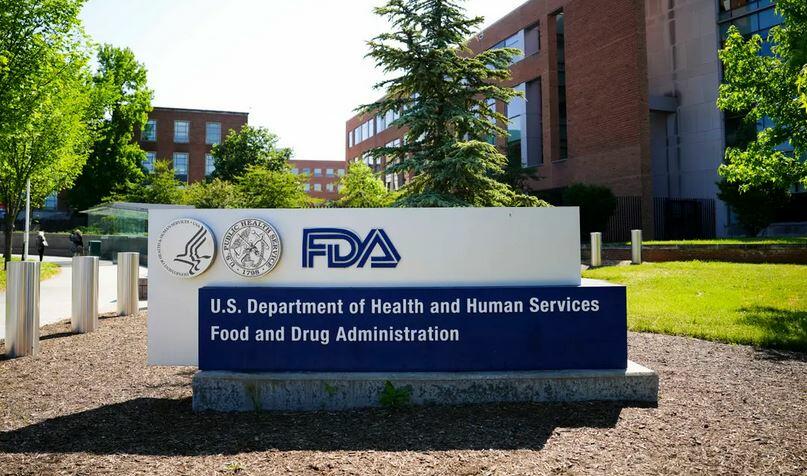
The U.S. Food and Drug Administration (FDA) in White Oak, Md., on June 5, 2023. (Madalina Vasiliu/The Epoch Times)

The U.S. Food and Drug Administration (FDA) is refusing to change its statements against ivermectin, even after a court said it acted outside of its authority when it told people to stop using it to treat COVID-19.

The U.S. appeals court said that the FDA’s statements, including one telling people to “stop” using ivermectin as a COVID-19 treatment, went beyond the authority conferred on the agency by Congress.

“FDA can inform, but it has identified no authority allowing it to recommend consumers ‘stop’ taking medicine,” U.S. Circuit Judge Don Willett wrote in the Sept. 1 ruling.

Two weeks later, FDA social media posts and a key webpage remain unchanged.

That includes an Aug. 21, 2021, Twitter post, on the social media site since renamed X, that hyperlinked to a FDA webpage and stated: “You are not a horse. You are not a cow. Seriously, y’all. Stop it.”

The page has not been updated either. It says people “should not use ivermectin to treat or prevent COVID-19.”

The appeals court did not order the FDA to take any action and remanded the case to a lower court for consideration on standing.

But Dr. Robert Apter, the lead plaintiff in the case that led to the ruling, said that the FDA should still take action.

“From an ethical point of view, the FDA has been told not to do what they are doing. They have an ethical and moral obligation to follow the court’s directive and stop giving advice against using effective repurposed drugs for early treatment of COVID,” Dr. Apter told The Epoch Times in a message.

The FDA declined to comment.

“The FDA does not comment on possible, pending, or ongoing litigation,” a spokesperson told The Epoch Times via email.

In a statement after the ruling was handed down, the agency noted that ivermectin is approved by the FDA but for other uses. The FDA “has not authorized or approved ivermectin for use in preventing or treating COVID-19, nor has the agency stated that it is safe or effective for that use,” the agency said.

“Health care professionals generally may choose to prescribe an approved human drug for an unapproved use when they judge that the unapproved use is medically appropriate for an individual patient,” it added.

Such prescriptions are known as off-label prescriptions and are common in the United States.

Another FDA page may have been removed in the wake of the ruling. That page said, in part: “Q: Should I take ivermectin to prevent or treat COVID-19? A: No.”

Archives show it was still up as of this year but it’s unclear exactly when it was taken down.

Ruling

In the ruling, a U.S. Court of Appeals for the Fifth Circuit panel found in favor of Drs. Apter, Mary Talley Bowden, and Paul Marik, overturning a previous decision.

The doctors sued the FDA in 2022 over its anti-ivermectin statements, arguing the agency was illegally interfering with their practice of medicine.

While the Federal Food, Drug, and Cosmetic Act enables the FDA to inform consumers, it does not let the agency give medical advise, Jared Kelson, an attorney representing the doctors, told the panel during oral arguments.

U.S. District Judge Jeffrey Brown had ruled against the plaintiffs, finding the FDA acted within the authority conferred by the act.

The panel disagreed.

“FDA never points to any authority that allows it to issue recommendations or give medical advice,” Judge Willett wrote. “Nothing in the act’s plain text authorizes FDA to issue medical advice or recommendations,” he also said.

“The decision is pretty clear that the FDA is not a physician, and that while it might have authority to inform the public, it can’t endorse particular treatments or advise on how to approach any specific illness,” Mr. Kelson told The Epoch Times.

He declined to comment on whether the FDA should update its statements.

The appeals court decision trumps the previous ruling, but the panel also sent the case back to Judge Brown.

The FDA had asked the appeals court to dismiss the case based on lack of standing. The court said it chose not to decide on the standing issue.

“We see greater wisdom in remanding for the district court to address standing and any other jurisdictional issues in the first instance,” the panel said. “We express no view on those issues, and instead we trust their initial determination to the district court’s sound judgment.”

That means Judge Brown will take up the case again, but that his ruling on standing could be overturned.

The government could also appeal the recent appeals court ruling. That appeal would go to the U.S. Supreme Court. The U.S. Department of Justice, which is representing the FDA, did not respond to a request for comment.

Tyler Durden
Sun, 09/17/2023 – 22:15

American Manufacturing Is Coming Back… So Are Strikes

0
American Manufacturing Is Coming Back… So Are Strikes

By Rachel Premack of FreightWaves

President Joe Biden’s $9.2 billion electric vehicle manufacturing loan to Ford seems like a perfect meld of American interests. Announced in June, the loan to the Michigan automaker and a South Korean battery manufacturer will spur the building of three EV battery plants in the U.S. That cheerfully means eco-friendly cars and blue-collar jobs — environmentalism with a side of America First.

There’s just one problem: It’s infuriated the United Auto Workers, which represents some 400,000 Americans employed in automotive manufacturing and other trades. The historically Democratic union has, in turn, refused to endorse Biden ahead of a contentious general election.

Two of Ford’s new plants will be in Kentucky and the third in Tennessee; facilities in these three states are notoriously challenging to organize thanks in part to anti-union state laws. To workers like Dan Vicente, a UAW regional director and machine operator in Pottstown, Pennsylvania, it’s a way that Ford can have its cake and eat it too. The auto giant can explore EV manufacturing without much risk to its bottom line, and save massively by avoiding union labor.

“[T]he Biden administration didn’t require any sort of guarantees of those jobs being UAW jobs or being any union jobs at all,” Vicente said on an Aug. 7 episode of Bloomberg’s Odd Lots podcast. “They basically just said, ‘Hey Ford, please be nice to these workers and let them have a vote if you feel like it.’ And so we don’t find that acceptable.”

American businesses and their employees are in an unusual position. Partially thanks to new policy efforts, companies are expanding domestic manufacturing. But they’re finding an American worker who isn’t willing to work for cut-rate pay. Employees are increasingly fighting back on low wages, working hours and mediocre benefits — and are set to walk away from jobs entirely if the terms aren’t right.

An excitable soul might declare we’re in the midst of an American labor comeback after decades of neoliberal policies encouraged crony capitalism, union busting and general skulduggery. According to federal data, nearly 13 million Americans are employed in manufacturing work — the highest number we’ve seen since the Great Recession. The nearly 2 million Americans – ranging from university graduate students to UPS drivers to rail track maintenance workers — represented by Teamsters and the United Auto Workers unions are seeing more militant leadership than ever. And even anti-establishment publications like The Intercept are admitting that the center-left Biden administration has appointed “aggressive” pro-union leaders to the National Labor Relations Board, making organizing easier.

The majority of Americans said in a 2019 Pew survey that there’s “too much economic inequality,” and around 42% believed reducing it should be a “top priority.” Now, after the coronavirus pandemic brought about discourse about essential workers and stock buybacks, one could assume those percentages are even higher.

It seems like reality is reflecting those pro-union sentiments. Automotive workers began an unprecedented strike on Friday, stopping work at all three Detroit automakers for the first time in history. UPS workers got a major win this summer. And nearly 200,000 actors and screenwriters are on strike. American approval of labor unions just hit its highest point since 1965, according to a Gallup poll. For the first time ever, a sitting president is even supporting strikes.

Steven Greenhouse, a former longtime labor reporter at The New York Times, hesitated to say that we’re in a major uprising for American workers. However, he said conditions increasingly favor them.

It’s a bullish sign for the US economy — and freight volumes

During the Great Recession, the UAW was forced to make a slew of concessions to prevent the Big Three automakers from shuttering completely.

In the 2000s, American consumers were increasingly buying vehicles from European and Asian manufacturers as fuel prices soared. Ford and GM posted a combined loss of more than $30 billion in 2008. That trend has reversed entirely; Americans are eagerly buying up pricey pickup trucks and SUVs from domestic manufacturers, even as inflation slams household budgets. Those hefty vehicles have in turn boosted profits at Ford and GM; they made a combined $40 billion-plus last year alone. 

As a result, UAW workers are now seeking out a payday that reflects their employers’ windfalls. The UAW is calling for the reinstatement of pensions, retiree health care, cost-of-living adjustments to wages, along with a 40% raise spread over the next four years and the elimination of the two-tiered employment model. These demands aren’t necessarily autoworkers seeking to overturn the system; rather, they’re changes that would restore compensation to pre-2008 standards.

Marick Masters, a business professor at Wayne State University in Detroit, has studied labor relations since the 1970s. He said aims at the UAW and Teamsters alike have become “more socialistic in orientation.” He hasn’t seen leadership like the UAW’s Shawn Fain or the Teamsters’ Sean O’Brien in decades.

“[I]t has a different view of the role of profits and business and believes that labor has a rightful claim to a bigger piece of the pie,” Masters told FreightWaves. I think that both union leaders want the companies to do well so that they can help members. I would think that they would set that as a first priority, in terms of how they want to claim the profits for workers’ increased pay and other benefits.”

Business magnates may groan, but there’s a silver lining: A fired-up labor pool means American businesses are healthy. 

“[T]he pendulum has swung back from the 2008 recession, when companies could make a good case that they needed concessions, to a post-pandemic time when automakers’ profits are good and UPS profits are great,” Greenhouse told FreightWaves. “Workers can now say the time for concessions is over. It’s now the time for advances, the time for betterment, the time to make up for what [they] gave up in previous contracts.”

Growth in domestic manufacturing and infrastructure spending is a bullish indicator for freight volumes — even though the industry is presently in a decline. For example, FreightWaves data suggests that the increase in construction spurred by the Biden administration buoyed freight volumes in July 2023, a month that was expected to be weak for truckers amid a weakened consumer economy. If America is making more stuff in America, that means there’s more for truck drivers to haul.

Vicente of the UAW told Bloomberg in August that his colleagues are quitting their jobs to work at Dollar General or Walmart. Vicente’s employer manufactures plumbing, air-conditioning, steering systems and other equipment for boats, 18-wheelers and food trucks. Now, his former co-workers are finding themselves stocking shelves or scanning products — most likely mass-produced plastic stuff made overseas, clothing that will likely end up in a landfill in several months or processed food with little nutritional value.

Of course, one can’t discuss unionized work and the trucking industry without mentioning Yellow, which was the third-largest less-than-truckload company, employing some 22,000 Teamsters workers, until it closed operations in August. Yellow pinned the blame for its shutdown on the Teamsters. For months, the union refused to negotiate on a proposed change of operations. The Teamsters said unionized Yellow employees had given away some $5 billion in concessions to the company since 2008 and refused to cut further. Amid the fracas, the trucking giant eventually lost enough inbound freight volumes that it was unable to pay into a major Teamsters pension fund, triggering a strike authorization. That gutted Yellow’s freight volumes further.

J. Bruce Chan, a transportation analyst at the investment bank Stifel, previously said Teamsters may have been the “trigger” for Yellow’s bankruptcy, but the company had been troubled for about two decades. Yellow took on more than $1 billion in debt in the 2000s as it acquired more and more companies. It was never able to recover from those foolhardy purchases, gutted further by the Great Recession and other poorly timed business decisions.

While the Teamsters may evade some blame, former Yellow employees are baffled as to why the union allowed the company to shutter. Labor expert Michael Duff, a law professor at Saint Louis University, doesn’t believe Teamsters boss O’Brien risked those 22,000 jobs forever.

Rather, Duff said Teamsters likely anticipates increased manufacturing activity in the U.S. — particularly at unionized shops that will only work with organized trucking companies. That means more trucking companies organized with the Teamsters, whether existing unionized fleets grow or new ones join the union.

“I don’t think the union believes we’re going to lose those jobs and they’re never coming back,” Duff said. “Whatever else the Teamsters will be, they’re not stupid.”

Scheduling chaos

Many experts believe a key reason why striking and organizing activity is reaching a historic fervor is the renewed interest by Americans age 40 or younger. They’re old enough to see the issues resulting from rampant globalization and financialization but young enough to not recall, say, Jimmy Hoffa’s Mafia ties. Cornell University’s Kate Bronfenbrenner, who is the institution’s director of labor education research, said this change of opinion among millennials and Gen Zers is a key “turning point” for the labor movement.

“I do think we’re in a moment with public support, with this energy among young people and increased interest in organizing,” Bronfenbrenner told FreightWaves.

One shared demand among union organizers isn’t just around increased pay but more control over work rules. A 2008 New York Times article pointed out that a veteran UAW member made about $28 an hour at an American auto plant, compared to a well-paid Toyota worker in Kentucky earning around $25 an hour. But those workers have vastly different control over their schedules. And rail workers were set to strike in 2022 over having more predictable hours and flexible time off; they received zero days of paid sick leave until this year.

But firms say they need flexibility in scheduling, work rules and positions in order to remain competitive — especially when it comes to competing with nonunion shops. That tension was core to the Yellow-Teamsters dispute that eventually shuttered the company.

Yellow wanted to convert nearly 1,000 linehaul trucking jobs to so-called “utility driver” roles, where they would be expected to do more dock work and the pay was often less. The Teamsters union opposed that. The company fired back with a memo to disgruntled workers: “Let’s be clear: If you were at a non-union company — a very realistic possibility for MOST of you if Yellow does not survive — ALL of you would be subject to potential dock work regardless of your time in the industry.”

Feeling out of control over one’s schedule (and ultimately, one’s life) is what drives many workers to organize, said Bronfenbrenner.

“If they were organizing over money and the employer could just throw a couple of pennies their way, they could get rid of the union campaign,” Bronfenbrenner said. “But the primary reason workers organize tends to be arbitrary supervisor power and respect on the job — things like scheduling, where they can never know when they’re coming to work, which could make it impossible to deal with your children’s day care or do medical appointments.

“Money matters,” Bronfenbrenner added. “But, money is something that the employer can afford to pay if the union pushes them enough. Employers, particularly U.S. employers, don’t like to give up control. They like that they have this God-given right to manage free of any interference from government or unions or anybody else. Those are the things that affect the day-to-day life of workers.”

Regular scheduling was a game changer for Duff of Saint Louis University. During the 1980s and early 1990s, Duff was a claims prevention supervisor at Flying Tiger and then a fleet service agent at U.S. Airways.

In the mornings, every day from 8 a.m. to noon, he attended West Chester University. It took him a decade of blue-collar work, but Duff was able to secure his college degree. Four years after, he got his law degree from Harvard.

Tyler Durden
Sun, 09/17/2023 – 21:45

Sliding Home Prices Weigh On China’s Feel-Good August Data

0
Sliding Home Prices Weigh On China’s Feel-Good August Data

By Charlie Zhu and Helen Sun, Bloomberg Markets Live reporters and analysts

1. The worst of China’s economic downturn may be behind us as stimulus impact feeds through. Data released Friday showed industrial production and retail sales in August both significantly beat estimates and picked up from the previous month. That gave investors reasons to believe that economic activities may be bottoming, even though the property market remains stuck in a rut.

The People’s Bank of China stepped up easing, lowering the required reserve ratio for the second time this year. In addition to some 500 billion yuan ($69 billion) released from the reduction, the central bank added a net 191 billion yuan into the financial system via the medium-term lending facility, the most since March.

Reducing the RRR show a sense of urgency among authorities to boost growth, and more policies may follow to ensure the stabilization is sustained, said Zhang Zhiwei, chief economist at Pinpoint Asset Management Ltd.

Financial market reactions were muted — pointing to lingering caution. The CSI 300 Index closed lower on Friday, while the onshore yuan was little changed versus the dollar. For the week, the currency rebounded from a 16-year low amid additional support from the PBOC’s jawboning and other measures.

2. The nascent signs of stabilization in the economy, however, can easily be derailed by the crisis in the property sector. New-home prices dropped at a faster pace last month — showing why fresh rescue measures had to be deployed — while real-estate investment during January-August slid more than in the first seven months.

State-linked developer Sino-Ocean Group Holding Ltd. suspended payment on all its offshore debts due to tight liquidity, suggesting the raft of policy support extended so far has failed to improve its finances.

Indeed, just four months after Moody’s Investors Service upgraded China’s property sector outlook to stable, the rating firm revised it back to negative. The latest policies show a “significant shift” in government efforts to boost property demand, but the impact will likely fade after a few months, especially in lower-tier cities, analysts led by Cedric Lai wrote in the report.

3. The European Union’s investigation into Chinese subsidies for electric vehicles threatens to set off another trade war. Beijing immediately fired back, blasting EU’s decision as “naked act of protectionism.”

Given the size of China’s EV industry and its rapid rise, potential tariffs on exports from automakers like BYD Co., Nio Inc. and XPeng Inc. will have an impact that goes beyond anti-subsidy actions imposed on smaller sectors. Any forthcoming measures may also dent China’s booming EV exports, which have been a rare bright spot in the economy.

The developments show regulatory risks for Chinese EVs, although they might accelerate plans to build factories in the European Union region if the probe leads to higher tariffs or lower subsidies, according to Bloomberg Intelligence analysts Joanna Chen and Steve Man.

Tyler Durden
Sun, 09/17/2023 – 21:15

What Does “Far-Right” Even Mean Anymore?

0
What Does “Far-Right” Even Mean Anymore?

Authored by Mark Jeftovic via BombThrower.com,

“Far right” is basically anything that contests the Establishment narrative.

Anybody taking the legacy, corporate media at face value these days is likely under the impression that the entire world is being overrun with “far-right” extremists, after all, anything orthogonal to the current WEF-inspired world order seems to be, by definition, far right.

If it wasn’t apparent already, it became obvious during the pandemic how establishment narratives are promulgated by corporate media cartels to enshrine elite-approved canon.  For that to work, it was key to neutralize non-conforming impulses, and the way to do that, it seemed, was to label it all as “far right”.

The term has now been so misplaced and over-used that it becomes impossible to differentiate between fast rising maverick politicians from skinheads with swastika tattoos. Make no mistake, this is deliberate.

Put the headline on the skinhead

The standard playbook is to cast anything gaining momentum as “populist” – which is always implicated as being  wrong-headed and retrograde, even though a literal definition of the word simply connotes that large swaths of the population are feeling strongly about something (usually some manner of getting screwed by the elites).

In an era where confidence and credibility of our incumbent institutions is in secular decline – given their stunning incompetence, not to mention self-serving hypocrisy and corruption, the public is becoming increasingly fed up with their betters. That means whatever appeals to them has to be repackaged as “far-right”, lest the movement gain momentum.

Guardian ticks all the boxes – including the deranged “mouth-open” freeze frame. Bravo.

I refer the reader to Brandon Smith’s characterization of “negative branding”:

“One of the most favored propaganda tactics of [the establishment] is to relabel or redefine an opponent before they can solidly define themselves.  In other words, [they] will seek to “brand” you (just as corporations use branding) in the minds of the masses so that they can take away your ability to define yourself as anything else….

Through the art of negative branding, your enemy has stolen your most precious asset — the ability to present yourself to the public as you really are.

Negative branding is a form of psychological inoculation.  It is designed to close people’s minds to particular ideas before they actually hear those ideas presented by a true proponent of the ideas. ”

It’s not just dark horse, anti-establishment challengers who get the “far right” treatment, in this era of increasingly collectivist sympathies, it can be anything that reduces dependancy on the state or faith in the system.

The new “F-bombs”: Fitness and Freedom

Let’s be clear, there is nothing political, let alone “far right” around embracing fitness or valuing freedom. However anything  that confers greater autonomy on the individual, or instills the idea that one can improve their own lives without state intervention, is anathema.

Take an ascendent theme or personality that challenges the establishment – any thing that poses a threat to late-stage globalism or the Davos-class of elites who deign to define The Rules; hitch it to the “far right” by saying these extremists are co-opting or embracing that thing, and then it’s magically off limits – safely tucked outside the Overton Window via narrative alchemy.

This was how Bitcoin, the most emancipatory technology to arise since the internet itself, was characterized as “right wing extremism” .

It’s no problem if the target has no tenable relationship to right-wing politics: personal responsibility, physical fitness, or non-state, decentralized digital hard currency .  Just call it a “dog whistle”.

In Javier Millei’s case, signalling his intent to abolish Argentina’s central bank (as the core driver of that country’s incessant currency collapses and runaway Cantillion Effect), is enough to anger the guardians of the fiat money system.

If it’s an unambiguous rejection of an establishment core premise, call it “denialism”. I once saw a guy stomp off of a live podcast because, as he huffed at the host before he disconnected, “I can see that you’re a Russian Collusion Denialist!”, and then he was gone.

Of course, the entire Russian collusion narrative has since been totally debunked, and generally known to have been a Clinton campaign ratfucking, even in polite company.

More topical lately, is the insistence that belief in the most hysterical scenarios for climate change should be mandatory and that the most radical policy responses be non-negotiable.

Anybody flat out contesting the dogma, or showing research indicating that there is no climate emergency, or that the models (which have never successfully predicted anything) are probably wrong, is a denialist.

And denialism is, exclusively, far right.

Shouldn’t we also be on guard against far-left extremism?

Here is where we see the hypocrisy on full display. When people or voices push back on WEF-inspired theology, they get branded as “right-wing” and even the term “conservative” carries baggage. It’s practically a slur.

Lefty?

People put that it in their Twitter bios and walk around with Che Guevara shirts. I’m surprised there isn’t a hammer-and-sickle emoji yet.

According to “experts”, it’s not clear that “left wing extremism” is even a thing.

It took a symposium of social scientists to sift through evidence “on both sides” of the question, the result was inconclusive and “left wing authoritarianism” or extremism remains, to this day, as elusive as ever.

Who knew?

“Although right-wing authoritarianism is well documented, social psychologists do not all agree that a leftist version even exists.

In February 2020, the Society for Personality and Social Psychology held a symposium called “Is Left-Wing Authoritarianism Real? Evidence on Both Sides of the Debate.”

The left employs dog whistles too, only they aren’t recognized as such under the prevailing zeitgeist.

The burgeoning “#degrowth” movement is a dog whistle for communism.  “Equity” is one for wealth redistribution, while “inclusivity” forays into racism more often than many care to admit.

The entire Overton Window is now a collectivist, woke sliver

If an entrenched elite goes so far off the rails that the citizenry rebels and chooses the unthinkable (Brexit, Trump, Bitcoin, “conservatism”), it is never because the establishment let down or even betrayed the citizenry – it’s because, for some unfathomable and inscrutable reason, the peasants went “far-right”.

Left vs right is now meaningless. As I’ve written many times: the defining tension of our age is centralization, collectivism, statism, censorship, authoritarianism vs decentralization, individuality, autonomy, free speech, personal responsibility and self-reliance.

There are basically those who believe they have the ecclesiastical authority to tell everybody else what to do, how to live, and what is permissible to think and say. Then there is everybody who wants to be left alone to live their own lives in peace.

Unfortunately, there is also a growing contingent of the populace who want to be told what to do and think. 

It isn’t “far right” extremism sweeping the world that we should be worried about. It’s Stockholm Syndrome.

These are the people who willingly give the high priests of the establishment their gravitas – the ones who routinely change their Twitter profiles to endorse The Latest Thing™.

While they tend to be the most vociferous ideological berserkers online, acting as enforcers for the authoritarian collective, they invariably live lives of quiet desperation out in the real world. They would be completely rudderless if not for their digital emojis and sigils to guide them.

I expect these people will enthusiastically embrace Black Mirror style CBCDCs when they finally launch, allowing their lives to become fully gamified via their smart phones.

They are the same people who locked their shrieking children alone in a room for two weeks after a bogus PCR test for COVID, and they’ll be the same people who will post teary-eyed TikTok videos of themselves euthanizing their dogs after Prince William or Whoopi Goldberg tells them it’ll slow down global warming. (Future MSNBC think piece: “Why far-right extremists want you to love your dog.”)

They are the subservient herd, at least until they become disenfranchised or disillusioned with the social contract. Usually that happens when wealth inequality finally puts them on the wrong side of the poverty line, or when they see elites brazenly living by a different set of rules, or when the consequences of horrific policy blunders hit them where they live.

At that point, they start to look for alternatives, they go down so-called “rabbit holes”, and come out the other end shocked (or perhaps bemused) to learn that in the eyes of the establishment that betrayed them, they are now far-right extremists.

*  *  *

My next ebook is The CBDC Survival Guide and I’m sending it free to Bombthrower subscribers when it’s done (early June). In the meantime, subscribe now and get The Crypto Capitalist Manifesto while you wait. Follow me on Nostr, or Twitter

Tyler Durden
Sun, 09/17/2023 – 20:45

World Risk Poll: How Long Can People Survive Without Income?

0
World Risk Poll: How Long Can People Survive Without Income?

In the wake of natural disasters or economic shocks, a person could quickly be left without income, which is why financial security is such an important aspect of resilience. 

In this graphic, sponsored by Lloyd’s Register Foundation, Visual Capitalist’s Alan Kennedy and Alejandra Dander explore their latest survey, World Risk Poll 2021: A Resilient World? to see how financially secure people from country to country really are. 


Assessing Financial Security

In 2021, Lloyd’s Register Foundation partnered with Gallup and polled 125,000 people from 121 countries, asking how long people could cover their basic needs without income. Responses were classified by those who could survive for more than a month, a month or less, less than a week, and those who didn’t know or refused to say. 

Here is a ranking of those who could cover their needs for the longest length of time without income:

And the shortest length of time:

A Cause for Alarm

The study found that generally, those who could cover their needs the longest came from developed economies, and those who could cover their needs for the shortest length of time came from developing economies where financial security is more tenuous. 

With all that said, the volume of people around the globe who struggle financially is the true cause for alarm. The study found that a staggering 2.7 billion people could only cover their basic needs for a month or less without income, and of that number, 946 million could survive for a week at most.

Tackling Financial Insecurity

Urgent action is needed to tackle this disparity in income and lack of financial security, especially in developing economies. If left unchecked, this undermines global resilience in the face of climate change, natural disasters, and any number of other shocks. 

In the fourth and final part of this series, we’ll explore the World Risk Poll 2021: A Changed World? Perceptions and Experiences of Risk in the COVID Age and learn how the world views climate change.

Tyler Durden
Sun, 09/17/2023 – 20:15

F-35 Stealth Fighter Goes Missing Near North Charleston After Pilot Ejects 

0
F-35 Stealth Fighter Goes Missing Near North Charleston After Pilot Ejects 

An F-35 stealth fighter jet disappeared on Sunday afternoon following a mid-flight “mishap,” Joint Base Charleston wrote on X. 

Joint Base Charleston continued, “The pilot ejected safely,” but said, “If you have any information that may help our recovery teams locate the F-35.” 

According to local media WCSC, the “incident involved a Marine Corps Air Station Beaufort F-35B Lighting II jet from Marine Fighter Attack Training Squadron 501 with the 2nd Marine Aircraft Wing.” 

A search and rescue effort appears to be underway. 

*Developing… 

Tyler Durden
Sun, 09/17/2023 – 19:15

Former Border Patrol Chief Says Agents Can’t Vet Illegal Immigrants From “Vast Majority Of The Globe”

0
Former Border Patrol Chief Says Agents Can’t Vet Illegal Immigrants From “Vast Majority Of The Globe”

Authored by Savannah Hulsey Pointer via The Epoch Times (emphasis ours),

Former Chief of Border Patrol Rodney Scott explained to members of the House that the vetting process used to keep criminals out of the United States is only accurate in cases where agents have access to correct information.

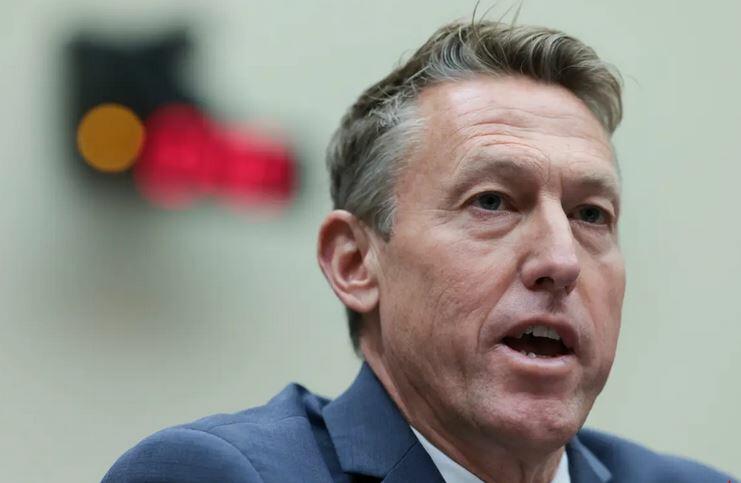
Rodney Scott, retired Chief of the U.S. Border Patrol, testifies before the House Subcommittee on Immigration Integrity, Security, and Enforcement on Capitol Hill in Washington on May 23, 2023. (Win McNamee/Getty Images)

According to the former border chief, agents have no information about migrants from “the vast majority of the globe,” including illegal immigrants from countries like the African nation of Mauritania.

Mr. Scott told the House Judiciary Subcommittee on Immigration Integrity, Security, and Enforcement during a Sept. 14 hearing that the process used by border protection agents is only as good as the information that the federal government has access to, which, globally speaking, is quite limited.

The witness, who is currently a Distinguished Senior Fellow for Border Security at the Texas Public Policy Foundation, formerly served for 29 years in the U.S. Border Patrol before retiring as Chief of the Border Patrol in August of 2021.

Questions about illegal immigrants from Mauritania surfaced after data about increased apprehensions by border patrol agents of individuals on the terror watch list was brought to light.

According to the lawmakers, from 2017 to 2020, Border Patrol encountered 14 illegal immigrants on the terror watch list.

But from 2021 to 2023, that number jumped to 263, and 149 of those encounters were in 2023 up to this point alone.

While several lawmakers voiced concern about potential known and unknown “gotaways” which could also have been problematic, Rep. Andy Biggs (R-Ariz.) questioned Mr. Scott about the potential that those not on any list the United States has access to could have terror connections.

Mr. Biggs asked if there were nations that illegal immigrations were traveling from that federal officials “can’t get any background on?”

Mr. Scott responded, “That would be the vast majority of the globe. We have very little information. We act on what we have, but when you think about the total population of the world, we have very, very minuscule data.”

Rodney Scott, retired Chief of the U.S. Border Patrol, testifies before the House Subcommittee on Immigration Integrity, Security, and Enforcement on Capitol Hill in Washington on May 23, 2023. (Win McNamee/Getty Images)

Mr. Biggs asked specifically about individuals from the nation of Mauritania, saying border patrol in his home state of Arizona has seen a sharp increase in illegal migrants from that area.

The lawmaker cited a call from a Customs and Border Patrol (CBP) agent asserting that in his Arizona sector, they apprehended a group of 250 Mauritanians.

According to Mr. Scott, Mauritania is a country that CBP has no access to background information about, and individuals from that area would have been largely unvetted.

‘Fear-Mongering’

Committee ranking member Pramila Jayapal (D-Wash.) asked that the committee consider the “facts” pointing out during her opening statement that there has never been an American citizen killed due to terrorist attacks from an individual that has entered the United States illegally through the southern border.

“That’s right,” the Washington Democrat went on. “Not a single American has been injured or killed by a terrorist who crossed our southern border without authorization. So don’t fall for Republican fear-mongering.

“This hearing is purely intended to scare the public to demonize immigrants and to score cheap political points as we head towards that next election,” Ms. Jayapal said, going on to point out that those on the terror watch list who were apprehended were given vetting by the Department of Homeland Security.

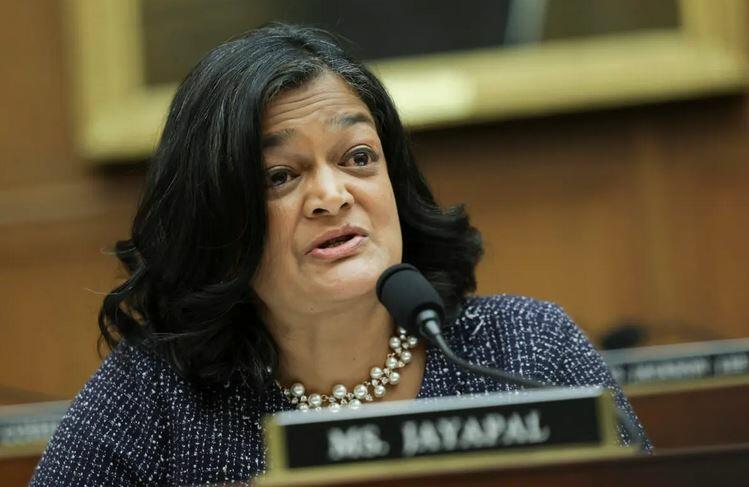
Rep. Pramila Jayapal (D-Wash.) in Washington on April 28, 2022. (Kevin Dietsch/Getty Images)

She also asserted that bipartisan immigration reform could deter illegal immigration by creating “real legal pathways for people to enter the United States to be with their families to escape terrible situations in their countries and to contribute to our economy, our communities, and our country.”

During his opening remarks, Committee Chairman Tom McClintock (R-Calif.) asserted that the Biden administration’s executive orders have “opened our borders to the world by holding construction of the border wall, rescinding the remain in Mexico policy, and forbidding ICE from enforcing court-ordered deportations.”

5.7 Million Illegals

Mr. McClintock cited information indicating that 5.7 million illegal aliens from over 160 countries have illegally crossed our border since the Biden administration’s change in policy, and over 2.6 million of those individuals have been released into the United States. That number is higher than the population of New Mexico.

“Another 1.7 million known ‘gotaways’ have entered as well. That’s an additional illegal population the size of West Virginia, and since we have no access to most foreign criminal databases,” Mr. McClintock said. “We know little of the foreign criminal records of these 2.6 million illegal immigrants as they’ve been released into our communities.”

Tyler Durden
Sun, 09/17/2023 – 18:40

The #1 Warning Sign Capital Controls Are Coming Soon And 4 Ways To Beat Them

0
The #1 Warning Sign Capital Controls Are Coming Soon And 4 Ways To Beat Them

Authored by Nick Giambruno via InternationalMan.com,

Weekends and holidays are the perfect time to catch people off guard…

Like a street thug committing a mugging, capital controls blindside most people – otherwise, they wouldn’t be effective.

The government declares a surprise bank holiday and shuts all the banks – mere hours after they denied they were even thinking about such actions.

They impose capital controls to stop citizens from taking their money out of the country.

Cash-sniffing dogs, which make drug-sniffing dogs look friendly, show up at airports and border crossings.

At this point, your savings are like a lobster in a trap. It’s not hard to see what comes next…

Once a desperate government has your money within its reach, it’ll find a way to take as much of it as possible.

Don’t be surprised if your local currency suffers a massive devaluation, bank deposits are suddenly worth a fraction of what they were just yesterday, or the government imposes an emergency tax.

Whatever the method or pretext, the outcome is always the same: a wealth transfer from you to the government.

This familiar story has played out in many countries in recent years. The pattern is clear and should surprise no one the next time it happens.

It’s all but certain governments in financial trouble will turn to capital controls as a desperate, misguided solution—with devastating consequences for ordinary people.

Argentina, Lebanon, Venezuela, Iceland, Greece, Cyprus, Turkey, Russia, Ukraine, China, India, South Korea, and governments in countless other countries have recently imposed capital.

The lesson from these examples is capital controls can happen anywhere and anytime.

Although it seems unthinkable to most, there is an excellent chance capital controls are coming to the US—they’ve happened before and could happen again soon.

Remember, in 1933, through Executive Order 6102, President Roosevelt forced Americans to exchange their gold for US dollars under penalty of 10 years in prison and a $10,000 fine (or more than $242,000 in today’s debased confetti).

Of course, the official government gold exchange rate was unfavorable. It amounted to around a 41% confiscation of purchasing power.

The US government continued prohibiting private ownership of gold bullion for 41 years until they reluctantly allowed the plebs to own it again in 1974.

So, there is a clear historical precedent for implementing capital controls in the US, especially during a crisis.

Today, it’s self-evident the fiat currency system centered on the US dollar is self-destructing at an alarming rate.

After more than 52 years, it’s long past the end of its shelf-life, like a carton of spoiled milk.

Even the global elites running the system can see that and openly talk about what they want to come next.

That’s why there’s all this talk about a Great Reset… and without a doubt, capital controls will be part of it.

All it would take is a crisis—real or contrived—or some other pretext and the stroke of the president’s pen on a new executive order.

Expect it to happen.

Why and How Governments Impose Capital Controls

Capital controls are government restrictions on how people can use their money—something that should be abhorrent to anyone who believes in property rights and a free society.

Here’s how capital controls work…

Governments might allow people to buy foreign currency (or gold) only at an “official” rate that they set, which is always less favorable than the free-market rate. The difference between the fake official rate and the real free-market rate amounts to a wealth transfer to the government.

Another form of capital controls is steep taxes on international money transfers or purchasing foreign assets.

Governments could also flat-out prohibit ownership of foreign assets or moving any form of wealth outside the country.

No matter what flavor they come in, capital controls always help a government trap money within its borders so it’s easier for them to take.

A propaganda campaign is also necessary to gaslight people into believing such actions are required to protect the average person.

Expect politicians to make disingenuous claims to make them appear as saviors instead of aggressors.

The mainstream media will amplify this false narrative and demonize those opposed to capital controls as disloyal citizens or worse.

What Happens After Capital Controls

Capital controls are always a prelude to something worse.

That’s because once governments trap money inside a country, it’s probably only a matter of hours before there is wealth confiscation. Anything they don’t steal immediately, they box in for future thefts.

That’s why you must act before they impose capital controls.

How much time do you have?

While it’s impossible to know, acting well in advance is advisable. It’s better to be a year early than even a minute late.

However, there is one common feature I’ve noticed when countries impose capital controls that indicates the situation is imminent. It’s like someone waving a big fat red flag.

That warning sign is a government official denying that they are considering imposing capital controls.

Whenever you hear a central banker or politician say something won’t happen, you can almost be sure it will happen. And probably soon.

Coming from a bureaucrat, the real meaning of “no, of course not” is “it could happen tomorrow.”

It’s like the old saying: “Believe nothing until it has been officially denied.”

These deceptions have a purpose: Politicians and central bankers must surprise the public to get the desired results.

When you hear the official denial, you probably have only a matter of hours before they impose capital controls. Urgent action is required.

Four Ways To Beat Capital Controls

The solution is simple.

Place some of your savings outside your home country so it’s not trapped when the government imposes capital controls. It will be waiting for you safely on the other side.

Below are four ways you can do that.

First, obtain a foreign bank account. Capital controls imposed in your home country are unlikely to affect a bank account in another country.

Second, real estate in a foreign country is an excellent way to store significant capital abroad. Your home government won’t be able to seize it without a literal act of war.

Third, another solution is physical gold bullion coins held in a non-bank vault in a friendly foreign jurisdiction.

Last, there is Bitcoin, which is like kryptonite to capital controls.

Bitcoin is the most portable asset in the world. It’s a digital bearer asset that can achieve final international settlement in 10 minutes for pennies.

Anyone with a smartphone can use Bitcoin to send and receive value anywhere in the world—capital controls be damned.

Going through airports and crossing borders with Bitcoin is much more practical than other forms of wealth.

If you hold Bitcoin on your phone, laptop, or flash drive, it can be accessible to border agents if they search you and you reveal your password. However, those things are much less conspicuous than gold or stacks of cash.

Further, many popular Bitcoin wallets use a 12-word phrase to recover your funds. If you memorize the 12-word phrase, you can potentially store billions of dollars worth of value just in your head with nothing else.

That’s why Bitcoin skyrockets in popularity in countries with capital controls.

Conclusion

The current dollar-based monetary system is on its way out. Even the central bankers running the system can see that.

They are preparing for what comes next as they attempt to “reset” the system. It’s a virtual certainty they will impose capital controls.

I suspect it could all go down soon… and it won’t be pretty for most people.

We are likely on the cusp of a historic financial earthquake…

One that could alter the direction of the US forever and mark the biggest economic event of our lifetimes.

Yet few people are aware of what is happening.

And even fewer know how to prepare.

That’s exactly why I just released an urgent new report with all the details, including what you must do to prepare. It’s called, The Most Dangerous Economic Crisis in 100 Years… the Top 3 Strategies You Need Right Now. Click here to download the PDF now.

Tyler Durden
Sun, 09/17/2023 – 18:05

Elon Musk Taunts UAW: “Tesla Pays Workers More And We Have Fun”

0
Elon Musk Taunts UAW: “Tesla Pays Workers More And We Have Fun”

Authored by Mike Shedlock via MishTalk.com,

With perfect timing, Musk made a couple of taunts at striking UAW workers. His goal is obvious.

Data from the BLS, chart by Mish

Earnings Per Hour Notes

  • The Motor Vehicle hourly rates are for Michigan workers only. The BLS did not have nation-wide numbers.

  • The data series for construction workers and production workers starts in March of 2006 so that is where I started the chart.

Understanding the Chart

The chart does not tell the full story. UAW workers get far more benefits and huge bonuses that are not factored into hourly earnings.

UAW workers also get annual bonuses that are not factored in.

The motor vehicle decline from $28.35 per hour to $20.65 per hour stems from UAW renegotiations after GM and Chrysler went bankrupt.

To survive at all, the UAW granted concessions and put in a tiered wage structure where new employees were paid less. Factor in retirements and hourly wages fell.

Total UAW Unit Labor Costs vs Tesla

  • Big Three: Analysts estimate $66 an hour

  • Tesla: Roughly $45 at Tesla

  • UAW Demands: Meeting Fain’s initial demands would boost costs to $136 according to Wells Fargo analysts.

Tesla does not pay more in hourly wages, but via stock options, Musk has made millionaires out of many workers.

Stock options are not a company expense. Stock options come out of shareholders pockets.

Whatever the UAW Strike Outcome, Elon Musk Has Already Won

“Any wage increase further advances Tesla’s already tremendous cost advantage in EVs over its older U.S. peers, which are contending with generations of legacy expenses while trying to steer a costly transition to electric from gas-powered vehicles.”

The Wall Street Journal comments Whatever the UAW Strike Outcome, Elon Musk Has Already Won

Musk won before the strike began early Friday. He won before negotiations started two months ago. From the get-go, General Motors, Ford Motor, and Chrysler parent Stellantis were expected to spend more on wages because of the union’s pressure. The question is just how much of an increase, and so far their offers haven’t pleased the union, igniting this past week’s work stoppage.

Fain this past week sounded annoyed when asked about Tesla’s cost advantage. 

“Competition is code word for race to the bottom, and I’m not concerned about Elon Musk building more rocket ships so he can fly in outer space and stuff,” Fain told CNBC on-air Wednesday.

“Our concern is working-class people need their share of economic justice in this world.”

Economic Justice

In the name of “economic justice” Fain would bankrupt the Big 3 again.

Here’s the math: $136 * 32 hours per week * 52 weeks = $226,304. Note the UAW demand for a 32 hour workweek. At a 40-hour workweek, pay would be $282,880.

Sorry guys, that will never fly. Whatever does fly, plays into Musks hands.

Musk has suggested that employee stock options make his factory workers the highest compensated in the industry, saying “quite a few” line workers have become “millionaires over the years from company stock grants.”

At Tesla, the average pay for a manufacturing technician can range from $23 to $32 an hour, according to estimates by Glassdoor. Tesla advertises factory jobs in California with expected pay ranging from $24 to $67 an hour plus cash and stock awards and other benefits.

Tweet of the Day

Perfectly Timed Taunt

Tesla and SpaceX factories have a great vibe. We encourage playing music and having some fun.

Very important for people to look forward to coming to work! 

We pay more than the UAW btw, but performance expectations are also higher.

Quite a few of our factory techs who work on the line have become millionaires over the years from company stock grants.”

Tesla does not pay more than the UAW, at least in hourly pay. But workers who have been at Tesla for a long time have made a killing on options with any kind of reasonable timing.

The taunt at the UAW is aimed at encouraging the UAW to not settle quickly. It has a decent chance of working.

Fain has already responded about economic fairness and the race to the bottom.

Automakers Announce Layoffs

Chance of Rapid Acceleration

If workers have little to do because of a part shortage by a strike, the only reasonable thing to do is announce layoffs.

This has a good chance of escalating rapidly.

Reflections on What Sucks

Inflation Sucks

Inflation is what sucks and there is plenty of blame to spread including the Fed, Congress, and three stimulus packages.

But Biden’s Big EV push is behind much of this recent angst.

It takes fewer hours to build an EV. Biden is pushing them like mad despite the fact that consumers do not want them because the infrastructure isn’t in place. Ironically, increased mileage standards have negative benefits according to a government study (at long last getting something right).

So now the union wants a 32-hour workweek with a 36 percent raise (down from 40 percent) more benefits, and ability to strike over plant closures despite the fact it takes fewer workers to produce an EV.

There is no one other than Biden to blame for this latest round of economic and environmental madness.

This union battle was created by Biden, the EPA, the Labor Relations Board and other administration regulatory clowns.

Unprecedented UAW Strike, Where’s it Headed? Keep Em Guessing Says Fain

I discussed winners and losers in Unprecedented UAW Strike, Where’s it Headed? Keep Em Guessing Says Fain

Time Will Tell the Winner

There are two definitions of win, short-to-midterm and long term.

The long term view is easier to state. GM and Chrysler (now Stellantis) already went bankrupt once over untenable wages and benefits. It could easily happen again. And If the bondholders (not that I feel much sympathy for them) were not totally screwed in the last settlement, it would have been much worse for the unions.

Short term, I suspect everyone loses, but Fain and the UAW will temporarily cheer.

Record profits said Biden. Lovely. Then what? Then a preposterous deal, then bankruptcy?

The above discussion is from the point of view of the Big 3 vs the UAW. I left off a winner, Elon Musk.

Tesla benefits no matter what happens because the Big 3 costs are certain to rise.

The big loser is the consumer who will pay more for cars.

Meanwhile let’s discuss the benefits of improved gas mile standards.

National Highway Traffic Safety Administration Analysis of Gasoline Standards

The National Highway Traffic Safety Administration NHTSA did an impact assessment of 4 fuel standard proposals and compared them to the cost of doing nothing. Guess what.

 Buried deep on Page 56,342 of volume 88 of the Federal Register, the agency makes this concession about its latest proposed rules: “Net benefits for passenger cars remain negative across alternatives.” In plain English, this means that mandating ever-more-stringent fuel economy for passenger cars will harm society.

Through 2040, the total reduction of greenhouse gas emissions from passenger cars and light trucks would be a mere 2.01 percent less vs doing nothing at all with emission standards!

The NHTSA also considers impacts on the economy including “consumer cost, national balance of payments, environmental, and foreign policy implications.”

Here is the NHTSA’s bottom line: “Net benefits for passenger cars remain negative across alternatives” vs doing nothing at all.

The Shocking Truth About Biden’s Proposed Energy Fuel Standards

For discussion, please see The Shocking Truth About Biden’s Proposed Energy Fuel Standards

Regardless of how we assess the winners and losers in the UAW battle, over the short and long haul we all lose from the push to pay more for the regulatory and environmental madness of this administration.

*  *  *

Subscribe to MishTalk Email Alerts.

Tyler Durden
Sun, 09/17/2023 – 17:30

Los Angeles Spends $44,000 Per ‘Temporary’ Tent For Homeless Village

0
Los Angeles Spends $44,000 Per ‘Temporary’ Tent For Homeless Village

Los Angeles is reportedly spending $44,000 for each individual tent in a temporary tent village for homeless people in East Hollywood, The Messenger reports.

Jerry Washington exits his tent at an Urban Alchemy Safe Sleep Village.
(Robert Gauthier / Los Angeles Times)

All told, it cost about $4 million to put up fencing, bathrooms, and staffing facilities for the village. Catering services and 24-7 staffing cost an additional $3 million per year, the Los Angeles Times reported.

Despite the high costs, the site is only temporary. It’s located on a parking lot that will eventually be turned into public housing. But because it will take years for construction to commence on that project, the city decided to fill the space with tents in the meantime.

San Francisco-based nonprofit Urban Alchemy maintains the encampment. Launched in 2018 with a small grant, the group hires mostly former prisoners because they have the “ability to read people in unpredictable situations.”

According to several lawsuits, however, some of those employees have engaged in abusive behavior.

After expanding to Portland and Austin, the group brought in $51 million in 2021.

Along with housing services, Urban Alchemy staffers also reach out to homeless people in need of assistance on the street.Urban Alchemy/Facebook


The nonprofit says it’s offering a practical solution to provide affordable housing for the state’s 172,000 homeless people, while also claiming to offer safety and autonomy.

The East Hollywood tent city contains higher quality tents ‘than anything someone could buy from a typical camping store,’ and include wooden platforms, full beds and storage lockers.

Armando Darnas inside a tent he sleeps in at an Urban Alchemy Safe Sleep Village. (Robert Gauthier / Los Angeles Times)

The nonprofit Coalition for Responsible Community Development, meanwhile, set up an office across the street to attract people who might be interested in reentering the workforce.

The nonprofit already oversees several camp villages across the state with varying styles. The residences at a tent city in Culver City are made from sturdy white canvas, while those in South Los Angeles are more humble, resembling store-bought camping gear. -The Messenger

According to the report, just 2% of the homeless in the East Hollywood encampment have transitioned to permanent housing, which Urban Alchemy blames on a lack of affordable housing in the city.

Tyler Durden
Sun, 09/17/2023 – 16:55