80 F
Chicago
Wednesday, September 2, 2026
Home Blog Page 3334

Escobar: Welcome To The ‘De-Westernization Movement’

0
Escobar: Welcome To The ‘De-Westernization Movement’

Authored by Pepe Escobar via The Cradle,

In Vladivostok, the Russian Far East rises

In Vladivostok this week, the ‘Russian Far East’ was on full, glorious display. Russia, China, India, and the Global South were all there to contribute to this trade, investment, infrastructure, transportation, and institutional renaissance.

Russian President Vladimir Putin opened and closed his quite detailed address to the Eastern Economic Forum in Vladivostok with a resounding message: “The Far East is Russia’s strategic priority for the entire 21st century.”

And that’s exactly the feeling one would have prior to the address, interacting with business executives mingling across the stunning forum grounds at the Far Eastern Federal University (opened only 11 years ago), with the backdrop of the more than four kilometer-long suspension bridge to Russky Island across the Eastern Bosphorus strait.

The development possibilities of what is in effect Russian Asia, and one of the key nodes of Asia-Pacific, are literally mind-boggling. Data from the Ministry for the Development of the Russian Far East and the Arctic – confirmed by several of the most eye-catching panels during the Forum – list a whopping 2,800 investment projects underway, 646 of which are already up and running, complete with the creation of several international Advanced Special Economic Zones (ASEZ) and the expansion of the Free Port of Vladivostok, home to several hundred small and midsize enterprises (SMEs).  

All that goes way beyond Russia’s “pivot to the East” which was announced by Putin in 2012, two years before the Maidan events in Kiev. For the rest of the planet, not to mention the collective west, it is impossible to understand the Russian Far East magic without being on the spot – starting with Vladivostok, the charming, unofficial capital of the Far East, with its gorgeous hills, striking architecture, verdant islands, sandy bays and of course the terminal of the legendary Trans-Siberian Railway. 

What Global South visitors did experience – the collective west was virtually absent from the Forum – was a work in progress in sustainable development: a sovereign state setting the tone in terms of integrating large swathes of its territory to the new, emerging, polycentric geoeconomic era. Delegations from ASEAN (Laos, Myanmar, Philippines) and the Arab world, not to mention India and China, totally understood the picture. 

Welcome to the ‘de-westernization movement’

In his speech, Putin stressed how the rate of investment in the Far East is three times the Russian region average; how the Far East is only 35 percent explored, with unlimited potential for natural resource industries; how the Power of Siberia and Sakhalin-Khabarovsk-Vladivostok gas pipelines will be connected; and how by 2030, liquified natural gas (LNG) production in the Russian Arctic will triple.

In a broader context, Putin made clear that “the global economy has changed and continues to change; the west, with its own hands, is destroying the system of trade and finance that it itself created.” It is no wonder then that Russia’s trade turnover with Asia-Pacific grew by 13.7 percent in 2022, and by another 18.3 percent in just the first half of 2023. 

Cue to Presidential Business Rights Commissioner Boris Titov showing how this reorientation away from the “static” west is inevitable. Although western economies are well-developed, they are already “too heavily invested and sluggish,” says Titov: 

“In the East, on the other hand, everything is booming, moving forward rapidly, developing rapidly. And this applies not only to China, India, and Indonesia, but also to many other countries. They are the center of development today, not Europe, our main consumers of energy are there, finally.”

It is quite impossible to do justice to the enormous scope and absorbing discussions featured in the major panels in Vladivostok. Here is just a taste of the key themes.              

A Valdai session focused on the accumulated positive effects of Russia’s “pivot to the East,” with the Far East positioned as the natural hub for swinging the entire Russian economy to Asian geoeconomics.

Yet there are problems, of course, as stressed by Wang Wen from the Chongyang Institute for Financial Studies at Renmin University. Vladivostok’s population is only 600,000. the Chinese would say that for such a city, infrastructure is poor, “so it needs more infrastructure as fast as it can. Vladivostok could become the next Hong Kong. The way is to set up SEZs like in Hong Kong, Shenzhen and Pudong.” Not hard, as “the non-western world very much welcomes Russia.”

Wang Wen could not but highlight the breakthrough represented by the Huawei Mate 60 Pro: “Sanctions are not such a bad thing. They only strengthen the “de-westernization movement,” as it is informally referred to in China.  

China by mid-2022 slipped into was defined by Wang as “silent mode” in terms of investment for fear of US secondary sanctions. But now that’s changing, and frontier regions once again are regarded as key to trade ties. In the Free Port of Vladivostok, China is the number one investor with its $11 billion commitment.  

Fesco is the largest maritime transportation company in Russia – and reaches China, Japan, Korea and Vietnam. They are actively engaged in the connection of Southeast Asia to the Northern Sea Route, in cooperation with Russian Railways. The key is to set up a network of logistic hubs. Fesco executives describe it as “titanic shift in logistics.”

Russian Railways in itself is a fascinating case. It operates, among others, the Trans-Baikal, which happens to be the world’s busiest rail line, connecting Russia from the Urals to the Far East. Chita, smack on the Trans-Siberian – a top manufacturing center 900 km east of Irkutsk – is considered the capital of Russian Railways.  

And then there’s the Arctic. The Arctic is home to 80 percent of Russia’s gas, 20 percent of its oil, 30 percent of its territory, 15 percent of GDP, but consists of only 2.5 million people. The development of the Northern Sea Route requires top-notch high-tech, such as a constantly evolving feet of icebreakers. 

Liquid and stable as vodka 

All that transpired in Vladivostok connects directly to the much-ballyhooed visit by North Korea’s Kim Jong-un. The timing was a beauty; after all the Primorsky Krai region in the Far East is an immediate neighbor to the Democratic People’s Republic of Korea (DPRK). 

Putin emphasized that Russia and the DPRK are developing several joint projects in transportation, communications, logistics, and naval sectors.

So much more than military and space matters amicably discussed by Putin and Kim, the heart of the matter is geoeconomics: a trilateral Russia-China-DPRK cooperation, with the distinct outcome of increased container traffic transiting through the DPRK and the tantalizing possibility of DPRK rail reaching Vladivostok and then connecting deeper into Eurasia via the Trans-Siberian line. 

And if that was not ground-breaking enough, much was discussed in several round tables about the International North South Transportation Corridor (INTSC). The Russia-Kazakhstan-Turkmenistan-Iran corridor will be finalized in 2027 – and that will be a key branch of the INTSC.   

In parallel, New Delhi and Moscow are itching to start the Eastern Maritime Corridor (EMC) as soon as possible – that’s the official denomination of the Vladivostok-Chennai route. Sarbananda Sonowal, the Indian minister of ports, shipping and waterways, promoted an Indo-Russian workshop on the EMC in Chennai from October 30 to discuss “the smooth and swift operationalization” of the corridor.

I had the honor of being part of one of the crucial panels, Greater Eurasia: Drivers for the Formation of an Alternative International Monetary and Financial System.

A key conclusion is that the stage is set for a common Eurasia payment system – part of the Eurasian Economic Union’s (EAEU) draft declaration for 2030-2045 – against the backdrop of Hybrid War and “toxic currencies” (83 per cent of EAEU transactions already bypass them). 

Yet the debate remains fierce when it comes to a basket of national currencies, a basket of goods, payment and settlement structures, the use of blockchain, a new pricing system, or setting up a single stock exchange. Is it all possible, technically? Yes, but that would take 30 or 40 years to take shape, as the panel stressed.  

As it stands, a single example of challenges ahead is enough. The idea of coming up with a basket of currencies for an alternative payment system did not gather steam at the BRICS summit because of India’s position. 

Aleksandr Babakov, deputy chairman of the Duma, evoked the discussions between the Shanghai Cooperation Organization (SCO) and Iran on trade financing in national currencies, including a road map to look for best ways in legislation to help attract investment. That’s also being discussed with private companies. The model is the success of the China-Russia trade turnover.  

Andrey Klepach, chief economist at VEB, quipped that the best currency is “liquid and stable. Like vodka.” So we’re not there yet. Two-thirds of trade are still carried in dollars and euros; the Chinese yuan accounts for only three percent. India refuses to use the yuan. And there’s a huge Russia-India imbalance: as much as 40 billion rupees are sitting in Russian exporters accounts with nowhere to go. A priority is to improve trust in the ruble: it should be accepted by both India and China. And a digital ruble is becoming a necessity.  

Wang Wen concurred, saying there’s not enough ambition. India should export more to Russia and Russia should invest more in India. 

In parallel, as pointed out by Sohail Khan, the deputy secretary-general of the SCO, India now controls no less than 40 percent of the global digital payment market. It had a share of zero only seven years ago. That accounts for the success of its unified payment system (UPI).

A BRICS-EAEU panel expressed the hope that a joint summit of these two key multilateral organizations will happen next year. Once again, it’s all about trans-Eurasian transportation corridors – as two-thirds of world turnover will soon follow the eastern track connecting Russia to Asia. 

On BRICS-EAEU-SCO, top Russian companies are already integrated into BRICS business, from Russian Railways and Rostec to big banks. A big problem remains how to explain the EAEU to India – even as the EAEU structure is deemed to be a success. And watch this space: a free trade agreement with Iran will be clinched soon. 

At the last panel in Vladivostok, Russian Foreign Ministry Spokeswoman Maria Zakharova – the contemporary counterpart of Hermes, the messenger of the Gods – pointed out how the G20 and BRICS summits set the stage for Putin’s speech at the Eastern Economic Forum. 

That required “fantastic strategic patience.”

Russia, after all, “never supported isolation” and “always advocated partnership.” The frantic activity in Vladivostok has just demonstrated how the “pivot to Asia” is all about enhanced connectivity and partnership in a new polycentric era.  

Tyler Durden
Fri, 09/15/2023 – 23:40
“Migration Economy”: South American Businessmen, Politicians Making ‘Tens Of Millions’ On Human Trafficking Empire

0
“Migration Economy”: South American Businessmen, Politicians Making ‘Tens Of Millions’ On Human Trafficking Empire

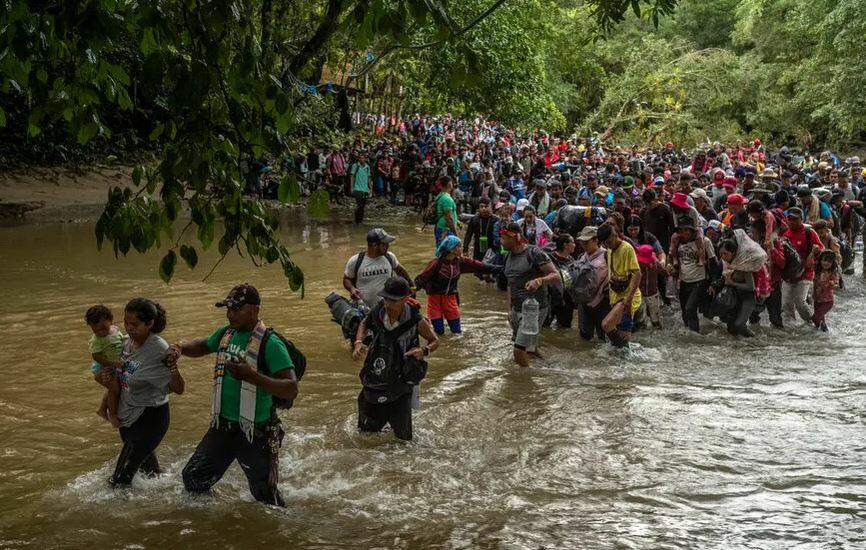
As migrants from Central America surge north in hopes of reaching the porous US border, businessmen and elected officials have turned the journey into a well-oiled, and profitable, machine – making “tens of millions” of dollars per year (or more, see below).

The journey into the jungle begins, led by a guide from the New Light Darién Foundation. (via NY Times)

The Darién Gap, once a formidable natural barrier between North and South America, has essentially become a marketplace. Remote and beautiful, a constellation of small towns leading to the gap has been become a hub for mass migration, according to the NY Times.

The towns are riddled with poverty, and are housing a population that has long been victims of the country’s internal conflicts. Their sewage, water, and electricity systems, already frail, were overwhelmed when thousands of Haitians began to show up in 2021, fleeing the chaos that spiraled after their President’s assassination.

The Darién Gap has quickly morphed into one the Western Hemisphere’s most pressing political and humanitarian crises. A trickle only a few years ago has become a flood: More than 360,000 people have already crossed the jungle in 2023, according to the Panamanian government, surpassing last year’s almost unthinkable record of nearly 250,000.

In response, the United States, Colombia and Panama signed an agreement in April to “end the illicit movement of people” through the Darién Gap, a practice that “leads to death and exploitation of vulnerable people for significant profit.” -NY Times

Opportunists seize the day

Fredy Marín’s boat company ferries hundreds of migrants to the jungle each day. He is now running for mayor of Necoclí, Colombia. (via NY Times)

“This is a beautiful economy,” said Fredy Marín, a former town councilman from the municipality of Necoclí, who operates a boat company that ferries migrants on their way to the US. Marín says he moves thousands of people per month for $40 per head.

Marín is now running for mayor of Necoclí, where he’s vowed to preserve the thriving migration industry, which has led to locals selling essentials like tents, snake repellent, and even toddler-sized rubber boots to migrants.

Venezuelan families that want to make it to the United States have to pay at least $170 a person to enter the Darién Gap. (via NY Times)

Elected community board members, like Darwin García in Acandí, Colombia, even describe the explosion of migrants as the “best thing” for their struggling communities.

We have organized everything: the boatmen, the guides, the bag carriers,” said García, who added that the flood of “migrants the best thing that could have happened” to their impoverished town. García’s younger brother, Luis Fernando Martínez, is running for mayor of Acandí on this platform of sustaining the so-called ‘migration economy.’

The migrants can even hire a sort of “security” service from groups like the New Light Darién Foundation, which offers a guided journey for migrants navigating the gap.

The foundation has hired more than 2,000 local guides and backpack carriers, organized in teams with numbered T-shirts of varying colors — lime green, butter yellow, sky blue — like members of an amateur soccer league.

Migrants pay for tiers of what the foundation calls “services,” including the basic $170 guide and security package to the border. Then a migration “adviser” wraps two bracelets around their wrists as proof of payment. -NY Times

The service is “Like a ticket to Disney,” said Renny Montilla, 25, a construction worker from Venezuela.

Migrants from around the world arrive in Necoclí by bus. (via NY Times)

Whose fault is this?

On the surface, Colombian and U.S. governments have expressed commitments to curb this illicit flow. However, actions on the ground tell a different story. Colombia’s President Gustavo Petro says the United States caused this migration crisis while showing no interest in curbing it, and says that the roots of this migration were “the product of poorly taken measures against Latin American peoples.”

The New York Times has spent months here in the Darién Gap and surrounding towns, and the national government has, at best, a marginal presence.

When the national authorities can be seen at all, they are often waving migrants through, or in the case of the national police, fist-bumping the men selling expensive travel packages through the jungle.

The top police official in the region, Col. William Zubieta, said it wasn’t his job to halt the flow. Instead, he argued, the nation’s migration authorities should be exerting control.

Unfortunately, they do not have it,” he said.

He [Petro] said he had no intention of sending “horses and whips” to the border to solve a problem that wasn’t of his country’s making.

In the absence of the Colombian government, local leaders have decided to handle migration themselves. -NY Times

Further complicating matters is a notorious drug-trafficking group, the Gaitanist Self-Defense Forces, whose control over northern Colombia is ‘so complete that the country’s ombudsman’s office calls the group the region’s “hegemonic” armed actor,” according to the report.

Are the actual profits much higher?

As Mike Shedlock of Mish Talk notes;

Biden vowed to “end the illicit movement” of people through the Darién jungle in Columbia. But the profits are too big to pass up. A record 360,000 made passage this year. That’s well above the record 250,000 for all of 2022.

Politicians and other human traffic smugglers in Columbia charge a minimum of $170 a head, not to reach the US, but simply to get through the Columbian jungle on route to Panama. And that’s just for a guide. The all inclusive package is $500 or more.

The Math

  • $170 * 360,000 = $61,200,000
  • $500 * 360,000 = $180,000,000

The Colombian politicians and helpers have made somewhere between $61 million and $180 million this year selling services that the Biden administration vowed to end.

Once Through Darien, Then What?

There is much more to the article. Importantly, once through the Darien Gap, everyone is on their own.

“On the Panamanian side, small criminal bands rove the forest, using rape as a tool to extract money and punish those who cannot pay,” notes the New York Times.

People need to cough up more money to make it through Panama to Mexico, then from Mexico to the US border, then still more money from the US border to the US.

People without adequate funds are subject to rape or torture or death.

This is what’s become of US immigration policy.

Tyler Durden
Fri, 09/15/2023 – 23:20

‘Statistically Significant Increase’ In Myopericarditis And Single Organ Cutaneous Vasculitis Found After COVID-19 Vaccination

0
‘Statistically Significant Increase’ In Myopericarditis And Single Organ Cutaneous Vasculitis Found After COVID-19 Vaccination

Authored by Megan Redshaw via The Epoch Times (emphasis ours),

A large nationwide study of more than 4 million people in New Zealand identified a statistically significant association in two adverse events following vaccination with Pfizer’s COVID-19 vaccine.

(Fit Ztudio/Shutterstock)

In the post-marketing safety study recently published in Springer, researchers examining 12 specific adverse events found an increase in myopericarditis during the 21-day period following both Pfizer vaccine doses. Myopericarditis describes two distinct inflammatory heart conditions that occur simultaneously, myocarditis and pericarditis.

The highest rate of myopericarditis was observed in the youngest participants under 39 years of age following the second vaccine dose—with an estimated five additional myopericarditis cases per 100,000 persons vaccinated regardless of age. Researchers also observed an increase following both vaccine doses in individuals aged 40 to 59.

“Our findings align with international postmarketing studies, case series reports, and cases detected through reports to New Zealand’s spontaneous system that identify an association between the BNT162b2 vaccine and myo/pericarditis, especially in younger people and after the second dose,” the researchers stated.

In addition to myopericarditis, the study found an increase in single-organ cutaneous vasculitis (SOCV) in the 20- to 39-year-old age group following the first vaccine dose. SOCV is a syndrome characterized by inflammation and damage to the skin’s blood vessels without the involvement of other organ systems.

Study Methods

To carry out their study, researchers collected data from Feb. 19, 2021, at the beginning of the vaccine rollout, to Feb. 10, 2022, among 4,114,364 individuals aged 5 and older who received a first and second primary or pediatric dose of Pfizer’s COVID-19 vaccine. During the study period, 13,597 individuals were excluded after testing positive for COVID-19.

The researchers then compared the incidence rates of each outcome of interest for 21 days—the interval between first and second vaccine doses—following vaccination with Pfizer’s COVID-19 vaccine to the expected background incidence rate from a pre-vaccination period (2014 to 2019) to detect vaccine safety signals.

Outcomes of interest were identified from New Zealand’s National Minimum Data Set—a national data collection system for all public hospitalizations connected to a National Health Index number that allows researchers to link hospitalization with Pfizer vaccination records in the National COVID Immunisation Register.

The 12 adverse events analyzed included acute kidney injury, acute liver injury, Guillain-Barré syndrome, erythema multiforme, herpes zoster, SOCV, myopericarditis (includes all events coded as myocarditis, pericarditis, and myopericarditis), arterial thrombosis, cerebral venous thrombosis, splanchnic thrombosis, venous thromboembolism, and thrombocytopenia.

Outside of myopericarditis and SOCV, researchers identified no other statistically significant associations between Pfizer’s COVID-19 vaccine and other outcomes of interest for all ages combined. Unlike myopericarditis, SOCV has not been identified as an adverse reaction to Pfizer’s COVID-19 vaccine, and only a few case reports and reviews have been published in the literature.

Potential Study Limitations

The study had several potential limitations. Although many adverse events of special interest resulted in hospitalization, some conditions, such as herpes zoster, are typically treated in the primary care setting. Diagnoses of conditions following COVID-19 vaccination in the general setting were not included in the analysis and could be underestimated.

Using ICD-10-AM codes to identify outcomes of interest without conducting clinical record assessments could lead to potential misclassification, and changing diagnostic codes before the study period could overinflate or underestimate potential adverse events.

Healthy vaccinee bias could affect results when comparing observed adverse events among the vaccinated cohort with the background population, as healthier people are more likely to get vaccinated. Additionally, a risk period of one to 21 days may exclude potential adverse events beyond the time frame, according to the study.

Researchers Conclude Benefits of Vaccines Still Outweigh Risks

Despite the increased risk of myopericarditis observed during the study, researchers said the risk of myocarditis following SARS-CoV-2 infection is “substantially greater” than after COVID-19 mRNA vaccination, leading them to conclude the benefits of vaccination still outweigh the risks from the disease.

Yet experts acknowledge that myocarditis caused by a natural viral infection differs from that triggered by mRNA COVID-19 vaccination. As previously reported by The Epoch Times, although COVID-19 can cause myocarditis, the myocarditis developed by a healthy young person post-infection is extremely mild compared to the onset of myocarditis following COVID-19 vaccination.

According to pediatric cardiologist Dr. Kirk Milhoan, myocarditis caused by the COVID-19 vaccine differs from viral myocarditis because an infection of the heart isn’t causing the damage. It’s being damaged by the “spike protein that’s cardiotoxic to the heart,” which causes inflammation in the three main vessels of the heart by a different process.

“There’s a difference between the body encountering a virus naturally that causes myocarditis and actively giving the body something we know causes harm,” Dr. Milhoan told The Epoch Times.

The New Zealand study adds to a growing body of evidence showing mRNA COVID-19 vaccination can trigger heart inflammatory conditions in young people.

Tyler Durden
Fri, 09/15/2023 – 23:00

“O’Connor Strikes Back”: Federal Judge Exempts Plaintiffs From Biden’s ATF ‘Frame And Reciever’ Rule 

0
“O’Connor Strikes Back”: Federal Judge Exempts Plaintiffs From Biden’s ATF ‘Frame And Reciever’ Rule 

What’s not being reported by corporate media outlets, such as Reuters, AP News, Bloomberg, and others, because any win (big or small) for the Second Amendment community is rarely covered due to their commitment to anti-gunners, such as ‘Everytown’ and ‘Giffords,’ is that Judge Reed O’Connor of the Northern District of Texas granted the plaintiffs in the Garland v. VanDerStok caseDefense Distributed and BlackHawk Manufacturing Group Inc. (doing business as 80 Percent Arms) motions for an injunction pending appeal, which basically means they’re the only two companies that can sell ‘ghost guns’ nationally (or partially completed frames and receivers and weapons parts kits) while the case continues. 

“Last month, a cringing Roberts Court blinked under protest and preserved the Biden frame and receiver rule for the life of the first appeal from a final judgment of the Texas district court. Big sad. That appeal isn’t exactly going well for ATF …,” Defense Distributed wrote in a blog post

Defense Distributed continued, “This month, Judge O’Connor strikes back with forty-two pages of just why he has the authority to issue an injunction against the frame and receiver rule, as to at least two VanDerStok plaintiffs: Defense Distributed and 80 Percent Arms.”

Defense Distributed, the online, open-source hardware and software organization that pioneered the first 3D-printed ghost gun, the “liberator” a decade ago, expects, “DOJ probably appeals, but the Biden admin is now in the worst place they could be: The true believer fanatics in this industry have achieved a commercial monopoly. Oops.” 

Recall, that the president was in the Rose Garden in April 2022, vowing to crack down on untraceable firearms:

“These guns are weapons of choice for many criminals,” Biden, adding “We’re going to do everything we can to deprive them of that choice.”

As a strategic move in June, Defense Distributed unveiled a 0% lower for handguns, essentially a block of steel, instead of the usual 80% lower, challenging federal regulators in their oversight attempts. The company revealed the 0% lower for ARs at SHOT Show 2022. 

Making sense of this all, what Defense Distributed is saying is that Biden’s Department of Justice was attempting to crush the partially completed frames and receivers industry but failed as it only backfired and created a “commercial monopoly” where Defense Distributed and 80 Percent Arms will be the only players to sell ghost guns kits in the US legally. 

*   *   * 

Here’s the ruling:

Tyler Durden
Fri, 09/15/2023 – 22:40

Implications Of Making Ballot Images And Cast-Vote Records Public

0
Implications Of Making Ballot Images And Cast-Vote Records Public

Authored by Rachel Orey & Sarah Walker via RealClear Wire,

This article is a summary of the Bipartisan Policy Center’s August 2023 explainer, Implications of Making Cast Vote Records and Ballot Images Public. Read the full explainer for additional context and explanation.

Since 2020, election offices nationwide have received unprecedented numbers of requests for election records. These requests are critical to efforts by journalists, academics, and voters to hold governments to account, yet election offices are unequipped to process the volume of requests being received.

Cast vote records (CVRs) and ballot images are the two types of records most in demand. Rules governing the creation and release of CVRs and ballot images vary across election jurisdictions; not all choose to make these records public.

Ballot images are digital renderings of each paper ballot tabulated in an election, similar to making a photocopy of the ballot and then storing it securely. CVRs are electronic records of how the marks on the ballot are tabulated as votes for candidates and on other ballot questions. They come in a variety of formats, some much easier for the public to examine than others.

Proactively releasing these records to the public bolsters transparency and could reduce the volume of public records requests, saving limited resources. Many election jurisdictions already post CVRs or ballot images without issue: Los Angeles began making CVRs available to the public in the 1980s when members of the public could rent tapes with what we now call CVRs; Dane County, Wisconsin offers CVRs as a Do It Yourself Audit; and several Colorado counties piloted the public release of ballot images in recent elections.

Despite the transparency benefits of releasing CVRs and ballot images, making these records public has trade-offs: Voters’ privacy might be compromised, and many election offices do not have the necessary resources or technology to extract CVRs to begin with, let alone to implement appropriate safeguards. Furthermore, vote buying becomes feasible when ballot secrecy is violated—an extreme, if unlikely, potential ramification of making ballot images public.

Although CVRs and ballot images are often considered in tandem, each has distinct consequences for privacy, transparency, and efficiency.

Privacy Implications

Even when voters are instructed not to identify themselves on their ballots, some invariably write their name, contact information, or signature on their ballot. Because ballot images capture everything on a ballot, they might contain personally identifiable information if election officials do not redact it before posting.

When a ballot image includes write-ins, voters could lose their anonymity if someone recognizes their handwriting. Alternatively, when write-ins are included on CVRs or ballot images, voters could illegally “sell” their vote choice by including an agreed upon write-in, enabling the vote-buyer to identify the ballot and confirm other choices were marked as intended.

Unique vote patterns also carry a risk of facilitating vote buying: A malicious actor invested in the outcome of one or two races could illegally instruct voters to fill their ballot out in a particular way, essentially creating a unique identifier for the ballot. This risk applies to both ballot images and CVRs.

Finally, when a precinct has a small number of voters, or when a small number of voters use a specific method of voting, it can be possible to infer an individual voter’s choices by joining information from a CVR or ballot image with a voter file, which lists everyone who voted in a precinct. This danger is not unique to CVRs and ballot images: it also exists when officials release election results at the precinct level or in other small reporting units.

Efficiency Implications

Election offices are chronically under-resourced. Making CVRs and ballot images public has the potential to increase efficiency by reducing the burden of public records requests. But, this would require a baseline level of operation to make the records public. And election offices would have to take steps to protect voters’ privacy. Creating and storing ballot images also risks slowing tabulation and would require technology updates for many jurisdictions.

Some safeguards that facilitate the release of CVRs and ballot images without comprising privacy, transparency, or efficiency include:

  • Establishing a clear and uniform definition of CVRs and ballot images, ideally in coordination with other jurisdictions.

  • Clarifying which records are available via public record request or published online.

  • Using identity verification or comparable measures for those attempting to access records posted online.

  • Aggregating results from small reporting units to protect voter privacy.

  • Sufficiently funding election administration to address administrative concerns and add capacity.

As we approach the 2024 elections, interest in ballot images and CVRs is likely to persist. Policymakers must weigh the tensions between privacy, transparency, and efficiency as they devise solutions to meet the growing demand for access to these records.

Tyler Durden
Fri, 09/15/2023 – 22:20

White House Alters Official Transcript After Biden Says ‘Black And Hispanic’ Workers ‘Don’t Have High School Diplomas’

0
White House Alters Official Transcript After Biden Says ‘Black And Hispanic’ Workers ‘Don’t Have High School Diplomas’

President Biden, who was mentored by former KKK ‘Exalted Cyclops’ Robert Byrd, once called a black adviser ‘boy‘ during a FEMA briefing, called Obama the first mainstream ‘bright and clean‘ and articulate African-American, and worried in the late 70s that forcing schools to desegregate would subject his white children to “a racial jungle,” just did it again.

(There’s a lot more, by the way…)

Then-Senator Joe Biden holding hands with mentor and former KKK Exalted Cyclops Sen. Robert Byrd in 2008

In another humiliating gaffe, the 80-year-old Biden suggested that httdfdps://x.com/CurtisHouck/status/1432401230916169742?s=20b black and hispanic workers don’t have high school diplomas.

“We’ve seen record lows in unemployment particularly — and I’ve focused on this my whole career — particularly for African Americans and Hispanic workers and veterans, you know, the workers without high school diplomas,” he said in televised remarks.

The White House, of course, went into damage control mode – doctoring the official transcript to read something Biden never said, and claiming that there was supposed to be the word “and” separating the minority groups and veterans, from ‘those without high school diplomas.’

“We’ve seen record lows in unemployment particularly — and I’ve focused on this my whole career — particularly for African Americans and Hispanic workers and veterans, you know, and the workers without high school diplomas,” reads the official transcript.

Blacks, hispanics, veterans, and possibly those without high school diplomas took offense, and general mockery ensued.

Oh, and Biden lied in the same speech about teaching at the University of Pennsylvania.


Tyler Durden
Fri, 09/15/2023 – 22:00

Three Reasons Why Military Recruitment Is In Crisis

0
Three Reasons Why Military Recruitment Is In Crisis

Authored by Ryan McMaken via The Mises Institute,

By the middle of 2022, it was already become apparent that the US military was having problems meeting recruitment goals. In August last year, The AP reported that the Army would have to cut force size, and an army spokesman admitted the Army was facing “‘unprecedented challenges’ in bringing in recruits.” This came even with new larger enlistment bonuses. The problem, however, wasn’t as acute for the Air Force, Navy, or Marine Corps. 

Since then, things haven’t gotten any better for recruiters. Now, recruitment shortfalls have spread well beyond the Army.  The New York Post reported last week:

Much of the military will fall short of recruitment goals by as much as 25% this year …

The Army, Navy, Air Force, and Coast Guard are all expected to fall short of their recruitment goals this year, they told The Post. …

A spokesperson for the Air Force said they will likely miss their goal of 26,877 new recruits by 10%. The Coast Guard said they will likely only fill 75% of the number of full-time, non-commissioned recruits they need.

And as of April, the Navy, which has over 300,000 active duty personnel, was behind by 6,000 new recruits this year, and the Army by 10,000 out of their 65,000 goal.

2023 is the first time the Air Force has missed its recruiting goals since 1999

Apparently, potential recruits aren’t buying whatever it is the military is selling these days as reasons for signing away one’s freedom to federal bureaucrats for a period of years. After all, the military is the only job that one can’t quit at any time, so any intelligent person will think long and hard before signing up. 

There are many reasons for the recruitment problem.

The decline in mental and physical fitness is real, and many young people are disqualified from a military job even before applying.

Many others are put off by what appears to be an overtly politicized and partisan military. Pentagon leaders appear to be doubling down on ideological crusades more and more. Even while it faces a recruiting crisis, the military still refuses to provide back pay to service members who were forced out for declining the experimental covid vaccines.

Unquestioning compliance with vaccine mandates, of course, is a cause near and dear to the current administration.

Then there are the “woke” crusades in which military brass use drag queens as Navy recruiters and create recruitment ads tailor-made for LGBT personnel. The military wants to let you know they’ll affirm your gender transition—unless, of course, that gets in way of conscription. (The Pentagon claims the “woke” issue isn’t having much effect on recruitment.)

But there are other more deep-seated problems as well.

There is growing evidence that the American public no longer reveres the military as it once did. Moreover, it is more abundantly clear than ever that military service has nothing to do with defending the United States or its people. And then there is the often-seen “problem” of low unemployment and the fact the private sector is drawing the best workers away from military careers. 

The Public Is Losing Faith in the Military

Compared to institutions like public education, public health, and Congress, the military remains quite popular. However, the historical trend in public views of the military is clearly downward. In 2021, “About 56 percent of Americans surveyed said they have ‘a great deal of trust and confidence’ in the military, down from 70 percent in 2018.” The trend hasn’t changed since 2018. According to a Gallup poll, people who say they have a “great deal/quite a lot” of confidence in the military fell from 69 percent in 2021 to 60 percent in 2023. The all-time low, accoriding to Gallup was in 1981 in the wake of the Vietnam War and Watergate. 

The dwindling regard for the military is certainly not alien to young potential recruits, and talk of the recruiting crisis regularly features concerns about current young men and women being insufficiently “patriotic” or willing to “serve their country.” 

This presents a real economic problem for recruiters. A potential recruit who regards military service as ideologically distasteful cannot be easily enticed with a few offers of recruiting bonuses or a GI Bill. After all, the military has long relied on convincing recruits they will gain psychic profits on top of whatever monetary pay they receive. To capitalize on this, recruiters will say things like “you’re serving your country” or “you’re fighting the bad guys” or “you’ll make your father proud.” But what if people stop believing that stuff? It’s going to take a lot of money to sweeten the deal for potential recruits who are smart enough or well-educated enough to have other options. 

Moreover, it’s easy to see why many young people don’t find military service especially enticing. The US military lost in Iraq and Afghanistan, and hasn’t won a major war since 1945. More clever potential recruits are likely to notice that the US invasion of Iraq was no more morally justified than the Russian invasion of Ukraine. Potential recruits with critical thinking skills might also notice the military is itching to turn American soldiers into fodder for Russian artillery. In previous ages, the usual regime propaganda might have worked to convince potential recruits that “we’re fighting the Russians in Ukraine so we don’t have to fight them in Kansas City.” It’s a variation on a common lie that warmongers tell Americans. But now, the military can’t even take for granted that conservatives—historically a key demographic for recruiters—will believe it anymore. Thanks to a shift in foreign policy views among conservative populists, many young men in middle America see a disconnect between the regime’s latest wars and actual defense of the “homeland.” 

National Guard Troops Are Exploited by the Regime

This brings us to another problem recruiters face. Even those who doubt the regime’s latest imperial adventures oversea might nonetheless be convinced to join the National Guard. But even there, better-informed potential recruits are learning that the National Guard has degenerated into a reserve force for the regular military. The old “two weeks every summer” slogan about the National Guard has been exposed as a lie, and potential recruits seeking to “serve the community”  now know that they may end up fighting wars 10,000 miles from home. In 2021, National Public Radio reported on how the National guard exploits recruits. One Idaho National Guardsman described the new reality: 

My entire life, the recruiting National Guard message has been one weekend a month, two weeks in the summer. And when we served, we used to say one weekend a month, two weeks in the summer, my ass. You know, when we went to Afghanistan, we were gone for 18 months…

NPR further noted: 

There has been a lot going on that the National Guard has been brought in for—hurricanes, floods, protests, Iraq, Afghanistan. Last year, more than a third of the National Guard was on active duty. That’s the highest utilization we’ve seen since World War II, and some service members are getting fed up. 

Once upon a time, National Guard forces could not legally serve overseas at all. This was why many young men in the 1960s managed to avoid a pointless death in Vietnam by signing up for the National Guard. Then, it was established they would not serve overseas without a declaration of war. Then the Pentagon and Congress decided it can do whatever it wants with National Guard members. A young man or woman would have to be pretty desperate to sign up for that sort of treatment. 

Unemployment Is Low 

And that’s the thing. Workers right now aren’t desperate. The United States is currently in the middle of an employment bubble. Billions of dollars in new money created since 2020 has flooded the economy, driving up demand and producing countless malinvestments in the labor markets. Monetary inflation has driven increases in wages, and workers—for now—simply don’t need a military job. This relationship between low unemployment and low recruitment, of course, has been known for a long time. As a 2010 report from the Department of Defense noted:

Recruiting and retention are sensitive to the state of the economy. Studies indicate that a 10 percent decrease in the civilian unemployment rate will reduce high-quality enlisted recruiting by 2–4 percent. Retention also declines when unemployment decreases, but appears to be less sensitive to the state of the economy than recruiting. The recent economic downturn has improved recruiting and retention and has allowed the services to reduce use of enlistment and reenlistment bonuses. However, this improvement is expected to diminish as civilian economic conditions improve.

We’ll only know how truly severe the recruiting crisis is for the Pentagon once the unemployment rate starts to head up again. We likely won’t have to wait long. We can point to half a dozen economic indicators right now that point to a thoroughly slowing economy in the next year. As we see in the survey data, however, it is likely that views of military service have changed considerably in recent years. That means older relationships between joblessness and recruitment may no longer apply to the same extent. It may be that rising unemployment may not drive as many new recruits as may have been the case a decade ago.

Recruiters may find that members of Gen Z are not enthusiastic about losing yet another war—regardless of the size of the enlistment bonus. We’ll find out soon enough.

Tyler Durden
Fri, 09/15/2023 – 21:40

A Visual Guide To AI Adoption, By Industry

0
A Visual Guide To AI Adoption, By Industry

As more and more businesses pour resources into artificial intelligence, its multitude of applications are beginning to be employed by the global workforce – and at a significant pace.

In this graphic, part of the Digital Evolution series sponsored by Global X ETFs, Visual Capitalist’s Alan Kennedy explores AI adoption statistics and discuss the impact of AI technology on today’s workforce.

Who Uses AI?

According to a recent survey, an impressive 50% of organizations report using AI tools for at least one function within their operations. But as we look deeper, the power of AI as a customizable and multi-faceted tool becomes apparent:

Generative AI programs such as DALL-E, Bard, and ChatGPT have also been adopted by significant number of people. In particular, OpenAI’s ChatGPT boasts 100 million users and over a billion monthly hits.

Finance Leads the Way in AI Adoption

The finance industry has become the frontrunner in AI adoption. Used to manage complex risk challenges, AI algorithms can analyze vast amounts of data in real time, enabling timely detection of fraud and market fluctuations.

Consequently, AI technology has proven to be a game-changer within the risk space. A survey conducted by McKinsey indicates that 48% of professionals in the risk space reported some form of revenue increase as a direct result of AI adoption. Additionally, 43% of respondents reported a decrease in costs, as AI streamlines processes, automates repetitive tasks, and reduces the margin for error.

The Job Market Responds

The rise in AI adoption has created a demand for AI-skilled professionals in the U.S. In this table, we can see AI job postings as a percentage of overall job postings in the U.S. between 2021 and 2022:

Notably, the top three sectors with the highest demand for AI talent are IT (5.3% of all job postings), professional, scientific, and technical services (4.1%), and finance and insurance (3.3%). This trend suggests that these are the industries where AI can make the biggest difference.

The Transformative Power of AI

AI adoption has reached a critical milestone, with half of the surveyed organizations leveraging AI tools to optimize their operations in some form. But this is a mere shadow of AI’s true potential.

Tyler Durden
Fri, 09/15/2023 – 21:20

Trump Will Be ‘Imprisoned With Ivanka’ Says Maxine Waters As Trials Delayed

0
Trump Will Be ‘Imprisoned With Ivanka’ Says Maxine Waters As Trials Delayed

Rep. Maxine Waters (D-CA), who hooked her Daughter up with $750,000 in campaign funds over a decade with minimal repercussions, lashed out on X after former President Trump’s trial date in his Georgia RICO case was delayed – the first of two such delays issued late in the week.

On Thursday, the Florida judge overseeing Trump’s 2020 election-related case ruled that the former president will not go on trial next month along with attorneys Sidney Powell and Kenneth Chesbro, both of whom asked for an expedited schedule, Politico reported. Prosecutors wanted to put all 19 defendants in the case on trial at the same time, which Judge Scott McAfee laughed out of the courtroom.

“The Fulton County Courthouse simply contains no courtroom adequately large enough to hold all 19 defendants, their multiple attorneys and support staff, the sheriff’s deputies, court personnel, and the State’s prosecutorial team. Relocating to another larger venue raises security concerns that cannot be rapidly addressed,” he wrote.

Maxine chimes in

Many are worried that the Judge has extended Trump’s trial date,” Waters posted Thursday night on X. “Not to worry! TRUMP CAN’T RUN. TRUMP CAN’T HIDE.” she continued, adding “He will be imprisoned with Ivanka by his side!”

This is the same Maxine Waters that told Democrats in 2018 “wherever we have to show up. If you see anybody from that cabinet in a restaurant, in a department store, at a gasoline station, you get out and you create a crowd, and you push back on them, and you tell them they’re not welcome anymore, anywhere!”

On Friday, a New York appeals court judge halted a trials scheduled for Oct. 2 in NY Attorney General Letitia James’ fraud lawsuit against Trump and the Trump Organization.

More via the Epoch Times;

State Justice David Friedman, with the 1st Department of the New York Supreme Court Appellate Division, granted an interim stay of the trial—slated to start Oct. 2—and referred the matter to a five-judge panel, which expects to rule in the last week of September, a spokesperson said. He also ordered the full appeals court to consider a reported lawsuit that President Trump had filed against the trial judge, Arthur Engoron, on an expedited basis.

President Trump’s lawyers had raised issue with Judge Engoron’s refusal to grant a request for a three-week trial delay, which he said (pdf) was “completely without merit.” They also asked the judge to pause the trial until he issues a ruling on the statute of limitations regarding certain claims in Ms. James’s lawsuit, it was reported.

First reported by the Daily Beast, the lawsuit against Judge Engoron also asserted that the jurist is overstepping his authority. A state appellate court issued a ruling several months ago that asked the judge to determine which Trump Organization real estate deals are too old and beyond the statue of limitations.

The judge declined to issue a comment on the matter via a court spokesperson. Meanwhile, Ms. James’ office issued a statement on Thursday ruling, telling multiple news organizations that “we are confident in our case and will be ready for trial.”

The lawsuit filed by Ms. James, a Democrat, alleges President Trump defrauded banks, insurers, and others with annual financial statements that inflated the value of his skyscrapers, golf courses, and other assets and boosted his net worth by as much as $3.6 billion. Her lawsuit seeks $250 million in penalties and a ban on the former president doing business in New York.


Tyler Durden
Fri, 09/15/2023 – 18:40

Meteorologists, Scientists Explain Why There Is ‘No Climate Emergency’

0
Meteorologists, Scientists Explain Why There Is ‘No Climate Emergency’

Authored by Katie Spence via The Epoch Times (emphasis ours)

There’s no climate emergency. And the alarmist messaging pushed by global elites is purely political. That’s what 1,609 scientists and informed professionals stated when they signed the Global Climate Intelligence Group’s “World Climate Declaration.”

“Climate science should be less political, while climate policies should be more scientific,” the declaration begins. “Scientists should openly address uncertainties and exaggerations in their predictions of global warming, while politicians should dispassionately count the real costs as well as the imagined benefits of their policy measures.

Environmental activists participate in a Global Climate Strike march in Zagreb, Croatia, on Sept. 20, 2019. (Denis Lovrovic/AFP via Getty Images)

The group is an independent “climate watchdog” founded in 2019 by emeritus professor of geophysics Guus Berkhout and Marcel Crok, a science journalist. According to its website, the organization’s objective is to “generate knowledge and understanding of the causes and effects of climate change as well as the effects of climate policy.” And it does so by objectively looking at the facts and engaging in scientific research into climate change and climate policy.

The declaration’s signatories include Nobel laureates, theoretical physicists, meteorologists, professors, and environmental scientists worldwide. And when a select few were asked by The Epoch Times why they signed the declaration stating that the “climate emergency” is a farce, they all stated a variation of “because it’s true.”

“I signed the declaration because I believe the climate is no longer studied scientifically. Rather, it has become an item of faith,” Haym Benaroya, a distinguished professor of mechanical and aerospace engineering at Rutgers University, told The Epoch Times.

“The earth has warmed about 2 degrees F since the end of the Little Ice Age around 1850, but that hardly constitutes an emergency—or even a crisis—since the planet has been warmer yet over the last few millennia,” Ralph Alexander, a retired physicist and author of the website “Science Under Attack,” told The Epoch Times.

“There is plenty of evidence that average temperatures were higher during the so-called Medieval Warm Period (centered around the year 1000), the Roman Warm Period (when grapes and citrus fruits were grown in now much colder Britain), and in the early Holocene (after the last regular Ice Age ended).”

The climate emergency is “fiction,” he said unequivocally.

There were 1,609 scientists and informed professionals who signed the Global Climate Intelligence Group’s “World Climate Declaration.” (The Epoch Times)

The ‘Climate Emergency’

Human activities and the resulting greenhouse gases are the cause of global warming, according to the Intergovernmental Panel on Climate Change (IPCC). Specifically, the IPCC says that in 1750, atmospheric carbon dioxide (CO2) concentrations were 280 parts per million (ppm), and today, the atmospheric CO2 concentrations are 420 ppm, which affects temperature.

The IPCC is the U.N. body for assessing the “science related to climate change.” It was created in 1988 by the World Meteorological Organization and the U.N. Environment Programme to help policymakers develop climate policies.

Edwin Berry, a theoretical physicist and certified consulting meteorologist, said that one of the IPCC’s central theories is that natural CO2 has stayed constant at 280 ppm since 1750 and that human CO2 is responsible for the 140 ppm increase.

This IPCC theory makes human CO2 responsible for 33 percent of today’s total CO2 level, he told The Epoch Times.

Consequently, to decrease temperatures, the IPCC says, we must reduce human-caused CO2—thus, the current push by lawmakers and climate activists to forcibly transition the world’s transportation to electric vehicles, get rid of fossil fuels, and generally reduce all activities that contribute to human-caused CO2. 

That entire premise, according to Mr. Berry, is problematic.

“The public perception of carbon dioxide is that it goes into the atmosphere and stays there,” Mr. Berry said. “They think it just accumulates. But it doesn’t.”

He explained that when you look at the flow of carbon dioxide—”flow” meaning the carbon moving from one carbon reservoir to another, i.e., through photosynthesis, the eating of plants, and back out through respiration—a 140 ppm constant level requires a continual inflow of 40 ppm per year of carbon dioxide, because, according to the IPCC, carbon dioxide has a turnover time of 3.5 years (meaning carbon dioxide molecules stay in the atmosphere for about 3 1/2 years).

“A level of 280 ppm is twice that—80 ppm of inflow. Now, we’re saying that the inflow of human carbon dioxide is one-third of the total. Even IPCC data says, ‘No, human carbon dioxide inflow is about 5 percent to 7 percent of the total carbon dioxide inflow into the atmosphere,'” he said.

So, to make up for the lack of necessary human-caused carbon dioxide flowing into the atmosphere, the IPCC claims that instead of having a turnover time of 3.5 years, human CO2 stays in the atmosphere for hundreds or even thousands of years.

“[The IPCC is] saying that something is different about human carbon dioxide and that it can’t flow as fast out of the atmosphere as natural carbon dioxide,” Mr. Berry said. “Well, IPCC scientists—when they’ve gone through, what, billions of dollars?—should have asked a simple question: ‘Is a human carbon dioxide molecule exactly identical to a natural carbon dioxide molecule?’ And the answer is yes. Of course!

“Well, if human and natural CO2 molecules are identical, their outflow times must be identical. So, the whole idea where they say it’s in there for hundreds, or thousands, of years, is wrong.”

Mr. Berry said that means nature—not humans—caused the increase in CO2. And consequently, attempts to decrease human CO2 are pointless.

“The belief that human CO2 drives the CO2 increase may be the biggest public delusion and most costly fraud in history,” Mr. Berry said.

He pointed out that in science, the scientific method says that you can’t prove that a theory is 100 percent true—only that the data supports it—but you can prove that it’s false. Providing an example, Mr. Berry said that Sir Isaac Newton’s gravity law was the preeminent theory for a long time, but then Albert Einstein made a correction that disproved Newton’s theory.

Smoke rises from a steel factory in Inner Mongolia, China, on Nov. 3, 2016. (Kevin Frayer/Getty Images)

Smoke rises from a steel factory in Inner Mongolia, China, on Nov. 3, 2016. (Kevin Frayer/Getty Images)

“Go back to the scientific method: IPCC proposed a theory, and if we can prove it’s wrong, we win. And I proved, in that case, their theory is wrong,” he said.

Mr. Berry took his research a step further and calculated the human carbon cycle using the IPCC’s own carbon cycle data.

“The prediction from the same model doesn’t give humans producing 140 ppm. It comes out closer to 30 ppm. Which essentially means the IPCC is wrong,” he said.

He said that using the IPCC’s data, nature is responsible for about 390 ppm of CO2, and humans are only responsible for about 30 ppm—not 140 ppm.

“Now, someone could ask, ‘Well, is the IPCC data correct?’ My answer is, ‘I don’t know.’ But I don’t have to know because IPCC has used this very data to deceive the world. I want to show that their logic is incorrect using their data,” he said.

“The IPCC was not set up as a scientific organization.”

Mr. Berry said that the IPCC doesn’t engage in skepticism of its theories and, therefore, the scientific method that governs all science.

“They were set up as a political organization to specifically convince the public that carbon dioxide was causing problems,” he said.

When asked why there’s a push to declare a “climate emergency,” Mr. Berry said it’s all about money and control. 

“That’s the only real reason for it. There’s no climate emergency,” he said.

Mr. Berry makes all his research, and research and correspondence from colleagues trying to disprove his theories, available to the public.

People attend the 48th session of the Intergovernmental Panel on Climate Change (IPCC) in Incheon, South Korea, on Oct. 1, 2018. (Jung Yeon-je/AFP via Getty Images)

Politics and Climate Models

Like Mr. Berry, Mr. Alexander says that science has become more political than scientific.

“It’s simply not true that the Earth’s climate is threatened. That claim is far more political than scientific,” he said.

“Science is based on observational evidence, together with logic, to make sense of the evidence. Very little, if any, evidence exists that human emissions of CO2 cause rising temperatures. There is a correlation between the two, but the correlation isn’t particularly strong: The Earth cooled, for example, from about 1940 to 1970, while the atmospheric CO2 level continued to go up. Computer climate models are all that connects global warming to CO2.”

When asked why CO2 was singled out as the cause of the climate emergency, Mr. Alexander said it goes back to James Hansen, an astrophysicist and the head of NASA’s Goddard Institute for Space Studies from 1981 to 2013, and an ardent environmentalist.

“Hansen developed one of the first computer climate models and began to make highly exaggerated predictions of future warming, none of which have come true,” Mr. Alexander said. “This included testimony he gave at a 1986 Senate hearing, testimony considered to have sparked the subsequent anthropogenic global warming narrative.”

Despite his predictions failing to come to fruition, Mr. Hansen’s efforts contributed to the founding of the IPCC, Mr. Alexander said.

“Although ostensibly the IPCC is a scientific body, the findings of its scientists are frequently distorted and hyped by the government and NGO bureaucrats who dominate the organization,” he said. “The bureaucrats have played a major role in exaggerating the scientific conclusions of successive IPCC reports and escalating the rhetoric of its official pronouncements. Hence, the U.N. secretary-general’s recent proclamations about a ‘boiling’ earth.”

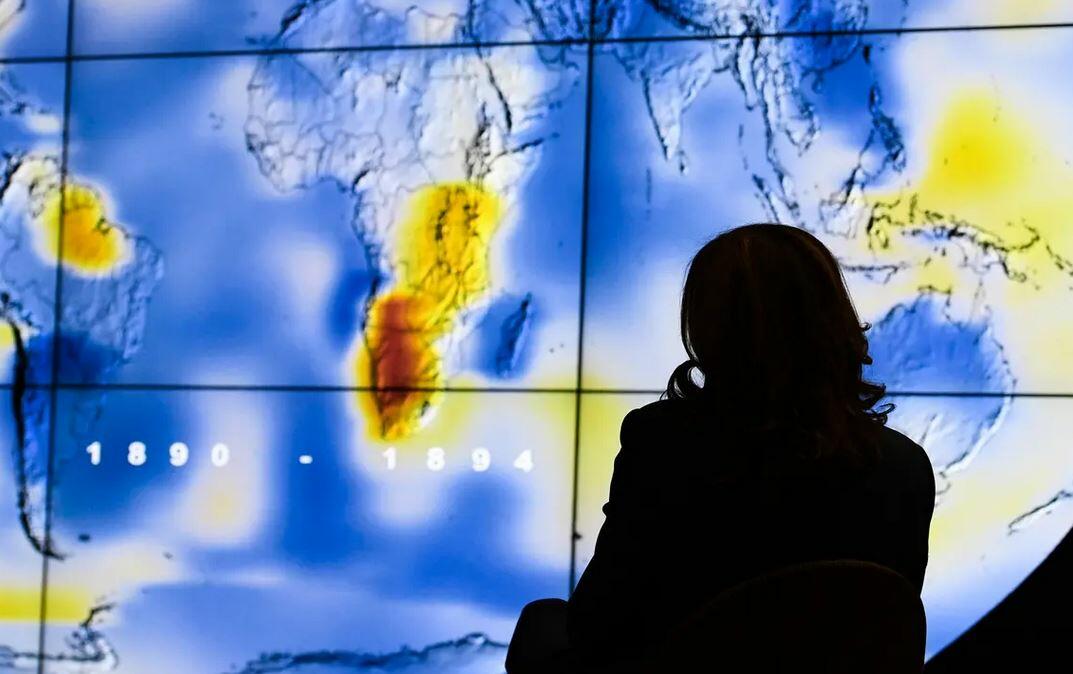
Vice President Kamala Harris looks at a hyperwall during a climate change discussion at the National Aeronautics and Space Administration (NASA) Goddard Space Flight Center in Greenbelt, Md., on Nov. 5, 2021. (Olivier Douliery/AFP via Getty Images)

On July 27, Secretary General António Guterres said, “Climate change is here. It is terrifying. And it is just the beginning. The era of global warming has ended; the era of global boiling has arrived. The air is unbreathable. The heat is unbearable. And the level of fossil fuel profits and climate inaction is unacceptable.”

Mr. Alexander said an honest answer to what’s causing Earth’s warming is, “We just don’t know right now,” but that doesn’t mean scientists are short of ideas.

“The chances of CO2 being the number one culprit are very slim. CO2 undoubtedly contributes, but there are several natural cycles that most likely do, too,” he said. “These include solar variability and ocean cycles, both ignored in climate models—because we don’t know how to incorporate them—or represented poorly. While climate activists will tell you otherwise, climate science is still in its infancy, and there is a great deal we don’t yet understand about our climate.”

He said one example is a recent research paper that estimated that changes in the sun’s output could explain 70 to 80 percent of global warming. Research such as that doesn’t gain much traction because the IPCC is committed to the idea that human CO2 is the cause of global warming.

As further criticism, Mr. Alexander said John Christy, a climatologist and professor of atmospheric science at the University of Alabama in Huntsville and the director of the Earth System Science Center, has clearly demonstrated that climate models exaggerate short-term future warming by two to three times.

To find more accurate measurements, Mr. Christy and Roy Spencer, a climatologist, former NASA scientist, and now a principal research scientist at the University of Alabama in Huntsville, developed a global temperature data set from microwave satellite observations.

They started their project in 1989, analyzed data going back to 1979, and found that, in general, since 1979, the Earth’s temperature has increased steadily by 0.23 degrees Fahrenheit every 10 years, according to global satellite data, Mr. Spencer said on his website.

As for why climate models are so inaccurate, Mr. Alexander said: “Computer simulations are only as reliable as the assumptions that the computer model is built on, and there are many assumptions that go into climate models. Assumptions about processes we don’t fully understand require approximations.

Read more here…

Tyler Durden
Fri, 09/15/2023 – 18:20