76 F
Chicago
Monday, August 31, 2026
Home Blog Page 3383

Biggest Drone Attack On Russia Since War Began Destroys At Least 4 Military Planes

0
Biggest Drone Attack On Russia Since War Began Destroys At Least 4 Military Planes

Another huge drone attack on Russian territory has taken place in overnight and early hours of Wednesday morning, this time against an airport in the north-western Russian city of Pskov, which hosts military planes. It came amid broader drone attacks on six Russian regions.

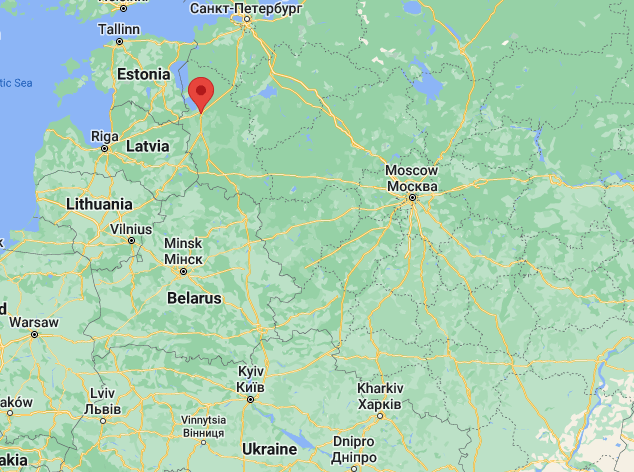
Crucially, Pskov is a mere 20 miles from NATO member Estonia’s border, which sparked internet rumors that Estonia could have been involved, also given the city of Pskov is over 400 miles from Ukraine itself. International outlets are citing Russia’s TASS to report that at least four military transport planes were damaged in the attack.

Stillframe from unverified video of the early morning attack on Pskov airport.

Four Il-76 transport planes were damaged as drones pummeled the airport. “As a result of the drone attack, four Il-76 aircraft were damaged. A fire broke out, and two planes burst into flames,” TASS reported.

Given the apparent direct hit on no less than four large military planes, this marks one of the biggest and successful cross-border attacks from Ukraine since the war began. Crimea has also in the last days come under waves of drone attacks, and overnight Bryansk Oblast was also targeted, as well as the capital of Moscow and other locations.

In total the unprecedented overnight drone operation included strikes on the following:

  • Pskov’s “Kresty” Airport hit 
  • Bryansk: One of Russia’s largest microchip plants hit
  • Oryol
  • Ryazan
  • Moscow
  • Sevastopol, Crimea

But Pskov regional governor Mikhail Vedernikov downplayed the significance, emphasizing that the airport will resume operations by Thursday and that there were not civilians hurt.

“According to initial assessments, nothing serious has occurred but it is hard to determine that at night. If everything is in order, the airport will resume normal operations on Thursday,” he said.

Pskov’s Kresty Airport is very close to NATO-member Estonia’s border…

“The defense ministry is repelling a drone attack on Pskov’s airport,” the governor had written previously as the attack unfolded.

According to The Independent, which analyzed circulating footage of the aftermath:

Footage shared by the governor showed smoke billowing over the city of Pskov and a large blaze. Unconfirmed media reports said between 10 and 20 drones could have attacked the airport.

Russian retaliation was swift, the same report said:

Moscow retaliated on Wednesday by launching a “massive combined attack” on the Ukrainian capital using drones and missiles, that killed two people and injured another.

It remains unclear what Kiev hopes to gain in strategic terms from such risky attacks deep into Russia’s territory, given it certainly escalates things without translating into any gains along the front lines for Ukraine.

Washington has long claimed that it does not “enable or encourage” such attacks inside Russia; however The Economist reported Sunday that intelligence provided by Western partners is frequently relied upon for such cross-border operations. Satellite targeting help is also likely a key factor.

Tyler Durden
Wed, 08/30/2023 – 08:55

71% Of Americans Say Trump Can’t Get An Impartial Jury: Survey

0
71% Of Americans Say Trump Can’t Get An Impartial Jury: Survey

Authored by Joseph Lord via The Epoch Times (emphasis ours),

A majority of Americans, more than seven in 10, don’t think President Donald Trump can get an impartial jury in his ongoing legal battles according to a new survey about Americans’ trust in the broader legal system.

Former President Donald Trump speaks to reporters after being booked at the Fulton County jail on 13 charges related to the 2020 election, in Atlanta, Ga. on Aug. 24, 2023. (Joe Raedle/Getty Images)

The poll, conducted by Ipsos, surveyed Americans from the general population and the population of those who have served on juries in the past 10 years to learn their attitudes toward various aspects of the criminal justice system.

The poll found that former jurors were more likely than the general population to trust in the criminal justice system as a whole, including attorneys across all fields, judges, and state and local law enforcement.

They also had a nearly 20 percent more favorable view of their fellow citizens serving on juries than their peers: 76 percent of former jurors reported “a great deal” or “a fair amount” of trust in jurors, compared to 58 percent of non-jurors—the highest level of trust across both groups for all legal positions discussed.

But Americans are less optimistic about former President Donald Trump’s chances of receiving an impartial jury in one of the cases against him relating to his alleged illegal retention of classified documents. Only the documents case, one of four ongoing trials against the former president, was asked about.

In the survey, 1,017 members of the general population—those who haven’t served on a jury in the past 10 years—were asked, “If the cases against Donald Trump go to trial, how confident are you, if at all, that the court will be able to find and seat jurors willing to put aside their prior beliefs about Donald Trump and decide the case based on the evidence presented?”

Overall, 71 percent of those said they were not confident, including 30 percent who said they were “not at all confident” of this outcome and 41 percent who said they were “not too confident” about an impartial jury.

Only 28 percent expressed confidence that President Trump’s jurors could put aside their past perspectives. And the majority of those answering this way, 23 percent, said they were only “somewhat confident” of this outcome. Only five percent said they were “very confident” that President Trump could receive an unbiased jury.

Over the past several decades, Americans’ faith in the jury process, a constitutional pillar of American political life, has remained strong despite a corollary decrease in Americans’ trust of other types of political and legal institutions.

Faith in the jury process has survived several blows, including the acquittal of O.J. Simpson, who many believed to have murdered his wife and her friend, who was later acquitted. Politically-fraught outcomes, including the acquittal of George Zimmerman and Kyle Rittenhouse, and the conviction of Derek Chauvin on murder charges related to George Floyd’s death, have also failed to shake Americans’ core belief in the jury system.

However, the politically fraught criminal cases of the 45th president could erode faith in the system, as members of both the pro-Trump and anti-Trump factions will be unlikely to accept a jury outcome they think was unfair.

Most Cases in Left-Wing Jurisdictions

This problem is only compounded by the political composition of the jurisdictions where President Trump will be tried, as most lean substantially to the left on the political spectrum.

The case related to President Trump’s handling of classified documents will likely take place in Fort Pierce, Florida, part of a county that voted for President Trump in 2020, with jurors pulled from nearby areas.

But other cases against President Trump will be carried out in less favorable political environments.

The first criminal case against him, alleging that he paid adult performer Stormy Daniels hush money to cover up an affair in contravention of campaign finance law, will take place in Manhattan—where, in 2020, 86.7 percent of residents voted for President Joe Biden.

Another case filed against President Trump alleges that he sought to illegally overturn the 2020 election. That case will be held in Washington, D.C.—a place where President Trump received only 5.4 percent of the popular vote in 2020 compared to 92.2 percent for President Biden, and where many residents harbor memories and resentment over the Jan. 6, 2021, Capitol breach.

The most recent case filed against President Trump was filed in Fulton County, one of the counties of the greater Atlanta area where President Biden won 72.6 percent of the vote. Nearby counties similarly voted for President Biden by wide margins.

Given the political bent of the areas where the cases are being held, it is even more likely that supporters of President Trump will view any jury pool as suspect.

Tyler Durden
Wed, 08/30/2023 – 08:40

ADP Employment Report Signals Slowdown In Labor Market, Wage Growth Slows Dramatically

0
ADP Employment Report Signals Slowdown In Labor Market, Wage Growth Slows Dramatically

After the JOLTS data suddenly exposing cracks in the ‘oh-so-strong’ labor market, expectations were for a big slowdown in ADP’s employment report (from +324k the prior month to +195k this month). The actual print was worse than expected, adding only 177k – the lowest number since March 2023 – and we note that July’s data was revised up from +324k to +371k (even further from the BLS data)…

Source: Bloomberg

Job growth slowed notably last month, driven heavily by leisure and hospitality.

Job creation by hotels, restaurants and other employers in the sector fell to 30,000 in August after months of strong hiring.

All size cohorts saw gains in employment with Large employees adding the most

“This month’s numbers are consistent with the pace of job creation before the pandemic,” said Nela Richardson, chief economist, ADP.

After two years of exceptional gains tied to the recovery, we’re moving toward more sustainable growth in pay and employment as the economic effects of the pandemic recede.”

The Services sector once again outperformed the Goods-producing sector as MidWest and the Pacific West saw job losses…

Source: Bloomberg

Wage growth slowed dramatically in August:

  • Job stayers saw a year-over-year pay increase of 5.9%, the slowest pace of gains since Oct 2021.

  • For job changers, pay growth slowed to 9.5%.

Source: Bloomberg

Finally, as a reminder, June and July’s ADP prints were dramatically higher than the BLS print…

Source: Bloomberg

Is The Fed’s tightening lag finally hitting the labor market? Presumably these pay growth data doesn’t include the recent union wins?

Tyler Durden
Wed, 08/30/2023 – 08:23

Purchasing Power Of Homebuyers Has Taken A Big Hit

0
Purchasing Power Of Homebuyers Has Taken A Big Hit

Redfin’s latest report reveals that skyrocketing mortgage rates, the highest in twenty years, have dramatically eroded the purchasing power of homebuyers over the past 18 months. 

A homebuyer on a $3,000 monthly budget can only afford a $429,000 home with a 30-year fixed mortgage rate of around 7.3%. That buyer lost $71,000 in purchasing power since August 2022, when they could’ve afforded a $500,000 home with an average rate of around 5.5%. In December 2020, that same buyer could’ve afforded a $629,000 home. 

The combination of a high monthly mortgage and low inventory has levitated home prices, sparking an affordability crisis. 

Last week, the Mortgage Bankers Association reported that US mortgage rates rose to the highest level since late 2000, sending a key measure of demand down to the lowest in nearly three decades

We noted in July the entire housing market is in “paralysis,” with the lowest turnover rate on record. In other words, homeowners are reluctant to move and take on a higher mortgage rate, while prospective homebuyers can’t afford pricey homes. 

Mortgage rates tend to track Treasury bonds. Rates on swap contracts referencing future Fed policy meetings suggest the federal funds rate could be hiked an additional 15 bps by year-end. 

While Bloomberg macro strategist Simon White recently noted US inflation is poised to begin re-accelerating again, Morgan Stanley Chief Asia Economist Chetan Ahya pointed out an opposing view that China could enter a debt-deflation loop that will spread disinflation worldwide. 

There is some good news for the housing market, though it might be 2024/25 story: Looking To Buy? New Report Forecasts Housing Market Affordability Set To Return In 2025.

Tyler Durden
Wed, 08/30/2023 – 07:45

Credit Is Least Priced For A Recession

0
Credit Is Least Priced For A Recession

Authored by Simon White, Bloomberg macro strategist,

Credit spreads, high yield and investment grade, are the major assets least reflecting a recession based on their behavior before previous downturns, with stocks not far behind.

Recession talk has gone out of fashion, replaced by soft-landing chatter (yesterday’s weaker-than-expected JOLTS and consumer data just released might help change that though).

But the underlying data has not changed significantly enough that we can all go back to sleep, ready to be awoken by the next boom.

Manufacturing is in recession, and services are turning down, based on both the ISM and PMI surveys.

At their current rate of decline, each survey will be under the 50 contractionary level very soon.

GDI – gross domestic income – is consistent with a recession. Further, GDP and GDI have shown the largest discrepancy in over 20 years, with the average of the two close to 0%.

Moreover, my Recession Gauge – which captures when a whole swathe of economic and market data start to look recessionary at the same time – has been indicating a recession all year. Also, unemployment and continuing claims by US state are consistent with a near-term recession.

The Atlanta Fed’s GDPNow is one of the most positive indicators, currently expecting 3Q23 annualized real GDP to be 5.9%. But it’s worth noting that in its short 12-year history it has never been tested in a (non-pandemic) recession – precisely when data is often most wrong and has to be significantly revised.

Recessions tend not to happen gradually, bur precipitately.

Hence the relative economic calm should not be taken as a sign to become less vigilant. That is doubly the case now when most assets are pricing in a low probability of a recession.

Credit is the asset class most untroubled by recession risks, with global and US equities not far behind (based on each asset’s behaviour around previous recessions). As I discussed yesterday, credit spreads are already very divergent to the burgeoning number of bankruptcy filings in the US.

In this sort of environment, the costs of hedging recession risk are cheap(er) precisely because the risk has gone off most people’s radar.

Thus even if the economy manages to skirt a slump, the opportunity cost of insuring against one is relatively low – unless of course risk takes off again, but liquidity conditions are becoming less conducive to that happening.

Tyler Durden
Wed, 08/30/2023 – 07:20

Hurricane Idalia Now Category 4 Storm As Florida Landfall Imminent

0
Hurricane Idalia Now Category 4 Storm As Florida Landfall Imminent

Hurricane Idalia intensified into a Category 4 storm early Wednesday morning as it is expected to make landfall near Florida’s Big Bend area. 

As of 0600 ET, the National Hurricane Center said Idalia was about 55 miles west-northwest of Cedar Key and 95 miles south-southeast of Tallahassee, moving north-northeast at 17 mph. The storm has maximum sustained winds of 130 mph. 

“Idalia could continue to strengthen before it reaches the Big Bend coast of Florida in a few hours,” NHC said, adding, “While Idalia should weaken after landfall, it is likely to still be a hurricane while moving across southern Georgia, and near the coast of Georgia or southern South Carolina late today.”

Catastrophic and life-threatening storm surges are expected between the Wakulla/Jefferson County line and Yankeetown. NHC said these areas could expect a wall of water up to 16 feet. 

The National Weather Service in Tallahassee called Idalia “an unprecedented event.” The destructive winds have already led to 70,000 utility customers without power in Florida, according to online outage tracker PowerOutage.us.

Images of flooding along Florida’s Gulf Coast are already being reported on X. 

Florida Gov. DeSantis provides an update on Idalia… 

*Developing 

Tyler Durden
Wed, 08/30/2023 – 06:55

“A Very Dangerous Moment” – Hungary’s Orbán Warns Tucker “A 3rd World War Is Knocking On The Door”

0
“A Very Dangerous Moment” – Hungary’s Orbán Warns Tucker “A 3rd World War Is Knocking On The Door”

During Tucker Carlson’s recent visit to Budapest, where he gave a speech apologizing for the “disgusting” behavior of the US Ambassador to Hungary, the former Fox News anchor sat down with Hungarian Prime Minister Viktor Orbán.

Orbán – Hungary’s longest-serving prime minister – knows a thing or two about Russia (having grown up under their occupation, and been arrested and thrown into jail by Russian-backed police for his efforts to liberate the country) and Ukraine (a nation with which is shares a border), and so Tucker sat down to ask him – what exactly is going on in Ukraine right now (given the propagandic opacity of news in America).

“It is not just a misunderstanding, it is a lie,” Orban begins, when asked about the fact that American media continue to claim that ‘Ukraine is winning’ the war.

He suggests that the Biden administration misunderstands Russia, and attempting to remove Putin could lead to dangerous instability.

“To understand the Russians it’s a difficult thing, especially if you have an ocean between you and Russia.”

Orbán points out that Western political conversations often center on freedom, while Russian conversations focus on keeping the country together, and warns against the dangerous implications of the U.S. strategy, particularly for countries like Hungary that are geographically closer to the conflict.

“Don’t misunderstand the Russians. So they’re not going to get sick of Putin and throw him out, come on, it’s a joke.”

He criticizes Vice President Kamala Harris for suggesting that Ukraine could join NATO, saying it was an unrealistic proposal that escalated tensions.

Instead, the Hungarian PM urges a new security architecture that respects Ukraine’s sovereignty but doesn’t include NATO membership. 

Seemingly for his unwillingness to simply acquiesce to every talking point provided by Washington, and instead to put his nation’s people first – and their energy and food needs – Orbán has been called a “fascist” numerous times by western media, a ‘puppet of Putin’ and ‘friend of Russia’..

Carlson asked Orbán, “are you worried about being crushed by the US?”

“It’s dangerous,” replies the Hungarian PM, recognizing that “I am not the favorite politician of the liberals, but nobody’s perfect.”

But, he adds that he doesn’t care because there are more important values required to uphold a civil society:

“There are certain things that are more important than me, than my ego: family, nation, god.”

“To be Hungarian is to be very proud of it. We love the nation, we love the country, and we are proud of it. It’s not every much mainstream thinking, political thinking of a western society.

But in Hungary, we are still very patriotic and Christian and committed to those values. Not from an ideological level, but on the streets everyday,”

The Hungarian approach is simple, he explains, “Washington is far away, Russia and Ukraine are close,” noting that decisions made in the US can have immediate impacts for his nation.

“It’s dangerous is my answer. So we should not neglect the importance of that fact and when the United States and this administration does not like you, or considers you as an enemy or a having a backtrack, it’s dangerous in international politics,”

Reflecting on NATO’s stance in the Ukraine war, Orbán exclaims:

“this is a bad strategy, we have to stop it” adding that “we cannot beat [the Russians], we will not kill their leader, they will never give it up, they will invest more.”

“What finally will count is boots on the ground, and the Russians are far stronger.”

Orbán then makes the ultimate mistake among global leaders, he praises former US president Trump:

“Call back Trump. That’s the only way out. Call back Trump,” Orbán said.

“Because you know, you can criticize him for many reasons. I understand all the discussion. But the best foreign policy of the recent several decades belonged to him. He did not initiate any new war. He treated nicely the North Koreans and Russia, even the Chinese. You know, he delivered a policy which was the best one for the Middle East, Abraham Accords. So he had very good foreign policy.”

“He’s [Trump] criticized because he’s not educated enough to understand foreign policy. This is not the case,” Orbán told Carlson.

“Facts count and his foreign policy was the best form for the world in the last several decades I have seen. And if he would have been the president at the moment the Russian invasion started, no, it would not be possible to do that by the Russians. So Trump is the man to save the world and probably the human beings in the world as well.

Additionally, commenting on the fact that the US government is currently indicting the former president, the Hungarian leader frowns and says:

“…using the justice system against a political opponent… in Hungary, that’s impossible to imagine… that was done by the communists.”

His most ominous warning comes last:

“This is a very dangerous moment now,” he concludes, adding that it should be obvious to everyone that “the third world war is knocking on our door.”

Watch the full interview below:

Tyler Durden
Wed, 08/30/2023 – 06:54

German Real Curve Shows Why ECB May Not Be Able To Stop Hiking

0
German Real Curve Shows Why ECB May Not Be Able To Stop Hiking

Authored by Ven Ram, Bloomberg cross-asset strategist,

The European Central Bank may have reached a point of hesitancy in its fight against inflation, but real rates suggest that it won’t be able to put a full stop to its tightening just yet.

At the heart of the ECB’s efforts will be how much of a restraint its policy rate poses on the economy, with inflation-adjusted rates set by the markets providing the most direct read-out.

For instance, inflation-adjusted rates in Germany are only mildly positive as you go further out the curve, in sharp contrast to the US, where the rates are significantly positive.

Germany’s two-year bonds are now trading at a premium to where they are indicated on my model, which reflects skepticism that the ECB will go the distance to quell inflation.

However, against a backdrop where core inflation is still holding above 5%, the ECB will find that terminating its hiking cycle when its policy rate is at 3.75% is predicated more on a prayer than on arithmetic.

Later this week we will know how inflation in the euro zone evolved in August. Economists forecast that core inflation slowed to 5.3% from 5.5%, though even an outcome as estimated won’t be enough to offer the ECB much comfort.

Which is why it wasn’t surprising that Governing Council member Robert Holzmann warned this week:

“We aren’t yet in the clear when it comes to inflation. If there aren’t any big surprises, I see a case for pushing on with rate increases without a pause.”

Should data on Thursday show that inflation is here to stay, real rates and German front-end bond yields may both tick higher.

Tyler Durden
Wed, 08/30/2023 – 06:30

Millions Of Brits Told Not To Heat Homes At Night As Part Of ‘Net Zero’ Climate Goals

0
Millions Of Brits Told Not To Heat Homes At Night As Part Of ‘Net Zero’ Climate Goals

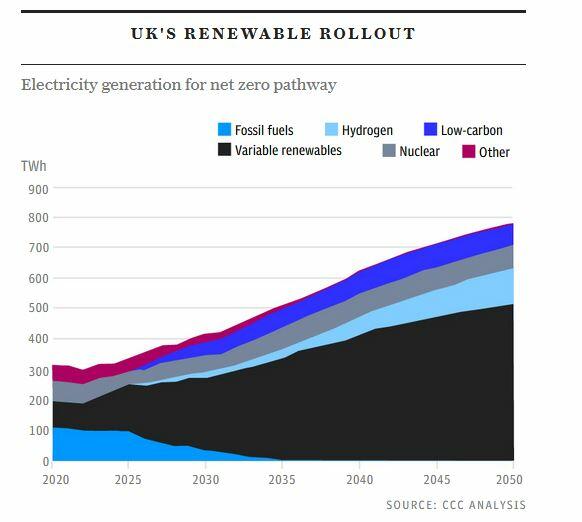
Britain’s Climate Change Committee (CCC) has urged millions of Britons to not heat their homes in the evening to help the government hit its net zero target.

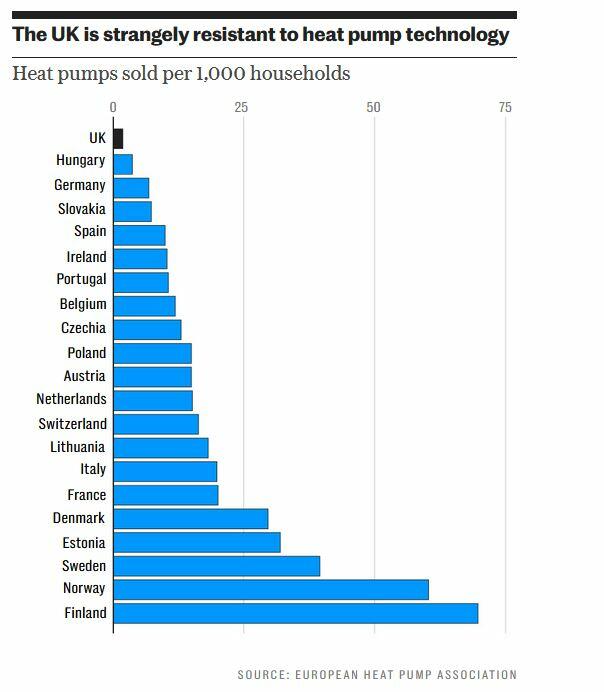
Chris Stark, the Climate Change Committee head, has previously admitted he uses a gas boiler because a heat pump is ‘a very difficult thing to put in there’

No, they aren’t urging elites to ditch their private jets for commercial, or not to burn 1,000 of fuel taking the yacht out for a jaunt. Chris Stark, head of the CCC, wants ordinary citizens to turn off their electric heaters (heat pumps) at night as part of a wider drive to deliver “emissions savings,” which includes a shift away from gas boilers – which Chris, a hypocrite, still has.

Contained in a document on “behavior change,” the CCC recommended that Britons instead “pre-heat” their houses in the afternoons when electricity use is lower, and would theoretically save families money.

There is significant potential to deliver emissions savings, just by changing the way we use our homes,” reads the CCC’s sixth “carbon budget” paper, which lays out how the UK should reduce its emissions between 2033-37.

“Where homes are sufficiently well insulated, it is possible to pre-heat ahead of peak times, enabling access to cheaper tariffs which reflect the reduced costs associated with running networks and producing power during off-peak times.”

Critics boil

“The grid is already creaking and daft ideas like this show just how much worse it will become,” Andrew Montford, the director of Net Zero Watch, told The Telegraph. “It’s clear that renewables are a disaster in the making. We now need political leaders with the courage to admit it.”

And according to Tory MP Craig Mackinlay, head of his party’s Net Zero Scrutiny group, “It is becoming clear that adherence to judicable Carbon Budgets and edicts coming from the CCC are developing into farce.”

“The Climate Change Act 2008 will require amendment to free us from madcap and impractical targets foisted upon the population by long departed politicians.

“This latest advice to freeze ourselves on cold evenings merely shows the truth that the dream of plentiful and cheap renewable energy is a sham.

“I came into politics to improve all aspects of my constituents’ lives, not make them colder and poorer,” he told The Telegraph.

Lower bills?

The CCC insists that following the advice means “homes will still be warm, but bills can be lowered,” adding “This is a demonstration of homeowners benefiting from periods of the day when electricity is cheaper.”

“Using electricity to heat a home opens the prospect of choosing a time when prices are lower, something that’s not possible with a gas boiler,” he continued, adding “Smart heating of homes like this also makes the best possible use of the grid and supports greater use of cheap renewable generation.”

The advice follows a furore over Government plans to ban the installation of new oil powered boilers from 2026 and force homes into adopting heat pumps.

Downing Street has hinted it is now set to U-turn amid warnings the move would increase rural fuel poverty and put more strain on the struggling electricity grid.

The CCC is an independent body set up by ministers in 2008 to advise the Government on how to hit its climate targets.

In its latest report, the committee criticises No 10 over its “worryingly slow” action on climate.

It states that Downing Street’s support for new oil and coal exploration and the expansion of airports meant Britain was no longer a global green leader. -The Telegraph

Last month Stark, the head of the CCC, admitted that he still has a gas boiler at home instead of an electric heat pump (gasp!). And he’s not alone.

“I have a gas boiler. I wish I didn’t, but I live in a flat and heat pumps are a very difficult thing to put in there,” he told the Commons environmental audit committee. “The gas boiler guy who comes round and fixes my gas boiler – it breaks very often – tells me they will never work.”

Do as Chris says, not as Chris does.

Tyler Durden
Wed, 08/30/2023 – 04:15

Switzerland’s Legacy Of Financial Freedom Makes It The Best Place For Bitcoin To Thrive

0
Switzerland’s Legacy Of Financial Freedom Makes It The Best Place For Bitcoin To Thrive

Authored by Julian Liniger via BitcoinMagazine.,com,

Switzerland values many of the core properties of Bitcoin and now the two are poised to create the future of financial sovereignty together…

As a Swiss citizen, it didn’t take me long to understand why Bitcoin is unique. Switzerland is a country that values lots of the critical aspects that Bitcoin offers to people. The small country in the middle of Europe encourages self sovereignty, privacy and financial literacy. The pioneering Swiss banking secrecy was codified in 1934. This regulation, along with its political neutrality and enduring stability, makes the country a “safe haven” for companies and institutions that deal with money.

However, there is one critical flaw: What’s the point of using the most trustworthy place in the world to store your money when the money itself is broken? Particularly in recent years, we have witnessed reckless behavior by governments and central banks across the globe. Tumbling from one crisis into the next one, it seems that no matter the obstacle, more liquidity has been (and continues to be) the solution from politicians. This is one of the reasons why price inflation is rising in developed nations, and is completely out of control in developing countries.

Bitcoin is a solution to this problem. Bitcoin is the ultimate pristine asset, capped at 21 million units, not centrally controlled, genuinely neutral and global. It’s a monetary good that can be best described as “digital gold.” And, on top of that, it will act as a foundational layer for a new global financial system.

I still remember my first real employment, which, ironically, was with one of the biggest national banks in Switzerland, called Raiffeisen. It was also when I first tried to understand how money and our financial system worked. I asked the bank employees and managers deep and intriguing questions, like probably no 21-year-old intern had before:

Why can the bank just create money out of thin air and lend it out to people for a profit?

What is fiat money backed by?

Why can banks just speculate with the savings of their customers and then get bailed out when they fuck up?

It always struck me how low on substance and high on bullshit the answers were and quickly, I realized that most of these bankers working for the money machine didn’t actually understand how it works. I came to the conclusion that the reason why it works in Switzerland was the high-quality standards, credibility and work ethics of the Swiss people, coupled with the country’s very stable regulatory and political system. These are clearly characteristics that set this nation apart from almost any other one in the world. And, for the same reasons, I think it is why Switzerland experiences among the lowest inflation rates and unemployment rates.

So, it has built the most fertile ground worldwide for the Bitcoin industry — and, finally, sound money — to flourish.

HOW SWITZERLAND IS BEATING THE EUROPEAN UNION

While Switzerland is in the middle of Europe, it always opted to stay sovereign. This also shows up in terms of the different approaches to regulating Bitcoin. One of the biggest differences between Swiss regulation and the European Union’s Markets in Crypto-Assets Regulation (MICA) is the implementation of the Financial Action Task Force’s (FATF) “travel rule.”

Switzerland’s travel rule, implemented by the Swiss Financial Market Supervisory Authority (FINMA), requires virtual asset service providers to verify the identity of the beneficiary of the transfer. Meanwhile, Europe’s version of the travel rule requires crypto asset service providers to apply enhanced due diligence measures when transactions involve self-custody wallets. What this means is that custodial services that operate in Europe will have to transfer huge amounts of data in order to comply with the much more demanding European travel rule.

Another one of the advantages of Switzerland is the “kassageschäft” framework. Originally used for exchanging physical coins and banknotes of national currencies, it also applies to Bitcoin. Therefore, you don’t need KYC/AML registration to exchange cash in Switzerland, and luckily it fits the digital age as well. In recent years, FINMA has lowered kassageschäft limits for bitcoin compared to physical coins and banknotes from 5,000 CHF per day to 1,000 CHF per day and now is trying to push the limits to 1,000 CHF per 30 days, a move that has been met with skepticism by Bitcoin companies in Switzerland. But, compared to other countries, the Swiss government has shown time again that it’s willing to talk and collaborate with Bitcoin companies to find the best solution for all.

WHY MANAGING RISK MATTERS MORE THAN EVER

One person’s asset is another person’s liability. This basic rule in the world of finance became very real for a lot of cryptocurrency investors in 2022. Some of the biggest (and in terms of marketing, the loudest) names in the industry collapsed last year, taking customer funds with them into the abyss.

But it was not only FTXBlockFi and other crypto platforms that showed us that your assets are only yours as long as the respective third party says so. The banking crisis in Lebanonrampant inflation combined with financial repression in Argentina and the loss of access to banking services because of political reasons around the world are very real. This all shows us one thing: counterparty risk matters, especially in the uncertain geopolitical future that we are heading into. We’ve seen that USD treasuries can be quickly frozen and sanctioned. The same goes for stocks or any other asset, including real estate, that people hold in other countries. While this has been the U.S.’s soft power of choice, investors have surely taken notice of the downsides of counterparty risks.

It matters more than ever that Switzerland is the most trusted place for money on the planet. It has always been open to innovation, technology and international finance. Furthermore, it is, both from a regulatory and political perspective, very decentralized and community driven. Switzerland consists of 26 autonomous cantons and offers its citizens true direct democracy. When taking a closer look, the similarities between Switzerland and Bitcoin are striking: Any Swiss citizens can start an initiative to change the federal constitution, and if they manage to collect at least 100,000 signatures, the whole country will vote for it, almost like a Bitcoin Improvement Proposal (BIP).

It should come as no surprise then that Switzerland plays a crucial role in the Bitcoin market today, known as a “crypto nation,” with Zug as the “Crypto Valley” and Lugano with the “Plan ₿” initiative, hosting hundreds of companies and thousands of employees working in this space.

Particularly Lugano, Switzerland’s ninth-largest city with a population of over 60,000 located in the Italian-speaking southern region, shows how Bitcoin innovation and adoption should be done: in a curious, open and grassroots way. Lugano Mayor Michele Foletti is not afraid to take the leap here, to show the world firsthand why the decentralized Swiss governance model enables projects like the advent of a bitcoin-focused city. More than 100 merchants, restaurants and bars accept bitcoin in Lugano. It’s expected that soon, taxes can be paid in bitcoin (and other cryptocurrencies), which means that it’s very easy to seamlessly delve into a new, open monetary network.

THE TRUST CRISIS IS AN OPPORTUNITY FOR BITCOIN AND SWITZERLAND

Public trust in institutions like (central) banks, politics and legacy media outlets is at its lowest point in decades. In particular, younger people are looking for new answers. According to a recent survey, 45% of millennials said they prefer bitcoin to stocks, gold or real estate. More than half (51%) of millennials said they have more faith in Bitcoin than in financial institutions.

This is bullish for Bitcoin. However, there are still obstacles. The tedious onboarding process, complicated user interfaces, lousy customer support and lack of self-custody solutions are still a reality for newbies interested in buying their first bitcoin. It’s clear what we have to do to get bitcoin in as many hands as possible: make buying and selling it easier. Get rid of all the hindrances, and allow anyone to stack sats in their own, self-hosted wallet, directly.

Bitcoin is about long-term thinking, about saving. And people are desperate for ways to save money that they can genuinely trust again, solutions that don’t get eaten away by inflation or high fees, solutions that are ready for the digital age and that can’t be frozen or censored in any way.

I believe that Bitcoin is a force for good that can accelerate financial and, therefore human, freedom. Going forward, Satoshi Nakamoto’s invention will play an integral role not only as an asset without counterparty risk but also as an alternative financial layer that can host a wide range of services.

THE FUTURE OF BITCOIN-ONLY IS BRIGHT, IN SWITZERLAND AND BEYOND

True to its history as a place that fosters financial innovation instead of killing it, Switzerland will thrive in a world that is increasingly embracing Bitcoin.

But despite the growing recognition and adoption of Bitcoin by the financial industry, it remains a bottom-up movement driven by its community of users, developers and enthusiasts. They are committed to the principles of decentralization, privacy and financial freedom and work to promote the use and adoption of bitcoin as a digital currency. The community is active in organizing meetups, forums and events where it can share its experiences and knowledge with others and work together to improve the technology.

Even in the European Union, where the will to innovate with Bitcoin seems less determined, Nakamoto’s innovation will thrive. With a coherent regulatory framework on the horizon, Bitcoin is set for a bright future in Europe — no matter how hard some politicians want to fight it. Despite an ongoing energy crisis and attacks on Bitcoin’s energy consumption, it’s clear that there will be demand for an asset like bitcoin. High price inflation, financial repression and a looming euro-based central bank digital currency will drive adoption and demand.


Tyler Durden
Wed, 08/30/2023 – 03:30