Woman Found Dead After Grizzly Bear Encounter Near Yellowstone
A woman was reported dead in Montana on Saturday after encountering a grizzly bear on a trail west of Yellowstone National Park.
In a Sunday statement, the Montana Department of Fish, Wildlife and Parks (FWP) said that the woman was found dead on a trail near West Yellowstone, located in the Custer Gallatin National Forest just west of Yellowstone National Park.
According to AP, the woman was found dead on the Buttermilk Trail “following an apparent bear encounter,” after investigators found grizzly bear tracks at the scene. The investigation is ongoing.
Officials issued an emergency closure of the popular hiking location “for human safety.”
“Bears can be found throughout Montana. In recent years, grizzly bear populations have expanded. People venturing into the outdoors should ‘Be Bear Aware,” officials said in an update on the investigation, in which it also listed precautionary steps – including carrying bear spray, hiking in groups during daylight hours, avoiding sites with carcasses, and making noises to alert bears to one’s presence.
Last week, FWP issued a notice of increased grizzly bear sightings, including in some places “where grizzlies haven’t been seen in recent years, and in some cases more than a century.”
“Vigilance is important for those who live and recreate in the outdoors,” said FWP chief of conservation, Quentin Kujala. “This is a busy time of year for bears and our field staff are responding to calls in these particular areas and across the state.”
A Texas man who posted on Facebook that he was selling his own guns was placed under warrantless surveillance by the Bureau of Alcohol, Tobacco, Firearms and Explosives (ATF). The ATF investigated the man, found no evidence, yet gave his information to the FBI to monitor him for at least six months.
According to internal documents reviewed by The Epoch Times, two ATF special agents interviewed the Hispanic man who admitted to “advertising” his personal firearms for sale on Facebook. He stated that he had a “habit” of purchasing new guns, tinkering with them, losing interest, and subsequently selling them. The man told the agents that he never made a profit.
“I kept waiting for the part where ATF identified something illegal, and it never came,” Eric Olson, a lawyer for Gun Owners of America (GOA) told The Epoch Times. GOA obtained the records through its ongoing Freedom of Information Act (FOIA) lawsuit against the ATF and FBI. This production is more heavily redacted than the previous ten, with entire pages covered in black.
“They are monitoring this guy for doing what millions of other hobbyists do—selling part of their personal collection. That’s not a crime, but apparently ATF doesn’t like people turning over their guns at a high rate,” Mr. Olson said.
Secret ATF–FBI Program
ATF spokesman Erik Longnecker confirmed to The Epoch Times that the man who used Facebook was placed under FBI daily monitoring in 2021 for “suspected violations” of federal laws against straw purchasing and dealing guns without a license.
This revelation is part of an ongoing, exclusive series about the unearthed program between the ATF and FBI using the National Instant Criminal Background Check System (NICS) to monitor individuals for mere “potential” violations of the law. NICS is a database of individuals prohibited from purchasing firearms due to felony convictions, drug use, domestic violence, and other disqualifications.
Every suspect that the ATF submits to the FBI’s “NICS Monitoring Services” is put on a daily, manual check for firearm sales for 30 to 180 days, with the option to renew surveillance unlimited times. A spokeswoman for the FBI said the NICS section declined to comment on whether the man is still being monitored.
Facebook and Guns
The redacted records given to GOA do not specify how ATF initially became interested in the suspect, leaving uncertainty about whether the Facebook posts triggered the investigation. When asked if Facebook tips off the agency about gun posts, the ATF spokesman declined to comment.
The Facebook policy allows licensed gun stores and online dealers to sell firearms and ammunition on their platform, provided they comply with all applicable laws and regulations. However, the Meta-owned company prohibits the sale or trade of firearms and ammunition between private individuals. “It doesn’t make it a crime simply because Facebook doesn’t allow it,” Mr. Olson observed.
Facebook did not respond to inquiries about whether it provides posts related to gun sales to federal law enforcement and how it enforces its firearms policies.
“King Of Exports”: Sig Sauer Dominates US Pistols Shipped Globally
As the federal government expands overseas sales of firearms, Sig Sauer, a gun maker in New Hampshire, has emerged as the leading exporter of pistols.
“The economic and political forces driving those sales were set in motion after the US assault-weapons ban expired in 2004. But they’ve reached new heights since gunmakers in 2020 won a decade-long battle to streamline export approvals,” Bloomberg said.
After the ban was lifted, exports of semiautomatics skyrocketed to 3.7 million units — more than doubling in the past six years.
The global push has led to more pistols exported than rifles.
Thailand, Canada, the Philippines, Saudi Arabia, and Belgium are the largest customers of US semiautomatic firearms.
In 2010, Sig CEO Ron Cohen said, “We have clearly defined our path to growth as being in emerging markets and developing countries.” Since then, Sig has become the largest US exporter of guns, exporting more than 935,000 firearms in the past decade.
In 2017, 2018, and 2020, Sig’s exports topped the entire industry’s totals.
Sig accounted for 18% of all pistol exports between 2017-2021.
Bloomberg’s note on Sig’s rise has an obvious anti-gun slant. The reason, well, there’s a disclaimer at the bottom of the article: “Everytown for Gun Safety, which advocates gun-safety measures, is backed by Michael Bloomberg, founder and majority owner of Bloomberg News parent Bloomberg LP.”
The Chinese Foreign Ministry said Monday that Beijing would take countermeasures in response to the CIA saying it’s making progress on rebuilding spy networks inside China after losing assets in the country over a decade ago.
CIA Director William Burns made the comments last week at the Aspen Security Forum. “We’ve made progress, and we’re working very hard over recent years to ensure that we have strong human intelligence capability to complement what we can acquire through other methods,” he said, according to The South China Morning Post.
Responding to Burns’ comments, Chinese Foreign Ministry spokeswoman Mao Ning said, “This is rather concerning. The US on the one hand keeps spreading disinformation on so-called ‘Chinese spying and cyber attacks,’ and on the other hand tells the public about its large-scale intelligence activities targeting China.”
She added that China will “take all measures necessary to safeguard national security.”
According to a 2017 report from The New York Times, China broke up an American spy ring by killing or imprisoning more than a dozen CIA sources between 2010 and 2012.
In 2018, a Foreign Policy report said the number of CIA assets caught in China was around 30 and said the spy ring was discovered due to a botched communication system.
Burns has previously said that the United States knew “as a matter of intelligence” that Xi had ordered his military to be ready to conduct an invasion of self-governed Taiwan by 2027.
According to Burns, the Ukrainian case exemplifies how a smaller military has had “incredible success in fighting back” and also made evident some flaws in Russian weapons systems.
China will prevent the CIA from conducting intelligence operations in the country after CIA Director William Burns said last week the agency has made progress in rebuilding lost agent networks, a Foreign Ministry spokeswoman said on Monday.https://t.co/bKtWd52gmv
Members of Bolivia’s far-right opposition and the Argentinian government are demanding that La Paz disclose the details of a memorandum of understanding (MoU) on defense and security affairs signed between Defense Ministers Edmundo Novillo y Mohamad Reza Ashtiani in Tehran last week.
“They say that [Iran] will give us drones. Others say they will give us missiles. All of this sounds strange, even more so considering it involves Iran … I can’t understand why Bolivia is getting involved in such a complex and difficult relationship,” said lawmaker Gustavo Aliaga, who belongs to the Comunidad Ciudadana (CC) party.
In 2019, CC leader Carlos Mesa supported the US-orchestrated coup that forced socialist leader Evo Morales to flee Bolivia, leaving it under the control of a far-right government that allegedly conducted multiple massacres of Morales supporters and sought to surrender the country’s massive lithium deposits to western transnationals.
The Argentinian foreign ministry also demanded explanations from La Paz on Monday under pressure from the Delegation of Argentinian Israeli Associations (DAIA), who said the MoU “risks for the security of Argentina and the region” due to Tehran’s ties with Lebanese resistance group Hezbollah.
In a press release, DAIA called on the Argentinian government “to condemn this agreement and demand Bolivia reconsider its decision.”
Buenos Aires blames Hezbollah and Iran for the 1994 bombing of the AMIA Jewish community center that left 85 dead. Both Tehran and Hezbollah deny the accusation.
The statements by the CC and DAIA came on the heels of a report by the neoconservative Institute for the Study of War (ISW), which claims that the deal between Tehran and La Paz includes the delivery of Iranian drones for the South American nation.
Last week, Iran agreed to help Bolivia combat drug trafficking along its borders and boost cooperation with the Bolivian army. “[Due to] Bolivia’s critical needs in terms of border defense and the fight against drug trafficking, we will establish collaboration in equipment and specialized knowledge,” Ashtiani said following his meeting with the Bolivian defense minister last week.
For his part, Novillo said Iran is a “role model” for nations that seek freedom, highlighting the Islamic Republic’s “remarkable progress in science and technology, security, and the defense industry despite sanctions.”
Bolivia is the latest Latin American nation to ink a security agreement with the Persian nation, following in the footsteps of Nicaragua and Venezuela. Over the past year, the Islamic Republic has also made significant inroads with Brazil.
Iran and Bolivia also among nations with the world’s largest lithium deposits, with the Islamic Republic earlier this year announcing the discovery of a massive deposit holding a reported 8.5 million tons of the rare element. On the other hand, Bolivia has the richest known lithium deposits in the world, with an estimated 21 million tons.
Democrats Run The Most Crime Ridden Cities In The US – But Is The Situation Even Worse Than We’re Told?
In the past year we have been seeing a lot of news stories stating something like this: “More Americans believe crime is up in their city, but public perception doesn’t always match reality.”
However, is the problem really public perception? Or is it the manner in which crime data is being collected in the past few years? The FBI’s data collection is generally considered the most complete and accurate look at crime in the US and is referenced consistently by the media and by political leaders, but what if that information is now unreliable?
In January 2021, the FBI officially switched data collection methods from the Uniform Crime Reporting database to the National Incident-Based Reporting System (NIBRS). This was done right before Joe Biden entered the White House. The NIBRS system requires agencies to submit more detailed data, which has caused the transition to the new system to be slow. In 2021, only 63% of law enforcement agencies submitted NIBRS data to the FBI.
There is still no complete data released for 2020-2022, making it difficult to gauge the true increase or decrease in overall crime in the past few years. For example, some large police departments began to report data to the FBI again in 2022, like the Miami-Dade Police Department. But the two largest police agencies in the U.S., the New York Police Department and the Los Angeles Police Department, are still missing in the federal data.
The FBI plans to finally release a full crime report with all data included before the elections in 2024, though, it would not be surprising if this information was withheld until after elections conclude.
I
It should be noted that the switch in data methods by agencies including the FBI has mostly benefited Democrats. It was perfectly timed with the covid pandemic crisis, the BLM riots as well as the inflationary crisis, three events which would predictably lead to higher homicides and theft; but with limited data to prove it Democrats could make whatever claims they wanted.
If the establishment planned to hide or suppress a spike in crime, that was the right time to engineer a bureaucratic reset in information collection. When the FBI released its 2021 national crime data last fall, it couldn’t say if crime went up, went down, or stayed the same. The FBI concluded that all three scenarios could be possible because of the gaps in the data collection.
The holes in the data have been exploited regularly, primarily by Democrats and the media, because the lack of information makes it appear as though violent crime is on the decline, but this is based on estimates instead of a full overview. It is also often predicated on “successful” homicides alone, rather than attempted homicides, aggravated assaults and other crimes that include violent acts.
If we apply the complete data from before 2020, and add the limited data available after 2020, Democrat run cities continue to dominate the list of most crime ridden cities in America. Of the top 20 most violent places in the US (including homicides, nonnegligent manslaughter, aggravated assault, rape and robbery), 17 are controlled by democrats. They include:
Chicago, Minneapolis, New Orleans, Lansing, Nashville, Anchorage, San Bernardino, Oakland, Indianapolis, Springfield (MO), Albuquerque, Stockton, Rockford, Cleveland, Milwaukee, Little Rock, Memphis, Baltimore, Detroit, St. Louis.
One (Stockton, CA) was run by Democrats previously and now has a Republican mayor who entered office in 2021 in the middle of the crime stat drought. One (Springfield, MO) has an independent mayor, and the last is the mayor of Anchorage who is Republican.
Of the top ten cities with the most property crime, ALL of them except Stockton are run by Democrats.
But what about leftist cities that are prominent in the news and social media with rampant crime? What about places like New York, LA and San Francisco? As mentioned earlier, many of these cities are not reporting full crime data to the FBI, using the new NIBRS system as an excuse. For example, the city of San Francisco does not plan to provide full and accurate crime reports to the FBI until 2025. That’s right, they will withhold full crime stats until after the 2024 elections.
So, when you see Democrats like Joe Biden and Gavin Newsom bragging about lower crime or arguing about “exaggerated perceptions of crime,” just remember that when the stats are incomplete, they can make those stats say whatever they want them to say. Ultimately, Americans can see the rising problem with their own eyes and the condescending nature of the political left’s denials is only making matters worse by encouraging criminals to act with the assumption that they will go unnoticed.
The election of state supreme court justices doesn’t always garner national attention. But Judge Janet Protasiewicz’s win in Wisconsin earlier this year hit the spotlight with a campaign that shattered previous national fundraising records, and flipped the Wisconsin Supreme Court to the left for the first time in 15 years.
Judge Protasiewicz’s win against former state Supreme Court Justice Dan Kelly on April 4 also set the stage for more significant Democratic victories in Wisconsin and beyond.
Republicans hold six out of eight Wisconsin U.S. House seats, but a liberal court majority will likely consider a lawsuit to overturn Wisconsin’s Republican-drawn legislative maps. Nicole Safar, the executive director of Madison-based law firm Law Forward said her firm plans to file a lawsuit once Justice-elect Protasiewicz is sworn in on Aug. 1.
Additionally, Wisconsin is expected to again be a pivotal swing state in the 2024 presidential election.
In 2016, Donald Trump beat Hillary Clinton by 0.7 percent in Wisconsin, or 22,748 votes. But in 2020, Joe Biden narrowly beat Mr. Trump by 0.62 percent, or 20,682 votes.
If election lawsuits are filed in Wisconsin after the 2024 election—like they were after the 2020 election—Ms. Protasiewicz will be one of seven justices to decide the case.
“By electing Judge Janet Protasiewicz, Wisconsin voters have sent a clear message about the kind of state they want to live in,” the America Votes Wisconsin director and senior leadership team said in a press release.
“For the first time in 15 years, progressives will lead this highly influential court. The Badger State resoundingly voted for a court majority that will protect the fundamental freedoms of abortion and voting rights, the rights of workers, [and] the LGBTQ+ community.”
America Votes was crucial to Ms. Protasiewicz’s win. Its Wisconsin coalition said it knocked on more than 535,000 doors, made 678,000 phone calls, and, with its partner organizations, delivered nearly 2 million pieces of mail and sent over 4 million text messages.
The organization credits its efforts for helping to “deliver historic turnout and a critical progressive win in Wisconsin’s Supreme Court election.”
The win in Wisconsin is just the latest victory for America Votes, and a stepping stone for what it hopes to achieve in the future across several key states.
And thanks to the backing of mega-donors like George Soros’ Open Society and the liberal “dark-money” behemoth Sixteen Thirty Fund, its political sway is substantial.
America Votes
Initially designed to get Democrats elected by reducing duplication and wasted resources, America Votes is a 501(c)(4) organization founded in 2003 by Democratic activists and liberal political operatives, including Ellen Malcolm, the founder of pro-abortion Emily’s Group, former Clinton administration official Harold Ickes, Sierra Club Executive Director Carl Pope, Partnership for America’s Families President Steve Rosenthal, and Andy Stern, the president of Service Employees International Union.
The organization was initially led by Cecile Richards, who went on to become president of Planned Parenthood Federation of America.
Since launching, America Votes has become the “coordination hub of the progressive community,” according to its website. It currently has more than 400 state and national partner organizations that it works with to “advance progressive policies, win elections, and protect every American’s right to vote.”
Its partners include the American Federation of Teachers, the Black Voters Matter Fund, the Democratic Governors Association, the Environmental Defense Action Fund, the League of Conservative Voters, the LGBTQ Victory Fund, NAACP, NARAL Pro-Choice America, the National Democratic Redistricting Committee, the National Education Association, Planned Parenthood Action Fund, the Sierra Club, and numerous others.
America Votes’ 501(c)(4) status means it’s a social welfare organization, which permits it to engage in “some” partisan activity, but that can’t be its “primary” purpose.
In keeping with that requirement, America Votes claims on its site that it carries out “non-partisan, education-focused programs to engage voters.” It also admits it focused on helping Democrats in 2022 to counteract the increase in GOP voters.
“GOP primary turnout sharply increased over 2018 in states like Arizona (+60 percent), Georgia (+98 percent), Michigan (+9 percent), Nevada (+42 percent), Pennsylvania (+84 percent), and Wisconsin (+52 percent),” America Votes President Greg Speed wrote on Medium.
“To meet the looming MAGA Surge, America Votes and our state partners are building on our successful Get Out and Spread Out the Vote strategy that worked in 2020. That election was a turning point for elections in America,” he said.
During the pandemic many states rapidly expanded mail-in-voting and early voting, which Speed said “opened up access to the ballot” and “put Joe Biden in the White House and gave Democrats control of Congress.”
During the 2022 midterms, America Votes zeroed in on Arizona, Georgia, Michigan, Nevada, Pennsylvania, and Wisconsin, stating that they knocked on over 17.1 million doors in those states.
“Our coalition is executing in the largest, most-coordinated midterm voter mobilization effort we’ve ever seen,” Mr. Speed said in a press release. “Midterm elections especially are determined by turnout, and in 2022 America Votes is positioned to mobilize the largest, most diverse midterm electorate ever.”
Four days before the 2022 election, Emerson Morrow, the communications manager for America Votes, said the efforts employed by America Votes resulted in “over 32 million Americans casting their ballots already, including high numbers of first-time voters, young voters, and voters of color in many key states.”
The result, according to America Votes, was that progressives outperformed expectations in “nearly every battleground state.”
Money and Power
In addition to being the “coordination hub” for the progressive community, America Votes labels itself the leader of the largest coalition of progressive organizations. It says its coalition “represents the permanent campaign infrastructure built to withstand more than any single election”—meaning they work year-round to advance progressive policies, especially at the state level.
For example, America Votes details how during the “2018-2019 legislative session” it had teams of advocates working to influence legislators and election reform policy in Colorado, Florida, New Hampshire, and New Mexico.
These Are The World’s Top Cobalt-Producing Countries
Cobalt, an essential component of key chemistries of the rechargeable lithium-ion batteries used in EVs, has seen a significant shift in its global production landscape.
The Democratic Republic of Congo (DRC) has long been the world’s largest cobalt producer, accounting for 73% of global output in 2022.
Indonesia Became Second Largest Cobalt Producer in 2022
Indonesia accounts for nearly 5% of global cobalt production today, surpassing established producers like Australia and the Philippines.
In 2022, Indonesia’s cobalt production surged to almost 9,500 tonnes from 2,700 tonnes in 2021, with the potential to increase production by tenfold by 2030.
Percentages may not add to 100 due to rounding.
In total, global cobalt production reached 197,791 tonnes, with the DRC contributing just under 145,000 tonnes of that mix.
The EV industry is the largest consumer of cobalt, accounting for approximately 40% of total demand. The exponential growth of the EV sector is expected to drive a doubling of global cobalt demand by 2030.
While the shift in cobalt production is notable, it is not without challenges. Plummeting cobalt prices, which fell almost 30% this year to $13.90 a pound, have severely impacted the DRC.
Furthermore, the longer-term prospects of cobalt could face hurdles due to efforts to reduce its use in batteries, partly driven by human rights concerns associated with artisanal cobalt mining in the DRC and related child labor and human rights abuses.
In a 2021 ruling by a federal court in Washington, Google parent Alphabet, Apple, Dell, Microsoft, and Tesla were relieved from a class action suit claiming their responsibility for alleged child labor in Congolese cobalt mines.
The Future of Cobalt
Despite ongoing efforts to substitute cobalt in battery applications, cobalt is expected to remain a vital raw material for the entire battery supply chain in the near future.
The demand for cobalt is forecasted to more than double by 2030 to 388,000 tonnes.
The U.S. power grid is already straining under excess regulations, with blackouts possible, but now the U.S. Environmental Protection Agency (EPA) has proposed two more rules that promise to cause even more major problems.
One is a tailpipe emissions standard that would require 60% of new cars sold in 2030 to be electric. The other is a rule that would force hundreds of power plants to shut down.
The unintended consequences of these rules are obscured by the flawed assumptions the EPA uses in assessing the effects they’ll have on grid reliability and cost. People simply cannot make informed decisions about EPA regulations—like choosing whether to support or oppose them—when the assessments don’t reflect reality.
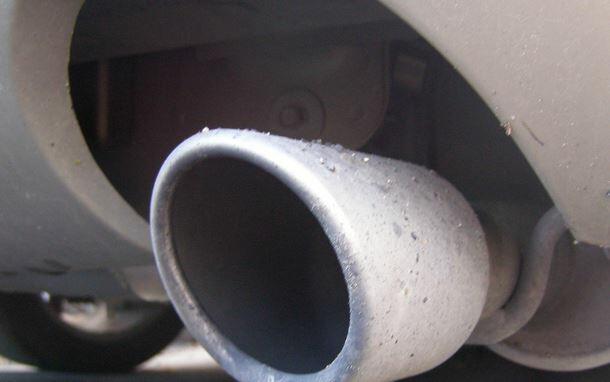
The new tailpipe emissions standard is so strict that it requires most new passenger vehicles sold to be electric vehicles (EVs) by 2030. It is a de facto EV mandate that will saddle the nation’s power grid with much more demand (here are the public comments I provided the EPA on this proposed rule).
The emissions standard for power plants has been called the Clean Power Plan 2.0 because it is EPA’s second attempt to redesign the power sector (the first try was rejected by the Supreme Court). The Clean Power Plan 2.0 is so strict that the only realistic way for many plants to comply is to shut down. It is another de facto mandate—particularly mandating the closure of existing coal-fired power plants—that will cause a sharp decrease in the supply available to the U.S. power grid (comments on this rule are due to EPA on Aug. 8 and can be submitted here).
The legal problems surrounding these rules are many, but let’s assume for a moment that the Supreme Court upholds them. Are they good policy? What will happen if they go into effect?
The EPA says neither rule will cause reliability problems or increase prices. One tactic the agency uses to reach these conclusions is to ignore its other rules (for example, to ignore the power plant rule when analyzing the effects of the tailpipe rule). According to the EPA, the increase in electricity demand from the EV mandate doesn’t conflict with the severe reduction in supply from the power plant rule; they simply assume the companion rules don’t exist.
The agency then dodges questions about electric reliability by assuming EV charging will only occur when it’s convenient for the power grid. As we see in California, that is simply untrue—people will charge their EV whenever they want, and many will ignore calls for voluntary conservation during the highest-stress hours on the grid. Such conservation calls are named “flex alerts” in California and have become commonplace during the summer months.
Texas also faces tight grid conditions. The Electric Reliability Council of Texas recently set up a California-style alert program—called the Texas Advisory and Notification System—to discourage electricity use when the power grid is stressed, which seems to happen more and more. Notably, California and Texas are both big on EVs. Among the three leading EV states, the one that doesn’t regularly call for conservation is Florida. But that may have more to do with Florida’s reluctance to force renewables onto its system and close existing power plants, unlike California and Texas.
The importance of reliable supply brings us to EPA’s power plant rule. The Clean Power Plan 2.0 makes it legally impossible to continue operating coal-fired power plants, which contribute about 20% of electricity generation, and represent about 25% of the reliable capacity on the U.S. electric grid. The rule superficially offers three solutions—coal plant owners can use “green” hydrogen (hydrogen electrolyzed by renewables), capture nearly all carbon dioxide emissions, or shut down—but only the last option is truly viable.
Given previous regulatory gamesmanship at the EPA, many see the Clean Power Plan 2.0 as a cynical play to scare owners of coal plants to close, whether or not the rule survives court challenge. The unanimous opinion of the four members of the nation’s independent agency in charge of grid reliability (the Federal Energy Regulatory Commission) is that coal-fired power plants are essential for grid reliability.
The rule also applies to existing natural gas plants, despite their lower carbon footprint compared to coal plants, and despite resistance from the EPA that the White House plan over-reached into the existing natural gas sector. Perhaps the agency knows better than the White House that—despite billions in subsidies for renewables—natural gas-fired generation is still growing in Texas and is holding strong in green-tinted California, above 40% of the electricity mix and even hitting 60% of all generation during last summer’s heat wave.
That is because intermittent renewables like wind and solar need a more reliable source like gas to satisfy demand when they cannot, which is most of the time.
Regarding cost, the EPA’s denial of reality hits new heights. The agency estimates that the EV mandate could in fact reduce electricity prices in some areas. This is implausible because EVs represent a large new demand on the power grid, and we know they cause utilities to invest heavily in local distribution systems, especially when multiple homes plug EVs into the same radial power line.
A Princeton study analyzing a “net zero by 2050” scenario found that, of the staggering $2.5 trillion in spending needed in the 2020s in a high electrification case, over $1.4 trillion would be needed to support the expansion of electricity generation, transmission, and distribution networks and on EVs and charging stations. California alone may spend $50 billion by 2035 to accommodate new electrification of products such as EVs.
The EPA denies that these costs exist. Once again, agency officials selectively assume that transmission and distribution costs won’t change from the no-policy baseline, a ridiculous assumption that should get the rule thrown out.
When it comes to EPA regulations, buyer beware. The price tags in its regulatory impact analyses are unconnected to reality, and even the most predictable grid reliability problems have been swept under the rug.
This is no way to sell a transition to the American people. The EPA should go back to the drawing board and return with a set of honest assessments.
Travis Fisher is a Senior Research Fellow in Energy and Environment at The Heritage Foundation.
Bankman-Fried Agrees To Gag Order After “Star Witness” Ellison’s Diary Was Leaked To Press Last Week
It looks as though it may be time to re-up some of those Democratic donations for Sam Bankman-Fried, because there’s at least one judge out there that isn’t amused with his antics.
The former FTX founder has now agreed to a gag order that will “largely” prevent him from discussing his case publicly, Bloomberg wrote this week. Prosecutors in the case had accused Bankman-Fried of trying to discredit Caroline Ellison, who formerly lived with and worked with Bankman-Fried in the Bahamas.
US District Judge Lewis A. Kaplan said this week he was going to deal with the “adequacy and continuation” of SBF’s bail conditions. As Bloomberg wrote, this means SBF’s “current house arrest could be in jeopardy while he awaits trial on criminal fraud charges”.
Bankman-Fried will appear in court on Wednesday for a hearing.
Judge Kaplan has already concerned himself with Bankman-Fried’s bail restrictions, in the past warning that SBF needed to “rein in his use of encrypted messaging apps and VPN programs,” the report says.
The order was filed on Monday and and bans SBF and “other parties” from discussing anything with the press that “could interfere with a fair trial”. Specifically, Bloomberg writes that this could include “credibility of witnesses, information that isn’t admissible at trial and anything that could influence public opinion about the case”.
The “star witness” in the case has already pleaded guilty to fraud in a deal with prosecutors, the report says. Not only did she run Alameda Research, an offshoot of FTX, she also dated Bankman-Fried at one point.
The scrutiny this week came after a story broke last week in The New York Times about Ellison’s diary, detailing her “ambivalence” about her role at Alameda and her relationship with Bankman-Fried.
Prosecutors charged that SBF had leaked the material to “cast Ellison in a poor light, and advance his defense through the press.”
In a note filed Sunday, Bankman-Fried’s lawyers said that he had shared documents “in an effort to give his side of the story about topics that have already been reported in the media.” They argued that FTX’s new CEO “attacked” Bankman-Fried publicly while they “stood silent” and did nothing.