67.3 F
Chicago
Saturday, August 22, 2026
Home Blog Page 3547

Economic Coercion: China’s Leverage In Trade

Economic Coercion: China’s Leverage In Trade

China’s rise as a global economic superpower has brought with it an ability for the nation to utilize its economic dominance for geopolitical purposes.

As Visual Capitalist’s Marcus Lu shows in this infographic, sponsored by The Hinrich Foundation, China’s dominant position in the solar photovoltaic (PV) supply chain has used as leverage against countries that are dependent on it for clean energy. 

Dominance in the Solar Supply Chain

Solar energy is playing a significant role in the green energy transition, and as this infographic shows, China’s dominance in the sector is clear.

The solar PV supply chain starts with polysilicon, a key raw material needed to create wafers. China is home to seven of the top 10 producers of polysilicon, which includes companies like Tongwei Solar and Asia Silicon. 

Where China is most dominant though, is in the manufacturing of wafers and cells. This is partly because it’s more economical to make these components close to wherever polysilicon is being produced. 

The second-largest producer of cells and panels is the APAC region (ex-China), at 12% and 15% of total capacity. However, according to U.S. officials, much of this output is actually owned by Chinese firms attempting to evade U.S. tariffs. 

While these companies would normally be subject to higher tariffs, the Biden administration has paused any tariff increases for the next two years. This can be interpreted as a sign of the country’s dependence on China for clean energy infrastructure, which could prove problematic given China’s history of economic coercion.

Leveraging Trade for Geopolitical Purposes

The second part of this infographic highlights past instances where China has used its commercial dominance for geopolitical purposes. 

For example, in October 2010, the Norwegian Nobel Committee awarded the Nobel Peace Prize to Liu Xiaobo, a jailed Chinese dissident. China began stalling Norwegian salmon imports in response, and Norway’s market share of salmon exports to China fell from 92% in 2010, to 29% in 2013, according to the Financial Times.

China took similar actions towards Australia in April 2020 after the island nation called for a detailed probe into the origins of COVID-19. Import bans on Australian goods like beef, timber, and coal were announced in retaliation. These restrictions were eventually lifted in May 2023.

Given the massive size of China’s economy, import bans such as these can heavily impact a trading partner’s industries.

More recently, China announced in December 2022 that it would be looking into new export controls over solar panel technologies. Given China’s already tight grip over the solar PV industry, this move could expand the nation’s playbook when it comes to economic coercion.

Tyler Durden
Sun, 07/02/2023 – 23:00

“The Great Reset Is What Globalists Want… But The Great Reject Is What They’ll Get”

“The Great Reset Is What Globalists Want… But The Great Reject Is What They’ll Get”

By Greg Hunter’s USAWatchdog.com,

Economic analyst and financial writer David Morgan went against the majority of financial gurus and predicted at the end of 2022 that there was no way the Fed was going to cut interest rates. 

He said on USAWatchdiog.com in December, “Cut Interest Rates & Dollar is Done, Toast, It’s Over.”  Fed Head Jay Powell said this past week the Fed was raising interest rates at least two more times to “fight inflation.”  This was a direct hit by Morgan.  Morgan sees a coming currency crisis and a war crisis.  Morgan explains,Yes, we have both a currency crisis and a war crisis.  “

“Let’s start with the currency crisis.  My favorite phrase for what is going on is ‘All fiat currency fails.’  We have never seen a time in all of recorded history that an unbacked currency does not go basically and effectively to zero.  When you say that ‘All fiat fails,’ there is a subgroup that says, yeah, but not the U.S. dollar. . . .I don’t know how many people have given me pushback on that statement from all over the world. . . . When I say fail, I don’t mean it goes to absolute zero.  What it means is a currency fails and a new system is implemented. . . . History is on my side

The precursor to this is what takes place.  Substitution.  What is substitution?  Crypto currency and gold and silver, of course. . . . and things like people going off grid. 

All of these are indicators of how to mitigate the end of the U.S. dollar or the end of the currency crisis.  We have this all over the place. . . . Sooner or later, there will be a run for the exits.  Where are the exits?  Crypto currencies, gold and silver, barter clubs or the BRICS currency.

Morgan contends you just cannot run into an alternative to the U.S. dollar because there are going to be supply disruptions for everything.  You might not be able to get what you need no matter how much money you have.  So, be prepared in every way you can.

Morgan also says,

The Great Reset is what the bankers want, but the Great Reject…will come from many who will not want to go down that way. 

That’s what is going to be the most interesting because anyone who is awake, and there are more people waking up all the time, they will understand that you cannot go from one fiat phony currency, lie-based system into another one that is digital only.”

On the war crisis, the dark powers running the world want war.  Why?  Morgan says,

“It covers up all the things that are wrong, and it also takes them off the hook.  It was the war.  The war did it.  All wars are bankers’ wars, and they are on both sides.  They make money regardless

The main things are profit, but it also is mitigating their responsibilities.  They can get most people to think that it was the war that caused all this poverty, and, of course, the war will do that…

They don’t have a real conflict with Ukraine and Russia.  They just need a way out, and it is the most profitable way out.  They are going to default on all this debt, and this is how they are going to do it.

There is much more in the 40-minute interview.

Join Greg Hunter of USAWatchdog.com as he goes One on One with David Morgan, founder of “The Morgan Report,” for 7.1.23.

To Donate to USAWatchdog.com Click Here

There is lots of free information that will be sent to you if you subscribe to TheMorganReport.com by email.  This is totally free, and you will get new analysis and content every week in your mailbox. 

Ty
Sun, 07/02/2023 – 22:30

Visualizing ‘Real’ US Home Price Growth Over The Last 50 Years

Visualizing ‘Real’ US Home Price Growth Over The Last 50 Years

U.S. home prices grew significantly in 2022, even as interest rates climbed higher.

Yet, as Visual Capitalist’s Dorotrhy Neufeld details below, in inflation-adjusted terms, this growth rate was far lower. By Q4 2022, it fell to being flat year-on-year, making it the slowest real growth seen in a decade.

The graphic below compares nominal and real residential property price growth over 50 years based on the latest data from the Bank for International Settlements (BIS).

Nominal vs. Real Home Price Growth

In 2022, opposing forces of rising mortgage rates and a narrow supply of housing produced a moderate nominal growth rate of just over 7% as of Q4 2022. That said, real price growth dropped to 0% over the period.

Here’s how that looks in context of the recent highs and lows of housing price growth:

Recent Highs: During the pandemic, growth hit almost a 20% year-over-year rate by Q1 2022, which was record home price growth at the time. It was driven by ultra-low interest rates and remote work leading people to seek out more space.

Recent Lows: In both real and nominal terms, home price growth sank to their lowest levels in 2008. The property market crashed after a wave of easing lending requirements. This flooded the market with an oversupply of houses as subprime homeowners couldn’t afford to make payments, leading prices to plummet.

Factors Influencing Home Price Growth

Today, a mix of factors are supporting nominal house prices.

First, the housing supply remains low.

Total existing inventory stood at 1 million in April, under half the four-decade average. As interest rates have increased, homeowners have been hesitant to sell and the number of mortgage applications has fallen. In turn, this is pushing prices higher.

In fact, the majority of primary mortgages have interest rates locked in under 4%. As of July 1, the average 30-year fixed mortgage rate stood much higher, at 7.02%.

Along with this, new home sales are falling.

After hitting a 15-year peak in 2021, sales sank almost 27% year-over-year in April. New home sales are often considered a leading indicator for the residential market.

Wider Implications

The U.S. residential market is valued at about $45 trillion, and has historically been highly sensitive to interest rates.

While the rapid increase in interest rates haven’t yet had a major impact on housing prices, some cracks are beginning to show.

On the other hand, if prices remain stubborn, it may contribute to inflationary pressures, leading the Federal Reserve to continue with rate increases, given the market’s sheer size and influence on the overall U.S. economy.

Tyler Durden
Sun, 07/02/2023 – 22:00

Hunter Biden’s Former Business Partner Was Willing To Testify Before Grand Jury; Delaware US Attorney Didn’t Answer His Calls

Hunter Biden’s Former Business Partner Was Willing To Testify Before Grand Jury; Delaware US Attorney Didn’t Answer His Calls

Authored by Debra Heine via American Greatness,

Tony Bobulinski, a former business partner who worked directly with Hunter and James Biden on a sketchy deal with a Chinese energy firm and who came forward as a whistleblower before the 2020 election, was never asked to testify to the Delaware grand jury investigating Hunter Biden, CBS News reported Thursday.

Bobulinski was reportedly “open to testifying, and his attorney reached out to the office of Delaware U.S. Attorney David Weiss,” but the prosecutor did not return their calls, two sources familiar with the discussions told CBS News’ Catherine Herridge.

Weiss’ decision to ignore Bobulinski is the latest indication that prosecutors purposefully tanked the investigation to protect Hunter’s father, Joe Biden.

Last week, whistleblower documents were released revealing that federal prosecutors repeatedly interfered on Hunter Biden’s behalf during the probe into the younger Biden’s business dealings. According to former IRS supervisory agent Gary Shapley and an unnamed IRS agent, federal prosecutors blocked two search warrants and refused to press more extensive criminal charges.  The whistleblower also testified that when agents sought a search warrant for Hunter Biden’s storage locker, prosecutors tipped off Biden’s legal team so they could remove any incriminating evidence.

Shapley also said he was stopped from pursuing investigative leads into “dad” or the “big guy.”

Shapley, who is still a supervisory special agent with the IRS, says he was prevented from pursuing any leads that involved President Joe Biden, including the now-infamous 2017 email from James Gilliar, a business associate of Hunter Biden’s, which bore the subject line “Expectations” and outlined a “provisional agreement” for “equity” in a deal with a Chinese energy company.

Two of Hunter Biden’s former business partners who received the message told CBS News that a line in the email — “10 held by H for the big guy?” — was shorthand for 10% held by Hunter Biden for his father.

Shapley told CBS News that his efforts to look further into money trails that involved “dad” or “the big guy” were blocked by a senior prosecutor working for Weiss.

“I would say that they limited certain investigative leads that could have potentially provided information on the president of the United States,” Shapley told CBS News.

Shapley also alleges that in August 2020, an iCloud search warrant recovered the threatening  July 2017 WhatsApp “shake-down” message from Hunter Biden to Chinese businessman Henry Zhao about an outstanding payment.

“I am sitting here with my father and we would like to understand why the commitment made has not been fulfilled. Tell the director that I would like to resolve this now before it gets out of hand, and now means tonight,” Hunter Biden allegedly wrote. “And, Z, if I get a call or text from anyone involved in this other than you, Zhang, or the chairman, I will make certain that between the man sitting next to me and every person he knows and my ability to forever hold a grudge that you will regret not following my direction. I am sitting here waiting for the call with my father.”

According to Shapley, prosecutors “denied” the IRS investigators’ efforts to learn more about the message.

On Sept 4, 2020, according to the IRS whistleblowers, the DOJ ordered a “cease and desist” on any overt investigation of Hunter Biden or Biden family influence peddling. They also claim that the FBI hid the 1023 form alleging foreign bribery from the IRS case attorneys overseeing the case.

The FBI verified that Hunter Biden’s laptop was real in 2019, yet worked with social media platforms to censor reporting on it before the 2020 election.

And now it has come to light that prosecutors didn’t even bother to have a the key witness testify before the grand jury.

Bobulinski came forward in October of 2020, revealing during a conference press in Nashville, Tennessee two hours before the presidential debate that he had personally met with Joe Biden in May 2017, as part of discussions over the potential business deal with Chinese energy firm, CEFC.

“In my approximately hour long meeting with Joe that night, we discussed Biden’s history, the Biden’s family business dealing plans with the Chinese, with which he was plainly familiar, at least at a high level,” Bobulinski said. Joe Biden has repeatedly claimed that he had nothing to do with Hunter Biden’s overseas business dealings.

“I’ve heard Joe Biden say that he’s never discussed business with Hunter, that is FALSE,” Bobulinski alleged. “I have first-hand knowledge about this because I directly dealt with the Biden family, including Joe Biden,” he added.

The FBI had Bobulinski sit for an interview the next day, and made him turn over copies of his cell phones.

In a statement, James Comer, chairman of the House Committee on Oversight and Accountability, said prosecutors “prevented investigators from taking any steps to verify this evidence that could lead to President Biden.”

“The fact that a key witness associated with the CEFC deal was not brought in to testify before the grand jury proves again that the Justice Department is engaged in a coverup,” said Comer, who vowed to “pursue a thorough investigation into the Department of Justice’s misconduct.”

Attorney General Merrick Garland insisted on June 23 that Weiss had “complete authority to make all decisions on his own.”

s the U.S. attorney in Delaware and assigned this matter during the previous administration, [he] would be permitted to continue his investigation and to make a decision to prosecute any way in which he wanted to,” Garland said.

Earlier this month, Hunter Biden pleaded guilty to just two federal misdemeanor counts of failing to pay his taxes, and was spared prison time.

A federal judge still needs to sign off on “sweetheart” plea bargain prosecutors brokered with Hunter Biden’s legal team.

U.S. District Court Judge Maryellen Noreika of the District of Delaware set a court date of July 26 for Biden to make his initial court appearance related to the plea deal

Noreika, who was appointed to the federal bench by President Donald Trump, will have the power to either approve or reject the plea agreement.

credittrader
Sun, 07/02/2023 – 21:30

India’s Way To A More Peaceful Nation?

India’s Way To A More Peaceful Nation?

Over the years, India’s score on the Global Peace Index has fluctuated, reaching a low during the 2019-2020 Citizenship Act protests.

However, as Statista’s Katharina Buchholz notes, due to other countries struggling more, the nation’s rank in the report has still improved somewhat more gradually.

In its latest release Wednesday, India ranked 126th – a “medium” score.

Infographic: India's Way to a More Peaceful Nation? | Statista

You will find more infographics at Statista

The last time the country scored in this category was 2018 – in the meantime, it was classified as “low”.

The report does not take into account this year’s violence in Manipur, however, which will be reflected in next year’s release.

Before the incidents, India’s score on the Global Peace Index had improved drastically, improving in the regions of “violent crime, neighboring countries relations and political instability”, according to the report.

However, India was still only the 21st most peaceful country in Asia out of 26 surveyed, coming in right at the bottom of the “medium” category.

The publication put the economic cost of violence in India at $1 trillion PPP dollars or 6 percent of GDP.

Tyler Durden
Sun, 07/02/2023 – 21:00

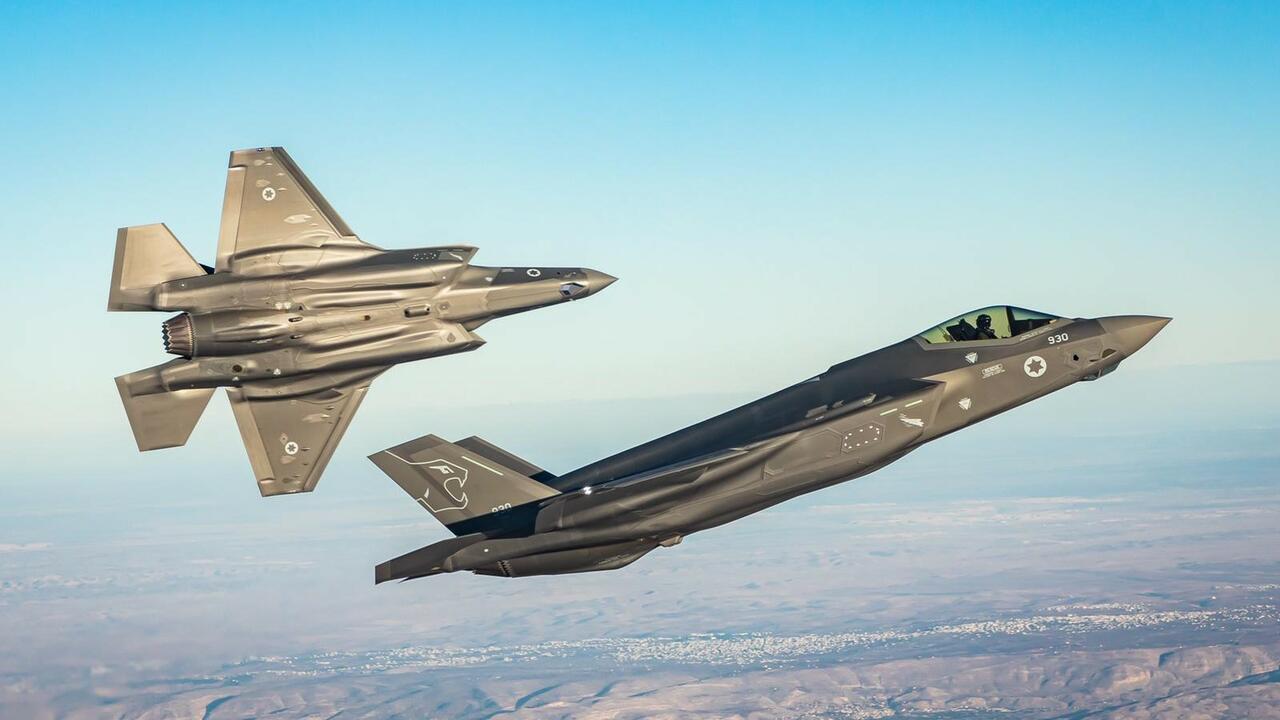
Israel Buys 25 More Lockheed F-35 Stealth Jets In $3 Billion Deal

Israel Buys 25 More Lockheed F-35 Stealth Jets In $3 Billion Deal

Via The Cradle,

Israel’s Ministry of Defense announced the purchase of a third squadron of F-35 stealth fighter jets in a deal worth $3 billion, Reuters reported on Sunday. Israel will now boast 75 of the Lockheed Martin manufactured war planes in its arsenal.

The defense ministry added further that the deal will be financed through the defense aid package Israel receives from the US.

 Israeli F-35s

Israel was the first foreign recipient of the F-35, also known in the US as the Joint Strike Fighter and in Israel by its Hebrew name “Adir.” Israel first used the F-35 in combat when it bombed Syria in 2018.

“The F-35 squadron has become an operational squadron,” Maj. Gen. Amikam Norkin said at the time. “We are flying the F-35 all over the Middle East – we might be the first to attack with F-35 in the Middle East,” he said.

Norkin presented images of the F-35 violating Lebanese airspace by flying over Beirut. The development and production costs of the F-35, paid primarily by the US military, have been estimated at near $1.5 trillion. It is considered the most expensive military weapons system in history.

The F-35 is considered crucial in what Israeli planners call the “war between wars” against Iranian supported units of the Syrian military, as well as in the event that Israel would choose to eventually strike Iran’s nuclear program.

Just before the F-35 deal was announced Sunday, Israeli warplanes again bombed Syrian sites. Syrian state media SANA reported that the “Israeli enemy carried out an air aggression from the direction northeast of Beirut, targeting some points in the vicinity of the city of Homs.”

The bombing resulted in material damages, but no casualties. With this latest attack, Israel has bombed Syria 19 times since the start of 2023 and 13 times since the earthquake struck the country in February.

Israel’s air force has regularly bombed Syria since the start of the US-led covert war on Damascus starting in 2011. At the time, Israeli officials insisted they were taking no part in the war, which was unleashed by Washington using extremist Salafist militias who attacked Syrian security forces and police under the cover of anti-government protests.

However, Israeli officials acknowledged in 2013 they had hoped to depose Syrian President Bashar al-Assad since the start of the war, while reports later emerged of the Israeli air force bombing Syrian army positions to assist the Al-Qaeda affiliated Nusra Front during battles between the two sides.

Tyler Durden
Sun, 07/02/2023 – 20:30

The Affirmative Aftermath: Schools Now Insist That Race Had A Major Impact In Admissions

The Affirmative Aftermath: Schools Now Insist That Race Had A Major Impact In Admissions

Authored by Jonathan Turley,

There is an interesting debate unfolding around the country in the aftermath of the Supreme Court barring the use of race in college admissions.

For decades, colleges and universities have sought to downplay the weight given to race in court while insisting that it was one of a number of factors used in maintaining diversity. Now, however, schools are insisting that, without considering race, minority admissions will plummet.

During the Supreme Court oral arguments over affirmative action, Harvard’s counsel Seth Waxman struggled with an argument that race consideration was needed to maintain current admissions for minorities. Yet, he also maintained that it was not a major factor and that the consideration of race with regard to Asian students produced only a “slight disparity” and “had no effect with respect to outcomes.”

It was no easy argument. As in past cases, the Court was assured that it was just one of a number of “tips” that was not substantial in the decisions. Yet, after the Court barred the use of race criteria, schools are now arguing that it will make a massive difference and substantially reduce minority admissions.

Since the 1970s, the Supreme Court has ruled that race could not be a determinative or major factor in admissions. In Regents of the University of California v. Bakke, the Court ruled against affirmative action. In his plurality decision, then-Justice Lewis F. Powell Jr. stopped short of barring the use of race in admissions entirely. Instead, he cited Harvard University’s admissions policy as an example of how race can be one of a number of diversity elements.

In the 2003 decision in Grutter v. Bollinger, the Court upheld Michigan’s use of race but then-Justice Sandra Day O’Connor cautioned that the court “expects that 25 years from now, the use of racial preferences will no longer be necessary to further the interest approved today.” That was 20 years ago.

Since that time, universities have insisted that they only use race as one of many factors and that it does not carry the determinative weight rejected in Bakke. For decades, universities and colleges maintained this difficult line of downplaying the importance of race in admissions.

However, even the limited use of racial classifications continued to divide the Court for decades. In 2017, Chief Justice John Roberts declared:

“The way to stop discrimination on the basis of race is to stop discriminating on the basis of race.”

In his decision last week, Roberts noted that minority students could still raise their own individual struggle with racial discrimination in essays, but that schools cannot employ threshold classifications to give an advantage or disadvantage because of race.

Many of us support efforts to maintain diverse classes and see the value of such diversity in the education process. I have found economic diversity to be one of the most important elements to my classes. Students who come from lower income families often have a sharply different view on many of the issues that we discuss in our classes.

Yet, it is the frank discussion of the racial criteria that is so interesting in the aftermath of the decision. Many now insist that racial criteria was determinative in a large number of applications.

The latest was State University of New York (SUNY) system Chancellor John B. King, Jr. who gave a strikingly conflicted account on NPR that was not challenged in the interview.

On Friday’s broadcast of NPR’s “Morning Edition,” King stated that an admissions process based only on individual merit would result in “fewer black and Latino students on campuses.” Yet, at the same time, he insisted that use of individual merit alone would not impact white or Asian students.

He told host Steve Inskeep:

“Yeah. Again, I think they’re misrepresenting how the admissions process works. There are policies at Harvard, for example, where students are admitted because they are legacies, because they’re one of multiple generations in their family to go to Harvard. There are students who are admitted because they’re a tuba player. There are students who are admitted because they’re great lacrosse players. And so, there [are] a range of factors as universities try to build a diverse class.”

King then emphasized “by removing the tool of race-conscious admissions, the evidence is it results in fewer black and Latino students on campuses.”

Of course, a minority student who plays the tuba can still get that “tip” with other indications of individual merit separate from racial classifications. Minority students clearly have similar “tips” based on individual merit from achievements in tuba to tennis to trigonometry. If the factor was given no more weight than a tuba talent, one would think that the drop in admissions would not be as severe given a myriad of other qualifications or tips in applications.

Soon after the decision, California Gov. Gavin Newsom objected to the ruling in saying that admitting students solely based on their individual merits, without considering race, would result in a massive drop in minority admissions.

Likewise, over at The Nation, Elie Mystal insisted that, without factoring in race, minority admissions always drop: “In California, which ended its affirmative action policies over 25 years ago, the studies show that, without affirmative action, Black enrollment plummets, Latino enrollment plummets.” He insisted that this was a victory for “mediocre white people.”

[Mystal later attacked Justice Thomas on MSNBC, describing Thomas as a “mutilated version of a black justice” who just did whatever his wife, who is white, tells him to do. Rather than accept that Thomas holds opposing constitutional views, Mystal insisted “he doesn’t want to see anything that Ms. Ginni tells him he shouldn’t be able to see.”]

The difference between the arguments and the aftermath of the affirmative action decision is striking. What was presented as a relative modest “tip” based on race to the Court is now being presented as a huge factor in admissions. If left to individual merit, advocates and administrators now insist that that minority admissions will sharply decline and white/Asian admissions will rise.

Nevertheless, King insists that such determinative use of race had no negative impact on white or Asian students while insisting that the number of admissions for white or Asian students will increase substantially when only individual merit is accessed.

That was all to explain why people just do not understand “how the admissions process works.”

Tyler Durden
Sun, 07/02/2023 – 19:30

Ahead Of Independence Day, These Are The Most-Searched-For Foods To BBQ In Each State

Ahead Of Independence Day, These Are The Most-Searched-For Foods To BBQ In Each State

You know it’s coming… The White House will most likely be bragging on July 4 or days before via Twitter that Americans are finally saving on cookouts as ‘Bidenomics‘ is a success. Anyone with a wallet who works hard for their money knows the White House is full of malarky. 

Americans have been battered with two years of negative real wage growth, forcing them to deplete personal savings and rack up record credit card debt in a high-interest rate environment to survive the worst inflation storm in a generation. But don’t worry because none of that matters to White House officials — they’re in cheerleading mode about taking credit for everything good and none of the bad. 

As Independence Day quickly approaches, Americans will still be paying near-record high prices for hamburger meat. The good news is that egg prices have collapsed, which could provide relief for deviled egg lovers. Food inflation likely has abated from last year’s levels but remains well over pre-Covid levels. 

For those planning cookouts, USA Today has released the latest BBQ trends across all 50 states and the District of Columbia of the most searched foods. 

Even though residents in sixteen states wanted veggies, the rest of the country preferred meat. 

Here are the top ten searched BBQ foods:

  1. BBQ chicken

  2. BBQ ribs

  3. BBQ pork chops

  4. BBQ meatballs

  5. BBQ shrimp

  6. BBQ pulled pork

  7. BBQ brisket

  8. BBQ baked beans

  9. BBQ salmon

  10. BBQ meatloaf

There were 16 states and Washington, DC, that saw higher search trends for grilling vegetables versus meat. 

On a state-by-state basis, here’s the most searched “how to grill” food: 

Alabama – Corn on the cob

Alaska – Corn

Arizona – Burgers

Arkansas – Ribs

California – Tri tip

Colorado – Chicken breast

Connecticut – Spare ribs

Delaware – Salmon

District of Columbia – Chicken breast

Florida – Mahi mahi

Georgia – Wings

Hawaii – Ahi tuna

Idaho – Steak

Illinois – Pork chops

Indiana – Corn in husk

Iowa – Asparagus

Kansas – Salmon

Kentucky – Shrimp

Louisiana – Steak

Maine – Chicken

Maryland – Eggplant

Massachusetts – Swordfish

Michigan – Asparagus

Minnesota – Asparagus

Mississippi – Ribs

Missouri – Corn on the cob

Montana – Asparagus

Nebraska – Corn on the cob

Nevada – Burgers

New Hampshire – Asparagus

New Jersey – London boil

New Mexico – Chicken

New York – Clams

North Carolina – Filet mignon

North Dakota – Asparagus

Ohio – Chicken

Oklahoma – Corn on the cob

Oregon – Lamb chops

Pennsylvania – Filet mignon

Rhode Island – Salmon

South Carolina – Pork chops

South Dakota – Burgers

Tennessee – Pork chops

Texas – Ribs

Utah – Chicken

Vermont – Salmon

Virginia – Portobello mushrooms

Washington – Flank steak

West Virginia – Asparagus

Wisconsin – Brats

Wyoming – Burgers

The good news is Americans have yet to search for “how to grill” insects. As we’ve noted, there’s a push by international non-governmental agencies, such as WEF, as well as some governments, to reset the food supply chain to swap out meat diets for insects. Americans won’t stand for that nonsense. 

Tyler Durden
Sun, 07/02/2023 – 19:00

Dalio: Why The World Is On The Brink Of Great Disorder

Dalio: Why The World Is On The Brink Of Great Disorder

Authored by Ray Dalio, op-ed via Time.com,

I’m a global macro investor who has been betting on what’s going to happen for over 50 years. I’ve been through all sorts of events and cycles in all sorts of places over a long time which led me to study how these events and cycles work. In the process, I learned that I needed to study history to understand what’s going on and what’s likely to happen.

Early in my career, I learned though a couple of painful mistakes that the biggest things that surprised me did so because they never happened in my lifetime but had happened many times in history. The first time that happened was on August 15, 1971 when I was clerking on the floor of the New York Stock exchange and the U.S. defaulted on its debt promise to allow people to turn in their paper dollars for gold. I thought that this was a big crisis that would send stock prices down but they went up a lot. I didn’t understand why because I’d never experienced a big currency devaluation before. When I looked back in history, I saw that the exact same thing happened on March 5, 1933 when Roosevelt defaulted on the U.S.’s promise to let people turn in their paper money for gold and stocks went up. That led me to study and learn why—which is that money could be created, and when it’s created, it goes down in value which makes things go up in price. That experience led me to study the rises and declines of markets, economies, and countries which I’ve done ever since. For example, my studying how the 1920s debt bubble turned into the 1929-33 financial collapse led me to anticipate and profit from the 2008 financial crisis. That’s how I learned that it’s critical to take a longer-term perspective and understand the mechanics behind why history rhymes.

A few years ago, I saw three big things happening that hadn’t happened in my lifetime but had happened in the 1930-45 period. These were:

  1. The largest amounts of debt, the fastest rates of debt growth, and the greatest amounts of central bank printing of money and buying debt since 1930-45.

  2. The biggest gaps in wealth, income, values, and the greatest amounts of populism since the 1930-45 period.

  3. The greatest international great powers conflict, most importantly between the U.S. and China, since 1930-45.

Seeing these three big things that never happened in these magnitudes in my lifetime led me to study the rises and declines of markets, economies, and countries over the last 500 years, as well as the rises and declines of China’s dynasties the last 2,100 years.

That examination showed me that these three big forces—i.e. the debt/money one, the internal conflict one, and the external conflict one—transpired in big cycles that reinforced each other to make up what I call the Big Cycle. These cycles were driven by logical cause-effect relationships Most importantly, this study of the last 500 years of history taught me that:

  1. The previously described financial conditions repeatedly proved to be leading indicators of big financial crises that led to big shifts in the financial order.

  2. The previously described levels of political and social gaps repeatedly proved to be leading indicators of great conflicts within countries that led to big changes in domestic orders.

  3. The previously described great powers’ conflicts repeatedly proved to be leading indicators of international conflicts that led to big changes in the world order.

Said differently, history shows that the painful seismic shifts part of the Big Cycle comes about when there is simultaneously 1) too much debt creation that leads to debt bubbles bursting and economic contractions which cause central banks to print a lot of money and buy debt, 2) big conflicts within countries due to big wealth and values conflicts made worse by the bad economic conditions, and 3) big international conflicts due to rising world powers challenging the existing world powers at a time of economic and internal political crises In doing this study, I also saw two other big forces that had big effects. They are:

  1. Acts of nature (droughts, floods, pandemics) including climate change.

  2. Learning leading to inventions of technologies that typically produced evolutionary advances in productivity and living standards —e.g., the First and Second Industrial Revolution, and computing/AI revolution.

I call these the Five Big Forces. I saw how they affect each other and change in logical ways to produce the Big Cycle that produces big changes in the world order. I came to realize that if one understands and follows each of these forces and how they interact, one can understand most everything that’s changing the world order. That’s what I’m trying to do.

I will give you a quick summary of what I learned from my study but if you want to lean more about how and why things change you can get that in my book Principles for Dealing with the Changing World Order.

Where We Are and What’s Likely Ahead

1. The Financial/Economic Force

In the U.S., we are now in middle part of what I call the short-term debt cycle and is also known as the business cycle. These short-term debt cycles have lasted 7 years on average, give or take about 3 years. There have been 12 1/2 of them since the new monetary world order started in 1945. So, we are now about half-way though the 13th of the cycles, at the point of the cycle when the central bank has tightened money to fight inflation that is just before the debt and economic contractions which will likely come over next 18 months.

We are also in a late and dangerous part of the long-term debt cycle because the levels of debt assets and debt liabilities have become so high that it is difficult to give lender-creditors a high enough interest rate relative to inflation that is adequate to make them want to hold this debt as an asset without making interest rates so high that it unacceptably hurts the borrower-debtor. Because of unsustainable debt growth, we are likely approaching a major inflection point that will change the financial order. Said differently, it appears to me likely that we are approaching a debt/financial/economic restructuring that will lead to big changes to the financial order.

More specifically. it appears likely to me that because of large deficits the U.S. Treasury will have to sell a lot of debt and it appears there will not be adequate demand for it. If that happens, it will lead to either much higher interest rates or the Fed printing a lot of money and buying bonds which will devalue money. For these reasons, the debt/financial conditions could worsen, perhaps very significantly, over the next 18 months.

2. The Domestic Order Force

In several countries, most importantly the U.S., we have seen a growing percentage of the population that are populist extremists (about 20-25 percent of the right are extreme and about 10-15 percent of the left are) and a shrinking of the percentage of the population that are bipartisan moderates. Though the bipartisan moderates still remain in the majority, they constitute a declining percentage of the population and they are far less willing to fight and win at all costs. In studying history, I saw this growing populism of both sides and increased conflict has repeatedly occurred when large gaps in wealth and values existed at the same time as bad economic conditions. At such times, significant percentages of the population chose populist political leaders who vowed to fight and win for them rather than compromise. In my book, I described the state the U.S. is now in as Stage 5 (“When There Are Bad Financial Conditions and Intense Conflict”) of the “internal order cycle,” which comes just before some sort of civil war and changes in the domestic order. That is what is now happening.

Looking ahead, the next 18 months will be an increasingly intense big election period which will lead to much greater political conflict which is likely to sharper the divide between the left and the right. Thirty-three Senate seats, the presidency, and control of the House will be fought over by a number of populist candidates and there will likely be poor economic conditions, so the fights will be vicious and there will be a real test of rule-following and compromising, both of which are required to make democracies work. You can see the movement toward a win at all cost fight while the respect for the legal and political systems declines. You can see this dynamic playing out even now, in things like Donald Trump and his followers being at war with the justice system, or as he and his followers would say, the system’s war against him. Whichever perspective you have, it is clear that we are headed into a type of civil war over the next 18 months. To me the most important war is between the bipartisan moderates and the populist extremes, yet the bipartisan moderates are for the most part quietly staying out of this fight. The only thing the Democrats and Republicans can agree on, which most Americans also agree on, is being anti-China which brings me to my next big force.

3. The International World Order Force

The conflicts between the U.S. and China are likely to intensify as domestic political tensions will likely lead to increased aggressiveness toward China. That is because in the U.S. most everyone is anti-China and those running for office will want to out-China-bash each other in an election year. China and the US are already dangerously close to some form of war, whether an all-out economic one or, worse, a military one. There are also important elections in Taiwan next year, which is already a flash point in U.S.-China elections, and a U.S.-backed push for Taiwanese independence is something to keep a close eye on when weighing the potential for even more overt U.S.-China conflict. There are several issues—Taiwan, chips, dealing with Russia, sanctioning investments—that are being fought over, and both sides are preparing for war. I don’t mean to say that we are destined for war, but I do mean that the odds of some form of a major conflict are dangerously high.

4. Acts of Nature

Acts of nature are of course harder to predict accurately, but they appear to be getting worse and are likely to be more costly and damaging over the next five to ten years due to climate change. Also, the world is entering an El Niño phase of the climate cycle over the next year.

5. Technology

What can we expect from technology/human inventiveness? Like acts of nature, it is hard to know exactly, though there should be no doubt that generative AI and other technological advances have the potential to cause both massive productivity gains and massive destructions, depending on how they are used. The one thing that we can be sure of is that these changes will be greatly disruptive.

Exactly how events will unfold is beyond my ability to say, but there is no doubt in my mind that those who assume that things will work in the orderly ways we have gotten used in the last few decades will be shocked and probably hurt by the changes to come.

How well these changes are managed will make all the difference. If our leaders can rise above their tendencies to fight and instead focus on cooperating, we can certainly navigate these tricky times to create a better world for most people. Presumably, this outcome is best for everyone, so we should be strongly against civil disorder and war between nations, keeping it in the back of our mind so we strive for cooperative decision-making. For example, now that a debt ceiling agreement has passed, it would be great to see the Democrats and Republicans mutually agree on a bipartisan group of very skilled people to come up with a practical, long-term bipartisan plan. I wrote an article “Why and How Capitalism Needs to be Reformed?” years ago which is still relevant today in case you’re interested. Having said that, it is probably unrealistic to believe that we can materially change the course of events, so what is most important for most people is to visualize the worst. If you do that, you will be prepared for it and will probably be fine.

In closing I should say that the most important thing I’ve learned in my 50 years of being a global macro investor is that I can be wrong. For that reason, while I suggest that you consider what I am sharing, I also suggest that you assess it and the circumstances for yourself.


Tyler Durden
Sun, 07/02/2023 – 18:30

“I Don’t Think We’ll Ever Get To The 2024 Election”, Col. Douglas Macgregor (Ret) Warns

“I Don’t Think We’ll Ever Get To The 2024 Election”, Col. Douglas Macgregor (Ret) Warns

Retired US Army Colonel Douglas Macgregor joined Patrick Bet-David on his PDB Podcast for a lengthy discussion of  Russia, Ukraine, the woke military, the Trump Tape, China, and much more.

However, one section in particular caught our attention.

Bet-David recently laid out how he thinks 2024 will play out in a long tweet:

2024 strategy to have Newsom replace Biden:

Step 1:  have Newsom go around defending Biden. Selling Biden’s record.

Shows loyalty

Step 2: have him constantly attack Desantis.

Dems are convinced Trump will be forced to drop out

Step 3: if Biden doesn’t step down, have mainstream media attack him

It’s already happening. ABC, CBS & NBC all went after him starting this week.  

Step 4: once Jill notices these endless attacks have a private meeting with Biden sharing strategy to save face if he steps down

1. Multiple documentary showing him as modern day FDR.

2. Massive Simon & Schuster book deal 💰

3. Defend his legacy & be pardoned by Newsom if 💩 hits the fan

Step 5:  choose one of few options to step down

1. Due to health

2. Jill and I prayed about it and we decided it’s time for us to go spend time with the grandkids.

3. “We fixed everything Trump broke and now it’s time for someone else to do it”

4. Edify Newsom as being loyal to Biden unlike Desantis not being loyal to Trump.

Step 6:  In order to prevent Kamala from backstabbing, let her become the first female president for a split second when Biden steps down.

Hilary will lose her mind but what’s new?  

Step 7: Divide Desantis and Trump camp to make sure MAGA Doesn’t vote for Desantis

Step 8: Newsom becomes 47 [48]

And last but not least, it’s very likely that NONE of the above will happen, which is why it’s called a prediction.  

Remember: ONLY THE PARANOID SURVIVE.

In response to this, Macgregor went dark, beginning by noting that “first of all I think it’s brilliant. And I think that if we were living in a linear world – in other words, when one event follows the next logically; you’re absolutely right.”

“But,” Macgregor warns “I don’t think we’ll ever get to the 2024 election.”

“I think things are going to implode in Washington before then.”

From there it gets more ominous…

Watch the full podcast below (fwd to 1:51:30 for the discussion above):

Full transcript:

I don’t think we’ll ever get to the 2024 election.

I think things are going to implode in Washington before then.

I think our economic Financial condition is fragile – it’s going to come home to roost in ugly ways.

Now I will tell you I don’t know exactly how it will happen, but I think we’re going to end up in a situation where we find out the banks are closed for two or three weeks, and nobody can get into them.

I think we’re going to run into something like that.

I also think that the levels of violence and criminality in our cities is so high that it’s going to spill over into other places in society.

People that normally think they can live remote from the problem are now beginning to be touched by the problem.

Then I look at this thing in Ukraine.

I think Ukraine is going to lose catastrophically – it’s going to be a complete collapse and that too is going to have an effect here at home because people are going to say, well, wait a minute everybody told us Ukraine was winning, everybody told us X Y and Z.

I mean sort of the the Russian hoax on steroids.

All of those things are going to come together or converge in some way that’s going to prevent us from reaching you know the status quo. Oh. another election… Oh, another set of campaigns… And so forth…

Cloward and Piven would be proud!!

Tyler Durden
Sun, 07/02/2023 – 18:00